

Cognitive behavioural therapy for adults with dissociative seizures (CODES): a pragmatic, multicentre, randomised controlled trial
Open accessThe DOI matches its Crossref record; 37 of the 39 references it cites were found in a registry or an index.
Abstract
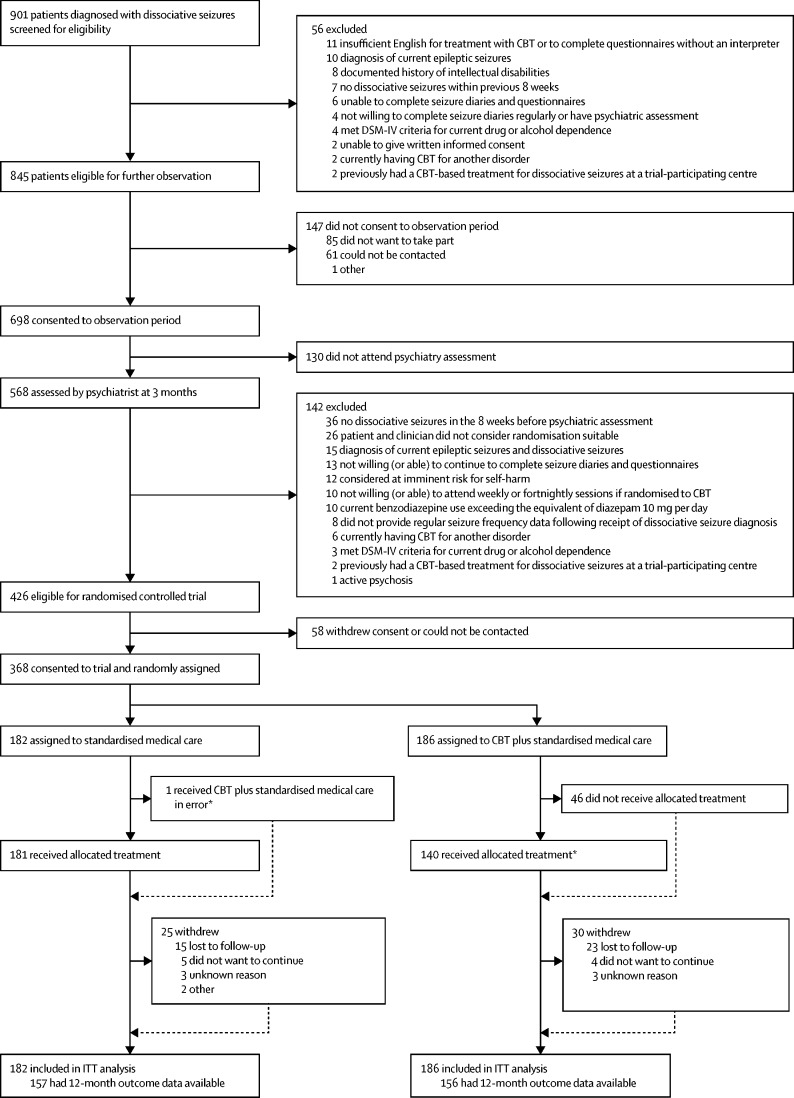
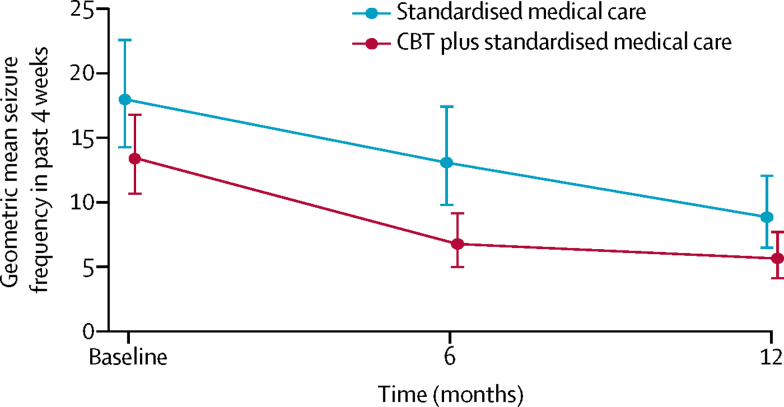
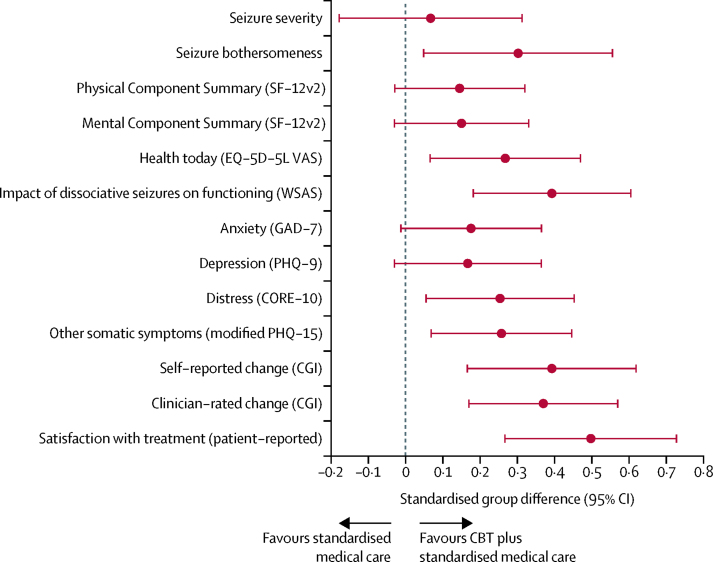
BACKGROUND: Dissociative seizures are paroxysmal events resembling epilepsy or syncope with characteristic features that allow them to be distinguished from other medical conditions. We aimed to compare the effectiveness of cognitive behavioural therapy (CBT) plus standardised medical care with standardised medical care alone for the reduction of dissociative seizure frequency. METHODS: In this pragmatic, parallel-arm, multicentre randomised controlled trial, we initially recruited participants at 27 neurology or epilepsy services in England, Scotland, and Wales. Adults (≥18 years) who had dissociative seizures in the previous 8 weeks and no epileptic seizures in the previous 12 months were subsequently randomly assigned (1:1) from 17 liaison or neuropsychiatry services following psychiatric assessment, to receive standardised medical care or CBT plus standardised medical care, using a web-based system. Randomisation was stratified by neuropsychiatry or liaison psychiatry recruitment site. The trial manager, chief investigator, all treating clinicians, and patients were aware of treatment allocation, but outcome data collectors and trial statisticians were unaware of treatment allocation. Patients were followed up 6 months and 12 months after randomisation. The primary outcome was monthly dissociative seizure frequency (ie, frequency in the previous 4 weeks) assessed at 12 months. Secondary outcomes assessed at 12 months were: seizure severity (intensity) and bothersomeness; longest period of seizure freedom in the previous 6 months; complete seizure freedom in the previous 3 months; a greater than 50% reduction in seizure frequency relative to baseline; changes in dissociative seizures (rated by others); health-related quality of life; psychosocial functioning; psychiatric symptoms, psychological distress, and somatic symptom burden; and clinical impression of improvement and satisfaction. p values and statistical significance for outcomes were reported without correction for multiple comparisons as per our protocol. Primary and secondary outcomes were assessed in the intention-to-treat population with multiple imputation for missing observations. This trial is registered with the International Standard Randomised Controlled Trial registry, ISRCTN05681227, and ClinicalTrials.gov, NCT02325544. FINDINGS: Between Jan 16, 2015, and May 31, 2017, we randomly assigned 368 patients to receive CBT plus standardised medical care (n=186) or standardised medical care alone (n=182); of whom 313 had primary outcome data at 12 months (156 [84%] of 186 patients in the CBT plus standardised medical care group and 157 [86%] of 182 patients in the standardised medical care group). At 12 months, no significant difference in monthly dissociative seizure frequency was identified between the groups (median 4 seizures [IQR 0-20] in the CBT plus standardised medical care group vs 7 seizures [1-35] in the standardised medical care group; estimated incidence rate ratio [IRR] 0·78 [95% CI 0·56-1·09]; p=0·144). Dissociative seizures were rated as less bothersome in the CBT plus standardised medical care group than the standardised medical care group (estimated mean difference -0·53 [95% CI -0·97 to -0·08]; p=0·020). The CBT plus standardised medical care group had a longer period of dissociative seizure freedom in the previous 6 months (estimated IRR 1·64 [95% CI 1·22 to 2·20]; p=0·001), reported better health-related quality of life on the EuroQoL-5 Dimensions-5 Level Health Today visual analogue scale (estimated mean difference 6·16 [95% CI 1·48 to 10·84]; p=0·010), less impairment in psychosocial functioning on the Work and Social Adjustment Scale (estimated mean difference -4·12 [95% CI -6·35 to -1·89]; p<0·001), less overall psychological distress than the standardised medical care group on the Clinical Outcomes in Routine Evaluation-10 scale (estimated mean difference -1·65 [95% CI -2·96 to -0·35]; p=0·013), and fewer somatic symptoms on the modified Patient Health Questionnaire-15 scale (estimated mean difference -1·67 [95% CI -2·90 to -0·44]; p=0·008). Clinical improvement at 12 months was greater in the CBT plus standardised medical care group than the standardised medical care alone group as reported by patients (estimated mean difference 0·66 [95% CI 0·26 to 1·04]; p=0·001) and by clinicians (estimated mean difference 0·47 [95% CI 0·21 to 0·73]; p<0·001), and the CBT plus standardised medical care group had greater satisfaction with treatment than did the standardised medical care group (estimated mean difference 0·90 [95% CI 0·48 to 1·31]; p<0·001). No significant differences in patient-reported seizure severity (estimated mean difference -0·11 [95% CI -0·50 to 0·29]; p=0·593) or seizure freedom in the last 3 months of the study (estimated odds ratio [OR] 1·77 [95% CI 0·93 to 3·37]; p=0·083) were identified between the groups. Furthermore, no significant differences were identified in the proportion of patients who had a
Overview
The claims and statistics of this paper haven’t been checked yet.
Free: it reads the open-access text and checks the first 5 claims that cite a source we can check. Create a free account to check every claim.
Integrity signals
Registry
Cites
Statistics
Figures
Verification
Claims the paper makes
The claims and statistics of this paper haven’t been checked yet.
Free: it reads the open-access text and checks the first 5 claims that cite a source we can check. Create a free account to check every claim.
Claims other papers make about this one
Each is checked against this paper’s own text: does it say what the citing paper says it does?
The source backs part of the claim, not all of it — or backs it for a different population, condition or comparison.
In the citing paper
“The success rate of ReACT is higher than studies using CBT for PNES in adults.”
From Retraining and control therapy for pediatric psychogenic non-epileptic seizures (2020) · cites this paper as [24]
Experimental — accuracy not yet measuredThe source backs part of the claim, not all of it — or backs it for a different population, condition or comparison.
In the citing paper
“In the largest RCT assessing CBT for PNES in adults by targeting fear avoidance, there was no difference in PNES between CBT with standard medical care and standard medical care alone at 12 months after treatment.”
From Retraining and control therapy for pediatric psychogenic non-epileptic seizures (2020) · cites this paper as [24]
Experimental — accuracy not yet measured
Self-check
Percentages, sums and reported differences re-computed from the paper’s own numbers.
The self-check needs the paper’s full text.
Citations
Cites
(1998) · The Journal of Clinical Psychiatry · Cited by 19,139
(1998) · PubMed · Cited by 10,216
Multiple imputation of discrete and continuous data by fully conditional specification
van Buuren, S. (2007) · Statistical Methods in Medical Research · doi:10.1177/0962280206074463 · Cited by 2,827
The Work and Social Adjustment Scale: a simple measure of impairment in functioning
Mundt, J. C., Marks, I. M., Shear, M. K., & Greist, J. M. (2002) · British Journal of Psychiatry · doi:10.1192/bjp.180.5.461 · Cited by 2,515
LaFrance, W. C., Baker, G. A., Duncan, R., Goldstein, L. H., & Reuber, M. (2013) · Epilepsia · doi:10.1111/epi.12356 · Cited by 856
Self-citationCognitive-behavioral therapy for psychogenic nonepileptic seizures: A pilot RCT
Goldstein, L. H., Chalder, T., Chigwedere, C., Khondoker, M. R., Moriarty, J., Toone, B. K., & Mellers, J. D. C. (2010) · Neurology · doi:10.1212/wnl.0b013e3181e39658 · Cited by 477
Self-citationMulticenter Pilot Treatment Trial for Psychogenic Nonepileptic Seizures: A Randomized Clinical Trial
LaFrance, W. C., Baird, G. L., Barry, J. J., Blum, A. S., Frank Webb, A., Keitner, G. I., Machan, J. T., Miller, I., & Szaflarski, J. P. (2014) · JAMA Psychiatry · doi:10.1001/jamapsychiatry.2014.817 · Cited by 440
Psychogenic nonepileptic seizures: review and update
Reuber, M., & Elger, C. E. (2003) · Epilepsy & Behavior · doi:10.1016/s1525-5050(03)00104-5 · Cited by 404
Self-citationPopulation norms for the EQ-5D-3L: a cross-country analysis of population surveys for 20 countries
Janssen, M. F., Szende, A., Cabases, J., Ramos-Goñi, J. M., Vilagut, G., & König, H. H. (2019) · The European Journal of Health Economics · doi:10.1007/s10198-018-0955-5 · Cited by 333
Psychogenic nonepileptic seizures: Answers and questions
Reuber, M. (2008) · Epilepsy & Behavior · doi:10.1016/j.yebeh.2007.11.006 · Cited by 254 · cited 1×
“, Reuber, M., Medford, N., McCrone, P., Murray, J., Richardson, M. P., Pilecka, I., Eastwood, C., Moore, M., Mosweu, I., Perdue, I., Landau, S., Chalder, T., Abe, A. M., Adab, N., ... Yogarajah, M. (2020). Cognitive behavioural therapy for adults with dissociative seizures (CODES): a pragmatic, multicentre, randomised…”
Self-citation
Cited by
Items 101–200 of 318
Management of Functional Vision Disorders
Phansalkar, R., Lockman, A. J., Bansal, S., & Moss, H. E. (2022) · Current Neurology and Neuroscience Reports · doi:10.1007/s11910-022-01191-w · Cited by 12
Sireci, F., Ragucci, F., Menozzi, C., Cabboi, M. P., Picchetto, L., Bassi, M. C., Ghirotto, L., Cavallieri, F., Pedroni, C., & Valzania, F. (2024) · Journal of Neurology · doi:10.1007/s00415-024-12441-x · Cited by 10
“Studies that encompassed clinically heterogeneous populations ranged from multimodal interventions (e.g., [36, 54, 65]) to stand-alone mental health care typically provided by psychologists or psychotherapists (e.g., [48, 64]).”
InfluentialWatson, M. M., Borland, H., Baker, S., Sillau, S., Armon, C., & Strom, L. A. (2022) · Epilepsy & Behavior · doi:10.1016/j.yebeh.2022.108707 · Cited by 10
“In a recent large, randomized control treatment trial, roughly 43% of patients eligible for evaluation did not engage in care for a variety of reasons [19].”
Patten, R. V., Chan, L., Tocco, K., Mordecai, K. L., Altalib, H. H., Twamley, E. W., Gaston, T. E., Grayson, L. E., Martin, A. M., Fry, S., et al. (2023) · Journal of Psychiatric Research · doi:10.1016/j.jpsychires.2023.07.038 · Cited by 10
Wilkinson-Smith, A., Lerario, M. P., Klindt, K. N., & Waugh, J. L. (2023) · Journal of Child Neurology · doi:10.1177/08830738231200520 · Cited by 10
“61 Further, there is considerable evidence that af fi rm-ing a person ’ s gender identity and receiving gender-af fi rming medical care can reduce depression and improve mental health outcomes in TGNC individuals.”
BackgroundElevated Mortality Rate in Patients With Functional Seizures After Diagnosis and Referral
Kerr, W. T., Patterson, E. H., O'Sullivan, I. M., Horbatch, F. J., Darpel, K. A., Patel, P. S., Robinson-Mayer, N., Winder, G. S., & Beimer, N. J. (2024) · Neurology Clinical Practice · doi:10.1212/cpj.0000000000200227 · Cited by 10
“11 17-21 When compared with some cases of mortality from epilepsy being due to SUDEP, the reasons for death in functional seizures were nonspeci fi c with one registry suggesting an elevated rate of suicide as the cause in 19% (6/32) of deaths.”
The role of neuropsychology in the care of patients with functional neurological symptom disorder
Patten, R. V., Mordecai, K. L., & LaFrance, W. C., Jr. (2024) · Journal of the International Neuropsychological Society · doi:10.1017/s1355617724000249 · Cited by 10
“…characteristics of all FNSD (e.g., functional connectivity abnormalities; Drane et al., 2021; Pick et al., 2019) and additional complementary investigations highlighting nonshared symptoms and treatment approaches (e.g., response to interventions; Goldstein et al., 2020; Poole et al., 2023).”
Goldstein, L. H., Stone, J., Reuber, M., Landau, S., Robinson, E. J., Carson, A. J., Medford, N., & Chalder, T. (2024) · BMJ Neurology Open · doi:10.1136/bmjno-2024-000659 · Cited by 11
“10 11 Moreover, DS frequency was a highly skewed outcome.”
InfluentialSelf-citationEpilepsy, dissociative seizures, and mixed: Associations with time to video-EEG
Kerr, W. T., Zhang, X., Hill, C. E., Janio, E. A., Chau, A. M., Braesch, C. T., Le, J. M., Hori, J. M., Patel, A. B., Allas, C. H., et al. (2021) · Seizure · doi:10.1016/j.seizure.2021.02.002 · Cited by 11
“despite efforts to educate referring providers of the direct and indirect benefits of referrals to a comprehensive epilepsy center for medication-resistant epilepsy [10, 17, 48], and the increased awareness of and treatment options for dissociative seizures [24, 49].”
BackgroundMarcolini, E. G., & Tolchin, B. D. (2020) · Emergency Medicine Clinics of North America · doi:10.1016/j.emc.2020.09.007 · Cited by 28
Using Verbally-Reported and Video-Observed Semiology to Identify Functional Seizures
Kerr, W. T. (2023) · Neurologic Clinics · doi:10.1016/j.ncl.2023.02.003 · Cited by 10
Stager, L., Mueller, C., Morriss, S., Szaflarski, J. P., & Fobian, A. D. (2023) · Epilepsy & Behavior · doi:10.1016/j.yebeh.2023.109143 · Cited by 9
Higson, L., O'Brien, T. J., Rayner, G., Alpitsis, R., & Winton‐Brown, T. (2024) · Epilepsia · doi:10.1111/epi.18073 · Cited by 9
“3,4,10,11 Novel approaches to therapy for FS that incorporate a wider understanding of the potential neurobiological mechanisms may help bridge a problematic gap be-tween neurology and psychiatry.”
Cope, S. R., Smith, J. G., El‐Leithy, S., Vanzan, S., Hogwood, P., Golder, D., Turner, K. J., Crowley, M., Billings, J., Pick, S., et al. (2025) · Journal of Neurology · doi:10.1007/s00415-025-13219-5 · Cited by 9
“In terms of psychological therapy, there is some evidence of benefit, particularly for functional seizures, with the highest quality of evidence for cognitive–behavioural therapy; although psychodynamic and other therapies have also reported positive outcomes in uncontrolled studies [29–33].”
Self-citationChalder, T., Landau, S., Stone, J., Carson, A. J., Reuber, M., Medford, N., Robinson, E. J., & Goldstein, L. H. (2024) · Psychological Medicine · doi:10.1017/s0033291723003665 · Cited by 9
Self-citationPsychoeducation interventions for people with non-epileptic seizures: A scoping review
Underwood, R., Falshaw, L., & McFarlane, F. A. (2024) · Seizure · doi:10.1016/j.seizure.2024.05.013 · Cited by 10
“Cognitive behavioural therapy (CBT) and other psychological approaches have a growing evidence base for treatment of NES [15] which shows promise for patient outcomes.”
BackgroundRandomized Trials of Psychotherapeutic Treatment for Psychogenic Seizures: Scoping Review
Haritsa, S. V., Reddy, K. J., Rafiq, A., & Gupta, M. (2021) · Indian Journal of Psychological Medicine · doi:10.1177/02537176211047392 · Cited by 9
Myers, L., Trobliger, R., & Goszulak, S. (2020) · Clinical Case Studies · doi:10.1177/1534650120963181 · Cited by 9
“However, a recent RCT in the UK included over 300 patients (Goldstein et al., 2015, 2020; Perez, 2020) and revealed that patients who received a 12-session CBT version (different than LaFrance’s) and treatment as usual (TAU) had fewer somatic symptoms, better health-related quality of life, and…”
BackgroundGenetics of Functional Seizures; A Scoping Systematic Review
Asadi‐Pooya, A. A., Hallett, M., Damabi, N. M., & Fazelian, K. (2023) · Genes · doi:10.3390/genes14081537 · Cited by 9
“, cognitive behavioral therapy) in addition to routine care had no statistically significant benefit compared with routine care alone for the reduction of the frequency of functional seizures [8].”
BackgroundRichardson, M., Cathro, M., & Kleinstäuber, M. (2023) · Behavioural and Cognitive Psychotherapy · doi:10.1017/s1352465823000565 · Cited by 8
“This level of adverse events is comparable to that reported by Goldstein et al .”
InfluentialSelf-citationGreenfield, M. J., Fobian, A. D., Fargason, R. E., & Birur, B. (2024) · Frontiers in Psychiatry · doi:10.3389/fpsyt.2024.1288828 · Cited by 9
Rioux, M., Brasher, P. M. A., McKeown, G., Yeates, K. O., Vranceanu, A., Snell, D. L., Cairncross, M., Panenka, W. J., Iverson, G. L., Debert, C. T., et al. (2024) · Neuropsychological Rehabilitation · doi:10.1080/09602011.2024.2403647 · Cited by 10
“…findings are consistent with previous research suggesting that exposure-based CBT is not only effective for anxiety, trauma-related, and chronic pain disorders, but also for disorders characterized by functional somatic symptoms (Edelman et al., 2012; Goldstein et al., 2020; Martin et al., 2014).”
Mousa, S., Latchford, G. J., Weighall, A., Nash, H. M., Murray-Leslie, R., Reuber, M., Relton, S. D., & Graham, C. D. (2021) · Epilepsy & Behavior · doi:10.1016/j.yebeh.2021.107867 · Cited by 8
Self-citationDrop attacks as a subtype of FND: A cognitive behavioural model using grounded theory
Revell, E. R., Gillespie, D. C., Morris, P. G., & Stone, J. (2021) · Epilepsy & Behavior Reports · doi:10.1016/j.ebr.2021.100491 · Cited by 8
Self-citationEpilepsy and Related Disorders
Duncan, J. S., Sander, J. W. A. S., Alim‐Marvasti, A., Balestrini, S., Baxendale, S., Bindman, D., Chinthapalli, K., Chowdhury, F. A., Diehl, B., Eriksson, S., et al. (2024) · Wiley eBooks · doi:10.1002/9781119715672.ch10 · Cited by 8
Self-citationFunctional seizures: The patient’s perspective of a diagnostic and treatment odyssey
Andrini, H., Hoy, S. A., Okhovat, A., Lockman, J., & Goldsmith, G. R. (2021) · Epilepsy & Behavior Reports · doi:10.1016/j.ebr.2021.100509 · Cited by 11
“Though individual neuropsychiatric factors may ultimately determine best treatment, modalities such as CBT show promise for PNES and/or secondary mental health measures [8,27,28].”
BackgroundFunctional seizure therapy via transauricular vagus nerve stimulation
Das, A., & Dutta, A. (2024) · Medical Hypotheses · doi:10.1016/j.mehy.2024.111462 · Cited by 7
Functional Syncope in Children and Adolescents: A Retrospective Cohort Study
Jarjour, I. T., Jarjour, L. K., Tran, K., & Czyzewski, D. I. (2024) · Pediatric Neurology · doi:10.1016/j.pediatrneurol.2024.10.010 · Cited by 7
Issak, S., Williams, G. P., Kanaan, R., Fini, N. A., & Nielsen, G. (2025) · Brain and Behavior · doi:10.1002/brb3.70208 · Cited by 7
Nonepileptic attacks in patients with brain tumor-related epilepsy
Sumangala, S., Liang, D., & Samarasekera, S. R. (2022) · Epilepsy & Behavior · doi:10.1016/j.yebeh.2022.108656 · Cited by 7
Self-citationButler, M., Seynaeve, M., Bradley‐Westguard, A., Bao, J., Crawshaw, A. A., Pick, S., Edwards, M. J., Nicholson, T. R., & Rucker, J. (2022) · Journal of Neuropsychiatry · doi:10.1176/appi.neuropsych.21080213 · Cited by 7
Self-citationPsychogenic non-epileptic seizures in children
Agarwal, R. L., Gathers-Hutchins, L., & Stephanou, H. (2021) · Current problems in pediatric and adolescent health care · doi:10.1016/j.cppeds.2021.101036 · Cited by 10
Godena, E. J., Perez, D. L., Crain, L. D., Fishel, A. K., Flaherty, A. W., Harley, R. M., & Cohen, J. N. (2021) · The Journal of Clinical Psychiatry · doi:10.4088/jcp.21ct14246 · Cited by 9
Gurcan, L., McAllister, E., Gilmour, J. D., Green, D. J., McFarlane, F. A., Hadji-Michael, M., Heyman, I., & Stark, D. L. (2022) · Seizure · doi:10.1016/j.seizure.2022.07.001 · Cited by 9
Hickman, L. B., Patel, A. B., Dubey, I., Karimi, A. H., Zhang, X., Janio, E. A., Allas, C. H., Sreenivasan, S. S., Bauirjan, J., D’Ambrosio, S. R., et al. (2022) · Neurology Clinical Practice · doi:10.1212/cpj.0000000000200098 · Cited by 7
Fiedler, D. V., Rosenstiel, S., Zeibig, J., Seiffer, B., Welkerling, J., Frei, A. K., Studnitz, T., Baur, J., Helmhold, F., Ray, A. M., et al. (2023) · Trials · doi:10.1186/s13063-023-07331-y · Cited by 7
“In doing so, we were guided by approaches of other research in the field of cognitive behavioral therapy [76, 77] as well as by experience from our own projects [78].”
MethodHigson, L., O'Brien, T. J., Rayner, G., Alpitsis, R., & Winton‐Brown, T. (2023) · BMJ Open · doi:10.1136/bmjopen-2023-072835 · Cited by 7
Michaelis, R., Edelhäuser, F., Hülsner, Y., Trinka, E., Viol, K., & Schiepek, G. K. (2021) · Epilepsy & Behavior · doi:10.1016/j.yebeh.2021.108119 · Cited by 7
Calderbank, A., Gray, C., Morgan-Boon, A., & Reuber, M. (2023) · Journal of Neuropsychiatry · doi:10.1176/appi.neuropsych.21070184 · Cited by 7
Self-citationPutica, A., Agathos, J. A., & Felmingham, K. L. (2025) · Nature Reviews Psychology · doi:10.1038/s44159-025-00479-1 · Cited by 8
“Current psychological treatments for FND show inconsistent outcomes, with several trials demonstrating either insufficient maintenance of treatment gains 177,178 or variable effectiveness compared to control conditions 179 .”
Cope, S. R., Smith, J. G., El‐Leithy, S., Vanzan, S., Pentland, C., Pick, S., Golder, D., Hogwood, P., Turner, K., Billings, J., et al. (2023) · BMJ Open · doi:10.1136/bmjopen-2023-073727 · Cited by 6
Self-citationWatson, M. M., Kerr, W. T., Bean, M., & Strom, L. A. (2023) · Neurology Clinical Practice · doi:10.1212/cpj.0000000000200179 · Cited by 6
Luciano, M., Carmassi, C., Sampogna, G., Bertelloni, C. A., Daga, G. A., Albert, U., Castellini, G., Rocca, B. D., Fantasia, S., Menchetti, M., et al. (2024) · Journal of Psychiatric Research · doi:10.1016/j.jpsychires.2024.02.016 · Cited by 7
“…been assessed also in other patients with mental and physical disorders (Mataix-Cols et al., 2005; Fagiolini et al., 2005; Frank et al., 2011; Kennedy et al., 2006, Goldstein et al., 2020; Pedersen et al., 2017; Porcelli et al., 2020) and in patients with post-COVID syndrome (Walker et al., 2023).”
BackgroundDeli, A., Huang, Y., Toynbee, M., Towle, S., Adcock, J., Bajorek, T., Okai, D., & Sen, A. (2021) · Epilepsy & Behavior · doi:10.1016/j.yebeh.2020.107684 · Cited by 6
Pasquale, B. G. D., Teive, H. A. G., Heyde, M. D. V. D., & Pasquale, L. F. A. D. (2022) · Neuropsychiatric Disease and Treatment · doi:10.2147/ndt.s383552 · Cited by 6
“At 12 months after treatment, the authors demonstrated increased quality of life for patients with FS who completed cognitive behavioral therapy and standardized medical care, despite having no significant improvement in FS compared to those who received standardized medical care alone.(42) In another study, researche…”
MethodFunctional Neurological Disorder
Butler, M., & Nicholson, T. R. (2024) · Cambridge University Press eBooks · doi:10.1017/9781911623861.018 · Cited by 7
Psychological Treatment of Functional Movement Disorder
Mack, J., & LaFrance, W. C., Jr. (2022) · Current clinical neurology · doi:10.1007/978-3-030-86495-8_21 · Cited by 7
Neuropsychology of Psychogenic Nonepileptic Seizures
Drane, D. L., Coady, E. L., Williamson, D. J., Price, M., Miller, J. W., & Benbadis, S. R. (2010) · Springer eBooks · doi:10.1007/978-0-387-76978-3_17 · Cited by 7
Mammì, A., Harper, K., Gray, C., Reuber, M., & Brown, R. J. (2025) · Journal of Psychosomatic Research · doi:10.1016/j.jpsychores.2025.112473 · Cited by 7
Self-citationCognitive rehabilitation for functional neurological disorder
Patten, R. V., & Keatley, E. S. (2025) · CNS Spectrums · doi:10.1017/s1092852925100825 · Cited by 6
Stigma in functional neurological disorder; a longitudinal study
McLoughlin, C., Ramsay, N., Tak, L. M., Carson, A. J., & Stone, J. (2026) · Journal of Psychosomatic Research · doi:10.1016/j.jpsychores.2026.112550 · Cited by 5
Self-citationTreatment of startle and related disorders
Lim, T. T., Por, C. Y., Beh, Y. Y., Schee, J. P., & Tan, A. H. (2023) · Clinical Parkinsonism & Related Disorders · doi:10.1016/j.prdoa.2023.100218 · Cited by 5
Marotta, A., Fiorio, M., Vico, I. A. D., Nováková, L., Škorvánek, M., Růžička, E., Tinazzi, M., & Serranová, T. (2024) · Neurologia i Neurochirurgia Polska · doi:10.5603/pjnns.99264 · Cited by 5
O'Connor, P. J., & Reuber, M. (2021) · Epilepsy & Behavior · doi:10.1016/j.yebeh.2021.108156 · Cited by 5
Self-citationBurch, M. M., Rossiter, S., McGinty-Kolbe, K., Fredwall, M. M., Tschirner, C., Enciso, L., Iskander, J. M., Trott, K., Jackson, K., & Albert, D. V. F. (2023) · Pediatric Neurology · doi:10.1016/j.pediatrneurol.2023.11.007 · Cited by 5
Lewis, E. C., Jaeger, A. H., Girn, M., Omene, E., Brendle, M., & Argento, E. (2024) · Journal of Psychopharmacology · doi:10.1177/02698811241248395 · Cited by 5
“Rates of post-traumatic stress disorder (PTSD), anxiety, and depression are higher in those with FS than the general population and those with epilepsy, and 75% of diagnosed individuals are women (Goldstein et al., 2020; Hallett et al., 2022).”
BackgroundCultural issues: Perspectives and experiences of patients with dissociative seizures in Argentina
Pico, M. M. A., Sarudiansky, M., Lanzillotti, A. I., Tenreyro, C., Wolfzun, C., D’Alessio, L., & Korman, G. P. (2023) · Seizure · doi:10.1016/j.seizure.2023.02.009 · Cited by 5
A service evaluation of psychoeducation groups for patients with functional seizures
Hillyer, F. A., Chapman, T., & Rodrigues, A. (2025) · Epilepsy & Behavior · doi:10.1016/j.yebeh.2025.110462 · Cited by 4
“The quantitative findings from the Step 2 psychoeducation sessions showed no significant reduction in seizure frequency, consistent with findings from other interventions for functional seizures [25].”
Psychedelics in functional disorders: A scoping review
Bhagavan, C., Carter, O. L., Bryson, A., Dandash, O., & Kanaan, R. (2026) · Progress in Neuro-Psychopharmacology and Biological Psychiatry · doi:10.1016/j.pnpbp.2026.111642 · Cited by 4
Myers, L., Vaidya-Mathur, U., Zeng, R., Hammer, S., & Lancman, M. E. (2026) · Epilepsy & Behavior · doi:10.1016/j.yebeh.2026.111019 · Cited by 5
Cognitive behavioural therapy for neurologists
Stanton, B. R., Chalder, T., & Carvalho, C. (2023) · Practical Neurology · doi:10.1136/pn-2023-003857 · Cited by 4
“30 31”
Self-citationFeasibility trial of a self-help digital intervention for functional cognitive disorder
Cabreira, V., Frostholm, L., Stone, J., & Carson, A. J. (2025) · Brain Communications · doi:10.1093/braincomms/fcaf248 · Cited by 4
“19,60,61 It is also possible that a longer follow-up period is necessary to detect changes in memory symptoms beyond the 6 weeks.”
Self-citationKellett, S., Gaskell, C., Dunning, I., Pope, J., Simmonds‐Buckley, M., & Lorimer, B. (2025) · Psychology and Psychotherapy Theory Research and Practice · doi:10.1111/papt.70002 · Cited by 4
“As the evidence base for the treatment of FND develops, psychological interventions are becoming increasingly recognized as the front-line treatment option (Gaskell et al., 2024; Goldstein et al., 2020; Gutkin et al., 2020).”
Vuyyuru, V. A., Krishna, G. V., Mary, S. S. C., Kayalvili, S., & Alsubayhay, A. M. S. (2023) · International Journal of Advanced Computer Science and Applications · doi:10.14569/ijacsa.2023.0140766 · Cited by 10
Diamond, P. R., & Delaney, C. (2020) · Advances in Mental Health and Intellectual Disabilities · doi:10.1108/amhid-07-2019-0019 · Cited by 4
Cobb, S. J., Vaughn, B. V., & Sagherian, K. (2022) · Journal of the American Psychiatric Nurses Association · doi:10.1177/10783903221107637 · Cited by 5
Case report on psychogenic nonepileptic seizures: A series of unfortunate events
Udofia, A., & Rocke, T. P. (2022) · Clinical Case Reports · doi:10.1002/ccr3.6430 · Cited by 4
Psychogenic Non-Epileptic Seizures (PNES)
Kishk, N. A., & Nassar, M. B. (2022) · IntechOpen eBooks · doi:10.5772/intechopen.108418 · Cited by 4
Improving the treatment of functional seizures through a public specialist outpatient clinic
Higson, L., Hipgrave, W., O'Brien, T. J., Rayner, G., Alpitsis, R., Kanaan, R., & Winton‐Brown, T. (2023) · Epilepsy & Behavior · doi:10.1016/j.yebeh.2023.109259 · Cited by 4
Male, R., & Eriksson, S. (2023) · Epilepsy & Behavior · doi:10.1016/j.yebeh.2023.109303 · Cited by 4
Self-citationGearhart, M. G., & Brewerton, T. (2023) · Case Reports in Psychiatry · doi:10.1155/2023/5539951 · Cited by 3
Functional neurological disorder: Past, present and future
Stone, J. (2023) · L Encéphale · doi:10.1016/j.encep.2023.06.008 · Cited by 4
Self-citationReclaiming Functional Neurological Disorder for Rehabilitation Medicine
Stone, J., & Milburn‐McNulty, P. (2025) · Advances in Rehabilitation Science and Practice · doi:10.1177/27536351251408021 · Cited by 4
Self-citationEsteban-Serna, C., Loewenberger, A., Pick, S., & Cope, S. R. (2024) · Journal of Trauma & Dissociation · doi:10.1080/15299732.2024.2356591 · Cited by 3
“Only five of the twelve studies were randomized controlled trials (Dallocchio et al., 2016; Goldstein et al., 2010, 2020; LaFrance et al., 2014; Sharpe et al., 2011).”
BackgroundSelf-citationMcKenzie, K., Behn, N., Rodgers, L., & Hilari, K. (2025) · Disability and Rehabilitation · doi:10.1080/09638288.2025.2450776 · Cited by 4
“They reported that CBT has been found to be helpful for other FND symptoms, so it is suggested that FCD should similarly benefit [38,39].”
Psychological assessment and support in functional neurological disorder: a longitudinal study
Radin, Y., Bulfon, M., Caruso, P., Barbi, E., Manganotti, P., & Clarici, A. (2025) · Frontiers in Psychology · doi:10.3389/fpsyg.2025.1506069 · Cited by 3
Neuroscience in pictures: Functional neurological disorder
Westlin, C., Keshavan, M. S., & Perez, D. L. (2025) · Asian Journal of Psychiatry · doi:10.1016/j.ajp.2025.104449 · Cited by 3
Leroy, A., Derambure, P., Hingray, C., El‐Hage, W., Warembourg, I., Vaïva, G., & Amad, A. (2023) · European Archives of Psychiatry and Clinical Neuroscience · doi:10.1007/s00406-022-01533-2 · Cited by 3
“However, only a few randomized clinical trials [3] with small samples have been performed for FDS.”
Radež, J., Crossland, T., & Johns, L. (2023) · British Journal of Learning Disabilities · doi:10.1111/bld.12531 · Cited by 5
Forensic assessment of somatoform and functional neurological disorders
Datta, V., & Blum, A. W. (2024) · Behavioral Sciences & the Law · doi:10.1002/bsl.2651 · Cited by 3
Ask the Patient: Goals for Functional seizure treatment
Rush, B. K., Kim, L., Savinoff, S., Watson, M. M., & Strom, L. A. (2024) · Epilepsy & Behavior · doi:10.1016/j.yebeh.2024.110141 · Cited by 3
Jones, M., Gaskell, J., & Lehn, A. (2020) · Epilepsy & Behavior · doi:10.1016/j.yebeh.2020.107542 · Cited by 3
Funktionelle neurologische Störungen in der Notaufnahme
Hausteiner‐Wiehle, C., & Michaelis, R. (2021) · NeuroTransmitter · doi:10.1007/s15016-021-9188-4 · Cited by 3
Assessing the hidden burden of psychiatric disease in patients with nonepileptic seizures
Lenio, S., Baker, S., Watson, M. M., Libbon, R., Sillau, S., & Strom, L. A. (2021) · Epilepsy & Behavior · doi:10.1016/j.yebeh.2021.108382 · Cited by 5
Functional Limb Weakness and Paralysis
Aybek, S. (2022) · Current clinical neurology · doi:10.1007/978-3-030-86495-8_5 · Cited by 3
Putica, A., O'Donnell, M. L., & Felmingham, K. L. (2022) · Clinical Case Studies · doi:10.1177/15346501221098458 · Cited by 3
Epilepsy - Seizures without Triggers
Shad, K. F. (2022) · IntechOpen eBooks · doi:10.5772/intechopen.100833 · Cited by 3
Illness representations of people with later-onset functional seizures
Williams, I. A., Morris, P. G., Forristal, K., Stone, J., & Gillespie, D. C. (2024) · Epilepsy & Behavior · doi:10.1016/j.yebeh.2024.109666 · Cited by 3
“The WSAS has previously been used in studies of people with functional seizures [e.g., 29].”
Self-citationCan Treating Patients With PNES Lower the Risk of Sudden Unexpected Death?
Bermeo-Ovalle, A. C. (2021) · Epiliepsy currents/Epilepsy currents · doi:10.1177/1535759720988544 · Cited by 3
Gutkin, M., Brown, R. J., McLean, L., Streimer, J. H., & Kanaan, R. (2021) · Journal of Neurology · doi:10.1007/s00415-021-10816-y · Cited by 3
Evaluation and management of non-epileptic (functional) seizures: Lessons learned
Patten, R. V., Richards, J., Blum, A. S., & LaFrance, W. C., Jr. (2025) · Epilepsy & Behavior · doi:10.1016/j.yebeh.2025.110398 · Cited by 2
Adjunctive brexpiprazole for treatment-resistant functional/dissociative seizures
Mitoma, R., Hirano, S., & Nakao, T. (2025) · Seizure · doi:10.1016/j.seizure.2025.09.007 · Cited by 2
Yogarajah, M., Dworetzky, B. A., Sander, J. W. A. S., & Aledo‐Serrano, Á. (2025) · Epilepsia · doi:10.1111/epi.18651 · Cited by 2
“In standardized medical care with CBT. 15 This may partly have been because standardized medical care consisted of structured neurology input, alongside psychiatric fol- low-up.”
Self-citationBleier, C., Godena, E. J., Millstein, D. J., Guthrie, A., Adams, C. N., Tuttle, M. C., Price, B. H., Finkelstein, S. A., & Perez, D. L. (2025) · Journal of Neuropsychiatry · doi:10.1176/appi.neuropsych.20250011 · Cited by 2
Neuropsychiatric Treatment in Functional Neurological Disorder: Foundations and Future
Gonsalvez, I., Lane, C. E., & Baslet, G. C. (2026) · Seminars in Neurology · doi:10.1055/a-2786-3694 · Cited by 3
Muhr, P. (2026) · Social Science & Medicine · doi:10.1016/j.socscimed.2026.119108 · Cited by 3
Westlin, C., Bleier, C., Guthrie, A. J., Finkelstein, S. A., Maggio, J., Ranford, J., MacLean, J., Godena, E. J., Millstein, D. J., Freeburn, J. L., et al. (2026) · Brain Communications · doi:10.1093/braincomms/fcag290 · Cited by 3
Partlow, B. H., & Birkley, E. L. (2022) · Cognitive and Behavioral Practice · doi:10.1016/j.cbpra.2021.12.003 · Cited by 5
Psychogenic Nonepileptic Seizures—High Mortality Rate Is a ‘Wake-Up Call’
Carlson, C. A. (2023) · Journal of Personalized Medicine · doi:10.3390/jpm13060892 · Cited by 2
“In point of fact, AEDs do eliminate seizures labeled PNES, and they are more effective in this regard than the psychotherapy recommended by experts [47].”
BackgroundWhitfield, A., Leighton, E., Boagey, H., & Oto, M. (2024) · Epilepsy & Behavior · doi:10.1016/j.yebeh.2024.109661 · Cited by 2
Metadata
- Authors
- Goldstein, L. H., Robinson, E. J., Mellers, J. D. C., Stone, J., Carson, A., Reuber, M., Medford, N., McCrone, P., Murray, J., Richardson, M. P., Pilecka, I., Eastwood, C., Moore, M., Mosweu, I., Perdue, I., Landau, S., Chalder, T., Abe, A.-M., Adab, N., Agrawal, N., Allroggen, H., Alvares, D., Andrews, T., Angus-Leppan, H., Aram, J., Armstrong, R., Atalaia, A., Bagary, M., Baldellou Lopez, M., Bennett, M., Black, T., Blackburn, D., Bodani, M., Broadhurst, M., Brockington, A., Bruno, E., Buckley, M., Burness, C., Callaghan, H., Chalmers, R., Chong, S., Chowdhury, M., Chowdury, F., Cikurel, K., Cocco, G., Cock, H., Cooper, S., Cope, S., Copping, A., Day, E., Delamont, R., Dennis, G., Derry, C., Devlin, R., Dickson, J. M., Diehl, B., Donnelly, C., Duncan, S., Edwards, M., Ellawella, S., Ellis, C., Elvish, J., Elwes, R., Eriemo, S., Eriksson, S., Evans, K., Faruqui, R., Feehan, S., Finnerty, G., Flores, L., Firth, N., Fung, R., Gardiner, P., Graham, C., Green-Thompson, Z., Grunewald, R., Hadden, R., Hamandi, K., Harding, R., Harikrishnan, S., Harrison, S., Healy, H., Hewamadduma, C., Higgins, S., Howell, S., Hunt, H., Hussain, A., Innocente, M., Jensch, G., Johnson, M., Jordan, H., Karlsson, J., Kelso, A., Kemp, S., Knibb, J., Kock, N., Koutroumanidis, M., Kovac, S., Kumar, G., Laker, A., Leschziner, G., Liu, R., Lozsadi, D., Ludwig, L., MacDonald, B., MacGregor, L., Maguire, M., Manford, M., Martino, D., McCorry, D., McGorlick, A., McKeown, K., McKevitt, F., Meadow, A., Memon, S., Miorelli, A., Mitchell, C., Mitchell, T. N., Moffitt, V, Moran, N., Morgan-Boon, A., Moriarty, J., Mula, M., Mullatti, N., Nashef, L., O'Hara, D., Oakley, L., O'Sullivan, S., Page, L., Patel, D., Petrochilos, P., Phoenix, D., Pickerell, W., Pieters, T., Poole, N., Price, G., Protheroe, D., Pullicino, P., Purnell, J., Quirk, J., Rajakulendran, S., Read, J., Ridha, B., Rockliffe-Fidler, C., Rowbottom, C., Rugg-Gunn, F., Sachar, A., Saha, R., Saldanha, G., Samarasekera, S., Sanchez Sanchez, V, Santhouse, A., Scholes, K., Shetty, A., Shotbolt, P., Simkiss, R., Singh, J., Sivagnanasundaram, J., Slaght, S., Smith, P., Sokhi, D., Stanton, B., Suvorova, L., Tahir, T., Taylor, R., Teare, L., Tedesco, L., Teo, J., Thorpe, J., Toplis, L., Tsakopoulou, M., Tylova, I., Vick, T., Vinnicombe, J., Walker, M., Walsh, C., Watson, G., Webb, T., Wehner, T., Welch, K., Weyrich, K., Whittaker, M., Wickremaratchi, M., Wicks, L., & Yogarajah, M.
- Affiliations
- King's College London (GB)
- South London and Maudsley NHS Foundation Trust (GB)
- University of Edinburgh (GB)
- Royal Hallamshire Hospital (GB)
- London South Bank University (GB)
- Corresponding author
- Goldstein, Laura H
- ORCID
- Goldstein, Laura H
- Robinson, Emily J
- Mellers, John D C
- Stone, Jon
- Carson, Alan
- Reuber, Markus
- Medford, Nick
- McCrone, Paul
- Murray, Joanna
- Richardson, Mark P
- Pilecka, Izabela
- Eastwood, Carole
- Mosweu, Iris
- Perdue, Iain
- Landau, Sabine
- Chalder, Trudie
- Agrawal, N
- Atalaia, A
- Blackburn, D
- Brockington, A
- Bruno, E
- Burness, C
- Callaghan, H
- Chong, S
- Cock, H
- Cope, S
- Dickson, J.M.
- Diehl, B
- Duncan, S
- Edwards, M
- Eriksson, S
- Faruqui, R
- Feehan, S
- Finnerty, G
- Flores, L
- Firth, N
- Graham, C
- Hadden, R
- Hamandi, K
- Harding, R
- Harikrishnan, S
- Healy, H
- Hewamadduma, C
- Hussain, A
- Jordan, H
- Kemp, S
- Kovac, S
- Leschziner, G
- Ludwig, L
- Manford, M
- Martino, D
- Mula, M
- Nashef, L
- Patel, D
- Petrochilos, P
- Poole, N
- Protheroe, D
- Pullicino, P
- Purnell, J
- Rajakulendran, S
- Read, J
- Ridha, B
- Sachar, A
- Samarasekera, S
- Shotbolt, P
- Simkiss, R
- Sokhi, D
- Stanton, B
- Tahir, T
- Taylor, R
- Teo, J
- Walker, M
- Webb, T
- Wehner, T
- Whittaker, M
- Yogarajah, M
- Venue
- The Lancet Psychiatry
- Publisher
- Elsevier BV
- Published
- 2020-06
- Volume
- 7
- Issue
- 6
- Pages
- 491-505
- ISSN
- 2215-0366 (ISSN-L)
- PMC
- PMC7242906
- OpenAlex
- W3026573156
- Cited by
- 287
- References
- 39
- Citations by year
- 2026: 33 · 2025: 36 · 2024: 47 · 2023: 53 · 2022: 50 · 2021: 49 · 2020: 19
- FWCI
- 31.19
- Type
- journal article
- Language
- en
- Open access
- hybrid
- doi.org
- Licence
- cc-by
- www.elsevier.com/tdm/userlicense/1.0/ (tdm)
- www.elsevier.com/legal/tdmrep-license (tdm)
- creativecommons.org/licenses/by/4.0/ (vor)
- Locations
- The Lancet Psychiatry (publishedVersion, cc-by)
- PubMed Central (publishedVersion, cc-by)
- PubMed (publishedVersion)
- White Rose Research Online (University of Leeds, The University of Sheffield, University of York) (acceptedVersion)
- ORCA Online Research @Cardiff (Cardiff University) (acceptedVersion)
- LSHTM Research Online (London School of Hygiene and Tropical Medicine) (acceptedVersion)
- Strathprints: The University of Strathclyde institutional repository (University of Strathclyde) (acceptedVersion)
- London School of Economics and Political Science Research Online (London School of Economics and Political Science) (acceptedVersion)
- St George's Online Research Archive (St George's University of London) (acceptedVersion)
- London School of Economics and Political Science Theses Online (London School of Economics and Political Science) (submittedVersion)
- UCL Discovery (University College London) (submittedVersion)
- Research Portal (King's College London) (submittedVersion, cc-by)
- Edinburgh Research Explorer (University of Edinburgh) (submittedVersion, cc-by)
- Funders
- National Institute for Health Research
- Health Technology Assessment Programme (12/26/01)
- National Rosacea Society
- King's College London
- Guy's and St Thomas' NHS Foundation Trust
- Manchester Biomedical Research Centre
- Topics
- Health Sciences › Medicine › Psychiatry and Mental health › Psychosomatic Disorders and Their Treatments
- Health Sciences › Medicine › Clinical Neurology › Epilepsy research and treatment
- Social Sciences › Psychology › Experimental and Cognitive Psychology › Anxiety, Depression, Psychometrics, Treatment, Cognitive Processes
- Keywords
- psychogenic non-epileptic seizures, cognitive behavioral therapy, seizure frequency, seizure severity, health-related quality of life, psychological distress, somatic symptoms, seizure freedom, neuropsychiatry, psychosomatic medicine, psychoneurology, psychosomatic psychiatry
- MeSH terms
- Adult, Depressive Disorder, Dissociative Disorders, England, Female, Humans, Male, Middle Aged, Psychiatric Status Rating Scales, Quality of Life, Scotland, Seizures, Severity of Illness Index, Wales, Cognitive Behavioral Therapy, Treatment Outcome, Patient Satisfaction, Intention to Treat Analysis
About these checks
Registry, retraction, Cites and statistics results are computed, not judged, with one exception: a printed reference that no index lists is read once by a model before it counts as a citation error. Claims are extracted by a model and kept only when their quote appears verbatim in the text; each cited source is then checked, with a model’s help, for whether it says what the claim relies on. Those verdicts can be wrong — read the claim’s quote and the cited source before relying on one.
Statistics and arithmetic are recomputed, not judged.
Confidence bands are shown only for fields calibrated on our annotated test set. None is calibrated yet, so no band is shown.
What counts as a claim ›How we measure confidence ›How we check this ›
Are you an author, or do you see a problem with this page? Request a review
Data sources
Bibliographic data: Semantic Scholar, OpenAlex, Crossref.
Contains information from the Semantic Scholar Academic Graph Datasets, made available under the ODC Attribution License (ODC-BY 1.0).
Semantic Scholar’s data is described in: Kinney, R., et al. (2023). The Semantic Scholar Open Data Platform. arXiv:2301.10140.
