

Cognitive behavioural therapy for adults with dissociative seizures (CODES): a pragmatic, multicentre, randomised controlled trial
Open accessThe DOI matches its Crossref record; 37 of the 39 references it cites were found in a registry or an index.
Abstract
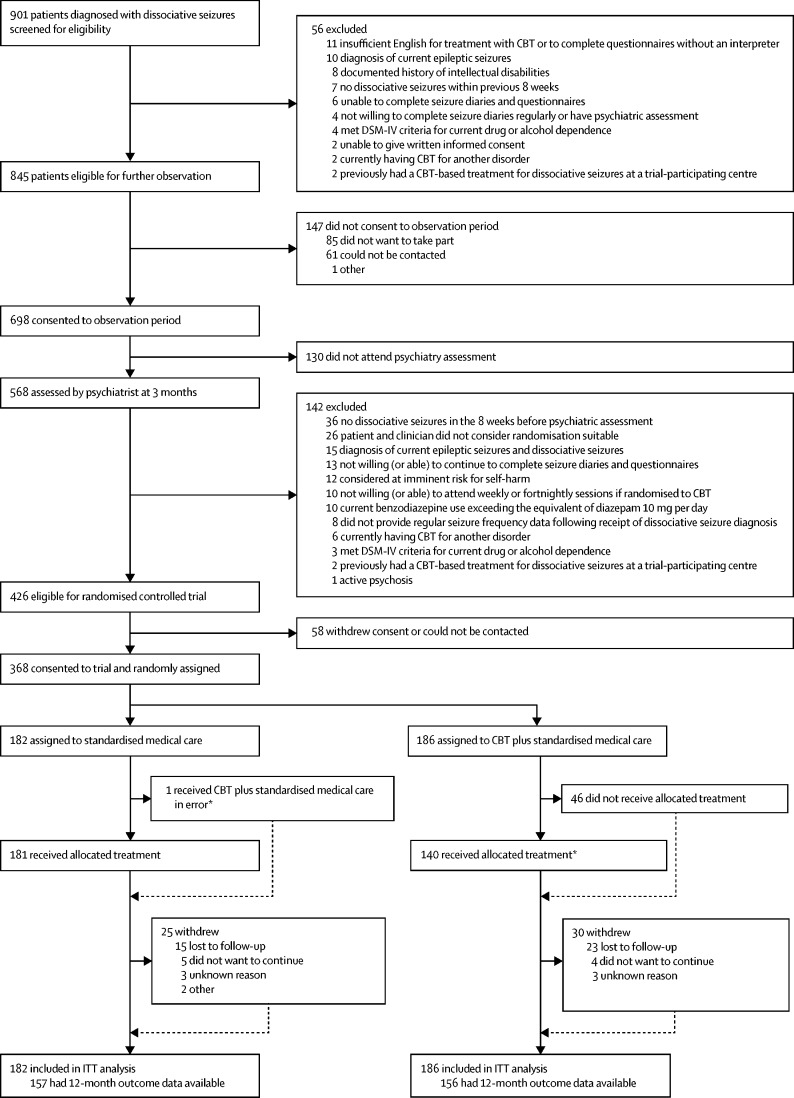
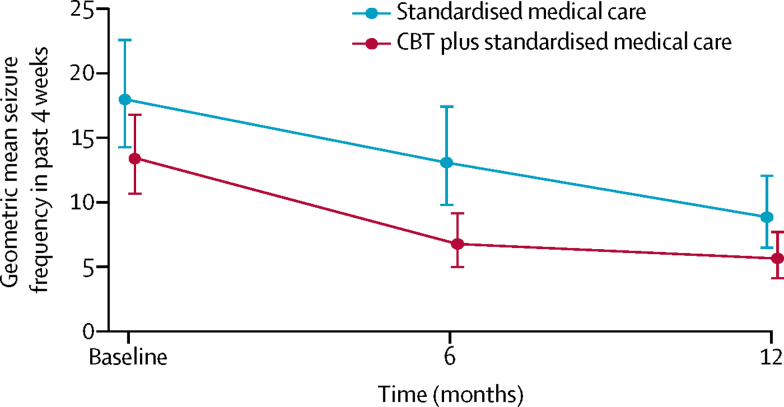
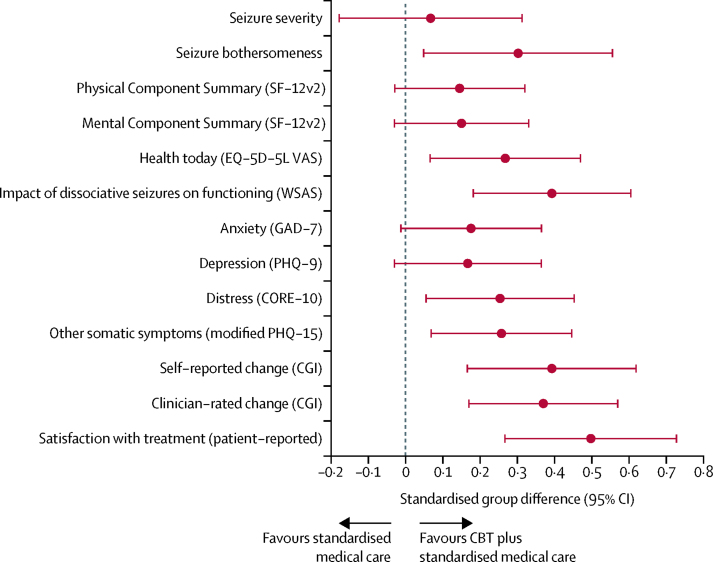
BACKGROUND: Dissociative seizures are paroxysmal events resembling epilepsy or syncope with characteristic features that allow them to be distinguished from other medical conditions. We aimed to compare the effectiveness of cognitive behavioural therapy (CBT) plus standardised medical care with standardised medical care alone for the reduction of dissociative seizure frequency. METHODS: In this pragmatic, parallel-arm, multicentre randomised controlled trial, we initially recruited participants at 27 neurology or epilepsy services in England, Scotland, and Wales. Adults (≥18 years) who had dissociative seizures in the previous 8 weeks and no epileptic seizures in the previous 12 months were subsequently randomly assigned (1:1) from 17 liaison or neuropsychiatry services following psychiatric assessment, to receive standardised medical care or CBT plus standardised medical care, using a web-based system. Randomisation was stratified by neuropsychiatry or liaison psychiatry recruitment site. The trial manager, chief investigator, all treating clinicians, and patients were aware of treatment allocation, but outcome data collectors and trial statisticians were unaware of treatment allocation. Patients were followed up 6 months and 12 months after randomisation. The primary outcome was monthly dissociative seizure frequency (ie, frequency in the previous 4 weeks) assessed at 12 months. Secondary outcomes assessed at 12 months were: seizure severity (intensity) and bothersomeness; longest period of seizure freedom in the previous 6 months; complete seizure freedom in the previous 3 months; a greater than 50% reduction in seizure frequency relative to baseline; changes in dissociative seizures (rated by others); health-related quality of life; psychosocial functioning; psychiatric symptoms, psychological distress, and somatic symptom burden; and clinical impression of improvement and satisfaction. p values and statistical significance for outcomes were reported without correction for multiple comparisons as per our protocol. Primary and secondary outcomes were assessed in the intention-to-treat population with multiple imputation for missing observations. This trial is registered with the International Standard Randomised Controlled Trial registry, ISRCTN05681227, and ClinicalTrials.gov, NCT02325544. FINDINGS: Between Jan 16, 2015, and May 31, 2017, we randomly assigned 368 patients to receive CBT plus standardised medical care (n=186) or standardised medical care alone (n=182); of whom 313 had primary outcome data at 12 months (156 [84%] of 186 patients in the CBT plus standardised medical care group and 157 [86%] of 182 patients in the standardised medical care group). At 12 months, no significant difference in monthly dissociative seizure frequency was identified between the groups (median 4 seizures [IQR 0-20] in the CBT plus standardised medical care group vs 7 seizures [1-35] in the standardised medical care group; estimated incidence rate ratio [IRR] 0·78 [95% CI 0·56-1·09]; p=0·144). Dissociative seizures were rated as less bothersome in the CBT plus standardised medical care group than the standardised medical care group (estimated mean difference -0·53 [95% CI -0·97 to -0·08]; p=0·020). The CBT plus standardised medical care group had a longer period of dissociative seizure freedom in the previous 6 months (estimated IRR 1·64 [95% CI 1·22 to 2·20]; p=0·001), reported better health-related quality of life on the EuroQoL-5 Dimensions-5 Level Health Today visual analogue scale (estimated mean difference 6·16 [95% CI 1·48 to 10·84]; p=0·010), less impairment in psychosocial functioning on the Work and Social Adjustment Scale (estimated mean difference -4·12 [95% CI -6·35 to -1·89]; p<0·001), less overall psychological distress than the standardised medical care group on the Clinical Outcomes in Routine Evaluation-10 scale (estimated mean difference -1·65 [95% CI -2·96 to -0·35]; p=0·013), and fewer somatic symptoms on the modified Patient Health Questionnaire-15 scale (estimated mean difference -1·67 [95% CI -2·90 to -0·44]; p=0·008). Clinical improvement at 12 months was greater in the CBT plus standardised medical care group than the standardised medical care alone group as reported by patients (estimated mean difference 0·66 [95% CI 0·26 to 1·04]; p=0·001) and by clinicians (estimated mean difference 0·47 [95% CI 0·21 to 0·73]; p<0·001), and the CBT plus standardised medical care group had greater satisfaction with treatment than did the standardised medical care group (estimated mean difference 0·90 [95% CI 0·48 to 1·31]; p<0·001). No significant differences in patient-reported seizure severity (estimated mean difference -0·11 [95% CI -0·50 to 0·29]; p=0·593) or seizure freedom in the last 3 months of the study (estimated odds ratio [OR] 1·77 [95% CI 0·93 to 3·37]; p=0·083) were identified between the groups. Furthermore, no significant differences were identified in the proportion of patients who had a
Overview
The claims and statistics of this paper haven’t been checked yet.
Free: it reads the open-access text and checks the first 5 claims that cite a source we can check. Create a free account to check every claim.
Integrity signals
Registry
Cites
Statistics
Figures
Verification
Claims the paper makes
The claims and statistics of this paper haven’t been checked yet.
Free: it reads the open-access text and checks the first 5 claims that cite a source we can check. Create a free account to check every claim.
Claims other papers make about this one
Each is checked against this paper’s own text: does it say what the citing paper says it does?
The source backs part of the claim, not all of it — or backs it for a different population, condition or comparison.
In the citing paper
“The success rate of ReACT is higher than studies using CBT for PNES in adults.”
From Retraining and control therapy for pediatric psychogenic non-epileptic seizures (2020) · cites this paper as [24]
Experimental — accuracy not yet measuredThe source backs part of the claim, not all of it — or backs it for a different population, condition or comparison.
In the citing paper
“In the largest RCT assessing CBT for PNES in adults by targeting fear avoidance, there was no difference in PNES between CBT with standard medical care and standard medical care alone at 12 months after treatment.”
From Retraining and control therapy for pediatric psychogenic non-epileptic seizures (2020) · cites this paper as [24]
Experimental — accuracy not yet measured
Self-check
Percentages, sums and reported differences re-computed from the paper’s own numbers.
The self-check needs the paper’s full text.
Citations
Cites
(1998) · The Journal of Clinical Psychiatry · Cited by 19,139
(1998) · PubMed · Cited by 10,216
Multiple imputation of discrete and continuous data by fully conditional specification
van Buuren, S. (2007) · Statistical Methods in Medical Research · doi:10.1177/0962280206074463 · Cited by 2,827
The Work and Social Adjustment Scale: a simple measure of impairment in functioning
Mundt, J. C., Marks, I. M., Shear, M. K., & Greist, J. M. (2002) · British Journal of Psychiatry · doi:10.1192/bjp.180.5.461 · Cited by 2,515
LaFrance, W. C., Baker, G. A., Duncan, R., Goldstein, L. H., & Reuber, M. (2013) · Epilepsia · doi:10.1111/epi.12356 · Cited by 856
Self-citationCognitive-behavioral therapy for psychogenic nonepileptic seizures: A pilot RCT
Goldstein, L. H., Chalder, T., Chigwedere, C., Khondoker, M. R., Moriarty, J., Toone, B. K., & Mellers, J. D. C. (2010) · Neurology · doi:10.1212/wnl.0b013e3181e39658 · Cited by 477
Self-citationMulticenter Pilot Treatment Trial for Psychogenic Nonepileptic Seizures: A Randomized Clinical Trial
LaFrance, W. C., Baird, G. L., Barry, J. J., Blum, A. S., Frank Webb, A., Keitner, G. I., Machan, J. T., Miller, I., & Szaflarski, J. P. (2014) · JAMA Psychiatry · doi:10.1001/jamapsychiatry.2014.817 · Cited by 440
Psychogenic nonepileptic seizures: review and update
Reuber, M., & Elger, C. E. (2003) · Epilepsy & Behavior · doi:10.1016/s1525-5050(03)00104-5 · Cited by 404
Self-citationPopulation norms for the EQ-5D-3L: a cross-country analysis of population surveys for 20 countries
Janssen, M. F., Szende, A., Cabases, J., Ramos-Goñi, J. M., Vilagut, G., & König, H. H. (2019) · The European Journal of Health Economics · doi:10.1007/s10198-018-0955-5 · Cited by 333
Psychogenic nonepileptic seizures: Answers and questions
Reuber, M. (2008) · Epilepsy & Behavior · doi:10.1016/j.yebeh.2007.11.006 · Cited by 254 · cited 1×
“, Reuber, M., Medford, N., McCrone, P., Murray, J., Richardson, M. P., Pilecka, I., Eastwood, C., Moore, M., Mosweu, I., Perdue, I., Landau, S., Chalder, T., Abe, A. M., Adab, N., ... Yogarajah, M. (2020). Cognitive behavioural therapy for adults with dissociative seizures (CODES): a pragmatic, multicentre, randomised…”
Self-citation
Cited by
Functional neurological disorder: new subtypes and shared mechanisms
Hallett, M., Aybek, S., Dworetzky, B. A., McWhirter, L., Staab, J. P., & Stone, J. (2022) · The Lancet Neurology · doi:10.1016/s1474-4422(21)00422-1 · Cited by 538
Self-citationDiagnosis and management of functional neurological disorder
Aybek, S., & Perez, D. L. (2022) · BMJ · doi:10.1136/bmj.o64 · Cited by 302
A practical review of functional neurological disorder (FND) for the general physician
Bennett, K., Diamond, C., Hoeritzauer, I., Gardiner, P., McWhirter, L., Carson, A., & Stone, J. (2021) · Clinical Medicine · doi:10.7861/clinmed.2020-0987 · Cited by 169
Self-citationSystematic review of psychotherapy for adults with functional neurological disorder
Gutkin, M., McLean, L., Brown, R., & Kanaan, R. A. (2021) · Journal of Neurology, Neurosurgery & Psychiatry · doi:10.1136/jnnp-2019-321926 · Cited by 137
Baker, J., Barnett, C., Cavalli, L., Dietrich, M., Dixon, L., Duffy, J. R., Elias, A., Fraser, D. E., Freeburn, J. L., Gregory, C., et al. (2021) · Journal of Neurology, Neurosurgery & Psychiatry · doi:10.1136/jnnp-2021-326767 · Cited by 129
“► Highlight the importance of forward airflow during speech to achieve smoothness.”
BackgroundSelf-citationInternational online survey of 1048 individuals with functional neurological disorder
Butler, M., Shipston‐Sharman, O., Seynaeve, M., Bao, J., Pick, S., Bradley‐Westguard, A., Ilola, E., Mildon, B., Golder, D., Rucker, J., et al. (2021) · European Journal of Neurology · doi:10.1111/ene.15018 · Cited by 119
“A recent large randomized controlled trial on CBT in functional seizures showed that CBT can improve the length of seizurefree periods as well as improve quality of life versus controls [44].”
BackgroundSelf-citationRecognising and explaining functional neurological disorder
Stone, J., Burton, C., & Carson, A. (2020) · BMJ · doi:10.1136/bmj.m3745 · Cited by 104
Self-citationWhy functional neurological disorder is not feigning or malingering
Edwards, M. J., Yogarajah, M., & Stone, J. (2023) · Nature Reviews Neurology · doi:10.1038/s41582-022-00765-z · Cited by 101
Self-citationRetraining and control therapy for pediatric psychogenic non-epileptic seizures
Fobian, A. D., Long, D. M., & Szaflarski, J. P. (2020) · Annals of Clinical and Translational Neurology · doi:10.1002/acn3.51138 · Cited by 90
“In the largest RCT assessing CBT for PNES in adults by targeting fear avoidance, there was no difference in PNES between CBT with standard medical care and standard medical care alone at 12 months after treatment.(24) These negative results suggest mood is not the most effective PNES treatment target and support the i…”
BackgroundResultUnderstanding Functional Neurological Disorder: Recent Insights and Diagnostic Challenges
Mavroudis, I. A., Kazis, D. A., Kamal, F. Z., Gurzu, I. L., Ciobica, A. S., Pădurariu, M., Novac, B., & Iordache, A. (2024) · International Journal of Molecular Sciences · doi:10.3390/ijms25084470 · Cited by 97
“The long-term persistence of symptoms in FND and their improvement with specific treatments, such as cognitive behavioral therapy, contradict the pattern expected from feigned conditions [4,147,148].”
BackgroundNeuropsychiatric and Cognitive Comorbidities in Epilepsy
Mula, M., Coleman, H., & Wilson, S. J. (2022) · CONTINUUM Lifelong Learning in Neurology · doi:10.1212/con.0000000000001123 · Cited by 79
Self-citationStigma in functional neurological disorder (FND) – A systematic review
McLoughlin, C., McWhirter, L., Pisegna, K., Tijssen, M. A. J., Tak, L. M., Carson, A. J., & Stone, J. (2024) · Clinical Psychology Review · doi:10.1016/j.cpr.2024.102460 · Cited by 69
Self-citationPsychiatric sequelae of traumatic brain injury — future directions in research
Li, L. M., Carson, A. J., & Dams-O’Connor, K. (2023) · Nature Reviews Neurology · doi:10.1038/s41582-023-00853-8 · Cited by 67
Self-citationMyers, L., Sarudiansky, M., Korman, G., & Baslet, G. (2021) · Epilepsy & Behavior Reports · doi:10.1016/j.ebr.2021.100478 · Cited by 47
“Secondary indicators of success include reduced symptom burden [31], and unnecessary use of medical resources [21], improved psychosocial functioning [12,23], decreased health anxiety, greater satisfaction with care [12,15], and a positive change in QOL [17].”
BackgroundMethodInfluentialFunctional neurological disorder in the emergency department
Finkelstein, S. A., Cortel-LeBlanc, M., Cortel‐LeBlanc, A., & Stone, J. (2021) · Academic Emergency Medicine · doi:10.1111/acem.14263 · Cited by 57
Self-citationUpdated Review on the Diagnosis and Primary Management of Psychogenic Nonepileptic Seizure Disorders
Lanzillotti, A. I., Sarudiansky, M., Lombardi, N., Korman, G. P., & D´Alessio, L. (2021) · Neuropsychiatric Disease and Treatment · doi:10.2147/ndt.s286710 · Cited by 56
LaFaver, K., LaFrance, W. C., Price, M. E., Rosen, P. B., & Rapaport, M. (2021) · CNS Spectrums · doi:10.1017/s1092852920002138 · Cited by 48
Goldstein, L. H., Robinson, E. J., Mellers, J. D. C., Stone, J., Carson, A. J., Chalder, T., Reuber, M., Eastwood, C., Landau, S., McCrone, P., et al. (2020) · Psychological Medicine · doi:10.1017/s0033291720001051 · Cited by 48
Self-citationParedes-Echeverri, S., Guthrie, A. J., & Perez, D. L. (2022) · Frontiers in Psychiatry · doi:10.3389/fpsyt.2022.1040911 · Cited by 51
Lin, A., & Espay, A. J. (2021) · Epilepsy & Behavior Reports · doi:10.1016/j.ebr.2021.100469 · Cited by 36
Treatment of Psychogenic Nonepileptic Seizures
Lopez, M., & LaFrance, W. C., Jr. (2022) · Current Neurology and Neuroscience Reports · doi:10.1007/s11910-022-01209-3 · Cited by 47
Evaluation and Treatment of Psychogenic Nonepileptic Seizures
Beimer, N. J., & LaFrance, W. C., Jr. (2022) · Neurologic Clinics · doi:10.1016/j.ncl.2022.03.017 · Cited by 42
Reilly, C. J., Jetté, N., Johnson, E. C., Kariuki, S. M., Meredith, F., Wirrell, E. C., Mula, M., Smith, M. L., Walsh, S., Fong, C. Y., et al. (2023) · Epilepsia · doi:10.1111/epi.17768 · Cited by 41
“110 The impact of PNES on the wider family network including caregivers and siblings also needs more attention.”
BackgroundSelf-citationChildhood trauma in patients with epileptic vs nonepileptic seizures
Yang, T., Roberts, C., Winton‐Brown, T., Lloyd, M., Kwan, P., O'Brien, T. J., Velakoulis, D., Rayner, G., & Malpas, C. B. (2022) · Epilepsia · doi:10.1111/epi.17449 · Cited by 38
Psychiatric Disorders in Children and Adolescents With Psychogenic Nonepileptic Seizures
Hansen, A. S., Rask, C. U., Christensen, A.-E., Rodrigo-Domingo, M., Christensen, J., & Nielsen, R. E. (2021) · Neurology · doi:10.1212/wnl.0000000000012270 · Cited by 35
Psychiatric Comorbidities in Functional Neurologic Symptom Disorder.
Patrón, V. G., Rustomji, Y., Yip, C., & Jenkins, L. M. (2022) · PubMed · Cited by 52
Functional neurological disorder: defying dualism
Stone, J., Hoeritzauer, I., McWhirter, L., & Carson, A. J. (2024) · World Psychiatry · doi:10.1002/wps.21151 · Cited by 37
Self-citationGilmour, G. S., MacIsaac, R., Subotic, A., Wiebe, S., & Josephson, C. B. (2021) · Epilepsy & Behavior · doi:10.1016/j.yebeh.2021.108030 · Cited by 38
Fredwall, M. M., Terry, D., Enciso, L., Burch, M. M., Trott, K., & Albert, D. V. F. (2021) · Epilepsia · doi:10.1111/epi.17031 · Cited by 34
Functional neurological disorder: Engaging patients in treatment
O’Neal, M. A., Dworetzky, B. A., & Baslet, G. C. (2021) · Epilepsy & Behavior Reports · doi:10.1016/j.ebr.2021.100499 · Cited by 41
Gaskell, C., Power, N., Nováková, B., Simmonds‐Buckley, M., Reuber, M., Kellett, S., & Rawlings, G. H. (2023) · Epilepsia · doi:10.1111/epi.17626 · Cited by 33
“31 This included seven items, covering selection bias, more specifically (1) random sequence generation and (2) allocation; performance bias examining (3) blinding of participants and personal; detection bias exploring (4) blinding of outcome assessment; attrition bias investigating (5) incomplete outcome data; report…”
Self-citationThe Financial Burden of Functional Neurological Disorders
Watson, M. M., Woodward, J. J., & Strom, L. A. (2023) · Current Neurology and Neuroscience Reports · doi:10.1007/s11910-023-01298-8 · Cited by 36
Management of Functional Seizures Practice Guideline Executive Summary
Tolchin, B. D., Goldstein, L. H., Reuber, M., Stone, J., Perez, D. L., LaFrance, W. C., Jr., Fobian, A. D., Dorman, J., Hua, L. H., L'Erario, Z. P., et al. (2025) · Neurology · doi:10.1212/wnl.0000000000214466 · Cited by 34
Self-citationFunctional neurological disorders: effective teaching for health professionals
Lehn, A., Navaratnam, D., Broughton, M., Cheah, V., Fenton, A., Harm, K., Owen, D., & Pun, P. (2020) · BMJ Neurology Open · doi:10.1136/bmjno-2020-000065 · Cited by 35
“12 13 In the sections ‘Psychi-atric treatment of FND: case studies’, ‘psychological therapy for non-psychologists’ and ‘physiotherapy for non-physiotherapists’ of the Masterclass, all health professionals involved in the care of FND patients can learn about what is involved in treatment (ie, the…”
BackgroundSaxena, A. R., Godena, E. J., Maggio, J., & Perez, D. L. (2020) · Neuropsychiatric Disease and Treatment · doi:10.2147/ndt.s247119 · Cited by 31
“Improved awareness can be coupled with relaxation exercises (e.g., diaphragmatic breathing, progressive muscle relaxation) to induce the relaxation response.101 We still do not fully understand the role that CBT plays in the treatment of mFND, as highlighted by the recent publication (2020) of the largest randomized c…”
BackgroundMethodInfluentialForoughi, A. A., Nazeri, M., & Asadi‐Pooya, A. A. (2020) · Seizure · doi:10.1016/j.seizure.2020.08.024 · Cited by 31
Goldstein, L. H., Robinson, E. J., Pilecka, I., Perdue, I., Mosweu, I., Read, J., Jordan, H., Wilkinson, M., Rawlings, G. H., Feehan, S. J., et al. (2021) · Health Technology Assessment · doi:10.3310/hta25430 · Cited by 30
Self-citationGoldstein, L. H., Robinson, E. J., Chalder, T., Stone, J., Reuber, M., Medford, N., Carson, A. J., Moore, M., & Landau, S. (2022) · Journal of Psychosomatic Research · doi:10.1016/j.jpsychores.2022.110921 · Cited by 29
Self-citationFactors associated with delay to video-EEG in dissociative seizures
Kerr, W. T., Zhang, X., Hill, C. E., Janio, E. A., Chau, A. M., Braesch, C. T., Le, J. M., Hori, J. M., Patel, A. B., Allas, C. H., et al. (2021) · Seizure · doi:10.1016/j.seizure.2021.02.018 · Cited by 28
“In the CODES trial of treatment of dissociative seizures, patients were eligible for the trial if they had been diagnosed in the last 8 weeks and an appointment for a psychiatrist was made for 3 months later, leading to a potential 5-month delay from diagnosis to initiation of treatment [81].”
MethodFeltz-Cornelis, C. M. V. D., Brabyn, S., Ratcliff, J., Varley, D., Allgar, V. L., Gilbody, S. M., Clarke, C., & Lagos, D. (2021) · Brain Behavior & Immunity - Health · doi:10.1016/j.bbih.2021.100228 · Cited by 28
“…Kompoliti, 2015) to explore the underlying causes (such as historical trauma), occupational therapy, or physiotherapy (Nielsen et al., 2013) to help with any physical symptoms (Goldstein, 2020; Kroenke, 2007; Ruddy, 2005). ork.ac.uk (C. van der Feltz-Corne orm 15 February 2021; Accepted vier Inc.”
BackgroundThe clinical management of functional neurological disorder: A scoping review of the literature
Varley, D., Sweetman, J., Brabyn, S., Lagos, D., & Feltz-Cornelis, C. M. V. D. (2022) · Journal of Psychosomatic Research · doi:10.1016/j.jpsychores.2022.111121 · Cited by 29
“Goldstein and colleagues ’ RCT comparing the effectiveness of CBT and CAU versus CAU for patients with a PNES diagnosis found no statistically-significant difference between the two groups [27].”
Begley, R., Farrell, L., Lyttle, N., Alty, J., Curran, D. B., Williams, S., & Graham, C. D. (2023) · British Journal of Health Psychology · doi:10.1111/bjhp.12643 · Cited by 31
Self-citationGuy, L., Caceres, G. A., Jackson, T., Gorman, S., Wilson, J., Hsieh, Y., Petty, D., Harrison, S., & Pick, S. (2023) · Journal of Neurology · doi:10.1007/s00415-023-12111-4 · Cited by 29
“Provision of cognitive behavioral therapy in addition to standard medical care for functional seizures may also improve a variety of comorbid symptoms [29], which could be influential in terms of perceived quality of life [30].”
BackgroundSelf-citationFunctional seizures are not less important than epilepsy
Asadi‐Pooya, A. A., Brigo, F., Tolchin, B. D., & Valente, K. D. R. (2021) · Epilepsy & Behavior Reports · doi:10.1016/j.ebr.2021.100495 · Cited by 26
A Shift in Approach: Assessment and Treatment of Adults With Functional Neurological Disorder
Keatley, E. S., & Molton, I. R. (2022) · Journal of Health Service Psychology · doi:10.1007/s42843-022-00061-w · Cited by 30
Neurostimulation for the treatment of functional neurological disorder: A systematic review
Gonsalvez, I., Spagnolo, P. A., Dworetzky, B. A., & Baslet, G. C. (2021) · Epilepsy & Behavior Reports · doi:10.1016/j.ebr.2021.100501 · Cited by 28
“Evidence-based treatments for FND are limited, with cognitive behavioral therapy (CBT) and physiotherapy being the most effective interventions [1].”
BackgroundGoldstein, L. H., Robinson, E. J., Chalder, T., Reuber, M., Medford, N., Stone, J., Carson, A. J., Moore, M., & Landau, S. (2022) · Seizure · doi:10.1016/j.seizure.2022.01.016 · Cited by 25
“Other variables included were: trial arm, baseline measure of outcome, and trial centre; and all variables in the imputation step were included in the analysis models, as described previously [2,3].”
InfluentialSelf-citationNeuropsychiatric Treatment Approaches for Functional Neurological Disorder: A How to Guide
Finkelstein, S. A., Adams, C. N., Saxena, A. R., Perez, D. L., & Tuttle, M. C. (2022) · Seminars in Neurology · doi:10.1055/s-0042-1742773 · Cited by 24
Psychogenic nonepileptic seizure: An empathetic, practical approach
Tilahun, B. B. S., & Bautista, J. F. (2022) · Cleveland Clinic Journal of Medicine · doi:10.3949/ccjm.89a.21109 · Cited by 27
Russell, L. A., Abbass, A. A., & Allder, S. J. (2022) · Epilepsy & Behavior · doi:10.1016/j.yebeh.2022.108657 · Cited by 25
The CODES trial for dissociative seizures: a landmark study and inflection point
Perez, D. L. (2020) · The Lancet Psychiatry · doi:10.1016/s2215-0366(20)30143-7 · Cited by 25
Cognitive Behavioral Therapy: Principles, Science, and Patient Selection in Neurology
Carson, A. J., & McWhirter, L. (2022) · Seminars in Neurology · doi:10.1055/s-0042-1750851 · Cited by 28
Self-citationReliability of additional reported seizure manifestations to identify dissociative seizures
Kerr, W. T., Zhang, X., Janio, E. A., Karimi, A. H., Allas, C. H., Dubey, I., Sreenivasan, S. S., Bauirjan, J., D’Ambrosio, S. R., Banna, M. A., et al. (2020) · Epilepsy & Behavior · doi:10.1016/j.yebeh.2020.107696 · Cited by 22
“Identifying patients with DS early can lead to triage towards cognitive behavioral therapy designed for DS, or potentially psychodynamic therapy, and avoidance of adverse effects of antiseizure medication and intubation for prolonged dissociative seizures [8-10].”
BackgroundFobian, A. D., & Szaflarski, J. P. (2021) · Epilepsy & Behavior Reports · doi:10.1016/j.ebr.2021.100479 · Cited by 21
“Finally, although improving health-related quality of life and other secondary outcomes in patients with FND is undeniably beneficial to patients, it is premature to abandon symptom frequency and severity as primary outcomes given there has only been one large, adequately powered RCT assessing a treatment for FND [13].”
BackgroundResultInfluentialPsychogenic Nonepileptic Seizures in Children and Adolescents
Patel, H., Blake, H. S., & Dunn, D. (2021) · Indian Pediatrics · doi:10.1007/s13312-021-2167-9 · Cited by 22
Chalder, T., Patel, M., Hotopf, M., Moss-Morris, R., Ashworth, M., Watts, K., David, A. S., McCrone, P., Husain, M., Garrood, T., et al. (2021) · Psychological Medicine · doi:10.1017/s0033291721001793 · Cited by 20
“…to an ongoing RCT at the time of recruitment that was evaluating a specific cognitive behavioural approach for Dissociative Seizures, now published (Goldstein et al., 2020)]; primary drug or alcohol dependence disorder; benzodiazepine use exceeding the equivalent of 10 mg…”
BackgroundSelf-citationPerformance of the GAD-7 in adults with dissociative seizures
Goldstein, L. H., Vitoratou, S., Stone, J., Chalder, T., Lopez, M. B., Carson, A. J., & Reuber, M. (2022) · Seizure · doi:10.1016/j.seizure.2022.11.011 · Cited by 22
“Addressing negative thinking is an aspect of the CBT intervention used in the CODES trial [19,20].”
InfluentialSelf-citationPatten, R. V., Blum, A. S., Correia, S., Philip, N. S., Allendorfer, J. B., Gaston, T. E., Goodman, A. M., Grayson, L. E., Tocco, K., Vogel, V., et al. (2024) · Epilepsia · doi:10.1111/epi.18137 · Cited by 21
“16 FS can be difficult to treat due to complex neuropsychiatric comorbidities, 1,10,17 but psychological treatments can reduce seizures and improve mental health in FS. 7,8,18 Although epilepsy differs from FS etiologically, psycho-therapies can also benefit patients with epilepsy, 6,19 possibly due to shared neurobio…”
InfluentialGonzález‐Herrero, B., Happe, F. G. E., Nicholson, T. R., Morgante, F., Pagonabarraga, J., Deeley, Q., & Edwards, M. J. (2024) · Brain and Behavior · doi:10.1002/brb3.70168 · Cited by 22
Self-citationPsychogenic nonepileptic seizures: clinical characteristics and outcome
Volbers, B., Walther, K., Kurzbuch, K., Erdmann, L., Gollwitzer, S., Lang, J., Onugoren, M. D., Schwarz, M., Schwab, S., & Hamer, H. M. (2022) · Brain and Behavior · doi:10.1002/brb3.2567 · Cited by 21
Sustained improvement with mindfulness-based therapy for psychogenic nonepileptic seizures
Baslet, G., Ridlon, R., Raynor, G., Gonsalvez, I., & Dworetzky, B. A. (2022) · Epilepsy & Behavior · doi:10.1016/j.yebeh.2021.108478 · Cited by 19
White Matter Changes after Neurobehavioral Therapy for Functional Seizures
Mueller, C., Goodman, A. M., Allendorfer, J. B., Nenert, R., Gaston, T. E., Grayson, L. E., Correia, S., Philip, N. S., LaFrance, W. C., & Szaflarski, J. P. (2023) · Annals of Neurology · doi:10.1002/ana.26665 · Cited by 19
Management of Functional Neurological Disorders (FND): Experience from a Swiss FND Clinic
Barbey, A., Pjanic, I., Studer, H., Bischoff, N., Bassetti, C. L., & Aybek, S. (2022) · Clinical and Translational Neuroscience · doi:10.3390/ctn6010002 · Cited by 21
“Nevertheless, in a recently published study by Goldstein and colleagues [61] on the effectiveness of CBT on dissociative seizures at long-term follow-up at 12 months (randomized controlled trial and multicenter study, CBT compared with standard care alone), no statistically significant advantage of…”
BackgroundPsychiatrists’ attitudes towards functional neurological disorders: results from a national survey
Marotta, A., Lasalvia, A., Fiorio, M., Zanalda, E., Sciascio, G. D., Palumbo, C., Papola, D., Barbui, C., & Tinazzi, M. (2023) · Frontiers in Psychiatry · doi:10.3389/fpsyt.2023.1216756 · Cited by 20
Senf, P., Hoheisel, M., Devine, J., Frank, A., Obermann, L., Rose, M., & Hinkelmann, K. (2021) · Journal of Neurology · doi:10.1007/s00415-021-10652-0 · Cited by 19
Rawlings, G. H., Nováková, B., Beail, N., & Reuber, M. (2021) · Seizure · doi:10.1016/j.seizure.2021.07.021 · Cited by 20
Self-citationKustra-Mulder, A., Löwe, B., & Weigel, A. (2023) · Journal of Psychosomatic Research · doi:10.1016/j.jpsychores.2023.111485 · Cited by 18
LaFrance, W. C., Jr., Tedesco, R., Baird, G. L., Wincze, J. P., Tocco, K., & Anderson, J. (2023) · Seizure · doi:10.1016/j.seizure.2023.03.005 · Cited by 18
Functional Neurological Disorder Among Sexual and Gender Minority People
Lerario, M. P., Rosendale, N., Waugh, J. L., Turban, J. L., & Maschi, T. M. (2023) · Neurologic Clinics · doi:10.1016/j.ncl.2023.02.010 · Cited by 17
Velani, H., & Gledhill, J. (2021) · Seizure · doi:10.1016/j.seizure.2021.09.006 · Cited by 17
Kerr, W. T., Tatekawa, H., Lee, J. K., Karimi, A. H., Sreenivasan, S. S., O’Neill, J., Smith, J. M., Hickman, L. B., Savic, I., Nasrullah, N., et al. (2022) · Epilepsy & Behavior · doi:10.1016/j.yebeh.2022.108858 · Cited by 18
Stager, L., Szaflarski, J. P., & Fobian, A. D. (2021) · Epilepsy & Behavior Reports · doi:10.1016/j.ebr.2021.100503 · Cited by 16
Rioux, M., Mamman, R., Byworth, M., Panenka, W. J., Howard, A. K., Perez, D. L., Schmidt, J., Courchesne, C., LeMoult, J., Heran, M. K. S., et al. (2024) · BMJ Neurology Open · doi:10.1136/bmjno-2024-000666 · Cited by 17
“…of memory symptoms was assessed using a one-item scale adapted from the COgnitive Behavioural Therapy for Dissociative non-Epileptic Seizures trial 32 : ‘How bothersome were your cognitive symptoms overall in the past 4 weeks?’ rated on a 7-point scale going from not bothered at all to very…”
MethodLenio, S., Kerr, W. T., Watson, M. M., Baker, S., Bush, C., Rajic, A., & Strom, L. A. (2021) · Epilepsy & Behavior · doi:10.1016/j.yebeh.2021.107767 · Cited by 18
“However, as we showed, accurate diagnosis of DS substantially reduces healthcare utilization, and others have shown quality of life improvements with treatment as well as increased risk of death in patients with DS [13, 48, 50].”
BackgroundValidation of the PHQ-9 in adults with dissociative seizures
Lopez, M. B., Goldstein, L. H., Robinson, E. J., Vitoratou, S., Chalder, T., Carson, A. J., Stone, J., & Reuber, M. (2021) · Journal of Psychosomatic Research · doi:10.1016/j.jpsychores.2021.110487 · Cited by 17
Self-citationCastillo, J. M., Beton, E., Coman, C., Howell, B., Burness, C., Martlew, J., Russell, L. A., Town, J. M., Abbass, A. A., Algorta, G. P., et al. (2022) · Psychoanalytic Psychotherapy · doi:10.1080/02668734.2021.2018623 · Cited by 16
Self-citationWilliams, I. A., Morris, P. G., McCowat, M., & Gillespie, D. C. (2023) · Seizure · doi:10.1016/j.seizure.2023.01.016 · Cited by 16
Moro, P., Lattanzi, S., Beier, C. P., Bonaventura, C. D., & Irelli, E. C. (2024) · Epilepsy & Behavior · doi:10.1016/j.yebeh.2024.109981 · Cited by 16
Vaccine-Induced Functional Neurological Disorders in the Covid-19 Era
de Souza, A., Jacques, R., & Mohan, S. (2022) · Canadian Journal of Neurological Sciences / Journal Canadien des Sciences Neurologiques · doi:10.1017/cjn.2022.48 · Cited by 16
Gutkin, M., Brown, R. J., McLean, L., Streimer, J. H., & Kanaan, R. (2021) · Journal of Neurology · doi:10.1007/s00415-021-10797-y · Cited by 16
Sørensen, C. W., Sonne, C., Sacha, M., Kristiansen, M., Hannemose, S. Z., Stein, D. J., & Carlsson, J. M. (2023) · Journal of Affective Disorders · doi:10.1016/j.jad.2023.01.038 · Cited by 14
AlKhaldi, N. A., Paredes-Aragón, E. M., Kim, D. D., Yu, Y. J., AlKhateeb, M., & Mirsattari, S. M. (2023) · Epilepsy Research · doi:10.1016/j.eplepsyres.2023.107279 · Cited by 14
Gaskell, C., Power, N., Nováková, B., Simmonds‐Buckley, M., Kerr, W. T., Reuber, M., Kellett, S., & Rawlings, G. H. (2024) · Seizure · doi:10.1016/j.seizure.2024.05.016 · Cited by 15
“Five of the studies reported a significant improvement in scores [15, 32,40,64,71], and three also described an improvement which was either not statistically significant [15] or for which the significance level was not reported [51,65].”
InfluentialSelf-citationTolchin, B. D., Baslet, G. C., Carson, A. J., Dworetzky, B. A., Goldstein, L. H., LaFrance, W. C., Jr., Martino, S., Perez, D. L., Reuber, M., Stone, J., et al. (2021) · Epilepsy & Behavior Reports · doi:10.1016/j.ebr.2021.100494 · Cited by 16
Self-citationFunctional neurological disorder: Practical management
Dworetzky, B. A., & Baslet, G. C. (2025) · Neurotherapeutics · doi:10.1016/j.neurot.2025.e00612 · Cited by 15
“The primary outcome measure (monthly seizure frequency at 12 months from randomization) did not differentiate between the two groups; however, many other secondary outcome measures did (including seizure “ both-ersomeness ” , quality of life, functioning, longest seizure free duration) [69].”
Functional seizures across the adult lifespan: female sex, delay to diagnosis and disability
Kerr, W. T., Sreenivasan, S. S., Allas, C. H., Janio, E. A., Karimi, A. H., Dubey, I., D’Ambrosio, S. R., Smith, J. M., Engel, J., Feusner, J. D., et al. (2021) · Seizure · doi:10.1016/j.seizure.2021.07.025 · Cited by 13
“Prompt diagnosis of FS, generally with ictal video-EEG, has been associated with improved quality of life, seizure control, and healthcare utilization [10-16].”
BackgroundLoewenberger, A., Davies, K., Agrawal, N., Poole, N. A., & Cope, S. R. (2021) · Epilepsy & Behavior · doi:10.1016/j.yebeh.2021.107817 · Cited by 13
Self-citationThomas, S. T., Thomas, E. T., Schembri, E., Lehn, A., & Palmer, D. D. (2025) · BMJ Neurology Open · doi:10.1136/bmjno-2025-001150 · Cited by 12
Asadi‐Pooya, A. A., Malekpour, M., Zamiri, B., Kashkooli, M., & Firouzabadi, N. (2023) · Epilepsia Open · doi:10.1002/epi4.12749 · Cited by 12
Argento, E., Omene, E., Jaeger, A. H., Kertes, A., Mitchell, K. A., Necyk, C., Thielking, P. D., & Lewis, E. C. (2023) · Frontiers in Neuroscience · doi:10.3389/fnins.2023.1197409 · Cited by 12
“Current models propose that FS are a disorder of brain networks, with psychological, biological and social predisposing, precipitating, and perpetuating factors (LaFrance et al., 2014; Brown and Reuber, 2016; Goldstein et al., 2020).”
BackgroundInfluentialVance, R., Clarke, S., O’Keeffe, F. M., Galligan, T., Doherty, A. M., Flynn, C., Kelleher, E., Laffan, A., Doherty, C. P., & Gillan, D. (2024) · Brain and Behavior · doi:10.1002/brb3.3362 · Cited by 12
Taylor, J., Jonsson, G., Paruk, L., & Philippides, A. (2020) · Epilepsy & Behavior · doi:10.1016/j.yebeh.2020.107578 · Cited by 14
Richardson, M., Kleinstäuber, M., & Wong, D. K. (2020) · Frontiers in Neurology · doi:10.3389/fneur.2020.586359 · Cited by 13
Self-citationPolich, G. R., Zalanowski, S., Maney, J., Perez, D. L., Baslet, G. C., Maggio, J., O’Neal, M. A., Dworetzky, B. A., & Herman, S. D. (2022) · Neurorehabilitation · doi:10.3233/nre-228006 · Cited by 13
“, 2013) alongside skills-based psychotherapy (Baslet et al., 2020; Espay et al., 2019; Goldstein et al., 2020; Sharpe et al., 2011).”
Patel, M., James, K., Moss-Morris, R. E., Ashworth, M. J., Husain, M., Hotopf, M. H., David, A. S., McCrone, P., Landau, S., Chalder, T., et al. (2020) · BMC Family Practice · doi:10.1186/s12875-020-01269-9 · Cited by 12
Self-citationMichaelis, R., Schlömer, S., Lindemann, A., Behrens, V., Grönheit, W., Pertz, M., Rammé, S., Seidel, S., Wehner, T., Wellmer, J., et al. (2021) · Frontiers in Integrative Neuroscience · doi:10.3389/fnint.2021.754613 · Cited by 14
Self-citationBeal, E. M., Coates, P., & Pelser, C. (2022) · Clinical Psychology Review · doi:10.1016/j.cpr.2022.102146 · Cited by 13
Koreki, A., Eccles, J., Garfinkel, S. N., Critchley, H., Cope, S. R., Agrawal, N., Edwards, M. J., & Yogarajah, M. (2022) · Epilepsy & Behavior · doi:10.1016/j.yebeh.2022.108710 · Cited by 11
“However, this treatment is not widely available, and a recent multicenter trial in patients with FS compared CBT to standardized medical care demonstrated no difference in the primary outcome measure of seizure frequency, though there was some improvement in secondary outcomes [4].”
Self-citationWoodward, J. J., Asadi‐Pooya, A. A., Mildon, B., & Tolchin, B. D. (2023) · Epilepsy & Behavior Reports · doi:10.1016/j.ebr.2023.100610 · Cited by 11
“Patients may also be discouraged by the lack of available treatments that sustainably reduce seizure frequency [14].”
BackgroundPatten, R. V., Chan, L., Tocco, K., Mordecai, K. L., Altalib, H. H., Cotton, E., Correia, S., Gaston, T. E., Grayson, L. E., Martin, A. M., et al. (2024) · Journal of Neuropsychiatry · doi:10.1176/appi.neuropsych.20230138 · Cited by 11
Metadata
- Authors
- Goldstein, L. H., Robinson, E. J., Mellers, J. D. C., Stone, J., Carson, A., Reuber, M., Medford, N., McCrone, P., Murray, J., Richardson, M. P., Pilecka, I., Eastwood, C., Moore, M., Mosweu, I., Perdue, I., Landau, S., Chalder, T., Abe, A.-M., Adab, N., Agrawal, N., Allroggen, H., Alvares, D., Andrews, T., Angus-Leppan, H., Aram, J., Armstrong, R., Atalaia, A., Bagary, M., Baldellou Lopez, M., Bennett, M., Black, T., Blackburn, D., Bodani, M., Broadhurst, M., Brockington, A., Bruno, E., Buckley, M., Burness, C., Callaghan, H., Chalmers, R., Chong, S., Chowdhury, M., Chowdury, F., Cikurel, K., Cocco, G., Cock, H., Cooper, S., Cope, S., Copping, A., Day, E., Delamont, R., Dennis, G., Derry, C., Devlin, R., Dickson, J. M., Diehl, B., Donnelly, C., Duncan, S., Edwards, M., Ellawella, S., Ellis, C., Elvish, J., Elwes, R., Eriemo, S., Eriksson, S., Evans, K., Faruqui, R., Feehan, S., Finnerty, G., Flores, L., Firth, N., Fung, R., Gardiner, P., Graham, C., Green-Thompson, Z., Grunewald, R., Hadden, R., Hamandi, K., Harding, R., Harikrishnan, S., Harrison, S., Healy, H., Hewamadduma, C., Higgins, S., Howell, S., Hunt, H., Hussain, A., Innocente, M., Jensch, G., Johnson, M., Jordan, H., Karlsson, J., Kelso, A., Kemp, S., Knibb, J., Kock, N., Koutroumanidis, M., Kovac, S., Kumar, G., Laker, A., Leschziner, G., Liu, R., Lozsadi, D., Ludwig, L., MacDonald, B., MacGregor, L., Maguire, M., Manford, M., Martino, D., McCorry, D., McGorlick, A., McKeown, K., McKevitt, F., Meadow, A., Memon, S., Miorelli, A., Mitchell, C., Mitchell, T. N., Moffitt, V, Moran, N., Morgan-Boon, A., Moriarty, J., Mula, M., Mullatti, N., Nashef, L., O'Hara, D., Oakley, L., O'Sullivan, S., Page, L., Patel, D., Petrochilos, P., Phoenix, D., Pickerell, W., Pieters, T., Poole, N., Price, G., Protheroe, D., Pullicino, P., Purnell, J., Quirk, J., Rajakulendran, S., Read, J., Ridha, B., Rockliffe-Fidler, C., Rowbottom, C., Rugg-Gunn, F., Sachar, A., Saha, R., Saldanha, G., Samarasekera, S., Sanchez Sanchez, V, Santhouse, A., Scholes, K., Shetty, A., Shotbolt, P., Simkiss, R., Singh, J., Sivagnanasundaram, J., Slaght, S., Smith, P., Sokhi, D., Stanton, B., Suvorova, L., Tahir, T., Taylor, R., Teare, L., Tedesco, L., Teo, J., Thorpe, J., Toplis, L., Tsakopoulou, M., Tylova, I., Vick, T., Vinnicombe, J., Walker, M., Walsh, C., Watson, G., Webb, T., Wehner, T., Welch, K., Weyrich, K., Whittaker, M., Wickremaratchi, M., Wicks, L., & Yogarajah, M.
- Affiliations
- King's College London (GB)
- South London and Maudsley NHS Foundation Trust (GB)
- University of Edinburgh (GB)
- Royal Hallamshire Hospital (GB)
- London South Bank University (GB)
- Corresponding author
- Goldstein, Laura H
- ORCID
- Goldstein, Laura H
- Robinson, Emily J
- Mellers, John D C
- Stone, Jon
- Carson, Alan
- Reuber, Markus
- Medford, Nick
- McCrone, Paul
- Murray, Joanna
- Richardson, Mark P
- Pilecka, Izabela
- Eastwood, Carole
- Mosweu, Iris
- Perdue, Iain
- Landau, Sabine
- Chalder, Trudie
- Agrawal, N
- Atalaia, A
- Blackburn, D
- Brockington, A
- Bruno, E
- Burness, C
- Callaghan, H
- Chong, S
- Cock, H
- Cope, S
- Dickson, J.M.
- Diehl, B
- Duncan, S
- Edwards, M
- Eriksson, S
- Faruqui, R
- Feehan, S
- Finnerty, G
- Flores, L
- Firth, N
- Graham, C
- Hadden, R
- Hamandi, K
- Harding, R
- Harikrishnan, S
- Healy, H
- Hewamadduma, C
- Hussain, A
- Jordan, H
- Kemp, S
- Kovac, S
- Leschziner, G
- Ludwig, L
- Manford, M
- Martino, D
- Mula, M
- Nashef, L
- Patel, D
- Petrochilos, P
- Poole, N
- Protheroe, D
- Pullicino, P
- Purnell, J
- Rajakulendran, S
- Read, J
- Ridha, B
- Sachar, A
- Samarasekera, S
- Shotbolt, P
- Simkiss, R
- Sokhi, D
- Stanton, B
- Tahir, T
- Taylor, R
- Teo, J
- Walker, M
- Webb, T
- Wehner, T
- Whittaker, M
- Yogarajah, M
- Venue
- The Lancet Psychiatry
- Publisher
- Elsevier BV
- Published
- 2020-06
- Volume
- 7
- Issue
- 6
- Pages
- 491-505
- ISSN
- 2215-0366 (ISSN-L)
- PMC
- PMC7242906
- OpenAlex
- W3026573156
- Cited by
- 287
- References
- 39
- Citations by year
- 2026: 33 · 2025: 36 · 2024: 47 · 2023: 53 · 2022: 50 · 2021: 49 · 2020: 19
- FWCI
- 31.19
- Type
- journal article
- Language
- en
- Open access
- hybrid
- doi.org
- Licence
- cc-by
- www.elsevier.com/tdm/userlicense/1.0/ (tdm)
- www.elsevier.com/legal/tdmrep-license (tdm)
- creativecommons.org/licenses/by/4.0/ (vor)
- Locations
- The Lancet Psychiatry (publishedVersion, cc-by)
- PubMed Central (publishedVersion, cc-by)
- PubMed (publishedVersion)
- White Rose Research Online (University of Leeds, The University of Sheffield, University of York) (acceptedVersion)
- ORCA Online Research @Cardiff (Cardiff University) (acceptedVersion)
- LSHTM Research Online (London School of Hygiene and Tropical Medicine) (acceptedVersion)
- Strathprints: The University of Strathclyde institutional repository (University of Strathclyde) (acceptedVersion)
- London School of Economics and Political Science Research Online (London School of Economics and Political Science) (acceptedVersion)
- St George's Online Research Archive (St George's University of London) (acceptedVersion)
- London School of Economics and Political Science Theses Online (London School of Economics and Political Science) (submittedVersion)
- UCL Discovery (University College London) (submittedVersion)
- Research Portal (King's College London) (submittedVersion, cc-by)
- Edinburgh Research Explorer (University of Edinburgh) (submittedVersion, cc-by)
- Funders
- National Institute for Health Research
- Health Technology Assessment Programme (12/26/01)
- National Rosacea Society
- King's College London
- Guy's and St Thomas' NHS Foundation Trust
- Manchester Biomedical Research Centre
- Topics
- Health Sciences › Medicine › Psychiatry and Mental health › Psychosomatic Disorders and Their Treatments
- Health Sciences › Medicine › Clinical Neurology › Epilepsy research and treatment
- Social Sciences › Psychology › Experimental and Cognitive Psychology › Anxiety, Depression, Psychometrics, Treatment, Cognitive Processes
- Keywords
- psychogenic non-epileptic seizures, cognitive behavioral therapy, seizure frequency, seizure severity, health-related quality of life, psychological distress, somatic symptoms, seizure freedom, neuropsychiatry, psychosomatic medicine, psychoneurology, psychosomatic psychiatry
- MeSH terms
- Adult, Depressive Disorder, Dissociative Disorders, England, Female, Humans, Male, Middle Aged, Psychiatric Status Rating Scales, Quality of Life, Scotland, Seizures, Severity of Illness Index, Wales, Cognitive Behavioral Therapy, Treatment Outcome, Patient Satisfaction, Intention to Treat Analysis
About these checks
Registry, retraction, Cites and statistics results are computed, not judged, with one exception: a printed reference that no index lists is read once by a model before it counts as a citation error. Claims are extracted by a model and kept only when their quote appears verbatim in the text; each cited source is then checked, with a model’s help, for whether it says what the claim relies on. Those verdicts can be wrong — read the claim’s quote and the cited source before relying on one.
Statistics and arithmetic are recomputed, not judged.
Confidence bands are shown only for fields calibrated on our annotated test set. None is calibrated yet, so no band is shown.
What counts as a claim ›How we measure confidence ›How we check this ›
Are you an author, or do you see a problem with this page? Request a review
Data sources
Bibliographic data: Semantic Scholar, OpenAlex, Crossref.
Contains information from the Semantic Scholar Academic Graph Datasets, made available under the ODC Attribution License (ODC-BY 1.0).
Semantic Scholar’s data is described in: Kinney, R., et al. (2023). The Semantic Scholar Open Data Platform. arXiv:2301.10140.
