

Cognitive behavioural therapy for adults with dissociative seizures (CODES): a pragmatic, multicentre, randomised controlled trial
Open accessThe DOI matches its Crossref record; 37 of the 39 references it cites were found in a registry or an index.
Abstract
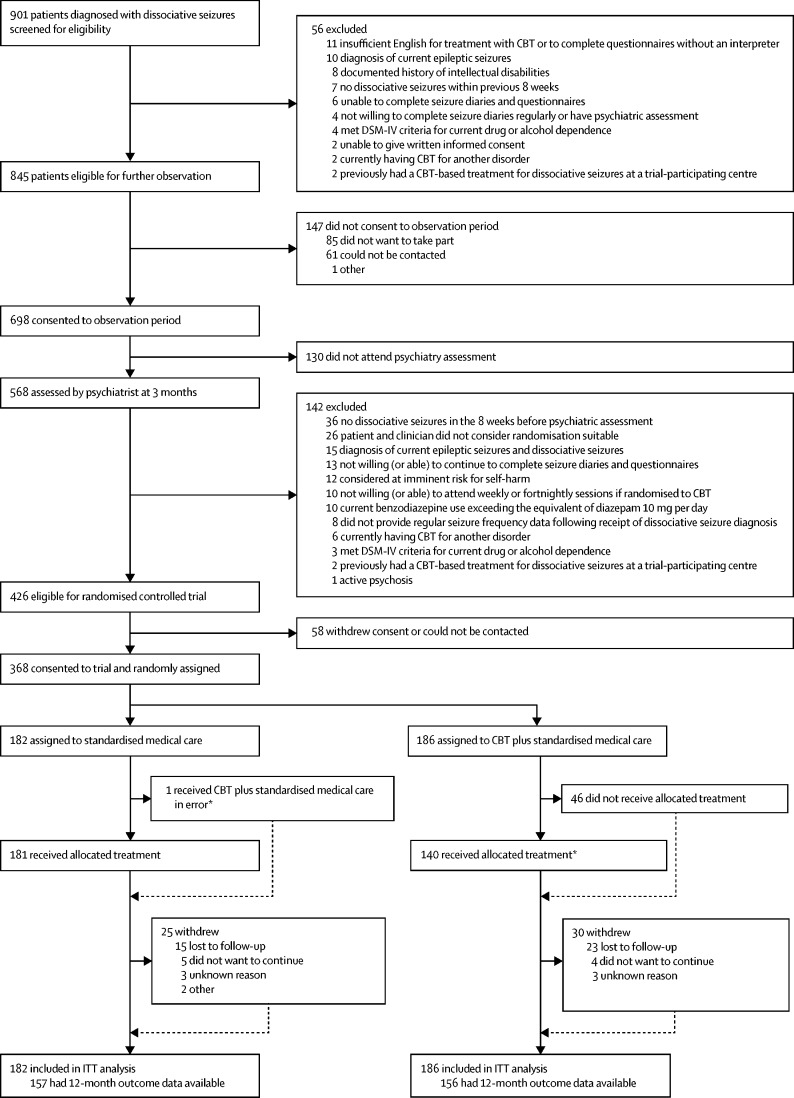
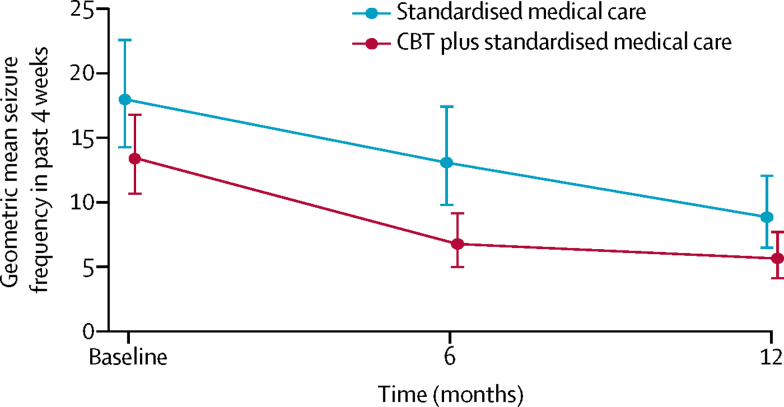
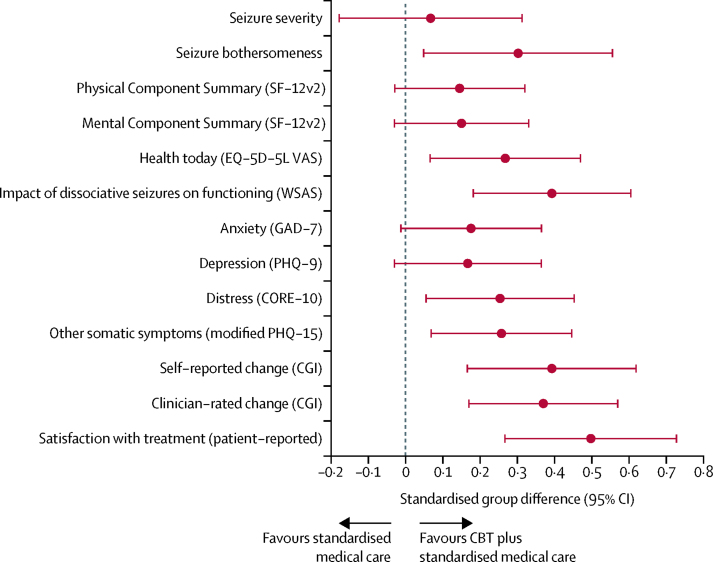
BACKGROUND: Dissociative seizures are paroxysmal events resembling epilepsy or syncope with characteristic features that allow them to be distinguished from other medical conditions. We aimed to compare the effectiveness of cognitive behavioural therapy (CBT) plus standardised medical care with standardised medical care alone for the reduction of dissociative seizure frequency. METHODS: In this pragmatic, parallel-arm, multicentre randomised controlled trial, we initially recruited participants at 27 neurology or epilepsy services in England, Scotland, and Wales. Adults (≥18 years) who had dissociative seizures in the previous 8 weeks and no epileptic seizures in the previous 12 months were subsequently randomly assigned (1:1) from 17 liaison or neuropsychiatry services following psychiatric assessment, to receive standardised medical care or CBT plus standardised medical care, using a web-based system. Randomisation was stratified by neuropsychiatry or liaison psychiatry recruitment site. The trial manager, chief investigator, all treating clinicians, and patients were aware of treatment allocation, but outcome data collectors and trial statisticians were unaware of treatment allocation. Patients were followed up 6 months and 12 months after randomisation. The primary outcome was monthly dissociative seizure frequency (ie, frequency in the previous 4 weeks) assessed at 12 months. Secondary outcomes assessed at 12 months were: seizure severity (intensity) and bothersomeness; longest period of seizure freedom in the previous 6 months; complete seizure freedom in the previous 3 months; a greater than 50% reduction in seizure frequency relative to baseline; changes in dissociative seizures (rated by others); health-related quality of life; psychosocial functioning; psychiatric symptoms, psychological distress, and somatic symptom burden; and clinical impression of improvement and satisfaction. p values and statistical significance for outcomes were reported without correction for multiple comparisons as per our protocol. Primary and secondary outcomes were assessed in the intention-to-treat population with multiple imputation for missing observations. This trial is registered with the International Standard Randomised Controlled Trial registry, ISRCTN05681227, and ClinicalTrials.gov, NCT02325544. FINDINGS: Between Jan 16, 2015, and May 31, 2017, we randomly assigned 368 patients to receive CBT plus standardised medical care (n=186) or standardised medical care alone (n=182); of whom 313 had primary outcome data at 12 months (156 [84%] of 186 patients in the CBT plus standardised medical care group and 157 [86%] of 182 patients in the standardised medical care group). At 12 months, no significant difference in monthly dissociative seizure frequency was identified between the groups (median 4 seizures [IQR 0-20] in the CBT plus standardised medical care group vs 7 seizures [1-35] in the standardised medical care group; estimated incidence rate ratio [IRR] 0·78 [95% CI 0·56-1·09]; p=0·144). Dissociative seizures were rated as less bothersome in the CBT plus standardised medical care group than the standardised medical care group (estimated mean difference -0·53 [95% CI -0·97 to -0·08]; p=0·020). The CBT plus standardised medical care group had a longer period of dissociative seizure freedom in the previous 6 months (estimated IRR 1·64 [95% CI 1·22 to 2·20]; p=0·001), reported better health-related quality of life on the EuroQoL-5 Dimensions-5 Level Health Today visual analogue scale (estimated mean difference 6·16 [95% CI 1·48 to 10·84]; p=0·010), less impairment in psychosocial functioning on the Work and Social Adjustment Scale (estimated mean difference -4·12 [95% CI -6·35 to -1·89]; p<0·001), less overall psychological distress than the standardised medical care group on the Clinical Outcomes in Routine Evaluation-10 scale (estimated mean difference -1·65 [95% CI -2·96 to -0·35]; p=0·013), and fewer somatic symptoms on the modified Patient Health Questionnaire-15 scale (estimated mean difference -1·67 [95% CI -2·90 to -0·44]; p=0·008). Clinical improvement at 12 months was greater in the CBT plus standardised medical care group than the standardised medical care alone group as reported by patients (estimated mean difference 0·66 [95% CI 0·26 to 1·04]; p=0·001) and by clinicians (estimated mean difference 0·47 [95% CI 0·21 to 0·73]; p<0·001), and the CBT plus standardised medical care group had greater satisfaction with treatment than did the standardised medical care group (estimated mean difference 0·90 [95% CI 0·48 to 1·31]; p<0·001). No significant differences in patient-reported seizure severity (estimated mean difference -0·11 [95% CI -0·50 to 0·29]; p=0·593) or seizure freedom in the last 3 months of the study (estimated odds ratio [OR] 1·77 [95% CI 0·93 to 3·37]; p=0·083) were identified between the groups. Furthermore, no significant differences were identified in the proportion of patients who had a
Overview
The claims and statistics of this paper haven’t been checked yet.
Free: it reads the open-access text and checks the first 5 claims that cite a source we can check. Create a free account to check every claim.
Integrity signals
Registry
Cites
Statistics
Figures
Verification
Claims the paper makes
The claims and statistics of this paper haven’t been checked yet.
Free: it reads the open-access text and checks the first 5 claims that cite a source we can check. Create a free account to check every claim.
Claims other papers make about this one
Each is checked against this paper’s own text: does it say what the citing paper says it does?
The source backs part of the claim, not all of it — or backs it for a different population, condition or comparison.
In the citing paper
“The success rate of ReACT is higher than studies using CBT for PNES in adults.”
From Retraining and control therapy for pediatric psychogenic non-epileptic seizures (2020) · cites this paper as [24]
Experimental — accuracy not yet measuredThe source backs part of the claim, not all of it — or backs it for a different population, condition or comparison.
In the citing paper
“In the largest RCT assessing CBT for PNES in adults by targeting fear avoidance, there was no difference in PNES between CBT with standard medical care and standard medical care alone at 12 months after treatment.”
From Retraining and control therapy for pediatric psychogenic non-epileptic seizures (2020) · cites this paper as [24]
Experimental — accuracy not yet measured
Self-check
Percentages, sums and reported differences re-computed from the paper’s own numbers.
The self-check needs the paper’s full text.
Citations
Cites
(1998) · The Journal of Clinical Psychiatry · Cited by 19,139
(1998) · PubMed · Cited by 10,216
Multiple imputation of discrete and continuous data by fully conditional specification
van Buuren, S. (2007) · Statistical Methods in Medical Research · doi:10.1177/0962280206074463 · Cited by 2,827
The Work and Social Adjustment Scale: a simple measure of impairment in functioning
Mundt, J. C., Marks, I. M., Shear, M. K., & Greist, J. M. (2002) · British Journal of Psychiatry · doi:10.1192/bjp.180.5.461 · Cited by 2,515
LaFrance, W. C., Baker, G. A., Duncan, R., Goldstein, L. H., & Reuber, M. (2013) · Epilepsia · doi:10.1111/epi.12356 · Cited by 856
Self-citationCognitive-behavioral therapy for psychogenic nonepileptic seizures: A pilot RCT
Goldstein, L. H., Chalder, T., Chigwedere, C., Khondoker, M. R., Moriarty, J., Toone, B. K., & Mellers, J. D. C. (2010) · Neurology · doi:10.1212/wnl.0b013e3181e39658 · Cited by 477
Self-citationMulticenter Pilot Treatment Trial for Psychogenic Nonepileptic Seizures: A Randomized Clinical Trial
LaFrance, W. C., Baird, G. L., Barry, J. J., Blum, A. S., Frank Webb, A., Keitner, G. I., Machan, J. T., Miller, I., & Szaflarski, J. P. (2014) · JAMA Psychiatry · doi:10.1001/jamapsychiatry.2014.817 · Cited by 440
Psychogenic nonepileptic seizures: review and update
Reuber, M., & Elger, C. E. (2003) · Epilepsy & Behavior · doi:10.1016/s1525-5050(03)00104-5 · Cited by 404
Self-citationPopulation norms for the EQ-5D-3L: a cross-country analysis of population surveys for 20 countries
Janssen, M. F., Szende, A., Cabases, J., Ramos-Goñi, J. M., Vilagut, G., & König, H. H. (2019) · The European Journal of Health Economics · doi:10.1007/s10198-018-0955-5 · Cited by 333
Psychogenic nonepileptic seizures: Answers and questions
Reuber, M. (2008) · Epilepsy & Behavior · doi:10.1016/j.yebeh.2007.11.006 · Cited by 254 · cited 1×
“, Reuber, M., Medford, N., McCrone, P., Murray, J., Richardson, M. P., Pilecka, I., Eastwood, C., Moore, M., Mosweu, I., Perdue, I., Landau, S., Chalder, T., Abe, A. M., Adab, N., ... Yogarajah, M. (2020). Cognitive behavioural therapy for adults with dissociative seizures (CODES): a pragmatic, multicentre, randomised…”
Self-citation
Cited by
Items 201–300 of 318
Scheurich, J. A., Klaas, K. M., Sim, L. A., Weiss, K., Case, H. F., & Harbeck‐Weber, C. (2024) · Epilepsy & Behavior · doi:10.1016/j.yebeh.2024.109689 · Cited by 2
Progress in physical therapy for functional motor disorder
Hallett, M. (2024) · The Lancet Neurology · doi:10.1016/s1474-4422(24)00162-5 · Cited by 2
Cognitive function in people with functional seizures
Reuber, M. (2024) · The Lancet Neurology · doi:10.1016/s1474-4422(24)00271-0 · Cited by 2
Self-citationFunctional disorders and ‘medically unexplained physical symptoms’
Price, J. R., Okai, D., & Alves, M. (2024) · Medicine · doi:10.1016/j.mpmed.2024.06.014 · Cited by 2
Libbon, R., Watson, M. M., Ramocan, S., Pennetti, A., Strom, L. A., & Giano, Z. D. (2025) · The International Journal of Psychiatry in Medicine · doi:10.1177/00912174251314216 · Cited by 2
Jones, A., Serna, C. E., Proctor, B. J., Yogarajah, M., & Agrawal, N. (2021) · Epilepsy & Behavior · doi:10.1016/j.yebeh.2021.108384 · Cited by 2
Self-citationDissociations and Cognitive Distortions: True, True, and Possibly Related
Salpekar, J. A. (2020) · Epiliepsy currents/Epilepsy currents · doi:10.1177/1535759720954242 · Cited by 2
“At 12 months, no significant difference in monthly dissociative seizure frequency was identified between the groups (median: 4 seizures [interquartile range: 0–-0] in the CBT plus standardized medical care group vs 7 seizures [1-35] in the standardized medical care group; estimated incidence rate ratio [IRR]: 0.”
BackgroundPsychogenic Non-Epileptic Seizures 2020: The Enhanced Role of the Neurologist…
Kanner, A. M. (2020) · Epiliepsy currents/Epilepsy currents · doi:10.1177/1535759720955166 · Cited by 2
Asadi‐Pooya, A. A. (2023) · Epilepsia Open · doi:10.1002/epi4.12812 · Cited by 2
Multifamily Group Psychotherapy for Patients With Nonepileptic Seizures and Their Families
Libbon, R., Rothberg, B., Baker, S., & Heru, A. M. (2023) · American Journal of Psychotherapy · doi:10.1176/appi.psychotherapy.20210060 · Cited by 1
Functional Nonepileptic Seizures: Diagnosis, Comorbidity, Pathophysiology, and Management
Kabli, M. R., Khasnavis, S., & Lane, C. E. (2023) · Current Geriatrics Reports · doi:10.1007/s13670-023-00385-5 · Cited by 1
Palmer, C., Vieira, N., Collins, E., Dancy, M. M., Chasen, J., & George, M. S. (2025) · Journal of Neuropsychiatry · doi:10.1176/appi.neuropsych.20240213 · Cited by 1
Patten, R. V., Cotton, E., Chan, L., Altalib, H. H., Tocco, K., Gaston, T. E., Grayson, L. E., Martin, A. M., Fry, S., Goodman, A. M., et al. (2025) · Journal of Clinical Psychology · doi:10.1002/jclp.70047 · Cited by 1
Pico, M. M. A., Sarudiansky, M., Wolfzun, C., Tenreyro, C., D’Alessio, L., & Korman, G. P. (2025) · Journal of Psychosomatic Research · doi:10.1016/j.jpsychores.2025.112400 · Cited by 1
Somatic yoga therapy for functional neurological disorder: feasibility randomised controlled trial
Kennedy-Barnes, E., Millman, L. S. M., Basamh, Y., Duarte, A., Pacelli, J., Hodsoll, J. P., & Pick, S. (2026) · BJPsych Open · doi:10.1192/bjo.2026.12003 · Cited by 1
Les Troubles neurologiques fonctionnels (TNF), une brève histoire d’un glissement sémantique
Hermitte, Y., & Garvin, S. (2026) · L Évolution Psychiatrique · doi:10.1016/j.evopsy.2026.01.008 · Cited by 1
Zhang, L., Xu, M., Peng, Y., Zhao, J., Li, Y., Wang, F., & Ma, Y. (2026) · Renal Failure · doi:10.1080/0886022x.2026.2630462 · Cited by 1
“…mass index; vocational rehabilitation and metabolic acidosis. interventions such as exercise rehabilitation [2–4] and psychological rehabilitation [5,6] improve activities of daily living and quality of life, enabling patients to continue working, traveling, exercising, and engaging in social…”
Demirsöz, T. (2026) · Turkish Journal of Psychiatry · doi:10.5080/u27815 · Cited by 1
Marano, G., & Mazza, M. (2026) · Neurology International · doi:10.3390/neurolint18060109 · Cited by 1
Berry, A., Watson, M. M., Moore, M. L., Woodward, J. J., Sillau, S., Libbon, R., Pennetti, A., & Strom, L. A. (2026) · Epilepsy & Behavior · doi:10.1016/j.yebeh.2026.111164 · Cited by 1
Self-citationEl trastorno neurológico funcional: modelos explicativos y aportes de las psicoterapias
Sarudiansky, M., Pico, M. M. A., Tenreyro, C., & Korman, G. P. (2026) · Acta neurológica colombiana · doi:10.22379/anc.2099 · Cited by 1
Zaheer, R., Rehman, S., & Ghazali, S. R. (2026) · International Journal of Cognitive Behavioral Therapy · doi:10.1007/s41811-026-00287-2 · Cited by 1
“…& Espay, 2021; Espay et al., 2019; Tilahun et al., 2021; LaFrance et al. Jr, 2020), the United Kingsom (Petrochilos et al., 2020; Guy et al., 2024; Goldstein et al., 2020; Robinson et al., 2020; McFarlane et al., 2019), Germany (Labudda et al., 2020), Spain (Macías-García et al., 2024), New…”
InfluentialPerdomo, M. D. L. E., Caicedo, D. C. Q., Caicedo, M. A. S., Diaz, W. A. C., Meneses, S. V. M., & Paz, M. M. N. (2026) · Acta neurológica colombiana · doi:10.22379/anc.2072 · Cited by 1
Crisis funcionales disociativas en América Latina: una revisión de los desarrollos locales
Gerbaudo, M. A., Wolfzun, C., Molina, L. G., Ponieman, M., Pico, M. M. A., & Sarudiansky, M. (2026) · Acta neurológica colombiana · doi:10.22379/anc.2070 · Cited by 1
Treatment of Functional Neurological Disorders
Park, J. E. (2026) · Journal of Clinical Neurology · doi:10.3988/jcn.2026.0223 · Cited by 1
“47,50,56,57 Multidisciplinary treatment combining physiotherapy, psychological intervention, and management of comorbidities carries the strongest evidence and represents the current standard of care, though it remains inaccessible to many patients worldwide.”
Unmet needs in functional neurological disorder related to digital healthcare
Stone, J. (2026) · Philosophical Transactions of the Royal Society B Biological Sciences · doi:10.1098/rstb.2024.0460 · Cited by 1
Self-citationA guide to functional disease for a trauma conscious generation
Whitfield, A. (2021) · Clinical Medicine · doi:10.7861/clinmed.2020-1023 · Cited by 1
Psychogenic Nonepileptic Seizures - The Empirical Evidence Weighs in
Carlson, C. A. (2022) · Acta Scientific Neurology · doi:10.31080/asne.2022.05.0502 · Cited by 1
Treatment of Menstrual Discomfort in Young Women and a Cognitive Behavior Therapy (CBT) Program
Komalasari, R. (2023) · Advances in medical diagnosis, treatment, and care (AMDTC) book series · doi:10.4018/978-1-6684-5088-8.ch011 · Cited by 1
Asadi‐Pooya, A. A. (2023) · Epilepsia Open · doi:10.1002/epi4.12805 · Cited by 1
Disorders of Bodily Distress and Bodily Experience
Feltz-Cornelis, C. M. V. D. (2023) · Springer eBooks · doi:10.1007/978-3-030-42825-9_99-1 · Cited by 1
Tales of functional neurological disorder from the ED
Quay, A. (2024) · Emergency Medicine Australasia · doi:10.1111/1742-6723.14494 · Cited by 1
Dolbow, J. D., Deaton, M., Kirsch, M., Lackamp, J. M., & Zande, J. L. (2024) · Epilepsy & Behavior · doi:10.1016/j.yebeh.2024.110184 · Cited by 2
Psychogenic Nonepileptic Seizures
Dugan, P. C., Holmes, M., & Carlson, C. (2025) · Epilepsy · doi:10.1093/med/9780197673751.003.0005 · Cited by 1
Mameniškienė, R., Puteikis, K., & Carrizosa, J. (2021) · Seizure · doi:10.1016/j.seizure.2021.01.002 · Cited by 1
Spitzer, C., & Wülfing, P. (2025) · Trauma und Gewalt · doi:10.21706/tg-19-3-212 · Cited by 1
Szaflarski, J. P. (2022) · Epilepsy & Behavior Reports · doi:10.1016/j.ebr.2021.100523 · Cited by 1
Aksen, D. E., & Lynn, S. J. (2025) · Cambridge University Press eBooks · doi:10.1017/9781009086264.008 · Cited by 1
Treatment of Functional Neurological Disorders
Dunalska, A., Saramak, K., Śmiłowska, K., & Szejko, N. (2025) · Springer eBooks · doi:10.1007/978-3-031-40858-8_261-1 · Cited by 1
Falade, O., & Satre, T. (2021) · Evidence-Based Practice · doi:10.1097/ebp.0000000000001472
Transcranial Magnetic Stimulation (TMS) as Treatment for Functional Movement Disorder
Aniwattanapong, D., & Nicholson, T. R. (2022) · Current clinical neurology · doi:10.1007/978-3-030-86495-8_28
Quality of Life in Psychogenic Nonepileptic Seizures: An Evolutionary Concept Analysis
Cobb, S. J., & Beebe, L. H. (2022) · Issues in Mental Health Nursing · doi:10.1080/01612840.2022.2035026
Overcoming Treatment Obstacles in Functional Movement Disorder
Jablonski, M. E., & Lange, A. E. (2022) · Current clinical neurology · doi:10.1007/978-3-030-86495-8_30
Measuring Symptoms and Monitoring Progress in Functional Movement Disorder
Nielsen, G., Pick, S., & Nicholson, T. R. (2022) · Current clinical neurology · doi:10.1007/978-3-030-86495-8_29 · Cited by 1
Differenzialdiagnose dissoziativer vs. epileptischer Anfall
Beyenburg, S., & Reuber, M. (2022) · DGNeurologie · doi:10.1007/s42451-022-00480-5
Self-citationACT for the management of non-epileptic seizures
Boycott, N., & Tyack, C. (2021) · Clinical Psychology Forum · doi:10.53841/bpscpf.2021.1.347.57
Crisi psicogene non epilettiche (funzionali/dissociative)
Leroy, A., Tarrada, A., Garcin, B., & Hingray, C. (2023) · EMC - Neurologia · doi:10.1016/s1634-7072(22)47362-4
Case 10-2023: A 27-Year-Old Man with Convulsions
Perez, D. L., Hoch, D. B., & Cohen, J. N. (2023) · New England Journal of Medicine · doi:10.1056/nejmcpc2211365
Dissoziation – eine interdisziplinäre Herausforderung
Fonseca, P. (2023) · Fortschritte der Neurologie · Psychiatrie · doi:10.1055/a-1898-5283
Functional Neurological Disorder
Perez, D. L., & Finkelstein, S. A. (2023) · Neurologic Clinics · doi:10.1016/j.ncl.2023.05.004
Functional Neurological Disorder
Lane, C. E. (2023) · Elsevier eBooks · doi:10.1016/b978-0-323-95702-1.00038-5
Le grand livre du trauma complexe. De l'enfant à l'adulte
Leroy, A., & Hingray, C. (2023) · Dunod eBooks · doi:10.3917/dunod.mengi.2023.01.0186
Epilepsy and Its Psychiatric Manifestations
Weisholtz, D. S., Perez, D. L., Madva, E. N., & Khoshbin, S. (2024) · Elsevier eBooks · doi:10.1016/b978-0-443-11844-9.00078-3
Epilepsy and psychopathological comorbidities
Mula, M., Hesdorffer, D. C., & Trimble, M. (2024) · Oxford University Press eBooks · doi:10.1093/med/9780198820758.003.0006
Self-citationDisorders of Bodily Distress and Bodily Experience
Feltz-Cornelis, C. M. V. D. (2024) · Springer eBooks · doi:10.1007/978-3-030-51366-5_99
Neuropsychiatric Issues for Women with Epilepsy
Koshy, D., & Tolchin, B. D. (2024) · Cambridge University Press eBooks · doi:10.1017/9781009006903.002
Epilepsy Therapies Symposium | Do We Really “Outgrow” Seizures?
Ostendorf, A. P., Waldman, G. J., Jehi, L. E., Ilyas, M., Naritoku, D. K., & Goldman, A. M. (2024) · Epiliepsy currents/Epilepsy currents · doi:10.1177/15357597241304501
Popkirov, S. (2024) · Springer eBooks · doi:10.1007/978-3-662-69215-8_5
Crises psychogènes non épileptiques (fonctionnelles/dissociatives)
Leroy, A., Tarrada, A., Garcin, B., & Hingray, C. (2022) · HAL · doi:10.1016/s0246-1072(22)43624-8 · Cited by 1
Priya, S., Rajini, G., & Karthikeyan, V. S. (2025) · IGI Global eBooks · doi:10.4018/979-8-3693-4014-1.ch006
Grundlagen der Diagnostik und Therapie
(2024) · Elsevier eBooks · doi:10.1016/b978-3-437-22487-4.16001-0
Dissoziation – eine interdisziplinäre Herausforderung
Fonseca, P. (2025) · PSYCH up2date · doi:10.1055/a-2563-0934
Short-term effect of inpatient treatment of psychogenic non-epileptic seizures
Weisdorf, S., & Ravnborg, M. H. (2025) · Danish Medical Journal · doi:10.61409/a06240385
(2022) · Elsevier eBooks · doi:10.1016/b978-3-437-21884-2.00033-7
Funktionelle Störungen (Psychosomatik)
Furmaniak, A., Limburg, K., & Henningsen, P. (2022) · Elsevier eBooks · doi:10.1016/b978-3-437-21884-2.00024-6
Perkins, J. D., & Meekings, S. (2025) · Epilepsy & Behavior Reports · doi:10.1016/j.ebr.2025.100812
Functional Neurological Disorder
Keatley, E. S., & Molton, I. R. (2025) · Oxford University Press eBooks · doi:10.1093/oxfordhb/9780197525456.013.0040
Placebo Responses in Trials of Functional Neurologic Disorders
Artusi, C. A., Imbalzano, G., Fiorio, M., & Tinazzi, M. (2025) · Neurologic Clinics · doi:10.1016/j.ncl.2025.08.005
Functional Neurological Disorder, Sleep, and Dreaming: A Large Online Questionnaire–Based Study
Yin, S., Ghatora, K., Teodoro, T., Edwards, M. J., Yogarajah, M., & Coebergh, J. A. (2025) · Journal of Neuropsychiatry · doi:10.1176/appi.neuropsych.20250092
Self-citationTreatments for Functional Neurological Disorder: A Practical Guide for Program Development
Martyna, M. R., Muccini, J., Sandoval, G. M., Fusunyan, M. A., Bullock, K. D., Bajestan, S. N., Barry, J. J., & Lockman, J. (2025) · Journal of Neuropsychiatry · doi:10.1176/appi.neuropsych.20230213 · Cited by 1
Thompson, J., Bobou, M., Roberts, K., Taheri, S., Love, S., & Murray, M. L. (2025) · Trials · doi:10.1186/s13063-025-09227-5
“A third of publications reported using algorithms or codes to identify trial outcomes (32%, 16/49) [16, 17, 19–21, 25, 26, 28, 31, 32, 34, 43, 46, 52, 53, 61].”
Bridging Psychiatry and Neurology: New-Onset Psychogenic Nonepileptic Seizures With Bipolar Disorder
Sarangal, M. (2025) · American Journal of Psychiatry Residents Journal · doi:10.1176/appi.ajp-rj.2025.210205
Functional neurological disorder in liaison psychiatry: a co-produced educational resource
Filippidou, M., Manning, M., Lomax, P., Perera, R., Bowden, F., & Röhricht, F. (2025) · BJPsych Advances · doi:10.1192/bja.2025.10178
“Both cognitive – behavioural therapy (CBT) and psychodynamic psychotherapy can potentially benefit people with FND, primarily for secondary clinical outcomes (Goldstein 2020), although studies of higher quality are needed (Gutkin 2021).”
Dissociation and sleep in dissociative seizures: an exploration
Adam, S. (2025) · Enlighten: Theses (The University of Glasgow) · doi:10.5525/gla.thesis.85090
Fiedler, D. V., Rosenstiel, S., Zeibig, J.-M., Seiffer, B., Welkerling, J., Frei, A. K., Studnitz, T., Baur, J., Helmhold, F., Ray, A. M., et al. (2024) · Figshare · doi:10.6084/m9.figshare.26589588
Richardson, M. (2024) · Otago University Research Archive (University of Otago) · doi:10.13140/rg.2.2.29900.73600 · Cited by 1
Self-citationRioux, M. (2023) · cIRcle (University of British Columbia) · doi:10.14288/1.0435233 · Cited by 2
Intervento basato sulla mindfulness in un campione di pazienti con crisi funzionali
BRESSAN, A. (2024) · Electronic Theses and Dissertations Repository (University of Pisa)
Whitaker, L. (2024) · White Rose eTheses Online (University of Leeds, The University of Sheffield, University of York)
Self-states, attachment and dissociation: relationships and measurement
Lord, C. A. (2023) · ePrints Soton (University of Southampton)
Norouzian, N. (2023) · YorkSpace (York University)
Sen, N. (2024) · PEARL (University of Plymouth) · doi:10.24382/tmht-8391
Understanding the Presentation and Management of Functional Neurological Disorder
Morgan, K. (2025) · White Rose eTheses Online (University of Leeds, The University of Sheffield, University of York)
Donaldson, S. (2025) · Enlighten: Theses (The University of Glasgow) · doi:10.5525/gla.thesis.85462
Ibrahim, M., Farooq, B., Akhtar, S. J., Iqbal, S., Ahsan, H., & Shan, R. U. (2025) · South Eastern European Journal of Public Health · doi:10.70135/seejph.vi.7016
“…randomized controlled trial of psychotherapy for FND has focused on using the traditional, generic, cognitive-behavioral (CBT) protocols or the psychodynamic models and very few trials have included structured skills training for emotion regulation (Sharpe et al., 2011; Goldstein et al., 2020).”
Rawlings, G. H., Whitaker, L., Gaskell, C. J., & Reuber, M. (2026) · Seizure · doi:10.1016/j.seizure.2025.12.015
Self-citationFunctional Dissociative Seizures
Yogarajah, M. (2026) · Epilepsy · doi:10.1002/9781394340064.ch24
Self-citationKanaan, R., Duncan, R., Mihalopoulos, C., Braat, S., O'Brien, T. J., Velakoulis, D., Kwan, P., Mulder, R. T., Cook, M. J., Mullen, S. A., et al. (2026) · BMJ Open · doi:10.1136/bmjopen-2025-107687
“22 Its efficacy in FS remains to be determined, as it has not been subject to a trial other than our own pilot.”
InfluentialThe Medicolegal Implications of Functional Neurological Disorder
Yogarajah, M., Teodoro, T., & Agrawal, N. (2026) · Seminars in Neurology · doi:10.1055/a-2820-4053 · Cited by 1
Self-citationWhite, R., Pick, S., & Chalder, T. (2026) · Frontiers in Psychiatry · doi:10.3389/fpsyt.2026.1786295
Self-citationApproach to the Patient with FND: Evaluation, Diagnosis, and Developing a Treatment Plan
DeDominicis, M., & Lidstone, S. C. (2026) · Seminars in Neurology · doi:10.1055/a-2835-0301 · Cited by 1
Low-intervention care and duration of functional seizures: An exploratory study
Kyrgyzbay, G., Kalinina, D., Zhumabayeva, G., Касенова, А. С., Alzhanova, D., Kimadiev, D., & Utebekov, Z. (2026) · Seizure · doi:10.1016/j.seizure.2026.04.020
Kapfhammer, H. (2026) · Springer Reference Medizin · doi:10.1007/978-3-642-45028-0_73-2
Abbasi, H., Taheri, N., & Jafari, A. R. K. (2026) · Brain and Behavior · doi:10.1002/brb3.71497
Effect of chronic migraine treatment on functional seizure frequency: An exploratory study
Kyrgyzbay, G., Касенова, А. С., Ornello, R., Alzhanova, D., Utebekov, Z., Kimadiev, D., Zhumabayeva, G., Raisova, A., & Akhmedullin, R. (2026) · Seizure · doi:10.1016/j.seizure.2026.06.009
Werry, A. E., & Messerly, J. M. (2026) · Brain and Behavior · doi:10.1002/brb3.71465
“Despite remission or decreasing symptoms, many patients continue to experience functional impairment at work, in home life responsibilities, as well as leisure activities (Goldstein et al. 2010 ; Goldstein et al. 2020 ; LaFrance et al. 2020 ; Tolchin et al. 2020 ).”
InfluentialMyers, L., Scamvougeras, A., Krámská, L., & Doss, J. L. (2026) · Seizure · doi:10.1016/j.seizure.2026.02.009
Higson, L. (2026) · Frontiers in Neurology · doi:10.3389/fneur.2026.1865708
“…do not specify the biological pathway through which psychological triggers produce physiological FDS symptoms, leaving the conversion mechanism unexplained at the mechanistic level; and (vi) psychological treatments have demonstrated limited and inconsistent reductions in seizure frequency (14).”
Metadata
- Authors
- Goldstein, L. H., Robinson, E. J., Mellers, J. D. C., Stone, J., Carson, A., Reuber, M., Medford, N., McCrone, P., Murray, J., Richardson, M. P., Pilecka, I., Eastwood, C., Moore, M., Mosweu, I., Perdue, I., Landau, S., Chalder, T., Abe, A.-M., Adab, N., Agrawal, N., Allroggen, H., Alvares, D., Andrews, T., Angus-Leppan, H., Aram, J., Armstrong, R., Atalaia, A., Bagary, M., Baldellou Lopez, M., Bennett, M., Black, T., Blackburn, D., Bodani, M., Broadhurst, M., Brockington, A., Bruno, E., Buckley, M., Burness, C., Callaghan, H., Chalmers, R., Chong, S., Chowdhury, M., Chowdury, F., Cikurel, K., Cocco, G., Cock, H., Cooper, S., Cope, S., Copping, A., Day, E., Delamont, R., Dennis, G., Derry, C., Devlin, R., Dickson, J. M., Diehl, B., Donnelly, C., Duncan, S., Edwards, M., Ellawella, S., Ellis, C., Elvish, J., Elwes, R., Eriemo, S., Eriksson, S., Evans, K., Faruqui, R., Feehan, S., Finnerty, G., Flores, L., Firth, N., Fung, R., Gardiner, P., Graham, C., Green-Thompson, Z., Grunewald, R., Hadden, R., Hamandi, K., Harding, R., Harikrishnan, S., Harrison, S., Healy, H., Hewamadduma, C., Higgins, S., Howell, S., Hunt, H., Hussain, A., Innocente, M., Jensch, G., Johnson, M., Jordan, H., Karlsson, J., Kelso, A., Kemp, S., Knibb, J., Kock, N., Koutroumanidis, M., Kovac, S., Kumar, G., Laker, A., Leschziner, G., Liu, R., Lozsadi, D., Ludwig, L., MacDonald, B., MacGregor, L., Maguire, M., Manford, M., Martino, D., McCorry, D., McGorlick, A., McKeown, K., McKevitt, F., Meadow, A., Memon, S., Miorelli, A., Mitchell, C., Mitchell, T. N., Moffitt, V, Moran, N., Morgan-Boon, A., Moriarty, J., Mula, M., Mullatti, N., Nashef, L., O'Hara, D., Oakley, L., O'Sullivan, S., Page, L., Patel, D., Petrochilos, P., Phoenix, D., Pickerell, W., Pieters, T., Poole, N., Price, G., Protheroe, D., Pullicino, P., Purnell, J., Quirk, J., Rajakulendran, S., Read, J., Ridha, B., Rockliffe-Fidler, C., Rowbottom, C., Rugg-Gunn, F., Sachar, A., Saha, R., Saldanha, G., Samarasekera, S., Sanchez Sanchez, V, Santhouse, A., Scholes, K., Shetty, A., Shotbolt, P., Simkiss, R., Singh, J., Sivagnanasundaram, J., Slaght, S., Smith, P., Sokhi, D., Stanton, B., Suvorova, L., Tahir, T., Taylor, R., Teare, L., Tedesco, L., Teo, J., Thorpe, J., Toplis, L., Tsakopoulou, M., Tylova, I., Vick, T., Vinnicombe, J., Walker, M., Walsh, C., Watson, G., Webb, T., Wehner, T., Welch, K., Weyrich, K., Whittaker, M., Wickremaratchi, M., Wicks, L., & Yogarajah, M.
- Affiliations
- King's College London (GB)
- South London and Maudsley NHS Foundation Trust (GB)
- University of Edinburgh (GB)
- Royal Hallamshire Hospital (GB)
- London South Bank University (GB)
- Corresponding author
- Goldstein, Laura H
- ORCID
- Goldstein, Laura H
- Robinson, Emily J
- Mellers, John D C
- Stone, Jon
- Carson, Alan
- Reuber, Markus
- Medford, Nick
- McCrone, Paul
- Murray, Joanna
- Richardson, Mark P
- Pilecka, Izabela
- Eastwood, Carole
- Mosweu, Iris
- Perdue, Iain
- Landau, Sabine
- Chalder, Trudie
- Agrawal, N
- Atalaia, A
- Blackburn, D
- Brockington, A
- Bruno, E
- Burness, C
- Callaghan, H
- Chong, S
- Cock, H
- Cope, S
- Dickson, J.M.
- Diehl, B
- Duncan, S
- Edwards, M
- Eriksson, S
- Faruqui, R
- Feehan, S
- Finnerty, G
- Flores, L
- Firth, N
- Graham, C
- Hadden, R
- Hamandi, K
- Harding, R
- Harikrishnan, S
- Healy, H
- Hewamadduma, C
- Hussain, A
- Jordan, H
- Kemp, S
- Kovac, S
- Leschziner, G
- Ludwig, L
- Manford, M
- Martino, D
- Mula, M
- Nashef, L
- Patel, D
- Petrochilos, P
- Poole, N
- Protheroe, D
- Pullicino, P
- Purnell, J
- Rajakulendran, S
- Read, J
- Ridha, B
- Sachar, A
- Samarasekera, S
- Shotbolt, P
- Simkiss, R
- Sokhi, D
- Stanton, B
- Tahir, T
- Taylor, R
- Teo, J
- Walker, M
- Webb, T
- Wehner, T
- Whittaker, M
- Yogarajah, M
- Venue
- The Lancet Psychiatry
- Publisher
- Elsevier BV
- Published
- 2020-06
- Volume
- 7
- Issue
- 6
- Pages
- 491-505
- ISSN
- 2215-0366 (ISSN-L)
- PMC
- PMC7242906
- OpenAlex
- W3026573156
- Cited by
- 287
- References
- 39
- Citations by year
- 2026: 33 · 2025: 36 · 2024: 47 · 2023: 53 · 2022: 50 · 2021: 49 · 2020: 19
- FWCI
- 31.19
- Type
- journal article
- Language
- en
- Open access
- hybrid
- doi.org
- Licence
- cc-by
- www.elsevier.com/tdm/userlicense/1.0/ (tdm)
- www.elsevier.com/legal/tdmrep-license (tdm)
- creativecommons.org/licenses/by/4.0/ (vor)
- Locations
- The Lancet Psychiatry (publishedVersion, cc-by)
- PubMed Central (publishedVersion, cc-by)
- PubMed (publishedVersion)
- White Rose Research Online (University of Leeds, The University of Sheffield, University of York) (acceptedVersion)
- ORCA Online Research @Cardiff (Cardiff University) (acceptedVersion)
- LSHTM Research Online (London School of Hygiene and Tropical Medicine) (acceptedVersion)
- Strathprints: The University of Strathclyde institutional repository (University of Strathclyde) (acceptedVersion)
- London School of Economics and Political Science Research Online (London School of Economics and Political Science) (acceptedVersion)
- St George's Online Research Archive (St George's University of London) (acceptedVersion)
- London School of Economics and Political Science Theses Online (London School of Economics and Political Science) (submittedVersion)
- UCL Discovery (University College London) (submittedVersion)
- Research Portal (King's College London) (submittedVersion, cc-by)
- Edinburgh Research Explorer (University of Edinburgh) (submittedVersion, cc-by)
- Funders
- National Institute for Health Research
- Health Technology Assessment Programme (12/26/01)
- National Rosacea Society
- King's College London
- Guy's and St Thomas' NHS Foundation Trust
- Manchester Biomedical Research Centre
- Topics
- Health Sciences › Medicine › Psychiatry and Mental health › Psychosomatic Disorders and Their Treatments
- Health Sciences › Medicine › Clinical Neurology › Epilepsy research and treatment
- Social Sciences › Psychology › Experimental and Cognitive Psychology › Anxiety, Depression, Psychometrics, Treatment, Cognitive Processes
- Keywords
- psychogenic non-epileptic seizures, cognitive behavioral therapy, seizure frequency, seizure severity, health-related quality of life, psychological distress, somatic symptoms, seizure freedom, neuropsychiatry, psychosomatic medicine, psychoneurology, psychosomatic psychiatry
- MeSH terms
- Adult, Depressive Disorder, Dissociative Disorders, England, Female, Humans, Male, Middle Aged, Psychiatric Status Rating Scales, Quality of Life, Scotland, Seizures, Severity of Illness Index, Wales, Cognitive Behavioral Therapy, Treatment Outcome, Patient Satisfaction, Intention to Treat Analysis
About these checks
Registry, retraction, Cites and statistics results are computed, not judged, with one exception: a printed reference that no index lists is read once by a model before it counts as a citation error. Claims are extracted by a model and kept only when their quote appears verbatim in the text; each cited source is then checked, with a model’s help, for whether it says what the claim relies on. Those verdicts can be wrong — read the claim’s quote and the cited source before relying on one.
Statistics and arithmetic are recomputed, not judged.
Confidence bands are shown only for fields calibrated on our annotated test set. None is calibrated yet, so no band is shown.
What counts as a claim ›How we measure confidence ›How we check this ›
Are you an author, or do you see a problem with this page? Request a review
Data sources
Bibliographic data: Semantic Scholar, OpenAlex, Crossref.
Contains information from the Semantic Scholar Academic Graph Datasets, made available under the ODC Attribution License (ODC-BY 1.0).
Semantic Scholar’s data is described in: Kinney, R., et al. (2023). The Semantic Scholar Open Data Platform. arXiv:2301.10140.
