

A deep learning algorithm to detect chronic kidney disease from retinal photographs in community-based populations
Open accessThe DOI matches its Crossref record; 31 of the 32 references it cites were found in a registry or an index.
Abstract
Background Screening for chronic kidney disease is a challenge in community and primary care settings, even in high-income countries. We developed an artificial intelligence deep learning algorithm (DLA) to detect chronic kidney disease from retinal images, which could add to existing chronic kidney disease screening strategies. Methods We used data from three population-based, multiethnic, cross-sectional studies in Singapore and China. The Singapore Epidemiology of Eye Diseases study (SEED, patients aged ≥40 years) was used to develop (5188 patients) and validate (1297 patients) the DLA. External testing was done on two independent datasets: the Singapore Prospective Study Program (SP2, 3735 patients aged ≥25 years) and the Beijing Eye Study (BES, 1538 patients aged ≥40 years). Chronic kidney disease was defined as estimated glomerular filtration rate less than 60 mL/min per 1·73m 2 . Three models were trained: 1) image DLA; 2) risk factors (RF) including age, sex, ethnicity, diabetes, and hypertension; and 3) hybrid DLA combining image and RF. Model performances were evaluated using the area under the receiver operating characteristic curve (AUC). Findings In the SEED validation dataset, the AUC was 0·911 for image DLA (95% CI 0·886 −0·936), 0·916 for RF (0·891–0·941), and 0·938 for hybrid DLA (0·917–0·959). Corresponding estimates in the SP2 testing dataset were 0·733 for image DLA (95% CI 0·696–0·770), 0·829 for RF (0·797–0·861), and 0·810 for hybrid DLA (0·776–0·844); and in the BES testing dataset estimates were 0·835 for image DLA (0·767–0·903), 0·887 for RF (0·828–0·946), and 0·858 for hybrid DLA (0·794–0·922). AUC estimates were similar in subgroups of people with diabetes (image DLA 0·889 [95% CI 0·850–0·928], RF 0·899 [0·862–0·936], hybrid 0·925 [0·893–0·957]) and hypertension (image DLA 0·889 [95% CI 0·860–0·918], RF 0·889 [0·860–0·918], hybrid 0·918 [0·893–0·943]). Interpretation A retinal image DLA shows good performance for estimating chronic kidney disease, underlying the feasibility of using retinal photography as an adjunctive or opportunistic screening tool for chronic kidney disease in community populations. Funding National Medical Research Council, Singapore.
Overview
The claims and statistics of this paper haven’t been checked yet.
Free: it reads the open-access text and checks the first 5 claims that cite a source we can check. Create a free account to check every claim.
Integrity signals
Registry
Cites
Statistics
Figures

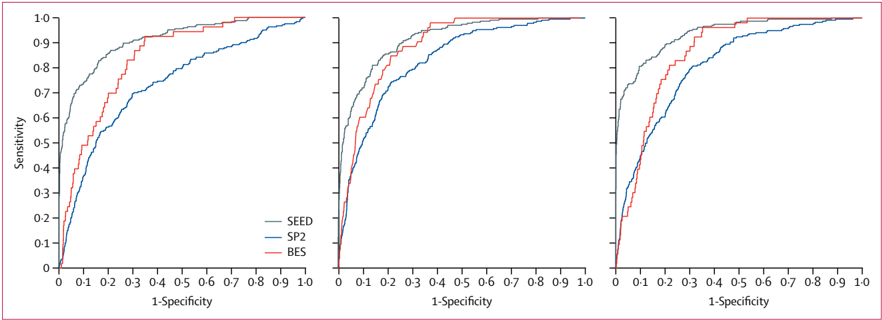
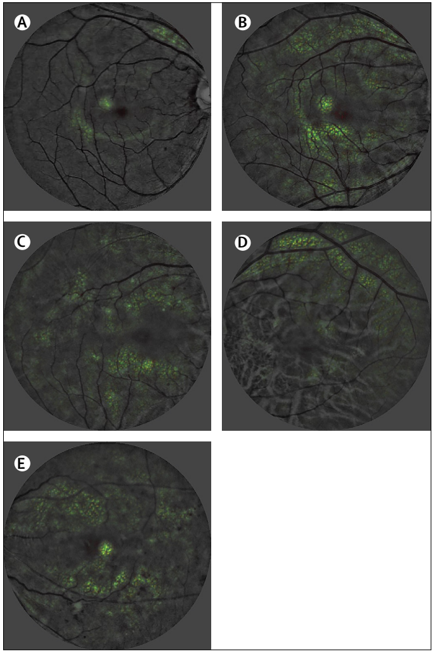
Verification
Claims the paper makes
The claims and statistics of this paper haven’t been checked yet.
Free: it reads the open-access text and checks the first 5 claims that cite a source we can check. Create a free account to check every claim.
Claims other papers make about this one
Each is checked against this paper’s own text: does it say what the citing paper says it does?
The cited source says what the claim attributes to it.
In the citing paper
“CNNs can also pick up signs of anemia 115 and chronic kidney disease 116 from fundus photographs.”
From Deep learning-enabled medical computer vision (2021) · cites this paper as [116]
The cited source says what the claim attributes to it.
In the citing paper
“For CKD39,110,111 and diabetic nephropathy112,113 screening, studies utilized clinical data, metabolic biomarkers, genotyping data, and/or retinal images to achieve AUCs generally over 0.8.”
From Artificial intelligence in diabetes management: Advancements, opportunities, and challenges (2023) · cites this paper as [111]
The cited source says what the claim attributes to it.
In the citing paper
“in participants with diabetes, the system could achieve an AUC of 0.889 using fundus images only”
From Artificial intelligence in diabetes management: Advancements, opportunities, and challenges (2023) · cites this paper as Sabanayagam et al.111
Self-check
Percentages, sums and reported differences re-computed from the paper’s own numbers.
The self-check needs the paper’s full text.
Citations
Cites
A New Equation to Estimate Glomerular Filtration Rate
Levey, A. S., Stevens, L. A., Schmid, C. H., Zhang, Y. (., Castro, A. F., Feldman, H. I., Kusek, J. W., Eggers, P., Van Lente, F., Greene, T., et al. (2009) · Annals of Internal Medicine · doi:10.7326/0003-4819-150-9-200905050-00006 · Cited by 25,603
Dermatologist-level classification of skin cancer with deep neural networks
Esteva, A., Kuprel, B., Novoa, R. A., Ko, J., Swetter, S. M., Blau, H. M., & Thrun, S. (2017) · Nature · doi:10.1038/nature21056 · Cited by 14,362
Levey, A. S., Coresh, J., Bolton, K., Culleton, B. F., Harvey, K. S., Ikizler, T. A., Johnson, C. A., Kausz, A., Kimmel, P. L., Kusek, J. W., et al. (2002) · University of Groningen research database (University of Groningen / Centre for Information Technology) · Cited by 11,633
Gulshan, V., Peng, L., Coram, M., Stumpe, M. C., Wu, D., Narayanaswamy, A., Venugopalan, S., Widner, K., Madams, T., Cuadros, J., et al. (2016) · JAMA · doi:10.1001/jama.2016.17216 · Cited by 7,697
Ting, D. S. W., Cheung, C. Y.-L., Lim, G., Tan, G. S. W., Quang, N. D., Gan, A., Hamzah, H., Garcia-Franco, R., San Yeo, I. Y., Lee, S. Y., et al. (2017) · JAMA · doi:10.1001/jama.2017.18152 · Cited by 2,402
Self-citationFox, C. S., Matsushita, K., Woodward, M., Bilo, H. J., Chalmers, J., Heerspink, H. J. L., Lee, B. J., Perkins, R. M., Rossing, P., Sairenchi, T., et al. (2012) · The Lancet · doi:10.1016/s0140-6736(12)61350-6 · Cited by 1,401
Ene-Iordache, B., Perico, N., Bikbov, B., Carminati, S., Remuzzi, A., Perna, A., Islam, N., Bravo, R. F., Aleckovic-Halilovic, M., Zou, H., et al. (2016) · The Lancet Global Health · doi:10.1016/s2214-109x(16)00071-1 · Cited by 627
Foong, A. W. P., Saw, S.-M., Loo, J.-L., Shen, S., Loon, S.-C., Rosman, M., Aung, T., Tan, D. T. H., Tai, E. S., & Wong, T. Y. (2007) · Ophthalmic Epidemiology · doi:10.1080/09286580600878844 · Cited by 432
Self-citationOzenne, B., Subtil, F., & Maucort-Boulch, D. (2015) · Journal of Clinical Epidemiology · doi:10.1016/j.jclinepi.2015.02.010 · Cited by 379
Hallan, S. I., Dahl, K., Oien, C. M., Grootendorst, D. C., Aasberg, A., Holmen, J., & Dekker, F. W. (2006) · BMJ · doi:10.1136/bmj.39001.657755.be · Cited by 330
Cited by
Artificial Intelligence and Deep Learning in Ophthalmology
Wang, Z., Keane, P. A., Chiang, M., Cheung, C. Y., Wong, T. Y., & Ting, D. S. W. (2022) · Artificial Intelligence in Medicine · doi:10.1007/978-3-030-64573-1_200 · Cited by 1,524
Self-citationArtificial intelligence and deep learning in ophthalmology
Ting, D. S. W., Pasquale, L. R., Peng, L., Campbell, J. P., Lee, A. Y., Raman, R., Tan, G. S. W., Schmetterer, L., Keane, P. A., & Wong, T. Y. (2019) · British Journal of Ophthalmology · doi:10.1136/bjophthalmol-2018-313173 · Cited by 1,554
Self-citationDeep learning-enabled medical computer vision
Esteva, A., Chou, K., Yeung, S., Naik, N., Madani, A., Mottaghi, A., Liu, Y., Topol, E., Dean, J., & Socher, R. (2021) · npj Digital Medicine · doi:10.1038/s41746-020-00376-2 · Cited by 1,406
Zhang, K., Liu, X., Xu, J., Yuan, J., Cai, W., Chen, T., Wang, K., Gao, Y., Nie, S., Xu, X., et al. (2021) · Nature Biomedical Engineering · doi:10.1038/s41551-021-00745-6 · Cited by 324
Artificial intelligence in diabetes management: Advancements, opportunities, and challenges
Guan, Z., Li, H., Liu, R., Cai, C., Liu, Y., Li, J., Wang, X., Huang, S., Wu, L., Liu, D., et al. (2023) · Cell Reports Medicine · doi:10.1016/j.xcrm.2023.101213 · Cited by 412
“109 For CKD 39,110,111 and diabetic nephropathy 112,113 screening, studies utilized clinical data, metabolic biomarkers, genotyping data, and/or retinal images to achieve AUCs generally over 0.8.”
MethodInfluential
Metadata
- Authors
- Sabanayagam, C., Xu, D., Ting, D. S. W., Nusinovici, S., Banu, R., Hamzah, H., Lim, C., Tham, Y.-C., Cheung, C. Y., Tai, E. S., Wang, Y. X., Jonas, J. B., Cheng, C.-Y., Lee, M. L., Hsu, W., & Wong, T. Y.
- Affiliations
- National University of Singapore (SG)
- Singapore National Eye Center (SG)
- Singapore General Hospital (SG)
- Chinese University of Hong Kong (HK)
- Beijing Tongren Hospital (CN)
- Corresponding author
- Wong, Tien Y
- ORCID
- Venue
- The Lancet Digital Health
- Publisher
- Elsevier BV
- Published
- 2020-06
- Volume
- 2
- Issue
- 6
- Pages
- e295-e302
- ISSN
- 2589-7500 (ISSN-L)
- OpenAlex
- W3025767749
- Cited by
- 279
- References
- 32
- Citations by year
- 2026: 40 · 2025: 58 · 2024: 54 · 2023: 55 · 2022: 40 · 2021: 25 · 2020: 6
- FWCI
- 15.34
- Type
- journal article
- Language
- en
- Open access
- gold
- doi.org
- Licence
- cc-by
- www.elsevier.com/tdm/userlicense/1.0/ (tdm)
- www.elsevier.com/legal/tdmrep-license (tdm)
- creativecommons.org/licenses/by/4.0/ (vor)
- Locations
- The Lancet Digital Health (publishedVersion, cc-by)
- PubMed (publishedVersion)
- National University of Singapore (submittedVersion)
- Funders
- National Medical Research Council (OFLCG/001/2017, NMRC/STaR/003/2008, NMRC/0796/2003, NMRC/1249/2010, NMRC/STaR/0016/2013, NMRC/CIRG/1417/2015)
- Topics
- Health Sciences › Medicine › Radiology, Nuclear Medicine and Imaging › Retinal Imaging and Analysis
- Health Sciences › Medicine › Nephrology › Chronic Kidney Disease and Diabetes
- Health Sciences › Health Professions › Health Information Management › Artificial Intelligence in Healthcare
- Keywords
- chronic kidney disease, fundus photography, deep learning algorithms, automated disease detection, kidney disease screening, estimated glomerular filtration rate, retinal microvascular abnormalities, diabetes mellitus, hypertension, risk factors, community-based population, primary care, Singapore, China, multi-ethnic population, external validation, Beijing Eye Study
- MeSH terms
- Deep Learning, Algorithms, China, Cross-Sectional Studies, Eye Diseases, Female, Fundus Oculi, Humans, Image Interpretation, Computer-Assisted, Male, Middle Aged, Photography, Sensitivity and Specificity, Singapore, Reproducibility of Results, Renal Insufficiency, Chronic
About these checks
Registry, retraction, Cites and statistics results are computed, not judged, with one exception: a printed reference that no index lists is read once by a model before it counts as a citation error. Claims are extracted by a model and kept only when their quote appears verbatim in the text; each cited source is then checked, with a model’s help, for whether it says what the claim relies on. Those verdicts can be wrong — read the claim’s quote and the cited source before relying on one.
Statistics and arithmetic are recomputed, not judged.
Confidence bands are shown only for fields calibrated on our annotated test set. None is calibrated yet, so no band is shown.
What counts as a claim ›How we measure confidence ›How we check this ›
Are you an author, or do you see a problem with this page? Request a review
How to cite
Cite CoChat for the checks on this page, and the paper for its own findings.
- This page
- CoChat. (2026). Citation check: A deep learning algorithm to detect chronic kidney disease from retinal photographs in community-based populations. https://app.cochat.ai/papers/10.1016/s2589-7500(20)30063-7
- The paper
- Sabanayagam, C., Xu, D., Ting, D. S. W., Nusinovici, S., Banu, R., Hamzah, H., Lim, C., Tham, Y.-C., Cheung, C. Y., Tai, E. S., Wang, Y. X., Jonas, J. B., Cheng, C.-Y., Lee, M. L., Hsu, W., & Wong, T. Y. (2020). A deep learning algorithm to detect chronic kidney disease from retinal photographs in community-based populations. The Lancet Digital Health. https://doi.org/10.1016/s2589-7500(20)30063-7
Data sources
Bibliographic data: Semantic Scholar, OpenAlex, Crossref.
Contains information from the Semantic Scholar Academic Graph Datasets, made available under the ODC Attribution License (ODC-BY 1.0).
Semantic Scholar’s data is described in: Kinney, R., et al. (2023). The Semantic Scholar Open Data Platform. arXiv:2301.10140.
