

The medical algorithmic audit
Open accessThe DOI matches its Crossref record; 44 of the 45 references it cites were found in a registry or an index; 14 of the 30 sources its claims cite were checked for support.
Abstract
Artificial intelligence systems for health care, like any other medical device, have the potential to fail. However, specific qualities of artificial intelligence systems, such as the tendency to learn spurious correlates in training data, poor generalisability to new deployment settings, and a paucity of reliable explainability mechanisms, mean they can yield unpredictable errors that might be entirely missed without proactive investigation. We propose a medical algorithmic audit framework that guides the auditor through a process of considering potential algorithmic errors in the context of a clinical task, mapping the components that might contribute to the occurrence of errors, and anticipating their potential consequences. We suggest several approaches for testing algorithmic errors, including exploratory error analysis, subgroup testing, and adversarial testing, and provide examples from our own work and previous studies. The medical algorithmic audit is a tool that can be used to better understand the weaknesses of an artificial intelligence system and put in place mechanisms to mitigate their impact. We propose that safety monitoring and medical algorithmic auditing should be a joint responsibility between users and developers, and encourage the use of feedback mechanisms between these groups to promote learning and maintain safe deployment of artificial intelligence systems.
Overview
CoChat Summary
TL;DR
This Viewpoint proposes a "medical algorithmic audit" framework, adapting Raji and colleagues' SMACTR internal audit process (scoping, mapping, artifact collection, testing, reflection) and failure modes and effects analysis (FMEA) for clinical AI systems. It argues that AI errors differ from human errors and that proactive, structured error investigation is needed before and during deployment.
Key findings
- The authors define algorithmic errors as any inaccurate outputs, including outputs that are correct but produced via a flawed decision-making process, and define a failure mode as a systematic tendency to malfunction under certain conditions.
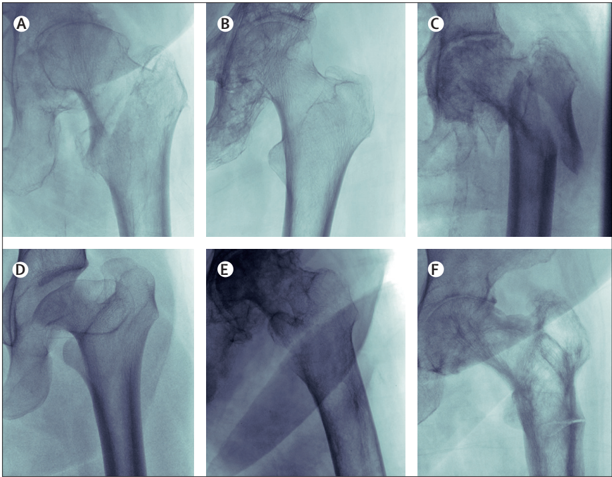
- In the illustrative hip fracture detection audit, the overall error rate was 2.5%, but the error rate for the subset of cases with abnormal bones or joints (Paget's disease and femoral head deformity) was 50%.
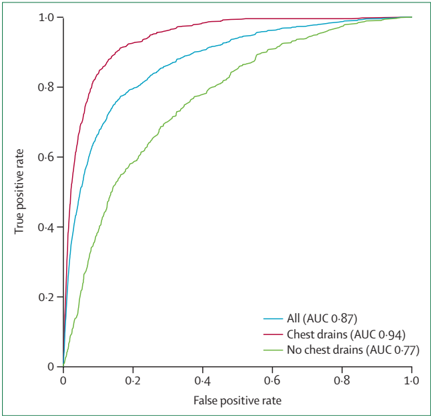
- In the pneumothorax detection example, the model achieved an overall AUC of 0.87, but AUC was 0.94 for cases with chest drains versus 0.77 for cases without, indicating the model learned artifacts of clinical care rather than the pathology.
- The paper reports that 60–70% of human errors in medical imaging are related to perceptual failure, whereas AI is not susceptible to incomplete searches or satisfaction syndrome, so equal-performance AI systems can be expected to produce different errors and clinical outcomes.
Methods
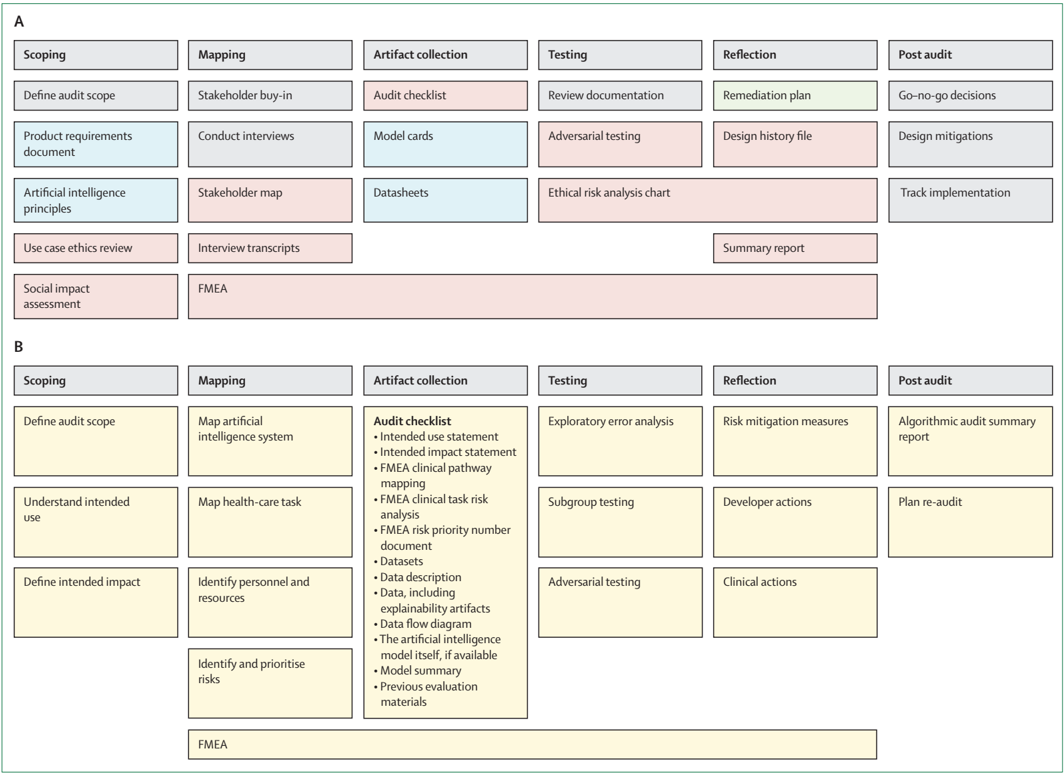
- Design: a conceptual Viewpoint article proposing a framework, not an empirical study; it adapts the SMACTR framework (scoping, mapping, artifact collection, testing, reflection) and applies FMEA principles for risk assessment, prioritisation, and mitigation.
- The framework is presented from two perspectives—developers (who can modify the system) and users (who cannot modify it but can implement deployment-specific risk mitigation)—with a table of actions for each audit stage.
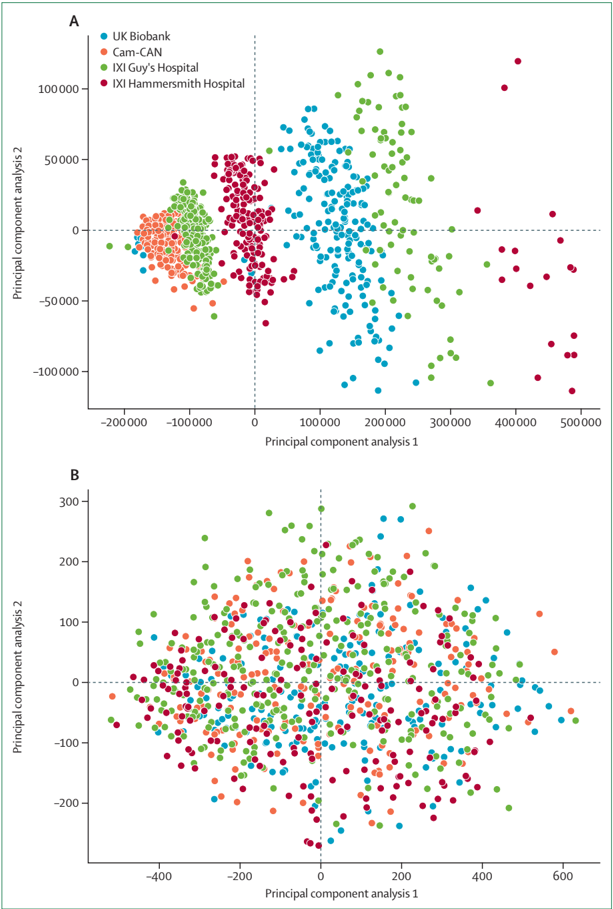
- Testing is described as comprising exploratory error analysis, subgroup testing (patient-specific, task-specific, and exploratory-error-discovered subgroups), and adversarial testing; illustrative examples are drawn from published studies (hip fracture audit, pneumothorax detection, diabetic retinopathy evaluation by Ting and colleagues).
Limitations
- The paper states that FMEA "must be interpreted with care due to issues around reproducibility and incompleteness," and that the risk priority number is not a measure of safety and should not be used with arbitrary acceptability thresholds.
- The paper states that subgroup analysis is not performed to test hypotheses, and that reduced power in subsets plus inflated type 1 error from multiple testing mean results "should not be considered reliable or definitive" and should be confirmed in a sufficiently powered sample.
- The paper states that who should conduct the medical algorithmic audit remains an unanswered question, that the required skills are not taught in combination in standard medical curricula, and that appropriately trained clinicians are rare in both the UK and Australia.
Model-written summary. Check it against the paper before relying on it.
Integrity signals
Registry
Cites
Statistics
Figures
Verification
Claims the paper makes
6 Valid · 7 Not valid · 12 Not checked · 54 Own results and interpretations
Every source the paper cites for this claim was checked and supports it.
In the paper
“For example, an artificial intelligence system might learn to detect surgical skin markings to diagnose skin cancer, rather than looking for features related to the lesion itself.9”
§ The medical algorithmic audit > Introduction
What the sources say
- Supportedcites [9] matched to “Association between surgical skin markings in dermoscopic images and diagnostic performance of a deep learning convolutional neural network for melanoma recognition” (2019) source
The Discussion (page unavailable) says a CNN may associate surgical skin markings with a melanoma diagnosis, and the study found that markings increased false-positive melanoma classifications. The claim presents this as a possibility, not a proven account of how the CNN made every decision; the paper says the underlying mechanism remains unclear. (LLM, conf=0.88)
hedgedstates a possible cause- Asserted: passes — The authors put it forward as true.
- Checkable: passes — It can be checked against evidence.
- Load-bearing: passes — The paper’s conclusions depend on it.
- Based: passes — The paper gives a reason why it holds.
- Supported
Every source the paper cites for this claim was checked and supports it.
In the paper
“Furthermore, this drop in performance might not be obvious at the aggregate level of typical artificial intelligence testing, but rather in subsets of the target cohort or specific strata within the input data, a concept that has been described as hidden stratification.13”
§ The medical algorithmic audit > Introduction
What the sources say
- Supportedcites [13] matched to “Hidden stratification causes clinically meaningful failures in machine learning for medical imaging” (2020) source
Split into 2 atoms — 2 confirmed, 0 partially supported, 0 disputed, 0 misattributed, 0 unverifiable. Expand the claim to see per-atom verdicts.
hedged- Asserted: passes — The authors put it forward as true.
- Checkable: passes — It can be checked against evidence.
- Load-bearing: passes — The paper’s conclusions depend on it.
- Based: passes — The paper gives a reason why it holds.
- Supported
The cited sources support only part of this claim — read each source’s verdict below.
In the paper
“Indeed, the analysis of error cases is a minimum reporting requirement of the SPIRIT-AI (Standard Protocol Items: Recommendations for Interventional Trials-Artificial Intelligence) and CONSORT-AI (Consolidated Standards of Reporting Trials-Artificial Intelligence) guidelines for clinical trial protocols and reports of artificial intelligence interventions.7,8”
§ The medical algorithmic audit > Introduction
What the sources say
- Partly supportedcites [7] matched to “Reporting guidelines for clinical trial reports for interventions involving artificial intelligence: the CONSORT-AI extension” (2020) sourceExperimental — accuracy not yet measured
The Results section’s CONSORT-AI item 19 requires reporting the results of any performance-error analysis where applicable, or explaining why none was planned or done. The Discussion describes CONSORT-AI as minimum reporting guidance, but this paper does not establish the corresponding SPIRIT-AI error-analysis requirement. It also does not require investigators to conduct an error analysis in every trial. (LLM, conf=0.86)
- Partly supportedcites [8] matched to “Guidelines for clinical trial protocols for interventions involving artificial intelligence: the SPIRIT-AI extension” (2020) sourceExperimental — accuracy not yet measured
The Abstract and Discussion describe SPIRIT-AI as minimum reporting guidance that includes error cases. But the Monitoring section (SPIRIT-AI item 22) requires protocols to specify plans to identify and analyze performance errors—or explain why there are no plans—not to report a completed analysis. This paper identifies CONSORT-AI as the companion guideline for trial reports but does not establish its error-analysis requirement. (LLM, conf=0.88)
plain- Asserted: passes — The authors put it forward as true.
- Checkable: passes — It can be checked against evidence.
- Load-bearing: passes — The paper’s conclusions depend on it.
- Based: passes — The paper gives a reason why it holds.
- Partly supported
The cited sources that could be checked couldn’t confirm or dispute this claim.
In the paper
“In the hip fracture detection audit, 20 the discovery of algorithmic errors in cases with abnormal bones prompted an additional labelling exercise of all hips with abnormal bones and joints to find that the error rate in those cases was 50%, compared with 2•5% in the overall dataset (figure 2).”
- Also stated in: § Conclusions · plain
“The overall error rate was 2•5%, but the error rate for this subset was 50%.”
§ The medical algorithmic audit > Subgroup testing
What the sources say
- Could not verifycites [20] matched to “Causality matters in medical imaging” (2020) sourceExperimental — accuracy not yet measured
The Data mismatch sections discuss dataset shift and selection bias, but do not report a hip-fracture detection audit or error rates for abnormal bones and joints. Searches for the audit, the labelling exercise, and the 50% and 2.5% figures found no passage addressing those results; page numbers were not available in our copy. (LLM, conf=0.76)
plainstates an association- Asserted: passes — The authors put it forward as true.
- Checkable: passes — It can be checked against evidence.
- Load-bearing: passes — The paper’s conclusions depend on it.
- Based: passes — The paper gives a reason why it holds.
- Also stated in: § Conclusions · plain
The cited sources that could be checked couldn’t confirm or dispute this claim.
In the paper
“Almost all studies report demographic and non-demographic characteristics of the study population, such as age, sex, ethnicity, socioeconomic status, disease severity, and comorbidities, and some studies also include information on geographical location and study site.”
§ The medical algorithmic audit > Subgroup testing
What the sources say
- Could not verifycites [31] matched to “A deep learning system for differential diagnosis of skin diseases” (2020) sourceExperimental — accuracy not yet measured
Our copy of Liu et al. (2020) contains no statement about what prior studies report: the only passages on demographics describe this study's own dataset (Dataset section — 'metadata such as patient demographic information and medical history'; Importance of input data section — '45 types of non-image metadata (demographic information and medical history)'; Fig. 3 legend — ages, sex, Fitzpatrick skin type) and its 17 sites across 2 U.S. states. Where the paper does characterize earlier work (DISCUSSION), the criticism concerns scope (skin-cancer screening, dermoscopic images), educational datasets and oversimplified labels — not the reporting of age, sex, ethnicity, socioeconomic status, disease severity, comorbidities, or geographical location. Searches on 'demographic characteristics reported', 'ethnicity/sex', 'socioeconomic status, comorbidities, geographical location, study site', and 'lack of reporting/transparency in existing studies' returned nothing addressing the claim's point, so the sweeping 'almost all studies report...' assertion can be neither confirmed nor contradicted from our copy. (LLM, conf=0.72)
- Could not verifycites [32] matched to “AI for radiographic COVID-19 detection selects shortcuts over signal” (2021) sourceExperimental — accuracy not yet measured
In “Evaluation of models on new hospital systems,” the paper recommends routine reporting of metadata on patient and hospital-system confounds; it does not assess how often other studies report population characteristics. “Shortcuts have a variable effect on generalization” discusses patient sex in the authors’ own datasets. Searches for age, ethnicity, socioeconomic status, disease severity, comorbidities, and demographic reporting found no passage supporting the claim that almost all studies report these characteristics. (LLM, conf=0.75)
- Not matchedcites [33]
The reference list we hold has no entry [33].
plain- Asserted: passes — The authors put it forward as true.
- Checkable: passes — It can be checked against evidence.
- Load-bearing: unclear — It is unclear whether the paper’s conclusions depend on it.
- Based: passes — The paper gives a reason why it holds.
- Could not verify
18 more claims
Create a free account to see all 79 claims and to verify the 1 reference still open.
- It may state two separate claims as one. 23
- Probably not a substantial claim. 52
- The quote only partly states this claim. 1
Claims other papers make about this one
Each is checked against this paper’s own text: does it say what the citing paper says it does?
The source backs part of the claim, not all of it — or backs it for a different population, condition or comparison.
In the citing paper
“Research on AI auditing has focused on evaluating whether specific applications meet predefined industry requirements.”
From Is it all hype? ChatGPT’s performance and disruptive potential in the accounting and auditing industries (2024) · cites this paper as Liu et al. 2022
Experimental — accuracy not yet measuredThe cited source says what the claim attributes to it.
In the citing paper
“For instance, researchers have created procedures for auditing AI systems used in recruitment (Kazim et al. 2021), online search (Robertson et al. 2018), and medical diagnostics (Liu et al. 2022).”
From Is it all hype? ChatGPT’s performance and disruptive potential in the accounting and auditing industries (2024) · cites this paper as Liu et al. 2022
Self-check
Percentages, sums and reported differences re-computed from the paper’s own numbers.
Each contradiction between two passages listed here was confirmed by an independent check.
Rated minor: it would not touch a result — a value no result rests on, a p-value that stays on the same side of the significance level, or a conflict that is clerical, resolved elsewhere in the paper, or outside its own findings.
In the paper
§ The medical algorithmic audit > Viewpoint Reflection
“These data are taken from a study by Ting and colleagues 31 and show the performance of their artificial intelligence model stratified by the clinical origin of the data.Reproduced with permission from JAMA 2016; 316: 2402-10.”
§ The medical algorithmic audit > References
“32. Gulshan V, Peng L, Coram M, et al. Development and validation of a deep learning algorithm for detection of diabetic retinopathy in retinal fundus photographs. JAMA 2016; 316: 2402-10.”
Citations
Cites
Gulshan, V., Peng, L., Coram, M., Stumpe, M. C., Wu, D., Narayanaswamy, A., Venugopalan, S., Widner, K., Madams, T., Cuadros, J., et al. (2016) · JAMA · doi:10.1001/jama.2016.17216 · Cited by 7,697
International evaluation of an AI system for breast cancer screening
McKinney, S. M., Sieniek, M., Godbole, V., Godwin, J., Antropova, N., Ashrafian, H., Back, T., Chesus, M., Corrado, G. S., Darzi, A., et al. (2020) · Nature · doi:10.1038/s41586-019-1799-6 · Cited by 3,287
Model Cards for Model Reporting
Mitchell, M., Wu, S., Zaldivar, A., Barnes, P., Vasserman, L., Hutchinson, B., Spitzer, E., Raji, I. D., & Gebru, T. (2019) · Proceedings of the Conference on Fairness, Accountability, and Transparency · doi:10.1145/3287560.3287596 · Cited by 2,681
Clinically applicable deep learning for diagnosis and referral in retinal disease
De Fauw, J., Ledsam, J. R., Romera-Paredes, B., Nikolov, S., Tomasev, N., Blackwell, S., Askham, H., Glorot, X., O’Donoghue, B., Visentin, D., et al. (2018) · Nature Medicine · doi:10.1038/s41591-018-0107-6 · Cited by 2,639
Gebru, T., Morgenstern, J., Vecchione, B., Vaughan, J. W., Wallach, H., Daumé, H., & Crawford, K. (2018) · arXiv · doi:10.48550/arxiv.1803.09010 · Cited by 2,474
Gebru, T., Morgenstern, J., Vecchione, B., Vaughan, J. W., Wallach, H., III, H. D., & Crawford, K. (2021) · Communications of the ACM · doi:10.1145/3458723 · Cited by 2,469
Ting, D. S. W., Cheung, C. Y.-L., Lim, G., Tan, G. S. W., Quang, N. D., Gan, A., Hamzah, H., Garcia-Franco, R., San Yeo, I. Y., Lee, S. Y., et al. (2017) · JAMA · doi:10.1001/jama.2017.18152 · Cited by 2,402
Raji, I. D., Smart, A., White, R. N., Mitchell, M., Gebru, T., Hutchinson, B., Smith-Loud, J., Theron, D., & Barnes, P. (2020) · Proceedings of the 2020 Conference on Fairness, Accountability, and Transparency · doi:10.1145/3351095.3372873 · Cited by 2,245
Liu, X., Faes, L., Kale, A. U., Wagner, S. K., Fu, D. J., Bruynseels, A., Mahendiran, T., Moraes, G., Shamdas, M., Kern, C., et al. (2019) · The Lancet Digital Health · doi:10.1016/s2589-7500(19)30123-2 · Cited by 1,883
Self-citation2013 IEEE 10th International Symposium on Biomedical Imaging
(2013) · doi:10.1109/isbi20048.2013 · Cited by 1,625
Research works printed but not linked: 1
- Topol E. The Topol review: preparing the healthcare workforce to deliver the digital future. National Health Service Health Education England, 2019.
Cited by
Large language models encode clinical knowledge
Singhal, K., Azizi, S., Tu, T., Mahdavi, S. S., Wei, J., Chung, H. W., Scales, N., Tanwani, A., Cole-Lewis, H., Pfohl, S., et al. (2023) · Nature · doi:10.1038/s41586-023-06291-2 · Cited by 4,083
“Key principles include the use of participatory methods to design contextualized evaluations that reflect the values of patients that may benefit or be harmed, grounding the evaluation in one or more specific downstream clinical use cases [54, 71], and the use of dataset and model documentation frameworks for transpar…”
BackgroundLarge Language Models Encode Clinical Knowledge
Singhal, K., Azizi, S., Tu, T., Mahdavi, S. S., Wei, J., Chung, H. W., Scales, N., Tanwani, A., Cole-Lewis, H., Pfohl, S., et al. (2022) · arXiv · doi:10.48550/arxiv.2212.13138 · Cited by 4,083
Lekadir, K., Frangi, A. F., Porras, A. R., Glocker, B., Cintas, C., Langlotz, C. P., Weicken, E., Asselbergs, F. W., Prior, F., Collins, G. S., et al. (2025) · BMJ · doi:10.1136/bmj-2024-081554 · Cited by 957
Self-citationEthical Considerations of Using ChatGPT in Health Care
Wang, C., Liu, S., Yang, H., Guo, J., Wu, Y., & Liu, J. (2023) · Journal of Medical Internet Research · doi:10.2196/48009 · Cited by 541
“Rigorous testing and regulation of AI algorithms are necessary to protect human health [59].”
Ethical and regulatory challenges of large language models in medicine
Ong, J. C. L., Chang, S. Y.-H., William, W., Butte, A. J., Shah, N. H., Chew, L. S. T., Liu, N., Doshi-Velez, F., Lu, W., Savulescu, J., et al. (2024) · The Lancet Digital Health · doi:10.1016/s2589-7500(24)00061-x · Cited by 342
Auditing Large Language Models: A Three-Layered Approach
Mökander, J., Schuett, J., Kirk, H. R., & Floridi, L. (2023) · doi:10.2139/ssrn.4361607 · Cited by 292
Auditing large language models: a three-layered approach
Mökander, J., Schuett, J., Kirk, H. R., & Floridi, L. (2023) · arXiv · doi:10.48550/arxiv.2302.08500 · Cited by 292
Auditing large language models: a three-layered approach
Mökander, J., Schuett, J., Kirk, H. R., & Floridi, L. (2024) · AI and Ethics · doi:10.1007/s43681-023-00289-2 · Cited by 289
“For example, researchers have developed procedures for how to audit AI systems used in recruitment [14], online search [15] and medical diagnostics [16], [17].”
MethodComputer vision in surgery: from potential to clinical value
Mascagni, P., Alapatt, D., Sestini, L., Altieri, M. S., Madani, A., Watanabe, Y., Alseidi, A., Redan, J. A., Alfieri, S., Costamagna, G., et al. (2022) · npj Digital Medicine · doi:10.1038/s41746-022-00707-5 · Cited by 228
“To this end, Liu et al. present a framework for auditing medical arti fi cial intelligence applications 72 .”
BackgroundAlderman, J. E., Palmer, J., Laws, E., McCradden, M. D., Ordish, J., Ghassemi, M., Pfohl, S. R., Rostamzadeh, N., Cole-Lewis, H., Glocker, B., et al. (2025) · The Lancet Digital Health · doi:10.1016/s2589-7500(24)00224-3 · Cited by 170
Self-citationArora, A., & Arora, A. (2022) · Future Healthcare Journal · doi:10.7861/fhj.2022-0013 · Cited by 161
“10 Similarly, GANs may also be used in the construction of synthetic digital twins, whereby an artificial construction of a system is created that preserves all the patterns of the true system.”
BackgroundDeep learning-aided decision support for diagnosis of skin disease across skin tones
Groh, M., Badri, O., Daneshjou, R., Koochek, A., Harris, C., Soenksen, L. R., Doraiswamy, P. M., & Picard, R. (2024) · Nature Medicine · doi:10.1038/s41591-023-02728-3 · Cited by 160
“…focuses on measuring diagnostic accuracy with and without AI assistance across light and dark skin, and follows methods from algorithmic auditing 41 , which serves as a useful tool for systematically evaluating errors, exposing bias, and promoting transparency in machine learning algorithms 42 .”
APPRAISE-AI Tool for Quantitative Evaluation of AI Studies for Clinical Decision Support
Kwong, J. C. C., Khondker, A., Lajkosz, K., McDermott, M. B. A., Frigola, X. B., McCradden, M. D., Mamdani, M., Kulkarni, G. S., & Johnson, A. E. W. (2023) · JAMA Network Open · doi:10.1001/jamanetworkopen.2023.35377 · Cited by 142
Self-citationFehr, J., Citro, B., Malpani, R., Lippert, C., & Madai, V. I. (2024) · Frontiers in Digital Health · doi:10.3389/fdgth.2024.1267290 · Cited by 188
A toolbox for surfacing health equity harms and biases in large language models
Pfohl, S. R., Cole-Lewis, H., Sayres, R., Neal, D., Asiedu, M., Dieng, A., Tomasev, N., Rashid, Q. M., Azizi, S., Rostamzadeh, N., et al. (2024) · Nature Medicine · doi:10.1038/s41591-024-03258-2 · Cited by 113
Designing AI Using a Human-Centered Approach: Explainability and Accuracy Toward Trustworthiness
Schoenherr, J. R., Abbas, R., Michael, K., Rivas, P., & Anderson, T. D. (2023) · IEEE Transactions on Technology and Society · doi:10.1109/tts.2023.3257627 · Cited by 105
Eulerich, M., Sanatizadeh, A., Vakilzadeh, H., & Wood, D. A. (2024) · Review of Accounting Studies · doi:10.1007/s11142-024-09833-9 · Cited by 195
Oakden-Rayner, L., Gale, W., Bonham, T. A., Lungren, M. P., Carneiro, G., Bradley, A. P., & Palmer, L. J. (2022) · The Lancet Digital Health · doi:10.1016/s2589-7500(22)00004-8 · Cited by 93
Self-citationWells, B. J., Nguyen, H. M., McWilliams, A., Pallini, M., Bovi, A., Kuzma, A., Kramer, J., Chou, S.-H., Hetherington, T., Corn, P., et al. (2025) · npj Digital Medicine · doi:10.1038/s41746-025-01900-y · Cited by 90
“Assess model performance across key patient subgroups 10,30,31 .”
Risk of Bias in Chest Radiography Deep Learning Foundation Models
Glocker, B., Jones, C., Roschewitz, M., & Winzeck, S. (2023) · Radiology Artificial Intelligence · doi:10.1148/ryai.230060 · Cited by 143
Self-citationAlgorithmic encoding of protected characteristics in chest X-ray disease detection models
Glocker, B., Jones, C., Bernhardt, M., & Winzeck, S. (2023) · eBioMedicine · doi:10.1016/j.ebiom.2023.104467 · Cited by 77
“27,28 both racial identity and biological sex in the context of image-based disease detection in chest X-ray.”
BackgroundSelf-citationIOP-FL: Inside-Outside Personalization for Federated Medical Image Segmentation
Jiang, M., Yang, H., Chen, C., & Dou, Q. (2023) · IEEE Transactions on Medical Imaging · doi:10.1109/tmi.2023.3263072 · Cited by 96
“To optimize the model prediction accuracy on each individual client, it is important to perform the model personalization, especially for critical medical applications with a low error tolerance [53].”
A causal perspective on dataset bias in machine learning for medical imaging
Jones, C., Castro, D. C., Ribeiro, F. D. S., Oktay, O., McCradden, M. D., & Glocker, B. (2024) · Nature Machine Intelligence · doi:10.1038/s42256-024-00797-8 · Cited by 151
Self-citationOrtega-Bolaños, R., Bernal-Salcedo, J., Germán Ortiz, M., Galeano Sarmiento, J., Ruz, G. A., & Tabares-Soto, R. (2024) · Artificial Intelligence Review · doi:10.1007/s10462-024-10740-3 · Cited by 76
Black-Box Access is Insufficient for Rigorous AI Audits
Casper, S., Ezell, C., Siegmann, C., Kolt, N., Curtis, T. L., Bucknall, B., Haupt, A., Wei, K., Scheurer, J., Hobbhahn, M., et al. (2024) · The 2024 ACM Conference on Fairness, Accountability, and Transparency · doi:10.1145/3630106.3659037 · Cited by 86
Kann, B. H., Likitlersuang, J., Bontempi, D., Ye, Z., Aneja, S., Bakst, R. L., Kelly, H. R., Juliano, A. F. T., Payabvash, S., Guenette, J. P., et al. (2023) · The Lancet Digital Health · doi:10.1016/s2589-7500(23)00046-8 · Cited by 82
“45,46 To address some of these barriers, we did test-time experiments to ensure that the network would be robust to adversarial images and generalise to various clinical scenarios, including variations in lymph-node segmentations and scanner parameters.”
Fair Federated Medical Image Segmentation via Client Contribution Estimation
Jiang, M., Roth, H. R., Li, W., Yang, D. L., Zhao, C. H., Nath, V., Xu, D., Dou, Q., & Xu, Z. (2023) · IEEE Computer Society Conference on Computer Vision and Pattern Recognition/Proceedings - IEEE Computer Society Conference on Computer Vision and Pattern Recognition/Proceedings · doi:10.1109/cvpr52729.2023.01564 · Cited by 138
“It is critical to involve diverse datasets and improve individual prediction accuracy for building robust medical applications with low error tolerance [16].”
BackgroundFair and equitable AI in biomedical research and healthcare: Social science perspectives
Baumgartner, R. R., Arora, P., Bath, C., Burljaev, D., Ciereszko, K., Custers, B. H. M., Ding, J., Ernst, W., Fosch‐Villaronga, E., Galanos, V., et al. (2023) · Artificial Intelligence in Medicine · doi:10.1016/j.artmed.2023.102658 · Cited by 92
AI in radiology: From promise to practice − A guide to effective integration
Katal, S., York, B. R., & Gholamrezanezhad, A. (2024) · European Journal of Radiology · doi:10.1016/j.ejrad.2024.111798 · Cited by 82
Achieving large-scale clinician adoption of AI-enabled decision support
Scott, I. A., van der Vegt, A., Lane, P., McPhail, S., & Magrabi, F. (2024) · BMJ Health & Care Informatics · doi:10.1136/bmjhci-2023-100971 · Cited by 65
“39 The tool must not compromise the clinician-patient relationship Using AI tools, especially LLMs, to produce evidence syntheses, clinical letters and discharge summaries may free up cognitive time and space for clinicians to engage more in empathetic, person-centred shared decision-making (SDM).”
MethodHolding AI to Account: Challenges for the Delivery of Trustworthy AI in Healthcare
Procter, R., Tolmie, P., & Rouncefield, M. (2023) · ACM Transactions on Computer-Human Interaction · doi:10.1145/3577009 · Cited by 94
Ethical Considerations for Artificial Intelligence in Medical Imaging: Deployment and Governance
Herington, J., McCradden, M. D., Creel, K., Boellaard, R., Jones, E. C., Jha, A. K., Rahmim, A., Scott, P. J. H., Sunderland, J. J., Wahl, R. L., et al. (2023) · Journal of Nuclear Medicine · doi:10.2967/jnumed.123.266110 · Cited by 61
“Tools such as algorithmic audits can help support continuous monitoring of AIMD performance after deployment ( 46 ).”
BackgroundSelf-citationde Vries, C. F., Colosimo, S. J., Staff, R. T., Dymiter, J., Yearsley, J. E., Dinneen, D., Boyle, M., Harrison, D. J., Anderson, L. A., Lip, G., et al. (2023) · Radiology Artificial Intelligence · doi:10.1148/ryai.220146 · Cited by 78
The Algorithmic Divide: A Systematic Review on AI-Driven Racial Disparities in Healthcare
Haider, S. A., Borna, S., Gomez-Cabello, C. A., Pressman, S. M., Haider, C. R., & Forte, A. J. (2024) · Journal of Racial and Ethnic Health Disparities · doi:10.1007/s40615-024-02237-0 · Cited by 94
“Algorithmic auditing is another method used to scrutinize AI systems, uncovering and eliminating potential biases [104, 105].”
Spielvogel, C. P., Haberl, D., Mascherbauer, K., Ning, J., Kluge, K., Traub‐Weidinger, T., Davies, R. H., Pierce, I., Patel, K., NAKUZ, T. S., et al. (2024) · The Lancet Digital Health · doi:10.1016/s2589-7500(23)00265-0 · Cited by 66
“15 Importantly, our system also conveyed strong prognostic information.”
Expectations for Artificial Intelligence (AI) in Psychiatry
Monteith, S., Glenn, T., Geddes, J., Whybrow, P. C., Achtyes, E., & Bauer, M. (2022) · Current Psychiatry Reports · doi:10.1007/s11920-022-01378-5 · Cited by 55
“The study of AI system failures should also include identification of the worst possible mistake [162].”
BackgroundRedrup Hill, E., Mitchell, C., Brigden, T., & Hall, A. (2023) · Frontiers in Digital Health · doi:10.3389/fdgth.2023.1139210 · Cited by 55
“This stage has been reached in some areas of healthcare and there is a burgeoning literature focused on the technical performance of AI tools (2).”
BackgroundKoch, L. M., Baumgartner, C. F., & Berens, P. (2024) · npj Digital Medicine · doi:10.1038/s41746-024-01085-w · Cited by 53
Garrucho, L., Kushibar, K., Jouide, S., Díaz, O., Igual, L., & Lekadir, K. (2022) · Artificial Intelligence in Medicine · doi:10.1016/j.artmed.2022.102386 · Cited by 74
“[12] introduced the medical algorithmic audit to investigate and reduce the potential errors”
Navigating AI unpredictability: Exploring technostress in AI-powered healthcare systems
Issa, H., Jaber, J., & Lakkis, H. (2024) · Technological Forecasting and Social Change · doi:10.1016/j.techfore.2024.123311 · Cited by 85
Lyell, D., Wang, Y., Coiera, E. W., & Magrabi, F. (2023) · Journal of the American Medical Informatics Association · doi:10.1093/jamia/ocad065 · Cited by 67
Lifelong nnU-Net: a framework for standardized medical continual learning
González, C., Ranem, A., dos Santos, D. P., Othman, A. E., & Mukhopadhyay, A. (2023) · Scientific Reports · doi:10.1038/s41598-023-34484-2 · Cited by 84
Wang, Y., Li, N., Chen, L., Wu, M., Meng, S., Dai, Z., Zhang, Y., & Clarke, M. (2023) · Journal of Medical Internet Research · doi:10.2196/46089 · Cited by 45
Generative artificial intelligence: synthetic datasets in dentistry
Umer, F., & Adnan, N. (2024) · BDJ Open · doi:10.1038/s41405-024-00198-4 · Cited by 56
Public evidence on AI products for digital pathology
Matthews, G. A., McGenity, C., Bansal, D., & Treanor, D. E. (2024) · npj Digital Medicine · doi:10.1038/s41746-024-01294-3 · Cited by 59
Developing robust benchmarks for driving forward AI innovation in healthcare
Mincu, D., & Roy, S. (2022) · Nature Machine Intelligence · doi:10.1038/s42256-022-00559-4 · Cited by 41
Artificial intelligence tool development: what clinicians need to know?
Chew, B.-H., & Ngiam, K. Y. (2025) · BMC Medicine · doi:10.1186/s12916-025-04076-0 · Cited by 41
“A medical algorithmic audit could and should be conducted if it was not performed before real-world deployment [80].”
Ethical Considerations in the Design and Conduct of Clinical Trials of Artificial Intelligence
Youssef, A., Nichol, A. A., Martinez‐Martin, N., Larson, D. B., Abràmoff, M. D., Wolf, R. M., & Char, D. S. (2024) · JAMA Network Open · doi:10.1001/jamanetworkopen.2024.32482 · Cited by 58
Automatic correction of performance drift under acquisition shift in medical image classification
Roschewitz, M., Khara, G. S., Yearsley, J., Sharma, N., James, J. J., Ambrózay, É., Heroux, A., Kecskemethy, P. D., Rijken, T. M., & Glocker, B. (2023) · Nature Communications · doi:10.1038/s41467-023-42396-y · Cited by 67
“We decided to keep this paragraph, but are happy to revise if the reviewers and editor feel it is out of scope.”
Self-citationLeveraging physiology and artificial intelligence to deliver advancements in health care
Zhang, A., Wu, Z., Wu, E., Wu, M. A., Snyder, M. P., Zou, J., & Wu, J. C. (2023) · Physiological Reviews · doi:10.1152/physrev.00033.2022 · Cited by 51
Khan, S. D., Hoodbhoy, Z., Raja, M. H. R., Kim, J. Y., Hogg, H. D. J., Manji, A. A. A., Gulamali, F., Hasan, A., Shaikh, A., Tajuddin, S., et al. (2024) · PLOS Digital Health · doi:10.1371/journal.pdig.0000514 · Cited by 36
Critical Bias in Critical Care Devices
Charpignon, M.-L., Byers, J., Cabral, S., Celi, L. A., Fernandes, C., Gallifant, J., Lough, M. E., Mlombwa, D., Moukheiber, L., Ong, B. A., et al. (2023) · Critical Care Clinics · doi:10.1016/j.ccc.2023.02.005 · Cited by 35
Ong, A. Y., Taribagil, P., Sevgi, M., Kale, A. U., Dow, E. R., Macdonald, T., Kras, A., Maniatopoulos, G., Liu, X., Keane, P. A., et al. (2025) · npj Digital Medicine · doi:10.1038/s41746-025-01726-8 · Cited by 46
“Examples include recurring local validation to monitor performance within their speci fi c patient population, clinical work fl ow, and technical infrastructure over time 39 , or performing medical algorithmic audits to systematically evaluate and pre-empt AI errors and patient harms 40 .”
Self-citationSchaekermann, M., Spitz, T., Chelliah, M. P., Cole-Lewis, H. J., Wulczyn, E., Pfohl, S. R., Martin, D., Jaroensri, R., Keeling, G., Liu, Y., et al. (2024) · EClinicalMedicine · doi:10.1016/j.eclinm.2024.102479 · Cited by 49
“33,34,50 Such a model would incorporate AI tool outputs as key factors that can monotonically affect other contextual factors, such as trust and screening, and allow the evaluation of the impact of AI tool performance on downstream health outcomes.”
Mccradden, M., Odusi, O., Joshi, S., Akrout, I., Ndlovu, K., Glocker, B., Maicas, G., Liu, X., Mazwi, M., Garnett, T., et al. (2023) · 2023 ACM Conference on Fairness, Accountability, and Transparency · doi:10.1145/3593013.3594096 · Cited by 33
“Auditing : Following Raji et al [12], some scholars have sought to establish best practices around algorithmic auditing for healthcare ML models [11] [13] [90] [86].”
BackgroundSelf-citationMethodologic Issues Specific to Prediction Model Development and Evaluation
Jin, Y., & Kattan, M. W. (2023) · CHEST Journal · doi:10.1016/j.chest.2023.06.038 · Cited by 33
Li, P., Williams, R., Gilbert, S., & Anderson, S. (2023) · Law Technology and Humans · doi:10.5204/lthj.3073 · Cited by 41
Evans, H., & Snead, D. R. J. (2023) · Histopathology · doi:10.1111/his.15071 · Cited by 40
“11,12 In radiology, a similar image-based diagnostic speciality, it is reported that 60 – 70% of errors are perceptual errors, essentially a failure to identify a salient finding while reviewing images (as opposed to a cognitive error, where an abnormality is identified but it is incorrectly…”
BackgroundMethodInfluentialWang, R., Kuo, P., Chen, L.-C., Seastedt, K. P., Gichoya, J. W., & Celi, L. A. (2024) · EBioMedicine · doi:10.1016/j.ebiom.2024.105047 · Cited by 39
Kwong, J. C. C., Wu, J., Malik, S., Khondker, A., Gupta, N. K., Bodnariuc, N., Narayana, K., Malik, M., van der Kwast, T., Johnson, A. E. W., et al. (2024) · npj Digital Medicine · doi:10.1038/s41746-024-01088-7 · Cited by 43
“For instance, a bias assessment is recommended for examining performance heterogeneity acrossclinicallyrelevantsubgroups,similartosubgroupanalysescommonly reportedinclinicaltrials 6,23,28,36 .”
Ethical and social issues related to AI in healthcare
Mondal, H., & Mondal, S. (2024) · Methods in microbiology · doi:10.1016/bs.mim.2024.05.009 · Cited by 44
Not All Clinical AI Monitoring Systems Are Created Equal: Review and Recommendations
Feng, J., Xia, F., Singh, K., & Pirracchio, R. (2025) · NEJM AI · doi:10.1056/aira2400657 · Cited by 28
Ross, J., Hammouche, S., Chen, Y., Rockall, A., Alabed, S., Chen, M., Dwivedi, K., Fascia, D., Greenhalgh, R., Hall, M., et al. (2024) · Clinical Radiology · doi:10.1016/j.crad.2024.01.026 · Cited by 35
Integrating artificial intelligence into an ophthalmologist’s workflow: obstacles and opportunities
Taribagil, P., Hogg, H. D. J., Balaskas, K., & Keane, P. A. (2023) · Expert Review of Ophthalmology · doi:10.1080/17469899.2023.2175672 · Cited by 40
“The ‘medical algorithmic audit’ exemplifies such a framework, aiming to monitor the ongoing performance of an AIbased tool and investigate and pre-empt potential sources of error that may be generated throughout the implementation process [51].”
BackgroundMethodInfluentialBandyopadhyay, A., Oks, M., Sun, H., Prasad, B., Rusk, S., Jefferson, F., Malkani, R. G., Haghayegh, S., Sachdeva, R. C., Hwang, D., et al. (2024) · Journal of Clinical Sleep Medicine · doi:10.5664/jcsm.11132 · Cited by 33
Detecting Shortcuts in Medical Images - A Case Study in Chest X-Rays
Jiménez-Sánchez, A., Juodelyte, D., Chamberlain, B., & Cheplygina, V. (2023) · IEEE International Symposium on Biomedical Imaging (ISBI) · doi:10.1109/isbi53787.2023.10230572 · Cited by 47
“[11, 14] propose several strategies for testing algorithmic errors, including exploratory error analysis, subgroup testing, and adversarial testing.”
MethodLatest developments of generative artificial intelligence and applications in ophthalmology
Feng, X., Xu, K., Luo, M., Chen, H., Yang, Y., He, Q., Song, C., Li, R., Wu, Y., Wang, H., et al. (2024) · Asia-Pacific Journal of Ophthalmology · doi:10.1016/j.apjo.2024.100090 · Cited by 39
Piloting a Survey-Based Assessment of Transparency and Trustworthiness with Three Medical AI Tools
Fehr, J., Jaramillo-Gutierrez, G., Oala, L., Gröschel, M. I., Bierwirth, M., Balachandran, P., Leite, A. W., & Lippert, C. (2022) · Healthcare · doi:10.3390/healthcare10101923 · Cited by 38
Mapping the Landscape of Care Providers’ Quality Assurance Approaches for AI in Diagnostic Imaging
Lundström, C. F., & Lindvall, M. (2022) · Journal of Imaging Informatics in Medicine · doi:10.1007/s10278-022-00731-7 · Cited by 29
Automatic sleep staging for the young and the old – Evaluating age bias in deep learning
Baumert, M., Hartmann, S., & Phan, H. (2023) · Sleep Medicine · doi:10.1016/j.sleep.2023.04.002 · Cited by 28
Pham, N., Hill, V. B., Rauschecker, A. M., Lui, Y. W., Niogi, S. N., Filippi, C. G., Chang, P., Zaharchuk, G., & Wintermark, M. (2023) · American Journal of Neuroradiology · doi:10.3174/ajnr.a7850 · Cited by 27
“Thus, it is important to have a systematic approach for monitoring performance variances in different patient populations.(36,37) Other mechanisms that can be used to mitigate errors include ensuring data quality, as described above; verifying generalizability and reproducibility across different clinical sites (level…”
BackgroundDeceptive Tricks in Artificial Intelligence: Adversarial Attacks in Ophthalmology
Zbrzezny, A. M., & Grzybowski, A. E. (2023) · Journal of Clinical Medicine · doi:10.3390/jcm12093266 · Cited by 29
Kwong, J. C. C., Khondker, A., Meng, E., Taylor, N., Kuk, C., Perlis, N., Kulkarni, G. S., Hamilton, R. J., Fleshner, N. E., Finelli, A., et al. (2023) · The Lancet Digital Health · doi:10.1016/s2589-7500(23)00067-5 · Cited by 27
Liefgreen, A., Weinstein, N., Wachter, S., & Mittelstadt, B. (2023) · AI & Society · doi:10.1007/s00146-023-01684-3 · Cited by 35
Subbaswamy, A., Sahiner, B., Petrick, N., Pai, V. M., Adams, R., Diamond, M. C., & Saria, S. (2024) · npj Digital Medicine · doi:10.1038/s41746-024-01275-6 · Cited by 36
“Another approach, error auditing, involves manual expert review of misclassi fi ed instances, and is also labor-intensive 5,14 .”
Gottschling, N. M., Antun, V., Hansen, A. C., & Adcock, B. (2025) · SIAM Review · doi:10.1137/23m1568739 · Cited by 227
“Similar commentary can also be found in [27, 66, 70, 83, 84, 91, 103, 112, 133, 136, 141, 142, 146, 154,157].”
Farris, A. B., Alexander, M. P., Balis, U. J., Barisoni, L. M. C., Boor, P., Bülow, R. D., Cornell, L. D., Demetris, A. J., Farkash, E. A., Hermsen, M., et al. (2023) · Transplant International · doi:10.3389/ti.2023.11783 · Cited by 24
“Ultimately, models should be thoroughly audited before clinical testing, uncovering potential risks and developing mitigation strategies [21].”
Digital pathology implementation in cancer diagnostics: towards informed decision-making
Sulaieva, O., Dudin, O., Koshyk, O., Panko, M., & Kobyliak, N. M. (2024) · Frontiers in Digital Health · doi:10.3389/fdgth.2024.1358305 · Cited by 24
“A growing body of studies addresses questions of the safety and quality of AI-based tools in relation to physicians ’ duties to promote patients ’ best interests (aligning with bene fi cence) and minimizing harm (according to non-male fi cence imperative) (10, 11).”
BackgroundImplementing AI models in clinical workflows: a roadmap
Wang, F., & Beecy, A. (2024) · BMJ Evidence-Based Medicine · doi:10.1136/bmjebm-2023-112727 · Cited by 35
“Liu et al 15 proposed a medical algorithmic audit framework to better understand the mechanism of the AI model failure and encourage feed-back between the end-user, model developer and ITS team, which can better ensure a safe model deployment process.”
BackgroundAlbert, K., & Delano, M. K. (2022) · Patterns · doi:10.1016/j.patter.2022.100534 · Cited by 31
Increasing depth of neural networks for life-long learning
Kozal, J., & Woźniak, M. (2023) · Information Fusion · doi:10.1016/j.inffus.2023.101829 · Cited by 27
“Due to the low robustness of current deep learning to changes in data distribution [59], experts advise gradual extending of model capabilities by careful evaluation of algorithm performance for new equipment, hospitals, and data formats [60].”
BackgroundFuture Use of AI in Diagnostic Medicine: 2-Wave Cross-Sectional Survey Study
Cabral, B. P., Braga, L. A. M., Filho, C. G. C., Penteado, B. E., Silva, S. L. F. D. C., Castro, L., Fornazin, M., & Mota, F. B. (2025) · Journal of Medical Internet Research · doi:10.2196/53892 · Cited by 36
“…factor is ethical and regulatory issues, which include difficulties in accessing and sharing databases with patient information [1,19], data validation and auditing [20-22], uncertainties about legal liability for the use of algorithms [23-25], and bias of algorithmic underrepresentation [20,26].”
Transparent deep learning to identify autism spectrum disorders (ASD) in EHR using clinical notes
Leroy, G., Andrews, J., Preece, M., Jaswani, A., Song, H., Galindo, M. K., Rice, S. A., & Rice, S. A. (2024) · Journal of the American Medical Informatics Association · doi:10.1093/jamia/ocae080 · Cited by 26
“23 A common approach to estimate the importance of input features is to conduct ablation studies, where features are systematically withheld to estimate their effect on the outcome.”
BackgroundActionable artificial intelligence: Overcoming barriers to adoption of prediction tools
Balch, J. A., & Loftus, T. J. (2023) · Surgery · doi:10.1016/j.surg.2023.03.019 · Cited by 22
Chan, V. T. T., Ran, A. R., Wagner, S. K., Hui, H. Y. H., Hu, X., Ko, H., Fekrat, S., Wang, Y. X., Lee, C. S., Young, A. L., et al. (2024) · Progress in Retinal and Eye Research · doi:10.1016/j.preteyeres.2024.101290 · Cited by 18
Kuehnert, B., Kim, R., Forlizzi, J., & Heidari, H. (2025) · ACM Conference on Fairness, Accountability, and Transparency (FAccT) · doi:10.1145/3715275.3732191 · Cited by 48
Chow, J., Lee, R., & Wu, H. (2025) · Journal of Imaging Informatics in Medicine · doi:10.1007/s10278-025-01493-8 · Cited by 27
“Liu et al. [20] adopted this framework for AI applications in medicine which developers and AI adopters can use to validate, monitor, and review errors.”
Steele, L., Tan, X. L., Olabi, B., Gao, J., Tanaka, R. J., & Williams, H. C. (2023) · Journal of the European Academy of Dermatology and Venereology · doi:10.1111/jdv.18814 · Cited by 17
“18 We highlight that ML model performance should be reported separately across subgroups of interest, 17,18 including skin phototype and skin cancer type, and the importance of this reporting to dermatologists and other physicians.”
BackgroundEpistemic authority and medical AI: epistemological differences and challenges in medical practice
Kerasidou, A., & Kerasidou, C. (2025) · Medicine Health Care and Philosophy · doi:10.1007/s11019-025-10306-2 · Cited by 27
Kerasidou, C., Malone, M., Daly, A., & Tava, F. (2023) · Journal of Medical Ethics · doi:10.1136/jme-2022-108696 · Cited by 15
Alderman, J. E., Palmer, J., Laws, E., McCradden, M. D., Ordish, J., Ghassemi, M., Pfohl, S. R., Rostamzadeh, N., Cole-Lewis, H. J., Glocker, B., et al. (2024) · NEJM AI · doi:10.1056/aip2401088 · Cited by 19
Self-citationAdversarial Robustness of MR Image Reconstruction Under Realistic Perturbations
Morshuis, J. N., Gatidis, S., Hein, M., & Baumgartner, C. F. (2022) · Lecture notes in computer science · doi:10.1007/978-3-031-17247-2_3 · Cited by 16
Machine learning in healthcare and the methodological priority of epistemology over ethics
Grote, T. (2024) · Inquiry · doi:10.1080/0020174x.2024.2312207 · Cited by 19
AI enhanced diagnostic accuracy and workload reduction in hepatocellular carcinoma screening
Lu, R.-F., She, C.-Y., He, D.-N., Cheng, M.-Q., Wang, Y., Huang, H., Lin, Y.-D., Lv, J.-Y., Qin, S., Liu, Z.-Z., et al. (2025) · npj Digital Medicine · doi:10.1038/s41746-025-01892-9 · Cited by 19
Allure of Simplicity: On Interpretable Machine Learning Models in Healthcare
Grote, T. (2023) · Philosophy of Medicine · doi:10.5195/pom.2023.139 · Cited by 18
Auditing and Generating Synthetic Data with Controllable Trust Trade-offs
Belgodere, B. M., Dognin, P., Ivankay, A., Melnyk, I., Mroueh, Y., Mojsilović, A., Navrátil, J., Nitsure, A., Padhi, I., Rigotti, M., et al. (2024) · IEEE Journal on Emerging and Selected Topics in Circuits and Systems · doi:10.1109/jetcas.2024.3477976 · Cited by 41
“Furthermore, quantitative auditing of predictive AI models has made significant progress in recent years, with various auditing systems emerging in domains such as algorithmic recruitment [61] and healthcare [70].”
Backgroundvan de Sande, D., van Genderen, M. E., Braaf, H., Gommers, D. A. M. P. J., & van Bommel, J. (2022) · Intensive Care Medicine · doi:10.1007/s00134-022-06910-y · Cited by 16
“Safety measures such as ‘algorithmic audits’ [5] can help to timely identify AI weaknesses before and during clinical application and could improve an ICU professionals ́ trust in the *Correspondence: m.”
BackgroundBlack, E., Gillis, T. B., & Hall, Z. Y. (2024) · ACM Conference on Fairness, Accountability, and Transparency (FAccT) · doi:10.1145/3630106.3658928 · Cited by 22
Trustworthy AI for safe medicines
Stegmann, J., Littlebury, R., Trengove, M., Goetz, L., Bate, A., & Branson, K. (2023) · Nature Reviews Drug Discovery · doi:10.1038/s41573-023-00769-4 · Cited by 13
Artificial Intelligence Governance and Otolaryngology‐Head and Neck Surgery
Nwosu, O. I., Crowson, M. G., & Rameau, A. (2023) · The Laryngoscope · doi:10.1002/lary.31013 · Cited by 12
“18,19 Academic otolaryngology societies should consider forming multi-disciplinary groups to perform routine audits of AI systems poised to be implemented in practice.”
Background
Metadata
- Authors
- Liu, X., Glocker, B., McCradden, M. M., Ghassemi, M., Denniston, A. K., & Oakden-Rayner, L.
- Affiliations
- University Hospitals Birmingham NHS Foundation Trust (GB)
- Imperial College London (GB)
- Massachusetts Institute of Technology (US)
- Venue
- The Lancet Digital Health
- Publisher
- Elsevier BV
- Published
- 2022-05
- Volume
- 4
- Issue
- 5
- Pages
- e384-e397
- ISSN
- 2589-7500 (ISSN-L)
- OpenAlex
- W4223506650
- Cited by
- 266
- References
- 44
- Citations by year
- 2026: 67 · 2025: 54 · 2024: 63 · 2023: 61 · 2022: 21
- FWCI
- 3.25
- Type
- journal article
- Language
- en
- Update notices
- erratum (2022-06-01)
- Open access
- gold
- doi.org
- Licence
- cc-by
- www.elsevier.com/tdm/userlicense/1.0/ (tdm)
- www.elsevier.com/legal/tdmrep-license (tdm)
- creativecommons.org/licenses/by/4.0/ (vor)
- Locations
- The Lancet Digital Health (publishedVersion, cc-by)
- PubMed (publishedVersion)
- University of Birmingham Research Portal (University of Birmingham) (submittedVersion, cc-by)
- Spiral (Imperial College London) (submittedVersion, cc-by)
- Funders
- Wellcome Trust (200141/Z/15/Z, /Z/15/Z)
- Alan Turing Institute (TU/ASG/R-SPEH-113)
- H2020 European Research Council (757173)
- Topics
- Health Sciences › Medicine › Health Informatics › Artificial Intelligence in Healthcare and Education
- Physical Sciences › Computer Science › Artificial Intelligence › Explainable Artificial Intelligence (XAI)
- Physical Sciences › Computer Science › Artificial Intelligence › Ethics and Social Impacts of AI
- Keywords
- algorithmic auditing, artificial intelligence in healthcare, algorithmic errors, medical device safety, spurious correlations, generalizability, explainability, adversarial testing, safety monitoring, user-developer collaboration, feedback mechanisms, algorithmic bias
- MeSH terms
- Artificial Intelligence, Delivery of Health Care, Health Facilities
About these checks
Registry, retraction, Cites and statistics results are computed, not judged, with one exception: a printed reference that no index lists is read once by a model before it counts as a citation error. Claims are extracted by a model and kept only when their quote appears verbatim in the text; each cited source is then checked, with a model’s help, for whether it says what the claim relies on. Those verdicts can be wrong — read the claim’s quote and the cited source before relying on one.
The claim verdicts this report counts are experimental: their accuracy is not yet measured.
A language model drew the claims from the paper on 2026-10-07, under version 3 of the claim definition (model deepseek-v4.1-flash, prompt extract-v3).
A second model labelled each claim on 2026-10-07 (model jev-1.13-20260917, definition revision gold-guideline-v0.2).
Cited sources are checked with a language model’s help (gpt-6-sol and qwen3.8-omni-flash).
Statistics and arithmetic are recomputed, not judged.
Confidence bands are shown only for fields calibrated on our annotated test set. None is calibrated yet, so no band is shown.
What counts as a claim ›How we measure confidence ›How we check this ›
Are you an author, or do you see a problem with this page? Request a review
Data sources
Bibliographic data: Semantic Scholar, OpenAlex, Crossref.
Contains information from the Semantic Scholar Academic Graph Datasets, made available under the ODC Attribution License (ODC-BY 1.0).
Semantic Scholar’s data is described in: Kinney, R., et al. (2023). The Semantic Scholar Open Data Platform. arXiv:2301.10140.
