

DATING THE END OF THE EGYPTIAN OLD KINGDOM: NEW CONTEXTUALIZED DATES FROM THE REIGN OF KING PEPY II
Open accessThe DOI matches its Crossref record; 31 of the 31 references it cites were found in a registry or an index; none of the 30 sources its claims cite is checked for support yet.
Abstract
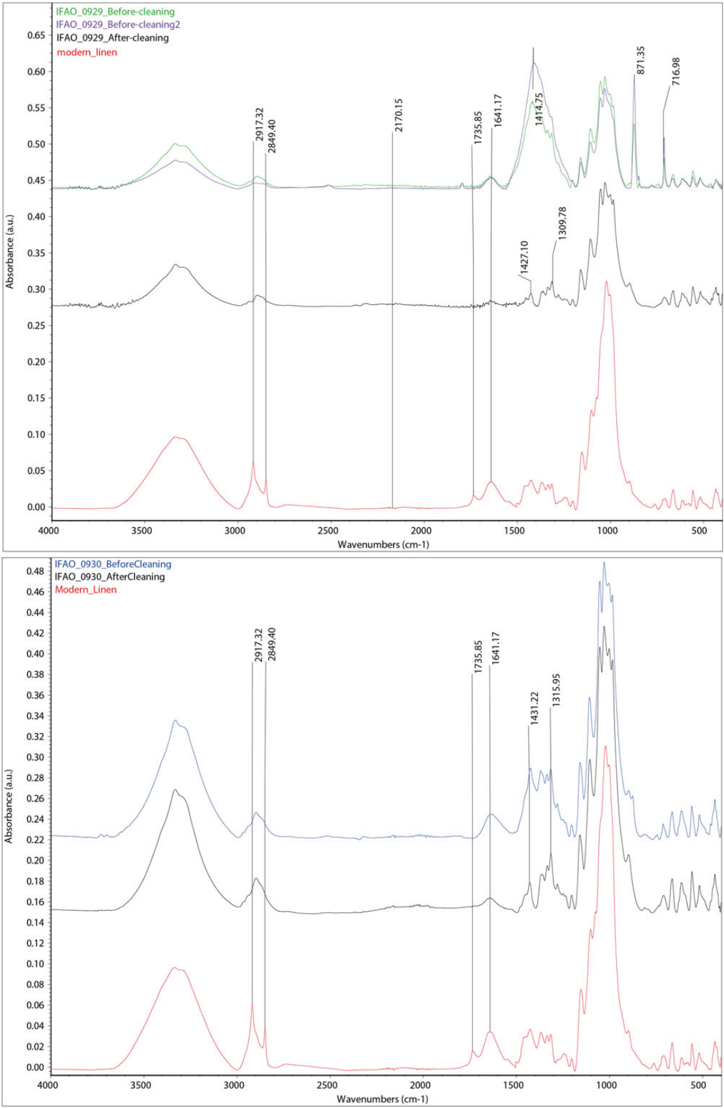
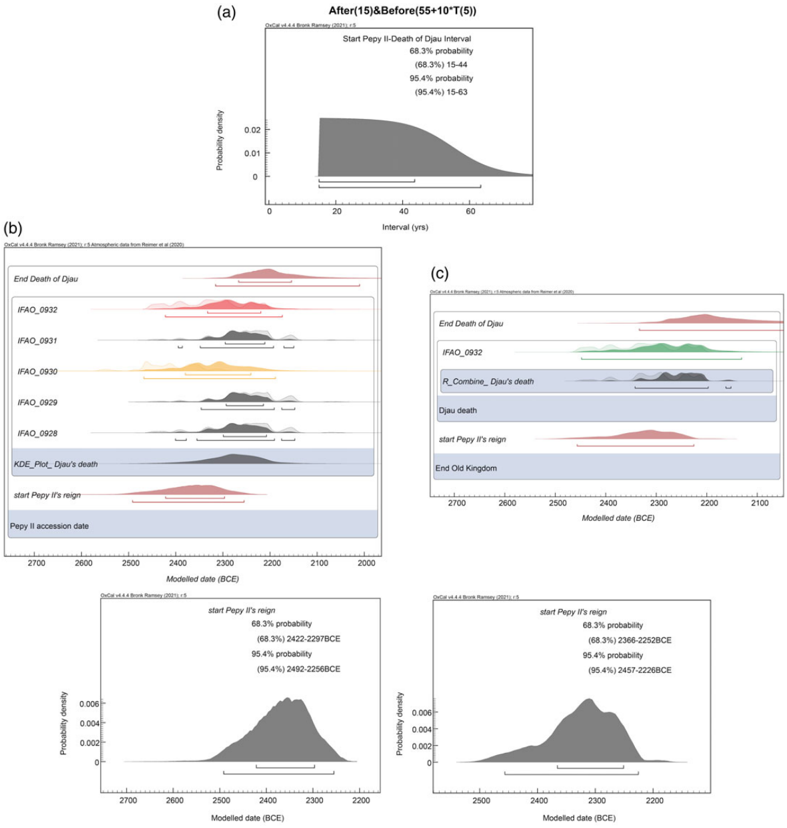
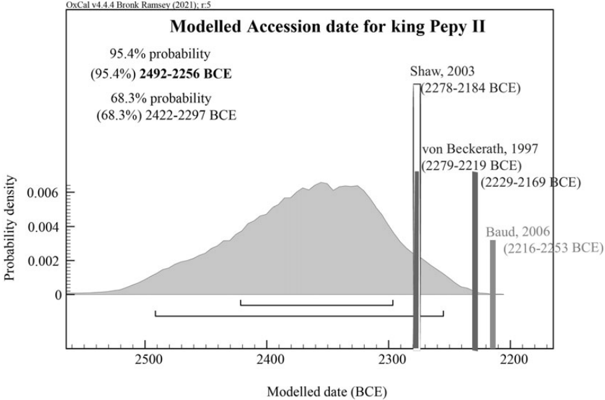
In this study, the temporal accession date of king Pepy II is modeled by using a series of 14 C dates based on samples from the burial of Djau at Deir el-Gebrawi in Middle Egypt. Djau was one of Pepy II’s officials—overseer of Upper Egypt and nomarch of the 8th and 12th provinces. Five samples of Djau’s wrapping as well as his wooden coffin were analyzed. ATR-FTIR (Attenuated Total Reflection–Fourier Transform InfraRed spectroscopy) analyses were carried out on textile samples to ensure they were not contaminated by organic chemicals due to the embalming process, prior to being dated using the conventional radiocarbon method at the IFAO Laboratory (Cairo). Based on archaeological evidence, the temporal density associated with Djau’s death is then used as a chronological marker for the death date of king Pepy II. Taking into account the possibility of either biennial, annual or irregular censuses to assess the duration of his reign, the accession date of Pepy II is thus modeled using OxCal software. The results place king Pepy II’s accession date between 2492 to 2256 BCE with 95.4% probability, and between 2422 to 2297 BCE with 68.3%.
Overview
CoChat Summary
TL;DR
New radiocarbon dates from the burial of Djau, an official of King Pepy II, are modeled to estimate the end of the Egyptian Old Kingdom and Pepy II’s accession. The model places Pepy II’s accession between 2492–2256 BCE at 95.4% probability and 2422–2297 BCE at 68.3%, with Djau’s death no later than ca. 2200 BCE.
Key findings
- Five 14C results from Djau’s burial range from 3945 ± 30 BP to 3823 ± 30 BP; textile δ13C values are −25.7 to −24.9‰ and the wood sample is −26.1‰.
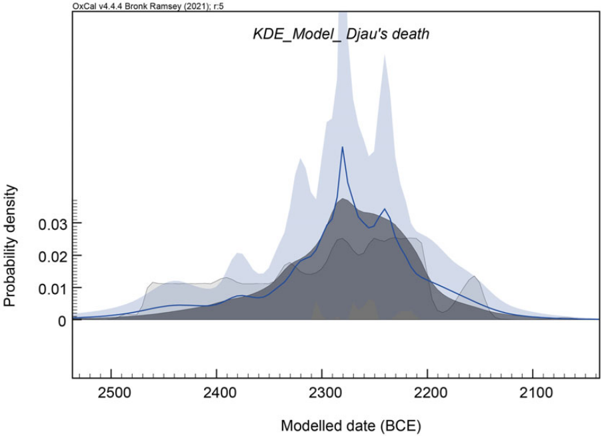
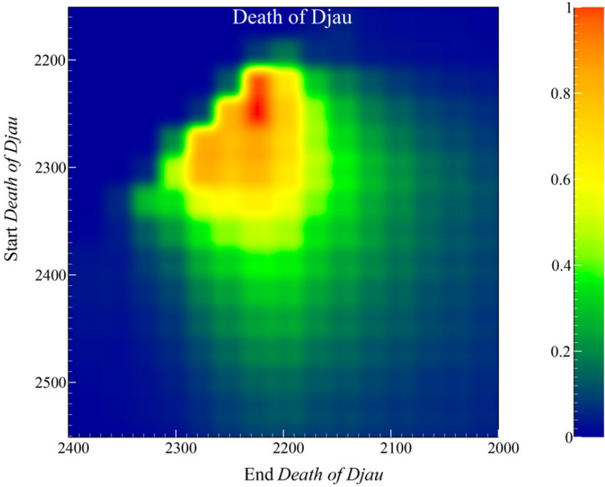
- The modeled death of Djau should not have occurred later than 2200 BCE, which the authors link to the end of Pepy II’s reign and the end of the Old Kingdom.
- Pepy II’s accession date is modeled at 2492–2256 BCE with 95.4% probability and 2422–2297 BCE with 68.3% probability; a second model using R_Combine gives 2457–2226 BCE at 95.4% and 2366–2252 BCE at 68.3%.
- The authors state the result favors the consensus chronology and von Beckerath’s higher date more than suggestions placing Pepy II’s reign start around 2220 BCE.
Methods
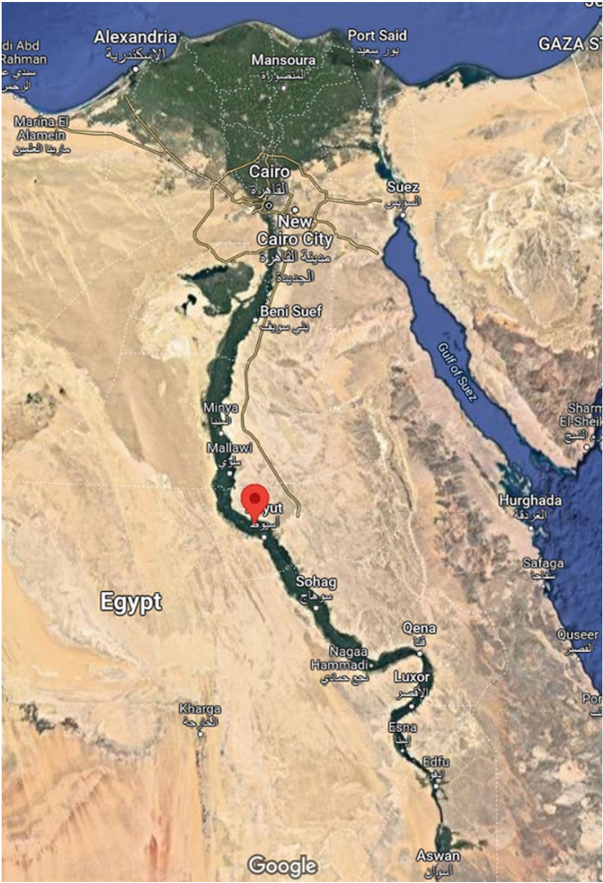
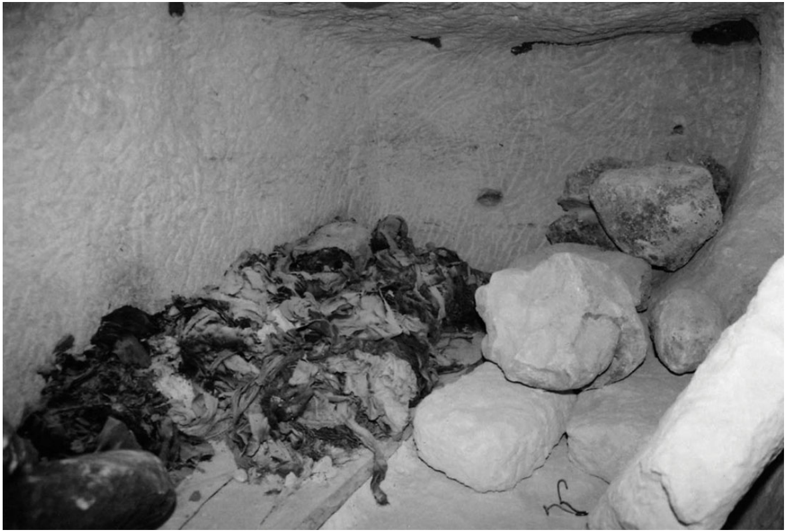
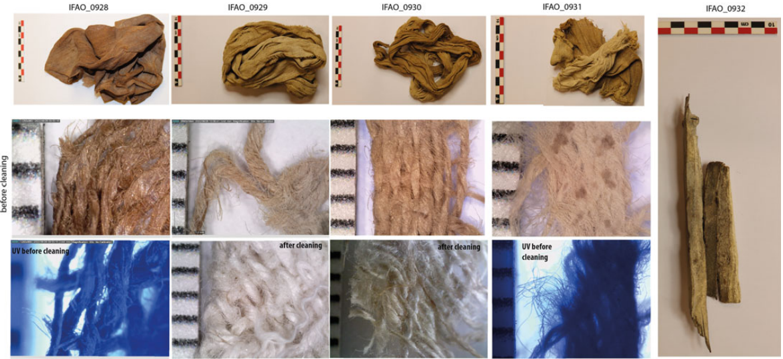
- Five samples were collected in December 2019 from Djau’s mummified remains at Deir el-Gebrawi: four linen textile wrappings and one wood piece from his coffin, with 20–29 g taken per sample.
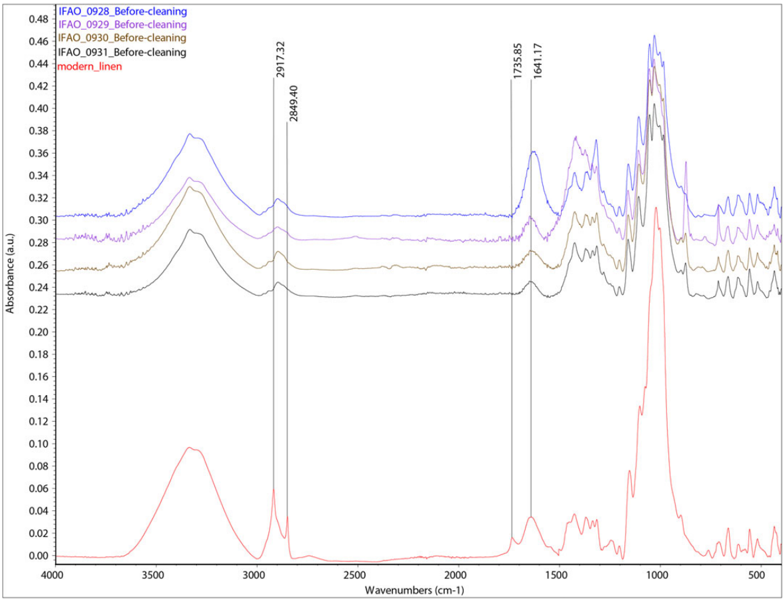
- Digital microscopic observation and ATR-FTIR were used to check for organic contamination; samples were then pretreated by the AAA protocol and dated by conventional liquid scintillation counting at the IFAO Laboratory.
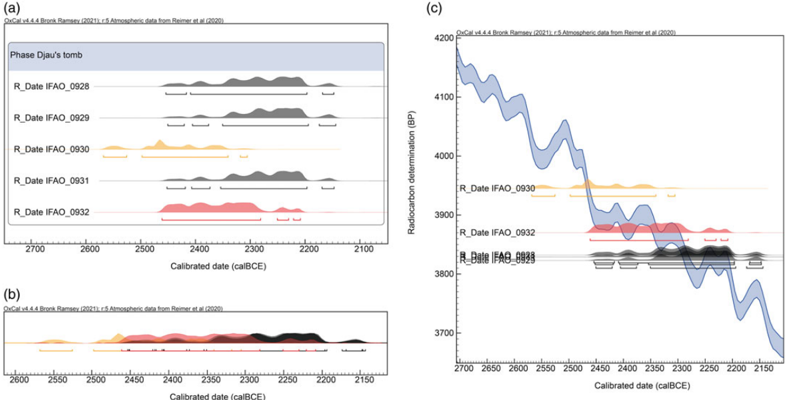
- Bayesian modeling used OxCal 4.4 and IntCal20, with KDE_Model and R_Combine tools, outlier distributions, and an integrated Nile valley offset of 16 ± 4 14C yrs.
Limitations
- The paper states the result is preliminary because it is based on only five radiocarbon dates and is not fully convergent; the plateau around 2450–2200 BCE tends to extend simulated densities toward older ages, and the upper limit of Pepy II’s reign remains flexible.
- The paper notes unresolved historical uncertainty over whether the census was annual, biennial, or irregular, meaning Pepy II’s reign cannot have been shorter than 30 years and could have been as long as 62 years.
- Evident from the text: the wood sample was not cut at Djau’s death, one textile sample (IFAO_0930) appears older and is treated as a likely outlier or recycled textile, the original positions of the wrappings are unknown, and the wood type was not identified.
Model-written summary. Check it against the paper before relying on it.
Integrity signals
Registry
Cites
Statistics
Figures
Verification
Claims the paper makes
0 Valid · 0 Not valid · 23 Not checked · 56 Own results and interpretations
A result the paper reports from its own data — it cites no other source for it, so there is none to check. The quote shows it is in the paper.
In the paper
“The results provide new dating evidence for the death of Djau, which can be linked on historical and archaeological grounds to the end of the reign of king Pepy II, and thus by extension, assist with dating the end of the historical 6th Dynasty.”
§ DATING THE END OF THE EGYPTIAN OLD KINGDOM: NEW CONTEXTUALIZED DATES FROM THE REIGN OF KING PEPY II > INTRODUCTION
plainstates an associationSingle case- Asserted: passes — The authors put it forward as true.
- Checkable: passes — It can be checked against evidence.
- Load-bearing: passes — The paper’s conclusions depend on it.
- Based: passes — The paper gives a reason why it holds.
A result the paper reports from its own data — it cites no other source for it, so there is none to check. The quote shows it is in the paper.
In the paper
“The resulting model using KDE_Model shows the death of Djau should not have occured later than 2200 BCE (Figure 7).”
§ DATING THE END OF THE EGYPTIAN OLD KINGDOM: NEW CONTEXTUALIZED DATES FROM THE REIGN OF KING PEPY II > 14 C Modeling
plainSingle case- Asserted: passes — The authors put it forward as true.
- Checkable: passes — It can be checked against evidence.
- Load-bearing: passes — The paper’s conclusions depend on it.
- Based: passes — The paper gives a reason why it holds.
A result the paper reports from its own data — it cites no other source for it, so there is none to check. The quote shows it is in the paper.
In the paper
“The results place king Pepy II's accession date between 2492 to 2256 BCE with 95.4% probability, and between 2422 to 2297 BCE with 68.3%.”
§ DATING THE END OF THE EGYPTIAN OLD KINGDOM: NEW CONTEXTUALIZED DATES FROM THE REIGN OF KING PEPY II > Abstract
plainSingle case- Asserted: passes — The authors put it forward as true.
- Checkable: passes — It can be checked against evidence.
- Load-bearing: passes — The paper’s conclusions depend on it.
- Based: passes — The paper gives a reason why it holds.
A result the paper reports from its own data — it cites no other source for it, so there is none to check. The quote shows it is in the paper.
In the paper
“Of the four textiles, one result (IFAO_0930) appears slightly older than the others.”
§ DATING THE END OF THE EGYPTIAN OLD KINGDOM: NEW CONTEXTUALIZED DATES FROM THE REIGN OF KING PEPY II > 14 C Modeling
hedgedstates an association- Asserted: passes — The authors put it forward as true.
- Checkable: passes — It can be checked against evidence.
- Load-bearing: passes — The paper’s conclusions depend on it.
- Based: passes — The paper gives a reason why it holds.
A result the paper states — it cites no source for it, so there is none to check. The quote shows it is in the paper.
In the paper
“Compared to the historical chronologies, this result favours the consensus chronology and von Beckerath's higher date more than the suggestions placing the beginning of Pepy II's reign around 2220 BCE (Figure 11).”
§ DATING THE END OF THE EGYPTIAN OLD KINGDOM: NEW CONTEXTUALIZED DATES FROM THE REIGN OF KING PEPY II > DISCUSSION
plainstates an association- Asserted: passes — The authors put it forward as true.
- Checkable: passes — It can be checked against evidence.
- Load-bearing: passes — The paper’s conclusions depend on it.
- Based: passes — The paper gives a reason why it holds.
27 more claims
Create a free account to see all 79 claims and to verify the 15 references still open.
- It may state two separate claims as one. 33
- Probably not a substantial claim. 18
- The quote only partly states this claim. 1
Citations
Cites
Bayesian Analysis of Radiocarbon Dates
Bronk Ramsey, C. (2009) · Radiocarbon · doi:10.1017/s0033822200033865 · Cited by 8,725
The IntCal20 Northern Hemisphere Radiocarbon Age Calibration Curve (0–55 cal kBP)
Reimer, P. J., Austin, W. E. N., Bard, E., Bayliss, A., Blackwell, P. G., Bronk Ramsey, C., Butzin, M., Cheng, H., Edwards, R. L., Friedrich, M., et al. (2020) · Radiocarbon · doi:10.1017/rdc.2020.41 · Cited by 7,900 · cited 2×
“Radiocarbon densities are converted into calendar ages using the IntCal20 calibration curve (Reimer et al. 2020) using the OxCal4.”
MethodInfluentialDiscussion Reporting of 14 C Data
Stuiver, M., & Polach, H. A. (1977) · Radiocarbon · doi:10.1017/s0033822200003672 · Cited by 5,640
Radiocarbon Calibration and Analysis of Stratigraphy: The OxCal Program
Bronk Ramsey, C. (1995) · Radiocarbon · doi:10.1017/s0033822200030903 · Cited by 2,409
Dealing with outliers and offsets in radiocarbon dating
Bronk Ramsey, C. (2009) · Radiocarbon · doi:10.1017/s0033822200034093 · Cited by 1,204 · cited 3×
“In the Sequence , the five samples were summarized within a Phase , the four textile ones being in a R_Combine tool, down-weighted using the Outlier_model Combine (Bronk Ramsey 2009b).”
MethodInfluentialMethods for Summarizing Radiocarbon Datasets
Ramsey, C. B. (2017) · Radiocarbon · doi:10.1017/rdc.2017.108 · Cited by 1,179
Reporting 14C Activities and Concentrations
Mook, W. G., & van der Plicht, J. (1999) · Radiocarbon · doi:10.1017/s0033822200057106 · Cited by 456 · cited 1×
“…is calculated in percent relative to the activity of an international standard of oxalic acid NIST SRM 4990C (OxII), using the Libby half-life (5568 yr) and taking into account the isotopic fractionation normalised to – 25 ‰ (versus VPDB) (Stuiver and Polach 1977; Mook and van der Plicht 1999).”
MethodRadiocarbon-Based Chronology for Dynastic Egypt
Ramsey, C. B., Dee, M. W., Rowland, J. M., Higham, T. F. G., Harris, S. A., Brock, F., Quiles, A., Wild, E. M., Marcus, E. S., & Shortland, A. J. (2010) · Science · doi:10.1126/science.1189395 · Cited by 282 · cited 3×
“The importance of these results must be stressed, owing to the scarcity of the archaeological material studied, perfectly contextualised and dating from a historical period for which the availability of samples in museum collections is very low (Bronk Ramsey et al. 2010).”
BackgroundResultStrudwick, N. (2005) · Cited by 269
Lembright, R. (2001) · History: Reviews of New Books · doi:10.1080/03612759.2001.10525810 · Cited by 259
Research works printed but not linked: 4
- Nolan JS. 2008. Lunar intercalations and "cattle counts" during the Old Kingdom: the Hebsed in context. In: Vymazalová H, Bárta M, editors. Chronology and archaeology in Ancient Egypt (the third millennium BC). Czech Institute of Egyptology, Faculty of Arts, Prague.
- Sethe K. 1932-1933. Urkunden des Alten Reiches. Urkunden des aegyptischen Alterntum I. Leipzig: Hinrichs.
- Verner M. 2008. The system of dating in the Old Kingdom. In: Vymazalová H, Bárta M, editors. Chronology and archaeology in Ancient Egypt (the third millennium BC). Czech Institute of Egyptology Faculty of Arts. Prague.
- Shaw I, editor. 2003. The Oxford history of ancient Egypt. Oxford: Oxford University Press.
Cited by
Ferrant, M., Bellot‐Gurlet, L., Delqué-Količ, E., & Quilès, A. (2025) · Journal of Archaeological Science · doi:10.1016/j.jas.2025.106203 · Cited by 1
Dating the Egyptian Old Kingdom: The reign of Djedkare (5th dynasty)
Quiles, A., Vymazalová, H., Bárta, M., & Megahed, M. (2025) · Radiocarbon · doi:10.1017/rdc.2024.100 · Cited by 1
Egypt and the Levant: Networks and Negotiations in the Bronze Age
Mourad, A.-L. (2026) · doi:10.1017/9781009419949
Accelerator mass spectrometer facility for heritage radiocarbon dating at NRICH, Korea
Kong, M.-J., Park, S.-J., & Kim, Y. (2024) · Radiocarbon · doi:10.1017/rdc.2024.98
Metadata
- Authors
- Quiles, A., Sowada, K., & Kanawati, N.
- Affiliations
- Macquarie University (AU)
- Venue
- Radiocarbon
- Publisher
- Cambridge University Press (CUP)
- Published
- 2023-10
- Volume
- 65
- Issue
- 5
- Pages
- 1080-1097
- ISSN
- 0033-8222 (ISSN-L)
- 1945-5755
- OpenAlex
- W4388459703
- Cited by
- 4
- References
- 30
- Citations by year
- 2026: 1 · 2025: 1 · 2024: 2
- FWCI
- 2.38
- Type
- journal article
- Language
- en
- Open access
- hybrid
- doi.org
- Locations
- Radiocarbon (publishedVersion, cc-by)
- Macquarie University (publishedVersion, cc-by)
- HAL (submittedVersion, other-oa)
- Funders
- University of Cambridge
- Macquarie University
- Agence Nationale de la Recherche (ANR-19-CE27-0010)
- Institut Français d’Archéologie Orientale
- Australian Research Council (FT170100288)
- Topics
- Social Sciences › Arts and Humanities › Archeology (arts and humanities) › Ancient Egypt and Archaeology
- Social Sciences › Archeology › Archaeology and ancient environmental studies
- Social Sciences › Arts and Humanities › Archeology (arts and humanities) › Ancient and Medieval Archaeology Studies
- Keywords
- radiocarbon dating, wooden coffin, OxCal, population census, chronology
About these checks
Registry, retraction, Cites and statistics results are computed, not judged, with one exception: a printed reference that no index lists is read once by a model before it counts as a citation error. Claims are extracted by a model and kept only when their quote appears verbatim in the text; each cited source is then checked, with a model’s help, for whether it says what the claim relies on. Those verdicts can be wrong — read the claim’s quote and the cited source before relying on one.
A language model drew the claims from the paper on 2026-11-23, under version 3 of the claim definition (model deepseek-v4.1-flash, prompt extract-v3).
A second model labelled each claim on 2026-11-23 (model jev-1.13-20260917, definition revision gold-guideline-v0.2).
Statistics and arithmetic are recomputed, not judged.
Confidence bands are shown only for fields calibrated on our annotated test set. None is calibrated yet, so no band is shown.
What counts as a claim ›How we measure confidence ›How we check this ›
Are you an author, or do you see a problem with this page? Request a review
How to cite
Cite CoChat for the checks on this page, and the paper for its own findings.
- This page
- CoChat. (2026). Citation check: DATING THE END OF THE EGYPTIAN OLD KINGDOM: NEW CONTEXTUALIZED DATES FROM THE REIGN OF KING PEPY II. https://app.cochat.ai/papers/10.1017/rdc.2023.94
- The paper
- Quiles, A., Sowada, K., & Kanawati, N. (2023). DATING THE END OF THE EGYPTIAN OLD KINGDOM: NEW CONTEXTUALIZED DATES FROM THE REIGN OF KING PEPY II. Radiocarbon. https://doi.org/10.1017/rdc.2023.94
Data sources
Bibliographic data: Semantic Scholar, OpenAlex, Crossref.
Contains information from the Semantic Scholar Academic Graph Datasets, made available under the ODC Attribution License (ODC-BY 1.0).
Semantic Scholar’s data is described in: Kinney, R., et al. (2023). The Semantic Scholar Open Data Platform. arXiv:2301.10140.
