

Inhibition of thoughts and actions in obsessive-compulsive disorder: extending the endophenotype?
Open accessThe DOI matches its Crossref record; 47 of the 48 references it cites were found in a registry or an index.
Abstract
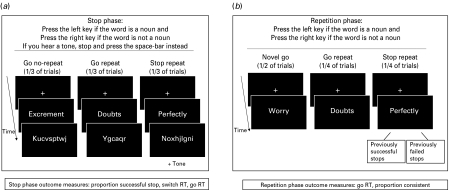
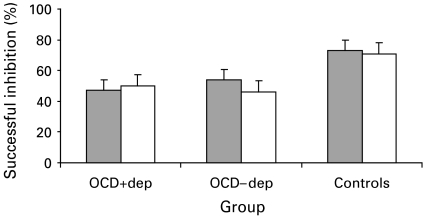
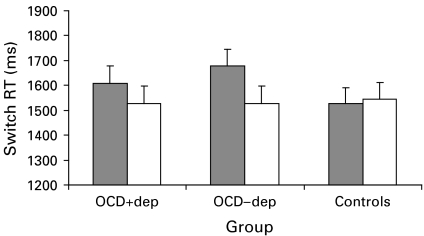
Background: Obsessive-compulsive disorder (OCD) has been associated with impairments in stop-signal inhibition, a measure of motor response suppression. The study used a novel paradigm to examine both thought suppression and response inhibition in OCD, where the modulatory effects of stimuli relevant to OCD could also be assessed. Additionally, the study compared inhibitory impairments in OCD patients with and without co-morbid depression, as depression is the major co-morbidity of OCD. Method: Volitional response suppression and unintentional thought suppression to emotive and neutral stimuli were examined using a novel thought stop-signal task. The thought stop-signal task was administered to non-depressed OCD patients, depressed OCD patients and healthy controls ( n =20 per group). Results: Motor inhibition impairments were evident in OCD patients, while motor response performance did not differ between patients and controls. Switching to a new response but not motor inhibition was affected by stimulus relevance in OCD patients. Additionally, unintentional thought suppression as measured by repetition priming was intact. OCD patients with and without depression did not differ on any task performance measures, though there were significant differences in all self-reported measures. Conclusions: Results support motor inhibition deficits in OCD that remain stable regardless of stimulus meaning or co-morbid depression. Only switching to a new response was influenced by stimulus meaning. When response inhibition was successful in OCD patients, so was the unintentional suppression of the accompanying thought.
Overview
The claims and statistics of this paper haven’t been checked yet.
Free: it reads the open-access text and checks the first 5 claims that cite a source we can check. Create a free account to check every claim.
Integrity signals
Registry
Cites
Statistics
Figures
Verification
Claims the paper makes
The claims and statistics of this paper haven’t been checked yet.
Free: it reads the open-access text and checks the first 5 claims that cite a source we can check. Create a free account to check every claim.
Claims other papers make about this one
Each is checked against this paper’s own text: does it say what the citing paper says it does?
The cited source doesn’t support the claim as written.
In the citing paper
“previous studies have reported that response inhibition deficits in OCD patients primarily manifest when the demands for inhibition are heightened.42 ,56 , 57”
From Cognitive Inflexibility Shares Across Schizophrenia and Obsessive-Compulsive Disorder: A Task-Based Functional MRI Study (2025) · cites this paper as [56]
Checked by a reasoning model — may be wrong.
Experimental — accuracy not yet measuredThe source backs part of the claim, not all of it — or backs it for a different population, condition or comparison.
In the citing paper
“For example, OCD patients had slowed stop-signal response times (RTs) despite response latencies that were comparable with those of healthy controls (Chamberlain et al. 2007b; Morein-Zamir et al. 2010).”
From Punishment promotes response control deficits in obsessive-compulsive disorder: evidence from a motivational go/no-go task (2013) · cites this paper as Morein-Zamir et al. 2010
Experimental — accuracy not yet measuredThe source backs part of the claim, not all of it — or backs it for a different population, condition or comparison.
In the citing paper
“Neuropsychological studies support this model by showing that OCD-related cognitive deficits are most evident in tasks requiring adaptive control under conflict, uncertainty, or feedback-dependent updating [7,14,15].”
From Electrophysiological Correlates of Cognitive Dysfunction in Obsessive-Compulsive Disorder (OCD): A Systematic and Mechanistic Review of EEG, ERP, and QEEG Evidence (2026) · cites this paper as [14]
Experimental — accuracy not yet measuredThe cited source says what the claim attributes to it.
In the citing paper
“Mere negative emotion induced by the punishment is unlikely to explain the present findings, as in previous studies negative affective stimuli did not influence response inhibition in OCD (Chamberlain et al. 2007a; Morein-Zamir et al. 2010).”
From Punishment promotes response control deficits in obsessive-compulsive disorder: evidence from a motivational go/no-go task (2013) · cites this paper as Morein-Zamir et al. 2010
The cited source says what the claim attributes to it.
In the citing paper
“co-morbid depression did not influence response-inhibition impairments in OCD (Morein-Zamir et al., 2010)”
From The profile of executive function in OCD hoarders and hoarding disorder (2014) · cites this paper as Morein-Zamir et al., 2010
1 more claim about this paper
Create a free account to see every claim other papers make about this one.
Self-check
Percentages, sums and reported differences re-computed from the paper’s own numbers.
The self-check needs the paper’s full text.
Citations
Cites
Diagnostic and Statistical Manual of Mental Disorders
Williams, J. B. W., & First, M. (2013) · Encyclopedia of Social Work · doi:10.1093/acrefore/9780199975839.013.104 · Cited by 109,519
(1970) · Cited by 24,983
(1998) · The Journal of Clinical Psychiatry · Cited by 19,139
A new depression scale designed to be sensitive to change
Montgomery, S. A., & Åsberg, M. (1979) · British Journal of Psychiatry · doi:10.1192/bjp.134.4.382 · Cited by 13,962 · cited 1×
“OCD and depression severity were assessed with the Yale–Brown Obsessive Compulsive Scale (YBOCS; Goodman et al. 1989) and the Montgomery–Asberg Depression Rating Scale (MADRS; Montgomery & Asberg, 1979), respectively.”
Method(1998) · PubMed · Cited by 10,216
The attention system of the human brain
Posner, M. I., & Petersen, S. E. (1990) · Annual Review of Neuroscience · doi:10.1146/annurev.ne.13.030190.000325 · Cited by 8,070 · cited 1×
“Impaired switching in the TSST may be attributed to dysfunction in several potential mechanisms, including disengaging from the go stimulus, shifting, or responding to the tone (Posner & Petersen, 1990).”
BackgroundThe Yale-Brown Obsessive Compulsive Scale: I. Development, Use, and Reliability
Goodman, W. K. (1989) · Archives of General Psychiatry · doi:10.1001/archpsyc.1989.01810110048007 · Cited by 7,712 · cited 1×
“OCD and depression severity were assessed with the Yale–Brown Obsessive Compulsive Scale (YBOCS; Goodman et al. 1989) and the Montgomery–Asberg Depression Rating Scale (MADRS; Montgomery & Asberg, 1979), respectively.”
MethodThe mini international neuropsychiatric interview
Lecrubier, Y., Sheehan, D., Hergueta, T., & Weiller, E. (1998) · European Psychiatry · doi:10.1016/s0924-9338(99)80239-9 · Cited by 5,872
On the ability to inhibit thought and action: a theory of an act of control
Logan, G. D., & Cowan, W. B. (1984) · Psychological Review · doi:10.1037/0033-295x.91.3.295 · Cited by 2,590 · cited 2×
“On occasion a sudden auditory stop signal follows the go stimuli signalling to inhibit the planned pre-potent response (Logan & Cowan, 1984).”
BackgroundLifetime Prevalence of Specific Psychiatric Disorders in Three Sites
Robins, L. N. (1984) · Archives of General Psychiatry · doi:10.1001/archpsyc.1984.01790210031005 · Cited by 2,550 · cited 1×
“This debilitating condition has a lifetime prevalence of 2–3% (Robins et al. 1984).”
Background
Research works printed but not linked: 2
- Nelson HE 1982 The National Adult Reading Test Manual NFER-Nelson Windsor, UK
- Pigott TA L'Heureux F Dubbert B Bernstein S Murphy DL 1994 Obsessive compulsive disorder: comorbid conditions Journal of Clinical Psychiatry 55 15 32 7961529
Cited by
Inhibition and impulsivity: behavioral and neural basis of response control
Bari, A., & Robbins, T. W. (2013) · Progress in Neurobiology · doi:10.1016/j.pneurobio.2013.06.005 · Cited by 1,921
Self-citationObsessive-compulsive disorder: Puzzles and prospects
Robbins, T. W., Vaghi, M. M., & Banca, P. (2019) · Neuron · doi:10.1016/j.neuron.2019.01.046 · Cited by 510
Self-citationFineberg, N. A., Chamberlain, S. R., Goudriaan, A. E., Stein, D. J., Vanderschuren, L. J. M. J., Gillan, C. M., Shekar, S., Gorwood, P. A. P. M., Voon, V., Morein-Zamir, S., et al. (2014) · CNS Spectrums · doi:10.1017/s1092852913000801 · Cited by 488
“The authors found that this was the case and presented preliminary evidence to support the interesting possibility that rather than being driven by fear, the development of avoidance habits might actually induce irrational harm-related beliefs (obsessions) in some patients with OCD.142 Although a direct neuroimaging i…”
BackgroundInfluentialSelf-citationOptogenetic stimulation of lateral orbitofronto-striatal pathway suppresses compulsive behaviors
Burguière, E., Monteiro, P., Feng, G., & Graybiel, A. M. (2013) · Science · doi:10.1126/science.1232380 · Cited by 457
“Learning theories of human compulsive behavior suggest that repetitive behaviors can result from malfunction of a learning process that leads to loss of the ability to repress sensorimotor associations (3, 15, 16).”
BackgroundA computational model of inhibitory control in frontal cortex and basal ganglia.
Wiecki, T. V., & Frank, M. J. (2013) · Psychological Review · doi:10.1037/a0031542 · Cited by 404
Wiecki, T. V., Poland, J., & Frank, M. J. (2015) · Clinical Psychological Science · doi:10.1177/2167702614565359 · Cited by 182
Fineberg, N. A., Apergis-Schoute, A. M., Vaghi, M. M., Banca, P., Gillan, C. M., Voon, V., Chamberlain, S. R., Cinosi, E., Reid, J., Shahper, S., et al. (2018) · International Journal of Neuropsychopharmacology · doi:10.1093/ijnp/pyx088 · Cited by 183
“These abnormalities have consistently implicated CSTC dysfunction and impaired control of the inhibition of thoughts and behaviors (reviewed in Morein-Zamir et al., 2010).”
Self-citationCognitive Dysfunction in Obsessive-Compulsive Disorder
Benzina, N., Mallet, L., Burguière, E., N’Diaye, K., & Pelissolo, A. (2016) · Current Psychiatry Reports · doi:10.1007/s11920-016-0720-3 · Cited by 116
Kashyap, H., Kumar, J. K., Kandavel, T., & Reddy, Y. C. J. (2013) · Comprehensive Psychiatry · doi:10.1016/j.comppsych.2012.12.003 · Cited by 104
Behavioral and cognitive impulsivity in obsessive–compulsive disorder and eating disorders
Boisseau, C. L., Thompson‐Brenner, H., Caldwell‐Harris, C. L., Pratt, E. M., Farchione, T. J., & Barlow, D. H. (2012) · Psychiatry Research · doi:10.1016/j.psychres.2012.06.010 · Cited by 112
“These results are consistent with prior investigations showing impairment across a range of tests of inhibitory function in individuals with OCD (Morein-Zamir et al., 2010; Penades et al., 2007).”
BackgroundResultThe profile of executive function in OCD hoarders and hoarding disorder
Morein-Zamir, S., Papmeyer, M., Pertusa, A., Chamberlain, S. R., Fineberg, N. A., Sahakian, B. J., Mataix-Cols, D., & Robbins, T. W. (2014) · Psychiatry Research · doi:10.1016/j.psychres.2013.12.026 · Cited by 96
“Additionally, co-morbid depression did not influence response-inhibition impairments in OCD (Morein-Zamir et al., 2010).”
BackgroundSelf-citationMoreno, M., & Flores, P. (2011) · Psychopharmacology · doi:10.1007/s00213-011-2570-3 · Cited by 91
“…studies have suggested that the compulsive endophenotype is characterized by a dysfunction in inhibitory control responses, showed by a delayed response inhibition on the stop task in OCD patients and their relatives compared with healthy controls (Menzies et al. 2007; Morein-Zamir et al. 2009).”
BackgroundFear conditioning and extinction in obsessive-compulsive disorder: A systematic review
Cooper, S. E., & Dunsmoor, J. E. (2021) · Neuroscience & Biobehavioral Reviews · doi:10.1016/j.neubiorev.2021.07.026 · Cited by 77
Cheng, Y., Xu, J., Nie, B., Luo, C., Yang, T., Li, H., Lu, J., Xu, L., Shan, B., & Xu, X. (2013) · PLoS ONE · doi:10.1371/journal.pone.0067478 · Cited by 82
“The impairment of executive functions, including planning [1], decision-making [2], response inhibition [3] and action monitoring [4], are all found in OCD patients.”
BackgroundMultidimensional measures of impulsivity in obsessive-compulsive disorder: Cannot wait and stop
Sohn, S. Y., Kang, J. I., Namkoong, K., & Kim, S. J. (2014) · PLoS ONE · doi:10.1371/journal.pone.0111739 · Cited by 81
“Consistent with this finding, several previous studies also reported impaired response inhibition in OCD [5,37,38,39,40].”
ResultGilmour, G., Arguello, P. A., Bari, A., Brown, V. J., Carter, C., Floresco, S., Jentsch, J. D., Tait, D. S., Young, J. W., & Robbins, T. W. (2012) · Neuroscience & Biobehavioral Reviews · doi:10.1016/j.neubiorev.2012.04.006 · Cited by 87
Self-citationNolan, K. A., D’Angelo, D., & Hoptman, M. J. (2010) · Psychiatry Research · doi:10.1016/j.psychres.2010.10.032 · Cited by 87
“The stop-signal task (SST; (Logan et al., 1984) is widely used to study inhibitory deficits in ADHD (Schachar et al., 2000; Epstein et al., 2001), compulsive disorders (Morein-Zamir et al., 2010) and substance abuse/dependence (Fillmore and Rush, 2002).”
BackgroundNeuropsychological correlates of insight in obsessive–compulsive disorder
Kashyap, H., Kumar, J. K., Kandavel, T., & Reddy, Y. C. J. (2012) · Acta Psychiatrica Scandinavica · doi:10.1111/j.1600-0447.2012.01845.x · Cited by 67
Tolin, D. F., Witt, S. T., & Stevens, M. C. (2014) · Psychiatry Research: Neuroimaging · doi:10.1016/j.pscychresns.2013.11.009 · Cited by 65
“These executive deficits include impairments in behavioral response inhibition (Morein-Zamir et al., 2010).”
BackgroundSchizo-obsessive spectrum disorders: an update
Scotti-Muzzi, E., & Saide, O. L. (2017) · CNS Spectrums · doi:10.1017/s1092852916000390 · Cited by 65
“Indeed, working memory deficits have long been described in schizophrenia78; however, their presence has been much less pronounced in OCD.79 This is possibly due to the greater involvement of the dorsolateral prefrontal cortex in schizophrenia and of the orbitofrontal prefrontal cortex in OCD.”
BackgroundInfluentialMorein-Zamir, S., Voon, V., Dodds, C. M., Sule, A., van Niekerk, J., Sahakian, B. J., & Robbins, T. W. (2016) · Psychological Medicine · doi:10.1017/s0033291715002330 · Cited by 50
“Response inhibition deficits are observed in OCD when inhibitory demands are high, but not when they are lower as in go/no-go tasks (Watkins et al. 2005; Menzies et al. 2007; Bohne et al. 2008; Morein-Zamir et al. 2010).”
BackgroundSelf-citationBreak in volition: a virtual reality study in patients with obsessive-compulsive disorder
Cipresso, P., Paglia, F. L., Cascia, C. L., Riva, G., Albani, G., & Barbera, D. L. (2013) · Experimental Brain Research · doi:10.1007/s00221-013-3471-y · Cited by 52
Lei, H., Zhu, X., Fan, J., Dong, J., Zhou, C., Zhang, X., & Zhong, M. (2015) · Scientific Reports · doi:10.1038/srep10413 · Cited by 47
Koch, K., Wagner, G., Schachtzabel, C., Peikert, G., Schultz, C. C., Sauer, H., & Schlösser, R. G. (2012) · Neuropsychologia · doi:10.1016/j.neuropsychologia.2012.02.002 · Cited by 45
Morein-Zamir, S., Papmeyer, M., Gillan, C. M., Crockett, M. J., Fineberg, N. A., Sahakian, B. J., & Robbins, T. W. (2013) · Psychological Medicine · doi:10.1017/s0033291712001018 · Cited by 43
“Mere negative emotion induced by the punishment is unlikely to explain the present findings, as in previous studies negative affective stimuli did not influence response inhibition in OCD (Chamberlain et al. 2007a ; Morein-Zamir et al. 2010).”
ResultSelf-citationDid I turn off the stove? Good inhibitory control can protect from influences of repeated checking
Linkovski, O., Kalanthroff, E., Henik, A., & Anholt, G. E. (2012) · Journal of Behavior Therapy and Experimental Psychiatry · doi:10.1016/j.jbtep.2012.07.002 · Cited by 43
Beste, C., Domschke, K., Radenz, B., Falkenstein, M., & Konrad, C. (2011) · Neuropsychologia · doi:10.1016/j.neuropsychologia.2011.05.014 · Cited by 43
Kalanthroff, E., & Wheaton, M. G. (2022) · Journal of Clinical Medicine · doi:10.3390/jcm11247379 · Cited by 35
Response inhibition and error-monitoring processes in individuals with obsessive-compulsive disorder
Berlin, G. S., & Lee, H.-J. (2018) · Journal of Obsessive-Compulsive and Related Disorders · doi:10.1016/j.jocrd.2017.11.001 · Cited by 32
Wolff, N., Giller, F., Buse, J., Roessner, V., & Beste, C. (2018) · Journal of Child Psychology and Psychiatry · doi:10.1111/jcpp.12901 · Cited by 31
Fan, J., Liu, W., Lei, H., Cai, L., Zhong, M., Dong, J., Zhou, C., & Zhu, X. (2016) · Biological Psychology · doi:10.1016/j.biopsycho.2016.03.008 · Cited by 29
Harsányi, A., Csigó, K., Rajkai, C., Demeter, G., Németh, A., & Racsmány, M. (2013) · Psychiatry Research · doi:10.1016/j.psychres.2013.11.014 · Cited by 33
Sánchez-Kuhn, A., León, J. J., Gôngora, K., Pérez-Fernández, C., Sánchez-Santed, F., Moreno, M., & Flores, P. (2017) · Psychiatry Research · doi:10.1016/j.psychres.2017.07.064 · Cited by 29
Ghisi, M., Bottesi, G., Sica, C., Sanavio, E., & Freeston, M. H. (2013) · Cognitive Therapy and Research · doi:10.1007/s10608-013-9560-1 · Cited by 25
Stop checking: Repeated checking and its effects on response inhibition and doubt
Linkovski, O., Kalanthroff, E., Henik, A., & Anholt, G. E. (2015) · Journal of Behavior Therapy and Experimental Psychiatry · doi:10.1016/j.jbtep.2014.12.007 · Cited by 26
Wolff, N., Buse, J., Tost, J., Roessner, V., & Beste, C. (2017) · Journal of Child Psychology and Psychiatry · doi:10.1111/jcpp.12733 · Cited by 24
Morein‐Zamir, S., Papmeyer, M., Durieux, A. M. S., Fineberg, N. A., Sahakian, B. J., & Robbins, T. W. (2013) · PLoS ONE · doi:10.1371/journal.pone.0080118 · Cited by 29
“Thus, in Experiment 1, the magnitude of attentional bias in the search task was not influenced by the presence OCD or comorbid depression (see also [57]).”
BackgroundResultSelf-citationSaremi, A. A., Department of Cognitive Neuroscience, I. F. C. S. S. (., Shariat, S. V., Mental Health Research Center, T. I. O. P., Nazari, M. A., Department of Psychology, F. O. E. &. P., Dolatshahi, B., & Department of Psychology, U. O. S. W. A. R. S. (2017) · Basic and Clinical Neuroscience Journal · doi:10.18869/nirp.bcn.8.3.233 · Cited by 22
Neurobiology of eating disorders - an overview
Mishra, A., Anand, M., & Shreekantiah, U. (2016) · Asian Journal of Psychiatry · doi:10.1016/j.ajp.2016.10.009 · Cited by 24
Free operant observing in humans: a translational approach to compulsive certainty seeking
Morein‐Zamir, S., Shahper, S., Fineberg, N. A., Eisele, V., Eagle, D. M., Urcelay, G. P., & Robbins, T. W. (2018) · Quarterly Journal of Experimental Psychology · doi:10.1177/1747021817737727 · Cited by 22
Self-citationMacatee, R. J., Allan, N. P., Gajewska, A., Norr, A. M., Raines, A. M., Albanese, B. J., Boffa, J. W., Schmidt, N. B., & Cougle, J. R. (2015) · Cognitive Therapy and Research · doi:10.1007/s10608-015-9714-4 · Cited by 21
“2009; Lee and Telch 2010) and difficulties inhibiting prepotent responses in affective contexts (Morein-Zamir et al. 2010), we hypothesized that repugnant obsessions would be uniquely and inversely associated with AC and positively associated with NU.”
BackgroundInfluentialYu, F., Chen, X., Zhang, L., Bai, T., Gao, Y., Dong, Y., Luo, Y., Zhu, C., & Wang, K. (2019) · Frontiers in Psychiatry · doi:10.3389/fpsyt.2019.00853 · Cited by 17
“We found that both SCH and OCD patients exhibited lower P3 amplitudes than HCs in successful Stop task trials, consistent with previous studies (35, 36).”
ResultNeurocognitive Endophenotypes of OCD
Vaghi, M. M. S. (2021) · Current topics in behavioral neurosciences · doi:10.1007/7854_2020_197 · Cited by 18
Inhibiting uncertainty: Priming inhibition promotes reduction of uncertainty
Kalanthroff, E., Linkovski, O., Henik, A., Wheaton, M. G., & Anholt, G. E. (2015) · Neuropsychologia · doi:10.1016/j.neuropsychologia.2015.11.020 · Cited by 17
Schleyken, S., Baldermann, J. C., Huys, D., Franklin, J. G., Visser-Vandewalle, V. E. R. M., Kuhn, J. H., & Kohl, S. (2020) · Journal of Psychiatric Research · doi:10.1016/j.jpsychires.2020.07.016 · Cited by 16
Marzuki, A. A., Banca, P., Garofalo, S., Degni, L., Dalbagno, D., Badioli, M., Sule, A., Kaşer, M., Conway‐Morris, A., Sahakian, B. J., et al. (2024) · Translational Psychiatry · doi:10.1038/s41398-024-03028-1 · Cited by 15
Self-citationCorticostriatal Circuit Models of Cognitive Impairments Induced by Fetal Exposure to Alcohol
Bariselli, S., & Lovinger, D. M. (2021) · Biological Psychiatry · doi:10.1016/j.biopsych.2021.05.014 · Cited by 16
Ehmer, I., Crown, L., van Leeuwen, W., Feenstra, M., Willuhn, I., & Denys, D. (2020) · eneuro · doi:10.1523/eneuro.0245-19.2020 · Cited by 13
“, 2006), reduced behavioral inhibition (Chamberlain et al., 2005; Morein-Zamir et al., 2010), imbalance between goal-directed and habitual behavior (Gillan et al.”
BackgroundLetter to the Editor: Recent Advances in Research on Cognition and Emotion in OCD: A Review
Anholt, G. E., & Kalanthroff, E. (2013) · Current Psychiatry Reports · doi:10.1007/s11920-013-0416-x · Cited by 16
Peng, Z., He, L., Wen, R., Verguts, T., Seger, C. A., & Chen, Q. (2022) · PLoS Computational Biology · doi:10.1371/journal.pcbi.1009945 · Cited by 13
“This asymmetry between the effects of reward and punishment in go versus no-go learning has been shown to be present in OCD: patients were especially poor at learning to withhold responding in punishment conditions [60].”
BackgroundBorrego-Ruiz, A., & Borrego, J. J. (2025) · Children · doi:10.3390/children12081063 · Cited by 14
Shemrani, S., Najafi, M., & Khosravani, V. (2025) · Journal of Rational-Emotive & Cognitive-Behavior Therapy · doi:10.1007/s10942-025-00584-3 · Cited by 10
“…and experiential avoidance, which are strongly associated with OCD (Angelakis & Pseftogianni, 2021; Jacoby et al., 2018; Kadivari et al., 2023; Lambert et al., 2014; Mohammadpanah Ardakan et al., 2024; Morein-Zamir et al., 2010; Najmi et al., 2009), are unclear in the metacognitive model.”
Girotti, M., Carreno, F. R., & Morilak, D. A. (2022) · The International Journal of Neuropsychopharmacology · doi:10.1093/ijnp/pyac062 · Cited by 8
“Impulsivity is also associated with stress-related disorders, such as posttraumatic stress disorder, raising the possibility that stress may induce or exacerbate impulsive symptoms (Chamberlain et al., 2006, 2007; Morein-Zamir et al., 2010; Potenza and de Wit, 2010; Walker et al., 2018).”
BackgroundPeris, T. S., Salgari, G. C., Pérez, J., Jurgiel, J., Vreeland, A., O’Neill, J., Chang, S. W., Piacentini, J. C., & Loo, S. K. (2020) · Psychiatry Research · doi:10.1016/j.psychres.2020.113653 · Cited by 8
Lexical decision as an endophenotype for reading comprehension: An exploration of an association
Naples, A. J., Katz, L., & Grigorenko, E. L. (2012) · Development and Psychopathology · doi:10.1017/s0954579412000752 · Cited by 7
Behavioral domains in compulsive rats: implications for understanding compulsive spectrum disorders
Martín-González, E., Olmedo-Córdoba, M., Prados-Pardo, Á., Cruz-Garzón, D. J., Flores, P., Mora, S., & Moreno, M. (2023) · Frontiers in Behavioral Neuroscience · doi:10.3389/fnbeh.2023.1175137 · Cited by 6
“Moreover, motor impulsivity is found to increase in OCD patients (Chamberlain, 2006; Chamberlain et al., 2007; Morein-Zamir et al., 2010; Boisseau et al., 2012; Sohn et al., 2014), and the ability to resist immediate reinforcement opportunities under distress is an important key to the inhibition…”
BackgroundYin, L., Han, F., Yu, Y., & Wang, Q. (2023) · Neurocomputing · doi:10.1016/j.neucom.2023.126461 · Cited by 5
WHAT SHOULD I (NOT) DO? CONTROL OVER IRRELEVANT TASKS IN OBSESSIVE-COMPULSIVE DISORDER PATIENTS
Kalanthroff, E., Anholt, G. E., Keren, R., & Henik, A. (2015) · Cited by 9
Zhong, S., Choi, J. W., Hashoush, N. G., Babayan, D., Malekmohammadi, M., Pouratian, N., & Christopoulos, V. (2022) · PLoS Computational Biology · doi:10.1371/journal.pcbi.1010111 · Cited by 5
Response Inhibition in Youth Undergoing Intensive Treatment for Obsessive Compulsive Disorder
Conelea, C. A., Morris, S., McLaughlin, N., Mamaril, E., Benito, K., Case, B., & Garcia, A. (2023) · Journal of Obsessive-Compulsive and Related Disorders · doi:10.1016/j.jocrd.2022.100764 · Cited by 4
Electroencephalography in Psychiatric Surgery: Past Use and Future Directions
Mithani, K., Meng, Y., Abrahão, A., Mikhail, M., Hamani, C., Giacobbe, P., & Lipsman, N. (2019) · Stereotactic and Functional Neurosurgery · doi:10.1159/000500994 · Cited by 3
Chu, M.-Y., Li, S.-B., Zhang, Y., Wang, L.-L., Lv, Q.-Y., Lui, S. S. Y., Wang, Z., Yi, Z.-H., Wang, Y., & Chan, R. C. K. (2025) · Schizophrenia Bulletin · doi:10.1093/schbul/sbaf220 · Cited by 2
Kalanthroff, E., Seror, Y., Sagi, N., Hochman, S., Linkovski, O., Naftalovich, H., & Simpson, H. B. (2025) · Journal of Mood & Anxiety Disorders · doi:10.1016/j.xjmad.2025.100113 · Cited by 2
Morein‐Zamir, S., & Anholt, G. E. (2021) · Brain Sciences · doi:10.3390/brainsci11080979 · Cited by 2
“Comorbidities in many mental health disorders such as OCD are the rule rather than the exception, though the most common conditions of anxiety and depression are not believed to be directly associated with response inhibition deficits [38,39].”
BackgroundSelf-citationWiecki, T. V. (2013) · arXiv (Cornell University) · doi:10.48550/arxiv.1303.5616 · Cited by 2
“, 1998; Schachar and Logan, 1990), obsessive compulsive disorder (OCD) (Chamberlain et al., 2006; Menzies et al., 2007; Penadés et al., 2007; Morein-Zamir et al., 2009), schizophrenia (SZ) (Huddy et al.”
BackgroundInfluentialZukerman, G., & Ben‐Itzchak, E. (2026) · Autism Research · doi:10.1002/aur.70215 · Cited by 1
Han, Z.-Y. (2017) · NeuroQuantology · doi:10.14704/nq.2017.15.3.1115 · Cited by 1
“For our sample of patients with obsessivecompulsive disorder, who have to face disturbing thoughts and repetitive behaviors, we expected growing obsessive-compulsive disorder during the quenching of some thoughts and deeds (Morein-Zamir et al., 2010; Lei et al., 2015).”
BackgroundChmiel, J., & Kładna, A. (2026) · Journal of Clinical Medicine · doi:10.3390/jcm15155994
Dissociating executive prefrontal substrates following capsulotomy in obsessive-compulsive disorder
Zhao, Y.-J., Cui, H., Zhang, Y., Chen, R., Manssuer, L., Li, H., Zhang, J., Liu, W., Sun, B., & Voon, V. (2026) · Brain · doi:10.1093/brain/awag132
Individual differences in anxiety in relation to inhibitory processes
Thurston, M. (2011) · Nottingham ePrints (University of Nottingham)
Chacon, P. (2015) · Digital Library of Theses and Dissertations (Universidade de São Paulo) · doi:10.11606/t.5.2015.tde-06082015-113154 · Cited by 19
Shi, C., & Zhao, X. (2016) · Psychology · doi:10.4236/psych.2016.74051
“Switching to a new response rather than motor inhibition was affected by stimulus relevant to the OCD patients (Morein-Zamir et al., 2010).”
BackgroundComparación de la respuesta inhibitoria en niños y adolescentes diagnosticados con TOC y TDAH
Maria Cristina Pinto, D., Campos, E. A., Contreras, J. N., Bedoya-Valderrama, L., & Ulzuru, A. (2017) · Universitas Psychologica · doi:10.11144/javeriana.upsy15-5.crin · Cited by 1
Park, L. S. (2014) · TSpace (University of Toronto)
(2020) · Elsevier eBooks · doi:10.1016/b978-0-12-815002-3.00020-6
Nosepoke Omission Contingency with Rats and Sucrose Solution: A Pilot Study
Lauby, S. C., Wolf, J. E., Strader, K., & Scheel, M. H. (2023) · The Psychological Record · doi:10.1007/s40732-023-00565-x
“…because they “withhold responding” (response suppression), then omission contingency studies on nosepok-ing could be useful for testing nonhuman animal models for topics like impulsivity (Bari & Robbins, 2013), self-control (Kelley et al., 2019), and compulsions (Morein-Zamir et al., 2010).”
BackgroundMécanismes d'inhibition dans le trouble obsessionnel compulsif
Dupuy, M. (2012) · theses.fr (ABES) · doi:10.70675/854b2e4ezf194z42a9z8101zaff2e118bd67
Benzina, N. (2019) · theses.fr (ABES) · doi:10.70675/95bc5546zab41z46f9z8b4dz8e7820eeb9cc · Cited by 1
González, E. M. (2022) · Repositorio de Patentes de la Universidad de Almería (Universidad de Almería) · Cited by 2
Prados-Pardo, Á. (2023) · Repositorio de Patentes de la Universidad de Almería (Universidad de Almería)
Neuropsychological research in obsessive–compulsive disorder: mechanisms, debates, and ways forward
Kashyap, H., Bhattacharya, M., & Ganesh, U. M. (2026) · Elsevier eBooks · doi:10.1016/b978-0-443-27446-6.00012-1
朱蓉蓉, Wang, D., Guo, Q., Gao, J., Wang, A., Shi, H., Fan, R., Li, Y., & Zhang, X. (2026) · Psychological Medicine · doi:10.1017/s0033291726104498
Perriello, C. (2022) · Illinois Digital Environment for Access to Learning and Scholarship (University of Illinois at Urbana-Champaign)
Vandevelde, A., Dollfus, S., & Gagnepain, P. (2026) · Psychiatry and Clinical Neurosciences · doi:10.1111/pcn.70155
Metadata
- Authors
- Morein-Zamir, S., Fineberg, N. A., Robbins, T. W., & Sahakian, B. J.
- Affiliations
- University of Hertfordshire (GB)
- University of Cambridge (GB)
- Venue
- Psychological Medicine
- Publisher
- Cambridge University Press (CUP)
- Published
- 2009-07-02
- Volume
- 40
- Issue
- 2
- Pages
- 263-272
- ISSN
- 0033-2917 (ISSN-L)
- 1469-8978
- PMC
- PMC2829968
- OpenAlex
- W2118907350
- Cited by
- 78
- References
- 48
- Citations by year
- 2026: 3 · 2025: 4 · 2024: 1 · 2023: 3 · 2022: 5 · 2021: 5 · 2020: 5 · 2019: 4 · 2018: 2 · 2017: 7 · 2016: 5 · 2015: 8 · 2014: 3 · 2013: 12 · 2012: 7
- FWCI
- 3.90
- Type
- journal article
- Language
- en
- Open access
- hybrid
- doi.org
- Licence
- cc-by-nc-sa
- www.cambridge.org/core/terms (unspecified)
- Locations
- Psychological Medicine (publishedVersion, cc-by-nc-sa)
- Europe PMC (PubMed Central) (publishedVersion, cc-by-nc-sa)
- PubMed Central (publishedVersion, cc-by-nc-sa)
- PubMed (publishedVersion)
- University of Hertfordshire Research Archive (University of Hertfordshire) (submittedVersion, cc-by-nc-sa)
- University of Hertfordshire Research Archive (University of Hertfordshire) (submittedVersion)
- Funders
- Wellcome Trust (076274/Z04/Z, 076274)
- Medical Research Council
- Topics
- Social Sciences › Psychology › Clinical Psychology › Obsessive-Compulsive Spectrum Disorders
- Social Sciences › Psychology › Experimental and Cognitive Psychology › Anxiety, Depression, Psychometrics, Treatment, Cognitive Processes
- Life Sciences › Neuroscience › Cognitive Neuroscience › Neural and Behavioral Psychology Studies
- Keywords
- obsessive-compulsive disorder, thought suppression, response inhibition, comorbid depression, endophenotypes, repetition priming, stimulus relevance, response switching
- MeSH terms
- Adult, Anxiety Disorders, Depression, Female, Humans, Inhibition, Psychological, Intelligence, Intelligence Tests, Male, Obsessive-Compulsive Disorder, Phenotype, Thinking, Comorbidity
About these checks
Registry, retraction, Cites and statistics results are computed, not judged, with one exception: a printed reference that no index lists is read once by a model before it counts as a citation error. Claims are extracted by a model and kept only when their quote appears verbatim in the text; each cited source is then checked, with a model’s help, for whether it says what the claim relies on. Those verdicts can be wrong — read the claim’s quote and the cited source before relying on one.
Statistics and arithmetic are recomputed, not judged.
Confidence bands are shown only for fields calibrated on our annotated test set. None is calibrated yet, so no band is shown.
What counts as a claim ›How we measure confidence ›How we check this ›
Are you an author, or do you see a problem with this page? Request a review
Data sources
Bibliographic data: Semantic Scholar, OpenAlex, Crossref.
Contains information from the Semantic Scholar Academic Graph Datasets, made available under the ODC Attribution License (ODC-BY 1.0).
Semantic Scholar’s data is described in: Kinney, R., et al. (2023). The Semantic Scholar Open Data Platform. arXiv:2301.10140.
