

Short-term SSRI treatment normalises amygdala hyperactivity in depressed patients.
Open accessThe DOI matches its Crossref record; 36 of the 36 references it cites were found in a registry or an index.
Abstract
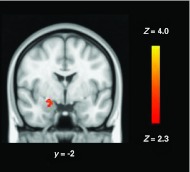
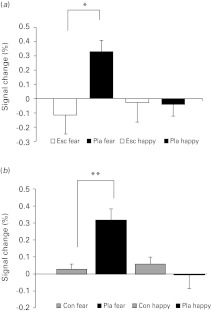
Background: Antidepressant drugs such as selective serotonin re-uptake inhibitors (SSRIs) remediate negative biases in emotional processing in depressed patients in both behavioural and neural outcome measures. However, it is not clear if these effects occur before, or as a consequence of, changes in clinical state. Method: In the present study, we investigated the effects of short-term SSRI treatment in depressed patients on the neural response to fearful faces prior to clinical improvement in mood. Altogether, 42 unmedicated depressed patients received SSRI treatment (10 mg escitalopram daily) or placebo in a randomised, parallel-group design. The neural response to fearful and happy faces was measured on day 7 of treatment using functional magnetic resonance imaging. A group of healthy controls was imaged in the same way. Results: Amygdala responses to fearful facial expressions were significantly greater in depressed patients compared to healthy controls. However, this response was normalised in patients receiving 7 days treatment with escitalopram. There was no significant difference in clinical depression ratings at 7 days between the escitalopram and placebo-treated patients. Conclusions: Our results suggest that short-term SSRI treatment in depressed patients remediates amygdala hyperactivity in response to negative emotional stimuli prior to clinical improvement in depressed mood. This supports the hypothesis that the clinical effects of antidepressant treatment may be mediated in part through early changes in emotional processing. Further studies will be needed to show if these early effects of antidepressant medication predict eventual clinical outcome.
Overview
The claims and statistics of this paper haven’t been checked yet.
Free: it reads the open-access text and checks the first 5 claims that cite a source we can check. Create a free account to check every claim.
Integrity signals
Registry
Cites
Statistics
Figures
Verification
Claims the paper makes
The claims and statistics of this paper haven’t been checked yet.
Free: it reads the open-access text and checks the first 5 claims that cite a source we can check. Create a free account to check every claim.
Claims other papers make about this one
Each is checked against this paper’s own text: does it say what the citing paper says it does?
The source backs part of the claim, not all of it — or backs it for a different population, condition or comparison.
In the citing paper
“Functional imaging studies have consistently reported higher metabolism in ventral PFC during emotional processing (Phillips et al., 2003) and hyperactivity of amygdala in response to sad and fearful facial expressions in depressed individuals (Godlewska et al., 2012;Greening et al., 2013;Mingtian et al., 2012;Stuhrmann et al., 2011).”
From Social functioning in major depressive disorder (2016) · cites this paper as Godlewska et al., 2012
Experimental — accuracy not yet measuredThe cited source says what the claim attributes to it.
In the citing paper
“Antidepressant treatment modifies this, and hyperactive responses in the amygdala are normalised following 7 days'46 or longer44,45 treatment with an SSRI.”
From The effects of drugs on human models of emotional processing: an account of antidepressant drug treatment (2015) · cites this paper as [46]
In the citing paper
“after 7 days of treatment with either 10 mg escitalopram daily or placebo, the amygdala response to fearful versus happy facial expressions was significantly higher in the placebo group as compared to the escitalopram group, while there was no difference between the escitalopram treated patients and healthy individuals”
From Cognitive neuropsychological theory of antidepressant action: a modern-day approach to depression and its treatment (2021) · cites this paper as Godlewska et al. 2012
In the citing paper
“At shorter dosing regimens, the normalization of amygdala responses precedes changes in clinical status.46”
From The effects of drugs on human models of emotional processing: an account of antidepressant drug treatment (2015) · cites this paper as [46]
In the citing paper
“Pharmacological anxiolytics and antidepressants that are clinically effective in reducing symptoms have been found to affect reductions in specific negative biases in neural correlates of emotional information processing (Sheline et al. 2001; Fu et al. 2004; Godlewska et al. 2012), and also modulate biases when administered in healthy control and at-risk groups (Harmer et al. 2003; Browning et al.”
From Prebiotic intake reduces the waking cortisol response and alters emotional bias in healthy volunteers (2015) · cites this paper as Godlewska et al. 2012
Self-check
Percentages, sums and reported differences re-computed from the paper’s own numbers.
The self-check needs the paper’s full text.
Citations
Cites
An inventory for measuring depression
BECK, A. T. (1961) · Archives of General Psychiatry · doi:10.1001/archpsyc.1961.01710120031004 · Cited by 38,032 · cited 4×
“Mood and anxiety were assessed using the Beck Depression Inventory (BDI ; Beck et al. 1961), the Hamilton Depression Ratings Scale (HAMD; Hamilton, 1960) and the Spielberger’s State-Trait Anxiety Inventory (Spielberger et al. 1983) immediately before starting treatment and on the seventh day of placebo/escitalopram.”
MethodInfluentialThe assessment and analysis of handedness: The Edinburgh inventory
Oldfield, R. C. (1971) · Neuropsychologia · doi:10.1016/0028-3932(71)90067-4 · Cited by 35,900 · cited 1×
“All participants were right-handed as assessed by the Edinburgh Handedness Inventory (Oldfield, 1971).”
MethodHamilton, M. (1960) · Journal of Neurology, Neurosurgery & Psychiatry · doi:10.1136/jnnp.23.1.56 · Cited by 32,817 · cited 3×
“Mood and anxiety were assessed using the Beck Depression Inventory (BDI ; Beck et al. 1961), the Hamilton Depression Ratings Scale (HAMD; Hamilton, 1960) and the Spielberger’s State-Trait Anxiety Inventory (Spielberger et al. 1983) immediately before starting treatment and on the seventh day of placebo/escitalopram.”
Method(1970) · Cited by 24,983
Advances in functional and structural MR image analysis and implementation as FSL
Smith, S. M., Jenkinson, M., Woolrich, M. W., Beckmann, C. F., Behrens, T. E. J., Johansen-Berg, H., Bannister, P. R., De Luca, M., Drobnjak, I., Flitney, D. E., et al. (2004) · NeuroImage · doi:10.1016/j.neuroimage.2004.07.051 · Cited by 13,630 · cited 2×
“Functional MRI pre-processing and statistical analysis Functional MRI data were pre-processed and analysed using FSL, version 4.1.4 (Smith et al. 2004) Briefly, motion correction was applied using a rigid body registration to the central volume (Jenkinson et al. 2002).”
MethodInfluentialJenkinson, M., Bannister, P., Brady, M., & Smith, S. (2002) · NeuroImage · doi:10.1006/nimg.2002.1132 · Cited by 11,888 · cited 4×
“2004) Briefly, motion correction was applied using a rigid body registration to the central volume (Jenkinson et al. 2002).”
MethodInfluentialFast robust automated brain extraction
Smith, S. M. (2002) · Human Brain Mapping · doi:10.1002/hbm.10062 · Cited by 10,496 · cited 2×
“Brain matter was segmented from non-brain using a mesh deformation approach (Smith, 2002) ; Gaussian spatial smoothing was applied with a fullwidth half-maximum of 5 mm; high pass temporal filtering was applied using a Gaussian-weighted running lines filter, with a 3 dB cut-off of 120 s ; susceptibility-related distor…”
MethodFunctional neuroanatomy of emotion: A meta-analysis of emotion activation studies in PET and fMRI
Phan, K. L., Wager, T., Taylor, S. F., & Liberzon, I. (2002) · NeuroImage · doi:10.1006/nimg.2002.1087 · Cited by 3,502 · cited 2×
“…region of interest in healthy volunteers alone revealed a trend for the pattern expected by results in meta-analyses of amygdala responsivity in healthy people [increased responses to fearful compared to happy facial expressions at p=0.1, see Supplementary material S1 (e.g. Phan et al. 2002)].”
BackgroundResultInfluentialTemporal Autocorrelation in Univariate Linear Modeling of FMRI Data
Woolrich, M. W., Ripley, B. D., Brady, M., & Smith, S. M. (2001) · NeuroImage · doi:10.1006/nimg.2001.0931 · Cited by 2,852 · cited 1×
“A general linear model was fitted in pre-whitened data space (to account for autocorrelation in the fMRI residuals ; Woolrich et al. 2001).”
MethodMultilevel linear modelling for FMRI group analysis using Bayesian inference
Woolrich, M. W., Behrens, T. E. J., Beckmann, C. F., Jenkinson, M., & Smith, S. M. (2004) · NeuroImage · doi:10.1016/j.neuroimage.2003.12.023 · Cited by 1,728 · cited 1×
“Individual subject data were then combined at the group level using a full mixed-effects analysis (Woolrich et al. 2004), including gender as covariate of no interest.”
Method
Research works printed but not linked: 2
- 20. Matsumoto J, Ekman P (1988). Japanese and Caucasian Facial Expressions of Emotion (JACFEE) and Neutral Faces (JACNeuf). Human Interaction Laboratory : San Francisco.
- 32. Spitzer RL, Williams JBW, Gibbon M, First MB (1995). Structured Clinical Interview for DSM-1V (SCID). New York State Psychiatric Institute Biometrics Research : New York.
Cited by
Items 101–200 of 280
Psilocybin’s Potential Mechanisms in the Treatment of Depression: A Systematic Review
Lee, H. J., Tsang, V. W. L., Chai, B. S., Lin, M. C., Howard, A. K., Uy, C. E., & Elefante, J. (2023) · Journal of Psychoactive Drugs · doi:10.1080/02791072.2023.2223195 · Cited by 22
“One recognized mechanism of action of traditional antidepressants, specifically SSRIs, is of normalizing overactivity in the amygdala (Godlewska et al. 2012), given prior fMRI findings of increased amygdala activation in clinically depressed individuals (Yang et al. 2010).”
BackgroundSpies, M., Klöbl, M., Höflich, A. S., Hummer, A., Vanicek, T., Michenthaler, P., Kranz, G. S., Hahn, A., Winkler, D., Windischberger, C., et al. (2019) · Scientific Reports · doi:10.1038/s41598-019-46702-x · Cited by 23
Disrupted basolateral amygdala circuits supports negative valence bias in depressive states
Bigot, M., Badts, C.-H. D., Benchetrit, A., Vicq, É., Moigneu, C., Meyrel, M., Wagner, S., Hennrich, A. A., Houenou, J., Lledo, P., et al. (2024) · Translational Psychiatry · doi:10.1038/s41398-024-03085-6 · Cited by 21
“Brain imaging data show an alteration in the anatomy, the activity and connectivity of limbic regions and particularly the amygdala in depressive disorders [10 – 15].”
BackgroundChanges in brain function during negative emotion processing in the long-term course of depression
Enneking, V., Klug, M., Borgers, T., Dohm, K., Grotegerd, D., Frankenberger, L. M., Hülsmann, C., Lemke, H., Meinert, S., Leehr, E. J., et al. (2022) · The British Journal of Psychiatry · doi:10.1192/bjp.2021.223 · Cited by 21
Leerssen, J., Aghajani, M., Bresser, T., Rösler, L., Winkler, A. M., Foster‐Dingley, J. C., & Someren, E. J. W. V. (2023) · Biological Psychiatry Cognitive Neuroscience and Neuroimaging · doi:10.1016/j.bpsc.2023.03.007 · Cited by 19
Komulainen, E., Glerean, E., Heikkilä, R., Nummenmaa, L., Raij, T. T., Isometsä, E. T., & Ekelund, J. (2021) · NeuroImage · doi:10.1016/j.neuroimage.2021.118110 · Cited by 19
Time of day influences stress hormone response to ketamine
Birnie, M. T., Eapen, A. V., Kershaw, Y. M., Lodge, D., Collingridge, G. L., Conway-Campbell, B. L., & Lightman, S. L. (2022) · Journal of Neuroendocrinology · doi:10.1111/jne.13194 · Cited by 19
Ishida, T., Dierks, T., Strik, W. K., & Morishima, Y. (2020) · Frontiers in Psychiatry · doi:10.3389/fpsyt.2020.00836 · Cited by 20
The ‘affect tagging and consolidation’ (ATaC) model of depression vulnerability
Harrington, M. O., Pennington, K., & Durrant, S. J. (2017) · Neurobiology of Learning and Memory · doi:10.1016/j.nlm.2017.02.003 · Cited by 20
Amygdala Reactivity, Antidepressant Discontinuation, and Relapse
Erdmann, T., Berwian, I. M., Stephan, K. E., Seifritz, E., Walter, H., & Huys, Q. J. M. (2024) · JAMA Psychiatry · doi:10.1001/jamapsychiatry.2024.2136 · Cited by 18
de Cates, A. N., Martens, M., Wright, L. C., van Praag, C. G., Capitão, L. P., Gibson, D., Cowen, P. J., Harmer, C. J., & Murphy, S. E. (2022) · Frontiers in Psychiatry · doi:10.3389/fpsyt.2022.859123 · Cited by 18
“Selective serotonin reuptake inhibitors (SSRIs) have been shown to decrease amygdala responses to fearful faces in healthy participants (28, 29), and also in people with depression (27).”
BackgroundMethodSelf-citationFunctional magnetic resonance imaging of depression: a bibliometrics and meta-analysis
Wang, X., Nie, X., Zhang, F., Wei, Y., Zeng, W., Zhang, Y., & Lin, H. (2024) · Annals of General Psychiatry · doi:10.1186/s12991-024-00525-x · Cited by 18
Effects of escitalopram therapy on functional brain controllability in major depressive disorder
Fang, F. Z., Godlewska, B. R., Cho, R. Y., Savitz, S. I., Selvaraj, S., & Zhang, Y. (2022) · Journal of Affective Disorders · doi:10.1016/j.jad.2022.04.123 · Cited by 18
Self-citationAttention Bias to Sad Faces and Images: Which Is Better for Predicting Depression?
Ajilchi, B., & Nejati, V. (2013) · Open Journal of Depression · doi:10.4236/ojd.2013.23005 · Cited by 18
Rai, S., Griffiths, K. R., Breukelaar, I. A., Barreiros, A. R., Chen, W., Boyce, P. M., Hazell, P., Foster, S., Malhi, G. S., Bryant, R. A., et al. (2021) · Bipolar Disorders · doi:10.1111/bdi.13042 · Cited by 18
Modulation of attention network activation under antidepressant agents in healthy subjects
Graf, H., Abler, B., Hartmann, A., Metzger, C. D., & Walter, M. (2012) · The International Journal of Neuropsychopharmacology · doi:10.1017/s1461145712001368 · Cited by 18
“The activation decreases under the drugs revealed by our study could therefore represent a part of the drugs actual mechanism of action, similar to those found in the context of emotion processing (Godlewska et al., 2012).”
ResultEffective connectivity between resting-state networks in depression
DeMaster, D., Godlewska, B. R., Liang, M., Vannucci, M., Bockmann, T., Cao, B., & Selvaraj, S. (2022) · Journal of Affective Disorders · doi:10.1016/j.jad.2022.03.041 · Cited by 18
Self-citationBulteau, S., Malo, R., Holland, Z., Laurin, A., & Sauvaget, A. (2023) · Wiley Interdisciplinary Reviews Cognitive Science · doi:10.1002/wcs.1644 · Cited by 16
“It particularly impairs limbic areas (Godlewska et al., 2012; He et al., 2018; Korb et al., 2011; Langenecker et al., 2018; Notebaert et al., 2018; Phillips et al., 2015; Williams et al., 1996; Yoon et al., 2018); Cognitive Control Network (hypoactive) (Pimontel et al., 2016; Wagner et al., 2018),…”
BackgroundSanchez, T. A., Ramos, L. R., Araujo, F., Schenberg, E. E., Yonamine, M., Lobo, I., de Araújo, D. B., & Luna, L. E. (2023) · Journal of Ethnopharmacology · doi:10.1016/j.jep.2023.117430 · Cited by 16
Song, E. J., Tozzi, L., & Williams, L. M. (2024) · Biological Psychiatry · doi:10.1016/j.biopsych.2024.03.016 · Cited by 16
“Responders to SSRIs have also been characterized by early attenuation of amygdala activation to fear (60,61) and relative normalization of amygdala activity after antidepressant treatment (62 – 66).”
Diffusion tensor imaging brain structural clustering patterns in major depressive disorder
Xu, D., Xu, G., Zhao, Z., Sublette, M. E., Miller, J. M., & Mann, J. J. (2021) · Human Brain Mapping · doi:10.1002/hbm.25597 · Cited by 17
Duyser, F. A., Vrijsen, J. N., van Oort, J., Collard, R. M., Schene, A. H., Tendolkar, I., & van Eijndhoven, P. (2022) · Psychiatry Research Neuroimaging · doi:10.1016/j.pscychresns.2022.111481 · Cited by 16
Lin, C., Chung, C., Chen, L., You, C.-H., Chien, W., & Chou, P. (2019) · General Hospital Psychiatry · doi:10.1016/j.genhosppsych.2019.03.004 · Cited by 16
Suddell, S. F., Müller-Glodde, M., Lumsden, J., Looi, C. Y., Granger, K. T., Barnett, J. H., Robinson, O. J., Munafo, M. R., & Penton‐Voak, I. S. (2021) · Psychological Medicine · doi:10.1017/s0033291721002014 · Cited by 15
“For example, depressed individuals in their 1st week of SSRI treatment have a reduction in neural activity in the amygdala when viewing fearful ( v. happy) faces (Godlewska, Norbury, Selvaraj, Cowen, & Harmer, 2012, 2016).”
Stimulating human prefrontal cortex increases reward learning
Overman, M. J., Sarrazin, V., Browning, M. D., & O’Shea, J. (2023) · NeuroImage · doi:10.1016/j.neuroimage.2023.120029 · Cited by 15
NEUROPLASTICITY IN DEPRESSION: A NARRATIVE REVIEW WITH EVIDENCE-BASED INSIGHTS
Petra, Mudgal, S. K., Nath, S., Chaturvedi, J., Sharma, S. K., & Joshi, J. (2022) · Psychiatria Danubina · doi:10.24869/psyd.2022.390 · Cited by 14
“The amygdala is also intricately involved in the cognitive and emotional (esp. anxiety and fear) aspects of the depressive symptom rubric, which is amenable to antidepressant treatment (Godlewska et al. 2012).”
BackgroundDaftary, S., Enkevort, E. A. V., Kulikova, A., Legacy, M., & Brown, E. S. (2018) · Psychiatry Research Neuroimaging · doi:10.1016/j.pscychresns.2018.12.005 · Cited by 14
Goldstein‐Piekarski, A. N., & Williams, L. M. (2019) · Elsevier eBooks · doi:10.1016/b978-0-12-813333-0.00021-4 · Cited by 14
Lorenz, T. K., Cheng, H., & Heiman, J. R. (2019) · PLoS ONE · doi:10.1371/journal.pone.0217764 · Cited by 14
“These patterns are thought to indicate that antidepressants attenuate hyper-reactivity to negative or stressful stimuli, while increasing reward salience associated with positive stimuli [69].”
BackgroundGodlewska, B. R. (2020) · Current Behavioral Neuroscience Reports · doi:10.1007/s40473-020-00198-2 · Cited by 14
Self-citationJakobsen, J. C., Katakam, K. K., Schou, A., Hellmuth, S. G., Stallknecht, S. E., Leth-Møller, K., Iversen, M., Banke, M. B., Petersen, I. J., Klingenberg, S. L., et al. (2017) · BMC Psychiatry · doi:10.1186/s12888-017-1311-5 · Cited by 14
Shiroma, P. R., Albott, C. S., Johns, B., THURAS, P. D., Wels, J., & Lim, K. O. (2015) · Journal of Neuropsychiatry · doi:10.1176/appi.neuropsych.14100243 · Cited by 13
Compère, L., Siegle, G. J., & Young, K. D. (2021) · Translational Psychiatry · doi:10.1038/s41398-021-01507-3 · Cited by 13
Braak, S., Penninx, B. W. J. H., Su, T., Pijnenburg, Y. A. L., Nijland, D., Campos, A. V., de la Torre‐Luque, A., Saris, I. M. J., Reus, L. M., Beckenstrom, A. C., et al. (2024) · European Neuropsychopharmacology · doi:10.1016/j.euroneuro.2024.05.004 · Cited by 12
“The iFEP task typically engages fronto-parieto-limbic networks governing socioaffective function, often showing anomalies in SZ and AD patients (van der Wee et al., 2019; Porcelli et al., 2019; Godlewska et al., 2012), as illustrated in Fig.”
Császár-Nagy, N., Bob, P., & Bókkon, I. (2022) · Journal of Integrative Neuroscience · doi:10.31083/j.jin2105148 · Cited by 13
Social Psychopharmacology: Novel Approaches to Treat Deficits in Social Motivation in Schizophrenia
Bershad, A. K., & de Wit, H. (2023) · Schizophrenia Bulletin · doi:10.1093/schbul/sbad094 · Cited by 12
Livermore, J. J. A., Skora, L. I., Adamatzky, K., Garfinkel, S. N., Critchley, H., & Campbell-Meiklejohn, D. K. (2024) · Translational Psychiatry · doi:10.1038/s41398-024-02971-3 · Cited by 13
“…of serotonin effects for anxious states has been observed in the amygdala, wherein a single SSRI dose reduced the enhanced behavioural and neural response to fearful faces in relatively anxious individuals (also with past or present depression) but not in less-anxious, healthy controls [60, 61].”
BackgroundRotem‐Kohavi, N., Williams, L. J., & Oberlander, T. F. (2020) · Seminars in Perinatology · doi:10.1016/j.semperi.2020.151223 · Cited by 12
Recent Evidence on the Antidepressant Effects of Ayahuasca
Palhano-Fontes, F., Mota-Rolim, S. A., Soares, B. L., Coelho, N. L. G., Maia‐de‐Oliveira, J. P., & de Araújo, D. B. (2021) · Springer eBooks · doi:10.1007/978-3-030-55688-4_2 · Cited by 14
Cosgrove, K. T., Kuplicki, R., Savitz, J. B., Burrows, K., Simmons, W. K., Khalsa, S. S., Teague, T. K., Aupperle, R. L., & Paulus, M. P. (2021) · Brain Behavior and Immunity · doi:10.1016/j.bbi.2021.05.023 · Cited by 12
Miskowiak, K., Macoveanu, J., Jørgensen, M., Ott, C., Støttrup, M., Jensen, H., Jørgensen, A., Harmer, C., Paulson, O., Siebner, H., et al. (2018) · European Neuropsychopharmacology · doi:10.1016/j.euroneuro.2018.05.013 · Cited by 11
Self-citationDeveloping Clinically Interpretable Neuroimaging Biotypes in Psychiatry
Ahn, J., Foland‐Ross, L. C., Akiki, T. J., Boyar, L., Wydler, I., Bostian, C. M., Zhang, X., Yang, H., Ellsay, A., Ma, E. W., et al. (2025) · Biological Psychiatry · doi:10.1016/j.biopsych.2025.08.019 · Cited by 11
“In previously unmedicated patients, escitalopram normalized fear-and sadness-related activity in the amygdala, insula, and ACC (66,67).”
Henry, M., Lauriat, T. L., Lowen, S. B., Churchill, J. H., Hodgkinson, C. A., Goldman, D. A., & Renshaw, P. F. (2013) · Psychiatry Research Neuroimaging · doi:10.1016/j.pscychresns.2013.05.008 · Cited by 11
“, 2010) and fearful faces (Godlewska et al., 2012) than healthy controls before antidepressant treatment, whereas healthy controls showed a greater response to happy faces.”
BackgroundLa cognizione sociale nel disturbo depressivo maggiore: una rassegna sulle basi neurali
Turchi, F., Cuomo, A., Amodeo, G., Favaretto, E., Righini, S., Mellina, E., Mela, C. L., & Fagiolini, A. M. (2017) · Rivista di psichiatria · doi:10.1708/2737.27906 · Cited by 11
McNeal, N., Watanasriyakul, W. T., Normann, M. C., Akinbo, O. I., Dagner, A., Ihm, E., Wardwell, J., & Grippo, A. J. (2019) · Autonomic Neuroscience · doi:10.1016/j.autneu.2019.03.003 · Cited by 11
Modeling disorders of fear and anxiety in animals
Hoffman, K. L. (2015) · Elsevier eBooks · doi:10.1016/b978-0-08-100099-1.00003-0 · Cited by 12
Improving the Translational Validity of Methods Used to Study Depression in Animals
Robinson, E. S. J. (2016) · Psychopathology Review · doi:10.5127/pr.034713 · Cited by 11
Yoshino, K., Oda, Y., Kimura, M., Kimura, H., Nangaku, M., Shirayama, Y., & Iyo, M. (2020) · Psychopharmacology · doi:10.1007/s00213-020-05555-3 · Cited by 11
Nolan, T. L., Geffert, L. M., Kolber, B. J., Madura, J. D., & Surratt, C. K. (2014) · ACS Chemical Neuroscience · doi:10.1021/cn500133b · Cited by 11
Mayegowda, S. B., Rao, B. V., & Rao, B. S. R. S. (2024) · Journal of Applied Pharmaceutical Science · doi:10.7324/japs.2024.158094 · Cited by 10
Li, C., Hu, Q., Zhang, D., Hoffstaedter, F., Bauer, A., & Elmenhorst, D. (2022) · Neuroscience & Biobehavioral Reviews · doi:10.1016/j.neubiorev.2022.104643 · Cited by 10
de Cates, A. N., & Broome, M. R. (2016) · Frontiers in Psychiatry · doi:10.3389/fpsyt.2016.00007 · Cited by 9
“However, amygdala responses to fearful faces are modified by antidepressant use in depressed patients (86, 87).”
BackgroundClinical neuroimaging markers of response to treatment in mood disorders
Porcu, M., Balestrieri, A., Siotto, P., Lucatelli, P., Anzidei, M., Suri, J. S., Zaccagna, F., Argiolas, G. M., & Saba, L. (2016) · Neuroscience Letters · doi:10.1016/j.neulet.2016.10.013 · Cited by 9
“[98] confirmed that in UPs a short-term SSRI treatment is able to decrease the activation of amygdala prior to clinical improvements; the second one, led by Chen YT et al.”
Precision biomarkers for mood disorders based on brain imaging
Chen, R., Cui, Z., Capitão, L. P., Wang, G., Satterthwaite, T. D., & Harmer, C. J. (2020) · BMJ · doi:10.1136/bmj.m3618 · Cited by 9
Self-citationWilliams, R. J., Brown, E. C., Clark, D., Pike, G. B., & Ramasubbu, R. (2021) · Brain and Behavior · doi:10.1002/brb3.2287 · Cited by 8
“This contrast of angry, fearful, sad> happy expressionwas chosen based on prior literature demonstrating that BOLD responses to negative emotional stimulimaybe associatedwith later clinical outcome (Godlewska et al., 2016; Godlewska et al., 2012).”
BackgroundMethodEffects of repeated intravenous esketamine administration on affective biases
Reif-Leonhard, C., Millard, S. N., Ferdowssian, D., Finlayson, A., Aichholzer, M., Repple, J., Stäblein, M., Thanarajah, S. E., Wang, X., Dawson, G. R., et al. (2025) · The World Journal of Biological Psychiatry · doi:10.1080/15622975.2024.2441304 · Cited by 7
Poggi, G., Portalés, A., Robert, M., Hofer, C., Schmid, S., Kúkeľová, D., Sigrist, H., Just, S., Hengerer, B., & Pryce, C. R. (2025) · Neuropharmacology · doi:10.1016/j.neuropharm.2025.110430 · Cited by 7
“There was no concomitant difference in clinical MDD ratings between the escita- lopram-and placebo-treated patients after these 7 days of treatment (Godlewska et al., 2012).”
Finnegan, S., Harrison, O. K., Booth, S., Dennis, A., Ezra, M., Harmer, C. J., Herigstad, M., Guillaume, B., Nichols, T. E., Rahman, N. M., et al. (2023) · ERJ Open Research · doi:10.1183/23120541.00479-2022 · Cited by 7
“scored according to their respective manuals: Dyspnoea-12 (D12) Questionnaire [22], Centre for Epidemiologic Studies Depression Scale (CES-D) [23], Trait Anxiety Inventory (TRAIT) [24], Fatigue Severity Scale [25], St George’s Respiratory Questionnaire (SGRQ) [26], Medical Research Council (MRC) breathlessness scale […”
MethodSelf-citationPredicting Antidepressant Treatment Response Using Functional Brain Controllability Analysis
Fang, F. Z., Godlewska, B. R., Selvaraj, S., & Zhang, Y. (2022) · Brain Connectivity · doi:10.1089/brain.2022.0027 · Cited by 7
Self-citationTreatment-Induced Brain Plasticity in Psychiatric Disorders
Uscinska, M., Mattiot, A. P., & Bellino, S. (2019) · IntechOpen eBooks · doi:10.5772/intechopen.85448 · Cited by 7
He, K., Zhu, T., Yu, R., Zhang, J., Min, J., Huang, Y., Mo, X., Ma, Y., He, X., Lv, F., et al. (2025) · Journal of Affective Disorders · doi:10.1016/j.jad.2025.01.071 · Cited by 6
The emotional architecture of the psychedelic brain
Moujaes, F., Rieser, N. M., Belinger, L., Herdener, M., Zahid, Z., & Preller, K. H. (2025) · Trends in Cognitive Sciences · doi:10.1016/j.tics.2025.07.006 · Cited by 6
Applying a neural circuit taxonomy in depression and anxiety for personalized psychiatry
Williams, L. M., & Goldstein‐Piekarski, A. N. (2019) · Elsevier eBooks · doi:10.1016/b978-0-12-813176-3.00042-0 · Cited by 6
Pineau, G., Jean, E., Romo, L., Villemain, F., Poupon, D., & Gorwood, P. A. P. M. (2022) · Psychiatry Research · doi:10.1016/j.psychres.2022.114401 · Cited by 6
Zhang, L., Li, Q., Fang, Y.-F., & Qi, J.-W. (2023) · Medicine · doi:10.1097/md.0000000000033101 · Cited by 6
“[31,32] It was reported that duloxetine takes 5 to 7 days to be exploited in treating depression.[33,34] Similarly, it was reported that it takes 5 to 7 for duloxetine to take effect in relieving pain,[28] which is consistent with our conclusion.”
ResultThe cognitive neuropsychological model of antidepressant response
Walsh, A. E. L., & Harmer, C. J. (2015) · Current Opinion in Psychology · doi:10.1016/j.copsyc.2014.12.022 · Cited by 6
Self-citationA perspective: from the serotonin hypothesis to cognitive neuropsychological approaches
Zghoul, T., Cowen, P. J., & Harmer, C. J. (2019) · Elsevier eBooks · doi:10.1016/b978-0-12-813323-1.00005-0 · Cited by 6
Self-citationÉdes, A. E., McKie, S., Szabó, E., Kökönyei, G., Pap, D., Zsombók, T., Hullám, G., Gonda, X., Kozák, L. R., McFarquhar, M., et al. (2019) · Neuropharmacology · doi:10.1016/j.neuropharm.2019.107807 · Cited by 6
“We used a hypothesis-testing ROI analysis to investigate citalopram effects in the amygdala in view of its role in short- and long-term SSRI treatment response (Godlewska et al., 2012; Harmer et al., 2006; Murphy et al., 2009).”
BackgroundMethodYan, H., Han, Y., Shan, X., Li, H., Liu, F., Xie, G., Li, P., & Guo, W. (2023) · Neuropharmacology · doi:10.1016/j.neuropharm.2023.109692 · Cited by 5
Camacho, M. B., Vijitbenjaronk, W. D., & Anastasio, T. J. (2019) · Frontiers in Pharmacology · doi:10.3389/fphar.2019.01215 · Cited by 5
Park, C., Zuckerman, H., Subramaniapillai, M., Mansur, R. B., Rosenblat, J. D., Cao, B., Iacobucci, M., Lee, Y. L., Levitan, R. D., Blumberger, D. M., et al. (2020) · Psychiatry Research · doi:10.1016/j.psychres.2020.112767 · Cited by 5
Han, Y., Yan, H., Shan, X., Li, H., Liu, F., Li, P., Lv, D., Zhao, J., & Guo, W. (2025) · Translational Psychiatry · doi:10.1038/s41398-025-03475-4 · Cited by 4
Papageorgiou, G., Amemori, K., Gibson, D. J., Schwerdt, H. N., Naim, M., Wang, M. C., Yoshida, T., Sharma, J., Upadhyay, U. M., Yang, G. R., et al. (2026) · Nature Communications · doi:10.1038/s41467-026-69447-4 · Cited by 4
Matine, R. E., Kreutzmann, J. C., & Fendt, M. (2023) · Progress in Neuro-Psychopharmacology and Biological Psychiatry · doi:10.1016/j.pnpbp.2023.110732 · Cited by 4
The influence of psilocybin on subconscious and conscious emotional learning
Casanova, A. F., Ort, A., Smallridge, J. W., Preller, K. H., Seifritz, E., & Vollenweider, F. X. (2024) · iScience · doi:10.1016/j.isci.2024.110034 · Cited by 4
“46,47 The weakened recognition of fearful faces was blocked by the 5-HT 2A/2C -receptor antagonist ketanserin, 21 indicating the role these receptors play in mediating these effects.”
BackgroundNeurotransmitter modulation of human facial emotion recognition
Vlazaki, M., Harmer, C. J., Cowen, P. J., & Pulcu, E. (2025) · Journal of Psychopharmacology · doi:10.1177/02698811251338225 · Cited by 4
“Administration of fluoxetine, another widely prescribed antidepressant, to participants with MDD over 8 weeks showed reduced left amygdala activation to fearful faces (Sheline et al., 2001), and increased neural responses in limbic, extra-striate and subcortical regions in response to happy faces (Fu et al., 2007).”
InfluentialSelf-citationAn Overview of Machine Learning Applications in Mood Disorders
Topolski, N., Jeong, S. H., & Mwangi, B. (2021) · Cambridge University Press eBooks · doi:10.1017/9781108623018.017 · Cited by 4
Hama, T., Koeda, M., Ikeda, Y., Tateno, A., Kawara, T., Suzuki, H., & Okubo, Y. (2021) · Neuroscience Letters · doi:10.1016/j.neulet.2021.135716 · Cited by 4
Have No Fear: The Neural Basis of Anxiolytic Drug Action in Generalized Social Phobia
Harmer, C. J. (2013) · Biological Psychiatry · doi:10.1016/j.biopsych.2012.11.025 · Cited by 4
Self-citationKlöbl, M., Murgaš, M., Reed, M. B., Silberbauer, L., Hartmann, A. M., Godbersen, G. M., Gryglewski, G., Nics, L., Hahn, A., Rujescu, D., et al. (2025) · Translational Psychiatry · doi:10.1038/s41398-025-03407-2 · Cited by 3
“Such investigations include the interaction with the serotonergic system [4] and valence-dependent effects of SSRIs in healthy individuals and patients with MDD [5 – 7].”
Psilocybin effects on brain functional connectivity: a systematic review of fMRI studies
Farré‐Colomés, À., Rublinetska, O., & Soto-Angona, Ó. (2026) · Discover Mental Health · doi:10.1007/s44192-026-00384-w · Cited by 3
“Considerable evidence indicates that SSRIs normalize amygdala hyper-reactivity to negative stimuli and amygdala hypoactivity to positive stimuli in depression [58–60].”
Mood Disorders: Brain Imaging and Therapeutic Implications
Selvaraj, S., Brambilla, P., & Soares, J. C. (2021) · Cambridge University Press eBooks · doi:10.1017/9781108623018 · Cited by 4
Nielsen, S. F. V., Madsen, K. H., Vinberg, M., Kessing, L. V., Siebner, H. R., & Miskowiak, K. W. (2019) · Frontiers in Neuroscience · doi:10.3389/fnins.2019.01246 · Cited by 3
“The sample size of studies using pharmaco-related fMRI have been rather small, ranging from 12 to 42 patients (Iannetti et al., 2005; Harmer et al., 2006; Murphy et al., 2009; Godlewska et al., 2012; Wanigasekera et al., 2012; Harris et al., 2013; Lee et al., 2013; Di Simplicio et al., 2014; Sanders et al., 2015).”
BackgroundThe effect of emotional faces on reward-related probability learning in depressed patients
Gökçelli, D. K., Kizilates-Evin, G., Eroglu-Koc, S., Oğuz, K., Eraslan, C., Kitiş, Ö., & Gönül, A. S. (2024) · Journal of Affective Disorders · doi:10.1016/j.jad.2024.01.247 · Cited by 3
Psychotherapy and Antidepressant Treatment Effects on the Functional Neuroanatomy of Depression
Sankar, A., & Fu, C. H. Y. (2015) · Psychopathology Review · doi:10.5127/pr.036514 · Cited by 3
“Short term administration of SSRIs in both healthy volunteers (Harmer, Mackay, Reid, Cowen, & Goodwin, 2006) and MDD patients (Godlewska, Norbury, Selvaraj, Cowen, & Harmer, 2012) had normalized amygdala responses to negative emotional stimuli, which preceded the clinical improvements (Godlewska et al., 2012), suggest…”
BackgroundSarrazin, V., Overman, M. J., Mezossy-Dona, L., Browning, M. D., & O’Shea, J. (2024) · Translational Psychiatry · doi:10.1038/s41398-024-03204-3 · Cited by 2
Exercise intervention for rumination: from neural mechanisms to clinical applications
Bai, J., & Zhang, J. (2026) · Frontiers in Psychology · doi:10.3389/fpsyg.2026.1785621 · Cited by 2
Neuroimaging Studies of Effects of Psychotherapy in Depression
Bauer, I. E., & Meyer, T. D. (2021) · Cambridge University Press eBooks · doi:10.1017/9781108623018.021 · Cited by 2
Massive Citalopram Overdose Associated with Recurrent Seizures and Bilateral Shoulder Dislocations
Zoofaghari, S., Wong, A., Kiarasi, P., & Gheshlaghi, F. (2020) · Journal of Research in Pharmacy Practice · doi:10.4103/jrpp.jrpp_20_24 · Cited by 2
“In addition to the low toxicity of SSRIs, their effectiveness in the treatment of many mental disorders has led to their widespread use.[7] However, an overdose of the SSRIs, including citalopram, may be associated with complications such as tachycardia, drowsiness, tremor, nausea, and vomiting.”
BackgroundElectrophysiological Biomarkers for Mood Disorders
Ramakrishnan, N., Murphy, N., Selvaraj, S., & Cho, R. Y. (2021) · Cambridge University Press eBooks · doi:10.1017/9781108623018.015 · Cited by 2
Self-citationEarly effects of fluoxetine on emotional processing: implications for adolescent depression
Capitão, L. P. (2014) · Oxford University Research Archive (ORA) (University of Oxford) · doi:10.5287/ora-4rr2wkqbd · Cited by 2
Testing the neurocognitive model of antidepressant treatment
Warren, M. (2016) · Oxford University Research Archive (ORA) (University of Oxford) · doi:10.5287/ora-9rnvb7wgm · Cited by 2
Ironside, M., Harmer, C. J., O’Shea, J., Ebmeier, K. P., & Brunoni, A. R. (2016) · Oxford University Research Archive (ORA) (University of Oxford) · doi:10.5287/ora-pzaa6r9a9 · Cited by 2
Self-citationPharmacological Manipulations of Emotional Processing Biases: From Bench to Bedside
Martens, M., & Harmer, C. J. (2023) · CBT: science into practice · doi:10.1007/978-3-031-23650-1_10 · Cited by 1
Self-citationCoopersmith, A. S., Wolkowitz, O. M., Mellon, S. H., Wu, G. W. Y., Rampersaud, R., Hansen, N., Dutcher, E. G., Reus, V. I., & Mayer, S. E. (2024) · The Journal of Positive Psychology · doi:10.1080/17439760.2024.2427577 · Cited by 1
“…functional brain or neural properties that affect emotion-regulating parts of the brain (Aue et al., 2021; Dolcos et al., 2016; Kuzmanovic et al., 2016; Sharot et al., 2007; Yang et al., 2013), which may interact with SSRI effects (Godlewska et al., 2012; Harmer & Cowen, 2013; Harmer et al., 2009).”
Krause, A. J., Osorno, R. A., Solomon, N., Ahmadi, M., Lam, P., Magana, O., Blozyte, E., Harris, L., Babros, M. C., Izabel, S. S., et al. (2026) · Neuropsychopharmacology · doi:10.1038/s41386-026-02431-0 · Cited by 1
Rinne, R., Heikkilä, R., Raij, T., Komulainen, E., Ekelund, J., & Isometsä, E. (2025) · Psychiatry research. Neuroimaging · doi:10.1016/j.pscychresns.2025.112092
Fluoxetine Reduces Hyperglycemia‐Induced Facilitation of Fear Memory in Mice
Gilley, K., Kusumo, L. E., Hall, G., Folh, M. J., & Vichaya, E. G. (2026) · Brain and Behavior · doi:10.1002/brb3.71206 · Cited by 1
“Further, there are both clinical and preclinical evidence that SSRIs can attenuate this bias (Bigot et al. 2024 ; Godlewska et al. 2012 ).”
Carmellini, P., Cuomo, A., Rescalli, M. B., Pinzi, M., Dourmas, A., & Fagiolini, A. M. (2026) · Pharmaceuticals · doi:10.3390/ph19050662 · Cited by 1
“Treatment with SSRIs normalizes amygdala hyperreactivity and enhances prefrontal engagement, reflecting restoration of top-down control mechanisms [41].”
Nabulsi, L., Kang, M. J. Y., Jahanshad, N., McPhilemy, G., Martyn, F. M., Haarman, B. C. M., McDonald, C., Hallahan, B., O’Donoghue, S., Stein, D. J., et al. (2026) · Biological Psychiatry · doi:10.1016/j.biopsych.2026.04.020 · Cited by 1
Metadata
- Authors
- Godlewska, B. R., Norbury, R., Selvaraj, S., Cowen, P. J., & Harmer, C. J.
- Affiliations
- Warneford Hospital (GB)
- John Radcliffe Hospital (GB)
- Corresponding author
- Harmer, C. J.
- Venue
- Psychological Medicine
- Publisher
- Cambridge University Press (CUP)
- Published
- 2012-04-25
- Volume
- 42
- Issue
- 12
- Pages
- 2609-2617
- ISSN
- 0033-2917 (ISSN-L)
- 1469-8978
- PMC
- PMC3488813
- OpenAlex
- W2167738136
- Cited by
- 244
- References
- 36
- Citations by year
- 2026: 15 · 2025: 13 · 2024: 17 · 2023: 18 · 2022: 17 · 2021: 36 · 2020: 22 · 2019: 16 · 2018: 15 · 2017: 14 · 2016: 14 · 2015: 19 · 2014: 11 · 2013: 15 · 2012: 2
- FWCI
- 11.04
- Type
- journal article
- Language
- en
- Open access
- hybrid
- doi.org
- Licence
- Locations
- Psychological Medicine (publishedVersion, cc-by-nc-sa)
- Europe PMC (PubMed Central) (publishedVersion, cc-by-nc-sa)
- PubMed Central (publishedVersion, cc-by-nc-sa)
- PubMed (publishedVersion)
- Funders
- Eli Lilly and Company
- GlaxoSmithKline
- Servier
- H. Lundbeck A/S
- Medical Research Council
- Topics
- Health Sciences › Medicine › Pharmacology (medical) › Treatment of Major Depression
- Social Sciences › Psychology › Experimental and Cognitive Psychology › Anxiety, Depression, Psychometrics, Treatment, Cognitive Processes
- Life Sciences › Neuroscience › Cognitive Neuroscience › Neural and Behavioral Psychology Studies
- Keywords
- selective serotonin reuptake inhibitors, escitalopram, depression, amygdala hyperactivity, fearful faces, emotional processing, antidepressant mechanism, early treatment effects, facial expression recognition
- MeSH terms
- Adult, Amygdala, Attention, Major Depressive Disorder, Double-Blind Method, Drug Administration Schedule, Emotions, Facial Expression, Fear, Female, Humans, Image Interpretation, Computer-Assisted, Magnetic Resonance Imaging, Male, Middle Aged, Neurons, Pattern Recognition, Visual, Reference Values, Citalopram, Case-Control Studies, Selective Serotonin Reuptake Inhibitors, Young Adult
About these checks
Registry, retraction, Cites and statistics results are computed, not judged, with one exception: a printed reference that no index lists is read once by a model before it counts as a citation error. Claims are extracted by a model and kept only when their quote appears verbatim in the text; each cited source is then checked, with a model’s help, for whether it says what the claim relies on. Those verdicts can be wrong — read the claim’s quote and the cited source before relying on one.
Statistics and arithmetic are recomputed, not judged.
Confidence bands are shown only for fields calibrated on our annotated test set. None is calibrated yet, so no band is shown.
What counts as a claim ›How we measure confidence ›How we check this ›
Are you an author, or do you see a problem with this page? Request a review
Data sources
Bibliographic data: Semantic Scholar, OpenAlex, Crossref.
Contains information from the Semantic Scholar Academic Graph Datasets, made available under the ODC Attribution License (ODC-BY 1.0).
Semantic Scholar’s data is described in: Kinney, R., et al. (2023). The Semantic Scholar Open Data Platform. arXiv:2301.10140.
