

Short-term SSRI treatment normalises amygdala hyperactivity in depressed patients.
Open accessThe DOI matches its Crossref record; 36 of the 36 references it cites were found in a registry or an index.
Abstract
Background: Antidepressant drugs such as selective serotonin re-uptake inhibitors (SSRIs) remediate negative biases in emotional processing in depressed patients in both behavioural and neural outcome measures. However, it is not clear if these effects occur before, or as a consequence of, changes in clinical state. Method: In the present study, we investigated the effects of short-term SSRI treatment in depressed patients on the neural response to fearful faces prior to clinical improvement in mood. Altogether, 42 unmedicated depressed patients received SSRI treatment (10 mg escitalopram daily) or placebo in a randomised, parallel-group design. The neural response to fearful and happy faces was measured on day 7 of treatment using functional magnetic resonance imaging. A group of healthy controls was imaged in the same way. Results: Amygdala responses to fearful facial expressions were significantly greater in depressed patients compared to healthy controls. However, this response was normalised in patients receiving 7 days treatment with escitalopram. There was no significant difference in clinical depression ratings at 7 days between the escitalopram and placebo-treated patients. Conclusions: Our results suggest that short-term SSRI treatment in depressed patients remediates amygdala hyperactivity in response to negative emotional stimuli prior to clinical improvement in depressed mood. This supports the hypothesis that the clinical effects of antidepressant treatment may be mediated in part through early changes in emotional processing. Further studies will be needed to show if these early effects of antidepressant medication predict eventual clinical outcome.
Overview
The claims and statistics of this paper haven’t been checked yet.
Free: it reads the open-access text and checks the first 5 claims that cite a source we can check. Create a free account to check every claim.
Integrity signals
Registry
Cites
Statistics
Figures
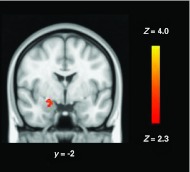
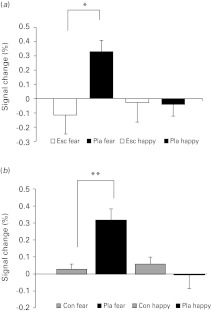
Verification
Claims the paper makes
The claims and statistics of this paper haven’t been checked yet.
Free: it reads the open-access text and checks the first 5 claims that cite a source we can check. Create a free account to check every claim.
Claims other papers make about this one
Each is checked against this paper’s own text: does it say what the citing paper says it does?
The source backs part of the claim, not all of it — or backs it for a different population, condition or comparison.
In the citing paper
“Functional imaging studies have consistently reported higher metabolism in ventral PFC during emotional processing (Phillips et al., 2003) and hyperactivity of amygdala in response to sad and fearful facial expressions in depressed individuals (Godlewska et al., 2012;Greening et al., 2013;Mingtian et al., 2012;Stuhrmann et al., 2011).”
From Social functioning in major depressive disorder (2016) · cites this paper as Godlewska et al., 2012
Experimental — accuracy not yet measuredThe cited source says what the claim attributes to it.
In the citing paper
“Antidepressant treatment modifies this, and hyperactive responses in the amygdala are normalised following 7 days'46 or longer44,45 treatment with an SSRI.”
From The effects of drugs on human models of emotional processing: an account of antidepressant drug treatment (2015) · cites this paper as [46]
In the citing paper
“after 7 days of treatment with either 10 mg escitalopram daily or placebo, the amygdala response to fearful versus happy facial expressions was significantly higher in the placebo group as compared to the escitalopram group, while there was no difference between the escitalopram treated patients and healthy individuals”
From Cognitive neuropsychological theory of antidepressant action: a modern-day approach to depression and its treatment (2021) · cites this paper as Godlewska et al. 2012
In the citing paper
“At shorter dosing regimens, the normalization of amygdala responses precedes changes in clinical status.46”
From The effects of drugs on human models of emotional processing: an account of antidepressant drug treatment (2015) · cites this paper as [46]
In the citing paper
“Pharmacological anxiolytics and antidepressants that are clinically effective in reducing symptoms have been found to affect reductions in specific negative biases in neural correlates of emotional information processing (Sheline et al. 2001; Fu et al. 2004; Godlewska et al. 2012), and also modulate biases when administered in healthy control and at-risk groups (Harmer et al. 2003; Browning et al.”
From Prebiotic intake reduces the waking cortisol response and alters emotional bias in healthy volunteers (2015) · cites this paper as Godlewska et al. 2012
Self-check
Percentages, sums and reported differences re-computed from the paper’s own numbers.
The self-check needs the paper’s full text.
Citations
Cites
An inventory for measuring depression
BECK, A. T. (1961) · Archives of General Psychiatry · doi:10.1001/archpsyc.1961.01710120031004 · Cited by 38,032 · cited 4×
“Mood and anxiety were assessed using the Beck Depression Inventory (BDI ; Beck et al. 1961), the Hamilton Depression Ratings Scale (HAMD; Hamilton, 1960) and the Spielberger’s State-Trait Anxiety Inventory (Spielberger et al. 1983) immediately before starting treatment and on the seventh day of placebo/escitalopram.”
MethodInfluentialThe assessment and analysis of handedness: The Edinburgh inventory
Oldfield, R. C. (1971) · Neuropsychologia · doi:10.1016/0028-3932(71)90067-4 · Cited by 35,900 · cited 1×
“All participants were right-handed as assessed by the Edinburgh Handedness Inventory (Oldfield, 1971).”
MethodHamilton, M. (1960) · Journal of Neurology, Neurosurgery & Psychiatry · doi:10.1136/jnnp.23.1.56 · Cited by 32,817 · cited 3×
“Mood and anxiety were assessed using the Beck Depression Inventory (BDI ; Beck et al. 1961), the Hamilton Depression Ratings Scale (HAMD; Hamilton, 1960) and the Spielberger’s State-Trait Anxiety Inventory (Spielberger et al. 1983) immediately before starting treatment and on the seventh day of placebo/escitalopram.”
Method(1970) · Cited by 24,983
Advances in functional and structural MR image analysis and implementation as FSL
Smith, S. M., Jenkinson, M., Woolrich, M. W., Beckmann, C. F., Behrens, T. E. J., Johansen-Berg, H., Bannister, P. R., De Luca, M., Drobnjak, I., Flitney, D. E., et al. (2004) · NeuroImage · doi:10.1016/j.neuroimage.2004.07.051 · Cited by 13,630 · cited 2×
“Functional MRI pre-processing and statistical analysis Functional MRI data were pre-processed and analysed using FSL, version 4.1.4 (Smith et al. 2004) Briefly, motion correction was applied using a rigid body registration to the central volume (Jenkinson et al. 2002).”
MethodInfluentialJenkinson, M., Bannister, P., Brady, M., & Smith, S. (2002) · NeuroImage · doi:10.1006/nimg.2002.1132 · Cited by 11,888 · cited 4×
“2004) Briefly, motion correction was applied using a rigid body registration to the central volume (Jenkinson et al. 2002).”
MethodInfluentialFast robust automated brain extraction
Smith, S. M. (2002) · Human Brain Mapping · doi:10.1002/hbm.10062 · Cited by 10,496 · cited 2×
“Brain matter was segmented from non-brain using a mesh deformation approach (Smith, 2002) ; Gaussian spatial smoothing was applied with a fullwidth half-maximum of 5 mm; high pass temporal filtering was applied using a Gaussian-weighted running lines filter, with a 3 dB cut-off of 120 s ; susceptibility-related distor…”
MethodFunctional neuroanatomy of emotion: A meta-analysis of emotion activation studies in PET and fMRI
Phan, K. L., Wager, T., Taylor, S. F., & Liberzon, I. (2002) · NeuroImage · doi:10.1006/nimg.2002.1087 · Cited by 3,502 · cited 2×
“…region of interest in healthy volunteers alone revealed a trend for the pattern expected by results in meta-analyses of amygdala responsivity in healthy people [increased responses to fearful compared to happy facial expressions at p=0.1, see Supplementary material S1 (e.g. Phan et al. 2002)].”
BackgroundResultInfluentialTemporal Autocorrelation in Univariate Linear Modeling of FMRI Data
Woolrich, M. W., Ripley, B. D., Brady, M., & Smith, S. M. (2001) · NeuroImage · doi:10.1006/nimg.2001.0931 · Cited by 2,852 · cited 1×
“A general linear model was fitted in pre-whitened data space (to account for autocorrelation in the fMRI residuals ; Woolrich et al. 2001).”
MethodMultilevel linear modelling for FMRI group analysis using Bayesian inference
Woolrich, M. W., Behrens, T. E. J., Beckmann, C. F., Jenkinson, M., & Smith, S. M. (2004) · NeuroImage · doi:10.1016/j.neuroimage.2003.12.023 · Cited by 1,728 · cited 1×
“Individual subject data were then combined at the group level using a full mixed-effects analysis (Woolrich et al. 2004), including gender as covariate of no interest.”
Method
Research works printed but not linked: 2
- 20. Matsumoto J, Ekman P (1988). Japanese and Caucasian Facial Expressions of Emotion (JACFEE) and Neutral Faces (JACNeuf). Human Interaction Laboratory : San Francisco.
- 32. Spitzer RL, Williams JBW, Gibbon M, First MB (1995). Structured Clinical Interview for DSM-1V (SCID). New York State Psychiatric Institute Biometrics Research : New York.
Cited by
Social functioning in major depressive disorder
Kupferberg, A., Bicks, L., & Hasler, G. (2016) · Neuroscience & Biobehavioral Reviews · doi:10.1016/j.neubiorev.2016.07.002 · Cited by 663
“Functional imaging studies have consistently reported hyperactivity in the amygdala in response to sad and fearful facial expressions in depressed individuals (Godlewska et al., 2012; Greening et al., 2013; Mingtian et al., 2012; Stuhrmann et al., 2011).”
How do antidepressants work? New perspectives for refining future treatment approaches
Harmer, C. J., Duman, R. S., & Cowen, P. J. (2017) · The Lancet Psychiatry · doi:10.1016/s2215-0366(17)30015-9 · Cited by 616
Self-citationSchmidt, K., Cowen, P. J., Harmer, C. J., Tzortzis, G., Errington, S., & Burnet, P. W. J. (2015) · Psychopharmacology · doi:10.1007/s00213-014-3810-0 · Cited by 522
“…to affect reductions in specific negative biases in neural correlates of emotional information processing (Sheline et al. 2001; Fu et al. 2004; Godlewska et al. 2012), and also modulate biases when administered in healthy control and at-risk groups (Harmer et al. 2003; Browning et al. 2006;…”
BackgroundSelf-citationRive, M. M., van Rooijen, G., Veltman, D. J., .Phillips, M. L., Schene, A. H., & Ruhé, H. G. (2013) · Neuroscience & Biobehavioral Reviews · doi:10.1016/j.neubiorev.2013.07.018 · Cited by 481
Jakobsen, J. C., Katakam, K. K., Schou, A., Hellmuth, S. G., Stallknecht, S. E., Leth-Møller, K., Iversen, M., Banke, M. B., Petersen, I. J., Klingenberg, S. L., et al. (2017) · BMC Psychiatry · doi:10.1186/s12888-016-1173-2 · Cited by 366
Williams, L. M. (2017) · Depression and Anxiety · doi:10.1002/da.22556 · Cited by 291
“For example, amygdala hyperreactivity to threat stimuli attenuates in responders to the selective serotonin reuptake inhibitors escitalopram and paroxetine (Godlewska et al., 2012; Ruhe et al., 2012), while hyperreactivity to sad faces predicts nonresponse to venlafaxine (Williams et al.”
BackgroundNeuropsychological mechanism underlying antidepressant effect: a systematic meta-analysis
Ma, Y. (2015) · Molecular Psychiatry · doi:10.1038/mp.2014.24 · Cited by 270
“T0 MDD (11) Antidepressant 84 Fales, 2009(10) Fearful face MDD (23) Escitalopram 56 Benedetti, 2009(11) Positive word Negative word T1 vs.”
BackgroundPhillips, M. L., Chase, H. W., Sheline, Y. I., Etkin, A., Almeida, J. R. C., Deckersbach, T., & Trivedi, M. H. (2015) · American Journal of Psychiatry · doi:10.1176/appi.ajp.2014.14010076 · Cited by 267
Increased amygdala responses to emotional faces after psilocybin for treatment-resistant depression
Roseman, L., Demetriou, L., Wall, M. B., Nutt, D. J., & Carhart-Harris, R. L. (2018) · Neuropharmacology · doi:10.1016/j.neuropharm.2017.12.041 · Cited by 230
“, 1992; Ma, 2015), and treatment with SSRIs has been found to attenuate this; both with chronic SSRI-use as well as early in treatment, prior to the appearance of clinical improvements (Godlewska et al., 2012).”
Neuroimaging in functional neurological disorder: State of the field and research agenda
Perez, D. L., Nicholson, T. R., Asadi-Pooya, A. A., Bègue, I., Butler, M., Carson, A. J., David, A. S., Deeley, Q., Diez, I., Edwards, M. J., et al. (2021) · NeuroImage: Clinical · doi:10.1016/j.nicl.2021.102623 · Cited by 216
Mertens, L. J., Wall, M. B., Roseman, L., Demetriou, L., Nutt, D. J., & Carhart-Harris, R. L. (2020) · Journal of Psychopharmacology · doi:10.1177/0269881119895520 · Cited by 208
“, 2018) are particularly striking, as amygdala involvement, and particularly its hypersensitivity to negative stimuli, has long been thought to be a component of clinical depression, and thus a target for antidepressant medications (Drevets et al., 1992; Godlewska et al., 2012; Harmer et al., 2017; Ma, 2015).”
BackgroundSerotonin, Amygdala and Fear: Assembling the Puzzle
Bocchio, M., McHugh, S. B., Bannerman, D. M., Sharp, T., & Capogna, M. (2016) · Frontiers in Neural Circuits · doi:10.3389/fncir.2016.00024 · Cited by 202
“First, drugs that block the re-uptake of 5-HT (e.g., selective serotonin reuptake inhibitors, SSRIs), the first-line treatment for depression and anxiety (Preskorn et al., 2004), affect amygdala activation to emotional stimuli (Bigos et al., 2008; Murphy et al., 2009; Godlewska et al., 2012).”
BackgroundWilliams, L. M., Korgaonkar, M. S., Song, Y. C., Paton, R., Eagles, S., Goldstein-Piekarski, A., Grieve, S. M., Harris, A. W. F., Usherwood, T., & Etkin, A. (2015) · Neuropsychopharmacology · doi:10.1038/npp.2015.89 · Cited by 195
“For threat-related expressions, amygdala hyper-activity in MDD has also been found to attenuate in responders to escitalopram and paroxetine (Ruhé et al, 2012; Godlewska et al, 2012).”
BackgroundA framework for understanding the pathophysiology of functional neurological disorder
Drane, D. L., Fani, N., Hallett, M., Khalsa, S. S., Perez, D. L., & Roberts, N. A. (2021) · CNS Spectrums · doi:10.1017/s1092852920001789 · Cited by 189
Godlewska, B. R., Browning, M., Norbury, R., Cowen, P. J., & Harmer, C. J. (2016) · Translational Psychiatry · doi:10.1038/tp.2016.130 · Cited by 181
Self-citationConnolly, C. G., Ho, T. C., Blom, E. H., LeWinn, K. Z., Sacchet, M. D., Tymofiyeva, O., Simmons, A. N., & Yang, T. T. (2017) · Journal of Affective Disorders · doi:10.1016/j.jad.2016.09.026 · Cited by 177
“…activation to emotional stimuli has also been associated with successful pharmacological and psychotherapeutic interventions for depression in both adults (Arnone et al., 2012; Fu et al., 2008; Godlewska et al., 2012; Sheline et al., 2001) and adolescents (Straub et al., 2015; Tao et al., 2012).”
BackgroundDale, E., Pehrson, A. L., Jeyarajah, T., Li, Y., Leiser, S. C., Smagin, G., Olsen, C. K., & Sanchez, C. (2016) · CNS Spectrums · doi:10.1017/s1092852915000425 · Cited by 148
Ironside, M., Browning, M., Ansari, T. L., Harvey, C. J., Sekyi-Djan, M. N., Bishop, S. J., Harmer, C. J., & O'Shea, J. (2019) · JAMA Psychiatry · doi:10.1001/jamapsychiatry.2018.2172 · Cited by 137
Self-citationBorrow, A. P., & Cameron, N. M. (2014) · Progress in Neuro-Psychopharmacology and Biological Psychiatry · doi:10.1016/j.pnpbp.2014.05.009 · Cited by 148
Antidepressant-Induced Activation in Children and Adolescents: Risk, Recognition and Management
Luft, M. J., Lamy, M., DelBello, M. P., McNamara, R. K., & Strawn, J. R. (2018) · Current Problems in Pediatric and Adolescent Health Care · doi:10.1016/j.cppeds.2017.12.001 · Cited by 106
Acute effects of LSD on amygdala activity during processing of fearful stimuli in healthy subjects
Mueller, F., Lenz, C., Dolder, P. C., Harder, S., Schmid, Y., Lang, U. E., Liechti, M. E., & Borgwardt, S. (2017) · Translational Psychiatry · doi:10.1038/tp.2017.54 · Cited by 127
Fuertig, R., Azzinnari, D., Bergamini, G., Cathomas, F., Sigrist, H., Seifritz, E., Vavassori, S., Luippold, A., Hengerer, B., Ceci, A., et al. (2016) · Brain, Behavior, and Immunity · doi:10.1016/j.bbi.2015.12.020 · Cited by 135
“Indeed, in healthy humans and MDD patients, acute and repeated escitalopram reduced amygdala reactivity to fearful facial stimuli (Godlewska et al., 2012; Harmer, 2013).”
Unconscious emotion: A cognitive neuroscientific perspective
Smith, R. S., & Lane, R. D. (2016) · Neuroscience & Biobehavioral Reviews · doi:10.1016/j.neubiorev.2016.08.013 · Cited by 135
Burghardt, N. S., & Bauer, E. P. (2013) · Neuroscience · doi:10.1016/j.neuroscience.2013.05.050 · Cited by 125
Godlewska, B. R., & Harmer, C. J. (2021) · Psychopharmacology · doi:10.1007/s00213-019-05448-0 · Cited by 123
Self-citationSydnor, V. J., Cieslak, M., Duprat, R., Deluisi, J. A., Flounders, M. W., Long, H., Scully, M., Balderston, N. L., Sheline, Y. I., Bassett, D. S., et al. (2022) · Science Advances · doi:10.1126/sciadv.abn5803 · Cited by 116
Tryptophan supplementation and serotonin function: genetic variations in behavioural effects
Gibson, E. L. (2018) · Proceedings of The Nutrition Society · doi:10.1017/s0029665117004451 · Cited by 112
“Furthermore, whilst recent studies combining neuroimaging with administration of selective serotonin reuptake inhibitors have also strengthened the evidence for a role for central 5-HT in depression((27)), other evidence is emerging for the importance of peripheral metabolic pathways for TRP, including roles in inflam…”
BackgroundCarhart-Harris, R. L., Wall, M. B., Erritzoe, D., Kaelen, M., Ferguson, B., De Meer, I., Tanner, M., Bloomfield, M., Williams, T. M., Bolstridge, M., et al. (2014) · The International Journal of Neuropsychopharmacology · doi:10.1017/s1461145713001405 · Cited by 108
“Previous work found reduced amygdala responses to angry and fearful faces after MDMA (Bedi et al., 2009) and citalopram (Harmer et al., 2006; Murphy et al., 2009; Anderson et al., 2011; Godlewska et al., 2012) respectively.”
BackgroundFunctional MRI findings, pharmacological treatment in major depression and clinical response
Arnone, D. (2019) · Progress in Neuro-Psychopharmacology and Biological Psychiatry · doi:10.1016/j.pnpbp.2018.08.004 · Cited by 99
Gibb, B. E., McGeary, J. E., & Beevers, C. G. (2016) · American Journal of Medical Genetics Part B: Neuropsychiatric Genetics · doi:10.1002/ajmg.b.32383 · Cited by 88
“These effects are rapid and can be seen after a week of treatment [Harmer et al., 2004; Harmer et al., 2006; Di Simplicio et al., 2012; Godlewska et al., 2012] or even after a single dose [Schaefer et al.”
A brain-wide functional map of the serotonergic responses to acute stress and fluoxetine
Grandjean, J., Corcoba, A., Kahn, M. C., Upton, A. L., Deneris, E. S., Seifritz, E., Helmchen, F., Mansuy, I. M., Mann, E. O., Rudin, M., et al. (2019) · Nature Communications · doi:10.1038/s41467-018-08256-w · Cited by 101
5-HT2CReceptor Knockdown in the Amygdala Inhibits Neuropathic-Pain-Related Plasticity and Behaviors
Ji, G., Zhang, W., Mahimainathan, L., Narasimhan, M., Kiritoshi, T., Fan, X., Wang, J., Green, T. A., & Neugebauer, V. (2017) · The Journal of Neuroscience · doi:10.1523/jneurosci.2468-16.2016 · Cited by 91
“The focus of this study on serotonin was based on the generally beneficial effects of serotonin in pain modulation (Heinricher et al., 2009; Ossipov et al., 2010) and the amygdala as a site of clinical effects of SSRIs in depressed patients (Godlewska et al., 2012; Bocchio et al., 2016).”
BackgroundSong, J. (2023) · Biomedicine & Pharmacotherapy · doi:10.1016/j.biopha.2023.114647 · Cited by 97
17β-Estradiol Differentially Regulates Stress Circuitry Activity in Healthy and Depressed Women
Jacobs, E. G., Holsen, L. M., Lancaster, K., Makris, N., Whitfield-Gabrieli, S., Remington, A., Weiss, B. K., Buka, S. L., Klibanski, A., & Goldstein, J. M. (2014) · Neuropsychopharmacology · doi:10.1038/npp.2014.203 · Cited by 99
“For example, SSRI administration has been shown to decrease BOLD activity in the amygdala in MDD patients (Godlewska et al, 2012) and alter medial PFC–hippocampal functional connectivity in healthy controls (McCabe et al, 2011).”
BackgroundKarim, H. T., Andreescu, C., Tudorascu, D., Smagula, S. F., Butters, M. A., Karp, J. F., Reynolds, C., & Aizenstein, H. J. (2017) · Molecular Psychiatry · doi:10.1038/mp.2016.55 · Cited by 95
Down-regulation of amygdala activation with real-time fMRI neurofeedback in a healthy female sample
Paret, C., Kluetsch, R., Ruf, M., Demirakca, T., Hoesterey, S., Ende, G., & Schmahl, C. (2014) · Frontiers in Behavioral Neuroscience · doi:10.3389/fnbeh.2014.00299 · Cited by 95
“On the neural level, there is evidence for normalization of the amygdala response with psychotherapy (Sheline et al., 2001; Goossens et al., 2007; Godlewska et al., 2012; Lipka et al., 2013).”
BackgroundInfluentialShirayama, Y., Takahashi, M., Osone, F., Hara, A., & Okubo, T. (2016) · Biological Psychiatry Cognitive Neuroscience and Neuroimaging · doi:10.1016/j.bpsc.2016.11.006 · Cited by 95
Weightman, M. J., Knight, M. J., & Baune, B. T. (2019) · Psychiatry Research · doi:10.1016/j.psychres.2019.02.035 · Cited by 97
“, 2011a) and escitalopram (Godlewska et al., 2012), while sad faces responded to fluoxetine (Fu et al.”
BackgroundA neurocognitive model for understanding treatment action in depression
Warren, M. B., Pringle, A., & Harmer, C. J. (2015) · Philosophical Transactions of the Royal Society B: Biological Sciences · doi:10.1098/rstb.2014.0213 · Cited by 66
Self-citationHerzallah, M. M., Moustafa, A. A., Natsheh, J. Y., Abdellatif, S. M., Taha, M. B., Tayem, Y. I., Sehwail, M. A., Amleh, I., Petrides, G., Myers, C. E., et al. (2013) · Frontiers in Integrative Neuroscience · doi:10.3389/fnint.2013.00067 · Cited by 77
“…argue that SSRI administration in MDD results in normalization of activity in the prefrontal cortex (PFC) and amygdala (Di Simplicio et al., 2012; Godlewska et al., 2012), normalization of the functional connectivity between PFC and both hippocampus and amygdala (McCabe et al., 2011), and…”
BackgroundCrane, N. A., Jenkins, L. M., Bhaumik, R., Dion, C., Gowins, J. R., Mickey, B. J., Zubieta, J.-K., & Langenecker, S. A. (2017) · Brain · doi:10.1093/brain/aww326 · Cited by 71
“Notably, amygdala response to threat appears to decrease with treatment (Harmer et al., 2006; Arce et al., 2008; Godlewska et al., 2012; Ruhe et al., 2012) and it is not clear if it is a reliable predictor of treatment response (Williams et al., 2015).”
Wessa, M., & Lois, G. (2015) · Current Neuropharmacology · doi:10.2174/1570159x13666150416224801 · Cited by 67
Outhred, T., Hawkshead, B. E., Wager, T. D., Das, P., Malhi, G. S., & Kemp, A. H. (2013) · Neuroscience & Biobehavioral Reviews · doi:10.1016/j.neubiorev.2013.07.010 · Cited by 73
Di Simplicio, M., Norbury, R., Reinecke, A., & Harmer, C. J. (2014) · Psychological Medicine · doi:10.1017/s0033291713000731 · Cited by 65
“Similarly, 7 days of escitalopram administration in depressed subjects reduced the amygdala response to fearful faces compared to placebo, in the absence of any effect on mood or other clinical symptoms (Godlewska et al. 2012).”
BackgroundInfluentialSelf-citationVai, B., Bulgarelli, C., Godlewska, B. R., Cowen, P. J., Benedetti, F., & Harmer, C. J. (2016) · European Neuropsychopharmacology · doi:10.1016/j.euroneuro.2016.09.640 · Cited by 70
Self-citationDefault mode network deactivation during emotion processing predicts early antidepressant response
Spies, M., Kraus, C., Geissberger, N., Auer, B., Klöbl, M., Tik, M., Stürkat, I.-L., Hahn, A., Woletz, M., Pfabigan, D. M., et al. (2017) · Translational Psychiatry · doi:10.1038/tp.2016.265 · Cited by 68
Lunn, T. H., Frøkjær, V. G., Hansen, T. B., Kristensen, P. W., Lind, T., & Kehlet, H. (2015) · Anesthesiology · doi:10.1097/aln.0000000000000597 · Cited by 63
“Global severity (project nurse) 0 (19) 0 (23) NS (0.”
Pringle, A., & Harmer, C. J. (2015) · Dialogues in Clinical Neuroscience · doi:10.31887/dcns.2015.17.4/apringle · Cited by 61
Self-citationNeural correlates of successful psychotherapy of depression in adolescents
Straub, J., Plener, P. L., Sproeber, N., Sprenger, L., Kölch, M. G., Groen, G., & Abler, B. (2015) · Journal of Affective Disorders · doi:10.1016/j.jad.2015.05.020 · Cited by 61
Khajehzadeh, M., & Moghadam, M. (2017) · Spectrochimica Acta Part A Molecular and Biomolecular Spectroscopy · doi:10.1016/j.saa.2017.02.055 · Cited by 58
Amare, A. T., Schubert, K. O., Ayele, F. T., Hsu, Y., Sangkuhl, K., Jenkins, G. D., Whaley, R. M., Barman, P., Batzler, A. J., Altman, R. B., et al. (2018) · Frontiers in Psychiatry · doi:10.3389/fpsyt.2018.00065 · Cited by 57
“Studies suggested that antidepressants have a primary effect on emotional processing, providing a platform for long-term cognitive and psychological recovery (50), and the clinical effects of antidepressant treatment may be mediated by early changes in emotional processing (51, 52).”
BackgroundHossein, S., Cooper, J. A., DeVries, B. A. M., Nuutinen, M. R., Hahn, E., Kragel, P. A., & Treadway, M. T. (2023) · Molecular Psychiatry · doi:10.1038/s41380-023-02056-5 · Cited by 58
Guessoum, S. B., Strat, Y. L., Dubertret, C., & Mallet, J. (2020) · Progress in Neuro-Psychopharmacology and Biological Psychiatry · doi:10.1016/j.pnpbp.2020.109862 · Cited by 56
Antidepressant-related sexual dysfunction — Perspectives from neuroimaging
Graf, H., Walter, M., Metzger, C. D., & Abler, B. (2013) · Pharmacology Biochemistry and Behavior · doi:10.1016/j.pbb.2013.12.003 · Cited by 56
Pupillary Motility: Bringing Neuroscience to the Psychiatry Clinic of the Future
Graur, S., & Siegle, G. (2013) · Current Neurology and Neuroscience Reports · doi:10.1007/s11910-013-0365-0 · Cited by 35
“As medications such as antidepressants are increasingly thought to act on cognitive features of disorder indexed by the pupil, such as attentional allocation [60, 61], it is reasonable that pupillary motility would also index their utility.”
Predicting individual clinical trajectories of depression with generative embedding
Frässle, S., Marquand, A. F., Schmaal, L., Dinga, R., Veltman, D. J., van der Wee, N. J. A., van Tol, M.-J., Schöbi, D., Penninx, B. W. J. H., & Stephan, K. E. (2020) · NeuroImage: Clinical · doi:10.1016/j.nicl.2020.102213 · Cited by 55
Emotional Processing and Antidepressant Action
Harmer, C. J. (2012) · Current topics in behavioral neurosciences · doi:10.1007/7854_2012_210 · Cited by 54
Self-citationDeep brain stimulation modulates directional limbic connectivity in obsessive-compulsive disorder
Fridgeirsson, E. A., Figee, M., Luigjes, J., van den Munckhof, P., Schuurman, P. R., van Wingen, G., & Denys, D. (2020) · Brain · doi:10.1093/brain/awaa100 · Cited by 51
“Obsessive-compulsive disorder (OCD) is a psychiatric disorder with an estimated lifetime prevalence of 2% in the general population (Ruscio et al., 2010; Godlewska et al., 2012).”
BackgroundNeuroimaging for precision medicine in psychiatry
Williams, L. M., & Whitfield, S. (2024) · Neuropsychopharmacology · doi:10.1038/s41386-024-01917-z · Cited by 52
Husain, M. I., Ledwos, N., Fellows, E., Baer, J., Rosenblat, J. D., Blumberger, D. M., Mulsant, B. H., & Castle, D. J. (2023) · Frontiers in Psychiatry · doi:10.3389/fpsyt.2022.1076459 · Cited by 50
“This emotional release is thought to be facilitated by disruption of connectivity in regions with high density of 5-HT2ARs (75).”
BackgroundMasuda, K., Nakanishi, M., Okamoto, K., Kawashima, C., Oshita, H., Inoue, A., Takita, F., Izumi, T., Ishitobi, Y., Higuma, H., et al. (2017) · Journal of Affective Disorders · doi:10.1016/j.jad.2017.02.034 · Cited by 48
Yamanbaeva, G., Schaub, A.-C., Schneider, E., Schweinfurth, N., Kettelhack, C., Doll, J. P. K., Mählmann, L., Brand, S., Beglinger, C., Borgwardt, S., et al. (2023) · Journal of Affective Disorders · doi:10.1016/j.jad.2022.12.142 · Cited by 47
Predicting antidepressant response using early changes in cognition: A systematic review
Park, C., Pan, Z., Brietzke, E. M., Subramaniapillai, M., Rosenblat, J. D., Zuckerman, H., Lee, Y. L., Fus, D., & McIntyre, R. S. (2018) · Behavioural Brain Research · doi:10.1016/j.bbr.2018.07.011 · Cited by 47
Rizvi, S. J., Salomons, T. V., Konarski, J. Z., Downar, J., Giacobbe, P., McIntyre, R. S., & Kennedy, S. H. (2013) · Journal of Affective Disorders · doi:10.1016/j.jad.2013.06.050 · Cited by 45
“A recent study of 7-day escitalopram treatment demonstrated increased amygdala activity in response to fearful faces posttreatment, but these changes were not linked to longer-term outcomes (Godlewska et al., 2012).”
BackgroundOlivo, G., Zhou, W., Sundbom, M., Zhukovsky, C., Hogenkamp, P., Nikontovic, L., Stark, J., Wiemerslage, L., Larsson, E.-M., Benedict, C., et al. (2017) · Scientific Reports · doi:10.1038/s41598-017-06663-5 · Cited by 45
Sladky, R., Spies, M., Hoffmann, A., Kranz, G., Hummer, A., Gryglewski, G., Lanzenberger, R., Windischberger, C., & Kasper, S. (2015) · NeuroImage · doi:10.1016/j.neuroimage.2014.12.044 · Cited by 41
Oyovwi, M. O., Ben‐Azu, B., Edesiri, T. P., Emojevwe, V. O., Rotu, R. A., Ozegbe, Q. E. B., Nwangwa, E. K., Ojiakor, V. O., & Adebayo, O. G. (2021) · Biomedicine & Pharmacotherapy · doi:10.1016/j.biopha.2021.112022 · Cited by 44
Kotoula, V., Evans, J. W., Punturieri, C., & Zarate, C. A. (2023) · Frontiers in Neuroimaging · doi:10.3389/fnimg.2023.1110258 · Cited by 43
“This trend toward normalization of amygdala activation in response to SSRIs was observed as early as seven days after treatment, when no change in depressive symptoms had yet been observed (Godlewska et al., 2012).”
BackgroundGodlewska, B. R. (2018) · Pharmacology & Therapeutics · doi:10.1016/j.pharmthera.2018.12.010 · Cited by 42
Self-citationBilderbeck, A. C., Penninx, B. W. J. H., Arango, C., van der Wee, N. J. A., Kahn, R. S., Rossum, I. W.-V., Hayen, A., Kas, M. J., Post, A., & Dawson, G. R. (2018) · Neuroscience & Biobehavioral Reviews · doi:10.1016/j.neubiorev.2018.06.019 · Cited by 43
Smith, R. S., Alkozei, A., Killgore, W. D. S., & Lane, R. D. (2017) · Brain Behavior and Immunity · doi:10.1016/j.bbi.2017.09.011 · Cited by 42
“…abnormalities involving the hypothalamic–pituitary–adre nal (HPA) axis, and a decreased sensitivity to glucocorticoids (which normally function to reduce inflammation, among other effects; Gold and Chrousos, 2002, 1999; Rohleder et al., 2010; Wingenfeld and Wolf, 2015; Zunszain et al., 2011).”
BackgroundThe Curious Neglect of High Functioning After Psychopathology: The Case of Depression
Rottenberg, J., Devendorf, A. R., Kashdan, T. B., & Disabato, D. J. (2018) · Perspectives on Psychological Science · doi:10.1177/1745691618769868 · Cited by 40
Neural basis of positive and negative emotion regulation in remitted depression
van Kleef, R. S., Marsman, J.-B. C., van Valen, E., Bockting, C., Aleman, A., & van Tol, M. (2022) · NeuroImage Clinical · doi:10.1016/j.nicl.2022.102988 · Cited by 38
“Some studies suggest normalization of automatic emotion processing abnormalities following treatment (Fu et al., 2004; Fu et al., 2008; Victor et al., 2010; Godlewska et al., 2012), while other studies suggest that abnormalities remain in the remitted phase (Bocharov et al.”
ResultInfluentialPerkins, A., Patrick, F., Wise, T., Meyer, N., Mazibuko, N., Oates, A. E., van der Bijl, A. H. M., Danjou, P., O’Connor, S. M., Doolin, E., et al. (2021) · Translational Psychiatry · doi:10.1038/s41398-020-01141-5 · Cited by 34
Han, F., Xiao, B., Wen, L., & Shi, Y. (2015) · Psychiatry Research Neuroimaging · doi:10.1016/j.pscychresns.2015.02.011 · Cited by 37
“The amygdala response to fear was normalized in depressed patients after acute (7-day) SSRI treatment but not chronic treatment (Godlewska et al., 2012).”
BackgroundPsilocybin as a Treatment for Psychiatric Illness: A Meta-Analysis
Irizarry, R., Winczura, A., Dimassi, O., Dhillon, N., Minhas, A., & Larice, J. (2022) · Cureus · doi:10.7759/cureus.31796 · Cited by 37
A Practical Guide for Supporting Formative Assessment and Feedback Using Generative AIPreprint
Prompiengchai, S., Narreddy, C., & Joordens, S. (2025) · arXiv (Cornell University) · doi:10.48550/arxiv.2505.23405 · Cited by 39
Winter, D. (2016) · Borderline Personality Disorder and Emotion Dysregulation · doi:10.1186/s40479-016-0047-z · Cited by 36
“Finally, antidepressants may also alter attention-emotion interactions in BPD patients [158–160].”
BackgroundVidal‐Ribas, P., Brotman, M. A., Salum, G. A., Kaiser, A. J. E., Meffert, L., Pine, D. S., Leibenluft, E., & Stringaris, A. K. (2018) · Depression and Anxiety · doi:10.1002/da.22810 · Cited by 36
Cognitive functioning in anxiety and depression: results from the ALSPAC cohort
Suddell, S. F., Mahedy, L., Skirrow, C., Penton‐Voak, I. S., Munafo, M. R., & Wootton, R. E. (2023) · Royal Society Open Science · doi:10.1098/rsos.221161 · Cited by 35
“Emotion recognition ability has received attention as both a potential biomarker and causal mechanism in emotional disorders (Godlewska et al., 2012).”
BackgroundCholinergic Modulation of Disorder-Relevant Neural Circuits in Generalized Anxiety Disorder
Wise, T., Patrick, F., Meyer, N., Mazibuko, N., Oates, A. E., van der Bijl, A. H. M., Danjou, P., O’Connor, S. M., Doolin, E., Wooldridge, C., et al. (2020) · Biological Psychiatry · doi:10.1016/j.biopsych.2019.12.013 · Cited by 29
“Amygdala hyperactivity to threat-related stimuli is a welldescribed marker of anxiety (4,5), and drugs targeting both GABAergic and serotonergic systems have been shown to reduce amygdala activity to these stimuli (6,41), suggesting that normalization of amygdala response may be critical for the therapeutic effects of…”
BackgroundStratification of MDD and GAD patients by resting state brain connectivity predicts cognitive bias
Bijsterbosch, J. D., Ansari, T. L., Smith, S. M., Gauld, O. M., Zika, O., Boessenkool, S., Browning, M. D., Reinecke, A., & Bishop, S. J. (2018) · NeuroImage Clinical · doi:10.1016/j.nicl.2018.04.033 · Cited by 35
“In particular, the limbic connectivity index identified here may be a strong candidate for informing both attentional bias modification trials and studies of SSRI effects on limbic reactivity to threat (Godlewska et al., 2012).”
BackgroundLaeng, B., Sæther, L., Holmlund, T. B., Wang, C. E. A., Waterloo, K. K., Eisemann, M. R., & Halvorsen, M. B. (2013) · Frontiers in Psychology · doi:10.3389/fpsyg.2013.00291 · Cited by 38
“Because hyperactivity of the amygdala has been clearly associated with depression in adults, it has been proposed that antidepressants may exert their therapeutic action by constraining such over-activity (e.g., Murphy et al., 2009; Godlewska et al., 2012).”
BackgroundAsim, M., Wang, H., & Waris, A. (2023) · Neuropeptides · doi:10.1016/j.npep.2023.102322 · Cited by 33
Rediscovering Psilocybin as an Antidepressive Treatment Strategy
Zeiss, R., Gahr, M., & Graf, H. (2021) · Pharmaceuticals · doi:10.3390/ph14100985 · Cited by 32
“This initially appears counter intuitive because a decrease in amygdala hyperactivity has usually been associated with SSRI treatment in depression [59,60].”
BackgroundPresynaptic Serotoninergic Regulation of Emotional Processing: A Multimodal Brain Imaging Study
Selvaraj, S., Mouchlianitis, E., Faulkner, P., Turkheimer, F., Cowen, P. J., Roiser, J. P., & Howes, O. (2015) · Biological Psychiatry · doi:10.1016/j.biopsych.2014.04.011 · Cited by 29
Self-citationImaging of depressive disorders
Goodwin, G. M., & Browning, M. D. (2020) · doi:10.1093/med/9780198713005.003.0076 · Cited by 29
Outhred, T., Das, P., Felmingham, K. L., Bryant, R. A., Nathan, P. J., Malhi, G. S., & Kemp, A. H. (2014) · Journal of Psychiatry and Neuroscience · doi:10.1503/jpn.130118 · Cited by 27
Penton‐Voak, I. S., Adams, S. H., Button, K. S., Fluharty, M., Dalili, M. N., Browning, M. D., Holmes, E. A., Harmer, C. J., & Munafo, M. R. (2020) · Psychological Medicine · doi:10.1017/s0033291719004124 · Cited by 29
“…of the emotion recognition training intervention (or a sham training procedure) and then scanning participants using fMRI while performing a face perception task that has been previously used to investigate the effects of SSRIs on the processing of emotion facial expressions (Godlewska et al 2012).”
MethodSelf-citationFang, Z., Zhu, S., Gillihan, S. J., Korczykowski, M., Detre, J. A., & Rao, H. (2013) · Frontiers in Human Neuroscience · doi:10.3389/fnhum.2013.00704 · Cited by 26
Di Simplicio, M., Doallo, S., Costoloni, G., Rohenkohl, G., Nobre, A. C., & Harmer, C. J. (2014) · Neuropsychopharmacology · doi:10.1038/npp.2014.159 · Cited by 26
“As previous behavioral data (Browning et al, 2010) and neuroimaging research (Godlewska et al, 2012; Harmer et al, 2006) suggest that short-term repeated SSRI administration can modify initial attention allocation and covert vigilance for negative facial expressions, we also hypothesized that (b)…”
Self-citationYoung, K. D., Friedman, E. S., Collier, A. B., Berman, S., Feldmiller, J., Haggerty, A. E., Thase, M. E., & Siegle, G. J. (2020) · NeuroImage Clinical · doi:10.1016/j.nicl.2020.102388 · Cited by 29
“, 2016, 2017), and others have reported relatively decreased amygdala BOLD responses to negative faces following administration of escitalopram (Godlewska et al., 2012).”
BackgroundYuan, M., Tang, T., Ding, Z., Li, H., & Zhou, Z. (2022) · BMC Musculoskeletal Disorders · doi:10.1186/s12891-022-05194-z · Cited by 27
“It was reported that 7–14 days were necessary for SSRIs to take effect in treating anxiety or depression because the brain need time to establish the response [19, 20], so we hypothesized that it might likewise take days for SNRIs to take effect in relieving pain.”
BackgroundWall, M. B., Demetriou, L., Giribaldi, B., Roseman, L., Ertl, N., Erritzøe, D., Nutt, D. J., & Carhart-Harris, R. L. (2025) · American Journal of Psychiatry · doi:10.1176/appi.ajp.20230751 · Cited by 27
Role of Habenula in Social and Reproductive Behaviors in Fish: Comparison With Mammals
Ogawa, S., & Parhar, I. S. (2022) · Frontiers in Behavioral Neuroscience · doi:10.3389/fnbeh.2021.818782 · Cited by 26
Anxiety Comorbidities: Mood Disorders, Substance Use Disorders, and Chronic Medical Illness
Rogers, A. H., Wieman, S. T., & Baker, A. W. (2019) · Current clinical psychiatry · doi:10.1007/978-3-030-30687-8_5 · Cited by 24
Rashidi‐Ranjbar, N., Rajji, T. K., Hawco, C. S., Kumar, S., Herrmann, N., Mah, L., Flint, A. J., Fischer, C. E., Butters, M. A., Pollock, B. G., et al. (2022) · Neuropsychopharmacology · doi:10.1038/s41386-022-01308-2 · Cited by 24
Allelic variation in 5-HTTLPR and the effects of citalopram on the emotional neural network
Ma, Y., Li, B., Wang, C., Zhang, W., Rao, Y., & Han, S. (2015) · British Journal of Psychiatry · doi:10.1192/bjp.bp.114.150128 · Cited by 23
Translating depression biomarkers for improved targeted therapies
Bredt, D. S., Furey, M. L., Chen, G., Lovenberg, T., Drevets, W. C., & Manji, H. K. (2015) · Neuroscience & Biobehavioral Reviews · doi:10.1016/j.neubiorev.2015.09.013 · Cited by 23
Tian, S., Zhang, S., Mo, Z., Chattun, M. R., Wang, Q., Wang, L., Zhu, R., Shao, J., Wang, X., Yao, Z., et al. (2020) · Progress in Neuro-Psychopharmacology and Biological Psychiatry · doi:10.1016/j.pnpbp.2020.109866 · Cited by 23
Metadata
- Authors
- Godlewska, B. R., Norbury, R., Selvaraj, S., Cowen, P. J., & Harmer, C. J.
- Affiliations
- Warneford Hospital (GB)
- John Radcliffe Hospital (GB)
- Corresponding author
- Harmer, C. J.
- Venue
- Psychological Medicine
- Publisher
- Cambridge University Press (CUP)
- Published
- 2012-04-25
- Volume
- 42
- Issue
- 12
- Pages
- 2609-2617
- ISSN
- 0033-2917 (ISSN-L)
- 1469-8978
- PMC
- PMC3488813
- OpenAlex
- W2167738136
- Cited by
- 244
- References
- 36
- Citations by year
- 2026: 15 · 2025: 13 · 2024: 17 · 2023: 18 · 2022: 17 · 2021: 36 · 2020: 22 · 2019: 16 · 2018: 15 · 2017: 14 · 2016: 14 · 2015: 19 · 2014: 11 · 2013: 15 · 2012: 2
- FWCI
- 11.04
- Type
- journal article
- Language
- en
- Open access
- hybrid
- doi.org
- Licence
- Locations
- Psychological Medicine (publishedVersion, cc-by-nc-sa)
- Europe PMC (PubMed Central) (publishedVersion, cc-by-nc-sa)
- PubMed Central (publishedVersion, cc-by-nc-sa)
- PubMed (publishedVersion)
- Funders
- Eli Lilly and Company
- GlaxoSmithKline
- Servier
- H. Lundbeck A/S
- Medical Research Council
- Topics
- Health Sciences › Medicine › Pharmacology (medical) › Treatment of Major Depression
- Social Sciences › Psychology › Experimental and Cognitive Psychology › Anxiety, Depression, Psychometrics, Treatment, Cognitive Processes
- Life Sciences › Neuroscience › Cognitive Neuroscience › Neural and Behavioral Psychology Studies
- Keywords
- selective serotonin reuptake inhibitors, escitalopram, depression, amygdala hyperactivity, fearful faces, emotional processing, antidepressant mechanism, early treatment effects, facial expression recognition
- MeSH terms
- Adult, Amygdala, Attention, Major Depressive Disorder, Double-Blind Method, Drug Administration Schedule, Emotions, Facial Expression, Fear, Female, Humans, Image Interpretation, Computer-Assisted, Magnetic Resonance Imaging, Male, Middle Aged, Neurons, Pattern Recognition, Visual, Reference Values, Citalopram, Case-Control Studies, Selective Serotonin Reuptake Inhibitors, Young Adult
About these checks
Registry, retraction, Cites and statistics results are computed, not judged, with one exception: a printed reference that no index lists is read once by a model before it counts as a citation error. Claims are extracted by a model and kept only when their quote appears verbatim in the text; each cited source is then checked, with a model’s help, for whether it says what the claim relies on. Those verdicts can be wrong — read the claim’s quote and the cited source before relying on one.
Statistics and arithmetic are recomputed, not judged.
Confidence bands are shown only for fields calibrated on our annotated test set. None is calibrated yet, so no band is shown.
What counts as a claim ›How we measure confidence ›How we check this ›
Are you an author, or do you see a problem with this page? Request a review
Data sources
Bibliographic data: Semantic Scholar, OpenAlex, Crossref.
Contains information from the Semantic Scholar Academic Graph Datasets, made available under the ODC Attribution License (ODC-BY 1.0).
Semantic Scholar’s data is described in: Kinney, R., et al. (2023). The Semantic Scholar Open Data Platform. arXiv:2301.10140.
