

The neural basis of flashback formation: the impact of viewing trauma
Open accessThe DOI matches its Crossref record; 67 of the 67 references it cites were found in a registry or an index.
Abstract
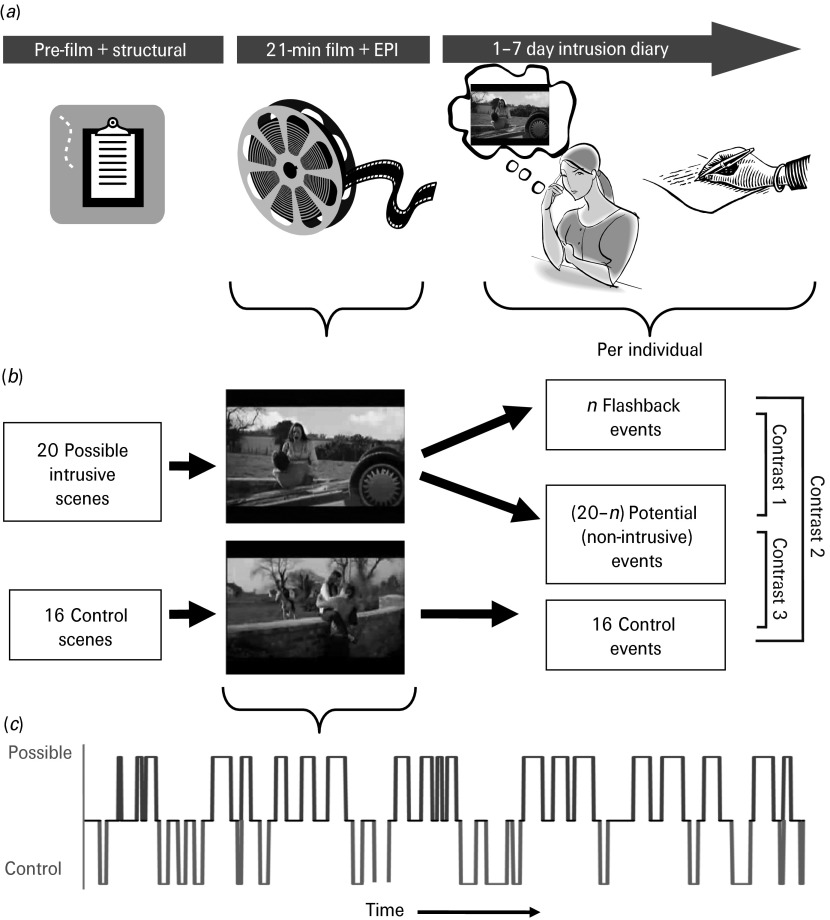
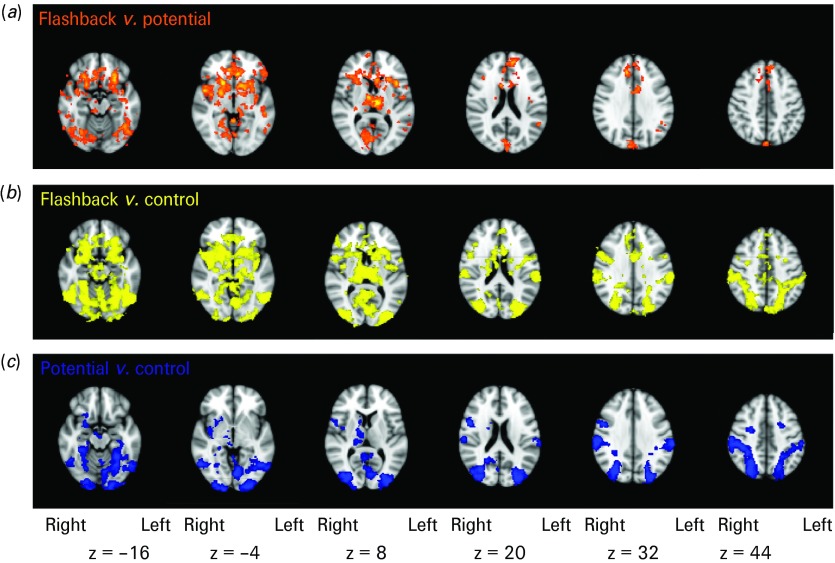
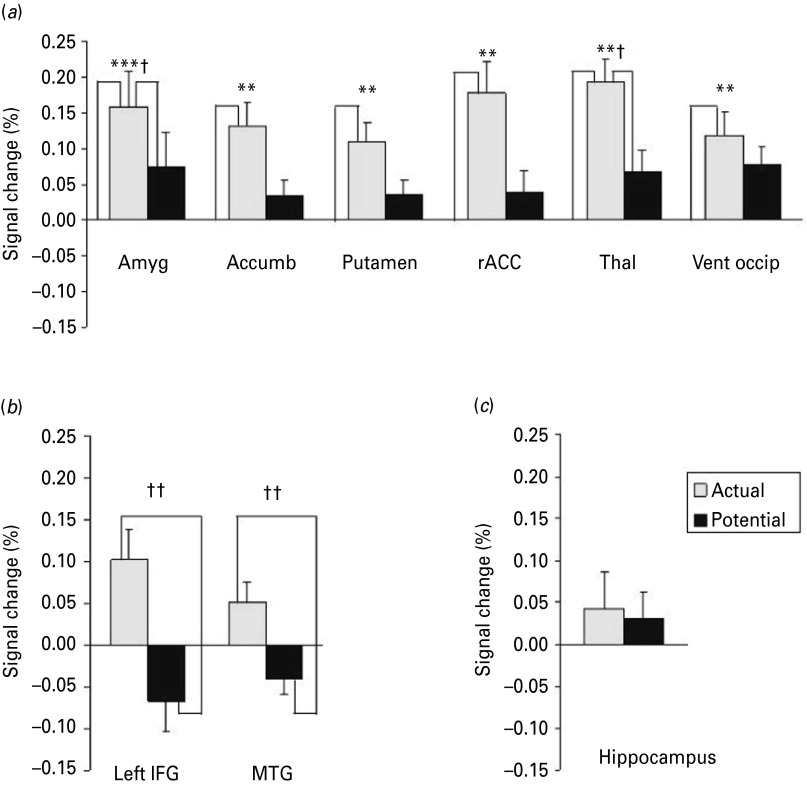
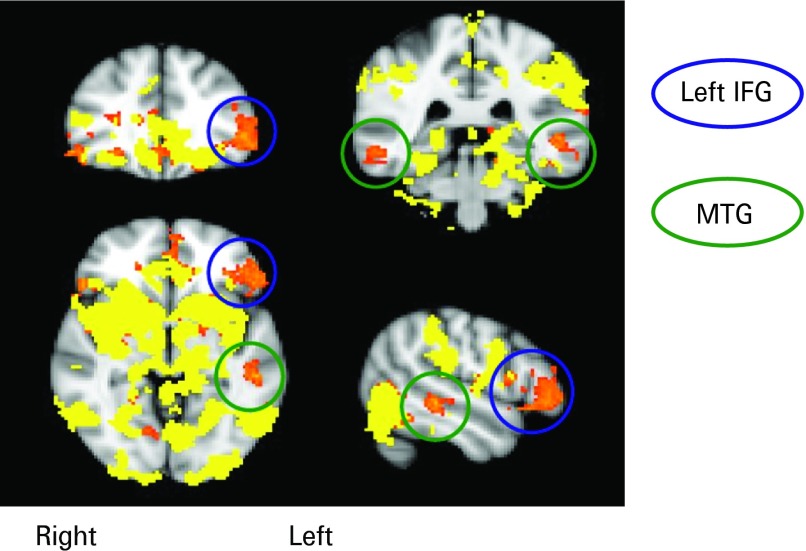
Background: Psychological traumatic events, such as war or road traffic accidents, are widespread. A small but significant proportion of survivors develop post-traumatic stress disorder (PTSD). Distressing, sensory-based involuntary memories of trauma (henceforth ‘flashbacks’) are the hallmark symptom of PTSD. Understanding the development of flashbacks may aid their prevention. This work is the first to combine the trauma film paradigm (as an experimental analogue for flashback development) with neuroimaging to investigate the neural basis of flashback aetiology. We investigated the hypothesis that involuntary recall of trauma (flashback) is determined during the original event encoding. Method: A total of 22 healthy volunteers viewed a traumatic film whilst undergoing functional magnetic resonance imaging (fMRI). They kept a 1-week diary to record flashbacks to specific film scenes. Using a novel prospective fMRI design, we compared brain activation for those film scenes that subsequently induced flashbacks with both non-traumatic control scenes and scenes with traumatic content that did not elicit flashbacks (‘potentials’). Results: Encoding of scenes that later caused flashbacks was associated with widespread increases in activation, including in the amygdala, striatum, rostral anterior cingulate cortex, thalamus and ventral occipital cortex. The left inferior frontal gyrus and bilateral middle temporal gyrus also exhibited increased activation but only relative to ‘potentials’. Thus, these latter regions appeared to distinguish between traumatic content that subsequently flashed back and comparable content that did not. Conclusions: Results provide the first prospective evidence that the brain behaves differently whilst experiencing emotional events that will subsequently become involuntary memories – flashbacks. Understanding the neural basis of analogue flashback memory formation may aid the development of treatment interventions for this PTSD feature.
Overview
The claims and statistics of this paper haven’t been checked yet.
Free: it reads the open-access text and checks the first 5 claims that cite a source we can check. Create a free account to check every claim.
Integrity signals
Registry
Cites
Statistics
Figures
Verification
Claims the paper makes
The claims and statistics of this paper haven’t been checked yet.
Free: it reads the open-access text and checks the first 5 claims that cite a source we can check. Create a free account to check every claim.
Claims other papers make about this one
Each is checked against this paper’s own text: does it say what the citing paper says it does?
The cited source says what the claim attributes to it.
In the citing paper
“So-called subsequent memory paradigms [141] have yielded several markers that predicted the later voluntary recollection of information [142], or the involuntary retrieval of experimental trauma [143–145].”
From Multiple memory systems, multiple time points: How science can inform treatment to control the expression of unwanted emotional memories (2018) · cites this paper as [145]
Self-check
Percentages, sums and reported differences re-computed from the paper’s own numbers.
The self-check needs the paper’s full text.
Citations
Cites
The Measurement of Observer Agreement for Categorical Data
Landis, J. R., & Koch, G. G. (1977) · Biometrics · doi:10.2307/2529310 · Cited by 81,148 · cited 1×
“An inter-rater reliability analysis using the k statistic (Landis & Koch, 1977 ; Fleiss, 1981) was performed (k=0.94, p<0.001), suggesting an excellent level of reliability for matching of diary entries to film scenes and that the flashbacks reported were indeed of the film (rather than other…”
MethodInfluential(1970) · Cited by 24,983
Statistical Methods for Rates and Proportions
Fleiss, J. L., Levin, B., & Paik, M. C. (2003) · Wiley Series in Probability and Statistics · doi:10.1002/0471445428 · Cited by 18,646
Posttraumatic Stress Disorder in the National Comorbidity Survey
Kessler, R. C. (1995) · Archives of General Psychiatry · doi:10.1001/archpsyc.1995.03950240066012 · Cited by 10,379 · cited 1×
“A small but clinically significant proportion of people who experience a trauma subsequently develop PTSD (Kessler et al. 1995).”
BackgroundA cognitive model of posttraumatic stress disorder
Ehlers, A., & Clark, D. M. (2000) · Behaviour Research and Therapy · doi:10.1016/s0005-7967(99)00123-0 · Cited by 6,147 · cited 4×
“The former, and much more common, intrusive memories are clinically important in the maintenance of PTSD (Ehlers & Clark, 2000 ; Foa et al. 2007).”
BackgroundInfluentialThe construction of autobiographical memories in the self-memory system
Conway, M. A., & Pleydell-Pearce, C. W. (2000) · Psychological Review · doi:10.1037/0033-295x.107.2.261 · Cited by 4,089 · cited 1×
“…of psychological processing at the time of trauma (peri-traumatic) is emphasized by the diagnostic criteria for PTSD (APA, 1994), clinical psychology theories (Conway & Pleydell-Pearce, 2000 ; Ehlers & Clark, 2000 ; Brewin & Holmes, 2003) and meta-analysis of PTSD predictors (Ozer et al. 2003).”
Predictors of posttraumatic stress disorder and symptoms in adults: a meta-analysis
Ozer, E. J., Best, S. R., Lipsey, T. L., & Weiss, D. S. (2003) · Psychological Bulletin · doi:10.1037/0033-2909.129.1.52 · Cited by 3,322 · cited 2×
“…of psychological processing at the time of trauma (peri-traumatic) is emphasized by the diagnostic criteria for PTSD (APA, 1994), clinical psychology theories (Conway & Pleydell-Pearce, 2000 ; Ehlers & Clark, 2000 ; Brewin & Holmes, 2003) and meta-analysis of PTSD predictors (Ozer et al. 2003).”
MethodForman, S. D., Cohen, J. D., Fitzgerald, M., Eddy, W. F., Mintun, M. A., & Noll, D. C. (1995) · Magnetic Resonance in Medicine · doi:10.1002/mrm.1910330508 · Cited by 3,202
Temporal Autocorrelation in Univariate Linear Modeling of FMRI Data
Woolrich, M. W., Ripley, B. D., Brady, M., & Smith, S. M. (2001) · NeuroImage · doi:10.1006/nimg.2001.0931 · Cited by 2,852 · cited 1×
“Linear Model) with local autocorrelation correction (Woolrich et al. 2001).”
THE AMYGDALA MODULATES THE CONSOLIDATION OF MEMORIES OF EMOTIONALLY AROUSING EXPERIENCES
McGaugh, J. L. (2004) · Annual Review of Neuroscience · doi:10.1146/annurev.neuro.27.070203.144157 · Cited by 2,296 · cited 2×
“…about the encoding and consolidation of deliberate (voluntary) memories (e.g. Wagner et al. 1998; Canli et al. 2000; Kensinger & Corkin, 2004 ; McGaugh, 2004 ; Francati et al. 2007; Roozendaal et al. 2008; Hughes & Shin, 2011), we predicted that encoding of traumatic material would involve…”
Background
Research works printed but not linked: 5
- National Institute for Health and Clinical Excellence (2005). Post-Traumatic Stress Disorder (PTSD): The Management of PTSD in Adults and Children in Primary and Secondary Care. National Institute for Health and Clinical Excellence: London
- WHO (2003). Mental Health in Emergencies: Mental and Social Aspects of Health of Populations Exposed to Extreme Stressors. World Health Organization: Geneva
- APA (1994). Diagnostic and Statistical Manual of Mental Disorders, 4th edn American Psychiatric Association: Washington, DC
- Beck AT, Steer RA, Brown GK (1996). Manual for the Beck Depression Inventory-II. Psychological Corporation: San Antonio, TX
- Foa EB, Hembree EA, Rothbaum BO (2007). Prolonged Exposure Therapy for PTSD: Emotional Processing of Traumatic Experiences. Oxford University Press: New York
Cited by
Items 101–200 of 218
Visual hallucinations in psychiatry – what aren’t we seeing?
Ayalde, J., Wearne, D., Hood, S. D., & Waters, F. (2021) · Australasian Psychiatry · doi:10.1177/10398562211038909 · Cited by 7
Admon, R., Vaisvaser, S., Erlich, N., Lin, T., Shapira‐Lichter, I., Fruchter, E., Gazit, T., & Hendler, T. (2018) · Biological Psychology · doi:10.1016/j.biopsycho.2018.09.014 · Cited by 9
Media Exposure Related to the PTSS During COVID-19 Pandemic: The Mediating Role of Risk Perception
Wang, Y., Jiang, L., Ma, S., Chen, Q., Liu, C., Ahmed, F., Shahid, M., Wang, X., & Guo, J. (2021) · Frontiers in Psychiatry · doi:10.3389/fpsyt.2021.654548 · Cited by 10
Active contextualization reduces traumatic memory intrusions via memory integration
Xu, Z., Yu, K., & Wang, Y. (2024) · Behaviour Research and Therapy · doi:10.1016/j.brat.2024.104644 · Cited by 7
Coates, C. A., Armstrong, L. M., Kilmer, R. P., Quinlan, M. M., & Reeve, C. L. L. (2023) · Violence Against Women · doi:10.1177/10778012231163573 · Cited by 7
“Following the experience of trauma, intrusive memories are constructed during memory consolidation and can be subconsciously triggered by stimuli associated with the event (Bourne et al., 2013).”
BackgroundFlashbulb memory recall in healthy adults – a functional magnetic resonance imaging study
Metternich, B., Spanhel, K., Schöndube, A., Ofer, I., Geiger, M. J., Schulze‐Bonhage, A., Mast, H., & Wagner, K. (2020) · Memory · doi:10.1080/09658211.2020.1733022 · Cited by 6
Li, L., Xu, Z., Chen, L., Suo, X., Fu, S., Wang, S., Lui, S., Huang, X., Li, L., Li, S., et al. (2021) · European Neuropsychopharmacology · doi:10.1016/j.euroneuro.2021.06.010 · Cited by 8
Polack, R. G., Paganini, G., Winschel, J., Benisty, H., Joormann, J., Hedy Kober, A., & Mishne, G. (2021) · doi:10.31234/osf.io/mxznb · Cited by 5
Pavlovian threat conditioning can generate intrusive memories that persist over time
Espinosa, L., Bonsall, M. B., Becker, N., Holmes, E. A., & Olsson, A. (2022) · Behaviour Research and Therapy · doi:10.1016/j.brat.2022.104161 · Cited by 7
Self-citationSánchez, M., Saavedra, L. M., Lozano, A., Morgan‐López, A. A., & Amaro, H. D. L. A. (2024) · Current Addiction Reports · doi:10.1007/s40429-024-00567-x · Cited by 4
“When tested explicitly, this model will fail to fit most psychiatric outcome data (see, e.g., [68, 69 •• , 70 •• , 71 •• , 72]), with the general implication that total scores would be biased because “some symptoms matter more than others” [61 •• , 73].”
Potik, D., Einat, T., & Idisis, Y. (2024) · Clinical Psychology & Psychotherapy · doi:10.1002/cpp.3056 · Cited by 5
When Childhood Trauma Meets War: Emotional Eating Through the Lens of PTSD
Spivak‐Lavi, Z., Latzer, Y., & Tzischinsky, O. (2025) · Rambam Maimonides Medical Journal · doi:10.5041/rmmj.10550 · Cited by 4
“52 The specific association between emotional abuse and emotional eating supports the theory that trauma-related responses are often triggered by stimuli that resonate with the nature of the original trauma.”
Trauma e literalidade: a razão psicodinâmica no espírito da traumatização neurocientífica
Reis, R., & Ortega, F. (2024) · Ciência & Saúde Coletiva · doi:10.1590/1413-81232024292.19502022 · Cited by 3
Müller, H., Moeller, S., Jenderek, K., Stroebel, A. M., Wiendieck, K., & Sperling, W. (2016) · Frontiers in Psychology · doi:10.3389/fpsyg.2016.00865 · Cited by 4
“The DSM defines PTSD as a hallucinogen-like, persistent perception disorder without explicitly citing the cause of the trauma (Bourne et al., 2013; Bryant et al., 2013; Nickerson et al., 2013).”
Chung, Y., Kim, N. H., Kim, D., Bae, J. H., Kwon, J. S., Jang, J. H., Jung, W. H., Kim, S. H., Kim, J. K., Oh, D. H., et al. (2014) · 신경정신의학 · doi:10.4306/jknpa.2014.53.2.122 · Cited by 4
The Handbook of Wellness Medicine
Snellings, J. E. (2021) · Family Medicine · doi:10.22454/fammed.2021.204951 · Cited by 3
Pace-Schott, E. F. (2015) · SLEEP · doi:10.5665/sleep.4792 · Cited by 3
The mental simulation of state/psychological stimuli in anxiety disorders: A 3T fMRI study
Tomasino, B., Maggioni, E., Piani, M. C., Bonivento, C., D’Agostini, S., Balestrieri, M., & Brambilla, P. (2023) · Journal of Affective Disorders · doi:10.1016/j.jad.2023.10.079 · Cited by 4
Pierce, Z. P., & Black, J. M. (2024) · Advances in Social Work · doi:10.18060/26331 · Cited by 4
“During dissociation the hippocampus activates, and this activation is correlated with the experience of one being immersed in the time and place of a vivid traumatic memory (Bourne et al., 2013).”
BackgroundMiedl, S. F., Franke, L. K., Danböck, S. K., Martini, M., Hettegger, S. E., Kronbichler, M., Flor, H., & Wilhelm, F. H. (2024) · European Journal of Psychotraumatology · doi:10.1080/20008066.2024.2388429 · Cited by 3
“…to an involvement of heightened central autonomic–interoceptive processing (Fullana et al., 2018) in audiovisual intrusion formation and are in agreement with previous studies linking networks around the dACC to analogue intrusions (Battaglini et al., 2016; Bourne et al., 2013; Clark et al., 2016).”
BackgroundResultShkreli, L., Nettekoven, C., Boessenkool, S., Martens, M., Filippini, N., Capitão, L. P., Cowen, P. J., & Reinecke, A. (2025) · Psychiatry Research · doi:10.1016/j.psychres.2025.116458 · Cited by 2
“Specifically, losartan decreased rsFC between hippocampus and IFG – a structure associated with threat processing (Mujica-Parodi et al., 2017; Pfeuty et al., 2015; Rahko et al., 2010) and aversive memory processing (Bourne et al., 2013; Clark et al., 2016; Kelly et al., 2007).”
Kobelt, M., Waldhauser, G. T., Fellner, M.-C., & Axmacher, N. (2025) · PLoS Biology · doi:10.1371/journal.pbio.3003258 · Cited by 4
Perera, D. M., & Moe, J. L. (2020) · Cambridge University Press eBooks · doi:10.1017/9781108650182.005 · Cited by 3
Wellness Interventions in the Workplace
Chernoff, R. A. (2020) · Cambridge University Press eBooks · doi:10.1017/9781108650182.020 · Cited by 3
Sharma‐Brymer, V., Dashper, K. L., & Brymer, E. (2020) · Cambridge University Press eBooks · doi:10.1017/9781108650182.034 · Cited by 3
Fischer, S., Schumacher, S., & Daniels, J. K. (2022) · Zeitschrift für Klinische Psychologie und Psychotherapie · doi:10.1026/1616-3443/a000650 · Cited by 2
Mole, C. (2016) · Psychological Medicine · doi:10.1017/s0033291716000040 · Cited by 2
“Bourne et al. (2013) do remark upon a related methodological difficulty, but the difficulty that they note is not the crucial one.”
InfluentialSugiura, M., Katamori, Y., Muratsubaki, T., Shiratori, M., Hanawa, S., Nejad, K. K., Tamura, D., Kawashima, R., & Fukudo, S. (2022) · OSF Preprints (OSF Preprints) · doi:10.31219/osf.io/jketf · Cited by 2
Well-Being and Work–Life Balance: Cultural, Positive Psychology, and Practical Perspectives
Bolton, M. A., Lobben, I., Pruzinsky, T., & Stern, T. A. (2020) · Cambridge University Press eBooks · doi:10.1017/9781108650182.046 · Cited by 3
Forgiveness, Gratitude, and Spirituality
Idicula, S. A., Thrower, N., & Lomax, J. W. (2020) · Cambridge University Press eBooks · doi:10.1017/9781108650182.029 · Cited by 1
Engaging the Five Senses: Taste, Smell, See, Listen, and Touch
Bokarius, V., & Bokarius, A. V. (2020) · Cambridge University Press eBooks · doi:10.1017/9781108650182.037 · Cited by 2
Wellness Interventions in Patients Living with Chronic Medical Conditions
Steiner, A. J., Aguilar-Hernandez, L., Pizano, D. R., Dascal, J., & IsHak, W. W. (2020) · Cambridge University Press eBooks · doi:10.1017/9781108650182.014 · Cited by 2
Gruplarla Sosyal Hizmet Uygulamalarında Travma Bilgili Yaklaşım
Güre, M. D. P., Çatulay, D., & Apaydın, Y. S. (2024) · Uluslararası Sosyal Hizmet Araştırmaları Dergisi · doi:10.57114/jswrpub.1506953 · Cited by 1
Risk and Protective Factors of the Media-Transmitted Traumatization During War in Ukraine
Juríčková, V., Adámek, P., Grygarová, D., Jonáš, J., Havlík, M., Horáček, J., & Kesner, L. (2025) · Journal of Loss and Trauma · doi:10.1080/15325024.2025.2524606 · Cited by 1
“Symptoms of psychological distress, post-traumatic stress disorder (PTSD), depression, anxiety, insomnia, anger, fear, feelings of loneliness, and increased use of substances have been documented both immediately and months after the conflict began (Kurapov et al., 2023, 2023a, 2023b, Xu et al., 2023).”
InfluentialZhang, T., Abidin, C., & Fung, A. Y. H. (2025) · Social Media + Society · doi:10.1177/20563051251400618 · Cited by 1
“Vicarious experiences are studied in the research fields of news, docu-mentaries, and health communication (Ahern et al., 2004; Bourne et al., 2013; Hernández et al., 2007; Liu & Liu, 2020).”
Orenstein, L., Kaim, A., Adini, B. B., & Merkin, S. S. (2026) · Comprehensive Psychiatry · doi:10.1016/j.comppsych.2026.152665 · Cited by 1
An investigation of potential neural correlates of intrusive retrieval of distressing memories
Battaglini, E., Liddell, B. J., Das, P., Malhi, G. S., Felmingham, K. L., & Bryant, R. A. (2017) · Journal of Behavior Therapy and Experimental Psychiatry · doi:10.1016/j.jbtep.2017.08.004 · Cited by 2
Ooi, S. L., & Pak, S. C. (2020) · Cambridge University Press eBooks · doi:10.1017/9781108650182.033 · Cited by 1
Dieppe, P. A., Goldingay, S., & Warber, S. L. (2020) · Cambridge University Press eBooks · doi:10.1017/9781108650182.042 · Cited by 3
Emotional Intelligence and Its Role in Sustaining Fulfillment in Life
Sax, H. C., & Gewertz, B. L. (2020) · Cambridge University Press eBooks · doi:10.1017/9781108650182.038 · Cited by 1
Family Relations, Friendships, and Love
Alsup, S., Weisbaum, E., Vogel, T., & Siegel, D. J. (2020) · Cambridge University Press eBooks · doi:10.1017/9781108650182.047 · Cited by 2
Reflex memory theory of acquired involuntary motor and sensory disorders
Oyigeya, M. (2021) · The Egyptian Journal of Neurology Psychiatry and Neurosurgery · doi:10.1186/s41983-021-00307-2 · Cited by 3
“Bourne and colleagues [4] described flashbacks as involuntary memories” which gives credence to the fact that a flashback is a reflex phenomenon.”
BackgroundMgolozeli, S. E., & Duma, S. E. (2024) · International Journal of Qualitative Studies on Health and Well-Being · doi:10.1080/17482631.2024.2437905 · Cited by 3
“The most prevalent psychological effect of rape on men found in this study was flashbacks, which other scholars have also reported (Bourne et al., 2013; Davies, 2002; Huckle, 1995; Pretorius & Hull, 2005; Walker et al., 2005a, 2005b).”
The Role of Aesthetics in Wellness
Mikhail, A. A., & Ngor, A. (2020) · Cambridge University Press eBooks · doi:10.1017/9781108650182.032 · Cited by 3
Reproductive System: Pregnancy and Postpartum Wellness
Ogunyemi, D. (2020) · Cambridge University Press eBooks · doi:10.1017/9781108650182.011 · Cited by 1
Volle, D. C., & DeBonis, K. (2020) · Cambridge University Press eBooks · doi:10.1017/9781108650182.023 · Cited by 1
Allergic, Infectious, and Immunological Processes
Riaz, O., Orimaye, S. O., Al-Khateeb, T., Sodeke, P. O., Awujoola, A. O., & Goodkin, K. (2020) · Cambridge University Press eBooks · doi:10.1017/9781108650182.012 · Cited by 2
Melchert, T. P. (2020) · Cambridge University Press eBooks · doi:10.1017/9781108650182.004 · Cited by 1
Clark, I. A., Mackay, C. E., Holmes, E. A., & Bourne, C. (2016) · Psychological Medicine · doi:10.1017/s0033291716000052 · Cited by 1
“Indeed, Bourne et al. (2013) state that ‘intense emotional reaction may be a necessary condition for flashback formation’ (p. 1529).”
InfluentialSelf-citationIsHak, W. W. (2020) · Cambridge University Press eBooks · doi:10.1017/9781108650182.052 · Cited by 2
Mental Imagery: Functional Mechanisms and Clinical
Naselaris, T., & Holmes, E. A. (2015)
Self-citationMole, C. (2016) · Psychological Medicine · doi:10.1017/s0033291716001793
“These authors also remark that ‘Bourne et al. (2013) did not claim that the secondary analysis was a mathematical proof, nor that it meant that emotion played no role in intrusive memory encoding’.”
La mémoire intrusive dans le trouble de stress post-traumatique : apport de la neuroimagerie
Mouchabac, S., El‐Hage, W., & Ferreri, F. (2016) · Annales Médico-psychologiques revue psychiatrique · doi:10.1016/j.amp.2016.09.010
Ursano, R. J., Fullerton, C. S., Weisaeth, L., & Raphael, B. (2017) · Cambridge University Press eBooks · doi:10.1017/9781316481424.011
Miketta, S. (2018) · Publications of the UdS (Saarland University) · doi:10.22028/d291-27274
Gitau, S. W. (2019) · Journal of Research in Philosophy and History · doi:10.22158/jrph.v2n2p130
Arawi, T. A. (2019) · Springer eBooks · doi:10.1007/978-3-319-74365-3_174-1
Lest we forget: towards therapeutic amnesia
Greener, M. (2019) · Progress in Neurology and Psychiatry · doi:10.1002/pnp.553
Place and identity in William H. Gass' Middle C
Mäntykivi, J. (2019)
Mindfulness, Meditation, and Yoga
Budd, K. (2020) · Cambridge University Press eBooks · doi:10.1017/9781108650182.028
Work, Love, Play, and Joie de Vivre
Groningen, N. V., IsHak, W. W., Ganjian, S., Ong, M. K., & Slusser, W. M. (2020) · Cambridge University Press eBooks · doi:10.1017/9781108650182.045
Acupuncture, Herbs, and Ayurvedic Medicine
Postolov, L., & Gilberg-Lenz, S. (2020) · Cambridge University Press eBooks · doi:10.1017/9781108650182.031
Circadian Rhythm in the Digital Age
Ezzat-Velinov, M., & Guarneri, M. (2020) · Cambridge University Press eBooks · doi:10.1017/9781108650182.035
Chaudhry, M., Gordon, A., Tadros, E., Sun, C., Tobia, G., & IsHak, W. W. (2020) · Cambridge University Press eBooks · doi:10.1017/9781108650182.019
The Personalized Wellness Life Plan
IsHak, W. W., Bart, R., Gohar, Y., Lorea, N., Eskander, L., Chang, T., Cohen, S., Furman, K., Nayyar, P. P., & DeBonis, K. (2020) · Cambridge University Press eBooks · doi:10.1017/9781108650182.050
Exercise, Dance, Tai Chi, Pilates, and Alexander Technique
Altug, Z. (2020) · Cambridge University Press eBooks · doi:10.1017/9781108650182.025
Louy, C., Sweet, C., Pollock, G. A., de Zagon, C., Louy, Z., Weiss, J. M., & Maher, D. P. (2020) · Cambridge University Press eBooks · doi:10.1017/9781108650182.017
Pharmaceuticals and Alternatives for Wellness
Parisi, T., Heath, B., Wen, R. Y., & IsHak, W. W. (2020) · Cambridge University Press eBooks · doi:10.1017/9781108650182.024
The Arts in Health Settings: Inspirational, Educational, and Therapeutic Approaches to Wellness
Bucciarelli, A., Ellison, G. K., Sommer, E. K., & Spooner, H. (2020) · Cambridge University Press eBooks · doi:10.1017/9781108650182.036
Screening and Assessment Methods for Wellness
Greenberg, J. M., Castillo, E. G., IsHak, W. W., & Wells, K. B. (2020) · Cambridge University Press eBooks · doi:10.1017/9781108650182.002
The Role of Leisure, Recreation, and Play in Health and Well-Being
Payne, L. L., & An, J. (2020) · Cambridge University Press eBooks · doi:10.1017/9781108650182.048 · Cited by 2
Positive Neuropsychology, Cognitive Rehabilitation, and Neuroenhancement
Pimental, P. A., O'Hara, J. B., Christopher, J., & Ciampanelli, A. (2020) · Cambridge University Press eBooks · doi:10.1017/9781108650182.030
Wellness in Children and Adolescents
Zanko, C., & Stuber, M. L. (2020) · Cambridge University Press eBooks · doi:10.1017/9781108650182.016
Connection, Compassion, and Community
Hedrick, R., & Jones, K. (2020) · Cambridge University Press eBooks · doi:10.1017/9781108650182.043
Wellness Interventions for Chronicity and Disability
Klimowicz, A., Schussel, L., & IsHak, W. W. (2020) · Cambridge University Press eBooks · doi:10.1017/9781108650182.044
Mays, A. M., Whiteman, E., & Rosen, S. L. (2020) · Cambridge University Press eBooks · doi:10.1017/9781108650182.015
Developing Purpose, Meaning, and Achievements
Vilhauer, J. S. (2020) · Cambridge University Press eBooks · doi:10.1017/9781108650182.041
Sleep, Rest, and Relaxation in Improving Wellness
Ngor, A., & IsHak, W. W. (2020) · Cambridge University Press eBooks · doi:10.1017/9781108650182.026
The Biopsychosocial Assessment
Somjee, L., & Esbitt, S. A. (2020) · Cambridge University Press eBooks · doi:10.1017/9781108650182.003 · Cited by 1
Wellness and the Genito-Urinary System
EILBER, K. S., & Lee, U. J. (2020) · Cambridge University Press eBooks · doi:10.1017/9781108650182.010
Marin, K., Tobia, G., Bakhoum, A., Naghdechi, L., Korouri, S., & IsHak, W. W. (2020) · Cambridge University Press eBooks · doi:10.1017/9781108650182.027 · Cited by 1
Cardiovascular and Pulmonary Wellness
IsHak, W. W., & Herrera, N. (2020) · Cambridge University Press eBooks · doi:10.1017/9781108650182.008
Wellness in Endocrine and Metabolic Disorders
Clevenger, S., Eskander, L., Lin, T. Y., & IsHak, W. W. (2020) · Cambridge University Press eBooks · doi:10.1017/9781108650182.013
The Concept of Wellness in Psychiatric and Substance-Use Disorders
Awad, A. G. (2020) · Cambridge University Press eBooks · doi:10.1017/9781108650182.006
Wellness and Whole-Person Care
Hutchinson, T. A., & Hutchinson, N. (2020) · Cambridge University Press eBooks · doi:10.1017/9781108650182.049
Herrera, N., & IsHak, W. W. (2020) · Cambridge University Press eBooks · doi:10.1017/9781108650182.040
Wellness in Cancer and Neoplastic Diseases
Bashmi, L., & IsHak, W. W. (2020) · Cambridge University Press eBooks · doi:10.1017/9781108650182.018
Wellness Interventions for Physicians and Healthcare Professionals
Goldenberg, M., & Danovitch, I. (2020) · Cambridge University Press eBooks · doi:10.1017/9781108650182.021
Neurological and Neurosurgical Disorders and Wellness
Ding, K., & Yang, I. (2020) · Cambridge University Press eBooks · doi:10.1017/9781108650182.007
Gastrointestinal System and Wellness
Robbins, L., & Feldman, E. J. (2020) · Cambridge University Press eBooks · doi:10.1017/9781108650182.009
IsHak, W. W. (2020) · Cambridge University Press eBooks · doi:10.1017/9781108650182.051
Lundy, J. (2020) · Cambridge University Press eBooks · doi:10.1017/9781108650182.022
IsHak, W. W., Mann, A., Manoukian, V., Pakhdikian, S., Chaudhry, M., Liu, A., & Bart, R. (2020) · Cambridge University Press eBooks · doi:10.1017/9781108650182.001 · Cited by 2
Lau-Zhu, A., Henson, R. N., & Holmes, E. A. (2019) · Journal of Experimental Psychology General · doi:10.1037/xge0000598.supp
Arawi, T. A. (2021) · Springer eBooks · doi:10.1007/978-3-030-36811-1_174
IsHak, W. W. (2020) · Cambridge University Press eBooks · doi:10.1017/9781108650182.053
Ma, H., Ma, Y., Chiu, J. S. Y., & Christensen, M. (2023) · International Journal of Older People Nursing · doi:10.1111/opn.12559
What Trauma Does to My Body: Post-Traumatic Stress Disorder and Physical Activity
Gomes, A. F. P. (2023) · Advances in psychology, mental health, and behavioral studies (APMHBS) book series · doi:10.4018/978-1-6684-6040-5.ch004
Choi, Y., Kwak, J.-W., & Namgung, H.-I. (2024) · International Journal of Mental Health Promotion · doi:10.32604/ijmhp.2024.050458
“As the study progressed, we identi fi ed the need for research on survivors of varied types of disasters at different points in time.”
BackgroundAfecciones que persisten: memoria episódica y ética animal
Corda, G., & Marte͏, F. (2024) · Astrolabio · doi:10.55441/1668.7515.n33.42258
Metadata
- Authors
- Bourne, C., Mackay, C. E., & Holmes, E. A.
- Affiliations
- Warneford Hospital (GB)
- MRC Cognition and Brain Sciences Unit (GB)
- Corresponding author
- Holmes, E. A.
- Venue
- Psychological Medicine
- Publisher
- Cambridge University Press (CUP)
- Published
- 2012-10-18
- Volume
- 43
- Issue
- 7
- Pages
- 1521-1532
- ISSN
- 0033-2917 (ISSN-L)
- 1469-8978
- PMC
- PMC3806039
- OpenAlex
- W2104838044
- Cited by
- 218
- References
- 67
- Citations by year
- 2026: 11 · 2025: 9 · 2024: 19 · 2023: 11 · 2022: 15 · 2021: 20 · 2020: 63 · 2019: 11 · 2018: 10 · 2017: 9 · 2016: 12 · 2015: 13 · 2014: 12 · 2013: 3
- FWCI
- 10.18
- Type
- journal article
- Language
- en
- Open access
- hybrid
- doi.org
- Locations
- Psychological Medicine (publishedVersion, cc-by)
- Europe PMC (PubMed Central) (publishedVersion, other-oa)
- PubMed Central (publishedVersion, cc-by)
- PubMed (publishedVersion)
- ePrints Soton (University of Southampton) (acceptedVersion)
- Funders
- Wellcome Trust (WT088217)
- National Institute for Health and Care Research
- University of Oxford
- Medical Research Council
- Topics
- Social Sciences › Psychology › Clinical Psychology › Posttraumatic Stress Disorder Research
- Life Sciences › Neuroscience › Cognitive Neuroscience › Memory Processes and Influences
- Life Sciences › Neuroscience › Cognitive Neuroscience › Memory and Neural Mechanisms
- Keywords
- flashbacks, post-traumatic stress disorder, involuntary memory, trauma film paradigm, amygdala, striatum, rostral anterior cingulate cortex, thalamus, inferior frontal gyrus, middle temporal gyrus
- MeSH terms
- Adult, Amygdala, Brain, Corpus Striatum, Female, Gyrus Cinguli, Humans, Magnetic Resonance Imaging, Male, Occipital Lobe, Prospective Studies, Mental Recall, Stress Disorders, Post-Traumatic, Stress, Psychological, Temporal Lobe, Thalamus, Young Adult, Functional Neuroimaging
About these checks
Registry, retraction, Cites and statistics results are computed, not judged, with one exception: a printed reference that no index lists is read once by a model before it counts as a citation error. Claims are extracted by a model and kept only when their quote appears verbatim in the text; each cited source is then checked, with a model’s help, for whether it says what the claim relies on. Those verdicts can be wrong — read the claim’s quote and the cited source before relying on one.
Statistics and arithmetic are recomputed, not judged.
Confidence bands are shown only for fields calibrated on our annotated test set. None is calibrated yet, so no band is shown.
What counts as a claim ›How we measure confidence ›How we check this ›
Are you an author, or do you see a problem with this page? Request a review
Data sources
Bibliographic data: Semantic Scholar, OpenAlex, Crossref.
Contains information from the Semantic Scholar Academic Graph Datasets, made available under the ODC Attribution License (ODC-BY 1.0).
Semantic Scholar’s data is described in: Kinney, R., et al. (2023). The Semantic Scholar Open Data Platform. arXiv:2301.10140.
