

A meta-analysis of the prevalence of attention deficit hyperactivity disorder in incarcerated populations
Open accessThe DOI matches its Crossref record; 58 of the 59 references it cites were found in a registry or an index.
Abstract
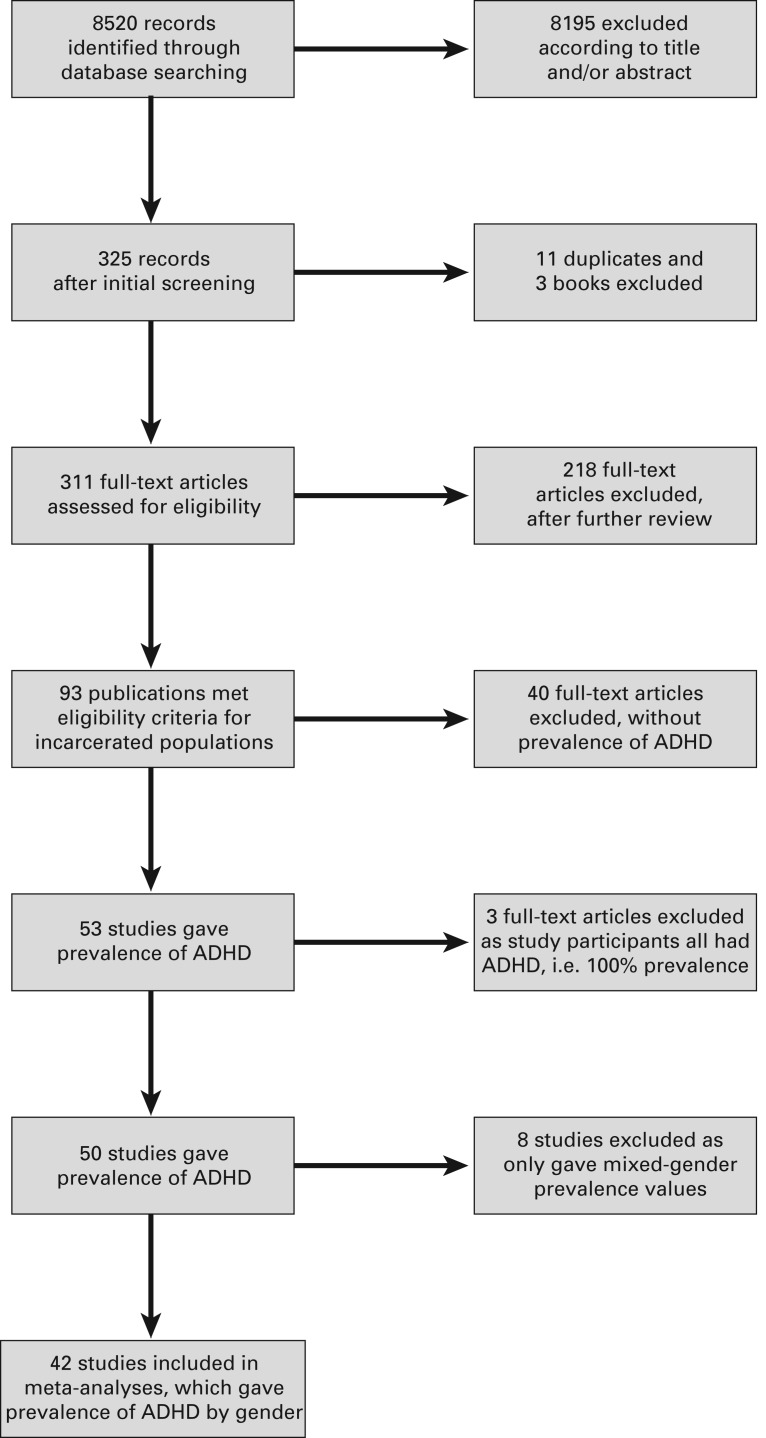
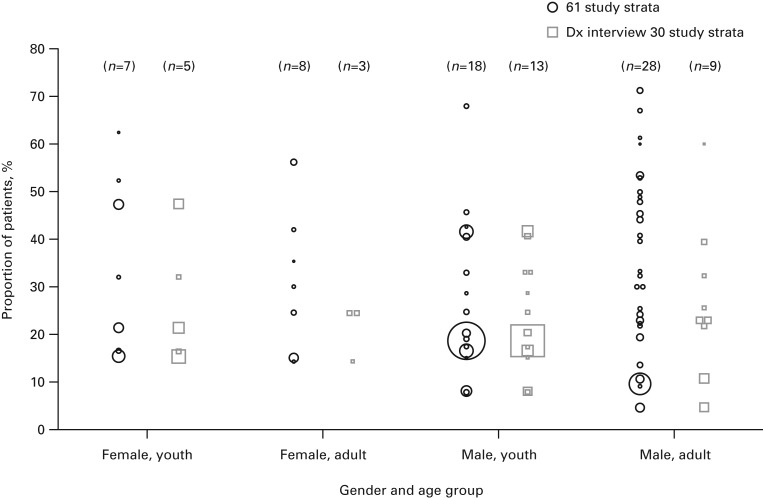
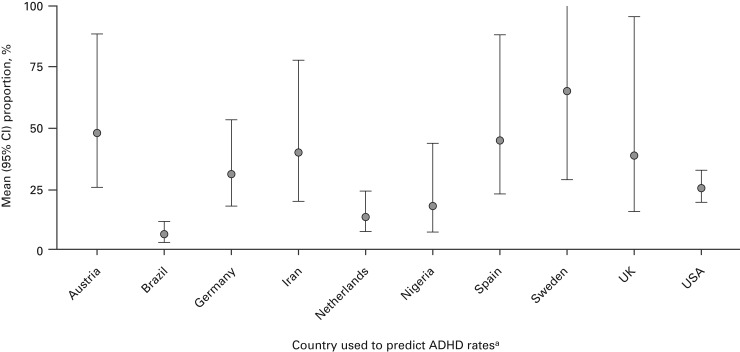
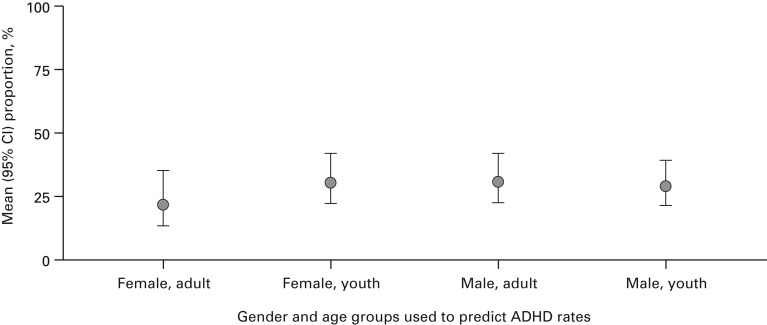
Background: Studies report the variable prevalence of attention deficit hyperactivity disorder (ADHD) in incarcerated populations. The aim of this meta-analysis was to determine the prevalence of ADHD in these populations. Method: Primary research studies reporting the prevalence (lifetime/current) of ADHD in incarcerated populations were identified. The meta-analysis used a mixed log-binomial model, including fixed effects for each covariate and a random study effect, to estimate the significance of various risk factors. Results: Forty-two studies were included in the analysis. ADHD prevalence was higher with screening diagnoses versus diagnostic interview (and with retrospective youth diagnoses versus current diagnoses). Using diagnostic interview data, the estimated prevalence was 25.5% and there were no significant differences for gender and age. Significant country differences were noted. Conclusions: Compared with published general population prevalence, there is a fivefold increase in prevalence of ADHD in youth prison populations (30.1%) and a 10-fold increase in adult prison populations (26.2%).
Overview
The claims and statistics of this paper haven’t been checked yet.
Free: it reads the open-access text and checks the first 5 claims that cite a source we can check. Create a free account to check every claim.
Integrity signals
Registry
Cites
Statistics
Figures
Verification
Claims the paper makes
The claims and statistics of this paper haven’t been checked yet.
Free: it reads the open-access text and checks the first 5 claims that cite a source we can check. Create a free account to check every claim.
Claims other papers make about this one
Each is checked against this paper’s own text: does it say what the citing paper says it does?
The cited source says what the claim attributes to it.
In the citing paper
“A meta-analysis comprising 21 studies and over 19,500 prison inmates found that the prevalence of ADHD in prisons based on interview diagnoses was 20.5% with no differences observed between males and females or adolescents and adults”
From The World Federation of ADHD International Consensus Statement: 208 Evidence-based conclusions about the disorder (2021) · cites this paper as Young et al., 2015
Self-check
Percentages, sums and reported differences re-computed from the paper’s own numbers.
The self-check needs the paper’s full text.
Citations
Cites
Meta-analysis in clinical trials
DerSimonian, R., & Laird, N. (1986) · Controlled Clinical Trials · doi:10.1016/0197-2456(86)90046-2 · Cited by 39,552 · cited 1×
“For this reason, models that allow for heterogeneity are recommended (DerSimonian & Laird, 1986; van Houwelingen et al. 2002).”
BackgroundLiberati, A., Altman, D. G., Tetzlaff, J., Mulrow, C., Gøtzsche, P. C., Ioannidis, J. P. A., Clarke, M., Devereaux, P. J., Kleijnen, J., & Moher, D. (2009) · PLoS Medicine · doi:10.1371/journal.pmed.1000100 · Cited by 28,164 · cited 1×
“The systematic review was performed in accordance with the Preferred Reporting Items for Systematic reviews and Meta-Analyses (PRISMA; Liberati et al. 2009) guidelines.”
MethodThe worldwide prevalence of ADHD: a systematic review and metaregression analysis
Polanczyk, G., de Lima, M. S., Horta, B. L., Biederman, J., & Rohde, L. A. (2007) · American Journal of Psychiatry · doi:10.1176/ajp.2007.164.6.942 · Cited by 5,346 · cited 4×
“2006), affecting 3–7% of youths (Asherson, 2004; Asherson et al. 2005; Polanczyk et al. 2007; Willcutt, 2012) and 1–5% of adults (Asherson, 2004; Asherson et al.”
BackgroundResultInfluentialKessler, R. C., Adler, L., Barkley, R., Biederman, J., Conners, C. K., Demler, O., Faraone, S. V., Greenhill, L. L., Howes, M. J., Secnik, K., et al. (2006) · American Journal of Psychiatry · doi:10.1176/ajp.2006.163.4.716 · Cited by 3,886 · cited 2×
“A meta-analysis of the prevalence of attention deficit hyperactivity disorder in incarcerated populations”
BackgroundMendelson, G. (1995) · Australian & New Zealand Journal of Psychiatry · doi:10.3109/00048679509064964 · Cited by 2,858
FARAONE, S. V., BIEDERMAN, J., & MICK, E. (2006) · Psychological Medicine · doi:10.1017/s003329170500471x · Cited by 2,267 · cited 2×
“ADHD is a common disorder that often persists into adulthood (Faraone et al. 2006), affecting 3–7% of youths (Asherson, 2004; Asherson et al.”
BackgroundThe Prevalence of DSM-IV Attention-Deficit/Hyperactivity Disorder: A Meta-Analytic Review
Willcutt, E. G. (2012) · Neurotherapeutics · doi:10.1007/s13311-012-0135-8 · Cited by 2,160 · cited 5×
“5:1) is much lower than the observed ratio of 4:1 in youths with ADHD (Montejano et al. 2011; Willcutt, 2012; McCarthy et al. 2012).”
BackgroundInfluentialPrevalence and correlates of adult attention-deficit hyperactivity disorder: meta-analysis
Simon, V., Czobor, P., Bálint, S., Mészáros, Á., & Bitter, I. (2009) · British Journal of Psychiatry · doi:10.1192/bjp.bp.107.048827 · Cited by 1,601 · cited 4×
“2007; Willcutt, 2012) and 1–5% of adults (Asherson, 2004; Asherson et al. 2005, 2012; Kessler et al. 2006; Simon et al. 2009; Willcutt, 2012).”
BackgroundResultInfluentialAdvanced methods in meta‐analysis: multivariate approach and meta‐regression
van Houwelingen, H. C., Arends, L. R., & Stijnen, T. (2002) · Statistics in Medicine · doi:10.1002/sim.1040 · Cited by 1,580 · cited 1×
“For this reason, models that allow for heterogeneity are recommended (DerSimonian & Laird, 1986; van Houwelingen et al. 2002).”
BackgroundFazel, S., Doll, H., & Långström, N. (2008) · Journal of the American Academy of Child & Adolescent Psychiatry · doi:10.1097/chi.obo13e31817eecf3 · Cited by 615 · cited 1×
“In recent years, a high prevalence of psychopathology (depression, psychotic illness, ADHD, conduct disorder) has been recognized in prison inmates (Fazel et al. 2008a,b; Bradley, 2009), and although more comprehensive mental health screens are being developed for use at prison reception to develop…”
Background
Research works printed but not linked: 4
- WHO (1992). The ICD-10 Classification of Mental and Behavioural Disorders: Clinical Descriptions and Diagnostic Guidelines. World Health Organization: Geneva.
- APA (1994). Diagnostic and Statistical Manual of Mental Disorders, Fourth Edition. DSM-IV. American Psychiatric Association: Washington, DC.
- Bradley K (2009). The Bradley Report. Lord Bradley's review of people with mental health problems or learning disabilities in the criminal justice system. Department of Health: London.
- Rasmussen K, Almvik R, Levander S (2000). ADHD in prisoners: an unfavourable index of criminal careers and a forensic challenge. Nordic Journal of Psychiatry 54 (Suppl. 43), 47.
Cited by
Items 101–200 of 352
Bradlow, R. C. J., Armstrong, F., & Ogden, E. (2025) · The Medical Journal of Australia · doi:10.5694/mja2.70049 · Cited by 13
Criminal energetics: A theory of antisocial enhancement and criminal attenuation
Vaughn, M. G., & DeLisi, M. (2017) · Aggression and Violent Behavior · doi:10.1016/j.avb.2017.11.002 · Cited by 13
Barclay, I., Sayal, K. S., Ford, T. J., John, A. M., Taylor, M. J., Thapar, A., Langley, K., & Martin, J. (2024) · JCPP Advances · doi:10.1002/jcv2.12301 · Cited by 14
Baggio, S., Heller, P., Perroud, N. A., Buadze, A., Schleifer, R., Wolff, H. J., Liebrenz, M., & Gétaz, L. (2022) · Forensic Science International Mind and Law · doi:10.1016/j.fsiml.2022.100071 · Cited by 14
Sigfúsdóttir, I. D., Ásgeirsdóttir, B. B., Hall, H. A., Sigurðsson, J. F., Young, S., & Gudjonsson, G. H. (2017) · Social Psychiatry and Psychiatric Epidemiology · doi:10.1007/s00127-017-1352-6 · Cited by 13
Self-citationEme, R. F. (2018) · Aggression and Violent Behavior · doi:10.1016/j.avb.2018.04.005 · Cited by 12
The potential role of clock genes in children attention-deficit/hyperactivity disorder
Wang, Y., Peng, S., Liu, T., Zhang, Y., Li, H., Li, X., Wenfeng, T., & Shi, Y. (2020) · Sleep Medicine · doi:10.1016/j.sleep.2020.02.021 · Cited by 12
Treatment no‐show in forensic outpatients with ADHD
Woicik, K., van der Lem, R., Sijtsema, J. J., & Bogaerts, S. (2016) · Criminal Behaviour and Mental Health · doi:10.1002/cbm.1989 · Cited by 11
Puzzo, I., Sedgwick, O., Kelly, R., Greer, B., Kumari, V., Gudjonsson, G. H., & Young, S. (2019) · Frontiers in Psychiatry · doi:10.3389/fpsyt.2019.00279 · Cited by 12
Self-citationZhou, C. (2025) · Frontiers in Public Health · doi:10.3389/fpubh.2025.1475863 · Cited by 12
Attention-deficit/hyperactivity disorder: insights, advances and challenges in research and practice
Siva Prasad, M. S., & Kumminimana, R. (2025) · Postępy Psychiatrii i Neurologii · doi:10.5114/ppn.2025.153717 · Cited by 14
“…that examined the prevalence of ADHD in incarcerated populations provided evidence for high rates of undiagnosed ADHD among individuals with a history of criminal behavior and antisocial outcomes, which emphasizes the need for a comprehensive analysis of this disorder at all levels [20].”
Adult ADHD in the Republic of Ireland: the evolving response
Raaj, S., Wrigley, M., & Farrelly, R. (2023) · BJPsych Bulletin · doi:10.1192/bjb.2023.77 · Cited by 11
Silbernagl, M., Slamanig, R., Stegemann, M., Sterzer, M., Mayer, L., Fischer, G., & Unger, A. (2019) · European Addiction Research · doi:10.1159/000496351 · Cited by 10
Management of ADHD in Prisoners—Evidence Gaps and Reasons for Caution
Tully, J. (2022) · Frontiers in Psychiatry · doi:10.3389/fpsyt.2022.771525 · Cited by 11
“In incarcerated populations, rates are thought to be disproportionately high (22), but underdiagnosed (23), leading to lobbying for prioritization of ADHD in prisons and calls for effective screening and treatment protocols (20–25).”
BackgroundWang, P., Rao, F., Xu, Z., Xing, K., Gao, Y., & Li, D. (2025) · BMC Sports Science Medicine and Rehabilitation · doi:10.1186/s13102-025-01304-1 · Cited by 11
“A meta-analysis of prison inmates with ADHD shows that the prevalence of ADHD in juvenile inmates is 30.1% and in adult inmates 26.2% [7].”
InfluentialHeller, P., Morosan, L., Badoud, D., Laubscher, M., Jimenez Olariaga, L., Debbané, M., Wolff, H. J., & Baggio, S. (2022) · doi:10.48350/164926 · Cited by 9
David, D. O., Dobrean, A., Poetar, C.-R., Iftene, F., Lupu, V., Predescu, E., & Döpfner, M. (2020) · Cognitive Therapy and Research · doi:10.1007/s10608-020-10157-6 · Cited by 9
Buadze, A., Friedl, N., Schleifer, R., Young, S., Schneeberger, A. R., & Liebrenz, M. (2021) · Frontiers in Psychiatry · doi:10.3389/fpsyt.2020.600005 · Cited by 9
“Compared with the prevalence of ADHD among the general population, the reported rates represent a 5–10-fold increase for people living in detention (18).”
BackgroundSelf-citationModesti, M. N., Gubbini, S., Rossi, P. D., Manzi, A., Nicolò, G., Adriani, B., Pallottino, S., Parmigiani, G., CASALE, A. D., Guariglia, C., et al. (2025) · International Journal of Law and Psychiatry · doi:10.1016/j.ijlp.2025.102088 · Cited by 8
Woon, L. S., & ZAKARIA, R. H. (2019) · East Asian Archives of Psychiatry · doi:10.12809/eaap1851 · Cited by 9
Shafi, A. A., Little, R., & Case, S. (2021) · International Journal of Educational Development · doi:10.1016/j.ijedudev.2021.102379 · Cited by 12
Buchweitz, A., de Azeredo, L. A., Esper, N. B., Dalfovo, N. P., Picoli, F., da Cunha, F. S., Viola, T. W., & Grassi‐Oliveira, R. (2023) · Mind Brain and Education · doi:10.1111/mbe.12361 · Cited by 9
Hans Eysenck's theory on the ‘causes’ and ‘cures’ of criminality: A personal reflection
Gudjonsson, G. H. (2016) · Personality and Individual Differences · doi:10.1016/j.paid.2016.04.030 · Cited by 9
Mahadevan, J., Kandasamy, A., & Benegal, V. (2019) · Indian Journal of Psychiatry · doi:10.4103/psychiatry.indianjpsychiatry_549_18 · Cited by 15
“The prevalence is higher in certain populations, such as in incarcerated adults and among problematic substance users.[15] Unlike in childhood, ADHD in adulthood is equally prevalent in both men and women.”
ADHS im Kindes- und Jugendalter. Update 2020
Popow, C., & Ohmann, S. (2020) · Pädiatrie & Pädologie · doi:10.1007/s00608-020-00789-y · Cited by 8
The Mongoose Phenomenon: A New Logical Heuristic
Varkey, T. C., Varkey, J. A., Sivakumar, M., & Merhavy, Z. I. (2022) · Galician Medical Journal · doi:10.21802/gmj.2022.2.6 · Cited by 8
Eme, R. F. (2015) · Journal of Criminal Justice · doi:10.1016/j.jcrimjus.2015.04.011 · Cited by 8
Cornell, D. G., & Malone, M. (2017) · Springer eBooks · doi:10.1007/978-3-319-61625-4_9 · Cited by 7
Oral language skills and mental health in female prisoners: pragmatic skills are essential
Morken, F., Helland, W. A., Evanger, E., Vårvik, A., & Jones, L. Ø. (2023) · Frontiers in Psychology · doi:10.3389/fpsyg.2023.1212121 · Cited by 7
Pauli, M., Alonso, H. Ö., Liljeberg, J. F., Gustavsson, P. J., & Howner, K. (2021) · Frontiers in Psychiatry · doi:10.3389/fpsyt.2021.704516 · Cited by 8
“Even though our frequency of ADHD may seem high, it is in line with previous reported meta-analytic prevalence estimates in incarcerated adult populations (26%) (59) as well as evaluated prevalence when investigating Swedish long-term prison inmates (40%) (60).”
ResultPagerols, M., Valero, S., Dueñas, L., Bosch, R., & Casas, M. (2023) · Frontiers in Psychology · doi:10.3389/fpsyg.2022.1039099 · Cited by 9
“Importantly, the authors did not evaluate ADHD, despite the elevated rates consistently observed among juvenile offenders worldwide, the evidence that symptoms persist into adulthood for most children, and the high comorbidity with other mental disorders (Haavik et al., 2010; Young et al., 2015; Solberg et al., 2018).”
BackgroundPolice perceptions of the impact that ADHD has on conducting cognitive interviews with youth
Cunial, K. J., Casey, L. M., Bell, C., & Kebbell, M. R. (2018) · Psychiatry Psychology and Law · doi:10.1080/13218719.2018.1504241 · Cited by 8
TDA/H, trouble de l’enfance ou de l’âge adulte ?
Ilario, C., Alt, A., Bader, M., & Sentissi, O. (2019) · L Encéphale · doi:10.1016/j.encep.2019.05.004 · Cited by 13
Respect, Punishment and Mandatory Neurointerventions
Holmen, S. J. (2020) · Neuroethics · doi:10.1007/s12152-020-09434-8 · Cited by 7
Development and psychometric properties of the ADHD‐SCL‐90‐R screening scale for adult ADHD
Abbass, K., Corbisiero, S., & Stieglitz, R. (2020) · Journal of Clinical Psychology · doi:10.1002/jclp.23088 · Cited by 8
Autism spectrum disorder, attention-deficit hyperactivity disorder and offending
Sabet, J., Underwood, L., Chaplin, E., Hayward, H., & McCarthy, J. M. (2015) · Advances in Autism · doi:10.1108/aia-08-2015-0013 · Cited by 8
Prisoners with Attention Deficit Hyperactivity Disorder: co-morbidities and service pathways
Chaplin, E., Rawat, A., Perera, B., McCarthy, J. M., Courtenay, K., Forrester, A., Young, S., Hayward, H., Sabet, J., Underwood, L., et al. (2021) · International Journal of Prisoner Health · doi:10.1108/ijph-03-2021-0020 · Cited by 7
Self-citationSchnyder, N., Endrass, J., Albrecht, J. N., Dreyer, J., Graf, M., Habermeyer, E., & Rossegger, A. (2025) · BMC Psychiatry · doi:10.1186/s12888-025-07255-8 · Cited by 8
“Furthermore, up to every second newly incarcerated individual has a substance use disorder, and one in four have an attention deficit hyperactivity disorder [9, 10, 13].”
Shafi, A. A., Wintle, J., Templeton, S., & Clarke, D. (2023) · Emotional and Behavioural Difficulties · doi:10.1080/13632752.2024.2316397 · Cited by 6
“These factors are exacerbated by behavioural problems (Young et al. 2015) and language and communication difficulties (Snow et al. 2015) which are also more prevalent.”
BackgroundADHD and Risk-Taking Behavior: Associations, Mechanisms, and Interventions
Pollak, Y., Shoham, R., Scheres, A., & Dekkers, T. J. (2023) · Autism and child psychopathology series · doi:10.1007/978-3-031-41709-2_12 · Cited by 7
Screening for ADHD Among Offenders of Intimate Partner Violence
Buitelaar, N. J. L., Ferdinand, R. F., Posthumus, J. A., & Buitelaar, J. K. (2016) · International Journal of Forensic Mental Health · doi:10.1080/14999013.2016.1160962 · Cited by 5
Attention-Deficit/Hyperactivity Disorder (ADHD) and Offending
Young, S., & Cocallis, K. (2022) · Springer eBooks · doi:10.1007/978-3-030-80882-2_16 · Cited by 6
Self-citationDayan, H., Shoham, R., Berger, I., Khoury‐Kassabri, M., & Pollak, Y. (2023) · Criminal Behaviour and Mental Health · doi:10.1002/cbm.2288 · Cited by 6
Young, S., Gudjonsson, G. H., O’Rourke, L., Woodhouse, E., Ashwood, K. L., Murphy, D., & Asherson, P. J. (2015) · Psychiatry Research · doi:10.1016/j.psychres.2015.09.024 · Cited by 6
“A recent meta-analysis of 42 studies reported the estimated pooled prevalence of ADHD to be 30% for youth offenders and 26% for adult offenders, when assessment was based on a diagnostic clinical interview (Young et al., 2014).”
MethodSelf-citationKolla, N. J., van der Maas, M., Erickson, P. G., Mann, R. E., Seeley, J. S., & Vingilis, E. R. (2018) · International Journal of Law and Psychiatry · doi:10.1016/j.ijlp.2018.04.006 · Cited by 6
Kuzmickaitė, J., Leskauskas, D., & Gylytė, O. (2019) · American Journal of Men s Health · doi:10.1177/1557988319870974 · Cited by 9
“Affective disorders and anxiety disorders were respectively found to be five times and three times more prevalent among adult prisoners with ADHD than among non-ADHD prisoners (Young et al., 2015).”
BackgroundHertz, P. G., Müller, M., Barra, S., Turner, D., Rettenberger, M., & Retz, W. (2021) · European Archives of Psychiatry and Clinical Neuroscience · doi:10.1007/s00406-021-01352-x · Cited by 6
“The association between ADHD and criminality is strongly supported [4, 48, 56].”
BackgroundByng, R., Lennox, C., Kirkpatrick, T., Quinn, C., Anderson, R., Brand, S. L., Callaghan, L., Carroll, L. S., Durcan, G., Gill, L., et al. (2022) · Programme Grants for Applied Research · doi:10.3310/mmwc3761 · Cited by 8
Houtepen, J. A. B. M., Sijtsema, J. J., van der Lem, R., Scheres, A., & Bogaerts, S. (2020) · Journal of Clinical Psychology · doi:10.1002/jclp.23016 · Cited by 7
Tärnhäll, A., Björk, J., Wallinius, M., Gustafsson, P., Billstedt, E., & Hofvander, B. (2022) · Social Psychiatry and Psychiatric Epidemiology · doi:10.1007/s00127-022-02408-6 · Cited by 5
Beliefs about mental health in incarcerated males: a qualitative interview study
Solbakken, L. E., Bergvik, S., & Wynn, R. (2023) · Frontiers in Psychiatry · doi:10.3389/fpsyt.2023.1242756 · Cited by 5
“The prevalence of ADHD is high in prison populations (76, 77), and recent studies suggest that ADHD is underdiagnosed and undertreated in prison (78–80).”
BackgroundLópez-Pinar, C., Martínez‐Sanchis, S., Carbonell, E., Martínez-Raga, J., & Retz, W. (2024) · Trials · doi:10.1186/s13063-024-08434-w · Cited by 6
“Furthermore, the prevalence of ADHD is up to ten times overrepresented in the forensic population, with estimates ranging from 25.5 to 26.2% among inmates [13, 14].”
BackgroundInfluentialReliability of ADHD in Prison Populations: A Response to Murphy and Appelbaum
Eme, R. F., & Young, S. (2017) · The ADHD Report · doi:10.1521/adhd.2017.25.5.1 · Cited by 5
Self-citationRamsey, K. L., Smith, S. D., Batastini, A. B., & Walbridge, F. C. (2022) · Criminal Behaviour and Mental Health · doi:10.1002/cbm.2231 · Cited by 5
The pathway to substance misuse for young people with ADHD and conduct disorder
González, R. A., Gudjonsson, G. H., Wolff, K., Xenitidis, K., Mutch, L., Malet-Lambert, I., LEVIN, F. R., & Young, S. (2017) · Drug and Alcohol Dependence · doi:10.1016/j.drugalcdep.2016.08.215 · Cited by 5
Self-citationMerscher, J., Retz, W., Retz‐Junginger, P., & Barra, S. (2025) · Journal of Neural Transmission · doi:10.1007/s00702-025-03010-1 · Cited by 5
Trends in Juvenile Delinquency from a Criminal Psychology and Criminology Perspective
Baráth, N. E. (2023) · Magyar Rendészet · doi:10.32577/mr.2023.1.8 · Cited by 4
“10 Sófi 2014; Young et al. 2015: 247–258; von Polier et al. 2012: 121–139.”
Prevalence of mental disorders in closed educational centers in France
Bronsard, G., Leroux, P.-A., Diallo, I., Eleuterio, J., Bihan, A. L., Boyer, L., & Lavenne-Collot, N. (2024) · L Encéphale · doi:10.1016/j.encep.2023.11.026 · Cited by 5
Nowogrodzka, A., Andrusiewicz, M., & Mojs, E. H. (2025) · Brain Sciences · doi:10.3390/brainsci15020141 · Cited by 4
“Several studies, including both short-and long-term analyses conducted among offender populations [32,35,36,38], suggest that ADHD is a risk factor for criminal behavior.”
InfluentialKothari, R., Forrester, A., Greenberg, N. L., Sarkissian, N., & Tracy, D. K. (2020) · Clinical Psychology Forum · doi:10.53841/bpscpf.2020.1.333.18 · Cited by 5
OROS-methylphenidate to reduce ADHD symptoms in male prisoners aged 16–25 years: a RCT
Asherson, P. J., Johansson, L., Holland, R., Bedding, M., Forrester, A., Giannulli, L., Ginsberg, Y., Howitt, S., Kretzschmar, I., Lawrie, S. M., et al. (2022) · Efficacy and Mechanism Evaluation · doi:10.3310/thei8200 · Cited by 6
Self-citationWyler, H., van Wijnkoop, M., Smith, A. J., Retz, W., Liebrenz, M., & Buadze, A. (2024) · Frontiers in Psychiatry · doi:10.3389/fpsyt.2024.1403618 · Cited by 6
Attention Problems in Childhood and Subsequent Health Risk Behaviors in Adolescence
Casseus, M., Corman, H., Noonan, K., & Reichman, N. E. (2025) · Journal of Attention Disorders · doi:10.1177/10870547251352364 · Cited by 4
“Nearly a third of youth in prison have ADHD and over a quarter of adults in prison have the diagnosis (Young et al., 2015).”
Stoel, T., Houtepen, J. A. B. M., van der Lem, R., Bogaerts, S., & Sijtsema, J. J. (2018) · International Journal of Forensic Mental Health · doi:10.1080/14999013.2017.1407846 · Cited by 5
Hamzeloo, M., Mashhadi, A., Fadardi, J. S., & Ghahremanzadeh, M. (2018) · Australian Journal of Psychology · doi:10.1111/ajpy.12201 · Cited by 5
Capuzzi, E., Caldiroli, A., Auxilia, A. M., Capellazzi, M., Tagliabue, I., Manzoni, A., Cova, F., Brita, C. D., Surace, T., Bilardo, S., et al. (2024) · Journal of Forensic Psychiatry and Psychology · doi:10.1080/14789949.2024.2302433 · Cited by 5
“Nevertheless, in light of high prevalence of attention deficit hyperactivity disorder (ADHD) among incar-cerated individuals (Young et al., 2015), we cannot completely exclude the presence of symptoms of ADHD in our sample, as previously reported (Capuzzi et al., 2022), especially among individuals…”
ResultÖztürk, M., Güzel, Y., Demirkıran, M. E., Akan, Z., Akbalık, D., & Gökcüoğlu, S. (2024) · Dicle Medical Journal / Dicle Tip Dergisi · doi:10.5798/dicletip.1451488 · Cited by 5
Attention-deficit hyperactivity disorder in adults
Magon, R. (2016) · InnovAiT Education and inspiration for general practice · doi:10.1177/1755738016642792 · Cited by 4
Police perceptions of ADHD in youth interviewees
Cunial, K. J., & Kebbell, M. R. (2017) · Psychology Crime and Law · doi:10.1080/1068316x.2017.1284216 · Cited by 6
Thomas, S., & Glazzard, J. (2025) · Review of Education · doi:10.1002/rev3.70081 · Cited by 3
Gibbs, A. (2025) · Probation Journal · doi:10.1177/02645505251376216 · Cited by 4
“…and concentration issues, including impulsivity; having dif fi culties understanding abstraction, cause and effect, cognitive rigidity, and being likely to have sensory issues, either under or stimulated or hypo or hyper sensitive (Lane et al., 2024; Vinter et al., 2023; Young et al., 2015).”
Gómez-Prieto, A., Mercado-Rodriguez, A., Chart‐Pascual, J. P., Fernandez-Lazaro, C. I., Lara-Abelenda, F. J., Montero-Torres, M., Aymerich, C., Quintero, J., Álvarez‐Mon, M., González-Pinto, A. M., et al. (2025) · Healthcare · doi:10.3390/healthcare13192487 · Cited by 3
“…to experience a range of adverse outcomes, such as academic underachievement [6], increased risk of injuries and accidents [7], unplanned teenage pregnancies [8], conflict within the family environment [9], and a higher likelihood of engaging in criminal activity or facing incarceration [10].”
Attention deficit hyperactivity disorder in adolescents
Chutko, L. S., Yakovenko, E. A., Surushkina, S. Y., Анисимова, Т. И., & Щеглова, Л. В. (2025) · S S Korsakov Journal of Neurology and Psychiatry · doi:10.17116/jnevro202512509142 · Cited by 3
Confabulation: Implications for Criminal Justice, Forensic Mental Health, and Legal Professionals
Brown, J., Huntley, D., Asp, E. W., Wiley, C. R., Cich, J., & Morgan, S. (2017) · Journal of Neurology and Neuroscience · doi:10.21767/2171-6625.1000217 · Cited by 3
Chitsabesan, P., Hall, C. L., Carter, L., Reeves, M., Mohammed, V., Beresford, B., Young, S., Kraam, A., Trowse, S., Wilkinson-Cunningham, L., et al. (2022) · BMJ Open · doi:10.1136/bmjopen-2022-064951 · Cited by 4
Self-citationRamaswamy, V. M. C., Butler, T. G., Ton, B., Wilhelm, K. A., Mitchell, P. B., Knight, L. G., Greenberg, D. A., Ellis, A., Allnutt, S. H., Jones, J., et al. (2023) · Frontiers in Psychology · doi:10.3389/fpsyg.2023.1243655 · Cited by 8
“Both psychosis and ADHD are over-represented in offender populations (Butler et al., 2006; Young et al., 2015).”
BackgroundRudden, H., Bramham, J., Wrigley, M., Adamis, D., Liddy, N., Smith, B., Belmar, C. S., Boyd, C., Basak, F., Gallagher, K., et al. (2025) · Irish Journal of Psychological Medicine · doi:10.1017/ipm.2025.25 · Cited by 4
“2011; Dalsgaard et al. 2015; Young et al .”
Just, M., Kaiser, A., Retz, W., Rösler, M., Banaschewski, T., Hohmann, S., & Millenet, S. (2017) · Forensische Psychiatrie Psychologie Kriminologie · doi:10.1007/s11757-017-0422-7 · Cited by 6
“Straffällige Patienten mit ADHS sind zum Zeitpunkt ihres ersten Vergehens im Durchschnitt jünger (Ziegler et al. 2003), sie werden häufiger (z. B. Young et al. 2015) und schneller rückfällig (Philipp-Wiegmann et al. 2017) als gesunde Straffällige.”
BackgroundA Place for Psychological Testing in the Assessment of Adult ADHD
Shumaker, B. E. S., & Hoyt, T. (2020) · Journal of Health Service Psychology · doi:10.1007/s42843-020-00016-z · Cited by 4
Kılıçaslan, F. (2022) · Harran Üniversitesi Tıp Fakültesi Dergisi · doi:10.35440/hutfd.1083157 · Cited by 3
“053** ADHD 12 (40) 0 (0) CD 9 (30) 0 (0) PTSD 0 (0) 3 (37.”
BackgroundCriminal Justice Rehabilitation in Sweden: Towards an Integrative Model
Lardén, M. (2022) · Springer eBooks · doi:10.1007/978-3-031-14375-5_32 · Cited by 5
Sanguineti, C., Nisticò, V., Folatti, I., Santangelo, G., Faggioli, R., Bertani, A., Gambini, O., & Demartini, B. (2023) · Journal of Attention Disorders · doi:10.1177/10870547231201954 · Cited by 3
“In fact, according to a recent meta-analysis, prevalence of ADHD was 26% in the adult prison population, around 10 times higher than general population (Young et al., 2015).”
MethodBaggio, S., & Efthimiou, O. (2024) · Criminal Behaviour and Mental Health · doi:10.1002/cbm.2347 · Cited by 3
Lau, J. S. F., Hung, S. W., & Kwong, E. Y. W. (2019) · International Journal of Offender Therapy and Comparative Criminology · doi:10.1177/0306624x19881931 · Cited by 3
Lennox, C., Hall, C. L., Carter, L., Beresford, B., Young, S., Kraam, A., Brown, N., Wilkinson-Cunningham, L., Reeves, M., & Chitsabesan, P. (2020) · BMJ Open · doi:10.1136/bmjopen-2019-035519 · Cited by 3
Self-citationAn, Y., Song, Y., & Kang, U. G. (2022) · 신경정신의학 · doi:10.4306/jknpa.2022.61.2.45 · Cited by 3
Collin-Smyth, S. (2018) · Open Access Victoria University of Wellington | Te Herenga Waka (Figshare) · doi:10.26686/wgtn.17134490 · Cited by 3
Ross-Michaelides, A., Hales, H., Smith, J. G., Sandiford, M. A., Sri, A. S., & Moran, D. (2024) · Journal of Forensic Psychiatry and Psychology · doi:10.1080/14789949.2024.2387719 · Cited by 2
“It is not clear whether this is because the FCAMHS team are over-zealous in referral, or that ADHD is more difficult to diagnose in this cohort, perhaps suggesting conduct disorder and/or substance misuse mask ADHD in YP in the YJS pathway (Young et al., 2015).”
Crole-Rees, C., Kalebic, N., Tomlin, J., Popovic, I., Berrington, C., & Forrester, A. (2025) · Review Journal of Autism and Developmental Disorders · doi:10.1007/s40489-025-00517-x · Cited by 2
“However, existing research demonstrates that, within ADHD, these co-morbidities are very high (Young et al., 2015).”
El-Ansary, A. K., Al-Dbass, A. M., & Qasem, H. (2018) · InTech eBooks · doi:10.5772/intechopen.69431 · Cited by 3
“Based on our understanding on the etiological mechanisms in autism, such as oxidative stress, neuroinflammation, and glutamate excitotoxicity, the remarkable increase in the prevalence of autism about tenfolds since 1980 can be related to this dramatic increase which reach 1:45 on 2015 [110].”
BackgroundOutcomes of untreated attention deficit hyperactivity disorder and the mental health nurse
Nicholson, T. (2018) · British Journal of Mental Health Nursing · doi:10.12968/bjmh.2018.7.3.113 · Cited by 3
METHYLPHENIDATE AND CRIME REDUCTION
Antholz, B. (2019) · International Journal of Social Sciences · doi:10.20472/ss2019.8.2.003 · Cited by 2
Zespół nadpobudliwości psychoruchowej z deficytem uwagi ADHD – perspektywa kliniczno-kryminologiczna
Sprawiedliwości, S. W. W., Nowogrodzka, A., & Mojs, E. H. (2023) · The Prison Systems Review · doi:10.52694/thpsr.118.7 · Cited by 2
Nowogrodzka, A., Trzeszczyńska, N., & Mojs, E. H. (2023) · Probacja · doi:10.5604/01.3001.0054.0129 · Cited by 3
Homicide and Mental Disorders—Perpetrators’ Prior Contacts With Psychiatric Services
Selin, K. H., & Shannon, D. (2024) · Journal of Contemporary Criminal Justice · doi:10.1177/10439862241244602 · Cited by 2
“A number of studies show, for example, a rather high prevalence of ADHD diagnoses in prison populations (Ginsberg et al., 2010; Young et al., 2015).”
BackgroundZhou, C., Yang, G., Wang, Y., Zhu, R., & Zhu, D. (2025) · Frontiers in Aging Neuroscience · doi:10.3389/fnagi.2025.1514127 · Cited by 3
Sánchez, F. C. (2017) · Revista Española de Medicina Legal · doi:10.1016/j.reml.2017.02.002 · Cited by 5
The Relationship Between Exposure to Lead and Criminal Behavior
Meyer, M., & Rogers, C. A. (2018) · Cited by 2
Police perceptions of training in interviewing youth with ADHD
Cunial, K. J., Casey, L. M., Bell, C., & Kebbell, M. R. (2019) · Police Practice and Research · doi:10.1080/15614263.2019.1689130 · Cited by 3
“…system (CJS), incarceration, perpetual re-offending, as well as having negative impacts on the investigative interviewing process (DeLisi, Neppl, Lohman, Vaughn, & Shook, 2013; Gudjonsson, Wells, & Young, 2011; Lambie, Ione, Randell, & Seymour, 2013; Lindsay et al., 2013; Young et al., 2011, 2015).”
Investigative interviewing of youth with ADHD – recommendations for detective training
Cunial, K. J., Casey, L. M., Bell, C., & Kebbell, M. R. (2020) · Psychiatry Psychology and Law · doi:10.1080/13218719.2020.1742241 · Cited by 2
Metadata
- Authors
- Young, S., Moss, D., Sedgwick, O., Fridman, M., & Hodgkins, P.
- Affiliations
- Broadmoor Hospital (GB)
- King's College London (GB)
- Alfred Mann Foundation (US)
- Vertex Pharmaceuticals (United States) (US)
- Corresponding author
- Young, S.
- Venue
- Psychological Medicine
- Publisher
- Cambridge University Press (CUP)
- Published
- 2014-04-07
- Volume
- 45
- Issue
- 2
- Pages
- 247-258
- ISSN
- 0033-2917 (ISSN-L)
- 1469-8978
- PMC
- PMC4301200
- OpenAlex
- W2111356744
- Cited by
- 291
- References
- 59
- Citations by year
- 2026: 20 · 2025: 28 · 2024: 28 · 2023: 32 · 2022: 27 · 2021: 23 · 2020: 31 · 2019: 25 · 2018: 21 · 2017: 23 · 2016: 17 · 2015: 13 · 2014: 3
- FWCI
- 2.58
- Type
- journal article
- Language
- en
- Open access
- hybrid
- doi.org
- Locations
- Psychological Medicine (publishedVersion, cc-by)
- Europe PMC (PubMed Central) (publishedVersion, cc-by)
- PubMed Central (publishedVersion, cc-by)
- PubMed (publishedVersion)
- Research Portal (King's College London) (submittedVersion, other-oa)
- Funders
- Eli Lilly and Company
- National Institute for Health and Care Research
- Topics
- Health Sciences › Medicine › Psychiatry and Mental health › Attention Deficit Hyperactivity Disorder
- Social Sciences › Psychology › Clinical Psychology › Psychopathy, Forensic Psychiatry, Sexual Offending
- Social Sciences › Sociology and Political Science › Criminal Justice and Corrections Analysis
- Keywords
- attention deficit hyperactivity disorder, ADHD prevalence, prison population, youth prisons, adult prisons, risk factors, country differences
- MeSH terms
- Attention Deficit Disorder with Hyperactivity, Female, Humans, Male, Prisoners, Psychiatric Status Rating Scales, Comorbidity, Prevalence, Diagnostic and Statistical Manual of Mental Disorders
About these checks
Registry, retraction, Cites and statistics results are computed, not judged, with one exception: a printed reference that no index lists is read once by a model before it counts as a citation error. Claims are extracted by a model and kept only when their quote appears verbatim in the text; each cited source is then checked, with a model’s help, for whether it says what the claim relies on. Those verdicts can be wrong — read the claim’s quote and the cited source before relying on one.
Statistics and arithmetic are recomputed, not judged.
Confidence bands are shown only for fields calibrated on our annotated test set. None is calibrated yet, so no band is shown.
What counts as a claim ›How we measure confidence ›How we check this ›
Are you an author, or do you see a problem with this page? Request a review
Data sources
Bibliographic data: Semantic Scholar, OpenAlex, Crossref.
Contains information from the Semantic Scholar Academic Graph Datasets, made available under the ODC Attribution License (ODC-BY 1.0).
Semantic Scholar’s data is described in: Kinney, R., et al. (2023). The Semantic Scholar Open Data Platform. arXiv:2301.10140.
