

Divergent subcortical activity for distinct executive functions: stopping and shifting in obsessive compulsive disorder
Open accessThe DOI matches its Crossref record; 57 of the 58 references it cites were found in a registry or an index; none of the 63 sources its claims cite is checked for support yet.
Abstract
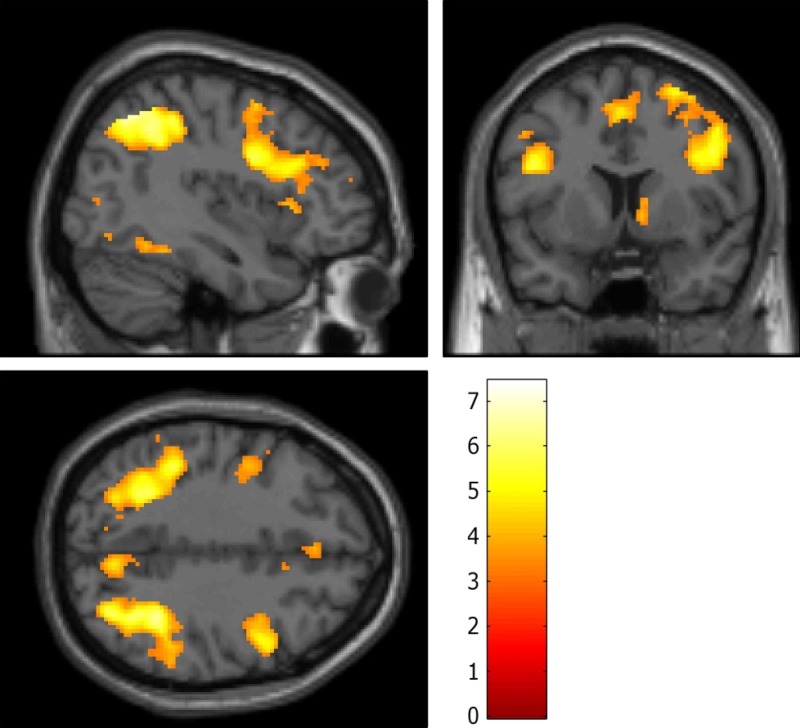
Background: There is evidence of executive function impairment in obsessive compulsive disorder (OCD) that potentially contributes to symptom development and maintenance. Nevertheless, the precise nature of these executive impairments and their neural basis remains to be defined. Method: We compared stopping and shifting, two key executive functions previously implicated in OCD, in the same task using functional magnetic resonance imaging, in patients with virtually no co-morbidities and age-, verbal IQ- and gender-matched healthy volunteers. The combined task allowed direct comparison of neural activity in stopping and shifting independent of patient sample characteristics and state variables such as arousal, learning, or current symptom expression. Results: Both OCD patients and controls exhibited right inferior frontal cortex activation during stopping, and left inferior parietal cortex activation during shifting. However, widespread under-activation across frontal-parietal areas was found in OCD patients compared to controls for shifting but not stopping. Conservative, whole-brain analyses also indicated marked divergent abnormal activation in OCD in the caudate and thalamus for these two cognitive functions, with stopping-related over-activation contrasting with shift-related under-activation. Conclusions: OCD is associated with selective components of executive function, which engage similar common elements of cortico-striatal regions in different abnormal ways. The results implicate altered neural activation of subcortical origin in executive function abnormalities in OCD that are dependent on the precise cognitive and contextual requirements, informing current theories of symptom expression.
Overview
CoChat Summary
TL;DR
In a combined stop-shift fMRI task, OCD patients and matched controls showed similar right inferior frontal activation during stopping and left inferior parietal activation during shifting, but OCD patients had widespread under-activation specifically during shifting. The same subcortical regions, especially caudate and thalamus, showed opposing abnormalities: over-activation during stopping and under-activation during shifting.
Key findings
- Nineteen OCD patients (median YBOCS 20, range 12–30) and 19 matched controls showed no significant behavioural differences on commission errors, omission errors, or reaction times.
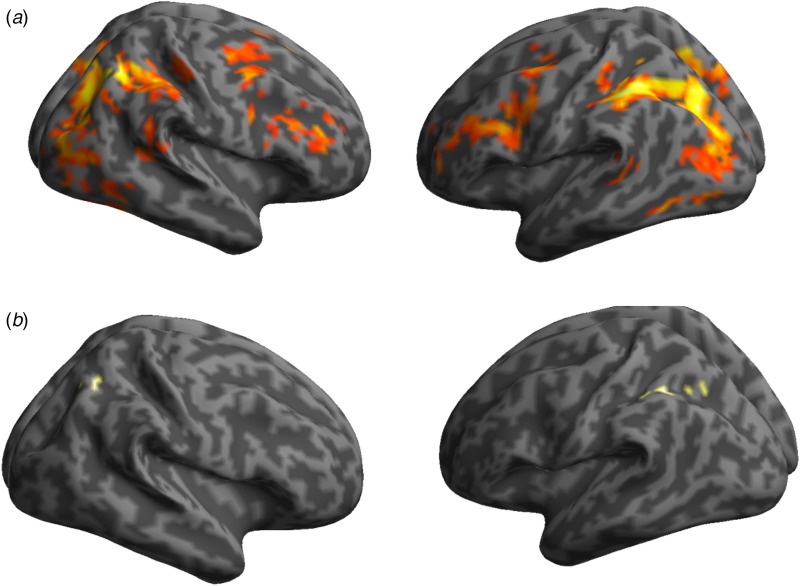
- Shifting: OCD patients showed lower activation than controls in left pre-supplementary motor cortex, right precuneus, occipital cortex bilaterally, and right thalamus (whole-brain FWE-corrected p < 0.05); there was no evidence of increased shifting-related activation in OCD even at uncorrected p < 0.001.
- Stopping: OCD patients showed greater activation than controls in left occipital/cuneus (Z = 4.94) and left caudate (Z = 4.77, p < 0.06 FWE-corrected); there was no evidence of stopping-related hypoactivation in OCD even at uncorrected p < 0.001.
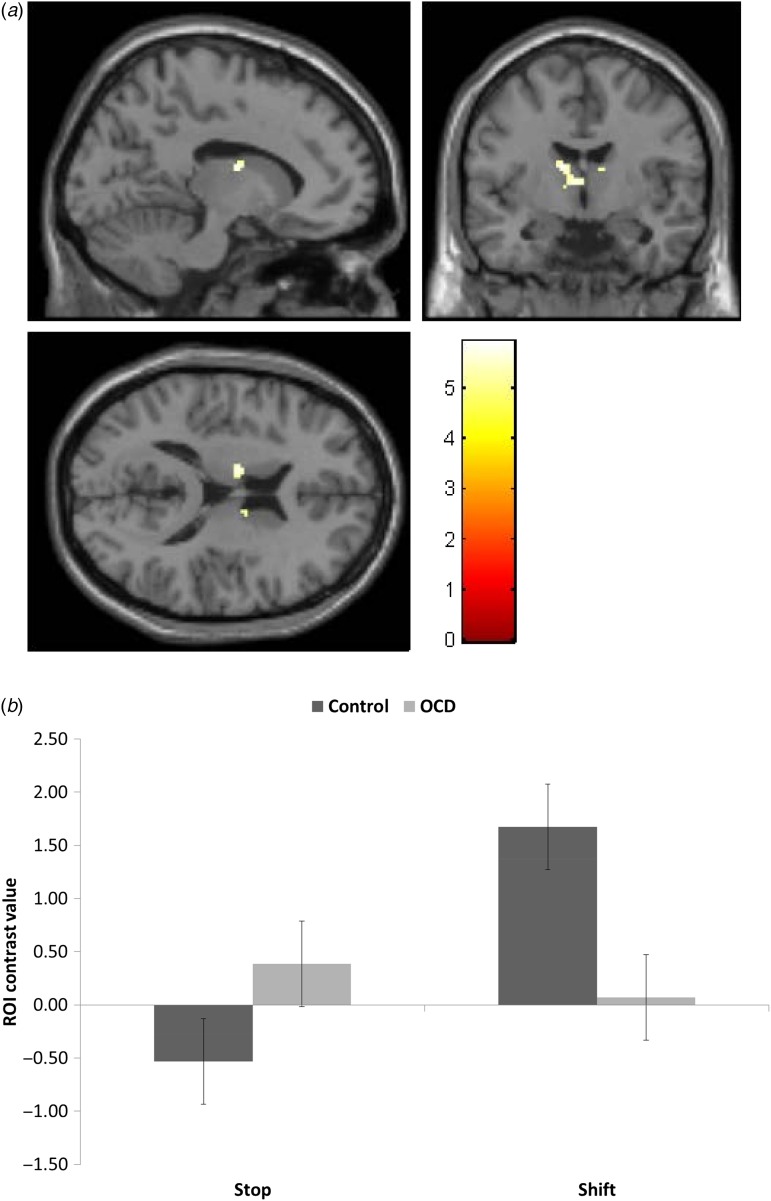
- Interaction: caudate and thalamus bilaterally showed greater activation in OCD for stopping but reduced activation for shifting; caudate ROI group×task interaction F1,36 = 23.73, p < 0.001, with controls > patients for shifting (F1,36 = 13.61, p = 0.001) and patients > controls for stopping (F1,36 = 5.23, p = 0.028). Greater symptom severity was associated with reduced caudate activation during shifting (r = −0.41 and −0.43, p < 0.08).
Methods
- Participants performed a combined shifting go/no-go task with superimposed face/house stimuli; border colour determined the relevant dimension, and simple versus complex blocks manipulated shifting demands.
- fMRI data were acquired on a 3-T Siemens Tim Trio scanner and analysed in SPM8 using a general linear model; second-level analyses compared groups for complex stopping, shifting, and simple stopping, with whole-brain FWE correction at p < 0.05 and secondary uncorrected analyses at p < 0.001.
- Analyses included two-sample t tests, conjunction analyses for common stopping/shifting activation, whole-brain repeated-measures ANOVAs for task×group interactions, and post-hoc anatomical ROI analyses of caudate.
Limitations
- Stated in the paper: the sample size was not sufficiently large to definitively address the role of medication; symptom-dimension analyses were not possible; and the design lacked null events or rest conditions, so group differences in go trials could not be verified.
- Evident from the text: the sample was modest (19 per group), medication status was mixed (13 patients on serotonin reuptake inhibitors and one on a tricyclic antidepressant), and two patients met criteria for generalized anxiety disorder.
- Evident from the text: the task was not designed to be challenging, with considerable practice and clear instructions, so behavioural impairments may not have emerged despite neural group differences.
Model-written summary. Check it against the paper before relying on it.
Integrity signals
Registry
Cites
Statistics
Figures
Verification
Claims the paper makes
0 Valid · 0 Not valid · 37 Not checked · 81 Own results and interpretations
A result the paper reports from its own data — it cites no other source for it, so there is none to check. The quote shows it is in the paper.
In the paper
“Both OCD patients and controls exhibited right inferior frontal cortex activation during stopping, and left inferior parietal cortex activation during shifting.”
§ Divergent subcortical activity for distinct executive functions: stopping and shifting in obsessive compulsive disorder > Abstract > Results
plainstates an association- Asserted: passes — The authors put it forward as true.
- Checkable: passes — It can be checked against evidence.
- Load-bearing: unclear — It is unclear whether the paper’s conclusions depend on it.
- Based: passes — The paper gives a reason why it holds.
A result the paper reports from its own data — it cites no other source for it, so there is none to check. The quote shows it is in the paper.
In the paper
“There was no evidence for increased activations in the OCD group compared to controls even when lowering the threshold to whole-brain uncorrected p < 0.001.”
§ Divergent subcortical activity for distinct executive functions: stopping and shifting in obsessive compulsive disorder > Results > Neuroimaging
plain- Asserted: passes — The authors put it forward as true.
- Checkable: passes — It can be checked against evidence.
- Load-bearing: passes — The paper’s conclusions depend on it.
- Based: passes — The paper gives a reason why it holds.
A result the paper reports from its own data — it cites no other source for it, so there is none to check. The quote shows it is in the paper.
In the paper
“There were more commission errors in the complex (28.26%) compared to the simple (15.05%) tasks, (F1,36 = 46.60, p < 0.001), but no significant group effect (p = 0.629) nor did group interact with difficulty (p = 0.176).”
§ Divergent subcortical activity for distinct executive functions: stopping and shifting in obsessive compulsive disorder > Results > Behavioural measures
plain- Asserted: passes — The authors put it forward as true.
- Checkable: passes — It can be checked against evidence.
- Load-bearing: unclear — It is unclear whether the paper’s conclusions depend on it.
- Based: passes — The paper gives a reason why it holds.
A result the paper reports from its own data — it cites no other source for it, so there is none to check. The quote shows it is in the paper.
In the paper
“There were no significant behavioural differences between OCD patients and controls in any performance indices.”
§ Divergent subcortical activity for distinct executive functions: stopping and shifting in obsessive compulsive disorder > Results > Behavioural measures
plain- Asserted: passes — The authors put it forward as true.
- Checkable: passes — It can be checked against evidence.
- Load-bearing: passes — The paper’s conclusions depend on it.
- Based: passes — The paper gives a reason why it holds.
44 more claims
Create a free account to see all 118 claims and to verify the 63 references still open.
- It may state two separate claims as one. 47
- Probably not a substantial claim. 36
- The quote only partly states this claim. 1
Claims other papers make about this one
Each is checked against this paper’s own text: does it say what the citing paper says it does?
The cited source says what the claim attributes to it.
In the citing paper
“previous studies have reported that response inhibition deficits in OCD patients primarily manifest when the demands for inhibition are heightened.42 ,56 , 57”
From Cognitive Inflexibility Shares Across Schizophrenia and Obsessive-Compulsive Disorder: A Task-Based Functional MRI Study (2025) · cites this paper as [42]
The cited source says what the claim attributes to it.
In the citing paper
“In contrast, the task employed in the present study may not have been challenging enough to elicit these deficits.42”
From Cognitive Inflexibility Shares Across Schizophrenia and Obsessive-Compulsive Disorder: A Task-Based Functional MRI Study (2025) · cites this paper as [42]
The cited source says what the claim attributes to it.
In the citing paper
“Notably, this shifting-related under-activation pattern was consistent with previous findings using the same fMRI paradigm in patients with OCD.”
From Cognitive Inflexibility Shares Across Schizophrenia and Obsessive-Compulsive Disorder: A Task-Based Functional MRI Study (2025) · cites this paper as [42]
The cited source says what the claim attributes to it.
In the citing paper
“The patterns of increased activation aligned with previous findings using the same task to investigate brain activation in this population.42”
From Cognitive Inflexibility Shares Across Schizophrenia and Obsessive-Compulsive Disorder: A Task-Based Functional MRI Study (2025) · cites this paper as [42]
The cited source says what the claim attributes to it.
In the citing paper
“Our use of an unsigned contrast was partly motivated by the fact that existing experiments have reported opposing activation differences between patients with OCD and HC subjects for many of the same regions, and sometimes even for different conditions within the same experiment (e.g., Morein-Zamir et al., 2016).”
From Inhibitory control in obsessive compulsive disorder: a systematic review and activation likelihood estimation meta-analysis of functional magnetic resonance imaging studies (2022) · cites this paper as Morein-Zamir et al., 2016
Citations
Cites
Diagnostic and Statistical Manual of Mental Disorders
Williams, J. B. W., & First, M. (2013) · Encyclopedia of Social Work · doi:10.1093/acrefore/9780199975839.013.104 · Cited by 109,519
(1998) · The Journal of Clinical Psychiatry · Cited by 19,139
Tzourio-Mazoyer, N., Landeau, B., Papathanassiou, D., Crivello, F., Etard, O., Delcroix, N., Mazoyer, B., & Joliot, M. (2002) · NeuroImage · doi:10.1006/nimg.2001.0978 · Cited by 16,319 · cited 2×
“2002), taken from the Automated Anatomical Labeling atlas (Tzourio-Mazoyer et al. 2002).”
MethodMiyake, A., Friedman, N. P., Emerson, M. J., Witzki, A. H., Howerter, A., & Wager, T. D. (2000) · Cognitive Psychology · doi:10.1006/cogp.1999.0734 · Cited by 15,798 · cited 5×
“…the competing interpretations regarding functional abnormalities in OCD, we combined different subconstructs from the Research Domain Criteria framework (www.nimh.nih.gov/research-priorities/ rdoc/index.shtml) found under cognitive control, in a theoretically driven manner (Miyake et al. 2000).”
BackgroundMethodInfluentialA new depression scale designed to be sensitive to change
Montgomery, S. A., & Åsberg, M. (1979) · British Journal of Psychiatry · doi:10.1192/bjp.134.4.382 · Cited by 13,962 · cited 1×
“…al. 1989) and Obsessive Compulsive Inventory – Revised (OCI-R; Foa et al. 2002) assessed OCD severity, the National Adult Reading Test (NART; Nelson, 1982) assessed verbal IQ and the Montgomery–Asberg Depression Rating Scale (MADRS; Montgomery & Asberg, 1979) assessed depressive symptom severity.”
Method(1998) · PubMed · Cited by 10,216
The Yale-Brown Obsessive Compulsive Scale: I. Development, Use, and Reliability
Goodman, W. K. (1989) · Archives of General Psychiatry · doi:10.1001/archpsyc.1989.01810110048007 · Cited by 7,712 · cited 4×
“Nineteen OCD patients with median Yale–Brown Obsessive-Compulsive Scale (YBOCS) score of 20 (range 12–30) were matched for age and gender with 19 healthy controls (14 females in each group).”
BackgroundMethodInfluentialThe mini international neuropsychiatric interview
Lecrubier, Y., Sheehan, D., Hergueta, T., & Weiller, E. (1998) · European Psychiatry · doi:10.1016/s0924-9338(99)80239-9 · Cited by 5,872
Willcutt, E. G., Doyle, A. E., Nigg, J. T., Faraone, S. V., & Pennington, B. F. (2005) · Biological Psychiatry · doi:10.1016/j.biopsych.2005.02.006 · Cited by 3,568 · cited 5×
“Exclusion criteria included substance abuse in the last 3 months and prior diagnosis of schizophrenia, psychotic disorders, bipolar disorder or attention deficit hyperactivity disorder (ADHD).”
BackgroundInfluentialThe Obsessive-Compulsive Inventory: Development and validation of a short version.
Foa, E. B., Huppert, J. D., Leiberg, S., Langner, R., Kichic, R., Hajcak, G., & Salkovskis, P. M. (2002) · Psychological Assessment · doi:10.1037/1040-3590.14.4.485 · Cited by 2,959 · cited 3×
“At testing, the YBOCS (Goodman et al. 1989) and Obsessive Compulsive Inventory – Revised (OCI-R; Foa et al. 2002) assessed OCD severity, the National Adult Reading Test (NART; Nelson, 1982) assessed verbal IQ and the Montgomery–Asberg Depression Rating Scale (MADRS; Montgomery & Asberg, 1979)…”
MethodThe Yale-Brown Obsessive-Compulsive Scale: Measures of internal consistency
Kim, S. W., Dysken, M. W., Pheley, A. M., & Hoover, K. M. (1994) · Psychiatry Research · doi:10.1016/0165-1781(94)90039-6 · Cited by 2,359
Region of interest analysis using an SPM toolbox
Brett, M. (2002) · NeuroImage · Cited by 2,273
Menzies, L., Chamberlain, S. R., Laird, A. R., Thelen, S. M., Sahakian, B. J., & Bullmore, E. T. (2008) · Neuroscience & Biobehavioral Reviews · doi:10.1016/j.neubiorev.2007.09.005 · Cited by 1,190 · cited 3×
“Executive function abnormalities are broadly consistent with the fronto-striatal dysfunction reported in OCD (Menzies et al. 2008; Milad & Rauch, 2012).”
BackgroundSelf-citationObsessive-compulsive disorder: beyond segregated cortico-striatal pathways
Milad, M. R., & Rauch, S. L. (2012) · Trends in Cognitive Sciences · doi:10.1016/j.tics.2011.11.003 · Cited by 847 · cited 2×
“Executive function abnormalities are broadly consistent with the fronto-striatal dysfunction reported in OCD (Menzies et al. 2008; Milad & Rauch, 2012).”
BackgroundChamberlain, S. R., Blackwell, A. D., Fineberg, N. A., Robbins, T. W., & Sahakian, B. J. (2005) · Neuroscience & Biobehavioral Reviews · doi:10.1016/j.neubiorev.2004.11.006 · Cited by 830 · cited 3×
“Despite the specific theoretical importance suggested for stopping and shifting in relation to OCD (Chamberlain et al. 2005), impairments of broadly similar magnitude were noted for additional * Address for correspondence: Dr S.”
BackgroundResultInfluentialSelf-citationHart, H., Radua, J., Nakao, T., Mataix-Cols, D., & Rubia, K. (2013) · JAMA Psychiatry · doi:10.1001/jamapsychiatry.2013.277 · Cited by 764
Neuroimaging studies of shifting attention: a meta-analysis
Wager, T. D., Jonides, J., & Reading, S. (2004) · NeuroImage · doi:10.1016/j.neuroimage.2004.03.052 · Cited by 654 · cited 1×
“This region, also found in the controls, is implicated in switching or shifting (Wager et al. 2004), suggesting that patients utilize the relevant neural substrates, although insufficiently so.”
BackgroundChamberlain, S. R., Menzies, L., Hampshire, A., Suckling, J., Fineberg, N. A., del Campo, N., Aitken, M., Craig, K., Owen, A. M., Bullmore, E. T., et al. (2008) · Science · doi:10.1126/science.1154433 · Cited by 550 · cited 2×
“…secondary analyses suggested medication was unlikely to play a role (see Supplementary material) as does the evidence from first degree siblings (Chamberlain et al. 2008), present sample size was not sufficiently large to address this definitively and future studies should verify the role of…”
BackgroundSelf-citationRubia, K., Smith, A. B., Brammer, M. J., Toone, B., & Taylor, E. (2005) · American Journal of Psychiatry · doi:10.1176/appi.ajp.162.6.1067 · Cited by 537 · cited 1×
“Present results illustrate how neurobiological differences can inform this issue: as opposed to the caudate hyperactivation in OCD, stop-related caudate hypoactivation was found in ADHD children and occasional stimulant users (Rubia et al. 2005, 2011; Harle et al. 2014).”
ResultA meta-analysis of functional neuroimaging in obsessive-compulsive disorder
Whiteside, S. P., Port, J. D., & Abramowitz, J. S. (2004) · Psychiatry Research: Neuroimaging · doi:10.1016/j.pscychresns.2004.07.001 · Cited by 520 · cited 4×
“OCD patients, however, appear to have abnormal resting state activation (Whiteside et al. 2004) and therefore inclusion of such conditions could have limited utility.”
BackgroundInfluentialThe neuropsychology of adult obsessive–compulsive disorder: A meta-analysis
Abramovitch, A., Abramowitz, J. S., & Mittelman, A. (2013) · Clinical Psychology Review · doi:10.1016/j.cpr.2013.09.004 · Cited by 444 · cited 4×
“As such, though subtle behaviourally (Abramovitch et al. 2013), stopping abnormalities could contribute to and result from executing deliberate repetitive actions over many years.”
BackgroundInfluentialNeurocognitive endophenotypes of obsessive-compulsive disorder
Menzies, L., Achard, S., Chamberlain, S. R., Fineberg, N., Chen, C.-H., del Campo, N., Sahakian, B. J., Robbins, T. W., & Bullmore, E. (2007) · Brain · doi:10.1093/brain/awm205 · Cited by 443 · cited 1×
“Response inhibition deficits are observed in OCD when inhibitory demands are high, but not when they are lower as in go/no-go tasks (Watkins et al. 2005; Menzies et al. 2007; Bohne et al. 2008; Morein-Zamir et al. 2010).”
BackgroundSelf-citationNeuropsychological performance in obsessive-compulsive disorder: a critical review
Kuelz, A. K., Hohagen, F., & Voderholzer, U. (2004) · Biological Psychology · doi:10.1016/j.biopsycho.2003.07.007 · Cited by 436 · cited 1×
“As with behavioural studies, heterogeneous findings can be attributed in part to between-study differences in patient characteristics such as symptom severity, comorbidities and medication status (Kuelz et al. 2004).”
BackgroundFrith, C. D., Friston, K. J., Herold, S., Silbersweig, D., Fletcher, P., Cahill, C., Dolan, R. J., Frackowiak, R. S. J., & Liddle, P. F. (1995) · British Journal of Psychiatry · doi:10.1192/bjp.167.3.343 · Cited by 426 · cited 1×
“This was advantageous as the brain activation results were not confounded by performance differences (Frith et al. 1995; Weinberger & Berman, 1996).”
BackgroundFrontal-striatal dysfunction during planning in obsessive-compulsive disorder
van den Heuvel, O. A., Veltman, D. J., Groenewegen, H. J., Cath, D. C., van Balkom, A. J. L. M., van Hartskamp, J., Barkhof, F., & van Dyck, R. (2005) · Archives of General Psychiatry · doi:10.1001/archpsyc.62.3.301 · Cited by 417 · cited 2×
“To reconcile such disparities, it was suggested that over-activation may characterize affective ventral corticostriatal systems with hypoactivation in more dorsal, putatively cognitive, circuits (van den Heuvel et al. 2005; Nakao et al. 2009).”
BackgroundPrefrontal function in schizophrenia: confounds and controversies
Weinberger, D. R., & Berman, K. F. (1996) · Philosophical Transactions of the Royal Society of London. Series B: Biological Sciences · doi:10.1098/rstb.1996.0135 · Cited by 413 · cited 2×
“This was advantageous as the brain activation results were not confounded by performance differences (Frith et al. 1995; Weinberger & Berman, 1996).”
BackgroundRobbins, T. W. (2007) · Philosophical Transactions of the Royal Society B: Biological Sciences · doi:10.1098/rstb.2007.2097 · Cited by 413 · cited 5×
“Exclusion criteria included substance abuse in the last 3 months and prior diagnosis of schizophrenia, psychotic disorders, bipolar disorder or attention deficit hyperactivity disorder (ADHD).”
BackgroundInfluentialSelf-citationUrsu, S., Stenger, V. A., Shear, M. K., Jones, M. R., & Carter, C. S. (2003) · Psychological Science · doi:10.1111/1467-9280.24411 · Cited by 341 · cited 1×
“Increased activation during executive functioning has been interpreted as compensatory (Roth et al. 2007; Page et al. 2009; de Vries et al. 2014) or overactive self-regulation processes (Ursu et al. 2003).”
BackgroundCognitive functioning in obsessive-compulsive disorder: A meta-analysis
Shin, N. Y., Lee, T. Y., Kim, E., & Kwon, J. S. (2014) · Psychological Medicine · doi:10.1017/s0033291713001803 · Cited by 334 · cited 1×
“Indeed, several recent meta-analyses have concluded that despite heterogeneity in the literature, OCD is associated with broad executive function impairments with medium to large effect sizes (Abramovitch et al. 2013; Shin et al. 2014; Snyder et al. 2015).”
BackgroundMaltby, N., Tolin, D. F., Worhunsky, P., O'Keefe, T. M., & Kiehl, K. A. (2005) · NeuroImage · doi:10.1016/j.neuroimage.2004.08.041 · Cited by 331 · cited 5×
“Some studies have shown increased prefrontal activation in patients, having attributed this to overactive monitoring (Maltby et al. 2005).”
BackgroundResultInfluentialSnyder, H. R., Kaiser, R. H., Warren, S. L., & Heller, W. (2015) · Clinical Psychological Science · doi:10.1177/2167702614534210 · Cited by 325
de Wit, S. J., de Vries, F. E., van der Werf, Y. D., Cath, D. C., Heslenfeld, D. J., Veltman, E. M., van Balkom, A. J. L. M., Veltman, D. J., & van den Heuvel, O. A. (2012) · American Journal of Psychiatry · doi:10.1176/appi.ajp.2012.12010073 · Cited by 303 · cited 3×
“The absence of behavioural group differences means that any changes in fMRI activations below cannot be attributed to performance effects, being more likely to represent underlying neural group differences.”
BackgroundResultMeta-analysis of brain volume changes in obsessive-compulsive disorder
Rotge, J.-Y., Guehl, D., Dilharreguy, B., Tignol, J., Bioulac, B., Allard, M., Burbaud, P., & Aouizerate, B. (2009) · Biological Psychiatry · doi:10.1016/j.biopsych.2008.06.019 · Cited by 284 · cited 2×
“The caudate and thalamus are widely implicated in OCD pathophysiology including anatomical abnormalities (Rotge et al. 2009; Shaw et al. 2015) and aberrant functionality during rest, provocation and task performance (Whiteside et al. 2004; Rotge et al. 2008).”
BackgroundNeural correlates of cognitive inflexibility during task-switching in obsessive-compulsive disorder
Gu, B.-M., Park, J.-Y., Kang, D.-H., Lee, S. J., Yoo, S. Y., Jo, H. J., Choi, C.-H., Lee, J.-M., & Kwon, J. S. (2007) · Brain · doi:10.1093/brain/awm277 · Cited by 284 · cited 2×
“In contrast to a previous study reporting no shift-related activation in OCD patients (Gu et al. 2008), we noted left IPC activation, albeit at a reduced level (see Supplementary material).”
ResultDodds, C. M., Morein-Zamir, S., & Robbins, T. W. (2011) · Cerebral Cortex · doi:10.1093/cercor/bhq187 · Cited by 270 · cited 5×
“In healthy adults, this combined task has previously revealed stopping specific activation in the right inferior frontal cortex (IFC) and shifting specific activation in the left inferior parietal cortex (IPC), against a background of extensive co-activation for both in fronto-parietal regions (Dodds et al. 2011).”
BackgroundMethodInfluentialSelf-citationRotge, J.-Y., Guehl, D., Dilharreguy, B., Cuny, E., Tignol, J., Bioulac, B., Allard, M., Burbaud, P., & Aouizerate, B. (2008) · Journal of Psychiatry and Neuroscience · doi:10.1139/jpn.0838 · Cited by 254 · cited 2×
“2015) and aberrant functionality during rest, provocation and task performance (Whiteside et al. 2004; Rotge et al. 2008).”
BackgroundExecutive function in Tourette’s syndrome and obsessive–compulsive disorder
WATKINS, L. H., SAHAKIAN, B. J., ROBERTSON, M. M., VEALE, D. M., ROGERS, R. D., PICKARD, K. M., AITKEN, M. R. F., & ROBBINS, T. W. (2005) · Psychological Medicine · doi:10.1017/s0033291704003691 · Cited by 210 · cited 1×
“Response inhibition deficits are observed in OCD when inhibitory demands are high, but not when they are lower as in go/no-go tasks (Watkins et al. 2005; Menzies et al. 2007; Bohne et al. 2008; Morein-Zamir et al. 2010).”
BackgroundSelf-citationMeiran, N., Diamond, G. M., Toder, D., & Nemets, B. (2011) · Psychiatry Research · doi:10.1016/j.psychres.2010.04.044 · Cited by 203 · cited 1×
“This is in line with the notion that performance in cognitive flexibility tasks where correct responding is determined by explicit rules may be insensitive to the commonly reported inflexibility and perfectionism (Moritz et al. 2004; Meiran et al. 2011).”
Evans, D. W., Lewis, M. D., & Iobst, E. (2004) · Brain and Cognition · doi:10.1016/s0278-2626(03)00274-4 · Cited by 188 · cited 2×
“At the same time, reduced activation was taken to indicate general dysfunction/executive impairment (Remijnse et al. 2013) or insufficient recruitment possibly due to interference from chronic OCD symptomrelated over-activation (Evans et al. 2004).”
BackgroundRoth, R. M., Saykin, A. J., Flashman, L. A., Pixley, H. S., West, J. D., & Mamourian, A. C. (2007) · Biological Psychiatry · doi:10.1016/j.biopsych.2006.12.007 · Cited by 181 · cited 4×
“Prefrontal activation, particularly right IFC, was noted in both groups during stopping with no hypoactivation in OCD, consistent with some studies (Maltby et al. 2005; Page et al. 2009) but not others adopting ROI or liberal approaches (Roth et al. 2007; de Wit et al. 2012).”
BackgroundResultInfluentialNakao, T., Nakagawa, A., Nakatani, E., Nabeyama, M., Sanematsu, H., Yoshiura, T., Togao, O., Tomita, M., Masuda, Y., Yoshioka, K., et al. (2008) · Journal of Psychiatric Research · doi:10.1016/j.jpsychires.2008.10.013 · Cited by 180 · cited 4×
“Although unexpected, cuneus hyperactivation in OCD during working memory has been reported (Nakao et al. 2009), as has hyperactivation during stopping in the occipital cortex (Roth et al.”
BackgroundInfluentialde Vries, F. E., de Wit, S. J., Cath, D. C., van der Werf, Y. D., van der Borden, V., van Rossum, T. B., van Balkom, A. J. L. M., van der Wee, N. J. A., Veltman, D. J., & van den Heuvel, O. A. (2014) · Biological Psychiatry · doi:10.1016/j.biopsych.2013.11.021 · Cited by 177 · cited 1×
“Increased activation during executive functioning has been interpreted as compensatory (Roth et al. 2007; Page et al. 2009; de Vries et al. 2014) or overactive self-regulation processes (Ursu et al. 2003).”
BackgroundFronto-striatal circuits in response-inhibition: Relevance to addiction
Morein-Zamir, S., & Robbins, T. W. (2015) · Brain Research · doi:10.1016/j.brainres.2014.09.012 · Cited by 153
Self-citationA functional magnetic resonance imaging study of inhibitory control in obsessive-compulsive disorder
Page, L. A., Rubia, K., Deeley, Q., Daly, E., Toal, F., Mataix-Cols, D., Giampietro, V., Schmitz, N., & Murphy, D. G. M. (2009) · Psychiatry Research: Neuroimaging · doi:10.1016/j.pscychresns.2009.05.002 · Cited by 147 · cited 12×
“Increased activation during executive functioning has been interpreted as compensatory (Roth et al. 2007; Page et al. 2009; de Vries et al. 2014) or overactive self-regulation processes (Ursu et al.”
BackgroundResultInfluentialRemijnse, P. L., van den Heuvel, O. A., Nielen, M. M. A., Vriend, C., Hendriks, G.-J., Hoogendijk, W. J. G., Uylings, H. B. M., & Veltman, D. J. (2013) · PLoS ONE · doi:10.1371/journal.pone.0059600 · Cited by 123 · cited 2×
“At the same time, reduced activation was taken to indicate general dysfunction/executive impairment (Remijnse et al. 2013) or insufficient recruitment possibly due to interference from chronic OCD symptomrelated over-activation (Evans et al.”
BackgroundKang, D.-H., Jang, J. H., Han, J. Y., Kim, J.-H., Jung, W. H., Choi, J.-S., Choi, C.-H., & Kwon, J. S. (2013) · Progress in Neuro-Psychopharmacology and Biological Psychiatry · doi:10.1016/j.pnpbp.2012.11.001 · Cited by 105 · cited 1×
“For example, during response inhibition both OCD-specific increased and decreased activation in the caudate, thalamus and cingulate have been reported (Maltby et al. 2005; Roth et al. 2007; Page et al. 2009; Kang et al. 2013).”
BackgroundNakao, T., Nakagawa, A., Yoshiura, T., Nakatani, E., Nabeyama, M., Yoshizato, C., Kudoh, A., Tada, K., Yoshioka, K., & Kawamoto, M. (2005) · Psychiatry Research: Neuroimaging · doi:10.1016/j.pscychresns.2004.12.004 · Cited by 100 · cited 1×
“Reduced brain activation despite adequate task performance is commonly observed in OCD (Maltby et al. 2005; Nakao et al. 2005; Page et al. 2009), supporting the suggestion that it may be a sensitive index of neurocognitive dysfunction even in the absence of behavioural differences.”
BackgroundRubia, K., Cubillo, A., Woolley, J., Brammer, M. J., & Smith, A. (2011) · Human Brain Mapping · doi:10.1002/hbm.21048 · Cited by 98
Motor inhibition in trichotillomania and obsessive–compulsive disorder
Bohne, A., Savage, C. R., Deckersbach, T., Keuthen, N. J., & Wilhelm, S. (2008) · Journal of Psychiatric Research · doi:10.1016/j.jpsychires.2006.11.008 · Cited by 97 · cited 1×
“Response inhibition deficits are observed in OCD when inhibitory demands are high, but not when they are lower as in go/no-go tasks (Watkins et al. 2005; Menzies et al. 2007; Bohne et al. 2008; Morein-Zamir et al. 2010).”
BackgroundShaw, P., Sharp, W., Sudre, G., Wharton, A., Greenstein, D., Raznahan, A., Evans, A., Chakravarty, M. M., Lerch, J. P., & Rapoport, J. (2015) · Molecular Psychiatry · doi:10.1038/mp.2014.3 · Cited by 90 · cited 4×
“Taken together, the results demonstrate that, although the neural circuitry and cognitive processes mediating various neuropsychiatric disorders overlap, the disparate clinical features are accompanied by highly distinct functional abnormalities, particularly in the striatum (Hart et al. 2013; Shaw et al. 2015).”
BackgroundInfluentialInhibition of thoughts and actions in obsessive-compulsive disorder: extending the endophenotype?
Morein-Zamir, S., Fineberg, N. A., Robbins, T. W., & Sahakian, B. J. (2010) · Psychological Medicine · doi:10.1017/s003329170999033x · Cited by 78 · cited 2×
“Response inhibition deficits are observed in OCD when inhibitory demands are high, but not when they are lower as in go/no-go tasks (Watkins et al. 2005; Menzies et al. 2007; Bohne et al. 2008; Morein-Zamir et al. 2010).”
BackgroundSelf-citationMorein‐Zamir, S., Dodds, C., van Hartevelt, T. J., Schwarzkopf, W., Sahakian, B., Müller, U., & Robbins, T. (2014) · Human Brain Mapping · doi:10.1002/hbm.22539 · Cited by 65 · cited 1×
“These results survived when the conjunction-based search area was defined by a more liberal threshold (p < 0.001 uncorrected) or an independent search area (Morein-Zamir et al. 2014).”
BackgroundInfluentialSelf-citationMorein-Zamir, S., Simon Jones, P., Bullmore, E. T., Robbins, T. W., & Ersche, K. D. (2013) · Neuropsychopharmacology · doi:10.1038/npp.2013.90 · Cited by 61 · cited 4×
“The present task was not designed to be challenging, employing considerable practice and clear instructions, though it is anticipated that with additional demands, behavioural impairments would have become apparent (Morein-Zamir et al. 2013b).”
BackgroundInfluentialSelf-citationTask switching and backward inhibition in obsessive-compulsive disorder
Moritz, S., Hübner, M., & Kluwe, R. (2004) · Journal of Clinical and Experimental Neuropsychology · doi:10.1080/13803390409609791 · Cited by 47 · cited 1×
“This is in line with the notion that performance in cognitive flexibility tasks where correct responding is determined by explicit rules may be insensitive to the commonly reported inflexibility and perfectionism (Moritz et al. 2004; Meiran et al. 2011).”
Morein-Zamir, S., Papmeyer, M., Gillan, C. M., Crockett, M. J., Fineberg, N. A., Sahakian, B. J., & Robbins, T. W. (2013) · Psychological Medicine · doi:10.1017/s0033291712001018 · Cited by 43 · cited 4×
“The present task was not designed to be challenging, employing considerable practice and clear instructions, though it is anticipated that with additional demands, behavioural impairments would have become apparent (Morein-Zamir et al. 2013b).”
BackgroundInfluentialSelf-citationAltered Neural Processing of the Need to Stop in Young Adults at Risk for Stimulant Dependence
Harlé, K. M., Shenoy, P., Stewart, J. L., Tapert, S. F., Yu, A. J., & Paulus, M. P. (2014) · Journal of Neuroscience · doi:10.1523/jneurosci.2297-13.2014 · Cited by 42 · cited 1×
“Present results illustrate how neurobiological differences can inform this issue: as opposed to the caudate hyperactivation in OCD, stop-related caudate hypoactivation was found in ADHD children and occasional stimulant users (Rubia et al. 2005, 2011; Harle et al. 2014).”
ResultMorein‐Zamir, S., Papmeyer, M., Durieux, A. M. S., Fineberg, N. A., Sahakian, B. J., & Robbins, T. W. (2013) · PLoS ONE · doi:10.1371/journal.pone.0080118 · Cited by 29 · cited 4×
“The present task was not designed to be challenging, employing considerable practice and clear instructions, though it is anticipated that with additional demands, behavioural impairments would have become apparent (Morein-Zamir et al. 2013b).”
BackgroundInfluentialSelf-citation
Research works printed but not linked: 1
- Nelson HE (1982). The National Adult Reading Test Manual. NFER-Nelson: Windsor.
Cited by
Norman, L. J., Taylor, S. F., Liu, Y., Radua, J., Chye, Y., De Wit, S. J., Huyser, C., Karahanoglu, F. I., Luks, T., Manoach, D., et al. (2019) · Biological Psychiatry · doi:10.1016/j.biopsych.2018.11.010 · Cited by 189
Carlisi, C. O., Norman, L. J., Lukito, S. S., Radua, J., Mataix-Cols, D., & Rubia, K. (2017) · Biological Psychiatry · doi:10.1016/j.biopsych.2016.10.006 · Cited by 176
“MoreinZamir 2015 (54) adult Switch GNG 19 (74) 37.”
BackgroundBu, X., Hu, X., Zhang, L., Li, B., Zhou, M., Lu, L., Hu, X., Li, H., Yang, Y., Tang, W., et al. (2019) · Translational Psychiatry · doi:10.1038/s41398-018-0362-9 · Cited by 96
Strang, J. F., Anthony, L. G., Yerys, B. E., Hardy, K. K., Wallace, G. L., Armour, A. C., Dudley, K., & Kenworthy, L. (2017) · Journal of Autism and Developmental Disorders · doi:10.1007/s10803-017-3152-y · Cited by 70
“2015), obsessive–compulsive disorder (Francazio and Flessner 2015; Morein-Zamir et al. 2016; Zhang et al. 2015), Prader-Willi syndrome (Benarroch et al.”
Picó-Pérez, M., Moreira, P. S., de Melo Ferreira, V., Radua, J., Mataix-Cols, D., Sousa, N., Soriano-Mas, C., & Morgado, P. (2020) · Neuroscience & Biobehavioral Reviews · doi:10.1016/j.neubiorev.2020.01.033 · Cited by 68
Metadata
- Authors
- Morein-Zamir, S., Voon, V., Dodds, C. M., Sule, A., van Niekerk, J., Sahakian, B. J., & Robbins, T. W.
- Affiliations
- University of Cambridge (GB)
- University of Exeter (GB)
- Venue
- Psychological Medicine
- Publisher
- Cambridge University Press (CUP)
- Published
- 2015-11-06
- Volume
- 46
- Issue
- 4
- Pages
- 829-840
- ISSN
- 0033-2917 (ISSN-L)
- 1469-8978
- PMC
- PMC4754830
- OpenAlex
- W2104995566
- Cited by
- 50
- References
- 58
- Citations by year
- 2026: 2 · 2025: 6 · 2024: 3 · 2023: 2 · 2022: 6 · 2021: 6 · 2020: 5 · 2019: 5 · 2018: 3 · 2017: 10 · 2016: 2
- FWCI
- 6.20
- Type
- journal article
- Language
- en
- Open access
- hybrid
- doi.org
- Locations
- Psychological Medicine (publishedVersion, cc-by)
- Europe PMC (PubMed Central) (publishedVersion, cc-by)
- PubMed Central (publishedVersion, cc-by)
- PubMed (publishedVersion)
- Anglia Ruskin Research Online (Anglia Ruskin University) (submittedVersion)
- Figshare (submittedVersion, cc-by-nc-nd)
- Apollo (University of Cambridge) (submittedVersion, cc-by)
- Funders
- Wellcome Trust (089589/Z/09/Z, 104631/Z/14/Z, 089589, G00001354, 104631, 093875)
- Medical Research Council (G00001354, 089589/Z/09/Z, MR/J012084/1)
- Topics
- Social Sciences › Psychology › Clinical Psychology › Obsessive-Compulsive Spectrum Disorders
- Life Sciences › Neuroscience › Cognitive Neuroscience › Neural and Behavioral Psychology Studies
- Social Sciences › Psychology › Experimental and Cognitive Psychology › Anxiety, Depression, Psychometrics, Treatment, Cognitive Processes
- Keywords
- obsessive-compulsive disorder, executive function, response inhibition, cognitive flexibility, stopping, shifting, subcortical activation, caudate nucleus, thalamus, inferior frontal cortex, inferior parietal cortex, corticostriatal circuits
- MeSH terms
- Adult, Arousal, Brain, Caudate Nucleus, Cognition, Frontal Lobe, Humans, Magnetic Resonance Imaging, Middle Aged, Obsessive-Compulsive Disorder, Parietal Lobe, Task Performance and Analysis, Thalamus, Case-Control Studies, Neostriatum, Executive Function, Functional Neuroimaging
About these checks
Registry, retraction, Cites and statistics results are computed, not judged, with one exception: a printed reference that no index lists is read once by a model before it counts as a citation error. Claims are extracted by a model and kept only when their quote appears verbatim in the text; each cited source is then checked, with a model’s help, for whether it says what the claim relies on. Those verdicts can be wrong — read the claim’s quote and the cited source before relying on one.
A language model drew the claims from the paper on 2026-10-05, under version 3 of the claim definition (model deepseek-v4.1-flash, prompt extract-v3).
A second model labelled each claim on 2026-10-05 (model jev-1.13-20260917, definition revision gold-guideline-v0.2).
Statistics and arithmetic are recomputed, not judged.
Confidence bands are shown only for fields calibrated on our annotated test set. None is calibrated yet, so no band is shown.
What counts as a claim ›How we measure confidence ›How we check this ›
Are you an author, or do you see a problem with this page? Request a review
Data sources
Bibliographic data: Semantic Scholar, OpenAlex, Crossref.
Contains information from the Semantic Scholar Academic Graph Datasets, made available under the ODC Attribution License (ODC-BY 1.0).
Semantic Scholar’s data is described in: Kinney, R., et al. (2023). The Semantic Scholar Open Data Platform. arXiv:2301.10140.
