

Dismantling cognitive-behaviour therapy for panic disorder: a systematic review and component network meta-analysis
Open accessThe DOI matches its Crossref record; 35 of the 35 references it cites were found in a registry or an index.
Abstract
Cognitive-behaviour therapy (CBT) for panic disorder may consist of different combinations of several therapeutic components such as relaxation , breathing retraining , cognitive restructuring , interoceptive exposure and/or in vivo exposure . It is therefore important both theoretically and clinically to examine whether specific components of CBT or their combinations are superior to others in the treatment of panic disorder. Component network meta-analysis (NMA) is an extension of standard NMA that can be used to disentangle the treatment effects of different components included in composite interventions. We searched MEDLINE, EMBASE, PsycINFO and Cochrane Central, with supplementary searches of reference lists and clinical trial registries, for all randomized controlled trials comparing different CBT-based psychological therapies for panic disorder with each other or with control interventions. We applied component NMA to disentangle the treatment effects of different components included in these interventions. After reviewing 2526 references, we included 72 studies with 4064 participants. Interoceptive exposure and face-to-face setting were associated with better treatment efficacy and acceptability. Muscle relaxation and virtual-reality exposure were associated with significantly lower efficacy. Components such as breathing retraining and in vivo exposure appeared to improve treatment acceptability while having small effects on efficacy. The comparison of the most v. the least efficacious combination, both of which may be provided as ‘evidence-based CBT,’ yielded an odds ratio for the remission of 7.69 (95% credible interval: 1.75 to 33.33). Effective CBT packages for panic disorder would include face-to-face and interoceptive exposure components, while excluding muscle relaxation and virtual-reality exposure .
Overview
The claims and statistics of this paper haven’t been checked yet.
Free: it reads the open-access text and checks the first 5 claims that cite a source we can check. Create a free account to check every claim.
Integrity signals
Registry
Cites
Statistics
Figures
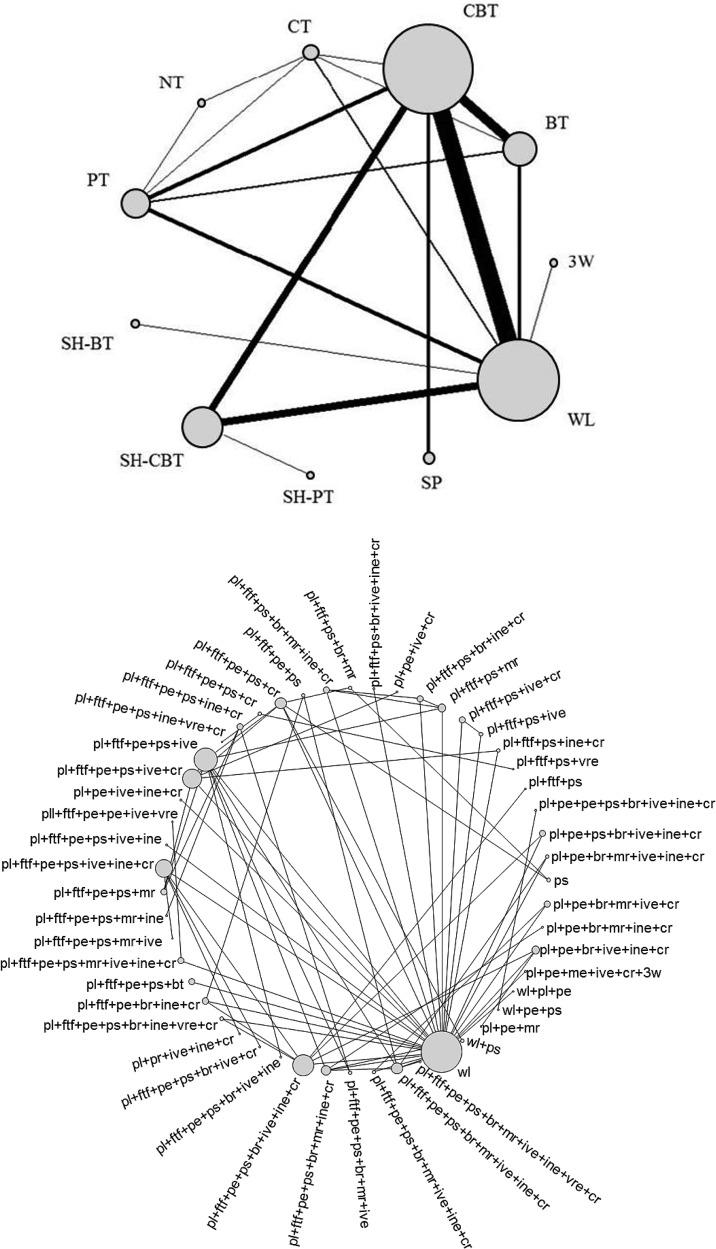
Verification
Claims the paper makes
The claims and statistics of this paper haven’t been checked yet.
Free: it reads the open-access text and checks the first 5 claims that cite a source we can check. Create a free account to check every claim.
Claims other papers make about this one
Each is checked against this paper’s own text: does it say what the citing paper says it does?
The cited source doesn’t support the claim as written.
In the citing paper
“confirms the results of several studies which found that effective CBT for PD is based on interoceptive exposure while excluding other components such as cognitive restructuring (Longmore & Worrell., 2007; Pompoli et al., 2018).”
From Managing emotions in panic disorder: A systematic review of studies related to emotional intelligence, alexithymia, emotion regulation, and coping (2023) · cites this paper as Pompoli et al., 2018
Checked by a reasoning model — may be wrong.
Experimental — accuracy not yet measuredThe source backs part of the claim, not all of it — or backs it for a different population, condition or comparison.
In the citing paper
“Exposure and interoceptive exposure are two of the most effective components of face-to-face CBT [26, 27].”
From Efficacy of an Internet-based intervention with self-applied exposure therapy in virtual reality for people with panic disorder: study protocol for a randomized controlled trial (2023) · cites this paper as [26]
Experimental — accuracy not yet measuredThe source backs part of the claim, not all of it — or backs it for a different population, condition or comparison.
In the citing paper
“Exposure therapy is an evidence-based treatment for anxiety and considered to be an essential element of CBT protocols (Parker et al., 2018;Pompoli et al., 2018).”
From A mixed methods study of autistic adults' mental health therapy experiences (2023) · cites this paper as Pompoli et al., 2018
Experimental — accuracy not yet measuredIn the citing paper
“the cNMA of CBT for panic disorder has identified muscle relaxation as detrimental.”
Self-check
Percentages, sums and reported differences re-computed from the paper’s own numbers.
The self-check needs the paper’s full text.
Citations
Cites
The Cochrane Collaboration's tool for assessing risk of bias in randomised trials
Higgins, J. P. T., Altman, D. G., Gotzsche, P. C., Juni, P., Moher, D., Oxman, A. D., Savovic, J., Schulz, K. F., Weeks, L., Sterne, J. A. C., et al. (2011) · BMJ · doi:10.1136/bmj.d5928 · Cited by 33,817
Dermyshi, E., Wang, Y., Yan, C., Hong, W., Qiu, G., Gong, X., & Zhang, T. (2017) · Neonatology · doi:10.1159/000454668 · Cited by 24,451
Hutton, B., Salanti, G., Caldwell, D. M., Chaimani, A., Schmid, C. H., Cameron, C., Ioannidis, J. P. A., Straus, S., Thorlund, K., Jansen, J. P., et al. (2015) · Annals of Internal Medicine · doi:10.7326/m14-2385 · Cited by 8,269 · cited 1×
“The analyses have been conducted in adherence to a pre-specified protocol registered in PROSPERO (CRD42015027601) and the results are reported following the PRISMA extension statement for network meta-analysis (Hutton et al. 2015).”
Self-citationConsistency and inconsistency in network meta-analysis: concepts and models for multi-arm studies
Higgins, J. P. T., Jackson, D., Barrett, J. K., Lu, G., Ades, A. E., & White, I. R. (2012) · Research Synthesis Methods · doi:10.1002/jrsm.1044 · Cited by 2,098
The BUGS project: evolution, critique and future directions
Lunn, D., Spiegelhalter, D., Thomas, A., & Best, N. (2009) · Statistics in Medicine · doi:10.1002/sim.3680 · Cited by 1,876 · cited 1×
“We fitted the model in a Bayesian framework, using OpenBUGS (Lunn et al. 2009) and uncertainty in the results was conveyed by the 95% credible intervals (CrI).”
Katzman, M. A., Bleau, P., Blier, P., Chokka, P., Kjernisted, K., Van Ameringen, M., & the Canadian Anxiety Guidelines Initiative Group on behalf of the Anxiety Disorders Association of Canada/Association Canadienne des troubles anxieux and McGill University (2014) · BMC Psychiatry · doi:10.1186/1471-244x-14-s1-s1 · Cited by 1,090 · cited 1×
“Among various psychological therapies, guidelines recommend the use of cognitive-behaviour psychotherapy (CBT) (American Psychiatric Association, 1998; Royal Australian & New Zealand College of Psychiatrists, 2003; NICE, 2011; Katzman et al. 2014).”
Turner, R. M., Davey, J., Clarke, M. J., Thompson, S. G., & Higgins, J. P. (2012) · International Journal of Epidemiology · doi:10.1093/ije/dys041 · Cited by 837 · cited 5×
“In order to interpret the magnitude of the estimated heterogeneity (τ), for each outcome we compared the estimated heterogeneity with the expected value, defined in accordance with the empirical distributions for comparing non-pharmacological interventions for a subjective outcome (Turner et al. 2012) (median for hete…”
InfluentialCuijpers, P., Donker, T., van Straten, A., Li, J., & Andersson, G. (2010) · Psychological Medicine · doi:10.1017/s0033291710000772 · Cited by 832 · cited 2×
“Although two previous reviews, exploring self-help v. face-to-face CBT for various anxiety disorders (Cuijpers et al. 2010; Lewis et al. 2012), did not detect important differences between the two delivery forms when analyses were restricted to studies focusing on panic disorder, a more recent…”
Kessler, R. C., Chiu, W. T., Jin, R., Ruscio, A. M., Shear, K., & Walters, E. E. (2006) · Archives of General Psychiatry · doi:10.1001/archpsyc.63.4.415 · Cited by 795 · cited 2×
“Panic disorder is common in the general population, with a life-time prevalence of 3.7% without agoraphobia and 1.1% with agoraphobia (Kessler et al. 2006).”
InfluentialApplied relaxation: Description of a coping technique and review of controlled studies
Öst, L.-G. (1987) · Behaviour Research and Therapy · doi:10.1016/0005-7967(87)90017-9 · Cited by 605
Research works printed but not linked: 4
- 6. Clark DM and Salkovskis PM (1986) Cognitive Treatment of Panic: Therapist's Manual. Oxford: Department of Psychiatry, University of Oxford.
- 2. American Psychiatric Association (2013) Diagnostic and Statistical Manual of Mental Disorders, 5th edn. Arlington, VA: American Psychiatric Association.
- 17. Karekla M (2004) A comparison between acceptance enhanced cognitive behav- ioral and panic control treatment for panic disorder. Doctoral Dissertation, New York: University at Albany, State University of New York.
- 23. NICE (2011) Generalised Anxiety Disorder and Panic Disorder in Adults: Management. London: National Institute for Health and Care Excellence.
Cited by
Items 201–249 of 249
Anisman, H., Hayley, S. P., & Kusnecov, A. W. (2024) · Elsevier eBooks · doi:10.1016/b978-0-443-23565-8.00001-6
Ashour, L., Al-Mehaisen, L., Freihat, N., Al-Anasweh, Q., Al-Miqdadi, H., Khreisha, M. A., Alrjoob, O., Rababa, A., Al-Rabe’e, M., Al-Rahamneh, A.-M. B., et al. (2025) · Personalized Medicine in Psychiatry · doi:10.1016/j.pmip.2025.100152
Chen, S. Z., Solomonov, N., Minges, M. V., McCarthy, K. S., Falkenström, F., Chambless, D. L., Milrod, B. L., & Barber, J. P. (2025) · Clinical Psychology & Psychotherapy · doi:10.1002/cpp.70081
Yang, Q., Shen, Y., Mao, Y., & Li, S. (2025) · Research Square · doi:10.21203/rs.3.rs-7350512/v1
Ong, C. W., & Lee, E. B. (2025) · Oxford University Press eBooks · doi:10.1093/oso/9780197696378.005.0001
What Is Process-Based Therapy?
Ong, C. W., & Lee, E. B. (2025) · Oxford University Press eBooks · doi:10.1093/oso/9780197696378.003.0002
Ong, C. W., & Lee, E. B. (2025) · Oxford University Press eBooks · doi:10.1093/oso/9780197696378.003.0009
Ong, C. W., & Lee, E. B. (2025) · Oxford University Press eBooks · doi:10.1093/oso/9780197696378.002.0006
Ong, C. W., & Lee, E. B. (2025) · Oxford University Press eBooks · doi:10.1093/oso/9780197696378.003.0006
Ong, C. W., & Lee, E. B. (2025) · Oxford University Press eBooks · doi:10.1093/oso/9780197696378.003.0007
Ong, C. W., & Lee, E. B. (2025) · Oxford University Press eBooks · doi:10.1093/oso/9780197696378.002.0004
Ong, C. W., & Lee, E. B. (2025) · Oxford University Press eBooks · doi:10.1093/oso/9780197696378.003.0004
Exposure Therapy for Anxiety or Obsessive-Compulsive Disorders Adapted for Autism Spectrum Disorder
D’Souza, J. M., Townsend, A. N., Erps, K. H., Berry, L. N., Schneider, S. C., Guzick, A. G., & Storch, E. A. (2025) · Oxford University Press eBooks · doi:10.1093/oso/9780197635841.003.0020
Putting It Together: Final Case Example
Ong, C. W., & Lee, E. B. (2025) · Oxford University Press eBooks · doi:10.1093/oso/9780197696378.003.0008
Ong, C. W., & Lee, E. B. (2025) · Oxford University Press eBooks · doi:10.1093/oso/9780197696378.002.0007
Ong, C. W., & Lee, E. B. (2025) · Oxford University Press eBooks · doi:10.1093/oso/9780197696378.003.0001
A Process-Based Approach to Psychotherapy: Principles for Practice
Ong, C. W., & Lee, E. B. (2025) · doi:10.1093/oso/9780197696378.001.0001 · Cited by 1
Network Case Conceptualization
Ong, C. W., & Lee, E. B. (2025) · Oxford University Press eBooks · doi:10.1093/oso/9780197696378.003.0005
Ong, C. W., & Lee, E. B. (2025) · Oxford University Press eBooks · doi:10.1093/oso/9780197696378.003.0003
Ong, C. W., & Lee, E. B. (2025) · Oxford University Press eBooks · doi:10.1093/oso/9780197696378.002.0003
Kabrel, M., & Aru, J. (2025) · Perspectives on Psychological Science · doi:10.1177/17456916251378430 · Cited by 2
Oh, H., Cha, J., Kim, B.-H., Oh, K.-S., Shin, Y., Jeon, S., Cho, S. J., & Kim, J. (2025) · Journal of Clinical Medicine · doi:10.3390/jcm15010007
“Assuming a non-response rate of 25% (the reported remission rate of 38–75% at 6 months) [34,35], at least 80 non-responders would be required to ensure four events per https://doi.org/10.3390/jcm15010007 predictor.”
InfluentialFreeman, S. C., Saeedi, E., Ordóñez-Mena, J. M., Nevill, C. R., Hartmann-Boyce, J., Caldwell, D. M., Welton, N. J., Cooper, N. J., & Sutton, A. J. (2024) · Figshare · doi:10.6084/m9.figshare.26617555
Yu, X., Li, X., Zhirun, D., Zhang, Y., Fei, Y., Tang, W., Li, X., & Zhao, Q. (2024) · Figshare · doi:10.6084/m9.figshare.26122602
Yu, X., Li, X., Zhirun, D., Zhang, Y., Fei, Y., Tang, W., Li, X.-W., & Zhao, Q. (2024) · Figshare · doi:10.6084/m9.figshare.26122850
Schultz, J., Baumeister, A., Schmotz, S., Moritz, S., & Jelinek, L. (2024) · Figshare · doi:10.6084/m9.figshare.26610066
Sakata, M., Sahker, E., Luo, Y., Takayama, T., Toyomoto, R., Furukawa, Y., Sugita, S., Ito, M., Tada, M., Honda, Y., et al. (2026) · Behaviour Research and Therapy · doi:10.1016/j.brat.2026.104960 · Cited by 2
Self-citationPilipenko, N., Desai, K. M., & Garcia, A. V. (2026) · Springer eBooks · doi:10.1007/978-3-032-12819-5_3
Understanding Psychotherapy Services: Crash Course for Physicians
Pilipenko, N. (2026) · Springer eBooks · doi:10.1007/978-3-032-12819-5_10
Papola, D., Patania, F., Pedersen, G. A., Patel, A., Cristofalo, D., Purgato, M., Patel, V., & Barbui, C. (2026) · Journal of Behavioral and Cognitive Therapy · doi:10.1016/j.jbct.2026.100590 · Cited by 1
A group approach to providing integrated psychological care for patients with brain tumours
Little, A., & Groves, M. (2026) · Clinical Psychology Forum · doi:10.53841/bpscpf.2026.1.396.21
Gao, Z., Xiong, Z., Li, M., Chang, Y., Kärkkäinen, T., Cong, F., & Wang, X. (2026) · BMC Psychology · doi:10.1186/s40359-026-04736-7
“Existing component network meta-analytic evidence also suggests that interoceptive exposure is an important component of cognitive-behavioral therapy packages for panic disorder [33].”
Sunzeri, E., & Sunzeri, F. (2026) · Springer eBooks · doi:10.1007/978-3-032-14465-2_17
Fiehn, H., Pahlen, L., Reis, A., Westhoff, M., Stenzel, K. L., Ebert, M., Rief, W., Hofmann, S. G., & Stangier, U. (2026) · Research Square · doi:10.21203/rs.3.rs-9579102/v1
Lai, L., Liu, Y., Axelsson, E., Tyrer, P. J., Li, Y., Lu, Y., Shi, C., & Ren, Z. (2026) · The British Journal of Psychiatry · doi:10.1192/bjp.2026.10647
Wang, S., Ren, J., Fang, S., Hao, Q., Zhang, Y., Kong, L., & Fang, M. (2026) · Brain and Behavior · doi:10.1002/brb3.71513 · Cited by 1
“…cNMAs have not identified strong evidence against additivity (T. A. Furukawa et al. 2021 ; Y. Furukawa et al. 2024 ; López-López et al. 2019 ; Pompoli et al. 2018 ), this assumption may not fully reflect real-world interactions, where therapeutic components can be synergistic or antagonistic.”
Shariyf, L. R., Garner, L. E., & Brown, L. A. (2026) · Elsevier eBooks · doi:10.1016/b978-0-443-29009-1.00106-2
Sözer, Ö. T. (2026) · Klinik Psikoloji Dergisi · doi:10.57127/kpd.26024438.1798783
Internet CBT for panic disorder - a review
Praško, J., Vaněk, J., Bělohradová, K., Sollár, T., Šlepecký, M., Mikula, M., & Ocisková, M. (2026) · Psychiatrie pro praxi · doi:10.36290/psy.2026.021
Bodaghi, S., Pouretemad, H., Tully, P. J., Pourkarimi, J., Mohebati, M., & Sadeghi‐Firoozabadi, V. (2026) · Heart and Mind · doi:10.4103/hm.hm-d-26-00029
Zvolensky, M. J., Garey, L., Gallagher, M. W., Cheney, M. K., Vujanovic, A. A., Kendzor, D. E., Stephens, L. D., Cole, A. B., Mao, B., Kezbers, K. M., et al. (2026) · Behaviour Research and Therapy · doi:10.1016/j.brat.2026.105144
Rethinking and advancing meta-analyses and randomized trials of psychotherapies.
Furukawa, T. (2026) · Clinical Psychology Review · doi:10.1016/j.cpr.2026.102797
Self-citationMachado, S. E. D. C., Ferreira-Garcia, R., Gonçalves, L. L., Appolinário, J. C., & Nardi, A. E. (2026) · Clinical Practice and Epidemiology in Mental Health · doi:10.2174/0117450179487637260905052225
Component network meta-analysis methods for combining individual participant data and aggregate data
Smith, E., Hubbard, S. J., Freeman, S. C., Cooper, N. J., & Gray, L. J. (2026) · Research Synthesis Methods · doi:10.1017/rsm.2026.10119
Biscoe, N. (2026) · Journal of Behavioral and Cognitive Therapy · doi:10.1016/j.jbct.2026.100633
Ko, Y., Kim, J., Park, S., Kim, H., Seo, J. H., Park, I. H., Lee, J., & Kim, J. (2026) · Journal of Medical Internet Research · doi:10.2196/101125
“…of these interventions and is particularly well-suited to panic disorder, in that it directly targets the maintenance mechanisms that trigger and exacerbate frequent acute panic attacks, namely, catastrophic misinterpretation of bodily sensations, anticipatory anxiety, and avoidance behaviors [9].”
Yildiz, E., & Sayıner, Z. A. (2026) · Medicine · doi:10.1097/md.0000000000050943
“[7,8] Additionally, PD is mediated by the hypothalamic–pituitary– adrenal (HPA) axis, leading to cortisol, catecholamines, and related autonomic dysregulation.”
Should Emetophobia Continue to be Classified as a Specific Phobia?
Meule, A., Gutzweiler, R., Hennemann, S., Metzner, M. S., & Zisler, E. M. (2026) · Mental Health Science · doi:10.1002/mhs2.70060 · Cited by 2
Ariamanesh, N. Z., Homaei, R., Shirazi, F. Z., Khosravi, S., & Bozorgi, Z. D. (2026) · Journal of Health Reports and Technology · doi:10.5812/jhrt-174679
Metadata
- Authors
- Pompoli, A., Furukawa, T. A., Efthimiou, O., Imai, H., Tajika, A., & Salanti, G.
- Affiliations
- Kyoto University (JP)
- University of Bern (CH)
- Corresponding author
- Furukawa, Toshi A.
- Venue
- Psychological Medicine
- Publisher
- Cambridge University Press (CUP)
- Published
- 2018-01-25
- Volume
- 48
- Issue
- 12
- Pages
- 1945-1953
- ISSN
- 0033-2917 (ISSN-L)
- 1469-8978
- PMC
- PMC6137372
- OpenAlex
- W2785377192
- Cited by
- 249
- References
- 35
- Citations by year
- 2026: 30 · 2025: 36 · 2024: 36 · 2023: 29 · 2022: 60 · 2021: 28 · 2020: 14 · 2019: 9 · 2018: 7
- FWCI
- 2.31
- Type
- journal article
- Language
- en
- Open access
- hybrid
- doi.org
- Locations
- Psychological Medicine (publishedVersion, cc-by)
- Europe PMC (PubMed Central) (publishedVersion, cc-by)
- PubMed Central (publishedVersion, cc-by)
- PubMed (publishedVersion)
- Bern Open Repository and Information System (University of Bern) (submittedVersion, cc-by)
- Open Access CRIS of the University of Bern
- Funders
- Eli Lilly and Company
- Pfizer
- Japan Society for the Promotion of Science (26670314)
- Topics
- Social Sciences › Psychology › Experimental and Cognitive Psychology › Anxiety, Depression, Psychometrics, Treatment, Cognitive Processes
- Social Sciences › Psychology › Applied Psychology › Digital Mental Health Interventions
- Social Sciences › Psychology › Clinical Psychology › Psychotherapy Techniques and Applications
- Keywords
- panic disorder, cognitive behavioral therapy, interoceptive exposure, in vivo exposure, breathing retraining, muscle relaxation, virtual reality exposure, cognitive restructuring, treatment acceptability, treatment efficacy, face-to-face therapy, remission
- MeSH terms
- Network Meta-Analysis, Humans, Outcome and Process Assessment, Health Care, Cognitive Behavioral Therapy, Panic Disorder
About these checks
Registry, retraction, Cites and statistics results are computed, not judged, with one exception: a printed reference that no index lists is read once by a model before it counts as a citation error. Claims are extracted by a model and kept only when their quote appears verbatim in the text; each cited source is then checked, with a model’s help, for whether it says what the claim relies on. Those verdicts can be wrong — read the claim’s quote and the cited source before relying on one.
Statistics and arithmetic are recomputed, not judged.
Confidence bands are shown only for fields calibrated on our annotated test set. None is calibrated yet, so no band is shown.
What counts as a claim ›How we measure confidence ›How we check this ›
Are you an author, or do you see a problem with this page? Request a review
Data sources
Bibliographic data: Semantic Scholar, OpenAlex, Crossref.
Contains information from the Semantic Scholar Academic Graph Datasets, made available under the ODC Attribution License (ODC-BY 1.0).
Semantic Scholar’s data is described in: Kinney, R., et al. (2023). The Semantic Scholar Open Data Platform. arXiv:2301.10140.
