

Dismantling cognitive-behaviour therapy for panic disorder: a systematic review and component network meta-analysis
Open accessThe DOI matches its Crossref record; 35 of the 35 references it cites were found in a registry or an index.
Abstract
Cognitive-behaviour therapy (CBT) for panic disorder may consist of different combinations of several therapeutic components such as relaxation , breathing retraining , cognitive restructuring , interoceptive exposure and/or in vivo exposure . It is therefore important both theoretically and clinically to examine whether specific components of CBT or their combinations are superior to others in the treatment of panic disorder. Component network meta-analysis (NMA) is an extension of standard NMA that can be used to disentangle the treatment effects of different components included in composite interventions. We searched MEDLINE, EMBASE, PsycINFO and Cochrane Central, with supplementary searches of reference lists and clinical trial registries, for all randomized controlled trials comparing different CBT-based psychological therapies for panic disorder with each other or with control interventions. We applied component NMA to disentangle the treatment effects of different components included in these interventions. After reviewing 2526 references, we included 72 studies with 4064 participants. Interoceptive exposure and face-to-face setting were associated with better treatment efficacy and acceptability. Muscle relaxation and virtual-reality exposure were associated with significantly lower efficacy. Components such as breathing retraining and in vivo exposure appeared to improve treatment acceptability while having small effects on efficacy. The comparison of the most v. the least efficacious combination, both of which may be provided as ‘evidence-based CBT,’ yielded an odds ratio for the remission of 7.69 (95% credible interval: 1.75 to 33.33). Effective CBT packages for panic disorder would include face-to-face and interoceptive exposure components, while excluding muscle relaxation and virtual-reality exposure .
Overview
The claims and statistics of this paper haven’t been checked yet.
Free: it reads the open-access text and checks the first 5 claims that cite a source we can check. Create a free account to check every claim.
Integrity signals
Registry
Cites
Statistics
Figures
Verification
Claims the paper makes
The claims and statistics of this paper haven’t been checked yet.
Free: it reads the open-access text and checks the first 5 claims that cite a source we can check. Create a free account to check every claim.
Claims other papers make about this one
Each is checked against this paper’s own text: does it say what the citing paper says it does?
The cited source doesn’t support the claim as written.
In the citing paper
“confirms the results of several studies which found that effective CBT for PD is based on interoceptive exposure while excluding other components such as cognitive restructuring (Longmore & Worrell., 2007; Pompoli et al., 2018).”
From Managing emotions in panic disorder: A systematic review of studies related to emotional intelligence, alexithymia, emotion regulation, and coping (2023) · cites this paper as Pompoli et al., 2018
Checked by a reasoning model — may be wrong.
Experimental — accuracy not yet measuredThe source backs part of the claim, not all of it — or backs it for a different population, condition or comparison.
In the citing paper
“Exposure and interoceptive exposure are two of the most effective components of face-to-face CBT [26, 27].”
From Efficacy of an Internet-based intervention with self-applied exposure therapy in virtual reality for people with panic disorder: study protocol for a randomized controlled trial (2023) · cites this paper as [26]
Experimental — accuracy not yet measuredThe source backs part of the claim, not all of it — or backs it for a different population, condition or comparison.
In the citing paper
“Exposure therapy is an evidence-based treatment for anxiety and considered to be an essential element of CBT protocols (Parker et al., 2018;Pompoli et al., 2018).”
From A mixed methods study of autistic adults' mental health therapy experiences (2023) · cites this paper as Pompoli et al., 2018
Experimental — accuracy not yet measuredIn the citing paper
“the cNMA of CBT for panic disorder has identified muscle relaxation as detrimental.”
Self-check
Percentages, sums and reported differences re-computed from the paper’s own numbers.
The self-check needs the paper’s full text.
Citations
Cites
The Cochrane Collaboration's tool for assessing risk of bias in randomised trials
Higgins, J. P. T., Altman, D. G., Gotzsche, P. C., Juni, P., Moher, D., Oxman, A. D., Savovic, J., Schulz, K. F., Weeks, L., Sterne, J. A. C., et al. (2011) · BMJ · doi:10.1136/bmj.d5928 · Cited by 33,817
Dermyshi, E., Wang, Y., Yan, C., Hong, W., Qiu, G., Gong, X., & Zhang, T. (2017) · Neonatology · doi:10.1159/000454668 · Cited by 24,451
Hutton, B., Salanti, G., Caldwell, D. M., Chaimani, A., Schmid, C. H., Cameron, C., Ioannidis, J. P. A., Straus, S., Thorlund, K., Jansen, J. P., et al. (2015) · Annals of Internal Medicine · doi:10.7326/m14-2385 · Cited by 8,269 · cited 1×
“The analyses have been conducted in adherence to a pre-specified protocol registered in PROSPERO (CRD42015027601) and the results are reported following the PRISMA extension statement for network meta-analysis (Hutton et al. 2015).”
Self-citationConsistency and inconsistency in network meta-analysis: concepts and models for multi-arm studies
Higgins, J. P. T., Jackson, D., Barrett, J. K., Lu, G., Ades, A. E., & White, I. R. (2012) · Research Synthesis Methods · doi:10.1002/jrsm.1044 · Cited by 2,098
The BUGS project: evolution, critique and future directions
Lunn, D., Spiegelhalter, D., Thomas, A., & Best, N. (2009) · Statistics in Medicine · doi:10.1002/sim.3680 · Cited by 1,876 · cited 1×
“We fitted the model in a Bayesian framework, using OpenBUGS (Lunn et al. 2009) and uncertainty in the results was conveyed by the 95% credible intervals (CrI).”
Katzman, M. A., Bleau, P., Blier, P., Chokka, P., Kjernisted, K., Van Ameringen, M., & the Canadian Anxiety Guidelines Initiative Group on behalf of the Anxiety Disorders Association of Canada/Association Canadienne des troubles anxieux and McGill University (2014) · BMC Psychiatry · doi:10.1186/1471-244x-14-s1-s1 · Cited by 1,090 · cited 1×
“Among various psychological therapies, guidelines recommend the use of cognitive-behaviour psychotherapy (CBT) (American Psychiatric Association, 1998; Royal Australian & New Zealand College of Psychiatrists, 2003; NICE, 2011; Katzman et al. 2014).”
Turner, R. M., Davey, J., Clarke, M. J., Thompson, S. G., & Higgins, J. P. (2012) · International Journal of Epidemiology · doi:10.1093/ije/dys041 · Cited by 837 · cited 5×
“In order to interpret the magnitude of the estimated heterogeneity (τ), for each outcome we compared the estimated heterogeneity with the expected value, defined in accordance with the empirical distributions for comparing non-pharmacological interventions for a subjective outcome (Turner et al. 2012) (median for hete…”
InfluentialCuijpers, P., Donker, T., van Straten, A., Li, J., & Andersson, G. (2010) · Psychological Medicine · doi:10.1017/s0033291710000772 · Cited by 832 · cited 2×
“Although two previous reviews, exploring self-help v. face-to-face CBT for various anxiety disorders (Cuijpers et al. 2010; Lewis et al. 2012), did not detect important differences between the two delivery forms when analyses were restricted to studies focusing on panic disorder, a more recent…”
Kessler, R. C., Chiu, W. T., Jin, R., Ruscio, A. M., Shear, K., & Walters, E. E. (2006) · Archives of General Psychiatry · doi:10.1001/archpsyc.63.4.415 · Cited by 795 · cited 2×
“Panic disorder is common in the general population, with a life-time prevalence of 3.7% without agoraphobia and 1.1% with agoraphobia (Kessler et al. 2006).”
InfluentialApplied relaxation: Description of a coping technique and review of controlled studies
Öst, L.-G. (1987) · Behaviour Research and Therapy · doi:10.1016/0005-7967(87)90017-9 · Cited by 605
Research works printed but not linked: 4
- 6. Clark DM and Salkovskis PM (1986) Cognitive Treatment of Panic: Therapist's Manual. Oxford: Department of Psychiatry, University of Oxford.
- 2. American Psychiatric Association (2013) Diagnostic and Statistical Manual of Mental Disorders, 5th edn. Arlington, VA: American Psychiatric Association.
- 17. Karekla M (2004) A comparison between acceptance enhanced cognitive behav- ioral and panic control treatment for panic disorder. Doctoral Dissertation, New York: University at Albany, State University of New York.
- 23. NICE (2011) Generalised Anxiety Disorder and Panic Disorder in Adults: Management. London: National Institute for Health and Care Excellence.
Cited by
Caldwell, D. M., Davies, S. R., Hetrick, S. E., Palmer, J. C., Caro, P., López-López, J. A., Gunnell, D., Kidger, J., Thomas, J., French, C., et al. (2019) · The Lancet Psychiatry · doi:10.1016/s2215-0366(19)30403-1 · Cited by 336
Defining the criteria for including studies and how they will be grouped for the synthesis
McKenzie, J. E., Brennan, S. E., Ryan, R. E., Thomson, H. J., Johnston, R. V., & Thomas, J. (2019) · Cochrane Handbook for Systematic Reviews of Interventions · doi:10.1002/9781119536604.ch3 · Cited by 290
Furukawa, T. A., Suganuma, A., Ostinelli, E. G., Andersson, G., Beevers, C. G., Shumake, J., Berger, T., Boele, F. W., Buntrock, C., Carlbring, P., et al. (2021) · The Lancet Psychiatry · doi:10.1016/s2215-0366(21)00077-8 · Cited by 255
Self-citationMiklowitz, D. J., Efthimiou, O., Furukawa, T. A., Scott, J., McLaren, R., Geddes, J. R., & Cipriani, A. (2021) · JAMA Psychiatry · doi:10.1001/jamapsychiatry.2020.2993 · Cited by 261
Self-citationBehavioural interventions for smoking cessation: an overview and network meta-analysis
Hartmann-Boyce, J., Livingstone-Banks, J., Ordóñez-Mena, J. M., Fanshawe, T. R., Lindson, N., Freeman, S. C., Sutton, A. J., Theodoulou, A., & Aveyard, P. (2021) · Cochrane Database of Systematic Reviews · doi:10.1002/14651858.cd013229.pub2 · Cited by 259
Network meta‐analysis of multicomponent interventions
Rücker, G., Petropoulou, M., & Schwarzer, G. (2020) · Biometrical Journal · doi:10.1002/bimj.201800167 · Cited by 195
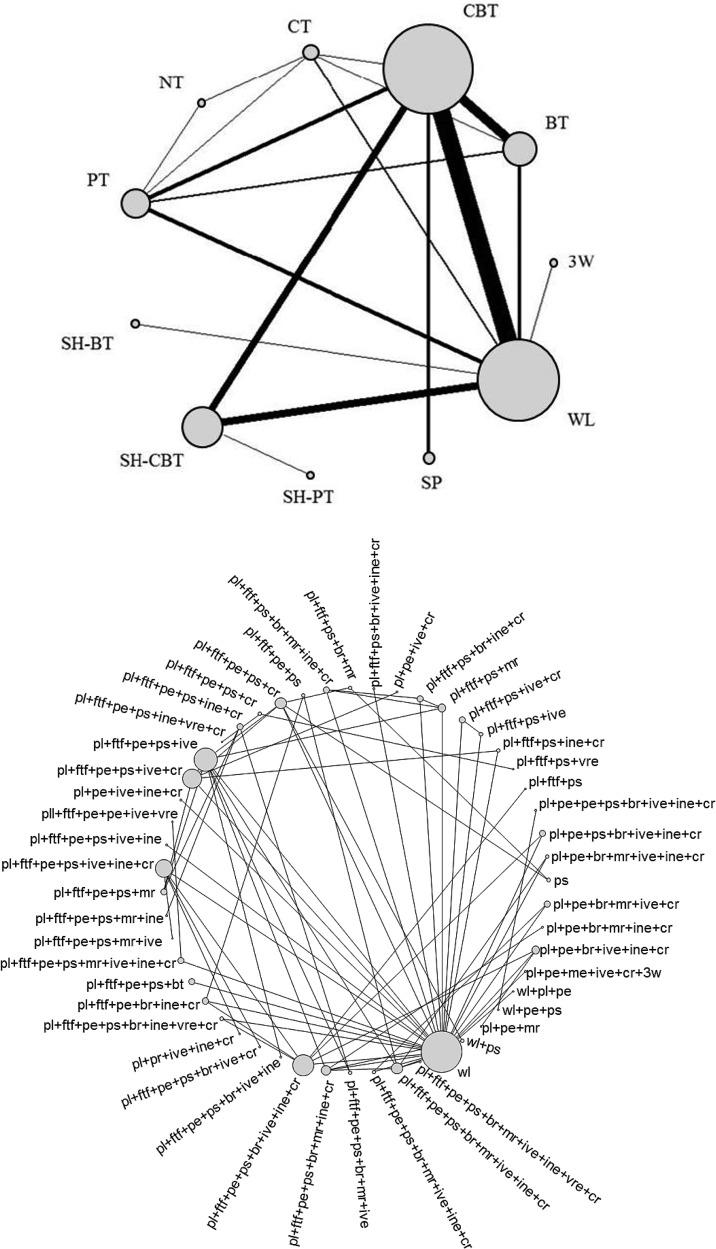
“A case study with 51 observed combinations of 12 therapeutic components for panic disorder was published by Pompoli et al. (2018), giving more powerful results with the implementation of CNMA.”
MethodInfluentialPauley, D., Cuijpers, P., Papola, D., Miguel, C., & Karyotaki, E. (2021) · Psychological Medicine · doi:10.1017/s0033291721001999 · Cited by 170
“Network meta-analysis (NMA) and component NMA are promising methods that have already been used to link probable differences in effectiveness to treatment components and component combinations for the treatment of panic disorder (Pompoli et al., 2018).”
Furukawa, Y., Sakata, M., Yamamoto, R., Nakajima, S., Kikuchi, S., Inoue, M., Ito, M., Noma, H., Takashina, H. N., Funada, S., et al. (2024) · JAMA Psychiatry · doi:10.1001/jamapsychiatry.2023.5060 · Cited by 164
Self-citationChapter 33. Neuroscience of Psychotherapy
Vaughan, S., & Ahmed, M. (2022) · American Psychiatric Association Publishing eBooks · doi:10.1176/appi.books.9781615375233.gg33 · Cited by 151
Cognition-Oriented Treatments for Older Adults: a Systematic Overview of Systematic Reviews
Gavelin, H. M., Lampit, A., Hallock, H., Sabatés, J., & Bahar-Fuchs, A. (2020) · Neuropsychology Review · doi:10.1007/s11065-020-09434-8 · Cited by 117
“, 2018), it may be possible to use component network meta-analysis (Pompoli et al., 2018), which allows for different intervention components to be dismantled and compared in order to identify the optimal combination of intervention ingredients or techniques.”
BackgroundApolinário-Hagen, J., Drüge, M., & Fritsche, L. (2020) · Advances in Experimental Medicine and Biology · doi:10.1007/978-981-32-9705-0_17 · Cited by 100
Integrating psychotherapy with the hierarchical taxonomy of psychopathology (HiTOP).
Hopwood, C. J., Bagby, R. M., Gralnick, T., Ro, E., Ruggero, C., Mullins-Sweatt, S., Kotov, R., Bach, B., Cicero, D. C., Krueger, R. F., et al. (2020) · Journal of Psychotherapy Integration · doi:10.1037/int0000156 · Cited by 91
“In contrast, understanding the meaning and function of dynamic processes has been a major focus of research devoted to dismantling the processes by which CBT exerts its effects (e.g., Arch, Wolitzky-Taylor, Eifert, & Craske, 2012; Pompoli et al., 2018).”
BackgroundPapola, D., Ostuzzi, G., Tedeschi, F., Gastaldon, C., Purgato, M., Del Giovane, C., Pompoli, A., Pauley, D., Karyotaki, E., Sijbrandij, M., et al. (2023) · Psychological Medicine · doi:10.1017/s0033291722003683 · Cited by 77
“…influence positive outcomes more than other components, for e.g. breathing retraining, psychoeducation, or muscle relaxation (which has even shown to worsen the outcomes) (Craske, Rowe, Lewin, & Noriega-Dimitri, 1997; Pompoli et al., 2018; Schmidt et al., 2000; Siev & Chambless, 2007).”
Self-citationMatsumoto, K., Hamatani, S., & Shimizu, E. (2021) · Journal of Medical Internet Research · doi:10.2196/31293 · Cited by 67
“The results of clinical studies that were not RCTs show that VCBT is sufficient to improve symptoms of obsessive-compulsive disorder and panic disorder [18,21,65], where exposure is an important therapeutic component [66,67].”
BackgroundKlevebrant, L., & Frick, A. (2021) · General Hospital Psychiatry · doi:10.1016/j.genhosppsych.2021.11.005 · Cited by 95
“In accordance interoceptive exposure has been reported to be an effective component of evidence-based psychological treatments targeting PD [43].”
A review of methods for addressing components of interventions in meta-analysis
Πετροπούλου, Μ., Efthimiou, O., Rücker, G., Schwarzer, G., Furukawa, T. A., Pompoli, A., Koek, H. L., Giovane, C. D., Rodondi, N., & Mavridis, D. (2021) · PLoS ONE · doi:10.1371/journal.pone.0246631 · Cited by 69
“As shown in Fig 2(B), the network structure at the combination level is disconnected and it consists of three networks of interventions in panic disorder [54].”
BackgroundMethodResultInfluentialSelf-citationMeasuring the active elements of cognitive-behavioral therapies
Cohen, Z. D., Barnes-Horowitz, N. M., Forbes, C. N., & Craske, M. G. (2023) · Behaviour Research and Therapy · doi:10.1016/j.brat.2023.104364 · Cited by 58
Research strategies to discern active psychological therapy components: A scoping review
Leijten, P., Weisz, J. R., & Gardner, F. (2021) · Clinical Psychological Science · doi:10.1177/2167702620978615 · Cited by 55
Respiratory therapy for the treatment of anxiety: Meta-analytic review and regression
Leyro, T. M., Versella, M. V., Yang, M.-J., Brinkman, H. R., Hoyt, D. L., & Lehrer, P. (2021) · Clinical Psychology Review · doi:10.1016/j.cpr.2021.101980 · Cited by 53
Mechanisms of Action in Exposure Therapy
Knowles, K. A., & Tolin, D. F. (2022) · Current Psychiatry Reports · doi:10.1007/s11920-022-01391-8 · Cited by 73
Maisto, D., Barca, L., Van den Bergh, O., & Pezzulo, G. (2021) · Psychological Review · doi:10.1037/rev0000290 · Cited by 49
Reddy, Y. C., Sudhir, P., Manjula, M., Arumugham, S., & Narayanaswamy, J. (2020) · Indian Journal of Psychiatry · doi:10.4103/psychiatry.indianjpsychiatry_773_19 · Cited by 48
“[33] A meta-analysis has shown that digital/internet-based CBT is superior to waitlist and placebo control while being comparable to face-to-face and group CBT.[34] Transdiagnostic therapies designed to be applicable across various emotional disorders have been found to be helpful, especially in those with comorbid co…”
BackgroundInfluentialRücker, G., Schmitz, S., & Schwarzer, G. (2021) · Biometrical Journal · doi:10.1002/bimj.201900339 · Cited by 47
“An example of an application of CNMA to a disconnected network (though this is not explicitly mentioned) is given in Pompoli et al. (2018).”
BackgroundFurukawa, T. A., Karyotaki, E., Suganuma, A., Pompoli, A., Ostinelli, E. G., Cipriani, A., Cuijpers, P., & Efthimiou, O. (2018) · BMJ Open · doi:10.1136/bmjopen-2018-026137 · Cited by 45
Self-citationInteroception, conditioning, and fear: The panic threesome
Van Diest, I. (2019) · Psychophysiology · doi:10.1111/psyp.13421 · Cited by 44
Acute Stress Reaction in Combat: Emerging Evidence and Peer-Based Interventions
Adler, A. B., & Gutierrez, I. A. (2022) · Current Psychiatry Reports · doi:10.1007/s11920-022-01335-2 · Cited by 44
Stech, E. P., Lim, J., Upton, E. L., & Newby, J. M. (2020) · Cognitive Behaviour Therapy · doi:10.1080/16506073.2019.1628808 · Cited by 43
“, Norton & Price, 2007), and a component network meta-analysis suggested that interoceptive exposure specifically was a very potent component of CBT (Pompoli et al., 2018).”
BackgroundInteroceptive technologies for psychiatric interventions: From diagnosis to clinical applications
Schoeller, F., Horowitz, A. H., Jain, A., Maes, P., Reggente, N., Christov-Moore, L., Pezzulo, G., Barca, L., Allen, M., Salomon, R., et al. (2024) · Neuroscience & Biobehavioral Reviews · doi:10.1016/j.neubiorev.2023.105478 · Cited by 42
“Breathing retraining and IE are among the main components of cognitive and behavioral therapy in panic disorder (Pompoli et al., 2018).”
Pedder, H., Dias, S., Bennetts, M., Boucher, M., & Welton, N. J. (2021) · Medical Decision Making · doi:10.1177/0272989x20983315 · Cited by 45
“This splits combinations of treatments into different components, allowing for networks to be connected if treatments in separate subnetworks share at least 1 common component,(42) and it has been used for this purpose in an analysis of cognitive behavioral therapies for panic disorder.(43) Although a network may be d…”
MethodSakata, M., Toyomoto, R., Yoshida, K., Luo, Y., Nakagami, Y., Uwatoko, T., Shimamoto, T., Tajika, A., Suga, H., Ito, H., et al. (2022) · Evidence Based Mental Health · doi:10.1136/ebmental-2022-300455 · Cited by 42
Self-citationOussi, A., Hamid, K., & Bouvet, C. (2023) · Journal of Behavior Therapy and Experimental Psychiatry · doi:10.1016/j.jbtep.2023.101835 · Cited by 40
Engell, T., Stadnick, N. A., Aarons, G. A., & Barnett, M. L. (2023) · Global Implementation Research and Applications · doi:10.1007/s43477-023-00077-4 · Cited by 37
Furukawa, T. A., Tajika, A., Toyomoto, R., Sakata, M., Luo, Y., Horikoshi, M., Akechi, T., Kawakami, N., Nakayama, T., Kondo, N., et al. (2025) · Nature Medicine · doi:10.1038/s41591-025-03639-1 · Cited by 47
“…meta-analyses distinguishing helpful, neutral or even harmful elements in interventions traditionally classified under one name (for example, CBT for panic disorder 34 , iCBT for depression 17 and CBT for insomnia 35 ), more rigorous and granular research on the Dodo bird verdict is warranted.”
Self-citationCaldwell, D. M., Davies, S. R., Thorn, J. C., Palmer, J. C., Caro, P., Hetrick, S. E., Gunnell, D., Anwer, S., López-López, J. A., French, C. E., et al. (2021) · Public Health Research · doi:10.3310/phr09080 · Cited by 45
A mixed methods study of autistic adults' mental health therapy experiences
Mazurek, M. O., Pappagianopoulos, J., Brunt, S., Sadikova, E., Nevill, R., Menezes, M., & Harkins, C. (2023) · Clinical Psychology & Psychotherapy · doi:10.1002/cpp.2835 · Cited by 33
Remote cognitive behavioral therapy for panic disorder: A meta-analysis
Efron, G., & Wootton, B. M. (2021) · Journal of Anxiety Disorders · doi:10.1016/j.janxdis.2021.102385 · Cited by 47
Murray, L. K., Haroz, E. E., Dorsey, S., Kane, J. C., Bolton, P. A., & Pullmann, M. D. (2019) · Behaviour Research and Therapy · doi:10.1016/j.brat.2019.103430 · Cited by 32
Cuijpers, P. J., Harrer, M., & Furukawa, T. A. (2026) · World Psychiatry · doi:10.1002/wps.70002 · Cited by 37
“One interesting finding is that relaxation, often included in packages of CBT because it is considered to be easy to practice, has been found to be possibly harmful across several disorders, in cluding panic disorder 331 , depression 61 and insomnia 13 .”
Self-citationSchemer, L., Vlaeyen, J. W. S., Doerr, J. M., Skoluda, N., Nater, U. M., Rief, W., & Glombiewski, J. A. (2018) · Behaviour Research and Therapy · doi:10.1016/j.brat.2018.07.002 · Cited by 28
“A recent review addressing panic disorders concluded that interoceptive exposure and the face-to-face setting were associated with better treatment e ffi cacy, while muscle relaxation and virtual-reality exposure were associated with signi fi cantly less e ffi cacy (Pompoli et al., 2018).”
BackgroundBayesian models for aggregate and individual patient data component network meta‐analysis
Efthimiou, O., Seo, M., Karyotaki, E., Cuijpers, P. J., Furukawa, T. A., Schwarzer, G., Rücker, G., & Mavridis, D. (2022) · Statistics in Medicine · doi:10.1002/sim.9372 · Cited by 29
Self-citationPurgato, M., Prina, E., Ceccarelli, C., Cadorin, C., Abdulmalik, J. O., Amaddeo, F., Arcari, L., Churchill, R., Jordans, M. J., Lund, C., et al. (2023) · Cochrane Database of Systematic Reviews · doi:10.1002/14651858.cd014722.pub2 · Cited by 27
Yu, X., Li, X., Du, Z.-R., Zhang, Y., Fei, Y., Tang, W.-P., Li, X., & Zhao, Q. S. (2024) · BMC Medicine · doi:10.1186/s12916-024-03491-z · Cited by 29
“Component network meta-analysis (cNMA) is a newly developed meta-analysis methodology and an extension of the standard NMA that can be used to isolate the treatment effects of different components of a composite intervention [13, 14].”
MethodDunn, W., Brown, C. E., Breitmeyer, A. M., & Salwei, A. (2022) · Frontiers in Psychology · doi:10.3389/fpsyg.2022.872619 · Cited by 31
Exploring potential mechanisms underpinning the therapeutic effects of surfing
Moreton, S. G., Brennan, M. K., Nicholls, V. I., Wolf, I. D., & Muir, D. L. (2021) · Journal of Adventure Education & Outdoor Learning · doi:10.1080/14729679.2021.1884104 · Cited by 30
“…key component of many psychotherapeutic approaches (see Carey, 2011), such as exposure to threatrelated cues in some Cognitive-Behavioral Therapies (Pompoli et al., 2018), developing skills to tolerate distress in Dialectical Behavior Therapy (Linehan, 2014; Valentine, Bankoff, Poulin, Reidler, &…”
BackgroundHartmann‐Boyce, J., Ordóñez-Mena, J. M., Theodoulou, A., Butler, A. R., Freeman, S. C., Sutton, A. J., Jebb, S. A., & Aveyard, P. N. (2022) · Obesity · doi:10.1002/oby.23505 · Cited by 25
“estimate the effects of the components included in complex interventions, drawing on both direct and indirect comparisons and allowing a wider range of intervention characteristics to be evaluated [4, 5].”
BackgroundBehavioural interventions for smoking cessation: an overview and network meta-analysis
Hartmann-Boyce, J., Fanshawe, T. R., Lindson, N., Livingstone-Banks, J., Ordóñez-Mena, J. M., & Aveyard, P. (2018) · Cochrane Database of Systematic Reviews · doi:10.1002/14651858.cd013229 · Cited by 23
A Review of Transdiagnostic Mechanisms in Cognitive Behavior Therapy
Southward, M. W., Kushner, M. L., Terrill, D. R., & Sauer-Zavala, S. E. (2024) · Psychiatric Clinics of North America · doi:10.1016/j.psc.2024.02.003 · Cited by 34
A Case for Translation From the Clinic to the Laboratory
Kredlow, M. A., de Voogd, L. D., & Phelps, E. A. (2022) · Perspectives on Psychological Science · doi:10.1177/17456916211039852 · Cited by 29
Morello, K., Schäfer, S. K., Kunzler, A. M., Priesterroth, L., Tüscher, O., & Kubiak, T. (2023) · Frontiers in Digital Health · doi:10.3389/fdgth.2023.1253390 · Cited by 28
Tonin, F. S., Wiecek, E., Torres-Robles, A., Pontarolo, R., Benrimoj, S. I., Fernández-Llimós, F., & García‐Cárdenas, V. (2018) · Research in Social and Administrative Pharmacy · doi:10.1016/j.sapharm.2018.05.010 · Cited by 27
Smith, E., Cooper, N. J., Sutton, A. J., Abrams, K. R., & Hubbard, S. (2021) · BMC Public Health · doi:10.1186/s12889-021-10162-8 · Cited by 23
Arnfred, B. T., Bang, P., Hjorthøj, C. R., Winding, C., Moeller, K. S., Hvenegaard, M., Agerskov, L., Gausbøl, U. K., Soe, D., Wiborg, P., et al. (2022) · BMJ Open · doi:10.1136/bmjopen-2021-051147 · Cited by 24
Brain Mechanisms Underlying Panic Attack and Panic Disorder
Guan, X., & Cao, P. (2023) · Neuroscience Bulletin · doi:10.1007/s12264-023-01088-9 · Cited by 26
“In addition, Pompoli et al . applied a component network meta-analysis to compare these different components in the treatment of PD and found greater advantages for interoceptive exposure (IE) and face-to-face therapy [136].”
Scheuer, H., Engstrom, A., Thomas, P., Moodliar, R., Moloney, K., Walen, M. L., Johnson, P., Seo, S., Vaziri, N., Martinez, A., et al. (2020) · Contemporary Clinical Trials · doi:10.1016/j.cct.2020.105970 · Cited by 18
Development and validation of the Cognitive Behavioural Therapy Skills Scale among college students
Sakata, M., Toyomoto, R., Yoshida, K., Luo, Y., Nakagami, Y., Aoki, S., Irie, T., Sakano, Y., Suga, H., Sumi, M., et al. (2021) · Evidence-Based Mental Health · doi:10.1136/ebmental-2020-300217 · Cited by 20
Self-citationUsing computational models of learning to advance cognitive behavioral therapy
Berwian, I. M., Hitchock, P., Pisupati, S., Schoen, G., & Niv, Y. (2025) · Communications Psychology · doi:10.1038/s44271-025-00251-4 · Cited by 16
“It is a widespread and effective treatment foranxiety disorders 16 – 19 and especially effective for treating post-traumatic stress disorder 20 , speci fi c phobias 21,22 , obsessive-compulsive disorder 23 and other mental health conditions.”
A Cognitive-Behavioral Formulation of Narcissistic Self-Esteem Dysregulation
Nook, E. C., Jaroszewski, A. C., Finch, E. F., & Choi-Kain, L. W. (2022) · FOCUS The Journal of Lifelong Learning in Psychiatry · doi:10.1176/appi.focus.20220055 · Cited by 23
Hendriks, G., Janssen, N., Robertson, L., van Balkom, A. J. L. M., van Zelst, W. H., Wolfe, S., Voshaar, R. C. O., & Uphoff, E. (2024) · Cochrane Database of Systematic Reviews · doi:10.1002/14651858.cd007674.pub3 · Cited by 32
Bayesian unanchored additive models for component network meta‐analysis
Wigle, A., & Béliveau, A. (2022) · Statistics in Medicine · doi:10.1002/sim.9520 · Cited by 16
Graphical tools for visualizing the results of network meta‐analysis of multicomponent interventions
Seitidis, G., Tsokani, S., Christogiannis, C., Kontouli, K., Fyraridis, A., Nikolakopoulos, S., Veroniki, A. A., & Mavridis, D. (2023) · Research Synthesis Methods · doi:10.1002/jrsm.1617 · Cited by 16
“3,6 For example , a The aim of this article is to present ways of visualizing NMA results consisting of interventions with multiple components.”
BackgroundAvailability of Internet-Based Cognitive-Behavioral Therapies for Depression: A Systematic ReviewPreprint
Buss, J., Steinberg, J. S., Banks, G., Horani, D., Rutter, L. A., Wasil, A. R., Ramírez, I., & Lorenzo‐Luaces, L. (2020) · PsyArXiv (OSF Preprints) · doi:10.1016/j.beth.2023.06.003 · Cited by 21
Data visualisation approaches for component network meta-analysis: visualising the data structure
Freeman, S. C., Saeedi, E., Ordóñez-Mena, J. M., Nevill, C. R., Hartmann‐Boyce, J., Caldwell, D. M., Welton, N. J., Cooper, N. J., & Sutton, A. J. (2023) · BMC Medical Research Methodology · doi:10.1186/s12874-023-02026-z · Cited by 16
“1 from [17] includes 51 interventions, but there is still an upper limit.”
BackgroundStech, E. P., Grierson, A. B., Chen, A. Z., Sharrock, M. J., Mahoney, A., & Newby, J. M. (2020) · Internet Interventions · doi:10.1016/j.invent.2020.100315 · Cited by 18
“Exposure techniques are often emphasized during intensive CBT, since exposure is a potent therapeutic component (Pompoli et al., 2018; Sánchez-Meca et al., 2010) and is amenable to massed implementation as it can easily be practiced several times in one session or day.”
BackgroundConelea, C. A., Jacob, S., Redish, A. D., & Ramsay, I. S. (2021) · Frontiers in Psychiatry · doi:10.3389/fpsyt.2021.660180 · Cited by 20
Interoceptive Technologies for Psychiatric Interventions: From Diagnosis to Clinical ApplicationsPreprint
Schoeller, F., Horowitz, A. H., Maes, P., Jain, A., Reggente, N., Christov‐Moore, L., Trousselard, M., Klein, A., Barca, L., Pezzulo, G., et al. (2022) · doi:10.31234/osf.io/sqr6z · Cited by 15
Jung, H. W., Jang, K.-W., Nam, S., Ahn, M. E., Lee, S., Kim, Y. J., Shin, J.-K., Park, J. H., & Roh, D. D. (2023) · Comprehensive Psychiatry · doi:10.1016/j.comppsych.2023.152447 · Cited by 18
Rabasco, A., McKay, D., Smits, J. A., Powers, M. B., Meuret, A. E., & McGrath, P. B. (2022) · Journal of Anxiety Disorders · doi:10.1016/j.janxdis.2022.102528 · Cited by 14
Gabbard’s Textbook of Psychotherapeutic Treatments
Crisp-Han, H., & Gabbard, G. O. (2022) · American Psychiatric Association Publishing eBooks · doi:10.1176/appi.books.9781615375233 · Cited by 17
Lognoul, M., Nasello, J., & Triffaux, J. (2020) · L Encéphale · doi:10.1016/j.encep.2020.01.005 · Cited by 22
Church, D., Stapleton, P., Kip, K. E., & Gallo, F. P. (2020) · The Journal of Nervous and Mental Disease · doi:10.1097/nmd.0000000000001222 · Cited by 18
“Spielmans et al. (2020) correctly state that two of the included studies omitted both EFTs' “Setup Statement” and the tapping portion of the protocol.”
On the importance of identifying mechanisms and active ingredients of psychological treatments
Tolin, D. F., McKay, D., Olatunji, B. O., Abramowitz, J. S., & Otto, M. W. (2023) · Behaviour Research and Therapy · doi:10.1016/j.brat.2023.104425 · Cited by 16
Luo, X. G., Li, S., Wu, Q., Xu, Y. J., Fang, R., Cheng, Y., & Zhang, B. (2025) · BMC Psychiatry · doi:10.1186/s12888-025-06532-w · Cited by 13
“Studies have shown CBT to be effective in reducing panic attacks and improving quality of life, with benefits maintained over the long-term [58, 59].”
Chapter 7. Cognitive-Behavioral Theories
Leahy, R. L., Clark, D. A., & Dozois, D. J. A. (2022) · American Psychiatric Association Publishing eBooks · doi:10.1176/appi.books.9781615375233.gg07 · Cited by 15
When does the placebo effect have an impact on network meta-analysis results?
Nikolakopoulou, A., Chaimani, A., Furukawa, T. A., Papakonstantinou, T., Rücker, G., & Schwarzer, G. (2023) · BMJ Evidence-Based Medicine · doi:10.1136/bmjebm-2022-112197 · Cited by 11
“…effect measure, for a component C, the component effect is an incremental OR (iOR) defined as the OR of treatments X+C versus X for any treatment X. 56 57 If additivity does not hold, but placebo effects and interaction effects are assumed to be equal within studies (figure 1 panels C and G), π…”
BackgroundSelf-citationAltered gut microbiota profile in patients with perimenopausal panic disorder
Shen, L., Wang, H., Qiu, J., Li, M., Gao, E., Wu, X., Xu, Y., & Chen, G. (2023) · Frontiers in Psychiatry · doi:10.3389/fpsyt.2023.1139992 · Cited by 10
“In addition, several adverse effects and high recurrence rates still exist (6, 7).”
BackgroundMeacham, M. C., Bahorik, A. L., Shumway, M., Marquez, C., & Riley, E. D. (2018) · AIDS and Behavior · doi:10.1007/s10461-018-2280-5 · Cited by 12
Hjelle, K. M., Eide, T. O., Thorsen, A. L., Kvale, G., Hagen, K., Snorrason, Í., Björgvinsson, Þ., & Hansen, B. K. A. (2023) · BMC Psychiatry · doi:10.1186/s12888-023-05062-7 · Cited by 10
“There is evidence to support that treatment can be delivered in more concentrated formats [5, 8].”
BackgroundKang, H. K., John, D., Bisht, B., Kaur, M., Alexis, O., & Worsley, A. J. (2020) · Campbell Systematic Reviews · doi:10.1002/cl2.1074 · Cited by 14
Stech, E. P., Chen, A. Z., Sharrock, M. J., Grierson, A. B., Upton, E. L., Mahoney, A., Grisham, J. R., & Newby, J. M. (2021) · Journal of Anxiety Disorders · doi:10.1016/j.janxdis.2021.102382 · Cited by 13
Evidence Synthesis for Complex Interventions Using Meta-Regression Models
Konnyu, K. J., Grimshaw, J., Trikalinos, T. A., Ivers, N. M., Moher, D., & Dahabreh, I. J. (2023) · American Journal of Epidemiology · doi:10.1093/aje/kwad184 · Cited by 10
Fujii, T., Belletti, A., Carr, A. C., Furukawa, T. A., Luethi, N., Putzu, A., Sartini, C., Salanti, G., Tsujimoto, Y., Udy, A. A., et al. (2019) · BMJ Open · doi:10.1136/bmjopen-2019-033458 · Cited by 8
Self-citationSchultz, J., Baumeister, A., Schmotz, S., Moritz, S., & Jelinek, L. (2023) · Trials · doi:10.1186/s13063-023-07536-1 · Cited by 8
“Exposure and interoceptive exposure are two of the most effective components of face-to-face CBT [26, 27].”
BackgroundFeasibility of the virtual reality-based assessments in patients with panic disorder
Kim, B.-H., Kim, J., Oh, J., Kim, S., Han, C., Jeong, H., Lee, M., & Kim, J. (2023) · Frontiers in Psychiatry · doi:10.3389/fpsyt.2023.1084255 · Cited by 9
“This module was designed to sequentially experience two virtual environments associated with diaphragmatic breathing relaxation and progressive muscle relaxation, which are essential elements of cognitive behavioral therapy (40).”
BackgroundImproving treatments for mental disorders using computational models
Ryan, O., Haslbeck, J. M. B., & Robinaugh, D. J. (2025) · Behaviour Research and Therapy · doi:10.1016/j.brat.2025.104706 · Cited by 16
Tehrani, H. D., Yamini, S., & Vazsonyi, A. T. (2023) · Journal of Experimental Criminology · doi:10.1007/s11292-023-09562-0 · Cited by 15
“A further advantage of an additive CNMA model is that it allows for the borrowing of strength from studies with common components for combinations that have only been evaluated in a few studies or even in a small study (Pompoli et al., 2018; Rücker et al., 2020; Thorlund & Mills, 2012).”
Lo, S. B., Svensson, A. D., Presley, C. J., & Andersen, B. L. (2023) · Palliative & Supportive Care · doi:10.1017/s1478951523000640 · Cited by 11
Integrating psychotherapy with the Hierarchical Taxonomy of Psychopathology (HiTOP)Preprint
Hopwood, C. J., Bagby, M. R., Gralnick, T. M., Ro, E., Ruggero, C. J., Mullins‐Sweatt, S. N., Kotov, R., Bach, B. S., Cicero, D. C., Krueger, R. F., et al. (2018) · PsyArXiv (OSF Preprints) · doi:10.31234/osf.io/jb8z4 · Cited by 10
Ahmadi, R., Ahmadizadeh, R., Hasani, M., & Saed, O. (2021) · Behaviour Change · doi:10.1017/bec.2021.6 · Cited by 7
Jung, H. W., Jang, K.-W., Nam, S., Kim, A. Y., Lee, J., Ahn, M. E., Lee, S., Kim, Y. J., Shin, J.-K., & Roh, D. D. (2025) · Journal of Clinical Medicine · doi:10.3390/jcm14051771 · Cited by 11
“Although this review presented answers to address previous uncertainties, the high therapist and attrition biases and conflicts of interest in several studies suggest that the estimated effect sizes should be considered with caution.”
InfluentialKannis‐Dymand, L., Grace, E., McDonald, L., & Chambers, R. (2022) · Clinical Psychologist · doi:10.1080/13284207.2022.2035651 · Cited by 8
Cognition-oriented treatments for older adults: A systematic overview of systematic reviewsPreprint
Gavelin, H. M., Lampit, A., Hallock, H., Sabatés, J., & Bahar‐Fuchs, A. (2019) · PsyArXiv (OSF Preprints) · doi:10.31234/osf.io/y5f89 · Cited by 7
Southward, M. W., Lane, S. P., Shroyer, S. E., & Sauer-Zavala, S. (2023) · Journal of Mood & Anxiety Disorders · doi:10.1016/j.xjmad.2023.100022 · Cited by 6
“…Mindful Emotion Awareness, Cognitive Flexibility, and Countering Emotional Behaviors led to numerically larger reductions in depression than anxiety and Confronting Physical Sensations led to numerically larger reductions in anxiety than depression, although all confidence intervals overlapped.”
Zainal, N. H., Hellberg, S. N., Kabel, K. E., Hotchkin, C. M., & Baker, A. W. (2023) · Scandinavian Journal of Psychology · doi:10.1111/sjop.12902 · Cited by 6
Buss, J., Lorenzo‐Luaces, L., Banks, G., Horani, D., Rutter, L. A., & Wasil, A. R. (2020) · doi:10.31234/osf.io/2jwgd · Cited by 6
Enhancing Neuroplasticity Post Stroke: The Role of Cognitive–Behavioral Training
Moursy, M. R., Atteya, A. A., Zakaria, H. M., Ibrahim, Z. M., Ali, O. I., Alkhamees, N. H., Basheer, M. A., & Elkafrawy, N. A. (2025) · Brain Sciences · doi:10.3390/brainsci15040330 · Cited by 11
“After a stroke, up to 55% of patients experience deficits in episodic memory, 40% experience executive function impairment, 23% show deficits in language, and 70% suffer some cognitive decline, all of which affect their functional abilities, work performance, and capacity for independent living [2].”
Caroti, D., Adam‐Troian, J., Theraud, M., & Bagneux, V. (2025) · Contemporary Educational Psychology · doi:10.1016/j.cedpsych.2025.102413 · Cited by 9
Chapter 1. Theoretical Models of Psychodynamic Psychotherapy
Fonagy, P., Hepworth, M., & Campbell, C. (2022) · American Psychiatric Association Publishing eBooks · doi:10.1176/appi.books.9781615375233.gg01 · Cited by 5
Practical Psychosocial Management for Patients With Bipolar Disorder
Miklowitz, D. J., & Gitlin, M. J. (2024) · American Journal of Psychotherapy · doi:10.1176/appi.psychotherapy.20240028 · Cited by 5
Cognitive-Behavioral Strategies to Manage Panic Disorder
Curtiss, J. E., Levine, D. S., Rosenbaum, J. F., & Baker, A. W. (2021) · Psychiatric Annals · doi:10.3928/00485713-20210409-03 · Cited by 4
Zemestani, M., Davoudi, F., Farhadi, A., & Gallagher, M. W. (2021) · Anxiety Stress & Coping · doi:10.1080/10615806.2021.1990269 · Cited by 5
Metadata
- Authors
- Pompoli, A., Furukawa, T. A., Efthimiou, O., Imai, H., Tajika, A., & Salanti, G.
- Affiliations
- Kyoto University (JP)
- University of Bern (CH)
- Corresponding author
- Furukawa, Toshi A.
- Venue
- Psychological Medicine
- Publisher
- Cambridge University Press (CUP)
- Published
- 2018-01-25
- Volume
- 48
- Issue
- 12
- Pages
- 1945-1953
- ISSN
- 0033-2917 (ISSN-L)
- 1469-8978
- PMC
- PMC6137372
- OpenAlex
- W2785377192
- Cited by
- 249
- References
- 35
- Citations by year
- 2026: 30 · 2025: 36 · 2024: 36 · 2023: 29 · 2022: 60 · 2021: 28 · 2020: 14 · 2019: 9 · 2018: 7
- FWCI
- 2.31
- Type
- journal article
- Language
- en
- Open access
- hybrid
- doi.org
- Locations
- Psychological Medicine (publishedVersion, cc-by)
- Europe PMC (PubMed Central) (publishedVersion, cc-by)
- PubMed Central (publishedVersion, cc-by)
- PubMed (publishedVersion)
- Bern Open Repository and Information System (University of Bern) (submittedVersion, cc-by)
- Open Access CRIS of the University of Bern
- Funders
- Eli Lilly and Company
- Pfizer
- Japan Society for the Promotion of Science (26670314)
- Topics
- Social Sciences › Psychology › Experimental and Cognitive Psychology › Anxiety, Depression, Psychometrics, Treatment, Cognitive Processes
- Social Sciences › Psychology › Applied Psychology › Digital Mental Health Interventions
- Social Sciences › Psychology › Clinical Psychology › Psychotherapy Techniques and Applications
- Keywords
- panic disorder, cognitive behavioral therapy, interoceptive exposure, in vivo exposure, breathing retraining, muscle relaxation, virtual reality exposure, cognitive restructuring, treatment acceptability, treatment efficacy, face-to-face therapy, remission
- MeSH terms
- Network Meta-Analysis, Humans, Outcome and Process Assessment, Health Care, Cognitive Behavioral Therapy, Panic Disorder
About these checks
Registry, retraction, Cites and statistics results are computed, not judged, with one exception: a printed reference that no index lists is read once by a model before it counts as a citation error. Claims are extracted by a model and kept only when their quote appears verbatim in the text; each cited source is then checked, with a model’s help, for whether it says what the claim relies on. Those verdicts can be wrong — read the claim’s quote and the cited source before relying on one.
Statistics and arithmetic are recomputed, not judged.
Confidence bands are shown only for fields calibrated on our annotated test set. None is calibrated yet, so no band is shown.
What counts as a claim ›How we measure confidence ›How we check this ›
Are you an author, or do you see a problem with this page? Request a review
Data sources
Bibliographic data: Semantic Scholar, OpenAlex, Crossref.
Contains information from the Semantic Scholar Academic Graph Datasets, made available under the ODC Attribution License (ODC-BY 1.0).
Semantic Scholar’s data is described in: Kinney, R., et al. (2023). The Semantic Scholar Open Data Platform. arXiv:2301.10140.
