

Short sleep duration and poor sleep quality predict next-day suicidal ideation: an ecological momentary assessment study
Open accessThe DOI matches its Crossref record; 59 of the 61 references it cites were found in a registry or an index.
Abstract
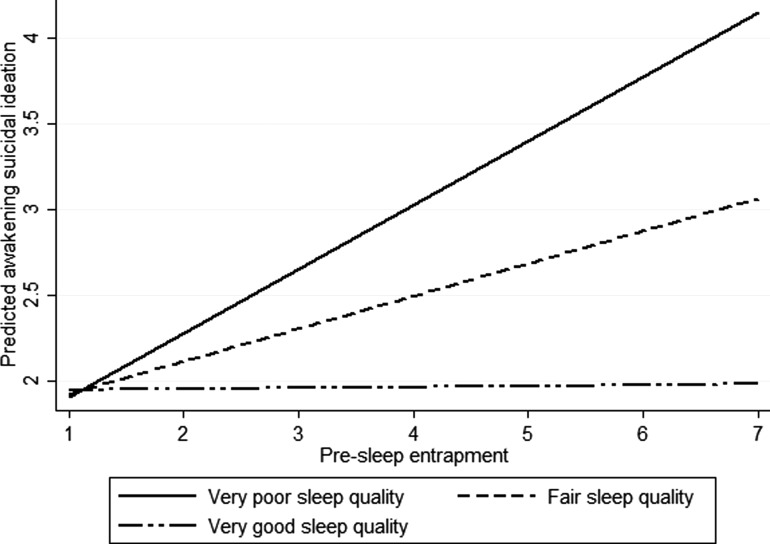
Background: Sleep problems are a modifiable risk factor for suicidal thoughts and behaviors. Yet, sparse research has examined temporal relationships between sleep disturbance, suicidal ideation, and psychological factors implicated in suicide, such as entrapment. This is the first in-the-moment investigation of relationships between suicidal ideation, objective and subjective sleep parameters, and perceptions of entrapment. Methods: Fifty-one participants with current suicidal ideation completed week-long ecological momentary assessments. An actigraph watch was worn for the duration of the study, which monitored total sleep time, sleep efficiency, and sleep latency. Daily sleep diaries captured subjective ratings of the same sleep parameters, with the addition of sleep quality. Suicidal ideation and entrapment were measured at six quasi-random time points each day. Multi-level random intercept models and moderation analyses were conducted to examine the links between sleep, entrapment, and suicidal ideation, adjusting for anxiety and depression severity. Results: Analyses revealed a unidirectional relationship whereby short sleep duration (both objective and subjective measures), and poor sleep quality, predicted the higher severity of next-day suicidal ideation. However, there was no significant association between daytime suicidal ideation and sleep the following night. Sleep quality moderated the relationship between pre-sleep entrapment and awakening levels of suicidal ideation. Conclusions: This is the first study to report night-to-day relationships between sleep disturbance, suicidal ideation, and entrapment. Findings suggest that sleep quality may alter the strength of the relationship between pre-sleep entrapment and awakening suicidal ideation. Clinically, results underscore the importance of assessing and treating sleep disturbance when working with those experiencing suicidal ideation.
Overview
The claims and statistics of this paper haven’t been checked yet.
Free: it reads the open-access text and checks the first 5 claims that cite a source we can check. Create a free account to check every claim.
Integrity signals
Registry
Cites
Statistics
Figures
Verification
Claims the paper makes
The claims and statistics of this paper haven’t been checked yet.
Free: it reads the open-access text and checks the first 5 claims that cite a source we can check. Create a free account to check every claim.
Claims other papers make about this one
Each is checked against this paper’s own text: does it say what the citing paper says it does?
The source backs part of the claim, not all of it — or backs it for a different population, condition or comparison.
In the citing paper
“Between days, short sleep duration (both objective and subjective), poor subjective sleep quality and increased sleep latency (i.e., time to fall asleep) predicted (mean) next-day suicidal ideation (51, 74).”
From Don't Miss the Moment: A Systematic Review of Ecological Momentary Assessment in Suicide Research (2022) · cites this paper as [51]
Experimental — accuracy not yet measuredThe source backs part of the claim, not all of it — or backs it for a different population, condition or comparison.
In the citing paper
“The remaining five articles investigated the association of depressive symptoms with sleep/wake cycles [32,33,36] and physical activity [37,38] using actimetry sensors.”
From Current state and future directions of technology-based ecological momentary assessment and intervention for major depressive disorder: a systematic review (2019) · cites this paper as [33]
Experimental — accuracy not yet measuredThe cited source says what the claim attributes to it.
In the citing paper
“It is therefore noteworthy that in addition to demonstrating temporal precedence in the relation between sleep disturbance and STBs, a few studies have found evidence that this association is unidirectional; not only does sleep temporally predict STBs, at least in the case of suicidal ideation, but suicidal ideation, in turn, does not predict subsequent sleep behavior (Littlewood et al., 2019;”
From Sleep and suicide: A systematic review and meta-analysis of longitudinal studies (2020) · cites this paper as Littlewood et al., 2019
The cited source says what the claim attributes to it.
In the citing paper
“In contrast, another study that used actigraphy, sleep diaries, and EMA found that shorter sleep and poor sleep quality predicted greater SI on the following day, although the reverse was not found (34).”
From New methods for assessing rapid changes in suicide risk (2021) · cites this paper as [34]
The cited source says what the claim attributes to it.
In the citing paper
“(pseudo)random sampling schedules were most frequently used [57%, n = 13 (42, 47, 51, 58, 61, 65, 69, 71, 79, 83, 85, 86, 88)], followed by fixed sampling [26%, n = 6 (45, 66, 67, 72, 80, 82)], and protocols that combined both fixed and (pseudo)random sampling [13%, n = 3 (47, 56, 60)].”
From Don't Miss the Moment: A Systematic Review of Ecological Momentary Assessment in Suicide Research (2022) · cites this paper as [51]
3 more claims about this paper
Create a free account to see every claim other papers make about this one.
Self-check
Percentages, sums and reported differences re-computed from the paper’s own numbers.
The self-check needs the paper’s full text.
Citations
Cites
The Pittsburgh Sleep Quality Index: a new instrument for psychiatric practice and research
Buysse, D. J., Reynolds, C. F., Monk, T. H., Berman, S. R., & Kupfer, D. J. (1989) · Psychiatry Research · doi:10.1016/0165-1781(89)90047-4 · Cited by 35,234
Risk factors for suicidal thoughts and behaviors: A meta-analysis of 50 years of research
Franklin, J. C., Ribeiro, J. D., Fox, K. R., Bentley, K. H., Kleiman, E. M., Huang, X., Musacchio, K. M., Jaroszewski, A. C., Chang, B. P., & Nock, M. K. (2017) · Psychological Bulletin · doi:10.1037/bul0000084 · Cited by 3,784
Suicide as an outcome for mental disorders: A meta-analysis
Harris, E. C., & Barraclough, B. (1997) · British Journal of Psychiatry · doi:10.1192/bjp.170.3.205 · Cited by 2,589 · cited 2×
“Measures of depression and anxiety were included as possible confounding variables, given their strong inter-relationships with sleep disturbance and suicidal ideation (Harris & Barraclough, 1997; Tsuno et al. 2005).”
BackgroundThe consensus sleep diary: standardizing prospective sleep self-monitoring
Carney, C. E., Buysse, D. J., Ancoli-Israel, S., Edinger, J. D., Krystal, A. D., Lichstein, K. L., & Morin, C. M. (2012) · Sleep · doi:10.5665/sleep.1642 · Cited by 2,172
Sleep function and synaptic homeostasis
Tononi, G., & Cirelli, C. (2006) · Sleep Medicine Reviews · doi:10.1016/j.smrv.2005.05.002 · Cited by 2,151 · cited 1×
“SWS is thought to serve a restorative function, re-establishing synaptic homeostasis (Tononi & Cirelli, 2006); while insufficient SWS is associated with deficits in cognitive functioning (Lowe et al. 2017).”
BackgroundRisks of all-cause and suicide mortality in mental disorders: a meta-review
Chesney, E., Goodwin, G. M., & Fazel, S. (2014) · World Psychiatry · doi:10.1002/wps.20128 · Cited by 2,115 · cited 2×
“Sleep disturbance (Sivertsen et al. 2009) and suicidal thoughts (Chesney et al. 2014) are commonly reported by people with diagnoses of different types of mental health problems.”
BackgroundLöwe, B., Kroenke, K., Herzog, W., & Gräfe, K. (2004) · Journal of Affective Disorders · doi:10.1016/s0165-0327(03)00198-8 · Cited by 1,558
Recommendations for a standard research assessment of insomnia
Buysse, D. J., Ancoli-Israel, S., Edinger, J. D., Lichstein, K. L., & Morin, C. M. (2006) · Sleep · doi:10.1093/sleep/29.9.1155 · Cited by 1,206
Tsuno, N., Besset, A., & Ritchie, K. (2005) · The Journal of Clinical Psychiatry · doi:10.4088/jcp.v66n1008 · Cited by 1,084
The Experience Sampling Method
Larson, R., & Csikszentmihalyi, M. (2014) · Flow and the Foundations of Positive Psychology · doi:10.1007/978-94-017-9088-8_2 · Cited by 1,034 · cited 2×
“Surprisingly, this is a key departure from previous EMA protocols, which tend to follow seminal guidance by Larson & Csikszentmihalyi (1983) by standardizing the sampling schedules from 8:00 to 22:00 (e.g. Ben-Zeev et al. 2012).”
BackgroundMethod
Research works printed but not linked: 3
- Snijders T and Bosker R (1999) Multilevel Analysis: An Introduction to Basic and Applied Multilevel Analysis. London: Sage.
- First M, (1997) Structured Clinical Interview for DSM-IV Clinical Version (SCID-I/CV). Washington, DC: American Psychiatric Press.
- Beck AT, Steer RA and Brown GK (1996) Manual for the Beck Depression Inventory, 2nd edn., San Antionio, Tx: Psychological Corporation.
Cited by
Items 101–200 of 209
Zhong, Y., He, J., Luo, J., Zhao, J., Cen, Y., Wu, Y., Song, Y., Lin, C., Pan, L., & Luo, J. (2024) · Frontiers in Psychiatry · doi:10.3389/fpsyt.2024.1301221 · Cited by 9
Klumpp, H., Chang, F., Bauer, B. W., & Burgess, H. J. (2023) · Brain Sciences · doi:10.3390/brainsci13020288 · Cited by 8
“Yet, actigraphy-based sleep efficiency and sleep onset latency did not predict SI (WASO was not examined) [57].”
BackgroundZheng, D., Qin, Q., Peng, Y., Zhong, H., Huang, Y., Wang, H., Tan, Q., & Li, Y. (2024) · Frontiers in Public Health · doi:10.3389/fpubh.2024.1406396 · Cited by 8
Kinkel‐Ram, S. S., Grunewald, W., Bodell, L. P., & Smith, A. R. (2021) · Psychological Medicine · doi:10.1017/s003329172100310x · Cited by 8
“As shorter sleep duration and poor sleep quality on one day predict increased suicidal ideation the next day (Littlewood et al., 2018), it is possible that for each individual, sleep more so influences suicidal ideation from day-to-day rather than weekly.”
BackgroundA Real-Time Evaluation of Within-Person and Between-Person Risk for Suicidal Behaviors
Rogers, M. L. (2023) · International Journal of Cognitive Therapy · doi:10.1007/s41811-023-00174-0 · Cited by 9
“…distance to suicide methods (Betz et al., 2016; Rogers et al., 2019), agitation (Busch et al., 2003; Rogers et al., 2016), sleep quality (Littlewood et al., 2019; Pigeon et al., 2012), and life event stress (Chu et al., 2022; Fjeldsted et al., 2016) were specifically selected on a…”
The role of pre-sleep arousal in the connection between insomnia and suicide risk
Grove, J. L., Carlson, S. E., Parkhurst, K. A., & Smith, T. W. (2021) · Death Studies · doi:10.1080/07481187.2021.1964109 · Cited by 7
“Those who frequently experience daytime suicidal thoughts may also have suicidal thoughts prior to bedtime (see Littlewood et al., 2019), and the middle of the night may be a particularly risky period for the emergence of suicidal thoughts and behaviors (Perlis et al., 2016).”
BackgroundInfluentialMurthy, R. S. (2018) · Asian Journal of Psychiatry · doi:10.1016/j.ajp.2018.11.007 · Cited by 9
Brown, L. A., Zhu, Y., Feler, B., Kautz, M. M., Taylor, D. J., Pruiksma, K. E., Baker, J. C., Young, J., Khazem, L. R., Bryan, C. J., et al. (2024) · Journal of Psychiatric Research · doi:10.1016/j.jpsychires.2024.08.040 · Cited by 8
Pizzoli, S. F. M., Monzani, D., Conti, L., Ferraris, G., Grasso, R., & Pravettoni, G. (2023) · Frontiers in Psychology · doi:10.3389/fpsyg.2023.1103703 · Cited by 11
“In particular, the analysis of the sleep cycles in high-risk suicidal populations seems crucial since poor quality of sleep was found to be related to SI (Littlewood et al., 2019).”
BackgroundSalmi, S., Mérelle, S. Y. M., Gilissen, R., van der Mei, R., & Bhulai, S. (2024) · JMIR Mental Health · doi:10.2196/57362 · Cited by 6
“…Suicidal ideation [23] I can’t take my pain anymore Unbearable psychache [24] I feel hopeless Hopelessness [25] I feel that I have given up Defeat [26] I feel trapped Entrapment [24] I am a burden to others Perceived burdensomeness [27] I feel like I do not belong Thwarted belongingness [24] I…”
BackgroundTian, M., Lin, L., Liu, Y., Qiu, S., Yang, Y., & Xu, Z. (2024) · Current Psychology · doi:10.1007/s12144-024-06574-5 · Cited by 7
“Substantial empirical evidence has also shown that poorer sleep quality leads to a higher level of suicidal ideation (Littlewood et al., 2019; Wu et al., 2022).”
Ma, Y., Zheng, Z.-A., Yao, Z.-Y., Xu, X., Zhou, X.-Y., Kou, C., Yao, B., Sun, W., Li, R., Xiao-jie, G., et al. (2025) · Journal of Affective Disorders · doi:10.1016/j.jad.2025.01.049 · Cited by 8
Kim, H., Park, S., Kim, Y., Kwon, S., & Kim, H. (2022) · Journal of Advanced Nursing · doi:10.1111/jan.15142 · Cited by 6
“Several studies have used the EMA method to examine fluctuations in emotions to predict suicidal ideation and behaviours among psychiatric patients (Ben-Zeev et al., 2017; Porras-Segovia et al., 2020), adolescents (Czyz et al., 2018; Glenn et al., 2020) and adults (Littlewood et al., 2018).”
InfluentialKyron, M. J., Hooke, G. R., Bryan, C. J., Kiekens, G., Chen, W., Hasking, P. A., & Page, A. C. (2023) · Journal of Consulting and Clinical Psychology · doi:10.1037/ccp0000812 · Cited by 9
Buitron, V., Maron, M. M., Kudinova, A. Y., Thompson, E., Barker, D., & Wolff, J. C. (2023) · Journal of Clinical Psychology · doi:10.1002/jclp.23558 · Cited by 7
Psychological resilience to suicidal experiences
Gooding, P. A., & Harris, K. (2020) · Elsevier eBooks · doi:10.1016/b978-0-12-814297-4.00010-8 · Cited by 9
Self-citationLee, S. S., Yu, K., Choi, E., & Choi, I. (2021) · Applied Psychology Health and Well-Being · doi:10.1111/aphw.12319 · Cited by 9
Bozzay, M. L., Wallace, G. T., & Rogers, M. L. (2024) · Journal of Psychiatric Research · doi:10.1016/j.jpsychires.2024.11.066 · Cited by 6
Hendley, T., Gerner, J. L., Bolner, J., Moscardini, E. H., Tucker, R. P., & Hill, R. M. (2025) · Journal of Psychopathology and Behavioral Assessment · doi:10.1007/s10862-025-10214-y · Cited by 6
Emerging evidence for sleep instability as a risk mechanism for nonsuicidal self-injury
Tubbs, A. S., Fernandez, F., Grandner, M. A., & Perlis, M. L. (2022) · SLEEP · doi:10.1093/sleep/zsac095 · Cited by 5
Text mining methods for the characterisation of suicidal thoughts and behaviour
Sedano-Capdevila, A., Toledo-Acosta, M., Barrigón, M. L., Morales-Gonzalez, E., Torres-Moreno, D., Martínez-Zaldivar, B., Hermosillo, J., Baca‐García, E., Aroca, F., Artés-Rodríguez, A., et al. (2023) · Psychiatry Research · doi:10.1016/j.psychres.2023.115090 · Cited by 5
Barlett, C. P. (2023) · Sleep Health · doi:10.1016/j.sleh.2023.08.022 · Cited by 4
Yang, Q., Xie, R., Wang, D., Li, J., Zhang, R., Li, W., & Ding, W. (2024) · Suicide and Life-Threatening Behavior · doi:10.1111/sltb.13046 · Cited by 6
Pizzoli, S. F. M., Durosini, I., Strika, M., & Pravettoni, G. (2024) · Elsevier eBooks · doi:10.1016/b978-0-443-13671-9.00008-9 · Cited by 7
Daily sleepiness magnifies the relation between same-day passive and active suicide ideation
Porter, A. C., & Bishop, T. M. (2024) · Journal of Psychiatric Research · doi:10.1016/j.jpsychires.2024.04.034 · Cited by 5
Huang, C., Yang, Y., Lu, C., Qin, P., Jiang, W., Ma, J., & Guo, L. (2024) · Social Psychiatry and Psychiatric Epidemiology · doi:10.1007/s00127-024-02712-3 · Cited by 6
“Future research should focus on developing intervention strategies to improve adherence to these recommendations. independently linked to increased anxiety [26], depression [26], and suicidality [54 ].”
Allergic Disease, Short Sleep Duration, and Suicidal Ideation and Plans Among Korean Adolescents
Kim, J., & Seo, Y. (2020) · The Journal of School Nursing · doi:10.1177/1059840520921920 · Cited by 5
“…in childhood and involve chronic progression, middle school–aged and high school–aged adolescents experience negative impacts on overall quality of life including physiological and psychological health in the form of sleep disorders and suicidality (Littlewood et al., 2019; Steinberg et al., 2015).”
BackgroundDewa, L. H., Pappa, S., Greene, T., Cooke, J., Mitchell, L., Hadley, M., Simplicio, M. C. D., Woodcock, T., & Aylin, P. P. (2022) · JMIR Research Protocols · doi:10.2196/33817 · Cited by 7
“Of the 41 included studies, only 1 measured insomnia as a predictor of suicidal ideation in real time (over a 24-hour period) in the United Kingdom [11].”
BackgroundInfluentialSleep, event appraisal, and affect: An ecological momentary assessment study
Song, J., Jeronimus, B. F., & Fisher, A. J. (2024) · Journal of Affective Disorders · doi:10.1016/j.jad.2024.06.034 · Cited by 4
Tubbs, A. S., Perlis, M. L., Killgore, W. D. S., Karp, J. F., Grandner, M. A., & Fernandez, F. (2024) · Journal of Affective Disorders · doi:10.1016/j.jad.2024.06.101 · Cited by 4
Loose, T., Perret, L. C., Choi, M., Geoffroy, M., Chon, D., Kim, J., & Ki, M. (2025) · Journal of Adolescent Health · doi:10.1016/j.jadohealth.2025.05.014 · Cited by 5
Suicidality in Autistic Adolescents and Adults: Sleep the Unexplored Connection?
Richdale, A. L., Morris, E. M. J., & Lawson, L. P. (2025) · Autism Research · doi:10.1002/aur.3306 · Cited by 5
“…et al. 2022), poor sleep quality (Cox et al. 2023; Harris et al. 2020; Littlewood et al. 2019; Shepard et al. 2023 et al. 2021; Karin et al. 2021; Littlewood et al. 2019) and long TST (Dolsen et al. 2021), dysfunctional beliefs about sleep (McCall et al. 2013), and daytime sleepiness (Shepard…”
Ecological Momentary Assessment Tools: Lessons Learned from an HCI Perspective
Crovari, P., Catania, F., Spitale, M., & Garzotto, F. (2020) · Lecture notes in computer science · doi:10.1007/978-3-030-49059-1_28 · Cited by 4
Hoyniak, C. P., Whalen, D. J., Hennefield, L., Tillman, R., Barch, D. M., & Luby, J. L. (2023) · Journal of Psychopathology and Clinical Science · doi:10.1037/abn0000787 · Cited by 5
“Although our findings are the first to demonstrate such prospective associations with suicidal thoughts for early childhood sleep problems, our findings correspond with research with adolescents and adults highlighting the potential of sleep disturbances to predict and precede suicidal thoughts (Littlewood et al., 201…”
BackgroundResultInfluentialZhu, Y., Rodebaugh, T. L., Narine, K., & Brown, L. A. (2022) · Journal for Person-Oriented Research · doi:10.17505/jpor.2022.24856 · Cited by 7
“Most prior research on daily changes in SI examined group-level effects (e.g., Husky et al., 2017; Littlewood et al., 2019).”
MethodSpadola, C., Groton, D. B., Cosenzo, L. G., Fantus, S., Hilditch, C. J., Burke, S. L., Littlewood, K., Bertisch, S. M., & Zhou, E. S. (2023) · Journal of Human Behavior in the Social Environment · doi:10.1080/10911359.2023.2204125 · Cited by 5
“These data, coupled with the known associations between sleep health and mental health (Alvaro et al., 2013; Bernert et al., 2015; Johnson & Breslau, 2001; Littlewood et al., 2019) highlight the need to further target sleep health among this population.”
BackgroundMethodGrützmann (2022) · doi:10.1016/j.bpsgos.2021.07.003 · Cited by 3
“This connection with next-day suicidal ideation (NDSI) is supported by self-report measures (6) as well as by actigraphy-defined nocturnal wakefulness associations (7).”
Pawley, M., Morales‐Muñoz, I., Bagshaw, A. P., & Tang, N. K. Y. (2025) · SLEEP Advances · doi:10.1093/sleepadvances/zpaf062 · Cited by 4
“Therefore, research has strived to identify modifiable risk factors that contribute to attempting suicide to address the high rates of suicide in adolescents, with sleep emerging as a key influencer [17].”
Lee, S., & Park, J. H. (2019) · Family and environment research · doi:10.6115/fer.2019.020 · Cited by 4
Proximal Risk for Suicide: Protocol for an Ecological Momentary Assessment Study
Sharma, P., Peck, R., Sinicrope, A. R., Pavey, T., & Muehlenkamp, J. J. (2022) · JMIR Research Protocols · doi:10.2196/37583 · Cited by 3
Yook, V., Choi, Y.-H., Gu, M. J., Lee, D., Won, H., Woo, S., Lee, D. H., & Jeon, H. J. (2022) · Comprehensive Psychiatry · doi:10.1016/j.comppsych.2022.152360 · Cited by 3
Hoyniak, C. P., Donohue, M. R., Tillman, R., Thompson, R. J., Going, B., Barch, D. M., & Luby, J. L. (2025) · Research on Child and Adolescent Psychopathology · doi:10.1007/s10802-025-01326-w · Cited by 3
“However, mounting evidence suggests that sleep disturbances are an acute predictor of risk for SITBs (Glenn et al., 2021 ; Littlewood et al., 2019 ; Zuromski et al., 2017).”
Oh, J.-H., Yoo, J. R., Ko, S. Y., Kang, J. H., Lee, S. K., Jeong, W., Seong, G. M., Lee, H. J., & Song, S. W. (2020) · Safety and Health at Work · doi:10.1016/j.shaw.2020.10.004 · Cited by 4
Kudinova, A. Y., Brick, L. A. D., Barthelemy, C. M., MacPherson, H. A., Jenkins, G. A., DeYoung, L. L. A., Gilbert, A. C., Radoeva, P. D., Kim, K., Armey, M. F., et al. (2022) · Cognition & Emotion · doi:10.1080/02699931.2022.2029359 · Cited by 5
“This approach helps reduce the recall bias embedded in self-report assessments by decreasing the time between the occurrence and assessment of a given affective experience and allows to capture the course of the affective experience through repeated sampling (Littlewood et al., 2019; Moskowitz & Young, 2006).”
BackgroundInfluentialIs there a role for sleep medicine in suicide prevention?
Littlewood, D. L., & Russell, K. (2019) · Sleep Medicine · doi:10.1016/j.sleep.2019.08.005 · Cited by 4
“First, poor sleep quality and short sleep duration were found to predict increased severity of next-day suicidal ideation [8].”
BackgroundSelf-citationInferring sleep disturbance from text messages of suicide attempt survivors: A pilot study
Ladis, I., Valladares, T. L., Coppersmith, D. D. L., Glenn, J. J., Nobles, A. L., Barnes, L. E., & Teachman, B. A. (2022) · Suicide and Life-Threatening Behavior · doi:10.1111/sltb.12920 · Cited by 2
Mournet, A. M., Ruork, A. K., Kleiman, E. M., & Rizvi, S. L. (2025) · Psychiatry Research Case Reports · doi:10.1016/j.psycr.2025.100244 · Cited by 4
Bozzay, M. L., Armey, M. F., Brick, L. A. D., Nugent, N. R., Huang, J. J. S., Goldschmidt, A. B., Schatten, H. T., Primack, J. M., & Saletin, J. (2025) · SLEEP Advances · doi:10.1093/sleepadvances/zpaf008 · Cited by 2
Brown, L. A., Lynch, K. G., Gehrman, P., Mayinja, L. S., Farabaugh, D. T., & Bredemeier, K. (2025) · Suicide and Life-Threatening Behavior · doi:10.1111/sltb.70011 · Cited by 3
Nikolaidis-Konstas, A., Mournet, A. M., Pachankis, J. E., Kleiman, E. M., & Clark, K. A. (2025) · Journal of Affective Disorders · doi:10.1016/j.jad.2025.119951 · Cited by 2
“One 7-day EMA study of adults who experienced SI found that, after controlling for baseline depression and anxiety, longer sleep duration and better sleep quality were associated with lower next-day SI intensity (Littlewood et al., 2019).”
Lin, T., Wiley, J. F., Zhu, Y., Tang, M., Taylor, D. J., Pruiksma, K. E., Feler, B., Kautz, M. M., Baker, J. C., Khazem, L. R., et al. (2026) · Journal of Affective Disorders · doi:10.1016/j.jad.2026.121692 · Cited by 3
Bourke, M., Sippel, F., & Fortnum, K. (2026) · Journal of Psychiatric Research · doi:10.1016/j.jpsychires.2026.04.033 · Cited by 2
Risk factors for suicidal ideation in a chronic illness
Elliott, M. K., & Jason, L. A. (2022) · Death Studies · doi:10.1080/07481187.2022.2132551 · Cited by 4
“Likewise, in a cohort of people already experiencing suicidal ideation, short sleep duration and poor sleep quality predicted more severe suicidal ideation the next day (Littlewood et al., 2019).”
BackgroundWalton, T. O., Graupensperger, S. A., Walker, D. D., & Kaysen, D. L. (2024) · Alcoholism Clinical and Experimental Research · doi:10.1111/acer.15313 · Cited by 2
Simmons, Z., Baldwin, S. A., Jones, J., Davis, E., Sherriff, D., Jube, E., Wright, A., Cruickshank, J., Cheney, E., Mills, A. J., et al. (2024) · Research Directions Sleep Psychology · doi:10.1017/slp.2024.2 · Cited by 3
The interaction between suicidal ideation, insomnia symptoms, and student status
Stevenson, J. C., Irvine, K., Allen, S. F., & Akram, U. (2021) · Experimental Results · doi:10.1017/exp.2021.25 · Cited by 2
“…in students (Russell et al., 2019) and the general population (Harris et al., 2020; Liu et al., 2020) found insomnia to be consistently associated with an increased risk of future suicidal thoughts and behaviors (Bernert et al., 2017; Hom et al., 2019; Littlewood et al., 2019; Shi et al., 2021).”
BackgroundVictor, S. E., Christensen, K., Johnson, S. L., Allen, J. V., & Brick, L. A. D. (2022) · JMIR Research Protocols · doi:10.2196/38582 · Cited by 3
“To our knowledge, only 2 studies have examined prospective associations between actigraphy-assessed sleep and subsequent SI: Littlewood et al [79] found that short sleep duration predicted within-person changes in SI across days, and Bernert et al [80] found that variability in sleep duration predicted later SI above…”
BackgroundHolman, S., Steinberg, R. J., Schaffer, A., Fıksenbaum, L., & Sinyor, M. (2022) · Psychiatry Research · doi:10.1016/j.psychres.2022.114998 · Cited by 3
“Other factors, such engaging in physical activity, meditation, and sleep duration and quality, may be protective against experiencing suicidal ideation (Littlewood et al., 2019; Vancampfort et al., 2018; Wu et al., 2021).”
BackgroundEhlers, C. L., Karriker‐Jaffe, K. J., & Bernert, R. A. (2023) · SLEEP Advances · doi:10.1093/sleepadvances/zpad024 · Cited by 2
Matsumoto, Y., Uchimura, N., Ishitake, T., Itani, O., & Otsuka, Y. (2022) · Sleep and Biological Rhythms · doi:10.1007/s41105-022-00404-6 · Cited by 1
“used the total score of the depression scale after excluding the scores for sleep and suicidal ideation as confounding factors when examining the relationship between sleep and suicidal ideation [29].”
MethodSleep longer, think sharper: extra sleep offsets poor sleep quality in young-old adults
Cho, K., & Lee, S. (2025) · The Journals of Gerontology Series B · doi:10.1093/geronb/gbaf132 · Cited by 1
“Although both distinctively and jointly influence physical and mental well-being (Littlewood et al., 2019; Seow et al., 2020), their combined effects on daily cognitive difficulties, particularly cognitive interference and memory lapses, remain underexplored.”
Examining Sources of Daily Stress and Their Short‐Term Effects on Suicidal Adolescents
Novotny, L. J., Shin, K. E., Lawrence, O. C., Goger, P., Zanatti, R., & Christine, B. W. (2025) · Suicide and Life-Threatening Behavior · doi:10.1111/sltb.70038 · Cited by 2
Sakata, A., Yanagida, A., & Kumano, H. (2025) · Cognitive Therapy and Research · doi:10.1007/s10608-025-10701-2 · Cited by 1
Ahmadabadi, Z. K., Kianimoghadam, A. S., & Piryaee, S. (2025) · international journal high risk behaviors & addiction · doi:10.5812/ijhrba-163680 · Cited by 1
Spangenberg, L., Spahn, C., Serebriakova, J., Forkmann, T., & Glaesmer, H. (2026) · Frontiers in Psychiatry · doi:10.3389/fpsyt.2026.1744947 · Cited by 1
“EMA studies have indeed proven to provide insights in the temporal dynamics of suicidal thoughts (5, 6) and its short-term predictors such as interpersonal variables (7), sleep (8, 9) or affective states (10).”
Šutić, L., & Novak, M. (2023) · Youth · doi:10.3390/youth3040072 · Cited by 1
“Daily life methods and intensive longitudinal designs may include diverse ways of collecting data, such as the following: palmtop computers [21,22], heart rate monitors, wrist accelerometers [23], actigraphy watches [24], and even interviews via phone calls [25,26].”
MethodLi, D., Ma, L., & Feng, Y. (2025) · European Archives of Psychiatry and Clinical Neuroscience · doi:10.1007/s00406-025-01997-y · Cited by 3
Understanding Latine disparities in nocturnal wakefulness as a suicide risk factor
Fernandez, F., Tubbs, A. S., Perlis, M. L., & Grandner, M. A. (2025) · Sleep Epidemiology · doi:10.1016/j.sleepe.2025.100117 · Cited by 1
Tegethoff, J.-L., Korwisi, B., Kähler, J., Barke, A., Forkmann, T., & Höller, I. (2026) · Suicide and Life-Threatening Behavior · doi:10.1111/sltb.70083 · Cited by 1
“…et al. 2019; Wetherall et al. 2019; Zortea et al. 2020), positive self-appraisals (Tegethoff et al. 2023), positive future thinking (Pollak et al. 2021; Rasmussen et al. 2010), sleep duration and quality (Littlewood et al. 2019), meaning in life or reasons for living (Moscardini et al. 2022).”
La psychiatrie connectée, une psychiatrie augmentée ?
Stern, É., Micoulaud‐Franchi, J., & Geoffroy, P. A. (2022) · Annales Médico-psychologiques revue psychiatrique · doi:10.1016/j.amp.2022.07.014 · Cited by 3
Colombo, D. (2020) · Tesis Doctorals en Xarxa (Consorci de Serveis Universitaris de Catalunya) · doi:10.6035/14109.2020.762821 · Cited by 1
Advances in Research on Adolescent Suicide and a High Priority Agenda for Future ResearchPreprint
Clayton, M. G., Pollak, O. H., Owens, S., Miller, A. B., & Prinstein, M. J. (2021) · PsyArXiv (OSF Preprints) · doi:10.31234/osf.io/jqs5u · Cited by 1
Fifield, K., Blackford, K., Snaith, B., Simblett, S. K., & Tye, C. (2025) · Research Square · doi:10.21203/rs.3.rs-5826894/v1 · Cited by 1
The effects of sleep on neurobehavioral outcomes
Juelich, J., Lindseth, G. N., & Petros, T. V. (2019) · Archives of Psychiatric Nursing · doi:10.1016/j.apnu.2019.08.005
Timková, V. (2020) · University of Groningen research database (University of Groningen / Centre for Information Technology) · doi:10.33612/diss.136425533
Han, F., Feng, L., Cao, K., Li, H., & Gao, Y. (2021) · Research Square · doi:10.21203/rs.3.rs-637513/v1
Using Implicit and Explicit Measures to Predict Suicidal Behavior Among Adolescents
Tezanos, K. M., Bell, K., & Cha, C. B. (2021) · Springer eBooks · doi:10.1007/978-3-030-82465-5_10 · Cited by 2
Cao, W., Cen, R., & Chen, Y. (2022) · Research Square · doi:10.21203/rs.3.rs-1280104/v1
Sport und gesunder Lebensstil im Kindes- und Jugendalter
Kothgassner, O. D., & Plener, P. L. (2022) · Springer Reference Medizin · doi:10.1007/978-3-662-49289-5_77-1
Srivastava, M., Khanduri, R. S., -, S. A., & -, A. G. (2023) · International Journal For Multidisciplinary Research · doi:10.36948/ijfmr.2023.v05i05.6323
“Short sleep duration and poor quality of sleep have been found to be of high risk for causing next-day suicidal ideation.(29) Mindful breathing came out as an effective technique of selfawareness that aids in reducing suicidal ideation.”
BackgroundSport und gesunder Lebensstil im Kindes- und Jugendalter
Kothgassner, O. D., & Plener, P. L. (2024) · Springer Reference Medizin · doi:10.1007/978-3-662-66744-6_77
Sleep quality and its associated factors among university students in MalawiPreprint
Mzumara, T., Banda, O. K., Munthali, G. N. C., Banda, L. O. L., Saka, A., Kamata, C., Nambala, C., Mbughi, M., Lubanga, A. F., & Mwakilama, E. P. (2024) · Research Square · doi:10.21203/rs.3.rs-5401765/v1
Feedback in the Treatment of Suicidality
Page, A. C., Kyron, M. J., & Hooke, G. R. (2025) · CBT: science into practice · doi:10.1007/978-3-031-90428-8_9
Exploring Sleep Quality as a Modifiable Risk Factor for Suicidal Ideation among Young Students
Imran, M., Farooq, I., & Ahmad, N. (2025) · Pakistan BioMedical Journal · doi:10.54393/pbmj.v8i9.1296
Wang, B., Du, X., Zhu, T., Zhou, Z., Liu, X., & Ren, Z. (2025) · Research Square · doi:10.21203/rs.3.rs-7913789/v1
Additional file 1 of Post traumatic stress symptom variation associated with sleep characteristics
Biggs, Q. M., Ursano, R. J., Wang, J., Wynn, G. H., Carr, R. B., & Fullerton, C. S. (2020) · Figshare · doi:10.6084/m9.figshare.12143955
Arya, I., Paniyadi, N. K., Mahapatra, D., Jacob, J., & Rakesh, V. R. (2025) · Manipal Journal of Nursing and Health Sciences · doi:10.55889/2582-7979.1361
Rogers, E. N., Gresswell, D. M., Durrant, S. J., & Hancox, L. (2026) · Schizophrenia Bulletin Open · doi:10.1093/schizbullopen/sgag001
“…natural environments) to sample daily variability have shown decreased sleep duration and quality predicted next day suicidal ideation, but not efficiency, 88 whereas a recent study indicated that sleep latency and WASO predicted next day passive and active suicidal ideation, but duration did not.”
Woodward, S. H., Ong, L. E., Villasenor, D., Arsenault, N. J., Pigeon, W. R., Khan, C. T., & Bernert, R. A. (2026) · Journal of Affective Disorders · doi:10.1016/j.jad.2026.121184
Knowlden, A. P., Flora, S. M., & Love, H. A. (2026) · Psychology Health & Medicine · doi:10.1080/13548506.2026.2625438
Kalauch, S., Liotta, L., Rhombola, C., Ortin‐Peralta, A., & Miranda, R. (2026) · Cognitive Therapy and Research · doi:10.1007/s10608-026-10714-5
Ryan, S. C., Sugg, M. M., Schwandt, V., Crespo, S., Lindzey, S., & Runkle, J. D. (2026) · PLOS mental health. · doi:10.1371/journal.pmen.0000501 · Cited by 1
“The increase in sleep difficulties during extreme minimum temperatures aligns with evidence linking sleep disruption to suicide risk [55] and demonstrates that public health responses focusing solely on daytime heat miss critical prevention opportunities.”
Ideação suicida entre professores da educação básica em Minas Gerais, Brasil
Barbosa, R. E. C., Santos, E. O., Fonseca, G. C., Silva, N. S. S. E., Silva, R. R. V., Sampaio, C. A., & Haikal, D. S. (2026) · Ciência & Saúde Coletiva · doi:10.1590/1413-81232026312.10402024
Lico, M. P., Manning, M. A., & Kozak, A. T. (2026) · Journal of American College Health · doi:10.1080/07448481.2026.2639451
Sleep Problems Alter Proximal Risk of Negative Self‐Perceptions on Suicide Risk
Muehlenkamp, J. J., O'Brien, C. M., Jacobucci, R., & Ammerman, B. A. (2026) · Suicide and Life-Threatening Behavior · doi:10.1111/sltb.70092
“These findings have also been replicated using smartwatch-based estimates of sleep quality (Cox et al. 2023; Littlewood et al. 2018).”
Oakey‐Frost, N., Moscardini, E. H., Rogers, M. L., & Muehlenkamp, J. J. (2026) · Suicide and Life-Threatening Behavior · doi:10.1111/sltb.70091 · Cited by 1
“Each of the within-person mean centered ob-jective sleep indices (i.e., TST, SOL, SE, and WASO) predicting same-day suicidal intent and NSSI frequency were entered into separate regression models to avoid multicollinearity (cf. Littlewood et al. 2019).”
Imran, M., John, A., Farooq, I., John, M., Rasool, J., Faridi, T. A., Khan, B., Taj, S., & Obeagu, E. I. (2026) · Sleep Science and Practice · doi:10.1186/s41606-026-00178-7
Salvatore, G. M., Bercovitz, I., Rivera, A. R., Benasi, G., Lapitan, E., Folk, A. L., Haggerty, K. R., Mogle, J. A., & Arigo, D. (2026) · Journal of Behavioral Medicine · doi:10.1007/s10865-026-00665-3
“PRO-2023-355; clinical trials assessment studies (Dockray et al., 2010; Littlewood et al., 2019; May et al., 2018).”
Ocampo-Ortega, R., & Cruz, G. G. (2026) · Salud Mental · doi:10.17711/sm.0185-3325.2026.09
Blacutt, M. E., Jacobucci, R., & Ammerman, B. A. (2026) · Journal of Affective Disorders · doi:10.1016/j.jad.2026.121975
Metadata
- Authors
- Littlewood, D. L., Kyle, S. D., Carter, L.-A., Peters, S., Pratt, D., & Gooding, P.
- Affiliations
- Manchester Academic Health Science Centre (GB)
- University of Oxford (GB)
- University of Manchester (GB)
- Corresponding author
- Littlewood, Donna L.
- ORCID
- Venue
- Psychological Medicine
- Publisher
- Cambridge University Press (CUP)
- Published
- 2018-04-26
- Volume
- 49
- Issue
- 3
- Pages
- 403-411
- ISSN
- 0033-2917 (ISSN-L)
- 1469-8978
- PMC
- PMC6331731
- OpenAlex
- W2790470671
- Cited by
- 209
- References
- 61
- Citations by year
- 2026: 26 · 2025: 26 · 2024: 26 · 2023: 26 · 2022: 31 · 2021: 28 · 2020: 30 · 2019: 14 · 2018: 2
- FWCI
- 21.70
- Type
- journal article
- Language
- en
- Open access
- hybrid
- doi.org
- Locations
- Psychological Medicine (publishedVersion, cc-by)
- Europe PMC (PubMed Central) (publishedVersion, cc-by)
- PubMed Central (publishedVersion, cc-by)
- PubMed (publishedVersion)
- Research Explorer (The University of Manchester) (submittedVersion, cc-by)
- Funders
- National Institute for Health and Care Research (DRF-2012-05-163)
- University of Manchester
- Medical Research Council
- Topics
- Social Sciences › Psychology › Clinical Psychology › Suicide and Self-Harm Studies
- Social Sciences › Psychology › Experimental and Cognitive Psychology › Sleep and related disorders
- Social Sciences › Psychology › Experimental and Cognitive Psychology › Mental Health Research Topics
- Keywords
- suicidal ideation, sleep duration, sleep quality, entrapment, sleep disorders, actigraphy, sleep efficiency, sleep latency, suicide risk factors, anxiety, depression
- MeSH terms
- Ecological Momentary Assessment, Adult, Female, Humans, Sleep Initiation and Maintenance Disorders, Male, Middle Aged, Surveys and Questionnaires, Risk Factors, Actigraphy, Suicidal Ideation
About these checks
Registry, retraction, Cites and statistics results are computed, not judged, with one exception: a printed reference that no index lists is read once by a model before it counts as a citation error. Claims are extracted by a model and kept only when their quote appears verbatim in the text; each cited source is then checked, with a model’s help, for whether it says what the claim relies on. Those verdicts can be wrong — read the claim’s quote and the cited source before relying on one.
Statistics and arithmetic are recomputed, not judged.
Confidence bands are shown only for fields calibrated on our annotated test set. None is calibrated yet, so no band is shown.
What counts as a claim ›How we measure confidence ›How we check this ›
Are you an author, or do you see a problem with this page? Request a review
Data sources
Bibliographic data: Semantic Scholar, OpenAlex, Crossref.
Contains information from the Semantic Scholar Academic Graph Datasets, made available under the ODC Attribution License (ODC-BY 1.0).
Semantic Scholar’s data is described in: Kinney, R., et al. (2023). The Semantic Scholar Open Data Platform. arXiv:2301.10140.
