

Short sleep duration and poor sleep quality predict next-day suicidal ideation: an ecological momentary assessment study
Open accessThe DOI matches its Crossref record; 59 of the 61 references it cites were found in a registry or an index.
Abstract
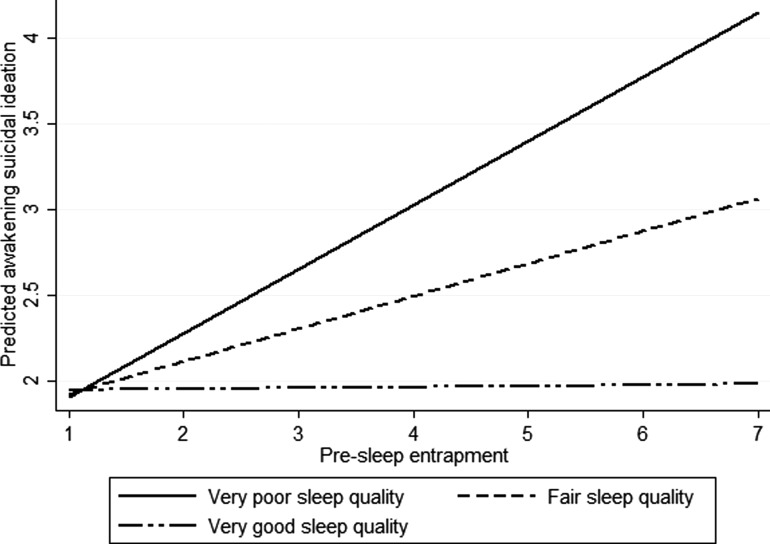
Background: Sleep problems are a modifiable risk factor for suicidal thoughts and behaviors. Yet, sparse research has examined temporal relationships between sleep disturbance, suicidal ideation, and psychological factors implicated in suicide, such as entrapment. This is the first in-the-moment investigation of relationships between suicidal ideation, objective and subjective sleep parameters, and perceptions of entrapment. Methods: Fifty-one participants with current suicidal ideation completed week-long ecological momentary assessments. An actigraph watch was worn for the duration of the study, which monitored total sleep time, sleep efficiency, and sleep latency. Daily sleep diaries captured subjective ratings of the same sleep parameters, with the addition of sleep quality. Suicidal ideation and entrapment were measured at six quasi-random time points each day. Multi-level random intercept models and moderation analyses were conducted to examine the links between sleep, entrapment, and suicidal ideation, adjusting for anxiety and depression severity. Results: Analyses revealed a unidirectional relationship whereby short sleep duration (both objective and subjective measures), and poor sleep quality, predicted the higher severity of next-day suicidal ideation. However, there was no significant association between daytime suicidal ideation and sleep the following night. Sleep quality moderated the relationship between pre-sleep entrapment and awakening levels of suicidal ideation. Conclusions: This is the first study to report night-to-day relationships between sleep disturbance, suicidal ideation, and entrapment. Findings suggest that sleep quality may alter the strength of the relationship between pre-sleep entrapment and awakening suicidal ideation. Clinically, results underscore the importance of assessing and treating sleep disturbance when working with those experiencing suicidal ideation.
Overview
The claims and statistics of this paper haven’t been checked yet.
Free: it reads the open-access text and checks the first 5 claims that cite a source we can check. Create a free account to check every claim.
Integrity signals
Registry
Cites
Statistics
Figures
Verification
Claims the paper makes
The claims and statistics of this paper haven’t been checked yet.
Free: it reads the open-access text and checks the first 5 claims that cite a source we can check. Create a free account to check every claim.
Claims other papers make about this one
Each is checked against this paper’s own text: does it say what the citing paper says it does?
The source backs part of the claim, not all of it — or backs it for a different population, condition or comparison.
In the citing paper
“Between days, short sleep duration (both objective and subjective), poor subjective sleep quality and increased sleep latency (i.e., time to fall asleep) predicted (mean) next-day suicidal ideation (51, 74).”
From Don't Miss the Moment: A Systematic Review of Ecological Momentary Assessment in Suicide Research (2022) · cites this paper as [51]
Experimental — accuracy not yet measuredThe source backs part of the claim, not all of it — or backs it for a different population, condition or comparison.
In the citing paper
“The remaining five articles investigated the association of depressive symptoms with sleep/wake cycles [32,33,36] and physical activity [37,38] using actimetry sensors.”
From Current state and future directions of technology-based ecological momentary assessment and intervention for major depressive disorder: a systematic review (2019) · cites this paper as [33]
Experimental — accuracy not yet measuredThe cited source says what the claim attributes to it.
In the citing paper
“It is therefore noteworthy that in addition to demonstrating temporal precedence in the relation between sleep disturbance and STBs, a few studies have found evidence that this association is unidirectional; not only does sleep temporally predict STBs, at least in the case of suicidal ideation, but suicidal ideation, in turn, does not predict subsequent sleep behavior (Littlewood et al., 2019;”
From Sleep and suicide: A systematic review and meta-analysis of longitudinal studies (2020) · cites this paper as Littlewood et al., 2019
The cited source says what the claim attributes to it.
In the citing paper
“In contrast, another study that used actigraphy, sleep diaries, and EMA found that shorter sleep and poor sleep quality predicted greater SI on the following day, although the reverse was not found (34).”
From New methods for assessing rapid changes in suicide risk (2021) · cites this paper as [34]
The cited source says what the claim attributes to it.
In the citing paper
“(pseudo)random sampling schedules were most frequently used [57%, n = 13 (42, 47, 51, 58, 61, 65, 69, 71, 79, 83, 85, 86, 88)], followed by fixed sampling [26%, n = 6 (45, 66, 67, 72, 80, 82)], and protocols that combined both fixed and (pseudo)random sampling [13%, n = 3 (47, 56, 60)].”
From Don't Miss the Moment: A Systematic Review of Ecological Momentary Assessment in Suicide Research (2022) · cites this paper as [51]
3 more claims about this paper
Create a free account to see every claim other papers make about this one.
Self-check
Percentages, sums and reported differences re-computed from the paper’s own numbers.
The self-check needs the paper’s full text.
Citations
Cites
The Pittsburgh Sleep Quality Index: a new instrument for psychiatric practice and research
Buysse, D. J., Reynolds, C. F., Monk, T. H., Berman, S. R., & Kupfer, D. J. (1989) · Psychiatry Research · doi:10.1016/0165-1781(89)90047-4 · Cited by 35,234
Risk factors for suicidal thoughts and behaviors: A meta-analysis of 50 years of research
Franklin, J. C., Ribeiro, J. D., Fox, K. R., Bentley, K. H., Kleiman, E. M., Huang, X., Musacchio, K. M., Jaroszewski, A. C., Chang, B. P., & Nock, M. K. (2017) · Psychological Bulletin · doi:10.1037/bul0000084 · Cited by 3,784
Suicide as an outcome for mental disorders: A meta-analysis
Harris, E. C., & Barraclough, B. (1997) · British Journal of Psychiatry · doi:10.1192/bjp.170.3.205 · Cited by 2,589 · cited 2×
“Measures of depression and anxiety were included as possible confounding variables, given their strong inter-relationships with sleep disturbance and suicidal ideation (Harris & Barraclough, 1997; Tsuno et al. 2005).”
BackgroundThe consensus sleep diary: standardizing prospective sleep self-monitoring
Carney, C. E., Buysse, D. J., Ancoli-Israel, S., Edinger, J. D., Krystal, A. D., Lichstein, K. L., & Morin, C. M. (2012) · Sleep · doi:10.5665/sleep.1642 · Cited by 2,172
Sleep function and synaptic homeostasis
Tononi, G., & Cirelli, C. (2006) · Sleep Medicine Reviews · doi:10.1016/j.smrv.2005.05.002 · Cited by 2,151 · cited 1×
“SWS is thought to serve a restorative function, re-establishing synaptic homeostasis (Tononi & Cirelli, 2006); while insufficient SWS is associated with deficits in cognitive functioning (Lowe et al. 2017).”
BackgroundRisks of all-cause and suicide mortality in mental disorders: a meta-review
Chesney, E., Goodwin, G. M., & Fazel, S. (2014) · World Psychiatry · doi:10.1002/wps.20128 · Cited by 2,115 · cited 2×
“Sleep disturbance (Sivertsen et al. 2009) and suicidal thoughts (Chesney et al. 2014) are commonly reported by people with diagnoses of different types of mental health problems.”
BackgroundLöwe, B., Kroenke, K., Herzog, W., & Gräfe, K. (2004) · Journal of Affective Disorders · doi:10.1016/s0165-0327(03)00198-8 · Cited by 1,558
Recommendations for a standard research assessment of insomnia
Buysse, D. J., Ancoli-Israel, S., Edinger, J. D., Lichstein, K. L., & Morin, C. M. (2006) · Sleep · doi:10.1093/sleep/29.9.1155 · Cited by 1,206
Tsuno, N., Besset, A., & Ritchie, K. (2005) · The Journal of Clinical Psychiatry · doi:10.4088/jcp.v66n1008 · Cited by 1,084
The Experience Sampling Method
Larson, R., & Csikszentmihalyi, M. (2014) · Flow and the Foundations of Positive Psychology · doi:10.1007/978-94-017-9088-8_2 · Cited by 1,034 · cited 2×
“Surprisingly, this is a key departure from previous EMA protocols, which tend to follow seminal guidance by Larson & Csikszentmihalyi (1983) by standardizing the sampling schedules from 8:00 to 22:00 (e.g. Ben-Zeev et al. 2012).”
BackgroundMethod
Research works printed but not linked: 3
- Snijders T and Bosker R (1999) Multilevel Analysis: An Introduction to Basic and Applied Multilevel Analysis. London: Sage.
- First M, (1997) Structured Clinical Interview for DSM-IV Clinical Version (SCID-I/CV). Washington, DC: American Psychiatric Press.
- Beck AT, Steer RA and Brown GK (1996) Manual for the Beck Depression Inventory, 2nd edn., San Antionio, Tx: Psychological Corporation.
Cited by
Sleep and suicide: A systematic review and meta-analysis of longitudinal studies
Liu, R. T., Steele, S. J., Hamilton, J. L., Do, Q. B. P., Furbish, K., Burke, T. A., Martinez, A. P., & Gerlus, N. (2020) · Clinical Psychology Review · doi:10.1016/j.cpr.2020.101895 · Cited by 239
“This resulted in additional data required for meta-analysis being obtained from the authors of three studies (Kivelä et al., 2019; Littlewood et al., 2019; Wang et al., 2019).”
BackgroundMethodHarris, L. M., Huang, X., Linthicum, K. P., Bryen, C. P., & Ribeiro, J. D. (2020) · Scientific Reports · doi:10.1038/s41598-020-70866-6 · Cited by 201
Colombo, D., Fernández-Álvarez, J., Patané, A., Semonella, M., Kwiatkowska, M., García-Palacios, A., Cipresso, P., Riva, G., & Botella, C. (2019) · Journal of Clinical Medicine · doi:10.3390/jcm8040465 · Cited by 194
“to collect both self-reports and sleep/wake cycles with an embedded actimetry sensor [33].”
BackgroundMethodInfluentialSleep problem, suicide and self-harm in university students: A systematic review
Russell, K., Allan, S., Beattie, L., Bohan, J., MacMahon, K., & Rasmussen, S. (2019) · Sleep Medicine Reviews · doi:10.1016/j.smrv.2018.12.008 · Cited by 168
“feelings of entrapment and suicidal ideation (78, 87).”
BackgroundDon't Miss the Moment: A Systematic Review of Ecological Momentary Assessment in Suicide Research
Kivelä, L., van der Does, W. A. J., Riese, H., & Antypa, N. (2022) · Frontiers in Digital Health · doi:10.3389/fdgth.2022.876595 · Cited by 163
Use of Ecological Momentary Assessment to Study Suicidal Thoughts and Behavior: a Systematic Review
Sedano-Capdevila, A., Porras-Segovia, A., Bello, H. J., Baca-García, E., & Barrigon, M. L. (2021) · Current Psychiatry Reports · doi:10.1007/s11920-021-01255-7 · Cited by 148
Coppersmith, D. D. L., Dempsey, W., Kleiman, E. M., Bentley, K. H., Murphy, S. A., & Nock, M. K. (2022) · Psychiatry · doi:10.1080/00332747.2022.2092828 · Cited by 124
“Preliminary real-time research on social, affective, and arousal mechanisms has shown promise for the prediction of suicidal thinking (Coppersmith et al., 2019; Gee et al., 2020; Kleiman & Nock, 2018; Littlewood et al., 2019; Mou et al., 2018).”
BackgroundGee, B. L., Han, J., Benassi, H. P., & Batterham, P. J. (2020) · Digital Health · doi:10.1177/2055207620963958 · Cited by 155
Geoffroy, P. A., Oquendo, M. A., Courtet, P., Blanco, C., Olfson, M., Peyre, H., Lejoyeux, M., Limosin, F., & Hoertel, N. (2020) · Molecular Psychiatry · doi:10.1038/s41380-020-0735-3 · Cited by 133
Allen, N. B., Nelson, B. W., Brent, D., & Auerbach, R. P. (2019) · Journal of Affective Disorders · doi:10.1016/j.jad.2019.03.044 · Cited by 115
Moreno-Pino, F., Porras-Segovia, A., López-Esteban, P., Artés, A., & Baca-García, E. (2019) · Journal of Clinical Sleep Medicine · doi:10.5664/jcsm.8032 · Cited by 112
Stress, cortisol and suicide risk
(2020) · International Review of Neurobiology · doi:10.1016/bs.irn.2019.11.006 · Cited by 108
Sleep, suicide behaviors, and the protective role of sleep medicine
Bishop, T. M., Walsh, P., Ashrafioun, L., Lavigne, J. E., & Pigeon, W. R. (2019) · Sleep Medicine · doi:10.1016/j.sleep.2019.07.016 · Cited by 118
Glenn, C. R., Kleiman, E. M., Kearns, J. C., Santee, A. C., Esposito, E. C., Conwell, Y., & Alpert-Gillis, L. J. (2022) · Journal of Clinical Child & Adolescent Psychology · doi:10.1080/15374416.2020.1741377 · Cited by 104
“For example, studies have shown that it is feasible to use a wearable device (without EMA) among adolescents on an inpatient unit (Kleiman, Millner, et al., 2019) and to use EMA with a wearable device among adults with relatively low severity suicide ideation (Littlewood et al., 2019).”
BackgroundContribution of sleep deprivation to suicidal behaviour: A systematic review
Porras-Segovia, A., Pérez-Rodríguez, M. M., López-Esteban, P., Courtet, P., Barrigón M, M. L., López-Castromán, J., Cervilla, J. A., & Baca-García, E. (2019) · Sleep Medicine Reviews · doi:10.1016/j.smrv.2018.12.005 · Cited by 97
Porras-Segovia, A., Molina-Madueño, R. M., Berrouiguet, S., López-Castroman, J., Barrigón, M. L., Pérez-Rodríguez, M. S., Marco, J. H., Díaz-Oliván, I., de León, S., Courtet, P., et al. (2020) · Journal of Affective Disorders · doi:10.1016/j.jad.2020.05.067 · Cited by 85
Czyz, E. K., King, C. A., Al‐Dajani, N., Zimmermann, L., Hong, V., & Nahum-Shani, I. B. (2023) · JAMA Network Open · doi:10.1001/jamanetworkopen.2023.28005 · Cited by 100
Using intensive time sampling methods to capture daily suicidal ideation: A systematic review
Ammerman, B. A., & Law, K. C. (2021) · Journal of Affective Disorders · doi:10.1016/j.jad.2021.10.121 · Cited by 88
Hamilton, J. L., Tsypes, A., Zelazny, J., Sewall, C. J. R., Rode, N., Merranko, J., Brent, D. A., Goldstein, T. R., & Franzen, P. L. (2023) · Journal of Child Psychology and Psychiatry · doi:10.1111/jcpp.13651 · Cited by 71
Kleiman, E. M., Glenn, C. R., & Liu, R. T. (2019) · Journal of Clinical Child & Adolescent Psychology · doi:10.1080/15374416.2019.1666400 · Cited by 68
“One study combined EMA data with actigraphy to show how sleep corresponded to next-day reports of suicidal thinking (Littlewood et al., 2019).”
BackgroundNew methods for assessing rapid changes in suicide risk
Ballard, E. D., Gilbert, J. R., Wusinich, C., & Zarate, C. A. (2021) · Frontiers in Psychiatry · doi:10.3389/fpsyt.2021.598434 · Cited by 63
The use of advanced technology and statistical methods to predict and prevent suicide
Kleiman, E. M., Glenn, C. R., & Liu, R. T. (2023) · Nature Reviews Psychology · doi:10.1038/s44159-023-00175-y · Cited by 54
“A growing number of EMA studies indicate that fluctuations in sleep problems predict suicidal thoughts the next day 56,58,59 — highlighting a short-term association not previously examined.”
BackgroundParsons, C. E., Schofield, B. E., Batziou, S. E., Ward, C., & Young, K. S. (2021) · Journal of Sleep Research · doi:10.1111/jsr.13533 · Cited by 75
Sleep Predicts Collegiate Academic Performance
Prichard, J. R. (2020) · Sleep Medicine Clinics · doi:10.1016/j.jsmc.2019.10.003 · Cited by 46
Glenn, C. R., Kleiman, E. M., Kearns, J. C., Boatman, A. E., Conwell, Y., Alpert‐Gillis, L. J., & Pigeon, W. R. (2021) · Development and Psychopathology · doi:10.1017/s0954579421000699 · Cited by 51
“Third, sleep problems are promising risk factors because they are time-varying (i.e., fluctuating between days; Bernert et al., 2017; Littlewood et al., 2019) and exhibit a unidirectional relationship with STBs, as opposed to STBs predicting sleep problems (Hochard, Heym, & Townsend, 2015; Littlewood et al.”
BackgroundResultInfluentialBrüdern, J., Hallensleben, N., Höller, I., Spangenberg, L., Forkmann, T., Rath, D., Strauß, M., Kersting, A., & Glaesmer, H. (2022) · BMC Psychiatry · doi:10.1186/s12888-022-03716-6 · Cited by 47
“[12] which has shown an association between poor sleep quality and next-day suicidal ideation, and underpins the role of sleep disturbances as a risk factor for suicidal thoughts.”
BackgroundInfluentialRomier, A., Maruani, J., López‐Castromán, J., Palagini, L., Serafini, G., Lejoyeux, M., d’Ortho, M., & Geoffroy, P. A. (2023) · Sleep Medicine Reviews · doi:10.1016/j.smrv.2023.101760 · Cited by 50
Post traumatic stress symptom variation associated with sleep characteristics
Biggs, Q. M., Ursano, R. J., Wang, J., Wynn, G. H., Carr, R. B., & Fullerton, C. S. (2020) · BMC Psychiatry · doi:10.1186/s12888-020-02550-y · Cited by 50
Rabasco, A., & Sheehan, K. G. (2021) · Archives of Suicide Research · doi:10.1080/13811118.2021.1903635 · Cited by 50
“Reasons for participant dropout included participants feeling overburdened or anxious due to the surveys (Hallensleben et al., 2019; Littlewood et al., 2019) and technological difficulties (Glenn et al., 2020; Littlewood et al., 2019).”
BackgroundUsing ambulatory assessment to measure dynamic risk processes in affective disorders
Stange, J. P., Kleiman, E. M., Mermelstein, R. J., & Trull, T. J. (2019) · Journal of Affective Disorders · doi:10.1016/j.jad.2019.08.060 · Cited by 44
“For example, a recent AA study measured daily sleep quality using actigraphy along with awakening levels of suicidal ideation across the course of a week (Littlewood et al., 2019).”
BackgroundSleep Disturbances and Suicidality in Posttraumatic Stress Disorder: An Overview of the Literature
Weber, F. C., Norra, C., & Wetter, T. C. (2020) · Frontiers in Psychiatry · doi:10.3389/fpsyt.2020.00167 · Cited by 40
Rumble, M. E., McCall, W. V., Dickson, D. A., Krystal, A. D., Rosenquist, P. B., & Benca, R. M. (2020) · Journal of Clinical Sleep Medicine · doi:10.5664/jcsm.8508 · Cited by 44
“33 Thus, further exploration of the relationships of objective sleep disturbance and seasonality to suicidality is warranted.”
Kang, G. E., Patriquin, M. A., Nguyen, H., Oh, H., Rufino, K. A., Storch, E. A., Schanzer, B., Mathew, S. J., Salas, R., & Najafi, B. (2020) · Journal of Affective Disorders · doi:10.1016/j.jad.2020.03.096 · Cited by 39
“The two longitudinal studies of sleep found that shorter total sleep time as measured by actigraphy was related to increased suicidal ideation within those with current or recent suicidal ideation (Benard et al., 2019; Littlewood et al., 2019).”
BackgroundSleep Disturbances and Suicidal Behavior
López‐Castromán, J., & Jaussent, I. (2020) · Current topics in behavioral neurosciences · doi:10.1007/7854_2020_166 · Cited by 39
Depressive Symptoms and Suicidal Thoughts in Restless Legs Syndrome
Chenini, S., Barateau, L., Guiraud, L., Denis, C., Rassu, A. L., Lopez, R., Jaussent, I., & Dauvilliers, Y. A. (2022) · Movement Disorders · doi:10.1002/mds.28903 · Cited by 39
Suicidal ideation is associated with nighttime wakefulness in a community sample
Tubbs, A. S., Fernandez, F., Perlis, M. L., Hale, L. E., Branas, C. C., Barrett, M. S., Chakravorty, S., Khader, W., & Grandner, M. A. (2020) · SLEEP · doi:10.1093/sleep/zsaa128 · Cited by 38
“Consistent with previous reports, individuals with suicidal ideation in this sample reported worse sleep quality [43, 44], worse insomnia [3, 45], sleep duration of less than 7 h [44–46], and preferred a delayed sleep schedule [47, 48] (Table 2).”
ResultMurru, A., Guiso, G., Barbuti, M., Anmella, G., Verdolini, N., Samalin, L., Azorin, J., Angst, J., Bowden, C. L., Mosolov, S. N., et al. (2019) · European Neuropsychopharmacology · doi:10.1016/j.euroneuro.2019.02.011 · Cited by 40
SIMON: A Digital Protocol to Monitor and Predict Suicidal Ideation
Sels, L., Homan, S., Ries, A., Santhanam, P., Scheerer, H., Colla, M., Vetter, S., Seifritz, E., Galatzer‐Levy, I. R., Kowatsch, T., et al. (2021) · Frontiers in Psychiatry · doi:10.3389/fpsyt.2021.554811 · Cited by 36
“Recently, there has been an increase in research that investigated proximal risk factors of suicidal ideation in daily life, of which most are based on Joiner’s interpersonal theory of suicide (12–18).”
BackgroundOne-Week Suicide Risk Prediction Using Real-Time Smartphone Monitoring: Prospective Cohort Study
Barrigón, M. L., Romero-Medrano, L., Moreno-Muñoz, P., Porras‐Segovia, A., López‐Castromán, J., Courtet, P., Artés-Rodríguez, A., & Baca‐García, E. (2023) · Journal of Medical Internet Research · doi:10.2196/43719 · Cited by 40
“…EMA have reported high variability of suicidal thoughts [5,38-40] and have observed negative affect [41-46], environmental triggers [46,47], and altered sleep [48] preceding suicidal thoughts, though the ability of this methodology to predict risk of suicide has been less comprehensively explored.”
A meta-analysis of the prevalence and risk of mental health problems in allergic rhinitis patients
Safia, A., Elhadi, U. A., Karam, M., Merchavy, S., & Khater, A. (2024) · Journal of Psychosomatic Research · doi:10.1016/j.jpsychores.2024.111813 · Cited by 33
Bradford, D. R. R., Biello, S. M., & Russell, K. (2021) · Chronobiology International · doi:10.1080/07420528.2021.1931274 · Cited by 35
“However, research on insomnia’s effect on subsequent mood and mental health outcomes (e.g. Bernert et al. 2017; Littlewood et al. 2019) combined with research on chronotype’s causal association with poor sleep quality points toward a directional chronotype–insomnia–affect pathway (Bakotic et al.…”
BackgroundRelationships between daily stress responses in everyday life and nightly sleep
Marcusson‐Clavertz, D., Sliwinski, M. J., Buxton, O. M., Kim, J., Almeida, D. M., & Smyth, J. M. (2022) · Journal of Behavioral Medicine · doi:10.1007/s10865-021-00281-3 · Cited by 40
Horwitz, A. G., Czyz, E. K., Al‐Dajani, N., Dempsey, W., Zhao, Z., Nahum-Shani, I. B., & Sen, S. (2022) · Journal of Affective Disorders · doi:10.1016/j.jad.2022.06.064 · Cited by 39
Porras‐Segovia, A., Díaz-Oliván, I., Barrigón, M. L., Moreno, M., Artés-Rodríguez, A., Pérez-Rodríguez, M. M., & Baca‐García, E. (2022) · Journal of Psychiatric Research · doi:10.1016/j.jpsychires.2022.02.026 · Cited by 35
Lu, Y.-A., Lin, H., & Tsai, P. (2025) · Journal of Medical Internet Research · doi:10.2196/69657 · Cited by 35
Vaingankar, J. A., Müller‐Riemenschneider, F., Chu, A. H. Y., Subramaniam, M., Tan, L. W. L., Chong, S. A., & van Dam, R. M. (2020) · International Journal of Environmental Research and Public Health · doi:10.3390/ijerph17228489 · Cited by 29
Kivelä, L. M. M., Fiß, F., van der Does, W. A. J., & Antypa, N. (2023) · Assessment · doi:10.1177/10731911231216053 · Cited by 34
“%) employed shorter assessment periods ( ł 2 weeks) (Husky et al., 2017; Littlewood et al., 2019; Nock et al., 2009; Oquendo et al., 2020; Spangenberg et al., 2019) or only collected EMA once per day (Coppersmith et al., 2019; Czyz et al., 2020).”
MethodExamining sleep disturbance components as near-term predictors of suicide ideation in daily life
Cox, R. C., Brown, S. L., Chalmers, B. N., & Scott, L. N. (2023) · Psychiatry Research · doi:10.1016/j.psychres.2023.115323 · Cited by 30
Girolamo, G., Barattieri di San Pietro, C., Bulgari, V., Dagani, J., Ferrari, C., Hotopf, M., Iannone, G., Macis, A., Matcham, F., Myin‐Germeys, I., et al. (2020) · Depression and Anxiety · doi:10.1002/da.23023 · Cited by 24
Rogerson, O., O’Connor, R. C., & O'Connor, D. B. (2024) · Journal of Affective Disorders · doi:10.1016/j.jad.2024.02.029 · Cited by 34
Simmons, Z., Erickson, L. D., Hedges, D., & Kay, D. B. (2020) · Frontiers in Psychiatry · doi:10.3389/fpsyt.2020.561564 · Cited by 26
“A previous study suggested that short sleep duration and sleep disturbance predict higher next-day suicidal ideation (49).”
BackgroundInterventions to increase sleep duration in young people: A systematic review
Gadam, S., Pattinson, C. L., Rossa, K. R., Soleimanloo, S. S., Moore, J., Begum, T., Srinivasan, A. G., & Smith, S. S. (2023) · Sleep Medicine Reviews · doi:10.1016/j.smrv.2023.101807 · Cited by 25
Sleep, hopelessness, and suicidal ideation: An ecological momentary assessment and actigraphy study
Kivelä, L. M. M., van der Does, W. A. J., & Antypa, N. (2024) · Journal of Psychiatric Research · doi:10.1016/j.jpsychires.2024.06.039 · Cited by 26
van Ballegooijen, W., Littlewood, D. L., Nielsen, E., Kapur, N., & Gooding, P. A. (2022) · BJPsych Open · doi:10.1192/bjo.2022.68 · Cited by 32
“Only one participant did not report any suicidal ideation during the 7 day EMA sampling period (see Littlewood et al (2019)16 for a further description of the sample).”
BackgroundSelf-citationSocial media use, sleep, and psychopathology in psychiatrically hospitalized adolescents.
Nesi, J., Burke, T. A., Extein, J., Kudinova, A. Y., Fox, K. A., Hunt, J., & Wolff, J. C. (2021) · Journal of Psychiatric Research · doi:10.1016/j.jpsychires.2021.10.014 · Cited by 22
Insomnia Symptoms and Suicide-Related Ideation in U.S. Army Service Members
Vargas, I., Perlis, M. L., Grandner, M. A., Gencarelli, A., Khader, W., Zandberg, L. J., Klingaman, E. A., Goldschmied, J., Gehrman, P., Brown, G. K., et al. (2019) · Behavioral Sleep Medicine · doi:10.1080/15402002.2019.1693373 · Cited by 22
Sleep and next-day negative affect and suicidal ideation in borderline personality disorder.
Kaurin, A., Hisler, G. C., Dombrovski, A. Y., Hallquist, M. N., & Wright, A. G. C. (2022) · Personality Disorders Theory Research and Treatment · doi:10.1037/per0000496 · Cited by 25
Arigo, D., Brown, M. M., Pasko, K., Ainsworth, M. C., Travers, L., Gupta, A. K., Downs, D. S., & Smyth, J. M. (2020) · JMIR Research Protocols · doi:10.2196/19044 · Cited by 22
“These include sleep quality (first survey of the day), pain (occurrence, location or locations, and intensity; all surveys), perception of whether the day was typical with respect to PA and eating behavior (last survey of the day), and the number of meals and snacks consumed that day (last survey of the day) [139-141].”
BackgroundSleep and next-day negative affect and suicidal ideation in borderline personality disorder
Kaurin, A., Hisler, G., Dombrovski, A., Hallquist, M., & Wright, A. G. C. (2020) · doi:10.31234/osf.io/z9qke · Cited by 20
“…substantially more repeated assessments per person than most prior studies, and obtained a significantly larger sample size (Hochard et al., 2015; Littlewood et al., 2019; Ribeiro et al., 2012), affording more accuracy when approximating links between BPD, suicidal ideation, and sleep (Oltmanns,…”
BackgroundResultInfluentialHulme, W. J., Martin, G. P., Sperrin, M., Casson, A. J., Bucci, S., Lewis, S. W., & Peek, N. B. (2020) · IEEE Journal of Biomedical and Health Informatics · doi:10.1109/jbhi.2020.3031263 · Cited by 25
“Recent examples include investigating the relationship between sleep quality and suicidal ideation [3], pollution and allergies [4], and the weather and arthritis [5].”
BackgroundMcCarthy, E., DeViva, J. C., Southwick, S. M., & Pietrzak, R. H. (2021) · Journal of Sleep Research · doi:10.1111/jsr.13447 · Cited by 22
Jiang, A., Al‐Dajani, N., King, C. A., Hong, V., Koo, H. J., & Czyz, E. K. (2023) · Psychiatry Research · doi:10.1016/j.psychres.2023.115347 · Cited by 22
Porras‐Segovia, A., Aguilera, A. C., Díaz-Oliván, I., Artés-Rodríguez, A., Berrouiguet, S., López‐Castromán, J., Courtet, P., Barrigón, M. L., Oquendo, M. A., & Baca‐García, E. (2021) · Journal of Affective Disorders · doi:10.1016/j.jad.2021.02.059 · Cited by 18
Sleep measures as a predictor of suicidal ideation among high-risk adolescents
Ratzon, R., Reiter, J. M., Goltser‐Dubner, T., Segman, R. H., Galili‐Weisstub, E., Benarroch, F., Ran, S. R. Z., Kianski, E., Giesser, R., Weinberg, P. B., et al. (2024) · European Child & Adolescent Psychiatry · doi:10.1007/s00787-023-02358-7 · Cited by 18
“Notably, impulsivity, a common trait during adolescence, could serve as a potential mediator in the complex link between sleep and suicidality, as indicated by prior research [22].”
InfluentialExamining the Relationship Between Autism Traits and Sleep Duration as Predictors of Suicidality
Hochard, K. D., Pendrous, R., Mari, T., & Flynn, S. (2020) · Journal of Autism and Developmental Disorders · doi:10.1007/s10803-020-04405-7 · Cited by 18
Kivelä, L. M. M., Fried, E. I., van der Does, W. A. J., & Antypa, N. (2024) · Psychological Medicine · doi:10.1017/s003329172400151x · Cited by 23
“For example, hopelessness and burdensomeness (Hallensleben et al., 2019), negative affect (Armey et al., 2020; Victor, Scott, Stepp, & Goldstein, 2019), active coping (Stanley et al., 2021), as well as sleep duration (Littlewood et al., 2019) may be predictive of suicidal ideation in the short-term.”
BackgroundO'Connor, D. B., Branley-Bell, D., Green, J. A., Ferguson, E., O’Carroll, R. E., & O’Connor, R. C. (2023) · Psychology and Health · doi:10.1080/08870446.2023.2281712 · Cited by 22
“Work by Littlewood et al. (2019), in a sample of participants with current suicide ideation, found that days with shorter sleep duration and poorer sleep quality predicted higher severity of next-day suicidal ideation.”
The impact of childhood emotional maltreatment on adolescent insomnia: a chained mediation model
Shen, Q., Wang, H., Liu, M., Li, H., Zhang, T., Zhang, F., Wang, S., Liu, Y., & Deng, L. (2025) · BMC Psychology · doi:10.1186/s40359-025-02803-z · Cited by 19
Xiong, M., Chen, J., & Ye, Y. (2023) · Frontiers in Psychology · doi:10.3389/fpsyg.2023.1111845 · Cited by 14
“, 2021), suicidal ideation (Littlewood et al., 2019), and other mental health problems (Kim et al.”
BackgroundFitzpatrick, S., Varma, S., & Ip, J. (2021) · Archives of Suicide Research · doi:10.1080/13811118.2021.1932647 · Cited by 16
“Although the relationship between TIB and urges is unclear, shorter TST is associated with greater suicidal thoughts and behavior (e.g., Ferentinos et al., 2016; Goodwin & Marusic, 2008; Littlewood et al., 2019; Mars et al., 2019; Mirsu-Paun et al., 2017; Walker et al., 2019).”
BackgroundResultInfluentialKearns, J. C., Kittel, J. A., Schlagbaum, P., Pigeon, W. R., & Glenn, C. R. (2021) · European Child & Adolescent Psychiatry · doi:10.1007/s00787-021-01838-y · Cited by 14
“, depression) [14–16]— and exhibit a unidirectional relationship with STBs [14, 17, 18].”
BackgroundBarriers for the research, prevention, and treatment of suicidal behavior
Oquendo, M. A., & Porras-Segovia, A. (2020) · Current topics in behavioral neurosciences · doi:10.1007/7854_2020_159 · Cited by 13
Ecological Studies of Sleep Disturbances During Suicidal Crises
Chaïb, L. S., Porras‐Segovia, A., Baca‐García, E., & López‐Castromán, J. (2020) · Current Psychiatry Reports · doi:10.1007/s11920-020-01155-2 · Cited by 15
Kirshenbaum, J. S., Chahal, R., Ho, T. C., King, L. S., Gifuni, A. J., Mastrovito, D., Coury, S. M., Weisenburger, R. L., & Gotlib, I. H. (2021) · Journal of Child Psychology and Psychiatry · doi:10.1111/jcpp.13512 · Cited by 14
Williams, A. J., Arcelus, J., Townsend, E., & Michail, M. (2022) · Frontiers in Psychiatry · doi:10.3389/fpsyt.2022.916164 · Cited by 15
Baldini, V., Varallo, G., Pisanò, G., Gnazzo, M., Ronchi, D. D., Tubbs, A. S., Brand, S., Plazzi, G., & Fiorillo, A. (2026) · Psychiatric Quarterly · doi:10.1007/s11126-026-10256-9 · Cited by 12
Smartphone-based text obtained via passive sensing as it relates to direct suicide risk assessment
Ammerman, B. A., Kleiman, E. M., O’Brien, C., Knorr, A. C., Bell, K., Ram, N., Robinson, T. N., Reeves, B., & Jacobucci, R. (2025) · Psychological Medicine · doi:10.1017/s0033291725001199 · Cited by 15
“These findings align with longitudinal studies linking sleep disturbances, duration, and quality to next-day SI (Brüdern et al., 2022; Kivelä, Van der Does, & Antypa, 2024; Littlewood et al., 2019).”
Advances in Research on Adolescent Suicide and a High Priority Agenda for Future Research
Clayton, M. G., Pollak, O. H., Owens, S., Miller, A. B., & Prinstein, M. J. (2021) · Journal of Research on Adolescence · doi:10.1111/jora.12614 · Cited by 15
“Recent studies harnessing technology-assisted data collection (e.g., use of wearables) have also revealed associations of STBs with fluctuations in biological regulatory processes such as circadian rhythms (e.g., sleep schedules; Littlewood et al., 2019).”
The Connections Matter: Bi-Directional Learning in Program Evaluation and Practice-Oriented Research
Douglas, S. R., Page, A. C., Moltu, C., Kyron, M. J., & Satterthwaite, T. (2023) · Administration and Policy in Mental Health and Mental Health Services Research · doi:10.1007/s10488-023-01304-8 · Cited by 11
Grove, J. L., Smith, T. W., Carlson, S. E., Bryan, C. J., Crowell, S. E., Czajkowski, L. A., Williams, P., & Parkhurst, K. A. (2020) · Journal of Affective Disorders · doi:10.1016/j.jad.2020.01.060 · Cited by 12
Janssen, W. C., van Raak, J., van der Lucht, Y., van Ballegooijen, W., & Mérelle, S. Y. M. (2022) · Frontiers in Digital Health · doi:10.3389/fdgth.2022.871841 · Cited by 10
Liu, P., Huang, W., Chen, S., Xiang, H., Lin, W., Wang, H., & Wang, Y. (2022) · Journal of Affective Disorders · doi:10.1016/j.jad.2022.12.136 · Cited by 11
Poon, C.-Y., Cheng, Y.-C., Wong, V. W.-H., Tam, H.-K., Chung, K., Yeung, W., & Ho, F. Y. (2023) · Behaviour Research and Therapy · doi:10.1016/j.brat.2023.104464 · Cited by 11
Kim, S., Kim, S. I., & Lim, W. (2021) · Psychiatry Investigation · doi:10.30773/pi.2020.0412 · Cited by 10
Wiltgen, A., Rufino, K. A., Nadorff, M. R., & Patriquin, M. A. (2023) · Sleep Medicine · doi:10.1016/j.sleep.2023.08.011 · Cited by 11
The role of sleep duration in suicide risk among sexual and gender minority adolescents
Clark, K. A., Schafer, K. M., Tran, N. M., Trautman, L., & McKay, T. (2023) · Preventive Medicine · doi:10.1016/j.ypmed.2023.107698 · Cited by 13
Patel, K. K., Kearns, J. C., Foti, D., Pigeon, W. R., Kleiman, E. M., & Glenn, C. R. (2024) · Research on Child and Adolescent Psychopathology · doi:10.1007/s10802-024-01275-w · Cited by 17
Henry, A. L., Chisholm, A., Carter, L., Bundy, C., Griffiths, C. E. M., & Kyle, S. D. (2020) · Sleep Medicine · doi:10.1016/j.sleep.2020.03.013 · Cited by 12
Self-citationKaur, N., Hamilton, A. D., Chen, Q., Hasin, D. S., Cerdá, M., Martins, S. S., & Keyes, K. M. (2022) · American Journal of Epidemiology · doi:10.1093/aje/kwac010 · Cited by 10
Sleep Performance and Chronotype Behavior in Unilateral Vestibular Hypofunction
Micarelli, A., Viziano, A., Pistillo, R., Granito, I., Micarelli, B., & Alessandrini, M. (2021) · The Laryngoscope · doi:10.1002/lary.29719 · Cited by 10
“diovascular diseases and mental conditions, such as anxiety, depression, and suicidality.(18,19) In this light, many”
BackgroundDynamic learning of individual-level suicidal ideation trajectories to enhance mental health care
Varidel, M., Hickie, I. B., Prodan, A., Skinner, A., Marchant, R., Cripps, S., Oliveria, R., Chong, M. K., Scott, E., Scott, J., et al. (2024) · npj Mental Health Research · doi:10.1038/s44184-024-00071-0 · Cited by 10
“These studies have found that suicidal thoughts fl uctuateovershorttimeintervalswithdifferencesacrossgroupsof individuals 34,35 , and due to a range of factors 36 including negative mood, hopelessness, loneliness, affective instabilityand poor sleep 37,38 .”
Kinoshita, S., Hanashiro, S., Tsutsumi, S., Shiga, K., Kitazawa, M., Wada, Y., Inaishi, J., Kashiwagi, K., Fukami, T., Mashimo, Y., et al. (2024) · JMIR Formative Research · doi:10.2196/49396 · Cited by 11
“In recent years, studies have combined objective sleep assessments, such as those obtained by wearables, with EMA-based assessments [24-26].”
Zhu, J., Niu, L., Hou, X., Tao, H., Ma, Y., Silenzio, V., Lin, K., & Zhou, L. (2024) · Psychiatry Research · doi:10.1016/j.psychres.2024.116138 · Cited by 10
Suicidal Ideation in Major Depressed Individuals: Role of Type D Personality
Laoufi, M. A., Wacquier, B., Lartigolle, T., Loas, G., & Hein, M. (2022) · Journal of Clinical Medicine · doi:10.3390/jcm11226611 · Cited by 14
Suicidal ideation among recently returned veterans and its relationship to insomnia and depression
Bishop, T. M., Crean, H. F., Hoff, R. A., & Pigeon, W. R. (2019) · Psychiatry Research · doi:10.1016/j.psychres.2019.05.019 · Cited by 9
Gooding, P. A., Harris, K., & Haddock, G. (2022) · International Journal of Environmental Research and Public Health · doi:10.3390/ijerph19073813 · Cited by 11
“When examining the role of buffers to pathways to suicidality, prospective qualitative and quantitative designs, including those that are micro-longitudinal [80] are to be encouraged although not exclusively so [81].”
BackgroundSelf-citationGoldschmied, J., Palermo, E. H., Yocum, A. K., McInnis, M. G., & Gehrman, P. (2024) · Journal of Psychiatric Research · doi:10.1016/j.jpsychires.2024.11.030 · Cited by 11
Spangenberg, L., Böhler, L., Hoke, T.-M., Serebriakova, J., Eimen, J., Forkmann, T., Strauß, M., Stengler, K., & Glaesmer, H. (2025) · Digital Health · doi:10.1177/20552076251339265 · Cited by 13
“…sleep disturbances (i.e. changes in duration and quality) as predictors of next-day suicidal ideation or acute increases in suicidal ideation 8,9 or to assess heart rate variability, which has been shown to be negatively associated with decreases in STBs. 10 In light of these advantages and…”
Salamanca-Sanabria, A., Fogel, A. M., Padmapriya, N., Chandrasekaran, M., Rodriguez, A., & Eriksson, J. G. (2025) · npj Digital Medicine · doi:10.1038/s41746-025-02152-6 · Cited by 11
Bradford, D. R. R., Biello, S. M., & Russell, K. (2021) · Archives of Suicide Research · doi:10.1080/13811118.2021.1885537 · Cited by 9
“Although there is longitudinal evidence for a causal relationship between sleep disturbance and suicide (Berman, 2018; Chaïb, Segovia, BacaGarcia, & Lopez-Castroman, 2020; Fawcett et al., 1990; Littlewood et al., 2019), this limitation is particularly important to keep in mind when assessing the results of the mediati…”
Background
Metadata
- Authors
- Littlewood, D. L., Kyle, S. D., Carter, L.-A., Peters, S., Pratt, D., & Gooding, P.
- Affiliations
- Manchester Academic Health Science Centre (GB)
- University of Oxford (GB)
- University of Manchester (GB)
- Corresponding author
- Littlewood, Donna L.
- ORCID
- Venue
- Psychological Medicine
- Publisher
- Cambridge University Press (CUP)
- Published
- 2018-04-26
- Volume
- 49
- Issue
- 3
- Pages
- 403-411
- ISSN
- 0033-2917 (ISSN-L)
- 1469-8978
- PMC
- PMC6331731
- OpenAlex
- W2790470671
- Cited by
- 209
- References
- 61
- Citations by year
- 2026: 26 · 2025: 26 · 2024: 26 · 2023: 26 · 2022: 31 · 2021: 28 · 2020: 30 · 2019: 14 · 2018: 2
- FWCI
- 21.70
- Type
- journal article
- Language
- en
- Open access
- hybrid
- doi.org
- Locations
- Psychological Medicine (publishedVersion, cc-by)
- Europe PMC (PubMed Central) (publishedVersion, cc-by)
- PubMed Central (publishedVersion, cc-by)
- PubMed (publishedVersion)
- Research Explorer (The University of Manchester) (submittedVersion, cc-by)
- Funders
- National Institute for Health and Care Research (DRF-2012-05-163)
- University of Manchester
- Medical Research Council
- Topics
- Social Sciences › Psychology › Clinical Psychology › Suicide and Self-Harm Studies
- Social Sciences › Psychology › Experimental and Cognitive Psychology › Sleep and related disorders
- Social Sciences › Psychology › Experimental and Cognitive Psychology › Mental Health Research Topics
- Keywords
- suicidal ideation, sleep duration, sleep quality, entrapment, sleep disorders, actigraphy, sleep efficiency, sleep latency, suicide risk factors, anxiety, depression
- MeSH terms
- Ecological Momentary Assessment, Adult, Female, Humans, Sleep Initiation and Maintenance Disorders, Male, Middle Aged, Surveys and Questionnaires, Risk Factors, Actigraphy, Suicidal Ideation
About these checks
Registry, retraction, Cites and statistics results are computed, not judged, with one exception: a printed reference that no index lists is read once by a model before it counts as a citation error. Claims are extracted by a model and kept only when their quote appears verbatim in the text; each cited source is then checked, with a model’s help, for whether it says what the claim relies on. Those verdicts can be wrong — read the claim’s quote and the cited source before relying on one.
Statistics and arithmetic are recomputed, not judged.
Confidence bands are shown only for fields calibrated on our annotated test set. None is calibrated yet, so no band is shown.
What counts as a claim ›How we measure confidence ›How we check this ›
Are you an author, or do you see a problem with this page? Request a review
Data sources
Bibliographic data: Semantic Scholar, OpenAlex, Crossref.
Contains information from the Semantic Scholar Academic Graph Datasets, made available under the ODC Attribution License (ODC-BY 1.0).
Semantic Scholar’s data is described in: Kinney, R., et al. (2023). The Semantic Scholar Open Data Platform. arXiv:2301.10140.
