

Genetic influences on eight psychiatric disorders based on family data of 4 408 646 full and half-siblings, and genetic data of 333 748 cases and controls
Open accessThe DOI matches its Crossref record; 39 of the 39 references it cites were found in a registry or an index.
Abstract
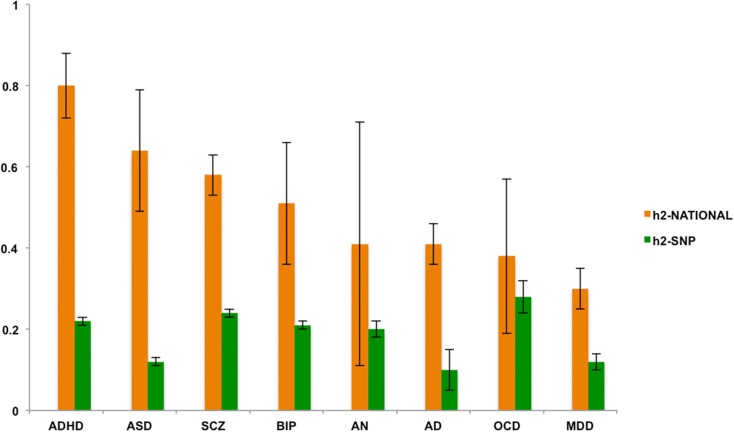
Background: Most studies underline the contribution of heritable factors for psychiatric disorders. However, heritability estimates depend on the population under study, diagnostic instruments, and study designs that each has its inherent assumptions, strengths, and biases. We aim to test the homogeneity in heritability estimates between two powerful, and state of the art study designs for eight psychiatric disorders. Methods: We assessed heritability based on data of Swedish siblings (N = 4 408 646 full and maternal half-siblings), and based on summary data of eight samples with measured genotypes (N = 125 533 cases and 208 215 controls). All data were based on standard diagnostic criteria. Eight psychiatric disorders were studied: (1) alcohol dependence (AD), (2) anorexia nervosa, (3) attention deficit/hyperactivity disorder (ADHD), (4) autism spectrum disorder, (5) bipolar disorder, (6) major depressive disorder, (7) obsessive-compulsive disorder (OCD), and (8) schizophrenia. Results: Heritability estimates from sibling data varied from 0.30 for Major Depression to 0.80 for ADHD. The estimates based on the measured genotypes were lower, ranging from 0.10 for AD to 0.28 for OCD, but were significant, and correlated positively (0.19) with national sibling-based estimates. When removing OCD from the data the correlation increased to 0.50. Conclusions: Given the unique character of each study design, the convergent findings for these eight psychiatric conditions suggest that heritability estimates are robust across different methods. The findings also highlight large differences in genetic and environmental influences between psychiatric disorders, providing future directions for etiological psychiatric research.
Overview
The claims and statistics of this paper haven’t been checked yet.
Free: it reads the open-access text and checks the first 5 claims that cite a source we can check. Create a free account to check every claim.
Integrity signals
Registry
Cites
Statistics
Figures
Verification
Claims the paper makes
The claims and statistics of this paper haven’t been checked yet.
Free: it reads the open-access text and checks the first 5 claims that cite a source we can check. Create a free account to check every claim.
Claims other papers make about this one
Each is checked against this paper’s own text: does it say what the citing paper says it does?
The source backs part of the claim, not all of it — or backs it for a different population, condition or comparison.
In the citing paper
“A review of 37 twin studies from the United States, Europe, Scandinavia, and Australia found that genes and their interaction with the environment must play a substantial role in causing ADHD”
From The World Federation of ADHD International Consensus Statement: 208 Evidence-based conclusions about the disorder (2021) · cites this paper as Pettersson et al., 2019
Experimental — accuracy not yet measuredThe source backs part of the claim, not all of it — or backs it for a different population, condition or comparison.
In the citing paper
“and 3 population-based studies from Sweden recently estimated the heritability of ASD to be 83%, 9 80%, 4 and 66%. 10”
From Association of Genetic and Environmental Factors With Autism in a 5-Country Cohort (2019) · cites this paper as [9]
Experimental — accuracy not yet measuredThe cited source says what the claim attributes to it.
In the citing paper
“These results are similar to those of recent population-based cohorts 4,9,10 as well as a recent metaanalysis of twin studies, 8 which estimated heritability in the range of 64% to 91%.”
From Association of Genetic and Environmental Factors With Autism in a 5-Country Cohort (2019) · cites this paper as [9]
In the citing paper
“Estimates of the contribution of shared environment range from 7% to 35%, 8 but multiple studies estimate the contribution to be zero.4,9,11,12”
From Association of Genetic and Environmental Factors With Autism in a 5-Country Cohort (2019) · cites this paper as [9]
Self-check
Percentages, sums and reported differences re-computed from the paper’s own numbers.
The self-check needs the paper’s full text.
Citations
Cites
Biological insights from 108 schizophrenia-associated genetic loci
Schizophrenia Working Group of the Psychiatric Genomics Consortium (2014) · Nature · doi:10.1038/nature13595 · Cited by 7,577
LD Score regression distinguishes confounding from polygenicity in genome-wide association studies
Schizophrenia Working Group of the Psychiatric Genomics Consortium, Bulik-Sullivan, B. K., Loh, P.-R., Finucane, H. K., Ripke, S., Yang, J., Patterson, N., Daly, M. J., Price, A. L., & Neale, B. M. (2015) · Nature Genetics · doi:10.1038/ng.3211 · Cited by 5,559
Self-citationInteraction revisited: the difference between two estimates.
Altman, D. G., & Bland, J. M. (2003) · BMJ · doi:10.1136/bmj.326.7382.219 · Cited by 3,203 · cited 2×
“of the null hypothesis that the difference d is zero, by comparing the value of Z to the standard normal distribution(Altman and Bland, 2003).”
Meta-analysis of the heritability of human traits based on fifty years of twin studies
Polderman, T. J. C., Benyamin, B., de Leeuw, C. A., Sullivan, P. F., van Bochoven, A., Visscher, P. M., & Posthuma, D. (2015) · Nature Genetics · doi:10.1038/ng.3285 · Cited by 2,467
Self-citationADHD Working Group of the Psychiatric Genomics Consortium (PGC), Demontis, D., Early Lifecourse & Genetic Epidemiology (EAGLE) Consortium, 23andMe Research Team, Walters, R. K., Martin, J., Mattheisen, M., Als, T. D., Agerbo, E., Baldursson, G., et al. (2019) · Nature Genetics · doi:10.1038/s41588-018-0269-7 · Cited by 2,203
Self-citationPrevalence of attention-deficit/hyperactivity disorder: a systematic review and meta-analysis
Thomas, R., Sanders, S., Doust, J., Beller, E., & Glasziou, P. (2015) · Pediatrics · doi:10.1542/peds.2014-3482 · Cited by 1,976 · cited 2×
“Estimates may also change over time due to variations in diagnostic criteria (Zablotsky et al ., 2015; Thomas et al ., 2015), an increase in awareness and detection of psychiatric disorders (Van Naarden Braun et al ., 2015), changes in the exposure to environmental factors (Rokholm et al ., 2011),…”
BackgroundInfluentialInsights into autism spectrum disorder genomic architecture and biology from 71 risk loci
Sanders, S. J., He, X., Willsey, A. J., Ercan-Sencicek, A. G., Samocha, K. E., Cicek, A. E., Murtha, M. T., Bal, V. H., Bishop, S. L., Dong, S., et al. (2015) · Neuron · doi:10.1016/j.neuron.2015.09.016 · Cited by 1,430
Self-citationContribution of copy number variants to schizophrenia from a genome-wide study of 41,321 subjects
Marshall, C. R., Howrigan, D. P., Merico, D., Thiruvahindrapuram, B., Wu, W., Greer, D. S., Antaki, D., Shetty, A., Holmans, P. A., Pinto, D., et al. (2017) · Nature Genetics · doi:10.1038/ng.3725 · Cited by 1,058
Self-citationMoffitt, T. E., Caspi, A., Taylor, A., Kokaua, J., Milne, B. J., Polanczyk, G., & Poulton, R. (2010) · Psychological Medicine · doi:10.1017/s0033291709991036 · Cited by 938 · cited 1×
“The sibling method also relies on certain assumptions, such as a 100% shared environment despite age differences between siblings, and despite the fact that half-siblings might live in two families (with the biological mother and with the biological father) and thus spend potentially less time together than full sibli…”
MethodZablotsky, B., Black, L. I., Maenner, M. J., Schieve, L. A., & Blumberg, S. J. (2015) · PubMed · Cited by 696
Research works printed but not linked: 2
- Demontis D, Walters RK, Martin J, Mattheisen M, Als TD, Agerbo E, Belliveau R, Bybjerg-Grauholm J, Bækved-Hansen M, Cerrato F, Chambert K, Churchhouse C, Dumont A, Eriksson N, Gandal M, Goldstein J, Grove J, Hansen CS, Hauberg M, Hollegaard M, Howrigan DP, Huang H, Maller J, Martin AR, Moran J, Pallesen J, Palmer DS, Pedersen CB, Pedersen MG, Poterba T, Poulsen JB, Ripke S, Robinson EB, Satterstrom FK, Stevens C, Turley P, Won H, Con -ADHD Working Group of the Psychiatric Genomics, Lifecourse & -Early, Epidemiology (EAGLE) G, Team −23 and Me Research, Andreassen OA, Burton C, Boomsma D, Cormand B, Dalsgaard S, Franke B, Gelernter J, Geschwind D, Hakonarson H, Haavik J, Kranzler H, Kuntsi J, Langley K, Lesch K-P, Middeldorp C, Reif A, Rohde LA, Roussos P, Schachar R, Sklar P, Sonuga-Barke E, Sullivan PF, Thapar A, Tung J, Waldman I, Nordentoft M, Hougaard DM, Werge T, Mors O, Mortensen PB, Daly MJ, Faraone SV, Børglum AD and Neale BM (2017) Discovery of the first genome-wide significant risk loci for ADHD. Submitted for publication, bioRxiv. 2017; 14558: 1– 43.
- Muthén L.K. and Muthén B.O. (1998) Mplus User's Guide, 7th Edn Los Angeles, CA: Muthén & Muthén.
Cited by
Items 101–196 of 196
Possible Modulatory Role of ARC Gene Variants in Mood Disorders
Crisafulli, C., Calabrò, M., Mandelli, L., Wang, S., Lee, S.-J., Han, C., Patkar, A. A., Masand, P., Pae, C., Souery, D., et al. (2021) · Clinical Psychopharmacology and Neuroscience · doi:10.9758/cpn.2021.19.1.46 · Cited by 6
González‐Castro, T. B., Rodríguez-Fuentes, I., Tovilla‐Zárate, C. A., Juárez‐Rojop, I. E., Hernández‐Díaz, Y., López‐Narváez, M. L., Uresti‐Rivera, E. E., & Hernández-Vicencio, J. L. (2024) · Metabolic Brain Disease · doi:10.1007/s11011-024-01346-3 · Cited by 5
“Some psychiatric disorders are highly heritable and associated with a poor quality of life such as schizophrenia, bipolar disorder and autism; whereas depressive disorders have a medium-low heritability and other like obsessive-compulsive disorder are low heritable (Pettersson et al. 2019).”
Haugland, B. S. M., Hysing, M., & Sivertsen, B. (2023) · International Journal of Environmental Research and Public Health · doi:10.3390/ijerph20053925 · Cited by 6
“Finally, genetic components have been demonstrated in the etiology of substance abuse as well as a range of mental illnesses [40].”
BackgroundPsychiatric neuroimaging at a crossroads: Insights from psychiatric genetics
Dall’Aglio, L., Urbina-Johanson, S., Mallard, T. T., Lamballais, S., Delaney, S., Smoller, J. W., Muetzel, R. L., & Tiemeier, H. W. (2024) · Developmental Cognitive Neuroscience · doi:10.1016/j.dcn.2024.101443 · Cited by 9
“When technological advances permitted it, Genome-Wide Association Studies (GWASs) became routinely used, allowing for the normalization of hypothesis-free approaches.”
MethodVos, M., Wang, R., Rommelse, N. N. J., Snieder, H., Larsson, H., & Hartman, C. A. (2024) · Psychological Medicine · doi:10.1017/s003329172400309x · Cited by 5
“…psychiatric problems, albeit currently somewhat larger in size, are broadly comparable to the genetic correlations found in previous (behavioral) genetic studies (Azeredo et al., 2018; Consortium C-DG of the PG, 2014, 2019; Demontis et al., 2019; Pettersson et al., 2019; Solberg et al., 2019).”
InfluentialSelf-citationLin, B. D., Li, Y., Goula, A. A., Chang, X., Grasby, K. L., Medland, S. E., Andreassen, O. A., Rutten, B. P. F., Gülöksüz, S., van der Meer, D., et al. (2025) · Nature Mental Health · doi:10.1038/s44220-025-00397-4 · Cited by 9
“Further information on research design is available in the Nature Portfolio Reporting Summary linked to this article.”
Drange, O. K., Sæther, S. G., Finseth, P. I., Morken, G., Vaaler, A. E., Arntsen, V., Henning, O. J., Andreassen, O. A., Elvsåshagen, T., Malt, U. F., et al. (2020) · BMC Psychiatry · doi:10.1186/s12888-020-02968-4 · Cited by 6
Evaluating the Neuroimaging-Genetic Prediction of Symptom Changes in Individuals with ADHD
Suresh, P., Ray, B., Duan, K., Chen, J., Schoenmacker, G., Franke, B., Buitelaar, J. K., Sprooten, E., Arias-Vasquez, A., Turner, J. A., et al. (2021) · Annual International Conference of the IEEE Engineering in Medicine and Biology Society (EMBC) · doi:10.1109/embc46164.2021.9630229 · Cited by 5
The heritability and molecular genetics of mental disorders
de Wit, M. M., & Polderman, T. J. C. (2022) · Elsevier eBooks · doi:10.1016/b978-0-323-91497-0.00160-0 · Cited by 5
Self-citationShen, X., Barbu, M. C., Caramaschi, D., Arathimos, R., Czamara, D., David, F. S., Dearman, A., Dilkes, E., Herrera-Rivero, M., Huider, F., et al. (2023) · medRxiv · doi:10.1101/2023.10.27.23297630 · Cited by 5
Lu, Z.-A., Ploner, A., Jaholkowski, P. P., Shadrin, A. A., Brew, B. K., Andreassen, O. A., & Bergen, S. E. (2025) · Brain Behavior and Immunity · doi:10.1016/j.bbi.2025.06.003 · Cited by 5
Clinical phenotype and genetic risk factors for bipolar disorder with binge eating: an update
Barboza, A. B. C., Winham, S. J., Biernacka, J. M., Frye, M. A., & McElroy, S. L. (2019) · Expert Review of Neurotherapeutics · doi:10.1080/14737175.2019.1638764 · Cited by 10
Mental health and validity of the psycho-neurobiological stress model
Guillén, J. M. B. (2022) · American Journal of Psychiatric Research and Reviews · doi:10.28933/ajprr-2021-12-3105 · Cited by 5
Clinical genetic testing and counselling in autism spectrum disorder
Freitag, C. M., Haslinger, D., Yousaf, A., & Waltes, R. (2020) · Medizinische Genetik · doi:10.1515/medgen-2020-2001 · Cited by 7
Meta-analysis of Scandinavian Schizophrenia ExomesPreprint
Lescai, F., Grove, J., Satterstrom, F. K., Rees, E., Bybjerg‐Grauholm, J., Als, T. D., Kalinowski, J., Halager, A. E., Singh, T., Li, Q., et al. (2019) · bioRxiv (Cold Spring Harbor Laboratory) · doi:10.1101/836957 · Cited by 3
Self-citationXavier, G., Ota, V., Kajitani, G. S., Mauer, J., Asprino, P. F., Costa, G. O., Cavalcante, D. A., Cerqueira, R. O., Novaes, A., dos Santos, F. R., et al. (2025) · Schizophrenia Research · doi:10.1016/j.schres.2025.10.011 · Cited by 5
Chen, J., Iraji, A., Fu, Z., Duda, M., Andrés-Camazón, P., Thapaliya, B., Liu, J., & Calhoun, V. D. (2026) · Human Brain Mapping · doi:10.1002/hbm.70530 · Cited by 3
“studies for common- variant-based heritability, varying from 0.10 for AD to 0.28 for obsessive-compulsive disorder (OCD), and consistently 0.23–0.24 for SZ (Lee et al. 2013; Pettersson et al. 2019).”
InfluentialMotivating and Discouraging Factors for Bipolar Patient Participation in Genomic Research
Vallender, E. J., Ladner, M. E., Akinhanmi, M. O., Caples, F. V., Frye, M. A., & Balls‐Berry, J. E. (2021) · Public Health Genomics · doi:10.1159/000513723 · Cited by 3
Genomic contributions to anxiety disorders
Dalvie, S., Koen, N., & Stein, D. J. (2019) · Elsevier eBooks · doi:10.1016/b978-0-12-813176-3.00024-9 · Cited by 3
Lisoway, A. J., Zai, C. C. H., Tiwari, A. K., Nair, A., Ebrahimi, S. B., Gonçalves, V. F., Zai, G. C., Kaminsky, Z. A., Richter, M. A., & Kennedy, J. L. (2020) · Personalized Medicine in Psychiatry · doi:10.1016/j.pmip.2020.100058 · Cited by 4
Wormington, B., Thorp, J. G., Scott, J. G., & Derks, E. M. (2022) · Schizophrenia Bulletin · doi:10.1093/schbul/sbac095 · Cited by 25
Familial risk of postpartum depression
Rasmussen, M.-L. H., Poulsen, G., Wohlfahrt, J., Videbech, P., & Melbye, M. (2022) · Acta Psychiatrica Scandinavica · doi:10.1111/acps.13465 · Cited by 4
Genetic assessment of feed efficiency in the spotted Babylon Babylonia areolata
Nie, L., Kong, Y., Ma, Z., Fu, J., Liu, S., Luo, X., You, W., & Ke, C. (2025) · Aquaculture · doi:10.1016/j.aquaculture.2025.742284 · Cited by 2
Ge, F., Wang, Y., Liu, X., Munk‐Olsen, T., Madsen, K. B., Pedersen, E. M., Albiñana, C., Agerbo, E., Bulik, C. M., Petersen, L. V., et al. (2025) · Biological Psychiatry Global Open Science · doi:10.1016/j.bpsgos.2025.100613 · Cited by 3
Self-citationLiao, W., Keser, E., Allegrini, A. G., Rimfeld, K., Plomin, R. J., & Malanchini, M. (2025) · Biological Psychiatry Global Open Science · doi:10.1016/j.bpsgos.2025.100680 · Cited by 3
ADHD, Distractibility, and ABA
Orantes, D., Rohacek, A., & Antshel, K. M. (2023) · Autism and child psychopathology series · doi:10.1007/978-3-031-27587-6_20 · Cited by 2
Ehlers, C. L., & Peng, Q. (2025) · American Journal of Psychiatry · doi:10.1176/appi.ajp.20250909 · Cited by 2
Zhu, E. H., Yip, B. H. K., Fyfe, C., Merzon, E., Kodesh, A., Askling, J., Reichenberg, A., Yin, W., Levine, S. Z., & Sandin, S. (2025) · Molecular Autism · doi:10.1186/s13229-025-00694-w · Cited by 3
“Multiple studies substantiate the contributions of genetic [2–4] and prenatal factors to ASD [5].”
(2021) · Journal of Pediatric Neuropsychology · doi:10.1007/s40817-021-00098-7 · Cited by 2
“…on the development and longevity of Pediatric Acute Onset Neuropsychiatric Syndrome (PANS) has led to many children being misdiagnosed with Obsessive-Compulsive Disorder (OCD), tic disorders, eating disorders, and Autism Spectrum Disorder (ASD; Pettersson et al., 2019; Robbins et al., 2019).”
BackgroundBahri, S., Zohri, L. H. N., Istiqomah, I., Yusuf, M. H., & Putra, H. S. (2022) · JURNAL BIOLOGI TROPIS · doi:10.29303/jbt.v22i2.3240 · Cited by 6
Wang, C., & Lee, J. (2024) · Pediatric Allergy and Immunology · doi:10.1111/pai.14110 · Cited by 2
“Pettersson et al. 3 suggested genetic and environmental roles in the etiology of psychiatric disorders.”
BackgroundGenetic factors influencing a neurobiological substrate for psychiatric disordersPreprint
Andlauer, T. F. M., Mühleisen, T. W., Hoffstaedter, F., Teumer, A., Wittfeld, K., Teuber, A., Reinbold, C. S., Grotegerd, D., Bülow, R., Caspers, S., et al. (2019) · bioRxiv (Cold Spring Harbor Laboratory) · doi:10.1101/774463 · Cited by 2
The Mendelian Legacy to Mental and Behavioral Disorders
Arcos‐Burgos, M., & Arias, J. M. C. (2020) · International journal of psychological research · doi:10.21500/20112084.4529 · Cited by 2
Heritability estimation of subcortical volumes in a multi-ancestry multi-site cohort study
Coffman, C., Feczko, E., Larsen, B., Tervo‐Clemmens, B., Conan, G., Lundquist, J. T., Houghton, A., Moore, L. A., Weldon, K. B., McCollum, R., et al. (2026) · Imaging Neuroscience · doi:10.1101/2024.01.11.575231 · Cited by 2
Shaping sensory-association axis: genetics, transcriptomics, and relation to neuropsychiatryPreprint
Wan, B., He, Y., Warrier, V., John, A., Kirschner, M., Eickhoff, S. B., Bethlehem, R. A. I., & Valk, S. L. (2025) · medRxiv · doi:10.1101/2025.03.03.25323242 · Cited by 3
“SCZ stood out among these PGSs, which is also the most heritable of disorders 78 .”
Genetic Influences on Mental Health
Trang, N. M., Van, J. L., & Trang, D. H. P. (2024) · European Journal of Medical and Health Research · doi:10.59324/ejmhr.2024.2(5).25 · Cited by 1
Pitkänen, J., Sariaslan, A., Bishop, L., & Martikainen, P. (2025) · International Journal of Epidemiology · doi:10.1093/ije/dyaf074 · Cited by 2
Friedman, L. M., Fabrikant-Abzug, G., & Chromik, L. C. (2026) · Brain Sciences · doi:10.3390/brainsci16050495 · Cited by 1
Rødevand, L. N., Rahman, Z., Jahołkowski, P., Parker, N., Valdimarsdóttir, U. A., Smeland, O. B., Tesfaye, M., Parekh, P., Frei, O., Djurovic, S., et al. (2026) · EBioMedicine · doi:10.1016/j.ebiom.2026.106304 · Cited by 1
“7 and lifestyle behaviours, including physical activity (30–70%), 8,9 dietary habits (20%–50”
CMIP as a novel candidate gene for neurodevelopmental and neuropsychiatric disorders
Wachter, M. D., van der Lei, M. B., Decleve, A., Man, K. D., Elinck, E., Schoonjans, A., Gouy, E., Januel, L., Monin, P., Labalme, A., et al. (2026) · European Journal of Human Genetics · doi:10.1038/s41431-026-02169-9 · Cited by 1
Tesli, M., Nesvåg, R., Haukvik, U. K., Gustavson, K., Tesli, N., Friestad, C., Skarðhamar, T., Næss, Ø., Czajkowski, N. O., Kendler, K. S., et al. (2023) · Acta Psychiatrica Scandinavica · doi:10.1111/acps.13596 · Cited by 3
“In general, we hypothesize to find genetic and environmental correlations between the PLEs and PDs, albeit higher genetic than environmental, keeping in mind the high heritability estimates for psychotic disorders 25 and few established common environmental risk factors.”
BackgroundEntwicklungsstörungen – ein Spiegel der Variabilität
Jenni, O. G. (2024) · Springer eBooks · doi:10.1007/978-3-662-69223-3_1 · Cited by 1
Mediating Role of Trauma Connecting Psychiatric Family History and Adolescent Mental Health
Chaiyachati, B. H., Catalano, J. L., Schultz, L. M., Almasy, L. A., Visoki, E., Seidlitz, J., Moore, T. M., Taylor, J. H., Calkins, M. E., Gur, R. E., et al. (2025) · Biological Psychiatry Global Open Science · doi:10.1016/j.bpsgos.2025.100525 · Cited by 3
Attention-Deficit/Hyperactivity Disorder
Mandelbaum, D. E., & Silver, W. G. (2024) · Elsevier eBooks · doi:10.1016/b978-0-443-10944-7.00075-5 · Cited by 1
Li, B., Liu, C., Almquist, Y. B., & Berg, L. (2025) · Scientific Reports · doi:10.1038/s41598-025-04282-z · Cited by 1
“These excluded disorders have been found to have higher heritability estimates than most other psychiatric disorders, suggesting that a larger proportion of the observed variability in these disorders is linked to genetic differences 22 .”
Imputed Gene Expression versus Single Nucleotide Polymorphism in Predicting Gray Matter PhenotypesPreprint
Chen, J., Fu, Z., Iraji, A., Calhoun, V. D., & Liu, J. (2023) · medRxiv · doi:10.1101/2023.05.05.23289592 · Cited by 1
Ge, F., Wang, Y., Liu, X., Munk‐Olsen, T., Madsen, K. B., Pedersen, E. M., Albiñana, C., Agerbo, E., Bulik, C. M., Petersen, L. V., et al. (2025) · medRxiv · doi:10.1101/2025.01.15.25320615 · Cited by 1
Self-citationBekkhus, M., Tsotsi, S., Page, C. M., Czajkowski, N. O., Liu, W., Røysamb, E., Bang, N. R., Oftedal, A., Lyle, R., Hannigan, L. J., et al. (2025) · medRxiv · doi:10.1101/2025.05.24.25328240 · Cited by 1
“Our results confirm that common genetic variants contribute to childhood behavioral variation, with SNP-heritability estimates comparable to those observed for adult behavioral traits and lifestyle factors but lower than those for psychiatric disorders 44-46 .”
On Neuroimmunology and Brain Function: Experimental and Clinical Studies
Strenn, N. (2019) · Gothenburg University Publications Electronic Archive (Gothenburg University)
The role of migration and social environments in the risk of psychotic disorders
Dykxhoorn, J. L. (2019) · UCL Discovery (University College London) · Cited by 1
Changing perspectives: Towards detailed phenotyping in geneticsPreprint
Nagel, M. (2020) · Thesis Commons (OSF Preprints) · doi:10.31237/osf.io/a4nz2 · Cited by 1
He, Q., & Li, J. J. (2021) · doi:10.31234/osf.io/8bz3g
Autisme in het licht van het biopsychosociaal model
Buitelaar, J. K., Velders, F. P., & de Jonge, M. V. (2021) · Bohn Stafleu van Loghum eBooks · doi:10.1007/978-90-368-2665-5_3
Epigenética e suas contribuições para a prática da psicoterapia
da Silva, J. V. S., & Freitas, N. M. D. (2021) · Diaphora · doi:10.29327/217869.10.1-9 · Cited by 3
Twin studies of complex traits and diseases
Beam, C. R., Kim, A. J., & Polderman, T. J. C. (2022) · Elsevier eBooks · doi:10.1016/b978-0-12-821514-2.00013-1
Self-citationSaveliev, I., & Shahar, N. (2022) · PsyArXiv (OSF Preprints) · doi:10.31234/osf.io/ctp6y
JEFFREY DAHMER: MULTIFATORIEDADE À LUZ DA NEUROCIÊNCIA
Rodrigues, F. D. A. A., & da Silveira, F. M. (2023) · Revista Ibero-Americana de Humanidades, Ciências e Educação · doi:10.51891/rease.v9i1.8273 · Cited by 2
The genetic architecture of differentiating behavioural and emotional problems in early lifePreprint
Askelund, A. D., Hegemann, L., Allegrini, A. G., Corfield, E. C., Ask, H., Davies, N. M., Andreassen, O. A., Havdahl, A., & Hannigan, L. J. (2023) · Research Square · doi:10.21203/rs.3.rs-3223835/v1
Бочарова, А. В., & Степанов, В. А. (2023) · Russian Journal of Genetics · doi:10.1134/s1022795423020035
Investigating the Biology of Behavioural Differences
Stevenson, J. (2023) · Springer eBooks · doi:10.1007/978-3-031-45787-6_3
Candal, A., Châtelain, S., & Verdon, V. (2022) · Neuropsychologie clinique et appliquée · doi:10.46278/j.ncacn.20220422
Biotechnology’s Potential Impact on the Cycles of Civilization through Enhancement of the Human Mind
Taylor, K. (2024) · Journal of Ethics and Emerging Technologies · doi:10.55613/jeet.v33i2.132
“Presently, these include autistic spectrum disorders, attention deficit hyperactivity disorder (ADHD), alcohol dependence, anorexia nervosa, bipolar disorder, major depression, obsessive compulsive disorder, schizophrenia, and psychopathy (Pettersson et. al.”
BackgroundБочарова, А. В., & Степанов, В. А. (2023) · Генетика · doi:10.31857/s0016675823020030
Jeong, H. J., Lahey, B. B., Reimann, G. E., Durham, E. L., Archer, C., Moore, T. M., Shah, K., & Kaczkurkin, A. N. (2024) · Frontiers in Child and Adolescent Psychiatry · doi:10.3389/frcha.2024.1410804
Die Aufmerksamkeitsdefizit-Hyperaktivitäts-Störung – eine Spektrumdiagnose
Jenni, O. G. (2024) · Springer eBooks · doi:10.1007/978-3-662-69223-3_13
Unlocking disease associations during prefrontal cortex development with scRNAseqPreprint
Farley, K. O., Chen, K. G., & Lassmann, T. (2024) · Research Square · doi:10.21203/rs.3.rs-4948061/v1
The Association of Endometriosis with Mental Health and Disorders
Koller, D., & Løkhammer, S. (2024) · Springer eBooks · doi:10.1007/978-3-031-32046-0_101-1
Kumar, S., Hasan, R., Ahmad, S., & Mahmood, S. (2024) · International Conference on Computing and Data Analytics (ICCDA) · doi:10.1109/iccda64887.2024.10867313
Li, B., Liu, C., Almquist, Y. B., & Berg, L. (2025) · Social Psychiatry and Psychiatric Epidemiology · doi:10.1007/s00127-025-02918-z · Cited by 2
“Third, while many psychiatric disorders are considered to have a hereditary component [50], we have no access to genetic information, and thus it is impossible to rule out biological predisposition of grandchild psychiatric disorders.”
Wilson, P. (2025) · European Journal of General Practice · doi:10.1080/13814788.2025.2524430
“…disorders including autism and attention-deficit/hyperactivity disorder (ADHD), other psychiatric disorders including conduct disorder, reactive attachment disorder, schizophrenia and addictions. the degree of heritability varies between 30% for major depression to 80% for ADHD [8].”
TMS for Mood Disorders: An Ethical Perspective
Poorganji, M., Boyd, E. C., Nagra, D. S., & Appelbaum, L. G. (2025) · Advances in neuroethics · doi:10.1007/978-3-031-92401-9_10
Bjørndal, L. D., Wootton, R. E., Ebrahimi, O. V., Piazza, G. G., Hegemann, L., Corfield, E. C., Hannigan, L. J., Pingault, J., Andreassen, O. A., Havdahl, A., et al. (2025) · Journal of Affective Disorders · doi:10.1016/j.jad.2025.120228 · Cited by 1
The Association of Endometriosis with Mental Health and Disorders
Koller, D., & Løkhammer, S. (2025) · Springer eBooks · doi:10.1007/978-3-031-73363-5_101
Semantic locality-aware biclustering for brain functional network connectivity
Rahaman, M. A., Silva, R. F., Fu, Z., Iraji, A., & Calhoun, V. D. (2025) · Scientific Reports · doi:10.1038/s41598-025-18007-9
“The reduced integration observed in SZ may result from abnormal myelination, synaptic pruning, or neurotransmitter dysfunction, which collectively impair large-scale information flow across the brain 79,80 .”
Paolini, M., Raffaelli, L., Bettonagli, V., Lorenzi, C., Spadini, S., Bravi, B., Fortaner-Uyà, L., Gulino, G., Fabbri, C., Serretti, A., et al. (2025) · European Neuropsychopharmacology · doi:10.1016/j.euroneuro.2025.11.011 · Cited by 1
Drange, O. K., Sæther, S. G., Finseth, P. I., Morken, G., Vaaler, A. E., Arntsen, V., Henning, O., Andreassen, O. A., Elvsåshagen, T., Malt, U. F., et al. (2020) · Figshare · doi:10.6084/m9.figshare.13347078
Epigenetics and Psychiatric Diseases
Manchia, M., Paribello, P., & Chaumette, B. (2025) · Rare diseases of the immune system · doi:10.1007/978-3-032-02902-7_13
Abualia, K., Cediel-Ulloa, A., Allsopp, P. J., Augustine, A. A., Bergquist, J., Bornehag, C., Bröberg, K., Caporale, N., Comasco, E., di Bernardo, D., et al. (2026) · Frontiers in Psychiatry · doi:10.3389/fpsyt.2026.1738584
Examining the Mental Health of Siblings of Children with a Mental Disorder: A Scoping Review
Goddard, J. A., Wade, T. J., Andrade, B. F., Browne, D. T., Krzeczkowski, J. E., & Patte, K. A. (2026) · Child Psychiatry & Human Development · doi:10.1007/s10578-026-01995-8
Similitudes et différences entre le TDAH et le TSA, illustrées par l’étude du défaut d’inhibition
Septier, M. (2019) · theses.fr (ABES) · doi:10.70675/22fe83c2z678fz4b7ezac95z1af4554dfcbf
Saxena, A., Gaiteri, C., & Faraone, S. V. (2026) · bioRxiv (Cold Spring Harbor Laboratory) · doi:10.64898/2026.04.06.716790
Genetic perspectives on the comorbidity of anxiety and mood disorders with cardiovascular disease
de Geus, E. J. C., Treur, J. L., & Penninx, B. W. J. H. (2026) · Nature Cardiovascular Research · doi:10.1038/s44161-026-00822-6 · Cited by 1
Giglberger, M., Henze, G., Bärtl, C., Peter, H. L., Konzok, J., Zänkert, S., Kirsch, P., Frank, J., Kudielka, B. M., Walter, H., et al. (2026) · Research Square · doi:10.21203/rs.3.rs-9858017/v1
Breastfeeding and Development of Attention-Deficit/Hyperactivity Disorder Symptoms Across Childhood
Solberg, B. S., Brantsæter, A. L., Kvalvik, L. G., Hartman, C. A., Xie, T., Klungsøyr, K., Li, L., Larsson, H., Gjestad, R., & Haavik, J. (2026) · Biological Psychiatry · doi:10.1016/j.biopsych.2026.06.009 · Cited by 1
Self-citationFundamentos de neuropsicología
Flóres-Lázaro, J. C. (2026) · Ediciones Comunicación Científica eBooks · doi:10.52501/cc.355
Identifying and Characterising Common Genetic Differences in Schizophrenia and Bipolar DisorderPreprint
Willcocks, I. R., Richards, A. L., Legge, S. E., Holmans, P., Florio, A. D., Cardno, A. G., O’Donovan, M. C., Owen, M. J., Pardiñas, A. F., & Walters, J. (2026) · medRxiv · doi:10.64898/2026.07.17.26358311
Self-citationGenetik und Epigenetik in der klinischen Psychologie
Mundorf, A., Peterburs, J., & Ocklenburg, S. (2026) · Springer eBooks · doi:10.1007/978-3-662-73259-5_9
Galligan, D. E., Payne, L., Paramecwari, A. N., Howarth, S., Kato, A., Heussler, H., Sanders, M. R., Cobham, V. E., Byrne, E. M., & Middeldorp, C. M. (2026) · European Child & Adolescent Psychiatry · doi:10.1007/s00787-026-03139-8
Martínez-Serrano, I., Segura, A. G., Ortuño, M., Fortea, A., Borràs, R., Camprodon-Boadas, P., de la Serna, E., Moreno, D., García-Rizo, C., Torrent, C., et al. (2026) · European Child and Adolescent Psychiatry · doi:10.1007/s00787-026-03123-2
Shen, F., Zhou, H., & Zhang, T. (2026) · Frontiers in Psychiatry · doi:10.3389/fpsyt.2026.1894822
Gender-specific associations between polygenic scores and age-specific risk of psychiatric disorders
Maseras, G. T., Chen, D., Albiñana, C., Petersen, L. V., Arias, B., Agerbo, E., Musliner, K. L., Vilhjálmsson, B. J., & Plana‐Ripoll, O. (2026) · The British Journal of Psychiatry · doi:10.1192/bjp.2026.10759
“For ASD, no differences in the associations between males and females were observed.”
Fury, B., Dennison, C. A., Riglin, L., & Shakeshaft, A. (2026) · Molecular Psychiatry · doi:10.1038/s41380-026-03903-x
MEIJER, M., & Kobor, M. S. (2026) · Handbook of clinical neurology · doi:10.1016/b978-0-443-19043-8.00001-3
Alam, F., Ahmed, H. U., Khan, N. M., Sarkar, A. A., Syed, S. E., Alam, M. T., & Uddin, M. J. (2026) · Journal of Indian Association for Child and Adolescent Mental Health · doi:10.1177/09731342261495739
Metadata
- Authors
- Pettersson, E., Lichtenstein, P., Larsson, H., Song, J., Attention Deficit/Hyperactivity Disorder Working Group of the iPSYCH-Broad-PGC Consortium, A. S. D. W. G. O. T. I.-B.-P. C., Agrawal, A., Børglum, A. D., Bulik, C. M., Daly, M. J., Davis, L. K., Demontis, D., Edenberg, H. J., Grove, J., Gelernter, J., Neale, B. M., Pardiñas, A. F., Stahl, E., Walters, J. T. R., Walters, R., Sullivan, P. F., Posthuma, D., & Polderman, T. J. C.
- Affiliations
- Karolinska Institutet (SE)
- Örebro University (SE)
- Aarhus University (DK)
- University of North Carolina at Chapel Hill (US)
- Broad Institute (US)
- Vanderbilt University (US)
- Indiana University School of Medicine (US)
- United States Department of Veterans Affairs (US)
- Cardiff University (GB)
- Icahn School of Medicine at Mount Sinai (US)
- Amsterdam Neuroscience (NL)
- Corresponding author
- Polderman, T. J. C.
- ORCID
- Venue
- Psychological Medicine
- Publisher
- Cambridge University Press (CUP)
- Published
- 2018-09-17
- Volume
- 49
- Issue
- 07
- Pages
- 1166-1173
- ISSN
- 0033-2917 (ISSN-L)
- 1469-8978
- PMC
- PMC6421104
- OpenAlex
- W2891530254
- Cited by
- 196
- References
- 39
- Citations by year
- 2026: 20 · 2025: 32 · 2024: 26 · 2023: 28 · 2022: 26 · 2021: 21 · 2020: 23 · 2019: 18 · 2018: 1
- FWCI
- 9.64
- Type
- journal article
- Language
- en
- Open access
- hybrid
- doi.org
- Locations
- Psychological Medicine (publishedVersion, cc-by)
- PubMed Central (publishedVersion, cc-by)
- PubMed Central (publishedVersion)
- PubMed (publishedVersion)
- Amsterdam UMC (VU Amsterdam) - Institutional Repository (publishedVersion, other-oa)
- VU Research Portal (publishedVersion, other-oa)
- ORCA Online Research @Cardiff (Cardiff University) (acceptedVersion)
- Worcester Research and Publications (University of Worcester) (acceptedVersion)
- Pure Amsterdam UMC (submittedVersion, cc-by)
- IUScholarWorks (Indiana University) (submittedVersion, cc-by)
- Data Archiving and Networked Services (DANS) (submittedVersion, other-oa)
- Funders
- Wellcome Trust (WT 088827/Z/09, MR/L010305/1, 088827)
- Nederlandse Organisatie voor Wetenschappelijk Onderzoek (453-14-005)
- Lundbeckfonden (R155-2014-1724, R102‐A9118, R248‐2017‐2003, U01 MH109528)
- Svenska Sällskapet för Medicinsk Forskning
- H. Lundbeck A/S (R102-A9118, R155-2014-1724)
- Medical Research Council (MR/L011794/1, MR/P005748/1, MR/L010305/1)
- National Institute of Mental Health (U01MH109528, U01MH109536, MH109528, U01MH109532)
- Topics
- Life Sciences › Biochemistry, Genetics and Molecular Biology › Genetics › Genetic Associations and Epidemiology
- Health Sciences › Medicine › Psychiatry and Mental health › Schizophrenia research and treatment
- Social Sciences › Psychology › Experimental and Cognitive Psychology › Mental Health Research Topics
- Keywords
- heritability, mental illness, genetic factors, alcoholism, anorexia nervosa, attention deficit hyperactivity disorder, autism spectrum disorder, bipolar disorder, major depressive disorder, obsessive-compulsive disorder, schizophrenia
- MeSH terms
- Autism Spectrum Disorder, Adult, Alcoholism, Anorexia Nervosa, Attention Deficit Disorder with Hyperactivity, Mental Disorders, Bipolar Disorder, Depressive Disorder, Major, Major Depressive Disorder, Family, Female, Genotype, Humans, Male, Obsessive-Compulsive Disorder, Schizophrenia, Schizophrenic Psychology, Sweden, Cohort Studies, Case-Control Studies, Quantitative Trait, Heritable, Siblings, Gene-Environment Interaction
About these checks
Registry, retraction, Cites and statistics results are computed, not judged, with one exception: a printed reference that no index lists is read once by a model before it counts as a citation error. Claims are extracted by a model and kept only when their quote appears verbatim in the text; each cited source is then checked, with a model’s help, for whether it says what the claim relies on. Those verdicts can be wrong — read the claim’s quote and the cited source before relying on one.
Statistics and arithmetic are recomputed, not judged.
Confidence bands are shown only for fields calibrated on our annotated test set. None is calibrated yet, so no band is shown.
What counts as a claim ›How we measure confidence ›How we check this ›
Are you an author, or do you see a problem with this page? Request a review
Data sources
Bibliographic data: Semantic Scholar, OpenAlex, Crossref.
Contains information from the Semantic Scholar Academic Graph Datasets, made available under the ODC Attribution License (ODC-BY 1.0).
Semantic Scholar’s data is described in: Kinney, R., et al. (2023). The Semantic Scholar Open Data Platform. arXiv:2301.10140.
