

Genetic influences on eight psychiatric disorders based on family data of 4 408 646 full and half-siblings, and genetic data of 333 748 cases and controls
Open accessThe DOI matches its Crossref record; 39 of the 39 references it cites were found in a registry or an index.
Abstract
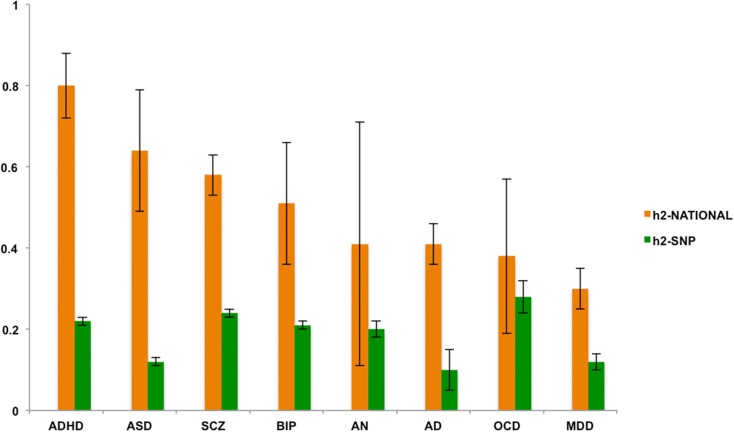
Background: Most studies underline the contribution of heritable factors for psychiatric disorders. However, heritability estimates depend on the population under study, diagnostic instruments, and study designs that each has its inherent assumptions, strengths, and biases. We aim to test the homogeneity in heritability estimates between two powerful, and state of the art study designs for eight psychiatric disorders. Methods: We assessed heritability based on data of Swedish siblings (N = 4 408 646 full and maternal half-siblings), and based on summary data of eight samples with measured genotypes (N = 125 533 cases and 208 215 controls). All data were based on standard diagnostic criteria. Eight psychiatric disorders were studied: (1) alcohol dependence (AD), (2) anorexia nervosa, (3) attention deficit/hyperactivity disorder (ADHD), (4) autism spectrum disorder, (5) bipolar disorder, (6) major depressive disorder, (7) obsessive-compulsive disorder (OCD), and (8) schizophrenia. Results: Heritability estimates from sibling data varied from 0.30 for Major Depression to 0.80 for ADHD. The estimates based on the measured genotypes were lower, ranging from 0.10 for AD to 0.28 for OCD, but were significant, and correlated positively (0.19) with national sibling-based estimates. When removing OCD from the data the correlation increased to 0.50. Conclusions: Given the unique character of each study design, the convergent findings for these eight psychiatric conditions suggest that heritability estimates are robust across different methods. The findings also highlight large differences in genetic and environmental influences between psychiatric disorders, providing future directions for etiological psychiatric research.
Overview
The claims and statistics of this paper haven’t been checked yet.
Free: it reads the open-access text and checks the first 5 claims that cite a source we can check. Create a free account to check every claim.
Integrity signals
Registry
Cites
Statistics
Figures
Verification
Claims the paper makes
The claims and statistics of this paper haven’t been checked yet.
Free: it reads the open-access text and checks the first 5 claims that cite a source we can check. Create a free account to check every claim.
Claims other papers make about this one
Each is checked against this paper’s own text: does it say what the citing paper says it does?
The source backs part of the claim, not all of it — or backs it for a different population, condition or comparison.
In the citing paper
“A review of 37 twin studies from the United States, Europe, Scandinavia, and Australia found that genes and their interaction with the environment must play a substantial role in causing ADHD”
From The World Federation of ADHD International Consensus Statement: 208 Evidence-based conclusions about the disorder (2021) · cites this paper as Pettersson et al., 2019
Experimental — accuracy not yet measuredThe source backs part of the claim, not all of it — or backs it for a different population, condition or comparison.
In the citing paper
“and 3 population-based studies from Sweden recently estimated the heritability of ASD to be 83%, 9 80%, 4 and 66%. 10”
From Association of Genetic and Environmental Factors With Autism in a 5-Country Cohort (2019) · cites this paper as [9]
Experimental — accuracy not yet measuredThe cited source says what the claim attributes to it.
In the citing paper
“These results are similar to those of recent population-based cohorts 4,9,10 as well as a recent metaanalysis of twin studies, 8 which estimated heritability in the range of 64% to 91%.”
From Association of Genetic and Environmental Factors With Autism in a 5-Country Cohort (2019) · cites this paper as [9]
In the citing paper
“Estimates of the contribution of shared environment range from 7% to 35%, 8 but multiple studies estimate the contribution to be zero.4,9,11,12”
From Association of Genetic and Environmental Factors With Autism in a 5-Country Cohort (2019) · cites this paper as [9]
Self-check
Percentages, sums and reported differences re-computed from the paper’s own numbers.
The self-check needs the paper’s full text.
Citations
Cites
Biological insights from 108 schizophrenia-associated genetic loci
Schizophrenia Working Group of the Psychiatric Genomics Consortium (2014) · Nature · doi:10.1038/nature13595 · Cited by 7,577
LD Score regression distinguishes confounding from polygenicity in genome-wide association studies
Schizophrenia Working Group of the Psychiatric Genomics Consortium, Bulik-Sullivan, B. K., Loh, P.-R., Finucane, H. K., Ripke, S., Yang, J., Patterson, N., Daly, M. J., Price, A. L., & Neale, B. M. (2015) · Nature Genetics · doi:10.1038/ng.3211 · Cited by 5,559
Self-citationInteraction revisited: the difference between two estimates.
Altman, D. G., & Bland, J. M. (2003) · BMJ · doi:10.1136/bmj.326.7382.219 · Cited by 3,203 · cited 2×
“of the null hypothesis that the difference d is zero, by comparing the value of Z to the standard normal distribution(Altman and Bland, 2003).”
Meta-analysis of the heritability of human traits based on fifty years of twin studies
Polderman, T. J. C., Benyamin, B., de Leeuw, C. A., Sullivan, P. F., van Bochoven, A., Visscher, P. M., & Posthuma, D. (2015) · Nature Genetics · doi:10.1038/ng.3285 · Cited by 2,467
Self-citationADHD Working Group of the Psychiatric Genomics Consortium (PGC), Demontis, D., Early Lifecourse & Genetic Epidemiology (EAGLE) Consortium, 23andMe Research Team, Walters, R. K., Martin, J., Mattheisen, M., Als, T. D., Agerbo, E., Baldursson, G., et al. (2019) · Nature Genetics · doi:10.1038/s41588-018-0269-7 · Cited by 2,203
Self-citationPrevalence of attention-deficit/hyperactivity disorder: a systematic review and meta-analysis
Thomas, R., Sanders, S., Doust, J., Beller, E., & Glasziou, P. (2015) · Pediatrics · doi:10.1542/peds.2014-3482 · Cited by 1,976 · cited 2×
“Estimates may also change over time due to variations in diagnostic criteria (Zablotsky et al ., 2015; Thomas et al ., 2015), an increase in awareness and detection of psychiatric disorders (Van Naarden Braun et al ., 2015), changes in the exposure to environmental factors (Rokholm et al ., 2011),…”
BackgroundInfluentialInsights into autism spectrum disorder genomic architecture and biology from 71 risk loci
Sanders, S. J., He, X., Willsey, A. J., Ercan-Sencicek, A. G., Samocha, K. E., Cicek, A. E., Murtha, M. T., Bal, V. H., Bishop, S. L., Dong, S., et al. (2015) · Neuron · doi:10.1016/j.neuron.2015.09.016 · Cited by 1,430
Self-citationContribution of copy number variants to schizophrenia from a genome-wide study of 41,321 subjects
Marshall, C. R., Howrigan, D. P., Merico, D., Thiruvahindrapuram, B., Wu, W., Greer, D. S., Antaki, D., Shetty, A., Holmans, P. A., Pinto, D., et al. (2017) · Nature Genetics · doi:10.1038/ng.3725 · Cited by 1,058
Self-citationMoffitt, T. E., Caspi, A., Taylor, A., Kokaua, J., Milne, B. J., Polanczyk, G., & Poulton, R. (2010) · Psychological Medicine · doi:10.1017/s0033291709991036 · Cited by 938 · cited 1×
“The sibling method also relies on certain assumptions, such as a 100% shared environment despite age differences between siblings, and despite the fact that half-siblings might live in two families (with the biological mother and with the biological father) and thus spend potentially less time together than full sibli…”
MethodZablotsky, B., Black, L. I., Maenner, M. J., Schieve, L. A., & Blumberg, S. J. (2015) · PubMed · Cited by 696
Research works printed but not linked: 2
- Demontis D, Walters RK, Martin J, Mattheisen M, Als TD, Agerbo E, Belliveau R, Bybjerg-Grauholm J, Bækved-Hansen M, Cerrato F, Chambert K, Churchhouse C, Dumont A, Eriksson N, Gandal M, Goldstein J, Grove J, Hansen CS, Hauberg M, Hollegaard M, Howrigan DP, Huang H, Maller J, Martin AR, Moran J, Pallesen J, Palmer DS, Pedersen CB, Pedersen MG, Poterba T, Poulsen JB, Ripke S, Robinson EB, Satterstrom FK, Stevens C, Turley P, Won H, Con -ADHD Working Group of the Psychiatric Genomics, Lifecourse & -Early, Epidemiology (EAGLE) G, Team −23 and Me Research, Andreassen OA, Burton C, Boomsma D, Cormand B, Dalsgaard S, Franke B, Gelernter J, Geschwind D, Hakonarson H, Haavik J, Kranzler H, Kuntsi J, Langley K, Lesch K-P, Middeldorp C, Reif A, Rohde LA, Roussos P, Schachar R, Sklar P, Sonuga-Barke E, Sullivan PF, Thapar A, Tung J, Waldman I, Nordentoft M, Hougaard DM, Werge T, Mors O, Mortensen PB, Daly MJ, Faraone SV, Børglum AD and Neale BM (2017) Discovery of the first genome-wide significant risk loci for ADHD. Submitted for publication, bioRxiv. 2017; 14558: 1– 43.
- Muthén L.K. and Muthén B.O. (1998) Mplus User's Guide, 7th Edn Los Angeles, CA: Muthén & Muthén.
Cited by
Faraone, S. V., Banaschewski, T., Coghill, D., Zheng, Y., Biederman, J., Bellgrove, M. A., Newcorn, J. H., Gignac, M., Al Saud, N. M., Manor, I., et al. (2021) · Neuroscience & Biobehavioral Reviews · doi:10.1016/j.neubiorev.2021.01.022 · Cited by 1,545
Self-citationAssociation of Genetic and Environmental Factors With Autism in a 5-Country Cohort
Bai, D., Yip, B. H. K., Windham, G. C., Sourander, A., Francis, R., Yoffe, R., Glasson, E., Mahjani, B., Suominen, A., Leonard, H., et al. (2019) · JAMA Psychiatry · doi:10.1001/jamapsychiatry.2019.1411 · Cited by 683
Antshel, K. M., & Russo, N. (2019) · Current Psychiatry Reports · doi:10.1007/s11920-019-1020-5 · Cited by 450
Long-term Health and Social Outcomes in Children and Adolescents Placed in Out-of-Home Care
Sariaslan, A., Kääriälä, A., Pitkänen, J., Remes, H. M., Aaltonen, M., Hiilamo, H., Martikainen, P., & Fazel, S. (2022) · Archives of Pediatrics and Adolescent Medicine · doi:10.1001/jamapediatrics.2021.4324 · Cited by 161
Ronald, A., de Bode, N., & Polderman, T. J. C. (2021) · Journal of the American Academy of Child & Adolescent Psychiatry · doi:10.1016/j.jaac.2021.01.019 · Cited by 140
Self-citationA population-based heritability estimate of bipolar disorder – In a Swedish twin sample
Johansson, V., Kuja‐Halkola, R., Cannon, T. D., Hultman, C. M., & Hedman, A. M. (2019) · Psychiatry Research · doi:10.1016/j.psychres.2019.06.010 · Cited by 128
Exploring the genetic overlap between twelve psychiatric disorders
Romero, C., Werme, J., Jansen, P. R., Gelernter, J. E., Stein, M. B., Levey, D. F., Polimanti, R. A., Program, V. M. V., de Leeuw, C., Posthuma, D., et al. (2022) · Nature Genetics · doi:10.1038/s41588-022-01245-2 · Cited by 107
Self-citation(2022) · American Psychiatric Association Publishing eBooks · doi:10.1176/appi.books.9780890425787.x01_neurodevelopmental_disorders · Cited by 107
Using the tools of genetic epidemiology to understand sex differences in neuropsychiatric disorders
Merikangas, A. K., & Almasy, L. (2020) · Genes, Brain and Behavior · doi:10.1111/gbb.12660 · Cited by 82
Pain, O., Pocklington, A. J., Holmans, P., Bray, N. J., O’Brien, H., Hall, L. S., Pardiñas, A. F., O’Donovan, M. C., Owen, M. J., & Anney, R. (2019) · Biological Psychiatry · doi:10.1016/j.biopsych.2019.04.034 · Cited by 89
Self-citationMattheisen, M., Grove, J., Als, T. D., Martin, J., Voloudakis, G., Meier, S. M., Demontis, D., Bendl, J. M., Walters, R. K., Carey, C. E., et al. (2022) · Nature Genetics · doi:10.1038/s41588-022-01171-3 · Cited by 98
Self-citationA Comprehensive Review of Complications and New Findings Associated with Anorexia Nervosa
Puckett, L., Grayeb, D. E., Khatri, V., Cass, K. M., & Mehler, P. S. (2021) · Journal of Clinical Medicine · doi:10.3390/jcm10122555 · Cited by 99
Tønnesen, S., Kaufmann, T., de Lange, A. G., Richard, G., Doan, N. T., Alnæs, D., van der Meer, D., Rokicki, J., Moberget, T., Maximov, I. I., et al. (2020) · Biological Psychiatry Cognitive Neuroscience and Neuroimaging · doi:10.1016/j.bpsc.2020.06.014 · Cited by 77
“Both are highly heritable (1), with a substantial neurodevelopmental etiology (2,3).”
BackgroundMauer, J., Xavier, G., Ota, V., Chehimi, S. N., Mafra, F., Cuóco, C., Ito, L. T., Ormond, R., Asprino, P. F., Oliveira, A., et al. (2023) · Translational Psychiatry · doi:10.1038/s41398-023-02326-4 · Cited by 66
Metabolism navigates neural cell fate in development, aging and neurodegeneration
Traxler, L., Lagerwall, J., Eichhorner, S., Stefanoni, D., D’Alessandro, A., & Mertens, J. (2021) · Disease Models & Mechanisms · doi:10.1242/dmm.048993 · Cited by 64
“Psychiatric disorders have a considerable environmental component that dwarfs the effects of genetic factors, even when high-seeming heritability scores are proposed (Moore and Shenk, 2017; Pettersson et al., 2019).”
BackgroundCheng, W., Parker, N., Karadag, N., Koch, E. M., Hindley, G., Icick, R., Shadrin, A. A., O’Connell, K. S., Bjella, T. D., Bahrami, S., et al. (2023) · The Lancet Psychiatry · doi:10.1016/s2215-0366(23)00143-8 · Cited by 60
Rao, S., Baranova, A. V., Yao, Y., Wang, J., & Zhang, F. (2022) · Neuropsychobiology · doi:10.1159/000525411 · Cited by 54
Yang, Y., Fang, F., Arnberg, F. K., Kuja‐Halkola, R., D'Onofrio, B. M., Larsson, H., Brikell, I., Chang, Z., Andreassen, O. A., Lichtenstein, P., et al. (2024) · The Lancet Regional Health - Europe · doi:10.1016/j.lanepe.2024.101105 · Cited by 73
Self-citationSariaslan, A., Sharpe, M., Larsson, H., Wolf, A., Lichtenstein, P., & Fazel, S. (2022) · PLoS Medicine · doi:10.1371/journal.pmed.1003864 · Cited by 53
“, COPD [14,15], heart disease [16,17], and diabetes [18]), psychiatric disorders [19], and premature mortality (including suicide risk) [20] all aggregate in families.”
BackgroundSelf-citationWilloughby, E. A., Polderman, T. J. C., & Boutwell, B. B. (2023) · Nature Reviews Methods Primers · doi:10.1038/s43586-022-00191-x · Cited by 52
Self-citationMulvey, B., Lagunas, T., & Dougherty, J. D. (2020) · Biological Psychiatry · doi:10.1016/j.biopsych.2020.06.011 · Cited by 44
Santos, J. X., Rasga, C., Marques, A. R., Martiniano, H., Asif, M., Vilela, J. E. R., Oliveira, G., Sousa, L., Nunes, A., & Vicente, A. M. (2022) · Frontiers in Neuroscience · doi:10.3389/fnins.2022.862315 · Cited by 51
Horner, D., Jepsen, J. R. M., Chawes, B., Aagaard, K., Rosenberg, J. B., Mohammadzadeh, P., Sevelsted, A., Vahman, N., Vinding, R., Fagerlund, B., et al. (2025) · Nature Metabolism · doi:10.1038/s42255-025-01230-z · Cited by 56
The Mental and Physical Health Profiles of Older Adults Who Endorse Elevated Autistic Traits
Stewart, G. R., Corbett, A., Ballard, C. G., Creese, B., Aarsland, D., Hampshire, A., Charlton, R. A., & Happe, F. G. E. (2020) · The Journals of Gerontology Series B · doi:10.1093/geronb/gbaa112 · Cited by 48
Sariaslan, A., Mikkonen, J., Aaltonen, M., Hiilamo, H., Martikainen, P., & Fazel, S. (2021) · International Journal of Epidemiology · doi:10.1093/ije/dyab099 · Cited by 53
Peters, T., Nüllig, L., Antel, J., Naaresh, R., Laabs, B., Tegeler, L., Amhaouach, C., Libuda, L., Hinney, A., & Hebebrand, J. (2020) · Frontiers in Genetics · doi:10.3389/fgene.2020.00373 · Cited by 42
Baranova, A. V., Wang, J., Cao, H., Chen, J., Chen, J., Chen, M., Ni, S., Xu, X., Ke, X., Xie, S., et al. (2022) · Psychiatry Research · doi:10.1016/j.psychres.2022.114679 · Cited by 42
Saffari, A., Arno, M. J., Nasser, E. E., Ronald, A., Wong, C. C. Y., Schalkwyk, L. C., Mill, J. S., Dudbridge, F., & Meaburn, E. L. (2019) · Molecular Autism · doi:10.1186/s13229-019-0285-1 · Cited by 39
Nery, L. D. D. M., Seixas, D., Harada, L., Damiano, R. F., & Zanetti, M. V. (2023) · International Journal of Molecular Sciences · doi:10.3390/ijms242115551 · Cited by 34
Dissanayake, C., Searles, J., Barbaro, J., Sadka, N., & Lawson, L. P. (2019) · Autism Research · doi:10.1002/aur.2074 · Cited by 32
The future of diagnosis in clinical neurosciences: Comparing multiple sclerosis and schizophrenia
Misiak, B., Samochowiec, J., Kowalski, K., Gäebel, W., Bassetti, C. L., Chan, A., Gorwood, P. A. P. M., Papiol, S., Dom, G., Volpe, U., et al. (2023) · European Psychiatry · doi:10.1192/j.eurpsy.2023.2432 · Cited by 31
Madsen, I. E. H., Svane-Petersen, A. C., Holm, A., Burr, H., Framke, E., Melchior, M., Rod, N. H., Sivertsen, B., Stansfeld, S. A., Sørensen, J. K., et al. (2021) · Journal of Affective Disorders · doi:10.1016/j.jad.2021.03.065 · Cited by 30
Paton, S. E. J., Solano, J. L., Coulombe-Rozon, F., Lebel, M., & Ménard, C. (2023) · Journal of Psychiatry and Neuroscience · doi:10.1503/jpn.220218 · Cited by 27
Sex differences in parent–offspring recurrence of attention‐deficit/hyperactivity disorder
Solberg, B. S., Hegvik, T., Halmøy, A., Skjærven, R., Engeland, A., Haavik, J., & Klungsøyr, K. (2021) · Journal of Child Psychology and Psychiatry · doi:10.1111/jcpp.13368 · Cited by 24
“This is supported by previous studies (Gottesman, Laursen, Bertelsen, & Mortensen, 2010; Rasic et al., 2014).”
ResultApproach to Evaluating and Managing Adult Attention-Deficit/Hyperactivity Disorder in Primary Care
Huang, H. Y., Huang, H., Spottswood, M., & Ghaemi, S. N. (2020) · Harvard Review of Psychiatry · doi:10.1097/hrp.0000000000000248 · Cited by 28
Incidence Trajectories of Psychiatric Disorders After Assault, Injury, and Bereavement
Chen, Y., Shen, Q., Lichtenstein, P., Gradus, J. L., Arnberg, F. K., Larsson, H., D'Onofrio, B. M., Fang, F., Song, H., & Valdimarsdóttir, U. A. (2024) · JAMA Psychiatry · doi:10.1001/jamapsychiatry.2023.5156 · Cited by 28
Self-citationVolitional eye movement control and ADHD traits: a twin study
Sanchez, M. S., Falck‐Ytter, T., Kennedy, D. P., Bölte, S., Lichtenstein, P., D'Onofrio, B. M., & Pettersson, E. (2020) · Journal of Child Psychology and Psychiatry · doi:10.1111/jcpp.13210 · Cited by 30
Self-citationPettersson, E., Lichtenstein, P., Larsson, H., Song, J., Agrawal, A., Børglum, A. D., Bulik, C. M., Daly, M. J., Davis, L. K., Demontis, D., et al. (2018) · Psychological Medicine · doi:10.1017/s0033291718002945 · Cited by 25
Self-citationCai, N., Verhulst, B., Andreassen, O. A., Buitelaar, J. K., Edenberg, H. J., Hettema, J. M., Gandal, M. J., Grotzinger, A. D., Jonas, K. G., Lee, P., et al. (2024) · Molecular Psychiatry · doi:10.1038/s41380-024-02878-x · Cited by 19
Self-citationYu, W., Liu, J., Yu, F. G., Shen, Y., Gong, S., Lu, Y., Peng, W., Wang, Y., Gan, Y., Xiao, Q., et al. (2022) · Aquaculture · doi:10.1016/j.aquaculture.2022.738060 · Cited by 20
Hesam-Shariati, S., Overs, B. J., Roberts, G. M. P., Toma, C., Watkeys, O. J., Green, M. J., Pierce, K. D., Edenberg, H. J., Wilcox, H. C., Stapp, E. K., et al. (2022) · Translational Psychiatry · doi:10.1038/s41398-022-02079-6 · Cited by 23
“SNP-based heritability falls short of heritability estimates from family, twin and epidemiologic studies; [20] the latter approaches typically employ models that include additive genetic and common/unique environmental factors (and their interaction), whereas SNP-based heritability estimates typically only model addit…”
BackgroundSelf-citationEducational Outcomes in Children and Adolescents With Type 1 Diabetes and Psychiatric Disorders
Liu, S., Ludvigsson, J. F., Lichtenstein, P., Guðbjörnsdóttir, S., Taylor, M. J., Larsson, H., Kuja‐Halkola, R., & Butwicka, A. (2023) · JAMA Network Open · doi:10.1001/jamanetworkopen.2023.8135 · Cited by 43
Self-citationA Gene-Environment Interaction Study of Polygenic Scores and Maltreatment on Childhood ADHD
He, Q., & Li, J. J. (2021) · Research on Child and Adolescent Psychopathology · doi:10.1007/s10802-021-00873-2 · Cited by 27
Stein, F., & Kircher, T. T. J. (2025) · Journal of Affective Disorders · doi:10.1016/j.jad.2025.119464 · Cited by 25
Sreeraj, V. S., Holla, B., Ithal, D., Nadella, R. K., Mahadevan, J., Balachander, S., Ali, F., Sheth, S., Narayanaswamy, J. C., Venkatasubramanian, G., et al. (2020) · Psychiatry Research · doi:10.1016/j.psychres.2020.113647 · Cited by 21
Bitar, T., Hleihel, W., Marouillat, S., Vonwill, S., Vuillaume, M., Soufia, M., Vourc’h, P., Laumonnier, F., & Andres, C. R. (2019) · Molecular Genetics & Genomic Medicine · doi:10.1002/mgg3.786 · Cited by 23
Song, W., Wang, W., Yu, S., & Lin, G. N. (2021) · Genes · doi:10.3390/genes12040491 · Cited by 24
Torres, E. B. (2021) · Journal of Personalized Medicine · doi:10.3390/jpm11111119 · Cited by 19
Xu, F., Jin, C., Zuo, T., Wang, R., Yang, Y., & Wang, K. (2022) · Frontiers in Psychiatry · doi:10.3389/fpsyt.2022.999384 · Cited by 19
Zięba, A., Matosiuk, D., & Kaczor, A. A. (2023) · International Journal of Molecular Sciences · doi:10.3390/ijms24032946 · Cited by 24
The Effects of Vitamin Therapy on ASD and ADHD: A Narrative Review
Olangian‐Tehrani, S., Poudineh, M., Parvin, S., Omidali, M., Nikzad, F., Mohammadyari, F., Ranjbar, F. S. P., Rasouli, F., & Nanbakhsh, S. (2022) · CNS & Neurological Disorders - Drug Targets · doi:10.2174/1871527321666220517205813 · Cited by 24
Gene–Environment Interplay Between Physical Exercise and Fitness and Depression Symptomatology
Johnson, W., Mortensen, E. L., & Kyvik, K. O. (2020) · Behavior Genetics · doi:10.1007/s10519-020-10009-9 · Cited by 15
Carbone, C., Brancato, A., Adinolfi, A., Russo, S. L. M. L., Alleva, E., Cannizzaro, C., & Adriani, W. (2020) · Neuroscience · doi:10.1016/j.neuroscience.2020.03.005 · Cited by 16
Genes, biomarkers, and clinical features associated with the course of bipolar disorder
Smedler, E., Bergen, S. E., Song, J., & Landén, M. (2019) · European Neuropsychopharmacology · doi:10.1016/j.euroneuro.2019.07.132 · Cited by 16
Self-citationHime, G. R., Stonehouse, S. L., & Pang, T. Y. (2021) · World Journal of Psychiatry · doi:10.5498/wjp.v11.i10.711 · Cited by 14
Santos, J. X., Sampaio, P., Rasga, C., Martiniano, H., Faria, C. P., Café, C., Oliveira, A., Duque, F., Oliveira, G., Sousa, L., et al. (2023) · Environmental Research · doi:10.1016/j.envres.2023.115795 · Cited by 19
“Heritability estimates obtained in family studies range from 50 to 84%, (Sandin et al., 2017; Bai et al., 2019; Pettersson et al., 2019), suggesting that environmental risk factors have an important contribution to ASD risk.”
Relative brain age is associated with socioeconomic status and anxiety/depression problems in youth.
Cohen, J. W., Ramphal, B., DeSerisy, M., Zhao, Y., Pagliaccio, D., Colcombe, S. J., Milham, M. P., & Margolis, A. E. (2023) · Developmental Psychology · doi:10.1037/dev0001593 · Cited by 18
Shen, X., Barbu, M. C., Caramaschi, D., Arathimos, R., Czamara, D., David, F. S., Dearman, A., Dilkes, E., Herrera-Rivero, M., Huider, F., et al. (2025) · Nature Mental Health · doi:10.1038/s44220-025-00486-4 · Cited by 25
“4), and polygenic risk scores trained on genome-wide association studies (GWASs) currently explain 1.5–3.2% of the variance in MD 3 .”
InfluentialStem Cell Models for Context-Specific Modeling in Psychiatric Disorders
Seah, C., Huckins, L. M., & Brennand, K. (2022) · Biological Psychiatry · doi:10.1016/j.biopsych.2022.09.033 · Cited by 12
Causal associations between COVID-19 and childhood mental disorders
Chen, F., Cao, H., Baranova, A. V., Zhao, Q., & Zhang, F. (2023) · BMC Psychiatry · doi:10.1186/s12888-023-05433-0 · Cited by 14
Durchbrüche im Verständnis der molekularen Ursachen psychiatrischer Störungen
Nöthen, M. M., Degenhardt, F., & Forstner, A. J. (2019) · Der Nervenarzt · doi:10.1007/s00115-018-0670-6 · Cited by 15
“Schizophrenie (SCZ) hat eine geschätzte Gesamterblichkeit (Heritabilität) von etwa 60–80% [4, 40].”
BackgroundZhang, H., Khan, A. A., Kushner, S. A., & Rzhetsky, A. (2022) · Schizophrenia · doi:10.1038/s41537-022-00257-5 · Cited by 12
Toxoplasma gondii seropositivity and cognitive function in adults with schizophrenia
VELEVA, I. I., Stoychev, K., Stoimenova-Popova, M. Y., STOYANOV, L. S., Mineva-Dimitrova, E., & Angelov, I. (2022) · Schizophrenia Research Cognition · doi:10.1016/j.scog.2022.100269 · Cited by 16
Expanded taxonomies of human memory
Finley, J. R. (2025) · Frontiers in Cognition · doi:10.3389/fcogn.2024.1505549 · Cited by 18
Vaill, M., Kawanishi, K., Varki, N. M., Gagneux, P., & Varki, A. P. (2023) · Physiological Reviews · doi:10.1152/physrev.00040.2021 · Cited by 14
Perkins, D. O., Jeffries, C. D., Clark, S. R., Upthegrove, R., Wannan, C., Wray, N. R., Li, Q. S., Kim, Q., Walker, E. F., Amminger, G. P., et al. (2025) · Schizophrenia · doi:10.1038/s41537-025-00610-4 · Cited by 16
Harnessing Progress in Psychiatric Genetics to Advance Population Mental Health
Merikangas, K. R., & Merikangas, A. K. (2019) · American Journal of Public Health · doi:10.2105/ajph.2019.304948 · Cited by 13
Genetic factors influencing a neurobiological substrate for psychiatric disorders
Andlauer, T. F. M., Mühleisen, T. W., Hoffstaedter, F., Teumer, A., Wittfeld, K., Teuber, A., Reinbold, C. S., Grotegerd, D., Bülow, R., Caspers, S., et al. (2021) · Translational Psychiatry · doi:10.1038/s41398-021-01317-7 · Cited by 14
Einziger, T., & Berger, A. (2022) · Frontiers in Psychiatry · doi:10.3389/fpsyt.2022.927411 · Cited by 12
“” Multiple genetic factors and their interactions with environmental factors play a substantial role in the etiology of ADHD (5, 6, 73).”
BackgroundNothdurfter, D., Jawinski, P., & Markett, S. A. (2023) · Biological Psychiatry · doi:10.1016/j.biopsych.2023.11.028 · Cited by 14
Transdiagnostic prevention in youth mental health, Part I: rationale, shared risk factors
Holt, D. J., Choi, K. W., DeTore, N. R., & Balogun‐Mwangi, O. (2025) · Neuropsychopharmacology · doi:10.1038/s41386-025-02233-w · Cited by 15
Wamsley, B., & Geschwind, D. H. (2020) · Current Opinion in Genetics & Development · doi:10.1016/j.gde.2020.05.032 · Cited by 14
Cross-diagnostic evaluation of minor physical anomalies in psychiatric disorders
Sreeraj, V. S., Puzhakkal, J. C., Holla, B., Nadella, R. K., Sheth, S., Balachander, S., Ithal, D., Ali, F., Viswanath, B., Muralidharan, K., et al. (2021) · Journal of Psychiatric Research · doi:10.1016/j.jpsychires.2021.07.028 · Cited by 13
Cohort profile: SUPER-Finland – the Finnish study for hereditary mechanisms of psychotic disorders
Lähteenvuo, M., Ahola‐Olli, A., Suokas, K., Torniainen‐Holm, M., Misiewicz, Z., Jukuri, T., Männynsalo, T., Wegelius, A., Haaki, W., Kajanne, R., et al. (2023) · BMJ Open · doi:10.1136/bmjopen-2022-070710 · Cited by 15
Self-citationGreen, J. E., Wrobel, A. L., Todd, E., Marx, W., Berk, M., Lotfaliany, M., Castle, D. J., Cryan, J. F., Athan, E., Hair, C., et al. (2024) · The British Journal of Psychiatry · doi:10.1192/bjp.2024.121 · Cited by 19
Martorell, L., Delgado, A. S., Blázquez, A., Lojo, E., Cortés, M. J., de Pablo, J., & Vilella, E. (2019) · Molecular Genetics & Genomic Medicine · doi:10.1002/mgg3.830 · Cited by 15
“Finally, environmental factors play an important role in the etiology of psychiatric disorders, and large differences in genetic and environmental factors between psychiatric disorders have been reported, thus complicating the determination of their etiological roles (Pettersson et al., 2019).”
BackgroundPsychological Screening for Exceptional Environments: Laboratory Circadian Rhythm and Sleep Research
Amira, S. A., Bressler, B. L., Lee, J. H., Czeisler, C. A., & Duffy, J. F. (2020) · Clocks & Sleep · doi:10.3390/clockssleep2020013 · Cited by 12
Dean, B., Hopper, S., & Scarr, E. (2024) · Journal of Psychiatric Research · doi:10.1016/j.jpsychires.2024.07.017 · Cited by 9
Freitag, C. M., Chiocchetti, A. G., Haslinger, D., Yousaf, A., & Waltes, R. (2021) · Zeitschrift für Kinder- und Jugendpsychiatrie und Psychotherapie · doi:10.1024/1422-4917/a000803 · Cited by 12
The Genetic Architecture of Differentiating Behavioral and Emotional Problems in Early Life
Askelund, A. D., Hegemann, L., Allegrini, A. G., Corfield, E. C., Ask, H., Davies, N. M., Andreassen, O. A., Havdahl, A., & Hannigan, L. J. (2025) · Biological Psychiatry · doi:10.1016/j.biopsych.2024.12.021 · Cited by 7
Peyre, H., Iftimovici, A., Ellul, P., Krebs, M.-O., Delorme, R., Baghdadli, A., Pignon, B., & Chaumette, B. (2024) · European Child and Adolescent Psychiatry · doi:10.1007/s00787-024-02479-7 · Cited by 7
Commentary: Time to reconceptualize ASD? comments on Happe and Frith (2020) and Sonuga‐Barke (2020)
Levy, Y. (2020) · Journal of Child Psychology and Psychiatry · doi:10.1111/jcpp.13345 · Cited by 8
Siponen, R., Andersson, A., Oskarsson, S., Garcia‐Argibay, M., Beckley, A. L., Långström, N., Fazel, S., Chang, Z., Larsson, H., Evans, B. E., et al. (2022) · Journal of Criminal Justice · doi:10.1016/j.jcrimjus.2022.102009 · Cited by 14
Self-citationHamad, A. F., Monchka, B. A., Bolton, J. M., Plana‐Ripoll, O., Roos, L. L., Elgendi, M., & Lix, L. M. (2024) · The Canadian Journal of Psychiatry · doi:10.1177/07067437241255096 · Cited by 12
The genetics of severe depression
Franklin, C. E., Achtyes, E. D., Altinay, M. I., Bailey, K. J., Bhati, M. T., Carr, B. R., Conroy, S. K., Husain, M. M., Khurshid, K. A., Lencz, T., et al. (2024) · Molecular Psychiatry · doi:10.1038/s41380-024-02731-1 · Cited by 7
Self-citationPsychiatric Genetics in Clinical Practice: Essential Knowledge for Mental Health Professionals
Besterman, A. D., Alnor, M. A., Castaño, M., DeLisi, L. E., Grice, D. E., Lohoff, F. W., Middeldorp, C. M., Müller, D. J., Quattrone, D., Nürnberger, J. I., et al. (2025) · American Journal of Psychiatry · doi:10.1176/appi.ajp.20240295 · Cited by 9
Early childhood developmental vulnerability associated with parental mental disorder comorbidity
Watkeys, O. J., O’Hare, K., Dean, K., Laurens, K. R., Harris, F., Carr, V. J., & Green, M. J. (2022) · Australian & New Zealand Journal of Psychiatry · doi:10.1177/00048674221116806 · Cited by 11
“Australian & New Zealand Journal of Psychiatry, 57(8) et al., 2019; Pettersson et al., 2019; Shih et al., 2004).”
BackgroundDetera‐Wadleigh, S. D., Kassem, L., Besancon, E., Lopes, F. L., Akula, N., Sung, H., Blattner, M., Sheridan, L., Lacbawan, L. N., Garcia, J., et al. (2023) · Translational Psychiatry · doi:10.1038/s41398-023-02641-w · Cited by 9
Kalungi, A., Kinyanda, E., Akena, D. H., Gelaye, B., Ssembajjwe, W. J., Mpango, R. S., Ongaria, T. A., Mugisha, J. O., Makanga, R., Kakande, A., et al. (2024) · Molecular Psychiatry · doi:10.1038/s41380-024-02665-8 · Cited by 11
Should We Continue to Tell Autistic People that Their Brains are Different?
Crawshaw, D. (2023) · Psychological Reports · doi:10.1177/00332941231174391 · Cited by 9
Challenges in implementing interventions to address the social determinants of mental health
Kessler, R. C. (2024) · World Psychiatry · doi:10.1002/wps.21162 · Cited by 10
Paul, S. E., Colbert, S. M. C., Gorelik, A. J., Hansen, I. S., Nagella, I., Blaydon, L., Hornstein, A., Johnson, E. C., Hatoum, A. S., Baranger, D. A. A., et al. (2023) · medRxiv · doi:10.1101/2023.02.10.23285783 · Cited by 7
Paul, S. E., Colbert, S. M. C., Gorelik, A. J., Johnson, E. C., Hatoum, A. S., Baranger, D. A. A., Hansen, I. S., Nagella, I., Blaydon, L., Hornstein, A., et al. (2024) · Nature Mental Health · doi:10.1038/s44220-024-00313-2 · Cited by 16
Shen, X., Toenders, Y. J., Han, L. K. M., Weihs, A., Alexander, N., Andlauer, T. F. M., Brosch, K., Forstner, A. J., Grotegerd, D., Hahn, T., et al. (2025) · Molecular Psychiatry · doi:10.1038/s41380-025-03136-4 · Cited by 9
Metabolomics – an overview. From basic principles to potential biomarkers (part 2)
Dufour-Rainfray, D., Lambérioux, M., Boulard, P., Guidotti, M., Delaye, J.-B., Ribeiro, M.-J., Gauchez, A., Balageas, A.-C., Emond, P., & Agin, A. (2020) · Médecine Nucléaire · doi:10.1016/j.mednuc.2020.02.004 · Cited by 10
Sørensen, H. J., Manzardo, A. M., Just‐Østergaard, E., Penick, E. C., Becker, U., Mortensen, E. L., & Knop, J. (2020) · Addiction · doi:10.1111/add.15209 · Cited by 6
Lahey, B. B., Durham, E. L., Brislin, S. J., Barr, P. B., Dick, D. M., Moore, T. M., Pierce, B. L., Lin, T., Reimann, G. E., Jeong, H. J., et al. (2024) · Journal of Child Psychology and Psychiatry · doi:10.1111/jcpp.13944 · Cited by 7
Update on the genetic architecture of schizophrenia
Degenhardt, F. (2020) · Medizinische Genetik · doi:10.1515/medgen-2020-2009 · Cited by 7
“Heritability estimates range between 60–80% [3, 4].”
Exploring the genetic overlap between 12 psychiatric disordersPreprint
Romero, C., Werme, J., Jansen, P. R., Gelernter, J. E., Stein, M. B., Levey, D. F., Polimanti, R. A., Program, V. M. V., de Leeuw, C., Danielle Posthuma, B., et al. (2022) · medRxiv · doi:10.1101/2022.04.12.22273763 · Cited by 6
Self-citationNiu, Q., Wang, W., Liang, Y., Fang, S., Wan, L., & Yang, G. (2025) · Molecular Nutrition & Food Research · doi:10.1002/mnfr.70234 · Cited by 7
“Current research highlights the role of gene-environment interactions in the pathogenesis of ADHD [17, 18], with international consortiaidentifyinggeneticriskvariantsaskeycontributors[19].”
Metadata
- Authors
- Pettersson, E., Lichtenstein, P., Larsson, H., Song, J., Attention Deficit/Hyperactivity Disorder Working Group of the iPSYCH-Broad-PGC Consortium, A. S. D. W. G. O. T. I.-B.-P. C., Agrawal, A., Børglum, A. D., Bulik, C. M., Daly, M. J., Davis, L. K., Demontis, D., Edenberg, H. J., Grove, J., Gelernter, J., Neale, B. M., Pardiñas, A. F., Stahl, E., Walters, J. T. R., Walters, R., Sullivan, P. F., Posthuma, D., & Polderman, T. J. C.
- Affiliations
- Karolinska Institutet (SE)
- Örebro University (SE)
- Aarhus University (DK)
- University of North Carolina at Chapel Hill (US)
- Broad Institute (US)
- Vanderbilt University (US)
- Indiana University School of Medicine (US)
- United States Department of Veterans Affairs (US)
- Cardiff University (GB)
- Icahn School of Medicine at Mount Sinai (US)
- Amsterdam Neuroscience (NL)
- Corresponding author
- Polderman, T. J. C.
- ORCID
- Venue
- Psychological Medicine
- Publisher
- Cambridge University Press (CUP)
- Published
- 2018-09-17
- Volume
- 49
- Issue
- 07
- Pages
- 1166-1173
- ISSN
- 0033-2917 (ISSN-L)
- 1469-8978
- PMC
- PMC6421104
- OpenAlex
- W2891530254
- Cited by
- 196
- References
- 39
- Citations by year
- 2026: 20 · 2025: 32 · 2024: 26 · 2023: 28 · 2022: 26 · 2021: 21 · 2020: 23 · 2019: 18 · 2018: 1
- FWCI
- 9.64
- Type
- journal article
- Language
- en
- Open access
- hybrid
- doi.org
- Locations
- Psychological Medicine (publishedVersion, cc-by)
- PubMed Central (publishedVersion, cc-by)
- PubMed Central (publishedVersion)
- PubMed (publishedVersion)
- Amsterdam UMC (VU Amsterdam) - Institutional Repository (publishedVersion, other-oa)
- VU Research Portal (publishedVersion, other-oa)
- ORCA Online Research @Cardiff (Cardiff University) (acceptedVersion)
- Worcester Research and Publications (University of Worcester) (acceptedVersion)
- Pure Amsterdam UMC (submittedVersion, cc-by)
- IUScholarWorks (Indiana University) (submittedVersion, cc-by)
- Data Archiving and Networked Services (DANS) (submittedVersion, other-oa)
- Funders
- Wellcome Trust (WT 088827/Z/09, MR/L010305/1, 088827)
- Nederlandse Organisatie voor Wetenschappelijk Onderzoek (453-14-005)
- Lundbeckfonden (R155-2014-1724, R102‐A9118, R248‐2017‐2003, U01 MH109528)
- Svenska Sällskapet för Medicinsk Forskning
- H. Lundbeck A/S (R102-A9118, R155-2014-1724)
- Medical Research Council (MR/L011794/1, MR/P005748/1, MR/L010305/1)
- National Institute of Mental Health (U01MH109528, U01MH109536, MH109528, U01MH109532)
- Topics
- Life Sciences › Biochemistry, Genetics and Molecular Biology › Genetics › Genetic Associations and Epidemiology
- Health Sciences › Medicine › Psychiatry and Mental health › Schizophrenia research and treatment
- Social Sciences › Psychology › Experimental and Cognitive Psychology › Mental Health Research Topics
- Keywords
- heritability, mental illness, genetic factors, alcoholism, anorexia nervosa, attention deficit hyperactivity disorder, autism spectrum disorder, bipolar disorder, major depressive disorder, obsessive-compulsive disorder, schizophrenia
- MeSH terms
- Autism Spectrum Disorder, Adult, Alcoholism, Anorexia Nervosa, Attention Deficit Disorder with Hyperactivity, Mental Disorders, Bipolar Disorder, Depressive Disorder, Major, Major Depressive Disorder, Family, Female, Genotype, Humans, Male, Obsessive-Compulsive Disorder, Schizophrenia, Schizophrenic Psychology, Sweden, Cohort Studies, Case-Control Studies, Quantitative Trait, Heritable, Siblings, Gene-Environment Interaction
About these checks
Registry, retraction, Cites and statistics results are computed, not judged, with one exception: a printed reference that no index lists is read once by a model before it counts as a citation error. Claims are extracted by a model and kept only when their quote appears verbatim in the text; each cited source is then checked, with a model’s help, for whether it says what the claim relies on. Those verdicts can be wrong — read the claim’s quote and the cited source before relying on one.
Statistics and arithmetic are recomputed, not judged.
Confidence bands are shown only for fields calibrated on our annotated test set. None is calibrated yet, so no band is shown.
What counts as a claim ›How we measure confidence ›How we check this ›
Are you an author, or do you see a problem with this page? Request a review
Data sources
Bibliographic data: Semantic Scholar, OpenAlex, Crossref.
Contains information from the Semantic Scholar Academic Graph Datasets, made available under the ODC Attribution License (ODC-BY 1.0).
Semantic Scholar’s data is described in: Kinney, R., et al. (2023). The Semantic Scholar Open Data Platform. arXiv:2301.10140.
