

Genetic and environmental contribution to the overlap between ADHD and ASD trait dimensions in young adults: a twin study
Open accessThe DOI matches its Crossref record; 58 of the 58 references it cites were found in a registry or an index.
Abstract
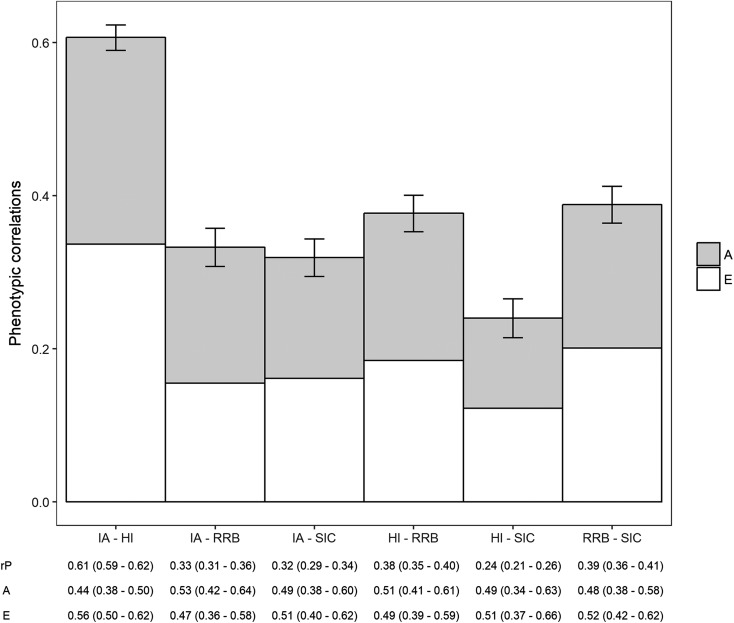
Background: Traits of attention-deficit/hyperactivity disorder (ADHD) and autism spectrum disorder (ASD) are strongly associated in children and adolescents, largely due to genetic factors. Less is known about the phenotypic and aetiological overlap between ADHD and ASD traits in adults. Methods: We studied 6866 individuals aged 20–28 years from the Swedish Study of Young Adult Twins. Inattention (IA) and hyperactivity/impulsivity (HI) were assessed using the WHO Adult ADHD Self-Report Scale-V1.1. Repetitive and restricted behaviours (RRB) and social interaction and communication (SIC) were assessed using the Autism-Tics, ADHD, and other Comorbidities inventory. We used structural equation modelling to decompose covariance between these ADHD and ASD trait dimensions into genetic and shared/non-shared environmental components. Results: At the phenotypic level, IA was similarly correlated with RRB (r= 0.33; 95% Confidence Interval (CI) 0.31–0.36) and with SIC (r= 0.32; 95% CI 0.29–0.34), whereas HI was more strongly associated with RRB (r= 0.38; 95% CI 0.35–0.40) than with SIC (r= 0.24; 95% CI 0.21–0.26). Genetic and non-shared environmental effects accounted for similar proportions of the phenotypic correlations, whereas shared environmental effects were of minimal importance. The highest genetic correlation was between HI and RRB (r= 0.56; 95% 0.46–0.65), and the lowest was between HI and SIC (r= 0.33; 95% CI 0.23–0.43). Conclusions: We found evidence for dimension-specific phenotypic and aetiological overlap between ADHD and ASD traits in adults. Future studies investigating mechanisms underlying comorbidity between ADHD and ASD may benefit from exploring several symptom-dimensions, rather than considering only broad diagnostic categories.
Overview
The claims and statistics of this paper haven’t been checked yet.
Free: it reads the open-access text and checks the first 5 claims that cite a source we can check. Create a free account to check every claim.
Integrity signals
Registry
Cites
Statistics
Figures
Verification
Claims the paper makes
The claims and statistics of this paper haven’t been checked yet.
Free: it reads the open-access text and checks the first 5 claims that cite a source we can check. Create a free account to check every claim.
Claims other papers make about this one
Each is checked against this paper’s own text: does it say what the citing paper says it does?
The source backs part of the claim, not all of it — or backs it for a different population, condition or comparison.
In the citing paper
“The interaction between ADHD and AD is widely debated in the literature, since they have independent transmission patterns, represent different expressions of the same genetic risk factor [48,111], and share some neurodevelopmental brain abnormalities [106,112,113,114].”
From ADHD Children Take More Time to Inhibit Automatic Responses: A Comparison with Anxiety Disorders Using NEPSY-II (2025) · cites this paper as [48]
Experimental — accuracy not yet measured
Self-check
Percentages, sums and reported differences re-computed from the paper’s own numbers.
The self-check needs the paper’s full text.
Citations
Cites
What is coefficient alpha? An examination of theory and applications
Cortina, J. M. (1993) · Journal of Applied Psychology · doi:10.1037/0021-9010.78.1.98 · Cited by 8,810 · cited 2×
“Both subscales had acceptable internal consistency given the small number of items (Cronbach’s α equal to 0.62 and 0.65, respectively) (Cortina, 1993), and good accuracy (Area under the curve equal to 0.88 and 0.81, respectively) in predicting a clinical diagnosis in this sample (online…”
BackgroundResultInfluentialMethodology for Genetic Studies of Twins and Families
Neale, M. C., & Cardon, L. R. (1992) · doi:10.1007/978-94-015-8018-2 · Cited by 4,005 · cited 1×
“Information on monozygotic twins (MZ), who are in principle genetically identical, and dizygotic twins (DZ), who share on average 50% of their co-segregating alleles, was used to decompose the observed variance of ADHD and ASD trait dimensions and their covariance into the latent components: additive genetic influence…”
MethodKESSLER, R. C., ADLER, L., AMES, M., DEMLER, O., FARAONE, S., HIRIPI, E., HOWES, M. J., JIN, R., SECNIK, K., SPENCER, T., et al. (2005) · Psychological Medicine · doi:10.1017/s0033291704002892 · Cited by 3,452 · cited 3×
“The questionnaire used for the assessment of IA and HI problems has been designed to screen for ADHD symptoms in adults (Kessler et al., 2005; Adler et al., 2006).”
BackgroundMethodSimonoff, E., Pickles, A., Charman, T., Chandler, S., Loucas, T., & Baird, G. (2008) · Journal of the American Academy of Child & Adolescent Psychiatry · doi:10.1097/chi.0b013e318179964f · Cited by 3,399 · cited 1×
“…symptoms in children and adolescents diagnosed with ADHD (Clark et al., 1999; Mulligan et al., 2009; Grzadzinski et al., 2011; Kroger et al., 2011; Kotte et al., 2013; Martin et al., 2014; Grzadzinski et al., 2016) and vice versa (Gadow et al., 2006; Simonoff et al., 2008; Yerys et al., 2009).”
BackgroundFARAONE, S. V., BIEDERMAN, J., & MICK, E. (2006) · Psychological Medicine · doi:10.1017/s003329170500471x · Cited by 2,267 · cited 1×
“Overall, the assessment of different traits related to ADHD and ASD can help in understanding more about the manifestation and the aetiology of neurodevelopmental problems appearing or continuing during adulthood, even if they do not satisfy the criteria for a diagnosis (Faraone et al., 2006).”
BackgroundDiscovery of the first genome-wide significant risk loci for ADHD
(2017) · doi:10.1101/145581 · Cited by 2,203
ADHD Working Group of the Psychiatric Genomics Consortium (PGC), Demontis, D., Early Lifecourse & Genetic Epidemiology (EAGLE) Consortium, 23andMe Research Team, Walters, R. K., Martin, J., Mattheisen, M., Als, T. D., Agerbo, E., Baldursson, G., et al. (2019) · Nature Genetics · doi:10.1038/s41588-018-0269-7 · Cited by 2,203
Self-citationOpenMx 2.0: Extended Structural Equation and Statistical Modeling
Neale, M. C., Hunter, M. D., Pritikin, J. N., Zahery, M., Brick, T. R., Kirkpatrick, R. M., Estabrook, R., Bates, T. C., Maes, H. H., & Boker, S. M. (2016) · Psychometrika · doi:10.1007/s11336-014-9435-8 · Cited by 1,100 · cited 1×
“All the analyses were conducted with structural equation modelling using OpenMx (Neale et al., 2016).”
MethodThapar, A., Cooper, M., & Rutter, M. (2017) · The Lancet Psychiatry · doi:10.1016/s2215-0366(16)30376-5 · Cited by 903
Kessler, R. C., Adler, L. A., Gruber, M. J., Sarawate, C. A., Spencer, T., & Van Brunt, D. L. (2007) · International Journal of Methods in Psychiatric Research · doi:10.1002/mpr.208 · Cited by 834 · cited 1×
“While the short version including six items has been shown to have high sensitivity for DSM-IV and DSM-5 diagnoses (Kessler et al., 2005; Kessler et al., 2007; Ustun et al., 2017), some inherent inaccuracy is expected with reliance in self-ratings alone.”
Background
Research works printed but not linked: 1
- American Psychological Association (APA) (2013) Diagnostic and Statistical Manual of Mental Disorders (DSM-5®). Arlington: American Psychiatric Publishing.
Cited by
Lai, M.-C., Kassee, C., Besney, R., Bonato, S., Hull, L., Mandy, W., Szatmari, P., & Ameis, S. H. (2019) · The Lancet Psychiatry · doi:10.1016/s2215-0366(19)30289-5 · Cited by 1,892
Antshel, K. M., & Russo, N. (2019) · Current Psychiatry Reports · doi:10.1007/s11920-019-1020-5 · Cited by 450
The nature and nurture of ADHD and its comorbidities: A narrative review on twin studies
Tistarelli, N., Fagnani, C., Troianiello, M., Stazi, M. A., & Adriani, W. (2020) · Neuroscience & Biobehavioral Reviews · doi:10.1016/j.neubiorev.2019.12.017 · Cited by 104
Rodrigues, R., Lai, M., Beswick, A., Gorman, D. A., Anagnostou, E., Szatmari, P., Anderson, K. K., & Ameis, S. H. (2021) · Journal of Child Psychology and Psychiatry · doi:10.1111/jcpp.13305 · Cited by 98
Michelini, G., Carlisi, C. O., Eaton, N. R., Elison, J. T., Haltigan, J. D., Kotov, R., Krueger, R. F., Latzman, R. D., Li, J. J., Levin-Aspenson, H. F., et al. (2024) · World Psychiatry · doi:10.1002/wps.21225 · Cited by 119
Zhao, Y., Yang, L., Gong, G., Cao, Q., & Liu, J. (2021) · Progress in Neuro-Psychopharmacology and Biological Psychiatry · doi:10.1016/j.pnpbp.2021.110477 · Cited by 93
Analysis of structural brain asymmetries in attention‐deficit/hyperactivity disorder in 39 datasets
Postema, M. C., Hoogman, M., Ambrosino, S., Asherson, P. J., Banaschewski, T., Bandeira, C. E., Aa, B., Bau, C. H. D., Baumeister, S., Baur‐Streubel, R., et al. (2021) · Journal of Child Psychology and Psychiatry · doi:10.1111/jcpp.13396 · Cited by 82
“ADHD and ASD often co-occur (Leitner, 2014) and are known to share genetic influences (Ghirardi et al., 2019; Stergiakouli et al., 2017), such that the two diagnostic labels are likely to capture a partly overlapping spectrum of related disorders (Demopoulos, Hopkins, & Davis, 2013; van der Meer et…”
BackgroundSelf-citationThe contribution of copy number variants to psychiatric symptoms and cognitive ability
Mollon, J., Almasy, L. A., Jacquemont, S., & Glahn, D. C. (2023) · Molecular Psychiatry · doi:10.1038/s41380-023-01978-4 · Cited by 88
Anhedonia as a transdiagnostic symptom across psychological disorders: a network approach
Guineau, M. G., Ikani, N., Rinck, M., Collard, R. M., van Eijndhoven, P., Tendolkar, I., Schene, A. H., Becker, E. S., & Vrijsen, J. N. (2022) · Psychological Medicine · doi:10.1017/s0033291722000575 · Cited by 93
Solberg, B. S., Zayats, T., Posserud, M.-B., Halmøy, A., Engeland, A., Haavik, J., & Klungsøyr, K. (2019) · Biological Psychiatry · doi:10.1016/j.biopsych.2019.04.021 · Cited by 64
Koi, P. (2021) · Studies in History and Philosophy of Science Part A · doi:10.1016/j.shpsa.2021.07.006 · Cited by 67
“Some support for the Complex Spectrum model can be gleaned from that in addition to trait overlap between dimensions of autism and ADHD (Rommelse et al., 2011; Ghirardi et al., 2019), the two diagnoses also overlap in genetic variation.”
BackgroundWesteinde, A. V., Cauvet, É., Toro, R., Kuja‐Halkola, R., Neufeld, J., Mevel, K., & Bölte, S. (2019) · Molecular Autism · doi:10.1186/s13229-019-0309-x · Cited by 53
“Hence, the within-pair analysis increases the ability to detect neural correlates of RRBs which might be subtler compared to the effects of age and shared genetic and environmental factors.”
BackgroundInfluentialSelf-citationKrakowski, A. D., Cost, K. T., Anagnostou, E., Lai, M.-C., Crosbie, J., Schachar, R., Georgiades, S., Duku, E., & Szatmari, P. (2020) · Molecular Autism · doi:10.1186/s13229-020-00338-1 · Cited by 50
“Twin studies have also examined the correlations between specific ASD and ADHD domains, and found a high genetic correlation between restricted repetitive behaviors and interests (RRBI) and domains of inattention and hyperactivity/impulsivity [9, 12, 13], and between social-communication and hyperactivity/impulsivity…”
BackgroundRao, S., Baranova, A. V., Yao, Y., Wang, J., & Zhang, F. (2022) · Neuropsychobiology · doi:10.1159/000525411 · Cited by 54
Li, T., Mota, N. R., Galesloot, T. E., Bralten, J., Buitelaar, J. K., IntHout, J., AriasVasquez, A., & Franke, B. (2019) · European Neuropsychopharmacology · doi:10.1016/j.euroneuro.2019.07.136 · Cited by 45
Self-citationTaylor, M. J., Gillberg, C., Lichtenstein, P., & Lundström, S. (2017) · Molecular Autism · doi:10.1186/s13229-017-0120-5 · Cited by 43
Self-citationFactors Associated with Quality of Life in Adults with Autism Spectrum Disorder: A Systematic Review
Sáez‐Suanes, G. P., & Álvarez-Couto, M. (2021) · Review Journal of Autism and Developmental Disorders · doi:10.1007/s40489-021-00254-x · Cited by 50
Canals, J., Morales‐Hidalgo, P., Voltas, N., & Hernández‐Martínez, C. (2024) · Autism Research · doi:10.1002/aur.3146 · Cited by 54
“…coexist and common data on the clinical, neurobiological characteristics, and genetic associations have been a focus of study since the recognition of this comorbidity in the DSM-5 (American Psychiatric Association, 2013; Boedhoe et al., 2020; Ghirardi et al., 2019, 2021; Schachar et al., 2023).”
BackgroundCarta, A., Fucà, E., Guerrera, S., Napoli, E., Valeri, G., & Vicari, S. (2020) · Frontiers in Psychology · doi:10.3389/fpsyg.2020.00861 · Cited by 40
“ADHD and ASD show an overlap in symptoms, such as inattention and hyperactivity/impulsivity (Taylor et al., 2015; Ghirardi et al., 2019), and ADHD has been found to be the most frequently diagnosed disorder in co-occurrence with ASD (Lai et al.”
BackgroundASD symptoms in adults with ADHD: a preliminary study using the ADOS-2
Hayashi, W., Hanawa, Y., Iwami, Y., Aoyagi, K., Saga, N., Nakamura, D., & Iwanami, A. (2021) · European Archives of Psychiatry and Clinical Neuroscience · doi:10.1007/s00406-021-01250-2 · Cited by 36
Schachar, R. J., Dupuis, A., Arnold, P. D., Anagnostou, E., Kelley, E., Georgiades, S., Nicolson, R., Townes, P., Burton, C. L., & Crosbie, J. (2023) · Research on Child and Adolescent Psychopathology · doi:10.1007/s10802-022-00958-6 · Cited by 30
“Attention-deficit/hyperactivity disorder (ADHD) and autism spectrum disorder (ASD) are impairing, persistent and heritable neurodevelopmental disorders (APA, 2013) that share some genetic (Ghirardi et al., 2019; Lee et al., 2019; Polderman et al., 2014) and neural features (Boedhoe et al.”
BackgroundPehlivanidis, A., Papanikolaou, Κ., Korobili, K., Kalantzi, E., Mantas, V., Pappa, D., & Papageorgiou, C. (2020) · Brain Sciences · doi:10.3390/brainsci11010018 · Cited by 35
“Furthermore, stepwise logistic multiple regression analysis showed that the EQ score was among the factors that discriminated both ASD and ADHD/ASD cases from ADHD cases (Table 4).”
BackgroundInfluentialKnott, R., Johnson, B. P., Tiego, J., Mellahn, O. J., Finlay, A., Kallady, K., Kouspos, M., Sindhu, V. P. M., Hawi, Z., Arnatkevičiūtė, A., et al. (2021) · Molecular Autism · doi:10.1186/s13229-021-00457-3 · Cited by 30
Eaton, C. B., Roarty, K., Doval, N., Shetty, S., Goodall, K., & Rhodes, S. (2023) · Journal of Attention Disorders · doi:10.1177/10870547231177466 · Cited by 37
“Neuropsychological difficulties shared by ASD and ADHD have been reported as similar due to comparable genetic loads and endophenotypes, despite a lack of overlap in the diagnostic criteria of both disorders (Ghirardi et al., 2019; Jang et al., 2013).”
BackgroundGhamdi, K. S. A., & Almusailhi, J. A. (2024) · Medical Archives · doi:10.5455/medarh.2024.78.159-163 · Cited by 45
Elwin, M., Elvin, T., & Larsson, J. (2020) · Child and Adolescent Psychiatry and Mental Health · doi:10.1186/s13034-020-00336-4 · Cited by 38
Associations between parental psychiatric disorders and autism spectrum disorder in the offspring
Chien, Y., Wu, C., Chang, Y., Cheong, M.-L. J., Yao, T., & Tsai, H. (2022) · Autism Research · doi:10.1002/aur.2835 · Cited by 27
“Similarly, the findings from a recent twin study suggest that ADHD and ASD share clinical manifestations and some degree of genetic heritability (Laura Ghirardi et al., 2019).”
ResultDeserno, M. K., Bathelt, J., Groenman, A. P., & Geurts, H. M. (2023) · European Child & Adolescent Psychiatry · doi:10.1007/s00787-022-01986-9 · Cited by 22
“This overlap was explained by genetic effects [29].”
BackgroundBlanco, B., Lloyd‐Fox, S., Ali, J. B., Pirazzoli, L., Goodwin, A., Mason, L., Pasco, G., Charman, T., Jones, E. J. H., Johnson, M. H., et al. (2023) · Cortex · doi:10.1016/j.cortex.2023.07.010 · Cited by 24
“As ASD and ADHD are both highly heritable (Ghirardi et al., 2019; Tick et al., 2016), a suitable approach for studying early brain developmental pathways in these conditions is through prospective longitudinal studies of infants at elevated likelihood (EL) of developing ASD and/or ADHD by virtue of…”
Charman, T., Pasco, G., Hendry, A. J., Bazelmans, T., Narvekar, N., Goodwin, A., Halkola, H., Agyapong, M., Holman, R., Ali, J. B., et al. (2023) · JCPP Advances · doi:10.1002/jcv2.12189 · Cited by 19
“Twin and family studies show moderate shared heritability between the two conditions (Ghirardi et al., 2019; Taylor et al., 2013).”
Zachor, D. A., & Ben‐Itzchak, E. (2019) · Journal of Autism and Developmental Disorders · doi:10.1007/s10803-019-04042-9 · Cited by 17
Smith, T. F., Kaczorowski, J. A., & Acosta, M. T. (2020) · Child s Nervous System · doi:10.1007/s00381-020-04745-w · Cited by 18
Talge, N. M., Adkins, M., Kileny, P. R., & Frownfelter, I. (2021) · Pediatric Research · doi:10.1038/s41390-021-01730-0 · Cited by 16
Age effects on autism heritability and etiological stability of autistic traits
Martini, M. I., Butwicka, A., Rietz, E. D., Kanina, A., Rosenqvist, M. A., Larsson, H., Lichtenstein, P., & Taylor, M. J. (2024) · Journal of Child Psychology and Psychiatry · doi:10.1111/jcpp.13949 · Cited by 17
Self-citationChoi, H., Hong, J., Kang, H. G., Park, M.-H., Ha, S., Lee, J., Yoon, S., Kim, D., Park, Y. R., & Cheon, K.-A. A. (2025) · npj Digital Medicine · doi:10.1038/s41746-025-01547-9 · Cited by 21
“The results re fl ect the overlapping mor-phologicalandfunctionalfeaturescommonlyobservedinADHDandASD, whichsharegeneticandneurodevelopmentalpathways 73,74 .”
Liu, J., Liu, Q.-R., Wu, Z.-M., Chen, Q.-R., Chen, J., Wang, Y., Cao, X., Dai, M., Dong, C., Liu, Q., et al. (2023) · Behavioral and Brain Functions · doi:10.1186/s12993-023-00222-x · Cited by 11
“In the existing literature, HI symptoms are commonly reported to be more closely correlated with RRBs, while inattention is associated with all subdomains of autistic symptoms [32, 35, 36].”
BackgroundAttention/Deficit Hyperactivity Disorder in Adolescent and Young Adult Males With Fragile X Syndrome
Klusek, J., O’Connor, S. L., Hickey, A. C., Hills, K. J., Abbeduto, L., & Roberts, J. E. (2022) · American Journal on Intellectual and Developmental Disabilities · doi:10.1352/1944-7558-127.3.213 · Cited by 12
Krakowski, A. D., Szatmári, P., Crosbie, J., Schachar, R. J., Duku, E., Georgiades, S., & Anagnostou, E. A. (2021) · Frontiers in Psychiatry · doi:10.3389/fpsyt.2021.654120 · Cited by 13
ASD and ADHD symptoms in 18-year-olds – A population-based study of twins born 1993 to 2001
Arvidsson, O., Brikell, I., Larsson, H., Lichtenstein, P., Kuja‐Halkola, R., Johnson, M., Gillberg, C., & Lundström, S. (2025) · Psychiatry Research · doi:10.1016/j.psychres.2025.116613 · Cited by 11
“The 12 DSM-IV items have also been used epidemiologically in 20 – 28-year-olds and had acceptable internal consistency and good accuracy in predicting clinical diagnosis, as indicated by an area under the curve of 0.88 and 0.81, respectively (Ghirardi et al., 2019).”
InfluentialSelf-citationHemmingsen, C. H., Kjær, S. K., Jezek, A. H., Verhulst, F. C., Pagsberg, A. K., Kamper‐Jørgensen, M., Mørch, L. S., & Hargreave, M. (2020) · European Journal of Epidemiology · doi:10.1007/s10654-020-00673-w · Cited by 12
Taylor, M. J., Ronald, A., Martin, J., Lundström, S., Hosang, G. M., & Lichtenstein, P. (2021) · Psychological Medicine · doi:10.1017/s0033291721000374 · Cited by 9
“This contrasts somewhat with other studies that have examined the association between specific autistic traits and other conditions, where inflexible behavior and communication problems show stronger genetic overlap with internalizing traits and traits of ADHD than social interaction difficulties (Ghirardi et al., 201…”
Self-citationHeidari, A., Motamed, M., Forushani, A. R., & Alaghband‐Rad, J. (2023) · The Journal of Nervous and Mental Disease · doi:10.1097/nmd.0000000000001645 · Cited by 8
Mohammadian, F., Zavieh, A., Heidari, A., & Motamed, M. (2023) · Applied Neuropsychology Adult · doi:10.1080/23279095.2023.2230507 · Cited by 7
“This strong association might stem from shared gen-etic and environmental backgrounds (Ghirardi et al., 2019).”
A Potential Role for the STXBP5-AS1 Gene in Adult ADHD Symptoms
Vásquez, A. A., Groffen, A. J. A., Spijker, S., Ouwens, K. G., Klein, M., Vojinović, D., Galesloot, T. E., Bralten, J., Hottenga, J., van der Most, P. J., et al. (2019) · Behavior Genetics · doi:10.1007/s10519-018-09947-2 · Cited by 10
Self-citationAcetaminophen’s Role in Autism and ADHD: A Mitochondrial Perspective
Chu, S., Woodfin, S., Bayliss, E., Smith, M., Fulp, A. B., Mirabelli, E., & Moore, W. (2025) · International Journal of Molecular Sciences · doi:10.3390/ijms26178585 · Cited by 10
Sibéoni, J., Manolios, É., Hausser, C., Delage, R., Bayle, F., Speranza, M., Verneuil, L., & Révah‐Levy, A. (2023) · Scientific Reports · doi:10.1038/s41598-023-30921-4 · Cited by 8
Taylor, M. J., van Leeuwen, T. M., Kuja‐Halkola, R., Lundström, S., Larsson, H., Lichtenstein, P., Bölte, S., & Neufeld, J. (2023) · Proceedings of the Royal Society B Biological Sciences · doi:10.1098/rspb.2023.1888 · Cited by 7
Self-citationKaur, S., Morales‐Hidalgo, P., Voltas, N., & Canals, J. (2024) · Autism Research · doi:10.1002/aur.3138 · Cited by 6
“An apparent association has been seen between the two disorders in terms of social skills, executive functioning, and behavioral disturbances (Ghirardi et al., 2019; Mouti et al., 2019).”
BackgroundWiggs, K. K., Cook, T. E., Lodhawala, I., Cleary, E. N., Yolton, K. A., & Becker, S. P. (2025) · European Child & Adolescent Psychiatry · doi:10.1007/s00787-025-02667-z · Cited by 8
Makin, L., Allen, K., & Tchanturia, K. (2026) · Frontiers in Psychiatry · doi:10.3389/fpsyt.2026.1787957 · Cited by 6
Vos, M., Wang, R., Rommelse, N. N. J., Snieder, H., Larsson, H., & Hartman, C. A. (2024) · Psychological Medicine · doi:10.1017/s003329172400309x · Cited by 5
“…and findings that heritability estimates of clinically diagnosed ADHD in adults (which are only partly based on self-report) are similarly high as those based on parent-reported ADHD in children (Chang, Lichtenstein, Asherson, & Larsson, 2013; Larsson, Chang, D ’ Onofrio, & Lichtenstein, 2015).”
InfluentialSelf-citationWang, S., Li, F., Wang, F., Liao, X., Li, J., Guo, X., & Deng, W. (2023) · Journal of Attention Disorders · doi:10.1177/10870547231187166 · Cited by 5
More similarities than differences between ADHD and ASD in functional brain connectivityPreprint
Bathelt, J., Caan, M. W. A., & Geurts, H. M. (2020) · PsyArXiv (OSF Preprints) · doi:10.31234/osf.io/4tfmn · Cited by 7
Charman, T., Bazelmans, T., Pasco, G., Ali, J. B., Johnson, M. H., Jones, E. J. H., & The BASIS/STAARS Team (2025) · Journal of Child Psychology and Psychiatry · doi:10.1111/jcpp.70048 · Cited by 5
“Both within-condition and cross-condition autism and ADHD associations are also found between family members at the trait level (Ghirardi et al., 2019; Rommelse, Franke, Geurts, Hartman, & Buitelaar, 2010; Van Steijn et al., 2012).”
InfluentialYou, Y., Oginni, O. A., Rijsdijk, F. V., Lim, K. X., Zavos, H. M. S., & McAdams, T. A. (2024) · Psychological Medicine · doi:10.1017/s0033291724002514 · Cited by 8
Psychopathologies Associated with ASD: Anxiety, OCD, Depression, and ADHD
Braconnier, M. L., Garza, I., & Moskowitz, L. J. (2022) · Autism and child psychopathology series · doi:10.1007/978-3-030-88538-0_2 · Cited by 5
Nauman, J., & Ingersoll, B. R. (2022) · Research in Autism · doi:10.1016/j.rasd.2022.102091 · Cited by 8
Mitochondrial Dysfunction in Autism Spectrum Disorders
Nunes, T., Latini, A., & Gaspar, J. M. (2023) · Springer eBooks · doi:10.1007/978-3-031-42383-3_5 · Cited by 5
Network analysis of core and associated symptoms in preschool children with autism spectrum disorderPreprint
Wang, X., Shi, L., Ou, J., Shen, Y., Wang, Y., Lin, J., Cui, X., Liu, R., Wu, R., Xia, K., et al. (2020) · Research Square · doi:10.21203/rs.3.rs-48456/v1 · Cited by 4
Challenging Behaviors in Adults with Intellectual Disabilities and ASD: Related Variables
Álvarez-Couto, M. (2024) · Springer eBooks · doi:10.1007/978-3-031-40858-8_63-1 · Cited by 5
Erik, E., Safran, E. E., & Şevgin, Ö. (2025) · Research in Autism · doi:10.1016/j.reia.2025.202543 · Cited by 8
Related Disorders (Intellectual, Attention, and Language Disorders) and ASD
Dieckhaus, M. F. S., Thomas, R. P., Frisch, M., Moreno, M. P., Suh, J., & FEIN, D. A. (2024) · Autism and child psychopathology series · doi:10.1007/978-3-031-64499-3_4 · Cited by 4
Autism Spectrum Disorder Versus Attention-Deficit/Hyperactivity Disorder
Davis, N. O., Carpenter, K. L. H., & Dawson, G. (2022) · Oxford University Press eBooks · doi:10.1093/med-psych/9780197516881.003.0004 · Cited by 4
Katsarou, D. V. (2024) · Advances in psychology, mental health, and behavioral studies (APMHBS) book series · doi:10.4018/979-8-3693-4022-6.ch008 · Cited by 4
Panvino, F., Zaccaria, V., Pica, M., Amitrano, N., Pisani, F., & Di Brina, C. (2025) · Children · doi:10.3390/children12060798 · Cited by 2
Langdon, M. C., Brown, A., Hearps, S. J. C., Davies, M., Collins, B., McDonald, S., Turkstra, L. S., Dooley, J. J., Darby, D., Darling, S. J., et al. (2026) · Journal of Neuropsychology · doi:10.1111/jnp.70027 · Cited by 2
Identifying Neurodevelopmental Domain Subgroups in Autism and ADHD
Krakowski, A. D., Cost, K. T., Vandewouw, M. M., Szatmári, P., Anagnostou, E. A., Crosbie, J., Schachar, R. J., Duku, E., Georgiades, S., Ayub, M., et al. (2026) · Journal of Autism and Developmental Disorders · doi:10.1007/s10803-026-07266-8 · Cited by 2
ADHD, Distractibility, and ABA
Orantes, D., Rohacek, A., & Antshel, K. M. (2023) · Autism and child psychopathology series · doi:10.1007/978-3-031-27587-6_20 · Cited by 2
Vitamin Interventions in ASD and ADHD: Systematic Review and Meta-Analysis
Shen, Y., Xie, Y., Zheng, Y., Zheng, Y., & Liu, Y. (2025) · Neuropsychiatric Disease and Treatment · doi:10.2147/ndt.s553063 · Cited by 5
De novo transgenerational inheritance of male rat hyperactivity by rotenone
Ishido, M. (2022) · Fundamental Toxicological Sciences · doi:10.2131/fts.9.111 · Cited by 2
Harris, J. C., & Coyle, J. T. (2024) · Oxford University Press eBooks · doi:10.1093/med/9780199928118.003.0016 · Cited by 3
Analysis of a Four-Factor Model of Autism Symptoms in Children Aged 3–6 Years Old
Nasledov, A., Tkacheva, L. O., Zashchirinskaia, O. V., & Александрович, М. С. (2024) · Clinical Psychology and Special Education · doi:10.17759/cpse.2023120403 · Cited by 3
Jaiswal, A., Wall, D. P., & Washington, P. Y. (2024) · IEEE-EMBS International Conference on Biomedical and Health Informatics (BHI ...) · doi:10.1109/bhi62660.2024.10913850 · Cited by 5
fMRI-Based Multi-class DMDC Model Efficiently Decodes the Overlaps between ASD and ADHD
Zolghadr, Z., Batouli, S. A. H., Majd, H. A., Shafaghi, L., & Mehrabi, Y. (2024) · Basic and Clinical Neuroscience Journal · doi:10.32598/bcn.2023.4302.1 · Cited by 2
“Regarding heritability, family studies have reported that having relatives with ASD increases the likelihood of receiving an ADHD diagnosis (Ghirardi et al., 2018; Ghirardi et al., 2019; Jokiranta-Olkoniemi et al., 2016; Musser et al., 2014).”
BackgroundIs there a link between neurodiversity and stalking? a systematic review
Baciu, A., & Worthington, R. (2024) · Journal of Forensic Practice · doi:10.1108/jfp-01-2024-0001 · Cited by 1
Feng, K., Zhao, Y. K., Yu, Q., Deng, J., Wu, J., & Liu, L. (2021) · Medicine · doi:10.1097/md.0000000000018621 · Cited by 2
“Various risk factors including genetic,([11]) infectious,([12]) metabolic,([13]) immunological,([14]) environmental,([15]) family relationship,([16]) and nutritional([17]) have been investigated; however, the relationship between gut microbiota and ASD has not received sufficient attention.”
Genetic background of grey matter brain networks related to attention-deficit/hyperactivity disorderPreprint
Schoenmacker, G., Duan, K., Rootes-Murdy, K., Jiang, W., Hoekstra, P. J., Hartman, C. A., Oosterlaan, J., Hoogman, M., Franke, B., Turner, J. A., et al. (2022) · medRxiv · doi:10.1101/2022.01.07.22268852 · Cited by 1
Self-citationASD and ADHD as syndromes of high creativity - Le TSA et le TDAH comme syndromes de haute créativitéPreprint
Rebecchi, K. (2023) · PsyArXiv (OSF Preprints) · doi:10.31234/osf.io/jerua · Cited by 1
Sterling, K. (2020) · York University Digital Library (York University)
Predictors at Toddlerhood for Long Term Severity of ADHD Symptoms in Autism Spectrum Disorder
Zachor, D. A., & Ben‐Itzchak, E. (2020) · Springer eBooks · doi:10.1007/978-1-4614-6435-8_102483-1
Predictors at Toddlerhood for Long-Term Severity of ADHD Symptoms in Autism Spectrum Disorder
Zachor, D. A., & Ben‐Itzchak, E. (2021) · Springer eBooks · doi:10.1007/978-3-319-91280-6_102483
Twin studies of complex traits and diseases
Beam, C. R., Kim, A. J., & Polderman, T. J. C. (2022) · Elsevier eBooks · doi:10.1016/b978-0-12-821514-2.00013-1
Rebecchi, K. (2023) · PsyArXiv (OSF Preprints) · doi:10.31234/osf.io/egv2p
Öztürk, F. Ö. (2023) · Turkiye Klinikleri Journal of Nursing Sciences · doi:10.5336/nurses.2022-94042
Neufeld, J., Taylor, M. J., van Leeuwen, T., Kuja‐Halkola, R., Lundström, S., Larsson, H., Lichtenstein, P., & Bölte, S. (2023) · Research Square · doi:10.21203/rs.3.rs-2764274/v1
Self-citationNeurodevelopmental Aspects of Behavioural Differences II. Autism Spectrum Disorder (ASD)
Stevenson, J. (2023) · Springer eBooks · doi:10.1007/978-3-031-45787-6_10
Kurt, F., Öz, B. O., Kaya, A., & Kocabay, K. (2024) · Medicine · doi:10.1097/md.0000000000040449
“[20] Twin studies can also provide valuable insights for determining the plasma TSH cutoff value.”
BackgroundAperiodic Pupil Fluctuations at Rest Predict Orienting of Visual Attention
Wang, R., & Jia, J. (2025) · Psychophysiology · doi:10.1111/psyp.14755
“This calculation was based on a power of 0.8, an alpha error rate of 0.05, and a correlation coefficient of 0.33 derived from a similar study (Ghirardi et al. 2019).”
InfluentialAnhedonia as a Transdiagnostic Symptom Across Psychological Disorders: A Network Approach
Guineau, M. G., Ikani, N., Rinck, M., Collard, R. M., van Eijndhoven, P., Tendolkar, I., Schene, A. H., Becker, E. S., & Vrijsen, J. N. (2025) · FOCUS The Journal of Lifelong Learning in Psychiatry · doi:10.1176/appi.focus.25023012
Griffioen, G., Hildalgo, N., Sorjonen, K., Andersson, M., Tangen, Ä., Chin, L., Lundberg, J., Halldin, C., Bölte, S., & Borg, J. (2025) · Research Square · doi:10.21203/rs.3.rs-7525895/v1
Carlsson, T., Larsson, H., Lundström, S., Bölte, S., & Taylor, M. J. (2025) · JCPP Advances · doi:10.1002/jcv2.70069
“It has, in particular, been shown that restricted fetal growth is associated with a small but significant increase in a latent general factor of psychopathology and a moderate increase in a specific latent NDC factor (Pettersson et al., 2019).”
Self-citationLiu, J., Liu, Q.-R., Wu, Z., Chen, Q.-R., Chen, J., Wang, Y., Cao, X., Dai, M.-X., Dong, C., Liu, Q., et al. (2023) · Figshare · doi:10.6084/m9.figshare.24597758
Liu, J., Liu, Q., Wu, Z., Wang, Y., Cao, X., Dai, M.-X., Dong, C., Liu, Q., Zhu, J., Chen, Q. R., et al. (2023) · Research Square · doi:10.21203/rs.3.rs-2426891/v1
Liu, Z., Lin, Z., Fu, L. S., Li, H., Liu, Y., Sun, Y., Amjad, N., Majid, M., Basnet, R., Wu, C., et al. (2025) · Research Square · doi:10.21203/rs.3.rs-6545657/v1
The Neurodivergent Practitioner: Accentuating Positives and Overcoming Challenges
Rigby, L., & Collins, D. (2026) · Case Studies in Sport and Performance Psychology · doi:10.1123/csspp.2024-0037
Michelini, G., Liao, W., Lu, S. D., Caserini, C., Eley, T. C., Ronald, A., Wilson, S., Malanchini, M., & Rimfeld, K. (2026) · Molecular Psychiatry · doi:10.1038/s41380-026-03714-0 · Cited by 2
“For full results (including factor loading and correlations for each factor solution), see Supplementary Results 1 – 3 and Supplementary Tables 5 – 7.”
InfluentialCharman, T., Bazelmans, T., Pasco, G., Ali, J. B., Jones, E. J. H., Johnson, M. H., The BASIS Team, Arthur, R., Baykoca, J., Blasi, A., et al. (2026) · Journal of Autism and Developmental Disorders · doi:10.1007/s10803-026-07481-3 · Cited by 1
Metadata
- Authors
- Ghirardi, L., Pettersson, E., Taylor, M. J., Freitag, C. M., Franke, B., Asherson, P., Larsson, H., & Kuja-Halkola, R.
- Affiliations
- Karolinska Institutet (SE)
- Goethe University Frankfurt (DE)
- Donders Institute for Brain, Cognition and Behaviour (NL)
- King's College London (GB)
- Örebro University (SE)
- Corresponding author
- Ghirardi, Laura
- ORCID
- Venue
- Psychological Medicine
- Publisher
- Cambridge University Press (CUP)
- Published
- 2018-09-07
- Volume
- 49
- Issue
- 10
- Pages
- 1713-1721
- ISSN
- 0033-2917 (ISSN-L)
- 1469-8978
- PMC
- PMC6601357
- OpenAlex
- W2891643414
- Cited by
- 99
- References
- 57
- Citations by year
- 2026: 7 · 2025: 13 · 2024: 17 · 2023: 19 · 2022: 12 · 2021: 11 · 2020: 11 · 2019: 8
- FWCI
- 5.88
- Type
- journal article
- Language
- en
- Open access
- hybrid
- doi.org
- Licence
- Locations
- Psychological Medicine (publishedVersion, cc-by-nc-sa)
- PubMed Central (publishedVersion, cc-by-nc-sa)
- PubMed (publishedVersion)
- Radboud Repository (Radboud University) (submittedVersion)
- Radboud Repository (Radboud University) (submittedVersion, other-oa)
- Research Portal (King's College London) (submittedVersion, other-oa)
- Funders
- National Institute for Health and Care Research (NF-SI-0616-10040, NGF-SI-0616-10040)
- European Commission (643051, HORIZON2020)
- Deutsche Forschungsgemeinschaft (FR 2069/8–1)
- Nederlandse Organisatie voor Wetenschappelijk Onderzoek (016‐130‐669)
- Vetenskapsrådet ((2014-3831))
- European College of Neuropsychopharmacology
- Topics
- Health Sciences › Medicine › Psychiatry and Mental health › Attention Deficit Hyperactivity Disorder
- Life Sciences › Neuroscience › Cognitive Neuroscience › Autism Spectrum Disorder Research
- Life Sciences › Biochemistry, Genetics and Molecular Biology › Genetics › Genetic Associations and Epidemiology
- Keywords
- attention deficit hyperactivity disorder, autism spectrum disorder, comorbidities, inattention, hyperactivity/impulsivity, communication and social interaction, genetic correlation, nonshared environment, shared environment, young adults, twin studies
- MeSH terms
- Autism Spectrum Disorder, Adult, Attention Deficit Disorder with Hyperactivity, Environment, Female, Humans, Male, Phenotype, Registries, Sweden, Comorbidity, Young Adult
About these checks
Registry, retraction, Cites and statistics results are computed, not judged, with one exception: a printed reference that no index lists is read once by a model before it counts as a citation error. Claims are extracted by a model and kept only when their quote appears verbatim in the text; each cited source is then checked, with a model’s help, for whether it says what the claim relies on. Those verdicts can be wrong — read the claim’s quote and the cited source before relying on one.
Statistics and arithmetic are recomputed, not judged.
Confidence bands are shown only for fields calibrated on our annotated test set. None is calibrated yet, so no band is shown.
What counts as a claim ›How we measure confidence ›How we check this ›
Are you an author, or do you see a problem with this page? Request a review
Data sources
Bibliographic data: Semantic Scholar, OpenAlex, Crossref.
Contains information from the Semantic Scholar Academic Graph Datasets, made available under the ODC Attribution License (ODC-BY 1.0).
Semantic Scholar’s data is described in: Kinney, R., et al. (2023). The Semantic Scholar Open Data Platform. arXiv:2301.10140.
