

Genetic and environmental contribution to the overlap between ADHD and ASD trait dimensions in young adults: a twin study
Open accessThe DOI matches its Crossref record; 58 of the 58 references it cites were found in a registry or an index.
Abstract
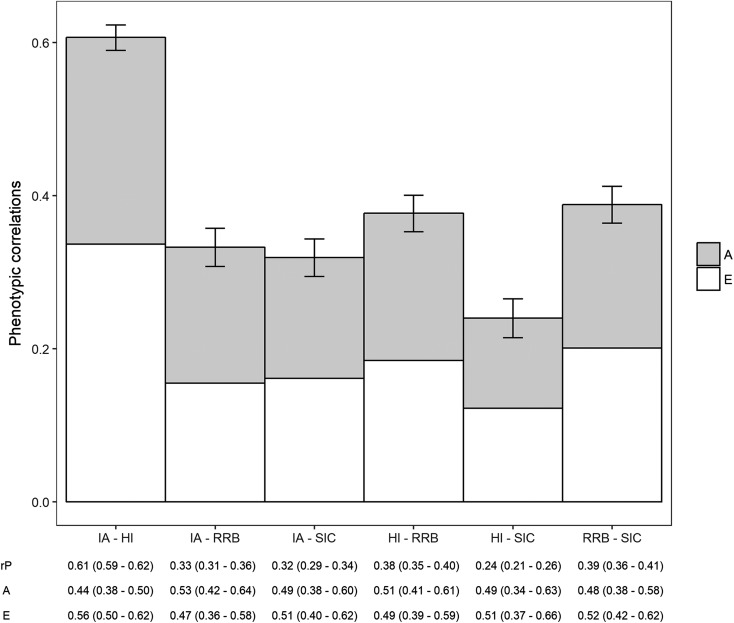
Background: Traits of attention-deficit/hyperactivity disorder (ADHD) and autism spectrum disorder (ASD) are strongly associated in children and adolescents, largely due to genetic factors. Less is known about the phenotypic and aetiological overlap between ADHD and ASD traits in adults. Methods: We studied 6866 individuals aged 20–28 years from the Swedish Study of Young Adult Twins. Inattention (IA) and hyperactivity/impulsivity (HI) were assessed using the WHO Adult ADHD Self-Report Scale-V1.1. Repetitive and restricted behaviours (RRB) and social interaction and communication (SIC) were assessed using the Autism-Tics, ADHD, and other Comorbidities inventory. We used structural equation modelling to decompose covariance between these ADHD and ASD trait dimensions into genetic and shared/non-shared environmental components. Results: At the phenotypic level, IA was similarly correlated with RRB (r= 0.33; 95% Confidence Interval (CI) 0.31–0.36) and with SIC (r= 0.32; 95% CI 0.29–0.34), whereas HI was more strongly associated with RRB (r= 0.38; 95% CI 0.35–0.40) than with SIC (r= 0.24; 95% CI 0.21–0.26). Genetic and non-shared environmental effects accounted for similar proportions of the phenotypic correlations, whereas shared environmental effects were of minimal importance. The highest genetic correlation was between HI and RRB (r= 0.56; 95% 0.46–0.65), and the lowest was between HI and SIC (r= 0.33; 95% CI 0.23–0.43). Conclusions: We found evidence for dimension-specific phenotypic and aetiological overlap between ADHD and ASD traits in adults. Future studies investigating mechanisms underlying comorbidity between ADHD and ASD may benefit from exploring several symptom-dimensions, rather than considering only broad diagnostic categories.
Overview
The claims and statistics of this paper haven’t been checked yet.
Free: it reads the open-access text and checks the first 5 claims that cite a source we can check. Create a free account to check every claim.
Integrity signals
Registry
Cites
Statistics
Figures
Verification
Claims the paper makes
The claims and statistics of this paper haven’t been checked yet.
Free: it reads the open-access text and checks the first 5 claims that cite a source we can check. Create a free account to check every claim.
Claims other papers make about this one
Each is checked against this paper’s own text: does it say what the citing paper says it does?
The source backs part of the claim, not all of it — or backs it for a different population, condition or comparison.
In the citing paper
“The interaction between ADHD and AD is widely debated in the literature, since they have independent transmission patterns, represent different expressions of the same genetic risk factor [48,111], and share some neurodevelopmental brain abnormalities [106,112,113,114].”
From ADHD Children Take More Time to Inhibit Automatic Responses: A Comparison with Anxiety Disorders Using NEPSY-II (2025) · cites this paper as [48]
Experimental — accuracy not yet measured
Self-check
Percentages, sums and reported differences re-computed from the paper’s own numbers.
The self-check needs the paper’s full text.
Citations
Cites
What is coefficient alpha? An examination of theory and applications
Cortina, J. M. (1993) · Journal of Applied Psychology · doi:10.1037/0021-9010.78.1.98 · Cited by 8,810 · cited 2×
“Both subscales had acceptable internal consistency given the small number of items (Cronbach’s α equal to 0.62 and 0.65, respectively) (Cortina, 1993), and good accuracy (Area under the curve equal to 0.88 and 0.81, respectively) in predicting a clinical diagnosis in this sample (online…”
BackgroundResultInfluentialMethodology for Genetic Studies of Twins and Families
Neale, M. C., & Cardon, L. R. (1992) · doi:10.1007/978-94-015-8018-2 · Cited by 4,005 · cited 1×
“Information on monozygotic twins (MZ), who are in principle genetically identical, and dizygotic twins (DZ), who share on average 50% of their co-segregating alleles, was used to decompose the observed variance of ADHD and ASD trait dimensions and their covariance into the latent components: additive genetic influence…”
MethodKESSLER, R. C., ADLER, L., AMES, M., DEMLER, O., FARAONE, S., HIRIPI, E., HOWES, M. J., JIN, R., SECNIK, K., SPENCER, T., et al. (2005) · Psychological Medicine · doi:10.1017/s0033291704002892 · Cited by 3,452 · cited 3×
“The questionnaire used for the assessment of IA and HI problems has been designed to screen for ADHD symptoms in adults (Kessler et al., 2005; Adler et al., 2006).”
BackgroundMethodSimonoff, E., Pickles, A., Charman, T., Chandler, S., Loucas, T., & Baird, G. (2008) · Journal of the American Academy of Child & Adolescent Psychiatry · doi:10.1097/chi.0b013e318179964f · Cited by 3,399 · cited 1×
“…symptoms in children and adolescents diagnosed with ADHD (Clark et al., 1999; Mulligan et al., 2009; Grzadzinski et al., 2011; Kroger et al., 2011; Kotte et al., 2013; Martin et al., 2014; Grzadzinski et al., 2016) and vice versa (Gadow et al., 2006; Simonoff et al., 2008; Yerys et al., 2009).”
BackgroundFARAONE, S. V., BIEDERMAN, J., & MICK, E. (2006) · Psychological Medicine · doi:10.1017/s003329170500471x · Cited by 2,267 · cited 1×
“Overall, the assessment of different traits related to ADHD and ASD can help in understanding more about the manifestation and the aetiology of neurodevelopmental problems appearing or continuing during adulthood, even if they do not satisfy the criteria for a diagnosis (Faraone et al., 2006).”
BackgroundDiscovery of the first genome-wide significant risk loci for ADHD
(2017) · doi:10.1101/145581 · Cited by 2,203
ADHD Working Group of the Psychiatric Genomics Consortium (PGC), Demontis, D., Early Lifecourse & Genetic Epidemiology (EAGLE) Consortium, 23andMe Research Team, Walters, R. K., Martin, J., Mattheisen, M., Als, T. D., Agerbo, E., Baldursson, G., et al. (2019) · Nature Genetics · doi:10.1038/s41588-018-0269-7 · Cited by 2,203
Self-citationOpenMx 2.0: Extended Structural Equation and Statistical Modeling
Neale, M. C., Hunter, M. D., Pritikin, J. N., Zahery, M., Brick, T. R., Kirkpatrick, R. M., Estabrook, R., Bates, T. C., Maes, H. H., & Boker, S. M. (2016) · Psychometrika · doi:10.1007/s11336-014-9435-8 · Cited by 1,100 · cited 1×
“All the analyses were conducted with structural equation modelling using OpenMx (Neale et al., 2016).”
MethodThapar, A., Cooper, M., & Rutter, M. (2017) · The Lancet Psychiatry · doi:10.1016/s2215-0366(16)30376-5 · Cited by 903
Kessler, R. C., Adler, L. A., Gruber, M. J., Sarawate, C. A., Spencer, T., & Van Brunt, D. L. (2007) · International Journal of Methods in Psychiatric Research · doi:10.1002/mpr.208 · Cited by 834 · cited 1×
“While the short version including six items has been shown to have high sensitivity for DSM-IV and DSM-5 diagnoses (Kessler et al., 2005; Kessler et al., 2007; Ustun et al., 2017), some inherent inaccuracy is expected with reliance in self-ratings alone.”
BackgroundAnalytic approaches to twin data using structural equation models
Rijsdijk, F. V. (2002) · Briefings in Bioinformatics · doi:10.1093/bib/3.2.119 · Cited by 761 · cited 1×
“Information on monozygotic twins (MZ), who are in principle genetically identical, and dizygotic twins (DZ), who share on average 50% of their co-segregating alleles, was used to decompose the observed variance of ADHD and ASD trait dimensions and their covariance into the latent components: additive genetic influence…”
MethodThe Swedish Twin Registry: a unique resource for clinical, epidemiological and genetic studies
Lichtenstein, P., De faire, U., Floderus, B., Svartengren, M., Svedberg, P., & Pedersen, N. L. (2002) · Journal of Internal Medicine · doi:10.1046/j.1365-2796.2002.01032.x · Cited by 696 · cited 4×
“After excluding individuals who had died, migrated, or acquired a secret identity (n = 966), and individuals who had opted out from the Swedish Twin Register or declined to be contacted (n = 42), 16 237individuals were invited to participate in the Young Adult Twin Swedish Study (YATSS) by filling out an online questi…”
BackgroundMethodInfluentialValidity of pilot Adult ADHD Self-Report Scale (ASRS) to rate adult ADHD symptoms
Adler, L. A., Spencer, T., Faraone, S. V., Kessler, R. C., Howes, M. J., Biederman, J., & Secnik, K. (2006) · Annals of Clinical Psychiatry · doi:10.1080/10401230600801077 · Cited by 677 · cited 2×
“The questionnaire used for the assessment of IA and HI problems has been designed to screen for ADHD symptoms in adults (Kessler et al., 2005; Adler et al., 2006).”
MethodCommon disorders are quantitative traits
Plomin, R., Haworth, C. M. A., & Davis, O. S. P. (2009) · Nature Reviews Genetics · doi:10.1038/nrg2670 · Cited by 670 · cited 1×
“…al., 2016) can be viewed as the extreme end of continuously distributed traits in the population and that such traits seem to be genetically correlated with dichotomous measures of the disorders, such as clinical diagnoses (for reviews on this topic see: Plomin et al., 2009, Martin et al., 2018).”
BackgroundHeritability of Autism Spectrum Disorder in a UK Population-Based Twin Sample
Colvert, E., Tick, B., McEwen, F., Stewart, C., Curran, S. R., Woodhouse, E., Gillan, N., Hallett, V., Lietz, S., Garnett, T., et al. (2015) · JAMA Psychiatry · doi:10.1001/jamapsychiatry.2014.3028 · Cited by 560
Ronald, A., Simonoff, E., Kuntsi, J., Asherson, P., & Plomin, R. (2008) · Journal of Child Psychology and Psychiatry · doi:10.1111/j.1469-7610.2007.01857.x · Cited by 466 · cited 2×
“…consistently found moderate to strong genetic correlations between traits related to ADHD and traits related to ASD in children and adolescents (Ronald et al., 2008; Ronald et al., 2010; Taylor et al., 2015; Pinto et al., 2016), although one study in 2-year-old children found considerably…”
BackgroundResultSelf-citationRommelse, N. N. J., Geurts, H. M., Franke, B., Buitelaar, J. K., & Hartman, C. A. (2011) · Neuroscience & Biobehavioral Reviews · doi:10.1016/j.neubiorev.2011.02.015 · Cited by 429 · cited 1×
“These results may be important for future research evaluating different neurocognitive processes implicated in ADHD, ASD, and other neurodevelopmental disorders (for a review on the topic see e.g. Rommelse et al., 2011).”
BackgroundSelf-citationUstun, B., Adler, L. A., Rudin, C., Faraone, S. V., Spencer, T. J., Berglund, P., Gruber, M. J., & Kessler, R. C. (2017) · JAMA Psychiatry · doi:10.1001/jamapsychiatry.2017.0298 · Cited by 423 · cited 1×
“While the short version including six items has been shown to have high sensitivity for DSM-IV and DSM-5 diagnoses (Kessler et al., 2005; Kessler et al., 2007; Ustun et al., 2017), some inherent inaccuracy is expected with reliance in self-ratings alone.”
BackgroundGenetic risk for autism spectrum disorders and neuropsychiatric variation in the general population
iPSYCH-SSI-Broad Autism Group, Robinson, E. B., St Pourcain, B., Anttila, V., Kosmicki, J. A., Bulik-Sullivan, B., Grove, J., Maller, J., Samocha, K. E., Sanders, S. J., et al. (2016) · Nature Genetics · doi:10.1038/ng.3529 · Cited by 367 · cited 1×
“…the notion that ADHD (Larsson et al., 2012a; Middeldorp et al., 2016; Demontis et al., 2017) and ASD (Lundström et al., 2012; Colvert et al., 2015; Robinson et al., 2016) can be viewed as the extreme end of continuously distributed traits in the population and that such traits seem to be…”
BackgroundThe Swedish Twin Registry in the Third Millennium: An Update
Lichtenstein, P., Sullivan, P. F., Cnattingius, S., Gatz, M., Johansson, S., Carlström, E., Björk, C., Svartengren, M., Wolk, A., Klareskog, L., et al. (2006) · Twin Research and Human Genetics · doi:10.1375/twin.9.6.875 · Cited by 327 · cited 1×
“A number of studies have shown that low birth weight is associated with an increased risk of several neurodevelopmental disorders, even after controlling for potential shared genetic liability using family- based designs (Hultman et al., 2007; Losh et al., 2011; Pettersson et al., 2015).”
BackgroundThe Swedish Twin Registry: Establishment of a Biobank and Other Recent Developments
Magnusson, P. K. E., Almqvist, C., Rahman, I., Ganna, A., Viktorin, A., Walum, H., Halldner, L., Lundström, S., Ullén, F., Långström, N., et al. (2013) · Twin Research and Human Genetics · doi:10.1017/thg.2012.104 · Cited by 324 · cited 1×
“…symptoms in children and adolescents diagnosed with ADHD (Clark et al., 1999; Mulligan et al., 2009; Grzadzinski et al., 2011; Kroger et al., 2011; Kotte et al., 2013; Martin et al., 2014; Grzadzinski et al., 2016) and vice versa (Gadow et al., 2006; Simonoff et al., 2008; Yerys et al., 2009).”
BackgroundSelf-citationHeritability of Autistic Traits in the General Population
Hoekstra, R. A., Bartels, M., Verweij, C. J. H., & Boomsma, D. I. (2007) · Archives of Pediatrics & Adolescent Medicine · doi:10.1001/archpedi.161.4.372 · Cited by 320 · cited 2×
“…line with what has been reported in other studies using total scores of self-rated ADHD traits in adults (Boomsma et al., 2010; Larsson et al., 2012b; Park et al., 2017), whereas for ASD traits, estimates were somewhat lower than reported in other studies (Hoekstra et al., 2007; Park et al., 2017).”
ResultYerys, B. E., Wallace, G. L., Sokoloff, J. L., Shook, D. A., James, J. D., & Kenworthy, L. (2009) · Autism Research · doi:10.1002/aur.103 · Cited by 299
Lundström, S. (2012) · Archives of General Psychiatry · doi:10.1001/archgenpsychiatry.2011.144 · Cited by 283 · cited 1×
“…scale in the general population are based on the notion that ADHD (Larsson et al., 2012a; Middeldorp et al., 2016; Demontis et al., 2017) and ASD (Lundström et al., 2012; Colvert et al., 2015; Robinson et al., 2016) can be viewed as the extreme end of continuously distributed traits in the…”
BackgroundExamining autistic traits in children with ADHD: does the autism spectrum extend to ADHD?
Grzadzinski, R., Di Martino, A., Brady, E., Mairena, M. A., O’Neale, M., Petkova, E., Lord, C., & Castellanos, F. X. (2011) · Journal of Autism and Developmental Disorders · doi:10.1007/s10803-010-1135-3 · Cited by 260 · cited 1×
“Despite the differences in the core symptoms of the disorders, several studies have reported elevated levels of autistic symptoms in children and adolescents diagnosed with ADHD (Clark et al., 1999; Mulligan et al., 2009; Grzadzinski et al., 2011; Kroger et al., 2011; Kotte et al., 2013; Martin et al., 2014; Grzadzins…”
BackgroundLarsson, H., Anckarsater, H., Råstam, M., Chang, Z., & Lichtenstein, P. (2012) · Journal of Child Psychology and Psychiatry · doi:10.1111/j.1469-7610.2011.02467.x · Cited by 254
Self-citationADHD symptom subtypes in children with pervasive developmental disorder
Gadow, K. D., DeVincent, C. J., & Pomeroy, J. (2006) · Journal of Autism and Developmental Disorders · doi:10.1007/s10803-005-0060-3 · Cited by 233 · cited 1×
“…symptoms in children and adolescents diagnosed with ADHD (Clark et al., 1999; Mulligan et al., 2009; Grzadzinski et al., 2011; Kroger et al., 2011; Kotte et al., 2013; Martin et al., 2014; Grzadzinski et al., 2016) and vice versa (Gadow et al., 2006; Simonoff et al., 2008; Yerys et al., 2009).”
BackgroundMulligan, A., Anney, R. J. L., O’Regan, M., Chen, W., Butler, L., Fitzgerald, M., Buitelaar, J., Steinhausen, H.-C., Rothenberger, A., Minderaa, R., et al. (2009) · Journal of Autism and Developmental Disorders · doi:10.1007/s10803-008-0621-3 · Cited by 233
Self-citationAutistic symptoms in children with attention deficit-hyperactivity disorder
Clark, T., Feehan, C., Tinline, C., & Vostanis, P. (1999) · European Child & Adolescent Psychiatry · doi:10.1007/s007870050083 · Cited by 227 · cited 1×
“…core symptoms of the disorders, several studies have reported elevated levels of autistic symptoms in children and adolescents diagnosed with ADHD (Clark et al., 1999; Mulligan et al., 2009; Grzadzinski et al., 2011; Kroger et al., 2011; Kotte et al., 2013; Martin et al., 2014; Grzadzinski et…”
BackgroundThe familial co-aggregation of ASD and ADHD: a register-based cohort study
Ghirardi, L., Brikell, I., Kuja-Halkola, R., Freitag, C. M., Franke, B., Asherson, P., Lichtenstein, P., & Larsson, H. (2018) · Molecular Psychiatry · doi:10.1038/mp.2017.17 · Cited by 220 · cited 3×
“Family studies have shown that relatives of individuals with ASD are at higher risk of receiving a diagnosis of ADHD (Musser et al., 2014; Jokiranta-Olkoniemi et al., 2016; Ghirardi et al., 2018), and that the magnitude of the risk changes as a function of the genetic relatedness (Ghirardi et al.”
BackgroundResultSelf-citationHansson, S. L., Svanströmröjvall, A., Rastam, M., Gillberg, C., Gillberg, C., & Anckarsäter, H. (2005) · British Journal of Psychiatry · doi:10.1192/bjp.187.3.262 · Cited by 208 · cited 1×
“Autistic trait dimensions were self-rated via 12 items of the Autism – Tics, AD/HD, and other Comorbidities inventory (A-TAC), which is based on DSM-IV symptoms (Hansson et al., 2005).”
MethodDevelopmental Twin Study of Attention Problems: High Heritabilities Throughout Development
Chang, Z., Lichtenstein, P., Asherson, P. J., & Larsson, H. (2013) · JAMA Psychiatry · doi:10.1001/jamapsychiatry.2013.287 · Cited by 194 · cited 3×
“This may, in turn, lead to an underestimation of the true genetic contribution (Chang et al., 2013; Brikell et al., 2015).”
BackgroundSelf-citationGrzadzinski, R., Dick, C., Lord, C., & Bishop, S. (2016) · Molecular Autism · doi:10.1186/s13229-016-0072-1 · Cited by 192 · cited 1×
“Autistic trait dimensions were self-rated via 12 items of the Autism – Tics, AD/HD, and other Comorbidities inventory (A-TAC), which is based on DSM-IV symptoms (Hansson et al., 2005).”
MethodLundström, S., Chang, Z., Kerekes, N., Gumpert, C. H., Råstam, M., Gillberg, C., Lichtenstein, P., & Anckarsäter, H. (2011) · Psychological Medicine · doi:10.1017/s0033291711000377 · Cited by 174 · cited 2×
“Hence, the association between these traits may also differ phenotypically and aetiologically in adulthood (Lundstrom et al., 2011; Polderman et al., 2013; Polderman et al., 2014).”
BackgroundMethodInfluentialBirth Weight and Attention-Deficit/Hyperactivity Symptoms in Childhood and Early Adolescence
Hultman, C. M., Torrång, A., Tuvblad, C., Cnattingius, S., Larsson, J., & Lichtenstein, P. (2007) · Journal of the American Academy of Child & Adolescent Psychiatry · doi:10.1097/01.chi.0000246059.62706.22 · Cited by 149 · cited 2×
“A number of studies have shown that low birth weight is associated with an increased risk of several neurodevelopmental disorders, even after controlling for potential shared genetic liability using familybased designs (Hultman et al., 2007; Losh et al., 2011; Pettersson et al., 2015).”
BackgroundJokiranta-Olkoniemi, E., Cheslack-Postava, K., Sucksdorff, D., Suominen, A., Gyllenberg, D., Chudal, R., Leivonen, S., Gissler, M., Brown, A. S., & Sourander, A. (2016) · JAMA Psychiatry · doi:10.1001/jamapsychiatry.2016.0495 · Cited by 146 · cited 3×
“The questionnaire used for the assessment of IA and HI problems has been designed to screen for ADHD symptoms in adults (Kessler et al., 2005; Adler et al., 2006).”
BackgroundMethodHeritability of attention‐deficit hyperactivity disorder in adults
Brikell, I., Kuja‐Halkola, R., & Larsson, H. (2015) · American Journal of Medical Genetics Part B: Neuropsychiatric Genetics · doi:10.1002/ajmg.b.32335 · Cited by 143 · cited 1×
“This may, in turn, lead to an underestimation of the true genetic contribution (Chang et al., 2013; Brikell et al., 2015).”
BackgroundSelf-citationAssessing the evidence for shared genetic risks across psychiatric disorders and traits
Martin, J., Taylor, M. J., & Lichtenstein, P. (2018) · Psychological Medicine · doi:10.1017/s0033291717003440 · Cited by 141
Self-citationGenetic Epidemiology of Attention Deficit Hyperactivity Disorder (ADHD Index) in Adults
Boomsma, D. I., Saviouk, V., Hottenga, J.-J., Distel, M. A., de Moor, M. H. M., Vink, J. M., Geels, L. M., van Beek, J. H. D. A., Bartels, M., de Geus, E. J. C., et al. (2010) · PLoS ONE · doi:10.1371/journal.pone.0010621 · Cited by 140 · cited 2×
“…estimates for ADHD traits were in line with what has been reported in other studies using total scores of self-rated ADHD traits in adults (Boomsma et al., 2010; Larsson et al., 2012b; Park et al., 2017), whereas for ASD traits, estimates were somewhat lower than reported in other studies…”
ResultThe co-occurrence of autistic and ADHD dimensions in adults: an etiological study in 17 770 twins
Polderman, T. J. C., Hoekstra, R. A., Posthuma, D., & Larsson, H. (2014) · Translational Psychiatry · doi:10.1038/tp.2014.84 · Cited by 130 · cited 8×
“Nevertheless, it should be noted that our results are in line with what reported in the previous study (Polderman et al., 2014).”
BackgroundMethodResultInfluentialSelf-citationMiddeldorp, C. M., Hammerschlag, A. R., Ouwens, K. G., Groen-Blokhuis, M. M., St. Pourcain, B., Greven, C. U., Pappa, I., Tiesler, C. M. T., Ang, W., Nolte, I. M., et al. (2016) · Journal of the American Academy of Child & Adolescent Psychiatry · doi:10.1016/j.jaac.2016.05.025 · Cited by 129 · cited 1×
“…traits related to ADHD and ASD as measured on a continuous scale in the general population are based on the notion that ADHD (Larsson et al., 2012a; Middeldorp et al., 2016; Demontis et al., 2017) and ASD (Lundström et al., 2012; Colvert et al., 2015; Robinson et al., 2016) can be viewed as the…”
BackgroundRonald, A., Edelson, L. R., Asherson, P., & Saudino, K. J. (2010) · Journal of Abnormal Child Psychology · doi:10.1007/s10802-009-9366-5 · Cited by 126 · cited 2×
“, 2016), although one study in 2-year-old children found considerably lower genetic correlations (Ronald et al., 2010).”
BackgroundResultSelf-citationLarsson, H., Asherson, P., Chang, Z., Ljung, T., Friedrichs, B., Larsson, J.-O., & Lichtenstein, P. (2013) · Psychological Medicine · doi:10.1017/s0033291712001067 · Cited by 118
Self-citationAutistic Traits in Children With and Without ADHD
Kotte, A., Joshi, G., Fried, R., Uchida, M., Spencer, A., Woodworth, K. Y., Kenworthy, T., Faraone, S. V., & Biederman, J. (2013) · Pediatrics · doi:10.1542/peds.2012-3947 · Cited by 117 · cited 2×
“…symptoms in children and adolescents diagnosed with ADHD (Clark et al., 1999; Mulligan et al., 2009; Grzadzinski et al., 2011; Kroger et al., 2011; Kotte et al., 2013; Martin et al., 2014; Grzadzinski et al., 2016) and vice versa (Gadow et al., 2006; Simonoff et al., 2008; Yerys et al., 2009).”
BackgroundBirth weight as an independent predictor of ADHD symptoms: a within‐twin pair analysis
Pettersson, E., Sjölander, A., Almqvist, C., Anckarsäter, H., D'Onofrio, B. M., Lichtenstein, P., & Larsson, H. (2015) · Journal of Child Psychology and Psychiatry · doi:10.1111/jcpp.12299 · Cited by 112 · cited 1×
“A number of studies have shown that low birth weight is associated with an increased risk of several neurodevelopmental disorders, even after controlling for potential shared genetic liability using familybased designs (Hultman et al., 2007; Losh et al., 2011; Pettersson et al., 2015).”
BackgroundSelf-citationShared familial transmission of autism spectrum and attention‐deficit/hyperactivity disorders
Musser, E. D., Hawkey, E., Kachan‐Liu, S. S., Lees, P., Roullet, J., Goddard, K., Steiner, R. D., & Nigg, J. T. (2014) · Journal of Child Psychology and Psychiatry · doi:10.1111/jcpp.12201 · Cited by 97 · cited 4×
“Family studies have shown that relatives of individuals with ASD are at higher risk of receiving a diagnosis of ADHD (Musser et al., 2014; Jokiranta-Olkoniemi et al., 2016; Ghirardi et al., 2018), and that the magnitude of the risk changes as a function of the genetic relatedness (Ghirardi et al.”
BackgroundResultInfluentialCommon risk variants identified in autism spectrum disorder
Grove, J., Ripke, S., Als, T. D., Mattheisen, M., Walters, R., Won, H., Pallesen, J., Agerbo, E., Andreassen, O. A., Anney, R., et al. (2017) · doi:10.1101/224774 · Cited by 89
Methodology for Genetic Studies of Twins and Families
Carothers, A. D. (1994) · Journal of Epidemiology & Community Health · doi:10.1136/jech.48.3.328 · Cited by 82
Taylor, M. J., Charman, T., Robinson, E. B., Plomin, R., Happé, F., Asherson, P., & Ronald, A. (2013) · Psychological Medicine · doi:10.1017/s003329171200253x · Cited by 76 · cited 5×
“Our findings differ from what has been reported in other studies on the dimension-specific overlap between ADHD and ASD traits in childhood and adolescence (Taylor et al., 2013; Taylor et al., 2015; Pinto et al., 2016).”
BackgroundResultInfluentialSelf-citationLower birth weight indicates higher risk of autistic traits in discordant twin pairs
Losh, M., Esserman, D., Anckarsäter, H., Sullivan, P. F., & Lichtenstein, P. (2012) · Psychological Medicine · doi:10.1017/s0033291711002339 · Cited by 72 · cited 1×
“A number of studies have shown that low birth weight is associated with an increased risk of several neurodevelopmental disorders, even after controlling for potential shared genetic liability using familybased designs (Hultman et al., 2007; Losh et al., 2011; Pettersson et al., 2015).”
BackgroundTaylor, M. J., Charman, T., & Ronald, A. (2015) · European Child & Adolescent Psychiatry · doi:10.1007/s00787-014-0666-0 · Cited by 64 · cited 10×
“Our findings differ from what has been reported in other studies on the dimension-specific overlap between ADHD and ASD traits in childhood and adolescence (Taylor et al., 2013; Taylor et al., 2015; Pinto et al., 2016).”
BackgroundResultInfluentialSelf-citationAttentional switching forms a genetic link between attention problems and autistic traits in adults
Polderman, T. J. C., Hoekstra, R. A., Vinkhuyzen, A. A. E., Sullivan, P. F., van der Sluis, S., & Posthuma, D. (2013) · Psychological Medicine · doi:10.1017/s0033291712002863 · Cited by 60 · cited 1×
“Hence, the association between these traits may also differ phenotypically and aetiologically in adulthood (Lundstrom et al., 2011; Polderman et al., 2013; Polderman et al., 2014).”
BackgroundRisk factors of autistic symptoms in children with ADHD
Kröger, A., Hänig, S., Seitz, C., Pálmason, H., Meyer, J., & Freitag, C. M. (2011) · European Child & Adolescent Psychiatry · doi:10.1007/s00787-011-0221-1 · Cited by 54 · cited 2×
“Despite the differences in the core symptoms of the disorders, several studies have reported elevated levels of autistic symptoms in children and adolescents diagnosed with ADHD (Clark et al., 1999; Mulligan et al., 2009; Grzadzinski et al., 2011; Kroger et al., 2011; Kotte et al., 2013; Martin et al., 2014; Grzadzins…”
BackgroundSelf-citationFactor Structure of Autistic Traits in Children with ADHD
Martin, J., Hamshere, M. L., O’Donovan, M. C., Rutter, M., & Thapar, A. (2014) · Journal of Autism and Developmental Disorders · doi:10.1007/s10803-013-1865-0 · Cited by 49
Taylor, M. J., Gillberg, C., Lichtenstein, P., & Lundström, S. (2017) · Molecular Autism · doi:10.1186/s13229-017-0120-5 · Cited by 43 · cited 2×
“, 2013) and ASD (Taylor et al., 2017) traits suggest that there might be genetic effects uniquely related to the adult expression of these traits.”
BackgroundSelf-citationPinto, R., Rijsdijk, F., Ronald, A., Asherson, P., & Kuntsi, J. (2016) · Journal of Abnormal Child Psychology · doi:10.1007/s10802-015-0037-4 · Cited by 42 · cited 5×
“Our findings differ from what has been reported in other studies on the dimension-specific overlap between ADHD and ASD traits in childhood and adolescence (Taylor et al., 2013; Taylor et al., 2015; Pinto et al., 2016).”
BackgroundResultInfluentialSelf-citationPark, S. H., Guastella, A. J., Lynskey, M. T., Agrawal, A., Constantino, J. N., Medland, S. E., Song, Y. J. C., Martin, N. G., & Colodro‐Conde, L. (2017) · Twin Research and Human Genetics · doi:10.1017/thg.2017.38 · Cited by 40 · cited 3×
“…line with what has been reported in other studies using total scores of self-rated ADHD traits in adults (Boomsma et al., 2010; Larsson et al., 2012b; Park et al., 2017), whereas for ASD traits, estimates were somewhat lower than reported in other studies (Hoekstra et al., 2007; Park et al., 2017).”
ResultGenetic risk for autism spectrum disorders and neuropsychiatric variation in the general populationPreprint
Robinson, E., Pourcain, B. S., Anttila, V., Kosmicki, J. A., Bulik-Sullivan, B. K., Grove, J., Maller, J., Samocha, K. E., Sanders, S., Ripke, S., et al. (2015) · bioRxiv (Cold Spring Harbor Laboratory) · doi:10.1101/027771 · Cited by 34
Research works printed but not linked: 1
- American Psychological Association (APA) (2013) Diagnostic and Statistical Manual of Mental Disorders (DSM-5®). Arlington: American Psychiatric Publishing.
Cited by
Lai, M.-C., Kassee, C., Besney, R., Bonato, S., Hull, L., Mandy, W., Szatmari, P., & Ameis, S. H. (2019) · The Lancet Psychiatry · doi:10.1016/s2215-0366(19)30289-5 · Cited by 1,892
Antshel, K. M., & Russo, N. (2019) · Current Psychiatry Reports · doi:10.1007/s11920-019-1020-5 · Cited by 450
The nature and nurture of ADHD and its comorbidities: A narrative review on twin studies
Tistarelli, N., Fagnani, C., Troianiello, M., Stazi, M. A., & Adriani, W. (2020) · Neuroscience & Biobehavioral Reviews · doi:10.1016/j.neubiorev.2019.12.017 · Cited by 104
Rodrigues, R., Lai, M., Beswick, A., Gorman, D. A., Anagnostou, E., Szatmari, P., Anderson, K. K., & Ameis, S. H. (2021) · Journal of Child Psychology and Psychiatry · doi:10.1111/jcpp.13305 · Cited by 98
Michelini, G., Carlisi, C. O., Eaton, N. R., Elison, J. T., Haltigan, J. D., Kotov, R., Krueger, R. F., Latzman, R. D., Li, J. J., Levin-Aspenson, H. F., et al. (2024) · World Psychiatry · doi:10.1002/wps.21225 · Cited by 119
Metadata
- Authors
- Ghirardi, L., Pettersson, E., Taylor, M. J., Freitag, C. M., Franke, B., Asherson, P., Larsson, H., & Kuja-Halkola, R.
- Affiliations
- Karolinska Institutet (SE)
- Goethe University Frankfurt (DE)
- Donders Institute for Brain, Cognition and Behaviour (NL)
- King's College London (GB)
- Örebro University (SE)
- Corresponding author
- Ghirardi, Laura
- ORCID
- Venue
- Psychological Medicine
- Publisher
- Cambridge University Press (CUP)
- Published
- 2018-09-07
- Volume
- 49
- Issue
- 10
- Pages
- 1713-1721
- ISSN
- 0033-2917 (ISSN-L)
- 1469-8978
- PMC
- PMC6601357
- OpenAlex
- W2891643414
- Cited by
- 99
- References
- 57
- Citations by year
- 2026: 7 · 2025: 13 · 2024: 17 · 2023: 19 · 2022: 12 · 2021: 11 · 2020: 11 · 2019: 8
- FWCI
- 5.88
- Type
- journal article
- Language
- en
- Open access
- hybrid
- doi.org
- Licence
- Locations
- Psychological Medicine (publishedVersion, cc-by-nc-sa)
- PubMed Central (publishedVersion, cc-by-nc-sa)
- PubMed (publishedVersion)
- Radboud Repository (Radboud University) (submittedVersion)
- Radboud Repository (Radboud University) (submittedVersion, other-oa)
- Research Portal (King's College London) (submittedVersion, other-oa)
- Funders
- National Institute for Health and Care Research (NF-SI-0616-10040, NGF-SI-0616-10040)
- European Commission (643051, HORIZON2020)
- Deutsche Forschungsgemeinschaft (FR 2069/8–1)
- Nederlandse Organisatie voor Wetenschappelijk Onderzoek (016‐130‐669)
- Vetenskapsrådet ((2014-3831))
- European College of Neuropsychopharmacology
- Topics
- Health Sciences › Medicine › Psychiatry and Mental health › Attention Deficit Hyperactivity Disorder
- Life Sciences › Neuroscience › Cognitive Neuroscience › Autism Spectrum Disorder Research
- Life Sciences › Biochemistry, Genetics and Molecular Biology › Genetics › Genetic Associations and Epidemiology
- Keywords
- attention deficit hyperactivity disorder, autism spectrum disorder, comorbidities, inattention, hyperactivity/impulsivity, communication and social interaction, genetic correlation, nonshared environment, shared environment, young adults, twin studies
- MeSH terms
- Autism Spectrum Disorder, Adult, Attention Deficit Disorder with Hyperactivity, Environment, Female, Humans, Male, Phenotype, Registries, Sweden, Comorbidity, Young Adult
About these checks
Registry, retraction, Cites and statistics results are computed, not judged, with one exception: a printed reference that no index lists is read once by a model before it counts as a citation error. Claims are extracted by a model and kept only when their quote appears verbatim in the text; each cited source is then checked, with a model’s help, for whether it says what the claim relies on. Those verdicts can be wrong — read the claim’s quote and the cited source before relying on one.
Statistics and arithmetic are recomputed, not judged.
Confidence bands are shown only for fields calibrated on our annotated test set. None is calibrated yet, so no band is shown.
What counts as a claim ›How we measure confidence ›How we check this ›
Are you an author, or do you see a problem with this page? Request a review
Data sources
Bibliographic data: Semantic Scholar, OpenAlex, Crossref.
Contains information from the Semantic Scholar Academic Graph Datasets, made available under the ODC Attribution License (ODC-BY 1.0).
Semantic Scholar’s data is described in: Kinney, R., et al. (2023). The Semantic Scholar Open Data Platform. arXiv:2301.10140.
