

Neuroinflammation in schizophrenia: meta-analysis of in vivo microglial imaging studies
Open accessThe DOI matches its Crossref record; 66 of the 66 references it cites were found in a registry or an index.
Abstract
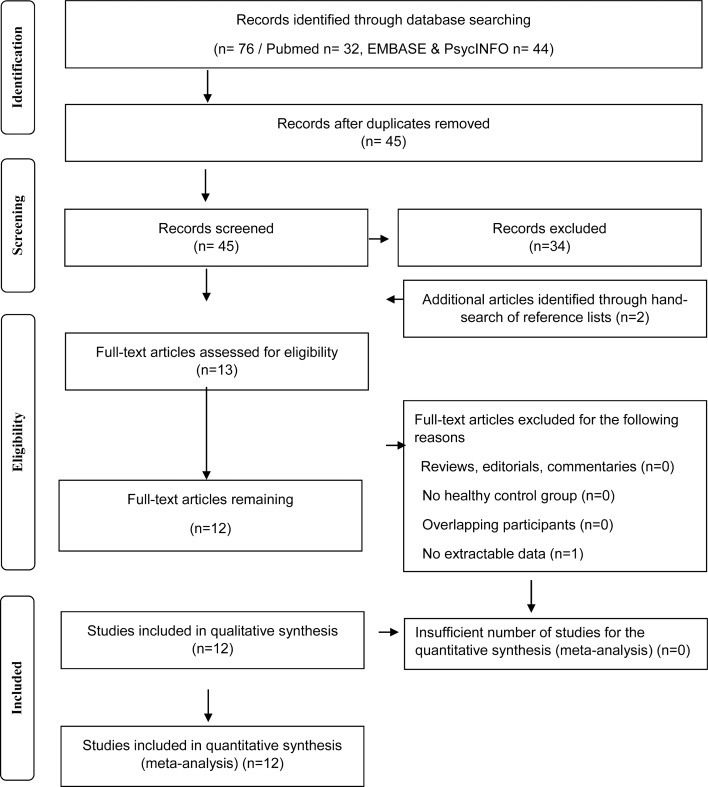
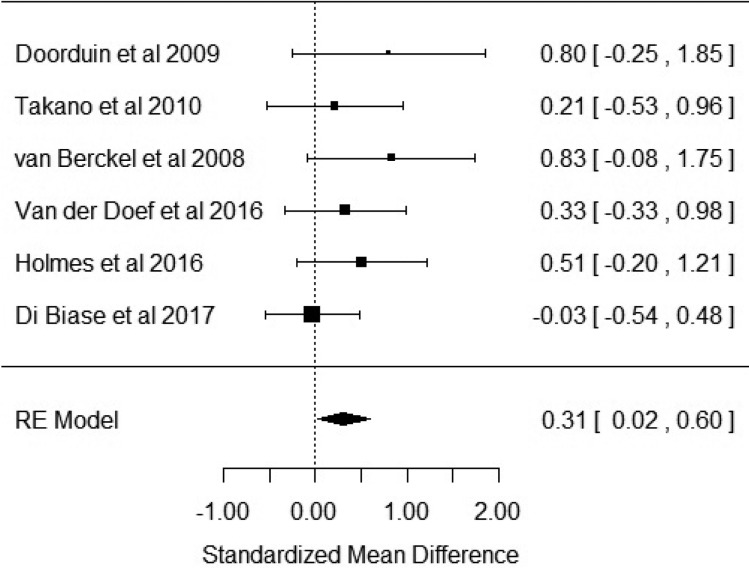
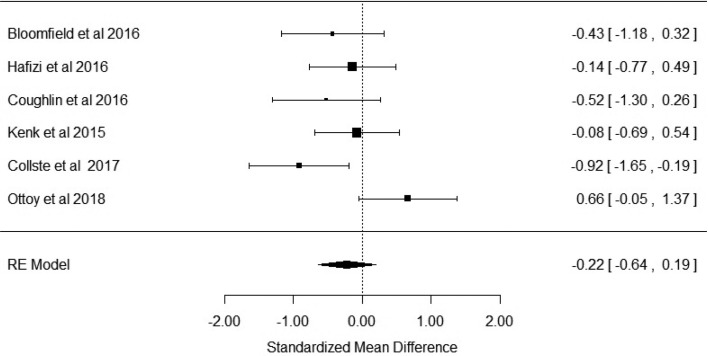
Background: Converging lines of evidence implicate an important role for the immune system in schizophrenia. Microglia are the resident immune cells of the central nervous system and have many functions including neuroinflammation, axonal guidance and neurotrophic support. We aimed to provide a quantitative review of in vivo PET imaging studies of microglia activation in patients with schizophrenia compared with healthy controls. Methods: Demographic, clinical and imaging measures were extracted from each study and meta-analysis was conducted using a random-effects model (Hedge's g ). The difference in 18-kDa translocator protein (TSPO) binding between patients with schizophrenia and healthy controls, as quantified by either binding potential (BP) or volume of distribution ( V T ), was used as the main outcome. Sub-analysis and sensitivity analysis were carried out to investigate the effects of genotype, ligand and illness stage. Results: In total, 12 studies comprising 190 patients with schizophrenia and 200 healthy controls met inclusion criteria. There was a significant elevation in tracer binding in schizophrenia patients relative to controls when BP was used as an outcome measure, (Hedge's g = 0.31; p = 0.03) but no significant differences when V T was used (Hedge's g = −0.22; p = 0.29). Conclusions: In conclusion, there is evidence for moderate elevations in TSPO tracer binding in grey matter relative to other brain tissue in schizophrenia when using BP as an outcome measure, but no difference when VT is the outcome measure. We discuss the relevance of these findings as well as the methodological issues that may underlie the contrasting difference between these outcomes.
Overview
The claims and statistics of this paper haven’t been checked yet.
Free: it reads the open-access text and checks the first 5 claims that cite a source we can check. Create a free account to check every claim.
Integrity signals
Registry
Cites
Statistics
Figures
Verification
Claims the paper makes
The claims and statistics of this paper haven’t been checked yet.
Free: it reads the open-access text and checks the first 5 claims that cite a source we can check. Create a free account to check every claim.
Claims other papers make about this one
Each is checked against this paper’s own text: does it say what the citing paper says it does?
The cited source says what the claim attributes to it.
In the citing paper
“Converging lines of genetic, post-mortem, and pre-clinical evidence suggest immune dysregulation may play a role in the pathogenesis of both schizophrenia 63–67 and depression, 68, 69 and it is hypothesised that immune alterations are seen only in a proportion of these patients (immune/inflammatory subgroups) and are linked to poor treatment response. 67, 70–72”
From Treatment resistance in psychiatry: state of the art and new directions (2022) · cites this paper as [65]
Self-check
Percentages, sums and reported differences re-computed from the paper’s own numbers.
The self-check needs the paper’s full text.
Citations
Cites
Biological insights from 108 schizophrenia-associated genetic loci
Schizophrenia Working Group of the Psychiatric Genomics Consortium (2014) · Nature · doi:10.1038/nature13595 · Cited by 7,577
Schizophrenia risk from complex variation of complement component 4
Sekar, A., Bialas, A. R., de Rivera, H., Davis, A., Hammond, T. R., Kamitaki, N., Tooley, K., Presumey, J., Baum, M., Van Doren, V., et al. (2016) · Nature · doi:10.1038/nature16549 · Cited by 2,394
Consensus Nomenclature for in vivo Imaging of Reversibly Binding Radioligands
Innis, R. B., Cunningham, V. J., Delforge, J., Fujita, M., Gjedde, A., Gunn, R. N., Holden, J., Houle, S., Huang, S.-C., Ichise, M., et al. (2007) · Journal of Cerebral Blood Flow & Metabolism · doi:10.1038/sj.jcbfm.9600493 · Cited by 1,955
Common variants conferring risk of schizophrenia
†Genetic Risk and Outcome in Psychosis (GROUP), Stefansson, H., Ophoff, R. A., Steinberg, S., Andreassen, O. A., Cichon, S., Rujescu, D., Werge, T., Pietiläinen, O. P. H., Mors, O., et al. (2009) · Nature · doi:10.1038/nature08186 · Cited by 1,677
Howes, O. D., Kambeitz, J., Kim, E., Stahl, D., Slifstein, M., Abi-Dargham, A., & Kapur, S. (2012) · Archives of General Psychiatry · doi:10.1001/archgenpsychiatry.2012.169 · Cited by 967 · cited 1×
“Although this is a common procedure in PET meta-analyses (Howes et al., 2012; Kambeitz et al., 2014; Ashok et al., 2017), it can constitute a potential limitation of this study.”
Self-citationMintun, M. A., Raichle, M. E., Kilbourn, M. R., Wooten, G. F., & Welch, M. J. (1984) · Annals of Neurology · doi:10.1002/ana.410150302 · Cited by 955 · cited 1×
“The non-displaceable BP (BPND) measures the tracer binding in the tissue of interest relative to another brain region selected to have negligible specific binding, to give specific binding in the region of interest (Mintun et al., 1984).”
Owen, D. R., Yeo, A. J., Gunn, R. N., Song, K., Wadsworth, G., Lewis, A., Rhodes, C., Pulford, D. J., Bennacef, I., Parker, C. A., et al. (2012) · Journal of Cerebral Blood Flow & Metabolism · doi:10.1038/jcbfm.2011.147 · Cited by 779
Calcia, M. A., Bonsall, D. R., Bloomfield, P. S., Selvaraj, S., Barichello, T., & Howes, O. D. (2016) · Psychopharmacology · doi:10.1007/s00213-016-4218-9 · Cited by 709
Self-citationvan Berckel, B. N., Bossong, M. G., Boellaard, R., Kloet, R., Schuitemaker, A., Caspers, E., Luurtsema, G., Windhorst, A. D., Cahn, W., Lammertsma, A. A., et al. (2008) · Biological Psychiatry · doi:10.1016/j.biopsych.2008.04.025 · Cited by 582
Benros, M. E., Nielsen, P. R., Nordentoft, M., Eaton, W. W., Dalton, S. O., & Mortensen, P. B. (2011) · American Journal of Psychiatry · doi:10.1176/appi.ajp.2011.11030516 · Cited by 582 · cited 1×
“Over 20 epidemiological studies show that people with a history of infection or autoimmune diseases have an increased risk of schizophrenia (Benros et al ., 2011, 2014; Khandaker et al ., 2012, 2013; Miller et al ., 2013).”
Cited by
Items 201–224 of 224
(2024) · Elsevier eBooks · doi:10.1016/b978-0-443-23565-8.09996-8
Anisman, H., Hayley, S. P., & Kusnecov, A. W. (2024) · Elsevier eBooks · doi:10.1016/b978-0-443-23565-8.00011-9
Positron Emission Tomography in Drug Development
van den Berg, F., & Rabiner, E. A. (2024) · Springer eBooks · doi:10.1007/978-3-031-61992-2_15
The Inflammation in Schizophrenia: Biomarkers and Association with Pathogenesis
Ermakov, E. A., Buneva, V. N., & Ivanova, S. A. (2025) · Springer eBooks · doi:10.1007/978-3-031-73368-0_112 · Cited by 1
Network-based disease fingerprinting with neuroinflammation PET imaging
Barzon, L., Maccioni, L., Mellana, M. C., Schubert, J. J., Brusaferri, L., Cousins, O., Rosenzweig, I., Mizuno, Y., Marques, T. R., Harrison, N. A., et al. (2026) · Journal of Neuroinflammation · doi:10.1186/s12974-026-03788-1 · Cited by 1
“Meta-analyses of PET studies have found evidence for altered TSPO in frontal cortex in schizophrenia relative to controls, albeit the direction of group differences may depend on the outcome measure used [94].”
Self-citationGM-CSFは痛み刺激で誘発されるEAE再燃症状に関係する末梢由来骨髄系細胞を中枢神経領域に維持する働きがある
松山, 詩. (2024) · Institutional Repositories DataBase (IRDB) · doi:10.14943/doctoral.k15917
Wang, Y., Wang, G., Gong, M., Yang, Y., Ling, Y., Fang, X., Zhu, T., Wang, Z., Zhang, X., & Zhang, C. (2024) · Figshare · doi:10.6084/m9.figshare.25017830
Joseph, A. T. (2020) · eScholarship@McGill (McGill) · doi:10.82308/37628
Laurikainen, H. (2023) · UTUPub (University of Turku)
Cognitive Impairment in Schizophrenia: Neurobiological Bases
Martini, F., Spangaro, M., Sapienza, J., Bosia, M., & Cavallaro, R. (2025) · Comprehensive approach to psychiatry · doi:10.1007/978-3-032-06209-3_11
Лобачева, О. А., Nikitina, V. B., Гуткевич, Е. В., Pershina, A. E., Pogorelova, T. V., Казенных, Т. В., & Kornetova, E. G. (2026) · Сибирский вестник психиатрии и наркологии · doi:10.26617/1810-3111-2025-4(129)-5-12
The Effects of Antipsychotics on Central Lipid-Mediated Regulation of Glucose Metabolism
Au, E. (2023) · TSpace (University of Toronto)
In vivo brain macromolecules in schizophrenia spectrum disorders
Chiappelli, J., Chen, H., Korenic, S. A., Gaston, F. E., Ye, Z., Lee, H., Chen, S., Wijtenburg, S. A., & Rowland, L. M. (2026) · Schizophrenia · doi:10.1038/s41537-026-00767-6
“These hypotheses were based on research showing possible neuroin fl ammation in schizophrenia 16,17 .”
Microglial activation and neuroinflammation: implications for neuropsychiatric symptoms
Uddin, T., Halder, C., Asma, A., Zaheen, A., Nahian, A., Nipun, R. S., Ferdous, J., Sarker, R., Misha, M. M., Tasnim, S., et al. (2026) · Exploration of Neuroprotective Therapy · doi:10.37349/ent.2026.1004158
Shared genetic architecture between schizophrenia and subcortical brain susceptibility phenotypes
Xie, Y., Du, J., Zhao, Y., Sun, J., Lin, S., Zhang, N., Zhang, Z., Liu, F., & Cao, D. (2026) · Schizophrenia · doi:10.1038/s41537-026-00782-7
“Dysregulation of iron homeostasis has been linked to oxidative stress and neuroin fl ammation, both of which are hypothesized to contribute to SCZ 1,4,5 .”
Hindley, G., Mizuno, Y., Beck, K., Figueiredo, I., Pillinger, T., Jeljeli, S., Dunn, J., Hammers, A., Awais, R. O., Sander, K., et al. (2026) · Neuropsychopharmacology · doi:10.1038/s41386-026-02466-3
“Some positron emission tomography (PET) studies have also shown elevated TSPO binding in total grey matter (GM) in people with schizophrenia compared to healthy controls, particularly when using a reference region approach [12, 13].”
Self-citationHuang, K., & Tang, W. (2026) · Journal of Molecular Neuroscience · doi:10.1007/s12031-026-02596-9
Hashioka, S. (2026) · International Journal of Molecular Sciences · doi:10.3390/ijms27198533
“…2010s, positron emission tomography (PET) studies using translocator protein (TSPO) radioligands provided in vivo evidence of altered neuroimmune signals not only in neurodegenerative disorders but also in psychiatric disorders, such as schizophrenia [10] and major depressive disorder (MDD) [11].”
Concomitant pathologies and their impact on schizophrenia: a narrative overview of current evidence
Jellinger, K. A. (2026) · Journal of Neural Transmission · doi:10.1007/s00702-026-03293-y
Suzuki, Y., Endo, K., Yokokawa, S., Watanabe, K., Kanno‐Nozaki, K., Kobayashi, Y., Ichinose, M., Horikoshi, S., & Miura, I. (2026) · Psychiatry Research · doi:10.1016/j.psychres.2026.117487
Otto, B., Zantvoord, J. B., Siskind, D. J., & Vermeulen, J. M. (2026) · Progress in Neuro-Psychopharmacology and Biological Psychiatry · doi:10.1016/j.pnpbp.2026.111978
Schizophrenia pathogenesis: the role of prenatal influences
Skashchenko, N. D., & Kozlova, D. I. (2026) · V M BEKHTEREV REVIEW OF PSYCHIATRY AND MEDICAL PSYCHOLOGY · doi:10.31363/2313-7053-2023-1331
Metadata
- Authors
- Marques, T. R., Ashok, A. H., Pillinger, T., Veronese, M., Turkheimer, F. E., Dazzan, P., Sommer, I. E. C., & Howes, O. D.
- Affiliations
- MRC London Institute of Medical Sciences (GB)
- King's College London (GB)
- University Medical Center Utrecht (NL)
- Corresponding author
- Marques, Tiago Reis
- ORCID
- Venue
- Psychological Medicine
- Publisher
- Cambridge University Press (CUP)
- Published
- 2018-10-25
- Volume
- 49
- Issue
- 13
- Pages
- 2186-2196
- ISSN
- 0033-2917 (ISSN-L)
- 1469-8978
- PMC
- PMC6366560
- OpenAlex
- W2898554771
- Cited by
- 213
- References
- 66
- Citations by year
- 2026: 15 · 2025: 19 · 2024: 27 · 2023: 31 · 2022: 36 · 2021: 34 · 2020: 31 · 2019: 18 · 2018: 2
- FWCI
- 3.23
- Type
- journal article
- Language
- en
- Open access
- hybrid
- doi.org
- Locations
- Psychological Medicine (publishedVersion, cc-by)
- PubMed Central (publishedVersion, cc-by)
- PubMed (publishedVersion)
- Research Portal (King's College London) (submittedVersion, other-oa)
- Spiral (Imperial College London) (submittedVersion, cc-by)
- Padua Research Archive (University of Padova) (submittedVersion, cc-by)
- University of Groningen research database (University of Groningen / Centre for Information Technology) (submittedVersion, cc-by)
- Funders
- Medical Research Council (MR/N026063/1)
- Topics
- Health Sciences › Medicine › Psychiatry and Mental health › Schizophrenia research and treatment
- Life Sciences › Neuroscience › Neurology › Neuroinflammation and Neurodegeneration Mechanisms
- Life Sciences › Neuroscience › Biological Psychiatry › Tryptophan and brain disorders
- Keywords
- schizophrenia, neuroinflammation, microglial activation, translocator protein (TSPO), positron emission tomography, binding potential, volume of distribution, grey matter
- MeSH terms
- Blood Pressure, Humans, Inflammation, Schizophrenia, Microglia, Receptors, GABA, In Vitro Techniques
About these checks
Registry, retraction, Cites and statistics results are computed, not judged, with one exception: a printed reference that no index lists is read once by a model before it counts as a citation error. Claims are extracted by a model and kept only when their quote appears verbatim in the text; each cited source is then checked, with a model’s help, for whether it says what the claim relies on. Those verdicts can be wrong — read the claim’s quote and the cited source before relying on one.
Statistics and arithmetic are recomputed, not judged.
Confidence bands are shown only for fields calibrated on our annotated test set. None is calibrated yet, so no band is shown.
What counts as a claim ›How we measure confidence ›How we check this ›
Are you an author, or do you see a problem with this page? Request a review
Data sources
Bibliographic data: Semantic Scholar, OpenAlex, Crossref.
Contains information from the Semantic Scholar Academic Graph Datasets, made available under the ODC Attribution License (ODC-BY 1.0).
Semantic Scholar’s data is described in: Kinney, R., et al. (2023). The Semantic Scholar Open Data Platform. arXiv:2301.10140.
