

Neuroinflammation in schizophrenia: meta-analysis of in vivo microglial imaging studies
Open accessThe DOI matches its Crossref record; 66 of the 66 references it cites were found in a registry or an index.
Abstract
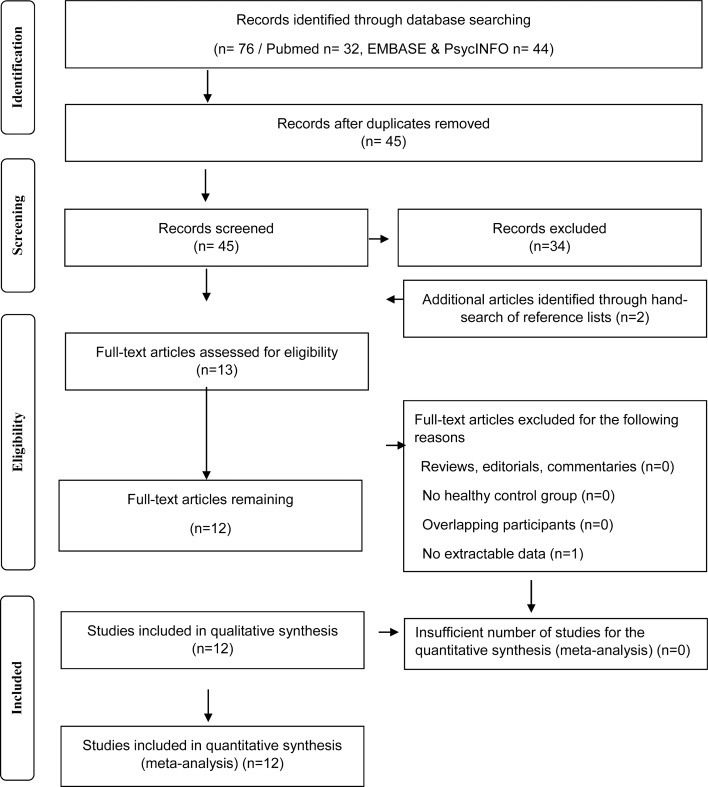
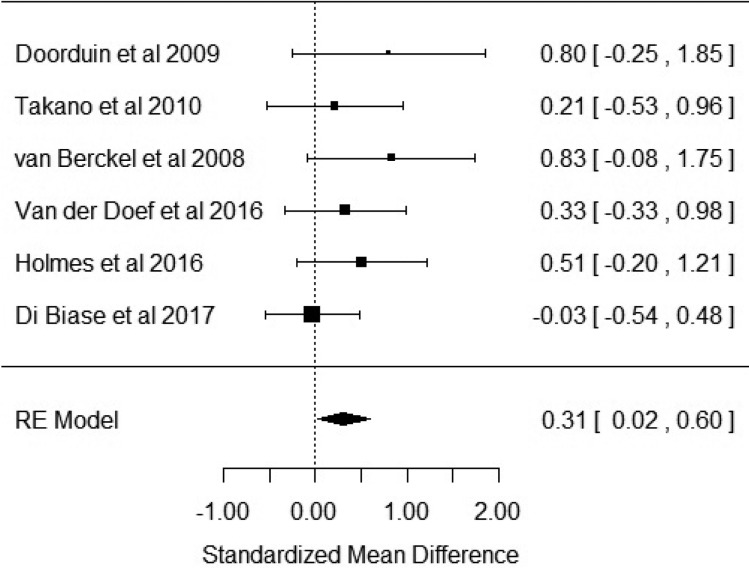
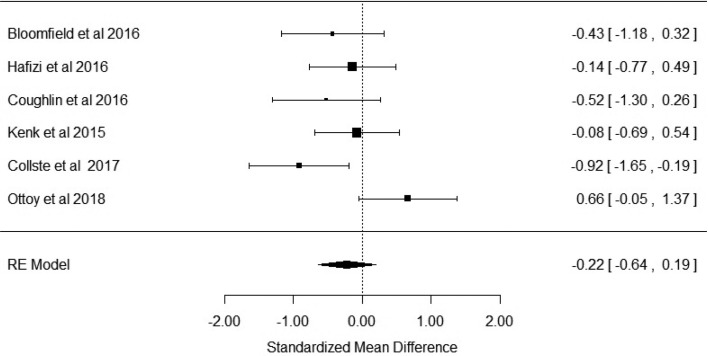
Background: Converging lines of evidence implicate an important role for the immune system in schizophrenia. Microglia are the resident immune cells of the central nervous system and have many functions including neuroinflammation, axonal guidance and neurotrophic support. We aimed to provide a quantitative review of in vivo PET imaging studies of microglia activation in patients with schizophrenia compared with healthy controls. Methods: Demographic, clinical and imaging measures were extracted from each study and meta-analysis was conducted using a random-effects model (Hedge's g ). The difference in 18-kDa translocator protein (TSPO) binding between patients with schizophrenia and healthy controls, as quantified by either binding potential (BP) or volume of distribution ( V T ), was used as the main outcome. Sub-analysis and sensitivity analysis were carried out to investigate the effects of genotype, ligand and illness stage. Results: In total, 12 studies comprising 190 patients with schizophrenia and 200 healthy controls met inclusion criteria. There was a significant elevation in tracer binding in schizophrenia patients relative to controls when BP was used as an outcome measure, (Hedge's g = 0.31; p = 0.03) but no significant differences when V T was used (Hedge's g = −0.22; p = 0.29). Conclusions: In conclusion, there is evidence for moderate elevations in TSPO tracer binding in grey matter relative to other brain tissue in schizophrenia when using BP as an outcome measure, but no difference when VT is the outcome measure. We discuss the relevance of these findings as well as the methodological issues that may underlie the contrasting difference between these outcomes.
Overview
The claims and statistics of this paper haven’t been checked yet.
Free: it reads the open-access text and checks the first 5 claims that cite a source we can check. Create a free account to check every claim.
Integrity signals
Registry
Cites
Statistics
Figures
Verification
Claims the paper makes
The claims and statistics of this paper haven’t been checked yet.
Free: it reads the open-access text and checks the first 5 claims that cite a source we can check. Create a free account to check every claim.
Claims other papers make about this one
Each is checked against this paper’s own text: does it say what the citing paper says it does?
The cited source says what the claim attributes to it.
In the citing paper
“Converging lines of genetic, post-mortem, and pre-clinical evidence suggest immune dysregulation may play a role in the pathogenesis of both schizophrenia 63–67 and depression, 68, 69 and it is hypothesised that immune alterations are seen only in a proportion of these patients (immune/inflammatory subgroups) and are linked to poor treatment response. 67, 70–72”
From Treatment resistance in psychiatry: state of the art and new directions (2022) · cites this paper as [65]
Self-check
Percentages, sums and reported differences re-computed from the paper’s own numbers.
The self-check needs the paper’s full text.
Citations
Cites
Biological insights from 108 schizophrenia-associated genetic loci
Schizophrenia Working Group of the Psychiatric Genomics Consortium (2014) · Nature · doi:10.1038/nature13595 · Cited by 7,577
Schizophrenia risk from complex variation of complement component 4
Sekar, A., Bialas, A. R., de Rivera, H., Davis, A., Hammond, T. R., Kamitaki, N., Tooley, K., Presumey, J., Baum, M., Van Doren, V., et al. (2016) · Nature · doi:10.1038/nature16549 · Cited by 2,394
Consensus Nomenclature for in vivo Imaging of Reversibly Binding Radioligands
Innis, R. B., Cunningham, V. J., Delforge, J., Fujita, M., Gjedde, A., Gunn, R. N., Holden, J., Houle, S., Huang, S.-C., Ichise, M., et al. (2007) · Journal of Cerebral Blood Flow & Metabolism · doi:10.1038/sj.jcbfm.9600493 · Cited by 1,955
Common variants conferring risk of schizophrenia
†Genetic Risk and Outcome in Psychosis (GROUP), Stefansson, H., Ophoff, R. A., Steinberg, S., Andreassen, O. A., Cichon, S., Rujescu, D., Werge, T., Pietiläinen, O. P. H., Mors, O., et al. (2009) · Nature · doi:10.1038/nature08186 · Cited by 1,677
Howes, O. D., Kambeitz, J., Kim, E., Stahl, D., Slifstein, M., Abi-Dargham, A., & Kapur, S. (2012) · Archives of General Psychiatry · doi:10.1001/archgenpsychiatry.2012.169 · Cited by 967 · cited 1×
“Although this is a common procedure in PET meta-analyses (Howes et al., 2012; Kambeitz et al., 2014; Ashok et al., 2017), it can constitute a potential limitation of this study.”
Self-citationMintun, M. A., Raichle, M. E., Kilbourn, M. R., Wooten, G. F., & Welch, M. J. (1984) · Annals of Neurology · doi:10.1002/ana.410150302 · Cited by 955 · cited 1×
“The non-displaceable BP (BPND) measures the tracer binding in the tissue of interest relative to another brain region selected to have negligible specific binding, to give specific binding in the region of interest (Mintun et al., 1984).”
Owen, D. R., Yeo, A. J., Gunn, R. N., Song, K., Wadsworth, G., Lewis, A., Rhodes, C., Pulford, D. J., Bennacef, I., Parker, C. A., et al. (2012) · Journal of Cerebral Blood Flow & Metabolism · doi:10.1038/jcbfm.2011.147 · Cited by 779
Calcia, M. A., Bonsall, D. R., Bloomfield, P. S., Selvaraj, S., Barichello, T., & Howes, O. D. (2016) · Psychopharmacology · doi:10.1007/s00213-016-4218-9 · Cited by 709
Self-citationvan Berckel, B. N., Bossong, M. G., Boellaard, R., Kloet, R., Schuitemaker, A., Caspers, E., Luurtsema, G., Windhorst, A. D., Cahn, W., Lammertsma, A. A., et al. (2008) · Biological Psychiatry · doi:10.1016/j.biopsych.2008.04.025 · Cited by 582
Benros, M. E., Nielsen, P. R., Nordentoft, M., Eaton, W. W., Dalton, S. O., & Mortensen, P. B. (2011) · American Journal of Psychiatry · doi:10.1176/appi.ajp.2011.11030516 · Cited by 582 · cited 1×
“Over 20 epidemiological studies show that people with a history of infection or autoimmune diseases have an increased risk of schizophrenia (Benros et al ., 2011, 2014; Khandaker et al ., 2012, 2013; Miller et al ., 2013).”
Neuroinflammation in Schizophrenia-Related Psychosis: A PET Study
Doorduin, J., de Vries, E. F. J., Willemsen, A. T. M., de Groot, J. C., Dierckx, R. A., & Klein, H. C. (2009) · Journal of Nuclear Medicine · doi:10.2967/jnumed.109.066647 · Cited by 559 · cited 2×
“We acknowledge that four of the 12 studies used in this meta-analysis analysed patients with schizophreniform disorder, psychotic disorder not otherwise specified, and brief psychosis as well as patients with schizophrenia (Doorduin et al., 2009; van der Doef et al., 2016; Collste et al., 2017).”
Cosenza‐Nashat, M., Zhao, M. ‐., Suh, H. ‐., Morgan, J., Natividad, R., Morgello, S., & Lee, S. C. (2009) · Neuropathology and Applied Neurobiology · doi:10.1111/j.1365-2990.2008.01006.x · Cited by 515 · cited 2×
“When microglia are activated, it increases the expression of the 18-kDa translocator protein (TSPO) (Cosenza-Nashat et al., 2009).”
Cytokine function in medication-naive first episode psychosis: A systematic review and meta-analysis
Upthegrove, R., Manzanares-Teson, N., & Barnes, N. M. (2014) · Schizophrenia Research · doi:10.1016/j.schres.2014.03.005 · Cited by 501
Khandaker, G. M., Zimbron, J., Lewis, G., & Jones, P. B. (2013) · Psychological Medicine · doi:10.1017/s0033291712000736 · Cited by 472
Bloomfield, P. S., Selvaraj, S., Veronese, M., Rizzo, G., Bertoldo, A., Owen, D. R., Bloomfield, M. A. P., Bonoldi, I., Kalk, N., Turkheimer, F., et al. (2016) · American Journal of Psychiatry · doi:10.1176/appi.ajp.2015.14101358 · Cited by 443 · cited 1×
“…[11C]-PBR28 showing an elevation in relative TSPO binding in people at ultra high risk of psychosis using the ratio but not with the V T approach (Bloomfield et al ., 2016b), while two studies using V T as the outcome measure, using the tracer [18F]-FEPPA and [11C]-PK11195, showed no differences…”
Self-citationImmune involvement in the pathogenesis of schizophrenia: a meta-analysis on postmortem brain studies
van Kesteren, C. F. M. G., Gremmels, H., de Witte, L. D., Hol, E. M., Van Gool, A. R., Falkai, P. G., Kahn, R. S., & Sommer, I. E. C. (2017) · Translational Psychiatry · doi:10.1038/tp.2017.4 · Cited by 368
Self-citationPostmortem evidence of cerebral inflammation in schizophrenia: a systematic review
Trépanier, M. O., Hopperton, K. E., Mizrahi, R., Mechawar, N., & Bazinet, R. P. (2016) · Molecular Psychiatry · doi:10.1038/mp.2016.90 · Cited by 360
Increase in HLA-DR Immunoreactive Microglia in Frontal and Temporal Cortex of Chronic Schizophrenics
Radewicz, K., Garey, L. J., Gentleman, S. M., & Reynolds, R. (2000) · Journal of Neuropathology & Experimental Neurology · doi:10.1093/jnen/59.2.137 · Cited by 342 · cited 1×
“…elevated markers for microglia, and morphological changes indicating microglial activation in schizophrenia patients (Bayer et al ., 1999; Radewicz et al ., 2000; Trepanier et al ., 2016) although this was not seen in all brain regions (Steiner et al ., 2006) and there are still a large…”
Ashok, A. H., Mizuno, Y., Volkow, N. D., & Howes, O. D. (2017) · JAMA Psychiatry · doi:10.1001/jamapsychiatry.2017.0135 · Cited by 330 · cited 1×
“Although this is a common procedure in PET meta-analyses (Howes et al., 2012; Kambeitz et al., 2014; Ashok et al., 2017), it can constitute a potential limitation of this study.”
Self-citationEvidence for activation of microglia in patients with psychiatric illnesses
Bayer, T. A., Buslei, R., Havas, L., & Falkai, P. (1999) · Neuroscience Letters · doi:10.1016/s0304-3940(99)00545-5 · Cited by 323
Developmental neuroinflammation and schizophrenia
Meyer, U. (2013) · Progress in Neuro-Psychopharmacology and Biological Psychiatry · doi:10.1016/j.pnpbp.2011.11.003 · Cited by 300 · cited 1×
“Epidemiological and preclinical evidence which indicates that neuroinflammation in utero and early development may predispose to schizophrenia (Meyer, 2013).”
Cortisol and Inflammatory Biomarkers Predict Poor Treatment Response in First Episode Psychosis
Mondelli, V., Ciufolini, S., Belvederi Murri, M., Bonaccorso, S., Di Forti, M., Giordano, A., Marques, T. R., Zunszain, P. A., Morgan, C., Murray, R. M., et al. (2015) · Schizophrenia Bulletin · doi:10.1093/schbul/sbv028 · Cited by 286 · cited 1×
“Interestingly, it has been shown that pro-inflammatory cytokines are elevated in first-episode patients who do not respond to antipsychotic treatment relative to those who do respond (Mondelli et al., 2015), which suggests that increases in microglia activity may be specific to a sub-group of patients, consistent with…”
Self-citationChildhood infection and adult schizophrenia: A meta-analysis of population-based studies
Khandaker, G. M., Zimbron, J., Dalman, C., Lewis, G., & Jones, P. B. (2012) · Schizophrenia Research · doi:10.1016/j.schres.2012.05.023 · Cited by 255 · cited 1×
“Over 20 epidemiological studies show that people with a history of infection or autoimmune diseases have an increased risk of schizophrenia (Benros et al ., 2011, 2014; Khandaker et al ., 2012, 2013; Miller et al ., 2013).”
Kreisl, W. C., Jenko, K. J., Hines, C. S., Lyoo, C. H., Corona, W., Morse, C. L., Zoghbi, S. S., Hyde, T., Kleinman, J. E., Pike, V. W., et al. (2013) · Journal of Cerebral Blood Flow & Metabolism · doi:10.1038/jcbfm.2012.131 · Cited by 246
The methodology of TSPO imaging with positron emission tomography
Turkheimer, F. E., Rizzo, G., Bloomfield, P. S., Howes, O., Zanotti-Fregonara, P., Bertoldo, A., & Veronese, M. (2015) · Biochemical Society Transactions · doi:10.1042/bst20150058 · Cited by 238
Self-citationDistribution of HLA-DR-positive microglia in schizophrenia reflects impaired cerebral lateralization
Steiner, J., Mawrin, C., Ziegeler, A., Bielau, H., Ullrich, O., Bernstein, H.-G., & Bogerts, B. (2006) · Acta Neuropathologica · doi:10.1007/s00401-006-0090-8 · Cited by 229
Schwieler, L., Larsson, M. K., Skogh, E., Kegel, M. E., Orhan, F., Abdelmoaty, S., Finn, A., Bhat, M., Samuelsson, M., Lundberg, K., et al. (2015) · Journal of Psychiatry and Neuroscience · doi:10.1503/jpn.140126 · Cited by 226
Antipsychotics' effects on blood levels of cytokines in schizophrenia: A meta-analysis
Tourjman, V., Kouassi, É., Koué, M.-È., Rocchetti, M., Fortin-Fournier, S., Fusar-Poli, P., & Potvin, S. (2013) · Schizophrenia Research · doi:10.1016/j.schres.2013.10.011 · Cited by 224
Fujita, M., Imaizumi, M., Zoghbi, S. S., Fujimura, Y., Farris, A. G., Suhara, T., Hong, J., Pike, V. W., & Innis, R. B. (2008) · NeuroImage · doi:10.1016/j.neuroimage.2007.11.011 · Cited by 213 · cited 1×
“Thus, the difference between BP and VT outcomes could reflect tracer differences, as [ (11)C]-PK11195 is known to have low brain penetration and high non-specific binding, which is a significant limitation of this tracer relative to the second-generation tracers (Fujita et al., 2008).”
Howes, O. D., & Kapur, S. (2014) · British Journal of Psychiatry · doi:10.1192/bjp.bp.113.138578 · Cited by 203 · cited 1×
“…patients who do not respond to anti-psychotic treatment relative to those who do respond (Mondelli et al ., 2015), which suggests that increases in microglia activity may be specific to a sub-group of patients, consistent with neuro-biological sub-types of schizophrenia (Howes and Kapur, 2014).”
Self-citationSasayama, D., Hattori, K., Wakabayashi, C., Teraishi, T., Hori, H., Ota, M., Yoshida, S., Arima, K., Higuchi, T., Amano, N., et al. (2013) · Journal of Psychiatric Research · doi:10.1016/j.jpsychires.2012.12.001 · Cited by 199 · cited 2×
“Moreover, studies of cerebrospinal fluid (CSF) have shown increased levels of pro-inflammatory markers in schizophrenia patients when compared with healthy controls, including IL-1 β , IL-6 and S100B (Schmitt et al ., 2005; Soderlund et al ., 2009; Sasayama et al ., 2013; Schwieler et al ., 2015).”
The Epidemiologic Evidence Linking Autoimmune Diseases and Psychosis
Benros, M. E., Eaton, W. W., & Mortensen, P. B. (2014) · Biological Psychiatry · doi:10.1016/j.biopsych.2013.09.023 · Cited by 195 · cited 1×
“Over 20 epidemiological studies show that people with a history of infection or autoimmune diseases have an increased risk of schizophrenia (Benros et al ., 2011, 2014; Khandaker et al ., 2012, 2013; Miller et al ., 2013).”
Translational evaluation of translocator protein as a marker of neuroinflammation in schizophrenia
Notter, T., Coughlin, J. M., Gschwind, T., Weber-Stadlbauer, U., Wang, Y., Kassiou, M., Vernon, A. C., Benke, D., Pomper, M. G., Sawa, A., et al. (2018) · Molecular Psychiatry · doi:10.1038/mp.2016.248 · Cited by 190 · cited 1×
“It has been suggested that TSPO expression may change during the course of the disorder, which could account for the differences in findings between studies (Notter et al., 2018).”
Activation of brain interleukin-1β in schizophrenia
Söderlund, J., Schröder, J., Nordin, C., Samuelsson, M., Walther-Jallow, L., Karlsson, H., Erhardt, S., & Engberg, G. (2009) · Molecular Psychiatry · doi:10.1038/mp.2009.52 · Cited by 179 · cited 2×
“Moreover, studies of cerebrospinal fluid (CSF) have shown increased levels of pro-inflammatory markers in schizophrenia patients when compared with healthy controls, including IL-1 β , IL-6 and S100B (Schmitt et al ., 2005; Soderlund et al ., 2009; Sasayama et al ., 2013; Schwieler et al ., 2015).”
Takano, A., Arakawa, R., Ito, H., Tateno, A., Takahashi, H., Matsumoto, R., Okubo, Y., & Suhara, T. (2010) · The International Journal of Neuropsychopharmacology · doi:10.1017/s1461145710000313 · Cited by 175
Kenk, M., Selvanathan, T., Rao, N., Suridjan, I., Rusjan, P., Remington, G., Meyer, J. H., Wilson, A. A., Houle, S., & Mizrahi, R. (2015) · Schizophrenia Bulletin · doi:10.1093/schbul/sbu157 · Cited by 169
Coughlin, J. M., Wang, Y., Ambinder, E. B., Ward, R. E., Minn, I., Vranesic, M., Kim, P. K., Ford, C. N., Higgs, C., Hayes, L. N., et al. (2016) · Translational Psychiatry · doi:10.1038/tp.2016.40 · Cited by 169
Microglial activation in a neuroinflammational animal model of schizophrenia – a pilot study
Juckel, G., Manitz, M. P., Brüne, M., Friebe, A., Heneka, M. T., & Wolf, R. J. (2011) · Schizophrenia Research · doi:10.1016/j.schres.2011.06.018 · Cited by 165 · cited 1×
“A number of risk factors for schizophrenia, notably pre-natal infection and psychosocial stress, are known to induce microglial activation (Juckel et al., 2011; Calcia et al., 2016).”
Imaging Microglial Activation in Untreated First-Episode Psychosis: A PET Study With [18F]FEPPA
Hafizi, S., Tseng, H.-H., Rao, N., Selvanathan, T., Kenk, M., Bazinet, R. P., Suridjan, I., Wilson, A. A., Meyer, J. H., Remington, G., et al. (2017) · American Journal of Psychiatry · doi:10.1176/appi.ajp.2016.16020171 · Cited by 123 · cited 2×
“, 2016b), while two studies using VT as the outcome measure, using the tracer [18F]-FEPPA and [11C]-PK11195, showed no differences in TSPO binding between healthy controls and in individuals at ultra high risk of psychosis for psychosis (Hafizi et al., 2016; Di Biase et al., 2017).”
Plavén-Sigray, P., Matheson, G. J., Collste, K., Ashok, A. H., Coughlin, J. M., Howes, O. D., Mizrahi, R., Pomper, M. G., Rusjan, P., Veronese, M., et al. (2018) · Biological Psychiatry · doi:10.1016/j.biopsych.2018.02.1171 · Cited by 123 · cited 2×
“A recent individual participant data meta-analysis of second-generation radioligand studies, with VT as the outcome measure, showed a reduction in VT in patients relative to healthy controls (Plaven-Sigray et al., 2018).”
Self-citationRizzo, G., Veronese, M., Tonietto, M., Zanotti-Fregonara, P., Turkheimer, F. E., & Bertoldo, A. (2014) · Journal of Cerebral Blood Flow & Metabolism · doi:10.1038/jcbfm.2014.55 · Cited by 121
Self-citationLockhart, A., Davis, B., Matthews, J. C., Rahmoune, H., Hong, G., Gee, A. D., Earnshaw, D. L., & Brown, J. (2003) · Nuclear Medicine and Biology · doi:10.1016/s0969-8051(02)00410-9 · Cited by 116 · cited 3×
“However, TSPO tracers may bind to a number of sites in the blood, including acute phase and inflammatory plasma proteins, such as α 1-acid glycoprotein (AGP) that are known to be elevated in schizophrenia (Telford et al ., 2012; Tourjman et al ., 2013).”
InfluentialKambeitz, J., Abi-Dargham, A., Kapur, S., & Howes, O. D. (2014) · British Journal of Psychiatry · doi:10.1192/bjp.bp.113.132308 · Cited by 115 · cited 1×
“Although this is a common procedure in PET meta-analyses (Howes et al., 2012; Kambeitz et al., 2014; Ashok et al., 2017), it can constitute a potential limitation of this study.”
Self-citationSifting through the surfeit of neuroinflammation tracers
Cumming, P., Burgher, B., Patkar, O., Breakspear, M., Vasdev, N., Thomas, P., Liu, G.-J., & Banati, R. (2018) · Journal of Cerebral Blood Flow & Metabolism · doi:10.1177/0271678x17748786 · Cited by 111 · cited 2×
“Thus, this could reflect an increase in TSPO in grey matter or a reduction in TSPO in the reference region, or altered non-specific binding in the brain (Cumming et al ., 2018).”
Holmes, S. E., Hinz, R., Drake, R., Gregory, C. J., Conen, S., Matthews, J. C., Anton‐Rodriguez, J., Gerhard, A., & Talbot, P. S. (2016) · Molecular Psychiatry · doi:10.1038/mp.2016.180 · Cited by 105
Collste, K., Plavén-Sigray, P., Fatouros-Bergman, H., Victorsson, P., Schain, M., Forsberg, A., Amini, N., Aeinehband, S., Karolinska Schizophrenia Project (KaSP) consortium, L, F., et al. (2017) · Molecular Psychiatry · doi:10.1038/mp.2016.247 · Cited by 104
Côtel, M.-C., Lenartowicz, E. M., Natesan, S., Modo, M., Cooper, J. D., Williams, S., Kapur, S., & Vernon, A. C. (2015) · European Neuropsychopharmacology · doi:10.1016/j.euroneuro.2015.08.004 · Cited by 99 · cited 1×
“, 2008), although recent in vivo work has found an increase after olanzapine, but a reduction with risperidone (Zhu et al., 2014; Cotel et al., 2015; Crum et al., 2016).”
Zhu, F., Zheng, Y., Ding, Y.-Q., Liu, Y., Zhang, X., Wu, R., Guo, X., & Zhao, J. (2014) · PLoS ONE · doi:10.1371/journal.pone.0093966 · Cited by 93 · cited 1×
“, 2008), although recent in vivo work has found an increase after olanzapine, but a reduction with risperidone (Zhu et al., 2014; Cotel et al., 2015; Crum et al., 2016).”
Di Biase, M. A., Zalesky, A., O'keefe, G., Laskaris, L., Baune, B. T., Weickert, C. S., Olver, J., McGorry, P. D., Amminger, G. P., Nelson, B., et al. (2017) · Translational Psychiatry · doi:10.1038/tp.2017.193 · Cited by 91
Self-citationGuo, Q., Owen, D. R., Rabiner, E. A., Turkheimer, F. E., & Gunn, R. N. (2012) · NeuroImage · doi:10.1016/j.neuroimage.2011.12.078 · Cited by 85 · cited 3×
“A genetic variant at rs6971 in the TSPO gene, causing a non-conservative amino acid substitution, has been found to affect the binding of some TSPO PET tracers (Owen et al ., 2012).”
InfluentialSelf-citationZheng, L. T., Hwang, J., Ock, J., Lee, M. G., Lee, W., & Suk, K. (2008) · Journal of Neurochemistry · doi:10.1111/j.1471-4159.2008.05675.x · Cited by 83 · cited 1×
“Preclinical studies in vitro have found antipsychotic treatment to reduce microglial activation (Zheng et al., 2008), although recent in vivo work has found an increase after olanzapine, but a reduction with risperidone (Zhu et al.”
Inflammatory Markers in Recent Onset Psychosis and Chronic Schizophrenia
Dickerson, F., Stallings, C., Origoni, A., Schroeder, J., Katsafanas, E., Schweinfurth, L., Savage, C., Khushalani, S., & Yolken, R. (2015) · Schizophrenia Bulletin · doi:10.1093/schbul/sbv108 · Cited by 80 · cited 3×
“Studies have repeatedly (although not invariably) shown that patients with schizophrenia have increased serum concentrations of pro-inflammatory cytokines, including IL-1β, IL-6 and TNF-α (Upthegrove et al., 2014; Dickerson et al., 2016).”
InfluentialNarayan, N., Mandhair, H., Smyth, E., Dakin, S. G., Kiriakidis, S., Wells, L., Owen, D., Sabokbar, A., & Taylor, P. (2017) · PLOS ONE · doi:10.1371/journal.pone.0185767 · Cited by 79
Schmitt, A., Bertsch, T., Henning, U., Tost, H., Klimke, A., Henn, F. A., & Falkai, P. (2005) · Schizophrenia Research · doi:10.1016/j.schres.2005.04.013 · Cited by 77 · cited 2×
“Moreover, studies of cerebrospinal fluid (CSF) have shown increased levels of pro-inflammatory markers in schizophrenia patients when compared with healthy controls, including IL-1 β , IL-6 and S100B (Schmitt et al ., 2005; Soderlund et al ., 2009; Sasayama et al ., 2013; Schwieler et al ., 2015).”
In vivo (R)-[11C]PK11195 PET imaging of 18kDa translocator protein in recent onset psychosis
van der Doef, T. F., de Witte, L. D., Sutterland, A. L., Jobse, E., Yaqub, M., Boellaard, R., de Haan, L., Eriksson, J., Lammertsma, A. A., Kahn, R. S., et al. (2016) · npj Schizophrenia · doi:10.1038/npjschz.2016.31 · Cited by 67
A Prevalence Study of Urinary Tract Infections in Acute Relapse of Schizophrenia
Miller, B. J., Graham, K. L., Bodenheimer, C. M., Culpepper, N. H., Waller, J. L., & Buckley, P. F. (2013) · The Journal of Clinical Psychiatry · doi:10.4088/jcp.12m08050 · Cited by 64 · cited 1×
“Over 20 epidemiological studies show that people with a history of infection or autoimmune diseases have an increased risk of schizophrenia (Benros et al., 2011, 2014; Khandaker et al., 2012, 2013; Miller et al., 2013).”
Hafizi, S., Silva, T. M. S., Gerritsen, C. J., Kiang, M., Bagby, R. M., Prce, I., Wilson, A. A., Houle, S., Rusjan, P., & Mizrahi, R. (2017) · Neuropsychopharmacology · doi:10.1038/npp.2017.111 · Cited by 60 · cited 1×
“Two of the studies do not provide a break-down of individual patient participant diagnoses, other than to classify patients as presenting with firstepisode psychosis (van der Doef et al., 2016; Hafizi et al., 2017), thus up to 52/190 (27%) of patients included in the meta-analysis are defined as presenting with a schi…”
Ottoy, J., Picker, L. D., Verhaeghe, J. A. J., Deleye, S., Wyffels, L., Kosten, L., Sabbe, B., Coppens, V., Timmers, M., Nueten, L. V., et al. (2018) · Journal of Nuclear Medicine · doi:10.2967/jnumed.117.203315 · Cited by 58
Decreased peripheral benzodiazepine binding sites in platelets of neuroleptic-treated schizophrenics
Gavish, M., Weizman, A., Karp, L., Tyano, S., & Tanne, Z. (1986) · European Journal of Pharmacology · doi:10.1016/0014-2999(86)90500-5 · Cited by 57 · cited 1×
“There is also evidence for reduced levels of binding of TSPO tracers to TSPO (previously known as the peripheral benzodiazepine receptor) on platelets in schizophrenia, with reductions of ∼30% reported in some studies (Gavish et al., 1986; Weizman et al., 1986), although potentially only in certain sub-types of schizo…”
Banati, R., & Hickie, I. B. (2009) · Medical Journal of Australia · doi:10.5694/j.1326-5377.2009.tb02371.x · Cited by 46 · cited 1×
“The group mean and error measures were not reported by Banati and Hickie (2009), and although we requested the data from the authors, we were unable to obtain them.”
Telford, J. E., Bones, J., McManus, C. A., Saldova, R., Manning, G., Doherty, M., Leweke, F. M., Rothermundt, M., Guest, P. C., Rahmoune, H., et al. (2012) · Journal of Proteome Research · doi:10.1021/pr300218h · Cited by 35
Narendran, R., & Frankle, W. G. (2016) · American Journal of Psychiatry · doi:10.1176/appi.ajp.2016.15111417 · Cited by 27
Weizman, R., Tanne, Z., Karp, L., Tyano, S., & Gavish, M. (1986) · Life Sciences · doi:10.1016/0024-3205(86)90512-6 · Cited by 23
Crum, W. R., Danckaers, F., Huysmans, T., Cotel, M.-C., Natesan, S., Modo, M. M., Sijbers, J., Williams, S. C. R., Kapur, S., & Vernon, A. C. (2016) · Psychological Medicine · doi:10.1017/s0033291716001768 · Cited by 15
Peripheral-type benzodiazepine receptors in diagnostic subtypes of schizophrenic patients
Wodarz, N., Rothenhöfer, C., Fischer, R., Stöber, G., Kiehl, B., Jungkunz, G., Riederer, P., & Klein, H. E. (1998) · Psychiatry Research · doi:10.1016/s0165-1781(98)00098-5 · Cited by 14 · cited 1×
“, 1986), although potentially only in certain sub-types of schizophrenia (Wodarz et al., 1998).”
Response to Narendran and Frankle: The Interpretation of PET Microglial Imaging in Schizophrenia
Bloomfield, P. S., Howes, O. D., Turkheimer, F., Selvaraj, S., & Veronese, M. (2016) · American Journal of Psychiatry · doi:10.1176/appi.ajp.2016.15111417r · Cited by 11
Self-citation
Cited by
McCutcheon, R. A., Reis Marques, T., & Howes, O. D. (2020) · JAMA Psychiatry · doi:10.1001/jamapsychiatry.2019.3360 · Cited by 1,481
Self-citationEnache, D., Pariante, C. M., & Mondelli, V. (2019) · Brain, Behavior, and Immunity · doi:10.1016/j.bbi.2019.06.015 · Cited by 615
“A previous meta-analysis found elevated TSPO binding in patient with schizophrenia when the outcome was TSPO- Binding Potential (BPND), but not when the outcome was TSPO- Volume of Distribution (VT) (Marques et al., 2018).”
BackgroundTreatment resistance in psychiatry: state of the art and new directions
Howes, O. D., Thase, M. E., & Pillinger, T. (2022) · Molecular Psychiatry · doi:10.1038/s41380-021-01200-3 · Cited by 413
Self-citationInnate immune dysfunction and neuroinflammation in autism spectrum disorder (ASD)
Hughes, H. K., R.J.Moreno, & Ashwood, P. (2023) · Brain, Behavior, and Immunity · doi:10.1016/j.bbi.2022.12.001 · Cited by 263
“The PET output parameter (binding potential vs total distribution volume) can influence findings, as previously documented in a meta-analysis of patients with psychiatric disorders (Marques, 2019).”
Neuroinflammation in psychiatric disorders: PET imaging and promising new targets
Meyer, J. H., Cervenka, S., Kim, M.-J., Kreisl, W. C., Henter, I. D., & Innis, R. B. (2020) · The Lancet Psychiatry · doi:10.1016/s2215-0366(20)30255-8 · Cited by 270
Metadata
- Authors
- Marques, T. R., Ashok, A. H., Pillinger, T., Veronese, M., Turkheimer, F. E., Dazzan, P., Sommer, I. E. C., & Howes, O. D.
- Affiliations
- MRC London Institute of Medical Sciences (GB)
- King's College London (GB)
- University Medical Center Utrecht (NL)
- Corresponding author
- Marques, Tiago Reis
- ORCID
- Venue
- Psychological Medicine
- Publisher
- Cambridge University Press (CUP)
- Published
- 2018-10-25
- Volume
- 49
- Issue
- 13
- Pages
- 2186-2196
- ISSN
- 0033-2917 (ISSN-L)
- 1469-8978
- PMC
- PMC6366560
- OpenAlex
- W2898554771
- Cited by
- 213
- References
- 66
- Citations by year
- 2026: 15 · 2025: 19 · 2024: 27 · 2023: 31 · 2022: 36 · 2021: 34 · 2020: 31 · 2019: 18 · 2018: 2
- FWCI
- 3.23
- Type
- journal article
- Language
- en
- Open access
- hybrid
- doi.org
- Locations
- Psychological Medicine (publishedVersion, cc-by)
- PubMed Central (publishedVersion, cc-by)
- PubMed (publishedVersion)
- Research Portal (King's College London) (submittedVersion, other-oa)
- Spiral (Imperial College London) (submittedVersion, cc-by)
- Padua Research Archive (University of Padova) (submittedVersion, cc-by)
- University of Groningen research database (University of Groningen / Centre for Information Technology) (submittedVersion, cc-by)
- Funders
- Medical Research Council (MR/N026063/1)
- Topics
- Health Sciences › Medicine › Psychiatry and Mental health › Schizophrenia research and treatment
- Life Sciences › Neuroscience › Neurology › Neuroinflammation and Neurodegeneration Mechanisms
- Life Sciences › Neuroscience › Biological Psychiatry › Tryptophan and brain disorders
- Keywords
- schizophrenia, neuroinflammation, microglial activation, translocator protein (TSPO), positron emission tomography, binding potential, volume of distribution, grey matter
- MeSH terms
- Blood Pressure, Humans, Inflammation, Schizophrenia, Microglia, Receptors, GABA, In Vitro Techniques
About these checks
Registry, retraction, Cites and statistics results are computed, not judged, with one exception: a printed reference that no index lists is read once by a model before it counts as a citation error. Claims are extracted by a model and kept only when their quote appears verbatim in the text; each cited source is then checked, with a model’s help, for whether it says what the claim relies on. Those verdicts can be wrong — read the claim’s quote and the cited source before relying on one.
Statistics and arithmetic are recomputed, not judged.
Confidence bands are shown only for fields calibrated on our annotated test set. None is calibrated yet, so no band is shown.
What counts as a claim ›How we measure confidence ›How we check this ›
Are you an author, or do you see a problem with this page? Request a review
Data sources
Bibliographic data: Semantic Scholar, OpenAlex, Crossref.
Contains information from the Semantic Scholar Academic Graph Datasets, made available under the ODC Attribution License (ODC-BY 1.0).
Semantic Scholar’s data is described in: Kinney, R., et al. (2023). The Semantic Scholar Open Data Platform. arXiv:2301.10140.
