

Efficacy of dialectical behavior therapy for adolescent self-harm and suicidal ideation: a systematic review and meta-analysis
Open accessThe DOI matches its Crossref record; 63 of the 65 references it cites were found in a registry or an index; 18 of the 37 sources its claims cite were checked for support.
Abstract
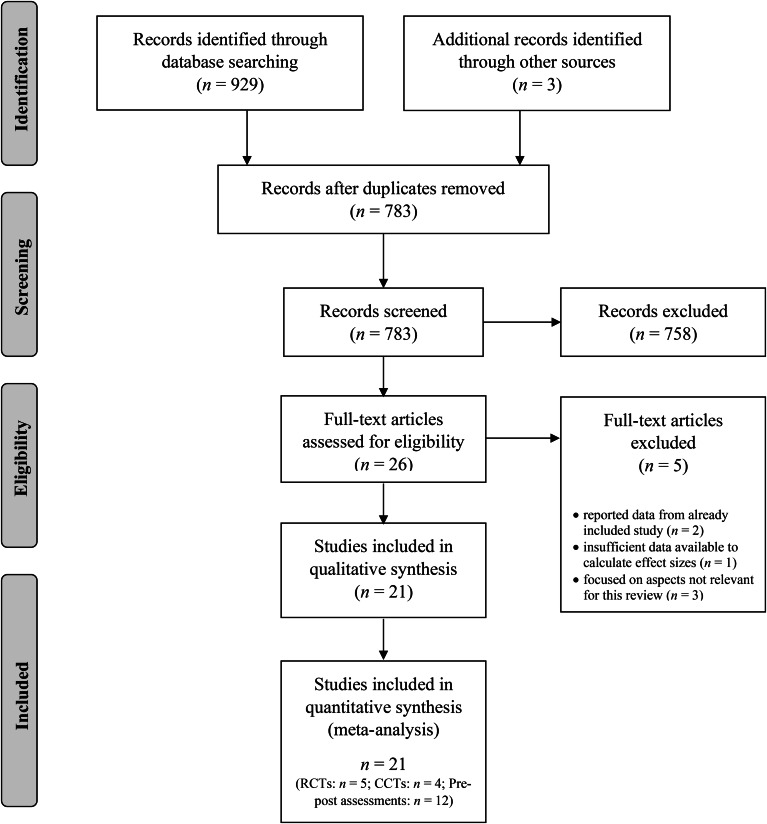
Background: Given the widespread nature and clinical consequences of self-harm and suicidal ideation among adolescents, establishing the efficacy of developmentally appropriate treatments that reduce both self-harm and suicidal ideation in the context of broader adolescent psychopathology is critical. Methods: We conducted a systematic review and meta-analysis of the Dialectical Behaviour Therapy for Adolescents (DBT-A) literature on treating self-injury in adolescents (12–19 years). We searched for eligible trials and treatment evaluations published prior to July 2020 in MEDLINE/PubMed, Scopus, Google Scholar, EMBASE, and the Cochrane Library databases for clinical trials. Twenty-one studies were identified [five randomized-controlled trials (RCTs), three controlled clinical trials (CCTs), and 13 pre-post evaluations]. We extracted data for predefined primary (self-harm, suicidal ideation) and secondary outcomes (borderline personality symptoms; BPD) and calculated treatment effects for RCTs/CCTs and pre-post evaluations. This meta-analysis was pre-registered with OSF: osf.io/v83e7. Results: Overall, the studies comprised 1673 adolescents. Compared to control groups, DBT-A showed small to moderate effects for reducing self-harm ( g = −0.44; 95% CI −0.81 to −0.07) and suicidal ideation ( g = −0.31, 95% CI −0.52 to −0.09). Pre-post evaluations suggested large effects for all outcomes (self-harm: g = −0.98, 95% CI −1.15 to −0.81; suicidal ideation: g = −1.16, 95% CI −1.51 to −0.80; BPD symptoms: g = −0.97, 95% CI −1.31 to −0.63). Conclusions: DBT-A appears to be a valuable treatment in reducing both adolescent self-harm and suicidal ideation. However, evidence that DBT-A reduces BPD symptoms was only found in pre-post evaluations.
Overview
CoChat Summary
TL;DR
This systematic review and meta-analysis of 21 studies (1673 adolescents) found that DBT-A reduced self-harm and suicidal ideation compared with control interventions, with small-to-moderate controlled effects and large pre-post reductions. Evidence that DBT-A reduces BPD symptoms came only from pre-post evaluations because only one controlled study assessed that outcome.
Key findings
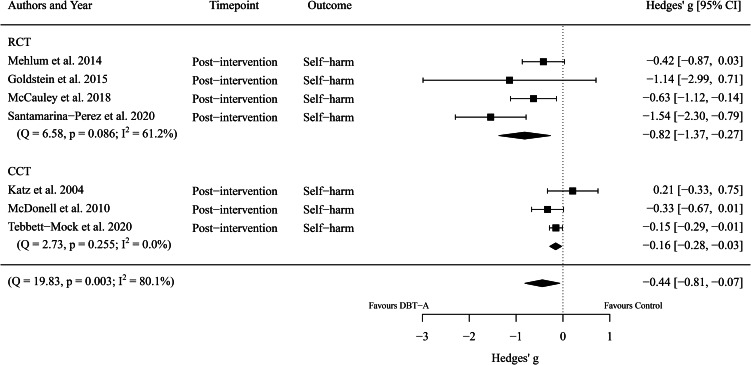
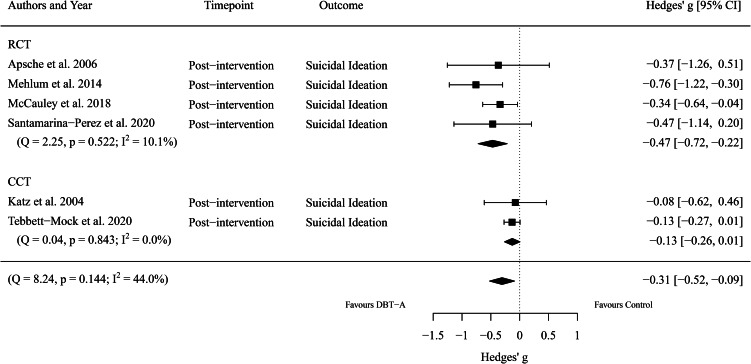
- Across 21 studies (5 RCTs, 3 CCTs, 13 pre-post evaluations; 1673 adolescents), DBT-A versus control reduced self-harm (g = −0.44, 95% CI −0.81 to −0.07, p = 0.021, I² = 80.13%) and suicidal ideation (g = −0.31, 95% CI −0.52 to −0.09, p = 0.006, I² = 44.05%).
- Pre-post DBT-A evaluations showed large reductions in self-harm (g = −0.98, 95% CI −1.15 to −0.81; k = 16, n = 498), suicidal ideation (g = −1.16, 95% CI −1.51 to −0.80; k = 11, n = 299), and BPD symptoms (g = −0.97, 95% CI −1.31 to −0.63; k = 5, n = 218).
- Only one controlled study (Mehlum et al., 2014) assessed BPD symptoms and found no significant group difference, so no meta-analysis of controlled BPD effects was conducted.
- Longer treatment duration was associated with larger reductions in suicidal ideation in controlled comparisons (b = −0.08, p = 0.012) and in BPD symptoms in pre-post evaluations (b = −0.29, p = 0.016); age and gender composition did not moderate outcomes (all ps > 0.05).
Methods
- Systematic review and meta-analysis pre-registered with OSF; searched MEDLINE/PubMed, Scopus, Google Scholar, EMBASE, and the Cochrane Library through 31 July 2020 for clinical trials of DBT-A in adolescents aged 12–19 who had engaged in self-injury at least once, including RCTs, CCTs, and pre-post evaluations.
- Random-effects models calculated Hedges’ g for controlled post-intervention comparisons and pre-post changes; primary outcomes were self-harm and suicidal ideation, with BPD symptoms as a secondary outcome; heterogeneity was assessed with I², moderators via meta-regression, and publication bias via Egger’s regression and trim-and-fill.
- Data were extracted independently by two authors with a third resolving differences; the 21 included studies comprised 1673 adolescents (1063 DBT-A, 610 control), mean age 15.4 years (s.d. = 1.3), 82% female, and average dropout 7% (range 0–40%).
Limitations
- Paper-stated limitations: only one RCT assessed DBT-A versus control for BPD symptoms, preventing meta-analysis; self-harm analyses had moderately high heterogeneity, possibly due to different control interventions and assessment methods, with 58.8% (k = 7) of studies using unvalidated clinical interviews, medical records, diary cards, or in-house instruments; few effects contributed to some estimates and confidence intervals were wide; most samples were predominantly female (81.0%, k = 17 had ≥75% young women), limiting conclusions for young men and gender-diverse youth.
- Paper-stated risk-of-bias findings: statistical problems were common, with 57.1% of studies rated high risk of bias due to low sample sizes; high risk of measurement bias was 38.1% and high risk of confounding bias was 33.3%.
- Evident from the text: no study accounted for the combined effect of pharmacological treatment with DBT-A, despite 63% of participants receiving concurrent psychopharmacological intervention and 11 studies not providing sufficient medication data.
Model-written summary. Check it against the paper before relying on it.
Integrity signals
Registry
Cites
Statistics
Figures
Verification
Claims the paper makes
13 Valid · 1 Not valid · 14 Not checked · 53 Own results and interpretations
The cited sources support only part of this claim — read each source’s verdict below.
In the paper
“A growing body of research demonstrates that therapeutic interventions for self-harm and suicidal ideation in general show limited efficacy (Fox et al., 2020; Kothgassner et al., 2020), highlighting the importance of isolating specific therapies which show promise for further development.”
§ Efficacy of dialectical behavior therapy for adolescent self-harm and suicidal ideation: a systematic review and meta-analysis > Discussion
What the sources say
- Not checked — no full text of the sourcecites Fox et al., 2020 matched to “Interventions for suicide and self-injury: A meta-analysis of randomized controlled trials across nearly 50 years of research.” (2020) source
- Partly supportedcites Kothgassner et al., 2020 matched to “Does treatment method matter? A meta-analysis of the past 20 years of research on therapeutic interventions for self-harm and suicidal ideation in adolescents” (2020) sourceExperimental — accuracy not yet measured
The Results report small improvements in self-harm and suicidal ideation relative to active controls, supporting a qualified description of limited comparative effects. But the Conclusions call those gains statistically significant and clinically important, and the meta-analysis concerns adolescents rather than people in general. The claim omits those qualifications. (LLM, conf=0.86)
boosted- Asserted: passes — The authors put it forward as true.
- Checkable: passes — It can be checked against evidence.
- Load-bearing: passes — The paper’s conclusions depend on it.
- Based: passes — The paper gives a reason why it holds.
Every source the paper cites for this claim was checked and supports it.
In the paper
“In terms of BPD symptoms, Mehlum et al. (2014) conducted the only RCT which assessed the efficacy of DBT-A in reducing BPD symptoms.”
§ Efficacy of dialectical behavior therapy for adolescent self-harm and suicidal ideation: a systematic review and meta-analysis > Results
What the sources say
- Supportedcites Mehlum et al. (2014) matched to “Dialectical Behavior Therapy for Adolescents With Repeated Suicidal and Self-harming Behavior: A Randomized Trial” (2014) source
The Introduction says no RCTs of DBT-A had previously been published, and the Discussion calls this the first randomized trial of DBT-A. The Other Outcomes section reports that the trial assessed borderline symptoms; it found no significant between-group difference. Thus the paper supports that the trial assessed efficacy for this outcome, not that DBT-A was proven to reduce BPD symptoms. (LLM, conf=0.91)
plainn = 39- Asserted: passes — The authors put it forward as true.
- Checkable: passes — It can be checked against evidence.
- Load-bearing: passes — The paper’s conclusions depend on it.
- Based: passes — The paper gives a reason why it holds.
- Supported
Every source the paper cites for this claim was checked and supports it.
In the paper
“To date, two reviews evaluating the efficacy of psychosocial treatments for reducing adolescent self-harm and suicidal ideation have highlighted DBT-A as a promising treatment (Glenn, Franklin, & Nock, 2015; Kothgassner, Robinson, Goreis, Ougrin, & Plener, 2020).”
§ Efficacy of dialectical behavior therapy for adolescent self-harm and suicidal ideation: a systematic review and meta-analysis > Abstract > Conclusions
What the sources say
- Supportedcites Glenn, Franklin, & Nock, 2015 matched to “Evidence-Based Psychosocial Treatments for Self-Injurious Thoughts and Behaviors in Youth” (2015) source
In the Dialectical behavior therapy (DBT) section, the review calls pilot studies of longer DBT interventions in youth “promising.” It also cautions that randomized trials were needed and classifies DBT as experimental; the citing sentence’s description of it as promising does not claim established efficacy. (LLM, conf=0.90)
- Supportedcites Kothgassner, Robinson, Goreis, Ougrin, & Plener, 2020 matched to “Does treatment method matter? A meta-analysis of the past 20 years of research on therapeutic interventions for self-harm and suicidal ideation in adolescents” (2020) source
In the Discussion (Applicability of the results; page not supplied), this meta-analysis reports that DBT-A was the only therapy type with significantly better self-harm outcomes than active controls and also showed a benefit for suicidal ideation. Its Conclusion calls for further investigation of DBT-A’s benefits, supporting the description of it as promising. (LLM, conf=0.94)
plainstates a possible cause- Asserted: passes — The authors put it forward as true.
- Checkable: passes — It can be checked against evidence.
- Load-bearing: passes — The paper’s conclusions depend on it.
- Based: passes — The paper gives a reason why it holds.
- Supported
Every source the paper cites for this claim was checked and supports it.
In the paper
“Secondary analysis of McCauley et al. (2018) revealed that adolescents who reported higher emotion dysregulation at baseline, and whose parents reported greater psychopathology and emotion dysregulation demonstrated greater reduction in self-harm following 6-months of DBT-A treatment (Adrian et al., 2019).”
§ Efficacy of dialectical behavior therapy for adolescent self-harm and suicidal ideation: a systematic review and meta-analysis > Discussion
What the sources say
- Supportedcites Adrian et al., 2019 matched to “Predictors and moderators of recurring self‐harm in adolescents participating in a comparative treatment trial of psychological interventions” (2019) source
Split into 2 atoms — 2 confirmed, 0 partially supported, 0 disputed, 0 misattributed, 0 unverifiable. Expand the claim to see per-atom verdicts.
plainstates an association- Asserted: passes — The authors put it forward as true.
- Checkable: passes — It can be checked against evidence.
- Load-bearing: unclear — It is unclear whether the paper’s conclusions depend on it.
- Based: passes — The paper gives a reason why it holds.
- Supported
The cited sources support only part of this claim — read each source’s verdict below.
In the paper
“Preliminary research provides tentative support for these mechanisms of change.”
§ Efficacy of dialectical behavior therapy for adolescent self-harm and suicidal ideation: a systematic review and meta-analysis > Discussion
What the sources say
- Not checked — no full text of the sourcecites Yeo et al., 2020 matched to “Self‐harm and self‐regulation in urban ethnic minority youth: a pilot application of dialectical behavior therapy for adolescents” (2020) source
- Partly supportedcites Adrian et al., 2019 matched to “Predictors and moderators of recurring self‐harm in adolescents participating in a comparative treatment trial of psychological interventions” (2019) sourceExperimental — accuracy not yet measured
The Discussion (page unavailable) says that adolescents and parents with higher baseline emotion dysregulation responded better to DBT than to supportive therapy, a finding the authors describe as aligning with DBT theory. This offers tentative, indirect support for a proposed mechanism, but the study tested baseline moderators of treatment response, not whether changes in those mechanisms caused improvement. (LLM, conf=0.82)
- Partly supportedcites Kuehn, King, Linehan, & Harned, 2020 matched to “Modeling the suicidal behavior cycle: understanding repeated suicide attempts among individuals with borderline personality disorder and a history of attempting suicide” (2020) sourceExperimental — accuracy not yet measured
The Discussion reports a weak association between access to emotion-regulation strategies and subsequent suicide attempts, offering limited support for one proposed DBT mechanism. But the Method describes an adult BPD sample receiving DBT, not DBT-A, and the Discussion says no within-person changes predicted subsequent attempts. The findings therefore do not establish mechanisms of change in DBT-A. (LLM, conf=0.87)
hedgedstates an association- Asserted: passes — The authors put it forward as true.
- Checkable: passes — It can be checked against evidence.
- Load-bearing: unclear — It is unclear whether the paper’s conclusions depend on it.
- Based: passes — The paper gives a reason why it holds.
42 more claims · 1 with their cited sources checked
Create a free account to see all 81 claims and to verify the 2 references still open.
- It may state two separate claims as one. 17
- Probably not a substantial claim. 17
- The quote only partly states this claim. 4
Claims other papers make about this one
Each is checked against this paper’s own text: does it say what the citing paper says it does?
The source backs part of the claim, not all of it — or backs it for a different population, condition or comparison.
In the citing paper
“However, few studies have investigated the effectiveness of DBT-A when delivered in routine clinical practice.”
From Evaluation of dialectical behavior therapy for adolescents in routine clinical practice: a pre-post study (2024) · cites this paper as [12]
Experimental — accuracy not yet measuredThe source backs part of the claim, not all of it — or backs it for a different population, condition or comparison.
In the citing paper
“The sample of patients in the current study is comparable to the inclusion criteria, age and gender in 10 of the 13 pre-post studies included in their systematic review and meta-analysis, supporting the feasibility of DBT-A on this population [12].”
From Evaluation of dialectical behavior therapy for adolescents in routine clinical practice: a pre-post study (2024) · cites this paper as [12]
Experimental — accuracy not yet measuredThe source backs part of the claim, not all of it — or backs it for a different population, condition or comparison.
In the citing paper
“Recent research suggests promising results for the use of third wave therapies with young people [30, 31].”
From Examining cognitive behavioral therapy interventions for unaccompanied minors: a systematic review and qualitative research synthesis. (2025) · cites this paper as [31]
Experimental — accuracy not yet measuredThe cited source says what the claim attributes to it.
In the citing paper
“A recent systematic review and meta-analysis including 21 studies conducted in inpatient and outpatient settings, and university research clinics and routine clinical care with in total 1673 adolescents receiving DBT-A, found small to moderate between group effects for reducing self-harm frequency compared to control conditions, and large within-group effects of DBT-A in pre-post evaluations [12].”
From Evaluation of dialectical behavior therapy for adolescents in routine clinical practice: a pre-post study (2024) · cites this paper as [12]
The cited source says what the claim attributes to it.
In the citing paper
“Dialectical behavioral therapy for Adolescents (DBT-A) is an evidence-based intervention for reducing self-harm.”
From Evaluation of dialectical behavior therapy for adolescents in routine clinical practice: a pre-post study (2024) · cites this paper as [12]
3 more claims about this paper
Create a free account to see every claim other papers make about this one.
Self-check
Percentages, sums and reported differences re-computed from the paper’s own numbers.
Each contradiction between two passages listed here was confirmed by an independent check.
Rated minor: it would not touch a result — a value no result rests on, a p-value that stays on the same side of the significance level, or a conflict that is clerical, resolved elsewhere in the paper, or outside its own findings.
In the paper
§ Efficacy of dialectical behavior therapy for adolescent self-harm and suicidal ideation: a systematic review and meta-analysis > Results
“An average of 7% of participants dropped-out across studies (range: 0–40%)”
§ Efficacy of dialectical behavior therapy for adolescent self-harm and suicidal ideation: a systematic review and meta-analysis > Results
“| Courtney and Flament (2015) | Pre-post | 42 | Canada | – | 93% | Adolescents 15 and above (16.5) | 3 | Outpatient | SIQ score >30, or self-injury in the past 4 months | SH (chart review) BPD (LPI) | 51% |”
Rated minor: it would not touch a result — a value no result rests on, a p-value that stays on the same side of the significance level, or a conflict that is clerical, resolved elsewhere in the paper, or outside its own findings.
In the paper
§ Efficacy of dialectical behavior therapy for adolescent self-harm and suicidal ideation: a systematic review and meta-analysis > Results
“Five effect sizes encompassing 1159 participants (DBT-A: n = 604, Control: n = 555, k = 6) were extracted.”
§ Efficacy of dialectical behavior therapy for adolescent self-harm and suicidal ideation: a systematic review and meta-analysis > Results
“Five effect sizes encompassing 1159 participants”
Rated minor: it would not touch a result — a value no result rests on, a p-value that stays on the same side of the significance level, or a conflict that is clerical, resolved elsewhere in the paper, or outside its own findings.
In the paper
§ Efficacy of dialectical behavior therapy for adolescent self-harm and suicidal ideation: a systematic review and meta-analysis > Method > Search strategy and inclusion criteria
“adolescents aged 12–19 who had engaged in self-injury at least once”
§ Efficacy of dialectical behavior therapy for adolescent self-harm and suicidal ideation: a systematic review and meta-analysis > Results
“| Perepletchikova et al. (2011) | Pre-post | 11 | USA | – | 55% | 8–11 years 6 months (9.83)”
Rated minor: it would not touch a result — a value no result rests on, a p-value that stays on the same side of the significance level, or a conflict that is clerical, resolved elsewhere in the paper, or outside its own findings.
In the paper
§ Efficacy of dialectical behavior therapy for adolescent self-harm and suicidal ideation: a systematic review and meta-analysis > Results
“Mehlum et al. (2014) conducted the only RCT which assessed the efficacy of DBT-A in reducing BPD symptoms.”
§ Efficacy of dialectical behavior therapy for adolescent self-harm and suicidal ideation: a systematic review and meta-analysis > Results
“| McCauley et al. (2018) | RCT | 173 | USA | Individual and groupsupportive therapy | 94% | 12–18 (14.9) | 6 | ED, inpatient, outpatient services, and community services | 1+ lifetime suicide attempt; elevated past-month suicidal ideation (⩾24 on the SIQ-Jr); ⩾3 lifetime self-injury episodes, including 1 episode in the 12 weeks before screening, 3+ BPD criteria | SH (SASII), SI (SIQ-Jr), BPD (SCID-II) | 40% |”
Citations
Cites
Statistical Power Analysis for the Behavioral Sciences
Muller, K. (1989) · Technometrics · doi:10.1080/00401706.1989.10488618 · Cited by 99,167
Statistical power analysis for the behavioral sciences
(1990) · Computers, Environment and Urban Systems · doi:10.1016/0198-9715(90)90050-4 · Cited by 65,269
Measuring inconsistency in meta-analyses
Higgins, J. P. T., Thompson, S. G., Deeks, J. J., & Altman, D. G. (2003) · BMJ · doi:10.1136/bmj.327.7414.557 · Cited by 63,139 · cited 1×
“Heterogeneity across study outcomes was reported with I 2 values, where 25% indicates low heterogeneity, 50% moderate, and 75% high heterogeneity (Higgins, Thompson, Deeks, & Altman, 2003).”
Conducting Meta-Analyses in R with the metafor Package
Viechtbauer, W. (2010) · Journal of Statistical Software · doi:10.18637/jss.v036.i03 · Cited by 20,464 · cited 1×
“Effect size calculations and meta-analyses were conducted with the metafor package for R (Viechtbauer, 2010).”
Lakens, D. (2013) · Frontiers in Psychology · doi:10.3389/fpsyg.2013.00863 · Cited by 10,303 · cited 1×
“M pre )/ SD pooled , where M post is the mean of the measure after the intervention and M pre the mean before the intervention, with SD pooled as the standard deviation for both measurements, defined as SD pooled = SQRT(SD pre 2 + SD post 2 )/2 (Lakens, 2013).”
(2000) · Cited by 9,198
A Nonparametric “Trim and Fill” Method of Accounting for Publication Bias in Meta-Analysis
Duval, S., & Tweedie, R. (2000) · Journal of the American Statistical Association · doi:10.1080/01621459.2000.10473905 · Cited by 2,955 · cited 1×
“Egger ’ s regressions were conducted to estimate publication bias (Sterne & Egger, 2005), with adjusted effect sizes calculated using trim-and-fill analyses and, based on funnel plot asymmetry, numbers of imputed missing studies (Duval & Tweedie, 2000).”
Self-harm and suicide in adolescents
Hawton, K., Saunders, K. E., & O'Connor, R. C. (2012) · The Lancet · doi:10.1016/s0140-6736(12)60322-5 · Cited by 2,306 · cited 1×
“Suicide is the leading cause of death for female adolescents and the third highest cause of death for male adolescents in the western world (Collaboration GBoDP, 2016; Hawton, Saunders, & O ’ Connor, 2012).”
Meta-analysis of experiments with matched groups or repeated measures designs
Dunlap, W. P., Cortina, J. M., Vaslow, J. B., & Burke, M. J. (1996) · Psychological Methods · doi:10.1037/1082-989x.1.2.170 · Cited by 1,693 · cited 2×
“For analyses regarding pre-post treatment effects, we computed the standardized mean difference (Hedges’ g) based on means and standard deviations (Dunlap et al., 1996) before and after DBT-A intervention using the formula g = (Mpost-Mpre)/ SDpooled, where Mpost is the mean of the measure after the intervention and Mp…”
Non-suicidal self-injury among adolescents: Diagnostic correlates and relation to suicide attempts
NOCK, M., JOINERJR, T., GORDON, K., LLOYDRICHARDSON, E., & PRINSTEIN, M. (2006) · Psychiatry Research · doi:10.1016/j.psychres.2006.05.010 · Cited by 1,617
Research works printed but not linked: 2
- American Psychiatric Association (2006). American Psychiatric Association practice guidelines for the treatment of psychiatric disorders. Washington DC: American Psychiatric Pub.
- Cochrane Collaboration (2014). Review manager (RevMan) [computer program]. version 5.3. Copenhagen: The Nordic Cochrane Centre.
Cited by
Leichsenring, F., Fonagy, P., Heim, N., Kernberg, O. F., Leweke, F., Luyten, P., Salzer, S., Spitzer, C., & Steinert, C. (2024) · World Psychiatry · doi:10.1002/wps.21156 · Cited by 294
“%) in reducing suicidal ideation 244 .”
Harvey, L. J., White, F. A., Hunt, C. J., & Abbott, M. J. (2023) · Behaviour Research and Therapy · doi:10.1016/j.brat.2023.104408 · Cited by 56
Dialectical Behavior Therapy for Adolescents With Bipolar Disorder: A Randomized Clinical Trial
Goldstein, T. R., Merranko, J., Rode, N., Sylvester, R., Hotkowski, N., Fersch-Podrat, R., Hafeman, D. M., Diler, R., Sakolsky, D., Franzen, P., et al. (2024) · JAMA Psychiatry · doi:10.1001/jamapsychiatry.2023.3399 · Cited by 48
Help-seeking duration in adolescents with suicidal behavior and non-suicidal self-injury
Lustig, S., Koenig, J., Resch, F., & Kaess, M. (2021) · Journal of Psychiatric Research · doi:10.1016/j.jpsychires.2021.05.037 · Cited by 59
Nikopaschos, F., Burrell, G., Clark, J., & Salgueiro, A. (2023) · Frontiers in Psychology · doi:10.3389/fpsyg.2023.1145100 · Cited by 43
The State of the Science: Dialectical Behavior Therapy
Rizvi, S. L., Bitran, A., Oshin, L. A., Yin, Q., & Ruork, A. K. (2024) · Behavior Therapy · doi:10.1016/j.beth.2024.02.006 · Cited by 59
Lieslehto, J., Tiihonen, J., Lähteenvuo, M., Mittendorfer‐Rutz, E., Tanskanen, A., & Taipale, H. T. (2023) · JAMA Network Open · doi:10.1001/jamanetworkopen.2023.17130 · Cited by 47
Efficacy of mentalization‐based therapy in treating self‐harm: A systematic review and meta‐analysis
Hajek Gross, C., Oehlke, S., Prillinger, K., Goreis, A., Plener, P. L., & Kothgassner, O. D. (2024) · Suicide and Life-Threatening Behavior · doi:10.1111/sltb.13044 · Cited by 31
Self-citationZhang, L., Zhao, S., Yang, Z., Zheng, H., & Lei, M. (2024) · BMC Psychiatry · doi:10.1186/s12888-024-06017-2 · Cited by 49
“Intensive therapy sessions, such as cognitive-behavioral therapy [32] or dialectical behavior therapy [33], can be implemented to help these students develop coping mechanisms and improve their emotional well-being.”
BackgroundWarne, N., Heron, J. E., Mars, B., Solmi, F., Biddle, L., Gunnell, D., Hammerton, G., Moran, P., Munafo, M. R., Penton‐Voak, I. S., et al. (2022) · Journal of Child Psychology and Psychiatry · doi:10.1111/jcpp.13738 · Cited by 40
Chen, Y., Ke, X., Liu, J., Du, J., Zhang, J., Jiang, X. J., Zhou, T., & Xiao, X. (2024) · Frontiers in Psychology · doi:10.3389/fpsyg.2024.1387983 · Cited by 31
Dat, N. T., Mitsui, N., Asakura, S., Takanobu, K., Fujii, Y., Toyoshima, K., Kako, Y., & Kusumi, I. (2022) · Frontiers in Psychiatry · doi:10.3389/fpsyt.2022.925423 · Cited by 34
Apicella, M., Pontillo, M., Maglio, G., Vincenzo, C. D., Santa, G. D., Andracchio, E., & Vicari, S. (2025) · Frontiers in Psychiatry · doi:10.3389/fpsyt.2025.1605508 · Cited by 46
Al‐Dajani, N., Horwitz, A. G., & Czyz, E. K. (2022) · Depression and Anxiety · doi:10.1002/da.23253 · Cited by 26
“…behavior therapy, which is one of the few psychotherapies to demonstrate effectiveness for reducing suicidal ideation and self‐harm behaviors in adolescents (for a review see Kothgassner et al., 2021), has a strong emphasis on developing effective coping strategies to manage emotional distress.”
BackgroundSuicidal behavior in adolescents under review: fostering hope through action
Fonseca‐Pedrero, E., Departamento de Ciencias de la Educación, U. D. L. R., Pérez‐Albéniz, A., Departamento de Ciencias de la Educación, U. D. L. R., Al‐Halabí, S., & Departamento de Psicología, U. D. O. (2022) · Papeles del Psicólogo - Psychologist Papers · doi:10.23923/pap.psicol.3000 · Cited by 65
“…practice guidelines of the Spanish National Health System (Fonseca-Pedrero et al., 2021), in the approach to suicidal behavior, dialectical-behavioral therapy for adolescents stands out as the only well-established psychological treatment with a grade A recommendation (Kothgassner et al., 2021).”
BackgroundChen, M., Yang, Z., Luo, D., Yan, S., Liu, M., Wang, M., Li, X., Yang, B. X., Li, Y., & Liu, L. Z. (2023) · Frontiers in Public Health · doi:10.3389/fpubh.2023.1164999 · Cited by 35
“However, psychological therapeutic trials such as dialectical behavioral therapy have been proposed to be a valuable treatment in reducing children and adolescents’ self-harm (9, 10).”
BackgroundNawaz, R. F., Anderson, J., Colville, L., Fraser‐Andrews, C., & Ford, T. J. (2023) · Child and Adolescent Mental Health · doi:10.1111/camh.12634 · Cited by 30
Tilley, J. L., Molina, L., Luo, X., Natarajan, A., Casolaro, L., Gonzalez, A., & Mahaffey, B. (2022) · Psychology and Psychotherapy Theory Research and Practice · doi:10.1111/papt.12418 · Cited by 23
Prillinger, K., Goreis, A., Macura, S., Gross, C. H., Lozar, A., Fanninger, S., Mayer, A. C., Oppenauer, C., Plener, P. L., & Kothgassner, O. D. (2024) · European Journal of Psychotraumatology · doi:10.1080/20008066.2024.2406662 · Cited by 27
Self-citationA systematic review of dialectical behavior therapy mobile apps for content and usability
Wilks, C. R., Gurtovenko, K., Rebmann, K., Williamson, J., Lovell, J., & Wasil, A. R. (2021) · Borderline Personality Disorder and Emotion Dysregulation · doi:10.1186/s40479-021-00167-5 · Cited by 27
“It is also currently the leading treatment for NSSI and suicide attempts for adolescents [4 – 6].”
BackgroundPhysiological stress reactivity and self-harm: A meta-analysis
Goreis, A., Prillinger, K., Bedus, C., Lipp, R., Mayer, A. C., Nater, U. M., Koenig, J., Plener, P. L., & Kothgassner, O. D. (2023) · Psychoneuroendocrinology · doi:10.1016/j.psyneuen.2023.106406 · Cited by 24
“…in people with self-harm — may be valuable additions to already established psycho-therapy, where DBT-A can be regarded as the first recommended path of action due to its primary goal of reducing emotional distress and increasing stress coping skills in general (Kothgassner et al., 2021, 2020).”
Self-citationCommunicating distress: suicide threats/gestures among clinical and community youth
Robinson, K., Scharinger, C., Brown, R. C., & Plener, P. L. (2022) · European Child & Adolescent Psychiatry · doi:10.1007/s00787-022-01960-5 · Cited by 21
“Together, findings provide support to the classification of suicidal threats/ gestures as ‘non-suicidal’ as opposed to suicidal thoughts and behaviors [16].”
BackgroundResultSelf-citationMental health interventions in adolescence
Campisi, S. C., Ataullahjan, A., Baxter, J. B., Szatmári, P., & Bhutta, Z. A. (2022) · Current Opinion in Psychology · doi:10.1016/j.copsyc.2022.101492 · Cited by 24
Prochaska, J. J., Wang, Y., Bowdring, M. A., Chieng, A., Chaudhary, N. P., & Ramo, D. E. (2023) · JMIR mhealth and uhealth · doi:10.2196/47183 · Cited by 25
“Skills and coaching support in the BeMe app are based on interventions that have a strong and sound evidence base with adolescents, including cognitive behavioral therapy [31], dialectical behavior therapy [32], acceptance and commitment therapy [33], mindfulness-based self-compassion [34], positive psychology [35], a…”
Family therapy and systemic interventions for child‐focussed problems: The evidence base
Carr, A. (2024) · Journal of Family Therapy · doi:10.1111/1467-6427.12476 · Cited by 43
Kaess, M., & Cavelti, M. (2025) · Journal of Child Psychology and Psychiatry · doi:10.1111/jcpp.70011 · Cited by 26
Attentional Biases and Nonsuicidal Self-Injury Urges in Adolescents
Goreis, A., Pfeffer, B., Gross, C. H., Klinger, D., Oehlke, S., Zesch, H. E., Claes, L., Plener, P. L., & Kothgassner, O. D. (2024) · JAMA Network Open · doi:10.1001/jamanetworkopen.2024.22892 · Cited by 18
Self-citationLeddie, G., Fox, C., & Simmonds, S. (2021) · Journal of Psychiatric and Mental Health Nursing · doi:10.1111/jpm.12806 · Cited by 32
Dibaj, I. S., Tørmoen, A. J., Klungsøyr, O., Haga, E., & Mehlum, L. I. (2023) · Clinical Child Psychology and Psychiatry · doi:10.1177/13591045231177374 · Cited by 19
Systematic Review: Patient Outcomes in Transdiagnostic Adolescent Partial Hospitalization Programs
Rubenson, M. P., Gurtovenko, K., Simmons, S. W., & Thompson, A. D. (2023) · Journal of the American Academy of Child & Adolescent Psychiatry · doi:10.1016/j.jaac.2023.03.022 · Cited by 16
Hultsjö, S., Rosenlund, H., Wadsten, L., & Wärdig, R. E. (2022) · Nursing Open · doi:10.1002/nop2.1487 · Cited by 14
“Dialectical behavioural therapy appears to be a valuable treatment in reducing both self-harm and suicidal ideation (Kothgassner et al., 2021 ).”
Universal prevention for non-suicidal self-injury in adolescents is scarce - A systematic review
Bürger, A., von Schoenfeld, C., Scheiner, C., Seidel, A., Wasserscheid, A., Gad, D., Kittel‐Schneider, S., Romanos, M., & Reiter, A. M. F. (2023) · Frontiers in Psychiatry · doi:10.3389/fpsyt.2023.1130610 · Cited by 15
The evaluation of a stepped care approach for early intervention of borderline personality disorder
Cavelti, M., Blaha, Y., Lerch, S., Hertel, C., Berger, T., Reichl, C., Koenig, J., & Kaess, M. (2024) · Borderline Personality Disorder and Emotion Dysregulation · doi:10.1186/s40479-024-00256-1 · Cited by 14
“Furthermore, evidence suggests that structured psychological therapies can result in clinically relevant improvements, particularly with regard to reduction of self-harming behavior which is a predominant feature of BPD in youth [5–8].”
BackgroundMorthorst, B. R., Olsen, M. H., Jakobsen, J. C., Lindschou, J., Gluud, C. N., Heinrichsen, M., Møhl, B., Rubæk, L., Ojala, O., Hellner, C., et al. (2022) · JCPP Advances · doi:10.1002/jcv2.12115 · Cited by 16
Camp, J., Durante, G., Cooper, A., Smith, P. A., & Rimes, K. A. (2024) · Behavioural and Cognitive Psychotherapy · doi:10.1017/s135246582400016x · Cited by 16
“DBT is an effective intervention for suicidal and NSSI behaviours in young people (Johnstone et al ., 2022; Kothgassner et al ., 2021) and is recommended by the National Institute for Health and Care Excellence (2022) in the UK, and National Institute of Mental Health (2022) in the USA, for the…”
Schneider, R. L., & Petersen, J. M. (2024) · Journal of Contextual Behavioral Science · doi:10.1016/j.jcbs.2023.100716 · Cited by 12
Psychological interventions for suicidal behavior in adolescents: a comprehensive systematic review
García-Fernández, A., Bobes-Bascarán, T., Martínez-Cao, C., González-Blanco, L., Fernández, J. F., Madera, P. Z., Zazo, E. S., Jiménez-Treviño, L., García‐Portilla, M. P., Bobes, J., et al. (2024) · Translational Psychiatry · doi:10.1038/s41398-024-03132-2 · Cited by 17
Boustani, M. M., Mazzone, E., Hodgins, J., & Rith‐Najarian, L. (2024) · Journal of Clinical Child & Adolescent Psychology · doi:10.1080/15374416.2024.2426142 · Cited by 19
“…including primarily quasi-experimental designs, have determined that DBT for adolescents is similarly effective overall (Groves et al., 2012; Haktanir et al., 2023; Jakubovic & Drabick, 2023; Jones et al., 2023; Kothgassner et al., 2021; MacPherson et al., 2013; Vijayapriya & Tamarana, 2023).”
Ramzan, N., Dixey, R., & Morris, A. (2022) · The Cognitive Behaviour Therapist · doi:10.1017/s1754470x22000460 · Cited by 13
Experiences of dialectical behaviour therapy for adolescents: A qualitative analysis
Ohlis, A., Bjureberg, J., Ojala, O., Kerj, E., Hallek, C., Fruzzetti, A. E., & Hellner, C. (2023) · Psychology and Psychotherapy Theory Research and Practice · doi:10.1111/papt.12447 · Cited by 19
Pastor, E. M., Atauri-Mezquida, D., Ojeda, M. Á. N., & Blanco-Ruíz, M. (2023) · Redes Revista hispana para el análisis de redes sociales · doi:10.5565/rev/redes.996 · Cited by 17
Ye, Y., Li, Y., Wu, X., & Zhou, X. (2024) · Journal of Adolescent Health · doi:10.1016/j.jadohealth.2024.03.008 · Cited by 15
Camp, J., Hunt, K., & Smith, L. M. (2023) · The Cognitive Behaviour Therapist · doi:10.1017/s1754470x23000211 · Cited by 12
“…that longer DBT-A programmes may be more susceptible to treatment non-completion for some individuals (Gillespie et al ., 2019), but meta-analytic research suggests that longer DBT interventions may also lead to improved outcomes compared with shorter interventions (Kothgassner et al ., 2021).”
Morroni, D., Konstantinou, P., Gkleka, C., Kassianos, A. P., & Karekla, M. (2025) · European Child & Adolescent Psychiatry · doi:10.1007/s00787-024-02500-z · Cited by 9
“Recent research suggests promising results for the use of third wave therapies with young people [30 , 31 ].”
Ang, S. H., Venkateswaran, S., Goda, M. B., Naidu, K. N. C., Kundadak, G. K., & Subramaniam, M. (2025) · European Psychiatry · doi:10.1192/j.eurpsy.2025.2444 · Cited by 13
“Potentialpsy-chologicaltreatmentmethodsincludeDialecticalBehavioural Therapy,whichhasdemonstratedefficacyinreducingadolescent self-harmandsuicidalideation[65].”
de Andrade, D., Davidson, L., Robertson, C., Williams, P. L., Leung, J., Walter, Z. C., Allan, J., & Hides, L. M. (2024) · Journal of Clinical Psychology · doi:10.1002/jclp.23725 · Cited by 15
Body regard disrupts emotional cascade processes in nonsuicidal self‐injury
Myntti, W. W., & Muehlenkamp, J. J. (2023) · Journal of Clinical Psychology · doi:10.1002/jclp.23513 · Cited by 11
How early can an upcoming critical transition be detected?Preprint
Southall, E., Tildesley, M. J., & Dyson, L. (2022) · medRxiv · doi:10.1101/2022.05.27.22275693 · Cited by 10
The use of CAMS and DBT to effectively treat patients who are suicidal
Jobes, D. A., & Rizvi, S. L. (2024) · Frontiers in Psychiatry · doi:10.3389/fpsyt.2024.1354430 · Cited by 8
Views of self in the context of self-injury recovery: a thematic analysis
Farrell, B. C. T., Kenny, T. E., & Lewis, S. P. (2023) · Counselling Psychology Quarterly · doi:10.1080/09515070.2023.2193871 · Cited by 13
“This may be done through tracking recovery experiences (e.g. DBT diary cards; Kothgassner et al., 2021), identifying unique experiences (e.g. as in narrative therapy; Morgan, 2000), or through spontaneous and genuine in-session discussions.”
BackgroundHatoum, A. H., & Burton, A. L. (2024) · Journal of Clinical Psychology · doi:10.1002/jclp.23735 · Cited by 17
Gan, Y., Kuang, L., Xu, X.-M., Ai, M., He, J.-L., Wang, W., Su, H., Chen, J. M., Cao, J., & Zhang, Q. (2025) · Frontiers in Psychiatry · doi:10.3389/fpsyt.2024.1521025 · Cited by 8
High Rates of Anxiety Among Adolescents in a Partial Hospitalization Program
Pelcovitz, M., Bennett, S. M., Desai, P. C., Schild, J. S., Beaumont, R. B., Walkup, J. T., Shaffer, D., & Chiu, A. W. (2022) · Child & Youth Care Forum · doi:10.1007/s10566-022-09680-2 · Cited by 11
“…using CBT for anxiety disorders has been shown to decrease the rate of reported suicidal ideation in clinical settings (Brown et al., 2018), and DBT has a growing evidence base for decreasing suicidal ideation and behaviors in adolescents (for a systematic review, see Kothgassner et al., 2021).”
BackgroundBorderline personality features influence treatment response to suicide prevention
Balzen, K. M., Goette, W. F., Sachs, R., Dieste, S., Heerschap, J. K., Kennard, B. D., Emslie, G. J., & Stewart, S. M. (2022) · Journal of Affective Disorders · doi:10.1016/j.jad.2022.05.083 · Cited by 8
Holmqvist Larsson, K., & Zetterqvist, M. (2024) · Frontiers in Psychiatry · doi:10.3389/fpsyt.2024.1448529 · Cited by 7
Wood, N. M., O’Shea, A. E., Num, S., Johnson, C., Sutherland, C. R., Edney, L. C., & Wade, T. D. (2023) · Clinical Psychologist · doi:10.1080/13284207.2023.2278792 · Cited by 8
Psychotropic medication use among adolescents participating in three randomized trials of DBT
Mehlum, L. I., Asarnow, J. R., Neupane, S. P., Santamarina-Pérez, P., Primé‐Tous, M., & Carlson, G. A. (2024) · Borderline Personality Disorder and Emotion Dysregulation · doi:10.1186/s40479-024-00249-0 · Cited by 10
“Meta-analysis suggests a clear improvement in suicidal ideation and self-harm measures post-intervention with DBT [12].”
BackgroundPediatric suicide: Review of a preventable tragedy
Greydanus, D. E., Nazeer, A., Qayyum, Z., Patel, D. R., Rausch, R., Hoang, L.-N., Miller, C., Chahin, S. S., Apple, R. W., Saha, G. K., et al. (2024) · Disease-a-Month · doi:10.1016/j.disamonth.2024.101725 · Cited by 13
Nonsuicidal Self-Injury in Children and Adolescents
Westers, N. J. (2023) · Autism and child psychopathology series · doi:10.1007/978-3-031-24926-6_50 · Cited by 9
Harned, M. S., Schmidt, S. C., Korslund, K. E., & Gaglia, A. (2023) · Journal of Contemporary Psychotherapy · doi:10.1007/s10879-023-09601-x · Cited by 7
Phillips, M. D., Parham, R., Hunt, K., & Camp, J. (2024) · Advances in Autism · doi:10.1108/aia-05-2023-0021 · Cited by 9
Zhang, Y.-Y., Li, X., Li, M.-Y., Gao, X., & Huang, L.-Z. (2024) · PubMed Central · doi:10.7499/j.issn.1008-8830.2308030 · Cited by 7
Effectiveness of DBT Partial Hospitalization Program for Adolescents and Young Adults
Tung, E. S., Batejan, K. L., Johnson, C., Worden, P. M., & Fruzzetti, A. E. (2024) · Counseling Outcome Research and Evaluation · doi:10.1080/21501378.2024.2342590 · Cited by 9
“…treatment for individuals with borderline personality disorder, suicidality, and self-injury (e.g., DeCou et al., 2019; Koons et al., 2001; Kothgassner et al., 2021; Linehan et al., 2006; McCauley et al., 2018; Mehlum et al., 2014; Verheul et al., 2003) and more general emotion…”
Hohmann, S., Enning, F., Trasselli, C., Sondergeld, A., Heser, M., Breisacher, A., Banaschewski, T., Bohus, M., & Schmahl, C. G. (2021) · Der Nervenarzt · doi:10.1007/s00115-021-01152-7 · Cited by 8
Self-citationLei, J., Watkins-Muleba, B., Sobogun, I., Dixey, R., Bagnall, H., & Camp, J. (2024) · The Cognitive Behaviour Therapist · doi:10.1017/s1754470x24000059 · Cited by 11
“…treatment specifically targeting life-threatening and quality-of-life-interfering behaviours amongst individuals with self-harm and suicidal behaviours (Linehan, 2018), with demonstrated efficacy in adolescent populations (for reviews, see Johnstone et al ., 2021; Kothgassner et al ., 2021).”
BackgroundSyversen, A. M., Schønning, V., Fjellheim, G. S., Elgen, I., & Wergeland, G. J. (2024) · BMC Psychiatry · doi:10.1186/s12888-024-05876-z · Cited by 6
“…settings, and university research clinics and routine clinical care with in total 1673 adolescents receiving DBT-A, found small to moderate between group effects for reducing self-harm frequency compared to control conditions, and large within-group effects of DBT-A in pre-post evaluations [12].”
BackgroundMethodResultInfluentialYou’re not alone: imagery rescripting for adolescents who self-harm
Schmied, E., Hack, L., Connemann, B. J., Sosic-Vasic, Z., & Kroener, J. (2024) · Frontiers in Psychology · doi:10.3389/fpsyg.2024.1395603 · Cited by 10
“Based on the lack of state-of-the-art therapies like DBT(Kothgassner et al., 2021), disorder specific digital interventions as our app-based DHI are a much needed tool to fill the gap between diagnosis and treatment.”
BackgroundInfluentialReichl, C., Schär, S., Lerch, S., Hedinger, N., Brunner, R. M., Koenig, J., & Kaess, M. (2024) · Psychoneuroendocrinology · doi:10.1016/j.psyneuen.2024.107093 · Cited by 13
“Sk, where adolescents receive standardized and evidence-based treatment within a stepped-care approach (step 1: Cutting Down Program, Kaess et al.; 2020; step 2: DBT-A) following the recommendations of the National Institute for Health and Care Excellence guidelines (Natioal Institute for Health and Care Excellence, 2…”
InfluentialBibliometric analysis of global research on dialectical behavior therapy from 1987 to 2024
Shi, K., Zhang, L.-Y., Gao, B., Qian, Y., Huang, X., & Yue, J.-L. (2025) · Frontiers in Psychology · doi:10.3389/fpsyg.2025.1450497 · Cited by 9
Tan, M. Y. L., McConnell, B. L., & Barlas, J. (2022) · BMJ Open · doi:10.1136/bmjopen-2021-058565 · Cited by 14
Zhang, T., Hui, B. P. H., Ducasse, D., Li, Y., Wang, Y., Hu, J., Tang, W. C. S., & Ke, Y. (2025) · Psychotherapy and Psychosomatics · doi:10.1159/000548398 · Cited by 6
Robinson, K., Grey, I., Broodryk, T., Hove, L. V., & Wilson, M. (2025) · Australian & New Zealand Journal of Psychiatry · doi:10.1177/00048674241312797 · Cited by 6
“…et al., 2016; Nock, 2009), our results provide initial support that the therapeutic interventions scaffolding emotion regulation that successfully reduce NSSI among adolescents and emerging adults (Kothgassner et al., 2020, 2021) may show promise for middle-aged and older adults who self-injure.”
Self-citationJulià, A., Jaén, I., García‐Palacios, A., Pascual, J. C., Sintes, A., Lara, A., Méndez, I., Romero, S., Puntí, J., Soler, J., et al. (2025) · Internet Interventions · doi:10.1016/j.invent.2025.100826 · Cited by 9
Vonderlin, R., Boritz, T. Z., Claus, C., Senyüz, B., Mahalingam, S., Schmelz, J., Knolle-Ventjeer, S., Santangelo, P., Ebner‐Priemer, U., Schmahl, C. G., et al. (2025) · Borderline Personality Disorder and Emotion Dysregulation · doi:10.1186/s40479-025-00294-3 · Cited by 11
“Multiple meta-analytic studies have demonstrated its efficacy in improving various BPD-related symptoms, including emotional dysregulation, self-harm, and interpersonal dysfunction [6–9].”
Self-citationBarker, L., Wang, S. S., Huda, M. N., John, J. R., Wu, W. T., Lin, P., & Eapen, V. (2025) · BMC Psychiatry · doi:10.1186/s12888-025-07527-3 · Cited by 9
“Past reviews have either focused only on school-based interventions [40–42], included a wide range of clinical and pharmacological approaches along-side community-based strategies [43–46], or emphasised outcomes such as help-seeking over STB [47, 48].”
Palermo, L., Cavelti, M., Sele, S., Sharp, C., Reichl, C., & Kaess, M. (2025) · European Child & Adolescent Psychiatry · doi:10.1007/s00787-025-02913-4 · Cited by 7
“Additionally, while prior studies have shown a link between treatment duration and PD diagnosis/symptom reduction [36, 37], this was not the case in our study, suggesting that longer and therefore more expensive treatments are not necessarily needed.”
Li, M., Li, Q., & Wu, C. (2023) · Interdisciplinary Nursing Research · doi:10.1097/nr9.0000000000000041 · Cited by 6
Christensen, S. H., Heinrichsen, M., Møhl, B., Rubæk, L., Byrialsen, K. K., Ojala, O., Hellner, C., Pagsberg, A. K., Bjureberg, J., & Morthorst, B. R. (2024) · Psychology and Psychotherapy Theory Research and Practice · doi:10.1111/papt.12541 · Cited by 8
Abd-Elaziz, S., Anwar, M. M., Youssef, O., & Hashish, R. (2022) · Egyptian Society of Clinical Toxicology Journal · doi:10.21608/esctj.2022.142702.1010 · Cited by 5
“uicidal ideation is a major mental health problem among adolescents all over the world (Kothgassner et al., 2021).”
BackgroundHigh fidelity dialectical behaviour therapy online: Learning from experienced practitioners
Lakeman, R., Hurley, J., Campbell, K., Hererra, C., Leggett, A., Tranter, R., & King, P. (2022) · International Journal of Mental Health Nursing · doi:10.1111/inm.13039 · Cited by 7
“DBT is also helpful in treating intentional self-harm and suicidality (Kothgassner et al. 2021).”
BackgroundUnderstanding the impact of involuntary discoveries of nonsuicidal self-injury: a thematic analysis
Pugh, R. L., McLachlan, K., & Lewis, S. P. (2023) · Counselling Psychology Quarterly · doi:10.1080/09515070.2023.2297883 · Cited by 8
Duan, H., Qin, K., Hu, L., Liu, B. Y., Su, G., Zhang, H., Xu, J., & Tu, H. (2024) · Journal of Affective Disorders · doi:10.1016/j.jad.2024.07.099 · Cited by 11
Freitag, S. L., Bolstad, C. J., Nadorff, M. R., & Lamis, D. A. (2021) · Journal of Child and Family Studies · doi:10.1007/s10826-021-02088-x · Cited by 6
“…there is robust evidence that supports Dialectical Behavior Therapy (DBT) as an effective intervention for youth who engage in self-harm or experience suicidal ideation, even among high-risk adolescents (e.g., individuals with borderline personality disorder symptoms; Kothgassner et al., 2021).”
BackgroundJunkes, L., Gherman, B. R., Appolinario, J. C., & Nardi, A. E. (2024) · PLoS ONE · doi:10.1371/journal.pone.0303967 · Cited by 4
“These results suggest that DBT-A shows promise as a treatment for reducing both self-harm and suicidal ideation in adolescents [25].”
Sandery, P., Baranoff, J., & Dorstyn, D. (2024) · Journal of Contextual Behavioral Science · doi:10.1016/j.jcbs.2024.100841 · Cited by 4
Costache, M. E., Gioia, F., Vanello, N., Greco, A., Capobianco, A., Weibel, S., & Weiner, L. (2025) · Borderline Personality Disorder and Emotion Dysregulation · doi:10.1186/s40479-025-00288-1 · Cited by 6
“This outcome is consistent with prior research demonstrating DBT’s efficacy in enhancing quality of life [5] and, in certain instances, in reducing depressive symptoms, anger, aggressive and self-destructive behaviors [4, 9, 90].”
Kweon, K. (2026) · Journal of korean Academy of Child and Adolescent Psychiatry · doi:10.5765/jkacap.250050 · Cited by 8
“DBT is structured around the systematic teaching of four core skill modules [32,33].”
Mehlum, L. I., Dibaj, I. S., Haga, E., Helle, S., Morken, K. T. E., Klungsøyr, O., & Tørmoen, A. J. (2026) · European Child & Adolescent Psychiatry · doi:10.1007/s00787-025-02856-w · Cited by 10
“More Therapy (DBT) research is sufficient to label it an evidence based treatment [16] justifying inclusion in clinical guidelines [17].”
Shields, R. J., Helfrich, J. P., & Gregory, R. J. (2024) · International Journal of Environmental Research and Public Health · doi:10.3390/ijerph21070929 · Cited by 4
“A meta-analysis of controlled trials indicated small to moderate effects for reducing self-harm and suicide ideation compared to control groups, and large pre-post effects for all outcomes [8].”
Chung, H., Kim, G., Kim, D.-I., & Hur, J. (2025) · Comprehensive Psychiatry · doi:10.1016/j.comppsych.2025.152610 · Cited by 9
Hall, A., Gregg, L., O’Ceallaigh, B., & Wittkowski, A. (2025) · Frontiers in Psychiatry · doi:10.3389/fpsyt.2025.1640341 · Cited by 7
Sharma, P., George, L. S., Rai, S., & Noronha, J. A. (2025) · BMC Public Health · doi:10.1186/s12889-025-24793-8 · Cited by 13
“Evidence for Dialectical Behavior Therapy (DBT) adapted programs in adolescent populations also demonstrates reductions in self-harm and improved coping [73].”
Conroy, K., Kehrer, S. M., Georgiadis, C., Hare, M. M., Ringle, V. A. M., & Shaw, A. M. (2024) · Child Psychiatry & Human Development · doi:10.1007/s10578-023-01641-7 · Cited by 6
“When delivered in person, DBT-A has demonstrated efficacy in promoting adolescent emotion regulation [22], reducing self-harming behaviors [26], and alleviating symptoms of depression [11].”
Tse, T., Weiner, L. S., Funkhouser, C. J., DeLuise, D., Cullen, C., Blumkin, Z. K., O'Brien, C. T., Auerbach, R. P., & Allen, N. B. (2025) · JMIR Formative Research · doi:10.2196/65418 · Cited by 6
“…do not appear to support continuous treatment between patients and their practitioners, a critical aspect of evidence-based treatments such as DBT [11], nor do they include mobile sensing, which could provide unique insights into risk processes and opportunities for intervention that occur…”
Kasperzack, D., & Becker, K. (2025) · Die Psychotherapie · doi:10.1007/s00278-025-00780-7 · Cited by 5
Sun, W., Guo, T., Spruyt, K., & Liu, Z. (2022) · International Journal of Environmental Research and Public Health · doi:10.3390/ijerph19159731 · Cited by 7
Overview and Epidemiology of NSSI in Clinical Samples
Muehlenkamp, J. J., & Tillotson, V. (2023) · Oxford University Press eBooks · doi:10.1093/oxfordhb/9780197611272.013.8 · Cited by 10
Smith, L. M., Barrett, B. M., Barnes, S., Oltean, B., Ige, L., Day, C., & Tranah, T. (2025) · British Journal of Clinical Psychology · doi:10.1111/bjc.12528 · Cited by 4
“The DBT protocols have been adapted for adolescents with emotional dysregulation and self-harm (Rathus et al., 2018; Rathus & Miller, 2015) and have an established evidence base in treating these behaviours in young people (Kothgassner et al., 2021).”
Current Phenomenon of Self-Harm in Children and Adolescents
Adhilah, N., & Setiawati, Y. (2025) · Journal of korean Academy of Child and Adolescent Psychiatry · doi:10.5765/jkacap.250003 · Cited by 10
“Therefore, the development of emotion regulation skills is expected to reduce self-harm and other behaviors that can negatively affect a patient’s quality of life [34,41,42].”
Hasselle, A. J., Srisarajivakul, E., Garza, A., Thomsen, K. N., Stobbe, R. A., & Pfund, R. A. (2025) · Adolescent Research Review · doi:10.1007/s40894-025-00259-1 · Cited by 7
Metadata
- Authors
- Kothgassner, O. D., Goreis, A., Robinson, K., Huscsava, M. M., Schmahl, C., & Plener, P. L.
- Affiliations
- Medical University of Vienna (AT)
- University of Vienna (AT)
- Victoria University of Wellington (NZ)
- Heidelberg University (DE)
- Universität Ulm (DE)
- Corresponding author
- Kothgassner, Oswald D.
- ORCID
- Venue
- Psychological Medicine
- Publisher
- Cambridge University Press (CUP)
- Published
- 2021-04-20
- Volume
- 51
- Issue
- 7
- Pages
- 1057-1067
- ISSN
- 0033-2917 (ISSN-L)
- 1469-8978
- PMC
- PMC8188531
- OpenAlex
- W3155916368
- Cited by
- 288
- References
- 65
- Citations by year
- 2026: 77 · 2025: 72 · 2024: 62 · 2023: 42 · 2022: 25 · 2021: 9
- FWCI
- 4.59
- Type
- journal article
- Language
- en
- Open access
- hybrid
- doi.org
- Locations
- Psychological Medicine (publishedVersion, cc-by)
- PubMed Central (publishedVersion, cc-by)
- PubMed (publishedVersion)
- Topics
- Social Sciences › Psychology › Clinical Psychology › Personality Disorders and Psychopathology
- Social Sciences › Psychology › Clinical Psychology › Suicide and Self-Harm Studies
- Health Sciences › Medicine › Psychiatry and Mental health › Bipolar Disorder and Treatment
- Keywords
- dialectical behavior therapy for adolescents, DBT-A, adolescent self-harm, suicidal ideation, borderline symptoms, treatment efficacy, adolescents, self-harm
- MeSH terms
- Dialectical Behavior Therapy, Adolescent, Borderline Personality Disorder, Female, Humans, Male, Self-Injurious Behavior, Young Adult, Suicidal Ideation
About these checks
Registry, retraction, Cites and statistics results are computed, not judged, with one exception: a printed reference that no index lists is read once by a model before it counts as a citation error. Claims are extracted by a model and kept only when their quote appears verbatim in the text; each cited source is then checked, with a model’s help, for whether it says what the claim relies on. Those verdicts can be wrong — read the claim’s quote and the cited source before relying on one.
The claim verdicts this report counts are experimental: their accuracy is not yet measured.
A language model drew the claims from the paper on 2026-10-10, under version 3 of the claim definition (model deepseek-v4.1-flash, prompt extract-v3).
A second model labelled each claim on 2026-10-10 (model jev-1.13-20260917, definition revision gold-guideline-v0.2).
Cited sources are checked with a language model’s help (gpt-6-sol).
Statistics and arithmetic are recomputed, not judged.
Confidence bands are shown only for fields calibrated on our annotated test set. None is calibrated yet, so no band is shown.
What counts as a claim ›How we measure confidence ›How we check this ›
Are you an author, or do you see a problem with this page? Request a review
Data sources
Bibliographic data: Semantic Scholar, OpenAlex, Crossref.
Contains information from the Semantic Scholar Academic Graph Datasets, made available under the ODC Attribution License (ODC-BY 1.0).
Semantic Scholar’s data is described in: Kinney, R., et al. (2023). The Semantic Scholar Open Data Platform. arXiv:2301.10140.
