

Whatever next? Predictive brains, situated agents, and the future of cognitive science
Open accessThe DOI matches its Crossref record; 386 of the 397 references it cites were found in a registry or an index, and 1 are not checked yet; 29 of the 152 sources its claims cite were checked for support.
Abstract
Brains, it has recently been argued, are essentially prediction machines. They are bundles of cells that support perception and action by constantly attempting to match incoming sensory inputs with top-down expectations or predictions. This is achieved using a hierarchical generative model that aims to minimize prediction error within a bidirectional cascade of cortical processing. Such accounts offer a unifying model of perception and action, illuminate the functional role of attention, and may neatly capture the special contribution of cortical processing to adaptive success. This target article critically examines this "hierarchical prediction machine" approach, concluding that it offers the best clue yet to the shape of a unified science of mind and action. Sections 1 and 2 lay out the key elements and implications of the approach. Section 3 explores a variety of pitfalls and challenges, spanning the evidential, the methodological, and the more properly conceptual. The paper ends (sections 4 and 5) by asking how such approaches might impact our more general vision of mind, experience, and agency.
Verified 2026-11-25 · 1 reference not checked yet
Overview
CoChat Summary
TL;DR
Clark argues that hierarchical predictive processing—brains as prediction machines minimizing prediction error via bidirectional cortical cascades—offers the best clue yet to a unified science of mind and action. He critically reviews its evidence, conceptual implications, and limits, concluding it is a powerful but incomplete framework that must be paired with embodied, situated, and socio-cultural approaches.
Key findings
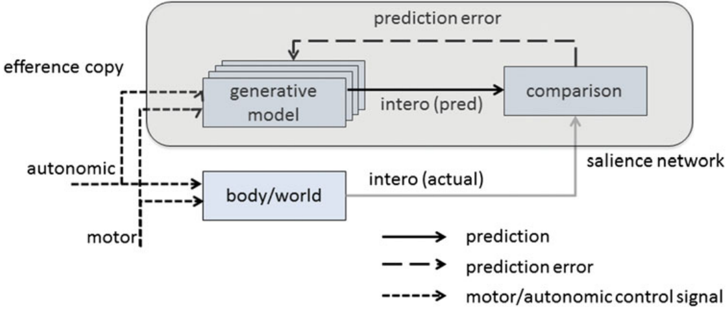
- Hierarchical predictive processing treats perception as top-down probabilistic generative modeling that “explains away” sensory input, with forward connections carrying prediction error and backward connections carrying predictions; action-oriented predictive processing extends the same logic to motor action and active inference.
- The framework unifies perception, action, attention, and learning: attention is modeled as precision-weighting or gain on error units, and the perception/cognition distinction becomes one of scale and precision-modulated influence rather than a stable interface.
- Reviewed evidence includes Rao and Ballard’s model trained on image patches from five natural scenes, which learned oriented edges/bars and extra-classical receptive field effects; Hosoya et al.’s finding that within several seconds about 50% of retinal ganglion cells altered behavior with changing image statistics; Egner et al.’s finding that FFA responses to face and house stimuli became indistinguishable under high face expectation, with a best-fit simulation in which error units contributed twice as much to the fMRI signal as representation units; and Melloni et al.’s finding that reportable conscious percept onset varied by around 100 msec with expectations.
- The account is extended speculatively to delusions and hallucinations in schizophrenia via false, highly weighted prediction errors, and to human cognition as shaped by culturally constructed “designer environments” that feed new statistical structures back into prediction-driven learning.
Methods
- Design: theoretical target article and critical review, not an empirical study; it synthesizes computational neuroscience, Bayesian brain approaches, predictive coding, action-oriented predictive processing, and the free-energy principle.
- Data/sample: no new data; it draws on prior computational models and empirical studies, including Rao and Ballard (1999), Hosoya et al. (2005), Hohwy et al. (2008), Friston and colleagues, Egner et al. (2010), and others.
- Main analysis: conceptual and argumentative assessment of the hierarchical prediction machine framework, its neural plausibility, explanatory scope, and challenges across evidential, methodological, and conceptual dimensions.
Limitations
- The paper states that direct neuroscientific testing of hierarchical predictive coding and its action-oriented extension “remains in its infancy,” that the best current evidence is indirect, and that “no single neuron study has systematically pursued the search for sensory prediction error responses” (quoting Summerfield & Egner 2009); direct unambiguous evidence for functionally distinct error and representation subpopulations is still missing.
- The paper states that the framework does not by itself specify the full human cognitive architecture, including how cognitive labor is divided across areas, what aspects of the world are sensorially coded, how to navigate the explore–exploit continuum, and what representational formats are used; it also says the “desert landscape” replacement of goals and rewards by predictions remains unconvincing, and a full assessment of the free-energy principle is beyond its scope.
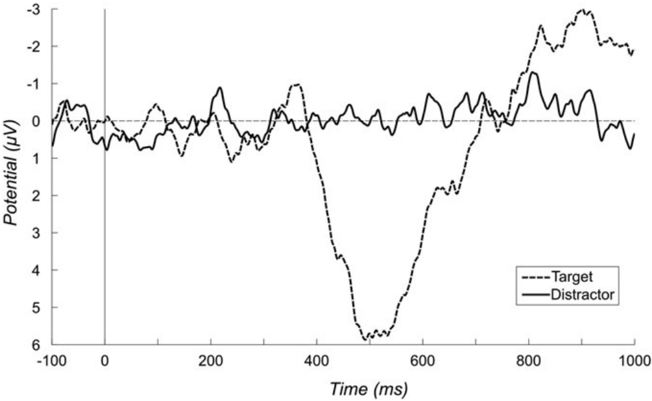
- The text makes evident that many supporting findings are indirect, simulation-based, or compatible with alternative accounts; the included commentaries further highlight unresolved challenges concerning attention, adaptation, anti-predictive ERP patterns, the size–weight illusion, and the “dark room” problem.
Model-written summary of a shortened version of the paper’s full text (it is longer than we read). Check it against the paper before relying on it.
Integrity signals
Registry
Cites
Statistics
Figures
Verification
Claims the paper makes
27 Valid · 5 Not valid · 84 Not checked · 210 Own results and interpretations
The cited sources support only part of this claim — read each source’s verdict below.
In the paper
“Recent work con fi rms and extends this assessment, suggesting that humans act as rational Bayesian estimators, in perception and in action, across a wide variety of domains (Berniker & Körding 2008; Körding et al. 2007; Yu 2007).”
What the sources say
- Supportedcites Berniker & Körding 2008 matched to “Estimating the sources of motor errors for adaptation and generalization” (2008) source
The Discussion describes neural coding, sensorimotor integration, sensory cue combination, and decision making within a Bayesian framework, and says this study extends those ideas to motor adaptation and generalization. The Abstract says the Bayesian model predicts many findings from published motor-adaptation studies, supporting the citing sentence’s hedged assessment. (LLM, conf=0.86)
- Partly supportedcites Körding et al. 2007 matched to “The dynamics of memory as a consequence of optimal adaptation to a changing body” (2007) sourceExperimental — accuracy not yet measured
The Results show that a Bayesian model accounts for animal motor-adaptation behavior and report similar effects in visual-neuron adaptation. The Discussion mentions human saccade adaptation, but does not establish that humans act as rational Bayesian estimators across a wide variety of perceptual and action domains. (LLM, conf=0.85)
- Not matchedcites Yu 2007
This doesn’t read as a citation we can look up.
hedged- Asserted: passes — The authors put it forward as true.
- Checkable: passes — It can be checked against evidence.
- Load-bearing: unclear — It is unclear whether the paper’s conclusions depend on it.
- Based: passes — The paper gives a reason why it holds.
- Supported
The cited sources support only part of this claim — read each source’s verdict below.
In the paper
“The key idea, however implemented, is that understanding the positive symptoms of schizophrenia requires understanding disturbances in the generation and weighting of prediction error.”
What the sources say
- Not matchedcites Corlett et al. 2009a
More than one paper fits this citation.
- Not matchedcites Corlett et al. 2009b
More than one paper fits this citation.
- Supportedcites Fletcher & Frith 2009 matched to “Perceiving is believing: a Bayesian approach to explaining the positive symptoms of schizophrenia” (2009) source
In “A hierarchy of prediction and model building” (page unavailable), the authors propose that positive symptoms begin with false prediction errors propagating through a hierarchy. In “From disrupted neurochemistry to beliefs” (page unavailable), they explain how the precision assigned to prediction errors determines their influence on inference, directly supporting the claim about their generation and weighting. (LLM, conf=0.91)
plainstates a cause- Asserted: passes — The authors put it forward as true.
- Checkable: passes — It can be checked against evidence.
- Load-bearing: passes — The paper’s conclusions depend on it.
- Based: passes — The paper gives a reason why it holds.
- Not matched
Every source the paper cites for this claim was checked and supports it.
In the paper
“Transposed (in ways we are about to explore) to the neural domain, this makes prediction error into a kind of proxy (Feldman & Friston 2010) for sensory information itself.”
What the sources say
- Supportedcites Feldman & Friston 2010 matched to “Attention, uncertainty, and free-energy” (2010) source
The Introduction states that, in predictive coding schemes, sensory data are replaced by prediction error because it carries sensory information not yet explained by predictions. This supports the claim that prediction error acts as a proxy for sensory information in the neural scheme described. (LLM, conf=0.94)
plainstates an association- Asserted: passes — The authors put it forward as true.
- Checkable: passes — It can be checked against evidence.
- Load-bearing: passes — The paper’s conclusions depend on it.
- Based: passes — The paper gives a reason why it holds.
- Supported
The sources with a verdict support this claim; the rest weren’t checked yet, have no full text we could read, or their verdicts aren’t rated yet.
In the paper
“That way (borrowing from work in linear predictive coding -see below) depicts the top-down fl ow as attempting to predict and fully ' explain away ' the driving sensory signal, leaving only any residual ' prediction errors ' to propagate information forward within the system”
What the sources say
- Not checked — no full text of the sourcecites Rao and Ballard (1999) matched to “Predictive coding in the visual cortex: a functional interpretation of some extra-classical receptive-field effects” (1999) source
- Supportedcites Friston (2005) matched to “A theory of cortical responses.” (2005) source
In “Reciprocal connections” (page not available), the paper says backward connections generate predictions of lower-level responses, while forward connections let prediction error drive higher-level units. “Implications for cortical physiology” adds that error is suppressed when bottom-up input accords with top-down predictions. This supports the claim that residual errors, rather than the predicted signal, propagate forward. (LLM, conf=0.94)
plainstates a cause- Asserted: passes — The authors put it forward as true.
- Checkable: passes — It can be checked against evidence.
- Load-bearing: passes — The paper’s conclusions depend on it.
- Based: passes — The paper gives a reason why it holds.
Every source the paper cites for this claim was checked and supports it.
In the paper
“This balancing act between cancelling out and selective enhancement is made possible, it should be stressed, only by positing the existence of ' two functionally distinct subpopulations, encoding the conditional expectations of perceptual causes and the prediction error respectively ' (Friston 2005, p. 829).”
What the sources say
- Supportedcites Friston 2005 matched to “A theory of cortical responses.” (2005) source
In “Shut up or stop gossiping?” (cited p. 829), Friston says the tension between suppressing prediction error and selecting representations is resolved by positing the two functionally distinct subpopulations named in the claim. (LLM, conf=0.95)
plainstates a cause- Asserted: passes — The authors put it forward as true.
- Checkable: passes — It can be checked against evidence.
- Load-bearing: passes — The paper’s conclusions depend on it.
- Based: passes — The paper gives a reason why it holds.
- Supported
176 more claims · 15 with their cited sources checked
Create a free account to see all 326 claims and to verify the 6 references still open.
- Probably not a substantial claim. 87
- It may state two separate claims as one. 77
- The quote only partly states this claim. 2
Claims other papers make about this one
Each is checked against this paper’s own text: does it say what the citing paper says it does?
The source backs part of the claim, not all of it — or backs it for a different population, condition or comparison.
In the citing paper
“The internal model is jointly shaped by the structure of the external environment and the representational capacity of the system itself, which abstracts the experientialist insight into a substrate-independent principle.”
From Understanding large language models demands distinguishing human projection from machine cognition (2026) · cites this paper as [70]
Experimental — accuracy not yet measuredThe source backs part of the claim, not all of it — or backs it for a different population, condition or comparison.
In the citing paper
“The ability to make predictions has been hailed as a general feature of both biological and artificial intelligence, cutting across disparate perspectives on what constitutes intelligence (e.g., Ciria et al., 2021; Clark, 2013; Friston and Kiebel, 2009; Ha and Schmidhuber, 2018; Hawkins and Blakeslee, 2004; Littman and Sutton, 2001; Lotter et al., 2016).”
From Predictive Representations: Building Blocks of Intelligence (2024) · cites this paper as Clark, 2013
Experimental — accuracy not yet measuredThe source backs part of the claim, not all of it — or backs it for a different population, condition or comparison.
In the citing paper
“In either case RPP posits that a localized comparator region of the brain does not (necessarily) carry out the comparison of expected and actual sensory information for a given domain.”
From From cognitivism to autopoiesis: towards a computational framework for the embodied mind (2018) · cites this paper as Clark 2013
Experimental — accuracy not yet measuredThe source backs part of the claim, not all of it — or backs it for a different population, condition or comparison.
In the citing paper
“The recurrent exchange of signals between adjacent hierarchical levels resolves prediction error at each and every level, resulting in a hierarchically deep explanation for sensory inputs.”
From Active interoceptive inference and the emotional brain (2016) · cites this paper as [6]
Experimental — accuracy not yet measuredThe source backs part of the claim, not all of it — or backs it for a different population, condition or comparison.
In the citing paper
“According to theories of predictive processing, the brain maintains hierarchical generative models that forecast sensory inputs; discrepancies (prediction errors) are resolved by updating posterior beliefs or by acting to change sensory inputs, including through autonomic adjustments that regulate the internal milieu (Clark, 2013; Friston, 2010; Sterling, 2012).”
From Listen to your inner body: embodied emotions in predictive neuroscience and traditional East Asian medicine (2026) · cites this paper as Clark, 2013
Experimental — accuracy not yet measured
33 more claims about this paper
Create a free account to see every claim other papers make about this one.
Citations
Cites
Maximum Likelihood from Incomplete Data Via the EM Algorithm
Dempster, A. P., Laird, N. M., & Rubin, D. B. (1977) · Journal of the Royal Statistical Society Series B: Statistical Methodology · doi:10.1111/j.2517-6161.1977.tb01600.x · Cited by 50,444
The Ecological Approach to Visual Perception
Bornstein, M. H., & Gibson, J. J. (1980) · The Journal of Aesthetics and Art Criticism · doi:10.2307/429816 · Cited by 22,935
Reducing the dimensionality of data with neural networks
Hinton, G. E., & Salakhutdinov, R. R. (2006) · Science · doi:10.1126/science.1127647 · Cited by 20,928
A fast learning algorithm for deep belief nets
Hinton, G. E., Osindero, S., & Teh, Y.-W. (2006) · Neural Computation · doi:10.1162/neco.2006.18.7.1527 · Cited by 16,336
Parallel Distributed Processing: Explorations in the Microstructure of Cognition: Foundations
Rumelhart, D. E., McClelland, J. L., & AU (1986) · doi:10.7551/mitpress/5236.001.0001 · Cited by 15,686
Information theory and statistical mechanics
Jaynes, E. T. (1957) · Physical Review · doi:10.1103/physrev.106.620 · Cited by 12,931
Hutchins, E. (1995) · doi:10.7551/mitpress/1881.001.0001 · Cited by 10,801 · cited 2×
“We may also ask what, if anything, the hierarchical predictive processing perspective suggests concerning situated, world-exploiting agency (Clark 1997; 2008; Clark & Chalmers 1998; Haugeland 1998; Hurley 1998; Hutchins 1995; Menary 2007; Noë 2004; 2009; Rowlands 1999; 2006; Thelen & Smith 1994; Wheeler 2005; Wilson 1…”
BackgroundPhilosophical transactions of the Royal Society of London. B
Press, H. (1886) · Cited by 10,081
Posner, M. I. (1980) · Quarterly Journal of Experimental Psychology · doi:10.1080/00335558008248231 · Cited by 9,670
A neural substrate of prediction and reward
Schultz, W., Dayan, P., & Montague, P. R. (1997) · Science · doi:10.1126/science.275.5306.1593 · Cited by 9,388
Research works printed but not linked: 11
- Pribram, 1980, The orienting reflex in humans, 3
- Velleman, 1989, Practical reflection
- Neisser, 1967, Cognitive psychology
- Pfeifer, 2007, Lecture Notes in Computer Science (LNCS), 4850
- Geissler, 1991, Constraints of mental self-organization: The indirect validation approach toward perception, Estratto da Comunicazioni Scientifiche di Psicologia Generale, 5, 47
- Maher, 1988, Delusional beliefs, 15
- Dennett, 1991, Consciousness explained
- Mumford, 1994, Large-scale theories of the cortex, 125
- Linsker, 1989, Advances in neural information processing systems, vol. 1, 86
- Alais, 2005, Binocular rivalry
- Marr, 1982, Vision: A computational approach
Cited by
Items 2,401–2,500 of 5,958
Wang, L., Eddine, S. N., Brothers, T. A., Jensen, O. B., & Kuperberg, G. R. (2024) · NeuroImage · doi:10.1016/j.neuroimage.2024.120977 · Cited by 9
“…to a particular two-unit computational architecture and algorithm that was initially developed in the visual system to simulate extra-classical receptive field effects (Rao and Ballard, 1999; Spratling, 2012, 2013, 2014; see also Mumford, 1992; and see Walsh et al. 2020, for a recent review).”
From reactions to reflection: A recursive framework for the evolution of cognition and complexity
Trukovich, J. J. (2025) · Biosystems · doi:10.1016/j.biosystems.2025.105408 · Cited by 8
The road to Aha: A recipe for mental breakthroughs
Tulver, K., Kaup, K., & Aru, J. (2025) · Cognition · doi:10.1016/j.cognition.2025.106081 · Cited by 14
Song, T., Ye, M., Teng, G., Zhang, W., & Chen, A. (2025) · Psychology of sport and exercise · doi:10.1016/j.psychsport.2025.102839 · Cited by 14
Understanding speech in “noise” or free energy minimization in the soundscapes of the anthropocene
Strauß, D. J., Francis, A. L., Schäfer, Z., Latzel, M., Corona–Strauss, F. I., & Launer, S. (2025) · Frontiers in Neuroscience · doi:10.3389/fnins.2025.1534425 · Cited by 10
“The predictive (generative) hierarchically organized model of the environment employed in Feldman and Friston (2010); Clark (2013); Parvizi-Wayne (2024) might, for the sake of simplicity in structure, be mathematically seen as a generative spatiotemporal scale space, i.e., a nested structure…”
SoK: On the Offensive Potential of AI
Schröer, S. L., Apruzzese, G., Human, S., Laskov, P., Anderson, H. S., Bernroider, E. W. N., Fass, A., Nassi, B., Rimmer, V., Roli, F., et al. (2025) · IEEE Conference on Secure and Trustworthy Machine Learning (SaTML) · doi:10.1109/satml64287.2025.00021 · Cited by 27
Yaron, A., Shiramatsu, T. I., Kern, F. B., Ohki, K., Takahashi, H., & Chao, Z. C. (2025) · PLoS Biology · doi:10.1371/journal.pbio.3003242 · Cited by 15
“Predictive coding, a theoretical framework that explains how the brain processes sensory information, posits that the brain generates predictions based on prior experiences and compares them with actual sensory inputs [1–5].”
Auditory N1 Suppression and Omission N1 Do Not Share a Common Underlying Mechanism
Tast, V., Schröger, E., & Widmann, A. (2025) · Psychophysiology · doi:10.1111/psyp.70094 · Cited by 10
Rethinking attention: A unified perspective on top-down and bottom-up processes
Saghravanian, S. J. (2025) · Acta Psychologica · doi:10.1016/j.actpsy.2025.105244 · Cited by 14
Separable neural signals for reward and emotion prediction errors
Heffner, J., Frömer, R., Nassar, M. R., & FeldmanHall, O. (2025) · Nature Communications · doi:10.1038/s41467-025-63135-5 · Cited by 15
Creative Ambiguity and Cognitive Tension in Generative AI Tools
Dalsgaard, P. (2025) · European Conference on Cognitive Ergonomics · doi:10.1145/3746175.3746183 · Cited by 16
Zaccaro, A., della Penna, F., Bubbico, F., BAYRAM, B., Parrotta, E., Perrucci, M. G., Costantini, M., & Ferri, F. (2026) · NeuroImage · doi:10.1016/j.neuroimage.2026.121711 · Cited by 14
Psychology and Disaster: Why We Do Not See Looming Disasters and How Our Way of Thinking Causes Them
Glöckner, A. (2016) · Global Policy · doi:10.1111/1758-5899.12289 · Cited by 11
Kashyap, R., Bhattacharjee, S., Sommer, W., & Zhou, C. (2019) · European Journal of Neuroscience · doi:10.1111/ejn.14303 · Cited by 9
“Bayesian explaining away is based on the predictive coding hypothesis (for review, Clark, 2013; Friston, 2005; Henson, 2003); in the case of priming, it claims that it is related to stronger inhibitory top–down interaction between higher and lower- level regions in the brain.”
BackgroundMinds and Machines Special Issue: Machine Learning: Prediction Without Explanation?
Boge, F. J., Grünke, P., & Hillerbrand, R. (2022) · Minds and Machines · doi:10.1007/s11023-022-09597-8 · Cited by 9
Greif, H. (2022) · Minds and Machines · doi:10.1007/s11023-022-09596-9 · Cited by 12
EMDR Therapy and PTSD: A Goal-Directed Predictive Processing Perspective
Vanderschoot, T., & Dessel, P. V. (2022) · Journal of EMDR Practice and Research · doi:10.1891/emdr-2022-0009 · Cited by 12
Niedernhuber, M., Raimondo, F., Sitt, J. D., & Bekinschtein, T. A. (2022) · Journal of Neuroscience · doi:10.1523/jneurosci.0658-22.2022 · Cited by 14
Chota, S., VanRullen, R., & Gulbinaite, R. (2023) · Journal of Neuroscience · doi:10.1523/jneurosci.1758-22.2023 · Cited by 9
Seeing Ɔ, remembering C: Illusions in short-term memory
Otten, M., Seth, A. K., & Pinto, Y. (2023) · PLoS ONE · doi:10.1371/journal.pone.0283257 · Cited by 10
Local Periodicity-Based Beat Tracking for Expressive Classical Piano Music
Chiu, C., Müller, M., Davies, M. E. P., Su, A. W. Y., & Yang, Y. (2023) · IEEE/ACM Transactions on Audio Speech and Language Processing · doi:10.1109/taslp.2023.3297956 · Cited by 12
Ignoring the alternatives: The N400 is sensitive to stimulus preactivation alone
Michaelov, J. A., & Bergen, B. K. (2023) · Cortex · doi:10.1016/j.cortex.2023.08.001 · Cited by 14
“Under a predictive coding account, the functional significance of neural metrics of processing difficulty is twofold: the new activation is information that allows the current stimulus to be correctly processed by the system; and the new activation is a learning signal (Rao and Ballard, 1999; Huang and Rao, 2011; Clar…”
Development and validation of the Exteroceptive Body Awareness (EBA-q) questionnaire
Vabba, A., Porciello, G., Panasiti, M. S., & Aglioti, S. M. (2023) · PeerJ · doi:10.7717/peerj.15382 · Cited by 10
Zheng, Y., Wang, J., Jiang, Q., Liao, M., & Huang, F. (2023) · Frontiers in Psychiatry · doi:10.3389/fpsyt.2023.1179518 · Cited by 11
“The findings of this study provide further theoretical explanations for the above results, showing that NSSI can negatively predict decentering, thus supporting PP theory (45, 46).”
BackgroundResultSimultaneity of consciousness with physical reality: the key that unlocks the mind-matter problem
Sanfey, J. (2023) · Frontiers in Psychology · doi:10.3389/fpsyg.2023.1173653 · Cited by 13
“Many FEP-AI theories describe a nested hierarchy of predictive systems existing within systems and separated from each other by formal boundaries known as Markov Blankets (Pearl, 1988; Rao and Ballard, 1999; Clark, 2013; Safron, 2020; Ramstead et al., 2023).”
BackgroundPlayfulness and the meaningful life: an active inference perspective
Kiverstein, J. D., & Miller, M. M. (2023) · Neuroscience of Consciousness · doi:10.1093/nc/niad024 · Cited by 14
Brattico, E., & Delussi, M. D. (2023) · Hearing Research · doi:10.1016/j.heares.2023.108923 · Cited by 14
Altered hierarchical auditory predictive processing after lesions to the orbitofrontal cortex
Asko, O., Blenkmann, A. O., Leske, S. L., Foldal, M. D., Llorens, A., Funderud, I., Meling, T. R., Knight, R. T., Endestad, T., & Solbakk, A. (2024) · eLife · doi:10.7554/elife.86386 · Cited by 10
Exploration of Novelty as Part of the Player Experience of Need Satisfaction in Games
Kosa, M., & Uysal, A. (2024) · Interacting with Computers · doi:10.1093/iwc/iwae006 · Cited by 11
Sustainable digital rent: a transformative framework for value dynamics in the digital age
Özdilek, Ü. (2024) · Frontiers in Sustainability · doi:10.3389/frsus.2024.1442311 · Cited by 12
Dynamic planning in hierarchical active inference
Priorelli, M., & Stoianov, I. P. (2025) · Neural Networks · doi:10.1016/j.neunet.2024.107075 · Cited by 11
Spanò, G., Peterson, M. A., Nadel, L., Rhoads, C. L., & Edgin, J. O. (2015) · Clinical Psychological Science · doi:10.1177/2167702615590997 · Cited by 9
“Recent theories, supported by anatomical and functional research (e.g., Clark, 2013; Kravitz, Saleem, Baker, Ungerleider, & Mishkin, 2013; Nadel & Peterson, 2013), suggest that visual stream interactions involve a series of feedback loops between lower and higher cortical levels.”
BackgroundIn search of the person. Towards a real revolution
Oleksowicz, M. (2016) · Scientia et Fides · doi:10.12775/setf.2016.008 · Cited by 8
Falikman, M. V., & Pechenkova, E. (2017) · Cultural-Historical Psychology · doi:10.17759/chp.2016120405 · Cited by 35
A predictive coding model of gaze shifts and the underlying neurophysiology
Spratling, M. (2017) · Visual Cognition · doi:10.1080/13506285.2017.1336141 · Cited by 7
“The proposed model is based on a particular implementation of the predictive coding theory of cortical function (Bubic, von Cramon, & Schubotz, 2010; Clark, 2013; Friston & Kiebel, 2009; Huang & Rao, 2011; Rao & Ballard, 1999).”
MethodSocial cognition: Concepts, neural basis and its role in multiple sclerosis
Labbé, T., Ciampi, E., & Rodriguez, C. C. (2017) · Neurology and Clinical Neuroscience · doi:10.1111/ncn3.12164 · Cited by 13
Deepening Futures with Neuroscience
Rhemann, M. (2018) · World Futures Review · doi:10.1177/1946756718785908 · Cited by 13
Fields, C. (2018) · Philosophies · doi:10.3390/philosophies3040029 · Cited by 14
What’s new: innovation and enculturation of arithmetical practices
Pelland, J.-C. (2019) · Synthese · doi:10.1007/s11229-018-02060-1 · Cited by 10
“Seeing innovation as a public-level processes also seems to clash with the fact that innovations often happen as the result of sudden realizations on the part of individuals.”
BackgroundInfluentialWorld-building as cognitive feedback loop
Lahey, E. (2019) · Linguistic approaches to literature · doi:10.1075/lal.32.04lah · Cited by 8
Expressions, Looks, and Others’ Minds
McNeill, W. (2019) · Oxford University Press eBooks · doi:10.1093/oso/9780198794400.003.0009 · Cited by 10
Context-dependent minimisation of prediction errors involves temporal-frontal activation
Hsu, Y., Xu, W., Parviainen, T. M., & Hämäläinen, J. A. (2019) · NeuroImage · doi:10.1016/j.neuroimage.2019.116355 · Cited by 8
“Conversely, in a volatile environment where contextual regularity is weak, deviations eliciting prediction errors are weighted less because they are rather imprecise (Clark, 2013; Schr € oger et al., 2015).”
BackgroundPhraseology and the Advanced Language Learner
Vetchinnikova, S. (2019) · Cambridge University Press eBooks · doi:10.1017/9781108758703 · Cited by 14
Allen, C. P. G., Viola, T., Irvine, E., Sedgmond, J., Castle, H., Gray, R., & Chambers, C. (2020) · Neuroscience of Consciousness · doi:10.1093/nc/niaa015 · Cited by 13
“The results of this integration form a posterior which can then become the prior for 625 the subsequent series of events (Clark, 2013; Friston, 2010, 2012).”
BackgroundOn the cognitive bases of illusionism
Camí, J., Gómez-Marín, À., & Martínez, L. M. (2020) · PeerJ · doi:10.7717/peerj.9712 · Cited by 12
“Perception operates generating adaptive predictions and affordances based on context and past experiences from memories (Gibson, 1979; Clark, 2013).”
BackgroundRetzler, C., Boehm, U., Cai, J., Cochrane, A., & Manning, C. (2021) · Quarterly Journal of Experimental Psychology · doi:10.1177/17470218211019939 · Cited by 9
Visual experience in the predictive brain is univocal, but indeterminate
Nave, K. (2021) · Phenomenology and the Cognitive Sciences · doi:10.1007/s11097-021-09747-w · Cited by 10
“…forays beyond the modelling of learning and behaviour towards provide a unifying account of our conscious mental life (Clark et al., 2019; Hohwy, 2012).1 Predictive processing (Hohwy, 2013; Clark, 2013, 2015) describes the brain as instantiating a probabilistic, hierarchical, generative model.”
BackgroundVisuo-tactile predictive mechanisms of peripersonal space
Dijkerman, H. C., & Medendorp, W. P. (2021) · Oxford University Press eBooks · doi:10.1093/oso/9780198851738.003.0005 · Cited by 15
Kukkonen, K. (2021) · Poetics Today · doi:10.1215/03335372-8883192 · Cited by 8
Bateson and Wright on Number and Quantity: How to Not Separate Thinking from Its Relational Context
Fisher, W. P. (2021) · Symmetry · doi:10.3390/sym13081415 · Cited by 13
The habenula clock influences response to a stressor
Basnakova, A., Cheng, R., Chia, J. S. M., D’Agostino, G. A., Suryadi, Tan, G. J. H., Langley, S. R., & Jesuthasan, S. J. (2021) · Neurobiology of Stress · doi:10.1016/j.ynstr.2021.100403 · Cited by 9
“One interpretation of these observations is provided by the framework of predictive coding, which has emerged in recent years as a highly effective paradigm for understanding how the brain functions (Clark, 2013; Friston, 2018).”
MethodCerebral representation of sequence patterns across multiple presentation formats
Planton, S., & Dehaene, S. (2021) · Cortex · doi:10.1016/j.cortex.2021.09.003 · Cited by 13
Thinking about hallucinations: why philosophy matters
Wilkinson, S., Green, H., Hare, S., Houlders, J. W., Humpston, C. S., & Alderson‐Day, B. (2021) · Cognitive Neuropsychiatry · doi:10.1080/13546805.2021.2007067 · Cited by 12
“Work by Clark (2013, 2015) and Hohwy (2013) has done much to emphasise the broader implications of adopting predictive processing as a model of the mind, including its relations to imagination and social cognition.”
BackgroundUsage-Based Individual Differences in the Probabilistic Processing of Multi-Word Sequences
McConnell, K., & Blumenthal‐Dramé, A. (2021) · Frontiers in Communication · doi:10.3389/fcomm.2021.703351 · Cited by 13
“According to this view, the mind predicts constantly and sensory input is largely ignored unless it disconfirms these predictions (Clark, 2013; Hohwy, 2013; Lupyan and Clark, 2015).”
BackgroundExplaining away results in more robust visual tracking
Gao, B., & Spratling, M. (2022) · The Visual Computer · doi:10.1007/s00371-022-02466-6 · Cited by 9
Deane, G. (2022) · Artificial Life · doi:10.1162/artl_a_00368 · Cited by 9
Face specific neural anticipatory activity in infants 4 and 9 months old
Mento, G., Duma, G. M., Valenza, E., & Farroni, T. (2022) · Scientific Reports · doi:10.1038/s41598-022-17273-1 · Cited by 9
“Taken together, the above mentioned evidence that (1) preverbal infants show expectancy-related anticipatory neural activity, (2) dedicated neural circuits for face processing are established early in life and (3) linguistic cues are required to elicit the referential expectation of the infant, opens the possibility t…”
BackgroundIntention-based predictive information modulates auditory deviance processing
Widmann, A., & Schröger, E. (2022) · Frontiers in Neuroscience · doi:10.3389/fnins.2022.995119 · Cited by 11
“Suggestion (3) is consistent with predictive coding theory according to which the prediction error is weighted by the confidence in the sensory data (Friston, 2005; Brown et al., 2013; Clark, 2013).”
BackgroundInfluentialA neural mechanism underlying predictive visual motion processing in patients with schizophrenia
Scheliga, S., Schwank, R., Scholle, R., Habel, U., & Kellermann, T. (2022) · Psychiatry Research · doi:10.1016/j.psychres.2022.114934 · Cited by 8
Baker, K. S., Johnston, P., Yamamoto, N., & Pegna, A. J. (2023) · Brain Topography · doi:10.1007/s10548-023-00951-2 · Cited by 9
“, unpredictable conditions) is thought to lead to a larger prediction error signal (Clark 2013; Hohwy 2014; Robinson et al. 2020a).”
BackgroundInfluentialTorres–Martínez, S. (2023) · Semiotica · doi:10.1515/sem-2019-0104 · Cited by 10
The Morphospace of Consciousness: Three Kinds of Complexity for Minds and Machines
Arsiwalla, X. D., Solé, R. V., Moulin-Frier, C., Herreros, I., Sánchez-Fibla, M., & Verschure, P. F. M. J. (2023) · NeuroSci · doi:10.3390/neurosci4020009 · Cited by 20
“The main contenders in this case are: (i) Integrated Information Theory (IIT) [10], (ii) Global Workspace Theory (GWT) [8], (iii) Predictive Processing Theories (PPT) [136], (iv) Higher Order Theories (HOT) [137], and (v) Orchestrated Objective Reduction Theory (Orch-OR) [138].”
BackgroundContext expectation influences the gait pattern biomechanics
Ciceri, T., Malerba, G., Gatti, A., Diella, E., Peruzzo, D., Biffi, E., & Casartelli, L. (2023) · Scientific Reports · doi:10.1038/s41598-023-32665-7 · Cited by 9
Perception by effortful touch and a lawful approach to (the evolution of) perceiving and acting
Wagman, J. B., Blau, J. J. C., & Duffrin, T. (2023) · Elsevier eBooks · doi:10.1016/b978-0-323-99193-3.00004-0 · Cited by 12
Conceptual engineering, predictive processing, and a new implementation problem
Löhr, G., & Michel, C. (2023) · Mind & Language · doi:10.1111/mila.12471 · Cited by 15
Fraundorf, S. H., Caddick, Z. A., Nokes‐Malach, T. J., & Rottman, B. M. (2023) · Cognitive Research Principles and Implications · doi:10.1186/s41235-023-00508-8 · Cited by 11
Being alive to the world: an artist's perspective on predictive processing
Pepperell, R. (2023) · Philosophical Transactions of the Royal Society B Biological Sciences · doi:10.1098/rstb.2022.0429 · Cited by 10
Effects of expectation on face perception and its association with expertise
Mares, I., Smith, F. W., Goddard, E., Keighery, L., Papasavva, M., Ewing, L., & Smith, M. L. (2024) · Scientific Reports · doi:10.1038/s41598-024-59284-0 · Cited by 10
Constructing Experience: Expectation and Attention in Perception
Clarke, J. (2025) · Cambridge University Press eBooks · doi:10.1017/9781009588577 · Cited by 10
Dynamic Inference by Model Reduction
Priorelli, M., & Stoianov, I. P. (2025) · IEEE Transactions on Pattern Analysis and Machine Intelligence · doi:10.1109/tpami.2025.3595670 · Cited by 7
Evolution of Social Predictive Brains?
Brown, E. C., & Brüne, M. (2012) · Frontiers in Psychology · doi:10.3389/fpsyg.2012.00414 · Cited by 10
Different effects of executive and visuospatial working memory on visual consciousness
Loof, E. D., Poppe, L., Cleeremans, A., Gevers, W., & Opstal, F. V. (2015) · Attention Perception & Psychophysics · doi:10.3758/s13414-015-1000-8 · Cited by 16
“Crucially, the continuous rivalry process underlying CFS is thought to tax visual processing much heavier compared to the decision process of the control trials (Clark, 2013; YuvalGreenberg & Heeger, 2013).”
BackgroundBoos, M., Seer, C., Lange, F., & Kopp, B. (2016) · Frontiers in Psychology · doi:10.3389/fpsyg.2016.00755 · Cited by 11
Enactivism, Radical Enactivism and Predictive Processing: What is Radical in Cognitive Science?
Gärtner, K., & Clowes, R. W. (2017) · Kairos · doi:10.1515/kjps-2017-0003 · Cited by 20
“Perception, imagination, action, the emo- tions, and attention all may now be subsumed into a uni! ed processing system (Clark, 2012a, 2012b; Friston, 2010).”
BackgroundA plea for minimally biased naturalistic philosophy
Polonioli, A. (2017) · Synthese · doi:10.1007/s11229-017-1628-0 · Cited by 11
“For instance, philosopher Clark (2013) extensively surveyed scholarly work to argue that brains are fundamentally prediction-error minimizing devices trying to self-generate the sensory streams that are currently arriving from the world.”
BackgroundSegregation of Brain Structural Networks Supports Spatio-Temporal Predictive Processing
Ciullo, V., Vecchio, D., Gili, T., Spalletta, G., & Piras, F. (2018) · Frontiers in Human Neuroscience · doi:10.3389/fnhum.2018.00212 · Cited by 8
“Accordingly, computational approaches (Friston, 2005; Clark, 2013) have conceptualized the brain as an inference machine that integrates acquired experience about the world (prior believes) and incoming sensory information to generate probabilistic predictive models (posterior probabilities).”
BackgroundKrupnik, V., & Cherkasova, M. V. (2018) · Journal of Contemporary Psychotherapy · doi:10.1007/s10879-018-9408-9 · Cited by 9
“Vol.:(0123456789) Keywords Functional symptoms · PTSD · Integrative psychotherapy · Bayesian brain · Priors The Bayesian model of predictive coding has been widely used in machine learning as well as in modeling brain functioning (e.g Clark 2013).”
MethodWhy the Common Model of the mind needs holographic a-priori categories
Arora, N., West, R. L., Brook, A., & Kelly, M. A. (2018) · Procedia Computer Science · doi:10.1016/j.procs.2018.11.060 · Cited by 7
“The point, characterized by Clark [8] as the “view from inside the black box”, is that the brain is essentially locked in a skull and separated from the world, yet we go beyond the mere subjective data of how we experience the world to having a law-like, objective knowledge of the objects in the world.”
BackgroundVaskevich, A., & Luria, R. (2019) · Visual Cognition · doi:10.1080/13506285.2019.1615022 · Cited by 8
“Instead, each such trial results in a prediction error (Clark, 2013; Vaskevich & Luria, 2018).”
BackgroundSemantics for Subjective Measures of Perceptual Experience
Lyyra, P. (2019) · Frontiers in Psychology · doi:10.3389/fpsyg.2019.01980 · Cited by 10
“Confidence processing occupies a central role in some recent influential representationalist frameworks, such as the “predictive processing” framework (e.g., Friston, 2010; Clark, 2013; Hohwy, 2013).”
BackgroundThe value of doing philosophy in mental health contexts
Stammers, S., & Pulvermacher, R. (2020) · Medicine Health Care and Philosophy · doi:10.1007/s11019-020-09961-4 · Cited by 14
18‐month‐olds fail to use recent experience to infer the syntactic category of novel words
Havron, N., Babineau, M., & Christophe, A. (2020) · Developmental Science · doi:10.1111/desc.13030 · Cited by 9
Yu, X., & Bao, Y. (2020) · PsyCh Journal · doi:10.1002/pchj.390 · Cited by 9
“The later notion of “predictive coding” could also be seen as inspired by the reafference principle (e.g., Clark, 2013; Rao & Ballard, 1999; Stefanics, Kremláček, & Czigler, 2014).”
BackgroundMutual Constitution of Culture and the Mind: Insights from Cultural Neuroscience
Kitayama, S., & Yu, Q. (2020) · Cambridge University Press eBooks · doi:10.1017/9781108695374.006 · Cited by 10
Instrumental Transformations in Heinrich Biber’s Mystery Sonatas
Souza, J. D. (2020) · Music Theory Online · doi:10.30535/mto.26.4.1 · Cited by 9
van Mulukom, V., & Lang, M. (2021) · Journal for the Cognitive Science of Religion · doi:10.1558/jcsr.19803 · Cited by 13
Forcing prediction increases priming and adaptation in second language production
Grüter, T., Zhu, Y., & Jackson, C. N. (2021) · Bilingual processing and acquisition · doi:10.1075/bpa.12.10gru · Cited by 14
“driven, at least in substantial part, by prediction (Clark, 2013; Pickering & Gambi, 2018), and prediction error constituting a driving force in learning (Chang et al.”
BackgroundInfluentialImplementing a Bayes Filter in a Neural Circuit: The Case of Unknown Stimulus Dynamics
Sokoloski, S. (2017) · Neural Computation · doi:10.1162/neco_a_00991 · Cited by 12
Dark Control: Towards a Unified Account of Default Mode Function by Markov Decision ProcessesPreprint
Dohmatob, E., Dumas, G., & Bzdok, D. (2017) · bioRxiv (Cold Spring Harbor Laboratory) · doi:10.1101/148890 · Cited by 13
Fonken, Y. M., Mukerji, A., Jimenez, R., Lin, J. J., Brunner, P., Schalk, G., & Knight, R. T. (2019) · bioRxiv (Cold Spring Harbor Laboratory) · doi:10.1101/733212 · Cited by 8
Memory for Problem Solving: Comparative Studies in Attention, Working and Long-term Memory
Bobrowicz, K. (2019) · Lund University Publications (Lund University) · doi:10.13140/rg.2.2.21981.77281 · Cited by 9
Direct brain recordings reveal continuous encoding of structure in random stimuliPreprint
Fuhrer, J., Glette, K., Ivanović, J., Larsson, P. G., Bekinschtein, T. A., Kochen, S. S., Knight, R. T., Tørresen, J., Solbakk, A., Endestad, T., et al. (2021) · bioRxiv (Cold Spring Harbor Laboratory) · doi:10.1101/2021.10.01.462295 · Cited by 7
Optimal utility and probability functions for agents with finite computational precisionPreprint
Juechems, K., Balaguer, J., Spitzer, B., & Summerfield, C. (2020) · PsyArXiv (OSF Preprints) · doi:10.31234/osf.io/6yhwg · Cited by 8
What might interoceptive inference reveal about consciousness?Preprint
Nikolova, N. E., Waade, P. T., Friston, K. J., et al. (2021) · doi:10.31234/osf.io/9vxdg · Cited by 8
Kulkarni, S. (2022) · Wiley eBooks · doi:10.1002/9781119792376.ch6 · Cited by 10
Beyond the Adult Mind: A Developmental Framework for Predictive Processing in InfancyPreprint
Ward, E. K., Rutar, D., Zaadnoordijk, L., et al. (2023) · doi:10.31234/osf.io/wktz8 · Cited by 8
Brain-Inspired Machine Intelligence: A Survey of Neurobiologically-Plausible Credit AssignmentPreprint
Ororbia, A. G. (2023) · OSF Preprints (OSF Preprints) · doi:10.31219/osf.io/xukqf · Cited by 37
Deane, G., Mago, J., Fotopoulou, A., Sacchet, M. D., Carhart-Harris, R. L., & Sandved-Smith, L. (2024) · PsyArXiv (OSF Preprints) · doi:10.31234/osf.io/x7aew · Cited by 13
Amme, C., Sulewski, P., Spaak, E., Hebart, M. N., Peter König, B., & Kietzmann, T. (2024) · eLife · doi:10.1101/2024.10.25.620167 · Cited by 8
Are Generative Models Structural Representations?
Facchin, M. (2021) · Minds and Machines · doi:10.1007/s11023-021-09559-6 · Cited by 14
“Rendered technically, the assumption is that PP revolves around approximated Bayesian inferences drawn by inverting a generative model operating under a predictive coding message-passing scheme (Clark, 2013; Hohwy, 2013).”
Background
Metadata
- Authors
- Clark, A.
- Affiliations
- University of Edinburgh (GB)
- Corresponding author
- Clark, Andy
- ORCID
- Clark, Andy
- Venue
- Behavioral and Brain Sciences
- Publisher
- Cambridge University Press (CUP)
- Published
- 2013-05-10
- Volume
- 36
- Issue
- 3
- Pages
- 181-204
- ISSN
- 0140-525X (ISSN-L)
- 1469-1825
- OpenAlex
- W2153791616
- Semantic Scholar
- 69304ba2c5d2bff09f7059916ab0aa117bdbea41
- Cited by
- 5,924
- References
- 397
- Citations by year
- 2026: 644 · 2025: 603 · 2024: 438 · 2023: 535 · 2022: 506 · 2021: 488 · 2020: 501 · 2019: 577 · 2018: 398 · 2017: 351 · 2016: 284 · 2015: 255 · 2014: 213 · 2013: 95
- FWCI
- 24.16
- Type
- journal article
- Language
- en
- Open access
- bronze
- doi.org
- Locations
- Behavioral and Brain Sciences (publishedVersion)
- PubMed (publishedVersion)
- Funders
- University of Oxford
- University of Edinburgh
- Ruhr-Universität Bochum
- School of Informatics, University of Edinburgh
- Topics
- Life Sciences › Neuroscience › Cognitive Neuroscience › Embodied and Extended Cognition
- Social Sciences › Arts and Humanities › Philosophy › Free Will and Agency
- Social Sciences › Arts and Humanities › Philosophy › Philosophy and Theoretical Science
- Keywords
- predictive processing, top-down prediction, prediction error, generative models, perception-action coupling, attention, cortical processing, situated agents, agency, experience
- MeSH terms
- Attention, Brain, Cognition, Humans, Learning, Models, Neurological, Perception, Cognitive Science
About these checks
Registry, retraction, Cites and statistics results are computed, not judged, with one exception: a printed reference that no index lists is read once by a model before it counts as a citation error. Claims are extracted by a model and kept only when their quote appears verbatim in the text; each cited source is then checked, with a model’s help, for whether it says what the claim relies on. Those verdicts can be wrong — read the claim’s quote and the cited source before relying on one.
The claim verdicts this report counts are experimental: their accuracy is not yet measured.
A language model drew the claims from the paper on 2026-10-10, under version 3 of the claim definition (model deepseek-v4.1-flash, prompt extract-v3).
A second model labelled each claim on 2026-10-10 (model jev-1.13-20260917, definition revision gold-guideline-v0.2).
Cited sources are checked with a language model’s help (gpt-6-sol).
Statistics and arithmetic are recomputed, not judged.
Confidence bands are shown only for fields calibrated on our annotated test set. None is calibrated yet, so no band is shown.
What counts as a claim ›How we measure confidence ›How we check this ›
Are you an author, or do you see a problem with this page? Request a review
Data sources
Bibliographic data: Semantic Scholar, OpenAlex, Crossref.
Contains information from the Semantic Scholar Academic Graph Datasets, made available under the ODC Attribution License (ODC-BY 1.0).
Semantic Scholar’s data is described in: Kinney, R., et al. (2023). The Semantic Scholar Open Data Platform. arXiv:2301.10140.
