

Eye evolution and its functional basis
Open accessThe DOI matches its Crossref record; 117 of the 118 references it cites were found in a registry or an index.
Abstract
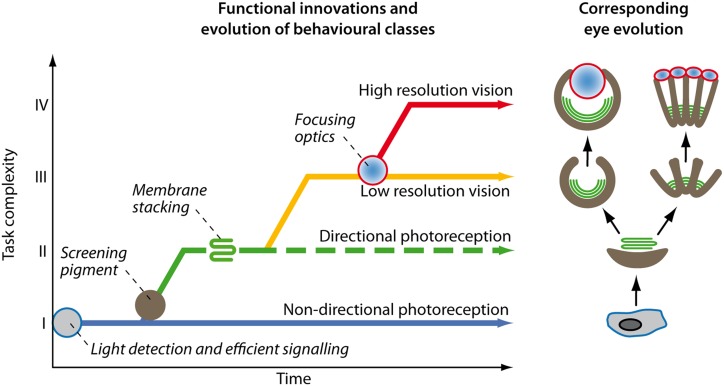
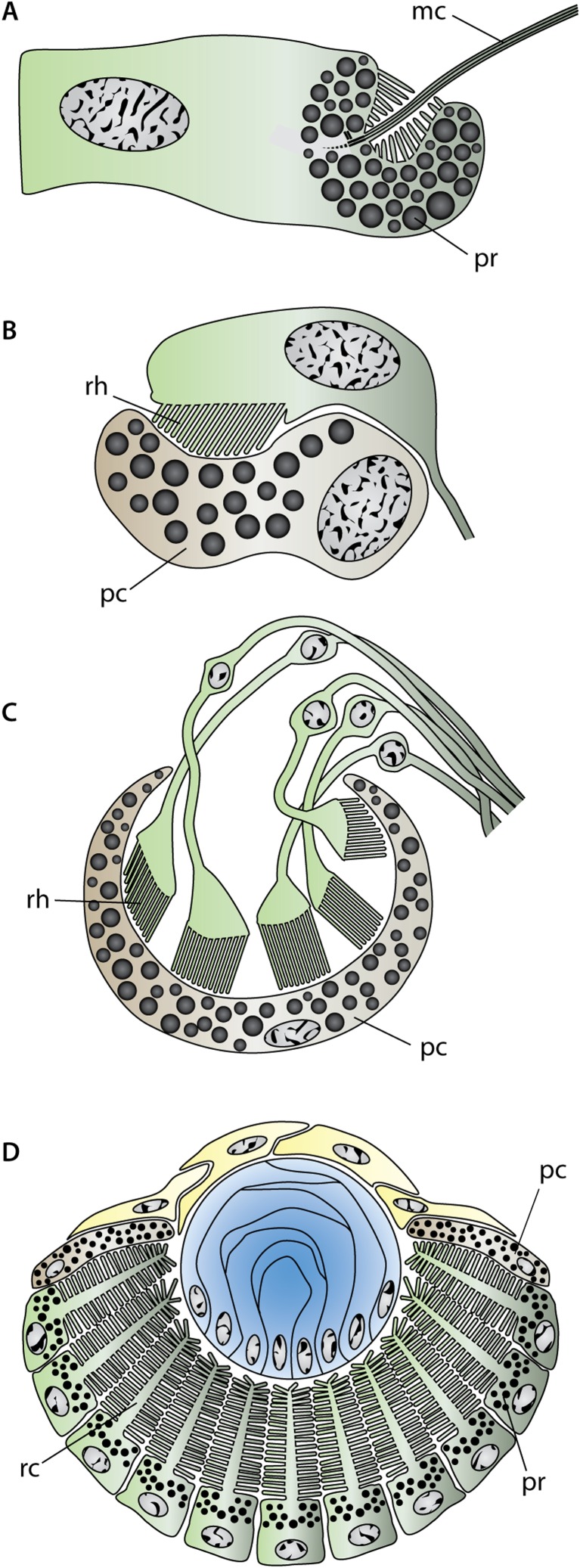
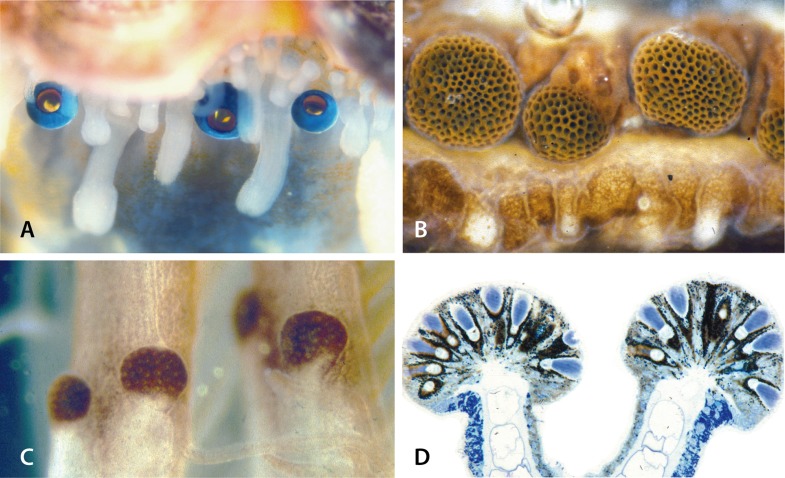
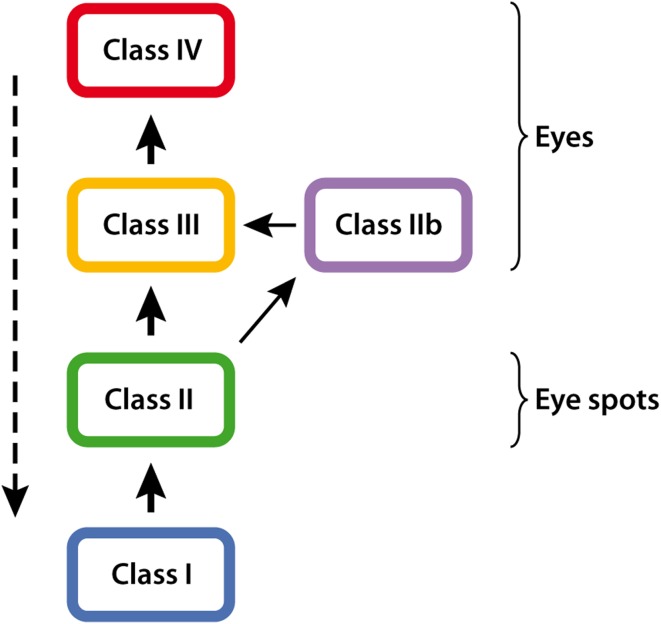
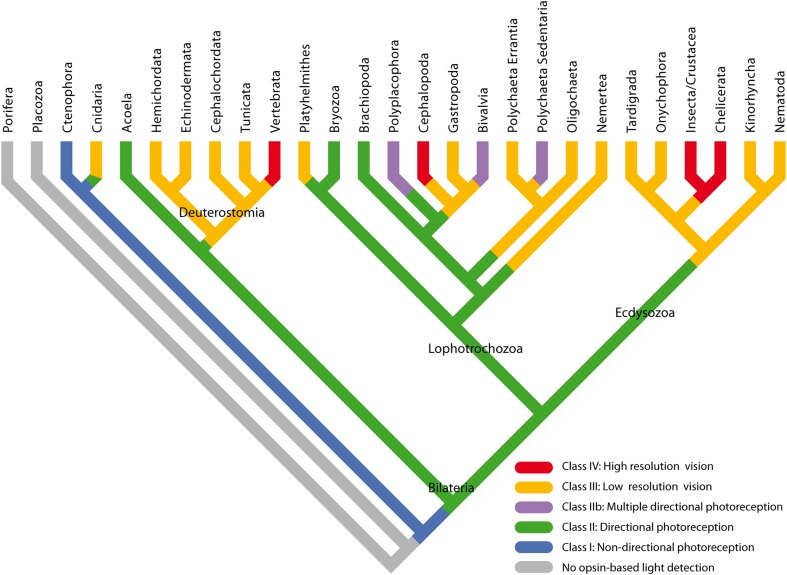
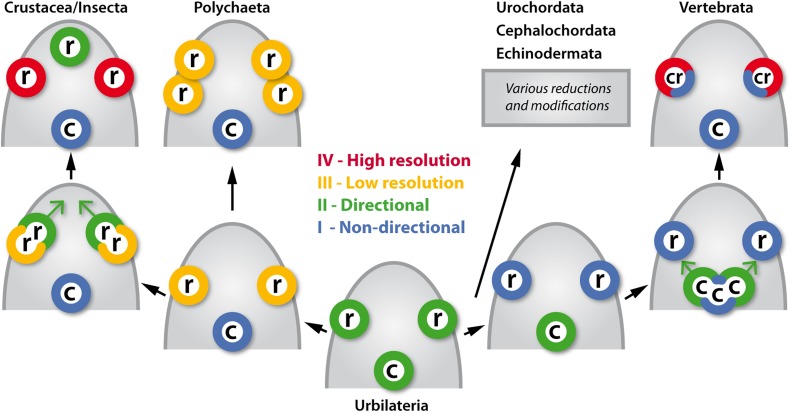
Eye evolution is driven by the evolution of visually guided behavior. Accumulation of gradually more demanding behaviors have continuously increased the performance requirements on the photoreceptor organs. Starting with nondirectional photoreception, I argue for an evolutionary sequence continuing with directional photoreception, low-resolution vision, and finally, high-resolution vision. Calculations of the physical requirements for these four sensory tasks show that they correlate with major innovations in eye evolution and thus work as a relevant classification for a functional analysis of eye evolution. Together with existing molecular and morphological data, the functional analysis suggests that urbilateria had a simple set of rhabdomeric and ciliary receptors used for directional photoreception, and that organ duplications, positional shifts and functional shifts account for the diverse patterns of eyes and photoreceptors seen in extant animals. The analysis also suggests that directional photoreception evolved independently at least twice before the last common ancestor of bilateria and proceeded several times independently to true vision in different bilaterian and cnidarian groups. This scenario is compatible with Pax -gene expression in eye development in the different animal groups. The whole process from the first opsin to high-resolution vision took about 170 million years and was largely completed by the onset of the Cambrian, about 530 million years ago. Evolution from shadow detectors to multiple directional photoreceptors has further led to secondary cases of eye evolution in bivalves, fan worms, and chitons.
Overview
The claims and statistics of this paper haven’t been checked yet.
Free: it reads the open-access text and checks the first 5 claims that cite a source we can check. Create a free account to check every claim.
Integrity signals
Registry
Cites
Statistics
Figures
Verification
Claims the paper makes
The claims and statistics of this paper haven’t been checked yet.
Free: it reads the open-access text and checks the first 5 claims that cite a source we can check. Create a free account to check every claim.
Claims other papers make about this one
Each is checked against this paper’s own text: does it say what the citing paper says it does?
The cited source doesn’t support the claim as written.
In the citing paper
“Take convergent evolution: the photoreceptor system has evolved several times independently [59]”
From The Umwelt Representation Hypothesis: rethinking Universality (2026) · cites this paper as [59]
Checked by a reasoning model — may be wrong.
Experimental — accuracy not yet measuredThe source backs part of the claim, not all of it — or backs it for a different population, condition or comparison.
In the citing paper
“This also aligns with proposed explanations that suggest that lens development coincided with an increase in eye size (59, 60).”
From What if eye...? Computationally recreating vision evolution (2025) · cites this paper as [60]
Experimental — accuracy not yet measuredThe cited source says what the claim attributes to it.
In the citing paper
“Early visual systems faced a fundamental trade-off between light collection and acuity, progressing from simple light-sensitive patches to cup-shaped eyes with smaller apertures (59, 60).”
From What if eye...? Computationally recreating vision evolution (2025) · cites this paper as [60]
The cited source says what the claim attributes to it.
In the citing paper
“The structure and function of such visual systems in non-bilaterians provides further support to the view [72] that camera-type eyes evolved several times.”
From Back to the Basics: Cnidarians Start to Fire (2017) · cites this paper as [72]
Self-check
Percentages, sums and reported differences re-computed from the paper’s own numbers.
The self-check needs the paper’s full text.
Citations
Cites
Handbook of Sensory Physiology
Sanders, M. D. (1975) · British Journal of Ophthalmology · doi:10.1136/bjo.59.2.111-c · Cited by 7,166
Fredriksson, R., Lagerström, M. C., Lundin, L.-G., & Schiöth, H. B. (2003) · Molecular Pharmacology · doi:10.1124/mol.63.6.1256 · Cited by 2,941 · cited 1×
“Several studies have indicated a common origin for opsins and melatonin receptors (Fredriksson et al., 2003 ; Plachetzki et al., 2010 ; Feuda et al., 2012 ) and this may offer a functional explanation to the evolution of opsins.”
Signals, Signal Conditions, and the Direction of Evolution
Endler, J. A. (1992) · The American Naturalist · doi:10.1086/285308 · Cited by 1,960 · cited 2×
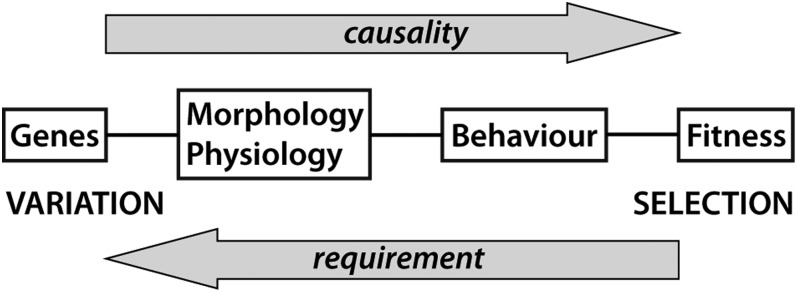
“This is different to the view of Endler ( 1992 ), who considers sensory organs and behavior to coevolve, but the sensory organs are then seen in isolation from the rest of the morphology and physiology of the organism.”
(1945) · Annals of the Entomological Society of America · doi:10.1093/aesa/38.3.396 · Cited by 1,852
(2005) · Applying Evolutionary Archaeology · doi:10.1007/0-306-47468-9_7 · Cited by 1,644
Erwin, D. H., Laflamme, M., Tweedt, S. M., Sperling, E. A., Pisani, D., & Peterson, K. J. (2011) · Science · doi:10.1126/science.1206375 · Cited by 1,336 · cited 1×
“7 is compared with timing data for the branching points (Peterson et al., 2008 ; Erwin et al., 2011 ), the baffl ing conclusion is that nearly all fall in a period from 700 to 530 million years ago.”
LYTHGOE, J. N. (1979) · Medical Entomology and Zoology · Cited by 1,161
Predictive coding: a fresh view of inhibition in the retina
Srinivasan, M. V., Laughlin, S. B., & Dubs, A. (1982) · Proceedings of the Royal Society of London. Series B. Biological Sciences · doi:10.1098/rspb.1982.0085 · Cited by 1,042
Handbook of Sensory Physiology
Newell, F. W. (1973) · American Journal of Ophthalmology · doi:10.1016/0002-9394(73)90115-3 · Cited by 986
Melanopsin: An opsin in melanophores, brain, and eye
Provencio, I., Jiang, G., De Grip, W. J., Hayes, W. P., & Rollag, M. D. (1998) · Proceedings of the National Academy of Sciences · doi:10.1073/pnas.95.1.340 · Cited by 975 · cited 2×
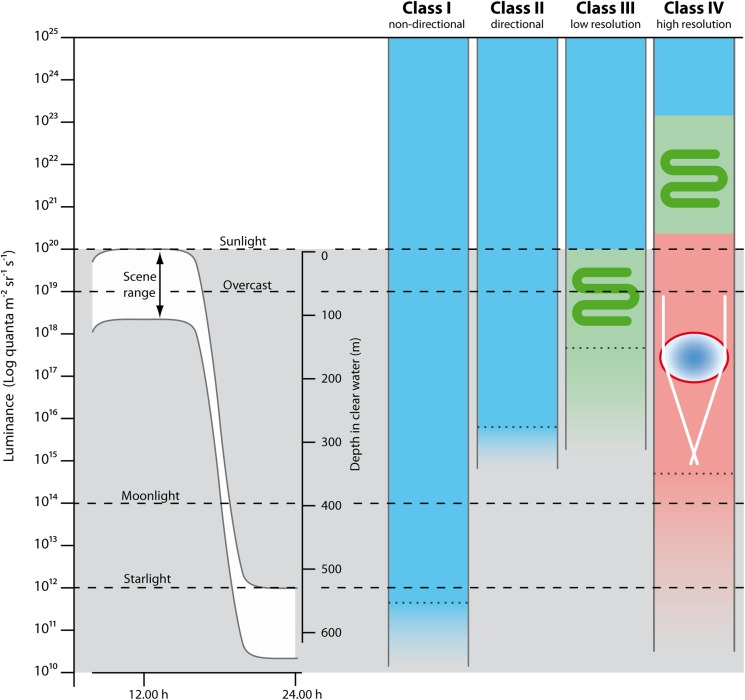
“The transition from class I to class II would require a substantial reduction of the integration time (improvement of response speed) and the introduction of light shielding material close to the receptor.”
Research works printed but not linked: 3
- 10.1562/0031-8655(2004)079 · doi:10.1562/0031-8655(2004)079
- Needham A.E. (1974). The Significance of Zoochromes. Berlin: Springer
- Bennett M.F. (1979). Extraocular light receptors and circadian rhythms In Handbook of Sensory Phyiology, Vol. VII/6A, ed. Autrum H., pp. 641– 663 Berlin: Springer
Cited by
Items 101–200 of 300
Bisazza, A., & Gatto, E. (2021) · Scientific Reports · doi:10.1038/s41598-021-82249-6 · Cited by 14
Williams, S. T., Noone, E. S., Smith, L. M., & Sumner‐Rooney, L. H. (2022) · Evolution · doi:10.1111/evo.14647 · Cited by 15
“We estimated an interreceptor angle of 4.3° in the shallow-water species Ilanga navakaensis, which would place it at the lower boundary of “high-resolution vision” if it reflected visual acuity (Nilsson 2013).”
BackgroundInfluential‘Distributed’ vision and the architecture of animal visual systems
Sumner‐Rooney, L. H. (2023) · Journal of Experimental Biology · doi:10.1242/jeb.245392 · Cited by 14
Inferring Consciousness in Phylogenetically Distant Organisms
Godfrey‐Smith, P. (2024) · Journal of Cognitive Neuroscience · doi:10.1162/jocn_a_02158 · Cited by 15
“Some parts of each clade evolved acute senses; high-resolution image-forming eyes ( “ Class IV ” eyes: Nilsson, 2013) are found in all these groups, and only in them.”
BackgroundBuilding, Maintaining, and (re-)Deploying Genetic Toolkits during Convergent Evolution
Oakley, T. H. (2024) · Integrative and Comparative Biology · doi:10.1093/icb/icae114 · Cited by 14
Bennett, M. S. (2021) · Frontiers in Psychology · doi:10.3389/fpsyg.2021.685853 · Cited by 14
“However, this obstacle avoidance seems to use lens-like eyes that are generally agreed to have evolved independently, and is unlikely to represent navigational strategies of the early cnidarian-bilaterian common ancestor (Nilsson, 2013; Bosch et al., 2017).”
BackgroundA new genetically tractable non-vertebrate system to study complete camera-type eye regeneration
Accorsi, A., Pardo, B., Ross, E., Corbin, T. J., McClain, M., Weaver, K., Delventhal, K., Morrison, J. A., McKinney, M. C., McKinney, S. A., et al. (2024) · doi:10.1101/2024.01.26.577494 · Cited by 14
Colour vision in stomatopod crustaceans: more questions than answers
Streets, A., England, H., & Marshall, N. J. (2022) · Journal of Experimental Biology · doi:10.1242/jeb.243699 · Cited by 13
Visual evoked potentials in the horse
Ström, L., & Ekesten, B. (2016) · BMC Veterinary Research · doi:10.1186/s12917-016-0743-3 · Cited by 13
Non-directional Photoreceptors in the Pluteus of Strongylocentrotus purpuratus
Valero‐Gracia, A., Petrone, L., Oliveri, P., Nilsson, D., & Arnone, M. I. (2016) · Frontiers in Ecology and Evolution · doi:10.3389/fevo.2016.00127 · Cited by 14
“Such simple eyespots or ocelli constitute class II photoreceptors (photoreceptor cells associated with shading pigments) in accordance with the classification of Nilsson (2013).”
BackgroundMethodInfluentialSelf-citationSchoenemann, B., & Clarkson, E. N. K. (2015) · Earth and Environmental Science Transactions of the Royal Society of Edinburgh · doi:10.1017/s1755691016000232 · Cited by 13
Evolution of color vision and its reflections in contemporary mammals
Jacobs, G. H. (2015) · Cambridge University Press eBooks · doi:10.1017/cbo9781107337930.006 · Cited by 12
Eyes and negative phototaxis in juvenile crown-of-thorns starfish, Acanthaster species complex
Korsvig-Nielsen, C. E., Hall, M., Motti, C. A., & Garm, A. L. (2019) · Biology Open · doi:10.1242/bio.041814 · Cited by 12
“Negative phototaxis and image formation One of the simplest visually guided behaviours is phototaxis – orientation towards light gradients (Dusenbery, 1992; Nilsson, 2013).”
BackgroundAubert, D. (2015) · HAL · Cited by 12
The Effects of Light on Vertebrate Welfare: A Review
de Azevedo, C. S., Goulart, V. D. L. R., Pizzutto, C. S., Cipreste, C. F., Teixeira, C. P., & Young, R. J. (2025) · Animals · doi:10.3390/ani15223329 · Cited by 12
“This evolution occurs only when modifications increase the organism’s fitness, meaning they result in more effective behaviours based on visual information [112].”
Garm, A. L., Svaerke, J.-E., Pontieri, D., & Oakley, T. H. (2022) · Frontiers in Neuroanatomy · doi:10.3389/fnana.2022.916510 · Cited by 11
“The weak staining also matches an expectation of a low concentration of opsin in extraocular photoreceptors used to detect the time of day (Nilsson, 2013).”
BackgroundParallel motion vision pathways in the brain of a tropical bee
Honkanen, A., Hensgen, R., Kannan, K., Adden, A. K., Warrant, E. J., Wcislo, W. T., & Heinze, S. (2023) · Journal of Comparative Physiology A · doi:10.1007/s00359-023-01625-x · Cited by 11
“While recognizing and assessing objects benefits from having high resolution vision (Nilsson, 2013), using vision to obtain directional information and to judge self motion is feasible with much lower resolution and thus at much lower cost for the animal (Baddeley et al., 2011, Zeil, 2012).”
BackgroundCocurullo, M., Paganos, P., Annunziata, R., Voronov, D., & Arnone, M. I. (2023) · Cells · doi:10.3390/cells12172134 · Cited by 11
“Nonetheless, non-directional perception of light intensity can be used by aquatic animals to adjust their vertical position in the water column [22] and to avoid high UV levels [5,29,66].”
BackgroundWhat if eye...? Computationally recreating vision evolution
Tiwary, K., Young, A., Tasneem, Z., Klinghoffer, T., Dave, A., Poggio, T., Nilsson, D.-E., Cheung, B., & Raskar, R. (2025) · Science Advances · doi:10.1126/sciadv.ady2888 · Cited by 10
“This also aligns with proposed explanations that suggest that lens development coincided with an increase in eye size ( 59 , 60 ).”
Self-citationBok, M. J., & Nilsson, D.-E. (2016) · Current Biology · doi:10.1016/j.cub.2016.06.032 · Cited by 10
Self-citationKonatham, S., Martín‐Torres, J., & Zorzano, M. (2021) · Life · doi:10.3390/life11121337 · Cited by 10
“Since the development of early eyes, Earth experienced five large extinction events: End-Ordovician (~443 Mya), Late-Devonian (~370 Mya), Life 2021, 11, 1337. https://doi.org/10.3390/life11121337 https://www.mdpi.com/journal/life End-Permian (~252 Mya), End-Triassic (~201 Mya), and End-Cretaceous (~66 Mya) [11].”
BackgroundInfluentialIndividuating Cognitive Characters: Lessons from Praying Mantises and Plants
Figdor, C. (2024) · Philosophy of Science · doi:10.1017/psa.2024.10 · Cited by 9
Hagfish to Illuminate the Developmental and Evolutionary Origins of the Vertebrate Retina
Bradshaw, S. N., & Allison, W. T. (2022) · Frontiers in Cell and Developmental Biology · doi:10.3389/fcell.2022.822358 · Cited by 9
“Amazingly, despite these groups being phylogenetically distant, their eye structures appear to have independently evolved to perform similar functions (often through similar mechanisms) reinforcing the value of visual information across organisms (Fernald, 2000; Nilsson, 2013).”
BackgroundLilly, E., Muscala, M., Sharkey, C. R., & McCulloch, K. J. (2024) · Ecology and Evolution · doi:10.1002/ece3.11222 · Cited by 9
Argumentation Evolved: But How? Coevolution of Coordinated Group Behavior and Reasoning
Seitz, F. (2020) · Argumentation · doi:10.1007/s10503-020-09510-6 · Cited by 9
“9 I follow Nilsson (2013) here.”
von Döhren, J., & Bartolomaeus, T. (2018) · Zoomorphology · doi:10.1007/s00435-017-0394-3 · Cited by 9
Warrant, E. J., Johnsen, S., & Nilsson, D. (2020) · Elsevier eBooks · doi:10.1016/b978-0-12-805408-6.00002-6 · Cited by 9
Self-citationEden Benumbed: A Critique of Panqualityism and the Disclosure View of Consciousness
Shani, I. (2021) · Philosophia · doi:10.1007/s11406-021-00377-9 · Cited by 10
Gefaell, J., Galindo, J., Malvido, C., Nuñez-Quintela, V., Estévez, D. A. G., Blanco, S., González-Conde, M., Martínez-Domínguez, S., Novo, I., Pérez-Fernández, G. G., et al. (2021) · Marine Biology · doi:10.1007/s00227-021-03959-z · Cited by 9
“Actually, Cephalopods, the animals with the most complex visual system within the phylum Mollusca, have only one visual pigment and therefore cannot see in colour (Nilsson 2013).”
BackgroundRhodopsin: Evolution and comparative physiology
Оstrovsky, М. А. (2017) · Paleontological Journal · doi:10.1134/s0031030117050069 · Cited by 9
“Comparative physiology of vision and visual pigments in particular is an independent and extremely fascinating field of biology of vision (see, e.g., Feuda et al., 2012; Nilson, 2013).”
Four camera-type eyes in the earliest vertebrates from the Cambrian Period
Lei, X., Zhang, S., Cong, P., Vinther, J., Gabbott, S. E., Wei, F., & Xu, X. (2026) · Nature · doi:10.1038/s41586-025-09966-0 · Cited by 8
“Although ultraviolet B radiation in Cambrian shallow marine habitats 33 has been suggested to impose selective pressures on the evolution of vision 34 , the ensuing arms races driven by the advent of predation could have been equally or probably a more important driver of sensory repertoire…”
Audino, J. A., Adams, D. C., & Serb, J. M. (2022) · Evolution · doi:10.1111/evo.14541 · Cited by 8
Environmental complexity and regularity shape the evolution of cognition
Turner, C. R., Morgan, T. J. H., & Griffiths, T. L. (2024) · Proceedings of the Royal Society B Biological Sciences · doi:10.1098/rspb.2024.1524 · Cited by 8
“In the early evolution of the eye, photoreceptors not only increased in number, but their structure also changed to efficiently react to light [54,55].”
The Evolution and Function of Melanopsin in Craniates
Davies, W. I. L., Foster, F., & Hankins, M. W. (2014) · Springer eBooks · doi:10.1007/978-1-4614-4355-1_2 · Cited by 8
Friedrich, M., Cook, T. A., & Zelhof, A. C. (2015) · Current Opinion in Insect Science · doi:10.1016/j.cois.2015.10.006 · Cited by 9
“Their particularly elaborate version in insects and crustaceans (Pancrustacea) ranks among the most capable and complex known visual organs [2].”
BackgroundHodge, J. R., & Price, S. A. (2022) · Integrative and Comparative Biology · doi:10.1093/icb/icac147 · Cited by 8
Cocurullo, M., Paganos, P., Benvenuto, G., & Arnone, M. I. (2024) · Frontiers in Neuroscience · doi:10.3389/fnins.2024.1378520 · Cited by 8
“…a unique system to investigate the evolution and function of various features of the nervous system, such as evolution and function of vision (Nilsson, 2013), evolution of neuropeptidergic signaling (Semmens et al., 2016; Semmens and Elphick, 2017), and evolution of organogenesis (Perillo et…”
BackgroundExtraocular Vision in Echinoderms
Sumner‐Rooney, L. H., & Ullrich-Lüter, J. (2023) · Springer series in vision research · doi:10.1007/978-3-031-23216-9_3 · Cited by 8
Sousounis, K., Ogura, A., & Tsonis, P. A. (2013) · PLoS ONE · doi:10.1371/journal.pone.0078054 · Cited by 9
Shen, G., Zhao, D., Dong, Y., Zhang, Q., & Zeng, Y. (2025) · Research Square · doi:10.21203/rs.3.rs-6950065/v1 · Cited by 8
Hartenstein, V., Yuan, M., Younossi‐Hartenstein, A., Karandikar, A., Bernardo-Garcia, F. J., Sprecher, S. G., & Knust, E. (2019) · Developmental Biology · doi:10.1016/j.ydbio.2019.05.017 · Cited by 7
Investments in photoreceptors compete with investments in optics to determine eye design
Heras, F. J. H., & Laughlin, S. B. (2026) · eLife · doi:10.7554/elife.96517.3 · Cited by 7
Nilsson, D. (2020) · Elsevier eBooks · doi:10.1016/b978-0-12-805408-6.00013-0 · Cited by 7
Self-citationRun and hide: visual performance in a brittle star
Sumner‐Rooney, L. H., Kirwan, J. D., Lüter, C., & Ullrich-Lüter, E. (2021) · Journal of Experimental Biology · doi:10.1242/jeb.236653 · Cited by 7
“Responses to dynamic or appearing stimuli do not require spatial resolution, and ‘alarm’ photoreception has been described as a distinct class of visual task by Nilsson (2013).”
BackgroundInfluentialRodriguez-Quintero, W. D., Moreno-Chacón, M., Carrasco‐Urra, F., & Saldaña, A. (2022) · Plant Signaling & Behavior · doi:10.1080/15592324.2022.2122244 · Cited by 7
“tion, develops behavior, and this, in turn, generates the fitness that selection can act upon.(180) Behavior is a morpho-physiological, inescapable sensory-guided consequence of natural selec-”
BackgroundCalcitic Prisms of The Giant Seashell Pinna Nobilis Form Light Guide Arrays
Amini, S., Zhu, T., Biswas, A., Charsooghi, M. A., Kim, K., Reber, S., Dauphin, Y., & Fratzl, P. (2023) · Advanced Materials · doi:10.1002/adma.202304166 · Cited by 7
The Visual System of Myriapoda
Sombke, A., & Müller, C. H. G. (2023) · Springer series in vision research · doi:10.1007/978-3-031-23216-9_7 · Cited by 7
Reduced adult stem cell fate specification led to eye reduction in cave planarians
Saad, L. D. O., Cooke, T. F., Atabay, K. D., Reddien, P. W., & Brown, F. D. (2025) · Nature Communications · doi:10.1038/s41467-024-54478-6 · Cited by 6
Irwin, A. R., Roberts, N. W., Strong, E. E., Kano, Y., Speiser, D. I., Harper, E. M., & Williams, S. T. (2024) · Systematic Biology · doi:10.1093/sysbio/syae063 · Cited by 7
Arenz, A. L., Tran, T., Koyama, K. H., Gomez, A. M. M., & Rivera, A. S. (2018) · Integrative and Comparative Biology · doi:10.1093/icb/icy077 · Cited by 6
Yokouchi, K., & Horiguchi, T. (2021) · Phycological Research · doi:10.1111/pre.12452 · Cited by 6
“The distinction between directional and nondirectional photoreception should be made because the former requires the detection of further information, viz. the ability to locate the source of the light (Nilsson 2013; Colley & Nilsson 2016).”
BackgroundA Sexual Dimorphism in the Spatial Vision of North American Band-Winged Grasshoppers
Duncan, A. B., Salazar, B., García, S. R., & Brandley, N. C. (2021) · Integrative Organismal Biology · doi:10.1093/iob/obab008 · Cited by 6
“However, because of their small size, female VA ( 20 ) is much coarser than what was measured in this study and likely limits their visually guided behaviors (Nilsson 2009, 2013).”
BackgroundPicciani, N., Berger, C. A., Nielsen, S., Musser, J. M., Oel, A. P., Stoilova, M. I., Arendt, D., Garm, A. L., & Oakley, T. H. (2025) · Ecology and Evolution · doi:10.1002/ece3.71784 · Cited by 5
“pigments and lenses (Nilsson 2013; Oakley and Speiser 2015; Picciani et al. 2021).”
Welch, J. J. (2023) · Evolutionary Biology/Evolutionary biology · doi:10.1007/978-3-031-22028-9_5 · Cited by 5
Structure and functional implications of photoreceptive systems in non-marine ostracods: a review
Bellavere, E., Matzke‐Karasz, R., Romano, D., & Rossetti, G. (2024) · Hydrobiologia · doi:10.1007/s10750-024-05587-2 · Cited by 5
“A certain level of imaging is expected in Notodromas monacha , for which a detection angle below the low-resolution threshold of 0,52 rad has been measured, in favour of a slightly higher resolution (see Andersson & Nilsson, 1981; Nilsson, 2013).”
InfluentialAt the edge of darkness: A framework for the evolution of visual systems in dim light
Porter, M. L. (2025) · Functional Ecology · doi:10.1111/1365-2435.70107 · Cited by 6
Core–shell nanospheres behind the blue eyes of the bay scallopArgopecten irradians
Harris, O. K., Kingston, A. C. N., Wolfe, C. S., Ghoshroy, S., Johnsen, S., & Speiser, D. I. (2019) · Journal of The Royal Society Interface · doi:10.1098/rsif.2019.0383 · Cited by 5
A Pre-Bilaterian Origin of Phototransduction Genes and Photoreceptor CellsPreprint
Aleotti, A., Giorgini, F., & Feuda, R. (2025) · bioRxiv (Cold Spring Harbor Laboratory) · doi:10.1101/2025.02.09.637293 · Cited by 5
Distributed Visual Systems in Pteriomorphian Bivalves
Speiser, D. I., Chappell, D. R., Audino, J. A., Kingston, A. C. N., & Serb, J. M. (2023) · Springer series in vision research · doi:10.1007/978-3-031-23216-9_5 · Cited by 4
Beyond the p-value: How descriptive statistics unlock insights in veterinary research?
(2024) · German Journal of Veterinary Research · doi:10.51585/gjvr.2024.3.0105 · Cited by 4
DeLeo, D. M., & Bracken‐Grissom, H. D. (2025) · Communications Biology · doi:10.1038/s42003-025-07450-z · Cited by 4
“…and acuity, facilitating more complex visually guided behaviors including monitoring and regulating self-motion in relation to surrounding objects (e.g., anticollision behavior, prey and predator detection and mate recognition) and habitat suitability 8,16,17 .”
Biology for biomimetics: II. A tutorial on how to diversify a list of biological models
Snell‐Rood, E. C., & Smirnoff, D. (2025) · Bioinspiration & Biomimetics · doi:10.1088/1748-3190/ae0aa2 · Cited by 4
“Interestingly, the camera-type eye has evolved independently in invertebrates (squid and octopus, Nilsson 2013, Nilsson et al 2023; see figure 4).”
Yang, M., Yu, Y., Ding, J., Luo, J., Sun, J., Hu, F., Chang, Y., & Zhao, C. (2020) · Marine Ecology · doi:10.1111/maec.12593 · Cited by 4
Jumping spiders do not seem fooled by texture gradient illusions
Aguilar-Argüello, S., Taylor, A. H., & Nelson, X. J. (2022) · Behavioural Processes · doi:10.1016/j.beproc.2022.104603 · Cited by 4
RECUR: identifying recurrent amino acid substitutions from multiple sequence alignments
Robbins, E. H. J., Liu, Y., & Kelly, S. L. (2026) · Molecular Biology and Evolution · doi:10.1093/molbev/msag036 · Cited by 3
“…evolution of wings in pterosaurs, insects, bats, and birds (Hunter 2007); the independent evolution of high-resolution camera-like eyes in vertebrates, cephalopods, and arthropods (Nilsson 2013); and the independent evolution of the C 4 carbon concentrating mechanism in plants (Sage 2004).”
Light sensitivity in Beroidae ctenophores: Insights from laboratory studies and genomics
Кривенко, О. В., Kuleshova, O. N., & Баяндина, Ю. С. (2024) · Comparative Biochemistry and Physiology Part A Molecular & Integrative Physiology · doi:10.1016/j.cbpa.2024.111694 · Cited by 3
Trilobite Eyes and Their Evolution
Schoenemann, B. (2025) · Arthropoda · doi:10.3390/arthropoda3010003 · Cited by 3
“According to Nilsson, the complexity of different eye types (compound eyes, camera lens eyes) evolved later and sometimes several times separately according to different visual requirements due to changing environments during the Earth’s history, e.g., [37,38].”
Iwanicki, T., Steck, M., Bracken‐Grissom, H. D., & Porter, M. L. (2024) · Vision Research · doi:10.1016/j.visres.2024.108403 · Cited by 3
“…light environments may facilitate color opponency for congener recognition of photophore bioluminescence, for discriminating between photophore and spew, or enhance foraging success by broadening the range of light absorbance for increased sensitivity to visual stimuli (see review: Nilsson, 2013).”
Nilsson, D. (2021) · Cambridge University Press eBooks · doi:10.1017/9781108946339.002 · Cited by 3
Self-citationDistributed Light-Sensing Systems in Chitons
Chappell, D. R., Speiser, D. I., Eernisse, D. J., & Kingston, A. C. N. (2023) · Springer series in vision research · doi:10.1007/978-3-031-23216-9_6 · Cited by 3
The Umwelt Representation Hypothesis: rethinking Universality
Bosch, V., Sommers, R. P., Doerig, A., & Kietzmann, T. C. (2026) · Trends in Cognitive Sciences · doi:10.1016/j.tics.2026.07.004 · Cited by 2
The Golden Apple Snail Pomacea canaliculata: From Zygotes to Stable Mutant Lines
Gattamraju, A., & Accorsi, A. (2025) · Journal of Visualized Experiments · doi:10.3791/69267 · Cited by 2
Spectral responses across a dorsal–ventral array of dermal sensilla in the medicinal leech
Groves, T. K. H., & Jellies, J. (2021) · Journal of Comparative Physiology A · doi:10.1007/s00359-021-01508-z · Cited by 2
“According to Nilsson (2013), photoreceptor-controlled behavior can be broadly classified into 4 classes of behaviors, ranging from simple to progressively more complex.”
BackgroundMeaning and the evolution of signification and objectivity
Pharoah, M. (2023) · Semiotica · doi:10.1515/sem-2021-0154 · Cited by 2
Bok, M. J., & Buschbeck, E. K. (2023) · Springer series in vision research · doi:10.1007/978-3-031-23216-9_1 · Cited by 2
Olroyd, S. L., & Kopperud, B. T. (2025) · Evolution · doi:10.1093/evolut/qpaf041 · Cited by 2
Spectral Sensitivity Underlying Two Different Visual Behaviors in the Fiddler Crab, Uca Pugilator
Didion, J. E. (2019) · OhioLink ETD Center (Ohio Library and Information Network) · Cited by 2
Modelling the visual world of a velvet worm
Ljungholm, M., & Nilsson, D. (2021) · PLoS Computational Biology · doi:10.1371/journal.pcbi.1008808 · Cited by 2
“[10,14,15] but are notoriously difficult to study.”
Self-citationHurlbert, A. C. (2021) · Cambridge University Press eBooks · doi:10.1017/9781108946339.004 · Cited by 2
河村, 正. (2017) · JAPANESE ORTHOPTIC JOURNAL · doi:10.4263/jorthoptic.046i001 · Cited by 2
Visual afferents from an eye in the terrestrial slug Limax valentianus
Matsuo, Y., Kawakami, A., & Matsuo, R. (2024) · The Journal of Comparative Neurology · doi:10.1002/cne.25600 · Cited by 2
Functional organization and ontogeny of the optokinetic reflex in Xenopus laevis
Schuller, J. (2017) · doi:10.5282/edoc.25344 · Cited by 2
Vision as an Energy-Driven ProcessPreprint
Pepperell, R. (2020) · arXiv (Cornell University) · doi:10.48550/arxiv.2008.00754 · Cited by 2
Light-Induced Stress as a Primary Evolutionary Driver of Eye OriginsPreprint
Swafford, A. J. M., & Oakley, T. H. (2019) · Preprints.org · doi:10.20944/preprints201904.0107.v2 · Cited by 2
Persson, P. B., & Persson, A. B. (2016) · Acta Physiologica · doi:10.1111/apha.12771 · Cited by 2
“Dan-Eric Nilsson professor of zoology at Lund University, Sweden, characterized the general developmental stages of the vertebrate eye from mere patches of photoreceptors to nowadays’ miracles, which we are still far from understanding in all detail (Nilsson 2013).”
BackgroundStructure-based analysis unveils co-origin of LPOR and nitrogenase-like proteinsPreprint
Sun, X., Ma, L., Zeng, F., Hong, Y., Dixon, R. A., Rao, Z., Zhao, G., Zhao, J. F., Zhang, C., Wu, M., et al. (2025) · bioRxiv (Cold Spring Harbor Laboratory) · doi:10.1101/2025.02.17.634645 · Cited by 2
An enigmatic translocation of the vertebrate primordial eye field
Loosemore, R. G., Matthaei, S. D., & Stanger, T. C. (2020) · BMC Evolutionary Biology · doi:10.1186/s12862-020-01693-6 · Cited by 1
“brates [21, 58, 77] we await further palaeontological consideration like that of van der Brugghen [75] as to whether the earliest vertebrate fossils might now be seen”
MethodONITSUKA, K., NATSUYAMA, K., & IIKUMA, K. (2023) · Japanese Journal of JSCE · doi:10.2208/jscejj.23-27002 · Cited by 1
Cnidarian Eyes as a Meta-Model to Explore Evolutionary Repeatability Over Deep Time
Oakley, T. H. (2025) · Integrative and Comparative Biology · doi:10.1093/icb/icaf134 · Cited by 1
Chen, L., Zhang, T., Xu, Q., Li, J. Q., Zhang, Y., Chen, Z. D., & Li, S. (2025) · Applied Physics Letters · doi:10.1063/5.0290759 · Cited by 1
Schwartz, G. W. (2025) · Vision Research · doi:10.1016/j.visres.2025.108732 · Cited by 1
Dancing in the dark: the annelid Platynereis dumerilii is re-envisaged for its climactic final night
Kirwan, J. D., Brodrick, E., Bartholin, J., Bartholin, M., Petersen, J. F., Hird, C., & Garm, A. L. (2026) · Journal of Experimental Biology · doi:10.1242/jeb.251047 · Cited by 1
Sensory biology in a changing world: multisensory systems and interdisciplinary collaboration
Kelber, A., Gilmour, K. M., & Sane, S. P. (2026) · Journal of Experimental Biology · doi:10.1242/jeb.251786 · Cited by 1
Insect optomotor experiments in the dark using virtual reality
Honkanen, A. (2014) · doi:10.13140/rg.2.2.20746.77760 · Cited by 1
“2014, Land & Nilsson 2012, Nilsson & Pelger 1994), but low-resolution vision must have appeared before that (Nilsson 2013).”
BackgroundVisual Ecology: Now You See, Now You Don’t
Chappell, D. R., & Speiser, D. I. (2020) · Current Biology · doi:10.1016/j.cub.2019.12.002 · Cited by 1
Visual Tracking of Box Jellyfish: A Real-Time Motion Tracking System
Oskarsson, M., Kjellberg, T., Palmér, T., Nilsson, D., & Åström, K. (2015) · Advances in environmental engineering and green technologies book series · doi:10.4018/978-1-4666-9435-4.ch006 · Cited by 1
Self-citationThe Origin of Vertebrates: Invertebrate Chordates and Cyclostomes
Striedter, G. F., & Northcutt, R. G. (2019) · Oxford University Press eBooks · doi:10.1093/oso/9780195125689.003.0002 · Cited by 1
OBSOLETE: Light and Visual Environments
Warrant, E. J. (2020) · Elsevier eBooks · doi:10.1016/b978-0-12-809324-5.00002-x · Cited by 1
OBSOLETE: Eye Evolution in Animals
Nilsson, D. (2020) · Elsevier eBooks · doi:10.1016/b978-0-12-809324-5.00013-4 · Cited by 1
Self-citationOphthalmology of Invertebrates
Gjeltema, J. L., Freeman, K. S., & Lewbart, G. A. (2022) · Springer eBooks · doi:10.1007/978-3-030-71302-7_2 · Cited by 1
Metadata
- Authors
- NILSSON, D.-E.
- Affiliations
- Lund University (SE)
- Corresponding author
- NILSSON, DAN-E.
- Venue
- Visual Neuroscience
- Publisher
- Maximum Academic Press
- Published
- 2013-03
- Volume
- 30
- Issue
- 1-2
- Pages
- 5-20
- ISSN
- 0952-5238 (ISSN-L)
- 1469-8714
- PMC
- PMC3632888
- OpenAlex
- W2151644530
- Cited by
- 267
- References
- 118
- Citations by year
- 2026: 15 · 2025: 24 · 2024: 33 · 2023: 23 · 2022: 27 · 2021: 29 · 2020: 21 · 2019: 13 · 2018: 14 · 2017: 18 · 2016: 23 · 2015: 12 · 2014: 13 · 2013: 2
- FWCI
- 11.29
- Type
- journal article
- Language
- en
- Open access
- hybrid
- doi.org
- Licence
- Locations
- Visual Neuroscience (publishedVersion, cc-by-nc-sa)
- Europe PMC (PubMed Central) (publishedVersion, cc-by-nc-sa)
- PubMed Central (publishedVersion, cc-by-nc-sa)
- PubMed (publishedVersion)
- Lund University Publications (Lund University) (submittedVersion)
- Funders
- Knut och Alice Wallenbergs Stiftelse
- Vetenskapsrådet
- Topics
- Life Sciences › Agricultural and Biological Sciences › Animal Science and Zoology › Marine Invertebrate Physiology and Ecology
- Life Sciences › Biochemistry, Genetics and Molecular Biology › Molecular Biology › Developmental Biology and Gene Regulation
- Life Sciences › Neuroscience › Cognitive Neuroscience › Visual perception and processing mechanisms
- Keywords
- eye evolution, visual perception, rhabdomeric photoreceptors, ciliary photoreceptors, opsin, low-resolution vision, Urbilateria, Pax genes, eye development, Bivalvia, Sabellidae, chitons, Cambrian, bilaterians, Cnidaria
- MeSH terms
- Animals, Biological Evolution, Eye, Humans, Photoreceptor Cells, Vision, Ocular, Visual Pathways, Signal Detection, Psychological
About these checks
Registry, retraction, Cites and statistics results are computed, not judged, with one exception: a printed reference that no index lists is read once by a model before it counts as a citation error. Claims are extracted by a model and kept only when their quote appears verbatim in the text; each cited source is then checked, with a model’s help, for whether it says what the claim relies on. Those verdicts can be wrong — read the claim’s quote and the cited source before relying on one.
Statistics and arithmetic are recomputed, not judged.
Confidence bands are shown only for fields calibrated on our annotated test set. None is calibrated yet, so no band is shown.
What counts as a claim ›How we measure confidence ›How we check this ›
Are you an author, or do you see a problem with this page? Request a review
Data sources
Bibliographic data: Semantic Scholar, OpenAlex, Crossref.
Contains information from the Semantic Scholar Academic Graph Datasets, made available under the ODC Attribution License (ODC-BY 1.0).
Semantic Scholar’s data is described in: Kinney, R., et al. (2023). The Semantic Scholar Open Data Platform. arXiv:2301.10140.
