

The Enduring Effects of Parental Alcohol, Tobacco, and Drug Use on Child Well-being: A Multilevel Meta-Analysis
Open accessThe DOI matches its Crossref record; 131 of the 131 references it cites were found in a registry or an index.
Abstract
The effects of psychoactive substance abuse are not limited to the user, but extend to the entire family system, with children of substance abusers being particularly at risk. This meta-analysis attempted to quantify the longitudinal relationship between parental alcohol, tobacco, and drug use and child well-being, investigating variation across a range of substance and well-being indices and other potential moderators. We performed a literature search of peer-reviewed, English language, longitudinal observational studies that reported outcomes for children aged 0 to 18 years. In total, 56 studies, yielding 220 dependent effect sizes, met inclusion criteria. A multilevel random-effects model revealed a statistically significant, small detriment to child well-being for parental substance abuse over time ( r = .15). Moderator analyses demonstrated that the effect was more pronounced for parental drug use ( r = .25), compared with alcohol use ( r = .13), tobacco use ( r = .13), and alcohol use disorder ( r = .14). Results highlight a need for future studies that better capture the effect of parental psychoactive substance abuse on the full breadth of childhood well-being outcomes and to integrate substance abuse into models that specify the precise conditions under which parental behavior determines child well-being. Registration : PROSPERO CRD42017076088
Overview
The claims and statistics of this paper haven’t been checked yet.
Free: it reads the open-access text and checks the first 5 claims that cite a source we can check. Create a free account to check every claim.
Integrity signals
Registry
Cites
Statistics
Figures
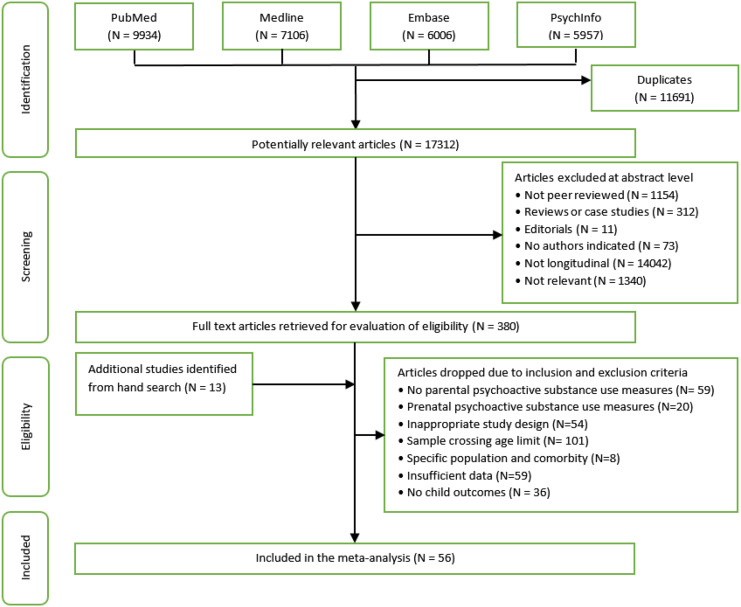
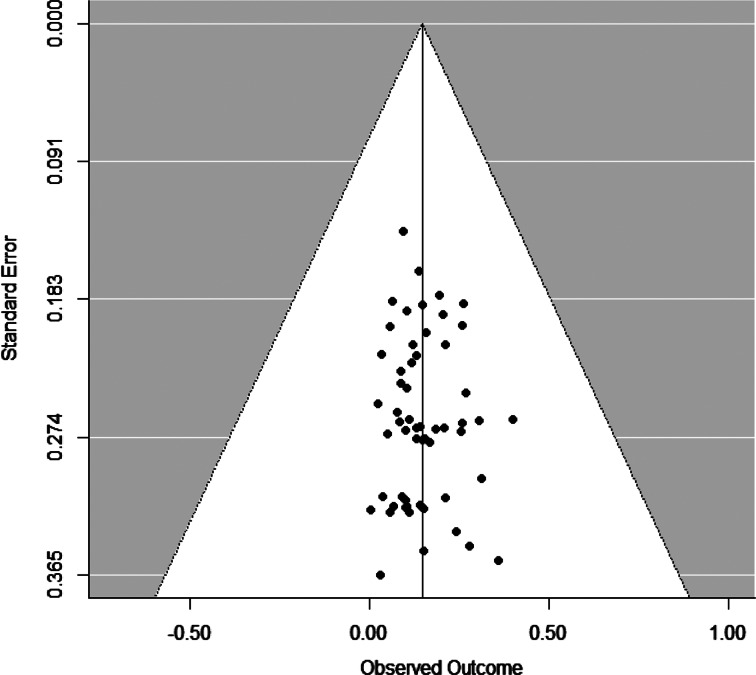
Verification
Claims the paper makes
The claims and statistics of this paper haven’t been checked yet.
Free: it reads the open-access text and checks the first 5 claims that cite a source we can check. Create a free account to check every claim.
Claims other papers make about this one
Each is checked against this paper’s own text: does it say what the citing paper says it does?
The source backs part of the claim, not all of it — or backs it for a different population, condition or comparison.
In the citing paper
“children in these environments often experience heightened levels of stress and insecurity, which can manifest in emotional dysregulation and a greater susceptibility to mental health issues such as depression and anxiety”
From How Parental Substance Abuse Affects Family Functioning and Child Psychological Health (2024) · cites this paper as Kuppens et al., 2019
Experimental — accuracy not yet measuredThe source backs part of the claim, not all of it — or backs it for a different population, condition or comparison.
In the citing paper
“The lack of adequate parenting in such households also inhibits the development of secure attachments, which are crucial for healthy emotional and social development”
From How Parental Substance Abuse Affects Family Functioning and Child Psychological Health (2024) · cites this paper as Kuppens et al., 2019
Experimental — accuracy not yet measuredThe cited source says what the claim attributes to it.
In the citing paper
“children in such households are at an elevated risk for a variety of psychological, emotional, and social problems”
From How Parental Substance Abuse Affects Family Functioning and Child Psychological Health (2024) · cites this paper as Kuppens et al., 2019
Self-check
Percentages, sums and reported differences re-computed from the paper’s own numbers.
The self-check needs the paper’s full text.
Citations
Cites
Preferred Reporting Items for Systematic Reviews and Meta-Analyses: the PRISMA statement
Moher, D., Liberati, A., Tetzlaff, J., Altman, D. G., & for the PRISMA Group (2009) · BMJ · doi:10.1136/bmj.b2535 · Cited by 83,823
Podsakoff, P. M., MacKenzie, S. B., Lee, J.-Y., & Podsakoff, N. P. (2003) · Journal of Applied Psychology · doi:10.1037/0021-9010.88.5.879 · Cited by 82,194 · cited 1×
“Such inconsistent research findings may reflect method bias related to the specific informant or data collection mode (e.g., socially desirable responding, shared method variance; Kuppens, Grietens, Onghena, & Michiels, 2009a; Podsakoff, MacKenzie, Lee, & Podsakoff, 2003; | Tourangeau & Yan, 2007).”
Preferred Reporting Items for Systematic Reviews and Meta-Analyses: The PRISMA Statement
Moher, D., Liberati, A., Tetzlaff, J., Altman, D. G., & The PRISMA Group (2009) · PLoS Medicine · doi:10.1371/journal.pmed.1000097 · Cited by 64,042
Bias in meta-analysis detected by a simple, graphical test
Egger, M., Smith, G. D., Schneider, M., & Minder, C. (1997) · BMJ · doi:10.1136/bmj.315.7109.629 · Cited by 56,722 · cited 1×
“Next, asymmetry was assessed using Egger ’ s weighted regression test (Egger, Smith, Schneider, & Minder, 1997; Torgerson, 2006).”
Preferred reporting items for systematic reviews and meta-analyses: the PRISMA Statement.
(2009) · PubMed Central · Cited by 44,859
Cochrane Handbook for Systematic Reviews of Interventions: Cochrane Book Series
(2008) · doi:10.1002/9780470712184 · Cited by 25,048 · cited 1×
“…studies (see Siddaway et al., 2019), six criteria were adopted to reflect the methodological rigor of each study (Faragher, Cass, & Cooper, 2005; Higgins & Green, 2011; Wong, Cheung, & Hart, 2008): whether the study sample size provided adequate statistical power (calculated as at least N = 193…”
Dermyshi, E., Wang, Y., Yan, C., Hong, W., Qiu, G., Gong, X., & Zhang, T. (2017) · Neonatology · doi:10.1159/000454668 · Cited by 24,451
Meta-analysis of Observational Studies in Epidemiology<SUBTITLE>A Proposal for Reporting</SUBTITLE>
Stroup, D. F. (2000) · JAMA · doi:10.1001/jama.283.15.2008 · Cited by 20,623
Hierarchical Linear Models: Applications and Data Analysis Methods.
Longford, N. T., Bryk, A. S., & Raudenbush, S. W. (1993) · Contemporary Sociology · doi:10.2307/2075823 · Cited by 18,724
Wang, G., Ma, R., Qiao, G., Wada, K., Aizawa, Y., & Satoh, T. (2015) · Integrative Medicine International · doi:10.1159/000368408 · Cited by 18,657
Research works printed but not linked: 4
- World Health Organization (2004). Promoting mental health: Concepts, emerging evidence, practice. Geneva: World Health Organization.
- Wilson D. B. (2017). Comprehensive Meta-Analysis (Version 3). Englewood, NJ: Biostat.
- McGrath C. E., Watson A. L., & Chassin L. (1999). Academic achievement in adolescent children of alcoholics. Journal of Studies on Alcohol, 60, 18- 26. 10096305 · DOI · Paper page
- European Monitoring Centre for Drugs and Drug Addiction (2008). Drugs and Vulnerable Groups of Young People. Luxembourg: Office for Official Publications of the European Communitie.
Cited by
Socioeconomic status and health behavior in children and adolescents: a systematic literature review
Gautam, N., Dessie, G., Rahman, M. M., & Khanam, R. (2023) · Frontiers in Public Health · doi:10.3389/fpubh.2023.1228632 · Cited by 192
McGovern, R., Bogowicz, P., Meader, N., Kaner, E., Alderson, H., Craig, D., Geijer‐Simpson, E., Jackson, K., Muir, C., Salonen, D., et al. (2023) · Addiction · doi:10.1111/add.16127 · Cited by 75
Adverse childhood experiences and child mental health: an electronic birth cohort study
Lowthian, E., Anthony, R., Evans, A., Daniel, R., Long, S. J., Bandyopadhyay, A., John, A. M., Bellis, M. A., & Paranjothy, S. (2021) · BMC Medicine · doi:10.1186/s12916-021-02045-x · Cited by 49
Self-citationThe Secondary Harms of Parental Substance Use on Children’s Educational Outcomes: A Review
Lowthian, E. (2022) · Journal of Child & Adolescent Trauma · doi:10.1007/s40653-021-00433-2 · Cited by 38
“Parental alcohol and illicit drug use can have deleterious and enduring impacts on their children’s health and well-being (Kuppens et al., 2020; McGovern et al., 2018; Park & Schepp, 2015; Velleman & Templeton, 2016).”
BackgroundInfluentialSelf-citationYoo, P., Duncan, G. J., Magnuson, K., Fox, N. A., Yoshikawa, H., Halpern‐Meekin, S., & Noble, K. G. (2022) · BMC Public Health · doi:10.1186/s12889-022-12989-1 · Cited by 39
Deacon, S. H., Rodriguez, L. M., Elgendi, M. M., King, F. E., Nogueira‐Arjona, R., Sherry, S., & Stewart, S. H. (2021) · Couple and Family Psychology Research and Practice · doi:10.1037/cfp0000171 · Cited by 28
Parental drug use disorders and youth psychopathology: Meta-analytic review
Anderson, A. S., Siciliano, R. E., Pillai, A., Jiang, W., & Compas, B. E. (2023) · Drug and Alcohol Dependence · doi:10.1016/j.drugalcdep.2023.109793 · Cited by 31
Rodríguez‐Ruiz, J., Kaakinen, M., Oksanen, A., & Espejo‐Siles, R. (2025) · Journal of Family Theory & Review · doi:10.1111/jftr.12620 · Cited by 30
Hyysalo, N., Gastelle, M., & Flykt, M. S. (2021) · Development and Psychopathology · doi:10.1017/s0954579421000134 · Cited by 25
Fathers’ alcohol consumption and risk of substance-related disorders in offspring
Thor, S., Hemmingsson, T., Danielsson, A., & Landberg, J. (2022) · Drug and Alcohol Dependence · doi:10.1016/j.drugalcdep.2022.109354 · Cited by 29
Lowe, P., & Rowlands, S. (2022) · Global Public Health · doi:10.1080/17441692.2022.2048408 · Cited by 25
“There are risks to children’s wellbeing from parental alcohol, tobacco and recreational drug use (Kuppens et al., 2020).”
BackgroundSmith, J. C., Alderman, L., Attell, B. K., Rodriguez, W. A., Pruett, J. A., Manteuffel, B. A., DiGirolamo, A. M., Snyder, S. M., & Minyard, K. J. (2021) · Frontiers in Psychology · doi:10.3389/fpsyg.2021.687641 · Cited by 24
“The effects of parental substance misuse on children can be viewed in relation to the family environment, and can manifest in detrimental effects on the physical, psychological, and cognitive functioning of the child (Kuppens et al., 2020).”
BackgroundBrummer, J., Hesse, M., Frederiksen, K. S., Karriker‐Jaffe, K. J., & Bloomfield, K. (2021) · Journal of Studies on Alcohol and Drugs · doi:10.15288/jsad.2021.82.445 · Cited by 21
Family Structure, Unstructured Socializing, and Heavy Substance Use among Adolescents
Hoffmann, J. P. (2022) · International Journal of Environmental Research and Public Health · doi:10.3390/ijerph19148818 · Cited by 26
“Given the outcome variables, a separate binary variable was included based on a question about whether a parent or stepparent had problems with alcohol or drugs [61].”
MethodSocial Determinants of Health and Hirschsprung-associated Enterocolitis
Knaus, M. E., Pendola, G., Srinivas, S., Wood, R. J., & Halaweish, I. F. (2022) · Journal of Pediatric Surgery · doi:10.1016/j.jpedsurg.2022.09.039 · Cited by 19
Family structure, unstructured socializing, and delinquent behavior
Hoffmann, J. P. (2023) · Journal of Criminal Justice · doi:10.1016/j.jcrimjus.2023.102086 · Cited by 18
Lee, M., & Bhang, S. (2023) · Journal of Korean Medical Science · doi:10.3346/jkms.2023.38.e221 · Cited by 18
Gautam, N., Rahman, M. M., & Khanam, R. (2025) · BMC Public Health · doi:10.1186/s12889-025-21472-6 · Cited by 11
“Similarly, Kuppens et al. (2020) also found a positive association, attributing higher alcohol consumption among higher SES groups to similar factors [57].”
Rantanen, H., Nieminen, I., Kaunonen, M., Jouet, E., Zabłocka‐Żytka, L., Viganò, G., Crocamo, C., Schecke, H., Zlatkute, G., & Paavilainen, E. (2022) · International Journal of Environmental Research and Public Health · doi:10.3390/ijerph19169810 · Cited by 15
“My life is currently stressful [14,17, I use substances such as tobacco, drugs, and/or alcohol [16,17,88,90–92].”
van Namen, D. M., Knapen, V., van Staa, A., de Vries, H., Hilberink, S. R., & Nagelhout, G. E. (2023) · International Journal of Qualitative Studies on Health and Well-Being · doi:10.1080/17482631.2023.2223864 · Cited by 11
“Other studies show no differences in these respects (Kuppens et al., 2020; Oram, 2019; Pisinger et al., 2016).”
Legendre, M., Milot, T., Rousseau, M., Lemieux, R., Garon‐Bissonnette, J., & Berthelot, N. (2024) · Frontiers in Psychiatry · doi:10.3389/fpsyt.2024.1358475 · Cited by 12
“I missed open arms”: The need for connectedness among Black youth affected by parental drug use
Offiong, A., Powell, T. W., Lewis, Q., Smith, B. D., & Prioleau, M. (2020) · Children and Youth Services Review · doi:10.1016/j.childyouth.2020.105072 · Cited by 12
“Research supports drug addiction as a disease that has implications both in the present and enduring effect over the life course (Kuppens et al., 2019).”
BackgroundReciprocal relationships between adolescent mental health difficulties and alcohol consumption
Kiri, J., Hall, J., Cortese, S., & Brandt, V. C. (2025) · European Child & Adolescent Psychiatry · doi:10.1007/s00787-025-02644-6 · Cited by 10
“…to more parental risk factors, such as parental alcohol or drug consumption, domestic violence, or poor parental mental health before 11 years was significantly associated with higher levels of adolescent alcohol use and mental health difficulties, consistent with existing literature [ 39 , 40].”
van Namen, D. M., Hilberink, S. R., de Vries, H., van Staa, A., & Nagelhout, G. E. (2022) · International Journal of Mental Health and Addiction · doi:10.1007/s11469-022-00881-3 · Cited by 9
“Nevertheless, Kuppens et al. (2020) and Lowthian (2022) pointed out that limited research on educational outcomes is available.”
Doig, A. C., Jasczyński, M., Phillips, D. R., Robinson, J. L., Aden, F., Huq, M. R., Lee, K., Jones, G., Bernardi, C., & Aparicio, E. M. (2023) · Child & Family Social Work · doi:10.1111/cfs.13009 · Cited by 10
Shin, S. H., Bouchard, L. M., & Montemayor, B. N. (2021) · Prevention Science · doi:10.1007/s11121-021-01300-0 · Cited by 10
How Parental Substance Abuse Affects Family Functioning and Child Psychological Health
Rahimi, L., & Ahmadi Shooli, Z. (2024) · The Iranian Journal of Neurodevelopmental Disorders · doi:10.61838/kman.jndd.3.2.1 · Cited by 8
Distracted, Interrupted, or Disrupted: A Pathway Model of Technoference
Swit, C. S., Coyne, S. M., & Holmgren, H. G. (2026) · Human Behavior and Emerging Technologies · doi:10.1155/hbe2/2671429 · Cited by 9
Lowthian, E., Moore, G. F., Greene, G., Kristensen, S. M., & Moore, S. (2019) · Addictive Behaviors · doi:10.1016/j.addbeh.2019.106281 · Cited by 8
Self-citationPerheessä tapahtuvan lapsen kaltoinkohtelun riskiolojen tunnistaminen ja puheeksi ottaminen
Paavilainen, E., Rantanen, H., & Flinck, A. (2022) · Kasvun tuki -aikakauslehti · doi:10.61259/kt.128902 · Cited by 24
Lee-Pang, L., Levickis, P. A., Murray, L., McFarland, L., & Quach, J. (2025) · Early Childhood Education Journal · doi:10.1007/s10643-025-01940-9 · Cited by 7
Eggins, E., Gullo, M. J., Harnett, P. H., Barlow, J., Jackson-Hollis, V., Cotmore, R., & Dawe, S. (2022) · Mindfulness · doi:10.1007/s12671-022-01982-9 · Cited by 8
“Families with substance-misusing parents typically experience multiple complex adversities that can lead to detrimental child outcomes (Bountress & Chassin, 2015; Kuppens et al., 2020) and involvement with child welfare systems (Doidge et al.”
Backgroundla Vega‐Taboada, E. D., Rodríguez, A. L., Barton, A., Stephens, D. P., Cano, M. Á., Eaton, A. A., Frazier, S. L., Maturana, A. C. R., & Cortecero, A. (2023) · Journal of Adolescent Research · doi:10.1177/07435584231164643 · Cited by 7
“This discovery aligns with research demonstrating that children’s perceptions of their parents as protective or responsible decreases when these behaviors occur, lowering their sense of safety and desire to remain in the home (Fairbairn et al., 2018; Kuppens et al., 2020; Martin et al., 2017).”
Stressful Life Events Among Children Aged 5–17 Years by Disability Status: United States, 2019
Ullmann, H., & Weeks, J. D. (2021) · doi:10.15620/cdc:112970 · Cited by 7
Cioffi, C. C., O’Hagan, A. M. B., Halvorson, S., & DeGarmo, D. S. (2023) · Journal of Family Psychology · doi:10.1037/fam0001134 · Cited by 7
Prado-Galbarro, F. J., Sánchez‐Piedra, C., & Martínez-Núñez, J. M. (2023) · Cadernos de Saúde Pública · doi:10.1590/0102-311xen112422 · Cited by 7
Jimenez-Vazquez, D., López, L. J. G., Piqueras, J. A., Muela-Martínez, J. A., Fernández, L. E., Vivas-Fernández, M., & Díaz-Castela, M. D. M. (2024) · Evidence-Based Practice in Child and Adolescent Mental Health · doi:10.1080/23794925.2024.2384088 · Cited by 7
“…research, other parental demographic characteristics, such as marital status, did not seem to significantly predict onset of depressive episodes in adolescence (Weersing et al., 2016), despite divorce being associated with a risk factor for adolescent emotional well-being (Kuppens et al., 2020).”
Relational parenthood in addiction recovery
Ruisniemi, A., Itäpuisto, M., & Kuusisto, K. (2023) · Nordic Studies on Alcohol and Drugs · doi:10.1177/14550725231202071 · Cited by 8
“Therefore, close relationships may jeopardise rather than support both recovery and identity work as a parent (Gunn & Samuels, 2020; Kuppens et al., 2019).”
BackgroundWard, G., & McLeod, J. (2021) · European Journal of Psychotherapy & Counselling · doi:10.1080/13642537.2021.1923047 · Cited by 6
“Additionally, and worthy of note, is the possibility that the effect of parental alcohol abuse can also be conditional on other factors that have not yet been formally documented in previous research (Kuppens et al., 2020).”
ResultFrederiksen, K. S., Hesse, M., & Pedersen, M. U. (2023) · Nordic Studies on Alcohol and Drugs · doi:10.1177/14550725221143177 · Cited by 5
“Families with PPSU have a higher risk of parental separation and parental mental health problems, as well as more frequent economic problems, compared to families without PPSU (Frederiksen et al., 2022; Holst et al., 2020; Jääskeläinen et al., 2016; Kuppens et al., 2020; Waldron et al., 2013).”
BackgroundMethodWhere Are the Children?: Addiction Workers’ Knowledge of Clients’ Offspring and Related Risks
Russell, L., Gajwani, R., Turner, F., & Minnis, H. (2023) · International Journal on Child Maltreatment Research Policy and Practice · doi:10.1007/s42448-023-00158-9 · Cited by 4
“…associated with children’s lower educational attainment, relationship difficulties with peers, emotional and behavioral problems, and poorer child well-being (Alati et al., 2013; Forrester & Harwin, 2007; Guille & Aujla, 2019; Kuppens et al., 2020; Lander et al., 2013; Tsantefski et al., 2015).”
Gerhardt, T. F., Carlson, M., Menendez, K., Moore, K. A., & Rodill, Z. E. (2025) · The Journal of Behavioral Health Services & Research · doi:10.1007/s11414-025-09932-8 · Cited by 4
Perceived parental alcohol problems and drinking patterns among adolescents in Sweden
Workie, H. M., Wahlström, J., Svensson, J., & Låftman, S. B. (2024) · Addictive Behaviors Reports · doi:10.1016/j.abrep.2024.100535 · Cited by 7
“Parental problematic alcohol use can hinder parents ’ ability to provide adequate care and nurturing to their children, which are crucial for their physical, mental, and behavioural development (Kuppens et al., 2020).”
BackgroundRelationship between parents’ problematic internet use levels and child abuse potential
Ünverdi, S., & Karabudak, S. S. (2024) · Children and Youth Services Review · doi:10.1016/j.childyouth.2024.108060 · Cited by 4
Mushonga, S., & van Breda, A. D. P. (2021) · Social Work/Maatskaplike Werk · doi:10.15270/57-4-967 · Cited by 5
You’re Stressing Me Out: The Secondhand Effects of Alcohol
Boyle, M. A., Alliegro, M. C., Bolts, O. L., Hazen, M. N., & Prince, M. A. (2021) · Substance Use & Misuse · doi:10.1080/10826084.2021.2012697 · Cited by 4
“SEA can be perpetrated by parents (Kuppens et al., 2020), romantic partners (Greenfield et al., 2016), roommates (Kremer & Levy, 2008), coworkers (Dale & Livingston, 2010), or even strangers (Giesbrecht et al., 2010).”
Tustin, R. D. (2025) · International Journal of Environmental Research and Public Health · doi:10.3390/ijerph22040612 · Cited by 4
“Kuppens et al. [20] conducted a meta-analysis on the impacts on children of parental use of alcohol, tobacco, and other drugs.”
Liu, Y., Speyer, L. G., Truelove‐Hill, M., Wertz, J., & Obsuth, I. (2026) · Child Abuse & Neglect · doi:10.1016/j.chiabu.2026.107922 · Cited by 3
Lost childhood: lived experiences of growing up with a parent with addiction
Kassai, S., Mucsi, G., Békési, T., & Jancsák, C. (2026) · Children and Youth Services Review · doi:10.1016/j.childyouth.2026.109102 · Cited by 3
Zietlow, A., & Krumpholtz, L. (2024) · Bundesgesundheitsblatt - Gesundheitsforschung - Gesundheitsschutz · doi:10.1007/s00103-024-03978-3 · Cited by 3
van Namen, D. M., Hilberink, S. R., de Vries, H., Nagelhout, G. E., & van Staa, A. (2023) · Stress and Health · doi:10.1002/smi.3251 · Cited by 3
Adverse childhood experiences, mothers and homelessness: a narrative review and recommendations
Kohler, A., Pylypchuk, N., & Reisdorfer, E. (2024) · Cogent Social Sciences · doi:10.1080/23311886.2024.2391533 · Cited by 3
“…et al., 2019), paralleling the effects of childhood abuse. experiences of parental substance abuse ripple into parent-child and child-peer relationships (Kuppens et al., 2019), contributing to a multigenerational cycle, as depicted by the data from these studies (Straussner & Fewell, 2018).”
Berent, D., & Wojnar, M. (2021) · Healthcare · doi:10.3390/healthcare9070841 · Cited by 3
Disparities in Stressful Life Events Among Children Aged 5–17 Years: United States, 2019
Ullmann, H., Weeks, J. D., & Madans, J. H. (2021) · doi:10.15620/cdc:109052 · Cited by 3
Holt, T., Helland, M. S., Larsen, L., Gustavson, K., & Smyth, B. (2024) · Family Process · doi:10.1111/famp.13028 · Cited by 3
“There is also empirical support showing that parental mental difficulties and/or drug problems may affect children in negative ways (Kuppens et al., 2020; Wolicki et al., 2021).”
Iqbal, M. N., Ijaz, S., Ahmed, Z., Javed, F., & Iqbal, M. (2025) · Journal of Psychoactive Drugs · doi:10.1080/02791072.2025.2484378 · Cited by 3
Direct-to-definitive urine drug screening in children unmasks false-negative immunoassay screening
Lin, Y., El-Khoury, J. M., Garg, U. C., Jones, P. M., Lo, S. F., Patel, K., Roper, S. M., & Dietzen, D. J. (2026) · Clinica Chimica Acta · doi:10.1016/j.cca.2026.121136 · Cited by 2
Infant Vaccinations among Mothers with Substance-Use Disorders: A Comparative Study
Olson, A. C. F., Hayter, K. L., Holzer, R. A., Laylan, J. M., Borgert, A. J., & Garza, A. B. (2020) · Clinical Medicine & Research · doi:10.3121/cmr.2020.1580 · Cited by 2
Gandhi, K. D., Romanowicz, M., Croarkin, P. E., Thapa, P. B., Limbeck, M. G., Desai, J., Benarroch, A. J. M., & Shekunov, J. (2021) · Child Abuse & Neglect · doi:10.1016/j.chiabu.2021.105344 · Cited by 3
Familial Predictors of Alcohol and Drug Use-Related Problems Among Middle-Aged and Older Adults
Miller, S. E., Maggs, J. L., Eiden, R. D., & Almeida, D. M. (2022) · Journal of Family Issues · doi:10.1177/0192513x211064877 · Cited by 2
Webber, C., Dover, K., Tanuseputro, P., Vigod, S. N., Moineddin, R., Clarke, A., Isenberg, S. R., Fiedorowicz, J. G., Jin, Y. H., Gandhi, J., et al. (2024) · Journal of Affective Disorders · doi:10.1016/j.jad.2024.08.125 · Cited by 2
The role of childhood trauma and attachment state of mind in mothers’ birth experiences
Holopainen, A., Verhage, M. L., Schuengel, C., Garthus‐Niegel, S., Horesh, D., Horsch, A., & Oosterman, M. (2024) · Attachment & Human Development · doi:10.1080/14616734.2024.2421425 · Cited by 2
“Research on the consequences of parental substance abuse suggests various adverse effects on the next generation (e.g. ADHD, internalising and externalising problems, substance abuse; Anderson et al., 2023; Kuppens et al., 2020).”
The secondhand effects of alcohol use and the risks of drinking to cope
Douglass, M. A., & Prince, M. A. (2022) · Journal of American College Health · doi:10.1080/07448481.2022.2108323 · Cited by 2
Parent substance use and child and adolescent health outcomes
Chassin, L., Blake, A. J., Sternberg, A., Bui, L., Ruof, A. K., Waddell, J. T., Elam, K. K., & Paxton, L. (2021) · Elsevier eBooks · doi:10.1016/b978-0-12-818872-9.00064-9 · Cited by 2
Brummer, J., Frederiksen, K. S., Karriker‐Jaffe, K. J., Kim, K. N., & Chartier, K. G. (2025) · Social Psychiatry and Psychiatric Epidemiology · doi:10.1007/s00127-025-02904-5 · Cited by 1
“PSU is a risk factor for offspring drug and alcohol prob - lems and use disorders [20, 21], as well as other short-and long-term health and psychosocial consequences [22, 23].”
Ford, M. K., Truong, R., Shakeel, A., Knox, B., Bartels, S. A., Davison, C., Cole, M., Jackson, L., Purkey, E., & Bayoumi, I. (2025) · PLoS ONE · doi:10.1371/journal.pone.0327654 · Cited by 1
Adams, E. T., Williams, J. M., Palen, L., Wondimagegnehu, F., Elek, E., & Cance, J. D. (2025) · Journal of Adolescent Health · doi:10.1016/j.jadohealth.2025.06.020 · Cited by 2
Legendre, M., Garon‐Bissonnette, J., Lemieux, R., Milot, T., & Berthelot, N. (2025) · FACETS · doi:10.1139/facets-2025-0019 · Cited by 1
“Par exemple, l’ exposition à de la violence conjugale a été associée à une multitude de conséquences psychologiques chez l’enfant (Doroudchi et al. 2023) et vivre avec un parent dépendant à une substance a été associé à un niveau de bien-être inférieur chez l’enfant (Kuppens et al. 2020).”
Alcohol and Mental Health in Young Adults
Goodwin, L., Puddephatt, J., & Irizar, P. (2025) · Sustainable development goals series · doi:10.1007/978-3-031-98528-7_17 · Cited by 1
Sanchez, Z. M., Caetano, S. C., Valente, J. Y., Soares‐Santos, L. E., & Cogo‐Moreira, H. (2025) · Addictive Behaviors · doi:10.1016/j.addbeh.2025.108567 · Cited by 1
Rantanen, H., Plaami, E., Kosonen, J., Paavilainen, E., & Kuusisto, K. (2026) · Nordic Studies on Alcohol and Drugs · doi:10.1177/14550725261422551 · Cited by 1
“…2021; White et al., 2015), neglect (Mulder et al., 2018), parent – child attachment problems (Hyysalo et al., 2022), general child well-being issues (Kuppens et al., 2020), obstetric complications and foetal consequences (Shankaran et al., 2007; Sokol, 2003), exposure to family violence (Choenni…”
Hamamra, B. T., Soleiman, N., & Salameh, N. (2026) · Journal of Ethnicity in Substance Abuse · doi:10.1080/15332640.2026.2661674 · Cited by 1
Frederiksen, K. S., Brummer, J., Hesse, M., & Pedersen, M. U. (2026) · Emerald Group Publishing Limited eBooks · doi:10.1108/s1530-353520260000037007 · Cited by 1
Rattanasumawong, W., Malison, R. T., Gelernter, J. E., Nuñez, Y. Z., & Kalayasiri, R. (2022) · The International Journal of Alcohol and Drug Research · doi:10.7895/ijadr.345 · Cited by 1
“drugs or alcohol is associated with poorer cognitive and executive functioning (Kuppens et al., 2020).”
BackgroundResultInfluentialGorbani, E., & Asadi, J. (2023) · فصلنامه علمی و پژوهشی اعتیادپژوهی · doi:10.61186/etiadpajohi.17.69.137 · Cited by 3
Wood, E. E., Liang, Y., Moon, T., Hill‐Kapturczak, N., Wasserman, A. M., Roache, J. D., Mathias, C. W., Blumenthal, H., & Dougherty, D. M. (2024) · Substance Use & Misuse · doi:10.1080/10826084.2024.2434007 · Cited by 1
“These genes impact youth risk of SUI because they may simultaneously exacerbate preexisting risk factors while suppressing protective factors (Kuppens et al., 2020).”
Intergenerational Scars: The Impact of Parental Unemployment on Individual Health Later in Life
Ubaldi, M., & Picchio, M. (2025) · German Economic Review · doi:10.1515/ger-2024-0058 · Cited by 3
“Children with parents who smoke or consume alcohol are at increased risk of developing health problems while growing (Kuppens et al. 2020; Richter and Richter 2001).”
Covariates of pregnancy and its Effects Towards Children’s Health Among Young Adult in the US
Tin, T. T. (2025) · Pakistan Journal of Life and Social Sciences (PJLSS) · doi:10.57239/pjlss-2025-23.1.00401 · Cited by 1
Goddard, K. (2021) · University of Derby Online Research Archive. (University of Derby) · doi:10.48773/92503 · Cited by 2
Working with parents with problematic substance use and mental health issues
Dawe, S., Harnett, P. H., & Eggins, E. (2023) · Cambridge University Press eBooks · doi:10.1017/9781009218344.010
Chan, J., Ward, B., Maher, L., Crawford, S., Stoove, M. A., & Dietze, P. (2023) · Drug and Alcohol Review · doi:10.1111/dar.13798
“Child protection involvement may be appropriate for some families, given evidence suggests a small, but statistically significant detriment to child well-being associated with parental substance use [38].”
BackgroundSingha, R. (2024) · Advances in early childhood and K-12 education · doi:10.4018/979-8-3693-1451-7.ch016
Smith, B. T. (2024) · The Research Repository @ WVU (West Virginia University) · doi:10.33915/etd.12583 · Cited by 1
Navigating Identity and Resilience: A Lesbian's Journey Through Family Substance Use
Vogelsang, A. M., McGill, C. M., Vinzant, R. C., Dorn‐Medeiros, C. M., & Caraway, S. J. (2024) · The Family Journal · doi:10.1177/10664807241283040
“In general, children of parents with substance use disorders (SUDs) suffer from more adverse outcomes when compared with other children and are at increased risk for developing substance use issues (Straussner & Fewell, 2018; Kuppens et al., 2020).”
Risk of Cumulative Harm for Children
Tustin, D. (2024) · Springer eBooks · doi:10.1007/978-981-97-5396-3_6
Davidson, K. M., & Caudell, J. E. (2024) · Crime & Delinquency · doi:10.1177/00111287241293752
“Research has demonstrated negative child outcomes related to parental substance use (Kuppens et al., 2020) and of paternal substance use specifically (McMahon, 2020) and many of our respondents had been struggling with SUDs and/or had been cyclically incarcerated over years or even decades.”
Assess Impacts on Child of Parental Substance Misuse
Tustin, D. (2024) · Springer eBooks · doi:10.1007/978-981-97-5858-6_17
Omwenga, M. K., & Anika, A. A. (2025) · SSRN Electronic Journal · doi:10.2139/ssrn.5015334
Romac, D., Đogaš, V. G., Muslić, L., Krašić, S., Jukić, M. K., & Milanović, S. M. (2025) · Diseases · doi:10.3390/diseases13020028
“Previous studies noted that the strength of the relationship could potentially decrease over time, as there are increasing opportunities for other cognitive, biological, and environmental variables to exert an effect [5].”
Covariates of pregnancy and its Effects Towards Children’s Health Among Young Adult in the US
Tin, T. T. (2024) · Pakistan Journal of Life and Social Sciences (PJLSS) · doi:10.57239/pjlss-2024-22.2.001705
Neighborhood Drug Demand and Risk of Foster Care Entries
Thurston, H., Freisthler, B., & Wolf, J. P. (2025) · Journal of Drug Issues · doi:10.1177/00220426251322713
“Drug use by parents may impact a wide spectrum of child outcomes: a multilevel meta-analysis of parental use of any drug and measures of child well-being found a statistically signi fi cant (r = .25) enduring effect (Kuppens et al., 2020).”
The association between parental substance abuse and child maltreatment – a systematic reviewPreprint
Flechsenhar, A., Schall, L., & Zumbach, J. (2025) · PsyArXiv (OSF Preprints) · doi:10.31234/osf.io/8k3pc_v1
Kassai, S., Békési, T., Mucsi, G., & Jancsák, C. (2025) · Mentálhigiéné és Pszichoszomatika · doi:10.1556/0406.2025.00082
Noronha, T. G., Knorst, J. K., Rauber, E. D., Emmanuelli, B., Ardenghi, T. M., & Tomazoni, F. (2025) · Quality of Life Research · doi:10.1007/s11136-025-04034-6
“This may be explained by the stressful and unstable environments typically associated with substance abuse in family settings, which can negatively affect adolescents’ emotional well-being, social interactions, and overall health, including oral health [4, 27].”
Toumbourou, J. W., Doery, E. J., & Varcoe, S. (2025) · International Journal of Mental Health and Addiction · doi:10.1007/s11469-025-01543-w
Mahnke, L., Stullich, A., & Hoffmann, L. (2025) · Substance Abuse and Rehabilitation · doi:10.2147/sar.s536038 · Cited by 1
Pre-pandemic predictors of parental substance use during COVID-19
Greenwood, C. J., Letcher, P., Hutchinson, D. M., Macdonald, J. A., Grigg, J., Boden, J. M., Toumbourou, J. W., & Olsson, C. A. (2025) · Frontiers in Child and Adolescent Psychiatry · doi:10.3389/frcha.2025.1587146
Client characteristics associated with early therapeutic alliance in a drug court program
Fritchley, C., Mills, K. L., Bower, M., & Barrett, E. L. (2026) · Journal of Substance Use and Addiction Treatment · doi:10.1016/j.josat.2026.209995
The Relationship Between Child Neglect and Family Protective Factors: A Case of Türkiye
Ayhan, A. B., Beyazıt, U., Yurdakul, Y., Arslan, S. B., Yılmaz, Z., & Yılmaz, D. (2025) · Child Indicators Research · doi:10.1007/s12187-025-10304-z
“…(Walsh et al., 2019), a history of childhood abuse or neglect in parents (Bartlett et al., 2017 ; Beyazıt & Bütün Ayhan, 2019a), substance misuse (Kuppens et al., 2020; Lee et al., 2023), and parental mental health problems (McKinney et al., 2018; Rusotti et al., 2021) as salient contributors…”
Prabhu, J., Acosta, S. I., Savorgnan, F., Annapragada, A., & Sethuraman, U. (2025) · Children · doi:10.3390/children12111515
“Previous studies have noted the deleterious and enduring effects of parental substance use on a child’s health and development [24–26].”
Metadata
- Authors
- Kuppens, S., Moore, S. C., Gross, V., Lowthian, E., & Siddaway, A. P.
- Affiliations
- Karel de Grote Hogeschool (BE)
- Cardiff University (GB)
- University of Stirling (GB)
- Corresponding author
- Moore, Simon C.
- Venue
- Development and Psychopathology
- Publisher
- Cambridge University Press (CUP)
- Published
- 2019-07-05
- Volume
- 32
- Issue
- 2
- Pages
- 765-778
- ISSN
- 0954-5794 (ISSN-L)
- 1469-2198
- PMC
- PMC7525110
- OpenAlex
- W2945780970
- Cited by
- 119
- References
- 131
- Citations by year
- 2026: 28 · 2025: 25 · 2024: 18 · 2023: 17 · 2022: 13 · 2021: 15 · 2020: 2 · 2019: 1
- FWCI
- 1.13
- Type
- journal article
- Language
- en
- Open access
- hybrid
- doi.org
- Locations
- Development and Psychopathology (publishedVersion, cc-by)
- PubMed Central (publishedVersion, cc-by)
- PubMed (publishedVersion)
- ORCA Online Research @Cardiff (Cardiff University) (acceptedVersion)
- Lirias (submittedVersion, other-oa)
- Stirling Online Research Repository (University of Stirling) (submittedVersion, cc-by)
- Funders
- Wellcome Trust (WT087640MA)
- United Kingdom Clinical Research Collaboration
- Cancer Research UK
- British Heart Foundation
- Alcohol Research UK
- Cardiff University
- Medical Research Council (WT087640MA)
- Economic and Social Research Council (ES/L015471/1)
- Topics
- Health Sciences › Medicine › Epidemiology › Substance Abuse Treatment and Outcomes
- Health Sciences › Medicine › Pediatrics, Perinatology and Child Health › Prenatal Substance Exposure Effects
- Social Sciences › Psychology › Clinical Psychology › Child and Adolescent Psychosocial and Emotional Development
- Keywords
- parental substance use, child well-being, parental alcohol use, parental tobacco use, parental drug use, alcoholism, intergenerational effects, child development, longitudinal effects
- MeSH terms
- Adolescent, Alcohol Drinking, Child, Child Welfare, Child, Preschool, Humans, Infant, Infant, Newborn, Parents, Nicotiana, Substance-Related Disorders, Tobacco Products
About these checks
Registry, retraction, Cites and statistics results are computed, not judged, with one exception: a printed reference that no index lists is read once by a model before it counts as a citation error. Claims are extracted by a model and kept only when their quote appears verbatim in the text; each cited source is then checked, with a model’s help, for whether it says what the claim relies on. Those verdicts can be wrong — read the claim’s quote and the cited source before relying on one.
Statistics and arithmetic are recomputed, not judged.
Confidence bands are shown only for fields calibrated on our annotated test set. None is calibrated yet, so no band is shown.
What counts as a claim ›How we measure confidence ›How we check this ›
Are you an author, or do you see a problem with this page? Request a review
Data sources
Bibliographic data: Semantic Scholar, OpenAlex, Crossref.
Contains information from the Semantic Scholar Academic Graph Datasets, made available under the ODC Attribution License (ODC-BY 1.0).
Semantic Scholar’s data is described in: Kinney, R., et al. (2023). The Semantic Scholar Open Data Platform. arXiv:2301.10140.
