

The Enduring Effects of Parental Alcohol, Tobacco, and Drug Use on Child Well-being: A Multilevel Meta-Analysis
Open accessThe DOI matches its Crossref record; 131 of the 131 references it cites were found in a registry or an index.
Abstract
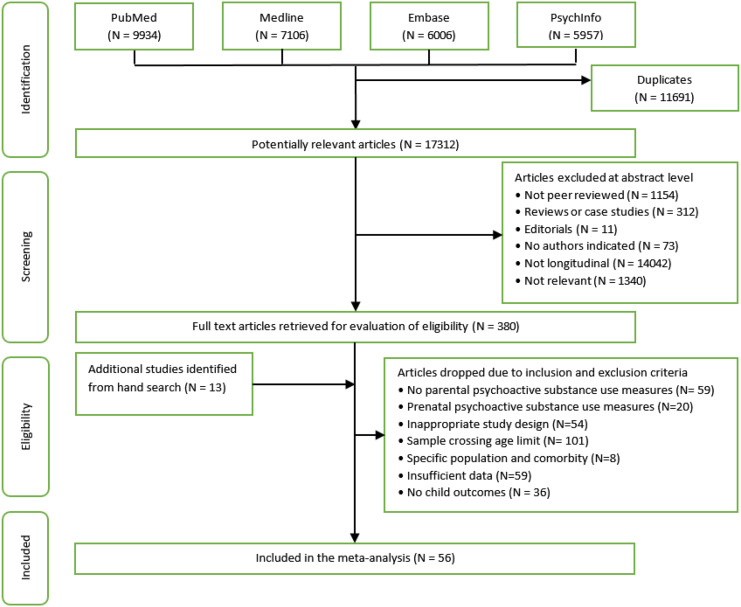
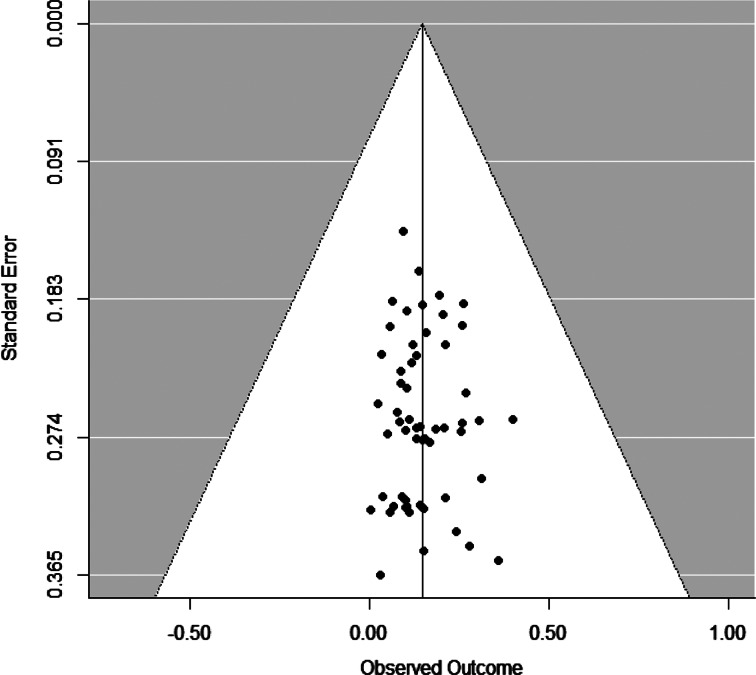
The effects of psychoactive substance abuse are not limited to the user, but extend to the entire family system, with children of substance abusers being particularly at risk. This meta-analysis attempted to quantify the longitudinal relationship between parental alcohol, tobacco, and drug use and child well-being, investigating variation across a range of substance and well-being indices and other potential moderators. We performed a literature search of peer-reviewed, English language, longitudinal observational studies that reported outcomes for children aged 0 to 18 years. In total, 56 studies, yielding 220 dependent effect sizes, met inclusion criteria. A multilevel random-effects model revealed a statistically significant, small detriment to child well-being for parental substance abuse over time ( r = .15). Moderator analyses demonstrated that the effect was more pronounced for parental drug use ( r = .25), compared with alcohol use ( r = .13), tobacco use ( r = .13), and alcohol use disorder ( r = .14). Results highlight a need for future studies that better capture the effect of parental psychoactive substance abuse on the full breadth of childhood well-being outcomes and to integrate substance abuse into models that specify the precise conditions under which parental behavior determines child well-being. Registration : PROSPERO CRD42017076088
Overview
The claims and statistics of this paper haven’t been checked yet.
Free: it reads the open-access text and checks the first 5 claims that cite a source we can check. Create a free account to check every claim.
Integrity signals
Registry
Cites
Statistics
Figures
Verification
Claims the paper makes
The claims and statistics of this paper haven’t been checked yet.
Free: it reads the open-access text and checks the first 5 claims that cite a source we can check. Create a free account to check every claim.
Claims other papers make about this one
Each is checked against this paper’s own text: does it say what the citing paper says it does?
The source backs part of the claim, not all of it — or backs it for a different population, condition or comparison.
In the citing paper
“children in these environments often experience heightened levels of stress and insecurity, which can manifest in emotional dysregulation and a greater susceptibility to mental health issues such as depression and anxiety”
From How Parental Substance Abuse Affects Family Functioning and Child Psychological Health (2024) · cites this paper as Kuppens et al., 2019
Experimental — accuracy not yet measuredThe source backs part of the claim, not all of it — or backs it for a different population, condition or comparison.
In the citing paper
“The lack of adequate parenting in such households also inhibits the development of secure attachments, which are crucial for healthy emotional and social development”
From How Parental Substance Abuse Affects Family Functioning and Child Psychological Health (2024) · cites this paper as Kuppens et al., 2019
Experimental — accuracy not yet measuredThe cited source says what the claim attributes to it.
In the citing paper
“children in such households are at an elevated risk for a variety of psychological, emotional, and social problems”
From How Parental Substance Abuse Affects Family Functioning and Child Psychological Health (2024) · cites this paper as Kuppens et al., 2019
Self-check
Percentages, sums and reported differences re-computed from the paper’s own numbers.
The self-check needs the paper’s full text.
Citations
Cites
Preferred Reporting Items for Systematic Reviews and Meta-Analyses: the PRISMA statement
Moher, D., Liberati, A., Tetzlaff, J., Altman, D. G., & for the PRISMA Group (2009) · BMJ · doi:10.1136/bmj.b2535 · Cited by 83,823
Podsakoff, P. M., MacKenzie, S. B., Lee, J.-Y., & Podsakoff, N. P. (2003) · Journal of Applied Psychology · doi:10.1037/0021-9010.88.5.879 · Cited by 82,194 · cited 1×
“Such inconsistent research findings may reflect method bias related to the specific informant or data collection mode (e.g., socially desirable responding, shared method variance; Kuppens, Grietens, Onghena, & Michiels, 2009a; Podsakoff, MacKenzie, Lee, & Podsakoff, 2003; | Tourangeau & Yan, 2007).”
Preferred Reporting Items for Systematic Reviews and Meta-Analyses: The PRISMA Statement
Moher, D., Liberati, A., Tetzlaff, J., Altman, D. G., & The PRISMA Group (2009) · PLoS Medicine · doi:10.1371/journal.pmed.1000097 · Cited by 64,042
Bias in meta-analysis detected by a simple, graphical test
Egger, M., Smith, G. D., Schneider, M., & Minder, C. (1997) · BMJ · doi:10.1136/bmj.315.7109.629 · Cited by 56,722 · cited 1×
“Next, asymmetry was assessed using Egger ’ s weighted regression test (Egger, Smith, Schneider, & Minder, 1997; Torgerson, 2006).”
Preferred reporting items for systematic reviews and meta-analyses: the PRISMA Statement.
(2009) · PubMed Central · Cited by 44,859
Cochrane Handbook for Systematic Reviews of Interventions: Cochrane Book Series
(2008) · doi:10.1002/9780470712184 · Cited by 25,048 · cited 1×
“…studies (see Siddaway et al., 2019), six criteria were adopted to reflect the methodological rigor of each study (Faragher, Cass, & Cooper, 2005; Higgins & Green, 2011; Wong, Cheung, & Hart, 2008): whether the study sample size provided adequate statistical power (calculated as at least N = 193…”
Dermyshi, E., Wang, Y., Yan, C., Hong, W., Qiu, G., Gong, X., & Zhang, T. (2017) · Neonatology · doi:10.1159/000454668 · Cited by 24,451
Meta-analysis of Observational Studies in Epidemiology<SUBTITLE>A Proposal for Reporting</SUBTITLE>
Stroup, D. F. (2000) · JAMA · doi:10.1001/jama.283.15.2008 · Cited by 20,623
Hierarchical Linear Models: Applications and Data Analysis Methods.
Longford, N. T., Bryk, A. S., & Raudenbush, S. W. (1993) · Contemporary Sociology · doi:10.2307/2075823 · Cited by 18,724
Wang, G., Ma, R., Qiao, G., Wada, K., Aizawa, Y., & Satoh, T. (2015) · Integrative Medicine International · doi:10.1159/000368408 · Cited by 18,657
Hierarchical Linear Models: Applications and Data Analysis Methods
Davidian, M. (2003) · Journal of the American Statistical Association · doi:10.1198/jasa.2003.s288 · Cited by 13,723
The structure of psychological well-being revisited.
Ryff, C. D., & Keyes, C. L. M. (1995) · Journal of Personality and Social Psychology · doi:10.1037//0022-3514.69.4.719 · Cited by 10,285 · cited 1×
“Well-being is typically considered a multidimensional construct (Gallagher, Lopez, & Preacher, 2009; Keyes, 2009; Ryff & Keyes, 1995) that includes both subjective and objective features (Newman, Tay, & Diener, 2014) and, for young people, can refer to domains as disparate as relationships, health,…”
Cochrane Handbook for Systematic Reviews of Interventions
Tarsilla, M. (2010) · Journal of MultiDisciplinary Evaluation · doi:10.56645/jmde.v6i14.284 · Cited by 5,178
Meta-Analytic Procedures for Social Research
Rosenthal, R. (1991) · doi:10.4135/9781412984997 · Cited by 4,635 · cited 2×
“Before pooling effect sizes, the correlations were transformed using Fisher ’ s Z r transformation (Rosenthal, 1991).”
Meta-Analytic Procedures for Social Research.
Metcalfe, A., & Rosenthal, R. (1994) · The Statistician · doi:10.2307/2348600 · Cited by 4,249
Personality, Culture, and Subjective Well-Being: Emotional and Cognitive Evaluations of Life
Diener, E., Oishi, S., & Lucas, R. E. (2003) · Annual Review of Psychology · doi:10.1146/annurev.psych.54.101601.145056 · Cited by 3,434 · cited 1×
“Well-being is a nebulous term that is informed by personal, cultural, and other factors (Diener, Oishi, & Lucas, 2003), and there is no clear distinction between well-being and quality of life or mental health problems (Siddaway, Taylor, & Wood, 2018; Siddaway, Wood, & Taylor, 2017).”
The New Statistics: Why and How
Cumming, G. (2014) · Psychological Science · doi:10.1177/0956797613504966 · Cited by 3,200
Sensitive questions in surveys.
Tourangeau, R., & Yan, T. (2007) · Psychological Bulletin · doi:10.1037/0033-2909.133.5.859 · Cited by 3,057 · cited 1×
“Such inconsistent research findings may reflect method bias related to the specific informant or data collection mode (e.g., socially desirable responding, shared method variance; Kuppens, Grietens, Onghena, & Michiels, 2009a; Podsakoff, MacKenzie, Lee, & Podsakoff, 2003; | Tourangeau & Yan, 2007).”
Littell, R. C., Milliken, G. A., Stroup, W. W., Wolfinger, R. D., & Schabenberger, O. (2006) · CERN Document Server (European Organization for Nuclear Research) · Cited by 2,924
Siddaway, A. P., Wood, A. M., & Hedges, L. V. (2019) · Annual Review of Psychology · doi:10.1146/annurev-psych-010418-102803 · Cited by 2,550 · cited 1×
“In the absence of a standard risk of bias tool for longitudinal observational studies (see Siddaway et al., 2019), six criteria were adopted to reflect the methodological rigor of each study (Faragher, Cass, & Cooper, 2005; Higgins & Green, 2011; Wong, Cheung, & Hart, 2008): whether the study…”
Self-citationCumulative risk and child development.
Evans, G. W., Li, D., & Whipple, S. S. (2013) · Psychological Bulletin · doi:10.1037/a0031808 · Cited by 2,024 · cited 1×
“The association between parental substance abuse and child well-being did not differ according to the length of the period between recording the parental substance abuse and the subsequent child well-being outcome, suggesting an enduring effect over time (Evans, Li, & Whipple, 2013).”
Öberg, M., Jaakkola, M. S., Woodward, A., Peruga, A., & Prüss-Ustün, A. (2011) · The Lancet · doi:10.1016/s0140-6736(10)61388-8 · Cited by 1,939
The validity of the multi-informant approach to assessing child and adolescent mental health.
De Los Reyes, A., Augenstein, T. M., Wang, M., Thomas, S. A., Drabick, D. A. G., Burgers, D. E., & Rabinowitz, J. (2015) · Psychological Bulletin · doi:10.1037/a0038498 · Cited by 1,666 · cited 1×
“For many measures of child functioning and parenting behavior, inter-informant agreement is low-to-moderate because parent and child reports are often discrepant (De Los Reyes et al., 2015; Kuppens, Grietens, Onghena, & Michiels, 2009b).”
The relationship between job satisfaction and health: a meta-analysis
Faragher, E. B., Cass, M., & Cooper, C. L. (2005) · Occupational and Environmental Medicine · doi:10.1136/oem.2002.006734 · Cited by 1,658 · cited 1×
“…for longitudinal observational studies (see Siddaway et al., 2019), six criteria were adopted to reflect the methodological rigor of each study (Faragher, Cass, & Cooper, 2005; Higgins & Green, 2011; Wong, Cheung, & Hart, 2008): whether the study sample size provided adequate statistical power…”
Coming to terms with the terms of risk
Kraemer, H. C. (1997) · Archives of General Psychiatry · doi:10.1001/archpsyc.1997.01830160065009 · Cited by 1,432 · cited 1×
“However, we caution readers to avoid interpreting parental substance abuse as a causal risk factor (see Kraemer et al., 1997 for a discussion of risk factor typology) and explicitly recognize that parental substance abuse and child well-being may be caused by the same third variable (e.g.,…”
Fearon, R. P., Bakermans-Kranenburg, M. J., Van IJzendoorn, M. H., Lapsley, A.-M., & Roisman, G. I. (2010) · Child Development · doi:10.1111/j.1467-8624.2009.01405.x · Cited by 1,326
Morrison, A., Polisena, J., Husereau, D., Moulton, K., Clark, M., Fiander, M., Mierzwinski-Urban, M., Clifford, T., Hutton, B., & Rabb, D. (2012) · International Journal of Technology Assessment in Health Care · doi:10.1017/s0266462312000086 · Cited by 1,257
The Changing Face of Heroin Use in the United States: A Retrospective Analysis of the Past 50 Years
Cicero, T. J., Ellis, M. S., Surratt, H. L., & Kurtz, S. P. (2014) · JAMA Psychiatry · doi:10.1001/jamapsychiatry.2014.366 · Cited by 1,168
Three-level meta-analysis of dependent effect sizes
Van den Noortgate, W., López-López, J. A., Marín-Martínez, F., & Sánchez-Meca, J. (2013) · Behavior Research Methods · doi:10.3758/s13428-012-0261-6 · Cited by 1,130 · cited 1×
“The meta-analysis was implemented as a three-level model that models sampling variation for each effect size (Level 1), within-study variation (Level 2), and between-study variation (Level 3) (Van den Noortgate et al., 2013).”
Leisure and Subjective Well-Being: A Model of Psychological Mechanisms as Mediating Factors
Newman, D. B., Tay, L., & Diener, E. (2014) · Journal of Happiness Studies · doi:10.1007/s10902-013-9435-x · Cited by 887 · cited 1×
“…construct (Gallagher, Lopez, & Preacher, 2009; Keyes, 2009; Ryff & Keyes, 1995) that includes both subjective and objective features (Newman, Tay, & Diener, 2014) and, for young people, can refer to domains as disparate as relationships, health, activities, finance, education, and…”
Socialization of Achievement Attitudes and Beliefs: Parental Influences
Parsons, J. E., Adler, T. F., & Kaczala, C. M. (1982) · Child Development · doi:10.1111/j.1467-8624.1982.tb01320.x · Cited by 804 · cited 1×
“…’ s social functioning (Berger, Paxson, & Waldfogel, 2009; De Goede, Branje, Delsing, & Meeus, 2009; Giesbrecht, Cukier, & Steeves, 2010; Lander, Howsare, & Byrne, 2013; Martin, Razza, & Brooks-Gunn, 2012; Öberg, Jaakkola, Woodward, Peruga, & Prüss-Ustün, 2011; Parsons, Adler, & Kaczala, 1982).”
Handbook of Positive Psychology in Schools
(2009) · Routledge eBooks · doi:10.4324/9780203884089 · Cited by 732
Fu, R., Gartlehner, G., Grant, M., Shamliyan, T., Sedrakyan, A., Wilt, T. J., Griffith, L., Oremus, M., Raina, P., Ismaila, A., et al. (2011) · Journal of Clinical Epidemiology · doi:10.1016/j.jclinepi.2010.08.010 · Cited by 730 · cited 1×
“Separate mixed-effects models were fitted for each moderator variable to avoid inflating Type II error (Raudenbush & Bryk, 2002), and subgroup analyses were only conducted when data from at least four studies were available (Fu et al., 2011).”
Chaffin, M., Kelleher, K., & Hollenberg, J. (1996) · Child Abuse & Neglect · doi:10.1016/s0145-2134(95)00144-1 · Cited by 718
Child Well-being: A Systematic Review of the Literature
Pollard, E. L., & Lee, P. D. (2003) · Social Indicators Research · doi:10.1023/a:1021284215801 · Cited by 691 · cited 1×
“…child well-being broadly according to five distinct domains, in-keeping with a narrative literature review of how well-being can be conceptualized (Pollard & Lee, 2003), and in order to achieve a comprehensive overview of subjective and objective well-being of children, namely, (a) physical…”
The Hierarchical Structure of Well‐Being
Gallagher, M. W., Lopez, S. J., & Preacher, K. J. (2009) · Journal of Personality · doi:10.1111/j.1467-6494.2009.00573.x · Cited by 588 · cited 1×
“Well-being is typically considered a multidimensional construct (Gallagher, Lopez, & Preacher, 2009; Keyes, 2009; Ryff & Keyes, 1995) that includes both subjective and objective features (Newman, Tay, & Diener, 2014) and, for young people, can refer to domains as disparate as relationships, health,…”
The impact of substance use disorders on families and children: from theory to practice
Lander, L., Howsare, J., & Byrne, M. (2013) · Social work in public health · doi:10.1080/19371918.2013.759005 · Cited by 561 · cited 1×
“…children ’ s social functioning (Berger, Paxson, & Waldfogel, 2009; De Goede, Branje, Delsing, & Meeus, 2009; Giesbrecht, Cukier, & Steeves, 2010; Lander, Howsare, & Byrne, 2013; Martin, Razza, & Brooks-Gunn, 2012; Öberg, Jaakkola, Woodward, Peruga, & Prüss-Ustün, 2011; Parsons, Adler, &…”
NIGG, J. T., WONG, M. M., MARTEL, M. M., JESTER, J. M., PUTTLER, L. I., GLASS, J. M., ADAMS, K. M., FITZGERALD, H. E., & ZUCKER, R. A. (2006) · Journal of the American Academy of Child & Adolescent Psychiatry · doi:10.1097/01.chi.0000199028.76452.a9 · Cited by 549
A Meta-analysis of Attachment to Parents and Delinquency
Hoeve, M., Stams, G. J. J. M., van der Put, C. E., Dubas, J. S., van der Laan, P. H., & Gerris, J. R. M. (2012) · Journal of Abnormal Child Psychology · doi:10.1007/s10802-011-9608-1 · Cited by 466 · cited 1×
“It has also been linked to a reduction in the quality of the parent-child relationship and maladaptive relationship models that can be detrimental to the development of later peer relationships (Fearon, Bakermans, Kranenburg, Van Ijzendoorn, Lapsley, & Roisman, 2010; Hoeve et al., 2012).”
Publication Bias in Research Synthesis: Sensitivity Analysis Using A Priori Weight Functions.
Vevea, J. L., & Woods, C. M. (2005) · Psychological Methods · doi:10.1037/1082-989x.10.4.428 · Cited by 461 · cited 1×
“Third, a sensitivity analysis was performed, which applies different a priori weight functions to correct the population effect size estimate for different types and severities of potential publication bias (Vevea & Woods, 2005).”
Children of Substance Abusers: Overview of Research Findings
Johnson, J. L., & Leff, M. (1999) · Pediatrics · doi:10.1542/peds.103.s2.1085 · Cited by 433
Barnard, M., & McKeganey, N. (2004) · Addiction · doi:10.1111/j.1360-0443.2003.00664.x · Cited by 337 · cited 2×
“…alcohol, tobacco, and drugs (henceforth collectively referred to as parental substance abuse) are more likely to develop a variety of emotional, behavioral, physical, cognitive, academic, and social problems in the short and long run (e.g., Barnard & McKeganey, 2004; Straussner & Fewell, 2011).”
Best methods for the analysis of change: Recent advances, unanswered questions, future directions.
(1991) · American Psychological Association eBooks · doi:10.1037/10099-000 · Cited by 336
Wong, W. C., Cheung, C. S., & Hart, G. J. (2008) · Emerging Themes in Epidemiology · doi:10.1186/1742-7622-5-23 · Cited by 257
Saulyte, J., Regueira, C., Montes-Martínez, A., Khudyakov, P., & Takkouche, B. (2014) · PLoS Medicine · doi:10.1371/journal.pmed.1001611 · Cited by 246
The Childhoods of Multiple Problem Adolescents: A 15‐Year Longitudinal Study
Fergusson, D. M., Horwood, L. J., & Lynskey, M. (1994) · Journal of Child Psychology and Psychiatry · doi:10.1111/j.1469-7610.1994.tb01813.x · Cited by 244
Burke, V, Beilin, L., & Dunbar, D. (2001) · International Journal of Obesity · doi:10.1038/sj.ijo.0801538 · Cited by 237
Eiden, R. D., Edwards, E. P., & Leonard, K. E. (2007) · Developmental Psychology · doi:10.1037/0012-1649.43.5.1187 · Cited by 229
Sleep problems, suicidal ideation, and self-harm behaviors in adolescence
Wong, M. M., Brower, K. J., & Zucker, R. A. (2011) · Journal of Psychiatric Research · doi:10.1016/j.jpsychires.2010.09.005 · Cited by 224
Parental substance use as a modifier of adolescent substance use risk
Li, C., Pentz, M. A., & Chou, C. (2002) · Addiction · doi:10.1046/j.1360-0443.2002.00238.x · Cited by 204
Maternal Smoking Before and After Pregnancy: Effects on Behavioral Outcomes in Middle Childhood
Fergusson, D. M., Horwood, L. J., & Lynskey, M. T. (1993) · Pediatrics · doi:10.1542/peds.92.6.815 · Cited by 203
Comorbidity Between Depressive Disorders and Nicotine Dependence in a Cohort of 16-Year-Olds
Fergusson, D. M. (1996) · Archives of General Psychiatry · doi:10.1001/archpsyc.1996.01830110081010 · Cited by 200
Young people, drug use and family conflict: Pathways into homelessness
Mallett, S., Rosenthal, D., & Keys, D. (2005) · Journal of Adolescence · doi:10.1016/j.adolescence.2005.02.002 · Cited by 199 · cited 1×
“In addition, parental substance abuse has been linked to family breakdown, which is a key risk factor for children ’ s poor mental health (Mallett, Rosenthal, & Keys, 2005; Størksen, Røysamb, Moum, & Tambs, 2005).”
Berger, L. M., Paxson, C., & Waldfogel, J. (2009) · Children and Youth Services Review · doi:10.1016/j.childyouth.2009.04.013 · Cited by 199 · cited 1×
“…to co-occur with parental substance abuse, with consequences that extend beyond the family environment to influence children ’ s social functioning (Berger, Paxson, & Waldfogel, 2009; De Goede, Branje, Delsing, & Meeus, 2009; Giesbrecht, Cukier, & Steeves, 2010; Lander, Howsare, & Byrne, 2013;…”
Linkages Over Time Between Adolescents' Relationships with Parents and Friends
De Goede, I. H. A., Branje, S. J. T., Delsing, M. J. M. H., & Meeus, W. H. J. (2009) · Journal of Youth and Adolescence · doi:10.1007/s10964-009-9403-2 · Cited by 196 · cited 1×
“…abuse, with consequences that extend beyond the family environment to influence children ’ s social functioning (Berger, Paxson, & Waldfogel, 2009; De Goede, Branje, Delsing, & Meeus, 2009; Giesbrecht, Cukier, & Steeves, 2010; Lander, Howsare, & Byrne, 2013; Martin, Razza, & Brooks-Gunn, 2012;…”
Rossow, I. M., Keating, P., Felix, L. M., & McCambridge, J. (2015) · Addiction · doi:10.1111/add.13097 · Cited by 192 · cited 2×
“Parental substance abuse refers to the consumption of psycho-active substances, including licit and illicit substances, of which alcohol (Rossow et al., 2016) and tobacco (Saulyte, Regueira, Montes-Martínez, Khudyakov, & Takkouche, 2014) are the most frequently used.”
Child, Parent, and Peer Predictors of Early-Onset Substance Use: A Multisite Longitudinal Study
Kaplow, J. B., Curran, P. J., & Dodge, K. A. (2002) · Journal of Abnormal Child Psychology · doi:10.1023/a:1015183927979 · Cited by 179
Secondhand Smoke Exposure and Mental Health Among Children and Adolescents
Bandiera, F. C., Richardson, A. K., Lee, D. J., He, J.-P., & Merikangas, K. R. (2011) · Archives of Pediatrics & Adolescent Medicine · doi:10.1001/archpediatrics.2011.30 · Cited by 179 · cited 1×
“For example, associations between parental smoke exposure and child mental health outcomes have been found to be more apparent for boys (Bandiera, Richardson, Lee, He, & Merikangas, 2011).”
Risk of mother-reported child abuse in the first 3 years of life
Windham, A. M., Rosenberg, L., Fuddy, L., McFarlane, E., Sia, C., & Duggan, A. K. (2004) · Child Abuse & Neglect · doi:10.1016/j.chiabu.2004.01.003 · Cited by 176
PUBLICATION BIAS: THE ACHILLES’ HEEL OF SYSTEMATIC REVIEWS?
Torgerson, C. J. (2006) · British Journal of Educational Studies · doi:10.1111/j.1467-8527.2006.00332.x · Cited by 175 · cited 2×
“Next, asymmetry was assessed using Egger’s weighted regression test (Egger, Smith, Schneider, & Minder, 1997; Torgerson, 2006).”
St⊘rksen, I., R⊘ysamb, E., Moum, T., & Tambs, K. (2005) · Journal of Adolescence · doi:10.1016/j.adolescence.2005.01.001 · Cited by 156 · cited 1×
“In addition, parental substance abuse has been linked to family breakdown, which is a key risk factor for children ’ s poor mental health (Mallett, Rosenthal, & Keys, 2005; Størksen, Røysamb, Moum, & Tambs, 2005).”
Siddaway, A. P., Wood, A. M., & Taylor, P. J. (2017) · Journal of Affective Disorders · doi:10.1016/j.jad.2017.02.015 · Cited by 151
Self-citationGritz, E., Prokhorov, A., Suchanek Hudmon, K., Mullin Jones, M., Rosenblum, C., Chang, C.-C., Chamberlain, R., Taylor, W., Johnston, D., & de Moor, C. (2003) · Nicotine & Tobacco Research · doi:10.1080/14622200307242 · Cited by 148
Parental substance use disorder and the risk of adolescent drug abuse: an event history analysis
Hoffmann, J. P., & Cerbone, F. G. (2002) · Drug and Alcohol Dependence · doi:10.1016/s0376-8716(02)00005-4 · Cited by 145
Korhonen, T., Huizink, A. C., Dick, D. M., Pulkkinen, L., Rose, R. J., & Kaprio, J. A. (2008) · Drug and Alcohol Dependence · doi:10.1016/j.drugalcdep.2008.03.015 · Cited by 144
Specifying the links between household chaos and preschool children's development
Martin, A., Razza, R. A., & Brooks-Gunn, J. (2012) · Early Child Development and Care · doi:10.1080/03004430.2011.605522 · Cited by 138
Prospective risk factors for alcohol misuse in late adolescence.
Ellickson, S. L., Tucker, J. S., Klein, D. J., & McGuigan, K. A. (2001) · Journal of Studies on Alcohol · doi:10.15288/jsa.2001.62.773 · Cited by 132
The well-being of children in the UK
Bradshaw, J. (2011) · Policy Press eBooks · doi:10.1332/policypress/9781847428370.001.0001 · Cited by 128
Mitchell, E. A., Beasley, R., Keil, U., Montefort, S., Odhiambo, J., & and the ISAAC Phase Three Study Group (2012) · Thorax · doi:10.1136/thoraxjnl-2011-200901 · Cited by 126 · cited 2×
“Although substance abuse by the mother and the father are both important, previous research has often found more pronounced associations with multiple adverse child outcomes for maternal substance abuse (Mitchell et al., 2012; Straussner & Fewell, 2011).”
Giesbrecht, N., Cukier, S. N., & Steeves, D. (2010) · Addiction · doi:10.1111/j.1360-0443.2009.02884.x · Cited by 119
Cranford, J. A., Zucker, R. A., Jester, J. M., Puttler, L. I., & Fitzgerald, H. E. (2010) · Psychology of Addictive Behaviors · doi:10.1037/a0019801 · Cited by 117
Dependent Effect Sizes in Meta-Analysis: Incorporating the Degree of Interdependence.
Cheung, S. F., & Chan, D. K.-S. (2004) · Journal of Applied Psychology · doi:10.1037/0021-9010.89.5.780 · Cited by 117 · cited 1×
“Although such approaches allow one to adopt traditional meta-analytic techniques, they also result in a loss of information, rule out critical analyses of within-study moderators (e.g., well-being outcome differences), and may distort meta-analytic results (e.g., Cheung & Chan, 2004).”
Loukas, A., Fitzgerald, H. E., Zucker, R. A., & von Eye, A. (2001) · Journal of Abnormal Child Psychology · doi:10.1023/a:1005281011838 · Cited by 115
Risk Factors for Adolescent Marijuana Use Across Cultures and Across Time
Brook, J. S., Brook, D. W., Arencibia-mireles, O., Richter, L., & Whiteman, M. (2001) · The Journal of Genetic Psychology · doi:10.1080/00221320109597489 · Cited by 111
Puttler, L. I., Zucker, R. A., Fitzgerald, H. E., & Bingham, C. R. (1998) · Alcoholism: Clinical and Experimental Research · doi:10.1111/j.1530-0277.1998.tb05904.x · Cited by 107 · cited 1×
“…makers that parental substance abuse negatively affects child well-being (Bountress & Chassin, 2015; Hussong, Huang, Curran, Chassin, & Zucker, 2010; McGrath, Watson, & Chassin, 1999; Peterson et al., 2006; Puttler, Zucker, Fitzgerald, & Bingham, 1998; Rossow, Keating, Felix, & McCambridge, 2016).”
Nine-year prediction of adolescent smoking by number of smoking parents
Peterson, A. V., Leroux, B. G., Bricker, J. B., Kealey, K. A., Marek, P. M., Sarason, I. G., & Andersen, M. R. (2005) · Addictive Behaviors · doi:10.1016/j.addbeh.2005.06.003 · Cited by 104 · cited 2×
“There appears to be a general consensus amongst researchers, clinicians, and policy makers that parental substance abuse negatively affects child well-being (Bountress & Chassin, 2015; Hussong, Huang, Curran, Chassin, & Zucker, 2010; McGrath, Watson, & Chassin, 1999; Peterson et al., 2006; Puttler, Zucker, Fitzgerald,…”
Early Risk Factors for Adolescent Antisocial Behaviour: An Australian Longitudinal Study
Bor, W., McGee, T. R., & Fagan, A. A. (2004) · Australian & New Zealand Journal of Psychiatry · doi:10.1080/j.1440-1614.2004.01365.x · Cited by 98
Portrayal of Alcohol Consumption in Movies and Drinking Initiation in Low-Risk Adolescents
Hanewinkel, R., Sargent, J. D., Hunt, K., Sweeting, H. N., Engels, R. C. M. E., Scholte, R. H. J., Mathis, F., Florek, E., & Morgenstern, M. (2014) · PEDIATRICS · doi:10.1542/peds.2013-3880 · Cited by 95
SHORTT, A. L., HUTCHINSON, D. M., CHAPMAN, R., & TOUMBOUROU, J. W. (2007) · Drug and Alcohol Review · doi:10.1080/09595230701613817 · Cited by 91
Messina, N., Calhoun, S., Conner, E., & Miller, M. (2015) · Substance Abuse and Rehabilitation · doi:10.2147/sar.s46439 · Cited by 87 · cited 1×
“If targeting parental substance abuse is to be used in family-centred interventions to improve child outcomes (Calhoun, Conner, Miller, & Messina, 2015), then it will be necessary to further investigate how parental substance abuse affects child outcomes through the parent-child environment.”
Adolescent antisocial behavior and substance use
Aðalbjarnardóttir, S., & Rafnsson, F. D. (2002) · Addictive Behaviors · doi:10.1016/s0306-4603(00)00179-9 · Cited by 87
van der Vorst, H., Krank, M. D., Engels, R. C. M. E., Pieters, S., Burk, W. J., & Mares, S. H. W. (2012) · Addiction · doi:10.1111/add.12042 · Cited by 84
Parental smoking and development of allergic sensitization from birth to adolescence
Thacher, J. D., Gruzieva, O., Pershagen, G., Neuman, Å., van Hage, M., Wickman, M., Kull, I., Melén, E., & Bergström, A. (2016) · Allergy · doi:10.1111/all.12792 · Cited by 83
Parent Alcoholism Impacts the Severity and Timing of Children’s Externalizing Symptoms
Hussong, A. M., Huang, W., Curran, P. J., Chassin, L., & Zucker, R. A. (2010) · Journal of Abnormal Child Psychology · doi:10.1007/s10802-009-9374-5 · Cited by 82 · cited 1×
“…amongst researchers, clinicians, and policy makers that parental substance abuse negatively affects child well-being (Bountress & Chassin, 2015; Hussong, Huang, Curran, Chassin, & Zucker, 2010; McGrath, Watson, & Chassin, 1999; Peterson et al., 2006; Puttler, Zucker, Fitzgerald, & Bingham,…”
Characterizing the life stressors of children of alcoholic parents.
Hussong, A. M., Bauer, D. J., Huang, W., Chassin, L., Sher, K. J., & Zucker, R. A. (2008) · Journal of Family Psychology · doi:10.1037/a0013704 · Cited by 81 · cited 3×
“For example, passive tobacco exposure has been linked to somatic health problems in children and adolescents, together with an increased risk of children’s own tobacco use initiation and dependence (Hussong et al., 2008).”
Friedmann, P. D., Hendrickson, J. C., Gerstein, D. R., & Zhang, Z. (2004) · Addiction · doi:10.1111/j.1360-0443.2004.00772.x · Cited by 80 · cited 1×
“…with the context of substance abuse, including the family environment in activities is increasingly seen as important in supporting recovery (Friedmann, Hendrickson, Gerstein, & Zhang, 2004; Oser, Knudsen, Staton-Tindall, & Leukefeld, 2009), and this suggests that both child well-being and…”
Risk for behavior problems in children of parents with substance use disorders.
Bountress, K., & Chassin, L. (2015) · American Journal of Orthopsychiatry · doi:10.1037/ort0000063 · Cited by 80 · cited 1×
“…to be a general consensus amongst researchers, clinicians, and policy makers that parental substance abuse negatively affects child well-being (Bountress & Chassin, 2015; Hussong, Huang, Curran, Chassin, & Zucker, 2010; McGrath, Watson, & Chassin, 1999; Peterson et al., 2006; Puttler, Zucker,…”
Th e Nature and Importance of Positive Mental Health in America’s Adolescents
(2009) · Handbook of Positive Psychology in Schools · doi:10.4324/9780203884089-10 · Cited by 77 · cited 2×
“Well-being is typically considered a multidimensional construct (Gallagher, Lopez, & Preacher, 2009; Keyes, 2009; Ryff & Keyes, 1995) that includes both subjective and objective features (Newman, Tay, & Diener, 2014) and, for young people, can refer to domains as disparate as relationships, health, activities, finance…”
Colder, C. R., Chassin, L., Stice, E. M., & Curran, P. J. (1997) · Journal of Research on Adolescence · doi:10.1207/s15327795jra0704_1 · Cited by 73
Naicker, K., Wickham, M. E., & Colman, I. (2012) · PLoS ONE · doi:10.1371/journal.pone.0033422 · Cited by 72
Academic achievement in adolescent children of alcoholics.
McGrath, C. E., Watson, A. L., & Chassin, L. (1999) · Journal of Studies on Alcohol · doi:10.15288/jsa.1999.60.18 · Cited by 72 · cited 1×
“…makers that parental substance abuse negatively affects child well-being (Bountress & Chassin, 2015; Hussong, Huang, Curran, Chassin, & Zucker, 2010; McGrath, Watson, & Chassin, 1999; Peterson et al., 2006; Puttler, Zucker, Fitzgerald, & Bingham, 1998; Rossow, Keating, Felix, & McCambridge, 2016).”
Inattentiveness, parental smoking and adolescent smoking initiation
Barman, S. K., Pulkkinen, L., Kaprio, J., & Rose, R. J. (2004) · Addiction · doi:10.1111/j.1360-0443.2004.00789.x · Cited by 72
Risk factors for adolescent smoking: Parental smoking and the mediating role of nicotine dependence
Selya, A., Dierker, L., Rose, J. S., Hedeker, D., & Mermelstein, R. J. (2012) · Drug and Alcohol Dependence · doi:10.1016/j.drugalcdep.2012.02.004 · Cited by 71
Bufferd, S. J., Dougherty, L. R., Olino, T. M., Dyson, M. W., Laptook, R. S., Carlson, G. A., & Klein, D. N. (2014) · Journal of Child Psychology and Psychiatry · doi:10.1111/jcpp.12252 · Cited by 71
Predicting patterns of adolescent alcohol use: a longitudinal study.
Power, T. G., Stewart, C. D., Hughes, S. O., & Arbona, C. (2005) · Journal of Studies on Alcohol · doi:10.15288/jsa.2005.66.74 · Cited by 71
Malone, S. M., Iacono, W. G., & McGue, M. K. (2002) · Alcoholism Clinical and Experimental Research · doi:10.1111/j.1530-0277.2002.tb02489.x · Cited by 69
Fuller, B. E., Chermack, S. T., Cruise, K. A., Kirsch, E., Fitzgerald, H. E., & Zucker, R. A. (2003) · Journal of Studies on Alcohol · doi:10.15288/jsa.2003.64.472 · Cited by 68
Substance use initiation among adolescent children of alcoholics: testing protective factors.
Hussong, A. M., & Chassin, L. (1997) · Journal of Studies on Alcohol · doi:10.15288/jsa.1997.58.272 · Cited by 68
Roosa, M. W., Beals, J., Sandler, I. N., & Pillow, D. R. (1990) · American Journal of Community Psychology · doi:10.1007/bf00931239 · Cited by 64
Tjora, T., Hetland, J., Aarø, L. E., & Øverland, S. (2011) · BMC Public Health · doi:10.1186/1471-2458-11-911 · Cited by 63
Tobacco Smoke Exposure at One Month of Age and Subsequent Risk of SIDS--A Prospective Study
Dwyer, T., Ponsonby, A.-L., & Couper, D. (1999) · American Journal of Epidemiology · doi:10.1093/oxfordjournals.aje.a009857 · Cited by 62
Kuppens, S., Grietens, H., Onghena, P., & Michiels, D. (2009) · European Journal of Psychological Assessment · doi:10.1027/1015-5759.25.3.133 · Cited by 61
Self-citationComorbid psychiatric disorders and nicotine dependence in adolescence
Griesler, P. C., Hu, M., Schaffran, C., & Kandel, D. B. (2011) · Addiction · doi:10.1111/j.1360-0443.2011.03403.x · Cited by 61
Unger, J. B., Shakib, S., Gallaher, P. E., Ritt‐Olson, A., Mouttapa, M., Palmer, P. H., & Johnson, C. A. (2006) · PubMed · Cited by 60
Heron, J., Barker, E. D., Joinson, C., Lewis, G., Hickman, M., Munafò, M., & Macleod, J. (2013) · Addiction · doi:10.1111/add.12268 · Cited by 58
Oser, C., Knudsen, H., Staton-Tindall, M., & Leukefeld, C. (2009) · Drug and Alcohol Dependence · doi:10.1016/j.drugalcdep.2008.12.008 · Cited by 57
Injury in the First Year of Life: Risk Factors and Solutions for High-Risk Families
Crandall, M. L., Chiu, B., & Sheehan, K. (2006) · Journal of Surgical Research · doi:10.1016/j.jss.2006.02.027 · Cited by 56
Drinking context and other influences on the drinking of 15‐year‐old New Zealanders
CONNOLLY, G. M., Casswell, S., STEWART, J. M., & Silva, P. A. (1992) · British Journal of Addiction · doi:10.1111/j.1360-0443.1992.tb03120.x · Cited by 48
Predictors of Asthma in Young Children: Does Reporting Source Affect Our Conclusions?
Miller, J. E. (2001) · American Journal of Epidemiology · doi:10.1093/aje/154.3.245 · Cited by 48
Trajectories and Predictors of Health-Related Quality of Life during Childhood
Vella, S. A., Magee, C., & Cliff, D. P. (2015) · The Journal of Pediatrics · doi:10.1016/j.jpeds.2015.04.079 · Cited by 45
Parental Influence on Adolescent Drinking: Modeling, Attitudes, or Conflict?
Thompson, K. M., & Wilsnack, R. W. (1987) · Youth & Society · doi:10.1177/0044118x87019001002 · Cited by 45
Maternal heavy alcohol use and toddler behavior problems: a fixed effects regression analysis
Knudsen, A. K., Ystrøm, E., Skogen, J. C., & Torgersen, L. (2015) · European Child & Adolescent Psychiatry · doi:10.1007/s00787-015-0677-5 · Cited by 41
Children of Substance-Abusing Parents: Dynamics and Treatment
Straussner, S. L. A., Fewell, C. H., Wenger, S., Straussner, S. L. A., Fewell, C. H., Lam, W. K. K., O’Farrell, T. J., Pomeroy, E. C., Parrish, Danielle, E., et al. (2011) · Springer Publishing Company eBooks · doi:10.1891/9780826165084 · Cited by 34
Lindsey, M. A., Browne, D. C., Thompson, R., Hawley, K. M., Graham, J. C., Weisbart, C., Harrington, D., & Kotch, J. B. (2008) · Social Work Research · doi:10.1093/swr/32.2.79 · Cited by 32
Siddaway, A. P., Taylor, P. J., & Wood, A. M. (2018) · Journal of Personality and Social Psychology · doi:10.1037/pspp0000128 · Cited by 32
Self-citationFrank, D. A., Kuranz, S. P., Appugliese, D. P., Cabral, H., Chen, C. A., Crooks, D., Heeren, T., Liebschutz, J. M., Richardson, M. A., & Jacobs, R. R. (2014) · Drug and Alcohol Dependence · doi:10.1016/j.drugalcdep.2014.06.014 · Cited by 31
Ting, T.-T., Chen, W. J., Liu, C., Lin, Y.-C., & Chen, C. (2014) · Addictive Behaviors · doi:10.1016/j.addbeh.2014.08.001 · Cited by 31
Beck, F., Guignard, R., & Legleye, S. (2014) · PLoS ONE · doi:10.1371/journal.pone.0085810 · Cited by 30 · cited 1×
“Similarly, for licit and illicit sub-stances, there is variation in prevalence by data collection mode (Beck, Guignard, & Legleye, 2014).”
Xie, B., Palmer, P. H., Li, Y., Lin, C., & Johnson, C. A. (2013) · Nicotine & Tobacco Research · doi:10.1093/ntr/ntt035 · Cited by 27
The well-being of children in the UK
(2016) · Policy Press eBooks · doi:10.1332/policypress/9781447325628.001.0001 · Cited by 27
Morgenstern, M., Sargent, J. D., Isensee, B., & Hanewinkel, R. (2013) · BMJ Open · doi:10.1136/bmjopen-2013-002907 · Cited by 26
Children of Substance-Abusing Parents: Dynamics and Treatment
Straussner, S. L. A. (2011) · Cited by 25
Kuppens, S., Grietens, H. W. E., Onghena, P., & Michiels, D. (2009) · Journal of Social and Personal Relationships · doi:10.1177/0265407509347929 · Cited by 24
Self-citationClinical Work With Substance-abusing Clients
MATORIN, A. A. (2007) · Addictive Disorders & Their Treatment · doi:10.1097/adt.0b013e318031e64c · Cited by 22
Pagani, L. S., Nguyen, A. K. D., & Fitzpatrick, C. (2015) · Nicotine & Tobacco Research · doi:10.1093/ntr/ntv128 · Cited by 20
Lessard, J., Henrie, J. A., Livingston, J. A., Leonard, K. E., Colder, C. R., & Eiden, R. D. (2014) · Nicotine & Tobacco Research · doi:10.1093/ntr/ntu148 · Cited by 20
Does Social Capital Protect Against the Adverse Behavioural Outcomes of Child Neglect?
Kotch, J. B., Smith, J. B., Margolis, B., Black, M. M., English, D., Thompson, R., Lee, L., Taneja, G., & Bangdiwala, S. I. (2014) · Child Abuse Review · doi:10.1002/car.2345 · Cited by 18
Family Matters: Substance Abuse and the American Family
(2005) · PsycEXTRA Dataset · doi:10.1037/e541132013-001 · Cited by 17
Barnow, S., Schuckit, M. A., Smith, T. L., Spitzer, C., & Freyberger, H. J. (2006) · European Addiction Research · doi:10.1159/000095808 · Cited by 10
The impact of alcohol and other drug abuse on the American family
Straussner, S. L. A. (1994) · Drug and Alcohol Review · doi:10.1080/09595239400185521 · Cited by 10 · cited 1×
“Given differences in the legal and social status, addictive potential, and cognitive effects, the effect on family members has been proposed to vary according to the particular substance consumed (Straussner, 1994; Straussner & Fewell, 2011).”
(2017) · Europe PMC (PubMed Central)
Research works printed but not linked: 4
- World Health Organization (2004). Promoting mental health: Concepts, emerging evidence, practice. Geneva: World Health Organization.
- Wilson D. B. (2017). Comprehensive Meta-Analysis (Version 3). Englewood, NJ: Biostat.
- McGrath C. E., Watson A. L., & Chassin L. (1999). Academic achievement in adolescent children of alcoholics. Journal of Studies on Alcohol, 60, 18- 26. 10096305 · DOI · Paper page
- European Monitoring Centre for Drugs and Drug Addiction (2008). Drugs and Vulnerable Groups of Young People. Luxembourg: Office for Official Publications of the European Communitie.
Cited by
Socioeconomic status and health behavior in children and adolescents: a systematic literature review
Gautam, N., Dessie, G., Rahman, M. M., & Khanam, R. (2023) · Frontiers in Public Health · doi:10.3389/fpubh.2023.1228632 · Cited by 192
McGovern, R., Bogowicz, P., Meader, N., Kaner, E., Alderson, H., Craig, D., Geijer‐Simpson, E., Jackson, K., Muir, C., Salonen, D., et al. (2023) · Addiction · doi:10.1111/add.16127 · Cited by 75
Adverse childhood experiences and child mental health: an electronic birth cohort study
Lowthian, E., Anthony, R., Evans, A., Daniel, R., Long, S. J., Bandyopadhyay, A., John, A. M., Bellis, M. A., & Paranjothy, S. (2021) · BMC Medicine · doi:10.1186/s12916-021-02045-x · Cited by 49
Self-citationThe Secondary Harms of Parental Substance Use on Children’s Educational Outcomes: A Review
Lowthian, E. (2022) · Journal of Child & Adolescent Trauma · doi:10.1007/s40653-021-00433-2 · Cited by 38
“Parental alcohol and illicit drug use can have deleterious and enduring impacts on their children’s health and well-being (Kuppens et al., 2020; McGovern et al., 2018; Park & Schepp, 2015; Velleman & Templeton, 2016).”
BackgroundInfluentialSelf-citationYoo, P., Duncan, G. J., Magnuson, K., Fox, N. A., Yoshikawa, H., Halpern‐Meekin, S., & Noble, K. G. (2022) · BMC Public Health · doi:10.1186/s12889-022-12989-1 · Cited by 39
Metadata
- Authors
- Kuppens, S., Moore, S. C., Gross, V., Lowthian, E., & Siddaway, A. P.
- Affiliations
- Karel de Grote Hogeschool (BE)
- Cardiff University (GB)
- University of Stirling (GB)
- Corresponding author
- Moore, Simon C.
- Venue
- Development and Psychopathology
- Publisher
- Cambridge University Press (CUP)
- Published
- 2019-07-05
- Volume
- 32
- Issue
- 2
- Pages
- 765-778
- ISSN
- 0954-5794 (ISSN-L)
- 1469-2198
- PMC
- PMC7525110
- OpenAlex
- W2945780970
- Semantic Scholar
- c729c4d1db15f6d4c2853732b1456c1c45437cab
- Cited by
- 119
- References
- 131
- Citations by year
- 2026: 28 · 2025: 25 · 2024: 18 · 2023: 17 · 2022: 13 · 2021: 15 · 2020: 2 · 2019: 1
- FWCI
- 1.13
- Type
- journal article
- Language
- en
- Open access
- hybrid
- doi.org
- Locations
- Development and Psychopathology (publishedVersion, cc-by)
- PubMed Central (publishedVersion, cc-by)
- PubMed (publishedVersion)
- ORCA Online Research @Cardiff (Cardiff University) (acceptedVersion)
- Lirias (submittedVersion, other-oa)
- Stirling Online Research Repository (University of Stirling) (submittedVersion, cc-by)
- Funders
- Wellcome Trust (WT087640MA)
- United Kingdom Clinical Research Collaboration
- Cancer Research UK
- British Heart Foundation
- Alcohol Research UK
- Cardiff University
- Medical Research Council (WT087640MA)
- Economic and Social Research Council (ES/L015471/1)
- Topics
- Health Sciences › Medicine › Epidemiology › Substance Abuse Treatment and Outcomes
- Health Sciences › Medicine › Pediatrics, Perinatology and Child Health › Prenatal Substance Exposure Effects
- Social Sciences › Psychology › Clinical Psychology › Child and Adolescent Psychosocial and Emotional Development
- Keywords
- parental substance use, child well-being, parental alcohol use, parental tobacco use, parental drug use, alcoholism, intergenerational effects, child development, longitudinal effects
- MeSH terms
- Adolescent, Alcohol Drinking, Child, Child Welfare, Child, Preschool, Humans, Infant, Infant, Newborn, Parents, Nicotiana, Substance-Related Disorders, Tobacco Products
About these checks
Registry, retraction, Cites and statistics results are computed, not judged, with one exception: a printed reference that no index lists is read once by a model before it counts as a citation error. Claims are extracted by a model and kept only when their quote appears verbatim in the text; each cited source is then checked, with a model’s help, for whether it says what the claim relies on. Those verdicts can be wrong — read the claim’s quote and the cited source before relying on one.
Statistics and arithmetic are recomputed, not judged.
Confidence bands are shown only for fields calibrated on our annotated test set. None is calibrated yet, so no band is shown.
What counts as a claim ›How we measure confidence ›How we check this ›
Are you an author, or do you see a problem with this page? Request a review
Data sources
Bibliographic data: Semantic Scholar, OpenAlex, Crossref.
Contains information from the Semantic Scholar Academic Graph Datasets, made available under the ODC Attribution License (ODC-BY 1.0).
Semantic Scholar’s data is described in: Kinney, R., et al. (2023). The Semantic Scholar Open Data Platform. arXiv:2301.10140.
