

Neuropsychological application of the International Test Commission Guidelines for Translation and Adapting of Tests
Open accessThe DOI matches its Crossref record; 47 of the 47 references it cites were found in a registry or an index.
Abstract
Objective: The number of test translations and adaptations has risen exponentially over the last two decades, and these processes are now becoming a common practice. The International Test Commission (ITC) Guidelines for Translating and Adapting Tests (Second Edition, 2017) offer principles and practices to ensure the quality of translated and adapted tests. However, they are not specific to the cognitive processes examined with clinical neuropsychological measures. The aim of this publication is to provide a specialized set of recommendations for guiding neuropsychological test translation and adaptation procedures. Methods: The International Neuropsychological Society’s Cultural Neuropsychology Special Interest Group established a working group tasked with extending the ITC guidelines to offer specialized recommendations for translating/adapting neuropsychological tests. The neuropsychological application of the ITC guidelines was formulated by authors representing over ten nations, drawing upon literature concerning neuropsychological test translation, adaptation, and development, as well as their own expertise and consulting colleagues experienced in this field. Results: A summary of neuropsychological-specific commentary regarding the ITC test translation and adaptation guidelines is presented. Additionally, examples of applying these recommendations across a broad range of criteria are provided to aid test developers in attaining valid and reliable outcomes. Conclusions: Establishing specific neuropsychological test translation and adaptation guidelines is critical to ensure that such processes produce reliable and valid psychometric measures. Given the rapid global growth experienced in neuropsychology over the last two decades, the recommendations may assist researchers and practitioners in carrying out such endeavors.
Overview
The claims and statistics of this paper haven’t been checked yet.
Free: it reads the open-access text and checks the first 5 claims that cite a source we can check. Create a free account to check every claim.
Integrity signals
Registry
Cites
Statistics
Figures
Verification
Claims the paper makes
The claims and statistics of this paper haven’t been checked yet.
Free: it reads the open-access text and checks the first 5 claims that cite a source we can check. Create a free account to check every claim.
Claims other papers make about this one
Each is checked against this paper’s own text: does it say what the citing paper says it does?
The source backs part of the claim, not all of it — or backs it for a different population, condition or comparison.
In the citing paper
“Developing culturally responsive resilience measures involves translation, back-translation, stakeholder engagement, and validation across diverse sociodemographic and clinical populations127.”
From Resilience and brain health in global populations (2025) · cites this paper as [127]
Experimental — accuracy not yet measured
Self-check
Percentages, sums and reported differences re-computed from the paper’s own numbers.
The self-check needs the paper’s full text.
Citations
Cites
The impact of culture and education on non-verbal neuropsychological measurements: A critical review
Rosselli, M., & Ardila, A. (2003) · Brain and Cognition · doi:10.1016/s0278-2626(03)00170-2 · Cited by 473 · cited 1×
“Cross-cultural and cross-linguistic studies reveal the influence of factors like word length, speech rates, and literacy on performance in verbal working memory tasks (Chan & Elliott, 2011; Chincotta & Underwood, 1996; Rosselli & Ardila, 2003).”
The assessment of bilingual aphasia
Lavorel, P. (1988) · Neuropsychologia · doi:10.1016/0028-3932(88)90067-x · Cited by 357
International Test Commission guidelines for test adaptation: A criterion checklist
Hernández, A., Hidalgo, M., Hambleton, R., & Gómez-Benito, J. (2020) · Psicothema · doi:10.7334/psicothema2019.306 · Cited by 344 · cited 1×
“The field of test translations and adaptations has grown significantly, and there is a noticeable increase in the development of guidelines to improve these processes (Hernández et al., 2020).”
Cultural Values Underlying Psychometric Cognitive Testing
Ardila, A. (2005) · Neuropsychology Review · doi:10.1007/s11065-005-9180-y · Cited by 317 · cited 2×
“Cultural variations also impact the value placed on speed in neuropsychological tests, willingness to guess, acceptance of synonyms and paraphrases, and knowledge of cardinal directions (Ardila, 2005).”
Norman, M. A., Moore, D. J., Taylor, M., Franklin, D., Cysique, L., Ake, C., Lazarretto, D., Vaida, F., Heaton, R. K., & the HNRC Group (2011) · Journal of Clinical and Experimental Neuropsychology · doi:10.1080/13803395.2011.559157 · Cited by 273 · cited 3×
“…have involved creating culturally relevant test content and normative data for various cultural and ethnic groups globally, including minority groups in the United States (Norman et al., 2011; Rivera Mindt et al., 2020) and both majority and minority groups in Europe (33; Nielsen et al., 2019).”
Translating and Adapting Tests for Cross-Cultural Assessments
Hambleton, R. K., & Zenisky, A. L. (2010) · Cross-Cultural Research Methods in Psychology · doi:10.1017/cbo9780511779381.004 · Cited by 241 · cited 1×
“Hambleton and Zenisky (2010) list 25 empirically validated features recommended for translated tests.”
Neuropsychological Assessment: Past and Future
Casaletto, K. B., & Heaton, R. K. (2017) · Journal of the International Neuropsychological Society · doi:10.1017/s1355617717001060 · Cited by 230 · cited 1×
“Complex cultural factors affecting neuropsychological test performance make it challenging to compare scores across different test versions (Casaletto & Heaton, 2017), as the primary purpose of these tests is not to compare scores across language populations directly but to serve similar functions…”
Cross-Cultural Neuropsychological Assessment: Theory and Practice
Miotto, E. (2001) · Journal of Psychophysiology · doi:10.1027//0269-8803.15.2.128 · Cited by 207
Effects of Age, Education and Gender on Verbal Fluency
Mathuranath, P. S., George, A., Cherian, P. J., Alexander, A., Sarma, S. G., & Sarma, P. S. (2003) · Journal of Clinical and Experimental Neuropsychology · doi:10.1076/jcen.25.8.1057.16736 · Cited by 198 · cited 1×
“…developed within a specific cultural context (e.g., Bengali-speaking population residing in Kolkata, in Eastern India) compared to another context (e.g., Malayalam speaking population residing in Bangalore, in Southern India) within the same country (Das et al., 2006; Mathuranath et al., 2003).”
Grigorenko, E. L., Geissler, P. W., Prince, R., Okatcha, F., Nokes, C., Kenny, D. A., Bundy, D. A., & Sternberg, R. J. (2001) · International Journal of Behavioral Development · doi:10.1080/01650250042000348 · Cited by 167 · cited 1×
“…comes from Kenya, where intelligence is delineated in the DhoLuo language using four distinct terms: rieko (knowledge and skills), luoro (respect), winjo (comprehension of real-life problem-solving), and paro (initiative), which deviate from the Western understanding (Grigorenko et al., 2001).”
Research works printed but not linked: 7
- Dutt, A., Evans, J. J., & Fernandez, A. L. (2022). Challenges for neuropsychology in the global context. In Understanding cross-cultural neuropsychology, science, testing and challenges (current issues in neuropsychology). Routledge | Taylor & Francis Group.
- 2017, The ITC Guidelines for translating and adapting tests
- Chan A. S. (2006). Hong Kong List Learning Test. 2nd Edn. Department of Psychological and Integrative Neuropsychological Rehabilitation Center.
- Judd, T., Colon, J., Dutt, A., Evans, J., Hammond, A., Hendriks, M., Kgolo, T., Marquine, M., Mbakile-Mahlanza, l., Nielsen, R., Nguyen, C., Rampa, S., Serrano, Y., Staios, M., Zapparoli, B., & Zhou, E. (2024). Neuropsychological application of the International Test Commission's (ITC) guidelines for translating and adapting tests. https://the-ins.org/wp-content/uploads/2024/ 01/INS-SIG-Assessment-Workgroup-2023-ITC-Guidelines-Neuropsychology- Application.pdf.
- Al Salman, A. S. A. (2013) The Saudi Arabian Adaptation of the Addenbrooke's Cognitive Examination -Revised (Arabic ACER). PhD thesis. http://theses. gla.ac.uk/4706
- Kosmidis, M. H., Bozikas, V. P., & Vlahou, C. H. (2012). Neuropsychological test battery. Lab of Cognitive Neuroscience, School of Psychology, Aristotle University of Thessaloniki.
- Tulsky, D. Saklofske, G. Chlune, R. Heaton, R. Ivnik, R. Bornstein, A. Prifitera, & M. Ledbetter (Eds), Clinical Interpretation of the WAIS-III and WMS-III (Practical Resources for the Mental Health Professional) (pp. 183- 210). Academic Press.
Cited by
Resilience and brain health in global populations
Udeh-Momoh, C. T., Migeot, J., Blackmon, K., Mielke, M. M., Melloni, M., Cox, L., Yaffe, K., Santamaria-Garcia, H., Stern, Y., & Ibanez, A. (2025) · Nature Medicine · doi:10.1038/s41591-025-03846-w · Cited by 42
“Developing culturally responsive resilience measures involves translation, back-translation, stakeholder engagement, and validation across diverse sociodemographic and clinical populations 127 .”
Cross-cultural functional assessment for dementia: A commentary
Calia, C., O’Donald, F., Franzen, S., Alvarez, A. D., Dreyer, A. J., Ibáñez-Casas, I., Jiang, J., Daugherty, J. C., Jordão, M., Canevelli, M., et al. (2025) · The Clinical Neuropsychologist · doi:10.1080/13854046.2025.2543913 · Cited by 18
“The neuropsychological application of the International Test Commission (ITC) guidelines for translating and adapting of tests (Judd et al., 2023; Nguyen et al., 2024) may offer insights into best practices for balancing linguistic and cultural adaptation while maintaining psychometric integrity.”
Self-citationBriceño, E. M., Bassil, D. T., Khobragade, P. Y., Ngugi, A. K., Elbejjani, M., Ochieng, E., Mejía-Arango, S., Douhou, S., Kulisewa, K., Rentería, M. A., et al. (2025) · The Journals of Gerontology Series B · doi:10.1093/geronb/gbaf201 · Cited by 10
Nielsen, T. R., Jørgensen, K., Canevelli, M., Pomati, S., Delgado‐Álvarez, A., Franzen, S., Lozano-Ruiz, Á., Özden, M., Palisson, J., Mukadam, N., et al. (2025) · Journal of Alzheimer s Disease · doi:10.1177/13872877251320259 · Cited by 8
“32 No need to change the structure or format of any of the items was encountered during translational procedures.”
Self-citationNaggayi, S. K., Kalibbala, D., Mboizi, V., Ssenkusu, J. M., Jin, Z., Rosano, C., Munube, D., Wambaka, B., Namazzi, R., Kasirye, P., et al. (2025) · Blood Advances · doi:10.1182/bloodadvances.2024015073 · Cited by 8
“30,32 The Kaufman Assessment Battery for Children, second edition (KABC-II), for cognition used its composite index from subtests, previously reported as validated in Uganda and widely used for ages ≥ 5 years.”
Taiebine, M. (2025) · Frontiers in Sociology · doi:10.3389/fsoc.2025.1651018 · Cited by 4
Investigating the factor structure of the Montreal Cognitive Assessment: a qualitative review
Sergi, M. R., Balsamo, M., D’Ignazio, G., Terrei, M., Palumbo, R., Salvatore, G., & Carlucci, L. (2025) · Frontiers in Psychology · doi:10.3389/fpsyg.2025.1727202 · Cited by 4
Taiebine, M. (2026) · Cortex · doi:10.1016/j.cortex.2026.03.012 · Cited by 4
The landscape of dementia research, diagnosis, treatment, and care in Latin America
Suemoto, C. K., Custodio, N., Aguilar, D., Ávila‐Funes, J. A., Báez, S., Bagnati, P., Barnes, L. L., Brucki, S. M. D., Calandri, I. L., Caramelli, P., et al. (2026) · Alzheimer s & Dementia · doi:10.1002/alz.71309 · Cited by 4
Lee, H., Tzuang, M., Chow, T. W., Kang, Y., Tee, B. L., Li, C., Lam, E., Gu, Y., Lee, S., Ho, P., et al. (2025) · Alzheimer s & Dementia · doi:10.1002/alz.70311 · Cited by 5
“37,38 These provided detailed guidelines, including consideration for different cultural contexts.”
Taiebine, M., Marfak, A., & Nejjari, C. (2025) · Neuropsychological Trends · doi:10.7358/neur-2025-037-taie · Cited by 5
Normative data for Vietnamese population: Effects of age, education, and sex on test performance
Nguyen, T. T. T., Do, T.-L., Tran, H. T. T., Kilimann, I., & Tran, C.-T. (2025) · Journal of the International Neuropsychological Society · doi:10.1017/s1355617725101100 · Cited by 3
“…influenced by age, sex, education, and cultural factors, and that tests of Western origins can potentially misclassify individuals from non-Western populations, ethnic minorities, or with disadvantageous socioeconomic background (Fillenbaum et al., 2005; Franzen et al., 2020; Nguyen et al., 2024).”
Hausmann, A., García, A. M., Costa, A. S., Bose, A., Tee, B. L., Rivera-Fernández, C., Europa, E., Kavé, G., Sung, J. E., de Oliveira, M. O., et al. (2026) · Alzheimer s & Dementia Diagnosis Assessment & Disease Monitoring · doi:10.1002/dad2.70366 · Cited by 3
Neurocognitive functioning of patients with sickle cell disease in low- and middle-income countries
Pinkett, B. L., Nesbitt, K., Rooney, E. E., Wrigley, J., Longoria, J. N., Gossett, J. M., Kang, G., Hankins, J. S., & Heitzer, A. M. (2025) · Blood Global Hematology · doi:10.1016/j.bglo.2025.100032 · Cited by 2
“33 They developed 18 guidelines that span the precondition, test development, confirmation, administration, score scales and interpretation, and documentation stages of the adaptation/translation of neuropsychological tests.”
Stasenko, A., Modiano, Y. A., Woolnough, O., Kaestner, E. J., Rodriguez, J., Cho, R., Flores, G., Reyes, A., Shih, J. J., Gholipour, T., et al. (2025) · Epilepsia · doi:10.1111/epi.18662 · Cited by 1
Adaptation and normative data for the Comprehensive Aphasia Test in Catalan (CAT-CAT)
Llussa, I. S., & Muntané-Sánchez, H. (2026) · Cortex · doi:10.1016/j.cortex.2026.01.001 · Cited by 3
Canevelli, M., Pomati, S., Salati, E., Maestri, G., Sarti, G., Calia, C., Pecorari, C., Marchetti, S., Cova, I., Nielsen, T. R., et al. (2026) · Neurological Sciences · doi:10.1007/s10072-025-08691-w · Cited by 2
“The Italian versions of the two instruments were developed in compliance with the neuropsychological application of the TD-1 and TD-2 guidelines of the International Test Commission Guidelines for Translation and Adapting of Tests [ 24 ].”
Self-citationLinguistic Barriers in U.S. Neuropsychological Assessment: A State-of-the-Art Review
Martin, A. (2026) · Archives of Clinical Neuropsychology · doi:10.1093/arclin/acaf091 · Cited by 3
“In late 2024, the International Testing Commission (ITC), representing 63 countries worldwide, established guidelines for the translation and a daptation of tests used in neuropsychological assessment (Nguyen et al ., 2024).”
Turkish Translation and Cultural Adaptation of the Evaluation in Ayres Sensory Integration (EASI)
Balıkçı, A., Kirteke, F., Sirma, G. Ç., Ender, Z., Demirbas, D., Ozdemir, Z., Sagliyan, M., Balikci, A. F. A., Demirbağ, I. M., Mailloux, Z., et al. (2026) · Occupational Therapy International · doi:10.1155/oti/6542506 · Cited by 2
“The results of this study included successful completion of a sev-en-step Turkish translation and cultural adaptation process for the EASI, as recommended in the literature [23, 24, 26, 27, 29].”
Lee, A. J., Brothers, S. L., Mesa, H., Judd, T., & Nguyen, C. M. (2025) · The Clinical Neuropsychologist · doi:10.1080/13854046.2025.2474274 · Cited by 2
“We refer readers to additional papers on neuropsychological applications and recommendations of the ITC’s guidelines for translation and adapting of tests (Judd et al., 2023; Nguyen et al., 2024).”
Self-citationUlugut, H., Shany‐Ur, T., Quagletti, A., Syed, F., McEachen, B. A., Callahan, P. M., Rijpma, M. G., Antoniou, R., Kramer, J. H., Miller, B. L., et al. (2026) · Journal of Neuropsychology · doi:10.1111/jnp.70053 · Cited by 3
Yudiana, W., Hendriks, M. P. H., Suwartono, C., Novita, S., Abidin, F. A., & Kessels, R. P. C. (2025) · Journal of Intelligence · doi:10.3390/jintelligence13070076 · Cited by 4
Self-citationOutreach neuropsychology: Innovations in community-based training
Letteri, A. M., Abrams-Silva, L. M., & Martinez, M. (2025) · The Clinical Neuropsychologist · doi:10.1080/13854046.2025.2547013 · Cited by 1
Akaike, S., Mifune, N., Yabe, I., & Otsuki, M. (2026) · Cognitive and Behavioral Neurology · doi:10.1097/wnn.0000000000000422 · Cited by 1
Advancing Indonesian Neuropsychological Assessment with Tools from Computer Science
Wahyuningrum, S. E. (2025) · Radboud University Press eBooks · doi:10.54195/9789465150956
Ökten, Ç., & Takil, M. (2025) · Neuropsychological Rehabilitation · doi:10.1080/09602011.2025.2541881
“According to ITC criteria, it was stated that it should be performed with an appropriate sample with appropriate characteristics and sufficient number for the analysis (ITC, 2017; Nguyen et al., 2024).”
InfluentialLoh, T. Y. F., & Vancleef, K. (2025) · Frontiers in Neurology · doi:10.3389/fneur.2025.1632814
“Rather than making a purely semantic translation, the core concepts were preserved in the reading passage [conform Guideline 5 in (22)].”
InfluentialMuller, L. C., Mäder-Joaquim, M. J., de Paola, L., & Silvado, C. E. (2025) · Journal of Neuropsychology · doi:10.1111/jnp.70020
“The use of alternative versions of classic memory tests is a practice widely recommended in the literature to minimize these effects (Mitrushina et al., 2005; Nguyen et al., 2024; Rasmussen et al., 2001; Zucchella et al., 2018).”
Braw, Y. (2025) · Journal of the International Neuropsychological Society · doi:10.1017/s1355617725101616
“Following current standards (International Test Commission, 2017; Nguyen et al., 2024), the adapted CVLT-III was evaluated and further reviewed by a multidisciplinary team that included two licensed rehabilitation psychologists and a speech therapist.”
Berry, J. H., Berry, J., Nasreddine, Z. S., Loza, N., & Boulos, K. (2026) · BJPsych International · doi:10.1192/bji.2025.10081
Cova, I., Maestri, G., Nicotra, A., Forgione, A., Maggiore, L., Acampora, A., Canevelli, M., Vanacore, N., Pantoni, L., & Pomati, S. (2026) · Neurological Sciences · doi:10.1007/s10072-026-08860-5
“…be mediated by many of the previous points (education, language, culture, economic issues), increasing awareness of limitations and biases both on the choice of tasks and on the means to overcome limitations (translation, adaptation or substitution) [35, 50 ]; relying on standard cognitive tools.”
Tyburski, E. M., Zawadzka, E., Bober, A., Karabanowicz, E., Podwalski, P., Samochowiec, J., Michalczyk, A., Mueller, S. T., Szelepajło, M., Misiak, B., et al. (2026) · Scientific Reports · doi:10.1038/s41598-026-40643-y
“The Polish adaptation followed the International Test Commission guidelines 38 .”
Lecca, M. R. F., & Chavarry, Z. C. V. (2026) · Universidad Peruana Cayetano Heredia Institutional Repository
Lu, W.-C., Tsai, M.-S., Huang, S.-H., Lee, H.-H., Hsu, J.-L., & Chang, Y. (2026) · Journal of the International Neuropsychological Society · doi:10.1017/s1355617726101957
“…translation and adaptation procedures were conducted in accordance with the International Test Commission Guidelines for Translating and Adapting Tests, as outlined by Nguyen et al. (2024), to ensure linguistic, cultural, and conceptual equivalence between the Taiwan version and the original test.”
Hindi adaptation of melodic intonation therapy for post-stroke aphasia: a pilot feasibility study
Ahuja, R., Soni, D., Tripathy, S., Aggarwal, S., Sikka, K., Kushwaha, S. S., Vibha, D., Krishnan, N. M. A., & Garg, R. D. (2026) · Aphasiology · doi:10.1080/02687038.2026.2653029
Bourdage, R., Narme, P., Tamali, S., Papma, J. M., & Franzen, S. (2026) · Journal of the International Neuropsychological Society · doi:10.1017/s1355617726101982
“For example, back-translation alone is now understood to be insufficient for ensuring conceptual equivalence (Behr, 2017), and only recently have guidelines from the International Test Commission specifically for neuropsychological test development been published (Nguyen et al., 2024).”
InfluentialAphasia management in Morocco: a survey of practices and barriers
Bali, K., Ouardi, L. E., Kissani, N., & Louhab, N. (2026) · Aphasiology · doi:10.1080/02687038.2026.2672642
Validity and reliability of the Self-Care Scale for Adults (SCS-A): Indonesian version
Asysyidqi, M. L., & Rinaldi, R. (2026) · Jurnal Psikologi Terapan dan Pendidikan · doi:10.26555/jptp.v8i1.32107
Kropf, J., Zapparoli, B., Tseng, J., Finn, A. S., Wheeler, A. L., Dlamini, N., & Mabbott, D. (2026) · Developmental Cognitive Neuroscience · doi:10.1016/j.dcn.2026.101751
Self-citationBirraud, F., & Masson‐Trottier, M. (2026) · Aphasiology · doi:10.1080/02687038.2026.2691172
Promoting Health Equity in Neuropsychology as a Cornerstone of Population Health
Tsoy, E., & Franzen, S. (2026) · Springer eBooks · doi:10.1007/978-3-032-22457-6_4
Mayo Test Drive Español: A model of digital cognitive test adaptation
Karstens, A. J., Aduen, P. A., Andrade, N. L., Diaz‐Galvan, P., Barber, M., Woolston, D. J., Patel, J. S., Stricker, J. L., Hassenstab, J. J., Lucas, J. A., et al. (2026) · The Clinical Neuropsychologist · doi:10.1080/13854046.2026.2674007
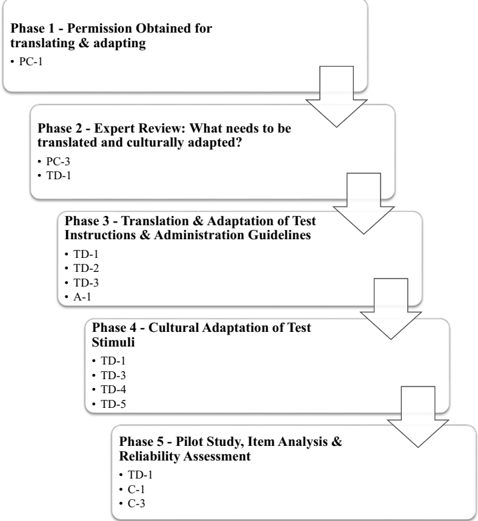
“…with the neuropsychological application of the International Test Commission guidelines for test adaptations including preconditions and test development portions (Phases 1 through 4), with permissions obtained to use the Mayo Test Drive platform and to adapt the subtests (Nguyen et al., 2024).”
Song, D., Guo, J., Rao, X., Hu, X., Gu, X., & Chen, J. (2026) · Journal of Intelligence · doi:10.3390/jintelligence14070150
“This requirement can reduce the compa-rability of measurement results across samples and make standardization, comparison of results, and normative data development more difficult in multicenter studies (Nguyen et al., 2024).”
Porrselvi, A. P., Sneha, C. R., Mehnaz, M. G. N., Ravi, S., & Gopalan, R. (2026) · Applied Neuropsychology Adult · doi:10.1080/23279095.2026.2703255
Does the use of a speech interpreter affect neuropsychological assessment?
Martin, A. (2026) · Iowa Research Online (The University of Iowa) · doi:10.25820/etd.008408
Yanni, M. H., Elmubarak, M. A., Ali, H. M. M. A., AlShammar, N. E. M. A., AlShammar, A., Alabrach, N., Forbes, D., & Thalitaya, M. D. (2026) · Journal of Applied Research in Intellectual Disabilities · doi:10.1111/jar.70286
The feasibility and factor structure of a multi-domain cognitive test battery in older Kenyan adults
Maina, R., Kipkoech, K., Karanja, W., Smith, C., Shah, J., Kamau, L. W., Kaba, M., Javandel, S., Tsoy, E., Udeh‐Momoh, C. T., et al. (2026) · npj Dementia · doi:10.1038/s44400-026-00139-y
Viewing Neurotech Through the Lens of the Ethical Principles: Considerations and Calls to Action
Hilsabeck, R. C., & Benge, J. F. (2026) · Oxford University Press eBooks · doi:10.1093/9780197814116.003.0004
Porrselvi, A. P., Dobson, L., Frank, B. E., Casey, V., Doyle, A. E., Krámská, L., Mudarris, M. A., Fonseca, R. P., Pender, N., Schrieff-Brown, L., et al. (2026) · Applied Neuropsychology Adult · doi:10.1080/23279095.2026.2724708
Strutt, A. M., Pick, L. H., Abrams, J. B., Anderson, K. M., González, D. A., Mullane, A., Daniel, M. B., & McCauley, S. R. (2026) · The Clinical Neuropsychologist · doi:10.1080/13854046.2026.2732045
Farsinejad, A. (2026) · University of Hertfordshire Research Archive (University of Hertfordshire)
Diaz, M. M., Nolasco, M., Enders, K. P., Jenkins, R. K., Roldán, V., Tovar, S., Rodriguez-Angeles, Y., Cordero, F. M., Mollan, K. R., Garden, G. A., et al. (2026) · Research Square · doi:10.21203/rs.3.rs-11166435/v1
“Adaptation procedures followed the general guidance by the International Test Commission(26) and neuropsychology-specific recommendations by Nguyen and colleagues(27).”
Self-citationDuboisdindien, G. (2026) · ORBi (University of Liège)
Robbins, R. N., Nanteza, A., Gumikiriza‐Onoria, J. L., Santoro, A. F., Ferraris, C. M., Karungi, C., Tsapalas, D., Asiedu, N., Kirsch, C., Tan, M., et al. (2026) · JMIR mhealth and uhealth · doi:10.2196/103288
“Rather than simply translating instructions literally, the adaptation process aimed to preserve meaning and comprehensibility for local users, which is essential for valid assessment [55].”
Development and standardization of an Aphasia Test battery in the Gujarati language
Kajaliya, Y., & Sharma, M. (2026) · Aphasiology · doi:10.1080/02687038.2026.2743725
Krause, C. A., Woods, S. P., Litson, K., Ledoux, T. A., & Medina, L. D. (2026) · Journal of Nutrition · doi:10.1016/j.tjnut.2026.101904
Sayegh, P., Medina, L. D., Poon, C., Suárez, P., & Nguyen, C. M. (2026) · Journal of Intelligence · doi:10.3390/jintelligence14110284
Self-citation
Metadata
- Authors
- Nguyen, C. M., Rampa, S., Staios, M., Nielsen, T. R., Zapparoli, B., Zhou, X. E., Mbakile-Mahlanza, L., Colon, J., Hammond, A., Hendriks, M., Kgolo, T., Serrano, Y., Marquine, M. J., Dutt, A., Evans, J., & Judd, T.
- Affiliations
- The Ohio State University (US)
- Queens College, CUNY (US)
- Monash University (AU)
- Copenhagen University Hospital (DK)
- Hospital for Sick Children (CA)
- University of Missouri (US)
- Utah State University (US)
- Radboud University Nijmegen (NL)
- University of Botswana (BW)
- VA Pittsburgh Healthcare System (US)
- Duke University (US)
- University of Bristol (GB)
- University of Glasgow (GB)
- Universidad del Valle de Guatemala (GT)
- Corresponding author
- Nguyen, Christopher Minh
- ORCID
- Venue
- Journal of the International Neuropsychological Society
- Publisher
- Cambridge University Press (CUP)
- Published
- 2024-08
- Volume
- 30
- Issue
- 7
- Pages
- 621-634
- ISSN
- 1355-6177 (ISSN-L)
- 1469-7661
- PMC
- PMC12565511
- OpenAlex
- W4402610847
- Semantic Scholar
- 5612c2d3fd5918f4fa184154d070539f29c26426
- Cited by
- 49
- References
- 47
- Citations by year
- 2026: 30 · 2025: 18 · 2024: 1
- FWCI
- 4.36
- Type
- journal article
- Language
- en
- Open access
- hybrid
- doi.org
- Locations
- Journal of the International Neuropsychological Society (publishedVersion, cc-by)
- PubMed (publishedVersion)
- Research at the University of Copenhagen (University of Copenhagen) (publishedVersion, cc-by)
- Europe PMC (PubMed Central) (acceptedVersion)
- ENLIGHTEN (Jurnal Bimbingan dan Konseling Islam) (submittedVersion, cc-by-sa)
- Radboud Repository (Radboud University) (submittedVersion)
- Bristol Research (University of Bristol) (submittedVersion, cc-by)
- Explore Bristol Research (submittedVersion, cc-by)
- Funders
- National Institute on Aging (K24AG075240)
- Topics
- Social Sciences › Psychology › Clinical Psychology › Historical and Modern Theater Studies
- Social Sciences › Psychology › Applied Psychology › Psychological Testing and Assessment
- Social Sciences › Decision Sciences › Management Science and Operations Research › Psychometric Methodologies and Testing
- Keywords
- test adaptation, cross-cultural adaptation, test validity, test reliability, neuropsychological assessment, psychometric properties
- MeSH terms
- Humans, Neuropsychological Tests, Neuropsychology, Translating, Translations
About these checks
Registry, retraction, Cites and statistics results are computed, not judged, with one exception: a printed reference that no index lists is read once by a model before it counts as a citation error. Claims are extracted by a model and kept only when their quote appears verbatim in the text; each cited source is then checked, with a model’s help, for whether it says what the claim relies on. Those verdicts can be wrong — read the claim’s quote and the cited source before relying on one.
Statistics and arithmetic are recomputed, not judged.
Confidence bands are shown only for fields calibrated on our annotated test set. None is calibrated yet, so no band is shown.
What counts as a claim ›How we measure confidence ›How we check this ›
Are you an author, or do you see a problem with this page? Request a review
Data sources
Bibliographic data: Semantic Scholar, OpenAlex, Crossref.
Contains information from the Semantic Scholar Academic Graph Datasets, made available under the ODC Attribution License (ODC-BY 1.0).
Semantic Scholar’s data is described in: Kinney, R., et al. (2023). The Semantic Scholar Open Data Platform. arXiv:2301.10140.
