

Neuropsychological application of the International Test Commission Guidelines for Translation and Adapting of Tests
Open accessThe DOI matches its Crossref record; 47 of the 47 references it cites were found in a registry or an index.
Abstract
Objective: The number of test translations and adaptations has risen exponentially over the last two decades, and these processes are now becoming a common practice. The International Test Commission (ITC) Guidelines for Translating and Adapting Tests (Second Edition, 2017) offer principles and practices to ensure the quality of translated and adapted tests. However, they are not specific to the cognitive processes examined with clinical neuropsychological measures. The aim of this publication is to provide a specialized set of recommendations for guiding neuropsychological test translation and adaptation procedures. Methods: The International Neuropsychological Society’s Cultural Neuropsychology Special Interest Group established a working group tasked with extending the ITC guidelines to offer specialized recommendations for translating/adapting neuropsychological tests. The neuropsychological application of the ITC guidelines was formulated by authors representing over ten nations, drawing upon literature concerning neuropsychological test translation, adaptation, and development, as well as their own expertise and consulting colleagues experienced in this field. Results: A summary of neuropsychological-specific commentary regarding the ITC test translation and adaptation guidelines is presented. Additionally, examples of applying these recommendations across a broad range of criteria are provided to aid test developers in attaining valid and reliable outcomes. Conclusions: Establishing specific neuropsychological test translation and adaptation guidelines is critical to ensure that such processes produce reliable and valid psychometric measures. Given the rapid global growth experienced in neuropsychology over the last two decades, the recommendations may assist researchers and practitioners in carrying out such endeavors.
Overview
The claims and statistics of this paper haven’t been checked yet.
Free: it reads the open-access text and checks the first 5 claims that cite a source we can check. Create a free account to check every claim.
Integrity signals
Registry
Cites
Statistics
Figures
Verification
Claims the paper makes
The claims and statistics of this paper haven’t been checked yet.
Free: it reads the open-access text and checks the first 5 claims that cite a source we can check. Create a free account to check every claim.
Claims other papers make about this one
Each is checked against this paper’s own text: does it say what the citing paper says it does?
The source backs part of the claim, not all of it — or backs it for a different population, condition or comparison.
In the citing paper
“Developing culturally responsive resilience measures involves translation, back-translation, stakeholder engagement, and validation across diverse sociodemographic and clinical populations127.”
From Resilience and brain health in global populations (2025) · cites this paper as [127]
Experimental — accuracy not yet measured
Self-check
Percentages, sums and reported differences re-computed from the paper’s own numbers.
The self-check needs the paper’s full text.
Citations
Cites
The impact of culture and education on non-verbal neuropsychological measurements: A critical review
Rosselli, M., & Ardila, A. (2003) · Brain and Cognition · doi:10.1016/s0278-2626(03)00170-2 · Cited by 473 · cited 1×
“Cross-cultural and cross-linguistic studies reveal the influence of factors like word length, speech rates, and literacy on performance in verbal working memory tasks (Chan & Elliott, 2011; Chincotta & Underwood, 1996; Rosselli & Ardila, 2003).”
The assessment of bilingual aphasia
Lavorel, P. (1988) · Neuropsychologia · doi:10.1016/0028-3932(88)90067-x · Cited by 357
International Test Commission guidelines for test adaptation: A criterion checklist
Hernández, A., Hidalgo, M., Hambleton, R., & Gómez-Benito, J. (2020) · Psicothema · doi:10.7334/psicothema2019.306 · Cited by 344 · cited 1×
“The field of test translations and adaptations has grown significantly, and there is a noticeable increase in the development of guidelines to improve these processes (Hernández et al., 2020).”
Cultural Values Underlying Psychometric Cognitive Testing
Ardila, A. (2005) · Neuropsychology Review · doi:10.1007/s11065-005-9180-y · Cited by 317 · cited 2×
“Cultural variations also impact the value placed on speed in neuropsychological tests, willingness to guess, acceptance of synonyms and paraphrases, and knowledge of cardinal directions (Ardila, 2005).”
Norman, M. A., Moore, D. J., Taylor, M., Franklin, D., Cysique, L., Ake, C., Lazarretto, D., Vaida, F., Heaton, R. K., & the HNRC Group (2011) · Journal of Clinical and Experimental Neuropsychology · doi:10.1080/13803395.2011.559157 · Cited by 273 · cited 3×
“…have involved creating culturally relevant test content and normative data for various cultural and ethnic groups globally, including minority groups in the United States (Norman et al., 2011; Rivera Mindt et al., 2020) and both majority and minority groups in Europe (33; Nielsen et al., 2019).”
Translating and Adapting Tests for Cross-Cultural Assessments
Hambleton, R. K., & Zenisky, A. L. (2010) · Cross-Cultural Research Methods in Psychology · doi:10.1017/cbo9780511779381.004 · Cited by 241 · cited 1×
“Hambleton and Zenisky (2010) list 25 empirically validated features recommended for translated tests.”
Neuropsychological Assessment: Past and Future
Casaletto, K. B., & Heaton, R. K. (2017) · Journal of the International Neuropsychological Society · doi:10.1017/s1355617717001060 · Cited by 230 · cited 1×
“Complex cultural factors affecting neuropsychological test performance make it challenging to compare scores across different test versions (Casaletto & Heaton, 2017), as the primary purpose of these tests is not to compare scores across language populations directly but to serve similar functions…”
Cross-Cultural Neuropsychological Assessment: Theory and Practice
Miotto, E. (2001) · Journal of Psychophysiology · doi:10.1027//0269-8803.15.2.128 · Cited by 207
Effects of Age, Education and Gender on Verbal Fluency
Mathuranath, P. S., George, A., Cherian, P. J., Alexander, A., Sarma, S. G., & Sarma, P. S. (2003) · Journal of Clinical and Experimental Neuropsychology · doi:10.1076/jcen.25.8.1057.16736 · Cited by 198 · cited 1×
“…developed within a specific cultural context (e.g., Bengali-speaking population residing in Kolkata, in Eastern India) compared to another context (e.g., Malayalam speaking population residing in Bangalore, in Southern India) within the same country (Das et al., 2006; Mathuranath et al., 2003).”
Grigorenko, E. L., Geissler, P. W., Prince, R., Okatcha, F., Nokes, C., Kenny, D. A., Bundy, D. A., & Sternberg, R. J. (2001) · International Journal of Behavioral Development · doi:10.1080/01650250042000348 · Cited by 167 · cited 1×
“…comes from Kenya, where intelligence is delineated in the DhoLuo language using four distinct terms: rieko (knowledge and skills), luoro (respect), winjo (comprehension of real-life problem-solving), and paro (initiative), which deviate from the Western understanding (Grigorenko et al., 2001).”
Translation Quality Assessment in Health Research: A Functionalist Alternative to Back-Translation
Colina, S., Marrone, N. L., Ingram, M., & Sánchez, D. (2016) · Evaluation & the Health Professions · doi:10.1177/0163278716648191 · Cited by 161
Thames, A. D., Hinkin, C. H., Byrd, D. A., Bilder, R. M., Duff, K. J., Mindt, M. R., Arentoft, A., & Streiff, V. (2013) · Journal of the International Neuropsychological Society · doi:10.1017/s1355617713000076 · Cited by 131 · cited 1×
“Examiner-related factors, such as stereotype threat and examiner bias, can also impact test performance and should be considered in developing studies to validate neuropsychological tests empirically (Thames et al., 2013).”
Adapting a cognitive test for a different culture: An illustration of qualitative procedures
Malda, M., van de Vijver, F. J. R., Srinivasan, K., Transler, C., Sukumar, P., & Rao, K. M. N. (2008) · Psychology science quarterly · Cited by 118
The Boston Naming Test in Greek: Normative data and the effects of age and education on naming
Patricacou, A., Psallida, E., Pring, T., & Dipper, L. T. (2007) · Aphasiology · doi:10.1080/02687030600670643 · Cited by 111
Guàrdia‐Olmos, J., Peró, M., Rivera, D., & Arango‐Lasprilla, J. C. (2015) · Neurorehabilitation · doi:10.3233/nre-151277 · Cited by 107
Ivanova, M. V., & Hallowell, B. (2013) · Aphasiology · doi:10.1080/02687038.2013.805728 · Cited by 101 · cited 1×
“For instance, assessments designed for aphasia and language-specific evaluations cannot be directly translated but require adaptation to linguistic features of the target language (Ivanova & Hallowell, 2013).”
Vlahou, C. H., Kosmidis, M. H., Dardagani, A., Tsotsi, S., Γιαννάκου, Μ., Giazkoulidou, A., Zervoudakis, E., & Pontikakis, N. (2012) · Archives of Clinical Neuropsychology · doi:10.1093/arclin/acs099 · Cited by 95
Cultural Differences: Why Do Asians Avoid Extreme Responses?
Hempton, R. W. A. B. M., & Komives, J. P. D. A. S. R. M. (2008) · Survey Practice · doi:10.29115/sp-2008-0011 · Cited by 92
Conducting a culturally informed neuropsychological evaluation.
Fujii, D. E. M. (2016) · American Psychological Association eBooks · doi:10.1037/15958-000 · Cited by 91 · cited 1×
“Other strategies for leveraging currently available international data to estimate premorbid functioning may be helpful in providing further clinical context, and additional resources for working with culturally diverse individuals are available elsewhere (see Fujii, 2017).”
The effects of acculturation on neuropsychological test performance: A systematic literature review
Tan, Y. W., Burgess, G. H., & Green, R. J. (2020) · The Clinical Neuropsychologist · doi:10.1080/13854046.2020.1714740 · Cited by 89 · cited 1×
“Factors such as acculturation often significantly influence test outcomes (Tan et al., 2021), leading to the non-uniform application of norms within a language or cultural group across different levels of acculturation and generations of immigrants.”
Daugherty, J. C., Puente, A. E., Fasfous, A. F., Hidalgo-Ruzzante, N. A., & Pérez-García, M. (2016) · Applied Neuropsychology Adult · doi:10.1080/23279095.2015.1036992 · Cited by 88
Color makes a difference: Two-dimensional object naming in literate and illiterate subjects
Reis, A., Faísca, L., Ingvar, M., & Petersson, K. M. (2005) · Brain and Cognition · doi:10.1016/j.bandc.2005.09.012 · Cited by 87 · cited 1×
“For example, a naming test may introduce method bias as some cultures may be less familiar with line-drawing representations of objects (e.g., Reis et al., 2006).”
Agranovich, A. V., Panter, A. T., Puente, A. E., & Touradji, P. (2011) · Journal of the International Neuropsychological Society · doi:10.1017/s1355617711000592 · Cited by 75
Shuttleworth-Edwards, A. B. (2016) · The Clinical Neuropsychologist · doi:10.1080/13854046.2016.1204011 · Cited by 72
Nielsen, T. R., & Jørgensen, K. (2013) · The Clinical Neuropsychologist · doi:10.1080/13854046.2013.767379 · Cited by 65
Self-citationAn urban community-based study of cognitive function among non-demented elderly population in India
Das, S. K., Banerjee, T. K., Mukherjee, C. S., Bose, P., Biswas, A., Hazra, A., Dutt, A., Das, S., Chaudhuri, A., Raut, D. K., et al. (2006) · Cited by 63
Self-citationNielsen, T. R., Segers, K., Vanderaspoilden, V., Beinhoff, U., Minthon, L., Pissiota, A., Bekkhus‐Wetterberg, P., Bjørkløf, G. H., Tsolaki, M., Γκιόκα, Μ., et al. (2018) · International Journal of Geriatric Psychiatry · doi:10.1002/gps.5002 · Cited by 58 · cited 1×
“…have involved creating culturally relevant test content and normative data for various cultural and ethnic groups globally, including minority groups in the United States (Norman et al., 2011; Rivera Mindt et al., 2020) and both majority and minority groups in Europe (33; Nielsen et al., 2019).”
Self-citationDuggan, E. C., Awakon, L., Loaiza, C. C., & García-Barrera, M. A. (2018) · Archives of Clinical Neuropsychology · doi:10.1093/arclin/acy074 · Cited by 56 · cited 1×
“Even within the same language versions of the test, differences in normative data can lead to varying scaled scores, profiles, and diagnostic classifications across countries, as seen in the disparities between American, Canadian, Colombian, Mexican, and Spanish WAIS-IV norms (Duggan et al., 2019).”
Color Trails Test: Normative Data and Criterion Validity for the Greek Adult Population
Messinis, L., Malegiannaki, A.-C., Christodoulou, T., Panagiotopoulos, V. E., & Papathanasopoulos, P. (2011) · Archives of Clinical Neuropsychology · doi:10.1093/arclin/acr027 · Cited by 56
Recent Development of Cognitive and Neuropsychological Assessment in Asian Countries.
Chan, A. S.-Y., Shum, D., & Cheung, R. W. Y. (2003) · Psychological Assessment · doi:10.1037/1040-3590.15.3.257 · Cited by 56 · cited 1×
“Hong Kong Verbal Learning Test is part of the Word List Learning “ family ” of tests (Chan et al., 2003; Chan, 2006)”
Walker, A., Batchelor, J., & Shores, E. A. (2009) · Australian Psychologist · doi:10.1080/00050060902833469 · Cited by 56
A cognitive bedside assessment beyond the MMSE: the Addenbrooke's Cognitive Examination.
Bak, T. H., & Mioshi, E. (2007) · PubMed · Cited by 54
Jacklin, K. M., Pitawanakwat, K., Blind, M. J., O’Connell, M. E., Walker, J. D., Lemieux, A. M., & Warry, W. (2020) · Innovation in Aging · doi:10.1093/geroni/igaa038 · Cited by 53 · cited 1×
“Examples of detailed piloting techniques can be found in the Canadian Indigenous Cognitive Assessment development project (Jacklin et al., 2020) and the procedures demonstrated by Franzen et al. (2022).”
Messinis, L., Nasios, G., Mougias, A. A., Politis, A. M., Zampakis, P. E., Tsiamaki, E., Malefaki, S., Gourzis, P., & Papathanasopoulos, P. (2015) · Journal of Clinical and Experimental Neuropsychology · doi:10.1080/13803395.2015.1085496 · Cited by 43
Cockcroft, K., Alloway, T., Copello, E., & Milligan, R. (2015) · Frontiers in Psychology · doi:10.3389/fpsyg.2015.00297 · Cited by 39 · cited 1×
“Thus, Cockcroft et al. (2015) compared a multilingual, low socioeconomic group of black South African students with a predominantly white, British, monolingual, higher socioeconomic group and found that subtest scores loaded differently for the two groups.”
Mindt, M. R., Marquine, M. J., Aghvinian, M. N., Paredes, A. M., Kamalyan, L., Suárez, P., Heaton, A., Scott, T. M., Gooding, A. L., Díaz‐Santos, M., et al. (2020) · The Clinical Neuropsychologist · doi:10.1080/13854046.2020.1794046 · Cited by 35
Self-citationMother tongue, language of schooling and bilingual digit span
Chincotta, D., & Underwood, G. (1996) · British Journal of Psychology · doi:10.1111/j.2044-8295.1996.tb02585.x · Cited by 33 · cited 1×
“Cross-cultural and cross-linguistic studies reveal the influence of factors like word length, speech rates, and literacy on performance in verbal working memory tasks (Chan & Elliott, 2011; Chincotta & Underwood, 1996; Rosselli & Ardila, 2003).”
Franzen, S., van den Berg, E., Bossenbroek, W., Kranenburg, J., Scheffers, E. A., van Hout, M. S. E., van de Wiel, L., Goudsmit, M., van Bruchem-Visser, R. L., van Hemmen, J., et al. (2022) · The Clinical Neuropsychologist · doi:10.1080/13854046.2022.2043447 · Cited by 30 · cited 1×
“Examples of detailed piloting techniques can be found in the Canadian Indigenous Cognitive Assessment development project (Jacklin et al., 2020) and the procedures demonstrated by Franzen et al. (2022).”
DuBay, M. F., Sideris, J. H., & Rouch, E. F. (2022) · Autism Research · doi:10.1002/aur.2783 · Cited by 22 · cited 1×
“…and literal translation, is now considered obsolete for most test translation purposes, in large part because back translation is errorful and favors semantic equivalence over cultural, functional, linguistic, construct, and psychometric equivalence (Colina et al., 2017; DuBay et al., 2022).”
Identifying culturally acceptable cognitive tests for use in remote northern Australia
Rock, D., & Price, I. (2019) · BMC Psychology · doi:10.1186/s40359-019-0335-7 · Cited by 21 · cited 2×
“…Australian Aborigines to assess executive functions and cognitive flexibility by using a social judgment problem specific to their cultural norms (Rock & Price, 2019) Construct a test in the target language with a substantially new design, principles, culturally relevant content, and procedures…”
Plitas, A., Tucker, A., Kritikos, A., Walters, I., & Bardenhagen, F. J. (2009) · Australian Psychologist · doi:10.1080/00050060802587694 · Cited by 18 · cited 1×
“It is particularly challenging for multicultural and multilingual individuals, including older migrants, as neither the normative data from their country of origin nor the new country may accurately represent this population (Dutt et al., 2022; Plitas et al., 2009; Staios et al., 2023).”
Cross‐Linguistic Differences in Digit Memory Span
Chan, M. E., & Elliott, J. M. (2011) · Australian Psychologist · doi:10.1111/j.1742-9544.2010.00007.x · Cited by 18 · cited 1×
“Cross-cultural and cross-linguistic studies reveal the influence of factors like word length, speech rates, and literacy on performance in verbal working memory tasks (Chan & Elliott, 2011; Chincotta & Underwood, 1996; Rosselli & Ardila, 2003).”
Crombie, M., Dutt, A., Dey, P., Nandi, R., & Evans, J. J. (2022) · The Clinical Neuropsychologist · doi:10.1080/13854046.2022.2047789 · Cited by 17
Self-citationFranzen, S., van den Berg, E., Kalkisim, Y., van de Wiel, L., Harkes, M., van Bruchem-Visser, R. L., de Jong, F. J., Jiskoot, L. C., & Papma, J. M. (2019) · Dementia and Geriatric Cognitive Disorders · doi:10.1159/000501151 · Cited by 16
Staios, M., Kosmidis, M. H., Nielsen, T. R., Papadopoulos, A., Kokkinis, N., Stogiannidou, A., March, E. G., & Stolwyk, R. J. (2023) · Australian Psychologist · doi:10.1080/00050067.2023.2179387 · Cited by 11 · cited 2×
“Another recent example is the work of Staios et al. (2023), who conducted a confirmatory factor analysis of normative data from an elderly sample of Greek Australians on the Greek adaptation of the WAIS-IV and showed a good fit for the same four-factor solution as the original version.”
Self-citationLindeboom, J., & Schmand, B. A. (2003) · PsycTESTS Dataset · doi:10.1037/t12613-000 · Cited by 11
Dutt, A., Nandi, R., Rao, P. S., Bhargava, P., Gopalkrishnan, S., Bose, A., Ghosh, A., & Evans, J. J. (2022) · Alzheimer s & Dementia · doi:10.1002/alz.067325 · Cited by 3 · cited 2×
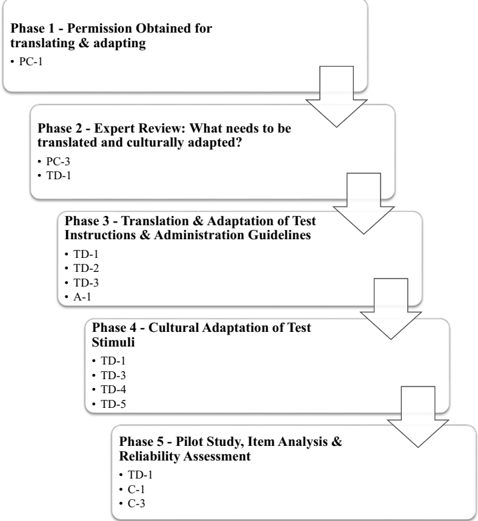
“Here, Dutt et al. (2022) Well-describedandempirical Pre-conditionPC-1:Obtaining permission from the intellectual property rights owner.”
Self-citation
Research works printed but not linked: 7
- Dutt, A., Evans, J. J., & Fernandez, A. L. (2022). Challenges for neuropsychology in the global context. In Understanding cross-cultural neuropsychology, science, testing and challenges (current issues in neuropsychology). Routledge | Taylor & Francis Group.
- 2017, The ITC Guidelines for translating and adapting tests
- Chan A. S. (2006). Hong Kong List Learning Test. 2nd Edn. Department of Psychological and Integrative Neuropsychological Rehabilitation Center.
- Judd, T., Colon, J., Dutt, A., Evans, J., Hammond, A., Hendriks, M., Kgolo, T., Marquine, M., Mbakile-Mahlanza, l., Nielsen, R., Nguyen, C., Rampa, S., Serrano, Y., Staios, M., Zapparoli, B., & Zhou, E. (2024). Neuropsychological application of the International Test Commission's (ITC) guidelines for translating and adapting tests. https://the-ins.org/wp-content/uploads/2024/ 01/INS-SIG-Assessment-Workgroup-2023-ITC-Guidelines-Neuropsychology- Application.pdf.
- Al Salman, A. S. A. (2013) The Saudi Arabian Adaptation of the Addenbrooke's Cognitive Examination -Revised (Arabic ACER). PhD thesis. http://theses. gla.ac.uk/4706
- Kosmidis, M. H., Bozikas, V. P., & Vlahou, C. H. (2012). Neuropsychological test battery. Lab of Cognitive Neuroscience, School of Psychology, Aristotle University of Thessaloniki.
- Tulsky, D. Saklofske, G. Chlune, R. Heaton, R. Ivnik, R. Bornstein, A. Prifitera, & M. Ledbetter (Eds), Clinical Interpretation of the WAIS-III and WMS-III (Practical Resources for the Mental Health Professional) (pp. 183- 210). Academic Press.
Cited by
Resilience and brain health in global populations
Udeh-Momoh, C. T., Migeot, J., Blackmon, K., Mielke, M. M., Melloni, M., Cox, L., Yaffe, K., Santamaria-Garcia, H., Stern, Y., & Ibanez, A. (2025) · Nature Medicine · doi:10.1038/s41591-025-03846-w · Cited by 42
“Developing culturally responsive resilience measures involves translation, back-translation, stakeholder engagement, and validation across diverse sociodemographic and clinical populations 127 .”
Cross-cultural functional assessment for dementia: A commentary
Calia, C., O’Donald, F., Franzen, S., Alvarez, A. D., Dreyer, A. J., Ibáñez-Casas, I., Jiang, J., Daugherty, J. C., Jordão, M., Canevelli, M., et al. (2025) · The Clinical Neuropsychologist · doi:10.1080/13854046.2025.2543913 · Cited by 18
“The neuropsychological application of the International Test Commission (ITC) guidelines for translating and adapting of tests (Judd et al., 2023; Nguyen et al., 2024) may offer insights into best practices for balancing linguistic and cultural adaptation while maintaining psychometric integrity.”
Self-citationBriceño, E. M., Bassil, D. T., Khobragade, P. Y., Ngugi, A. K., Elbejjani, M., Ochieng, E., Mejía-Arango, S., Douhou, S., Kulisewa, K., Rentería, M. A., et al. (2025) · The Journals of Gerontology Series B · doi:10.1093/geronb/gbaf201 · Cited by 10
Nielsen, T. R., Jørgensen, K., Canevelli, M., Pomati, S., Delgado‐Álvarez, A., Franzen, S., Lozano-Ruiz, Á., Özden, M., Palisson, J., Mukadam, N., et al. (2025) · Journal of Alzheimer s Disease · doi:10.1177/13872877251320259 · Cited by 8
“32 No need to change the structure or format of any of the items was encountered during translational procedures.”
Self-citationNaggayi, S. K., Kalibbala, D., Mboizi, V., Ssenkusu, J. M., Jin, Z., Rosano, C., Munube, D., Wambaka, B., Namazzi, R., Kasirye, P., et al. (2025) · Blood Advances · doi:10.1182/bloodadvances.2024015073 · Cited by 8
“30,32 The Kaufman Assessment Battery for Children, second edition (KABC-II), for cognition used its composite index from subtests, previously reported as validated in Uganda and widely used for ages ≥ 5 years.”
Metadata
- Authors
- Nguyen, C. M., Rampa, S., Staios, M., Nielsen, T. R., Zapparoli, B., Zhou, X. E., Mbakile-Mahlanza, L., Colon, J., Hammond, A., Hendriks, M., Kgolo, T., Serrano, Y., Marquine, M. J., Dutt, A., Evans, J., & Judd, T.
- Affiliations
- The Ohio State University (US)
- Queens College, CUNY (US)
- Monash University (AU)
- Copenhagen University Hospital (DK)
- Hospital for Sick Children (CA)
- University of Missouri (US)
- Utah State University (US)
- Radboud University Nijmegen (NL)
- University of Botswana (BW)
- VA Pittsburgh Healthcare System (US)
- Duke University (US)
- University of Bristol (GB)
- University of Glasgow (GB)
- Universidad del Valle de Guatemala (GT)
- Corresponding author
- Nguyen, Christopher Minh
- ORCID
- Venue
- Journal of the International Neuropsychological Society
- Publisher
- Cambridge University Press (CUP)
- Published
- 2024-08
- Volume
- 30
- Issue
- 7
- Pages
- 621-634
- ISSN
- 1355-6177 (ISSN-L)
- 1469-7661
- PMC
- PMC12565511
- OpenAlex
- W4402610847
- Cited by
- 49
- References
- 47
- Citations by year
- 2026: 30 · 2025: 18 · 2024: 1
- FWCI
- 4.36
- Type
- journal article
- Language
- en
- Open access
- hybrid
- doi.org
- Locations
- Journal of the International Neuropsychological Society (publishedVersion, cc-by)
- PubMed (publishedVersion)
- Research at the University of Copenhagen (University of Copenhagen) (publishedVersion, cc-by)
- Europe PMC (PubMed Central) (acceptedVersion)
- ENLIGHTEN (Jurnal Bimbingan dan Konseling Islam) (submittedVersion, cc-by-sa)
- Radboud Repository (Radboud University) (submittedVersion)
- Bristol Research (University of Bristol) (submittedVersion, cc-by)
- Explore Bristol Research (submittedVersion, cc-by)
- Funders
- National Institute on Aging (K24AG075240)
- Topics
- Social Sciences › Psychology › Clinical Psychology › Historical and Modern Theater Studies
- Social Sciences › Psychology › Applied Psychology › Psychological Testing and Assessment
- Social Sciences › Decision Sciences › Management Science and Operations Research › Psychometric Methodologies and Testing
- Keywords
- test adaptation, cross-cultural adaptation, test validity, test reliability, neuropsychological assessment, psychometric properties
- MeSH terms
- Humans, Neuropsychological Tests, Neuropsychology, Translating, Translations
About these checks
Registry, retraction, Cites and statistics results are computed, not judged, with one exception: a printed reference that no index lists is read once by a model before it counts as a citation error. Claims are extracted by a model and kept only when their quote appears verbatim in the text; each cited source is then checked, with a model’s help, for whether it says what the claim relies on. Those verdicts can be wrong — read the claim’s quote and the cited source before relying on one.
Statistics and arithmetic are recomputed, not judged.
Confidence bands are shown only for fields calibrated on our annotated test set. None is calibrated yet, so no band is shown.
What counts as a claim ›How we measure confidence ›How we check this ›
Are you an author, or do you see a problem with this page? Request a review
Data sources
Bibliographic data: Semantic Scholar, OpenAlex, Crossref.
Contains information from the Semantic Scholar Academic Graph Datasets, made available under the ODC Attribution License (ODC-BY 1.0).
Semantic Scholar’s data is described in: Kinney, R., et al. (2023). The Semantic Scholar Open Data Platform. arXiv:2301.10140.
