

A narrative review of online food delivery in Australia: challenges and opportunities for public health nutrition policy
Open accessThe DOI matches its Crossref record; 42 of the 42 references it cites were found in a registry or an index.
Abstract
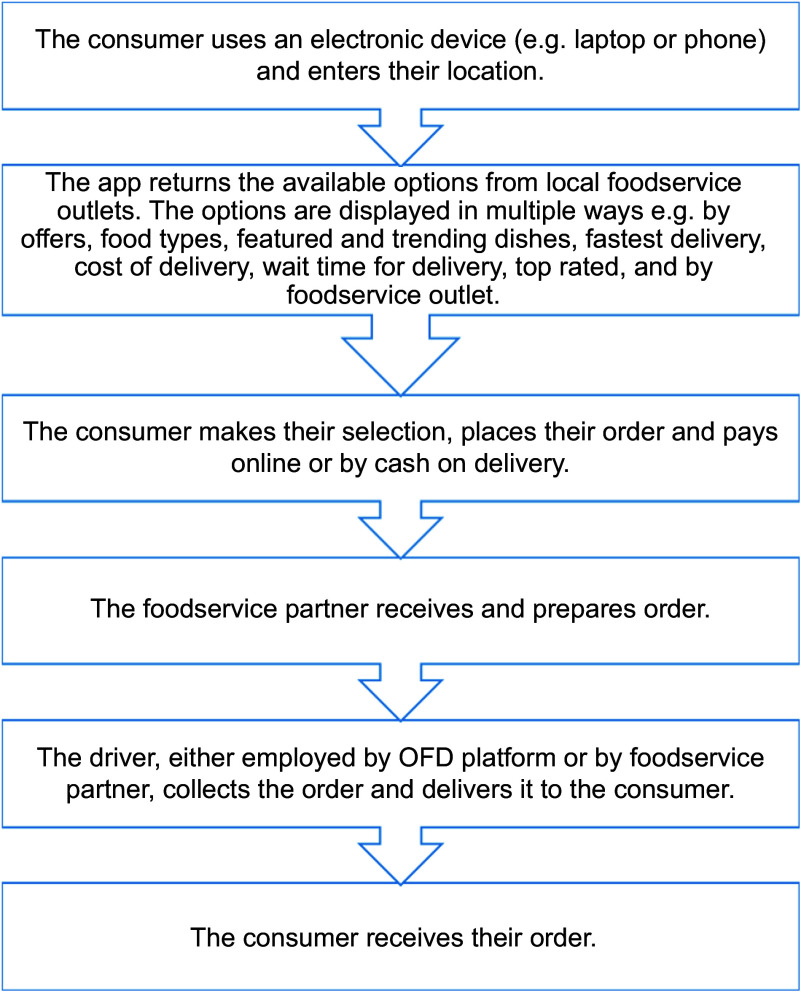
Objective: Online food delivery (OFD) platforms offer consumers a convenient and fast delivery service of foods and drinks sourced from foodservice partners (e.g. restaurants, quick service restaurants). There is a need to assess the impact of this emergent segment of the foodservice sector on diet and diet-related health. The aim of this narrative review was to describe the OFD sector in Australia, its use and identify potential ways to include OFD platforms in existing public health nutrition policy. Design: A search was conducted in peer-reviewed and grey literature. Sources were analysed and synthesised to report the characteristics of OFD platforms, delivery process, users and potential drivers of usage. The aim and scope of public health nutrition policies were analysed to identify ways of including OFD platforms. Setting: Australia. Participants: General population. Results: There are three main operators with 9000–16 000 foodservice partners based predominantly in the main cities of Australia. OFD revenue has grown by 72 % in the last 5 years and is predicted to increase driven by usage by working adults with high disposable income who demand convenience. Current policies and initiatives aimed at manufacturers, retailers and foodservice outlets do not specifically regulate OFD platforms, although there is scope for these to be extended to such platforms. Conclusions: OFD platforms are disruptors of the foodservice sector. Innovative and consistent health policy options that target the unique challenges and opportunities posed by OFD platforms are required to limit the potentially negative impact of OFD platforms on diet and diet-related health.
Overview
The claims and statistics of this paper haven’t been checked yet.
Free: it reads the open-access text and checks the first 5 claims that cite a source we can check. Create a free account to check every claim.
Integrity signals
Registry
Cites
Statistics
Figures
Verification
Claims the paper makes
The claims and statistics of this paper haven’t been checked yet.
Free: it reads the open-access text and checks the first 5 claims that cite a source we can check. Create a free account to check every claim.
Claims other papers make about this one
Each is checked against this paper’s own text: does it say what the citing paper says it does?
The check wasn’t confident either way, so it gives no verdict — never disputed.
In the citing paper
“In China and India, for example, companies have offered smaller package sizes and affordable pricing points more appealing to lowincome and rural consumers 168,169 .”
From Ultra‐processed foods and the nutrition transition: global, regional and national trends, food systems transformations and political economy drivers (2020) · cites this paper as [168]
Experimental — accuracy not yet measured
Self-check
Percentages, sums and reported differences re-computed from the paper’s own numbers.
The self-check needs the paper’s full text.
Citations
Cites
Lim, S. S., Vos, T., Flaxman, A. D., Danaei, G., Shibuya, K., Adair-Rohani, H., AlMazroa, M. A., Amann, M., Anderson, H. R., Andrews, K. G., et al. (2012) · The Lancet · doi:10.1016/s0140-6736(12)61766-8 · Cited by 11,805
Corporate Social Responsibility Theories: Mapping the Territory
Garriga, E., & Melé, D. (2004) · Journal of Business Ethics · doi:10.1023/b:busi.0000039399.90587.34 · Cited by 5,652
The Global Syndemic of Obesity, Undernutrition, and Climate Change: The Lancet Commission report
Swinburn, B. A., Kraak, V. I., Allender, S., Atkins, V. J., Baker, P. I., Bogard, J. R., Brinsden, H., Calvillo, A., De Schutter, O., Devarajan, R., et al. (2019) · The Lancet · doi:10.1016/s0140-6736(18)32822-8 · Cited by 3,081
Moodie, R., Stuckler, D., Monteiro, C., Sheron, N., Neal, B., Thamarangsi, T., Lincoln, P., & Casswell, S. (2013) · The Lancet · doi:10.1016/s0140-6736(12)62089-3 · Cited by 1,663
The Heavy Burden of Obesity: The Economics of Prevention
OECD (2019) · OECD Health Policy Studies · doi:10.1787/67450d67-en · Cited by 1,090
Yang, J. S. (2016) · Annals of Global Health · doi:10.1016/j.aogh.2016.04.293 · Cited by 533
Buse, K., Mays, N., & Walt, G. (2005) · Cited by 409
Hawkes, C., Jewell, J., & Allen, K. (2013) · Obesity Reviews · doi:10.1111/obr.12098 · Cited by 402
Swinburn, B., Vandevijvere, S., Kraak, V., Sacks, G., Snowdon, W., Hawkes, C., Barquera, S., Friel, S., Kelly, B., Kumanyika, S., et al. (2013) · Obesity Reviews · doi:10.1111/obr.12073 · Cited by 306
Determinants of takeaway and fast food consumption: a narrative review
Janssen, H. G., Davies, I. G., Richardson, L. D., & Stevenson, L. (2018) · Nutrition Research Reviews · doi:10.1017/s0954422417000178 · Cited by 278
Cited by
Baker, P., Machado, P., Santos, T., Sievert, K., Backholer, K., Hadjikakou, M., Russell, C., Huse, O., Bell, C., Scrinis, G., et al. (2020) · Obesity Reviews · doi:10.1111/obr.13126 · Cited by 1,194
“The rapid uptake of online food delivery platforms such as Uber Eats in many countries has provided a new distribution channel, reducing the time cost of sourcing fast food for consumption at work or home.(167,168)”
BackgroundKeeble, M., Adams, J., Sacks, G., Vanderlee, L., White, C. M., Hammond, D., & Burgoine, T. (2020) · International Journal of Environmental Research and Public Health · doi:10.3390/ijerph17145190 · Cited by 176
“However, it is also possible that this reflects the potential for online food delivery services to offer food from different types of food outlets, including restaurants, which may offer healthier food than is traditionally served away-fromhome [45].”
BackgroundPartridge, S. R., Gibson, A. A., Roy, R., Malloy, J. A., Raeside, R., Jia, S. S., Singleton, A. C., Mandoh, M., Todd, A. R., Wang, T., et al. (2020) · Nutrients · doi:10.3390/nu12103107 · Cited by 162
Strategic orientation of service enterprises towards customers
Arun, K., & Yildirim Ozmutlu, S. (2021) · Digital Commons - University of South Florida (University of South Florida) · doi:10.5038/9781955833035 · Cited by 1
Meena, P. L., & Kumar, G. (2022) · Journal of Retailing and Consumer Services · doi:10.1016/j.jretconser.2022.103052 · Cited by 144
“…routing problems (Liu et al., 2020; Correa et al., 2019), adoption and acceptance of technology in OFD apps (Pigatto et al., 2017; Gunden et al., 2020; Roh and Park, 2019), and riders issues related to wages and health (Bates et al., 2020; Correa et al., 2019; Kougiannou and Mendonça, 2021).”
BackgroundKeeble, M., Adams, J., Bishop, T. R. P., & Burgoine, T. (2021) · Applied Geography · doi:10.1016/j.apgeog.2021.102498 · Cited by 87
“Public health actions directed towards online delivery services are not currently in place, but might be deemed necessary in the future (Bates et al., 2020).”
BackgroundTalamini, G., Li, W., & Li, X. (2022) · Cities · doi:10.1016/j.cities.2022.103820 · Cited by 88
Bennett, R., Keeble, M., Zorbas, C., Sacks, G., Driessen, C., Grigsby‐Duffy, L., Adams, J., Burgoine, T., & Backholer, K. (2023) · Obesity Reviews · doi:10.1111/obr.13671 · Cited by 83
“15 Digital food retail environments can increase convenience by removing barriers to accessing food and drinks, through facilitating ordering using user-friendly apps or websites and by removing the need to travel to purchase.”
BackgroundWang, C., Korai, A., Jia, S. S., Allman-Farinelli, M. A., Chan, V., Roy, R., Raeside, R., Phongsavan, P., Redfern, J., Gibson, A. A., et al. (2021) · Nutrients · doi:10.3390/nu13030905 · Cited by 76
“OFD platforms have also revolutionised the way we purchase food prepared out of home by capitalising on smartphone technology and subsequently expanding our food choices beyond local food outlets [18,19].”
BackgroundHorta, P. M., Matos, J. D. P., & Mendes, L. L. (2020) · British Journal Of Nutrition · doi:10.1017/s0007114520004560 · Cited by 86
Rinaldi, C., D’Aguilar, M., & Egan, M. (2022) · International Journal of Environmental Research and Public Health · doi:10.3390/ijerph19095523 · Cited by 75
Eu, E. Z. R., & Sameeha, M. J. (2021) · Frontiers in Nutrition · doi:10.3389/fnut.2021.674427 · Cited by 66
“Besides, the potential of OFD services to influence the current effectiveness of public health nutrition and health policies remains unknown (12).”
BackgroundWyse, R., Jackson, J. K., Delaney, T. M., Grady, A., Stacey, F. G., Wolfenden, L., Barnes, C., McLaughlin, M. J., & Yoong, S. L. (2021) · Nutrients · doi:10.3390/nu13072255 · Cited by 60
“There remains a significant opportunity to use established digital food environments as a novel means to deliver such public health nutrition interventions [12,15,24].”
BackgroundNutritional quality and consumer health perception of online delivery food in the context of China
Dai, X., Wu, L., & Hu, W. (2022) · BMC Public Health · doi:10.1186/s12889-022-14593-9 · Cited by 57
“Young people are the main users of OFD globally [26].”
BackgroundA review on takeaway packaging waste: Types, ecological impact, and disposal route
Zhuo, Y., He, J., Li, W., Deng, J., & Lin, Q. (2023) · Environmental Pollution · doi:10.1016/j.envpol.2023.122518 · Cited by 48
Online on-demand delivery services of food and alcohol: A scoping review of public health impacts
Duthie, C., Pocock, T., Curl, A., Clark, E., Norriss, D., Bidwell, S., McKerchar, C., & Crossin, R. (2023) · SSM - Population Health · doi:10.1016/j.ssmph.2023.101349 · Cited by 54
“Outdated regulatory frameworks allow these services to operate within a legal and policy ‘grey-zone ’ (Bates et al., 2020).”
BackgroundSiddiqi, K. O., Rahman, J., Tanchangya, T., Rahman, H., Esquivias, M. A., & Rahman, M. H. (2024) · Cogent Business & Management · doi:10.1080/23311975.2024.2431188 · Cited by 61
“Food quality includes appearance, nutritional value, taste, menu variety, healthiness, freshness, portion size, safety, dietary benefits, and serving temperature (Bates et al., 2023; Pal et al., 2022; saad, 2020; sinha et al., 2024).”
Horta, P. M., Matos, J. D. P., & Mendes, L. L. (2022) · Public Health Nutrition · doi:10.1017/s1368980022000489 · Cited by 54
Protection Motivation Theory and consumers’ food safety behaviour in response to COVID-19
Soon, J. M., Vanany, I., Wahab, I. R. A., Sani, N. A., Hamdan, R. H., & Jamaludin, M. H. (2022) · Food Control · doi:10.1016/j.foodcont.2022.109029 · Cited by 50
“OFD services are commonly used by young, working adults with higher disposable incomes in Australia (Bates et al., 2020), Malaysia (Yusra & Agus, 2019) and Indonesia (Ilham, 2018).”
Consumer adoption of on‐demand digital platforms: An integrated model
Lim, T., Lim, B. C., Leong, C., Phang, I. G., & Foong, W. H. (2023) · Global Business and Organizational Excellence · doi:10.1002/joe.22210 · Cited by 41
Mahawar, N., Jia, S. S., Korai, A., Wang, C., Allman-Farinelli, M. A., Chan, V., Raeside, R., Phongsavan, P., Redfern, J., Gibson, A. A., et al. (2022) · Nutrients · doi:10.3390/nu14214567 · Cited by 43
“, Burger King®) for consumers to make informed choices at point-of-purchase [5,16].”
BackgroundInfluentialBoyland, E. J., Backholer, K., Kent, M. P., Bragg, M. A., Sing, F., Karupaiah, T., & Kelly, B. (2024) · Annual Review of Nutrition · doi:10.1146/annurev-nutr-062322-014102 · Cited by 44
Jia, S. S., Todd, A., Vanderlee, L., Farrell, P., Allman-Farinelli, M. A., Sacks, G., Gibson, A. A., & Partridge, S. R. (2024) · BMC Medicine · doi:10.1186/s12916-024-03747-8 · Cited by 42
“Furthermore, the regulation of OFD may face unique challenges [24].”
Hallak, R., Onur, İ., & Lee, C. (2022) · PLoS ONE · doi:10.1371/journal.pone.0267726 · Cited by 41
“The sector has also expanded due to the adoption of online food delivery platforms (including Uber Eats, Menulog, and Deliveroo), which experienced a 72% revenue increase between 2014 and 2019 [31].”
BackgroundHealthy food and determinants of food choice on online food delivery applications
Osaili, T. M. I., Al‐Nabulsi, A. A., Taybeh, A. O., Ismail, L. C., & Saleh, S. T. (2023) · PLoS ONE · doi:10.1371/journal.pone.0293004 · Cited by 44
“On the contrary, OFD apps may felicitate their consumption of unhealthy foods and thus adversely impact their health status [18].”
BackgroundPortingale, J., Eddy, S., Fuller‐Tyszkiewicz, M., Liu, S., Giles, S., & Krug, I. (2022) · Appetite · doi:10.1016/j.appet.2022.106310 · Cited by 38
“%) of FDA users, with over 25% of Australians in young adulthood engaging with these apps (Bates et al., 2020; Morgan, 2020).”
Why employees continue to use O2O food delivery services? Moderating role of sedentary behavior
Yao, P., & Li, Y. (2023) · Journal of Retailing and Consumer Services · doi:10.1016/j.jretconser.2023.103609 · Cited by 32
Gupta, A., Sacks, G., Cameron, A. J., Huggins, C. E., Peeters, A., Backholer, K., Vanderlee, L., White, C. M., Scapin, T., Gómez‐Donoso, C., et al. (2024) · Preventive Medicine Reports · doi:10.1016/j.pmedr.2024.102766 · Cited by 29
“With emerging demand for convenience (Bates et al., 2023), there has been an upsurge in the popularity of OFDS (Statistica, 2023).”
BackgroundRecommended nutrition-related practices for online food delivery companies
Vanderlee, L., & Sacks, G. (2023) · Public Health Nutrition · doi:10.1017/s1368980023002495 · Cited by 24
“At present, there is limited regulation of OFD practices related to nutrition and public health and limited monitoring of OFD practices from a nutrition perspective (4,12,15) .”
BackgroundGynell, I., Kemps, E., & Prichard, I. J. (2022) · Appetite · doi:10.1016/j.appet.2022.105997 · Cited by 25
Dong, L. (2022) · Mathematical Problems in Engineering · doi:10.1155/2022/8221657 · Cited by 21
“E-commerce marketing is a new way for people to buy products [7].”
BackgroundNorriss, D., Crossin, R., Curl, A., Bidwell, S., Clark, E., Pocock, T., Gage, R., & McKerchar, C. (2022) · Nutrients · doi:10.3390/nu14204228 · Cited by 22
“It is vital that policy environments keep pace with technological change, so that MDAs can be effectively regulated.”
BackgroundBennett, R., Gómez‐Donoso, C., Zorbas, C., Sacks, G., White, C. M., Hammond, D. G., Gupta, A., Cameron, A. J., Vanderlee, L., Contreras‐Manzano, A., et al. (2025) · International Journal of Obesity · doi:10.1038/s41366-025-01771-z · Cited by 23
“OFD platforms such as Uber Eats, DoorDash, Just Eat, and SkipTheDishes, allow customers to order ready-to-eat meals from places like restaurants, cafes, and convenience stores [7].”
Sun, K.-A., & Moon, J. (2024) · Foods · doi:10.3390/foods13060890 · Cited by 22
“However, scholars have noted that the weakness of products offered via food delivery application services lies in health-related issues, as deliverable food has constraints in nutrition quality [9–11].”
BackgroundKhan, M. A., Selem, K. M., Elgammal, I., & Abdelhakim, A. (2024) · Current Issues in Tourism · doi:10.1080/13683500.2024.2347401 · Cited by 18
“Increased smartphone penetration drives up online meal delivery services, which is anticipated to further fast-food chain expansion (Bates et al., 2023).”
The effect of item placement on snack food choices from physical and online menus
Gynell, I., Kemps, E., Prichard, I. J., & Tiggemann, M. (2021) · Appetite · doi:10.1016/j.appet.2021.105792 · Cited by 17
Bennett, R., Alston, L. V., Zorbas, C., Wasnik, S., Lemke, C., & Needham, C. (2024) · Health & Place · doi:10.1016/j.healthplace.2024.103380 · Cited by 17
Bennett, R., Sacks, G., Zorbas, C., Huse, O., Wood, B., & Backholer, K. (2025) · Critical Public Health · doi:10.1080/09581596.2025.2469776 · Cited by 18
“…australians reported using OFDPs in the past 30 days (Bennett et al., 2025). in the five years between 2014 and 2019, australian OFDPs saw a 72% increase in revenue (Bates et al., 2020). in 2023, the australian OFDP sector was projected to generate over Us$2.09 billion in revenue (statista, 2022).”
InfluentialFood Delivery Apps and Their Potential to Address Food Insecurity in Older Adults: A Review
Hwang, S. S., Johnson, C., Charles, J., & Biediger‐Friedman, L. (2024) · International Journal of Environmental Research and Public Health · doi:10.3390/ijerph21091197 · Cited by 14
Ismail, L. C., Osaili, T. M. I., Shanan, B., Rashwan, D., Merie, H., Rishan, L., Shamma, S. A., AlRamahi, Z., Saleh, S. T., Mohamad, M. N., et al. (2024) · Journal of Nutritional Science · doi:10.1017/jns.2024.21 · Cited by 16
Cassano, S., Jia, A., Gibson, A. A., Partridge, S. R., Chan, V., Farrell, P., Phongsavan, P., Allman-Farinelli, M. A., & Jia, S. S. (2024) · Public Health Nutrition · doi:10.1017/s1368980024000673 · Cited by 14
“A 72 % increase in usage of OFD over 5 years in Australia was found to be driven by adults with a high income who seek convenience (14) .”
BackgroundImpacts of Delivery Charge on the Possibility of Consumers Using Online Food Delivery
Wu, Y., Lu, Y., & Huang, S. (2022) · Sustainability · doi:10.3390/su14031795 · Cited by 18
Ashraf, S., & Bardhan, A. K. (2024) · International Journal of Production Research · doi:10.1080/00207543.2024.2440747 · Cited by 13
“Various perspectives such as hospitality (Shankar et al. 2022), public health (Bates, Reeve, and Trevena 2023), and customer satisfaction (Adak, Pradhan, and Shukla 2022) have been reviewed for ODPs.”
Gupta, A., Backholer, K., Huggins, C. E., Bennett, R., Leung, G. K. W., & Peeters, A. (2025) · BMC Public Health · doi:10.1186/s12889-025-22839-5 · Cited by 14
“The prevalence of acquiring meals prepared out-of-home is on the rise, due to new formats of selling and purchasing foods such as online food delivery services (OFDS) [5].”
The impact of online food delivery applications on dietary pattern disruption in the Arab region
Qasrawi, R., Thwib, S., Issa, G., Amro, M., Ghoush, R. A., Hoteit, M., Khairy, S. A. E. A., Al-Awwad, N. J., Bookari, K., Allehdan, S., et al. (2025) · Frontiers in Public Health · doi:10.3389/fpubh.2025.1569945 · Cited by 16
Cameron, A. J., Oostenbach, L. H., Dean, S., Robinson, E., White, C. M., Vanderlee, L., Hammond, D. G., & Sacks, G. (2022) · Journal of Nutrition · doi:10.1093/jn/nxab437 · Cited by 12
Oostenbach, L. H., Lamb, K. E., & Thornton, L. E. (2022) · BMC Public Health · doi:10.1186/s12889-022-12587-1 · Cited by 12
“Further highlighting the importance of investigating the use of home food delivery options are concerns for public health nutrition [32], with studies indicating (online) food delivery options are mostly unhealthy [29, 34].”
BackgroundThe effect of a healthy food cue on choices from an online fast-food menu
Deek, M. R., Kemps, E., Prichard, I. J., & Tiggemann, M. (2022) · Eating Behaviors · doi:10.1016/j.eatbeh.2022.101632 · Cited by 12
The inexorable rise of automated food deliveries and potential anticipatory policy actions
Pettigrew, S., Farrar, V., Booth, L., Karl, C., Godic, B., Brown, J. K., & Thompson, J. (2023) · Australian and New Zealand Journal of Public Health · doi:10.1016/j.anzjph.2023.100065 · Cited by 13
From click to calories: Navigating the impact of food delivery apps on obesity
Willie, M. M., Maqbool, M., & Qadir, A. (2024) · Open Health · doi:10.1515/ohe-2023-0022 · Cited by 11
Dai, X., Qin, K., & Wu, L. (2023) · Frontiers in Psychology · doi:10.3389/fpsyg.2023.1149538 · Cited by 11
“This coincides with the present situation that OFD is a novel restaurant supply mode with younger demographics being the main consumers (Bates et al., 2020; Roy Morgan Research, 2020; Statista, 2023).”
BackgroundJia, S. S., Bennett, R., & Gupta, A. (2025) · European Journal of Clinical Nutrition · doi:10.1038/s41430-025-01597-y · Cited by 13
“This is despite calls from public health for greater regulation in this sector [38, 39] and demonstrates an important research gap needed to mitigate the public health risks associated with meal delivery apps.”
Liem, D. G., Mawas, M., & Keast, R. (2023) · Food Research International · doi:10.1016/j.foodres.2023.112645 · Cited by 10
Yau, A., Law, C., Cornelsen, L., Adams, J., Boyland, E. J., Burgoine, T., de Vocht, F., White, M., & Cummins, S. (2023) · JMIR Public Health and Surveillance · doi:10.2196/41540 · Cited by 11
“Much of this research has focused on the purchase of takeaway foods [1-3], but fewer studies have explored the use of online services for grocery purchases.”
BackgroundFood Delivery Service Applications in Highly Urbanized Cities: A Scoping Review
Semblante, C. J., Catanduanes, R., Martin, A., Radaza, K. J. I., Bokingkito, P. B., & Velasco, L. C. (2024) · International Journal of Computing and Digital Systems · doi:10.12785/ijcds/150159 · Cited by 11
Liu, W., Cao, M., & Florkowski, W. J. (2024) · British Food Journal · doi:10.1108/bfj-04-2024-0329 · Cited by 9
Looi, E. S. Y., Backholer, K., Cameron, A. J., Grigsby‐Duffy, L., Orellana, L., & Sacks, G. (2021) · Public Health Nutrition · doi:10.1017/s1368980021002688 · Cited by 9
McKerchar, C., Bidwell, S., Curl, A., Pocock, T., Cowie, M., Miles, H., & Crossin, R. (2023) · Health Promotion International · doi:10.1093/heapro/daad091 · Cited by 10
“Findings from Australia also highlight the potential of on-demand delivery services to promote healthier options and ‘nudge’ consumers towards such options (Bates et al., 2020).”
BackgroundThe Development and Potential of a Digital out of Home Food Environment Monitoring Platform
Hetz, K., Weerasinghe, N., Rippin, H. L., Wickramasinghe, K. K., Zhiteneva, O., Usman, M. A., Politis, C., & Galea, G. (2023) · Nutrients · doi:10.3390/nu15183887 · Cited by 8
Stacey, F. G., Delaney, T. M., Ball, K., Zoetemeyer, R., Lecathelinais, C., Wolfenden, L., Seward, K., & Wyse, R. (2021) · Nutrients · doi:10.3390/nu13072405 · Cited by 10
“Online food ordering platforms offer an appealing real-world opportunity to apply strategies to promote behavioral nutrition that can reach millions of consumers at a relatively low cost and at high fidelity, at the key decision making point, could be tailored to the individual, and could be modified in real time [20,…”
BackgroundDelaney, T. M., Wolfenden, L., & Wyse, R. (2021) · Public Health Nutrition · doi:10.1017/s1368980021000926 · Cited by 8
“As such, we read with great interest the review by Bates et al.(2) in the June 2020 edition of Public Health Nutrition that demonstrated the rapid increase in use of such systems within Australia and highlighted their importance in accessing food in the future (e.g. projected growth of $AU570 million by 2024).”
MethodInfluentialHuang, Y., Weerasinghe, N., Adams, J. M., Rippin, H. L., Hetz, K., Zhiteneva, O., & Wickramasinghe, K. K. (2025) · Public Health Nutrition · doi:10.1017/s1368980025100529 · Cited by 7
“A narrative review published in 2020 highlights the lack of information on marketing strategies used by MDA (38) .”
Peri-urban agriculture and food platformisation: Opportunities and challenges
Cattivelli, V., & Pinna, S. (2025) · Journal of Rural Studies · doi:10.1016/j.jrurstud.2025.103568 · Cited by 7
Data-driven nutritional assessment of urban food landscapes: insights from Boston, London, and Dubai
Tufano, M., Duarte, F., Mazzarello, M., Eshtiyagh, J., Ratti, C., & Camps, G. (2025) · Scientific Reports · doi:10.1038/s41598-025-08098-9 · Cited by 7
“As previously advocated by other researchers, regulations on food delivery platforms are needed to ensure transparent nutrition information and accessibility 36,37 .”
Klobodu, C., Deutsch, J. M., Vitolins, M. Z., Fisher, K. M., Nasser, J. A., Stott, D., & Milliron, B. (2023) · Integrative Cancer Therapies · doi:10.1177/15347354231191984 · Cited by 6
Food digital marketing on social media: trends and strategies of Brazil’s leading meal delivery app
Barros, P. R., Matos, J. D. P., Rodrigues, M. B., da Costa, R. J., & Horta, P. M. (2025) · Frontiers in Nutrition · doi:10.3389/fnut.2025.1620348 · Cited by 8
“Previous studies have documented the widespread availability of meals with low nutritional quality and high energy density on these platforms across diverse global settings (7–16).”
Kong, Y., Zhen, F., Ubul, E., Zhang, S., & Luan, H. (2025) · Health & Place · doi:10.1016/j.healthplace.2025.103546 · Cited by 5
Profiling users and non-users of meal delivery services in Belgium using latent class analysis
Oostenbach, L. H., Keeble, M., Vanoutrive, T., Poelman, M. P., Kamphuis, C. B. M., Lippevelde, W. V., & Thornton, L. E. (2025) · International Journal of Behavioral Nutrition and Physical Activity · doi:10.1186/s12966-025-01827-3 · Cited by 5
“Whilst there is growing attention to meal delivery services in research and food policy [10–14], evidence on out-of-home food consumption predominantly focuses on the physical food environment, e.g., fast-food and takeaway outlets [15–17].”
Caputo, V., Sun, J., & Loo, E. J. V. (2025) · Food Policy · doi:10.1016/j.foodpol.2025.103006 · Cited by 5
“Many meal-delivery platforms, such as Uber Eats, classify themselves as technology or logistics providers rather than food-service operators, enabling them to bypass much of the regulatory framework that governs nutrition labelling, fiscal compliance, and food safety (Bates et al., 2023).”
Morrison, J., Dono, J., Pettigrew, S., & Miller, C. (2026) · Obesity Reviews · doi:10.1111/obr.70097 · Cited by 5
“MDAs currently act with limited government oversight, exempt from existing nutrition-related policies in the out- of-home food sector [26, 27].”
Pettigrew, S., Booth, L., Farrar, V., Brown, J., Godic, B., & Thompson, J. (2024) · Food Policy · doi:10.1016/j.foodpol.2024.102647 · Cited by 5
Hallak, R., Lee, C., & Onur, İ. (2021) · Foods · doi:10.3390/foods10112764 · Cited by 6
“The emergence of food delivery apps has also witnessed growth in restaurant and foodservice consumption, with online food delivery platforms (including Uber Eats, Menulog, and Deliveroo) experiencing a 72% revenue increase between 2014 and 2019 [8].”
BackgroundApplication of Capital Asset Pricing Model Based on BP Neural Network in E-commerce Financing
Geng, G., & Guan, Z. (2022) · Computational Intelligence and Neuroscience · doi:10.1155/2022/5654271 · Cited by 4
“BPNN uses the error inverse operation algorithm to reversely transfer the error between the actual value and the predicted value [8].”
MethodRetractedA Review and Bibliometric Analysis of Online Food Delivery by Using Scopus Database
Nasir, N. S. A., Rahman, N. L. A., Mutalib, H. A., & Rahman, R. H. A. (2022) · GATR Journal of Management and Marketing Review · doi:10.35609/jmmr.2022.7.3(8 · Cited by 7
Characteristics and nutrient profiles of foods and beverages on online food delivery systems
Chin, J., Loh, W. M. L., Ooi, Y. B. H., & Khor, B. (2025) · Nutrition Bulletin · doi:10.1111/nbu.12727 · Cited by 4
“Food service vendors and their products, including restaurants, cafés and fast-food restaurants are one dimension of the food environment (Bates et al., 2020).”
Monteiro, M. A. M., Henriques, G. S., & Garcia, M. A. V. T. (2021) · Brazilian Journal of Development · doi:10.34117/bjdv7n10-157 · Cited by 4
f, F., & f, F. (2024) · GLOBAL BUSINESS & FINANCE REVIEW · doi:10.17549/gbfr.2024.29.3.136 · Cited by 3
Food Business Owner Perspectives on Meal Delivery Platforms in Belgium: A Qualitative Investigation
Keeble, M., Vanoutrive, T., Lippevelde, W. V., & Thornton, L. E. (2025) · Urban Planning · doi:10.17645/up.10359 · Cited by 4
“Nonetheless, it remains possible that the presence of these platforms impacts longer term local area vibrancy, viability, and function through increased traffic, pollution, litter, and pressures on night‐time economies that are not currently observable (Bates et al., 2020; Granheim et al., 2022).”
Menu labeling and portion size control to improve the out‐of‐home food environment: A scoping review
Jeyashree, K., Abdulkader, R. S., Haridoss, M., Govindaraju, R., Brand, A., Visser, M. E., Gordon, S. L., Tiwari, H. K., Sumitha, T. S., Chandran, K., et al. (2024) · Cochrane Evidence Synthesis and Methods · doi:10.1002/cesm.12039 · Cited by 2
“There have also been several calls for menu labeling in online food delivery apps [13], particularly given the rise in the use of this modality to access food from the out ‐ of ‐ home environment during the COVID ‐ 19 pandemic; this mode of access is anticipated to become the “ new normal ” in the…”
Identifying early adopters of drone food delivery services to inform public health policy
Farrar, V., Booth, L., Feng, X., & Pettigrew, S. (2025) · Critical Public Health · doi:10.1080/09581596.2025.2514170 · Cited by 2
“…Pereira et al., 2005; smith et al., 2009). consumption of fast food has been found to be greater when it is more readily available and affordable (Bates et al., 2023; de araújo et al., 2021; Jekanowski et al., 2001). this is problematic in the context of the rapidly growing home delivery sector…”
Dai, X., & Wu, L. (2025) · Frontiers in Public Health · doi:10.3389/fpubh.2025.1644713 · Cited by 2
What’s in your card? The impact of online food delivery apps on depression and eating behaviors
Karahan, T. Ö., Cakmakci, D., Kurtoglu, E., Kul, Z., Kidan, I. S., & Kenger, E. B. (2025) · Frontiers in Nutrition · doi:10.3389/fnut.2025.1664724 · Cited by 2
“Both the low dietary quality patterns of menus and people’s preference for these products (9) have been associated with increased body mass index (10) and other public health problems (11, 12).”
The potential of autonomous delivery services to increase fast-food consumption
Pettigrew, S., Booth, L., Farrar, V., Godic, B., Vidanaarachchi, R., Karl, C., & Thompson, J. (2024) · Public Health Nutrition · doi:10.1017/s1368980024002040 · Cited by 2
Exploring the Consumer Behavior of Organic Food Consumption: A Qualitative Study in Macao
Yan, S. W., Lei, W. S., & Wong, M. N. (2025) · Journal of Hospitality Tourism and Wellness Studies (JHTW) · doi:10.70944/jhtw.v2i1.1598 · Cited by 1
“This finding is supported by the work of Bates et al. (2020) and Eu & Sameeha (2021), who highlight a growing trend in food delivery services to cater to health-conscious consumers, acknowledging the demand for healthier, well-informed food choices.”
The Impact of the Online Environment on the Health and Wellness of Consumers
Wang, Q. J., & Sapio, S. (2025) · Elsevier eBooks · doi:10.1016/b978-0-443-29139-5.00045-8 · Cited by 1
Barros, P. A. A., Canella, D. S., & Horta, P. M. (2025) · International Journal of Environmental Research and Public Health · doi:10.3390/ijerph22091448 · Cited by 1
“…to as “apps”) constitute one of the key components of this environment and can be defined as platforms that manage the service, uniting, in the same system, the establishment that prepares the meal, the consumer who purchases it, and the delivery person who transports it to the end consumer [1–3].”
Diet, brain, and mental health
Melaku, Y. A., Mekonnen, T. C., Abebe, Z., & Shi, Z. (2026) · Elsevier eBooks · doi:10.1016/b978-0-443-33841-0.00018-x · Cited by 1
Tempered Enthusiasm: Consumer Perceptions of Autonomous Delivery Services
Booth, L., Nelson, J. D., Zhang, Y., Karl, C., Anund, A., & Pettigrew, S. (2026) · Sustainability · doi:10.3390/su18126104 · Cited by 1
Giray, K., & Yurder, Y. (2026) · Journal of economic and administrative sciences. · doi:10.1108/jeas-09-2025-0630 · Cited by 1
Online Food Delivery- A Solution for Upsurging Restaurant Business
Athira, R., & Devakumar, P. S. (2021) · Commerce & Business Researcher · doi:10.59640/cbr.v14i2.87-97 · Cited by 1
A Multi-Objective Model for Meal Delivery Problem in Thailand
Dusadeerungsikul, P. O., Wisaprom, N., Sae-Ngow, T., & Hanvivatpong, P. (2023) · Advances in transdisciplinary engineering · doi:10.3233/atde230044 · Cited by 1
Johari, M. H. M., Tahir, N. S. M., Joseph, J., & Tan, S. T. (2023) · Journal of Public Health and Development · doi:10.55131/jphd/2023/210322 · Cited by 1
Fast Food Industry Strategy Analysis: Evidence from the Yum! Brands
Zheng, X. (2024) · Advances in Economics Management and Political Sciences · doi:10.54254/2754-1169/98/2024ox0128 · Cited by 1
Peri-Urban Agriculture and Food Platformisation Between Challenges and Opportunities
Cattivelli, V. (2024) · Lecture notes in networks and systems · doi:10.1007/978-3-031-74672-7_27 · Cited by 1
Вырожденные задачи синтеза систем управления линейными дискретными объектами
Львович, Б. А. (2009) · Проблемы управления · Cited by 1
Customer Continuity Use of Online Food Delivery Services After the Pandemic
Sa’ad, S., Mutalib, S. S. S. A., & Mohamed, M. (2023) · doi:10.15405/epfe.23081.67
“…(Ali et al., 2021; Candra et al., 2021; Hong et al., 2021; Tan et al., 2021), continuance use (Tran, 2021; Zanetta et al., 2021), customer loyalty and satisfaction (Prasetyo et al., 2021; Yusra & Agus, 2020) and dietary concern (Bates et al., 2023; Matsungo & Chopera, 2020; Zhao et al., 2020).”
Rani, M., Bhartwal, U., & Simran (2024) · Advances in economics, business and management research/Advances in Economics, Business and Management Research · doi:10.2991/978-94-6463-437-2_25
Choudhary, A., & Choudhary, C. K. (2024) · Journal of Tourism Hospitality and Environment Management · doi:10.35631/jthem.938002
Fouskas, K. G., & Oikonomidis, T. (2025) · Springer proceedings in business and economics · doi:10.1007/978-3-031-76654-1_16
What Factors Influence Risky Riding Behaviors Among Food Delivery Riders in Malaysia?
Subramaniam, S., Borhan, M. N., & Ibrahim, A. N. H. (2025) · Lecture notes in civil engineering · doi:10.1007/978-981-96-5965-4_11
Metadata
- Authors
- Bates, S., Reeve, B., & Trevena, H.
- Affiliations
- The University of Sydney (AU)
- Corresponding author
- Bates, Sarah
- Venue
- Public Health Nutrition
- Publisher
- Cambridge University Press (CUP)
- Published
- 2020-06-09
- Volume
- 26
- Issue
- 1
- Pages
- 262-272
- ISSN
- 1368-9800 (ISSN-L)
- 1475-2727
- PMC
- PMC7613985
- OpenAlex
- W3033898359
- Cited by
- 102
- References
- 41
- Citations by year
- 2026: 8 · 2025: 23 · 2024: 19 · 2023: 17 · 2022: 19 · 2021: 11 · 2020: 4
- FWCI
- 1.57
- Type
- journal article
- Language
- en
- Open access
- hybrid
- doi.org
- Locations
- Public Health Nutrition (publishedVersion, cc-by)
- PubMed Central (publishedVersion, cc-by)
- PubMed (publishedVersion)
- White Rose Research Online (University of Leeds, The University of Sheffield, University of York) (submittedVersion)
- Funders
- Wellcome Trust (203970, 203970/Z/16/Z)
- University of Sheffield
- National Heart Foundation of Australia
- Medical Research Council
- National Health and Medical Research Council
- Topics
- Health Sciences › Nursing › Nutrition and Dietetics › Nutrition, Health and Food Behavior
- Health Sciences › Medicine › Public Health, Environmental and Occupational Health › Global Public Health Policies and Epidemiology
- Health Sciences › Medicine › Public Health, Environmental and Occupational Health › Consumer Attitudes and Food Labeling
- Keywords
- online food delivery, food delivery apps, public health nutrition policy, diet-related health, food service industry, food environment, convenience foods, Australia
- MeSH terms
- Adult, Food, Humans, Nutritional Status, Public Health, Restaurants, Nutrition Policy
About these checks
Registry, retraction, Cites and statistics results are computed, not judged, with one exception: a printed reference that no index lists is read once by a model before it counts as a citation error. Claims are extracted by a model and kept only when their quote appears verbatim in the text; each cited source is then checked, with a model’s help, for whether it says what the claim relies on. Those verdicts can be wrong — read the claim’s quote and the cited source before relying on one.
Statistics and arithmetic are recomputed, not judged.
Confidence bands are shown only for fields calibrated on our annotated test set. None is calibrated yet, so no band is shown.
What counts as a claim ›How we measure confidence ›How we check this ›
Are you an author, or do you see a problem with this page? Request a review
Data sources
Bibliographic data: Semantic Scholar, OpenAlex, Crossref.
Contains information from the Semantic Scholar Academic Graph Datasets, made available under the ODC Attribution License (ODC-BY 1.0).
Semantic Scholar’s data is described in: Kinney, R., et al. (2023). The Semantic Scholar Open Data Platform. arXiv:2301.10140.
