

Towards a model of uncertainty distress in the context of Coronavirus (COVID-19)
Open accessThe DOI matches its Crossref record; 61 of the 61 references it cites were found in a registry or an index.
Abstract
The paper forms part of a series of papers outlining the theoretical framework for a new model of uncertainty distress (this paper), treatment implications arising from the model, and empirical tests of the model. We define uncertainty distress as the subjective negative emotions experienced in response to the as yet unknown aspects of a given situation. In the first paper we draw on a robust body of research on distinct areas including: threat models of anxiety, perceived illness uncertainty and intolerance of uncertainty. We explore how threat and uncertainty are separable in anxiety and how we can understand behaviours in response to uncertainty. Finally, we propose a clinically, theoretically and empirically informed model for uncertainty distress, and outline how this model can be tested. Caveats, clinical applications and practitioner key points are briefly included, although these are more fully outlined in the treatment implications article. While we outline this model in the context of novel coronavirus (COVID-19), the model has broader applications to both mental and physical health care settings. Key learning aims: (1)To define the concept of uncertainty distress. (2)To understand the role of threat, over-estimation of threat, perceived uncertainty, actual uncertainty, and intolerance of uncertainty in distress maintenance. (3)To understand how people may behave in response to uncertainty distress. (4)To describe a model of uncertainty distress.
Overview
The claims and statistics of this paper haven’t been checked yet.
Free: it reads the open-access text and checks the first 5 claims that cite a source we can check. Create a free account to check every claim.
Integrity signals
Registry
Cites
Statistics
Figures
Verification
Claims the paper makes
The claims and statistics of this paper haven’t been checked yet.
Free: it reads the open-access text and checks the first 5 claims that cite a source we can check. Create a free account to check every claim.
Claims other papers make about this one
Each is checked against this paper’s own text: does it say what the citing paper says it does?
The source backs part of the claim, not all of it — or backs it for a different population, condition or comparison.
In the citing paper
“While originally developed for anxiety disorders, CBT-IU has been successfully applied in contexts such as pandemic-related stress, economic instability, and geopolitical crises [38].”
From Impact of Media-Induced Uncertainty on Mental Health: Narrative-Based Perspective. (2025) · cites this paper as [38]
Experimental — accuracy not yet measuredThe cited source says what the claim attributes to it.
In the citing paper
“It may not be the case that such uncertainty is elevated in patients with preexisting anxiety disorders (Rettie & Daniels, 2020) but instead the construct of “uncertainty distress” may be more relevant (Freeston et al., 2020).”
From Fear and Anxiety in COVID-19: Preexisting Anxiety Disorders (2021) · cites this paper as Freeston et al., 2020
The cited source says what the claim attributes to it.
In the citing paper
“Understanding the distinction between these constructs and which, if any, applies to patients will help in the formulation of patients’ difficulties and determine whether treatment focuses on tolerance of uncertainty, overestimation of threat, or a hybrid of the two (Freeston et al., 2020).”
From Fear and Anxiety in COVID-19: Preexisting Anxiety Disorders (2021) · cites this paper as Freeston et al., 2020
The cited source says what the claim attributes to it.
In the citing paper
“Furthermore, subjective feelings of uncertainty, or uncertainty distress [38], may be accompanied by or instigate a host of other mental states, such as helplessness, frustration, anger, guilt, and grief [39].”
From Impact of Media-Induced Uncertainty on Mental Health: Narrative-Based Perspective. (2025) · cites this paper as [38]
The cited source says what the claim attributes to it.
In the citing paper
“IU, as a set of negative cognitive, affective, and behavioral reactions to situational uncertainty [38,85], predicts acute subjective and psychological stress response in humans [33] and defensive responding.”
From Impact of Media-Induced Uncertainty on Mental Health: Narrative-Based Perspective. (2025) · cites this paper as [38]
1 more claim about this paper
Create a free account to see every claim other papers make about this one.
Self-check
Percentages, sums and reported differences re-computed from the paper’s own numbers.
The self-check needs the paper’s full text.
Citations
Cites
Diagnostic and Statistical Manual of Mental Disorders
American Psychiatric Association (2013) · doi:10.1176/appi.books.9780890425596 · Cited by 116,369
Wang, C., Pan, R., Wan, X., Tan, Y., Xu, L., Ho, C. S., & Ho, R. C. (2020) · International Journal of Environmental Research and Public Health · doi:10.3390/ijerph17051729 · Cited by 9,923
(1985) · Cited by 2,882
A cognitive model of social phobia
Adrian Wells, A. (1995) · Research Explorer (The University of Manchester) · Cited by 2,701
Clark, D. M. (1986) · Behaviour Research and Therapy · doi:10.1016/0005-7967(86)90011-2 · Cited by 2,422 · cited 2×
“These are often referred to as the second wave of CBT and include the Clark (1986) model of panic, the Salkovskis (1985) model of obsessive compulsive disorder (OCD) and the Clark and Wells (1995) model of social anxiety.”
Fearing the unknown: A short version of the Intolerance of Uncertainty Scale
Carleton, R. N., Norton, M. A. P. J., & Asmundson, G. J. G. (2007) · Journal of Anxiety Disorders · doi:10.1016/j.janxdis.2006.03.014 · Cited by 2,288 · cited 12×
“More recently, there is an emerging consensus from a series of recent psychometric studies using bi-factor analysis that the IUS-12, the shortened version of the original 27-item IUS (Carleton et al., 2007) is best understood as a univocal or unidimensional measure.”
InfluentialUncertainty and anticipation in anxiety: an integrated neurobiological and psychological perspective
Grupe, D. W., & Nitschke, J. B. (2013) · Nature Reviews Neuroscience · doi:10.1038/nrn3524 · Cited by 2,007 · cited 2×
“Along with Kuang (2017), we emphasise the as yet ‘unknown-ness’ of the uncertain situation.”
Molenaar, P. C. M. (2004) · Measurement: Interdisciplinary Research & Perspective · doi:10.1207/s15366359mea0204_1 · Cited by 1,943 · cited 1×
“Second, there is a long recognised inferential jump that evidence from between-person studies automatically applies to within-person models (see Molenaar, 2004) and within-person or idiographic studies are required (see Wright and Woods, 2020), despite the challenges of defining, operationalising…”
Obsessional-compulsive problems: A cognitive-behavioural analysis
Salkovskis, P. M. (1985) · Behaviour Research and Therapy · doi:10.1016/0005-7967(85)90105-6 · Cited by 1,842 · cited 3×
“Furthermore, reassurance seeking, although common across disorders (Kobori and Salkovskis, 2013), is often recognised as a particular feature of OCD.”
Freeston, M. H., Rhéaume, J., Letarte, H., Dugas, M. J., & Ladouceur, R. (1994) · Personality and Individual Differences · doi:10.1016/0191-8869(94)90048-5 · Cited by 1,731 · cited 2×
“…uncertainty as understood initially in the context of illness (e.g. Mishel, 1981; Zhang, 2017), and intolerance of uncertainty (e.g. Carleton, 2016; Freeston et al ., 1994) and we will consider how their integration has important implications for understanding and potentially mitigating…”
Self-citation
Research works printed but not linked: 7
- Tiplady, A., Askey-Jones, S., Meares, K., Thwaites, R., & Freeston, M. H. (2017). Developing a module to target intolerance of uncertainty in the transdiagnostic treatment of anxiety: design, treatment, and preliminary outcomes. In M. H. Freeston (Chair), Targeting Intolerance of Uncertainty in the Treatment of Anxiety: Rationale, Description, and Preliminary Outcomes. Symposium conducted at 45th Annual Conference and Workshops of the British Association of Behavioural and Cognitive Psychotherapies, Manchester, UK, July 2017.
- Clifford, M. (2014). Intolerance of Uncertainty: A Meta-Analysis and Review of Behaviours in Everyday Life. Unpublished Doctoral Thesis, Newcastle University.
- Mofrad, L. & Tiplady, A. (2019). A ‘Making Friends with Uncertainty’ Group Intervention. In A. Russell (Chair), Developments in CBT for Depression and Anxiety. Symposium conducted at 47th Annual Conference and Workshops of the British Association of Behavioural and Cognitive Psychotherapies, Bath, UK, September 2019.
- Askey-Jones, S., Tiplady, A., Thwaites, R., Meares, K., & Freeston, M. H. (2017). Developing a module to target intolerance of uncertainty in the transdiagnostic treatment of anxiety: conceptual, clinical, and practical challenges. In M. H. Freeston (Chair), Targeting Intolerance of Uncertainty in the Treatment of Anxiety: Rationale, Description, and Preliminary Outcomes. Symposium conducted at 45th Annual Conference and Workshops of the British Association of Behavioural and Cognitive Psychotherapies, Manchester, United Kingdom, July 2017.
- Milne, S., Lomax, C., & Freeston, M. H. (2017). Appraisal of situational threat and situational intolerance of uncertainty in anxiety provoking situations of personal concern: an evidenced-based rationale for targeting IU in treatment? In M. H. Freeston (Chair), Targeting Intolerance of Uncertainty in the Treatment of Anxiety: Rationale, Description, and Preliminary Outcomes. Symposium conducted at 45th Annual Conference and Workshops of the British Association of Behavioural and Cognitive Psychotherapies, Manchester, UK, July 2017.
- Freeston, M. H., Mawn, L, Botessi, G., Tiplady, A., Pan, J., Nogueira-Arjona, R, Romero Sanchiz, P., & Simos, G. (2020). Towards a model of uncertainty distress in the context of Coronavirus (COVID-19) Retrieved from: https://www.researchgate.net/project/Towards-a-model-of-uncertainty-distress-in-the-context-of-Coronavirus-COVID-19 PMC7426588 34191941
- Milne, S., Lomax, C., & Freeston, M. H. (2019) A review of the relationship between intolerance of uncertainty and threat appraisal in anxiety. The Cognitive Behaviour Therapist, 12, E38. doi: 10.1017/S1754470X19000230 · DOI · Paper page
Cited by
Items 101–200 of 219
Iannattone, S., Cerea, S., Carraro, E., Ghisi, M., & Bottesi, G. (2022) · International Journal of Environmental Research and Public Health · doi:10.3390/ijerph19116886 · Cited by 12
“IU is defined as “the tendency to be bothered or upset by the (as yet) unknown elements of a situation, whether the possible outcome is negative or not“ [56] (p.”
BackgroundSelf-citationRichaud, M. C., Eidman, L., Rubilar, J. A. V., Lemos, V., Mesurado, B., Klos, M. C., de Behrends, M. R., & Muzio, R. N. (2022) · Frontiers in Psychology · doi:10.3389/fpsyg.2022.742810 · Cited by 11
Wagener, A., Stassart, C., & Etienne, A.-M. (2022) · Psychologica Belgica · doi:10.5334/pb.1082 · Cited by 7
Шишаев, М. Г., Dikovitsky, V. V., & Андреевич, Л. П. (2021) · Transaction Kola Science Centre · doi:10.37614/2307-5252.2021.5.12.001 · Cited by 7
Friedberg, R. D., Thomas, J., Tiller-Ormord, J., Korte, C., Brown, K., Mendez, E., Mohavedi, Y., & Zelcer, H. (2023) · Clinical Child Psychology and Psychiatry · doi:10.1177/13591045231156346 · Cited by 8
“Intolerance of uncertainty (IU) is a dispositional psychological construct that is defined by individuals’ experiencing significant distress when encountering unknown, unfamiliar, and/or ambiguous situations (Bottesi et al., 2020; Carleton, 2016; Freeston et al., 2020; Rifkin & Kendall, 2020).”
BackgroundYe, H., Shi, X., Li, Y., Huang, Y., You, R., Zhang, X., Yu, Z., Li, H., & Fan, F. (2024) · British Journal of Psychology · doi:10.1111/bjop.12736 · Cited by 10
Freeston, M. H., Sermin‐Reed, L., Whittaker, S. J., Worbey, J., & Jopling, C. (2024) · The Cognitive Behaviour Therapist · doi:10.1017/s1754470x24000205 · Cited by 10
“Dispositional IU is defined as ‘ a tendency to be bothered or upset by the (as yet) unknown elements of a situation, whether the possible outcome is negative or not ’ ( Freeston et al., 2020; p. 6, original emphasis).”
InfluentialSelf-citationMaking Meaning of Integrated Care during a Pandemic: Learning from Older Adults
Beasley, E. A., Scott, T., & Pachana, N. A. (2021) · Clinical Gerontologist · doi:10.1080/07317115.2021.1933291 · Cited by 9
Levinson, A. R., Lobel, M., Preis, H., & Mahaffey, B. (2023) · Archives of Women s Mental Health · doi:10.1007/s00737-023-01357-6 · Cited by 11
“This is consistent with hypothesized models of uncertainty distress regulation during the COVID-19 pandemic (Freeston et al. 2020) and consistent with the modestly lower levels of pandemic-related stress and mood and anxiety symptoms observed at Wave 2 versus Wave 1.”
ResultSeon, Q., GREAVES, N. S., Campbell, M., Anderson, S. G., Henry, P., Augustus, E., Cummings, E., Kendall, L., Wheeler, E., Vercammen, A., et al. (2024) · Nature Mental Health · doi:10.1038/s44220-023-00197-8 · Cited by 10
“One review studied the impact of so-called uncertainty distress at the beginning of the pandemic, theorizing it may be a factor in the psychological impact of the event 28 .”
Wan, P., Hu, J., Su, C., & Li, Q. (2024) · INQUIRY The Journal of Health Care Organization Provision and Financing · doi:10.1177/00469580241273119 · Cited by 12
“16,17 LeMoult and Gotlib have demonstrated a connection between negative cognitive bias and the onset and persistence of depressive episodes.”
BackgroundTomczyk, S., Marlinghaus, L., Schmidt, S., & Bartha, S. (2023) · The Journal of Positive Psychology · doi:10.1080/17439760.2023.2297213 · Cited by 6
“…to the dynamic nature of the pandemic, it is possible that C-BPS effects were not as strong as BPS effects because of a general public uncertainty, activated by pandemic-related cognitions, prevented strong positive effects (c. Freeston et al., 2020; Kämpfen et al., 2020; Rettie & Daniels, 2021).”
Morosanova, V. I., Bondarenko, I. N., & Kondratyuk, N. G. (2021) · Psychological Studies · doi:10.1007/s12646-021-00611-0 · Cited by 16
Appel, H., & Sanatkar, S. (2023) · Journal of Clinical Psychology in Medical Settings · doi:10.1007/s10880-023-09974-0 · Cited by 9
“Previous research further identified IU as a risk factor for psychopathology in general (McEvoy et al., 2019) and for negative affect in situations of extreme uncertainty like a pandemic (Freeston et al., 2020).”
BackgroundMalerba, A., Iannattone, S., Casano, G., Lauriola, M., & Bottesi, G. (2022) · Children · doi:10.3390/children9111631 · Cited by 10
“conceptualized as a construct that is potentially influenced by situational demands, leading authors to describe it as a trans-situational factor [52,75].”
BackgroundSelf-citationBapayeva, S. T., Tarman, B., Kassymzhanova, A. A., Hananyan, A., & Kudaibergenova, S. K. (2024) · Humanities and Social Sciences Communications · doi:10.1057/s41599-024-04079-x · Cited by 11
“Despite the fact that distress due to ambiguity is an obvious and understandable reaction in this context, it should not be pathological (Freeston et al., 2020).”
InfluentialRadell, M. L., & McGuire, B. M. (2021) · Discover Psychology · doi:10.1007/s44202-021-00010-6 · Cited by 5
“[2] define IU as a tendency to be bothered or upset by an uncertain situation, regardless of what the possible outcome of the situation is (i.”
BackgroundInfluentialBeing a parent, emotional stability, and adjustment disorder symptoms in the face of COVID ‐19
Kestler‐Peleg, M., Pitcho‐Prelorentzos, S., Shamir, M. M., Kagan, M., & Lavenda, O. (2022) · Family Relations · doi:10.1111/fare.12745 · Cited by 8
“Indeed, studies dealing with this enormous global health crisis indicated that uncertainty and the difficulty to predict the course of the disease, along with the restrictions and control measures taken, have led individuals to perceive the situation as stressful (Freeston et al., 2020; Kinsman, 2012).”
BackgroundJessup, S. C., Knowles, K. A., & Olatunji, B. O. (2022) · International Journal of Cognitive Therapy · doi:10.1007/s41811-022-00148-8 · Cited by 7
Creative Approaches to Treating the Dread of Death
Menzies, R. E., & Veale, D. (2022) · Existential Concerns and Cognitive-Behavioral Procedures · doi:10.1007/978-3-031-06932-1_5 · Cited by 4
Akbari, M., Sheikhi, S., Safiadin, M. S. N., Rahmani, M., Forootan, R., & Asmundson, G. J. G. (2026) · Clinical Psychology Review · doi:10.1016/j.cpr.2026.102773 · Cited by 4
Lauriola, M., Malerba, A., Marini, M., Parisse, C., Prislei, L., Bottesi, G., & Livi, S. (2024) · Adolescents · doi:10.3390/adolescents4040040 · Cited by 4
“This theory underscores the role of recent experiences in shaping expectations, which is consistent with the UDM, as proposed by Freeston et al. [12], in emphasising the role of contingent life events in forming specific responses to uncertainty.”
InfluentialSelf-citationA mini-review on how the COVID-19 pandemic affected intertemporal choice
Zhang, X., Wu, Z., & He, Q. (2023) · Psychoradiology · doi:10.1093/psyrad/kkad021 · Cited by 4
Broos, H. C., Dev, A. S., Llabre, M. M., Saab, P. G., & Timpano, K. R. (2024) · Journal of Affective Disorders · doi:10.1016/j.jad.2024.02.010 · Cited by 9
Intolerance of uncertainty causally affects indecisiveness
Appel, H., & Gerlach, A. L. (2025) · British Journal of Clinical Psychology · doi:10.1111/bjc.12534 · Cited by 6
“Crucially, IU seems to exert its influence—like increased negative emotions and decreased positive emotions in response to uncertainty (Morriss et al., 2023)—beyond actual threat or danger and can result from an aversion to uncertainty per se (Freeston et al., 2020).”
COVID-19 citation pandemic within the psychological knowledge domain
Pajić, D. (2022) · Current Psychology · doi:10.1007/s12144-022-03146-3 · Cited by 3
Coe, D., Dorgan, S., Smith, J., & Wroe, C. (2022) · BMJ Leader · doi:10.1136/leader-2021-000566 · Cited by 5
Effect of the COVID-19 Pandemic Related Mental Health on State Anxiety in ThailandPreprint
Urairak, B. (2022) · SSRN Electronic Journal · doi:10.2139/ssrn.4066236 · Cited by 4
Юрьевна, М. Г. (2023) · Психолог · doi:10.25136/2409-8701.2023.1.39796 · Cited by 3
Appel, H., & Gerlach, A. L. (2025) · Cognitive Therapy and Research · doi:10.1007/s10608-025-10659-1 · Cited by 4
Aprodita, N. P. (2022) · Jurnal Psikologi · doi:10.24014/jp.v18i2.16654 · Cited by 2
Silva, A. J., & Caetano, A. (2024) · Scandinavian Journal of Psychology · doi:10.1111/sjop.13000 · Cited by 4
Physical distancing during the COVID‐19 crisis: The roles of threat and moralization
Versteegt, L., van Dijke, M., & van den Bos, K. (2024) · Journal of Applied Social Psychology · doi:10.1111/jasp.13021 · Cited by 3
Personality and neuropsychiatric symptoms in individuals diagnosed with long COVID
Avinir, A., Kupershmidt, A., Amsterdam, D., Choshen, G., Ablin, J. N., & Elkana, O. (2024) · BMC Infectious Diseases · doi:10.1186/s12879-024-10308-0 · Cited by 4
“Consequently, ongoing advancements in professional understanding and available interventions contribute to a persistent lack of clarity regarding the medical prognosis [39, 98].”
Sousa, I. C., de Almeida, T. C., & Leal, C. C. (2021) · Psicologia · doi:10.17575/psicologia.v35i1.1697 · Cited by 3
“Accordingly, Freeston et al. (2020) describe that this pandemic may contribute to uncertainty distress, "the subjective negative emotions experienced in response to the as yet unknown aspects of a given situation" (p. 1).”
BackgroundFoster, M., Blamires, J., Neill, S., Coyne, I., Kristjánsdóttir, G., Feeg, V. D., Paraszczuk, A. M., & Al‐Motlaq, M. (2023) · Journal of Clinical Nursing · doi:10.1111/jocn.16683 · Cited by 3
“The stress and anxiety, staffing, payment issues, and having to do things differently under strict measures reflected nurses' creativity, flexibility and the uncertainty experienced across the globe (Freeston et al., 2020).”
BackgroundProfessional Athletes’ Well-Being: New Challenges in Post-COVID-19 Times
Assa, R., & Reizer, A. (2023) · Behavioral Sciences · doi:10.3390/bs13100831 · Cited by 8
“However, an interesting model of uncertainty distress fits into that type of situation: A way to describe the impact of adversities and adverse situations that are simultaneous [48].”
BackgroundAkgül, Ö., Uzgan, B. Ö., Tetik, M., & Aykaç, C. (2023) · Turkish Journal of Psychiatry · doi:10.5080/u27017 · Cited by 8
Akbari, M., Seydavi, M., Zamani, E., Jamshidi, S., & Freeston, M. H. (2024) · Clinical Psychology & Psychotherapy · doi:10.1002/cpp.3046 · Cited by 4
Self-citationAn Integrative Review and Conceptual Framework of Seven Uncertainty-Related Individual Differences
Gerlach, A., & Pfrombeck, J. (2025) · Oxford University Press eBooks · doi:10.1093/oxfordhb/9780197501061.013.26 · Cited by 4
COVID-19-related anxiety: the role of intolerance to uncertainty and resilience
Vousoura, E., Makrygiorgos, N., Tsarpalis-Fragkoulidis, A., & Nega, C. (2022) · Psychology the Journal of the Hellenic Psychological Society · doi:10.12681/psy_hps.28862 · Cited by 9
Pandemi Sonrası Toplumda Belirsizliğe Tahammülsüzlüğün Psikolojik Etkileri
Sayıner, B. (2022) · İnsan ve İnsan Dergisi · doi:10.29224/insanveinsan.1188128 · Cited by 5
Anxiety Levels in Caregivers of Transitional ICU Patients: A Cross-sectional SurveyPreprint
Ouyang, Y., Yu, P., Luo, L., zhan, Y., Li, S., & Liu, M. (2024) · Research Square · doi:10.21203/rs.3.rs-3952753/v1 · Cited by 3
THE PHENOMENON OF UNCERTAINTY IN SOMATIC DISEASES
Sirota, N. A., & Fetisov, B. A. (2024) · PERSONALITY IN A CHANGING WORLD HEALTH ADAPTATION DEVELOPMENT · doi:10.23888/humj202412169-83 · Cited by 7
Aghbolaghi, N., Aghdasi, A. N., Rostami, H., & Ahangar, A. (2023) · Journal of Health and Care · doi:10.61186/jhc.24.4.368 · Cited by 3
Lampraki, C., Jopp, D. S., Roquet, A., Hoffman, A., & Uittenhove, K. L. (2025) · BMC Psychology · doi:10.1186/s40359-025-02406-8 · Cited by 3
“A possible explanation may be associated to the specific pandemic situation: accepting the new life situation may have been unfeasible, because of the constantly changing regulations and the commonly felt uncertainty about the future [48].”
Bottesi, G., & Spoto, A. (2025) · International Journal of Clinical and Health Psychology · doi:10.1016/j.ijchp.2025.100579 · Cited by 3
“Additionally, some recent global events may have further significantly augmented normative levels of worry, such as the COVID-19 pandemic, extreme weather events, and geopolitical conflicts (Freeston et al., 2020; Limone et al., 2022; Taylor, 2020).”
Self-citationChapman, H. R., & Moghaddam, N. G. (2025) · BDJ · doi:10.1038/s41415-025-8677-4 · Cited by 3
“…the aversive response triggered by the perceived absence of salient, key, or sufficient information, and sustained by the associated perception of uncertainty’ 41 (p 31) • Freeston et al. 36 describe an uncertain event as one where the outcome is unknown and can range from positive to negative.”
InfluentialMouguiama-Daouda, C., McNally, R. J., & Heeren, A. (2026) · Journal of Anxiety Disorders · doi:10.1016/j.janxdis.2026.103114 · Cited by 3
Santoro, G., Billieux, J., Starčević, V., Khazaal, Y., Giardina, A., Flayelle, M., Infanti, A., Karila, L., Petit, G., de Timary, P., et al. (2023) · Swiss Psychology Open · doi:10.5334/spo.46 · Cited by 5
The role of Improv in enhancement of Meaning in Life in youth: An explanatory sequential design
Sandhu, T., & Sandhu, S. (2023) · Counselling and Psychotherapy Research · doi:10.1002/capr.12669 · Cited by 3
Yi, J., Adams, C. L., Chalhoub, S., Checkley, S., & McMillan, C. J. (2023) · Journal of Veterinary Medical Education · doi:10.3138/jvme-2023-0004 · Cited by 2
Juárez, F. P.-G., Solomonova, E., Nephtali, E., & Gold, I. (2023) · Psychiatry Research Communications · doi:10.1016/j.psycom.2023.100153 · Cited by 3
Perceived Stress and Level of Uncertainty Among Hospitalized COVID-19 Patients
Foodani, M. N., Dolatabadi, Z. A., Rahbariyan, A., Rasti, A., Jafaryparvar, Z., & Zakerimoghadam, M. (2024) · SAGE Open Nursing · doi:10.1177/23779608241234980 · Cited by 2
“…281,000 individuals from both hospitalized and non-hospitalized populations through a review of 212 studies, reported that the infection rate of men with COVID-19 was 51.9% and women ’ s infection rate was 48.9% (Freeston et al., 2020), which is consistent with the results of the current study.”
ResultInfluentialSelf-Guided Mindfulness Reduces College Student Anxiety: A Scalable, Preregistered Pilot Study
Moser, A. D., Neilson, C., Peterson, E. C., Wagers, T. P., Fassett-Carman, A. N., Wicks, J. J., Taylor, M. M., Snyder, H. R., & Kaiser, R. H. (2024) · Mindfulness · doi:10.1007/s12671-024-02364-z · Cited by 7
“Under conditions of stress (e.g., the chronic uncertainty of the COVID-19 pandemic), IU has been proposed to play an especially important role in contributing to emotional distress (Freeston et al., 2020).”
Lee, H., Xu, Y., & Han, W. (2024) · International Journal of Fashion Design Technology and Education · doi:10.1080/17543266.2024.2375647 · Cited by 2
“Fear is an immediate response to threats or anticipation of the risk of possible attacks (Freeston et al., 2020).”
InfluentialAsim, J., & Ilyas, U. (2025) · Discover Psychology · doi:10.1007/s44202-025-00356-1 · Cited by 2
“Moreover, individuals with a higher intolerance for uncertainty are more prone to experiencing distress, so to avoid distress and reduce uncertainty, they skip to get updated on climate-related changes or news [24].”
Panzeri, A., Mignemi, G., Bruno, G., Granziol, U., Scalavicci, C., Bertamini, M., Bennett, K. M., Spoto, A., & Vidotto, G. (2023) · Current Psychology · doi:10.1007/s12144-023-04305-w · Cited by 4
“Uncertain and threatening situational factors (Freeston et al., 2020) might enhance anxiety, authoritarianism, prejudice, and suspicion as well.”
Luque, W. C., Vallejos-Flores, M. A., Mayorga-Falcón, L. E., Amésquita, J. J. S., Livia, Y. P., & Hervias-Guerra, E. (2023) · African journal of rhetoric · doi:10.21134/haaj.v23i1.739 · Cited by 3
System analysis of the natural language modeling problem
Suleimanov, D. S., Fridman, A. Y., Абрекович, Г. Р., & Kulik, B. A. (2021) · Transaction Kola Science Centre · doi:10.37614/2307-5252.2021.5.12.005 · Cited by 1
Friedberg, R. D., Neelley, M., Lee, T., Chen, R., Xie, I. Y., Zucker, J., & Greenberger, A. (2024) · Current Psychiatry Research and Reviews · doi:10.2174/0126660822284733240229042550 · Cited by 4
Cao, Y., Kwan, G. S. Y., Siu, J. Y., Schmidt, N. B., & Shum, D. (2025) · Journal of Psychiatric Research · doi:10.1016/j.jpsychires.2025.09.073 · Cited by 1
Moore, H. L., Brice, S., Spraggon, N., Ingham, B., Freeston, M. H., Parr, J. R., & Rodgers, J. (2025) · Autism Research · doi:10.1002/aur.70145 · Cited by 1
“Intolerance of uncertainty (IU) is a transdiagnostic mechanism associated with anxiety (Carleton et al. 2012, 2007; Jenkinson et al. 2020), defined as the tendency to experience distress about unknown experiences, regardless of whether possible outcomes are negative (Freeston et al. 2020).”
Self-citationAppel, H., Mattes, A., & Gerlach, A. L. (2026) · Cognitive Behaviour Therapy · doi:10.1080/16506073.2026.2618137 · Cited by 2
“Both effects have previously been reported and discussed in the literature (Bottesi et al., 2019; Clifford et al., 2015; Freeston et al., 2020; Jacoby, 2020; Sankar et al., 2017).”
InfluentialPanzeri, A., Ghisi, M., Rossi, A. A., Spoto, A., Vidotto, G., & Bottesi, G. (2026) · Health and Quality of Life Outcomes · doi:10.1186/s12955-026-02515-x · Cited by 1
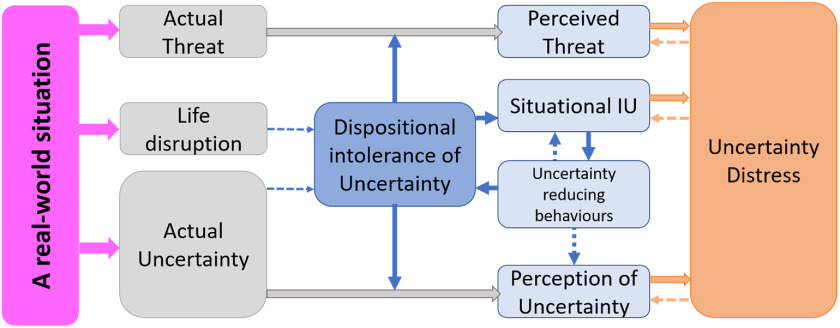
“According to the uncertainty distress model [26], illness represents a life disruption that can increase dispositional IU; in turn, IU leads to situational and illness-related uncertainty (i.e., UI), with the associated psychological distress mostly in the form of worry and anxiety.”
InfluentialSelf-citationRegulatory and legal framework for managing the development of the Northern Sea Route
Yakovlev, S. Y., & Shemyakin, A. S. (2021) · Transaction Kola Science Centre · doi:10.37614/2307-5252.2021.5.12.013 · Cited by 2
Pleym, K., Iversen, M. M., & Broström, A. (2022) · BMJ Open · doi:10.1136/bmjopen-2021-056027 · Cited by 2
Quines, L. A., & Tubo, F. E. A. (2023) · European Journal of Education Studies · doi:10.46827/ejes.v10i3.4706 · Cited by 1
Ye, H., Ding, J., Liu, Y., Cai, Z., Jiang, N., Cheng, T., He, S., You, R., Yu, W., Liu, W., et al. (2023) · Cognitive Therapy and Research · doi:10.1007/s10608-023-10436-y · Cited by 2
“Uncertainty refers to a subjective experience characterized by negative emotions that arise in response to unpredictable circum - stances (Freeston et al., 2020 ).”
The Role of Ideological Beliefs and Tolerance for Uncertainty in Seeking Esoteric Services
Antonova, N. A., Eritsyan, K. Y., & Усачева, Н. М. (2023) · Social Psychology and Society · doi:10.17759/sps.2023140412 · Cited by 2
Akiyama, N., Kajiwara, S., Uozumi, R., Akiyama, T., Hayashida, K., Sim, J. B. ‐., & Morikawa, M. (2024) · Cureus · doi:10.7759/cureus.55418 · Cited by 1
“The ability to tolerate uncertainty was needed to prevent burnout among healthcare providers [19, 20].”
BackgroundYang, Q., Qiu, X., Wang, Y., & Lv, M. (2025) · Cyberpsychology Journal of Psychosocial Research on Cyberspace · doi:10.5817/cp2025-3-3 · Cited by 4
Intelligent Decision Support During Hospitalization in a Pandemic: Methodology and Process Model
Smirnov, A. V., Teslya, N., Shilov, N. G., & Moll, E. (2021) · Conference of Open Innovations Association (FRUCT) · doi:10.23919/fruct50888.2021.9347654 · Cited by 1
Ängste, Sorgen und psychische Gesundheit in der Corona-Pandemie
Heisig, J. P., König, C., & Löbl, S. (2021) · Springer eBooks · doi:10.1007/978-3-662-63722-7_8 · Cited by 7
Grishina, A., & Klimenko, V. A. (2021) · Lecture notes in networks and systems · doi:10.1007/978-3-030-80946-1_76 · Cited by 1
Intolerance of Uncertainty among Indonesian Workers During Covid-19 Pandemic
Rasyida, A., Rahayu, M. N. M., & Aprodita, N. P. (2022) · Journal of Educational Health and Community Psychology · doi:10.12928/jehcp.v11i1.22188 · Cited by 1
Conspiracies and contagion: COVID-19 related beliefs and associated mental health symptomatologyPreprint
Juárez, F. P.-G., Solomonova, E., Nephtali, E., & Gold, I. (2023) · doi:10.31234/osf.io/8bfxz · Cited by 1
Thwaites, R., & Naz, S. (2021) · The Cognitive Behaviour Therapist · doi:10.1017/s1754470x21000076
Zuenko, A. A., Oleynik, Y. A., & Александрович, М. Р. (2021) · Transaction Kola Science Centre · doi:10.37614/2307-5252.2021.5.12.015
Development of a simulation model of personnel logistics of a production cluster
Николаевна, М. С., & Неупокоева, Е. О. (2021) · Transaction Kola Science Centre · doi:10.37614/2307-5252.2021.5.12.010
RAS, S. S., Smirnov, A. V., Teslya, N., RAS, S. S., Moll, E., Mikhailov, S. A., RAS, S. S., Levashova, T. V., & RAS, S. S. (2021) · Transaction Kola Science Centre · doi:10.37614/2307-5252.2021.5.12.006
Александрович, П. В., Маслобоев, А. В., & Bystrov, V. V. (2021) · Transaction Kola Science Centre · doi:10.37614/2307-5252.2021.5.12.014
Technology of training a neural-network model for ontology population
Андреевич, Л. П., & Malozemova, M. L. (2021) · Transaction Kola Science Centre · doi:10.37614/2307-5252.2021.5.12.016
Storage organization for "open" sets of entity attributes in relational databases
Oleynik, A. G. (2021) · Transaction Kola Science Centre · doi:10.37614/2307-5252.2021.5.12.011
Vicentiy, A. V., & Шишаев, М. Г. (2021) · Transaction Kola Science Centre · doi:10.37614/2307-5252.2021.5.12.003 · Cited by 1
Data Mining - methods and algorithms, summary
Fridman, O. V. (2021) · Transaction Kola Science Centre · doi:10.37614/2307-5252.2021.5.12.008
Intolerância à incerteza nos transtornos alimentares
Camargos, S. P. D. S. (2021) · doi:10.14393/ufu.di.2021.648 · Cited by 2
Osborne, J. (2021) · Louisiana State University · doi:10.31390/gradschool_theses.5303
Impact of COVID-19-Related Distress on Anxiety and Depression of College Students
Mathew, J., Yadav, P., Nair, S., Gomes, R. F., & Bhaskar, S. (2022) · Journal of Learning for Development · doi:10.56059/jl4d.v9i2.560 · Cited by 1
Predictors of anxiety and depression in Korean adults during COVID-19 pandemic
Sohn, J. N. (2022) · The Journal of Korean Academic Society of Nursing Education · doi:10.5977/jkasne.2022.28.3.328 · Cited by 1
“불확실성 스트레스 모델(Uncertainty Distress Model)에 의하면 불확실성에 대한 인내력 부족은 지각된 위협에 영향을 미치고 최종적으로 불확실성 스트레스에 영향을 미친다고 하였다[16].”
The development of a support pathway for staff working in older adult settings during Covid-19
Gray, K. L., James, I. A., Kennedy, A., & Kay, G. A. (2021) · FPOP Bulletin Psychology of Older People · doi:10.53841/bpsfpop.2021.1.154.32
lan, A., Steve, T., Julie, B., Anna, B., & Gemma, G. (2021) · FPOP Bulletin Psychology of Older People · doi:10.53841/bpsfpop.2021.1.154.44
Akiyama, N., Kajiwara, S., Uozumi, R., Akiyama, T., Hayashida, K., Sim, J. B. ‐., & Morikawa, M. (2023) · Research Square · doi:10.21203/rs.3.rs-3401803/v1
Learning from Covid-19; lessons for healthcare staff wellbeing
McBride, L., Dempsey, C., & Corrigan, J. (2023) · Clinical psychology forum · doi:10.53841/bpscpf.2023.1.362.48
Coping Behavior in Young People with Different Levels of Ambiguity Tolerance
Kirilyuk, M. I., & Penyavskaya, A. V. (2023) · SibScript · doi:10.21603/sibscript-2023-25-5-665-676
“Сюда также относятся сожаление, вина, чувство ответ - ственности или стыда, грусть и горе, чувство отвергнуто - сти, напряжения и давления, которые испытывает чело - век, попадая в незнакомую ситуацию [Freeston et al. 2020].”
Borges, D., & Soares, A. L. (2023) · Acta Sociológica · doi:10.22201/fcpys.24484938e.2023.90.86269
Moroni, L., Bottesi, G., Bertolotti, G., Cangiano, A., Rizza, C., Malerba, A., Picozzi, A., & Burro, R. (2023) · Stress and Health · doi:10.1002/smi.3349
Self-citationAljwiser, S. M., Alqarni, M. H., Alanazi, M. M., Algarni, M. A., Alrashed, N. M., Almashoug, M. A., Alenzi, E. O., & AlAteeq, D. A. (2024) · Journal of Nature and Science of Medicine · doi:10.4103/jnsm.jnsm_137_23
Metadata
- Authors
- Freeston, M., Tiplady, A., Mawn, L., Bottesi, G., & Thwaites, S.
- Affiliations
- Newcastle University (GB)
- Royal Victoria Infirmary (GB)
- University of Padua (IT)
- Corresponding author
- Freeston, Mark
- Venue
- The Cognitive Behaviour Therapist
- Publisher
- Cambridge University Press (CUP)
- Published
- 2020
- Volume
- 13
- Pages
- e31-e31
- ISSN
- 1754-470X (ISSN-L)
- PMC
- PMC7426588
- OpenAlex
- W3041256719
- Cited by
- 221
- References
- 61
- Citations by year
- 2026: 12 · 2025: 24 · 2024: 34 · 2023: 40 · 2022: 44 · 2021: 54 · 2020: 13
- FWCI
- 2.99
- Type
- journal article
- Language
- en
- Open access
- hybrid
- doi.org
- Locations
- The Cognitive Behaviour Therapist (publishedVersion, cc-by)
- PubMed Central (publishedVersion, cc-by)
- PubMed (publishedVersion)
- Padua Research Archive (University of Padova) (submittedVersion, cc-by)
- Newcastle University ePrints (Newcastle Univesity)
- Topics
- Social Sciences › Psychology › Clinical Psychology › COVID-19 and Mental Health
- Social Sciences › Psychology › Experimental and Cognitive Psychology › Anxiety, Depression, Psychometrics, Treatment, Cognitive Processes
- Health Sciences › Medicine › Public Health, Environmental and Occupational Health › Maternal Mental Health During Pregnancy and Postpartum
- Keywords
- COVID-19 pandemic, intolerance of uncertainty, overestimation of threat, anxiety maintenance, psychological distress
About these checks
Registry, retraction, Cites and statistics results are computed, not judged, with one exception: a printed reference that no index lists is read once by a model before it counts as a citation error. Claims are extracted by a model and kept only when their quote appears verbatim in the text; each cited source is then checked, with a model’s help, for whether it says what the claim relies on. Those verdicts can be wrong — read the claim’s quote and the cited source before relying on one.
Statistics and arithmetic are recomputed, not judged.
Confidence bands are shown only for fields calibrated on our annotated test set. None is calibrated yet, so no band is shown.
What counts as a claim ›How we measure confidence ›How we check this ›
Are you an author, or do you see a problem with this page? Request a review
Data sources
Bibliographic data: Semantic Scholar, OpenAlex, Crossref.
Contains information from the Semantic Scholar Academic Graph Datasets, made available under the ODC Attribution License (ODC-BY 1.0).
Semantic Scholar’s data is described in: Kinney, R., et al. (2023). The Semantic Scholar Open Data Platform. arXiv:2301.10140.
