

Towards a model of uncertainty distress in the context of Coronavirus (COVID-19)
Open accessThe DOI matches its Crossref record; 61 of the 61 references it cites were found in a registry or an index.
Abstract
The paper forms part of a series of papers outlining the theoretical framework for a new model of uncertainty distress (this paper), treatment implications arising from the model, and empirical tests of the model. We define uncertainty distress as the subjective negative emotions experienced in response to the as yet unknown aspects of a given situation. In the first paper we draw on a robust body of research on distinct areas including: threat models of anxiety, perceived illness uncertainty and intolerance of uncertainty. We explore how threat and uncertainty are separable in anxiety and how we can understand behaviours in response to uncertainty. Finally, we propose a clinically, theoretically and empirically informed model for uncertainty distress, and outline how this model can be tested. Caveats, clinical applications and practitioner key points are briefly included, although these are more fully outlined in the treatment implications article. While we outline this model in the context of novel coronavirus (COVID-19), the model has broader applications to both mental and physical health care settings. Key learning aims: (1)To define the concept of uncertainty distress. (2)To understand the role of threat, over-estimation of threat, perceived uncertainty, actual uncertainty, and intolerance of uncertainty in distress maintenance. (3)To understand how people may behave in response to uncertainty distress. (4)To describe a model of uncertainty distress.
Overview
The claims and statistics of this paper haven’t been checked yet.
Free: it reads the open-access text and checks the first 5 claims that cite a source we can check. Create a free account to check every claim.
Integrity signals
Registry
Cites
Statistics
Figures
Verification
Claims the paper makes
The claims and statistics of this paper haven’t been checked yet.
Free: it reads the open-access text and checks the first 5 claims that cite a source we can check. Create a free account to check every claim.
Claims other papers make about this one
Each is checked against this paper’s own text: does it say what the citing paper says it does?
The source backs part of the claim, not all of it — or backs it for a different population, condition or comparison.
In the citing paper
“While originally developed for anxiety disorders, CBT-IU has been successfully applied in contexts such as pandemic-related stress, economic instability, and geopolitical crises [38].”
From Impact of Media-Induced Uncertainty on Mental Health: Narrative-Based Perspective. (2025) · cites this paper as [38]
Experimental — accuracy not yet measuredThe cited source says what the claim attributes to it.
In the citing paper
“It may not be the case that such uncertainty is elevated in patients with preexisting anxiety disorders (Rettie & Daniels, 2020) but instead the construct of “uncertainty distress” may be more relevant (Freeston et al., 2020).”
From Fear and Anxiety in COVID-19: Preexisting Anxiety Disorders (2021) · cites this paper as Freeston et al., 2020
The cited source says what the claim attributes to it.
In the citing paper
“Understanding the distinction between these constructs and which, if any, applies to patients will help in the formulation of patients’ difficulties and determine whether treatment focuses on tolerance of uncertainty, overestimation of threat, or a hybrid of the two (Freeston et al., 2020).”
From Fear and Anxiety in COVID-19: Preexisting Anxiety Disorders (2021) · cites this paper as Freeston et al., 2020
The cited source says what the claim attributes to it.
In the citing paper
“Furthermore, subjective feelings of uncertainty, or uncertainty distress [38], may be accompanied by or instigate a host of other mental states, such as helplessness, frustration, anger, guilt, and grief [39].”
From Impact of Media-Induced Uncertainty on Mental Health: Narrative-Based Perspective. (2025) · cites this paper as [38]
The cited source says what the claim attributes to it.
In the citing paper
“IU, as a set of negative cognitive, affective, and behavioral reactions to situational uncertainty [38,85], predicts acute subjective and psychological stress response in humans [33] and defensive responding.”
From Impact of Media-Induced Uncertainty on Mental Health: Narrative-Based Perspective. (2025) · cites this paper as [38]
1 more claim about this paper
Create a free account to see every claim other papers make about this one.
Self-check
Percentages, sums and reported differences re-computed from the paper’s own numbers.
The self-check needs the paper’s full text.
Citations
Cites
Diagnostic and Statistical Manual of Mental Disorders
American Psychiatric Association (2013) · doi:10.1176/appi.books.9780890425596 · Cited by 116,369
Wang, C., Pan, R., Wan, X., Tan, Y., Xu, L., Ho, C. S., & Ho, R. C. (2020) · International Journal of Environmental Research and Public Health · doi:10.3390/ijerph17051729 · Cited by 9,923
(1985) · Cited by 2,882
A cognitive model of social phobia
Adrian Wells, A. (1995) · Research Explorer (The University of Manchester) · Cited by 2,701
Clark, D. M. (1986) · Behaviour Research and Therapy · doi:10.1016/0005-7967(86)90011-2 · Cited by 2,422 · cited 2×
“These are often referred to as the second wave of CBT and include the Clark (1986) model of panic, the Salkovskis (1985) model of obsessive compulsive disorder (OCD) and the Clark and Wells (1995) model of social anxiety.”
Fearing the unknown: A short version of the Intolerance of Uncertainty Scale
Carleton, R. N., Norton, M. A. P. J., & Asmundson, G. J. G. (2007) · Journal of Anxiety Disorders · doi:10.1016/j.janxdis.2006.03.014 · Cited by 2,288 · cited 12×
“More recently, there is an emerging consensus from a series of recent psychometric studies using bi-factor analysis that the IUS-12, the shortened version of the original 27-item IUS (Carleton et al., 2007) is best understood as a univocal or unidimensional measure.”
InfluentialUncertainty and anticipation in anxiety: an integrated neurobiological and psychological perspective
Grupe, D. W., & Nitschke, J. B. (2013) · Nature Reviews Neuroscience · doi:10.1038/nrn3524 · Cited by 2,007 · cited 2×
“Along with Kuang (2017), we emphasise the as yet ‘unknown-ness’ of the uncertain situation.”
Molenaar, P. C. M. (2004) · Measurement: Interdisciplinary Research & Perspective · doi:10.1207/s15366359mea0204_1 · Cited by 1,943 · cited 1×
“Second, there is a long recognised inferential jump that evidence from between-person studies automatically applies to within-person models (see Molenaar, 2004) and within-person or idiographic studies are required (see Wright and Woods, 2020), despite the challenges of defining, operationalising…”
Obsessional-compulsive problems: A cognitive-behavioural analysis
Salkovskis, P. M. (1985) · Behaviour Research and Therapy · doi:10.1016/0005-7967(85)90105-6 · Cited by 1,842 · cited 3×
“Furthermore, reassurance seeking, although common across disorders (Kobori and Salkovskis, 2013), is often recognised as a particular feature of OCD.”
Freeston, M. H., Rhéaume, J., Letarte, H., Dugas, M. J., & Ladouceur, R. (1994) · Personality and Individual Differences · doi:10.1016/0191-8869(94)90048-5 · Cited by 1,731 · cited 2×
“…uncertainty as understood initially in the context of illness (e.g. Mishel, 1981; Zhang, 2017), and intolerance of uncertainty (e.g. Carleton, 2016; Freeston et al ., 1994) and we will consider how their integration has important implications for understanding and potentially mitigating…”
Self-citation
Research works printed but not linked: 7
- Tiplady, A., Askey-Jones, S., Meares, K., Thwaites, R., & Freeston, M. H. (2017). Developing a module to target intolerance of uncertainty in the transdiagnostic treatment of anxiety: design, treatment, and preliminary outcomes. In M. H. Freeston (Chair), Targeting Intolerance of Uncertainty in the Treatment of Anxiety: Rationale, Description, and Preliminary Outcomes. Symposium conducted at 45th Annual Conference and Workshops of the British Association of Behavioural and Cognitive Psychotherapies, Manchester, UK, July 2017.
- Clifford, M. (2014). Intolerance of Uncertainty: A Meta-Analysis and Review of Behaviours in Everyday Life. Unpublished Doctoral Thesis, Newcastle University.
- Mofrad, L. & Tiplady, A. (2019). A ‘Making Friends with Uncertainty’ Group Intervention. In A. Russell (Chair), Developments in CBT for Depression and Anxiety. Symposium conducted at 47th Annual Conference and Workshops of the British Association of Behavioural and Cognitive Psychotherapies, Bath, UK, September 2019.
- Askey-Jones, S., Tiplady, A., Thwaites, R., Meares, K., & Freeston, M. H. (2017). Developing a module to target intolerance of uncertainty in the transdiagnostic treatment of anxiety: conceptual, clinical, and practical challenges. In M. H. Freeston (Chair), Targeting Intolerance of Uncertainty in the Treatment of Anxiety: Rationale, Description, and Preliminary Outcomes. Symposium conducted at 45th Annual Conference and Workshops of the British Association of Behavioural and Cognitive Psychotherapies, Manchester, United Kingdom, July 2017.
- Milne, S., Lomax, C., & Freeston, M. H. (2017). Appraisal of situational threat and situational intolerance of uncertainty in anxiety provoking situations of personal concern: an evidenced-based rationale for targeting IU in treatment? In M. H. Freeston (Chair), Targeting Intolerance of Uncertainty in the Treatment of Anxiety: Rationale, Description, and Preliminary Outcomes. Symposium conducted at 45th Annual Conference and Workshops of the British Association of Behavioural and Cognitive Psychotherapies, Manchester, UK, July 2017.
- Freeston, M. H., Mawn, L, Botessi, G., Tiplady, A., Pan, J., Nogueira-Arjona, R, Romero Sanchiz, P., & Simos, G. (2020). Towards a model of uncertainty distress in the context of Coronavirus (COVID-19) Retrieved from: https://www.researchgate.net/project/Towards-a-model-of-uncertainty-distress-in-the-context-of-Coronavirus-COVID-19 PMC7426588 34191941
- Milne, S., Lomax, C., & Freeston, M. H. (2019) A review of the relationship between intolerance of uncertainty and threat appraisal in anxiety. The Cognitive Behaviour Therapist, 12, E38. doi: 10.1017/S1754470X19000230 · DOI · Paper page
Cited by
Rettie, H., & Daniels, J. (2021) · American Psychologist · doi:10.1037/amp0000710 · Cited by 526
Cusinato, M., Iannattone, S., Spoto, A., Poli, M., Moretti, C., Gatta, M., & Miscioscia, M. (2020) · International Journal of Environmental Research and Public Health · doi:10.3390/ijerph17228297 · Cited by 336
“The quarantine measures imposed during the COVID-19 pandemic represent an uncertain and threatening situation that could trigger anxiety symptoms [73] and interfere with personal self-control [74].”
BackgroundPsychological Distress during the COVID-19 Lockdown: The Young Adults Most at Risk
Glowacz, F., & Schmits, E. (2020) · Psychiatry Research · doi:10.1016/j.psychres.2020.113486 · Cited by 280
Karataş, Z., & Tagay, Ö. (2021) · Personality and Individual Differences · doi:10.1016/j.paid.2020.110592 · Cited by 174
“Some people like to take risks and live unpredictable lives, while others find the uncertainty of life profoundly frustrating (Freeston et al., 2020).”
BackgroundDo we experience pandemic fatigue? current state, predictors, and prevention
Haktanır, A., Can, N., Seki, T., Kurnaz, M. F., & Dilmaç, B. (2021) · Current Psychology · doi:10.1007/s12144-021-02397-w · Cited by 173
Cyberchondria in the time of the COVID ‐19 pandemic
Starcevic, V., Schimmenti, A., Billieux, J., & Berle, D. (2021) · Human Behavior and Emerging Technologies · doi:10.1002/hbe2.233 · Cited by 141
Schmits, É., & Glowacz, F. (2021) · International Journal of Mental Health and Addiction · doi:10.1007/s11469-020-00432-8 · Cited by 127
“…of the distressing features of the emerging pandemic is that as long as the precise cause and evolution are unknown, this uncertainty in itself can increase the level of psychosocial morbidity (Carleton et al. 2012; Freeston et al. 2020; Mertens et al. 2020; Sankar et al. 2017; Sim and Chua 2004).”
BackgroundFactors impacting resilience as a result of exposure to COVID-19: The ecological resilience model
Panzeri, A., Bertamini, M., Butter, S., Levita, L., Gibson-Miller, J., Vidotto, G., Bentall, R. P., & Bennett, K. M. (2021) · PLoS ONE · doi:10.1371/journal.pone.0256041 · Cited by 99
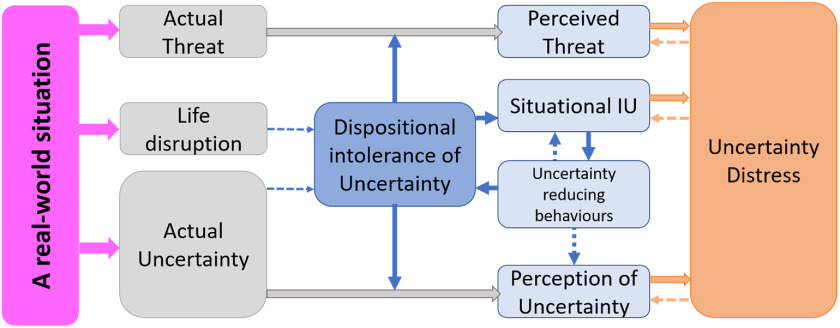
“Our findings are in line with the uncertainty distress model [65], according to which the dispositional intolerance of uncertainty may act as a moderator strengthening the relationship between the perceived threat (e.”
ResultSupport amid uncertainty: Long COVID illness experiences and the role of online communities
Russell, D., Spence, N. J., Chase, J. D., Schwartz, T., Tumminello, C. M., & Bouldin, E. D. (2022) · SSM - Qualitative Research in Health · doi:10.1016/j.ssmqr.2022.100177 · Cited by 98
“accounted for by the healthcare system) may experience significant anxiety (Freeston et al., 2020).”
BackgroundIntolerance of uncertainty over COVID-19 pandemic and its effect on anxiety and depressive symptoms
Del Valle, M. V., Andrés, M. L., Urquijo, S., Yerro-Avincetto, M., López-Morales, H., & Canet-Juric, L. (2020) · Revista Interamericana de Psicología/Interamerican Journal of Psychology · doi:10.30849/ripijp.v54i2.1335 · Cited by 70
“Otherwise, the perceived distress may lead to over-engagement behaviors (e.g., breaking quarantine), aimed at trying to regain control and certainty over the situation and alleviate the distress (Freeston et al., 2020).”
BackgroundInfluentialStress-Related Growth in Adolescents Returning to School After COVID-19 School Closure
Waters, L., Allen, K.-A., & Arslan, G. (2021) · Frontiers in Psychology · doi:10.3389/fpsyg.2021.643443 · Cited by 69
“…research shows that strengths use leads to an increased sense of control/self-efficacy in young people (Loton and Waters, 2018), which may be an important outcome to combat the “uncertainty distress” (Freeston et al., 2020) that many young people are currently feeling (Demkowicz et al., 2020).”
BackgroundGupta, S., & McCarthy, P. J. (2021) · Frontiers in Psychology · doi:10.3389/fpsyg.2021.611261 · Cited by 86
Using Fear and Anxiety Related to COVID-19 to Predict Cyberchondria: Cross-sectional Survey Study
Wu, X., Nazari, N., & Griffiths, M. D. (2021) · Journal of Medical Internet Research · doi:10.2196/26285 · Cited by 84
“Intolerance of uncertainty amplifies both threat perception and uncertainty perception [58], which can lead to more engagement in safety behaviors (eg, checking behavior) [59].”
Hu, Q., Liu, Q., & Wang, Z. (2021) · Computers in Human Behavior · doi:10.1016/j.chb.2021.107058 · Cited by 80
Intolerance of uncertainty heightens negative emotional states and dampens positive emotional states
Morriss, J., Goh, K., Hirsch, C. R., & Dodd, H. F. (2023) · Frontiers in Psychiatry · doi:10.3389/fpsyt.2023.1147970 · Cited by 62
“These findings are in line with new theoretical positions and evidence demonstrating that IU can modulate a range of negative and positive emotional experiences, beyond that of fear and anxiety (9, 10, 25, 27, 28, 30).”
ResultDavid, J., Visvalingam, S., & Norberg, M. M. (2021) · Psychiatry Research · doi:10.1016/j.psychres.2021.114062 · Cited by 54
Sanilevici, M., Reuveni, O., Lev-Ari, S., Golland, Y., & Levit-Binnun, N. (2021) · Frontiers in Psychology · doi:10.3389/fpsyg.2021.720965 · Cited by 54
“The effect of online-MBSR on emotion regulation and intolerance of uncertainty was also assessed as these are highly relevant factors for managing the stress and anxiety evoked by the life-impacting challenges of COVID-19 (Freeston et al., 2020; Rettie and Daniels, 2020; Zheng et al., 2020).”
BackgroundIntolerance of uncertainty and reactions to the COVID-19 pandemic
Bavolar, J., Kacmar, P., Hricova, M., Schrötter, J., Kovacova-Holevova, B., Köverova, M., & Raczova, B. (2023) · The Journal of General Psychology · doi:10.1080/00221309.2021.1922346 · Cited by 54
“The more complex model was provided by Freeston et al. (2020) proposing IU as a dispositional tendency moderating the perceived threat and uncertainty and leading to situational IU.”
MethodResultInfluentialAlHadi, A. N., & Alhuwaydi, A. M. (2021) · Journal of American College Health · doi:10.1080/07448481.2021.1947839 · Cited by 65
Baerg, L., & Bruchmann, K. (2022) · Acta Psychologica · doi:10.1016/j.actpsy.2022.103534 · Cited by 46
Blanuša, J., Barzut, V., & Knežević, J. (2021) · Frontiers in Psychology · doi:10.3389/fpsyg.2021.647972 · Cited by 49
del-Valle, M. V., López-Morales, H., Andrés, M. L., Yerro-Avincetto, M., Gelpi Trudo, R., Urquijo, S., & Canet-Juric, L. (2022) · Journal of Anxiety Disorders · doi:10.1016/j.janxdis.2022.102531 · Cited by 45
Peterson, J. A., Chesbro, G. A., Larson, R. D., Larson, D. J., & Black, C. D. (2021) · Frontiers in Psychology · doi:10.3389/fpsyg.2021.652086 · Cited by 47
OCD and COVID-19: a new frontier
Jassi, A. D., Shahriyarmolki, K., Taylor, T., Peile, L., Challacombe, F. L., Clark, B., & Veale, D. M. (2020) · The Cognitive Behaviour Therapist · doi:10.1017/s1754470x20000318 · Cited by 46
Towards a model of uncertainty distress in the context of Coronavirus (Covid-19)
Freeston, M. H., Tiplady, A., Mawn, L., Bottesi, G., & Thwaites, S. (2020) · doi:10.31234/osf.io/v8q6m · Cited by 44
Self-citationPrete, G., Fontanesi, L., Porcelli, P., & Tommasi, L. (2020) · Frontiers in Psychology · doi:10.3389/fpsyg.2020.566659 · Cited by 48
The barriers, benefits and training needs of clinicians delivering psychological therapy via video
Buckman, J. E. J., Saunders, R., Leibowitz, J., & Minton, R. (2021) · Behavioural and Cognitive Psychotherapy · doi:10.1017/s1352465821000187 · Cited by 50
“There are informative advisory manuscripts that offer guidance to do this based on years of experience in delivering care this way (Cromarty et al., 2020; Freeston et al., 2020).”
InfluentialHan, L., Bai, H., Lun, B., Li, Y., Wang, Y., & Ni, Q. (2022) · Frontiers in Psychiatry · doi:10.3389/fpsyt.2022.935760 · Cited by 53
“In addition, COVID-19 is an exemplar of a real-world uncertain and threatening situation related to uncertainty distress (37).”
BackgroundGullo, S., Gelo, O. C. G., Bassi, G., Lo Coco, G., Lagetto, G., Esposito, G., Pazzagli, C., Salcuni, S., Freda, M. F., Mazzeschi, C., et al. (2023) · Current Psychology · doi:10.1007/s12144-022-03071-5 · Cited by 38
Bartoszek, G., Ranney, R. M., Curanovic, I., Costello, S. J., & Behar, E. (2022) · Behaviour Research and Therapy · doi:10.1016/j.brat.2022.104125 · Cited by 36
Delhey, J., Hess, S. P., Boehnke, K., Deutsch, F., Eichhorn, J., Kühnen, U., & Welzel, C. (2023) · Journal of Happiness Studies · doi:10.1007/s10902-023-00676-w · Cited by 49
“…2021; Gambacorta et al., 2021; Menta, 2021), and social distancing increased feelings of loneliness (Okabe-Miyamoto & Lyubomirsky, 2021), the main challenge was of a psychological nature: coping with the distress resulting from perceived threat and perceived uncertainty (cf. Freeston et al., 2020).”
BackgroundCarnahan, N. D., Carter, M. M., & Sbrocco, T. (2021) · International Journal of Cognitive Therapy · doi:10.1007/s41811-021-00123-9 · Cited by 44
“(2020) have proposed a model regarding distress over the coronavirus epidemic which regards uncertainty and threat perception as distinct interacting constructs, such that appraisals of threat may be increased by IU (Freeston et al., 2020).”
BackgroundIntimate Partner Violence and Mental Health during Lockdown of the COVID-19 Pandemic
Glowacz, F., Schmits, É., & Dziewa, A. (2022) · International Journal of Environmental Research and Public Health · doi:10.3390/ijerph19052535 · Cited by 48
“Pandemic crises sow uncertainty which can last for a long time; intolerance of uncertainty is a risk factor for the mental health of the population [3,4].”
BackgroundBottesi, G., Marino, C., Vieno, A., Ghisi, M., & Spada, M. M. (2022) · Psychology & Health · doi:10.1080/08870446.2021.1952584 · Cited by 36
“…Internet use increases the availability of conflicting or ambiguous information from different sources: this information may be more or less helpful, may vary in quality, and may further promote perceived threats and uncertainties, thus heightening psychological distress (Freeston et al., 2020).”
BackgroundResultSelf-citationLiu, X., Zhao, Y., Suo, X., Zhang, X., Pan, N., Kemp, G. J., Gong, Q., & Wang, S. (2023) · Translational Psychiatry · doi:10.1038/s41398-023-02525-z · Cited by 37
“Its rapid spread and the worldwide lockdowns have increased psychological stress in the face of uncertain and uncontrollable threats [3, 4].”
BackgroundFear and Anxiety in COVID-19: Preexisting Anxiety Disorders
Shafran, R., Rachman, S., Whittal, M., Radomsky, A., & Coughtrey, A. (2021) · Cognitive and Behavioral Practice · doi:10.1016/j.cbpra.2021.03.003 · Cited by 33
Regnoli, G. M., Tiano, G., & De Rosa, B. (2024) · European Journal of Investigation in Health, Psychology and Education · doi:10.3390/ejihpe14040054 · Cited by 33
“…also be increased by the lack of salient or sufficient information to understand an ambiguous situation [57] and, as an unpleasant experience, it can trigger the dysfunctional search for information or avoidant behavior that aims to reduce the discomfort through an illusory desire for control [56].”
BackgroundEmotional Regulation, Coping, and Resilience in Informal Caregivers: A Network Analysis Approach
Panzeri, A., Bottesi, G., Ghisi, M., Scalavicci, C., Spoto, A., & Vidotto, G. (2024) · Behavioral Sciences · doi:10.3390/bs14080709 · Cited by 44
“…strength lies in the ecological validity of the present research, as it provided an ecological sample from a clinical population of informal caregivers who, despite having some heterogeneity, were all living in the same conditions during the pandemic, representing a life-disrupting event [91].”
BackgroundSelf-citationUncertainty, shock and anger: Recent loss experiences of first‐wave COVID ‐19 pandemic in Italy
Cipolletta, S., Entilli, L., & Filisetti, S. (2022) · Journal of Community & Applied Social Psychology · doi:10.1002/casp.2604 · Cited by 40
Sahib, A., Chen, J., Cárdenas, D., Calear, A. L., & Wilson, C. (2024) · Journal of Affective Disorders · doi:10.1016/j.jad.2024.08.056 · Cited by 34
Uncertainty, Stress, and Resilience During the COVID-19 Pandemic in Greece
Nikopoulou, V. A., Gliatas, I., Blekas, A., Parlapani, E., Holeva, V., Tsipropoulou, V., Karamouzi, P., Godosidis, A., & Diakogiannis, I. (2022) · The Journal of Nervous and Mental Disease · doi:10.1097/nmd.0000000000001491 · Cited by 35
“In other words, the more intolerant to uncertainty someone is, the more distressed he/she will becomewhen facing an uncertain situation, regardless of a negative or positive outcome (Freeston et al., 2020).”
BackgroundMorriss, J. (2025) · Neuroscience & Biobehavioral Reviews · doi:10.1016/j.neubiorev.2025.106138 · Cited by 28
“…(Gentes and Ruscio, 2011; McEvoy et al., 2019) or from the environment (e.g. prejudice, natural disasters, pan-demics) (Afifi et al., 2012; Freeston et al., 2020; Massazza et al., 2023; Palumbo and Manna, 2020; Ricciardelli et al., 2022), increases the risk of mental health conditions,…”
Freeston, M. H., & Komes, J. (2022) · Journal of Behavior Therapy and Experimental Psychiatry · doi:10.1016/j.jbtep.2022.101827 · Cited by 40
Self-citationSilva, A. J., & Caetano, A. (2023) · BRQ Business Research Quarterly · doi:10.1177/23409444231202809 · Cited by 36
“First, there are aspects of each uncertain situation that may be accompanied by threat-related behaviors (objectively, perceived, or overestimated) that could intensify the negative affective reactions and decrease the worker’s ability to adapt (Carleton, 2016a; Freeston et al., 2020).”
BackgroundRegnoli, G. M., Tiano, G., & Rosa, B. D. (2024) · Climate · doi:10.3390/cli12080118 · Cited by 32
“…of cognitive, emotional, and behavioral responses activated to cope with ambiguous and uncertain situations [42]; it is a construct that expresses “the tendency to be bothered or upset by the (as yet) unknown elements of a situation, whether the possible outcome is negative or not” [43] (p. 6).”
BackgroundResultImplication of coronavirus pandemic on obsessive-compulsive-disorder symptoms
Sulaimani, M. F., & Bagadood, N. H. (2020) · Reviews on Environmental Health · doi:10.1515/reveh-2020-0054 · Cited by 31
Regnoli, G. M., Tiano, G., & Rosa, B. D. (2024) · European Journal of Investigation in Health Psychology and Education · doi:10.3390/ejihpe14060121 · Cited by 37
“Intolerance of Uncertainty is described as a dispositional component that, in the interplay between cognition, emotion, and behavior, expresses “the tendency to be bothered or upset by the (as yet) unknown elements of a situation, whether the possible outcome is negative or not” [52] (p. 6).”
BackgroundArslan, G., Allen, K., & Waters, L. E. (2022) · Psychological Reports · doi:10.1177/00332941221087915 · Cited by 38
“Adding to this, previous evidence has reported that strengths use is associated with an increased sense of control and self-ef fi cacy in adolescents (Loton & Waters, 2018), which may be an important resource to deal with the ‘ uncertainty distress ’ (Freeston et al., 2020).”
MethodPfaff, H., & Schmitt, J. M. (2023) · Journal of Evaluation in Clinical Practice · doi:10.1111/jep.13890 · Cited by 29
Impact of Media-Induced Uncertainty on Mental Health: Narrative-Based Perspective.
Kesner, L., Juríčková, V., Grygarová, D., & Horáček, J. (2025) · JMIR Mental Health · doi:10.2196/68640 · Cited by 23
“While originally developed for anxiety disorders, CBT-IU has been successfully applied in contexts such as pandemic-related stress, economic instability, and geopolitical crises [38].”
Goldwert, D., Dev, A. S., Broos, H. C., Broad, K., & Timpano, K. R. (2023) · British Journal of Clinical Psychology · doi:10.1111/bjc.12441 · Cited by 38
“Applied to our work, the Freeston et al. (2020) model suggests that people higher in IU may experience greater distress in response to potentially threatening climate change information, which may lead them to engage in uncertainty-reducing behaviours, like avoidance behaviour.”
InfluentialBottesi, G., Iannattone, S., Carraro, E., & Lauriola, M. (2022) · Research on Child and Adolescent Psychopathology · doi:10.1007/s10802-022-00944-y · Cited by 31
“People high in IU struggle to tolerate and modulate the negative emotions elicited by uncertainty (i.e., uncertainty distress) and usually experience negative emotional, behavioral, and cognitive responses when dealing with uncertain situations (Freeston et al., 2020).”
BackgroundSelf-citationCoping strategies, anxiety and depression in ocd and schizophrenia: Changes during covid-19
Rosa-Alcázar, Á., Parada-Navas, J. L., García-Hernández, M. D., Martínez-Murillo, S., Olivares-Olivares, P. J., & Rosa-Alcázar, A. I. (2021) · Brain Sciences · doi:10.3390/brainsci11070926 · Cited by 22
Informational Behavior in the COVID-19 Pandemic: Psychological Predictors
Grishina, A., & Abakumova, I. (2020) · International Journal of Cognitive Research in Science Engineering and Education · doi:10.23947/2334-8496-2020-8-si-59-67 · Cited by 45
Sookman, D., Phillips, K. A., Anholt, G. E., Bhar, S. S., Bream, V., Challacombe, F. L., Coughtrey, A. E., Craske, M. G., Foa, E. B., Gagné, J.-P., et al. (2021) · Psychiatry Research · doi:10.1016/j.psychres.2021.113752 · Cited by 24
Lanz, M., Sorgente, A., Vosylis, R., Fonseca, G., Lep, Ž., Li, L., Zupančič, M., Crespo, C., Relvas, A. P., & Serido, J. (2021) · Emerging Adulthood · doi:10.1177/21676968211046071 · Cited by 28
“In other words, “the COVID-19 pandemic represents an exemplar uncertainty situation” (Freeston et al., 2020, p. 2).”
BackgroundOdacı, H., Kaya, F., & Aydın, F. (2022) · Psychology in the Schools · doi:10.1002/pits.22766 · Cited by 26
“Research indicates that being intolerant of uncertainty increases risk perceptions and causes excessive stress, distress, and anxiety reactions (Bavolar et al., 2021; M. Freeston et al., 2020; Taha et al., 2014).”
BackgroundPanzeri, A., Bettinardi, O., Bottesi, G., Bertolotti, G., Brambatti, L., Monfredo, M., Mignemi, G., Bruno, G., Vidotto, G., Spoto, A., et al. (2022) · Current Psychology · doi:10.1007/s12144-022-03344-z · Cited by 29
“, of illness, death), which can trigger depressive symptoms (Freeston et al., 2020).”
BackgroundSelf-citationGodara, M., Everaert, J., Sánchez-López, Á., Joormann, J., & Raedt, R. D. (2023) · Scientific Reports · doi:10.1038/s41598-023-36211-3 · Cited by 39
Youngmann, R., & Kushnirovich, N. (2021) · International Journal of Environmental Research and Public Health · doi:10.3390/ijerph182312590 · Cited by 20
“The uncertainty distress model posits that uncertainty is a main cause of distress, even in low-threat situations [31].”
BackgroundCıhan, H., & VAR, E. Ç. (2022) · Current Psychology · doi:10.1007/s12144-022-03008-y · Cited by 21
ÇELİK, D., Alpay, E. H., Celebi, B., & Türkeli, A. (2021) · European Journal of Psychotraumatology · doi:10.1080/20008198.2021.1953790 · Cited by 27
“According to Freeston et al. (2020), IU is a dispositional tendency that may lead individuals to experience aversion and perceive greater threat even when the adversity of an encountered situation is, as yet, unknown.”
BackgroundKlümper, L., & Sürth, S. (2021) · Current Psychology · doi:10.1007/s12144-021-01951-w · Cited by 25
“Besides this perception, higher levels of intolerance of uncertainty lead to a need for uncertaintyreducing behavior (Freeston et al., 2020).”
BackgroundSbrilli, M. D., Haigler, K., & Laurent, H. K. (2021) · Mindfulness · doi:10.1007/s12671-021-01657-x · Cited by 19
Existential insecurity and trust during the COVID-19 pandemic: The case of Germany
Delhey, J., Steckermeier, L. C., Boehnke, K., Deutsch, F., Eichhorn, J., Kühnen, U., & Welzel, C. (2023) · Journal of Trust Research · doi:10.1080/21515581.2023.2223184 · Cited by 23
Bredemeier, K., Church, L. D., Bounoua, N., Feler, B., & Spielberg, J. M. (2023) · Journal of Anxiety Disorders · doi:10.1016/j.janxdis.2022.102660 · Cited by 18
“In addition to substantially increased health risks, a salient aspect of the early stages of the pandemic was the uncertainty of such health risks (in general, and in different contexts; see Freeston, Tiplady, Mawn, Bottesi, & Thwaites, 2020 and Funkhouser et al., 2022).”
Marchetti, I., Pedretti, L. M., Iannattone, S., Colpizzi, I., Farina, A., Blas, L. D., Ghisi, M., & Bottesi, G. (2025) · Journal of Anxiety Disorders · doi:10.1016/j.janxdis.2025.102999 · Cited by 25
Self-citationLischetzke, T., Schemer, L., In‐Albon, T., Karbach, J., Könen, T., & Glombiewski, J. A. (2021) · Anxiety Stress & Coping · doi:10.1080/10615806.2021.1957848 · Cited by 24
“Moreover, the COVID-19 pandemic has created uncertainty in many aspects of daily life, and this uncertainty can be considered a stressor itself (e.g., Freeston et al., 2020).”
BackgroundBroos, H. C., Llabre, M. M., Saab, P. G., Leite, R. O., Port, J. H., & Timpano, K. R. (2022) · British Journal of Clinical Psychology · doi:10.1111/bjc.12391 · Cited by 22
“Additionally, future research should consider other cognitive mechanisms that may contribute to the relationship between COVID-19 distress and affective symptoms during the pandemic, such as intolerance of uncertainty (e.g., Freeston et al., 2020; Reizer et al., 2021).”
BackgroundBottesi, G. (2023) · European Child & Adolescent Psychiatry · doi:10.1007/s00787-023-02343-0 · Cited by 25
“Such an interplay would foster the establishment of a vicious cycle leading to increased IU, increased perceived threat and uncertainty, and, ultimately, heightened uncertainty distress [4].”
InfluentialSelf-citationCromarty, P., Gallagher, D., & Watson, J. (2020) · The Cognitive Behaviour Therapist · doi:10.1017/s1754470x20000343 · Cited by 20
“There is already a preliminary CBT model based on tolerance of uncertainty distress in the context of coronavirus with further research in progress (Freeston et al., 2020).”
BackgroundAppel, H., Krasko, J., Luhmann, M., & Gerlach, A. L. (2024) · Journal of Research in Personality · doi:10.1016/j.jrp.2024.104490 · Cited by 27
Lauriola, M., Iannattone, S., & Bottesi, G. (2023) · Research on Child and Adolescent Psychopathology · doi:10.1007/s10802-022-01020-1 · Cited by 26
Self-citationFunkhouser, C. J., Klemballa, D. M., & Shankman, S. A. (2022) · PsyArXiv (OSF Preprints) · doi:10.1016/j.brat.2022.104082 · Cited by 20
“…triggered by perceived uncertainty (Carleton, 2016) – are more likely to experience anxiety and worry and engage in uncertainty-reducing behaviors in response to uncertainty (Badia, Harsh, & Abbott, 1979; Freeston, Tiplady, Mawn, Bottesi, & Thwaites, 2020; Ladouceur, Gosselin, & Dugas, 2000).”
Patel, D. A., Webster, S. N., Dowling, E. J., Knowles, C. R., Lockwood-Taylor, G., Coutts‐Bain, D., Simons, L. E., Diver, E., Chilcot, J., Schapira, L., et al. (2024) · Psycho-Oncology · doi:10.1002/pon.70050 · Cited by 19
Vally, Z., & Alowais, A. (2021) · PLoS ONE · doi:10.1371/journal.pone.0260355 · Cited by 16
Cristaldi, F. D. P., Buodo, G., Duma, G. M., Sarlo, M., & Mento, G. (2022) · International Journal of Psychophysiology · doi:10.1016/j.ijpsycho.2022.06.006 · Cited by 16
Mioni, G., Cellini, N., Romola, M., & Bruno, F. (2022) · Timing & Time Perception · doi:10.1163/22134468-bja10062 · Cited by 19
Sica, C., Caudek, C., Cerea, S., Colpizzi, I., Caruso, M., Giulini, P., & Bottesi, G. (2021) · International Journal of Environmental Research and Public Health · doi:10.3390/ijerph18041933 · Cited by 19
“Items were designed to assess participants’ perceptions of the extent of the threat posed by COVID-19, including both the likelihood they would contract COVID-19 and the anticipated degree of personal harm an infection would cause [34].”
BackgroundSelf-citationProblem gambling during Covid-19
Frisone, F., Alibrandi, A., & Settineri, S. (2020) · Mediterranean Journal of Clinical Psychology · doi:10.6092/2282-1619/mjcp-2457 · Cited by 32
Maggio, M. G., Stagnitti, M. C., Calatozzo, P., Cannavò, A., Bruschetta, D., Cuzzola, M. F., Manuli, A., Pioggia, G., & Calabrò, R. S. (2021) · International Journal of Environmental Research and Public Health · doi:10.3390/ijerph182312641 · Cited by 21
“Indeed, it has been shown that quarantine and COVID-19 restrictions can be perceived as an uncertain and threatening situation, capable of triggering symptoms of anxiety [32] and stress [33].”
BackgroundKhorrami, K. J., Manzler, C. A., Kreutzer, K. A., & Gorka, S. M. (2021) · Psychiatry Research Neuroimaging · doi:10.1016/j.pscychresns.2021.111414 · Cited by 17
LeNoble, C. A., Naranjo, A., Shoss, M. K., & Horan, K. A. (2023) · Occupational Health Science · doi:10.1007/s41542-023-00155-x · Cited by 18
“This distinction is important as research has demonstrated that different cognitive appraisals and outcomes occur depending on whether someone is exposed to uncertainty or a tangible threat (e.g., Carleton, 2016; Chen et al., 2018; Freeston & Komes, 2022; Freeston et al., 2020; Reuman et al., 2015).”
BackgroundInvestigation into Grief Experiences of the Bereaved During the Covid-19 Pandemic
Asgari, M., Ghasemzadeh, M., Alimohamadi, A., Sakhaei, S., Killikelly, C., & Nikfar, E. (2023) · OMEGA - Journal of Death and Dying · doi:10.1177/00302228231173075 · Cited by 18
“Additionally, Freeston et al. (2020) stated that when a person experiences grief, negative feelings and emotions are expressed more severely (Freeston et al., 2020).”
Xiao, L., & Song, J. (2024) · Frontiers in Psychology · doi:10.3389/fpsyg.2024.1228966 · Cited by 19
“…uncertainty intolerance have an attentional bias toward the environment, are more sensitive to environmental uncertainty, and perceive it as threatening and intolerable (Freeston et al., 2020), try to avoid uncertainty, and seek to escape from complexities, new things, and ambiguous structures.”
BackgroundWagener, A., Stassart, C., & Etienne, A.-M. (2022) · International Journal of Environmental Research and Public Health · doi:10.3390/ijerph19105908 · Cited by 12
“Situations of uncertainty and their related distress might, in turn, render these individuals intolerant to uncertainty [17].”
BackgroundEffect of Psychotherapy on Intolerance of Uncertainty: A Systematic Review and Meta‐Analysis
Näsling, J., Åström, E., Jacobsson, L., & Ljungberg, J. K. (2024) · Clinical Psychology & Psychotherapy · doi:10.1002/cpp.3026 · Cited by 12
Atalay, A. A., Tunçer, İ., King, N., Önol, B., Sözeri, Y., & Tezel, S. (2023) · Journal of Behavior Therapy and Experimental Psychiatry · doi:10.1016/j.jbtep.2023.101840 · Cited by 17
Rossi, A. A., Pizzoli, S. F. M., Fernández, I., Invernizzi, R., Panzeri, A., Taccini, F., & Mannarini, S. (2024) · Behavioral Sciences · doi:10.3390/bs14100901 · Cited by 19
Mignemi, G., Panzeri, A., Granziol, U., Bruno, G., Bertamini, M., Vidotto, G., & Spoto, A. (2022) · Journal of Behavioral Medicine · doi:10.1007/s10865-022-00322-5 · Cited by 12
Hung, W.-L., & Liu, H.-T. (2022) · International Journal of Environmental Research and Public Health · doi:10.3390/ijerph191610374 · Cited by 10
“In addition, uncertainty-tolerant referral cases have also been established [71].”
BackgroundShahnawaz, M., Nabi, W., Nabi, S., Afaq, M., Paul, M. A., War, F. A., & Shah, N. N. (2022) · Current Psychology · doi:10.1007/s12144-022-03577-y · Cited by 16
“Lack of proper knowledge has created a lot of uncertainty, stigma, guilt and shame regarding the illness, which further impact their mental health (Dar et al., 2020; Hamama & Levin-Dagan., 202; Freeston et al., 2020).”
Güler, K. G., & Albayrak, E. (2024) · International Journal of Social Psychiatry · doi:10.1177/00207640241255569 · Cited by 12
“In this case, as in personal ambiguous loss, there is a feeling of uncertainty and a lack of clear information about the fate of the lost object or situation (Freeston et al., 2020).”
Carney, K. J. L., & Thompson, R. R. (2021) · Frontiers in Veterinary Science · doi:10.3389/fvets.2021.662198 · Cited by 12
“Anxiety and the perception of grief stem from a person’s intolerance of uncertainty more than the uncertainty itself (10).”
BackgroundInfluentialShlomi-Loubaton, S., Toledano, R., Nitzan, K., Sigal, S., Break, E. P., Frenkel, D., & Doron, R. (2022) · International Journal of Molecular Sciences · doi:10.3390/ijms23094945 · Cited by 9
“Uncertainty and unpredictability regarding the future are important factors in the generation of stress and anxiety [43].”
BackgroundBoniwell, I., Осин, Е. Н., Kalisch, L., Chabanne, J., & Zaki, L. A. (2023) · PLoS ONE · doi:10.1371/journal.pone.0271753 · Cited by 13
“During this time, many individuals were facing the new risks and the uncertainty associated with COVID-19, as well as the new challenges associated with the transition to distance-based work and study, that could all increase stress levels [62, 63].”
BackgroundYe, H., Li, Y., Huang, Y., Zhang, Y., Zhang, J., Wang, J., Liu, K., Yao, Y., Shi, X., Liu, Y., et al. (2025) · Child and Adolescent Psychiatry and Mental Health · doi:10.1186/s13034-025-00912-6 · Cited by 14
“Fourth, in light of the central role of stressful events in the Uncertainty Distress Model [68], we incorporated this variable as a covariate in our CLPN analyses to control for its potential confounding effects.”
The Mental Health Impact of the COVID-19 Pandemic Second Wave on Shielders and Their Family Members
Daniels, J., & Rettie, H. (2022) · International Journal of Environmental Research and Public Health · doi:10.3390/ijerph19127333 · Cited by 9
“This is mirrored in the COVID-19 uncertainty model, which also highlights the key relationship between threat perception and over-engagement of behaviours directed at reducing uncertainty [10].”
BackgroundPositive personality resources as buffers against psychological reactions to uncertainty
Leontiev, D. A., Никитична, М. А., & Осин, Е. Н. (2022) · Current Psychology · doi:10.1007/s12144-022-03879-1 · Cited by 15
“Frees-ton and colleagues (Freeston et al., 2020) have proposed a model of uncertainty distress, suggesting that the effects of actual life uncertainty on perceived uncertainty and the subsequent distress are moderated by dispositional intolerance of uncertainty.”
Vitorino, C., Canavarro, M. C., & Carona, C. (2023) · BJPsych Advances · doi:10.1192/bja.2023.12 · Cited by 11
“A high level of intolerance of uncertainty is associated with greater perceived threat and uncertainty, maladaptive coping strategies that maintain and reinforce mental disorders, and somatic stress reactions (e.g. increased heart rate and blood pressure) (Freeston 2020).”
Background
Metadata
- Authors
- Freeston, M., Tiplady, A., Mawn, L., Bottesi, G., & Thwaites, S.
- Affiliations
- Newcastle University (GB)
- Royal Victoria Infirmary (GB)
- University of Padua (IT)
- Corresponding author
- Freeston, Mark
- Venue
- The Cognitive Behaviour Therapist
- Publisher
- Cambridge University Press (CUP)
- Published
- 2020
- Volume
- 13
- Pages
- e31-e31
- ISSN
- 1754-470X (ISSN-L)
- PMC
- PMC7426588
- OpenAlex
- W3041256719
- Cited by
- 221
- References
- 61
- Citations by year
- 2026: 12 · 2025: 24 · 2024: 34 · 2023: 40 · 2022: 44 · 2021: 54 · 2020: 13
- FWCI
- 2.99
- Type
- journal article
- Language
- en
- Open access
- hybrid
- doi.org
- Locations
- The Cognitive Behaviour Therapist (publishedVersion, cc-by)
- PubMed Central (publishedVersion, cc-by)
- PubMed (publishedVersion)
- Padua Research Archive (University of Padova) (submittedVersion, cc-by)
- Newcastle University ePrints (Newcastle Univesity)
- Topics
- Social Sciences › Psychology › Clinical Psychology › COVID-19 and Mental Health
- Social Sciences › Psychology › Experimental and Cognitive Psychology › Anxiety, Depression, Psychometrics, Treatment, Cognitive Processes
- Health Sciences › Medicine › Public Health, Environmental and Occupational Health › Maternal Mental Health During Pregnancy and Postpartum
- Keywords
- COVID-19 pandemic, intolerance of uncertainty, overestimation of threat, anxiety maintenance, psychological distress
About these checks
Registry, retraction, Cites and statistics results are computed, not judged, with one exception: a printed reference that no index lists is read once by a model before it counts as a citation error. Claims are extracted by a model and kept only when their quote appears verbatim in the text; each cited source is then checked, with a model’s help, for whether it says what the claim relies on. Those verdicts can be wrong — read the claim’s quote and the cited source before relying on one.
Statistics and arithmetic are recomputed, not judged.
Confidence bands are shown only for fields calibrated on our annotated test set. None is calibrated yet, so no band is shown.
What counts as a claim ›How we measure confidence ›How we check this ›
Are you an author, or do you see a problem with this page? Request a review
Data sources
Bibliographic data: Semantic Scholar, OpenAlex, Crossref.
Contains information from the Semantic Scholar Academic Graph Datasets, made available under the ODC Attribution License (ODC-BY 1.0).
Semantic Scholar’s data is described in: Kinney, R., et al. (2023). The Semantic Scholar Open Data Platform. arXiv:2301.10140.
