

Acceptance and commitment therapy (ACT) for post-stroke adjustment difficulties via telerehabilitation in a working-age man
Open accessThe DOI matches its Crossref record; 56 of the 59 references it cites were found in a registry or an index, and 1 are not checked yet; 6 of the 26 sources its claims cite were checked for support.
Abstract
Adjustment difficulties following a stroke are common and associated with poorer outcomes. Current systematic reviews suggest insufficient evidence for the efficacy of psychological interventions for post-stroke anxiety and/or depression. However, a recent randomised controlled trial (Majumdar and Morris, 2019) of group-based acceptance and commitment therapy (ACT) showed promise in reducing depression and increasing hopefulness and perceived health status in stroke survivors. The present case study describes the assessment, formulation, treatment and outcomes of post-stroke adjustment difficulties in a working-aged man using ACT delivered via telerehabilitation. At the end of treatment (six sessions over 2 months), the client no longer met clinical cut-off for psychological distress and depression. Furthermore, reported levels of psychological flexibility were comparable to non-clinical norms. These gains were maintained at 3- and 6-month follow-up. Outcomes from this case study support emerging evidence indicating that ACT may be an efficacious intervention for post-stroke adjustment difficulties, even when delivered via telerehabilitation. Further research investigating the mediating and moderating effects of different cognitive behavioural processes such as values and acceptance on psychological adjustment to stroke is recommended. Key learning aims (1) Current evidence on the efficacy of psychological interventions for stroke survivors is limited. (2) This case study describes the assessment, treatment and outcomes of post-stroke adjustment difficulties in a working-aged man using an ACT approach. (3) Following six sessions of ACT delivered via telerehabilitation, the client no longer met clinical cut-off for psychological distress and depression. Moreover, his levels of psychological flexibility were comparable to non-clinical norms. (4) Further exploration of psychological processes that facilitate post-stroke adjustment difficulties is recommended. © The Author(s), 2023. Published by Cambridge University Press on behalf of British Association for Behavioural and Cognitive Psychotherapies.
Verified 2026-11-22 · 1 reference not checked yet
Overview
CoChat Summary
TL;DR
This case study reports that six sessions of ACT delivered by telephone telerehabilitation helped a working-age man after stroke reduce psychological distress and depression and increase psychological flexibility. Gains were maintained at 3- and 6-month follow-up.
Key findings
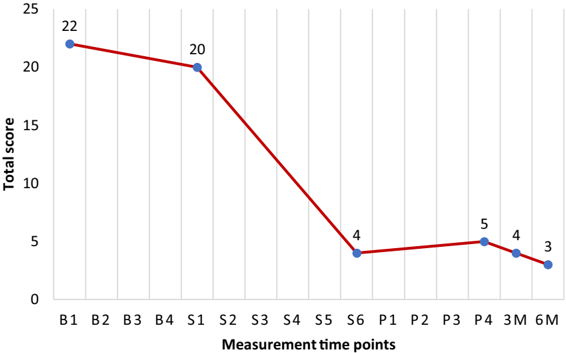
- At baseline, John’s CORE-10 score was 22, above the depression cutoff; by end of treatment and at 6 months, his distress scores were in the non-clinical range (<11) and the reduction from baseline to end of therapy (22 to 4) and to 6 months (22 to 3) exceeded the paper’s 95% RCI of 8.
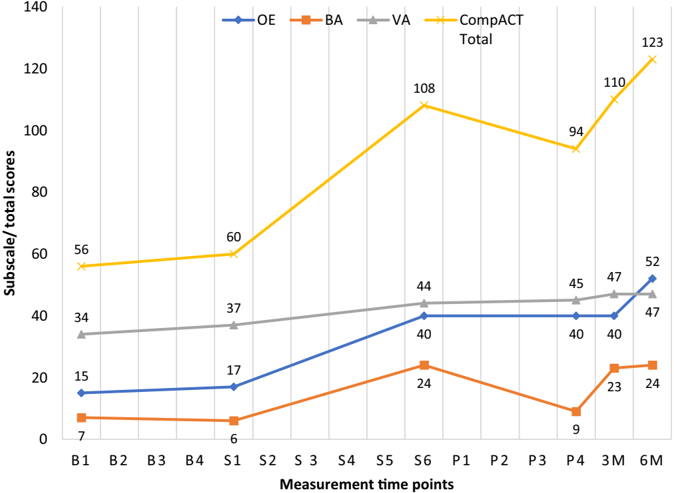
- His CompACT score increased from 56 at baseline to 108 at session 6 and 123 at 6 months; the paper reports reliable change with a 95% RCI of 17 and notes his baseline score was at the 7th percentile versus a UK non-clinical sample, rising to the 85th and 96th percentiles.
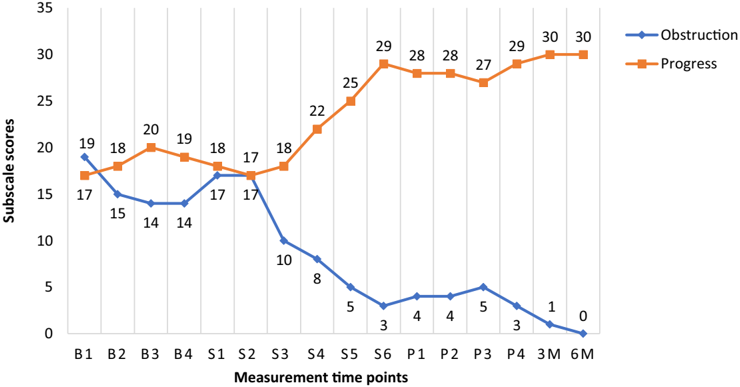
- On the VQ, Progress moved from 17 at baseline to 29 at session 6 and 30 at 6 months, with the paper stating these were in the non-clinical range and that the 6-month scores were at the 97th and 98th percentiles versus the non-clinical sample.
- On the VQ Obstruction scale, scores fell from 19 at baseline to 3 at session 6 and 0 at 6 months, moving from the clinical range to the non-clinical range; however, the paper says the reduction from baseline to end of treatment (16 points) was slightly below the reliable change threshold (95% RCI = 19).
Methods
- Single-case study with a case-controls design, comparing John’s scores on distress and ACT-process measures with normative non-clinical data at multiple time points.
- Participant: John, a man in his early 40s with post-stroke adjustment difficulties after a partial anterior cerebral circulation stroke (PACS); he received routine early supported discharge care.
- Intervention: six individual ACT sessions over 2 months, delivered via telephone telerehabilitation; outcomes were assessed with CORE-10, CompACT, and VQ at baseline, during therapy, post-therapy, and at 3- and 6-month follow-up, with statistical comparison to control samples using Singlims_ES.exe.
Limitations
- The paper states that the statistical comparisons assume the normative samples’ scores are normally distributed, but the cited papers did not report skewness or kurtosis; the authors therefore say the values should be interpreted with caution.
- The paper states the outcome measures were a narrow range focused on distress and ACT processes; it recommends examining broader outcomes such as fatigue, confidence, quality of life, activities of daily living, and illness perceptions.
- Evident from the text: this is a single case study, so the findings have limited generalisability beyond John.
Model-written summary. Check it against the paper before relying on it.
Integrity signals
Registry
Cites
Statistics
Figures
Verification
Claims the paper makes
5 Valid · 0 Not valid · 18 Not checked · 76 Own results and interpretations
Every source the paper cites for this claim was checked and supports it.
In the paper
“a recent randomised controlled trial (Majumdar and Morris, 2019) of group-based acceptance and commitment therapy (ACT) showed promise in reducing depression and increasing hopefulness and perceived health status in stroke survivors.”
- Also stated in: § Introduction · boosted
“a recent randomised controlled trial demonstrated that group-based ACT was efficacious in reducing depression, improving self-report health status and increasing hopefulness in stroke survivors (Majumdar and Morris, 2019).”
What the sources say
- Supportedcites Majumdar and Morris, 2019 matched to “Brief group‐based acceptance and commitment therapy for stroke survivors.” (2019) source
The Participants and procedure section says participants were randomly allocated in a parallel-group study. The Discussion reports reduced depression and increased hopefulness and self-reported health status in stroke survivors compared with treatment as usual. The claim’s cautious phrase “showed promise” is consistent with the Discussion’s warning that the effects cannot be attributed specifically to ACT without additional controls. The indexed passages provide no page numbers. (LLM, conf=0.94)
boostedstates a cause- Asserted: passes — The authors put it forward as true.
- Checkable: passes — It can be checked against evidence.
- Load-bearing: passes — The paper’s conclusions depend on it.
- Based: passes — The paper gives a reason why it holds.
- Also stated in: § Introduction · boosted
A result the paper reports from its own data — it cites no other source for it, so there is none to check. The quote shows it is in the paper.
In the paper
“However, at S6, 3M and 6M, John ' s scores reduced to the non-clinical range (i.e. 3, 1 and 0, respectively).”
plainstates a causeSingle case- Asserted: passes — The authors put it forward as true.
- Checkable: passes — It can be checked against evidence.
- Load-bearing: passes — The paper’s conclusions depend on it.
- Based: passes — The paper gives a reason why it holds.
A result the paper reports from its own data — it cites no other source for it, so there is none to check. The quote shows it is in the paper.
In the paper
“Baseline VQ Progress scale measurements (i.e. B1 to S1) were all above the cut-off score of 15 and therefore in the non-clinical range.”
plainSingle case- Asserted: passes — The authors put it forward as true.
- Checkable: passes — It can be checked against evidence.
- Load-bearing: unclear — It is unclear whether the paper’s conclusions depend on it.
- Based: passes — The paper gives a reason why it holds.
In the paper
“When compared with a non-clinical sample ( n = 535, 49.8% female, M = 4.70, SD = 4.80) (Connell and Barkham, 2007), this baseline score was estimated to be at the 99th percentile.”
What the sources say
- Not matchedcites Connell and Barkham, 2007
An author–year citation the paper’s reference list doesn’t settle. We don’t search these by name.
hedgedSingle case- Asserted: passes — The authors put it forward as true.
- Checkable: passes — It can be checked against evidence.
- Load-bearing: unclear — It is unclear whether the paper’s conclusions depend on it.
- Based: passes — The paper gives a reason why it holds.
- Not matched
A result the paper reports from its own data — it cites no other source for it, so there is none to check. The quote shows it is in the paper.
In the paper
“In contrast, John reported better levels of engagement in meaningful activities (VA: 39th percentile).”
plainSingle case- Asserted: passes — The authors put it forward as true.
- Checkable: passes — It can be checked against evidence.
- Load-bearing: unclear — It is unclear whether the paper’s conclusions depend on it.
- Based: passes — The paper gives a reason why it holds.
33 more claims
Create a free account to see all 99 claims and every source verdict.
- Probably not a substantial claim. 22
- It may state two separate claims as one. 47
- The quote only partly states this claim. 1
Citations
Cites
Jacobson, N. S., & Truax, P. (1991) · Journal of Consulting and Clinical Psychology · doi:10.1037/0022-006x.59.1.12 · Cited by 7,770
Acceptance and commitment therapy: model, processes and outcomes
Hayes, S. C., Luoma, J. B., Bond, F. W., Masuda, A., & Lillis, J. (2006) · Behaviour Research and Therapy · doi:10.1016/j.brat.2005.06.006 · Cited by 6,587 · cited 2×
“…to reduce distress by getting rid of it, rather by helping the client make contact with unwanted experiences without excessive or rigid attempts to transform the experiences, when doing this is in the service of moving the client towards a life they value (Hayes et al ., 2006; Luoma et al ., 2017).”
BackgroundMethodComparing an Individual's Test Score Against Norms Derived from Small Samples
Crawford, J. R., & Howell, D. C. (1998) · The Clinical Neuropsychologist · doi:10.1076/clin.12.4.482.7241 · Cited by 1,264 · cited 1×
“To overcome this, we sought sample sizes of a least 50 or more (Crawford and Howell, 1998).”
MethodHackett, M. L., & Pickles, K. (2014) · International Journal of Stroke · doi:10.1111/ijs.12357 · Cited by 1,140 · cited 1×
“For instance, approximately 31% of stroke survivors experience depression (Hackett and Pickles, 2014) and 20 – 25% experience anxiety disorders/symptoms at any time (Burton et al ., 2013).”
BackgroundWenzlaff, R. M., & Wegner, D. M. (2000) · Annual Review of Psychology · doi:10.1146/annurev.psych.51.1.59 · Cited by 1,063
Ayerbe, L., Ayis, S., Wolfe, C. D. A., & Rudd, A. G. (2013) · British Journal of Psychiatry · doi:10.1192/bjp.bp.111.107664 · Cited by 980 · cited 1×
“…difficulties which have been shown to be predictors of increased post-stroke distress including communication, cognitive or physical difficulties and a serious history of mental health difficulties prior to his stroke (Ayerbe et al ., 2013; Mitchell et al ., 2017; Thomas and Lincoln, 2006, 2008).”
BackgroundThe Future of Intervention Science: Process-Based Therapy
Hofmann, S. G., & Hayes, S. C. (2019) · Clinical Psychological Science · doi:10.1177/2167702618772296 · Cited by 888 · cited 1×
“Although further research exploring psychological therapies such as ACT after stroke are warranted, we also encourage development of a process-based therapy approach to further research (Hayes and Hofmann, 2018; Hayes et al ., 2020; Hofmann and Hayes, 2019).”
MethodNormative data for the HADS from a large non-clinical sample
Crawford, J. R., Henry, J. D., Crombie, C., & Taylor, E. P. (2001) · British Journal of Clinical Psychology · doi:10.1348/014466501163904 · Cited by 815 · cited 1×
“However, even in very large non-clinical samples, the distribution of scores on common mood questionnaires can still be positively skewed (Crawford et al ., 2001).”
Background(2009) · Cited by 655
Acceptance and Commitment Therapy (ACT) for Chronic Pain: A Systematic Review and Meta-Analyses
Hughes, L. S., Clark, J., Colclough, J. A., Dale, E., & McMillan, D. (2017) · The Clinical Journal of Pain · doi:10.1097/ajp.0000000000000425 · Cited by 611
National Clinical Guidelines for Stroke.
Robinson, T. (2001) · Postgraduate Medical Journal · doi:10.1136/pmj.77.906.286h · Cited by 608
Francis, A. W., Dawson, D. L., & Golijani-Moghaddam, N. (2016) · Journal of Contextual Behavioral Science · doi:10.1016/j.jcbs.2016.05.003 · Cited by 496 · cited 6×
“…the ACT processes of acceptance and diffusion; Behavioural Awareness (BA) or self-awareness and perspective capturing the ACT processes of present moment awareness and self as context; and Valued Action (VA) capturing the ACT processes of values and committed action (Francis et al ., 2016).”
BackgroundMethodInfluentialEvans, C., Margison, F., & Barkham, M. (1998) · Evidence Based Mental Health · doi:10.1136/ebmh.1.3.70 · Cited by 470 · cited 2×
“(2021) (i.e. .91 and 20.79, respectively), we calculated a reliable change index (RCI) of 17 (95% CI) and for the CompACT total score (Evans et al ., 1998; Jacobson and Truax, 1991).”
MethodInfluentialSelf-Reported Long-Term Needs After Stroke
McKevitt, C., Fudge, N., Redfern, J., Sheldenkar, A., Crichton, S., Rudd, A. R., Forster, A., Young, J., Nazareth, I., Silver, L. E., et al. (2011) · Stroke · doi:10.1161/strokeaha.110.598839 · Cited by 443 · cited 1×
“Although stroke usually occurs in older adults (median = 77 years), around 25% occur in those of working-age, leading to unemployment and loss of income (McKevitt et al ., 2011; Stroke Association, 2017).”
BackgroundFrequency of Anxiety after Stroke: A Systematic Review and Meta-Analysis of Observational Studies
Burton, C. A. C., Murray, J., Holmes, J., Astin, F., Greenwood, D., & Knapp, P. (2013) · International Journal of Stroke · doi:10.1111/j.1747-4949.2012.00906.x · Cited by 427 · cited 1×
“For instance, approximately 31% of stroke survivors experience depression (Hackett and Pickles, 2014) and 20 – 25% experience anxiety disorders/symptoms at any time (Burton et al ., 2013).”
BackgroundMitchell, A. J., Sheth, B., Gill, J., Yadegarfar, M., Stubbs, B., Yadegarfar, M., & Meader, N. (2017) · General Hospital Psychiatry · doi:10.1016/j.genhosppsych.2017.04.001 · Cited by 414 · cited 1×
“…difficulties which have been shown to be predictors of increased post-stroke distress including communication, cognitive or physical difficulties and a serious history of mental health difficulties prior to his stroke (Ayerbe et al ., 2013; Mitchell et al ., 2017; Thomas and Lincoln, 2006, 2008).”
BackgroundBarkham, M., Bewick, B., Mullin, T., Gilbody, S., Connell, J., Cahill, J., Mellor-Clark, J., Richards, D., Unsworth, G., & Evans, C. (2013) · Counselling and Psychotherapy Research · doi:10.1080/14733145.2012.729069 · Cited by 413 · cited 4×
“…10/11 (where 10 is in the non-clinical range and 11 is in the clinical range), while a cut-off score of 13 yields sensitivity and specificity values of .92 and 0.72, respectively, against a diagnosis of DSM-IV depression (Barkham et al ., 2013; Connell and Barkham, 2007; Jacobson and Truax, 1991).”
BackgroundMethodInfluentialIschaemic stroke in young adults: risk factors and long-term consequences
Maaijwee, N. A. M. M., Rutten-Jacobs, L. C. A., Schaapsmeerders, P., van Dijk, E. J., & de Leeuw, F.-E. (2014) · Nature Reviews Neurology · doi:10.1038/nrneurol.2014.72 · Cited by 377 · cited 1×
“Given the sudden and life-altering nature of a stroke, adjustment difficulties are common (Maaijwee et al ., 2014).”
BackgroundL Tate, R., Mcdonald, S., Perdices, M., Togher, L., Schultz, R., & Savage, S. (2008) · Neuropsychological Rehabilitation · doi:10.1080/09602010802009201 · Cited by 362
Development of the Valuing Questionnaire (VQ)
Smout, M., Davies, M., Burns, N., & Christie, A. (2014) · Journal of Contextual Behavioral Science · doi:10.1016/j.jcbs.2014.06.001 · Cited by 350 · cited 10×
“In relation to a non-clinical sample described by Smout et al .”
BackgroundMethodResultInfluentialThe Oxford Cognitive Screen (OCS): Validation of a stroke-specific short cognitive screening tool.
Demeyere, N., Riddoch, M. J., Slavkova, E. D., Bickerton, W.-L., & Humphreys, G. W. (2015) · Psychological Assessment · doi:10.1037/pas0000082 · Cited by 337 · cited 1×
“Indeed, John ’ s performance on the Oxford Cognitive Screen (Demeyere et al ., 2015) revealed no clear impairments in the cognitive domains that are frequently affected by stroke (i.e. language, attention, memory, praxis, numerical abilities, visual abilities, etc.).”
BackgroundHayes, S. C., Hofmann, S. G., & Ciarrochi, J. (2020) · Clinical Psychology Review · doi:10.1016/j.cpr.2020.101908 · Cited by 227 · cited 1×
“Although further research exploring psychological therapies such as ACT after stroke are warranted, we also encourage development of a process-based therapy approach to further research (Hayes and Hofmann, 2018; Hayes et al ., 2020; Hofmann and Hayes, 2019).”
MethodIncidence and prevalence of post-stroke insomnia: A systematic review and meta-analysis
Baylan, S., Griffiths, S., Grant, N., Broomfield, N. M., Evans, J. J., & Gardani, M. (2020) · Sleep Medicine Reviews · doi:10.1016/j.smrv.2019.101222 · Cited by 207 · cited 1×
“Indeed, sleep difficulties can be common after stroke and cognitive behavioural interventions have been suggested which are consistent with those outlined here (Baylan et al ., 2020; Herron et al ., 2018).”
MethodEffectiveness of telerehabilitation in the management of adults with stroke: A systematic review
Appleby, E., Gill, S. T., Hayes, L. K., Walker, T. L., Walsh, M., & Kumar, S. (2019) · PLOS ONE · doi:10.1371/journal.pone.0225150 · Cited by 179 · cited 2×
“Existing evidence highlights the benefits of telerehabilitation in addressing barriers to accessing rehabilitation, including geographical isolation, limitations in time/resource, and compliance with rehabilitation (Appleby et al ., 2019).”
BackgroundMotivational Interviewing Early After Acute Stroke: A Randomized, Controlled Trial
Watkins, C. L., Auton, M. F., Deans, C. F., Dickinson, H. A., Jack, C. I. A., Lightbody, C. E., Sutton, C. J., van den Broek, M. D., & Leathley, M. J. (2007) · Stroke · doi:10.1161/01.str.0000258114.28006.d7 · Cited by 166 · cited 1×
“…stroke (i.e. Ahrens et al ., 2023; Hill et al ., 2019; Majumdar and Morris, 2019; Niu et al ., 2022; Nguyen et al ., 2019; Thomas et al ., 2013; Watkins et al ., 2007), a recent narrative review suggests evidence for the efficacy of psychological interventions for post-stroke anxiety and…”
BackgroundCapturing process and outcome in complex rehabilitation interventions: A “Y-shaped” model
Gracey, F., Evans, J. J., & Malley, D. (2009) · Neuropsychological Rehabilitation · doi:10.1080/09602010903027763 · Cited by 160 · cited 1×
“Further exploration is needed to examine the types of psychological processes that are likely to facilitate adjustment after stroke and build these into models of adjustment (e.g. Gracey et al ., 2009) which can be empirically tested and directly promoted through psychological therapy.”
BackgroundDepression, Anxiety, and Suicide After Stroke: A Narrative Review of the Best Available Evidence
Chun, H.-Y. Y., Ford, A., Kutlubaev, M. A., Almeida, O. P., & Mead, G. E. (2022) · Stroke · doi:10.1161/strokeaha.121.035499 · Cited by 150 · cited 1×
“…et al ., 2019; Majumdar and Morris, 2019; Niu et al ., 2022; Nguyen et al ., 2019; Thomas et al ., 2013; Watkins et al ., 2007), a recent narrative review suggests evidence for the efficacy of psychological interventions for post-stroke anxiety and depression remains limited (Chun et al ., 2022).”
BackgroundThomas, S. A., Walker, M. F., Macniven, J. A., Haworth, H., & Lincoln, N. B. (2013) · Clinical Rehabilitation · doi:10.1177/0269215512462227 · Cited by 149 · cited 1×
“…interventions after stroke (i.e. Ahrens et al ., 2023; Hill et al ., 2019; Majumdar and Morris, 2019; Niu et al ., 2022; Nguyen et al ., 2019; Thomas et al ., 2013; Watkins et al ., 2007), a recent narrative review suggests evidence for the efficacy of psychological interventions for…”
BackgroundFann, J. R., Bombardier, C. H., Vannoy, S., Dyer, J., Ludman, E., Dikmen, S., Marshall, K., Barber, J., & Temkin, N. (2015) · Journal of Neurotrauma · doi:10.1089/neu.2014.3423 · Cited by 147 · cited 1×
“Notably, with regard to psychological interventions, existing evidence on telerehabilitation has focused on cognitive behavioural therapy in a traumatic/acquired brain injury population (Boulos et al ., 2023; Fann et al ., 2015).”
BackgroundPost-traumatic growth following acquired brain injury: a systematic review and meta-analysis
Grace, J. J., Kinsella, E. L., Muldoon, O. T., & Fortune, D. G. (2015) · Frontiers in Psychology · doi:10.3389/fpsyg.2015.01162 · Cited by 136 · cited 1×
“Indeed, John exhibited several of the factors that have been found to be associated with post-traumatic growth after acquired brain injury such as his age (i.e. being in the ‘ mid stages ’ of life), being employed and being in a relationship (Grace et al ., 2015).”
BackgroundNguyen, S., Wong, D., McKay, A., Rajaratnam, S. M. W., Spitz, G., Williams, G., Mansfield, D., & Ponsford, J. L. (2019) · Neuropsychological Rehabilitation · doi:10.1080/09602011.2017.1326945 · Cited by 134 · cited 1×
“…support for psychological interventions after stroke (i.e. Ahrens et al ., 2023; Hill et al ., 2019; Majumdar and Morris, 2019; Niu et al ., 2022; Nguyen et al ., 2019; Thomas et al ., 2013; Watkins et al ., 2007), a recent narrative review suggests evidence for the efficacy of psychological…”
BackgroundAcceptance of Tele-Rehabilitation by Stroke Patients: Perceived Barriers and Facilitators
Tyagi, S., Lim, D. S. Y., Ho, W. H. H., Koh, Y. Q., Cai, V., Koh, G. C. H., & Legido-Quigley, H. (2018) · Archives of Physical Medicine and Rehabilitation · doi:10.1016/j.apmr.2018.04.033 · Cited by 126 · cited 1×
“However, it is worth noting that some stroke survivors may experience barriers that impact on their ability to engage in telerehabilitation, including cognitive and language impairment, digital literacy, and access to equipment and connectivity (Tyagi et al ., 2018).”
BackgroundBrief group‐based acceptance and commitment therapy for stroke survivors.
Majumdar, S., & Morris, R. (2019) · British Journal of Clinical Psychology · doi:10.1111/bjc.12198 · Cited by 107 · cited 4×
“For example, a recent randomised controlled trial demonstrated that group-based ACT was efficacious in reducing depression, improving self-report health status and increasing hopefulness in stroke survivors (Majumdar and Morris, 2019).”
BackgroundInfluentialQuality of Life of Stroke Survivors: A Research Synthesis
Bays, C. L. (2001) · Journal of Neuroscience Nursing · doi:10.1097/01376517-200112000-00005 · Cited by 105 · cited 1×
“These adjustment difficulties are associated with poorer quality of life (Bays, 2001; Jeong et al ., 2012), worse functional recovery (West et al ., 2010) and greater health care costs (Gillham et al ., 2012).”
BackgroundPredictors of Emotional Distress After Stroke
Thomas, S. A., & Lincoln, N. B. (2008) · Stroke · doi:10.1161/strokeaha.107.498279 · Cited by 98 · cited 1×
“…difficulties which have been shown to be predictors of increased post-stroke distress including communication, cognitive or physical difficulties and a serious history of mental health difficulties prior to his stroke (Ayerbe et al ., 2013; Mitchell et al ., 2017; Thomas and Lincoln, 2006, 2008).”
BackgroundFactors relating to depression after stroke
Thomas, S. A., & Lincoln, N. B. (2006) · British Journal of Clinical Psychology · doi:10.1348/014466505x34183 · Cited by 92 · cited 1×
“…difficulties which have been shown to be predictors of increased post-stroke distress including communication, cognitive or physical difficulties and a serious history of mental health difficulties prior to his stroke (Ayerbe et al ., 2013; Mitchell et al ., 2017; Thomas and Lincoln, 2006, 2008).”
BackgroundEfficacy of Telerehabilitation for Adults With Traumatic Brain Injury: A Systematic Review
Ownsworth, T., Arnautovska, U., Beadle, E., Shum, D. H. K., & Moyle, W. (2018) · Journal of Head Trauma Rehabilitation · doi:10.1097/htr.0000000000000350 · Cited by 85 · cited 1×
“Specifically, telephone-based telerehabilitation has been found to improve global functioning, post-traumatic symptoms, sleep quality and depressive symptoms relative to usual care in traumatic brain injury survivors (Ownsworth et al ., 2018).”
BackgroundAhrens, J., Shao, R., Blackport, D., Macaluso, S., Viana, R., Teasell, R. W., & Mehta, S. (2022) · Topics in Stroke Rehabilitation · doi:10.1080/10749357.2022.2049505 · Cited by 78 · cited 1×
“Although randomised controlled trials have shown some support for psychological interventions after stroke (i.e. Ahrens et al ., 2023; Hill et al ., 2019; Majumdar and Morris, 2019; Niu et al ., 2022; Nguyen et al ., 2019; Thomas et al ., 2013; Watkins et al ., 2007), a recent narrative review…”
BackgroundWest, R., Hill, K., Hewison, J., Knapp, P., & House, A. (2010) · Stroke · doi:10.1161/strokeaha.110.583351 · Cited by 76
Whiting, D., Deane, F., McLeod, H., Ciarrochi, J., & Simpson, G. (2020) · Neuropsychological Rehabilitation · doi:10.1080/09602011.2019.1583582 · Cited by 71 · cited 1×
“…therapy (ACT) has been shown to be efficacious in improving well-being and recovery outcomes in a range of long-term conditions, such as chronic pain (Hughes et al ., 2017), brain injury (Sander et al ., 2020; Whiting et al ., 2019), multiple sclerosis (Han, 2021), and cancer (Li et al ., 2021).”
BackgroundSander, A. M., Clark, A. N., Arciniegas, D. B., Tran, K., Leon-Novelo, L., Ngan, E., Bogaards, J., Sherer, M., & Walser, R. (2021) · Neuropsychological Rehabilitation · doi:10.1080/09602011.2020.1762670 · Cited by 68 · cited 1×
“…therapy (ACT) has been shown to be efficacious in improving well-being and recovery outcomes in a range of long-term conditions, such as chronic pain (Hughes et al ., 2017), brain injury (Sander et al ., 2020; Whiting et al ., 2019), multiple sclerosis (Han, 2021), and cancer (Li et al ., 2021).”
BackgroundDeterminants of Quality of Life in the Acute Stage Following Stroke
Jeong, B.-O., Kang, H., Bae, K., Kim, S., Kim, J., Shin, I., Kim, J., Park, M., Cho, K.-H., & Yoon, J. (2012) · Psychiatry Investigation · doi:10.4306/pi.2012.9.2.127 · Cited by 67 · cited 1×
“These adjustment difficulties are associated with poorer quality of life (Bays, 2001; Jeong et al ., 2012), worse functional recovery (West et al ., 2010) and greater health care costs (Gillham et al ., 2012).”
BackgroundTrindade, I. A., Ferreira, N. B., Mendes, A. L., Ferreira, C., Dawson, D., & Golijani-Moghaddam, N. (2021) · Journal of Contextual Behavioral Science · doi:10.1016/j.jcbs.2021.05.002 · Cited by 60 · cited 3×
“Furthermore, Trindade et al .”
ResultInfluentialGallego, A., McHugh, L., Villatte, M., & Lappalainen, R. (2020) · Journal of Contextual Behavioral Science · doi:10.1016/j.jcbs.2020.04.003 · Cited by 49 · cited 4×
“However, Gallego et al .”
MethodResultInfluentialGraham, C. D., Gillanders, D., Stuart, S., & Gouick, J. (2015) · Clinical Case Studies · doi:10.1177/1534650114539386 · Cited by 43 · cited 1×
“Emerging evidence indicates that ACT may also be an efficacious treatment approach for post-stroke adjustment difficulties (Graham et al ., 2015; Large et al ., 2019; Majumdar and Morris, 2019, Niu et al ., 2022; Rauwenhoff et al ., 2023).”
BackgroundNiu, Y., Sheng, S., Chen, Y., Ding, J., Li, H., Shi, S., Wu, J., & Ye, D. (2022) · Journal of Stroke and Cerebrovascular Diseases · doi:10.1016/j.jstrokecerebrovasdis.2021.106225 · Cited by 40 · cited 2×
“…have shown some support for psychological interventions after stroke (i.e. Ahrens et al ., 2023; Hill et al ., 2019; Majumdar and Morris, 2019; Niu et al ., 2022; Nguyen et al ., 2019; Thomas et al ., 2013; Watkins et al ., 2007), a recent narrative review suggests evidence for the efficacy…”
BackgroundDevelopment and Evaluation of a Cognitive Behavioural Intervention for Chronic Post-Stroke Insomnia
Herron, K., Farquharson, L., Wroe, A., & Sterr, A. (2018) · Behavioural and Cognitive Psychotherapy · doi:10.1017/s1352465818000061 · Cited by 38 · cited 2×
“Indeed, sleep difficulties can be common after stroke and cognitive behavioural interventions have been suggested which are consistent with those outlined here (Baylan et al ., 2020; Herron et al ., 2018).”
BackgroundMethodLi, Z., Li, Y., Guo, L., Li, M., & Yang, K. (2021) · International Journal of Clinical Practice · doi:10.1111/ijcp.13982 · Cited by 38
A changed reality: Experience of an acceptance and commitment therapy (ACT) group after stroke
Large, R., Samuel, V., & Morris, R. (2020) · Neuropsychological Rehabilitation · doi:10.1080/09602011.2019.1589531 · Cited by 37 · cited 2×
“Emerging evidence indicates that ACT may also be an efficacious treatment approach for post-stroke adjustment difficulties (Graham et al ., 2015; Large et al ., 2019; Majumdar and Morris, 2019, Niu et al ., 2022; Rauwenhoff et al ., 2023).”
BackgroundRauwenhoff, J. C. C., Bol, Y., Peeters, F., van den Hout, A. J. H. C., Geusgens, C. A. V., & van Heugten, C. M. (2023) · Neuropsychological Rehabilitation · doi:10.1080/09602011.2022.2053169 · Cited by 31 · cited 1×
“Emerging evidence indicates that ACT may also be an efficacious treatment approach for post-stroke adjustment difficulties (Graham et al ., 2015; Large et al ., 2019; Majumdar and Morris, 2019, Niu et al ., 2022; Rauwenhoff et al ., 2023).”
BackgroundHan, A. (2021) · Archives of Physical Medicine and Rehabilitation · doi:10.1016/j.apmr.2021.03.011 · Cited by 29 · cited 1×
“…therapy (ACT) has been shown to be efficacious in improving well-being and recovery outcomes in a range of long-term conditions, such as chronic pain (Hughes et al ., 2017), brain injury (Sander et al ., 2020; Whiting et al ., 2019), multiple sclerosis (Han, 2021), and cancer (Li et al ., 2021).”
BackgroundHill, K. M., House, A. O., Knapp, P., Wardhaugh, C., Bamford, J., & Vail, A. (2019) · BMC Neurology · doi:10.1186/s12883-019-1349-8 · Cited by 24 · cited 1×
“Although randomised controlled trials have shown some support for psychological interventions after stroke (i.e. Ahrens et al ., 2023; Hill et al ., 2019; Majumdar and Morris, 2019; Niu et al ., 2022; Nguyen et al ., 2019; Thomas et al ., 2013; Watkins et al ., 2007), a recent narrative review…”
BackgroundBoulos, M. E., Colella, B., Meusel, L.-A., Sharma, B., Peter, M. K., Worthington, T., & Green, R. (2023) · Disability and Rehabilitation · doi:10.1080/09638288.2023.2177357 · Cited by 18 · cited 1×
“Notably, with regard to psychological interventions, existing evidence on telerehabilitation has focused on cognitive behavioural therapy in a traumatic/acquired brain injury population (Boulos et al ., 2023; Fann et al ., 2015).”
BackgroundMasculine Identity and Traumatic Brain Injury
MacQueen, R., & Fisher, P. (2019) · The Palgrave Handbook of Male Psychology and Mental Health · doi:10.1007/978-3-030-04384-1_29 · Cited by 5 · cited 1×
“This finding is supported by MacQueen and Fisher (2019) who suggested that ACT may be particularly helpful for men following neurological injury due to the potential consequences of associated changes on masculine identity in the domains of, for example, family role and occupational status.”
Method(2012) · doi:10.1037/17335-004 · Cited by 2
Psychological and emotional issues after stroke
Morris, R. C. (2020) · Oxford University Press eBooks · doi:10.1093/med/9780198747499.003.0026 · Cited by 1 · cited 1×
“Additionally, fatigue, emotionalism, low self-efficacy, low self-esteem, altered self-concept and post-traumatic stress are also common following a stroke (Morris, 2020).”
BackgroundInfluentialErratum: Ischaemic stroke in young adults: risk factors and long-term consequences
Maaijwee, N. A. M., Rutten‐Jacobs, L. C. A., Schaapsmeerders, P., van Dijk, E. J., & de Leeuw, F. (2014) · Nature Reviews Neurology · doi:10.1038/nrneurol.2014.183
Research works printed but not linked: 9
- Hayes, S. C., & Hofmann, S. G. (eds) (2018). Process-Based CBT: The Science and Core Clinical Competencies of Cognitive Behavioral Therapy . New Harbinger Publications.
- Gillham, S., Carpenter, M., & Leathley, M. (2012). Psychological care after stroke: economic modelling of a clinical psychology led team approach . London: Department of Health.
- McKenna, P. (2009). Rookwood Driving Battery . London: Pearson.
- Hayes, S. C., & Smith, S. (2005). Get Out of Your Mind and Into Your Life: The New Acceptance and Commitment Therapy . New Harbinger Publications.
- Luoma, J. B., Hayes, S. C., & Walser, R. D. (2017). Learning ACT: An Acceptance & Commitment Therapy Skills-Training Manual for Therapists (2nd edn). New Harbinger Publications.
- Niu, Y., Sheng, S., Chen, Y., Ding, J., Li, H., Shi, S., : : : &Ye, D. (2022). The efficacy of group acceptance and commitment therapy for preventing post-stroke depression: a randomized controlled trial. Journal of Stroke and Cerebrovascular Diseases , 31 , 106225. · DOI · Paper page
- Majumdar, S., & Morris, R. (2019). Brief group-based acceptance and commitment therapy for stroke survivors. British Journal of Clinical Psychology , 58 , 70 -90. · DOI · Paper page
- Hayes, S. C., Hofmann, S. G., & Ciarrochi, J. (2020). A process-based approach to psychological diagnosis and treatment: the conceptual and treatment utility of an extended evolutionary meta model. Clinical Psychology Review , 101908. · DOI · Paper page
- Ciarrochi, J., Harris, R., & Bailey, A. (2015). The Weight Escape: Stop Fad Dieting, Start Losing Weight and Reshape Your Life Using Cutting-Edge Psychology . Hachette UK.
Cited by
Post-stroke emotionalism: Diagnosis, pathophysiology, and treatment
Broomfield, N. M., Blake, J., Gracey, F., & Steverson, T. (2024) · International Journal of Stroke · doi:10.1177/17474930241242952 · Cited by 15
“8,56 Although not experimentally confirmed, qualitative studies have suggested that acceptance-based approaches have been helpful for some.”
BackgroundSelf-citationOoi, J., & Steverson, T. (2024) · The Cognitive Behaviour Therapist · doi:10.1017/s1754470x23000351
Self-citation
Metadata
- Authors
- Ooi, J., & Steverson, T.
- Affiliations
- University of East Anglia (GB)
- Corresponding author
- Ooi, Jinnie
- Venue
- The Cognitive Behaviour Therapist
- Publisher
- Cambridge University Press (CUP)
- Published
- 2023
- Volume
- 16
- ISSN
- 1754-470X (ISSN-L)
- OpenAlex
- W4388468079
- Semantic Scholar
- 7b534c32f997b105f68bc1efac45dd4ea36ef02c
- Cited by
- 2
- References
- 59
- Citations by year
- 2024: 2
- FWCI
- 0.58
- Type
- journal article
- Language
- en
- Open access
- hybrid
- dx.doi.org
- Locations
- The Cognitive Behaviour Therapist (publishedVersion, cc-by)
- UEA Digital Repository (University of East Anglia) (acceptedVersion)
- Topics
- Social Sciences › Psychology › Clinical Psychology › Mindfulness and Compassion Interventions
- Health Sciences › Medicine › Rehabilitation › Stroke Rehabilitation and Recovery
- Health Sciences › Medicine › Oncology › Cancer survivorship and care
- Keywords
- acceptance and commitment therapy, telerehabilitation, stroke survivors, psychological flexibility, depression, psychological distress, psychological adjustment, working-age men
About these checks
Registry, retraction, Cites and statistics results are computed, not judged, with one exception: a printed reference that no index lists is read once by a model before it counts as a citation error. Claims are extracted by a model and kept only when their quote appears verbatim in the text; each cited source is then checked, with a model’s help, for whether it says what the claim relies on. Those verdicts can be wrong — read the claim’s quote and the cited source before relying on one.
The claim verdicts this report counts are experimental: their accuracy is not yet measured.
A language model drew the claims from the paper on 2026-10-11, under version 3 of the claim definition (model deepseek-v4.1-flash, prompt extract-v3).
A second model labelled each claim on 2026-10-11 (model jev-1.13-20260917, definition revision gold-guideline-v0.2).
Cited sources are checked with a language model’s help (gpt-6-sol).
Statistics and arithmetic are recomputed, not judged.
Confidence bands are shown only for fields calibrated on our annotated test set. None is calibrated yet, so no band is shown.
What counts as a claim ›How we measure confidence ›How we check this ›
Are you an author, or do you see a problem with this page? Request a review
Data sources
Bibliographic data: Semantic Scholar, OpenAlex, Crossref.
Contains information from the Semantic Scholar Academic Graph Datasets, made available under the ODC Attribution License (ODC-BY 1.0).
Semantic Scholar’s data is described in: Kinney, R., et al. (2023). The Semantic Scholar Open Data Platform. arXiv:2301.10140.
