

Efficacy and acceptability of psychosocial interventions in asylum seekers and refugees: systematic review and meta-analysis
Open accessThe DOI matches its Crossref record; 85 of the 87 references it cites were found in a registry or an index; 13 of the 24 sources its claims cite were checked for support.
Abstract
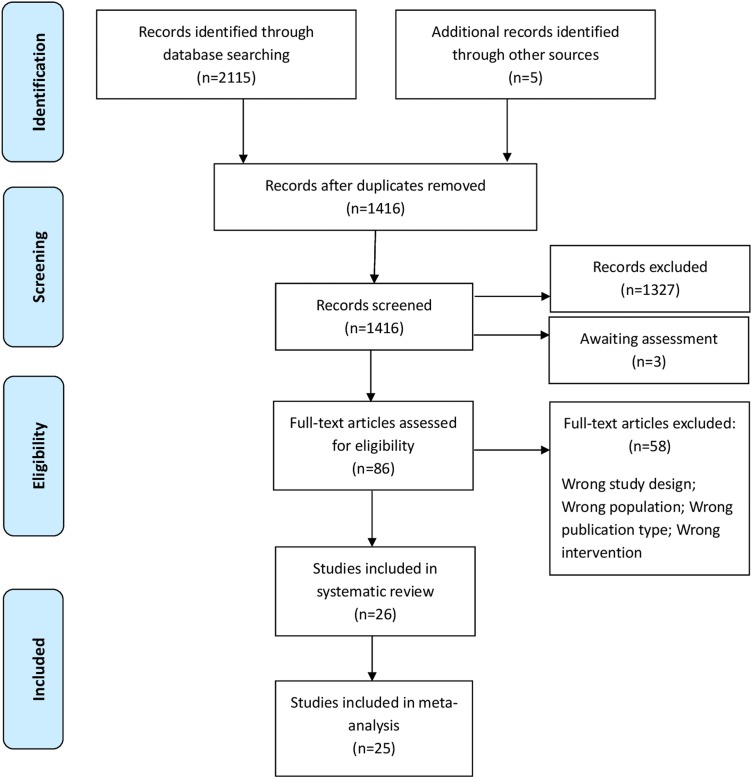
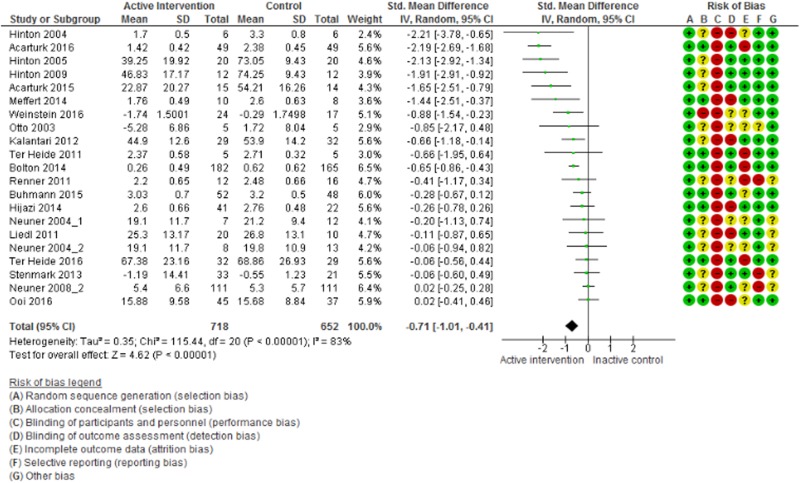
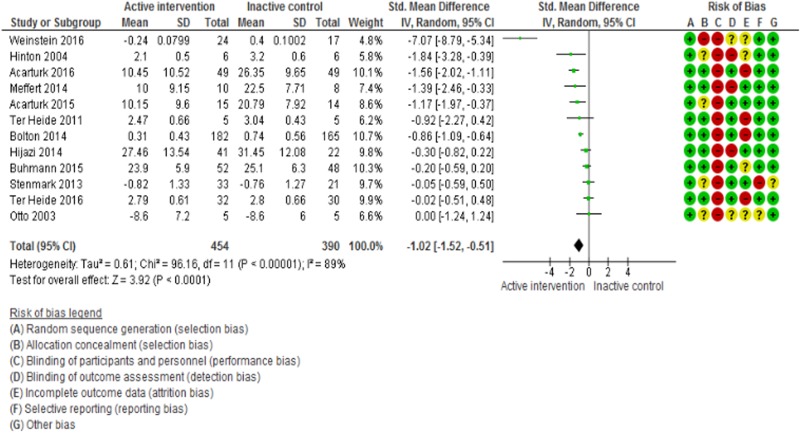
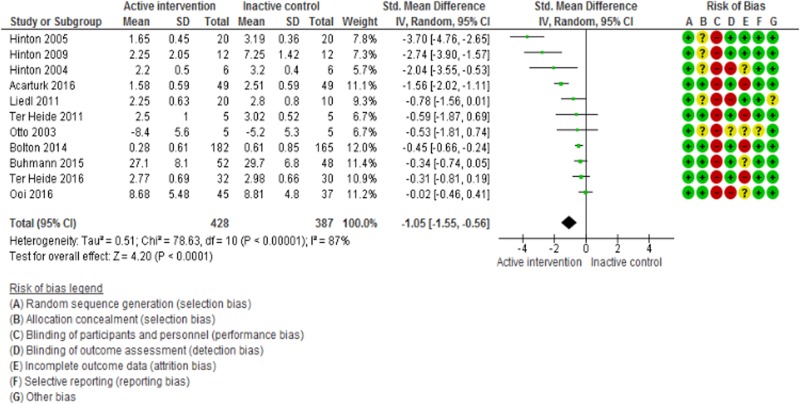
Aims In the past few years, there has been an unprecedented increase in the number of forcibly displaced migrants worldwide, of which a substantial proportion is refugees and asylum seekers. Refugees and asylum seekers may experience high levels of psychological distress, and show high rates of mental health conditions. It is therefore timely and particularly relevant to assess whether current evidence supports the provision of psychosocial interventions for this population. We conducted a systematic review and meta-analysis of randomised controlled trials (RCTs) assessing the efficacy and acceptability of psychosocial interventions compared with control conditions (treatment as usual/no treatment, waiting list, psychological placebo) aimed at reducing mental health problems in distressed refugees and asylum seekers.Methods We used Cochrane procedures for conducting a systematic review and meta-analysis of RCTs. We searched for published and unpublished RCTs assessing the efficacy and acceptability of psychosocial interventions in adults and children asylum seekers and refugees with psychological distress. Post-traumatic stress disorder (PTSD), depressive and anxiety symptoms at post-intervention were the primary outcomes. Secondary outcomes include: PTSD, depressive and anxiety symptoms at follow-up, functioning, quality of life and dropouts due to any reason.Results We included 26 studies with 1959 participants. Meta-analysis of RCTs revealed that psychosocial interventions have a clinically significant beneficial effect on PTSD (standardised mean difference [SMD] = -0.71; 95% confidence interval [CI] -1.01 to -0.41; I2 = 83%; 95% CI 78-88; 20 studies, 1370 participants; moderate quality evidence), depression (SMD = -1.02; 95% CI -1.52 to -0.51; I2 = 89%; 95% CI 82-93; 12 studies, 844 participants; moderate quality evidence) and anxiety outcomes (SMD = -1.05; 95% CI -1.55 to -0.56; I2 = 87%; 95% CI 79-92; 11 studies, 815 participants; moderate quality evidence). This beneficial effect was maintained at 1 month or longer follow-up, which is extremely important for populations exposed to ongoing post-migration stressors. For the other secondary outcomes, we identified a non-significant trend in favour of psychosocial interventions. Most evidence supported interventions based on cognitive behavioural therapies with a trauma-focused component. Limitations of this review include the limited number of studies collected, with a relatively low total number of participants, and the limited available data for positive outcomes like functioning and quality of life.Conclusions Considering the epidemiological relevance of psychological distress and mental health conditions in refugees and asylum seekers, and in view of the existing data on the effectiveness of psychosocial interventions, these interventions should be routinely made available as part of the health care of distressed refugees and asylum seekers. Evidence-based guidelines and implementation packages should be developed accordingly. Copyright © Cambridge University Press 2019.
Overview
CoChat Summary
TL;DR
This systematic review and meta-analysis of 26 RCTs with 1,959 participants found that psychosocial interventions reduced PTSD, depression, and anxiety symptoms in asylum seekers and refugees, with effects maintained at follow-up. The evidence was strongest for trauma-focused CBT-based interventions, while functioning and quality of life did not differ from controls.
Key findings
- Across 26 studies (1,959 participants), psychosocial interventions improved PTSD symptoms versus controls: SMD = −0.71 (95% CI −1.01 to −0.41; 20 studies, 1,370 participants; moderate-quality evidence).
- They also reduced depressive symptoms: SMD = −1.02 (95% CI −1.52 to −0.51; 12 studies, 844 participants; moderate-quality evidence) and anxiety symptoms: SMD = −1.05 (95% CI −1.55 to −0.56; 11 studies, 815 participants; moderate-quality evidence).
- Benefits were maintained at follow-up: PTSD SMD = −1.08 (11 studies, 711 participants), depression SMD = −1.28 (8 studies, 371 participants), anxiety SMD = −0.49 (3 studies, 171 participants).
- Treatment acceptability was similar to control conditions: dropout RR = 0.96 (95% CI 0.82–1.13; 23 studies, 1,636 participants). Functioning and quality of life showed no significant differences from control.
Methods
- Systematic review and meta-analysis of randomized controlled trials, following Cochrane procedures and registered in PROSPERO (CRD42017071523).
- Searched CENTRAL, CINAHL, EMBASE, PILOTS, PsycINFO, PubMed, Web of Science, plus grey literature, through September 2017; included studies in any language involving adults and children asylum seekers/refugees with psychological distress.
- Primary analysis pooled post-intervention PTSD, depression, and anxiety outcomes using random-effects meta-analysis; secondary analyses covered follow-up outcomes, dropout, functioning, and quality of life, with subgroup analyses by intervention type, age, setting, control condition, and risk of bias.
Limitations
- The paper states that the review was limited by the relatively small number of studies and participants, limited data on positive outcomes such as functioning and quality of life, and overall moderate to low quality of included studies.
- The authors state that follow-up periods were not very long, leaving uncertainty about long-term effects, and that substantial heterogeneity remained even after subgroup analyses.
- Evident from the text: most studies were at high risk of bias on two or three items, and the review could not fully examine important variables such as time since resettlement, legal status (refugee vs asylum seeker), or pharmacological treatment.
Model-written summary. Check it against the paper before relying on it.
Integrity signals
Registry
Cites
Statistics
Figures
Verification
Claims the paper makes
11 Valid · 3 Not valid · 3 Not checked · 49 Own results and interpretations
The cited sources support only part of this claim — read each source’s verdict below.
In the paper
“exposure to extreme stressors, including major losses and potentially traumatic events such as torture and war exposure, are disproportionately experienced by refugees and asylum seekers before and during displacement”
§ Efficacy and acceptability of psychosocial interventions in asylum seekers and refugees: systematic review and meta-analysis > Introduction
What the sources say
- Partly supportedcites Bogic et al., 2012 matched to “Factors associated with mental disorders in long-settled war refugees: refugees from the former Yugoslavia in Germany, Italy and the UK” (2012) sourceExperimental — accuracy not yet measured
The Results report frequent war-related traumatic events and migration stressors among refugees from the former Yugoslavia, and note that torture was reported in the sample. The paper does not establish that refugees and asylum seekers experience these stressors disproportionately compared with other groups, or specifically document major losses before and during displacement. (LLM, conf=0.83)
- Not checked — no full text of the sourcecites Priebe et al., 2016
plainstates an association- Asserted: passes — The authors put it forward as true.
- Checkable: passes — It can be checked against evidence.
- Load-bearing: unclear — It is unclear whether the paper’s conclusions depend on it.
- Based: passes — The paper gives a reason why it holds.
- Partly supported
The cited sources support only part of this claim — read each source’s verdict below.
In the paper
“existing reviews are narrative or focused on selected populations of asylum seekers or refugees, for example those with a formal diagnosis of PTSD, or only those displaced and resettled in particular settings only”
§ Efficacy and acceptability of psychosocial interventions in asylum seekers and refugees: systematic review and meta-analysis > Introduction
What the sources say
- Partly supportedcites Nosè et al., 2017 matched to “Psychosocial interventions for post-traumatic stress disorder in refugees and asylum seekers resettled in high-income countries: Systematic review and meta-analysis” (2017) sourceExperimental — accuracy not yet measured
The Introduction (page unavailable) identifies earlier narrative and systematic reviews, and the Discussion (page unavailable) describes a qualitative review of PTSD treatment among refugees and asylum seekers. It does not establish that those earlier reviews required a formal PTSD diagnosis or were limited to particular resettlement settings; the two reviews described in the Discussion covered participants irrespective of setting. (LLM, conf=0.82)
- Not matchedcites Tribe et al., 2017
An author–year citation the paper’s reference list doesn’t settle. We don’t search these by name.
- Not checked — no full text of the sourcecites Thompson et al., 2018 matched to “Psychological interventions for post-traumatic stress disorder in refugees and asylum seekers: A systematic review and meta-analysis” (2018) source
plain- Asserted: passes — The authors put it forward as true.
- Checkable: passes — It can be checked against evidence.
- Load-bearing: passes — The paper’s conclusions depend on it.
- Based: passes — The paper gives a reason why it holds.
- Partly supported
Every source the paper cites for this claim was checked and supports it.
In the paper
“These findings are not consistent with the previous systematic review by Nosè et al., which showed efficacy of NET for PTSD experienced by asylum seekers and refugees”
§ Efficacy and acceptability of psychosocial interventions in asylum seekers and refugees: systematic review and meta-analysis > Discussion
What the sources say
- Supportedcites Nosè et al., 2017 matched to “Psychosocial interventions for post-traumatic stress disorder in refugees and asylum seekers resettled in high-income countries: Systematic review and meta-analysis” (2017) source
The Discussion states that five randomized trials supported the effectiveness of narrative exposure therapy (NET), with a relatively large effect and reasonably low heterogeneity. The review concerns PTSD in refugees and asylum seekers resettled in high-income countries, though it cautions that the evidence is limited in quality. (LLM, conf=0.90)
plain- Asserted: passes — The authors put it forward as true.
- Checkable: passes — It can be checked against evidence.
- Load-bearing: passes — The paper’s conclusions depend on it.
- Based: passes — The paper gives a reason why it holds.
- Supported
The cited sources support only part of this claim — read each source’s verdict below.
In the paper
“Randomised controlled trials (RCTs) suggest that psychosocial interventions, that is interventions with a focus on the interrelation between social circumstances and peoples’ thoughts, emotions and behaviours, may be helpful in treating some mental disorders in asylum seekers and refugees”
§ Efficacy and acceptability of psychosocial interventions in asylum seekers and refugees: systematic review and meta-analysis > Introduction
What the sources say
- Partly supportedcites Nosè et al., 2017 matched to “Psychosocial interventions for post-traumatic stress disorder in refugees and asylum seekers resettled in high-income countries: Systematic review and meta-analysis” (2017) sourceExperimental — accuracy not yet measured
The Introduction describes a review of RCTs and controlled trials in adult refugees and asylum seekers with PTSD resettled in high-income countries. The Results report reductions in PTSD and depressive symptoms after psychosocial interventions. This supports the cautious claim that such interventions may help, but the citing sentence omits the study’s population and setting limits. (LLM, conf=0.82)
hedgedstates a possible cause- Asserted: passes — The authors put it forward as true.
- Checkable: passes — It can be checked against evidence.
- Load-bearing: passes — The paper’s conclusions depend on it.
- Based: passes — The paper gives a reason why it holds.
- Partly supported
The paper states this without a source or data behind it here, so there is nothing to check it against. The quote shows it is in the paper.
In the paper
“Most evidence supported interventions based on cognitive behavioural therapies with a trauma-focused component.”
§ Efficacy and acceptability of psychosocial interventions in asylum seekers and refugees: systematic review and meta-analysis > Abstract > Results
- Asserted: passes — The authors put it forward as true.
- Checkable: passes — It can be checked against evidence.
- Load-bearing: passes — The paper’s conclusions depend on it.
- Based: unclear — It is unclear why the paper says it holds.
36 more claims
Create a free account to see all 66 claims and to verify the 1 reference still open.
- It may state two separate claims as one. 15
- Probably not a substantial claim. 11
- The quote only partly states this claim. 1
Claims other papers make about this one
Each is checked against this paper’s own text: does it say what the citing paper says it does?
The source backs part of the claim, not all of it — or backs it for a different population, condition or comparison.
In the citing paper
“Experiences before, during, and after flight increase psychological distress and the risk of various mental disorders, with a recent umbrella review identifying depression, anxiety, and post-traumatic stress disorder (PTSD) as the most common mental disorders among refugees, accounting for up to 40% of all mental disorders in this population (Turrini et al., 2019).”
From Smartphone-delivered mental health care interventions for refugees: A systematic review of the literature (2023) · cites this paper as Turrini et al., 2019
Experimental — accuracy not yet measuredThe source backs part of the claim, not all of it — or backs it for a different population, condition or comparison.
In the citing paper
“Similarly, previous reviews have shown that psychosocial interventions, and especially narrative exposure therapy, are effective for PTSD among refugees in both global and high-income settings [148, 149].”
From Psychological and pharmacological interventions for posttraumatic stress disorder and comorbid mental health problems following complex traumatic events: Systematic review and component network meta-analysis (2020) · cites this paper as [148]
Experimental — accuracy not yet measuredThe source backs part of the claim, not all of it — or backs it for a different population, condition or comparison.
In the citing paper
“Trauma-focused therapies have demonstrated efficacy in reducing symptoms of PTSD, depression, and anxiety”
From A brief transdiagnostic psychological intervention for Afghan asylum seekers and refugees in Austria: A randomized controlled trial (2020) · cites this paper as [15]
Experimental — accuracy not yet measuredThe source backs part of the claim, not all of it — or backs it for a different population, condition or comparison.
In the citing paper
“The treatment evidence base for help-seeking refugees and asylum seekers is sparse and limited mainly to trauma-specific treatments [13–16]”
From A brief transdiagnostic psychological intervention for Afghan asylum seekers and refugees in Austria: A randomized controlled trial (2020) · cites this paper as [15]
Experimental — accuracy not yet measuredThe source backs part of the claim, not all of it — or backs it for a different population, condition or comparison.
In the citing paper
“Although the efficacy of gPM+ and other task-shifting programs have been shown, there is a scarcity of effective programs that address the needs of children [13].”
From Effectiveness of a brief group behavioral intervention for common mental disorders in Syrian refugees in Jordan: a randomized controlled trial (2022) · cites this paper as [13]
Experimental — accuracy not yet measured
3 more claims about this paper
Create a free account to see every claim other papers make about this one.
Self-check
Percentages, sums and reported differences re-computed from the paper’s own numbers.
Self-check results appear here once an independent check has confirmed them.
Cited works that were retracted
Works this paper cites that were later retracted, from the retraction notices publishers deposit. Major when the notice came out before this paper was published.
Rated major: it would touch a result — a value a result rests on, reported and recomputed p-values on opposite sides of the significance level, two passages that conflict with no sign which is right, or a cited work retracted before this paper was published.
In the paper
“…et al., 2004, 2005, 2009; Neuner et al., 2004, 2008, 2010; Baker and Jones, 2006; Weine et al., 2008; Ruf et al., 2010; Adenauer et al., 2011; Liedl et al., 2011; Renner et al., 2011; Ter Heide et al., 2011, 2016; Kalantari et al., 2012; Stenmark et al., 2013; Bolton et al., 2014; Hijazi et…”
Cited work 10.1111/j.1526-4637.2010.01040.x · retracted 2013-10-01 · notice 10.1111/pme.12240 · this paper published 2019-02-11
Citations
Cites
1 retracted
Liedl, A., Müller, J., Morina, N., Karl, A., Denke, C., & Knaevelsrud, C. (2011) · Pain Medicine · doi:10.1111/j.1526-4637.2010.01040.x · Cited by 69 · cited 2×
“…et al., 2004, 2005, 2009; Neuner et al., 2004, 2008, 2010; Baker and Jones, 2006; Weine et al., 2008; Ruf et al., 2010; Adenauer et al., 2011; Liedl et al., 2011; Renner et al., 2011; Ter Heide et al., 2011, 2016; Kalantari et al., 2012; Stenmark et al., 2013; Bolton et al., 2014; Hijazi et…”
RetractedPreferred Reporting Items for Systematic Reviews and Meta-Analyses: the PRISMA statement
Moher, D., Liberati, A., Tetzlaff, J., Altman, D. G., & for the PRISMA Group (2009) · BMJ · doi:10.1136/bmj.b2535 · Cited by 83,823
Preferred reporting items for systematic reviews and meta-analyses: the PRISMA Statement.
(2009) · PubMed Central · Cited by 44,859
Hamilton, M. (1960) · Journal of Neurology, Neurosurgery & Psychiatry · doi:10.1136/jnnp.23.1.56 · Cited by 32,817 · cited 3×
“For depressive symptoms, data were extracted from the Hamilton Depression Rating Scale (HDRS) (Hamilton, 1960) or Beck Depression Inventory-II (BDI-II) (Beck et al.”
MethodDermyshi, E., Wang, Y., Yan, C., Hong, W., Qiu, G., Gong, X., & Zhang, T. (2017) · Neonatology · doi:10.1159/000454668 · Cited by 24,451
Preferred Reporting Items for Systematic Reviews and Meta-Analyses: The PRISMA Statement
Moher, D., Liberati, A., Tetzlaff, J., & Altman, D. G. (2009) · Journal of Clinical Epidemiology · doi:10.1016/j.jclinepi.2009.06.005 · Cited by 19,575
The assessment of anxiety states by rating
HAMILTON, M. (1959) · British Journal of Medical Psychology · doi:10.1111/j.2044-8341.1959.tb00467.x · Cited by 11,455 · cited 3×
“For anxiety symptoms, data were extracted from the Hamilton Rating Scale for Anxiety (HRSA) (Hamilton, 1959) or from any other anxiety rating scale with 2 G.”
MethodGRADE guidelines: 1. Introduction—GRADE evidence profiles and summary of findings tables
Guyatt, G., Oxman, A. D., Akl, E. A., Kunz, R., Vist, G., Brozek, J., Norris, S., Falck-Ytter, Y., Glasziou, P., & deBeer, H. (2011) · Journal of Clinical Epidemiology · doi:10.1016/j.jclinepi.2010.04.026 · Cited by 10,681 · cited 2×
“Additionally, in order to produce a tabular synoptic overview of the main review findings and quality, easily understandable for patients, policy makers, research planners, guideline developers and other stakeholders, data were summarised according to the methodology described by the GRADE working group (Guyatt et al.…”
MethodBorenstein, M., Hedges, L. V., Higgins, J. P. T., & Rothstein, H. R. (2021) · doi:10.1002/9781119558378 · Cited by 9,799
Social Relationships and Mortality Risk: A Meta-analytic Review
Holt-Lunstad, J., Smith, T. B., & Layton, J. B. (2010) · PLoS Medicine · doi:10.1371/journal.pmed.1000316 · Cited by 7,272
Research works printed but not linked: 5
- Higgins J and Green S (2011) Cochrane Handbook for Systematic Reviews of Interventions Version 5.1.0. Chichester: Wiley Available at http://handbook-5-1.cochrane.org/.
- RevMan; version 5.3.5; Review Manager (RevMan) [Computer program]. Version 5.3 (2014) Copenhagen: The Nordic Cochrane Centre: The Cochrane Collaboration.
- Beck AT, Steer RA and Brown GK (1996) BDI-II, Beck Depression Inventory: Manual. Boston: Harcourt Brace.
- United Nations High Commissioner for Refugees (UNHCR) (2006) The State of the World's Refugees 2006: Human Displacement in the new Millennium. Oxford: Oxford University Press.
- United Nations General Assembly (1951) Convention Relating to the Status of Refugees. Geneva: United Nations High Commissioner for Refugees Available at http://www.unhcr.org/3b66c2aa10 (Accessed 3 April 2018).
Cited by
Items 101–200 of 243
On the need for epidemiology in psychiatric sciences
Barbui, C., Gureje, O., Patten, S. B., Puschner, B., & Thornicroft, G. (2019) · Epidemiology and Psychiatric Sciences · doi:10.1017/s2045796019000507 · Cited by 8
Self-citationSocial Work with Refugees and Migrants
Higgins, M. (2020) · Springer eBooks · doi:10.1007/978-981-13-6975-9_13 · Cited by 18
Durham, R., & Wilkinson, P. O. (2020) · The British Journal of Psychiatry · doi:10.1192/bjp.2020.56 · Cited by 8
van Heemstra, H. E., Scholte, W. F., Nickerson, A., & Boelen, P. A. (2021) · International Journal of Environmental Research and Public Health · doi:10.3390/ijerph18041440 · Cited by 9
“Although intervention studies among refugees are relatively scarce, trauma-focused interventions have been recommended as first-line interventions for PTSD in refugees [18,19].”
BackgroundPilot evaluation of a group stabilisation intervention for refugees and asylum seekers with PTSD
Griggs, M., Liu, C., & Cooper, K. (2021) · Behavioural and Cognitive Psychotherapy · doi:10.1017/s135246582100028x · Cited by 9
“Published by Cambridge University Press on behalf of the British Association for Behavioural and Cognitive Psychotherapies waitlist and treatment as usual (Turrini et al., 2019).”
MethodCosta, D., Biddle, L., & Bozorgmehr, K. (2021) · Child and Adolescent Psychiatry and Mental Health · doi:10.1186/s13034-021-00411-4 · Cited by 9
Kip, A., Iseke, L. N., Papola, D., Gastaldon, C., Barbui, C., & Morina, N. (2022) · Clinical Psychology Review · doi:10.1016/j.cpr.2022.102239 · Cited by 11
Self-citationCadorin, C., Purgato, M., Turrini, G., Prina, E., Ferreira, M. C., Cristofalo, D., Bartucz, M. B., Witteveen, A. B., Sijbrandij, M., Papola, D., et al. (2024) · Cambridge Prisms Global Mental Health · doi:10.1017/gmh.2024.33 · Cited by 9
Self-citationEkblad, S., Gramatik, O., & Suprun, Y. (2024) · Frontiers in Public Health · doi:10.3389/fpubh.2024.1356605 · Cited by 12
Creating a Welcoming Ethos: Reception of Ukrainian Refugee Children and Families in Romania
Bostan, C. M., Hrituleac, A., & Măgurianu, L.-A. (2024) · Journal of Immigrant & Refugee Studies · doi:10.1080/15562948.2024.2382464 · Cited by 9
Supporting the mental health of forcibly displaced children
Pluess, M., Brown, F. L., & Panter‐Brick, C. (2025) · Nature Reviews Psychology · doi:10.1038/s44159-025-00447-9 · Cited by 14
“Beyond questions of ‘what works’, the thorough investigation of the interventions’ effectiveness entails addressing questions of how, for whom and under what circumstances mental health and psychosocial support interventions work.”
Ramírez-Guarín, V., Codina, N., & Pestana, J. V. (2022) · Journal of Social Work Practice · doi:10.1080/02650533.2022.2031934 · Cited by 8
The Effectiveness of Cognitive Behavioral Therapy on Depressive Symptoms in North Korean Refugees
Jeon, S., Lee, J., Jun, J. Y., Park, Y. S., Cho, J., Choi, J., Jeon, Y. S., & Kim, S. J. (2020) · Psychiatry Investigation · doi:10.30773/pi.2019.0134 · Cited by 11
Tay, A. K., Mohsin, M., Foo, C. Y. S., Rees, S. J., & Silove, D. M. (2022) · Psychological Medicine · doi:10.1017/s0033291722003245 · Cited by 7
Strategies to improve the quality and usefulness of mental health trials in humanitarian settings
Miller, K. E., Rasmussen, A., & Jordans, M. J. D. (2023) · The Lancet Psychiatry · doi:10.1016/s2215-0366(23)00273-0 · Cited by 9
Surkan, P. J., Rayes, D., Bertuzzi, L. D., Figueiredo, N., Melchior, M., & Tortelli, A. (2024) · European Journal of Psychotraumatology · doi:10.1080/20008066.2024.2325243 · Cited by 8
Psychological interventions for refugees with depression: a systematic literature review
Uhr, C., Pawils, S., Morina, N., Alkailani, H., & Metzner, F. (2025) · BMC Psychiatry · doi:10.1186/s12888-024-06447-y · Cited by 10
The relation between post-migration stressors and trauma treatment outcomes: a scoping review
Mässing, A., & Cardeña, E. (2025) · European Journal of Psychotraumatology · doi:10.1080/20008066.2025.2570929 · Cited by 8
“Trauma-focused psychological therapies have been effective in refugees and asylum seekers (Nosè et al., 2017; Turrini et al., 2019), even in the presence of multiple traumas, complex PTSD, and war and torture trauma (Thompson et al., 2018), but a recent meta-analysis found a reversion back to…”
Hamid, A., Williams, A. C. D. C., Albakri, M., Scior, K., Morgan, S., Kayal, H., Wilcockson, M., Alkaja, R. D., Alsayed, S., Logie, R., et al. (2024) · Frontiers in Public Health · doi:10.3389/fpubh.2024.1295033 · Cited by 10
ter Heide, F. J. J., Goorden, P., & Nijdam, M. J. (2024) · Journal of Trauma & Dissociation · doi:10.1080/15299732.2024.2407765 · Cited by 6
“…trauma-focused treatments, especially those with a cognitive-behavioral approach, have been found effective in reducing PTSD and comorbid disorders in refugees (Kip et al., 2020; Turrini et al., 2019), these treatments are not always offered in clinical practice (e.g. Ter Heide et al., 2016).”
Düken, M. E., & Kaplan, V. (2023) · Journal of Substance Use · doi:10.1080/14659891.2023.2275007 · Cited by 5
“This situation results in the emergence of traumatic effects in addition to material and moral losses in children and adolescents (Lee & Neese, 2020; Turrini et al., 2019).”
Group Schema Therapy for Refugees with Treatment-Resistant PTSD and Personality Pathology
Verhaak, L. M., & ter Heide, F. J. J. (2024) · Case Reports in Psychiatry · doi:10.1155/2024/8552659 · Cited by 8
Leiler, A., Wasteson, E., Holmberg, J., & Bjärtå, A. (2020) · International Journal of Environmental Research and Public Health · doi:10.3390/ijerph17238953 · Cited by 5
“This general finding is in line with recent reports [29,30] and supports the notion that it is indeed meaningful to provide psychosocial interventions to individuals still in the asylum process.”
ResultSteil, R., Görg, N., Kümmerle, S., Lechner‐Meichsner, F., Gutermann, J., & Müller‐Engelmann, M. (2021) · Verhaltenstherapie · doi:10.1159/000514724 · Cited by 5
“Hierbei liegen gemischte Befunde für EMDR vor [Thompson et al., 2018; Tribe et al., 2019; Turrini et al., 2019].”
BackgroundSocial Work with Refugees and Migrants
Higgins, M. (2019) · Springer eBooks · doi:10.1007/978-981-13-0440-8_13-1 · Cited by 5
Zinfandel, S., & Svensson, M. (2024) · European Journal of Psychotraumatology · doi:10.1080/20008066.2024.2413736 · Cited by 7
“Two meta-analyses, one focusing on refugees (Turrini et al., 2019) and the other on the general population (Schwartze et al., 2019), found group therapy non-inferior to individual therapy.”
BackgroundChaudhari, A. P., Chaudhari, A., Frans, S. O., Jayasuriya, R., & Tay, A. K. (2025) · Psychological Medicine · doi:10.1017/s0033291725000698 · Cited by 9
van der Boor, C., Christiansen, P., Anand, P., & White, R. G. (2022) · BMC Public Health · doi:10.1186/s12889-022-12866-x · Cited by 6
“not a recent phenomenon, research into its impact on wellbeing and quality of life remains relatively sparse [2, 3].”
BackgroundSelf-citationArab Refugees: Trauma, Resilience, and Recovery
Kira, I. A., Amer, M. M., & Wrobel, N. H. (2023) · Springer eBooks · doi:10.1007/978-3-031-28360-4_9 · Cited by 6
Greene, M. C., Wimer, G., Larrea, M., Jimenez, I. M., Armijos, A., Angulo, A., Guevara, M. E., Vega, C., Heard, E., Demis, L. Y., et al. (2024) · Cambridge Prisms Global Mental Health · doi:10.1017/gmh.2024.29 · Cited by 10
Stoeckli, R. T., Berger, T., Aebersold, M., Zoellner, V., Haji, F., Hunziker, M., Ferreira, B. J., Hosmann, M., Burchert, S., Wabiszczewicz, J., et al. (2025) · JMIR Formative Research · doi:10.2196/59905 · Cited by 7
“Fourth, the effectiveness of digital mental health interventions seems to hinge significantly on participants’ adherence and compliance, which are influenced by perceived benefits [91].”
Nolan, E., van der Aa, N., Groen, S., & de la Rie, S. M. (2025) · Frontiers in Psychology · doi:10.3389/fpsyg.2025.1652228 · Cited by 3
Zagha, K., Konietzny, K., Brettschneider, C., Chehadi, O., Chehadi-Köster, A., Chikhradze, N., Dababneh, N., Hegerath‐Segler, F., Heller, L., Dehnen, A., et al. (2024) · BMJ Open · doi:10.1136/bmjopen-2024-084080 · Cited by 6
Displacement Stressors, Trauma Exposure, and Mental Health: A Survey of Asylum Seekers and Refugees
Kwok, R. K. H., & Ho, G. W. K. (2025) · Journal of Immigrant and Minority Health · doi:10.1007/s10903-024-01668-5 · Cited by 4
“…consistently demonstrated the effectiveness of cognitive behavioral therapy (CBT) and narrative exposure therapy (NET) in alleviating symptoms of PTSD, depression, and anxiety among ASR populations [36–38], providing evidence-based interventions for addressing their complex psychological needs.”
Undelikwo, G., Oni, T. O., Zekeng, L. A., Agbo, F., Jajere, F., Oshagbami, S., Anenih, J. O., Anya, S., Koubagnine, T., Uthman, I., et al. (2025) · Conflict and Health · doi:10.1186/s13031-025-00706-9 · Cited by 3
“…health issues ranging from posttraumatic stress disorder [10] to depression and persistent stress are widespread and heighten cortisol levels, impair immune function, and raise susceptibility to infections such as HIV [11], suicidal ideation, severe anxiety, and increased somatic symptoms [12].”
Control-Focused Behavioral Treatment: A brief intervention for survivors of war and torture
Başoğlu, M. (2022) · Torture Journal · doi:10.7146/torture.v32i1-2.131322 · Cited by 4
Ataman, A., & Uysal, B. (2023) · Vulnerable Children and Youth Studies · doi:10.1080/17450128.2023.2216476 · Cited by 5
“While the research on refugee children continues to emerge, existing literature suggests that these children are at risk for increased anxiety, depression, and increased psychological, social and behavioral problems (Nocon et al., 2017; Turrini et al., 2019).”
BackgroundKonstanzer Modellprojekt für psychisch belastete Geflüchtete
Bogatzki, L., Miredin, J., Millet, S., Lipinski, L., Molle, M., Rockstroh, B. S., Mier, D. U., & Odenwald, M. G. (2023) · Der Nervenarzt · doi:10.1007/s00115-023-01524-1 · Cited by 3
Liebling, H., Barrett, H. R., & Artz, L. (2020) · International Journal of Migration Health and Social Care · doi:10.1108/ijmhsc-10-2019-0081 · Cited by 7
Generation of fundamental soliton in the presence of initial linear chirp
Kaczmarek, T. (2004) · Prace Naukowe Uniwersytetu Ekonomicznego we Wrocławiu · Cited by 3
Lawoko, S., Seruwagi, G. K., Muhangi, D., Ochen, E. A., Okot, B. J., Lugada, E., Masaba, A., Ddamulira, D. P., Luswata, B., Nakidde, C., et al. (2021) · International Journal of Community Medicine and Public Health · doi:10.18203/2394-6040.ijcmph20211729 · Cited by 2
“Variables Total risk index(24-120) Hygiene risk index (9-45) Congestion risk index (8-40) International exposure risk index (3-15) Nutrition & physical activity risk index(4-20)”
BackgroundMigration Mental Health: Immigrants, Refugees, and Displaced Persons
Kronick, R., Jarvis, G. E., & Kirmayer, L. J. (2024) · Springer eBooks · doi:10.1007/978-3-030-51366-5_127 · Cited by 3
Lavdas, M., Sandal, G. M., & Bendixsen, S. K. N. (2024) · BMC Psychiatry · doi:10.1186/s12888-024-06255-4 · Cited by 4
“Research has suggested that scalable psychosocial interventions provided by non-specialists are effective in alleviating psychological distress among refugees and asylum seekers [50] across various mental health problems [14, 17, 40], and help address integration challenges [35].”
Noyes, A., Kubishyn, N., & Brown, J. D. (2025) · Children and Youth Services Review · doi:10.1016/j.childyouth.2025.108371 · Cited by 2
Alpay, E. H., & Kira, I. A. (2025) · Clinical Psychology & Psychotherapy · doi:10.1002/cpp.70133 · Cited by 6
“While standard trauma-focused approaches have shown effectiveness in many contexts, including refugee populations (Neuner et al. 2008; Turrini et al. 2019), our findings suggest that clinicians may benefit from considering the ongoing and identity-based nature of discrimination-related stressors.”
Siston, A. K., & Collins, M. (2025) · Journal of Clinical Psychology in Medical Settings · doi:10.1007/s10880-025-10091-3 · Cited by 2
Burkinshaw, M., & Wilcockson, M. (2025) · International Journal of Migration Health and Social Care · doi:10.1108/ijmhsc-03-2024-0031 · Cited by 4
Vernmark, K., Geranmayeh, A., Topooco, N., Andersson, G., & Shahnavaz, S. (2026) · JMIR Human Factors · doi:10.2196/75263 · Cited by 4
“Although effective treatment options exist for these conditions [8], the use of health care services among refugees and migrants differs from that of the native-born population.”
Yermakova, T., & Prusik, K. (2026) · Physical Culture Recreation and Rehabilitation · doi:10.15561/physcult.2026.0105 · Cited by 7
Düken, M. E., Kaplan, V., & Kılıçaslan, F. (2024) · Harran Üniversitesi Tıp Fakültesi Dergisi · doi:10.35440/hutfd.1463713 · Cited by 2
“Psychological and social distress among children who fled or were displaced by the war in Syria can lead to a wide range of emotional, cognitive and behavioural problems (18,37,38).”
BackgroundAsylum seekers and the role of the acute care physician
Molyneux, K., & Singer, E. K. (2024) · Journal of the American College of Emergency Physicians Open · doi:10.1002/emp2.13196 · Cited by 5
“32,50 only the individual’s country of origin but also their migration route, along which diseases may be acquired.”
BackgroundPromoting Mental Health in Low-Resource Settings: Focus on WHO Psychological Interventions
Barbui, C., Bartucz, M. B., & Purgato, M. (2024) · Sustainable development goals series · doi:10.1007/978-3-031-70165-8_11 · Cited by 3
Self-citationHealth disparities among Burmese diaspora: an integrative review
Kim, E. E., Alemi, Q., Stempel, C., & Siddiq, H. (2022) · The Lancet Regional Health - Southeast Asia · doi:10.1016/j.lansea.2022.100083 · Cited by 11
Beyond Developmental Supports for a Child Refugee
Moore, J. A., Scharf, R. J., Malik, F., & Nyp, S. S. (2020) · Journal of Developmental & Behavioral Pediatrics · doi:10.1097/dbp.0000000000000814 · Cited by 3
Asylee perspectives on psychotherapies for posttraumatic stress
Cassidy, G. P., McQuaid, J., Heatherington, L., & Su, A. C. J. (2023) · Journal of Traumatic Stress · doi:10.1002/jts.22917 · Cited by 3
Migration Mental Health: Immigrants, Refugees, and Displaced Persons
Kronick, R., Jarvis, G. E., & Kirmayer, L. J. (2023) · Springer eBooks · doi:10.1007/978-3-030-42825-9_127-1 · Cited by 4
Wimer, G., Larrea, M., Streeter, J., Hassan, A., Angulo, A., Armijos, A., Bonz, A. G., Tol, W. A., & Greene, M. C. (2024) · International Journal of Environmental Research and Public Health · doi:10.3390/ijerph21040380 · Cited by 4
“A growing body of evidence has substantiated the effectiveness of community-based MHPSS programs for reducing symptoms of trauma and common mental disorders among migrants [12–15], including for conflict-affected populations and forcibly displaced persons in Latin America [16,17].”
BackgroundPreventing Dropout in Research, Assessment and Treatment with Refugees - a guidelinePreprint
Semmlinger, V., & Ehring, T. W. (2020) · PsyArXiv (OSF Preprints) · doi:10.31234/osf.io/nukv3 · Cited by 4
Tay, A. K., & Carlsson, J. M. (2022) · BJPsych Open · doi:10.1192/bjo.2022.73 · Cited by 1
Ambulante psychotherapeutische Arbeit und psychosoziale Versorgung von geflüchteten Menschen
Bräutigam, B., & Ortmann, M. (2023) · Vandenhoeck & Ruprecht eBooks · doi:10.13109/9783666408663.151 · Cited by 1
Do relationships with parents determine citizens’ reactions to war trauma?
Senejko, A., Gurba, E., Oleś, P., Marek, M., Franc, T., & Gurba, K. (2024) · Health Psychology Report · doi:10.5114/hpr/182931 · Cited by 1
“…a country’s civilian population and arriving migrants is influenced by such subject-social factors as socioeconomic status, sense of self-efficacy, confidence in rulers, and personal and national resilience (Goodwin et al., 2023; Kaniasty et al., 2023; Levin et al., 2023; Turrini et al., 2019).”
Serra, R., Purgato, M., Tedeschi, F., Acartürk, C., Karyotaki, E., Uygun, E., Turrini, G., Winkler, H., Pinucci, I., Wancata, J., et al. (2024) · European Journal of Psychotraumatology · doi:10.1080/20008066.2024.2355828 · Cited by 3
Self-citationTinghög, P., Vågbratt, L., Jennstål, J., Bragesjö, M., & Möller, N. (2024) · Torture Journal · doi:10.7146/torture.v34i3.147953 · Cited by 1
“The evidence base relating to refugees specifically is less robust, but the present-day findings are nonetheless concurrent (Turrini et al., 2019).”
Rajkumar, E., Lipsa, J. M., Harshit, S., & Gopi, A. (2025) · Psychiatry Research · doi:10.1016/j.psychres.2025.116432 · Cited by 4
Schwegler, P. M., Neumann, T., Rosner, R., & Gössmann, K. (2025) · Clinical Psychology & Psychotherapy · doi:10.1002/cpp.70076 · Cited by 1
“Given the potential high need for psychological support in the refugee population, it is important to note that psychosocial interventions were shown to significantly reduce PTSD, depression and anxiety symptoms in refugees (Molendijk et al. 2024; Turrini et al. 2019).”
Benoni, R., Sartorello, A., Paiola, E., Berti, L., Sorina, M., Varischi, G., Marchiori, F., Tardivo, S., Rimondini, M., & Moretti, F. (2025) · Journal of Migration and Health · doi:10.1016/j.jmh.2025.100351 · Cited by 3
“Moreover, psychosocial interventions are effective in reducing PTSD symptoms in refugees and asylum seekers resettled in high-income countries compared with con-trol groups and LMICs (Nos ` e et al., 2017; Turrini et al., 2019).”
Volevakha, S. V., Volevakha, I. B., Martenko, O. L., Okhrimenko, I. M., & Філіппов, М. (2025) · Acta Balneologica · doi:10.36740/abal202505108 · Cited by 1
Västhagen, M., Giles, C. J., Hollander, A., Ghaderi, A., van Leuven, L., Edenius, A., & Enebrink, P. (2026) · Transcultural Psychiatry · doi:10.1177/13634615251372854 · Cited by 4
Okulicz‐Kozaryn, K., Sherstyuk, L., & Dzielska, A. (2026) · International Journal of Social Psychiatry · doi:10.1177/00207640261438837 · Cited by 1
“But the literature on other humanitarian crises (e.g. Çeri et al., 2018; Turrini et al., 2019) or internally displaced persons in Ukraine after 2014 (Cheung et al., 2019; Roberts et al., 2019) made it clear that mental health support was needed.”
Slewa‐Younan, S., & Armstrong, G. (2022) · MDPI eBooks · doi:10.3390/books978-3-0365-4713-8 · Cited by 1
Boeding, S., Aguilera, V., Smith, J., Handler, S. S., Snyder, J. D., & Kroll, K. H. (2023) · Ethical Human Psychology and Psychiatry · doi:10.1891/ehpp-2022-0010 · Cited by 1
TATLICIOĞLU, O., Hıdır, A. P. A. K., Apak, E., & Sever, M. (2023) · Opus uluslararası toplum araştırmaları dergisi · doi:10.26466/opusjsr.1341112 · Cited by 1
Enhancing the mental health of refugees and asylum seekers through music interventions
da Silva, T. M. H. R. (2024) · Mental Health Practice · doi:10.7748/mhp.2024.1717 · Cited by 11
Kemna, S., Bringmann, M., Karnouk, C., Hoell, A., Tschorn, M., Kamp‐Becker, I., Padberg, F., Übleis, A., Hasan, A., Falkai, P., et al. (2024) · Journal of Affective Disorders · doi:10.1016/j.jad.2024.10.103 · Cited by 3
Psychotherapists’ readiness to treat PTSD: the influence of refugees’ country of origin
Schwegler, P. M., Gössmann, K., Neumann, T., Moser, A., Speth, T., & Rosner, R. (2025) · European Journal of Psychotraumatology · doi:10.1080/20008066.2025.2456381 · Cited by 2
Anderson, J. (2025) · Mental Health Science · doi:10.1002/mhs2.70024 · Cited by 2
Dozio, E., Bizouerne, C., Lasalle, N., & Farrell, D. P. (2025) · Pratiques Psychologiques · doi:10.1016/j.prps.2024.05.002 · Cited by 1
Schäfer, S. K., Kunzler, A. M., Lindner, S., Broll, J., Stoll, M., Stoffers-Winterling, J. M., & Lieb, K. (2022) · doi:10.31219/osf.io/mcru5 · Cited by 1
Bruhn, M., Attardo, H. L., Kromann-Larsen, M., Trevino, C. S., Eplov, L. F., Hjorthøj, C. R., & Carlsson, J. M. (2022) · Research Square · doi:10.21203/rs.3.rs-2035017/v1 · Cited by 1
Review: Scalable interventions for refugees — R1/PR10
Bryant, R. A. (2022) · Cambridge Prisms Global Mental Health · doi:10.1017/gmh.2022.59.pr10 · Cited by 1
Author comment: Scalable interventions for refugees — R1/PR8
Bryant, R. A. (2022) · Cambridge Prisms Global Mental Health · doi:10.1017/gmh.2022.59.pr8 · Cited by 1
Daniel, N., Liu, X., Thomas, E. T., Eraneva-Dibb, E., Ahmad, A.-M., & Heneghan, C. J. (2024) · medRxiv · doi:10.1101/2024.03.08.24303974 · Cited by 1
Nosè, M. (2019) · doi:10.30687/978-88-6969-358-8/020
Self-citationCME: Traumatisierte Geflüchtete in der Hausarztpraxis – ein Kurzleitfaden
Schick, M. (2021) · Praxis · doi:10.1024/1661-8157/a003721
Zehetmair, C., Kaufmann, C., Tegeler, I., Klippel, A., Nagy, E., Kindermann, D., Friederich, H., & Nikendei, C. (2021) · PPmP - Psychotherapie · Psychosomatik · Medizinische Psychologie · doi:10.1055/a-1584-0166
“[9] Turrini G, Purgato M, Acarturk C et al.”
BackgroundMental Health and Treatment Considerations for Refugees
Bryant, R. A. (2021) · Elsevier eBooks · doi:10.1016/b978-0-12-818697-8.00208-9
The crisis of representation in the refugee resettlement sector in New Zealand
Jasperse, M. (2021) · Otago University Research Archive (University of Otago) · Cited by 2
Posttraumatic Stress Disorders: Trauma and Mental Disorders
Knobler, H. Y., & Abramowitz, M. Z. (2022) · Elsevier eBooks · doi:10.1016/b978-0-12-820195-4.00217-x
Diversity, Equity, and Inclusion in Psychiatry
(2020) · FOCUS The Journal of Lifelong Learning in Psychiatry · doi:10.1176/appi.focus.18107
Innovative Interventions to Improve Global Mental Health
Bryant, R. A. (2022) · Springer eBooks · doi:10.1007/978-3-030-97802-0_16
Campion, J. (2022) · Oxford University Press eBooks · doi:10.1093/med/9780198861478.003.0051
El-Haj-Mohamad, R., Nohr, L., Niemeyer, H., et al. (2022) · Cambridge Prisms Global Mental Health · doi:10.1017/gmh.2022.61.pr8
El-Haj-Mohamad, R., Nohr, L., Niemeyer, H., et al. (2022) · Cambridge Prisms Global Mental Health · doi:10.1017/gmh.2022.61.pr4
El-Haj-Mohamad, R., Nohr, L., Niemeyer, H., et al. (2022) · Cambridge Prisms Global Mental Health · doi:10.1017/gmh.2022.61.pr5
El-Haj-Mohamad, R., Nohr, L., Niemeyer, H., et al. (2022) · Cambridge Prisms Global Mental Health · doi:10.1017/gmh.2022.61.pr9
El-Haj-Mohamad, R., Nohr, L., Niemeyer, H., et al. (2022) · Cambridge Prisms Global Mental Health · doi:10.1017/gmh.2022.61.pr10
El-Haj-Mohamad, R., Nohr, L., Niemeyer, H., et al. (2022) · Cambridge Prisms Global Mental Health · doi:10.1017/gmh.2022.61.pr6
El-Haj-Mohamad, R., Nohr, L., Niemeyer, H., et al. (2022) · Cambridge Prisms Global Mental Health · doi:10.1017/gmh.2022.61.pr2
Nohr, L. (2022) · Cambridge Prisms Global Mental Health · doi:10.1017/gmh.2022.61.pr1
Metadata
- Authors
- Turrini, G., Purgato, M., Acarturk, C., Anttila, M., Au, T., Ballette, F., Bird, M., Carswell, K., Churchill, R., Cuijpers, P., Hall, J., Hansen, L. J., Kösters, M., Lantta, T., Nosè, M., Ostuzzi, G., Sijbrandij, M., Tedeschi, F., Valimaki, M., Wancata, J., White, R., van Ommeren, M., & Barbui, C.
- Affiliations
- University of Verona (IT)
- University of Turku (FI)
- World Health Organization (CH)
- Azienda ULSS 8 Berica (IT)
- International Federation of Red Cross and Red Crescent Societies (CH)
- University of York (GB)
- Amsterdam Public Health (NL)
- Universität Ulm (DE)
- Hong Kong Polytechnic University (HK)
- Medical University of Vienna (AT)
- University of Liverpool (GB)
- Corresponding author
- Turrini, G.
- ORCID
- Venue
- Epidemiology and Psychiatric Sciences
- Publisher
- Cambridge University Press (CUP)
- Published
- 2019-02-11
- Volume
- 28
- Issue
- 04
- Pages
- 376-388
- ISSN
- 2045-7960 (ISSN-L)
- 2045-7979
- PMC
- PMC6669989
- OpenAlex
- W2913439682
- Cited by
- 258
- References
- 87
- Citations by year
- 2026: 17 · 2025: 30 · 2024: 41 · 2023: 36 · 2022: 60 · 2021: 35 · 2020: 31 · 2019: 7
- FWCI
- 5.24
- Type
- journal article
- Language
- en
- Open access
- hybrid
- doi.org
- Locations
- Epidemiology and Psychiatric Sciences (publishedVersion, cc-by)
- Europe PMC (PubMed Central) (publishedVersion, cc-by)
- PubMed Central (publishedVersion, cc-by)
- VU Research Portal (publishedVersion, other-oa)
- PubMed (publishedVersion)
- White Rose Research Online (University of Leeds, The University of Sheffield, University of York) (submittedVersion)
- Istanbul Şehir University Institutional Repository (Istanbul Şehir University) (submittedVersion)
- PolyU Institutional Research Archive (Hong Kong Polytechnic University) (submittedVersion, cc-by)
- Data Archiving and Networked Services (DANS) (submittedVersion, other-oa)
- Topics
- Social Sciences › Psychology › Clinical Psychology › Migration, Health and Trauma
- Social Sciences › Psychology › Clinical Psychology › Posttraumatic Stress Disorder Research
- Health Sciences › Medicine › Public Health, Environmental and Occupational Health › Maternal Mental Health During Pregnancy and Postpartum
- Keywords
- psychosocial interventions, asylum seekers, refugees, forced displacement, psychological distress, post-traumatic stress disorder, depression, anxiety, treatment efficacy, acceptability, cognitive behavioral therapy, trauma-focused psychotherapy, psychoeducation, quality of life, functioning, dropout, follow-up outcomes, refugee mental health services
- MeSH terms
- Anxiety, Depression, Female, Humans, Male, Mental Health, Patient Acceptance of Health Care, Psychotherapy, Refugees, Stress Disorders, Post-Traumatic, Stress, Psychological, Randomized Controlled Trials as Topic, Outcome Assessment, Health Care
About these checks
Registry, retraction, Cites and statistics results are computed, not judged, with one exception: a printed reference that no index lists is read once by a model before it counts as a citation error. Claims are extracted by a model and kept only when their quote appears verbatim in the text; each cited source is then checked, with a model’s help, for whether it says what the claim relies on. Those verdicts can be wrong — read the claim’s quote and the cited source before relying on one.
The claim verdicts this report counts are experimental: their accuracy is not yet measured.
A language model drew the claims from the paper on 2026-10-11, under version 3 of the claim definition (model deepseek-v4.1-flash, prompt extract-v3).
A second model labelled each claim on 2026-10-11 (model jev-1.13-20260917, definition revision gold-guideline-v0.2).
Cited sources are checked with a language model’s help (gpt-6-sol).
Statistics and arithmetic are recomputed, not judged.
Confidence bands are shown only for fields calibrated on our annotated test set. None is calibrated yet, so no band is shown.
What counts as a claim ›How we measure confidence ›How we check this ›
Are you an author, or do you see a problem with this page? Request a review
Data sources
Bibliographic data: Semantic Scholar, OpenAlex, Crossref.
Contains information from the Semantic Scholar Academic Graph Datasets, made available under the ODC Attribution License (ODC-BY 1.0).
Semantic Scholar’s data is described in: Kinney, R., et al. (2023). The Semantic Scholar Open Data Platform. arXiv:2301.10140.
