

Efficacy and acceptability of psychosocial interventions in asylum seekers and refugees: systematic review and meta-analysis
Open accessThe DOI matches its Crossref record; 85 of the 87 references it cites were found in a registry or an index; 13 of the 24 sources its claims cite were checked for support.
Abstract
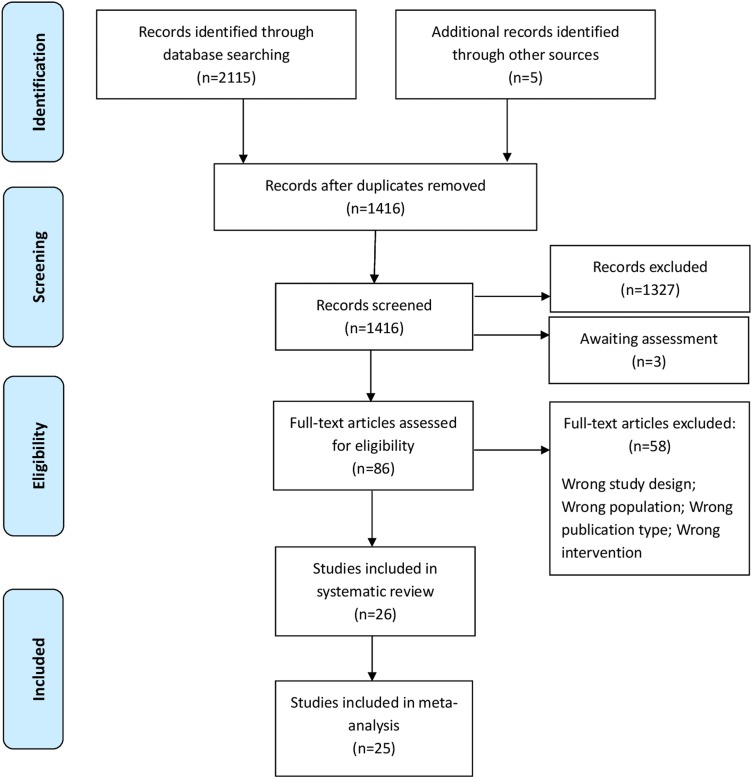
Aims In the past few years, there has been an unprecedented increase in the number of forcibly displaced migrants worldwide, of which a substantial proportion is refugees and asylum seekers. Refugees and asylum seekers may experience high levels of psychological distress, and show high rates of mental health conditions. It is therefore timely and particularly relevant to assess whether current evidence supports the provision of psychosocial interventions for this population. We conducted a systematic review and meta-analysis of randomised controlled trials (RCTs) assessing the efficacy and acceptability of psychosocial interventions compared with control conditions (treatment as usual/no treatment, waiting list, psychological placebo) aimed at reducing mental health problems in distressed refugees and asylum seekers.Methods We used Cochrane procedures for conducting a systematic review and meta-analysis of RCTs. We searched for published and unpublished RCTs assessing the efficacy and acceptability of psychosocial interventions in adults and children asylum seekers and refugees with psychological distress. Post-traumatic stress disorder (PTSD), depressive and anxiety symptoms at post-intervention were the primary outcomes. Secondary outcomes include: PTSD, depressive and anxiety symptoms at follow-up, functioning, quality of life and dropouts due to any reason.Results We included 26 studies with 1959 participants. Meta-analysis of RCTs revealed that psychosocial interventions have a clinically significant beneficial effect on PTSD (standardised mean difference [SMD] = -0.71; 95% confidence interval [CI] -1.01 to -0.41; I2 = 83%; 95% CI 78-88; 20 studies, 1370 participants; moderate quality evidence), depression (SMD = -1.02; 95% CI -1.52 to -0.51; I2 = 89%; 95% CI 82-93; 12 studies, 844 participants; moderate quality evidence) and anxiety outcomes (SMD = -1.05; 95% CI -1.55 to -0.56; I2 = 87%; 95% CI 79-92; 11 studies, 815 participants; moderate quality evidence). This beneficial effect was maintained at 1 month or longer follow-up, which is extremely important for populations exposed to ongoing post-migration stressors. For the other secondary outcomes, we identified a non-significant trend in favour of psychosocial interventions. Most evidence supported interventions based on cognitive behavioural therapies with a trauma-focused component. Limitations of this review include the limited number of studies collected, with a relatively low total number of participants, and the limited available data for positive outcomes like functioning and quality of life.Conclusions Considering the epidemiological relevance of psychological distress and mental health conditions in refugees and asylum seekers, and in view of the existing data on the effectiveness of psychosocial interventions, these interventions should be routinely made available as part of the health care of distressed refugees and asylum seekers. Evidence-based guidelines and implementation packages should be developed accordingly. Copyright © Cambridge University Press 2019.
Overview
CoChat Summary
TL;DR
This systematic review and meta-analysis of 26 RCTs with 1,959 participants found that psychosocial interventions reduced PTSD, depression, and anxiety symptoms in asylum seekers and refugees, with effects maintained at follow-up. The evidence was strongest for trauma-focused CBT-based interventions, while functioning and quality of life did not differ from controls.
Key findings
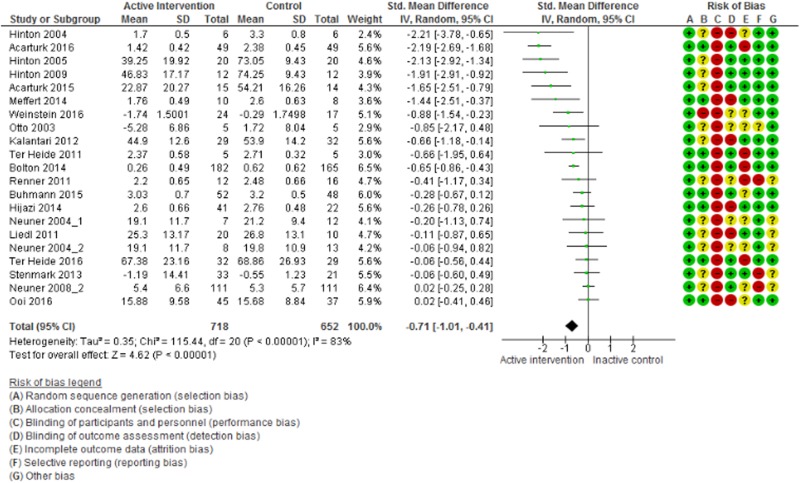
- Across 26 studies (1,959 participants), psychosocial interventions improved PTSD symptoms versus controls: SMD = −0.71 (95% CI −1.01 to −0.41; 20 studies, 1,370 participants; moderate-quality evidence).
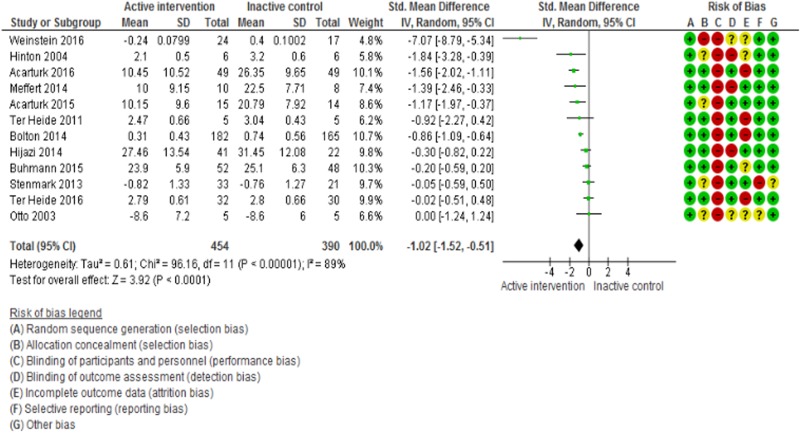
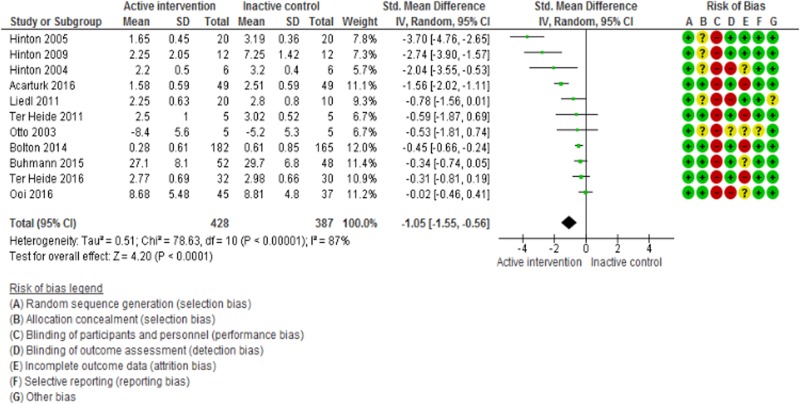
- They also reduced depressive symptoms: SMD = −1.02 (95% CI −1.52 to −0.51; 12 studies, 844 participants; moderate-quality evidence) and anxiety symptoms: SMD = −1.05 (95% CI −1.55 to −0.56; 11 studies, 815 participants; moderate-quality evidence).
- Benefits were maintained at follow-up: PTSD SMD = −1.08 (11 studies, 711 participants), depression SMD = −1.28 (8 studies, 371 participants), anxiety SMD = −0.49 (3 studies, 171 participants).
- Treatment acceptability was similar to control conditions: dropout RR = 0.96 (95% CI 0.82–1.13; 23 studies, 1,636 participants). Functioning and quality of life showed no significant differences from control.
Methods
- Systematic review and meta-analysis of randomized controlled trials, following Cochrane procedures and registered in PROSPERO (CRD42017071523).
- Searched CENTRAL, CINAHL, EMBASE, PILOTS, PsycINFO, PubMed, Web of Science, plus grey literature, through September 2017; included studies in any language involving adults and children asylum seekers/refugees with psychological distress.
- Primary analysis pooled post-intervention PTSD, depression, and anxiety outcomes using random-effects meta-analysis; secondary analyses covered follow-up outcomes, dropout, functioning, and quality of life, with subgroup analyses by intervention type, age, setting, control condition, and risk of bias.
Limitations
- The paper states that the review was limited by the relatively small number of studies and participants, limited data on positive outcomes such as functioning and quality of life, and overall moderate to low quality of included studies.
- The authors state that follow-up periods were not very long, leaving uncertainty about long-term effects, and that substantial heterogeneity remained even after subgroup analyses.
- Evident from the text: most studies were at high risk of bias on two or three items, and the review could not fully examine important variables such as time since resettlement, legal status (refugee vs asylum seeker), or pharmacological treatment.
Model-written summary. Check it against the paper before relying on it.
Integrity signals
Registry
Cites
Statistics
Figures
Verification
Claims the paper makes
11 Valid · 3 Not valid · 3 Not checked · 49 Own results and interpretations
The cited sources support only part of this claim — read each source’s verdict below.
In the paper
“exposure to extreme stressors, including major losses and potentially traumatic events such as torture and war exposure, are disproportionately experienced by refugees and asylum seekers before and during displacement”
§ Efficacy and acceptability of psychosocial interventions in asylum seekers and refugees: systematic review and meta-analysis > Introduction
What the sources say
- Partly supportedcites Bogic et al., 2012 matched to “Factors associated with mental disorders in long-settled war refugees: refugees from the former Yugoslavia in Germany, Italy and the UK” (2012) sourceExperimental — accuracy not yet measured
The Results report frequent war-related traumatic events and migration stressors among refugees from the former Yugoslavia, and note that torture was reported in the sample. The paper does not establish that refugees and asylum seekers experience these stressors disproportionately compared with other groups, or specifically document major losses before and during displacement. (LLM, conf=0.83)
- Not checked — no full text of the sourcecites Priebe et al., 2016
plainstates an association- Asserted: passes — The authors put it forward as true.
- Checkable: passes — It can be checked against evidence.
- Load-bearing: unclear — It is unclear whether the paper’s conclusions depend on it.
- Based: passes — The paper gives a reason why it holds.
- Partly supported
The cited sources support only part of this claim — read each source’s verdict below.
In the paper
“existing reviews are narrative or focused on selected populations of asylum seekers or refugees, for example those with a formal diagnosis of PTSD, or only those displaced and resettled in particular settings only”
§ Efficacy and acceptability of psychosocial interventions in asylum seekers and refugees: systematic review and meta-analysis > Introduction
What the sources say
- Partly supportedcites Nosè et al., 2017 matched to “Psychosocial interventions for post-traumatic stress disorder in refugees and asylum seekers resettled in high-income countries: Systematic review and meta-analysis” (2017) sourceExperimental — accuracy not yet measured
The Introduction (page unavailable) identifies earlier narrative and systematic reviews, and the Discussion (page unavailable) describes a qualitative review of PTSD treatment among refugees and asylum seekers. It does not establish that those earlier reviews required a formal PTSD diagnosis or were limited to particular resettlement settings; the two reviews described in the Discussion covered participants irrespective of setting. (LLM, conf=0.82)
- Not matchedcites Tribe et al., 2017
An author–year citation the paper’s reference list doesn’t settle. We don’t search these by name.
- Not checked — no full text of the sourcecites Thompson et al., 2018 matched to “Psychological interventions for post-traumatic stress disorder in refugees and asylum seekers: A systematic review and meta-analysis” (2018) source
plain- Asserted: passes — The authors put it forward as true.
- Checkable: passes — It can be checked against evidence.
- Load-bearing: passes — The paper’s conclusions depend on it.
- Based: passes — The paper gives a reason why it holds.
- Partly supported
Every source the paper cites for this claim was checked and supports it.
In the paper
“These findings are not consistent with the previous systematic review by Nosè et al., which showed efficacy of NET for PTSD experienced by asylum seekers and refugees”
§ Efficacy and acceptability of psychosocial interventions in asylum seekers and refugees: systematic review and meta-analysis > Discussion
What the sources say
- Supportedcites Nosè et al., 2017 matched to “Psychosocial interventions for post-traumatic stress disorder in refugees and asylum seekers resettled in high-income countries: Systematic review and meta-analysis” (2017) source
The Discussion states that five randomized trials supported the effectiveness of narrative exposure therapy (NET), with a relatively large effect and reasonably low heterogeneity. The review concerns PTSD in refugees and asylum seekers resettled in high-income countries, though it cautions that the evidence is limited in quality. (LLM, conf=0.90)
plain- Asserted: passes — The authors put it forward as true.
- Checkable: passes — It can be checked against evidence.
- Load-bearing: passes — The paper’s conclusions depend on it.
- Based: passes — The paper gives a reason why it holds.
- Supported
The cited sources support only part of this claim — read each source’s verdict below.
In the paper
“Randomised controlled trials (RCTs) suggest that psychosocial interventions, that is interventions with a focus on the interrelation between social circumstances and peoples’ thoughts, emotions and behaviours, may be helpful in treating some mental disorders in asylum seekers and refugees”
§ Efficacy and acceptability of psychosocial interventions in asylum seekers and refugees: systematic review and meta-analysis > Introduction
What the sources say
- Partly supportedcites Nosè et al., 2017 matched to “Psychosocial interventions for post-traumatic stress disorder in refugees and asylum seekers resettled in high-income countries: Systematic review and meta-analysis” (2017) sourceExperimental — accuracy not yet measured
The Introduction describes a review of RCTs and controlled trials in adult refugees and asylum seekers with PTSD resettled in high-income countries. The Results report reductions in PTSD and depressive symptoms after psychosocial interventions. This supports the cautious claim that such interventions may help, but the citing sentence omits the study’s population and setting limits. (LLM, conf=0.82)
hedgedstates a possible cause- Asserted: passes — The authors put it forward as true.
- Checkable: passes — It can be checked against evidence.
- Load-bearing: passes — The paper’s conclusions depend on it.
- Based: passes — The paper gives a reason why it holds.
- Partly supported
The paper states this without a source or data behind it here, so there is nothing to check it against. The quote shows it is in the paper.
In the paper
“Most evidence supported interventions based on cognitive behavioural therapies with a trauma-focused component.”
§ Efficacy and acceptability of psychosocial interventions in asylum seekers and refugees: systematic review and meta-analysis > Abstract > Results
- Asserted: passes — The authors put it forward as true.
- Checkable: passes — It can be checked against evidence.
- Load-bearing: passes — The paper’s conclusions depend on it.
- Based: unclear — It is unclear why the paper says it holds.
36 more claims
Create a free account to see all 66 claims and to verify the 1 reference still open.
- It may state two separate claims as one. 15
- Probably not a substantial claim. 11
- The quote only partly states this claim. 1
Claims other papers make about this one
Each is checked against this paper’s own text: does it say what the citing paper says it does?
The source backs part of the claim, not all of it — or backs it for a different population, condition or comparison.
In the citing paper
“Experiences before, during, and after flight increase psychological distress and the risk of various mental disorders, with a recent umbrella review identifying depression, anxiety, and post-traumatic stress disorder (PTSD) as the most common mental disorders among refugees, accounting for up to 40% of all mental disorders in this population (Turrini et al., 2019).”
From Smartphone-delivered mental health care interventions for refugees: A systematic review of the literature (2023) · cites this paper as Turrini et al., 2019
Experimental — accuracy not yet measuredThe source backs part of the claim, not all of it — or backs it for a different population, condition or comparison.
In the citing paper
“Similarly, previous reviews have shown that psychosocial interventions, and especially narrative exposure therapy, are effective for PTSD among refugees in both global and high-income settings [148, 149].”
From Psychological and pharmacological interventions for posttraumatic stress disorder and comorbid mental health problems following complex traumatic events: Systematic review and component network meta-analysis (2020) · cites this paper as [148]
Experimental — accuracy not yet measuredThe source backs part of the claim, not all of it — or backs it for a different population, condition or comparison.
In the citing paper
“Trauma-focused therapies have demonstrated efficacy in reducing symptoms of PTSD, depression, and anxiety”
From A brief transdiagnostic psychological intervention for Afghan asylum seekers and refugees in Austria: A randomized controlled trial (2020) · cites this paper as [15]
Experimental — accuracy not yet measuredThe source backs part of the claim, not all of it — or backs it for a different population, condition or comparison.
In the citing paper
“The treatment evidence base for help-seeking refugees and asylum seekers is sparse and limited mainly to trauma-specific treatments [13–16]”
From A brief transdiagnostic psychological intervention for Afghan asylum seekers and refugees in Austria: A randomized controlled trial (2020) · cites this paper as [15]
Experimental — accuracy not yet measuredThe source backs part of the claim, not all of it — or backs it for a different population, condition or comparison.
In the citing paper
“Although the efficacy of gPM+ and other task-shifting programs have been shown, there is a scarcity of effective programs that address the needs of children [13].”
From Effectiveness of a brief group behavioral intervention for common mental disorders in Syrian refugees in Jordan: a randomized controlled trial (2022) · cites this paper as [13]
Experimental — accuracy not yet measured
3 more claims about this paper
Create a free account to see every claim other papers make about this one.
Self-check
Percentages, sums and reported differences re-computed from the paper’s own numbers.
Self-check results appear here once an independent check has confirmed them.
Cited works that were retracted
Works this paper cites that were later retracted, from the retraction notices publishers deposit. Major when the notice came out before this paper was published.
Rated major: it would touch a result — a value a result rests on, reported and recomputed p-values on opposite sides of the significance level, two passages that conflict with no sign which is right, or a cited work retracted before this paper was published.
In the paper
“…et al., 2004, 2005, 2009; Neuner et al., 2004, 2008, 2010; Baker and Jones, 2006; Weine et al., 2008; Ruf et al., 2010; Adenauer et al., 2011; Liedl et al., 2011; Renner et al., 2011; Ter Heide et al., 2011, 2016; Kalantari et al., 2012; Stenmark et al., 2013; Bolton et al., 2014; Hijazi et…”
Cited work 10.1111/j.1526-4637.2010.01040.x · retracted 2013-10-01 · notice 10.1111/pme.12240 · this paper published 2019-02-11
Citations
Cites
1 retracted
Liedl, A., Müller, J., Morina, N., Karl, A., Denke, C., & Knaevelsrud, C. (2011) · Pain Medicine · doi:10.1111/j.1526-4637.2010.01040.x · Cited by 69 · cited 2×
“…et al., 2004, 2005, 2009; Neuner et al., 2004, 2008, 2010; Baker and Jones, 2006; Weine et al., 2008; Ruf et al., 2010; Adenauer et al., 2011; Liedl et al., 2011; Renner et al., 2011; Ter Heide et al., 2011, 2016; Kalantari et al., 2012; Stenmark et al., 2013; Bolton et al., 2014; Hijazi et…”
RetractedPreferred Reporting Items for Systematic Reviews and Meta-Analyses: the PRISMA statement
Moher, D., Liberati, A., Tetzlaff, J., Altman, D. G., & for the PRISMA Group (2009) · BMJ · doi:10.1136/bmj.b2535 · Cited by 83,823
Preferred reporting items for systematic reviews and meta-analyses: the PRISMA Statement.
(2009) · PubMed Central · Cited by 44,859
Hamilton, M. (1960) · Journal of Neurology, Neurosurgery & Psychiatry · doi:10.1136/jnnp.23.1.56 · Cited by 32,817 · cited 3×
“For depressive symptoms, data were extracted from the Hamilton Depression Rating Scale (HDRS) (Hamilton, 1960) or Beck Depression Inventory-II (BDI-II) (Beck et al.”
MethodDermyshi, E., Wang, Y., Yan, C., Hong, W., Qiu, G., Gong, X., & Zhang, T. (2017) · Neonatology · doi:10.1159/000454668 · Cited by 24,451
Preferred Reporting Items for Systematic Reviews and Meta-Analyses: The PRISMA Statement
Moher, D., Liberati, A., Tetzlaff, J., & Altman, D. G. (2009) · Journal of Clinical Epidemiology · doi:10.1016/j.jclinepi.2009.06.005 · Cited by 19,575
The assessment of anxiety states by rating
HAMILTON, M. (1959) · British Journal of Medical Psychology · doi:10.1111/j.2044-8341.1959.tb00467.x · Cited by 11,455 · cited 3×
“For anxiety symptoms, data were extracted from the Hamilton Rating Scale for Anxiety (HRSA) (Hamilton, 1959) or from any other anxiety rating scale with 2 G.”
MethodGRADE guidelines: 1. Introduction—GRADE evidence profiles and summary of findings tables
Guyatt, G., Oxman, A. D., Akl, E. A., Kunz, R., Vist, G., Brozek, J., Norris, S., Falck-Ytter, Y., Glasziou, P., & deBeer, H. (2011) · Journal of Clinical Epidemiology · doi:10.1016/j.jclinepi.2010.04.026 · Cited by 10,681 · cited 2×
“Additionally, in order to produce a tabular synoptic overview of the main review findings and quality, easily understandable for patients, policy makers, research planners, guideline developers and other stakeholders, data were summarised according to the methodology described by the GRADE working group (Guyatt et al.…”
MethodBorenstein, M., Hedges, L. V., Higgins, J. P. T., & Rothstein, H. R. (2021) · doi:10.1002/9781119558378 · Cited by 9,799
Social Relationships and Mortality Risk: A Meta-analytic Review
Holt-Lunstad, J., Smith, T. B., & Layton, J. B. (2010) · PLoS Medicine · doi:10.1371/journal.pmed.1000316 · Cited by 7,272
The development of a Clinician-Administered PTSD Scale
Blake, D. D., Weathers, F. W., Nagy, L. M., Kaloupek, D. G., Gusman, F. D., Charney, D. S., & Keane, T. M. (1995) · Journal of Traumatic Stress · doi:10.1002/jts.2490080106 · Cited by 5,024
Norderyd, O. M., Koch, G., Papias, A., Köhler, A. A., Helkimo, A. N., Brahm, C., Lindmark, U., Lindfors, N., Mattsson, A., Rolander, B., et al. (2015) · PubMed · Cited by 3,584
How important are the common factors in psychotherapy? An update
Wampold, B. E. (2015) · World Psychiatry · doi:10.1002/wps.20238 · Cited by 1,728 · cited 6×
“I) Psychological placebo (stabilisation therapy) 20 HTQ, HSCL-25, WHOQOL-BREF PTSD 3 Yes Ter Heide et al. (2016) Netherlands Iraq, Afghanistan, Ex-Yugoslavia, altri Paesi del Medio Oriente, Africa EMDR (12 –”
InfluentialImputing missing standard deviations in meta-analyses can provide accurate results
Furukawa, T. A., Barbui, C., Cipriani, A., Brambilla, P., & Watanabe, N. (2006) · Journal of Clinical Epidemiology · doi:10.1016/j.jclinepi.2005.06.006 · Cited by 1,568 · cited 1×
“If standard deviations could not be calculated, they were imputed using validated methodology (Furukawa et al., 2006).”
MethodSelf-citationMollica, R. F., Caspi-Yavin, Y., Bollini, P., Truong, T., Tor, S., & Lavelle, J. (1992) · PubMed · Cited by 1,551
Miller, K. E., & Rasmussen, A. (2010) · Social Science & Medicine · doi:10.1016/j.socscimed.2009.09.029 · Cited by 1,524 · cited 1×
“In addition, postdisplacement stressors that are important for mental health include resettlement, language barriers and perceived stigma and discrimination (Kirmayer et al., 2011; Miller and Rasmussen, 2010).”
BackgroundCommon mental health problems in immigrants and refugees: general approach in primary care
Kirmayer, L. J., Narasiah, L., Munoz, M., Rashid, M., Ryder, A. G., Guzder, J., Hassan, G., Rousseau, C., Pottie, K., & for the Canadian Collaboration for Immigrant and Refugee Health (CCIRH) (2011) · Canadian Medical Association Journal · doi:10.1503/cmaj.090292 · Cited by 1,505
MOLLICA, R. F., CASPI-YAVIN, Y., BOLLINI, P., TRUONG, T., TOR, S., & LAVELLE, J. (1992) · The Journal of Nervous and Mental Disease · doi:10.1097/00005053-199202000-00008 · Cited by 1,489 · cited 5×
“I) Psychological placebo (stabilisation therapy) 20 HTQ, HSCL-25, WHOQOL-BREF PTSD 3 Yes Ter Heide et al. (2016) Netherlands Iraq, Afghanistan, Ex-Yugoslavia, altri Paesi del Medio Oriente, Africa EMDR (12 –”
BackgroundMethodInfluentialStatistics Notes: Detecting skewness from summary information: Table 1
Altman, D. G., & Bland, J. M. (1996) · BMJ · doi:10.1136/bmj.313.7066.1200 · Cited by 1,278 · cited 1×
“When only p or standard error values were reported, standard deviations were calculated according to Altman and Bland (1996, 2011).”
MethodLund, C., Brooke-Sumner, C., Baingana, F., Baron, E. C., Breuer, E., Chandra, P., Haushofer, J., Herrman, H., Jordans, M., Kieling, C., et al. (2018) · The Lancet Psychiatry · doi:10.1016/s2215-0366(18)30060-9 · Cited by 1,147 · cited 2×
“demographic, economic, neighbourhood, environmental events and social and cultural domains) (Lund et al., 2014; Lund et al., 2018), and higher rates of some mental health conditions, including post-traumatic stress disorder (PTSD), depression and anxiety, although findings are not consistent across studies (Turrini et…”
BackgroundResultSize of Treatment Effects and Their Importance to Clinical Research and Practice
Kraemer, H. C., & Kupfer, D. J. (2006) · Biological Psychiatry · doi:10.1016/j.biopsych.2005.09.014 · Cited by 850 · cited 1×
“To provide a measure of clinical significance, the numberneeded-to-treat (NNT) was calculated for primary outcomes, which indicates the number of patients that would need to be treated in order to generate one additional positive outcome (Kraemer and Kupfer, 2006).”
MethodMathematics Anxiety, Working Memory, and Mathematics Performance in Secondary-School Children
Passolunghi, M. C., Caviola, S., De Agostini, R., Perin, C., & Mammarella, I. C. (2016) · Frontiers in Psychology · doi:10.3389/fpsyg.2016.00042 · Cited by 696
Neuner, F., Schauer, M., Klaschik, C., Karunakara, U., & Elbert, T. (2004) · Journal of Consulting and Clinical Psychology · doi:10.1037/0022-006x.72.4.579 · Cited by 644 · cited 1×
“…which 26 studies fulfilled the eligibility criteria and were included in the systematic review (Otto et al., 2003; Hinton et al., 2004, 2005, 2009; Neuner et al., 2004, 2008, 2010; Baker and Jones, 2006; Weine et al., 2008; Ruf et al., 2010; Adenauer et al., 2011; Liedl et al., 2011; Renner et…”
BackgroundWebster, L., Groskreutz, D., Grinbergs-Saull, A., Howard, R., O’Brien, J. T., Mountain, G., Banerjee, S., Woods, B., Perneczky, R., Lafortune, L., et al. (2017) · PLOS ONE · doi:10.1371/journal.pone.0179521 · Cited by 415
Turrini, G., Purgato, M., Ballette, F., Nosè, M., Ostuzzi, G., & Barbui, C. (2017) · International Journal of Mental Health Systems · doi:10.1186/s13033-017-0156-0 · Cited by 412 · cited 2×
“…environmental events and social and cultural domains) (Lund et al., 2014; Lund et al., 2018), and higher rates of some mental health conditions, including post-traumatic stress disorder (PTSD), depression and anxiety, although findings are not consistent across studies (Turrini et al., 2017).”
ResultSelf-citationHow to obtain the confidence interval from a P value
Altman, D. G., & Bland, J. M. (2011) · BMJ · doi:10.1136/bmj.d2090 · Cited by 402 · cited 1×
“When only p or standard error values were reported, standard deviations were calculated according to Altman and Bland (1996, 2011).”
MethodNeuner, F., Onyut, P. L., Ertl, V., Odenwald, M., Schauer, E., & Elbert, T. (2008) · Journal of Consulting and Clinical Psychology · doi:10.1037/0022-006x.76.4.686 · Cited by 395 · cited 6×
“384 G. Turrini et al. of psychosocial interventions should employ a psychological placebo rather than a no treatment or wait-list condition.”
BackgroundInfluentialHinton, D. E., Chhean, D., Pich, V., Safren, S. A., Hofmann, S. G., & Pollack, M. H. (2005) · Journal of Traumatic Stress · doi:10.1002/jts.20070 · Cited by 332 · cited 2×
“Removing the five studies with outlier results (Hinton et al., 2004, 2005, 2009; Acarturk et al., 2015, 2016) the overall estimate remained significant (SMD = −0.33; 95% CI −0.52 to −0.14; I2 = 49%; 95% CI 10–72) with heterogeneity below 50%.”
BackgroundInfluentialBolton, P., Lee, C., Haroz, E. E., Murray, L., Dorsey, S., Robinson, C., Ugueto, A. M., & Bass, J. (2014) · PLoS Medicine · doi:10.1371/journal.pmed.1001757 · Cited by 319 · cited 2×
“…2010; Adenauer et al., 2011; Liedl et al., 2011; Renner et al., 2011; Ter Heide et al., 2011, 2016; Kalantari et al., 2012; Stenmark et al., 2013; Bolton et al., 2014; Hijazi et al., 2014; Meffert et al., 2014; Morath et al., 2014; Acarturk et al., 2015, 2016; Buhmann et al., 2016; Ooi et…”
Citalopram versus other anti-depressive agents for depression
Cipriani, A., Purgato, M., Furukawa, T. A., Trespidi, C., Imperadore, G., Signoretti, A., Churchill, R., Watanabe, N., & Barbui, C. (2012) · Cochrane Database of Systematic Reviews · doi:10.1002/14651858.cd006534.pub2 · Cited by 311
Self-citationHow is depression experienced around the world? A systematic review of qualitative literature
Haroz, E. E., Ritchey, M., Bass, J. K., Kohrt, B. A., Augustinavicius, J., Michalopoulos, L., Burkey, M. D., & Bolton, P. (2017) · Social Science & Medicine · doi:10.1016/j.socscimed.2016.12.030 · Cited by 292 · cited 1×
“These characteristics might have an influence in the establishment of relationship and trust on the study outcomes (Kaiser et al., 2015; Haroz et al., 2017).”
BackgroundHeart Failure Care in Low- and Middle-Income Countries: A Systematic Review and Meta-Analysis
Callender, T., Woodward, M., Roth, G., Farzadfar, F., Lemarie, J.-C., Gicquel, S., Atherton, J., Rahimzadeh, S., Ghaziani, M., Shaikh, M., et al. (2014) · PLoS Medicine · doi:10.1371/journal.pmed.1001699 · Cited by 288
“Thinking too much”: a systematic review of a common idiom of distress
Kaiser, B. N., Haroz, E. E., Kohrt, B. A., Bolton, P. A., Bass, J. K., & Hinton, D. E. (2015) · Social Science & Medicine · doi:10.1016/j.socscimed.2015.10.044 · Cited by 287 · cited 1×
“These characteristics might have an influence in the establishment of relationship and trust on the study outcomes (Kaiser et al., 2015; Haroz et al., 2017).”
BackgroundBogic, M., Ajdukovic, D., Bremner, S., Franciskovic, T., Galeazzi, G. M., Kucukalic, A., Lecic-Tosevski, D., Morina, N., Popovski, M., Schützwohl, M., et al. (2012) · British Journal of Psychiatry · doi:10.1192/bjp.bp.110.084764 · Cited by 283 · cited 2×
“From a public mental health perspective, there is epidemiological evidence showing that exposure to extreme stressors, including major losses and potentially traumatic events such as torture and war exposure, are disproportionately experienced by refugees and asylum seekers before and during displacement (Bogic et al.…”
BackgroundNosè, M., Ballette, F., Bighelli, I., Turrini, G., Purgato, M., Tol, W., Priebe, S., & Barbui, C. (2017) · PLOS ONE · doi:10.1371/journal.pone.0171030 · Cited by 276 · cited 6×
“, which showed efficacy of NET for PTSD experienced by asylum seekers and refugees (Nosè et al., 2017).”
BackgroundResultInfluentialSelf-citationRuf, M., Schauer, M., Neuner, F., Catani, C., Schauer, E., & Elbert, T. (2010) · Journal of Traumatic Stress · doi:10.1002/jts.20548 · Cited by 274 · cited 6×
“…systematic review (Otto et al., 2003; Hinton et al., 2004, 2005, 2009; Neuner et al., 2004, 2008, 2010; Baker and Jones, 2006; Weine et al., 2008; Ruf et al., 2010; Adenauer et al., 2011; Liedl et al., 2011; Renner et al., 2011; Ter Heide et al., 2011, 2016; Kalantari et al., 2012; Stenmark et…”
BackgroundInfluentialCBT for Vietnamese refugees with treatment‐resistant PTSD and panic attacks: A pilot study
Hinton, D. E., Pham, T., Tran, M., Safren, S. A., Otto, M. W., & Pollack, M. H. (2004) · Journal of Traumatic Stress · doi:10.1023/b:jots.0000048956.03529.fa · Cited by 252 · cited 2×
“Removing the five studies with outlier results (Hinton et al., 2004, 2005, 2009; Acarturk et al., 2015, 2016) the overall estimate remained significant (SMD = −0.33; 95% CI −0.52 to −0.14; I2 = 49%; 95% CI 10–72) with heterogeneity below 50%.”
BackgroundInfluentialClose, C., Kouvonen, A., Bosqui, T., Patel, K., O’Reilly, D., & Donnelly, M. (2016) · Globalization and Health · doi:10.1186/s12992-016-0187-3 · Cited by 247 · cited 1×
“As compared with the general population, psychosis has also been shown to be more frequent in people exposed to trauma and displacement (Close et al., 2016; Dapunt et al., 2017).”
Background(2016) · Queen Mary Research Online (Queen Mary University of London) · Cited by 240
Purgato, M., Gastaldon, C., Papola, D., van Ommeren, M., Barbui, C., & Tol, W. A. (2018) · Cochrane Database of Systematic Reviews · doi:10.1002/14651858.cd011849.pub2 · Cited by 215 · cited 1×
“We also cross-checked the search performed by Cochrane on psychological therapies for the treatment of mental disorders in low- and middle-income countries (LMICs) affected by humanitarian crises (Purgato et al., 2015).”
MethodSelf-citationPurgato, M., Gross, A. L., Betancourt, T., Bolton, P., Bonetto, C., Gastaldon, C., Gordon, J., O'Callaghan, P., Papola, D., Peltonen, K., et al. (2018) · The Lancet Global Health · doi:10.1016/s2214-109x(18)30046-9 · Cited by 203 · cited 1×
“They are currently under investigation in several countries and early results from RCTs showed efficacy (Rahman et al., 2016; van’t Hof et al., 2018).”
ResultSelf-citationOtto, M. W., Hinton, D., Korbly, N. B., Chea, A., Ba, P., Gershuny, B. S., & Pollack, M. H. (2003) · Behaviour Research and Therapy · doi:10.1016/s0005-7967(03)00032-9 · Cited by 194 · cited 2×
“G) WL 82 CRIES-13, DSRS, SDQP PTSD Post-treatment Unclear Otto et al. (2003) USA Cambodia CBT (10 –”
BackgroundNeuner, F., Kurreck, S., Ruf, M., Odenwald, M., Elbert, T., & Schauer, M. (2010) · Cognitive Behaviour Therapy · doi:10.1080/16506070903121042 · Cited by 190
Harper Shehadeh, M., Heim, E., Chowdhary, N., Maercker, A., & Albanese, E. (2016) · JMIR Mental Health · doi:10.2196/mental.5776 · Cited by 188 · cited 2×
“…of interventions and measures might weaken the accuracy of the studies’ conclusions, taking into consideration that existing research showed that more extensive cultural adaptation of the interventions may be associated with larger effect sizes (Bass et al., 2007; Harper Shehadeh et al., 2016).”
ResultAcarturk, C., Konuk, E., Cetinkaya, M., Senay, I., Sijbrandij, M., Cuijpers, P., & Aker, T. (2015) · European Journal of Psychotraumatology · doi:10.3402/ejpt.v6.27414 · Cited by 187 · cited 2×
“Removing the five studies with outlier results (Hinton et al., 2004, 2005, 2009; Acarturk et al., 2015, 2016) the overall estimate remained significant (SMD = −0.33; 95% CI −0.52 to −0.14; I2 = 49%; 95% CI 10–72) with heterogeneity below 50%.”
InfluentialSelf-citationStenmark, H. I., Catani, C., Neuner, F., Elbert, T. R., & Holen, A. (2013) · Behaviour Research and Therapy · doi:10.1016/j.brat.2013.07.002 · Cited by 176 · cited 8×
“I) WL 26 UCLA PTSD index PTSD 12 Unclear Stenmark et al. (2013) Norway Iraq , Afghanistan, other Middle East Countries , African countries, other NET (10 –”
BackgroundInfluentialHinton, D. E., Hofmann, S. G., Pollack, M. H., & Otto, M. W. (2009) · CNS Neuroscience & Therapeutics · doi:10.1111/j.1755-5949.2009.00100.x · Cited by 173 · cited 2×
“Removing the five studies with outlier results (Hinton et al., 2004, 2005, 2009; Acarturk et al., 2015, 2016) the overall estimate remained significant (SMD = −0.33; 95% CI −0.52 to −0.14; I2 = 49%; 95% CI 10–72) with heterogeneity below 50%.”
BackgroundInfluentialAcarturk, C., Konuk, E., Cetinkaya, M., Senay, I., Sijbrandij, M., Gulen, B., & Cuijpers, P. (2016) · Psychological Medicine · doi:10.1017/s0033291716001070 · Cited by 165 · cited 2×
“Removing the five studies with outlier results (Hinton et al., 2004, 2005, 2009; Acarturk et al., 2015, 2016) the overall estimate remained significant (SMD = −0.33; 95% CI −0.52 to −0.14; I2 = 49%; 95% CI 10–72) with heterogeneity below 50%.”
InfluentialSelf-citationBaker, F. A., & Jones, C. (2006) · Emotional and Behavioural Difficulties · doi:10.1080/13632750601022170 · Cited by 163 · cited 2×
“…criteria and were included in the systematic review (Otto et al., 2003; Hinton et al., 2004, 2005, 2009; Neuner et al., 2004, 2008, 2010; Baker and Jones, 2006; Weine et al., 2008; Ruf et al., 2010; Adenauer et al., 2011; Liedl et al., 2011; Renner et al., 2011; Ter Heide et al., 2011,…”
BackgroundEvaluating A Multiple‐Family Group Access Intervention for Refugees with PTSD
Weine, S., Kulauzovic, Y., Klebic, A., Besic, S., Mujagic, A., Muzurovic, J., Spahovic, D., Sclove, S., Pavkovic, I., Feetham, S., et al. (2008) · Journal of Marital and Family Therapy · doi:10.1111/j.1752-0606.2008.00061.x · Cited by 152 · cited 7×
“I) Psychological placebo (stabilisation therapy) 20 HTQ, HSCL-25, WHOQOL-BREF PTSD 3 Yes Ter Heide et al. (2016) Netherlands Iraq, Afghanistan, Ex-Yugoslavia, altri Paesi del Medio Oriente, Africa EMDR (12 –”
InfluentialKalantari, M., Yule, W., Dyregrov, A., Neshatdoost, H., & Ahmadi, S. J. (2012) · OMEGA - Journal of Death and Dying · doi:10.2190/om.65.2.d · Cited by 150 · cited 2×
“…and Jones, 2006; Weine et al., 2008; Ruf et al., 2010; Adenauer et al., 2011; Liedl et al., 2011; Renner et al., 2011; Ter Heide et al., 2011, 2016; Kalantari et al., 2012; Stenmark et al., 2013; Bolton et al., 2014; Hijazi et al., 2014; Meffert et al., 2014; Morath et al., 2014; Acarturk et al.,…”
Thompson, C. T., Vidgen, A., & Roberts, N. P. (2018) · Clinical Psychology Review · doi:10.1016/j.cpr.2018.06.006 · Cited by 146 · cited 2×
“…heterogeneous, and existing reviews are narrative or focused on selected populations of asylum seekers or refugees, for example those with a formal diagnosis of PTSD, or only those displaced and resettled in particular settings only (Nosè et al., 2017; Tribe et al., 2017; Thompson et al., 2018).”
BackgroundDo not forget culture when studying mental health
Bass, J. K., Bolton, P. A., & Murray, L. K. (2007) · The Lancet · doi:10.1016/s0140-6736(07)61426-3 · Cited by 131 · cited 2×
“…of interventions and measures might weaken the accuracy of the studies’ conclusions, taking into consideration that existing research showed that more extensive cultural adaptation of the interventions may be associated with larger effect sizes (Bass et al., 2007; Harper Shehadeh et al., 2016).”
ResultMental health care for adult refugees in high-income countries
Giacco, D., & Priebe, S. (2018) · Epidemiology and Psychiatric Sciences · doi:10.1017/s2045796017000609 · Cited by 131
Barbui, C., Dua, T., van Ommeren, M., Yasamy, M. T., Fleischmann, A., Clark, N., Thornicroft, G., Hill, S., & Saxena, S. (2010) · PLoS Medicine · doi:10.1371/journal.pmed.1000322 · Cited by 119 · cited 1×
“We followed the World Health Organization criteria for summarising and aggregating evidence (Barbui et al., 2010, 2015).”
MethodSelf-citationHETEROGI: Stata module to quantify heterogeneity in a meta-analysis
Orsini, N., Bottai, M., Higgins, J. P. T., & Buchan, I. E. (2005) · RePEc: Research Papers in Economics · Cited by 118
Management of Acute Stress, PTSD, and Bereavement: WHO Recommendations
Tol, W. A., Barbui, C., & van Ommeren, M. (2013) · JAMA · doi:10.1001/jama.2013.166723 · Cited by 115 · cited 1×
“In terms of type of psychosocial intervention, CBT with a trauma focus, EMDR and stress management interventions are generally recommended in the general population of adults with PTSD (Tol et al., 2013, 2014).”
BackgroundSelf-citationEnhancing need satisfaction to reduce psychological distress in Syrian refugees.
Weinstein, N., Khabbaz, F., & Legate, N. (2016) · Journal of Consulting and Clinical Psychology · doi:10.1037/ccp0000095 · Cited by 111 · cited 8×
“I) WL 26 UCLA PTSD index PTSD 12 Unclear Stenmark et al. (2013) Norway Iraq , Afghanistan, other Middle East Countries , African countries, other NET (10 –”
InfluentialHijazi, A. M., Lumley, M. A., Ziadni, M. S., Haddad, L., Rapport, L. J., & Arnetz, B. B. (2014) · Journal of Traumatic Stress · doi:10.1002/jts.21922 · Cited by 102 · cited 2×
“…2011; Liedl et al., 2011; Renner et al., 2011; Ter Heide et al., 2011, 2016; Kalantari et al., 2012; Stenmark et al., 2013; Bolton et al., 2014; Hijazi et al., 2014; Meffert et al., 2014; Morath et al., 2014; Acarturk et al., 2015, 2016; Buhmann et al., 2016; Ooi et al., 2016; Weinstein et…”
Adenauer, H., Catani, C., Gola, H., Keil, J., Ruf, M., Schauer, M., & Neuner, F. (2011) · BMC Neuroscience · doi:10.1186/1471-2202-12-127 · Cited by 102 · cited 2×
“After title and abstract screening, 88 full text papers were considered for inclusion, of which 26 studies fulfilled the eligibility criteria and were included in the systematic review (Otto et al., 2003; Hinton et al., 2004, 2005, 2009; Neuner et al., 2004, 2008, 2010; Baker and Jones, 2006; Weine et al., 2008; Ruf e…”
Psychological and psychosocial interventions for refugee children resettled in high-income countries
Fazel, M. S. (2017) · Epidemiology and Psychiatric Sciences · doi:10.1017/s2045796017000695 · Cited by 100 · cited 1×
“The efficacy of psychosocial interventions in children and adolescent refugees needs to be ascertained (Fazel, 2018).”
BackgroundRahman, A., Riaz, N., Dawson, K. S., Usman Hamdani, S., Chiumento, A., Sijbrandij, M., Minhas, F., Bryant, R. A., Saeed, K., van Ommeren, M., et al. (2016) · World Psychiatry · doi:10.1002/wps.20312 · Cited by 99 · cited 2×
“G) No treatment 10 CAPS, SCL-90-R PTSD Post-treatment Yes Renner et al. (2011) Austria Chechnya CROP (15 –”
Self-citationA systematic review of psychosocial interventions for adult refugees and asylum seekers
Tribe, R. H., Sendt, K.-V., & Tracy, D. K. (2019) · Journal of Mental Health · doi:10.1080/09638237.2017.1322182 · Cited by 96 · cited 1×
“However, studies are heterogeneous, and existing reviews are narrative or focused on selected populations of asylum seekers or refugees, for example those with a formal diagnosis of PTSD, or only those displaced and resettled in particular settings only (Nosè et al., 2017; Tribe et al., 2017; Thompson et al., 2018).”
BackgroundBuhmann, C. B., Nordentoft, M., Ekstroem, M., Carlsson, J., & Mortensen, E. L. (2016) · British Journal of Psychiatry · doi:10.1192/bjp.bp.114.150961 · Cited by 92 · cited 2×
“After title and abstract screening, 88 full text papers were considered for inclusion, of which 26 studies fulfilled the eligibility criteria and were included in the systematic review (Otto et al., 2003; Hinton et al., 2004, 2005, 2009; Neuner et al., 2004, 2008, 2010; Baker and Jones, 2006; Weine et al., 2008; Ruf e…”
Tol, W. A., Barbui, C., Bisson, J., Cohen, J., Hijazi, Z., Jones, L., de Jong, J. T. V. M., Magrini, N., Omigbodun, O., Seedat, S., et al. (2014) · PLoS Medicine · doi:10.1371/journal.pmed.1001769 · Cited by 83 · cited 1×
“In terms of type of psychosocial intervention, CBT with a trauma focus, EMDR and stress management interventions are generally recommended in the general population of adults with PTSD (Tol et al., 2013, 2014).”
BackgroundSelf-citationMorath, J., Gola, H., Sommershof, A., Hamuni, G., Kolassa, S., Catani, C., Adenauer, H., Ruf‐Leuschner, M., Schauer, M., Elbert, T. R., et al. (2014) · Journal of Psychiatric Research · doi:10.1016/j.jpsychires.2014.03.016 · Cited by 83 · cited 1×
“…et al., 2011; Renner et al., 2011; Ter Heide et al., 2011, 2016; Kalantari et al., 2012; Stenmark et al., 2013; Bolton et al., 2014; Hijazi et al., 2014; Meffert et al., 2014; Morath et al., 2014; Acarturk et al., 2015, 2016; Buhmann et al., 2016; Ooi et al., 2016; Weinstein et al., 2016) (Fig.”
EMDR versus stabilisation in traumatised asylum seekers and refugees: results of a pilot study
ter Heide, F. J. J., Mooren, T., Kleijn, W., de Jongh, A., & Kleber, R. (2011) · European Journal of Psychotraumatology · doi:10.3402/ejpt.v2i0.5881 · Cited by 79
ter Heide, F. J. J., Mooren, T. M., van de Schoot, R., de Jongh, A., & Kleber, R. J. (2016) · British Journal of Psychiatry · doi:10.1192/bjp.bp.115.167775 · Cited by 78
Meffert, S. M., Abdo, A. O., Alla, O. A. A., Elmakki, Y. O. M., Omer, A. A., Yousif, S., Metzler, T. J., & Marmar, C. R. (2014) · Psychological Trauma Theory Research Practice and Policy · doi:10.1037/a0023540 · Cited by 67 · cited 2×
“After title and abstract screening, 88 full text papers were considered for inclusion, of which 26 studies fulfilled the eligibility criteria and were included in the systematic review (Otto et al., 2003; Hinton et al., 2004, 2005, 2009; Neuner et al., 2004, 2008, 2010; Baker and Jones, 2006; Weine et al., 2008; Ruf e…”
Risk of psychosis in refugees: a literature review
Dapunt, J., Kluge, U., & Heinz, A. (2017) · Translational Psychiatry · doi:10.1038/tp.2017.119 · Cited by 64 · cited 1×
“As compared with the general population, psychosis has also been shown to be more frequent in people exposed to trauma and displacement (Close et al., 2016; Dapunt et al., 2017).”
BackgroundOoi, C. S., Rooney, R. M., Roberts, C., Kane, R. T., Wright, B., & Chatzisarantis, N. (2016) · Frontiers in Psychology · doi:10.3389/fpsyg.2016.01641 · Cited by 58 · cited 7×
“I) Psychological placebo (stabilisation therapy) 20 HTQ, HSCL-25, WHOQOL-BREF PTSD 3 Yes Ter Heide et al. (2016) Netherlands Iraq, Afghanistan, Ex-Yugoslavia, altri Paesi del Medio Oriente, Africa EMDR (12 –”
InfluentialSijbrandij, M. (2017) · Epidemiology and Psychiatric Sciences · doi:10.1017/s2045796017000713 · Cited by 45 · cited 1×
“Moreover, potential participants may not fully understand the health care system, the rules governing research and the reasons for being offered both a psychosocial intervention and participation in a research trial (Sijbrandij, 2018).”
BackgroundSelf-citationLiempt, S., Westenberg, H. M., Arends, J., & Vermetten, E. (2011) · European Journal of Psychotraumatology · doi:10.3402/ejpt.v2i0.8451 · Cited by 42
Social Determinants of Mental Health
Lund, C., Stansfeld, S., & Silva, M. D. (2013) · Global Mental Health · doi:10.1093/med/9780199920181.003.0007 · Cited by 41 · cited 1×
“demographic, economic, neighbourhood, environmental events and social and cultural domains) (Lund et al., 2014; Lund et al., 2018), and higher rates of some mental health conditions, including post-traumatic stress disorder (PTSD), depression and anxiety, although findings are not consistent across studies (Turrini et…”
Blue skies in the Journal of Mental Health? Consumers in research
Wykes, T. (2003) · Journal of Mental Health · doi:10.1080/09638230021000058247 · Cited by 40
van't Hof, E., Dawson, K. S., Schafer, A., Chiumento, A., Harper Shehadeh, M., Sijbrandij, M., Bryant, R. A., Anjuri, D., Koyiet, P., Ndogoni, L., et al. (2018) · Global Mental Health · doi:10.1017/gmh.2017.26 · Cited by 40 · cited 1×
“They are currently under investigation in several countries and early results from RCTs showed efficacy (Rahman et al., 2016; van’t Hof et al., 2018).”
ResultSelf-citationSharing all types of clinical data and harmonizing journal standards
Barbui, C. (2016) · BMC Medicine · doi:10.1186/s12916-016-0612-8 · Cited by 36 · cited 2×
“In accordance with recent efforts towards a data sharing culture (Barbui, 2016; Barbui et al., 2016), the spreadsheet with the full dataset is made available as part of this publication (online Supplementary Appendix 2).”
ResultSelf-citationRenner, W., Bänninger-Huber, E., & Peltzer, K. (2011) · Cited by 33
Green, E. P., Chase, R. M., Zayzay, J. O., Finnegan, A. C., & Puffer, E. S. (2018) · Cambridge Prisms Global Mental Health · doi:10.1017/gmh.2017.24 · Cited by 29
Takano, A., Miyamoto, Y., Kawakami, N., & Matsumoto, T. (2016) · JMIR Mental Health · doi:10.2196/mental.4875 · Cited by 25
Recent approaches to provision of mental healthcare in refugee populations
Koesters, M., Barbui, C., & Purgato, M. (2018) · Current Opinion in Psychiatry · doi:10.1097/yco.0000000000000428 · Cited by 25 · cited 1×
“It is therefore important and timely to assess whether current evidence supports the provision of psychosocial interventions for asylum seekers and refugees with psychological distress (Koesters et al., 2018).”
BackgroundSelf-citationImplementing a data sharing culture
Barbui, C., Gureje, O., Puschner, B., Patten, S. B., & Thornicroft, G. (2016) · Epidemiology and Psychiatric Sciences · doi:10.1017/s2045796016000330 · Cited by 22 · cited 2×
“In accordance with recent efforts towards a data sharing culture (Barbui, 2016; Barbui et al., 2016), the spreadsheet with the full dataset is made available as part of this publication (online Supplementary Appendix 2).”
ResultSelf-citationCochrane for global mental health
Barbui, C., Purgato, M., Churchill, R., Adams, C., Amato, L., Macdonald, G., McCleery, J., Minozzi, S., & Sheriff, R. S. (2017) · The Lancet Psychiatry · doi:10.1016/s2215-0366(17)30090-1 · Cited by 14 · cited 2×
“Socio-cultural differences in relation to the psychological suffering exist, and the transposition of psychosocial interventions and models from Western to non-Western cultures, with very different understandings and ways of dealing with psychological distress, might potentially influence therapeutic relationship and…”
BackgroundSelf-citationUsing GRADE to update WHO recommendations for MNS
Barbui, C., Dua, T., Harper, M., Tablante, E. C., Thornicroft, G., & Saxena, S. (2015) · The Lancet Psychiatry · doi:10.1016/s2215-0366(15)00456-3 · Cited by 11 · cited 1×
“We followed the World Health Organization criteria for summarising and aggregating evidence (Barbui et al., 2010, 2015).”
MethodSelf-citationPsychiatry, T. L. (2016) · The Lancet Psychiatry · doi:10.1016/s2215-0366(16)30397-2 · Cited by 1
Research works printed but not linked: 5
- Higgins J and Green S (2011) Cochrane Handbook for Systematic Reviews of Interventions Version 5.1.0. Chichester: Wiley Available at http://handbook-5-1.cochrane.org/.
- RevMan; version 5.3.5; Review Manager (RevMan) [Computer program]. Version 5.3 (2014) Copenhagen: The Nordic Cochrane Centre: The Cochrane Collaboration.
- Beck AT, Steer RA and Brown GK (1996) BDI-II, Beck Depression Inventory: Manual. Boston: Harcourt Brace.
- United Nations High Commissioner for Refugees (UNHCR) (2006) The State of the World's Refugees 2006: Human Displacement in the new Millennium. Oxford: Oxford University Press.
- United Nations General Assembly (1951) Convention Relating to the Status of Refugees. Geneva: United Nations High Commissioner for Refugees Available at http://www.unhcr.org/3b66c2aa10 (Accessed 3 April 2018).
Cited by
Henkelmann, J.-R., de Best, S., Deckers, C., Jensen, K., Shahab, M., Elzinga, B., & Molendijk, M. (2020) · BJPsych Open · doi:10.1192/bjo.2020.54 · Cited by 388
Coventry, P. A., Meader, N., Melton, H., Temple, M., Dale, H., Wright, K., Cloitre, M., Karatzias, T., Bisson, J., Roberts, N. P., et al. (2020) · PLoS Medicine · doi:10.1371/journal.pmed.1003262 · Cited by 358
“Similarly, previous reviews have shown that psychosocial interventions, and especially narrative exposure therapy, are effective for PTSD among refugees in both global and high-income settings [148, 149].”
Self-citationBarbui, C., Purgato, M., Abdulmalik, J., Acarturk, C., Eaton, J., Gastaldon, C., Gureje, O., Hanlon, C., Jordans, M., Lund, C., et al. (2020) · The Lancet Psychiatry · doi:10.1016/s2215-0366(19)30511-5 · Cited by 349
Self-citationMesa-Vieira, C., Haas, A. D., Buitrago-Garcia, D., Roa-Diaz, Z. M., Minder, B., Gamba, M., Salvador, D., Gomez, D., Lewis, M., Gonzalez-Jaramillo, W. C., et al. (2022) · The Lancet Public Health · doi:10.1016/s2468-2667(22)00061-5 · Cited by 227
Carpiniello, B. (2023) · International Journal of Environmental Research and Public Health · doi:10.3390/ijerph20042840 · Cited by 195
“Unfortunately, the encouraging evidence in favour of the efficacy and acceptability of psychosocial interventions in asylum seekers and refugees is limited to adult populations [56].”
Background
Metadata
- Authors
- Turrini, G., Purgato, M., Acarturk, C., Anttila, M., Au, T., Ballette, F., Bird, M., Carswell, K., Churchill, R., Cuijpers, P., Hall, J., Hansen, L. J., Kösters, M., Lantta, T., Nosè, M., Ostuzzi, G., Sijbrandij, M., Tedeschi, F., Valimaki, M., Wancata, J., White, R., van Ommeren, M., & Barbui, C.
- Affiliations
- University of Verona (IT)
- University of Turku (FI)
- World Health Organization (CH)
- Azienda ULSS 8 Berica (IT)
- International Federation of Red Cross and Red Crescent Societies (CH)
- University of York (GB)
- Amsterdam Public Health (NL)
- Universität Ulm (DE)
- Hong Kong Polytechnic University (HK)
- Medical University of Vienna (AT)
- University of Liverpool (GB)
- Corresponding author
- Turrini, G.
- ORCID
- Venue
- Epidemiology and Psychiatric Sciences
- Publisher
- Cambridge University Press (CUP)
- Published
- 2019-02-11
- Volume
- 28
- Issue
- 04
- Pages
- 376-388
- ISSN
- 2045-7960 (ISSN-L)
- 2045-7979
- PMC
- PMC6669989
- OpenAlex
- W2913439682
- Cited by
- 258
- References
- 87
- Citations by year
- 2026: 17 · 2025: 30 · 2024: 41 · 2023: 36 · 2022: 60 · 2021: 35 · 2020: 31 · 2019: 7
- FWCI
- 5.24
- Type
- journal article
- Language
- en
- Open access
- hybrid
- doi.org
- Locations
- Epidemiology and Psychiatric Sciences (publishedVersion, cc-by)
- Europe PMC (PubMed Central) (publishedVersion, cc-by)
- PubMed Central (publishedVersion, cc-by)
- VU Research Portal (publishedVersion, other-oa)
- PubMed (publishedVersion)
- White Rose Research Online (University of Leeds, The University of Sheffield, University of York) (submittedVersion)
- Istanbul Şehir University Institutional Repository (Istanbul Şehir University) (submittedVersion)
- PolyU Institutional Research Archive (Hong Kong Polytechnic University) (submittedVersion, cc-by)
- Data Archiving and Networked Services (DANS) (submittedVersion, other-oa)
- Topics
- Social Sciences › Psychology › Clinical Psychology › Migration, Health and Trauma
- Social Sciences › Psychology › Clinical Psychology › Posttraumatic Stress Disorder Research
- Health Sciences › Medicine › Public Health, Environmental and Occupational Health › Maternal Mental Health During Pregnancy and Postpartum
- Keywords
- psychosocial interventions, asylum seekers, refugees, forced displacement, psychological distress, post-traumatic stress disorder, depression, anxiety, treatment efficacy, acceptability, cognitive behavioral therapy, trauma-focused psychotherapy, psychoeducation, quality of life, functioning, dropout, follow-up outcomes, refugee mental health services
- MeSH terms
- Anxiety, Depression, Female, Humans, Male, Mental Health, Patient Acceptance of Health Care, Psychotherapy, Refugees, Stress Disorders, Post-Traumatic, Stress, Psychological, Randomized Controlled Trials as Topic, Outcome Assessment, Health Care
About these checks
Registry, retraction, Cites and statistics results are computed, not judged, with one exception: a printed reference that no index lists is read once by a model before it counts as a citation error. Claims are extracted by a model and kept only when their quote appears verbatim in the text; each cited source is then checked, with a model’s help, for whether it says what the claim relies on. Those verdicts can be wrong — read the claim’s quote and the cited source before relying on one.
The claim verdicts this report counts are experimental: their accuracy is not yet measured.
A language model drew the claims from the paper on 2026-10-11, under version 3 of the claim definition (model deepseek-v4.1-flash, prompt extract-v3).
A second model labelled each claim on 2026-10-11 (model jev-1.13-20260917, definition revision gold-guideline-v0.2).
Cited sources are checked with a language model’s help (gpt-6-sol).
Statistics and arithmetic are recomputed, not judged.
Confidence bands are shown only for fields calibrated on our annotated test set. None is calibrated yet, so no band is shown.
What counts as a claim ›How we measure confidence ›How we check this ›
Are you an author, or do you see a problem with this page? Request a review
Data sources
Bibliographic data: Semantic Scholar, OpenAlex, Crossref.
Contains information from the Semantic Scholar Academic Graph Datasets, made available under the ODC Attribution License (ODC-BY 1.0).
Semantic Scholar’s data is described in: Kinney, R., et al. (2023). The Semantic Scholar Open Data Platform. arXiv:2301.10140.
