

Comorbidity within mental disorders: a comprehensive analysis based on 145 990 survey respondents from 27 countries
Open accessThe DOI matches its Crossref record; 20 of the 20 references it cites were found in a registry or an index.
Abstract
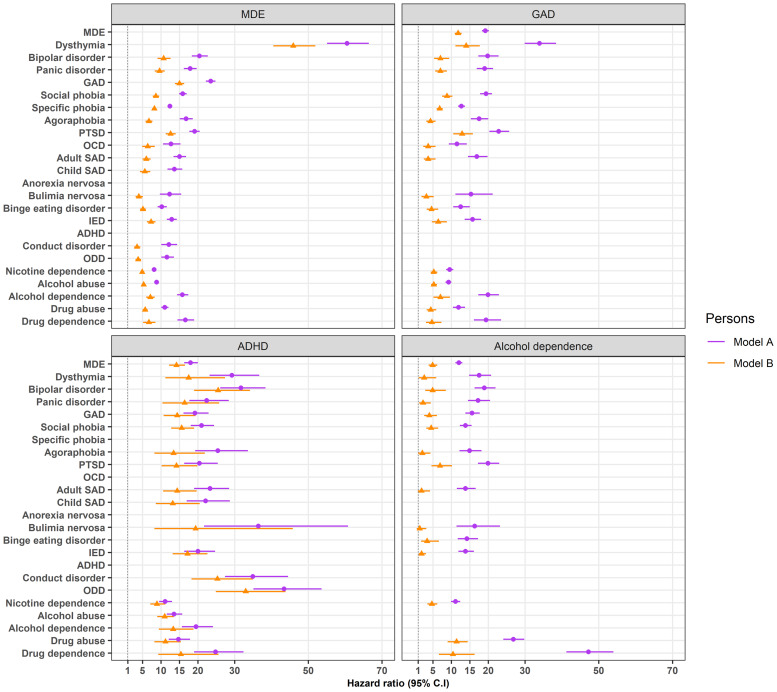
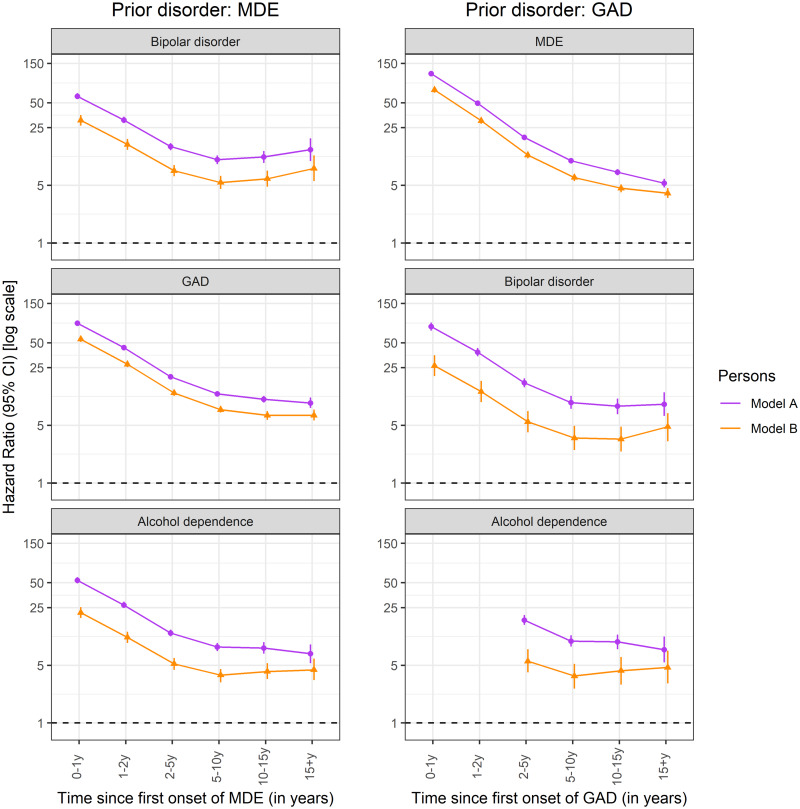
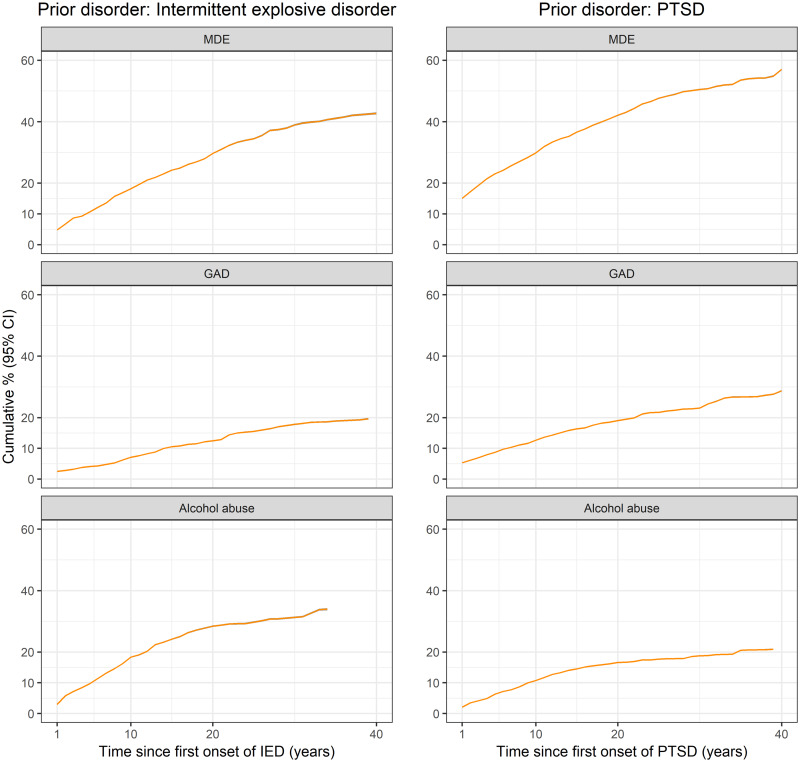
Aims: Epidemiological studies indicate that individuals with one type of mental disorder have an increased risk of subsequently developing other types of mental disorders. This study aimed to undertake a comprehensive analysis of pair-wise lifetime comorbidity across a range of common mental disorders based on a diverse range of population-based surveys. Methods: The WHO World Mental Health (WMH) surveys assessed 145 990 adult respondents from 27 countries. Based on retrospectively-reported age-of-onset for 24 DSM-IV mental disorders, associations were examined between all 548 logically possible temporally-ordered disorder pairs. Overall and time-dependent hazard ratios (HRs) and 95% confidence intervals (CIs) were calculated using Cox proportional hazards models. Absolute risks were estimated using the product-limit method. Estimates were generated separately for men and women. Results: Each prior lifetime mental disorder was associated with an increased risk of subsequent first onset of each other disorder. The median HR was 12.1 (mean = 14.4; range 5.2–110.8, interquartile range = 6.0–19.4). The HRs were most prominent between closely-related mental disorder types and in the first 1–2 years after the onset of the prior disorder. Although HRs declined with time since prior disorder, significantly elevated risk of subsequent comorbidity persisted for at least 15 years. Appreciable absolute risks of secondary disorders were found over time for many pairs. Conclusions: Survey data from a range of sites confirms that comorbidity between mental disorders is common. Understanding the risks of temporally secondary disorders may help design practical programs for primary prevention of secondary disorders.
Overview
The claims and statistics of this paper haven’t been checked yet.
Free: it reads the open-access text and checks the first 5 claims that cite a source we can check. Create a free account to check every claim.
Integrity signals
Registry
Cites
Statistics
Figures
Verification
Claims the paper makes
The claims and statistics of this paper haven’t been checked yet.
Free: it reads the open-access text and checks the first 5 claims that cite a source we can check. Create a free account to check every claim.
Claims other papers make about this one
Each is checked against this paper’s own text: does it say what the citing paper says it does?
The source backs part of the claim, not all of it — or backs it for a different population, condition or comparison.
In the citing paper
“Still, in the majority of comorbidity pairs, anxiety disorders are either concurrent or antecedent to the other disorder.”
From The clinical characterization of the adult patient with an anxiety or related disorder aimed at personalization of management (2021) · cites this paper as [153]
Experimental — accuracy not yet measuredThe cited source says what the claim attributes to it.
In the citing paper
“Many persons suffering from an anxiety or related disorder will experience a comorbid psychiatric condition during their life 153 .”
From The clinical characterization of the adult patient with an anxiety or related disorder aimed at personalization of management (2021) · cites this paper as [153]
The cited source says what the claim attributes to it.
In the citing paper
“Empirical evidence shows that comorbidity is the rule and not the exception, particularly in common mental disorders such as depressive and anxiety disorders [1,2].”
From Psychotherapy for Chronic In- and Outpatients with Common Mental Disorders: The "choose Change" Effectiveness Trial (2023) · cites this paper as [2]
The check wasn’t confident either way, so it gives no verdict — never disputed.
In the citing paper
“In the World Mental Health Surveys, a very early median age of onset (7-14 years of age) was found for separation anxiety and specific phobia, while GAD, panic disorder and PTSD had a much later age of onset (24-50 years of age).”
From The clinical characterization of the adult patient with an anxiety or related disorder aimed at personalization of management (2021) · cites this paper as [153]
Experimental — accuracy not yet measuredThe check wasn’t confident either way, so it gives no verdict — never disputed.
In the citing paper
“The clearest pattern is seen regarding specific phobia: in 75% of comorbidity pairs, specific phobia is antecedent 153 .”
From The clinical characterization of the adult patient with an anxiety or related disorder aimed at personalization of management (2021) · cites this paper as [153]
Experimental — accuracy not yet measured
Self-check
Percentages, sums and reported differences re-computed from the paper’s own numbers.
The self-check needs the paper’s full text.
Citations
Cites
Nonparametric Estimation from Incomplete Observations
Kaplan, E. L., & Meier, P. (1992) · Springer Series in Statistics · doi:10.1007/978-1-4612-4380-9_25 · Cited by 45,181 · cited 1×
“The cumulative incidence or cumulative failure probability curves were generated using the product limit approach (Kaplan and Meier, 1958) by restricting the analysis to the subset of those with a prior disorder.”
Nonparametric Estimation from Incomplete Observations
Kaplan, E. L., & Meier, P. (1958) · Journal of the American Statistical Association · doi:10.1080/01621459.1958.10501452 · Cited by 39,158
Kessler, R. C., Chiu, W. T., Demler, O., & Walters, E. E. (2005) · Archives of General Psychiatry · doi:10.1001/archpsyc.62.6.617 · Cited by 12,052 · cited 2×
“All surveys used the WHO Composite International Diagnostic Interview (CIDI 3 ⋅ 0) (Kessler et al ., 2005), a validated, fully structured lay administered interview.”
Self-citation(2007) · PubMed Central · Cited by 2,521
Self-citationHaro, J. M., Arbabzadeh-Bouchez, S., Brugha, T. S., De Girolamo, G., Guyer, M. E., Jin, R., Lepine, J. P., Mazzi, F., Reneses, B., Vilagut, G., et al. (2006) · International Journal of Methods in Psychiatric Research · doi:10.1002/mpr.196 · Cited by 1,082
Self-citationAll for One and One for All: Mental Disorders in One Dimension
Caspi, A., & Moffitt, T. E. (2018) · American Journal of Psychiatry · doi:10.1176/appi.ajp.2018.17121383 · Cited by 918 · cited 1×
“These findings lend weight to the hypothesis that a wide spectrum of mental disorders has a shared risk factor background (which includes genetic and non-genetic factors) (Caspi and Moffitt, 2018; Hyman, 2019).”
Plana-Ripoll, O., Pedersen, C. B., Agerbo, E., Holtz, Y., Erlangsen, A., Canudas-Romo, V., Andersen, P. K., Charlson, F. J., Christensen, M. K., Erskine, H. E., et al. (2019) · The Lancet · doi:10.1016/s0140-6736(19)32316-5 · Cited by 595
Self-citationExploring comorbidity within mental disorders among a Danish national population
Plana-Ripoll, O., Pedersen, C. B., Holtz, Y., Benros, M. E., Dalsgaard, S., de Jonge, P., Fan, C. C., Degenhardt, L., Ganna, A., Greve, A. N., et al. (2019) · JAMA Psychiatry · doi:10.1001/jamapsychiatry.2018.3658 · Cited by 584 · cited 1×
“The Danish study identified very large HRs within the first 6 months of the prior disorder, perhaps reflecting Berkson’s bias (Snoep et al., 2014).”
Self-citationProgress in achieving quantitative classification of psychopathology
Krueger, R. F., Kotov, R., Watson, D., Forbes, M. K., Eaton, N. R., Ruggero, C. J., Simms, L. J., Widiger, T. A., Achenbach, T. M., Bach, B., et al. (2018) · World Psychiatry · doi:10.1002/wps.20566 · Cited by 490
A paradigm shift in psychiatric classification: the Hierarchical Taxonomy Of Psychopathology (HiTOP)
Kotov, R., Krueger, R. F., & Watson, D. (2018) · World Psychiatry · doi:10.1002/wps.20478 · Cited by 318 · cited 2×
“bulimia nervosa and subsequent binge eating disorder) (Kotov et al., 2018).”
Cited by
McGrath, J. J., Al-Hamzawi, A., Alonso, J., Altwaijri, Y., Andrade, L. H., Bromet, E. J., Bruffaerts, R., de Almeida, J. M. C., Chardoul, S., Chiu, W. T., et al. (2023) · The Lancet Psychiatry · doi:10.1016/s2215-0366(23)00193-1 · Cited by 646
Self-citationAls, T. D., Kurki, M. I., Grove, J., Voloudakis, G., Therrien, K., Tasanko, E., Nielsen, T. T., Naamanka, J., Veerapen, K., Levey, D. F., et al. (2023) · Nature Medicine · doi:10.1038/s41591-023-02352-1 · Cited by 324
Self-citationPiao, J., Huang, Y., Han, C., Li, Y., Xu, Y., Liu, Y., & He, X. (2022) · European Child & Adolescent Psychiatry · doi:10.1007/s00787-022-02040-4 · Cited by 264
“We hope that the database will be able to further differentiate between these large segments of the population since having one mental disorder can be easily combined with other mental disorders [36, 37].”
BackgroundCo‐morbidity between mood and anxiety disorders: A systematic review and meta‐analysis
Saha, S., Lim, C. C. W., Cannon, D. L., Burton, L., Bremner, M., Cosgrove, P., Huo, Y., & McGrath, J. (2021) · Depression and Anxiety · doi:10.1002/da.23113 · Cited by 253
Self-citationLiu, J., Liu, Y., Ma, W., Tong, Y., & Zheng, J. (2024) · Scientific Reports · doi:10.1038/s41598-024-62381-9 · Cited by 160
“…actively prevent risk factors, and adopt targeted interventions to raise the level of awareness of depression among their populations, and concurrently, call for the reform of the relevant systems and the elimination of policy barriers to better prevent and treat mental health disorders 54,55 .”
BackgroundA transdiagnostic network for psychiatric illness derived from atrophy and lesions
Taylor, J. J., Lin, C., Talmasov, D., Ferguson, M. A., Schaper, F. L. W. V. J., Jiang, J., Goodkind, M. S., Grafman, J. H., Etkin, A., Siddiqi, S., et al. (2023) · Nature Human Behaviour · doi:10.1038/s41562-022-01501-9 · Cited by 126
Comorbidity between eating disorders and psychiatric disorders
Momen, N. C., Plana‐Ripoll, O., Yılmaz, Z., Thornton, L. M., McGrath, J. J., Bulik, C. M., & Petersen, L. V. (2022) · International Journal of Eating Disorders · doi:10.1002/eat.23687 · Cited by 118
Self-citationBarry, T. J., Hallford, D. J., & Takano, K. (2021) · Psychological Bulletin · doi:10.1037/bul0000345 · Cited by 103
Scott, J. L., Iorfino, F., Capon, W., Crouse, J. J., Nelson, B., Chanen, A. M., Dwyer, D., Conus, P., Bechdolf, A., Ratheesh, A., et al. (2024) · The Lancet Psychiatry · doi:10.1016/s2215-0366(24)00060-9 · Cited by 78
Stein, D. J., Craske, M. G., Rothbaum, B. O., Chamberlain, S. R., Fineberg, N. A., Choi, K. W., de Jonge, P., Baldwin, D. S., & Maj, M. (2021) · World Psychiatry · doi:10.1002/wps.20919 · Cited by 60
Self-citationComorbidity between mood and substance-related disorders: A systematic review and meta-analysis
Saha, S., Lim, C. C. W., Degenhardt, L. J., Cannon, D. L., Bremner, M., Prentis, F., Lawrence, Z., Heffernan, E., Meurk, C., Reilly, J., et al. (2021) · Australian & New Zealand Journal of Psychiatry · doi:10.1177/00048674211054740 · Cited by 61
“This is not uncommon in studies of comorbidity, because the prevalence of the individual disorders can vary between sites Australian & New Zealand Journal of Psychiatry, 56(7) (McGrath et al., 2020).”
BackgroundResultInfluentialSelf-citationComprehensive evaluation of harmonization on functional brain imaging for multisite data-fusion
Wang, Y., Chen, X., & Yan, C. (2023) · NeuroImage · doi:10.1016/j.neuroimage.2023.120089 · Cited by 60
Timing of Postpartum Depressive Symptoms
Robbins, C. L., Ko, J. Y., D’Angelo, D. V., von Essen, B. S., Bish, C. L., Kroelinger, C. D., Tevendale, H. D., Warner, L., & Barfield, W. D. (2023) · Preventing Chronic Disease · doi:10.5888/pcd20.230107 · Cited by 56
New diagnosis in psychiatry: beyond heuristics
McGorry, P. D., Hickie, I. B., Kotov, R., Schmaal, L., Wood, S. J., Allan, S. M., Altınbaş, K., Boyce, N., Bringmann, L. F., Caspi, A., et al. (2025) · Psychological Medicine · doi:10.1017/s003329172400223x · Cited by 56
Reliability and validity of bifactor models of dimensional psychopathology in youth.
Hoffmann, M. S., Moore, T. M., Axelrud, L. K., Tottenham, N., Zuo, X., Rohde, L. A., Milham, M. P., Satterthwaite, T. D., & Salum, G. A. (2022) · Journal of Psychopathology and Clinical Science · doi:10.1037/abn0000749 · Cited by 41
Mongan, D., Susai, S. R., Föcking, M., Byrne, J. F., Zammit, S., Cannon, M. D., & Cotter, D. (2023) · Brain Behavior and Immunity · doi:10.1016/j.bbi.2023.03.025 · Cited by 38
A longitudinal examination of changes in mental health among elite Canadian athletes
Poucher, Z. A., Tamminen, K. A., Sabiston, C. M., & Cairney, J. (2021) · Journal of Sports Sciences · doi:10.1080/02640414.2021.2015908 · Cited by 39
Cortez-Vázquez, G., Adriaanse, M. C., Burchell, G. L., Ostelo, R., Panayiotou, G., & Vlemincx, E. (2024) · Applied Psychophysiology and Biofeedback · doi:10.1007/s10484-023-09611-4 · Cited by 39
Țenea-Cojan, Ș.-T., Dinescu, V.-C., Gheorman, V., Dragne, I.-G., Gheorman, V., Forțofoiu, M.-C., Forţofoiu, M., & Dobrinescu, A. (2025) · Life · doi:10.3390/life15020251 · Cited by 41
“Unhealthy behaviors and maladaptive coping mechanisms can intensify psychiatric symptoms, hinder treatment adherence, and impede overall well-being [19].”
The Role of Developmental Assets in Gender Differences in Anxiety in Spanish Youth
Gómez‐Baya, D., Salinas-Pérez, J. A., Sánchez-López, Á., Paíno-Quesada, S., & Berjano, R. M. (2022) · Frontiers in Psychiatry · doi:10.3389/fpsyt.2022.810326 · Cited by 35
Person-Centered Trajectories of Psychopathology From Early Childhood to Late Adolescence
Healy, C., Brannigan, R., Dooley, N., Staines, L., Keeley, H., Whelan, R., Clarke, M. C., Zammit, S., Kelleher, I., & Cannon, M. D. (2022) · JAMA Network Open · doi:10.1001/jamanetworkopen.2022.9601 · Cited by 32
Adair, M., Christensen, M. C., Florea, I., Loft, H., & Fagiolini, A. M. (2023) · Journal of Affective Disorders · doi:10.1016/j.jad.2023.01.074 · Cited by 32
Kolaas, K., Berman, A. H., Hedman‐Lagerlöf, E., Lindsäter, E., Hybelius, J., & Axelsson, E. (2024) · BMJ Open · doi:10.1136/bmjopen-2023-075796 · Cited by 31
Győri, D., Farkas, B. F., Horváth, L. O., Komáromy, D., Mészáros, G., Szentiványi, D., & Balázs, J. (2021) · International Journal of Environmental Research and Public Health · doi:10.3390/ijerph18041840 · Cited by 32
“Second, comorbidity is often tremendously high between mental disorders [37], including suicidality [38].”
BackgroundThe Role of Neuroinflammation in the Comorbidity of Psychiatric Disorders and Internal Diseases
Cătălina, G. R., Gheorman, V., Gheorman, V., & Forțofoiu, M.-C. (2025) · Healthcare · doi:10.3390/healthcare13070837 · Cited by 33
“These comorbidities are not only prevalent but also profoundly impactful, contributing to increased morbidity, mortality, and healthcare costs worldwide [1].”
Crocamo, C., Palpella, D., Cavaleri, D., Nasti, C., Piacenti, S., Morello, P., Lauria, G., Villa, O., Riboldi, I., Bartoli, F., et al. (2025) · The Lancet Digital Health · doi:10.1016/j.landig.2025.100878 · Cited by 33
Converging circuits between pain and depression: the ventral tegmental area as a therapeutic hub
Flores-García, M., Rizzo, A., Garçon-Poca, M. Z., Fernández‐Dueñas, V., & Bonaventura, J. (2023) · Frontiers in Pharmacology · doi:10.3389/fphar.2023.1278023 · Cited by 29
“However, the abuse liability of opioid drugs makes them far from ideal to treat depression due to the higher vulnerability and comorbidity of addiction in patients with depressive disorders (Swendsen and Merikangas, 2000; Quello et al., 2005; McGrath et al., 2020).”
BackgroundDecoding the mind: A RAG-LLM on ICD-11 for decision support in psychology
Cremaschi, M., Ditolve, D., Curcio, C., Panzeri, A., Spoto, A., & Maurino, A. (2025) · Expert Systems with Applications · doi:10.1016/j.eswa.2025.127191 · Cited by 32
Sun, W.-X., Baranova, A. V., Liu, D., Cao, H., Zhang, X., & Zhang, F. (2024) · Translational Psychiatry · doi:10.1038/s41398-024-03216-z · Cited by 27
Disease clusters subsequent to anxiety and stress-related disorders and their genetic determinants
Han, X., Shen, Q., Hou, C., Yang, H., Chen, W., Zeng, Y., Qu, Y., Suo, C., Ye, W., Fang, F., et al. (2024) · Nature Communications · doi:10.1038/s41467-024-45445-2 · Cited by 28
“For instance, anxiety and stress-related disorders have previously been reported to co-occur with other psychiatric disorders (e.g., major depressive episode, bipolar disorder, and alcohol dependence) 27 .”
Milić, J., Vučurović, M., Jovic, D. P., Stanković, V. V., Grego, E., Janković, S., & Šapić, R. (2025) · Genes · doi:10.3390/genes16040371 · Cited by 25
“Many commonly used antidepressants, antipsychotics, and mood stabilizers have varied effects across patients, often leading to trial-and-error approaches to finding the most effective medication [61].”
Clinical Approaches to Late-Onset Psychosis
Kim, K., Jeon, H. J., Myung, W., Suh, S. W., Seong, S. J., Hwang, J. Y., Ryu, J. I., & Park, S. (2022) · Journal of Personalized Medicine · doi:10.3390/jpm12030381 · Cited by 26
“Lateonset psychosis should be considered as a rule-out diagnosis, assuming that until the last period, 60% of the cases of psychosis in older adults have secondary causes [37,40].”
BackgroundInternalizing–Externalizing Comorbidity and Impaired Functioning in Children
Dol, M., Reed, M., & Ferro, M. A. (2022) · Children · doi:10.3390/children9101547 · Cited by 23
“Comorbidity of mental disorders is common among youth [3,4].”
BackgroundCapon, W., Hickie, I. B., Varidel, M., Prodan, A., Crouse, J. J., Carpenter, J. S., Cross, S. P. M., Nichles, A., Zmicerevska, N., Guastella, A. J., et al. (2022) · BMC Medicine · doi:10.1186/s12916-022-02666-w · Cited by 27
“First, 75% of adult-pattern mental disorders emerge by the age of 25 [3], with psychiatric comorbidity the rule rather than the exception even in this young age group [4].”
BackgroundCumulative risk for comorbidity of depression and anxiety in young people
Pigatto, F., Grant, C. C., Marks, E. J., Walker, C. G., & Waldie, K. E. (2025) · Journal of Affective Disorders · doi:10.1016/j.jad.2025.04.150 · Cited by 21
Dickey, L., Pegg, S. L., & Kujawa, A. (2021) · Cognitive Affective & Behavioral Neuroscience · doi:10.3758/s13415-021-00925-6 · Cited by 22
Menzies, R. E., Richmond, B., Sharpe, L., Skeggs, A., Liu, J., & Coutts‐Bain, D. (2024) · British Journal of Clinical Psychology · doi:10.1111/bjc.12453 · Cited by 24
Yılmaz, Z., Larsen, J. T., Nissen, J. B., Crowley, J. J., Mattheisen, M., Bulik, C. M., & Petersen, L. V. (2022) · Journal of Psychiatric Research · doi:10.1016/j.jpsychires.2022.02.004 · Cited by 21
Iorfino, F., Varidel, M., Marchant, R., Cripps, S., Crouse, J. J., Prodan, A., Oliveria, R., Carpenter, J. S., Hermens, D. F., Guastella, A. J., et al. (2023) · Epidemiology and Psychiatric Sciences · doi:10.1017/s2045796023000616 · Cited by 24
“…rates of comorbidity are associated with better functional outcomes, while poorer trajectories of functioning tend to be associated with the presence of self-harm and suicidality, physical illness comorbidity, substance misuse and social disengagement (Iorfino et al. , 2022; McGrath et al. , 2020).”
Saunders, J. B., Rumpf, H., Carragher, N., & Poznyak, V. B. (2025) · Current Addiction Reports · doi:10.1007/s40429-025-00631-0 · Cited by 23
Mustonen, A., Alakokkare, A., Salom, C., Hurtig, T. M., Levola, J. M., Scott, J. G., Miettunen, J., & Niemelä, S. (2021) · Addictive Behaviors · doi:10.1016/j.addbeh.2021.106910 · Cited by 23
de Vries, Y. A., Harris, M., Vigo, D., Chiu, W. T., Sampson, N. A., Al-Hamzawi, A., Alonso, J., Andrade, L. H., Benjet, C. L., Bruffaerts, R., et al. (2021) · Journal of Affective Disorders · doi:10.1016/j.jad.2021.04.001 · Cited by 20
Self-citationLloyd, A., Roiser, J. P., Skeen, S., Freeman, Z., Badalova, A., Agunbiade, A., Busakhwe, C., DeFlorio, C., Marcu, A., Pirie, H., et al. (2024) · Cognitive, Affective, & Behavioral Neuroscience · doi:10.3758/s13415-024-01186-9 · Cited by 17
“…observations of heterogeneity within mental health classifications (Dalgleish et al., 2020) and comorbidity across diagnoses (Eaton et al., 2023; McGrath et al., 2020), transdiagnostic approaches are designed to identify common risk factors for mental health problems beyond traditional…”
BackgroundZanon, C., Zhao, N., Topkaya, N., Şahin, E., Vogel, D. L., Ertl, M. M., Sanatkar, S., Liao, H.-Y., Rubin, M., Baptista, M. N., et al. (2025) · International Journal of Testing · doi:10.1080/15305058.2025.2489359 · Cited by 18
“Studies show that symptoms of mood and anxiety disorders are strongly correlated in adults and that individuals who are diagnosed with mood or anxiety disorders in their lifetime have an increased risk of subsequently developing the other disorder (McGrath et al., 2020; Saha et al., 2021).”
Barone, R. M. E., Gulisano, M., Cannata, E., Padalino, S., Saia, F., Maugeri, N., Pettinato, F., Nigro, L. L., Casabona, A., Russo, G. M., et al. (2020) · Journal of Clinical Medicine · doi:10.3390/jcm9113444 · Cited by 17
“When considering the psychological burden in cancer survivors, an important issue is the possible co-occurrence of multiple psychological symptoms in the same individual since mental health problems are highly comorbid in the general population [28].”
BackgroundWhisman, M. A., & Collazos, T. (2023) · Journal of Anxiety Disorders · doi:10.1016/j.janxdis.2023.102713 · Cited by 24
Gloster, A. T., Haller, E., Villanueva, J., Block, V., Benoy, C., Meyer, A. H., Brogli, S., Kuhweide, V., Karekla, M., Bader, K., et al. (2023) · Psychotherapy and Psychosomatics · doi:10.1159/000529411 · Cited by 16
Strudwick, G., Kassam, I., Torous, J. B., & Patenaude, S. (2025) · JMIR Mental Health · doi:10.2196/78791 · Cited by 17
“Mental health conditions are inherently complex and are often chronic and fluctuating, with high rates of comorbidity [21].”
Scott, J., Crouse, J. J., Ho, N., Iorfino, F., Martin, N., Parker, R., McGrath, J., Gillespie, N. A., Medland, S., & Hickie, I. B. (2021) · PLOS ONE · doi:10.1371/journal.pone.0252550 · Cited by 15
“This observation is supported by recent research including studies based on Danish registers (~6 million persons) and World Mental Health Surveys (~146,000 respondents from 27 countries) which demonstrate that (a) comorbidity within mental disorders is pervasive, and (b) those with onsets in late adolescence and/or ea…”
ResultInfluentialSelf-citationLeveraging pleiotropy for the improved treatment of psychiatric disorders
Woodward, D. J., Thorp, J. G., Middeldorp, C. M., Akóṣílè, W., Derks, E. M., & Gerring, Z. F. (2024) · Molecular Psychiatry · doi:10.1038/s41380-024-02771-7 · Cited by 15
“Hazard ratios between comorbidity pairs were obtained from McGrath et al. [12].”
Zhang, Z., Xue, X., Liu, P., Zhang, C., Li, J., Liu, Y., Jiang, Y., Lv, S., Wang, L., Zhou, H., et al. (2025) · Photodiagnosis and Photodynamic Therapy · doi:10.1016/j.pdpdt.2025.104712 · Cited by 15
The need for evidence-based updating of ICD and DSM models of psychotic and mood disorders
Cohen, B. M., & Öngür, D. (2023) · Molecular Psychiatry · doi:10.1038/s41380-023-01967-7 · Cited by 17
“Complex presentations and multiple (comorbid) diagnoses are common [4, 5].”
BackgroundAn Integrated General Theory of Psychopathology and Suicide
Soper, C. A. (2023) · Evolutionary Psychological Science · doi:10.1007/s40806-023-00373-0 · Cited by 15
Medeiros, S. F., Coelho, R., Millett, C. J., Saraceni, V., Coeli, C. M., Trajman, A., Rasella, D., Durovni, B., & Hone, T. (2023) · BMJ Global Health · doi:10.1136/bmjgh-2023-013327 · Cited by 20
Bouter, D. C., Ravensbergen, S. J., de Neve-Enthoven, N. G. M., Zarchev, M. G., Mulder, C. L., Hoogendijk, W. J. G., Roza, S. J., van Beek, W., Bruijn, C. H.-D., Kouijzer, M. E. J., et al. (2024) · European Child & Adolescent Psychiatry · doi:10.1007/s00787-024-02462-2 · Cited by 15
Wirayuda, A. A. B., Jaju, S., Alsaidi, Y., & Chan, M. F. (2022) · Pan African Medical Journal · doi:10.11604/pamj.2022.41.75.28488 · Cited by 15
Leveraging big data for causal understanding in mental health: a research framework
Newson, J. J., Bala, J. W., Giedd, J. N., Maxwell, B., & Thiagarajan, T. C. (2024) · Frontiers in Psychiatry · doi:10.3389/fpsyt.2024.1337740 · Cited by 14
“Consequently, it is common for patients to be comorbid across multiple disorders, rather than having symptoms that only align with one disorder (40, 41).”
BackgroundJo, D., Yang, Y., & Yang, E. (2024) · Cognitive Therapy and Research · doi:10.1007/s10608-024-10534-5 · Cited by 12
“However, recent evidence, such as high comorbidity rates among psychiatric disorder symptoms (McGrath et al., 2020) and shared genetic and environmental risk factors (Speranza et al., 2023), has led to criticism of the common cause theory and highlighted the multicausal nature of psychopathology…”
Adams, D. R., ALLEN, H. L., Nicol, G. E., & Cabassa, L. J. (2024) · Translational Behavioral Medicine · doi:10.1093/tbm/ibae053 · Cited by 11
Perceived causal networks created using structured interviews: feasibility and reliability
Kaariniemi, E., Bosund, V., Reichert, J., Bjureberg, J., & Klintwall, L. (2025) · Cognitive Behaviour Therapy · doi:10.1080/16506073.2025.2464637 · Cited by 12
“Furthermore, comorbidity is common between mental disorders and especially prominent between similar disorders, e.g. between mood disorders and anxiety disorders (Belzer & Schneier, 2004; Choi et al., 2020; Kaufman & Charney, 2000; McGrath et al., 2020; Plana-Ripoll et al., 2019; Tiller, 2013).”
Marel, C., Siedlecka, E., Wilson, J., Rochesson, S. E. D., Chu, D., Fisher, A. C., & Mills, K. L. (2025) · Australian & New Zealand Journal of Psychiatry · doi:10.1177/00048674251321272 · Cited by 11
“Research conducted nationally and internationally has consistently demonstrated high rates of substance use and substance use disorders among those with mental health disorders (Jané-Llopis and Matytsina, 2006; McGrath et al., 2020).”
Güven, S., Şahin, E., Topkaya, N., Aydın, Ö., Aktimur, S. H., & Turgut, M. (2025) · Journal of Clinical Medicine · doi:10.3390/jcm14062097 · Cited by 13
“Empirical studies have found that mood and anxiety disorder symptoms are very strongly correlated with each other among adults, and adults who are diagnosed with mood or anxiety disorders in their lifetime have an increased risk for subsequently developing the other disorder [67,68].”
Absolute and relative risks of mental disorders in families: a Danish register-based study
Pedersen, C. B., Pedersen, M. G., Antonsen, S., Pedersen, E. M., Horsdal, H. T., Debost, J.-C., Mortensen, P. B., Petersen, L. V., Vilhjálmsson, B. J., Nielsen, J. F., et al. (2025) · The Lancet Psychiatry · doi:10.1016/s2215-0366(25)00196-8 · Cited by 16
Self-citationRoest, A. M., de Vries, Y. A., Pozuelo, J. R., Petukhova, M. V., Lee, S., Sampson, N. A., Albor, Y., AlHadi, A. N., Alonso, J., Al-Saud, N. K., et al. (2025) · Psychiatry Research · doi:10.1016/j.psychres.2025.116605 · Cited by 11
“…analysis of pair-wise associations using the World Mental Health adult surveys, using information on age-of-onset of disorders, revealed that each mental disorder predicted the subsequent onset of all other mental disorders (McGrath et al., 2020), demonstrating the ubiquity of comorbidity.”
Self-citationA stepped care approach to mental health in Singapore: challenges and opportunities
Lee, C. Y. S., & Fung, D. S. S. (2025) · BMC Global and Public Health · doi:10.1186/s44263-025-00196-0 · Cited by 10
“A key limitation of the SCM lies in the inherent complexity of mental health disorders, which often involve comorbidities and fluctuating symptom severity [43].”
Hasking, P. A., Kiekens, G., Petukhova, M. V., Albor, Y., AlHadi, A. N., Alonso, J., Al-Saud, N. K., Altwaijri, Y. A., Andersson, C. R., Atwoli, L., et al. (2025) · Psychological Medicine · doi:10.1017/s0033291725100688 · Cited by 10
“Given the high comorbidities that exist among common mental disorders (McGrath et al., 2020), access to full diagnostic data for most disorders allowed us to generate useful estimates for these screening disorders.”
Self-citationTariq, A., Gray, E., Gregory, A. M., & Chan, S. W. Y. (2024) · Wellcome Open Research · doi:10.12688/wellcomeopenres.22685.1 · Cited by 14
Chen, X., Lu, Y., Cue, J. M., Han, M., Nimgaonkar, V. L., Weinberger, D. R., Han, S., Zhao, Z., & Chen, J. (2025) · Schizophrenia · doi:10.1038/s41537-025-00564-7 · Cited by 11
Optimal Well-Being After Psychopathology: Prevalence and Correlates
Devendorf, A. R., Rum, R., Kashdan, T. B., & Rottenberg, J. A. (2022) · Clinical Psychological Science · doi:10.1177/21677026221078872 · Cited by 11
Chauhan, A., Pandya, A., Bhatt, D., Salaliya, V., Trivedi, R., Kapadia, D., Shukla, P., Shah, A., Chaudhary, S., Joshi, C., et al. (2024) · Journal of Family Medicine and Primary Care · doi:10.4103/jfmpc.jfmpc_532_24 · Cited by 9
Караваева, Т. А., Vasileva, A. V., Radionov, D. S., Андреевна, С. Д., & Andrianova, A. E. (2024) · V M BEKHTEREV REVIEW OF PSYCHIATRY AND MEDICAL PSYCHOLOGY · doi:10.31363/2313-7053-2024-975 · Cited by 9
Psychiatric, Neurological, and Somatic Comorbidities in Intermittent Explosive Disorder
Zhang‐James, Y., Paliakkara, J., Schaeffer, J., Strayhorn, J. M., & Faraone, S. V. (2025) · JAMA Psychiatry · doi:10.1001/jamapsychiatry.2024.4465 · Cited by 10
¿Patología dual? Revisando la conceptualización de la comorbilidad en adicciones
Fernández‐Artamendi, S., Menéndez, G. F., Tomás, M. T. C., & Pastor, F. S. P. (2024) · Adicciones · doi:10.20882/adicciones.2053 · Cited by 11
“…indican una corre-lación más inespecífica que parece relacionarse más bien con una vulnerabilidad general común (Anttila et al., 2018; Caspi et al., 2020; Caspi y Moffitt, 2018; Compton et al., 2007; Grant et al., 2015; Lev-Ran et al., 2013; McGrath et al., 2020; Plana-Ripoll et al., 2019).”
BackgroundInfluentialClinical Staging for Psychiatry and Psychology
Dwyer, D., Ye, R. R., Nelson, B., & McGorry, P. D. (2025) · Annual Review of Clinical Psychology · doi:10.1146/annurev-clinpsy-081423-025310 · Cited by 13
Epigenetic changes and their potential reversibility in mental health disorders
Allen, M., & Guerrero‐Bosagna, C. (2025) · Essays in Biochemistry · doi:10.1042/ebc20253020 · Cited by 9
“Comorbidities among MHDs are common [4,5], with major depressive disorder (MDD) and generalized anxiety disorder (GAD) among the most frequent [6].”
Arbués, E. R., Granada-López, J. M., Satústegui-Dordá, P. J., Echániz-Serrano, E., Sagarra‐Romero, L., & Antón‐Solanas, I. (2023) · Revista Latino-Americana de Enfermagem · doi:10.1590/1518-8345.6746.3959 · Cited by 8
“On many occasions, mental health problems appear in early adulthood and, in this life phase, they are associated with higher incidence of medium- and long-term physical and emotional problems(2), with difficulties entering the labor market(3), with worse sleep quality(4) or with dysfunctional social relationships(5),…”
BackgroundPérez‐Esteban, A., Díez-Gómez, A., Pérez‐Albéniz, A., Al‐Halabí, S., Lucas‐Molina, B., Debbané, M., & Fonseca‐Pedrero, E. (2024) · Journal of Affective Disorders · doi:10.1016/j.jad.2024.04.081 · Cited by 9
Larsson, A. B., & Sundström, F. (2024) · Journal of Contextual Behavioral Science · doi:10.1016/j.jcbs.2024.100794 · Cited by 8
“This combined with the common case of comorbid diagnoses (McGrath et al., 2020) challenges the application of a uniform solution.”
Watkeys, O. J., O’Hare, K., Dean, K., Laurens, K. R., Tzoumakis, S., Harris, F., Carr, V. J., & Green, M. J. (2024) · Australian & New Zealand Journal of Psychiatry · doi:10.1177/00048674241258599 · Cited by 8
“This largely accords with rates of comorbidity reported previously (Barr et al., 2022; McGrath et al., 2020), extending these previously reported findings into the area of cumulative mental disorder comorbidity in childhood and adolescence.”
ResultMundy, J., Hall, A. S. M., Steinbach, J., Albiñana, C., Agerbo, E., Als, T. D., Thapar, A., McGrath, J. J., Vilhjálmsson, B. J., Nordentoft, M., et al. (2024) · Psychological Medicine · doi:10.1017/s0033291724002186 · Cited by 8
“…in life, those with early-onset MDD are more likely to experience greater illness severity, decreased social and occupational function, medical and psychiatric comorbidity, suicide attempts, and lower quality of life (Hakulinen, Musliner, & Agerbo, 2019; McGrath et al., 2020; Zisook et al., 2007).”
Self-citationRamadhan, R. A., Pramesti, D., & Fakhrurroja, H. (2025) · Lecture notes in networks and systems · doi:10.1007/978-3-032-03740-4_16 · Cited by 7
Chokkakula, S., Yang, H., Al-Masri, A. A., Zhang, Y., Naveen, B., & Yang, B. (2026) · Frontiers in Pharmacology · doi:10.3389/fphar.2026.1737113 · Cited by 7
“According to a cross-national study, more than one in five people will experience at least one depression episode at some point in their lifetime (McGrath et al., 2020).”
Post-traumatic stress disorder
Ressler, K. J., Rothbaum, B. O., Schnurr, P. P., Binder, E., Moreland-Capuia, A. R., Nievergelt, C. M., Koenen, K. C., Seedat, S., Shalev, A. Y., Marmar, C. R., et al. (2026) · Nature Reviews Disease Primers · doi:10.1038/s41572-026-00701-1 · Cited by 9
“In these studies, PTSD demonstrated strong bidirectional associations with other mental disorders 65–67 .”
Self-citationWatkeys, O. J., O’Hare, K., Dean, K., Laurens, K. R., Harris, F., Carr, V. J., & Green, M. J. (2023) · European Child & Adolescent Psychiatry · doi:10.1007/s00787-023-02312-7 · Cited by 7
“Cumulative mental disorder comorbidity, in which an individual experiences multiple mental disorders over their life-time, is pervasive in the general population [36] and has been linked to poor quality of life and reduced global functioning [21, 40].”
BackgroundSarsembayeva, D., Schreuder, M. J., & Hartman, C. A. (2023) · Psychiatry Research · doi:10.1016/j.psychres.2023.115689 · Cited by 7
Rahman, F. N. A., Wong, Y. Y., & Khalib, A. Q. (2022) · Frontiers in Psychiatry · doi:10.3389/fpsyt.2021.772744 · Cited by 9
“New studies have shown an existing mental disorder is a risk factor to develop another mental disorder (10), and this relationship was found to be bidirectional (11).”
BackgroundThe Evolution of Life Worth Living
Soper, C. A. (2021) · Zenodo (CERN European Organization for Nuclear Research) · doi:10.5281/zenodo.5838009 · Cited by 8
A Wide Frequency Range Surface Integral Formulation for 3-D Inductance and Resistance Extraction
Tausch, J., Wang, J., & White, J. (1999) · TechConnect Briefs · Cited by 7
Fisher, H. L. (2022) · Journal of Child Psychology and Psychiatry · doi:10.1111/jcpp.13612 · Cited by 7
Salehinejad, M. A., Jouzdani, A. F., Bandeira, I. D., Bender, S., Bikson, M., Castelo-Branco, M. S., Kadosh, R. C., Costanzo, F., Croarkin, P. E., Desarkar, P., et al. (2026) · Neuroscience & Biobehavioral Reviews · doi:10.1016/j.neubiorev.2026.106808 · Cited by 8
Almeida, S. S., Christensen, M. C., Simonsen, K., & Adair, M. (2022) · Journal of Psychopharmacology · doi:10.1177/02698811221132468 · Cited by 7
“…adult respondents according to Diagnostic and Statistical Manual of Mental Disorders, Fourth Edition, diagnostic criteria, found that those with MDD had an 11.4% risk of developing GAD within 10 years, and those with GAD had a 37.7% risk of subsequently developing MDD (McGrath et al., 2020).”
BackgroundMethodResultInfluentialQin, C., Wu, Y., Zou, Y., Zhao, Y., Kang, D., & Liu, F. (2025) · BMC Nephrology · doi:10.1186/s12882-025-03983-x · Cited by 6
“…of community-based surveys from 27 countries showed a very high rate of comorbidity between depression and anxiety disorders; the risk of developing generalized anxiety disorder was about seven times in those with major depression even after 15 years (hazard ratio = 6.6; 95% CI = 5.7–7.7) [ 24].”
InfluentialSeah, S. J., Tan, C. C. M., Chew, M. S.-L., Lim, J. R. N., Mahirah, D., Ho, Y.-C. L., Lee, S. A., Lee, E.-L., Yoon, S., Marimuttu, V. J., et al. (2025) · Frontiers in Public Health · doi:10.3389/fpubh.2025.1527521 · Cited by 8
Self-citationCognitive arbitration between candidate dimensions of psychopathology
Fox, C. A., Teckentrup, V., Donegan, K. R., Seow, T. X. F., Benwell, C., Tervo‐Clemmens, B., & Gillan, C. M. (2025) · Molecular Psychiatry · doi:10.1038/s41380-025-03297-2 · Cited by 9
“…to resolve long-standing issues including the problem of symptom heterogeneity within DSM diagnostic categories [4, 5], the overlap in symptoms across different diagnoses [6], the high rates of co-morbidity [7, 8] and the reduction of continuous clinical information into binary categories [9, 10].”
Morbidity and mortality after adolescent eating disorders requiring inpatient care
Tuohisto-Kokko, S., Holttinen, T., & Kaltiala‐Heino, R. (2023) · Nordic Journal of Psychiatry · doi:10.1080/08039488.2023.2191007 · Cited by 6
“It has also been shown that heterotypic continuity or diagnostic crossover from one psychiatric disorder to another over time is remarkable, particularly in psychiatric morbidity with onset in childhood and adolescence [46,47].”
BackgroundArbués, E. R., Granada-López, J. M., Satústegui-Dordá, P. J., Echániz-Serrano, E., Sagarra‐Romero, L., & Antón‐Solanas, I. (2023) · Revista Latino-Americana de Enfermagem · doi:10.1590/1518-8345.6746.3960 · Cited by 6
McGuirt, A. F., & Brezing, C. (2024) · The American Journal of Drug and Alcohol Abuse · doi:10.1080/00952990.2023.2292012 · Cited by 6
Vázquez‐Giraldo, P., Muñoz‐Sanjosé, A., & López‐Cuadrado, T. (2024) · International Journal of Eating Disorders · doi:10.1002/eat.24282 · Cited by 9
Häfeli, X. A., Hirsig, A., & Schmidt, S. J. (2024) · BMJ Open · doi:10.1136/bmjopen-2024-084821 · Cited by 7
Scott, J. L., & Meyer, T. D. (2021) · Frontiers in Psychiatry · doi:10.3389/fpsyt.2020.616829 · Cited by 7
“However, it is debatable whether a pure “disorder-specific” strategy is the best option as longitudinal and concurrent comorbidity among psychotic and mood disorders is the rule rather than the exception in youth (2) and those with onsets by age 20 have the greatest risk of developing other mental disorders over the f…”
Background
Metadata
- Authors
- McGrath, J. J., Lim, C. C. W., Plana-Ripoll, O., Holtz, Y., Agerbo, E., Momen, N. C., Mortensen, P. B., Pedersen, C. B., Abdulmalik, J., Aguilar-Gaxiola, S., Al-Hamzawi, A., Alonso, J., Bromet, E. J., Bruffaerts, R., Bunting, B., de Almeida, J. M. C., de Girolamo, G., De Vries, Y. A., Florescu, S., Gureje, O., Haro, J. M., Harris, M. G., Hu, C., Karam, E. G., Kawakami, N., Kiejna, A., Kovess-Masfety, V., Lee, S., Mneimneh, Z., Navarro-Mateu, F., Orozco, R., Posada-Villa, J., Roest, A. M., Saha, S., Scott, K. M., Stagnaro, J. C., Stein, D. J., Torres, Y., Viana, M. C., Ziv, Y., Kessler, R. C., & de Jonge, P.
- Affiliations
- The University of Queensland (AU)
- Aarhus University (DK)
- University College Hospital, Ibadan (NG)
- University of Al-Qadisiyah (IQ)
- Universitat Pompeu Fabra (ES)
- Stony Brook University (US)
- KU Leuven (BE)
- Ulster University, Derry-Londonderry Campus (GB)
- National School of Public Health, Management and Professional Development (RO)
- King Saud University (SA)
- Shenzhen KangNing Hospital (CN)
- University of Balamand (LB)
- The University of Tokyo (JP)
- Wroclaw Medical University (PL)
- Chinese University of Hong Kong (HK)
- University of Michigan (US)
- Instituto Nacional de Psiquiatría Ramón de la Fuente Muñiz (MX)
- Universidad de Cundinamarca (CO)
- University of Groningen (NL)
- University of Otago (NZ)
- Universidad de Buenos Aires (AR)
- South African Medical Research Council (ZA)
- Universidad CES (CO)
- Universidade Federal do Espírito Santo (BR)
- Israel Ministry of Health (IL)
- Harvard University (US)
- ORCID
- McGrath, J. J.
- Lim, C. C. W.
- Holtz, Y.
- Agerbo, E.
- Momen, N. C.
- Mortensen, P. B.
- Pedersen, C. B.
- Abdulmalik, J.
- Alonso, J.
- Bromet, E. J.
- Bruffaerts, R.
- Bunting, B.
- de Almeida, J. M. C.
- Florescu, S.
- Gureje, O.
- Haro, J. M.
- Harris, M. G.
- Karam, E. G.
- Kawakami, N.
- Kiejna, A.
- Lee, S.
- Mneimneh, Z.
- Orozco, R.
- Roest, A. M.
- Saha, S.
- Scott, K. M.
- Stagnaro, J. C.
- Stein, D. J.
- Torres, Y.
- Viana, M. C.
- Kessler, R. C.
- Venue
- Epidemiology and Psychiatric Sciences
- Publisher
- Cambridge University Press (CUP)
- Published
- 2020
- Volume
- 29
- Pages
- e153-e153
- ISSN
- 2045-7960 (ISSN-L)
- 2045-7979
- PMC
- PMC7443806
- OpenAlex
- W3044061992
- Cited by
- 256
- References
- 20
- Citations by year
- 2026: 58 · 2025: 84 · 2024: 46 · 2023: 30 · 2022: 21 · 2021: 14 · 2020: 2
- FWCI
- 18.30
- Type
- journal article
- Language
- en
- Open access
- gold
- doi.org
- Licence
- Locations
- Epidemiology and Psychiatric Sciences (publishedVersion, cc-by-nc-nd)
- PubMed Central (publishedVersion, cc-by-nc-nd)
- PubMed (publishedVersion)
- Pure Amsterdam UMC (publishedVersion, other-oa)
- Ulster University Research Portal (Ulster University) (publishedVersion, other-oa)
- Amsterdam UMC (VU Amsterdam) - Institutional Repository (publishedVersion, other-oa)
- HAL (submittedVersion, cc-by-nc-nd)
- Lirias (KU Leuven) (submittedVersion, other-oa)
- University of Groningen research database (University of Groningen / Centre for Information Technology) (submittedVersion, cc-by-nc-nd)
- Repositori digital de la UPF (Universitat Pompeu Fabra) (submittedVersion, cc-by-nc-nd)
- OSF Preprints (OSF Preprints) (submittedVersion)
- Data Archiving and Networked Services (DANS) (submittedVersion, other-oa)
- Funders
- John D. and Catherine T. MacArthur Foundation (R01 DA016558, R13-MH066849)
- Bristol-Myers Squibb
- Eli Lilly and Company
- Pfizer
- AstraZeneca
- GlaxoSmithKline
- World Health Organization (R03 TW006481)
- University of Michigan
- Public Health Agency
- Fundação de Amparo à Pesquisa do Estado de São Paulo (03/00204-3, 03/00204?)
- Bundesministerium für Gesundheit
- Ministerio de Salud de la Nación
- Ministry of Health, Labour and Welfare (H25-SEISHIN-IPPAN-006, H16-KOKORO-013, H14-TOKUBETSU-026, H13-SHOGAI-023)
- Lundbeckfonden (R248‐2017‐2003)
- Universidade de Lisboa
- Novo Nordisk Fonden (NNF17OC0027864)
- Fakultet Medicinskih Nauka, Univerziteta U Kragujevcu
- Servier
- H. Lundbeck A/S
- Fundação Champalimaud (R01 MH070884)
- Ministerio de Salud (PL 0256)
- Ministerstwo Zdrowia
- Pfizer Foundation (R01‐MH069864, R01-DA016558, R13-MH066849, R03-TW006481)
- Pan American Health Organization (FIRCA R03-TW006481)
- Medical Research Council
- Fundação para a Ciência e a Tecnologia
- Norway Grants
- National Institute of Mental Health (R13-MH-066849, NIMH R01MH070884, RO1-MH61905, R01‐MH070884, MH61905, R01MH059575, MH070884, MH069864, MH066849, R01‐MH069864)
- Fogarty International Center (FIRCA R03TW006481, R03TW006481)
- Topics
- Health Sciences › Medicine › Psychiatry and Mental health › Mental Health Treatment and Access
- Social Sciences › Psychology › Experimental and Cognitive Psychology › Mental Health Research Topics
- Health Sciences › Medicine › Epidemiology › Chronic Disease Management Strategies
- Keywords
- age of onset, primary prevention, sex differences, World Mental Health Surveys
- MeSH terms
- Adolescent, Adult, Aged, Mental Disorders, Cross-Sectional Studies, Female, Health Surveys, Humans, Male, Middle Aged, Psychotic Disorders, Retrospective Studies, Risk Factors, Comorbidity, Prevalence, Proportional Hazards Models, Diagnostic and Statistical Manual of Mental Disorders, Young Adult
About these checks
Registry, retraction, Cites and statistics results are computed, not judged, with one exception: a printed reference that no index lists is read once by a model before it counts as a citation error. Claims are extracted by a model and kept only when their quote appears verbatim in the text; each cited source is then checked, with a model’s help, for whether it says what the claim relies on. Those verdicts can be wrong — read the claim’s quote and the cited source before relying on one.
Statistics and arithmetic are recomputed, not judged.
Confidence bands are shown only for fields calibrated on our annotated test set. None is calibrated yet, so no band is shown.
What counts as a claim ›How we measure confidence ›How we check this ›
Are you an author, or do you see a problem with this page? Request a review
Data sources
Bibliographic data: Semantic Scholar, OpenAlex, Crossref.
Contains information from the Semantic Scholar Academic Graph Datasets, made available under the ODC Attribution License (ODC-BY 1.0).
Semantic Scholar’s data is described in: Kinney, R., et al. (2023). The Semantic Scholar Open Data Platform. arXiv:2301.10140.
