

Mental health problems and correlates among 746 217 college students during the coronavirus disease 2019 outbreak in China
Open accessThe DOI matches its Crossref record; 51 of the 55 references it cites were found in a registry or an index; 2 of the 42 sources its claims cite were checked for support.
Abstract
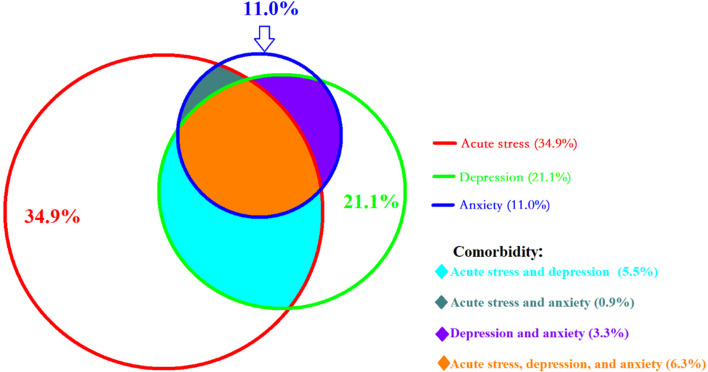
Aims: Coronavirus disease 2019 (COVID-19) pandemic is a major public health concern all over the world. Little is known about the impact of COVID-19 pandemic on mental health in the general population. This study aimed to assess the mental health problems and associated factors among a large sample of college students during the COVID-19 outbreak in China. Methods: This cross-sectional and nation-wide survey of college students was conducted in China from 3 to 10 February 2020. A self-administered questionnaire was used to assess psychosocial factors, COVID-19 epidemic related factors and mental health problems. Acute stress, depressive and anxiety symptoms were measured by the Chinese versions of the impact of event scale-6, Patient Health Questionnaire-9 and Generalized Anxiety Disorder-7, respectively. Univariate and hierarchical logistic regression analyses were performed to examine factors associated with mental health problems. Results: Among 821 218 students who participated in the survey, 746 217 (90.9%) were included for the analysis. In total, 414 604 (55.6%) of the students were female. About 45% of the participants had mental health problems. The prevalence rates of probable acute stress, depressive and anxiety symptoms were 34.9%, 21.1% and 11.0%, respectively. COVID-19 epidemic factors that were associated with increased risk of mental health problems were having relatives or friends being infected (adjusted odds ratio = 1.72–2.33). Students with exposure to media coverage of the COVID-19 ≥3 h/day were 2.13 times more likely than students with media exposure <1 h/day to have acute stress symptoms. Individuals with low perceived social support were 4.84–5.98 times more likely than individuals with high perceived social support to have anxiety and depressive symptoms. In addition, senior year and prior mental health problems were also significantly associated with anxiety or/and depressive symptoms. Conclusions: In this large-scale survey of college students in China, acute stress, anxiety and depressive symptoms are prevalent during the COVID-19 pandemic. Multiple epidemic and psychosocial factors, such as family members being infected, massive media exposure, low social support, senior year and prior mental health problems were associated with increased risk of mental health problems. Psychosocial support and mental health services should be provided to those students at risk.
Overview
CoChat Summary
TL;DR
In a nationwide web survey of 746,217 Chinese college students during the early COVID-19 outbreak, about 45% screened positive for probable acute stress, depressive, or anxiety symptoms. Infection among relatives/friends, heavy media exposure, low perceived social support, senior year, and prior mental health problems were associated with higher odds of mental health problems.
Key findings
- Among 746,217 analyzed students (90.9% of 821,218 participants; 55.6% female), 45% had probable acute stress, depressive, or anxiety symptoms; prevalence rates were 34.9% for acute stress, 21.1% for depressive symptoms, and 11.0% for anxiety symptoms.
- Having relatives or friends infected with COVID-19 was associated with increased odds of all three outcomes (adjusted odds ratio [AOR] = 1.72–2.33).
- Students exposed to COVID-19 media coverage ≥3 h/day were 2.13 times more likely than those exposed <1 h/day to have probable acute stress.
- Low perceived social support was associated with 4.84–5.98 times higher odds of anxiety and depressive symptoms compared with high perceived social support; senior year and prior mental health problems were also associated with anxiety and/or depressive symptoms.
Methods
- Cross-sectional, web-based nationwide survey conducted in China from 3 to 10 February 2020 among college students from 108 colleges and universities in Guangdong and Jiangxi provinces.
- Self-administered questionnaire measured psychosocial factors, COVID-19 epidemic-related factors, and mental health problems using the Chinese versions of the Impact of Event Scale-6 (cutoff ≥9), Patient Health Questionnaire-9 (cutoff ≥7), and Generalized Anxiety Disorder-7 (cutoff ≥7).
- Univariate and hierarchical logistic regression analyses examined factors associated with mental health problems; significance was set at p < 0.001 and OR/AOR >1.5.
Limitations
- The paper states that all students were originally sampled from 108 colleges and universities in Guangdong and Jiangxi provinces; about 80% lived in those two provinces, with only a small proportion in Wuhan, so generalizability to all students nationwide, especially those in Wuhan, is uncertain.
- The paper states that because it was an online survey, the exact response rate could not be determined beyond the valid questionnaire rate, as some students may have missed the survey.
- The paper states that the cross-sectional design precludes causality, and the measures were self-report screening tools rather than clinical diagnoses.
Model-written summary. Check it against the paper before relying on it.
Integrity signals
Registry
Cites
Statistics
Figures
Verification
Claims the paper makes
1 Valid · 1 Not valid · 22 Not checked · 59 Own results and interpretations
At least one cited source doesn’t support this claim or points to a different paper, and none confirmed it — see the verdicts below.
In the paper
“However, existing studies on the psychosocial impacts of COVID-19 epidemic have limitations, such as small sample sizes (Cao et al., 2020; Chang et al., 2020; Lai et al., 2020; Liu et al., 2020; Yang et al., 2020), assessing single symptoms (Cao et al., 2020; Liu et al., 2020; Qiu et al., 2020; Wang et al., 2020d), unstandardised psychological measures used (Qiu et al., 2020) and limiting factors”
§ Mental health problems and correlates among 746 217 college students during the coronavirus disease 2019 outbreak in China > Introduction
What the sources say
- Not checked yetcites Cao et al., 2020
- Not checked yetcites Liu et al., 2020
- Disputedcites Qiu et al., 2020 matched to “A nationwide survey of psychological distress among Chinese people in the COVID-19 epidemic: implications and policy recommendations.” (2020) sourceExperimental — accuracy not yet measured
Our copy of Qiu et al. (Abstract, p.1) describes the COVID-19 Peritraumatic Distress Index as a 0-100 instrument inquiring about the frequency of anxiety, depression, specific phobias, cognitive change, avoidance and compulsive behaviour, physical symptoms and loss of social functioning, i.e. a deliberately multidimensional measure of peritraumatic psychological distress, not a single-symptom assessment. The paper also frames its aim as measuring the prevalence and severity of 'a wide variety of psychological problems' across the general population (Abstract, p.1), and its own limitations concern the self-developed, non-standardised CPDI and self-report sampling — the point the same citing sentence separately credits to Qiu et al. under 'unstandardised psychological measures used'. Unless 'single symptoms' is meant as 'symptom-level rather than formal diagnosis', the cited characterisation runs contrary to what this source reports. (LLM, conf=0.78)
Checked by a reasoning model — may be wrong.
plain- Asserted: passes — The authors put it forward as true.
- Checkable: passes — It can be checked against evidence.
- Load-bearing: passes — The paper’s conclusions depend on it.
- Based: passes — The paper gives a reason why it holds.
Every source the paper cites for this claim was checked and supports it.
In the paper
“However, existing studies on the psychosocial impacts of COVID-19 epidemic have limitations, such as small sample sizes (Cao et al., 2020; Chang et al., 2020; Lai et al., 2020; Liu et al., 2020; Yang et al., 2020), assessing single symptoms (Cao et al., 2020; Liu et al., 2020; Qiu et al., 2020; Wang et al., 2020d), unstandardised psychological measures used (Qiu et al., 2020) and limiting factors”
§ Mental health problems and correlates among 746 217 college students during the coronavirus disease 2019 outbreak in China > Introduction
What the sources say
- Supportedcites Qiu et al., 2020 matched to “A nationwide survey of psychological distress among Chinese people in the COVID-19 epidemic: implications and policy recommendations.” (2020) source
The study’s Abstract (page not available in our copy) says the authors designed a self-report questionnaire for the epidemic and used the resulting COVID-19 Peritraumatic Distress Index, supporting the citation as an example of a study using a newly devised rather than an established psychological measure. The paper also reports content-validity review and internal-consistency testing; the claim should not be read as saying the measure had no validation. (LLM, conf=0.82)
plain- Asserted: passes — The authors put it forward as true.
- Checkable: passes — It can be checked against evidence.
- Load-bearing: passes — The paper’s conclusions depend on it.
- Based: passes — The paper gives a reason why it holds.
- Supported
A result the paper reports from its own data — it cites no other source for it, so there is none to check. The quote shows it is in the paper.
In the paper
“The prevalence rates of probable acute stress, depressive and anxiety symptoms were 34.9%, 21.1% and 11.0%, respectively.”
§ Mental health problems and correlates among 746 217 college students during the coronavirus disease 2019 outbreak in China > Abstract > Results
plain- Asserted: passes — The authors put it forward as true.
- Checkable: passes — It can be checked against evidence.
- Load-bearing: passes — The paper’s conclusions depend on it.
- Based: passes — The paper gives a reason why it holds.
A result the paper reports from its own data — it cites no other source for it, so there is none to check. The quote shows it is in the paper.
In the paper
“Yes | 1.27 (1.25–1.29)*** | 1.38 (1.35–1.40)*** | 1.57 (1.53–1.60)***”
§ Mental health problems and correlates among 746 217 college students during the coronavirus disease 2019 outbreak in China > Results > Factors associated with probable acute stress, anxiety and depressive symptoms
plainstates an association- Asserted: passes — The authors put it forward as true.
- Checkable: passes — It can be checked against evidence.
- Load-bearing: unclear — It is unclear whether the paper’s conclusions depend on it.
- Based: passes — The paper gives a reason why it holds.
A result the paper reports from its own data — it cites no other source for it, so there is none to check. The quote shows it is in the paper.
In the paper
“Yes | 1.12 (1.09–1.15)*** | 2.26 (2.20–2.31)*** | 2.38 (2.31–2.45)***”
§ Mental health problems and correlates among 746 217 college students during the coronavirus disease 2019 outbreak in China > Results > Factors associated with probable acute stress, anxiety and depressive symptoms
plainstates an association- Asserted: passes — The authors put it forward as true.
- Checkable: passes — It can be checked against evidence.
- Load-bearing: passes — The paper’s conclusions depend on it.
- Based: passes — The paper gives a reason why it holds.
- Rests on an assumption not shown here.
51 more claims
Create a free account to see all 83 claims and to verify the 40 references still open.
- It may state two separate claims as one. 13
- Probably not a substantial claim. 20
Claims other papers make about this one
Each is checked against this paper’s own text: does it say what the citing paper says it does?
The cited source doesn’t support the claim as written.
In the citing paper
“other research has identified that almost 45% of students faced mental health issues, with anxiety being the most frequent symptom (3).”
From Mental health status and coping strategies during COVID-19 pandemic among university students in Central Serbia (2023) · cites this paper as [3]
Checked by a reasoning model — may be wrong.
Experimental — accuracy not yet measuredThe source backs part of the claim, not all of it — or backs it for a different population, condition or comparison.
In the citing paper
“Gender differences are significant, as research consistently shows that female adolescents report higher rates of mental health challenges, such as anxiety and depression, compared to their male counterparts [20, 21].”
From Parental expectation and psychological distress of Chinese youth: the chain mediating effects of core self-worth and perceived stress (2025) · cites this paper as [20]
Experimental — accuracy not yet measured
Self-check
Percentages, sums and reported differences re-computed from the paper’s own numbers.
Each contradiction between two passages listed here was confirmed by an independent check.
Rated major: it would touch a result — a value a result rests on, reported and recomputed p-values on opposite sides of the significance level, two passages that conflict with no sign which is right, or a cited work retracted before this paper was published.
In the paper
§ Mental health problems and correlates among 746 217 college students during the coronavirus disease 2019 outbreak in China > Results > Factors associated with probable acute stress, anxiety and depressive symptoms
“In layer 3 of multivariate and hierarchical logistic regression, the potential interactions among the key factors were not statistically significant.”
§ Mental health problems and correlates among 746 217 college students during the coronavirus disease 2019 outbreak in China > Results > Factors associated with probable acute stress, anxiety and depressive symptoms
“| Yes × Low | – | – | | 1.22 (1.12–1.35)*** | – | 1.01 (0.89–1.13) |”
Rated minor: it would not touch a result — a value no result rests on, a p-value that stays on the same side of the significance level, or a conflict that is clerical, resolved elsewhere in the paper, or outside its own findings.
In the paper
§ Mental health problems and correlates among 746 217 college students during the coronavirus disease 2019 outbreak in China > Results > Descriptive characteristics
“high, score ⩾ 72 (> Mean + 1 s.d.).”
§ Mental health problems and correlates among 746 217 college students during the coronavirus disease 2019 outbreak in China > Results > Factors associated with probable acute stress, anxiety and depressive symptoms
“medium, score = 49–71 (Mean ± 1s.d.); high, score ⩾ 71 (> Mean + 1 s.d.).”
Rated minor: it would not touch a result — a value no result rests on, a p-value that stays on the same side of the significance level, or a conflict that is clerical, resolved elsewhere in the paper, or outside its own findings.
In the paper
§ Mental health problems and correlates among 746 217 college students during the coronavirus disease 2019 outbreak in China > Results > Factors associated with probable acute stress, anxiety and depressive symptoms
“Students with >3 h exposure to media coverage of the COVID-19 each day were 2.13 times more likely than students with less media exposure (<1 h/day) to have probable acute stress.”
§ Mental health problems and correlates among 746 217 college students during the coronavirus disease 2019 outbreak in China > Results > Factors associated with probable acute stress, anxiety and depressive symptoms
“| ⩾3 h/day | 2.13 (2.10–2.16)*** | 1.09 (1.07–1.10)*** | 1.32 (1.29–1.34)*** |”
Citations
Cites
Clinical features of patients infected with 2019 novel coronavirus in Wuhan, China
Huang, C., Wang, Y., Li, X., Ren, L., Zhao, J., Hu, Y., Zhang, L., Fan, G., Xu, J., Gu, X., et al. (2020) · The Lancet · doi:10.1016/s0140-6736(20)30183-5 · Cited by 48,884
Self-citationThe PHQ-9: Validity of a brief depression severity measure
Kroenke, K., Spitzer, R. L., & Williams, J. B. W. (2001) · Journal of General Internal Medicine · doi:10.1046/j.1525-1497.2001.016009606.x · Cited by 44,910 · cited 2×
“Depressive symptoms The 9-item Patient Health Questionnaire (PHQ-9) was used to measure students’ depressive symptoms within two weeks (Kroenke et al., 2001).”
MethodA Brief Measure for Assessing Generalized Anxiety Disorder: The GAD-7
Spitzer, R. L., Kroenke, K., Williams, J. B. W., & Löwe, B. (2006) · Archives of Internal Medicine · doi:10.1001/archinte.166.10.1092 · Cited by 31,765 · cited 1×
“Each item is rated on a 4-point scale from 0 (not at all) to 3 (nearly every day) (Spitzer et al., 2006).”
BackgroundThe Multidimensional Scale of Perceived Social Support
Zimet, G. D., Dahlem, N. W., Zimet, S. G., & Farley, G. K. (1988) · Journal of Personality Assessment · doi:10.1207/s15327752jpa5201_2 · Cited by 13,339
Wang, C., Pan, R., Wan, X., Tan, Y., Xu, L., Ho, C. S., & Ho, R. C. (2020) · International Journal of Environmental Research and Public Health · doi:10.3390/ijerph17051729 · Cited by 9,923 · cited 4×
“…the COVID-19 epidemic on mental health, such as stress-related symptoms, depression and anxiety among small samples of medical staff and community residents in China (Cao et al ., 2020; Chang et al ., 2020; Lai et al ., 2020; Liu et al ., 2020; Qiu et al ., 2020; Wang et al ., 2020b, 2020c, 2020d).”
InfluentialLai, J., Ma, S., Wang, Y., Cai, Z., Hu, J., Wei, N., Wu, J., Du, H., Chen, T., Li, R., et al. (2020) · JAMA Network Open · doi:10.1001/jamanetworkopen.2020.3976 · Cited by 8,015 · cited 15×
“Since 24 January 2020, 31 provinces and autonomous regions in mainland China have activated the level 1 public health emergency responses to prevent the spread of COVID-19 (Bao et al ., 2020).”
InfluentialA novel coronavirus outbreak of global health concern
Wang, C., Horby, P. W., Hayden, F. G., & Gao, G. F. (2020) · The Lancet · doi:10.1016/s0140-6736(20)30185-9 · Cited by 7,700 · cited 7×
“The above studies found that some influencing factors, including demographic information such as female gender (Chang et al., 2020; Wang et al., 2020b) and younger age (Chang et al., 2020); COVID-19 epidemic related factors such as living in the middle region of China (near the centre of the…”
BackgroundResultInfluentialThe psychological impact of the COVID-19 epidemic on college students in China
Cao, W., Fang, Z., Hou, G., Han, M., Xu, X., Dong, J., & Zheng, J. (2020) · Psychiatry Research · doi:10.1016/j.psychres.2020.112934 · Cited by 5,843 · cited 9×
“, 2020), having relatives or acquaintances infected with COVID-19 (Cao et al., 2020), having contacted with an individual with suspected COVID-19 or infected materials (Wang et al.”
InfluentialPsychometric Characteristics of the Multidimensional Scale of Perceived Social Support
Zimet, G. D., Powell, S. S., Farley, G. K., Werkman, S., & Berkoff, K. A. (1990) · Journal of Personality Assessment · doi:10.1080/00223891.1990.9674095 · Cited by 4,855
Psychometric Characteristics of the Multidimensional Scale of Perceived Social Support
Zimet, G., Powell, S., Farley, G., Werkman, S., & Berkoff, K. (1990) · Journal of Personality Assessment · doi:10.1207/s15327752jpa5503&4_17 · Cited by 4,854
Research works printed but not linked: 1
- 10.1002/1097-4679(199111)47:6 · doi:10.1002/1097-4679(199111)47:6
Cited by
Items 201–300 of 437
Li, Z.-H., Wang, J., Cheng, X., Mao, Y., Zhang, K.-D., Yu, W., Li, Y.-Q., Huang, K., Ding, K., Yang, X.-J., et al. (2023) · Psychology Research and Behavior Management · doi:10.2147/prbm.s403399 · Cited by 11
“And the incidence of both anxiety and depression among college students has increased.(9) Left-behind experience college students (LBEs) are those who are now enrolled in college after one or both parents moved to other regions to work during the period of 16 years old and below, and were taken care of by relatives su…”
BackgroundSelf-citationSocial support against depression in young adults’ group during COVID-19 pandemic
Gawrych, M., Cichoń, E., & Kiejna, A. (2023) · Psychiatria Polska · doi:10.12740/pp/onlinefirst/147433 · Cited by 9
“Ma et al. [26] showed that 21.1% of college students ( n = 746,217; 55.6% female) had probable depressive symptoms.”
InfluentialHealth as expanding consciousness: Change of psychological situation in nursing students
Tang, L., Lu, S.-T., Lai, Y., & Deng, R. (2022) · Nursing Open · doi:10.1002/nop2.1444 · Cited by 9
“Concerns about disruptions in clinical placements (Lazenby et al., 2020), changes to classroom curriculum, staying at home for an extended period, being away from friends and delayed graduation lead to stress- related symptoms, despair and anxiety (Ma et al., 2020).”
BackgroundWyszynski, D. F., Hernández–Díaz, S., Gordon-Dseagu, V., Ramiro, N., & Koenen, K. C. (2021) · The Journal of Maternal-Fetal & Neonatal Medicine · doi:10.1080/14767058.2021.1936489 · Cited by 8
Hadjicharalambous, D., Demetriou, L., & Erotocritou, K. (2021) · JOURNAL OF SOCIAL SCIENCE RESEARCH · doi:10.24297/jssr.v17i.9112 · Cited by 10
“…broader spread of the virus (Batra et al., 2021; Cao et al., 2020; Chang et al., 2020; Demetriou et al., 2021, Lai et al., 2020; Liu et al., 2020; Ma et al., 2020; Qiu et al., 2020; Wang et al.,2020b, 2020c, 2020d; Pfefferbaum & North, 2020; Wang et al., 2020, Rajkumar, 2020; Cao et al., 2020;…”
Flores, R. E. U., Sánchez, R. D., Noriega, H. E. M., Sanchez-Musi, L. F., Apiquián, R., Green, D. M. O., de la Peña, F. R., Sciutto, M. F. R., Cruz, L. P., Mayer-Villa, P. A., et al. (2024) · Salud Mental · doi:10.17711/sm.0185-3325.2024.009 · Cited by 7
“…evaluated: staying at home (Rodrigues et al., 2022) having another disease (Sandoval et al., 2021), having a loved one with COVID-19, hearing pandemic news and being treated for mental health problems, have been associated with the presence of anxiety and depression symptoms (Ma et al., 2020).”
Meng, H., Ruan, J., Chen, Y., Yan, Z., Li, X., & Meng, F. (2022) · Healthcare · doi:10.3390/healthcare10061072 · Cited by 7
“Before COVID-19, the risk of disease among medical students had an upward trend [5] as students are under pressure during their studies [6,7].”
BackgroundOu, W., Xiao, C., Dong, Q., Chen, Y., Ke, C., Liu, B., Liu, J., Ju, Y., & Zhang, Y. (2024) · Journal of Affective Disorders · doi:10.1016/j.jad.2024.01.047 · Cited by 6
Basterfield, C., & Newman, M. G. (2025) · Journal of Anxiety Disorders · doi:10.1016/j.janxdis.2025.102978 · Cited by 7
“…when faced with a disease outbreak, those who felt they had low levels of social support were 4.8 times more likely to experience anxiety and 6 times more likely to exhibit depressive symptoms, as compared to individuals who felt they had strong social support systems in place (Ma et al., 2020).”
InfluentialQiao, N. (2021) · Frontiers in Psychology · doi:10.3389/fpsyg.2021.761340 · Cited by 8
Zhang, J., Mi, L., Zhao, J., Chen, H., Wang, D., Ma, Z., & Fan, F. (2022) · Frontiers in Psychiatry · doi:10.3389/fpsyt.2022.830383 · Cited by 6
“Details of sample characteristics in both surveys were described elsewhere (61, 62).”
BackgroundSelf-citationde Souza, R. C., & Scott, C. F. (2022) · Religions · doi:10.3390/rel13080681 · Cited by 11
Depression among young adults – risks and protective factors in the COVID-19 pandemic
Gawrych, M., Cichoń, E., & Kiejna, A. (2022) · Postępy Psychiatrii i Neurologii · doi:10.5114/ppn.2022.118265 · Cited by 14
“[31] conducted a survey with the participation of 746,217 college students, of whom 55.”
BackgroundSantos, M. A. S., Ramos, A. G., de Sousa, T. C., & de Medeiros, R. A. (2022) · Clinical Oral Investigations · doi:10.1007/s00784-022-04743-z · Cited by 11
Liu, L., Chen, J., Liang, S., Peng, X., Yang, W., Huang, A., Wang, X., Fan, F., & Zhao, J. (2023) · International Journal of Environmental Research and Public Health · doi:10.3390/ijerph20065024 · Cited by 7
“Previous studies have found that the incidence rate of common mental health problems differs significantly due to sociodemographic characteristics such as gender, age, and living place [7]; pre-COVID-19 health status; previous mental and physical health problems [7,17]; attitudes towards COVID-19 [7,18]; lifestyle [19…”
BackgroundSelf-citationChinese university students showed less disordered eating during the COVID-19 campus lockdown
Duan, W., Ding, Q., Peng, S., Kang, Q., Guo, L., Zhang, L., Wei, Y., Xiao, Z., Fan, J., & Chen, J. (2023) · Eating and Weight Disorders - Studies on Anorexia Bulimia and Obesity · doi:10.1007/s40519-023-01569-w · Cited by 6
“Previous studies on Chinese university students during lockdown were mostly based on their home quarantine and focused on overall mental health states, such as stress [11, 15, 16], depression [4, 11, 16–18], anxiety [4, 11, 16, 17, 19, 20] and PTSD [19].”
BackgroundLi, Q., Li, C., He, W., Yin, X., Zhan, L., Zhang, J. J., & Wang, Y. (2023) · PLoS ONE · doi:10.1371/journal.pone.0284799 · Cited by 8
“People are more likely to feel depressed, depressed or desperate, tired or not energetic, with greater mood fluctuations [39, 40], more prone to ups and downs, more difficult to control their unpleasant emotions [41, 42], and more likely to feel passive and unmotivated [43, 44].”
BackgroundNixon, L., Slattery, B. W., Cassese, A., & ten Hoor, G. A. (2023) · International Journal of Applied Positive Psychology · doi:10.1007/s41042-023-00114-5 · Cited by 8
“Students’ experience of studying has been described as disrupted and leading to feelings of anxiety, hopelessness, and insecurity (Ma et al., 2020; Hajdúk et al., 2020).”
Liu, L., Jia, H., Qiu, B., Zhang, A., & Zhang, Q. (2025) · BMC Psychology · doi:10.1186/s40359-025-02774-1 · Cited by 6
Villa, M. A. C., Díaz-Marín, I. J., Prada, E. T. P., la Rosa, A. D., & Cruz, G. I. N. (2023) · Healthcare · doi:10.3390/healthcare11142024 · Cited by 13
Bangalan, S. G., & Agnes, M. C. (2024) · Current Psychology · doi:10.1007/s12144-024-05777-0 · Cited by 9
“…to support young people, particularly those with mental health issues, and prevent the development of severe mental disorders that may persist into adulthood (Burke et al., 2020; Jorns-Presentati et al., 2021; Kaligis et al., 2021; Ma et al., 2020; McLafferty et al., 2017; Puyat et al., 2021).”
Song, X., Han, D., Zhang, J., Fan, J., Ning, P., & Peng, Y. L. (2024) · Frontiers in Public Health · doi:10.3389/fpubh.2024.1340642 · Cited by 15
Zhang, R., Yin, Y., Zhang, Y., Feng, Y., Meng, H., Wang, J., Zhang, M., & Zhang, J. (2024) · PLoS ONE · doi:10.1371/journal.pone.0302894 · Cited by 5
Kuang, S., Xiaohong, W., Li, C., Yan, S., & Li, H. (2025) · Journal of Health Psychology · doi:10.1177/13591053251317322 · Cited by 5
“Research conducted across various countries (e.g. China: Ma et al., 2020; Brazil: Lopes and Nihei, 2021; Ethiopia: Aylie et al., 2020) corroborated that university students exhibit heightened levels of anxiety, stress, and depression during disease outbreaks.”
Effects of School Resumption on College Students' Mental Health During the COVID-19 Pandemic
Zheng, C., Yi, P., Shen, G., & Chen, W. (2021) · Journal of Psychosocial Nursing and Mental Health Services · doi:10.3928/02793695-20211118-02 · Cited by 7
Keleş, İ., Durar, E., & Durmuş, M. (2022) · Iğdır üniversitesi sosyal bilimler dergisi · doi:10.54600/igdirsosbilder.980917 · Cited by 10
Wang, D., Zhai, S., Chen, J., Chen, Y., Hua, S., Wang, C., Fan, F., & Liu, X. (2022) · Frontiers in Psychiatry · doi:10.3389/fpsyt.2022.845929 · Cited by 9
“Among participants, 93.6% (N = 339) of the survivors lived in Sichuan Province during the survey period, which was a low infection risk area with 1,000 cumulative confirmed cases during the COVID-19 outbreak (24).”
BackgroundInfluentialSelf-citationFerber, S. G., Shoval, G., Zalsman, G., & Weller, A. (2022) · World Journal of Psychiatry · doi:10.5498/wjp.v12.i8.1004 · Cited by 5
Li, X., Guo, T.-Z., Xie, Y., Bao, Y., Si, J.-Y., Li, Z., Xiong, Y.-T., Li, H., Li, S., Lü, L., et al. (2022) · World Journal of Psychiatry · doi:10.5498/wjp.v12.i8.1076 · Cited by 5
Maouch, M. E., Wang, Y., Jin, Z., Tamutana, T. T., Zhao, K., & Liu, Y. (2022) · Frontiers in Public Health · doi:10.3389/fpubh.2022.930842 · Cited by 6
Rafsanjani, M. A., Wijaya, P. A., Baskara, A., & Wahyudi, H. D. (2023) · The Education and science journal · doi:10.17853/1994-5639-2023-3-155-173 · Cited by 7
Dai, X., & Yu, D. (2023) · Translational Pediatrics · doi:10.21037/tp-23-120 · Cited by 8
“3% of college students had all 3 of these (10).”
BackgroundSong, H., Xia, L.-L., Ma, Y., Jiao, D., Chen, S., Wang, L., Wang, W., Song, P., Mu, L., Li, L., et al. (2023) · Medical Science Monitor · doi:10.12659/msm.939485 · Cited by 9
“9% of college students showed acute stress [31].”
BackgroundSelf-citationMaouch, M. E., & Jin, Z. (2023) · Integrative Psychological and Behavioral Science · doi:10.1007/s12124-023-09770-3 · Cited by 6
“…of psycho-mental problems (e.g., see Benke et al., 2020; Chew et al., 2020; El Maouch & Jin, 2022b; Gopal et al., 2020; Gues-soum et al., 2020; Ma et al., 2020; Massad et al., 2020; Odriozola-González et al., 2020; Pandey et al., 2020; Shi et al., 2020; Singh et al., 2020; Tee et al., 2020;…”
Alamiri, B., Alkhamis, M. A., Naguy, A., Alenezi, H. F. F., & Alshekaili, M. (2024) · Frontiers in Psychiatry · doi:10.3389/fpsyt.2024.1322745 · Cited by 8
Zhao, Y., & Wu, C. (2022) · Stress and Health · doi:10.1002/smi.3122 · Cited by 6
MENTAL HEALTH AMID COVID-19 PANDEMIC: APPROPRIATE COPING STRATEGIES
Ayenigbara, I. O. (2022) · Psychiatria Danubina · doi:10.24869/psyd.2022.325 · Cited by 9
[Challenges of and Responses to Mental Health Problems in the Post-COVID-19 Era].
Su, S., Gong, Y.-M., Zhao, Y., Ni, S., Shi, L., Bao, Y., & Lu, L. (2023) · 四川大学学报:医学版 · doi:10.12182/20230260301 · Cited by 10
Acupuncture for generalized anxiety disorder: a study protocol for a randomized controlled trial
Zhou, X., Shi, G.-A., Chen, R.-M., Hu, L., Li, Z., Zhou, Y., Pan, Z. J., Xiang, J., Peng, M., Chen, K., et al. (2024) · Brazilian Journal of Medical and Biological Research · doi:10.1590/1414-431x2024e13389 · Cited by 6
“In general, emotional problems are the most prominent effects of experiences and feelings in the face of public health emergencies, with common manifestations of psychological symptoms such as anxiety and panic (1,2).”
BackgroundZhou, D., Zhou, H., & Jiang, M. (2025) · Chinese Education & Society · doi:10.1080/10611932.2025.2465524 · Cited by 9
“Ma et al. (2020) pointed out that college students’ employability is influenced by their learning engagement, with higher levels of learning engagement among college students leading to a greater awareness of their employability.”
He, T., Tu, C. C., Wang, Z., Hao, D., & Huang, X. (2025) · PLoS ONE · doi:10.1371/journal.pone.0319799 · Cited by 8
“However, traditional patriarchal education in China emphasizes bravery and responsibility in males [70,71], neglecting the aspects of care and affection.”
Purnawati, E., Saraswati, L. D., Wurjanto, M. A., & Yuliawati, S. (2022) · Unnes Journal of Public Health · doi:10.15294/ujph.v11i2.53472 · Cited by 10
Psychological burden in Portuguese university students during the COVID-19 pandemic
Tavares-Almeida, S., Moura, D., Madeira, N. G. G. F., & Figueiredo‐Braga, M. (2023) · Porto Biomedical Journal · doi:10.1097/j.pbj.0000000000000200 · Cited by 6
Zhao, X., Liu, Z., Zhao, L., Wang, Q., & Zhang, L. (2023) · Behavioral Sciences · doi:10.3390/bs13070567 · Cited by 6
“the COVID-19 pandemic, people were advised to avoid intimate contact since it reduces a person’s sense of social support and emotions and impairs their satisfaction of their need for relatedness [45].”
BackgroundFu, R., & Xie, L. (2024) · International Journal of Mental Health Promotion · doi:10.32604/ijmhp.2023.041730 · Cited by 6
College Student Mental Health and Wellbeing Prior to and during the COVID-19 Pandemic
McLafferty, M., Ward, C., Walsh, C. P., O’Neill, S. M., Bjourson, A. J., Hugh, R. M., Brown, N., McBride, L., Brady, J., & Murray, E. K. (2023) · Education Sciences · doi:10.3390/educsci13111154 · Cited by 8
Midilli, T. S., Kalkim, A., & Uslu, B. (2024) · Disaster Medicine and Public Health Preparedness · doi:10.1017/dmp.2024.71 · Cited by 7
“…the pandemic was higher in individuals who had a poor relationship with their families, 24 – 27 who had a poor relationship with their friends, 28,29 who lived in a dormitory with friends, 19,30,31 who had a physical or chronic illness, 30 – 32 whose mental health was poor or who currently…”
BackgroundJoseph, S. (2021) · Asia Pacific Journal of Health Management · doi:10.24083/apjhm.v16i4.1037 · Cited by 5
“[37] Using the 7-item Generalized Anxiety Disorder (GAD-7) scale it was found that 24.”
MethodLi, Z., Tian, L., Liu, H., Tang, S., & Chen, Q. (2022) · BMJ Open · doi:10.1136/bmjopen-2022-065772 · Cited by 4
Maskour, L., Batri, B. E., Oubit, S. M., Jeronen, E. K., Agorram, B., & Bouali, R. (2022) · Education Sciences · doi:10.3390/educsci12120892 · Cited by 5
Pisarska, A., Ostaszewski, K., Greń, J., & Bobrowski, K. (2022) · Alcoholism and Drug Addiction · doi:10.5114/ain.2022.121995 · Cited by 7
Martinez‐Torteya, C., Figge, C. J., Ramírez-Hernández, L. I., & la Garza, B. T. (2023) · Frontiers in Public Health · doi:10.3389/fpubh.2023.1160896 · Cited by 23
“College students, specifically, show concerningly high levels of mental health problems across the globe (7, 8), with rates that significantly increased in response to the pandemic, confinement measures (4, 9), and widespread COVID-related worry (10).”
BackgroundGilavand, A., Khoshouie, B., & Mohamadpour, S. (2023) · Jundishapur Journal of Chronic Disease Care · doi:10.5812/jjcdc-137714 · Cited by 6
“Besides, numerous studies have reported the negative effects of the COVID-19 epidemic on students’ mental health in several countries, including the United States, China, France, Germany, South Africa, Poland, Pakistan, Oman, Russia, Slovenia, Ukraine, and the Czech Republic (5-12).”
InfluentialMaítre, J., Bergeron‐Leclerc, C., Maltais, D., & Gaboury, S. (2023) · Multimedia Tools and Applications · doi:10.1007/s11042-023-16096-0 · Cited by 6
“While many of these studies have been conducted in Asia [25, 35], others have also emerged in the Middle East [4, 44], Europe [26, 52], South America [5], Africa [41], and the United States [27, 55].”
BackgroundPan, Y., Zhang, Y., Ma, Z., Wang, D., Ross, B., Huang, S., & Fan, F. (2023) · Child Psychiatry & Human Development · doi:10.1007/s10578-023-01578-x · Cited by 8
“The GAD-7 has been demonstrated to be a valid and reliable tool to assess anxiety in adolescents, and a cut-off value of 10 reflects probable clinically anxiety [41, 42].”
Self-citationResearch on Stress, Emotions and Mental Health
Fan, Y. (2023) · Lecture Notes in Education Psychology and Public Media · doi:10.54254/2753-7048/11/20230753 · Cited by 4
Li, W. (2022) · Frontiers in Public Health · doi:10.3389/fpubh.2022.936988 · Cited by 5
“(7) found that the prevalence rates of depressive and anxiety symptoms among Chinese college students were 21.”
BackgroundHirano, Y., Uchino, R., Sae, T., Doi, M., & Aramaki, K. (2022) · Frontiers in Psychology · doi:10.3389/fpsyg.2022.931381 · Cited by 4
“Ma et al. (2020) found that the COVID19 outbreak was significantly associated with acute stress, depression, and anxiety among senior year students.”
BackgroundShilton, T., Mancini, A. D., Perlstein, S., DiDomenico, G. E., Visoki, E., Greenberg, D. M., Brown, L. A., Gur, R. E., Waller, R. E., & Barzilay, R. (2021) · medRxiv · doi:10.1101/2021.10.08.21264752 · Cited by 5
Luo, M., Gan, Q., Huang, Z., Jiang, Y., Li, K., Wu, M., Yang, D., Shao, H., Chen, Y., Fu, Y., et al. (2024) · Brain Topography · doi:10.1007/s10548-023-01026-y · Cited by 3
“During the pandemic, the mental health of college students was negatively impacted by anxiety, depressive symptoms, and acute stress, as shown by numerous studies (Bai et al. 2021; Huckins et al. 2020; Ma et al. 2020; Wu et al. 2021).”
Self-citationA Systematic Review of Architectural Atmosphere That Fosters Mindfulness Constructs
Thampanichwat, C., Sirisakdi, L., Petsirasan, S., Wutisun, D., Singkham, S., Wongvorachan, T., Phaibulputhipong, P., Bunyarittikit, S., & Wongmahasiri, R. (2025) · Buildings · doi:10.3390/buildings15142443 · Cited by 6
Teng, X., Wang, X., Liu, Y., Wu, D., Dong, Z., & Lyu, S. (2025) · Frontiers in Psychology · doi:10.3389/fpsyg.2025.1611264 · Cited by 8
Building resilience: the long-term psychological impact of COVID-19 on college students
Zhang, Q., Xiao, M., Liu, L., & Yang, K. (2025) · Current Psychology · doi:10.1007/s12144-025-08460-0 · Cited by 5
Karaçam, Z., Toker, S., & HASSOY, D. (2025) · Current Addiction Reports · doi:10.1007/s40429-025-00683-2 · Cited by 4
Li, C., BaiQuan, Y., Yang, X., Qiu, Y., Zhang, M., & Luo, J. (2026) · Journal of Affective Disorders · doi:10.1016/j.jad.2025.121109 · Cited by 4
Cotrim, L. V. P., Moura, I. G. S., Rêgo, E. F., & David, I. R. (2021) · Brazilian Journal of Health Review · doi:10.34119/bjhrv4n6-373 · Cited by 4
Saktini, F. (2022) · Diponegoro International Medical Journal · doi:10.14710/dimj.v3i1.14960 · Cited by 3
Xu, Q., Fan, K., Wei, D., Wang, J., Wang, X., Lou, X., Lin, H., Wang, C., Wu, C., & Mao, Z. (2023) · Journal of Public Health · doi:10.1007/s10389-023-01830-7 · Cited by 4
“In a large survey of college students during the COVID-19 pandemic, approximately 45% of participants had mental health problems (Ma et al. 2020).”
Validation of the Chinese version of the COVID-19 Phobia Scale among Chinese college students
Zhao, B., Xu, J., Kong, F., & Nam, E. W. (2023) · Heliyon · doi:10.1016/j.heliyon.2023.e13468 · Cited by 5
“Being in close contact with those infected by COVID-19, excessive use of social media, low levels of social support, and pre-existing mental health problems were risk factors for psychological problems among college students [30 – 32].”
Ibrahim, M., Tiete, J., Noël, J., Pipo, C., Dethare, E., Hove, O. V., & Foucart, J. (2023) · European Journal of Physiotherapy · doi:10.1080/21679169.2023.2213255 · Cited by 5
“In that respect, a Chinese study demonstrated that benefiting from social support has a positive effect on sleep quality [27].”
BackgroundDigital Dietary Behaviors in Individuals With Depression: Real-World Behavioral Observation
Zhu, Y., Zhang, R., Yin, S., Sun, Y., Womer, F. Y., Liu, R., Zeng, S., Zhang, X., & Wang, F. (2024) · JMIR Public Health and Surveillance · doi:10.2196/47428 · Cited by 6
“Approximately 45% of college students in China reported experiencing mental health issues during the outbreak [1].”
Wang, M., Li, R., Xie, Y., Wan, Y., Wu, X., Tao, F., & Tao, S. (2025) · Journal of Behavioral Addictions · doi:10.1556/2006.2025.00045 · Cited by 3
“A nationwide survey on mental health issues among college students in China indicated that the rate of anxiety symptom was 11.0% (Ma et al., 2020).”
InfluentialKotyśko, M., & Frankowiak, J. K. (2025) · PLoS ONE · doi:10.1371/journal.pone.0324785 · Cited by 18
Wojtara, M. S. (2022) · Undergraduate Journal of Public Health · doi:10.3998/ujph.2321 · Cited by 5
Luo, X., & Huang, Y. (2022) · Frontiers in Psychology · doi:10.3389/fpsyg.2022.947856 · Cited by 4
“Then, during the COVID-19 epidemic among University students, hierarchical logistic regression models were employed to investigate characteristics linked to mental health concerns (Ma et al., 2020).”
MethodRetractedStudent population mental health during the COVID-19 pandemic
Božović, M., Radevic, S. R., Janicijevic, K. M., Miljanović, A., Uskokovic, N., Radovanović, J., & Selaković, V. (2023) · Glasnik javnog zdravlja · doi:10.5937/serbjph2301079b · Cited by 3
Kotyśko, M., & Frankowiak, J. K. (2023) · PLoS ONE · doi:10.1371/journal.pone.0290536 · Cited by 6
“In addition to experiencing the same anxiety and stress related to the epidemiological situation as others, and sometimes being infected themselves or facing disease or the loss of a loved one, they experienced the stress of the enforced isolation more strongly [22].”
BackgroundThe Impact of COVID-Related Restrictions on the Mental Health of Students
Reuter, P. R. (2024) · Advances in experimental medicine and biology · doi:10.1007/978-3-031-61943-4_3 · Cited by 5
Dogan, A. E., Kebapci, D., Ertan, O., Kalay, Z., Caki, N. K., Şar, V., & Eser, H. Y. (2022) · npj Mental Health Research · doi:10.1038/s44184-022-00017-4 · Cited by 3
Chatterjee, S. (2022) · Springer eBooks · doi:10.1007/978-981-16-8040-3_13 · Cited by 5
SOCIAL SUPPORT, SELF-EFFICACY, AND STUDENT'S MENTAL HEALTH IN ONLINE LEARNING DURING PANDEMIC
Sriwiyanti, S., Saefudin, W., Shofia, A., & Mujib, M. (2022) · al-Balagh Jurnal Dakwah dan Komunikasi · doi:10.22515/albalagh.v7i1.4914 · Cited by 10
Dat, N. B., Tran, T. B., & Anh, N. T. M. (2023) · Asia Pacific Journal of Counselling and Psychotherapy · doi:10.1080/21507686.2023.2278741 · Cited by 3
Yuan, L., Li, B., Fan, S. J., & Chen, J. (2025) · Children and Youth Services Review · doi:10.1016/j.childyouth.2025.108267 · Cited by 2
Zeng, J., Guo, S., Zheng, Q., Lin, Z., & Liu, X.-W. (2025) · Annals of General Psychiatry · doi:10.1186/s12991-025-00603-8 · Cited by 7
“These qualities consequently diminish the risk of developing posttraumatic stress symptoms [61, 62].”
Self-citationMandal, S., Gazi, K. H., Giri, B. C., Salahshour, S., & Mondal, S. P. (2025) · RAIRO - Operations Research · doi:10.1051/ro/2025147 · Cited by 4
COVID-19 Anxiety and Associated Factors among Finalist Undergraduate Science Teachers
Rukundo, A., & Santson, D. A. (2021) · Interdisciplinary Journal of Sociality Studies · doi:10.51986/ijss-2021.vol1.05 · Cited by 3
Depression, Anxiety and Stress during the Covid-19 Pandemic among Serbian University Students
Čolović, S., Božović, M., & Grujicic, M. (2023) · EABR. Experimental and Applied Biomedical Research · doi:10.2478/sjecr-2023-0004 · Cited by 3
“Study by Ma et al. included more than 700,000 Chinese students and it found that nearly 45% of their cohort suffered from mental health problems, with anxiety being the most common symptom (7).”
Sava, I. N. (2023) · Frontiers in Psychology · doi:10.3389/fpsyg.2023.1143221 · Cited by 3
“A nationwide cross-sectional survey study involving 821,218 college students in China found mental health problems among 45% of participants (Ma et al., 2020).”
BackgroundFactors affecting the University Students’ Mental Health during the 2020 COVID-19 outbreak
Jacinto, M. A. T., & Guzman, A. M. D. (2023) · Journal of Educational Health and Community Psychology · doi:10.12928/jehcp.v1i2.26059 · Cited by 3
Efficacy of Home–School Collaboration in Enhancing College Students' Mental Health
Liu, Y. (2024) · Journal of Evaluation in Clinical Practice · doi:10.1111/jep.14273 · Cited by 2
Mental health and substance use among rehabilitation sciences students during the COVID-19 pandemic
Ntatamala, I., Khan, S., & Chakara, Z. (2025) · South African Journal of Psychiatry · doi:10.4102/sajpsychiatry.v31i0.2376 · Cited by 2
Undergraduate students’ mental health in the first year of the COVID-19 pandemic: a scoping review
Dias, F. A., Pereira, E. R., Silva, R. M. C. R. A., de Medeiros, A. Y. B. B. V., & Fabri, J. M. G. (2025) · Revista Brasileira de Enfermagem · doi:10.1590/0034-7167-2024-0032 · Cited by 4
IMPACT OF THE NOVEL CORONAVIRUS PANDEMIC ON THE MENTAL STATE OF PEOPLE WITH DRUG DEPENDENCE SYNDROME
Sheremetyeva, I. I., Plotnikov, A. V., Dokenova, S. V., & Moldagaliyev, T. (2022) · Bulletin of Medical Science · doi:10.31684/25418475_2022_1_83 · Cited by 2
Psychosocial Impact of the COVID-19 Pandemic on Healthcare Professionals in Spain
Magro, A., Gutiérrez-García, A., González-Álvarez, M., & Líbano, M. D. (2022) · Sustainability · doi:10.3390/su142215171 · Cited by 4
Rondon, M. C. D. S., Estrela, A. C. G. D. S., de Sales, S. C., da Costa, V. V., dos Santos, A. B., da Costa, B. F., & Lima, N. C. (2021) · Research Society and Development · doi:10.33448/rsd-v10i4.13747 · Cited by 10
Consolidación de la innovación docente en la etapa universitaria: COVID-19 y las nuevas tecnologías
Lera, J., Cantarero, D., & Sáez, M. P. (2022) · REIRE Revista d Innovació i Recerca en Educació · doi:10.1344/reire.39732 · Cited by 2
Exploring Anxiety of Québec University Community during COVID-19 Pandemic via Machine Learning
Maítre, J., Bergeron‐Leclerc, C., Maltais, D., & Gaboury, S. (2022) · International Conference on Information Technology for Social Good (GoodIT) · doi:10.1145/3524458.3547236 · Cited by 3
“While many of these studies have been conducted in Asia [14, 20], others have also appeared in the Middle East [1, 27], Europe [15, 34], South America [2], Africa [25] and the United States [16, 36].”
BackgroundWan, Z., Xiao, L., & Wang, G. (2022) · Heliyon · doi:10.1016/j.heliyon.2022.e11805 · Cited by 2
“What's worse, during the COVID-19 pandemic, people's mental health suffered major challenges due to the dual stress of the virus and isolation [19], sleep quality and circadian rhythms gradually worsen.”
Jovanović, T., & Visnjic, A. M. (2023) · Medicina · doi:10.3390/medicina59010180 · Cited by 3
“History of contacts with a suspected or confirmed case of COVID-19 was also a significant factor for the manifestation of all three types of symptoms in respondents in Saudi Arabia but also in China where infecting a relative or friend was moderately to highly significantly associated with an increased risk of three m…”
BackgroundThe relationship between the COVID‐19 pandemic and children's emotional and behavioral problems
ÖZCAN, M., Akça, K., & Aydoğdu, F. (2023) · Journal of Child and Adolescent Psychiatric Nursing · doi:10.1111/jcap.12408 · Cited by 3
Metadata
- Authors
- Ma, Z., Zhao, J., Li, Y., Chen, D., Wang, T., Zhang, Z., Chen, Z., Yu, Q., Jiang, J., Fan, F., & Liu, X.
- Affiliations
- South China Normal University (CN)
- Southern Medical University (CN)
- University of Pennsylvania (US)
- Corresponding author
- Fan, F.
- Venue
- Epidemiology and Psychiatric Sciences
- Publisher
- Cambridge University Press (CUP)
- Published
- 2020
- Volume
- 29
- Pages
- e181-e181
- ISSN
- 2045-7960 (ISSN-L)
- 2045-7979
- PMC
- PMC7681173
- OpenAlex
- W3099913278
- Semantic Scholar
- 51ed5f602f14606ed0192c7a29f165f91d3c6a91
- Cited by
- 437
- References
- 55
- Citations by year
- 2026: 16 · 2025: 40 · 2024: 62 · 2023: 115 · 2022: 131 · 2021: 71 · 2020: 1
- FWCI
- 31.83
- Type
- journal article
- Language
- en
- Open access
- gold
- doi.org
- Licence
- Locations
- Epidemiology and Psychiatric Sciences (publishedVersion, cc-by-nc-sa)
- PubMed Central (publishedVersion, cc-by-nc-sa)
- PubMed (publishedVersion)
- Funders
- National Natural Science Foundation of China (31871129, 31671165, 31271096)
- China Postdoctoral Science Foundation (31271096, 2017 T100638, 31671165, 2016 M590793)
- Ministry of Education, India
- Topics
- Social Sciences › Psychology › Clinical Psychology › COVID-19 and Mental Health
- Social Sciences › Psychology › Developmental and Educational Psychology › Student Stress and Coping
- Health Sciences › Medicine › Psychiatry and Mental health › Mental Health Treatment and Access
- Keywords
- COVID-19 pandemic, university students, mental health, acute stress, depressive symptoms, anxiety symptoms, perceived social support, media exposure, family infection, risk factors, China, psychosocial support, mental health services, mental health prevalence
- MeSH terms
- Patient Health Questionnaire, Betacoronavirus, COVID-19, SARS-CoV-2, Adolescent, Adult, Anxiety, China, Cross-Sectional Studies, Depression, Disease Outbreaks, Female, Humans, Male, Mental Health, Pneumonia, Viral, Surveys and Questionnaires, Stress, Psychological, Students, Prevalence, Coronavirus, Coronavirus Infections, Young Adult, Pandemics
About these checks
Registry, retraction, Cites and statistics results are computed, not judged, with one exception: a printed reference that no index lists is read once by a model before it counts as a citation error. Claims are extracted by a model and kept only when their quote appears verbatim in the text; each cited source is then checked, with a model’s help, for whether it says what the claim relies on. Those verdicts can be wrong — read the claim’s quote and the cited source before relying on one.
The claim verdicts this report counts are experimental: their accuracy is not yet measured.
A language model drew the claims from the paper on 2026-10-07, under version 3 of the claim definition (model deepseek-v4.1-flash, prompt extract-v3).
A second model labelled each claim on 2026-10-07 (model jev-1.13-20260917, definition revision gold-guideline-v0.2).
Cited sources are checked with a language model’s help (qwen3.8-omni-flash and gpt-6-sol).
Statistics and arithmetic are recomputed, not judged.
Confidence bands are shown only for fields calibrated on our annotated test set. None is calibrated yet, so no band is shown.
What counts as a claim ›How we measure confidence ›How we check this ›
Are you an author, or do you see a problem with this page? Request a review
Data sources
Bibliographic data: Semantic Scholar, OpenAlex, Crossref.
Contains information from the Semantic Scholar Academic Graph Datasets, made available under the ODC Attribution License (ODC-BY 1.0).
Semantic Scholar’s data is described in: Kinney, R., et al. (2023). The Semantic Scholar Open Data Platform. arXiv:2301.10140.
