

Mental health problems and correlates among 746 217 college students during the coronavirus disease 2019 outbreak in China
Open accessThe DOI matches its Crossref record; 51 of the 55 references it cites were found in a registry or an index; 2 of the 42 sources its claims cite were checked for support.
Abstract
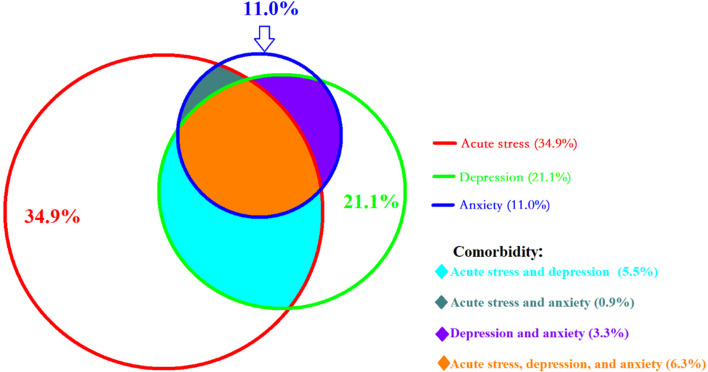
Aims: Coronavirus disease 2019 (COVID-19) pandemic is a major public health concern all over the world. Little is known about the impact of COVID-19 pandemic on mental health in the general population. This study aimed to assess the mental health problems and associated factors among a large sample of college students during the COVID-19 outbreak in China. Methods: This cross-sectional and nation-wide survey of college students was conducted in China from 3 to 10 February 2020. A self-administered questionnaire was used to assess psychosocial factors, COVID-19 epidemic related factors and mental health problems. Acute stress, depressive and anxiety symptoms were measured by the Chinese versions of the impact of event scale-6, Patient Health Questionnaire-9 and Generalized Anxiety Disorder-7, respectively. Univariate and hierarchical logistic regression analyses were performed to examine factors associated with mental health problems. Results: Among 821 218 students who participated in the survey, 746 217 (90.9%) were included for the analysis. In total, 414 604 (55.6%) of the students were female. About 45% of the participants had mental health problems. The prevalence rates of probable acute stress, depressive and anxiety symptoms were 34.9%, 21.1% and 11.0%, respectively. COVID-19 epidemic factors that were associated with increased risk of mental health problems were having relatives or friends being infected (adjusted odds ratio = 1.72–2.33). Students with exposure to media coverage of the COVID-19 ≥3 h/day were 2.13 times more likely than students with media exposure <1 h/day to have acute stress symptoms. Individuals with low perceived social support were 4.84–5.98 times more likely than individuals with high perceived social support to have anxiety and depressive symptoms. In addition, senior year and prior mental health problems were also significantly associated with anxiety or/and depressive symptoms. Conclusions: In this large-scale survey of college students in China, acute stress, anxiety and depressive symptoms are prevalent during the COVID-19 pandemic. Multiple epidemic and psychosocial factors, such as family members being infected, massive media exposure, low social support, senior year and prior mental health problems were associated with increased risk of mental health problems. Psychosocial support and mental health services should be provided to those students at risk.
Overview
CoChat Summary
TL;DR
In a nationwide web survey of 746,217 Chinese college students during the early COVID-19 outbreak, about 45% screened positive for probable acute stress, depressive, or anxiety symptoms. Infection among relatives/friends, heavy media exposure, low perceived social support, senior year, and prior mental health problems were associated with higher odds of mental health problems.
Key findings
- Among 746,217 analyzed students (90.9% of 821,218 participants; 55.6% female), 45% had probable acute stress, depressive, or anxiety symptoms; prevalence rates were 34.9% for acute stress, 21.1% for depressive symptoms, and 11.0% for anxiety symptoms.
- Having relatives or friends infected with COVID-19 was associated with increased odds of all three outcomes (adjusted odds ratio [AOR] = 1.72–2.33).
- Students exposed to COVID-19 media coverage ≥3 h/day were 2.13 times more likely than those exposed <1 h/day to have probable acute stress.
- Low perceived social support was associated with 4.84–5.98 times higher odds of anxiety and depressive symptoms compared with high perceived social support; senior year and prior mental health problems were also associated with anxiety and/or depressive symptoms.
Methods
- Cross-sectional, web-based nationwide survey conducted in China from 3 to 10 February 2020 among college students from 108 colleges and universities in Guangdong and Jiangxi provinces.
- Self-administered questionnaire measured psychosocial factors, COVID-19 epidemic-related factors, and mental health problems using the Chinese versions of the Impact of Event Scale-6 (cutoff ≥9), Patient Health Questionnaire-9 (cutoff ≥7), and Generalized Anxiety Disorder-7 (cutoff ≥7).
- Univariate and hierarchical logistic regression analyses examined factors associated with mental health problems; significance was set at p < 0.001 and OR/AOR >1.5.
Limitations
- The paper states that all students were originally sampled from 108 colleges and universities in Guangdong and Jiangxi provinces; about 80% lived in those two provinces, with only a small proportion in Wuhan, so generalizability to all students nationwide, especially those in Wuhan, is uncertain.
- The paper states that because it was an online survey, the exact response rate could not be determined beyond the valid questionnaire rate, as some students may have missed the survey.
- The paper states that the cross-sectional design precludes causality, and the measures were self-report screening tools rather than clinical diagnoses.
Model-written summary. Check it against the paper before relying on it.
Integrity signals
Registry
Cites
Statistics
Figures
Verification
Claims the paper makes
1 Valid · 1 Not valid · 22 Not checked · 59 Own results and interpretations
At least one cited source doesn’t support this claim or points to a different paper, and none confirmed it — see the verdicts below.
In the paper
“However, existing studies on the psychosocial impacts of COVID-19 epidemic have limitations, such as small sample sizes (Cao et al., 2020; Chang et al., 2020; Lai et al., 2020; Liu et al., 2020; Yang et al., 2020), assessing single symptoms (Cao et al., 2020; Liu et al., 2020; Qiu et al., 2020; Wang et al., 2020d), unstandardised psychological measures used (Qiu et al., 2020) and limiting factors”
§ Mental health problems and correlates among 746 217 college students during the coronavirus disease 2019 outbreak in China > Introduction
What the sources say
- Not checked yetcites Cao et al., 2020
- Not checked yetcites Liu et al., 2020
- Disputedcites Qiu et al., 2020 matched to “A nationwide survey of psychological distress among Chinese people in the COVID-19 epidemic: implications and policy recommendations.” (2020) sourceExperimental — accuracy not yet measured
Our copy of Qiu et al. (Abstract, p.1) describes the COVID-19 Peritraumatic Distress Index as a 0-100 instrument inquiring about the frequency of anxiety, depression, specific phobias, cognitive change, avoidance and compulsive behaviour, physical symptoms and loss of social functioning, i.e. a deliberately multidimensional measure of peritraumatic psychological distress, not a single-symptom assessment. The paper also frames its aim as measuring the prevalence and severity of 'a wide variety of psychological problems' across the general population (Abstract, p.1), and its own limitations concern the self-developed, non-standardised CPDI and self-report sampling — the point the same citing sentence separately credits to Qiu et al. under 'unstandardised psychological measures used'. Unless 'single symptoms' is meant as 'symptom-level rather than formal diagnosis', the cited characterisation runs contrary to what this source reports. (LLM, conf=0.78)
Checked by a reasoning model — may be wrong.
plain- Asserted: passes — The authors put it forward as true.
- Checkable: passes — It can be checked against evidence.
- Load-bearing: passes — The paper’s conclusions depend on it.
- Based: passes — The paper gives a reason why it holds.
Every source the paper cites for this claim was checked and supports it.
In the paper
“However, existing studies on the psychosocial impacts of COVID-19 epidemic have limitations, such as small sample sizes (Cao et al., 2020; Chang et al., 2020; Lai et al., 2020; Liu et al., 2020; Yang et al., 2020), assessing single symptoms (Cao et al., 2020; Liu et al., 2020; Qiu et al., 2020; Wang et al., 2020d), unstandardised psychological measures used (Qiu et al., 2020) and limiting factors”
§ Mental health problems and correlates among 746 217 college students during the coronavirus disease 2019 outbreak in China > Introduction
What the sources say
- Supportedcites Qiu et al., 2020 matched to “A nationwide survey of psychological distress among Chinese people in the COVID-19 epidemic: implications and policy recommendations.” (2020) source
The study’s Abstract (page not available in our copy) says the authors designed a self-report questionnaire for the epidemic and used the resulting COVID-19 Peritraumatic Distress Index, supporting the citation as an example of a study using a newly devised rather than an established psychological measure. The paper also reports content-validity review and internal-consistency testing; the claim should not be read as saying the measure had no validation. (LLM, conf=0.82)
plain- Asserted: passes — The authors put it forward as true.
- Checkable: passes — It can be checked against evidence.
- Load-bearing: passes — The paper’s conclusions depend on it.
- Based: passes — The paper gives a reason why it holds.
- Supported
A result the paper reports from its own data — it cites no other source for it, so there is none to check. The quote shows it is in the paper.
In the paper
“The prevalence rates of probable acute stress, depressive and anxiety symptoms were 34.9%, 21.1% and 11.0%, respectively.”
§ Mental health problems and correlates among 746 217 college students during the coronavirus disease 2019 outbreak in China > Abstract > Results
plain- Asserted: passes — The authors put it forward as true.
- Checkable: passes — It can be checked against evidence.
- Load-bearing: passes — The paper’s conclusions depend on it.
- Based: passes — The paper gives a reason why it holds.
A result the paper reports from its own data — it cites no other source for it, so there is none to check. The quote shows it is in the paper.
In the paper
“Yes | 1.27 (1.25–1.29)*** | 1.38 (1.35–1.40)*** | 1.57 (1.53–1.60)***”
§ Mental health problems and correlates among 746 217 college students during the coronavirus disease 2019 outbreak in China > Results > Factors associated with probable acute stress, anxiety and depressive symptoms
plainstates an association- Asserted: passes — The authors put it forward as true.
- Checkable: passes — It can be checked against evidence.
- Load-bearing: unclear — It is unclear whether the paper’s conclusions depend on it.
- Based: passes — The paper gives a reason why it holds.
A result the paper reports from its own data — it cites no other source for it, so there is none to check. The quote shows it is in the paper.
In the paper
“Yes | 1.12 (1.09–1.15)*** | 2.26 (2.20–2.31)*** | 2.38 (2.31–2.45)***”
§ Mental health problems and correlates among 746 217 college students during the coronavirus disease 2019 outbreak in China > Results > Factors associated with probable acute stress, anxiety and depressive symptoms
plainstates an association- Asserted: passes — The authors put it forward as true.
- Checkable: passes — It can be checked against evidence.
- Load-bearing: passes — The paper’s conclusions depend on it.
- Based: passes — The paper gives a reason why it holds.
- Rests on an assumption not shown here.
51 more claims
Create a free account to see all 83 claims and to verify the 40 references still open.
- It may state two separate claims as one. 13
- Probably not a substantial claim. 20
Claims other papers make about this one
Each is checked against this paper’s own text: does it say what the citing paper says it does?
The cited source doesn’t support the claim as written.
In the citing paper
“other research has identified that almost 45% of students faced mental health issues, with anxiety being the most frequent symptom (3).”
From Mental health status and coping strategies during COVID-19 pandemic among university students in Central Serbia (2023) · cites this paper as [3]
Checked by a reasoning model — may be wrong.
Experimental — accuracy not yet measuredThe source backs part of the claim, not all of it — or backs it for a different population, condition or comparison.
In the citing paper
“Gender differences are significant, as research consistently shows that female adolescents report higher rates of mental health challenges, such as anxiety and depression, compared to their male counterparts [20, 21].”
From Parental expectation and psychological distress of Chinese youth: the chain mediating effects of core self-worth and perceived stress (2025) · cites this paper as [20]
Experimental — accuracy not yet measured
Self-check
Percentages, sums and reported differences re-computed from the paper’s own numbers.
Each contradiction between two passages listed here was confirmed by an independent check.
Rated major: it would touch a result — a value a result rests on, reported and recomputed p-values on opposite sides of the significance level, two passages that conflict with no sign which is right, or a cited work retracted before this paper was published.
In the paper
§ Mental health problems and correlates among 746 217 college students during the coronavirus disease 2019 outbreak in China > Results > Factors associated with probable acute stress, anxiety and depressive symptoms
“In layer 3 of multivariate and hierarchical logistic regression, the potential interactions among the key factors were not statistically significant.”
§ Mental health problems and correlates among 746 217 college students during the coronavirus disease 2019 outbreak in China > Results > Factors associated with probable acute stress, anxiety and depressive symptoms
“| Yes × Low | – | – | | 1.22 (1.12–1.35)*** | – | 1.01 (0.89–1.13) |”
Rated minor: it would not touch a result — a value no result rests on, a p-value that stays on the same side of the significance level, or a conflict that is clerical, resolved elsewhere in the paper, or outside its own findings.
In the paper
§ Mental health problems and correlates among 746 217 college students during the coronavirus disease 2019 outbreak in China > Results > Descriptive characteristics
“high, score ⩾ 72 (> Mean + 1 s.d.).”
§ Mental health problems and correlates among 746 217 college students during the coronavirus disease 2019 outbreak in China > Results > Factors associated with probable acute stress, anxiety and depressive symptoms
“medium, score = 49–71 (Mean ± 1s.d.); high, score ⩾ 71 (> Mean + 1 s.d.).”
Rated minor: it would not touch a result — a value no result rests on, a p-value that stays on the same side of the significance level, or a conflict that is clerical, resolved elsewhere in the paper, or outside its own findings.
In the paper
§ Mental health problems and correlates among 746 217 college students during the coronavirus disease 2019 outbreak in China > Results > Factors associated with probable acute stress, anxiety and depressive symptoms
“Students with >3 h exposure to media coverage of the COVID-19 each day were 2.13 times more likely than students with less media exposure (<1 h/day) to have probable acute stress.”
§ Mental health problems and correlates among 746 217 college students during the coronavirus disease 2019 outbreak in China > Results > Factors associated with probable acute stress, anxiety and depressive symptoms
“| ⩾3 h/day | 2.13 (2.10–2.16)*** | 1.09 (1.07–1.10)*** | 1.32 (1.29–1.34)*** |”
Citations
Cites
Clinical features of patients infected with 2019 novel coronavirus in Wuhan, China
Huang, C., Wang, Y., Li, X., Ren, L., Zhao, J., Hu, Y., Zhang, L., Fan, G., Xu, J., Gu, X., et al. (2020) · The Lancet · doi:10.1016/s0140-6736(20)30183-5 · Cited by 48,884
Self-citationThe PHQ-9: Validity of a brief depression severity measure
Kroenke, K., Spitzer, R. L., & Williams, J. B. W. (2001) · Journal of General Internal Medicine · doi:10.1046/j.1525-1497.2001.016009606.x · Cited by 44,910 · cited 2×
“Depressive symptoms The 9-item Patient Health Questionnaire (PHQ-9) was used to measure students’ depressive symptoms within two weeks (Kroenke et al., 2001).”
MethodA Brief Measure for Assessing Generalized Anxiety Disorder: The GAD-7
Spitzer, R. L., Kroenke, K., Williams, J. B. W., & Löwe, B. (2006) · Archives of Internal Medicine · doi:10.1001/archinte.166.10.1092 · Cited by 31,765 · cited 1×
“Each item is rated on a 4-point scale from 0 (not at all) to 3 (nearly every day) (Spitzer et al., 2006).”
BackgroundThe Multidimensional Scale of Perceived Social Support
Zimet, G. D., Dahlem, N. W., Zimet, S. G., & Farley, G. K. (1988) · Journal of Personality Assessment · doi:10.1207/s15327752jpa5201_2 · Cited by 13,339
Wang, C., Pan, R., Wan, X., Tan, Y., Xu, L., Ho, C. S., & Ho, R. C. (2020) · International Journal of Environmental Research and Public Health · doi:10.3390/ijerph17051729 · Cited by 9,923 · cited 4×
“…the COVID-19 epidemic on mental health, such as stress-related symptoms, depression and anxiety among small samples of medical staff and community residents in China (Cao et al ., 2020; Chang et al ., 2020; Lai et al ., 2020; Liu et al ., 2020; Qiu et al ., 2020; Wang et al ., 2020b, 2020c, 2020d).”
InfluentialLai, J., Ma, S., Wang, Y., Cai, Z., Hu, J., Wei, N., Wu, J., Du, H., Chen, T., Li, R., et al. (2020) · JAMA Network Open · doi:10.1001/jamanetworkopen.2020.3976 · Cited by 8,015 · cited 15×
“Since 24 January 2020, 31 provinces and autonomous regions in mainland China have activated the level 1 public health emergency responses to prevent the spread of COVID-19 (Bao et al ., 2020).”
InfluentialA novel coronavirus outbreak of global health concern
Wang, C., Horby, P. W., Hayden, F. G., & Gao, G. F. (2020) · The Lancet · doi:10.1016/s0140-6736(20)30185-9 · Cited by 7,700 · cited 7×
“The above studies found that some influencing factors, including demographic information such as female gender (Chang et al., 2020; Wang et al., 2020b) and younger age (Chang et al., 2020); COVID-19 epidemic related factors such as living in the middle region of China (near the centre of the…”
BackgroundResultInfluentialThe psychological impact of the COVID-19 epidemic on college students in China
Cao, W., Fang, Z., Hou, G., Han, M., Xu, X., Dong, J., & Zheng, J. (2020) · Psychiatry Research · doi:10.1016/j.psychres.2020.112934 · Cited by 5,843 · cited 9×
“, 2020), having relatives or acquaintances infected with COVID-19 (Cao et al., 2020), having contacted with an individual with suspected COVID-19 or infected materials (Wang et al.”
InfluentialPsychometric Characteristics of the Multidimensional Scale of Perceived Social Support
Zimet, G. D., Powell, S. S., Farley, G. K., Werkman, S., & Berkoff, K. A. (1990) · Journal of Personality Assessment · doi:10.1080/00223891.1990.9674095 · Cited by 4,855
Psychometric Characteristics of the Multidimensional Scale of Perceived Social Support
Zimet, G., Powell, S., Farley, G., Werkman, S., & Berkoff, K. (1990) · Journal of Personality Assessment · doi:10.1207/s15327752jpa5503&4_17 · Cited by 4,854
Research works printed but not linked: 1
- 10.1002/1097-4679(199111)47:6 · doi:10.1002/1097-4679(199111)47:6
Cited by
Items 101–200 of 437
Celia, G., Cavicchiolo, E., Girelli, L., Limone, P., & Cozzolino, M. (2021) · Counselling and Psychotherapy Research · doi:10.1002/capr.12512 · Cited by 30
Monistrol-Mula, A., Félez-Nóbrega, M., Domènech‐Abella, J., Mortier, P., Cristóbal-Narváez, P., Vilagut, G., Olaya, B., Ferrer, M., Gabarrell‐Pascuet, A., Alonso, J., et al. (2022) · Annals of General Psychiatry · doi:10.1186/s12991-022-00385-3 · Cited by 24
“COVID‑related stress was assessed using an adapted version of the Peri Life Events Scale, and social support using the Oslo Social Support Scale.”
BackgroundMethodInfluentialZhou, J., Tang, W., Sun, Z., Xue, S., Liu, Q., Wu, S., Dai, Q., & Xu, J. (2025) · BMC Public Health · doi:10.1186/s12889-025-24759-w · Cited by 24
“Gender differences are significant, as research consistently shows that female adolescents report higher rates of mental health challenges, such as anxiety and depression, compared to their male counter-parts [20, 21].”
Zhao, J., Chapman, E., Houghton, S. J., & Lawrence, D. M. (2022) · Frontiers in Education · doi:10.3389/feduc.2022.726614 · Cited by 20
Self-citationCelia, G., Tessitore, F., Cavicchiolo, E., Girelli, L., Limone, P., & Cozzolino, M. (2022) · Frontiers in Psychiatry · doi:10.3389/fpsyt.2022.886538 · Cited by 25
“Among the risk and protective factors for mental health, having relatives or friends infected with COVID-19, massive media exposure with low quality and clarity of information, history of psychiatric follow-up, and female gender were considered major risk factors (7, 15–20), whereas, living in urban areas, family inco…”
BackgroundZhang, Y., Wang, T., Jin, S., Zhang, H., Chen, L., & Du, S. (2023) · General Psychiatry · doi:10.1136/gpsych-2022-100926 · Cited by 21
Self-citationDuong, C. B., Tran, V. N., Nguyen, H. A., Le, T. N., Ha, B. H., Phuc, C. N., Huynh, K., Le, T. M., Nguyen, T. P., & Nguyen, T. T. H. (2023) · BMC Public Health · doi:10.1186/s12889-023-15317-3 · Cited by 21
“Our finding was compatible with studies showed that seniors have higher rates of post-COVID-19 mental stress than first-year students [4, 24, 37, 40, 42].”
BackgroundResultGao, D., Xiang, Q., Lu, G., Tong, J., Jiang, W., Yu, X., Wang, R., Lv, Z., & Li, D. (2022) · BMC Psychology · doi:10.1186/s40359-022-00934-1 · Cited by 17
“40%, which are higher than the previous surveys [46, 47].”
ResultBrogly, C., Bauer, M., Lizotte, D. J., Press, M. L., MacDougall, A. G., Speechley, M. R., Huner, E., Mitchell, M., Anderson, K. K., & Pila, E. (2021) · JMIR Research Protocols · doi:10.2196/30504 · Cited by 18
“Preliminary data on undergraduate students have shown detrimental impacts on mental health and psychological well-being [4,6-8].”
BackgroundKuśnierz, C., Rogowska, A. M., Kwaśnicka, A., & Ochnik, D. (2021) · Journal of Clinical Medicine · doi:10.3390/jcm10215061 · Cited by 17
“Indeed, a nationwide study indicates that at least one mental health problem (including high stress, anxiety, or depression) was found in 45% of Chinese college students [4] and 42.”
BackgroundPsychological state and its correlates of local college students in Wuhan during COVID‐19 pandemic
Liu, F., Dai, L., Cai, Y., Chen, X., Li, J., & Shi, L. (2022) · Psychology in the Schools · doi:10.1002/pits.22699 · Cited by 20
“(Ma et al., 2020), which suggests that the psychological state of college students living in the hardest‐hit areas are more worrying.”
BackgroundWu, H., Li, H., Li, X., Su, W., Tang, H., Yang, J., Deng, Z., Xiao, L.-H., & Yang, L. (2022) · Frontiers in Public Health · doi:10.3389/fpubh.2022.876298 · Cited by 18
“Our survey revealed no significant differences between men and women in terms of anxiety symptoms, depression symptoms, and sleep disturbances, contrary to other studies (35, 36).”
ResultSesconi, A. M. S., dos Santos, G. F., da Costa, M. T. F., Fernandes, T. D. S., Lemos, J. A. D. D. S., & da Silva, Â. M. B. F. (2025) · Revista Multidisciplinar do Nordeste Mineiro · doi:10.61164/5ch3zs09 · Cited by 16
Song, C., Du, X.-T., Hong, Y.-X., Mao, J., & Zhang, W. (2023) · Frontiers in Public Health · doi:10.3389/fpubh.2022.962259 · Cited by 18
“Lower levels of social support have been found to be associated with more mental health issues (10, 11), and individuals with less social support are about five times more likely to experience symptoms of anxiety and depression than those that have greater social supports (12).”
BackgroundSriati, A., Kurniawan, K., Senjaya, S., Khoirunnisa, K., Muslim, R. N. I., Putri, A. M., Armansyah, N. A., & Fitriani, N. (2023) · Journal of Holistic Nursing · doi:10.1177/08980101231162990 · Cited by 20
“People with low social support perceptions were 4.84 to 5.98 times more likely to have symptoms of anxiety and depression than those with high social support perceptions (Ma et al., 2020).”
InfluentialChen, J., Shi, L., Xiao, S., Zheng, X., Xue, Y., Xue, B., Zhang, J., Li, X., Chen, Y., Wu, Y., et al. (2024) · Journal of Affective Disorders · doi:10.1016/j.jad.2024.01.096 · Cited by 24
Gilley, K. N., Baroudi, L., Yu, M., Gainsburg, I., Reddy, N., Bradley, C. M., Cislo, C., Rozwadowski, M., Clingan, C., DeMoss, M., et al. (2022) · JMIR Mental Health · doi:10.2196/34645 · Cited by 19
“Several recent studies provide evidence for a high prevalence of mental health problems among college students who experienced virtual education [5-16].”
BackgroundCipolletta, S., Ronconi, L., & Tomaino, S. C. M. (2025) · Frontiers in Psychology · doi:10.3389/fpsyg.2025.1529795 · Cited by 15
Noda, T., Nagaura, H., Tsutsumi, T., Fujita, Y., Asao, Y., Matsuda, A., Satsuma, A., Nakanishi, M., Ohnishi, R., & Takemori, M. (2021) · Journal of Affective Disorders Reports · doi:10.1016/j.jadr.2021.100282 · Cited by 15
Holm‐Hadulla, R. M., Mayer, C., Wendler, H., Kremer, T. L., Kotera, Y., & Herpertz, S. C. (2022) · Frontiers in Psychology · doi:10.3389/fpsyg.2022.920125 · Cited by 18
Essadek, A., Gressier, F., Krebs, T., Corruble, E., Falissard, B., & Rabeyron, T. (2022) · European Journal of Psychotraumatology · doi:10.1080/20008066.2022.2141510 · Cited by 17
“…related to levels of anxiety, distress symptoms and depression in students (Elmer et al., 2020; Essadek & Rabeyron, 2020; Huckins et al., 2020; Zhang et al., 2020), as well as exposure to information about the pandemic spread by the media (Chen et al., 2020; Ma et al., 2020; Wang et al., 2020).”
BackgroundInfluentialZhang, M., Chi, C., Liu, Q., Zhang, Y., Tao, X., Liu, H., & Xuan, B. (2024) · Frontiers in Public Health · doi:10.3389/fpubh.2024.1362121 · Cited by 31
Lee, K. W., Yap, S. F., Ong, H. T., Pheh, K. S., & Lye, M. S. (2022) · Frontiers in Public Health · doi:10.3389/fpubh.2022.936486 · Cited by 18
Díaz, M. P. M., Baldonedo‐Mosteiro, C., Baptista, P. C. P., Gamez‐Fernandez, A., & Correia, S. (2023) · Journal of Clinical Nursing · doi:10.1111/jocn.16758 · Cited by 27
Tancredi, S., Burton‐Jeangros, C., Rüegg, R., Righi, E., Kågström, A., Vallee, A. Q., Chioléro, A., Bracke, P., Buffel, V., de Velde, S. M. V., et al. (2022) · International Journal of Public Health · doi:10.3389/ijph.2022.1604468 · Cited by 21
He, T., Tu, C. C., & Bai, X. (2022) · Frontiers in Psychology · doi:10.3389/fpsyg.2022.948214 · Cited by 25
“The overall anxiety level of Chinese college students was higher than that of other groups during the COVID-19 epidemic (Wang and Zhao, 2020), and college students who perceived themselves as having lower social support were more likely to have anxiety symptoms (Ma et al., 2020).”
BackgroundSun, L., Wang, X., Hong, Y., Li, C., Zeng, W., Liu, P., Xiong, Y., Chen, Y., Lian, Y., & Wang, Y. (2023) · Frontiers in Psychiatry · doi:10.3389/fpsyt.2023.1100242 · Cited by 16
“conducted a nation-wide survey on the mental health of college students during the COVID-19 pandemic in China, illustrating that students with low perceived social support were more likely to have anxiety and depressive symptoms (86).”
BackgroundLv, F., Zhu, R., Hou, X., Fang, L., Wang, Y. A., Du, Z., Zhong, X., & Liu, J. (2023) · Behavioral Sciences · doi:10.3390/bs13100796 · Cited by 15
“Upperclassmen college students become more susceptible to mental health issues due to the epidemic [44], which in turn were prone to anxiety symptoms [45].”
BackgroundBin, X., Qu, K., Wang, Y., Chen, L., Xiong, Y., Wen, J. F., Wei, H.-B., Bing, T., Dan, C.-Y., & Zhu, J.-Q. (2024) · Frontiers in Public Health · doi:10.3389/fpubh.2023.1267764 · Cited by 17
Xiao, J., Liu, Y., Li, B., Zhang, L., Han, J., & Zhao, H. (2022) · BMC Psychiatry · doi:10.1186/s12888-022-04366-4 · Cited by 14
“1% in the general population [7], in stark contrast, a meta-analysis in China among PLHIV estimated the prevalence of having depression as 54% [8], which is up to seven-fold higher than the general population.”
ResultTorinomi, C., Lindenberg, K., Möltner, A., Herpertz, S. C., & Holm‐Hadulla, R. M. (2022) · International Journal of Environmental Research and Public Health · doi:10.3390/ijerph192416423 · Cited by 20
Joseph, R. A., Kim, J. J., Akers, S. W., Turner, T. M., Whorley, E., Lumpkin, K. J., Rosa, J., & McElroy, C. (2023) · Cogent Psychology · doi:10.1080/23311908.2023.2195091 · Cited by 15
“Adaptation to the environment, social support, and optimal management of stress were found to enhance the mental health of nursing students in China (Li et al., 2021).”
BackgroundWang, D., Zhao, J., Zhai, S., Chen, H., Liu, X., & Fan, F. (2022) · Psychiatry Research · doi:10.1016/j.psychres.2022.114646 · Cited by 14
Self-citationWang, Y., Bi, C., Liu, H., Lin, H., Cai, R., & Zhang, J. (2022) · Frontiers in Psychology · doi:10.3389/fpsyg.2022.1024946 · Cited by 17
Alarcão, V., Candeias, P., Stefanovska–Petkovska, M., Pintassilgo, S. C., Machado, F. L., Virgolino, A., & Santos, O. (2023) · Behavioral Sciences · doi:10.3390/bs13050422 · Cited by 16
“Additionally, the same study found that perceived positive social support was a protective factor against the risk for affective disorders, neutralizing the effects of stress and enhancing coping strategies [27].”
BackgroundLinlin, W., Wanyu, H., Li, Y., Huimin, Q., Li, Z., Qinchen, J., Tingting, W., Wang, F., Minghao, P., & Wei, Z. (2023) · BMC Public Health · doi:10.1186/s12889-023-17211-4 · Cited by 18
“People with low social support were 5–6 times more likely to develop anxiety symptoms than those with high social support [69].”
BackgroundSelf-citationKuang, S., Wang, W., Yan, S., Wu, Y., Zhang, Y., Li, J., Wu, Y., & Li, H. (2024) · Current Psychology · doi:10.1007/s12144-024-05701-6 · Cited by 17
“University students also report high rates of probable acute stress, depression, and anxiety symptoms (34.9%, 21.1%, and 11.0%, respectively; Ma et al., 2020).”
InfluentialWu, L., & Liu, Y. (2024) · Medicine · doi:10.1097/md.0000000000039519 · Cited by 23
Li, J., Xue, E., Liu, B., & Han, Q. (2024) · Humanities and Social Sciences Communications · doi:10.1057/s41599-024-03781-0 · Cited by 23
“For example, a survey of over 700,000 Chinese students (Ma et al., 2020) showed that nearly 45% of students have experienced mental health problems, with anxiety being the most common symptom.”
Al‐Shatanawi, T. N., Sakka, S. A., Kheirallah, K. A., Al-Mistarehi, A.-H. W., Altamimi, S., Alrabadi, N., Alsulaiman, J., Khader, A. A., Abdallah, F. M., Tawalbeh, L. I., et al. (2021) · Frontiers in Public Health · doi:10.3389/fpubh.2021.719668 · Cited by 17
“With the pandemic progressing, its effect on obsession behavior emerges from different countries on medical and nonmedical personnel, including students (14, 21, 28, 66, 88, 89).”
BackgroundMorales-Beltrán, R. A., Cruz, G. H., González-Fimbres, R. A., Colmenero, B. R. R., Zazueta-Beltrán, D. K., & Reynoso-Sánchez, L. F. (2022) · Retos · doi:10.47197/retos.v45i0.92974 · Cited by 25
Li, L., Cao, H. R., Yang, L., Yan, C., Wang, X., & Ma, Y. (2022) · Frontiers in Psychiatry · doi:10.3389/fpsyt.2022.955093 · Cited by 13
“(5) found in an online survey of Chinese college students from 108 colleges and universities (N = 746,217) that about 45% of the participants had mental health problems, and about 35, 21, and 11% of the participants reported probable acute stress, depressive and anxiety symptoms, respectively.”
BackgroundPrevalence and influencing factors of anxiety in medical students during the COVID-19 pandemic
Liu, H., Liu, X., & Xu, W. (2022) · Heliyon · doi:10.1016/j.heliyon.2022.e10487 · Cited by 16
Self-citationAlfayumi‐Zeadna, S., Touma, L. G.-A., Weinreich, M., & O’Rourke, N. (2022) · International Journal of Environmental Research and Public Health · doi:10.3390/ijerph192013466 · Cited by 14
“A similar study in China found that 45% of college students reported clinical stress, anxiety, and depression; exposure to media coverage was associated with acute stress [7].”
BackgroundRisks to mental health of higher degree by research (HDR) students during a global pandemic
Brownlow, C., Eacersall, D. C. F., Nelson, C. W., Parsons-Smith, R. L., & Terry, P. C. (2022) · PLoS ONE · doi:10.1371/journal.pone.0279698 · Cited by 13
Valladares-Garrido, M. J., León‐Figueroa, D. A., Dawson, F. M., Burga-Cachay, S. C., Fernandez-Canani, M. A., Failoc‐Rojas, V. E., Pereira-Victorio, C. J., Valladares-Garrido, D., & Inga-Berrospi, F. (2023) · Frontiers in Psychiatry · doi:10.3389/fpsyt.2023.1169247 · Cited by 21
“Furthermore, having a family member infected with COVID-19, media overload, being in the final year of school, a history of mental illness, and a history of eating disorders prior to the pandemic (21) are factors influencing mental health outcomes in adolescents (22).”
BackgroundPsychological health status among thyroid cancer patients during the COVID-19 epidemic in China
Yang, S., Wang, J., & Xu, X. (2021) · Supportive Care in Cancer · doi:10.1007/s00520-021-06624-9 · Cited by 13
“Receiving resources of science lectures about COVID-19 from the internet during an epidemic is an independent factor of PTSS, consistent with previous findings that when social media is overloaded with information, people are inundated with a wide variety of news about the epidemic, both true and false, which exacerba…”
The influence of perceived stress and income on mental health in China and Germany
Li, R., Liu, S., Huang, C., Darabi, D., Zhao, M., & Heinzel, S. (2023) · Heliyon · doi:10.1016/j.heliyon.2023.e17344 · Cited by 19
Yu, X., & Zhao, J. (2023) · Frontiers in Public Health · doi:10.3389/fpubh.2023.1280961 · Cited by 15
“(5, 13), which may indicate an age-related effect of the higher level of psychological sensitivity or greater influence of the external environment.”
BackgroundSelf-citationLi, X., Wu, R., Wu, M.-Y. M., & Zhu, G. (2024) · Journal of Affective Disorders · doi:10.1016/j.jad.2024.02.037 · Cited by 19
Dias, S. B., Jelinek, H. F., & Hadjileontiadis, L. J. (2024) · PLoS ONE · doi:10.1371/journal.pone.0304932 · Cited by 19
Zhu, W., Xu, D., Li, H., Xu, G., Tian, J., Lyu, L., Wan, N., Wei, L., Rong, W., Liu, C., et al. (2022) · Frontiers in Psychiatry · doi:10.3389/fpsyt.2021.782753 · Cited by 15
Yang, W., Li, P., Huang, Y., Yang, X., Mu, W., Jing, W., Ma, X., & Zhang, X. (2022) · International Journal of Environmental Research and Public Health · doi:10.3390/ijerph19148624 · Cited by 14
“The continuous spread of the epidemic, strict isolation measures and delays in starting schools, colleges, and universities across the country were expected to influence the mental health of college students [20,21].”
BackgroundDampak Psikologis Pandemi COVID-19 Pada Mahasiswa
Ratunuman, R. A., David, L. E. V., & Opod, H. (2021) · Jurnal Biomedik JBM · doi:10.35790/jbm.13.2.2021.31836 · Cited by 22
Karampas, K., Pezirkianidis, C., & Stalikas, A. (2022) · Frontiers in Psychology · doi:10.3389/fpsyg.2022.1036564 · Cited by 11
University freshmen's excessive smartphone use and psychological safety during the COVID-19 pandemic
Yang, Q., Shi, M., LianPing, Z., & Ping, X. (2022) · Frontiers in Psychiatry · doi:10.3389/fpsyt.2022.993555 · Cited by 12
“) during the COVID-19 pandemic, and have identified a positive relationship between smartphone use and poor mental health (4, 14).”
BackgroundGuo, S., Li, T.-Y., Xue, B., & Yang, X. (2023) · Horticulturae · doi:10.3390/horticulturae9030334 · Cited by 13
Qiu, Q., Chai, G., Xie, S., & Wu, T. (2024) · Frontiers in Psychology · doi:10.3389/fpsyg.2024.1383042 · Cited by 14
Tao, Y., Niu, H., Tang, Q., Wang, S., Zhang, L., Liu, G., & Liu, X. (2024) · BMC Public Health · doi:10.1186/s12889-024-19675-4 · Cited by 12
“Additionally, the risk of developing depression and anxiety disorders increases with prolonged exposure to electronic devices [34].”
BackgroundSelf-citationKokkinos, C. M., Tsouloupas, C. N., & Voulgaridou, I. (2021) · Human Arenas · doi:10.1007/s42087-021-00253-8 · Cited by 16
Expression and role of microRNA-212/nuclear factor I-A in depressive mice
Si, L., Wang, Y., Liu, M., Yang, L., & Zhang, L. (2021) · Bioengineered · doi:10.1080/21655979.2021.2009964 · Cited by 11
“Accordingly, depression is currently considered a major disease endangering the health and quality of life of the general population [5].”
BackgroundYong, M., & Suh, H. (2022) · Frontiers in Psychology · doi:10.3389/fpsyg.2022.816961 · Cited by 14
“This result contrasts with another study which found that senior year students were more likely to experience depressive and anxiety symptoms (Ma et al., 2020).”
BackgroundResultRogowska, A. M., Ochnik, D., & Kuśnierz, C. (2022) · BMC Psychology · doi:10.1186/s40359-022-00950-1 · Cited by 15
Kokkinos, C. M., & Koutsospyros, A. (2023) · The Journal of Psychology · doi:10.1080/00223980.2023.2244128 · Cited by 17
“…Wu et al., 2018), which stated that approximately one in every two college students in the United States face mental health conditions, which according to Ma et al. (2020) may result in lower academic achievement and, more importantly, a greater likelihood of having dangerous thoughts and actions.”
BackgroundKhawaja, S., Anjos, E., & Qureshi, F. H. (2023) · Creative Education · doi:10.4236/ce.2023.1411140 · Cited by 21
dos Santos, A. P. R., Souza, J. N. V. A., Silva, B. R. V. S., Costa, E. C., Oliveira, M. C. D. P., de Aquino, J. M., dos Santos, M. A. M., de Barros, M. V. G., da Silva, L. M. P., & Correia, M. A. D. V. (2022) · Revista Brasileira de Atividade Física & Saúde · doi:10.12820/rbafs.27e0266 · Cited by 11
“To assess the mental health of individuals, the Depression Anxiety Stress Scale12 reduced version was used, with 21 questions, which assesses depression, anxiety and stress, considering the following classifications for depression: normal (0-9), mild (10-13), moderate (14-20), severe (21-27), extremely severe (28 or m…”
MethodRadovanovic, J., Selakovic, V., Mihaljevic, O., Djordjevic, J., Čolović, S., Djordjevic, J. R., Janjic, V., Jovicic, M., Veselinovic, S., Vukomanovic, I. S., et al. (2023) · Frontiers in Psychiatry · doi:10.3389/fpsyt.2023.1226836 · Cited by 10
“Similar to our study, other research has identified that almost 45% of students faced mental health issues, with anxiety being the most frequent symptom (3).”
ResultKurz, D., Braig, S., Genuneit, J., & Rothenbacher, D. (2023) · Child and Adolescent Psychiatry and Mental Health · doi:10.1186/s13034-023-00581-3 · Cited by 14
“10,11 Those results are underpinned by a meta-analysis and a systematic review suggesting that during the COVID-19 pandemic children’s mental health was generally negatively impacted.”
BackgroundAlesi, M., Giordano, G., Gentile, A., & Caci, B. (2023) · International Journal of Environmental Research and Public Health · doi:10.3390/ijerph20075255 · Cited by 14
Xia, T., Xu, X., & Ding, S. (2023) · Frontiers in Psychology · doi:10.3389/fpsyg.2023.1287115 · Cited by 13
Fan, N., Fan, H., Luo, R., Wang, Y., Yan, Y., Yang, X., Wang, M., Dou, Y., Ni, R., Wei, J., et al. (2024) · Scientific Reports · doi:10.1038/s41598-024-60537-1 · Cited by 18
“Multiple epidemic and psychosocial factors, such as family members being infected, massive media exposure, low social support, senior year and prior mental health problems were associated with increased risk of mental health problems 54 .”
The Impact of COVID-19 on Behavior and Physical and Mental Health of Romanian College Students
Silişteanu, S. C., Totan, M., Antonescu, O. R., DUICA, L. C., Antonescu, E., & Silișteanu, A. E. (2022) · Medicina · doi:10.3390/medicina58020246 · Cited by 16
“Previous studies have consistently shown the psychosocial impact of the COVID-19 pandemic on mental health and in particular on women and children of young age [3,5,6].”
ResultEsteban, R. F. C., Mamani-Benito, O. J., Castillo-Blanco, R., Lingán-Huamán, S. K., & Cabrera-Orosco, I. (2022) · Frontiers in Education · doi:10.3389/feduc.2022.867997 · Cited by 14
“This is because several studies have reported high prevalence of stress, depression, and anxiety (Ma et al., 2020) not only because of the new demands posed by online learning but also because students are not able to personally visit their classrooms and laboratories and socialize with their classmates (Villani et al.”
BackgroundLorini, C., Cavallo, G., Vettori, V., Buscemi, P., Ciardi, G., Zanobini, P., Okan, O., Dadaczynski, K., Lastrucci, V., & Bonaccorsi, G. (2023) · Frontiers in Public Health · doi:10.3389/fpubh.2023.1210327 · Cited by 16
Liu, B., Liu, X., Zou, L., Hu, J., Wang, Y., & Hao, M. (2023) · PLoS ONE · doi:10.1371/journal.pone.0292896 · Cited by 15
Self-citationSeto, M., Usukura, H., Kunii, Y., Hamaie, Y., Kodama, E. N., Makino, Y., Kinouchi, Y., Ito, C., Ikeda, T., & Tomita, H. (2023) · The Tohoku Journal of Experimental Medicine · doi:10.1620/tjem.2023.j012 · Cited by 11
Kasierska, M., Suwalska, J., Łojko, D., Jakubiak-Głowacka, M., Tobis, S., & Suwalska, A. (2023) · Sustainability · doi:10.3390/su151914230 · Cited by 13
Thampanichwat, C., Wongvorachan, T., Bunyarittikit, S., Chunhajinda, P., Phaibulputhipong, P., & Wongmahasiri, R. (2024) · Buildings · doi:10.3390/buildings14082508 · Cited by 14
Meine, L. E., Strömer, E., Schönfelder, S., Eckhardt, E. I., Bergmann, A. K., & Wessa, M. (2021) · Frontiers in Psychiatry · doi:10.3389/fpsyt.2021.784381 · Cited by 19
“Indeed, evidence from cross-sectional studies investigating students during the pandemic in, e.g., China (12), Spain (13), Germany, and Egypt (14), as well as Italy (15) showed alarming rates of mental health problems, psychological distress, depressive symptoms, and significantly higher levels of psychopathology comp…”
BackgroundInfluentialGunawan, H., Anggraeni, I., & Nurrachmawati, A. (2021) · Preventif Jurnal Kesehatan Masyarakat · doi:10.22487/preventif.v12i2.283 · Cited by 24
Depression, anxiety and stress among people infected with COVID-19 in Dhaka and Chittagong cities
Zahangir, M. S., & Rokonuzzaman, M. (2022) · Heliyon · doi:10.1016/j.heliyon.2022.e10415 · Cited by 9
“Profound mental and behavioral changes have shown among college students and young adults during the Covid-19 pandemic (Alemany-Arrebola et al., 2020; Huckins et al., 2020; Ma et al., 2020; Zhai and Du, 2020; Ren et al., 2021).”
Ma, Z., Zhao, J., Chen, H., Tao, Y., Zhang, Y., & Fan, F. (2023) · Depression and Anxiety · doi:10.1155/2023/8469620 · Cited by 14
“Therefore, we chose 7 as a cut-off score in this study, consistent with previous studies [9, 10, 28].”
Self-citationSerpa‐Barrientos, A., Calvet, M. M., Gloria Díaz, A., Fernández, A. C. P., Díaz, L. H. R., Albites, F. M. A., & Saintila, J. (2023) · BMC Psychology · doi:10.1186/s40359-023-01400-2 · Cited by 25
“%) associated with psychosocial factors [12].”
Agyapong, B., Shalaby, R., Eboreime, E., Hay, K., Pattison, R., Korthuis, M., Wei, Y., & Agyapong, V. I. O. (2024) · Journal of Clinical Medicine · doi:10.3390/jcm13020580 · Cited by 10
“A survey conducted in China among college students reported that the prevalence of anxiety and depressive disorders was 11.0% and 21.1%, respectively [10].”
BackgroundInfluentialLiu, J., Hao, Q., Li, B., Zhang, R., Luo, G., & Sun, D. (2024) · BMC Psychiatry · doi:10.1186/s12888-024-05980-0 · Cited by 12
Zhang, X., Cai, Y., Zhu, K., Liu, Z., Zhou, Q., Zhu, Y., Zhou, C., Zhong, Z., Liu, Y., & Xiao, W. L. (2022) · Journal of Affective Disorders · doi:10.1016/j.jad.2022.12.077 · Cited by 9
The “Creativity Crisis” as a Mind in Crisis: A Cultural-Historical Activity Theory Position
Maouch, M. E., Jin, Z., Zhao, K., & Zhang, Y. (2023) · Integrative Psychological and Behavioral Science · doi:10.1007/s12124-023-09808-6 · Cited by 11
“For instance, in the COVID-19 context, the disturbed and/or halted daily activity is considered the source of severe psycho-mental issues (e.g., see Benke et al., 2020; Chew et al., 2020; Gues-soum et al., 2020; Ma et al., 2020; Pandey et al., 2020; Singh et al., 2020; El Maouch et al., 2022b).”
Lourenço, T. M. G., Charepe, Z. B., Pestana, C. B. D. C. F., Rabiais, I., Álvarez, E. J. S., Abreu-Figueiredo, R. M. S., & Deodato, S. (2021) · Escola Anna Nery · doi:10.1590/2177-9465-ean-2020-0548 · Cited by 21
Wang, C., Hu, J., Zhou, Y., Jiang, L., Chen, J., Xi, J., Fang, J. Q., & Zhang, S. (2025) · Journal of Affective Disorders Reports · doi:10.1016/j.jadr.2025.100907 · Cited by 10
Fu, J., Zhang, W., Xu, X., Mao, X., Wang, L., Cai, M., & Yang, R. (2025) · Journal of Translational Medicine · doi:10.1186/s12967-025-07276-7 · Cited by 12
White, A. J., Ball, H., & LaBelle, S. (2022) · Journal of American College Health · doi:10.1080/07448481.2022.2060710 · Cited by 8
“Students may be more likely to disclose their struggles to their instructors, as they are experiencing pandemic-related increases in their stress, anxiety, depression, 66 substance misuse, and suicidal ideation 67 and they may need academic or emotional assistance.”
BackgroundKim, Y. R., Park, H. J., Koo, B., Hwang, J. Y., & Lee, Y. H. (2022) · Journal of Yeungnam Medical Science · doi:10.12701/jyms.2022.00437 · Cited by 8
“These psychological and emotional burdens are caused by sudden changes in the educational environment and uncertainty about the future, such as future employment [5-7].”
BackgroundZhong, X., Sheng, D.-L., Cheng, T.-Z., & Zhang, Z.-W. (2023) · World Journal of Psychiatry · doi:10.5498/wjp.v13.i5.191 · Cited by 8
Self-citationWang, H., Zhou, Y., Dai, P., Guan, Y., Zhong, J., Li, N., & Yu, M. (2023) · BMJ Open · doi:10.1136/bmjopen-2023-079084 · Cited by 10
Peng, Y., He, H., Lv, B., Wang, J., Qin, Q., Song, J., Liu, Y., Su, W., Song, H., & Chen, Q. (2024) · Frontiers in Public Health · doi:10.3389/fpubh.2024.1508539 · Cited by 10
Liu, H., Zhang, Z., Chi, C., Tao, X., & Zhang, M. (2023) · Medical science monitor basic research/Medical science monitor. Basic research · doi:10.12659/msmbr.940997 · Cited by 11
“The Impact of Event Scale-6 (IES-6) developed by Ma et al [29] was used to measure nursing students’ acute stress associated with COVID-19 within 1 week.”
MethodSelf-citationBintabara, D., Singo, J. B., Mvula, M., Jofrey, S., & Shayo, F. K. (2024) · Scientific Reports · doi:10.1038/s41598-024-53885-5 · Cited by 9
“In China, a large cross-sectional survey during early 2020 among 821,218 college students reported that the prevalence rates of acute stress, depression, and anxiety symptoms were 34.0%, 21.1%, and 11.0, respectively 14 .”
BackgroundInfluentialChangqing, S., Han, J., Zhu, Z., Zhang, Q., Wang, P., Zhang, P., Qin, Y., Yang, L., Xue, W., Sun, D., et al. (2025) · BMC Psychology · doi:10.1186/s40359-025-03181-2 · Cited by 9
“This trend has also led to a marked escalation in the incidence rates of major depressive disorder and generalized anxiety among college students, with respective increments of 12.1% and 7.4% [10].”
InfluentialZhang, S., Zhu, K., Wang, S., Jin, X., Li, Y., Ding, K., Zhang, Q., & Li, X. (2022) · Heliyon · doi:10.1016/j.heliyon.2022.e09892 · Cited by 9
““ Rumors are a source of fear ” , there have been reported substantial media exposure to COVID-19 that may increase the risk of acute stress and anxiety symptoms [4, 21, 43, 44, 45].”
Self-citationKornas‐Biela, D., Martynowska, K., & Zysberg, L. (2023) · International Journal of Environmental Research and Public Health · doi:10.3390/ijerph20032515 · Cited by 13
Metadata
- Authors
- Ma, Z., Zhao, J., Li, Y., Chen, D., Wang, T., Zhang, Z., Chen, Z., Yu, Q., Jiang, J., Fan, F., & Liu, X.
- Affiliations
- South China Normal University (CN)
- Southern Medical University (CN)
- University of Pennsylvania (US)
- Corresponding author
- Fan, F.
- Venue
- Epidemiology and Psychiatric Sciences
- Publisher
- Cambridge University Press (CUP)
- Published
- 2020
- Volume
- 29
- Pages
- e181-e181
- ISSN
- 2045-7960 (ISSN-L)
- 2045-7979
- PMC
- PMC7681173
- OpenAlex
- W3099913278
- Semantic Scholar
- 51ed5f602f14606ed0192c7a29f165f91d3c6a91
- Cited by
- 437
- References
- 55
- Citations by year
- 2026: 16 · 2025: 40 · 2024: 62 · 2023: 115 · 2022: 131 · 2021: 71 · 2020: 1
- FWCI
- 31.83
- Type
- journal article
- Language
- en
- Open access
- gold
- doi.org
- Licence
- Locations
- Epidemiology and Psychiatric Sciences (publishedVersion, cc-by-nc-sa)
- PubMed Central (publishedVersion, cc-by-nc-sa)
- PubMed (publishedVersion)
- Funders
- National Natural Science Foundation of China (31871129, 31671165, 31271096)
- China Postdoctoral Science Foundation (31271096, 2017 T100638, 31671165, 2016 M590793)
- Ministry of Education, India
- Topics
- Social Sciences › Psychology › Clinical Psychology › COVID-19 and Mental Health
- Social Sciences › Psychology › Developmental and Educational Psychology › Student Stress and Coping
- Health Sciences › Medicine › Psychiatry and Mental health › Mental Health Treatment and Access
- Keywords
- COVID-19 pandemic, university students, mental health, acute stress, depressive symptoms, anxiety symptoms, perceived social support, media exposure, family infection, risk factors, China, psychosocial support, mental health services, mental health prevalence
- MeSH terms
- Patient Health Questionnaire, Betacoronavirus, COVID-19, SARS-CoV-2, Adolescent, Adult, Anxiety, China, Cross-Sectional Studies, Depression, Disease Outbreaks, Female, Humans, Male, Mental Health, Pneumonia, Viral, Surveys and Questionnaires, Stress, Psychological, Students, Prevalence, Coronavirus, Coronavirus Infections, Young Adult, Pandemics
About these checks
Registry, retraction, Cites and statistics results are computed, not judged, with one exception: a printed reference that no index lists is read once by a model before it counts as a citation error. Claims are extracted by a model and kept only when their quote appears verbatim in the text; each cited source is then checked, with a model’s help, for whether it says what the claim relies on. Those verdicts can be wrong — read the claim’s quote and the cited source before relying on one.
The claim verdicts this report counts are experimental: their accuracy is not yet measured.
A language model drew the claims from the paper on 2026-10-07, under version 3 of the claim definition (model deepseek-v4.1-flash, prompt extract-v3).
A second model labelled each claim on 2026-10-07 (model jev-1.13-20260917, definition revision gold-guideline-v0.2).
Cited sources are checked with a language model’s help (qwen3.8-omni-flash and gpt-6-sol).
Statistics and arithmetic are recomputed, not judged.
Confidence bands are shown only for fields calibrated on our annotated test set. None is calibrated yet, so no band is shown.
What counts as a claim ›How we measure confidence ›How we check this ›
Are you an author, or do you see a problem with this page? Request a review
Data sources
Bibliographic data: Semantic Scholar, OpenAlex, Crossref.
Contains information from the Semantic Scholar Academic Graph Datasets, made available under the ODC Attribution License (ODC-BY 1.0).
Semantic Scholar’s data is described in: Kinney, R., et al. (2023). The Semantic Scholar Open Data Platform. arXiv:2301.10140.
