

Mental health problems and correlates among 746 217 college students during the coronavirus disease 2019 outbreak in China
Open accessThe DOI matches its Crossref record; 51 of the 55 references it cites were found in a registry or an index; 2 of the 42 sources its claims cite were checked for support.
Abstract
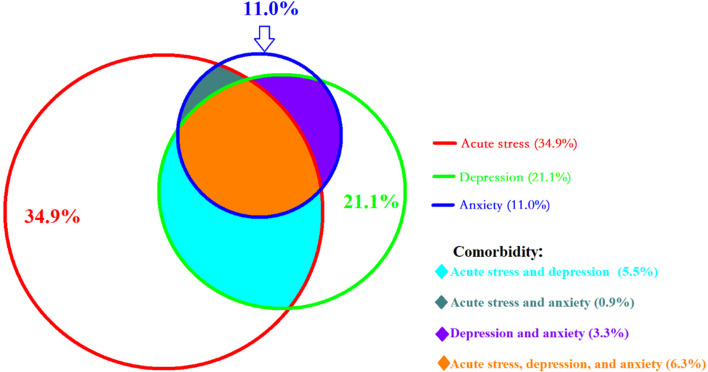
Aims: Coronavirus disease 2019 (COVID-19) pandemic is a major public health concern all over the world. Little is known about the impact of COVID-19 pandemic on mental health in the general population. This study aimed to assess the mental health problems and associated factors among a large sample of college students during the COVID-19 outbreak in China. Methods: This cross-sectional and nation-wide survey of college students was conducted in China from 3 to 10 February 2020. A self-administered questionnaire was used to assess psychosocial factors, COVID-19 epidemic related factors and mental health problems. Acute stress, depressive and anxiety symptoms were measured by the Chinese versions of the impact of event scale-6, Patient Health Questionnaire-9 and Generalized Anxiety Disorder-7, respectively. Univariate and hierarchical logistic regression analyses were performed to examine factors associated with mental health problems. Results: Among 821 218 students who participated in the survey, 746 217 (90.9%) were included for the analysis. In total, 414 604 (55.6%) of the students were female. About 45% of the participants had mental health problems. The prevalence rates of probable acute stress, depressive and anxiety symptoms were 34.9%, 21.1% and 11.0%, respectively. COVID-19 epidemic factors that were associated with increased risk of mental health problems were having relatives or friends being infected (adjusted odds ratio = 1.72–2.33). Students with exposure to media coverage of the COVID-19 ≥3 h/day were 2.13 times more likely than students with media exposure <1 h/day to have acute stress symptoms. Individuals with low perceived social support were 4.84–5.98 times more likely than individuals with high perceived social support to have anxiety and depressive symptoms. In addition, senior year and prior mental health problems were also significantly associated with anxiety or/and depressive symptoms. Conclusions: In this large-scale survey of college students in China, acute stress, anxiety and depressive symptoms are prevalent during the COVID-19 pandemic. Multiple epidemic and psychosocial factors, such as family members being infected, massive media exposure, low social support, senior year and prior mental health problems were associated with increased risk of mental health problems. Psychosocial support and mental health services should be provided to those students at risk.
Overview
CoChat Summary
TL;DR
In a nationwide web survey of 746,217 Chinese college students during the early COVID-19 outbreak, about 45% screened positive for probable acute stress, depressive, or anxiety symptoms. Infection among relatives/friends, heavy media exposure, low perceived social support, senior year, and prior mental health problems were associated with higher odds of mental health problems.
Key findings
- Among 746,217 analyzed students (90.9% of 821,218 participants; 55.6% female), 45% had probable acute stress, depressive, or anxiety symptoms; prevalence rates were 34.9% for acute stress, 21.1% for depressive symptoms, and 11.0% for anxiety symptoms.
- Having relatives or friends infected with COVID-19 was associated with increased odds of all three outcomes (adjusted odds ratio [AOR] = 1.72–2.33).
- Students exposed to COVID-19 media coverage ≥3 h/day were 2.13 times more likely than those exposed <1 h/day to have probable acute stress.
- Low perceived social support was associated with 4.84–5.98 times higher odds of anxiety and depressive symptoms compared with high perceived social support; senior year and prior mental health problems were also associated with anxiety and/or depressive symptoms.
Methods
- Cross-sectional, web-based nationwide survey conducted in China from 3 to 10 February 2020 among college students from 108 colleges and universities in Guangdong and Jiangxi provinces.
- Self-administered questionnaire measured psychosocial factors, COVID-19 epidemic-related factors, and mental health problems using the Chinese versions of the Impact of Event Scale-6 (cutoff ≥9), Patient Health Questionnaire-9 (cutoff ≥7), and Generalized Anxiety Disorder-7 (cutoff ≥7).
- Univariate and hierarchical logistic regression analyses examined factors associated with mental health problems; significance was set at p < 0.001 and OR/AOR >1.5.
Limitations
- The paper states that all students were originally sampled from 108 colleges and universities in Guangdong and Jiangxi provinces; about 80% lived in those two provinces, with only a small proportion in Wuhan, so generalizability to all students nationwide, especially those in Wuhan, is uncertain.
- The paper states that because it was an online survey, the exact response rate could not be determined beyond the valid questionnaire rate, as some students may have missed the survey.
- The paper states that the cross-sectional design precludes causality, and the measures were self-report screening tools rather than clinical diagnoses.
Model-written summary. Check it against the paper before relying on it.
Integrity signals
Registry
Cites
Statistics
Figures
Verification
Claims the paper makes
1 Valid · 1 Not valid · 22 Not checked · 59 Own results and interpretations
At least one cited source doesn’t support this claim or points to a different paper, and none confirmed it — see the verdicts below.
In the paper
“However, existing studies on the psychosocial impacts of COVID-19 epidemic have limitations, such as small sample sizes (Cao et al., 2020; Chang et al., 2020; Lai et al., 2020; Liu et al., 2020; Yang et al., 2020), assessing single symptoms (Cao et al., 2020; Liu et al., 2020; Qiu et al., 2020; Wang et al., 2020d), unstandardised psychological measures used (Qiu et al., 2020) and limiting factors”
§ Mental health problems and correlates among 746 217 college students during the coronavirus disease 2019 outbreak in China > Introduction
What the sources say
- Not checked yetcites Cao et al., 2020
- Not checked yetcites Liu et al., 2020
- Disputedcites Qiu et al., 2020 matched to “A nationwide survey of psychological distress among Chinese people in the COVID-19 epidemic: implications and policy recommendations.” (2020) sourceExperimental — accuracy not yet measured
Our copy of Qiu et al. (Abstract, p.1) describes the COVID-19 Peritraumatic Distress Index as a 0-100 instrument inquiring about the frequency of anxiety, depression, specific phobias, cognitive change, avoidance and compulsive behaviour, physical symptoms and loss of social functioning, i.e. a deliberately multidimensional measure of peritraumatic psychological distress, not a single-symptom assessment. The paper also frames its aim as measuring the prevalence and severity of 'a wide variety of psychological problems' across the general population (Abstract, p.1), and its own limitations concern the self-developed, non-standardised CPDI and self-report sampling — the point the same citing sentence separately credits to Qiu et al. under 'unstandardised psychological measures used'. Unless 'single symptoms' is meant as 'symptom-level rather than formal diagnosis', the cited characterisation runs contrary to what this source reports. (LLM, conf=0.78)
Checked by a reasoning model — may be wrong.
plain- Asserted: passes — The authors put it forward as true.
- Checkable: passes — It can be checked against evidence.
- Load-bearing: passes — The paper’s conclusions depend on it.
- Based: passes — The paper gives a reason why it holds.
Every source the paper cites for this claim was checked and supports it.
In the paper
“However, existing studies on the psychosocial impacts of COVID-19 epidemic have limitations, such as small sample sizes (Cao et al., 2020; Chang et al., 2020; Lai et al., 2020; Liu et al., 2020; Yang et al., 2020), assessing single symptoms (Cao et al., 2020; Liu et al., 2020; Qiu et al., 2020; Wang et al., 2020d), unstandardised psychological measures used (Qiu et al., 2020) and limiting factors”
§ Mental health problems and correlates among 746 217 college students during the coronavirus disease 2019 outbreak in China > Introduction
What the sources say
- Supportedcites Qiu et al., 2020 matched to “A nationwide survey of psychological distress among Chinese people in the COVID-19 epidemic: implications and policy recommendations.” (2020) source
The study’s Abstract (page not available in our copy) says the authors designed a self-report questionnaire for the epidemic and used the resulting COVID-19 Peritraumatic Distress Index, supporting the citation as an example of a study using a newly devised rather than an established psychological measure. The paper also reports content-validity review and internal-consistency testing; the claim should not be read as saying the measure had no validation. (LLM, conf=0.82)
plain- Asserted: passes — The authors put it forward as true.
- Checkable: passes — It can be checked against evidence.
- Load-bearing: passes — The paper’s conclusions depend on it.
- Based: passes — The paper gives a reason why it holds.
- Supported
A result the paper reports from its own data — it cites no other source for it, so there is none to check. The quote shows it is in the paper.
In the paper
“The prevalence rates of probable acute stress, depressive and anxiety symptoms were 34.9%, 21.1% and 11.0%, respectively.”
§ Mental health problems and correlates among 746 217 college students during the coronavirus disease 2019 outbreak in China > Abstract > Results
plain- Asserted: passes — The authors put it forward as true.
- Checkable: passes — It can be checked against evidence.
- Load-bearing: passes — The paper’s conclusions depend on it.
- Based: passes — The paper gives a reason why it holds.
A result the paper reports from its own data — it cites no other source for it, so there is none to check. The quote shows it is in the paper.
In the paper
“Yes | 1.27 (1.25–1.29)*** | 1.38 (1.35–1.40)*** | 1.57 (1.53–1.60)***”
§ Mental health problems and correlates among 746 217 college students during the coronavirus disease 2019 outbreak in China > Results > Factors associated with probable acute stress, anxiety and depressive symptoms
plainstates an association- Asserted: passes — The authors put it forward as true.
- Checkable: passes — It can be checked against evidence.
- Load-bearing: unclear — It is unclear whether the paper’s conclusions depend on it.
- Based: passes — The paper gives a reason why it holds.
A result the paper reports from its own data — it cites no other source for it, so there is none to check. The quote shows it is in the paper.
In the paper
“Yes | 1.12 (1.09–1.15)*** | 2.26 (2.20–2.31)*** | 2.38 (2.31–2.45)***”
§ Mental health problems and correlates among 746 217 college students during the coronavirus disease 2019 outbreak in China > Results > Factors associated with probable acute stress, anxiety and depressive symptoms
plainstates an association- Asserted: passes — The authors put it forward as true.
- Checkable: passes — It can be checked against evidence.
- Load-bearing: passes — The paper’s conclusions depend on it.
- Based: passes — The paper gives a reason why it holds.
- Rests on an assumption not shown here.
51 more claims
Create a free account to see all 83 claims and to verify the 40 references still open.
- It may state two separate claims as one. 13
- Probably not a substantial claim. 20
Claims other papers make about this one
Each is checked against this paper’s own text: does it say what the citing paper says it does?
The cited source doesn’t support the claim as written.
In the citing paper
“other research has identified that almost 45% of students faced mental health issues, with anxiety being the most frequent symptom (3).”
From Mental health status and coping strategies during COVID-19 pandemic among university students in Central Serbia (2023) · cites this paper as [3]
Checked by a reasoning model — may be wrong.
Experimental — accuracy not yet measuredThe source backs part of the claim, not all of it — or backs it for a different population, condition or comparison.
In the citing paper
“Gender differences are significant, as research consistently shows that female adolescents report higher rates of mental health challenges, such as anxiety and depression, compared to their male counterparts [20, 21].”
From Parental expectation and psychological distress of Chinese youth: the chain mediating effects of core self-worth and perceived stress (2025) · cites this paper as [20]
Experimental — accuracy not yet measured
Self-check
Percentages, sums and reported differences re-computed from the paper’s own numbers.
Each contradiction between two passages listed here was confirmed by an independent check.
Rated major: it would touch a result — a value a result rests on, reported and recomputed p-values on opposite sides of the significance level, two passages that conflict with no sign which is right, or a cited work retracted before this paper was published.
In the paper
§ Mental health problems and correlates among 746 217 college students during the coronavirus disease 2019 outbreak in China > Results > Factors associated with probable acute stress, anxiety and depressive symptoms
“In layer 3 of multivariate and hierarchical logistic regression, the potential interactions among the key factors were not statistically significant.”
§ Mental health problems and correlates among 746 217 college students during the coronavirus disease 2019 outbreak in China > Results > Factors associated with probable acute stress, anxiety and depressive symptoms
“| Yes × Low | – | – | | 1.22 (1.12–1.35)*** | – | 1.01 (0.89–1.13) |”
Rated minor: it would not touch a result — a value no result rests on, a p-value that stays on the same side of the significance level, or a conflict that is clerical, resolved elsewhere in the paper, or outside its own findings.
In the paper
§ Mental health problems and correlates among 746 217 college students during the coronavirus disease 2019 outbreak in China > Results > Descriptive characteristics
“high, score ⩾ 72 (> Mean + 1 s.d.).”
§ Mental health problems and correlates among 746 217 college students during the coronavirus disease 2019 outbreak in China > Results > Factors associated with probable acute stress, anxiety and depressive symptoms
“medium, score = 49–71 (Mean ± 1s.d.); high, score ⩾ 71 (> Mean + 1 s.d.).”
Rated minor: it would not touch a result — a value no result rests on, a p-value that stays on the same side of the significance level, or a conflict that is clerical, resolved elsewhere in the paper, or outside its own findings.
In the paper
§ Mental health problems and correlates among 746 217 college students during the coronavirus disease 2019 outbreak in China > Results > Factors associated with probable acute stress, anxiety and depressive symptoms
“Students with >3 h exposure to media coverage of the COVID-19 each day were 2.13 times more likely than students with less media exposure (<1 h/day) to have probable acute stress.”
§ Mental health problems and correlates among 746 217 college students during the coronavirus disease 2019 outbreak in China > Results > Factors associated with probable acute stress, anxiety and depressive symptoms
“| ⩾3 h/day | 2.13 (2.10–2.16)*** | 1.09 (1.07–1.10)*** | 1.32 (1.29–1.34)*** |”
Citations
Cites
Clinical features of patients infected with 2019 novel coronavirus in Wuhan, China
Huang, C., Wang, Y., Li, X., Ren, L., Zhao, J., Hu, Y., Zhang, L., Fan, G., Xu, J., Gu, X., et al. (2020) · The Lancet · doi:10.1016/s0140-6736(20)30183-5 · Cited by 48,884
Self-citationThe PHQ-9: Validity of a brief depression severity measure
Kroenke, K., Spitzer, R. L., & Williams, J. B. W. (2001) · Journal of General Internal Medicine · doi:10.1046/j.1525-1497.2001.016009606.x · Cited by 44,910 · cited 2×
“Depressive symptoms The 9-item Patient Health Questionnaire (PHQ-9) was used to measure students’ depressive symptoms within two weeks (Kroenke et al., 2001).”
MethodA Brief Measure for Assessing Generalized Anxiety Disorder: The GAD-7
Spitzer, R. L., Kroenke, K., Williams, J. B. W., & Löwe, B. (2006) · Archives of Internal Medicine · doi:10.1001/archinte.166.10.1092 · Cited by 31,765 · cited 1×
“Each item is rated on a 4-point scale from 0 (not at all) to 3 (nearly every day) (Spitzer et al., 2006).”
BackgroundThe Multidimensional Scale of Perceived Social Support
Zimet, G. D., Dahlem, N. W., Zimet, S. G., & Farley, G. K. (1988) · Journal of Personality Assessment · doi:10.1207/s15327752jpa5201_2 · Cited by 13,339
Wang, C., Pan, R., Wan, X., Tan, Y., Xu, L., Ho, C. S., & Ho, R. C. (2020) · International Journal of Environmental Research and Public Health · doi:10.3390/ijerph17051729 · Cited by 9,923 · cited 4×
“…the COVID-19 epidemic on mental health, such as stress-related symptoms, depression and anxiety among small samples of medical staff and community residents in China (Cao et al ., 2020; Chang et al ., 2020; Lai et al ., 2020; Liu et al ., 2020; Qiu et al ., 2020; Wang et al ., 2020b, 2020c, 2020d).”
InfluentialLai, J., Ma, S., Wang, Y., Cai, Z., Hu, J., Wei, N., Wu, J., Du, H., Chen, T., Li, R., et al. (2020) · JAMA Network Open · doi:10.1001/jamanetworkopen.2020.3976 · Cited by 8,015 · cited 15×
“Since 24 January 2020, 31 provinces and autonomous regions in mainland China have activated the level 1 public health emergency responses to prevent the spread of COVID-19 (Bao et al ., 2020).”
InfluentialA novel coronavirus outbreak of global health concern
Wang, C., Horby, P. W., Hayden, F. G., & Gao, G. F. (2020) · The Lancet · doi:10.1016/s0140-6736(20)30185-9 · Cited by 7,700 · cited 7×
“The above studies found that some influencing factors, including demographic information such as female gender (Chang et al., 2020; Wang et al., 2020b) and younger age (Chang et al., 2020); COVID-19 epidemic related factors such as living in the middle region of China (near the centre of the…”
BackgroundResultInfluentialThe psychological impact of the COVID-19 epidemic on college students in China
Cao, W., Fang, Z., Hou, G., Han, M., Xu, X., Dong, J., & Zheng, J. (2020) · Psychiatry Research · doi:10.1016/j.psychres.2020.112934 · Cited by 5,843 · cited 9×
“, 2020), having relatives or acquaintances infected with COVID-19 (Cao et al., 2020), having contacted with an individual with suspected COVID-19 or infected materials (Wang et al.”
InfluentialPsychometric Characteristics of the Multidimensional Scale of Perceived Social Support
Zimet, G. D., Powell, S. S., Farley, G. K., Werkman, S., & Berkoff, K. A. (1990) · Journal of Personality Assessment · doi:10.1080/00223891.1990.9674095 · Cited by 4,855
Psychometric Characteristics of the Multidimensional Scale of Perceived Social Support
Zimet, G., Powell, S., Farley, G., Werkman, S., & Berkoff, K. (1990) · Journal of Personality Assessment · doi:10.1207/s15327752jpa5503&4_17 · Cited by 4,854
Research works printed but not linked: 1
- 10.1002/1097-4679(199111)47:6 · doi:10.1002/1097-4679(199111)47:6
Cited by
Deng, J., Zhou, F., Hou, W., Silver, Z., Wong, C. Y., Chang, O., Drakos, A., Zuo, Q. K., & Huang, E. (2021) · Psychiatry Research · doi:10.1016/j.psychres.2021.113863 · Cited by 474
Mental Health Impact of COVID-19 among Children and College Students: A Systematic Review
Elharake, J. A., Akbar, F., Malik, A. A., Gilliam, W., & Omer, S. B. (2023) · Child Psychiatry & Human Development · doi:10.1007/s10578-021-01297-1 · Cited by 279
Clabaugh, A., Duque, J. F., & Fields, L. J. (2021) · Frontiers in Psychology · doi:10.3389/fpsyg.2021.628787 · Cited by 246
Ochnik, D., Rogowska, A. M., Kuśnierz, C., Jakubiak, M., Schütz, A., Held, M. J., Arzenšek, A., Benatov, J., Berger, R., Korchagina, E. V., et al. (2021) · Scientific Reports · doi:10.1038/s41598-021-97697-3 · Cited by 220
Luo, W., Zhong, B.-L., & Chiu, H. F.-K. (2021) · Epidemiology and Psychiatric Sciences · doi:10.1017/s2045796021000202 · Cited by 195
“…Liang et al., 2020a, 2020b; Lin and Xu, 2020; Lin et al., 2020a, 2020b; Liu, 2020a, 2020b; Liu et al., 2020a, 2020b, 2020c; Ma et al., 2020a, 2020b; Mao et al., 2020; Qian, 2020; Ren et al., 2020a, 2020b; 2020c; Si et al., 2020; Sun et al., 2020, 2021; Tang et al., 2020; Wan and Shao, 2020; Wang…”
InfluentialVisser, M., & Law-van Wyk, E. (2021) · South African Journal of Psychology · doi:10.1177/00812463211012219 · Cited by 165
“Ma et al. (2020) found in a cross-sectional, nationwide study of students in China that acute stress (34.9%), anxiety (21.1”
BackgroundInfluentialPrevalence of Anxiety in University Students during the COVID-19 Pandemic: A Systematic Review
Liyanage, S., Saqib, K., Khan, A. F., Thobani, T. R., Tang, W., Chiarot, C. B., AlShurman, B. A., & Butt, Z. A. (2021) · International Journal of Environmental Research and Public Health · doi:10.3390/ijerph19010062 · Cited by 211
“Sample sizes varied amongst studies, with the smallest sample group being 105 [49] while the largest sample size was found to be 746,217 [45].”
BackgroundRen, Z., Xin, Y., Ge, J., Zhao, Z., Liu, D., Ho, R., & Ho, C. S. H. (2021) · Frontiers in Psychology · doi:10.3389/fpsyg.2021.641806 · Cited by 140
“…fear, hypochondria, depression, and neurasthenia via various Frontiers in Psychology | www.frontiersin.org 10 April 2021 | Volume 12 | Article 641806 factors and introduced a six-step intervention strategy to alleviate young people’s psychological problems while in isolation (Chen et al., 2020).”
BackgroundHuang, Y., Su, X., Si, M., Xiao, W., Wang, H., Wang, W., Gu, X., Ma, L., Li, J., Zhang, S., et al. (2021) · BMC Psychiatry · doi:10.1186/s12888-021-03546-y · Cited by 145
“Moreover, it appeared that a worsening of mental health was associated with more worries about one’s family and friends, especially when their friends or family members were infected with COVID-19, which was also consistent with other relevant studies [32, 61].”
ResultStress and Mental Health: The Benefits of Resiliency in Nontraditional Students
WHITEHORN, J. C. (2022) · Advances in higher education and professional development book series · doi:10.4018/978-1-7998-8323-4.ch006 · Cited by 110
Well-Being and Mental Health of Students during the COVID-19 Pandemic
Holm‐Hadulla, R. M., Klimov, M., Juche, T., Möltner, A., & Herpertz, S. C. (2021) · Psychopathology · doi:10.1159/000519366 · Cited by 104
Wang, D., Zhao, J., Ross, B., Ma, Z., Zhang, J., Fan, F., & Liu, X. (2021) · Journal of Affective Disorders · doi:10.1016/j.jad.2021.12.086 · Cited by 117
Self-citationImpacts of the Covid‐19 pandemic on the health of university students
Ihm, L., Zhang, H., van Vijfeijken, A., & Waugh, M. G. (2021) · The International Journal of Health Planning and Management · doi:10.1002/hpm.3145 · Cited by 129
Gabarrell‐Pascuet, A., García‐Mieres, H., Giné-Vázquez, I., Moneta, M. V., Koyanagi, A., Haro, J. M., & Domènech‐Abella, J. (2023) · International Journal of Environmental Research and Public Health · doi:10.3390/ijerph20042765 · Cited by 108
Post-secondary Student Mental Health During COVID-19: A Meta-Analysis
Zhu, J., Racine, N. M., Xie, E. B., Park, J., Watt, J., Eirich, R., Dobson, K. S., & Madigan, S. L. (2021) · Frontiers in Psychiatry · doi:10.3389/fpsyt.2021.777251 · Cited by 94
Tan, Y., Huang, C., Geng, Y., Cheung, S. P., & Zhang, S. (2021) · Frontiers in Psychology · doi:10.3389/fpsyg.2021.671553 · Cited by 73
Rogowska, A., Kuśnierz, C., & Ochnik, D. (2021) · Journal of Clinical Medicine · doi:10.3390/jcm10174025 · Cited by 63
Li, K., Walczak‐Kozłowska, T., Lipowski, M., Li, J., Krokosz, D., Su, Y., Yu, H., & Fan, H. (2022) · BMC Sports Science Medicine and Rehabilitation · doi:10.1186/s13102-022-00493-3 · Cited by 75
Wang, D., Ross, B., Zhou, X., Meng, D., Zhu, Z., Zhao, J., Fan, F., & Liu, X. (2021) · Journal of Psychiatric Research · doi:10.1016/j.jpsychires.2021.09.038 · Cited by 73
Self-citationWang, X., & Liu, Q. (2022) · Heliyon · doi:10.1016/j.heliyon.2022.e10117 · Cited by 82
“Finally, the meta-analysis included 25 studies comprising 1,003,743 Chinese college students (Cao et al., 2020; Chang et al., 2020a; Deng et al. 2020; Feng et al., 2020; Fu et al., 2021; Ge et al., 2020; Han et al., 2021; Jia et al., 2021; Li et al., 2021a; Li M. et al., 2020; Liu J. et al., 2020; Ma et al., 2020; Men…”
Oliveira Carvalho, P., Hülsdünker, T., & Carson, F. (2021) · Behavioral Sciences · doi:10.3390/bs12010003 · Cited by 66
“[39] reported that acute stress was the most common problem in Chinese students with a prevalence rate of 34.”
BackgroundRogowska, A. M., Ochnik, D., Kuśnierz, C., Chilicka, K., Jakubiak, M., Paradowska, M., Głazowska, L., Bojarski, D., Fijołek, J., Podolak, M., et al. (2021) · BMC Psychiatry · doi:10.1186/s12888-021-03615-2 · Cited by 74
“A nationwide cross-sectional survey study of 821,218 college students, conducted in China in February 2020 [37], found mental health problems among 45% of participants.”
BackgroundLi, J., Luo, C., Liu, L., Huang, A., Ma, Z., Chen, Y., Deng, Y., & Zhao, J. (2024) · Journal of Affective Disorders · doi:10.1016/j.jad.2024.04.023 · Cited by 71
Self-citationA Journey Like No Other: Anatomy 2020!
Smith, C. F., & Pawlina, W. (2021) · Anatomical Sciences Education · doi:10.1002/ase.2039 · Cited by 64
Prevalence of depression among university students in China: a systematic review and meta-analysis
Lin, Z., Cai, H.-W., Huang, Y.-F., Zhou, L., Yuan, Z.-Y., He, L., & Li, J. (2025) · BMC Psychology · doi:10.1186/s40359-025-02688-y · Cited by 94
Tran, M. A. Q., Vo‐Thanh, T., Soliman, M. S. A., Hà, T. A., & Pham, M. V. (2022) · Current Psychology · doi:10.1007/s12144-022-03421-3 · Cited by 79
“In this way, the pandemic can harm students’ mental health (Ma et al., 2020; Sun et al., 2021; Wathelet et al., 2020), which involves some disorders, such as depression, stress, and anxiety (Maddock & Blair, 2021; Vu et al.”
Romeo, A., Benfante, A., Castelli, L., & Tella, M. D. (2021) · International Journal of Environmental Research and Public Health · doi:10.3390/ijerph18052503 · Cited by 74
“These findings are in contrast with those of previous studies, which found a significantly higher risk of emotional and anxiety disorders among students who had relatives or friends positive for COVID-19 [4,6] or had contact with others who tested positive for COVID-19 [14].”
BackgroundResultBabb, S. J., Rufino, K. A., & Johnson, R. (2021) · Adult Education Quarterly · doi:10.1177/07417136211027508 · Cited by 84
Tkáčová, H., Králik, R., Tvrdoň, M., Jenisová, Z., & Martín, J. G. (2022) · International Journal of Environmental Research and Public Health · doi:10.3390/ijerph19052767 · Cited by 81
Wang, D., Zhao, J., Zhai, S., Huang, S., Yang, Z., Pan, Y., Liu, X., & Fan, F. (2022) · Journal of Psychosomatic Research · doi:10.1016/j.jpsychores.2022.110795 · Cited by 56
Self-citationHigh prevalence and risk factors of dropout intention among Chinese medical postgraduates
Peng, P., Yang, W. F. Z., Liu, Y., Chen, S., Wang, Y., Yang, Q., Wang, X., Li, M., Wang, Y., Hao, Y., et al. (2022) · Medical Education Online · doi:10.1080/10872981.2022.2058866 · Cited by 69
“exposure to information about the pandemic, unstable income, low level of social support, and anxiety about employment led to distress among college students [59,60].”
BackgroundCOVID-19 news consumption and distress in young people: A systematic review
Strasser, M. A., Sumner, P. J., & Meyer, D. (2022) · Journal of Affective Disorders · doi:10.1016/j.jad.2022.01.007 · Cited by 55
“The titles, abstracts and keywords were screened by one reviewer (MS) within stage one, the full texts in stage two were screened independently by two reviewers (MS and PS) where strong inter-rater reliability was achieved (Cohen’s kappa = .82; McHugh, 2012).”
Wang, D., Chen, H., Zhai, S., Zhu, Z., Huang, S., Zhou, X., Pan, Y., Meng, D., Yang, Z., Zhao, J., et al. (2021) · Journal of Affective Disorders · doi:10.1016/j.jad.2021.03.035 · Cited by 62
Self-citationGogoi, M., Webb, A. J., Pareek, M., Bayliss, C. D., & Gies, L. (2022) · International Journal of Environmental Research and Public Health · doi:10.3390/ijerph19159322 · Cited by 64
“’s questionnaire study of more than 700,000 Chinese students in early 2020 found that nearly 45% of their cohort had experienced mental health problems, with anxiety being the most commonly experienced symptom [13].”
BackgroundResultInfluentialZhang, C., Hao, J., Liu, Y., Cui, J., & Yu, H. (2022) · Frontiers in Public Health · doi:10.3389/fpubh.2022.881074 · Cited by 63
“1, and 11%, and the risks of developing depression and anxiety disorders among the student sample increased with the exposure time to electronic devices (26).”
BackgroundQin, L., Peng, J., Shu, M., Liao, X.-Y., Gong, H.-J., Luo, B.-A., & Chen, Y.-W. (2023) · Healthcare · doi:10.3390/healthcare11030420 · Cited by 71
“03% of the college students scored ≥3 on the GHQ-12, indicating that they were at risk of developing mental disorders, which is similar to the results of previous studies [50,51].”
ResultHuang, X., Wang, X., Hu, J., Xue, Y., Wei, Y., Wan, Y., Song, X., Wang, R., Zhang, B., Fang, J. Q., et al. (2021) · Frontiers in Psychiatry · doi:10.3389/fpsyt.2021.753695 · Cited by 70
Al‐Oraibi, A., Fothergill, L., Yıldırım, M., Knight, H., Carlisle, S., O’Connor, M., Briggs, L., Morling, J. R., Corner, J. L., Ball, J. K., et al. (2022) · International Journal of Environmental Research and Public Health · doi:10.3390/ijerph19137631 · Cited by 69
Mental Health Conditions Among E-Learning Students During the COVID-19 Pandemic
Rutkowska, A., Cieślik, B., Tomaszczyk, A., & Szczepańska-Gieracha, J. (2022) · Frontiers in Public Health · doi:10.3389/fpubh.2022.871934 · Cited by 76
Kavvadas, D., Kavvada, A., Karachrysafi, S., Papaliagkas, V. T., Chatzidimitriou, M., & Papamitsou, T. (2023) · Clinics and Practice · doi:10.3390/clinpract13030054 · Cited by 63
“Many studies also advocate the fact that that timely crisis-oriented psychological services are important [6–8], as low perceived social support was significantly associated with increased risks for anxiety and depressive symptoms [7].”
BackgroundKokkinos, C. M., Tsouloupas, C. N., & Voulgaridou, I. (2022) · Journal of Affective Disorders · doi:10.1016/j.jad.2021.12.114 · Cited by 64
da Silva, A. N., Guedes, C. R., Santos-Pinto, C. D. B., Miranda, E. S., Ferreira, L. M., & Vettore, M. V. (2021) · International Journal of Environmental Research and Public Health · doi:10.3390/ijerph18147215 · Cited by 64
Wang, W., Wang, J., Zhang, X., Pei, Y., Tang, J., Zhu, Y., Liu, X., & Xu, H. (2023) · Journal of Affective Disorders · doi:10.1016/j.jad.2023.02.087 · Cited by 46
“, the highest level of emergency public health alerts and responses within the national public health management system) was initiated within 31 provinces in mainland China to reduce the spread of pneumonia (Bao et al., 2020; Ma et al., 2020).”
BackgroundSelf-citationDumitrache, L., Stănculescu, E., Nae, M., Dumbrăveanu, D., Simion, G., Taloș, A.-M., & Mareci, A. (2021) · International Journal of Environmental Research and Public Health · doi:10.3390/ijerph18168599 · Cited by 45
“Compared with other groups, students showed a much higher prevalence of selfreported mental health symptoms, including a high level of perceived stress, severe depression, and a high level of anxiety than non-students [28,29].”
BackgroundZhang, C., Zeng, P., Tan, J., Sun, S., Zhao, M., Cui, J., Zhang, G., Jia, J., & Liu, D. (2021) · Frontiers in Psychiatry · doi:10.3389/fpsyt.2021.755059 · Cited by 60
“A recent national survey among 746, 217 Chinese college students showed that the risks of developing depression and anxiety disorders increased with the exposure time to electronic devices (10).”
BackgroundTang, Z., Yang, X., Tan, W., Ke, Y.-F., Kou, C., Zhang, M., Liu, L., Zhang, Y., Li, X., Li, W., et al. (2024) · Journal of Affective Disorders · doi:10.1016/j.jad.2024.02.055 · Cited by 44
Valdés, J., Díaz, F. J., Christiansen, P. M., Lorca, G. A., Solorza, F. J., Alvear, M., Ramírez, S., Núñez, D., Araya, R., & Gaete, J. (2022) · Frontiers in Psychiatry · doi:10.3389/fpsyt.2022.833263 · Cited by 58
“In the first case, a large survey conducted in China found an increased risk of mental health problems when undergraduates reported having relatives or friends being infected with SARS-CoV-2 (12).”
BackgroundLi, L., Wang, P., Li, S., Liu, Q., Fen, Y., Guo, Z., Jia, S., & Wang, X. (2023) · Scientific Reports · doi:10.1038/s41598-023-38682-w · Cited by 44
Amaro, P., da Fonseca, C. J. V., Afonso, A., Jacinto, G., Gomes, L., Pereira, H. R., JOSÉ, H. M. G., Silva, C., Lima, A., do Arco, H. M. D. S. L. R., et al. (2024) · Depression and Anxiety · doi:10.1155/2024/5528350 · Cited by 75
“Consistent with previous studies, the present study also revealed an association between previous mental disorders and poorer mental health during higher education [21, 48].”
Ma, Z., Wang, D., Zhao, J., Zhu, Y., Zhang, Y., Chen, Z., Jiang, J., Pan, Y., Yang, Z., Zhu, Z., et al. (2022) · Journal of Affective Disorders · doi:10.1016/j.jad.2022.05.093 · Cited by 44
“Detailed information on the COVID-19 pandemic in China and sampling can be found in our previously published studies (Li et al., 2021; Ma et al., 2020; Wang et al., 2022).”
Self-citationPrevalence and Factors for Anxiety during the COVID-19 Pandemic among College Students in China
Guan, J., Wu, C., Wei, D., Xu, Q., Wang, J., Lin, H., Wang, C., & Mao, Z. (2021) · International Journal of Environmental Research and Public Health · doi:10.3390/ijerph18094974 · Cited by 41
“It has even been reported that 45% of students have probable acute stress, anxiety, or depressive symptoms during the COVID-19 pandemic [29], and student status was associated with a greater psychological impact of the outbreak and higher levels of stress, anxiety, and depression [25].”
BackgroundConteh, I., Yan, J., Dovi, K. S., Bajinka, O., Massey, I. Y., & Turay, B. (2022) · Psychiatry Research Communications · doi:10.1016/j.psycom.2022.100082 · Cited by 39
“studies used GAD-7 scale [16, 26, 29, 35, 37, 41, 42, 45], five studies used SAS [25, 30, 34, 43, 46], two used Z-SAS [28, 36], and one used HAI [44] and DASS-21[31] to”
InfluentialMacalli, M., Texier, N., Schück, S., Côté, S. M., & Tzourio, C. (2021) · Scientific Reports · doi:10.1038/s41598-021-00471-8 · Cited by 47
The Impact of SARS-CoV-2 Infection on Youth Mental Health: A Narrative Review
Brasso, C., Bellino, S., Blua, C., Bozzatello, P., & Rocca, P. (2022) · Biomedicines · doi:10.3390/biomedicines10040772 · Cited by 40
Mental health and drug use in college students: Should we take action?
Pérez, T., Pardo, M. D. C., Cabellos, Y., Peressini, M., Ureña-Vacas, I., Serrano, D. R., & González‐Burgos, E. (2023) · Journal of Affective Disorders · doi:10.1016/j.jad.2023.05.080 · Cited by 61
Abuhamdah, S. M. A., Naser, A. Y., Abdelwahab, G. M., & AlQatawneh, A. (2021) · International Journal of Environmental Research and Public Health · doi:10.3390/ijerph182111622 · Cited by 47
“(2020), in which it was found that freshmen tended to have less academic pressure and worry less about the future [43].”
BackgroundHan, S., Li, B., Ke, Y., Wang, G., Meng, S., Li, Y.-X., Cui, Z.-L., & Tong, W. (2022) · International Journal of Environmental Research and Public Health · doi:10.3390/ijerph191610344 · Cited by 38
“The high incidence of individuals’ negative emotions during major public emergencies is related to a variety of epidemiological and social psychological factors, such as the health of individuals and family members, media exposure, social support, and policy implementation [6].”
BackgroundSelf-citationProvocation of dry eye disease symptoms during COVID-19 lockdown
Neti, N., Prabhasawat, P., Chirapapaisan, C., & Ngowyutagon, P. (2021) · Scientific Reports · doi:10.1038/s41598-021-03887-4 · Cited by 35
Kavvadas, D., Kavvada, A., Karachrysafi, S., Papaliagkas, V. T., Cheristanidis, S., Chatzidimitriou, M., & Papamitsou, T. (2022) · Journal of Clinical Medicine · doi:10.3390/jcm11154263 · Cited by 38
Xu, Q., Mao, Z., Wei, D., Liu, P., Fan, K., Wang, J., Wang, X., Lou, X., Lin, H., Wang, C., et al. (2021) · Journal of Affective Disorders · doi:10.1016/j.jad.2021.03.080 · Cited by 34
“Another data showed that a large-scale survey of college students in China demonstrates that about 45% students have probable acute stress, anxiety or depressive symptoms during the COVID-19 epidemic (Ma et al., 2020).”
BackgroundKumar, M., Akbarialiabad, H., Kouhanjani, M. F., Kiburi, S., Shidhaye, P., Taghrir, M. H., & Shidhaye, R. (2022) · JAMA Psychiatry · doi:10.1001/jamapsychiatry.2022.3109 · Cited by 31
Fan, J., Huang, Y., Yang, F., Cheng, Y., & Yu, J. (2024) · Frontiers in Public Health · doi:10.3389/fpubh.2024.1382217 · Cited by 55
Zhao, Y., Wang, W., Wang, M., Gao, F., Hu, C., Cui, B., Yu, W., & Ren, H. C. (2023) · Frontiers in Psychiatry · doi:10.3389/fpsyt.2022.1015725 · Cited by 36
“1% among Chinese college students during the pandemic (5), and there is growing evidence showing that the COVID-19 pandemic has increased the incidence of depression by approximately 30% in Chinese college students (8, 9).”
BackgroundZhang, L., Qi, H., Wang, L., Wang, F., Huang, J., Li, F., & Zhang, Z. (2021) · International Journal of Mental Health Nursing · doi:10.1111/inm.12839 · Cited by 36
Self-citationShu, Y., Lin, W., Yang, J., Huang, P., Li, B., & Zhang, X. (2022) · Analyses of Social Issues and Public Policy · doi:10.1111/asap.12314 · Cited by 39
“Compared to individuals perceived higher social support, individuals perceived lower social support were 5–6 times more likely to have anxiety symptoms (Ma et al., 2020).”
BackgroundLeonangeli, S., Michelini, Y., & Montejano, G. B. R. (2022) · Revista Colombiana de Psiquiatría · doi:10.1016/j.rcp.2022.04.008 · Cited by 50
Kaur, W., Balakrishnan, V., Chen, Y. Y., & Periasamy, J. (2022) · International Journal of Environmental Research and Public Health · doi:10.3390/ijerph19158894 · Cited by 45
Liu, S., Ji, Y., Li, J., Peng, Y., Li, Z., Lai, W., & Feng, T. (2022) · Frontiers in Public Health · doi:10.3389/fpubh.2022.888295 · Cited by 37
Wang, D., Zhao, J., Zhai, S., Ye, H., Bu, L., & Fan, F. (2022) · Frontiers in Public Health · doi:10.3389/fpubh.2022.986934 · Cited by 33
“Indeed, exposure to media coverage of the COVID-19 was found may be a risk factor for individual mental health during outbreaks (27).”
BackgroundSelf-citationRestrepo, J. E., Quirama, T. C., & Cruz, R. Z. (2022) · Ciencia y enfermería/Ciencia y enfermería · doi:10.29393/ce28-19sdjr30019 · Cited by 44
Yun, J., Kim, J. W., Myung, S. J., Yoon, H. B., Moon, S. H., Ryu, H., & Yim, J. (2021) · Frontiers in Psychiatry · doi:10.3389/fpsyt.2021.702092 · Cited by 31
“, perceived stress, anxiety, depressive mood, history of mental health problems (16), and availability of psychological care (17)] among college students, who might be more vulnerable to COVID-19-related distress (9).”
BackgroundLiu, L., Chen, J., Liang, S., Yang, W., Peng, X., Cai, C., Huang, A., Wang, X., & Zhao, J. (2023) · BMC Psychiatry · doi:10.1186/s12888-023-04717-9 · Cited by 43
“Although previous studies have used retrospective designs concerning possible risk factors [35], little research has been done to understand the effect of interaction between social context and coping style, on the mental health of college students during the quarantine period.”
BackgroundSelf-citationPisano, F., Torromino, G., Brachi, D., Quadrini, A., Incoccia, C., & Marangolo, P. (2021) · Journal of Clinical Medicine · doi:10.3390/jcm10173919 · Cited by 28
“Similarly, another cross-sectional and nationwide survey of college students in China confirmed these results, revealing the prevalence of acute stress, anxiety, and depressive symptoms during the COVID-19 emergency [15].”
ResultPélissier, C., Viale, M., Berthelot, P., Poizat, B., Massoubre, C., Tiffet, T., & Fontana, L. (2021) · International Journal of Environmental Research and Public Health · doi:10.3390/ijerph182412951 · Cited by 33
Yao, K., Chen, P., Zhou, H., Ruan, J., Chen, D., Yang, X., & Zhou, Y. (2023) · BMC Psychiatry · doi:10.1186/s12888-023-05348-w · Cited by 39
“It is reported that about 45% of Chinese college students may have mental distress symptoms [27].”
BackgroundSelf-citationDeng, G.-F., Wen, Y., Cheng, J., Huang, B., & Liu, N. (2024) · BMC Psychiatry · doi:10.1186/s12888-024-05945-3 · Cited by 30
“China also has 45% of university students with more serious mental health problems [8].”
BackgroundHalat, D. H., Younes, S., Safwan, J., Akiki, Z., Akel, M., & Rahal, M. K. (2022) · European Journal of Investigation in Health Psychology and Education · doi:10.3390/ejihpe12080077 · Cited by 30
Wang, D., Zhou, L., Chen, C., & Sun, M. (2023) · Schizophrenia Research · doi:10.1016/j.schres.2023.01.027 · Cited by 30
Russell, M. A., Reavley, N. J., Williams, I., Li, W., Tarzia, L., Chondros, P., & Sanci, L. A. (2023) · BMC Psychology · doi:10.1186/s40359-023-01075-9 · Cited by 35
Malighetti, C., Bernardelli, L., Pancini, E., Riva, G., & Villani, D. (2023) · Cyberpsychology Behavior and Social Networking · doi:10.1089/cyber.2022.0246 · Cited by 36
Ochnik, D., Rogowska, A. M., Kuśnierz, C., Jakubiak, M., Schütz, A., Held, M. J., Arzenšek, A., Benatov, J., Berger, R., Korchagina, E. V., et al. (2021) · doi:10.20378/irb-52053 · Cited by 25
Długosz, P., & Liszka, D. (2021) · International Journal of Environmental Research and Public Health · doi:10.3390/ijerph182010827 · Cited by 34
Ntakolia, C., Priftis, D., Charakopoulou-Travlou, M., Rannou, I., Magklara, K., Giannopoulou, I., Kotsis, K. T., Serdari, A., Tsalamanios, E., Grigoriadou, A., et al. (2022) · Healthcare · doi:10.3390/healthcare10010149 · Cited by 28
“Results showed that being in close relation to others who had contracted the virus, exposure to social media coverage of COVID-19 for more than three hours daily, and inadequate social support were the main contributing factors to mental health problems among participants [26].”
BackgroundMethodInfluentialDetection of Types of Mental Illness through the Social Network Using Ensembled Deep Learning Model
Nasrullah, S., & Jalali, A. (2022) · Computational Intelligence and Neuroscience · doi:10.1155/2022/9404242 · Cited by 23
“Consequently, we are trying to identify social media users whomay be suffering frommental health problems [7].”
BackgroundRetractedWang, S., Liang, W., Song, H., Su, N., Zhou, L., Duan, Y., Rhodes, R. E., Liu, H., Yang, Y., Lau, W.-C., et al. (2023) · Frontiers in Public Health · doi:10.3389/fpubh.2023.1203840 · Cited by 32
Mental health status of medical students during postgraduate entrance examination
Chen, F., Chen, J., Chen, B., Mofatteh, M., Wen, C., Wellington, J., Gong, D., Yang, H., Zeng, Z., Miao, X., et al. (2022) · BMC Psychiatry · doi:10.1186/s12888-022-04482-1 · Cited by 24
“Similarly, the pressure of further education and employment encountered by undergraduates were also significantly associated with anxiety or/and depressive symptoms [15].”
BackgroundFarrer, L. M., Jackson, H. M., Gulliver, A., Calear, A. L., & Batterham, P. J. (2024) · Psychological Reports · doi:10.1177/00332941241295978 · Cited by 32
“…health at other times during their university career include loneliness (Moeller & Seehuus, 2019; Weber et al., 2022), low perceived social support (Ma et al., 2020), fi nancial stress, poor diet, or living alone (Tran et al., 2017), substance use (Skidmore et al., 2016), cyberbullying (Lam et al.,…”
Liu, Z., Li, M., Ren, C., Zhu, G., & Zhao, X. (2022) · Frontiers in Psychology · doi:10.3389/fpsyg.2022.802477 · Cited by 30
“A web-based survey among 746,217 college students during the COVID-19 outbreak in China has found widespread mental health problems such as acute stress and depressive symptoms exist in college students (Ma et al., 2020).”
BackgroundNing, X., Luo, X., & Guo, S. (2024) · Frontiers in Psychology · doi:10.3389/fpsyg.2024.1393603 · Cited by 39
Yu, J., Yang, Z., Wu, Y., Ge, M., Tang, X., & Jiang, H. (2021) · Frontiers in Psychiatry · doi:10.3389/fpsyt.2021.742950 · Cited by 28
“Moreover, having relatives or friends with COVID-19 was associated with a higher risk of depression among college students (15, 27).”
BackgroundMethodInfluentialYang, Q., Liu, Y., Yang, W. F. Z., Peng, P., Chen, S., Wang, Y., Wang, X., Li, M., Wang, Y., Hao, Y., et al. (2022) · Environmental Science and Pollution Research · doi:10.1007/s11356-022-19932-2 · Cited by 30
“According to some previous studies, prolonged home quarantine, reduced face-to-face activities, excessive exposure to screens and smart devices, insufficient social support, and academic stress can cause mental health problems to undergraduates (Ma et al. 2020; Maras et al. 2015; Mheidly et al. 2020).”
Li, H., Zhao, J., Chen, R., Liu, H., Xu, X., Xu, J., Jiang, X., Pang, M., Wang, J., Li, S., et al. (2023) · Frontiers in Public Health · doi:10.3389/fpubh.2023.1078744 · Cited by 27
Self-citationMental health and cognitive function among medical students after the COVID-19 pandemic in China
Cheng, J., Liao, M., He, Z., Xiong, R., Ju, Y., Jin, L., Liu, B., Wu, B., & Zhang, Y. (2023) · Frontiers in Public Health · doi:10.3389/fpubh.2023.1233975 · Cited by 33
“Previous studies primarily investigated the physical and mental well-being of college students during the early stage of the pandemic from 2020 to 2022 (19, 20).”
BackgroundZheng, W., Chen, Q., Yao, L., Zhuang, J., Huang, J., Hu, Y., Yu, S., Chen, T., Wei, N., Zeng, Y., et al. (2023) · Journal of Medical Internet Research · doi:10.2196/45721 · Cited by 22
“Regardless of the epidemic severity, acute stress, anxiety, and depression are pervasive in Chinese college students [38], and that kind of psychological distress may affect sleep quality.”
Yang, Z., Wang, D., Fan, Y., Ma, Z., Chen, X., Zhang, Y., & Fan, F. (2023) · Sleep Medicine · doi:10.1016/j.sleep.2023.06.002 · Cited by 27
Self-citationCao, R., Lai, J., Fu, X., Qiu, P., Chen, J., & Liu, W. (2023) · BMC Oral Health · doi:10.1186/s12903-023-03151-3 · Cited by 35
Manana, M., Ntuli, S. T., Mokwena, K. E., & Maaga, K. C. (2023) · Behavioral Sciences · doi:10.3390/bs13080630 · Cited by 23
“In contrast, other studies found that the female gender was a significant risk factor for anxiety symptoms [16,21,23].”
BackgroundResultInfluentialLaBelle, S., & Johnson, Z. D. (2021) · Communication Quarterly · doi:10.1080/01463373.2021.1887310 · Cited by 23
“Indeed, acute depressive and anxiety symptoms experienced during the pandemic appear to be worse for college students with lower social support (Ma et al., 2020).”
BackgroundHolm‐Hadulla, R. M., Wendler, H., Baracsi, G., Storck, T., Möltner, A., & Herpertz, S. C. (2023) · Frontiers in Psychiatry · doi:10.3389/fpsyt.2023.1200643 · Cited by 31
Dong, Y., Chen, M., Wu, Z., & Zhang, Z. (2024) · BMC Psychology · doi:10.1186/s40359-024-01610-2 · Cited by 26
“For instance, Ma et al. [34] reported depressive symptoms in 21.1% of their sample of 746,217 participants in China, Wathelet et al. [35] observed depressive symptoms in 24.7% of Chinese university students (69,054 participants) due to COVID-19, and Li et al. [36] identified depressive symptoms in…”
BackgroundInfluentialSelf-citation
Metadata
- Authors
- Ma, Z., Zhao, J., Li, Y., Chen, D., Wang, T., Zhang, Z., Chen, Z., Yu, Q., Jiang, J., Fan, F., & Liu, X.
- Affiliations
- South China Normal University (CN)
- Southern Medical University (CN)
- University of Pennsylvania (US)
- Corresponding author
- Fan, F.
- Venue
- Epidemiology and Psychiatric Sciences
- Publisher
- Cambridge University Press (CUP)
- Published
- 2020
- Volume
- 29
- Pages
- e181-e181
- ISSN
- 2045-7960 (ISSN-L)
- 2045-7979
- PMC
- PMC7681173
- OpenAlex
- W3099913278
- Semantic Scholar
- 51ed5f602f14606ed0192c7a29f165f91d3c6a91
- Cited by
- 437
- References
- 55
- Citations by year
- 2026: 16 · 2025: 40 · 2024: 62 · 2023: 115 · 2022: 131 · 2021: 71 · 2020: 1
- FWCI
- 31.83
- Type
- journal article
- Language
- en
- Open access
- gold
- doi.org
- Licence
- Locations
- Epidemiology and Psychiatric Sciences (publishedVersion, cc-by-nc-sa)
- PubMed Central (publishedVersion, cc-by-nc-sa)
- PubMed (publishedVersion)
- Funders
- National Natural Science Foundation of China (31871129, 31671165, 31271096)
- China Postdoctoral Science Foundation (31271096, 2017 T100638, 31671165, 2016 M590793)
- Ministry of Education, India
- Topics
- Social Sciences › Psychology › Clinical Psychology › COVID-19 and Mental Health
- Social Sciences › Psychology › Developmental and Educational Psychology › Student Stress and Coping
- Health Sciences › Medicine › Psychiatry and Mental health › Mental Health Treatment and Access
- Keywords
- COVID-19 pandemic, university students, mental health, acute stress, depressive symptoms, anxiety symptoms, perceived social support, media exposure, family infection, risk factors, China, psychosocial support, mental health services, mental health prevalence
- MeSH terms
- Patient Health Questionnaire, Betacoronavirus, COVID-19, SARS-CoV-2, Adolescent, Adult, Anxiety, China, Cross-Sectional Studies, Depression, Disease Outbreaks, Female, Humans, Male, Mental Health, Pneumonia, Viral, Surveys and Questionnaires, Stress, Psychological, Students, Prevalence, Coronavirus, Coronavirus Infections, Young Adult, Pandemics
About these checks
Registry, retraction, Cites and statistics results are computed, not judged, with one exception: a printed reference that no index lists is read once by a model before it counts as a citation error. Claims are extracted by a model and kept only when their quote appears verbatim in the text; each cited source is then checked, with a model’s help, for whether it says what the claim relies on. Those verdicts can be wrong — read the claim’s quote and the cited source before relying on one.
The claim verdicts this report counts are experimental: their accuracy is not yet measured.
A language model drew the claims from the paper on 2026-10-07, under version 3 of the claim definition (model deepseek-v4.1-flash, prompt extract-v3).
A second model labelled each claim on 2026-10-07 (model jev-1.13-20260917, definition revision gold-guideline-v0.2).
Cited sources are checked with a language model’s help (qwen3.8-omni-flash and gpt-6-sol).
Statistics and arithmetic are recomputed, not judged.
Confidence bands are shown only for fields calibrated on our annotated test set. None is calibrated yet, so no band is shown.
What counts as a claim ›How we measure confidence ›How we check this ›
Are you an author, or do you see a problem with this page? Request a review
Data sources
Bibliographic data: Semantic Scholar, OpenAlex, Crossref.
Contains information from the Semantic Scholar Academic Graph Datasets, made available under the ODC Attribution License (ODC-BY 1.0).
Semantic Scholar’s data is described in: Kinney, R., et al. (2023). The Semantic Scholar Open Data Platform. arXiv:2301.10140.
