

Heat Waves: Physical Understanding and Scientific Challenges
Open accessThe DOI matches its Crossref record; 440 of the 444 references it cites were found in a registry or an index, and 4 are not checked yet.
Abstract
Heat waves (HWs) can cause large socioeconomic and environmental impacts. The observed increases in their frequency, intensity and duration are projected to continue with global warming. This review synthesizes the state of knowledge and scientific challenges. It discusses different aspects related to the definition, triggering mechanisms, observed changes and future projections of HWs, as well as emerging research lines on subseasonal forecasts and specific types of HWs. We also identify gaps that limit progress and delineate priorities for future research. Overall, the physical drivers of HWs are not well understood, partly due to difficulties in the quantification of their interactions and responses to climate change. Influential factors convey processes at different spatio‐temporal scales, from global warming and the large‐scale atmospheric circulation to regional and local factors in the affected area and upwind regions. Although some thermodynamic processes have been identified, there is a lack of understanding of dynamical aspects, regional forcings and feedbacks, and their future changes. This hampers the attribution of regional trends and individual events, and reduces the ability to provide accurate forecasts and regional projections. Sustained observational networks, models of diverse complexity, narrative‐based methodological approaches and artificial intelligence offer new opportunities toward process‐based understanding and interdisciplinary research.
Overview
The claims and statistics of this paper haven’t been checked yet.
Free: it reads the open-access text and checks the first 5 claims that cite a source we can check. Create a free account to check every claim.
Integrity signals
Registry
Cites
Statistics
Figures






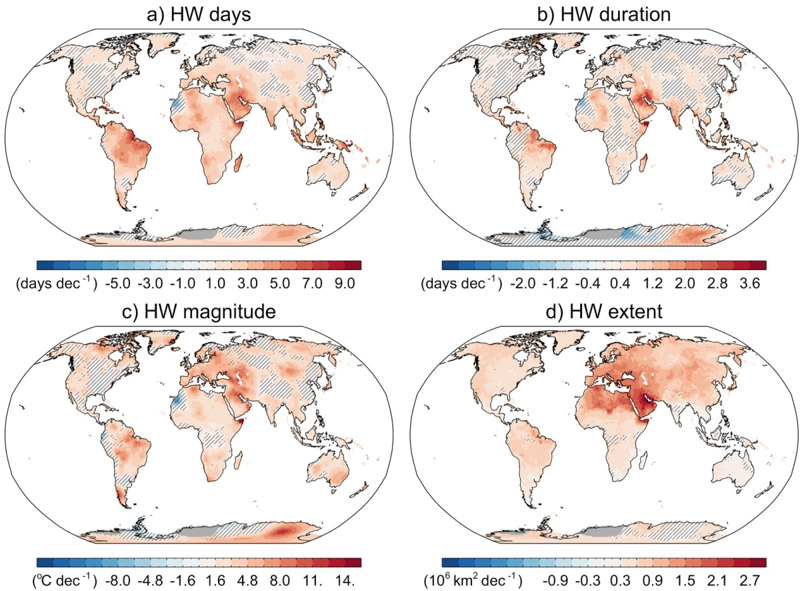

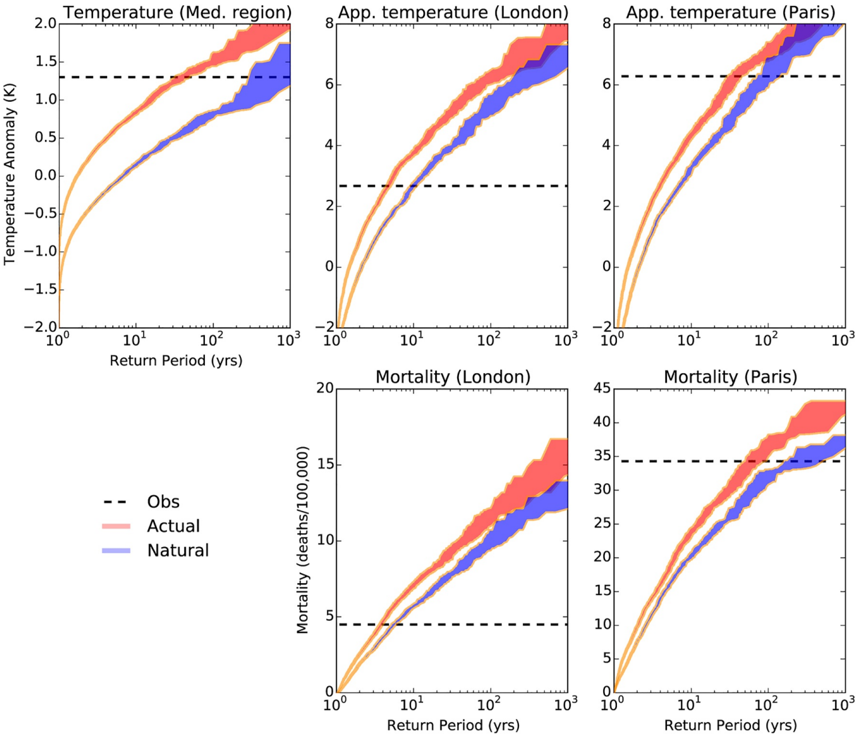




Verification
Claims the paper makes
The claims and statistics of this paper haven’t been checked yet.
Free: it reads the open-access text and checks the first 5 claims that cite a source we can check. Create a free account to check every claim.
Claims other papers make about this one
Each is checked against this paper’s own text: does it say what the citing paper says it does?
The source backs part of the claim, not all of it — or backs it for a different population, condition or comparison.
In the citing paper
“Conventional heatwave analysis has commonly relied on statistical methods, physical modeling, and conventional machine learning approaches [12, 13].”
From GPU-Accelerated Deep Learning for Heatwave Prediction and Urban Heat Risk Assessment (2026) · cites this paper as [12]
Experimental — accuracy not yet measuredThe source backs part of the claim, not all of it — or backs it for a different population, condition or comparison.
In the citing paper
“Accurate HW forecasting at weather lead times (1-15 days) is crucial but remains challenging due to the complex interplay of large-scale atmospheric circulation, regional feedbacks, and local meteorological phenomena [1, 5, 6].”
From Advancing Heatwave Forecasting via Distribution Informed-Graph Neural Networks (DI-GNNs): Integrating Extreme Value Theory with GNNs (2024) · cites this paper as [1]
Experimental — accuracy not yet measuredThe source backs part of the claim, not all of it — or backs it for a different population, condition or comparison.
In the citing paper
“Hot extremes are becoming more frequent, intense, and longer because of anthropogenic climate change (Dunn et al., 2020), with heatwaves being their most common manifestation (Barriopedro et al., 2023;Thompson et al., 2023).”
From Artificial intelligence for climate prediction of extremes: State of the art, challenges, and future perspectives (2024) · cites this paper as Barriopedro et al., 2023
Experimental — accuracy not yet measuredThe cited source says what the claim attributes to it.
In the citing paper
“These events have increased in frequency, intensity, and duration over recent decades due to anthropogenic climate change [1, 2].”
From Advancing Heatwave Forecasting via Distribution Informed-Graph Neural Networks (DI-GNNs): Integrating Extreme Value Theory with GNNs (2024) · cites this paper as [1]
Self-check
Percentages, sums and reported differences re-computed from the paper’s own numbers.
The self-check needs the paper’s full text.
Citations
Cites
Items 201–400 of 444
Soil moisture-temperature feedbacks at meso-scale during summer heat waves over Western Europe
Stéfanon, M., Drobinski, P., D’Andrea, F., Lebeaupin-Brossier, C., & Bastin, S. (2014) · Climate Dynamics · doi:10.1007/s00382-013-1794-9 · Cited by 208 · cited 1×
“…land surface schemes, vegetation) affecting surface fluxes, the hydrological cycle and associated feedbacks (e.g., L. Chen & Dirmeyer, 2019b; Dirmeyer et al., 2018; Fischer et al., 2018; Schwingshackl et al., 2019; Stéfanon et al., 2014; Thiery et al., 2017; Vautard et al., 2013).”
Dosio, A. (2016) · Journal of Geophysical Research: Atmospheres · doi:10.1002/2015jd024411 · Cited by 208 · cited 2×
“Bias correction also affects the quantification of changes in extreme temperature indices, and this effect depends on the type of HW index considered (absolute indices show the largest discrepancies; Dosio, 2016).”
BackgroundAmplified Urban Heat Islands during Heat Wave Periods
Jiang, S., Lee, X., Wang, J., & Wang, K. (2019) · Journal of Geophysical Research: Atmospheres · doi:10.1029/2018jd030230 · Cited by 208
Event‐Based Storylines to Address Climate Risk
Sillmann, J., Shepherd, T. G., van den Hurk, B., Hazeleger, W., Martius, O., Slingo, J., & Zscheischler, J. (2021) · Earth's Future · doi:10.1029/2020ef001783 · Cited by 207
Schaller, N., Sillmann, J., Anstey, J., Fischer, E. M., Grams, C. M., & Russo, S. (2018) · Environmental Research Letters · doi:10.1088/1748-9326/aaba55 · Cited by 206 · cited 1×
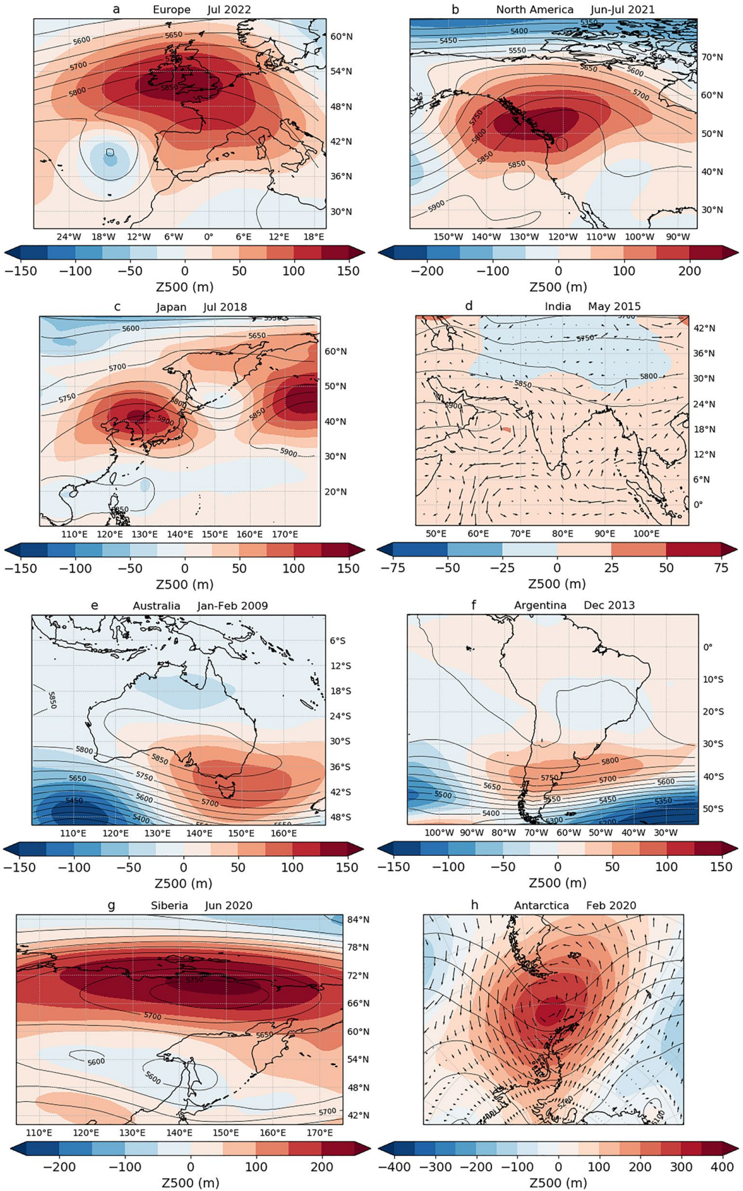
“Indeed, warm summer extremes and HWs have been related to co-located blocking (e.g., the 2021 North American mega-HW, Figure 6b, and the 2010 Russian mega-HW, Brunner et al., 2018; Chan et al., 2019; Neal et al., 2022; Pfahl & Wernli, 2012; Schaller et al., 2018; Schneidereit et al., 2012; Sousa et al., 2018; Stéfanon…”
BackgroundRisks from Climate Extremes Change Differently from 1.5°C to 2.0°C Depending on Rarity
Kharin, V. V., Flato, G. M., Zhang, X., Gillett, N. P., Zwiers, F., & Anderson, K. J. (2018) · Earth's Future · doi:10.1002/2018ef000813 · Cited by 206
Probability of US heat waves affected by a subseasonal planetary wave pattern
Teng, H., Branstator, G., Wang, H., Meehl, G. A., & Washington, W. M. (2013) · Nature Geoscience · doi:10.1038/ngeo1988 · Cited by 205 · cited 1×
“…regions, being typical HW drivers in regions affected by summer jets, such as Eurasia (S. D. Schubert et al., 2014), China (P. Wang, Tang, et al., 2017), US (Teng et al., 2013), north-central India (Ratnam et al., 2016), Australia (Risbey et al., 2018) or Brazil (Geirinhas et al., 2018).”
BackgroundPersistent Extratropical Regimes and Climate Extremes
Hoskins, B., & Woollings, T. (2015) · Current Climate Change Reports · doi:10.1007/s40641-015-0020-8 · Cited by 205 · cited 3×
“However, the attribution of dynamical changes is problematic, since they are often not well understood and/or robustly simulated by models (Hoskins & Woollings, 2015; Shaw, 2019; Shepherd, 2014).”
BackgroundDugord, P.-A., Lauf, S., Schuster, C., & Kleinschmit, B. (2014) · Computers, Environment and Urban Systems · doi:10.1016/j.compenvurbsys.2014.07.005 · Cited by 196 · cited 3×
“Therefore, more research is still required on the appropriate geometry and diversity of both bluespace and greenspace for heat mitigation (Dugord et al., 2014; Gunawardena et al., 2017).”
BackgroundHerath, H. M. P. I. K., Halwatura, R. U., & Jayasinghe, G. Y. (2018) · Urban Forestry & Urban Greening · doi:10.1016/j.ufug.2017.11.013 · Cited by 195 · cited 1×
“like trees on curbsides, green roofs and green walls (e.g., for an urban setting in Sri Lanka; Herath et al., 2018).”
BackgroundThe timing of anthropogenic emergence in simulated climate extremes
King, A. D., Donat, M. G., Fischer, E. M., Hawkins, E., Alexander, L. V., Karoly, D. J., Dittus, A. J., Lewis, S. C., & Perkins, S. E. (2015) · Environmental Research Letters · doi:10.1088/1748-9326/10/9/094015 · Cited by 194 · cited 2×
“Recent studies have gathered additional evidence of anthropogenic influences in the observed trends of temperature extremes at different temporal scales (e.g., Christidis et al., 2015; Diffenbaugh et al., 2017; Dunn et al., 2020; Kim et al., 2016; King et al., 2015).”
BackgroundBoé, J., Somot, S., Corre, L., & Nabat, P. (2020) · Climate Dynamics · doi:10.1007/s00382-020-05153-1 · Cited by 192 · cited 1×
“structural differences in forcings (e.g., time-invariant aerosol forcing and missing CO2 physiological responses of vegetation in many RCMs; Schwingshackl et al., 2019; Boé et al., 2020).”
BackgroundFan, X., Miao, C., Duan, Q., Shen, C., & Wu, Y. (2020) · Journal of Geophysical Research: Atmospheres · doi:10.1029/2020jd033031 · Cited by 192
Heat wave exposure in India in current, 1.5 °C, and 2.0 °C worlds
Mishra, V., Mukherjee, S., Kumar, R., & Stone, D. A. (2017) · Environmental Research Letters · doi:10.1088/1748-9326/aa9388 · Cited by 190 · cited 1×
“With continued global warming, the future human habitability of some low-latitude countries has been questioned, as they will experience uncharted changes in HWs, exacerbated by low levels of development, large population growth and reduced adaptive capacity (e.g., Buzan & Huber, 2020; Harrington et al., 2016; Mishra…”
BackgroundThe role of latent heating in atmospheric blocking dynamics: a global climatology
Steinfeld, D., & Pfahl, S. (2019) · Climate Dynamics · doi:10.1007/s00382-019-04919-6 · Cited by 189 · cited 8×
“Typical regional errors, including too persistent and/or intense HWs, and overestimated variability in extreme temperatures, have been linked to too strong land-atmosphere feedbacks (e.g., Miralles et al., 2019; B. Mueller & Seneviratne, 2014; van Oldenborgh et al., 2022) or missed processes (e.g., irrigation; Thiery…”
BackgroundInfluentialPoorest countries experience earlier anthropogenic emergence of daily temperature extremes
Harrington, L. J., Frame, D. J., Fischer, E. M., Hawkins, E., Joshi, M., & Jones, C. D. (2016) · Environmental Research Letters · doi:10.1088/1748-9326/11/5/055007 · Cited by 187 · cited 2×
“, duration) tend to be larger over regions with small temperature variability such as the tropics, whereas middle and high latitudes would experience the largest increase in HW intensity (e.g., Dosio et al., 2018; Harrington et al., 2016; Perkins-Kirkpatrick & Gibson, 2017), likely amplified by soil moisture feedbacks…”
BackgroundFrequency of marine heatwaves in the North Atlantic and North Pacific since 1950
Scannell, H. A., Pershing, A. J., Alexander, M. A., Thomas, A. C., & Mills, K. E. (2016) · Geophysical Research Letters · doi:10.1002/2015gl067308 · Cited by 187 · cited 1×
“, 2020), and internal modes of variability (Scannell et al., 2016), such as ENSO or IOD, whose fingerprints do not simply reflect the SST signatures of these modes (Holbrook et al.”
BackgroundZhang, R., Sun, C., Zhu, J., Zhang, R., & Li, W. (2020) · npj Climate and Atmospheric Science · doi:10.1038/s41612-020-0110-8 · Cited by 187
Processes determining heat waves across different European climates
Zschenderlein, P., Fink, A. H., Pfahl, S., & Wernli, H. (2019) · Quarterly Journal of the Royal Meteorological Society · doi:10.1002/qj.3599 · Cited by 186 · cited 4×
“More recent regional studies have shown that these warm air masses heated by surface fluxes can be advected to downwind regions (Quinting & Reeder, 2017; Schumacher et al., 2019; Zschenderlein et al., 2019).”
BackgroundInfluentialKlein, T., & Anderegg, W. R. L. (2021) · Sustainable Cities and Society · doi:10.1016/j.scs.2021.103098 · Cited by 186 · cited 1×
“The exposure to severe heat is projected to soar in the future because of the combination of global warming with urban land expansion and population growth, especially in cities located in already warm regions of Africa and Asia (Huang et al., 2019; Klein & Anderegg, 2021).”
BackgroundVose, R. S., Easterling, D. R., Kunkel, K. E., LeGrande, A. N., & Wehner, M. F. (2017) · doi:10.7930/j0n29v45 · Cited by 186
Advances in the Application and Utility of Subseasonal-to-Seasonal Predictions
White, C. J., Domeisen, D. I. V., Acharya, N., Adefisan, E. A., Anderson, M. L., Aura, S., Balogun, A. A., Bertram, D., Bluhm, S., Brayshaw, D. J., et al. (2022) · Bulletin of the American Meteorological Society · doi:10.1175/bams-d-20-0224.1 · Cited by 185 · cited 1×
“Predictions of extreme events beyond weather horizons would have potential benefits to guide decision-making in many socioeconomic sectors, including agriculture, energy, health and water resources (White et al., 2022).”
BackgroundThe July 1995 Heat Wave in the Midwest: A Climatic Perspective and Critical Weather Factors
Kunkel, K. E., Changnon, S. A., Reinke, B. C., & Arritt, R. W. (1996) · Bulletin of the American Meteorological Society · doi:10.1175/1520-0477(1996)077<1507:tjhwit>2.0.co;2 · Cited by 180 · cited 1×
“5°C in the city, where most fatalities occurred (Kunkel et al., 1996).”
BackgroundThe Impact of the Urban Heat Island during an Intense Heat Wave in Oklahoma City
Basara, J. B., Basara, H. G., Illston, B. G., & Crawford, K. C. (2010) · Advances in Meteorology · doi:10.1155/2010/230365 · Cited by 179 · cited 1×
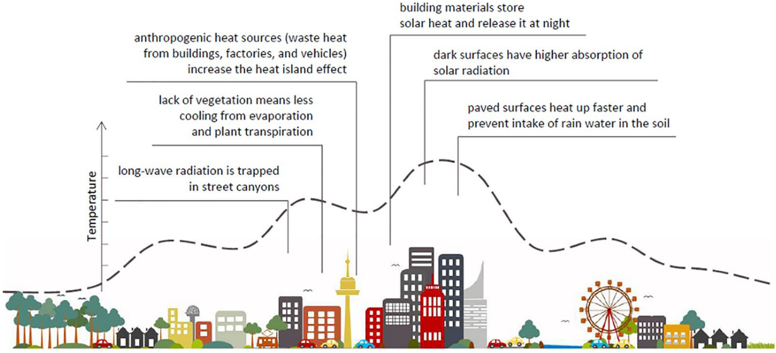
“and HWs have been found for different regions, the results depend on local conditions, with overall higher UHI intensification at nighttime for non-coastal cities (e.g., around 1°C air temperature increase in Beijing and 2°C in Oklahoma; Basara et al., 2010; Jiang et al., 2019) and at daytime for some coastal cities w…”
ResultRoberts, M. J., Vidale, P. L., Senior, C., Hewitt, H. T., Bates, C., Berthou, S., Chang, P., Christensen, H. M., Danilov, S., Demory, M.-E., et al. (2018) · Bulletin of the American Meteorological Society · doi:10.1175/bams-d-15-00320.1 · Cited by 176 · cited 1×
“The relative benefits and the optimal balance of model complexity and ensemble size are still unclear (Roberts et al., 2018).”
BackgroundTowards reliable extreme weather and climate event attribution
Bellprat, O., Guemas, V., Doblas-Reyes, F., & Donat, M. G. (2019) · Nature Communications · doi:10.1038/s41467-019-09729-2 · Cited by 176 · cited 1×
“models to generate HW events, the diversity of model physics and biases can lead to substantial differences in attribution statements (Bellprat et al., 2019) and a reasonable simulation of extreme statistics may be insufficient to ensure that the mechanisms are well simulated (e.”
BackgroundRecord-breaking climate extremes in Africa under stabilized 1.5 °C and 2 °C global warming scenarios
Nangombe, S., Zhou, T., Zhang, W., Wu, B., Hu, S., Zou, L., & Li, D. (2018) · Nature Climate Change · doi:10.1038/s41558-018-0145-6 · Cited by 175 · cited 27×
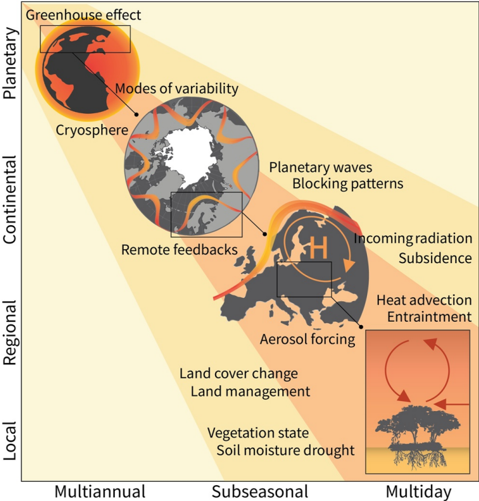
“In some regions of US, Europe or southeastern Asia, several HW drivers (e.g., CGTs, land-atmosphere coupling, tropical or extratropical SST anomalies) often act in tandem and add to the effects of other drivers operating at longer scales (e.g., aerosols, land-cover/land-use changes, GHG).”
BackgroundInfluentialFuture heat waves over the Mediterranean from an Euro-CORDEX regional climate model ensemble
Molina, M. O., Sánchez, E., & Gutiérrez, C. (2020) · Scientific Reports · doi:10.1038/s41598-020-65663-0 · Cited by 175
Large-Scale Flow and the Long-Lasting Blocking High over Russia: Summer 2010
Schneidereit, A., Schubert, S., Vargin, P., Lunkeit, F., Zhu, X., Peters, D. H. W., & Fraedrich, K. (2012) · Monthly Weather Review · doi:10.1175/mwr-d-11-00249.1 · Cited by 172 · cited 1×
“Indeed, warm summer extremes and HWs have been related to co-located blocking (e.g., the 2021 North American mega-HW, Figure 6b, and the 2010 Russian mega-HW, Brunner et al., 2018; Chan et al., 2019; Neal et al., 2022; Pfahl & Wernli, 2012; Schaller et al., 2018; Schneidereit et al., 2012; Sousa et al., 2018; Stéfanon…”
BackgroundSalinger, M. J., Renwick, J., Behrens, E., Mullan, A. B., Diamond, H. J., Sirguey, P., Smith, R. O., Trought, M. C. T., Alexander, L., Cullen, N. J., et al. (2019) · Environmental Research Letters · doi:10.1088/1748-9326/ab012a · Cited by 172
Stronger Contributions of Urbanization to Heat Wave Trends in Wet Climates
Liao, W., Liu, X., Li, D., Luo, M., Wang, D., Wang, S., Baldwin, J., Lin, L., Li, X., Feng, K., et al. (2018) · Geophysical Research Letters · doi:10.1029/2018gl079679 · Cited by 171 · cited 1×
“Hydroclimate conditions can also modulate urban-rural contrasts in HW trends, which are larger in the wet than in the dry regions of China due to the smaller variability of UHI intensity in the former (Liao et al., 2018).”
BackgroundSchiemann, R. K. H., Athanasiadis, P., Barriopedro, D., Doblas-Reyes, F. J., Lohmann, K., Roberts, M. J., Sein, D., Roberts, C. D., Terray, L., & Vidale, P. L. (2020) · Weather and Climate Dynamics · doi:10.5194/wcd-1-277-2020 · Cited by 171 · cited 25×
“Typical regional errors, including too persistent and/or intense HWs, and overestimated variability in extreme temperatures, have been linked to too strong land-atmosphere feedbacks (e.g., Miralles et al., 2019; B. Mueller & Seneviratne, 2014; van Oldenborgh et al., 2022) or missed processes (e.g., irrigation; Thiery…”
BackgroundInfluentialSelf-citationTug of war on summertime circulation between radiative forcing and sea surface warming
Shaw, T. A., & Voigt, A. (2015) · Nature Geoscience · doi:10.1038/ngeo2449 · Cited by 171 · cited 2×
“However, dynamical changes are more often uncertain or weak, sometimes due to opposite contributions of fast (direct radiative effects) and slow (e.g., ocean warming) components of the forced response (Shaw & Voigt, 2015; Shepherd, 2014).”
Background(IPCC), I. P. O. C. C. (2023) · Cambridge University Press eBooks · doi:10.1017/9781009157896.022 · Cited by 171
Liu, Z., Anderson, B., Yan, K., Dong, W., Liao, H., & Shi, P. (2017) · Scientific Reports · doi:10.1038/srep43909 · Cited by 170
Chen, Y., & Li, Y. (2017) · Scientific Reports · doi:10.1038/srep45619 · Cited by 170 · cited 1×
“…largest and most widespread changes occur in the Middle East and some tropical regions, and secondarily in Europe, Australia, eastern Asia or western North America (e.g., Ceccherini et al., 2017; Y. Chen & Li, 2017; Perkins-Kirkpatrick & Lewis, 2020; S. Russo et al., 2015, 2016; Vose et al., 2017).”
BackgroundEuropean degree‐day climatologies and trends for the period 1951–2011
Spinoni, J., Vogt, J., & Barbosa, P. (2015) · International Journal of Climatology · doi:10.1002/joc.3959 · Cited by 168
Röthlisberger, M., Frossard, L., Bosart, L. F., Keyser, D., & Martius, O. (2019) · Journal of Climate · doi:10.1175/jcli-d-18-0664.1 · Cited by 166 · cited 1×
“When these high-amplitude Rossby wave patterns recurrently affect the same regions, they lead to long warm spells and concurrent HWs in different longitudinal locations (Rogers et al., 2022; Röthlisberger et al., 2019).”
BackgroundChanges of western European heat wave characteristics projected by the CMIP5 ensemble
Schoetter, R., Cattiaux, J., & Douville, H. (2014) · Climate Dynamics · doi:10.1007/s00382-014-2434-8 · Cited by 161 · cited 1×
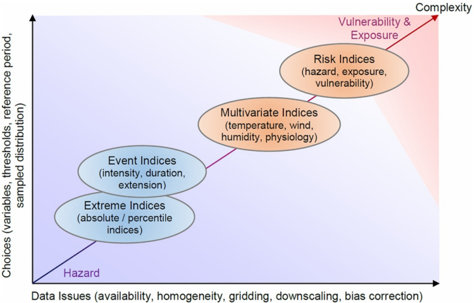
“Important HW event attributes considered in the literature include the frequency of events, maximum duration, and daily peak intensity, and less often other characteristics, such as timing of occurrence or areal extent (Sánchez-Benítez et al., 2018; Schoetter et al., 2015; Stéfanon et al., 2012).”
BackgroundBevilacqua, P., Mazzeo, D., Bruno, R., & Arcuri, N. (2017) · Energy and Buildings · doi:10.1016/j.enbuild.2017.05.081 · Cited by 159 · cited 1×
“have the advantage that they help maintain limited temperature variation during the whole year, while reflecting roofs might increase the need for domestic heating in high- and mid-latitude regions during winter (Bevilacqua et al., 2017; Masson et al., 2014).”
BackgroundRole of circulation in European heatwaves using flow analogues
Jézéquel, A., Yiou, P., & Radanovics, S. (2017) · Climate Dynamics · doi:10.1007/s00382-017-3667-0 · Cited by 158
Climate warming amplified the 2020 record-breaking heatwave in the Antarctic Peninsula
González, S., Barriopedro, D., Trigo, R. M., Bustins, J. A. L., & Oliva, M. (2022) · Communications Earth & Environment · doi:10.1038/s43247-022-00450-5 · Cited by 158 · cited 4×
“Recent HWs in polar regions have been linked to a number of mechanisms, in all cases involving high-pressure anomalies at high latitudes (e.g., the 2020 Siberian HW; Figure 6g, and the 2020 Antarctic Peninsula HW; Figure 6h); the resulting impacts on the cryosphere (permafrost thaw, melting of snow/ice, etc.) were fur…”
BackgroundInfluentialSelf-citationDong, B., Sutton, R. T., & Shaffrey, L. (2016) · Climate Dynamics · doi:10.1007/s00382-016-3158-8 · Cited by 157 · cited 1×
“For example, anthropogenic aerosols may intervene in HW characteristics by modulating land-atmosphere feedbacks (Dong et al., 2017) or inducing changes in the regional atmospheric circulation (Y.”
BackgroundOtto, F. E. L., van Oldenborgh, G. J., Eden, J., Stott, P. A., Karoly, D. J., & Allen, M. R. (2016) · Nature Climate Change · doi:10.1038/nclimate3089 · Cited by 155 · cited 1×
“) lead to subjective choices that influence the conclusions, making statements sensitive to the way questions are posed (e.g., Angélil et al., 2018; Kirchmeier-Young et al., 2019; Otto et al., 2016; Risser et al., 2017).”
BackgroundLiu, L., Shawki, D., Voulgarakis, A., Kasoar, M., Samset, B. H., Myhre, G., Forster, P. M., Hodnebrog, Ø., Sillmann, J., Aalbergsjø, S. G., et al. (2018) · Journal of Climate · doi:10.1175/jcli-d-17-0439.1 · Cited by 155
Relationships between climate variability, soil moisture, and Australian heatwaves
Perkins, S. E., Argüeso, D., & White, C. J. (2015) · Journal of Geophysical Research: Atmospheres · doi:10.1002/2015jd023592 · Cited by 153 · cited 18×
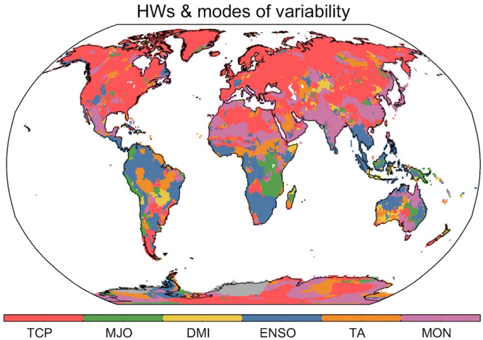
“MON summarizes the effect of some of the major regional summer monsoons (defined for the months of the corresponding summer season), including the Indian, Western North Pacific, West African and Australian monsoons.”
BackgroundInfluentialJune 2017: The Earliest European Summer Mega‐heatwave of Reanalysis Period
Sánchez‐Benítez, A., García‐Herrera, R., Barriopedro, D., Sousa, P. M., & Trigo, R. M. (2018) · Geophysical Research Letters · doi:10.1002/2018gl077253 · Cited by 152
Self-citationDevelopment of future heatwaves for different hazard thresholds
Vogel, M. M., Zscheischler, J., Fischer, E. M., & Seneviratne, S. I. (2020) · Journal of Geophysical Research: Atmospheres · doi:10.1029/2019jd032070 · Cited by 152 · cited 28×
“Typical regional errors, including too persistent and/or intense HWs, and overestimated variability in extreme temperatures, have been linked to too strong land-atmosphere feedbacks (e.g., Miralles et al., 2019; B. Mueller & Seneviratne, 2014; van Oldenborgh et al., 2022) or missed processes (e.g., irrigation; Thiery…”
BackgroundInfluentialBrunner, L., Schaller, N., Anstey, J., Sillmann, J., & Steiner, A. K. (2018) · Geophysical Research Letters · doi:10.1029/2018gl077837 · Cited by 151
Holmes, C., Woollings, T. J., Hawkins, E., & de Vries, H. (2015) · Journal of Climate · doi:10.1175/jcli-d-14-00735.1 · Cited by 151 · cited 1×
“, 2017) and in coastal areas (Holmes et al., 2016); this is partially related to enhanced drying and land-sea contrasts, respectively.”
BackgroundRogers, C. D. W., Kornhuber, K., Perkins-Kirkpatrick, S. E., Loikith, P. C., & Singh, D. (2021) · Journal of Climate · doi:10.1175/jcli-d-21-0200.1 · Cited by 149 · cited 4×
“, 2018) and/or atmospheric circulation changes (Mann et al., 2017; Rogers et al., 2022; Rousi et al., 2022), but the relative importance of these factors remains unclear.”
BackgroundInfluentialGrilo, F., Pinho, P., Aleixo, C., Catita, C., Silva, P., Lopes, N., Freitas, C., Santos-Reis, M., McPhearson, T., & Branquinho, C. (2020) · Science of The Total Environment · doi:10.1016/j.scitotenv.2020.138182 · Cited by 147 · cited 1×
“Some studies have also concluded that green spaces with a high density of trees are more efficient than grasslands in delivering the cooling effect during the day, most probably because of their high evaporative capacity and shading effect (Grilo et al., 2020; Gunawardena et al., 2017).”
BackgroundKauwe, M. G. D., Zhou, S., Medlyn, B. E., Pitman, A. J., Wang, Y., Duursma, R. A., & Prentice, I. C. (2015) · Biogeosciences · doi:10.5194/bg-12-7503-2015 · Cited by 146
Heat waves in Africa 1981–2015, observations and reanalysis
Ceccherini, G., Russo, S., Ameztoy, I., Marchese, A. F., & Carmona-Moreno, C. (2017) · Natural Hazards and Earth System Sciences · doi:10.5194/nhess-17-115-2017 · Cited by 146
The effect of univariate bias adjustment on multivariate hazard estimates
Zscheischler, J., Fischer, E. M., & Lange, S. (2019) · Earth System Dynamics · doi:10.5194/esd-10-31-2019 · Cited by 144
Historical deforestation locally increased the intensity of hot days in northern mid-latitudes
Lejeune, Q., Davin, É. L., Gudmundsson, L., Winckler, J., & Seneviratne, S. I. (2018) · Nature Climate Change · doi:10.1038/s41558-018-0131-z · Cited by 143 · cited 2×
“Recent studies also suggest that deforestation would have exacerbated recent mega-HW events (Strandberg & Kjellström, 2019) and contributed to up to one third of the warming of hot extremes in northern mid-latitudes since pre-industrial times (Lejeune et al., 2018).”
BackgroundA new heatwave definition for the UK
McCarthy, M., Armstrong, L., & Armstrong, N. (2019) · Weather · doi:10.1002/wea.3629 · Cited by 143
Future equivalent of 2010 Russian heatwave intensified by weakening soil moisture constraints
Rasmijn, L. M., van der Schrier, G., Bintanja, R., Barkmeijer, J., Sterl, A., & Hazeleger, W. (2018) · Nature Climate Change · doi:10.1038/s41558-018-0114-0 · Cited by 142 · cited 1×
“), because some of the reported influences may change or not hold in a warmer climate, potentially leading to a disproportionate intensification of HWs (e.g., Domeisen et al., 2023; Lian et al., 2020; Rasmijn et al., 2018).”
BackgroundClimatic and synoptic characterization of heat waves in Brazil
Geirinhas, J. L., Trigo, R. M., Libonati, R., Coelho, C. A. S., & Palmeira, A. C. P. D. A. (2017) · International Journal of Climatology · doi:10.1002/joc.5294 · Cited by 141
Koster, R. D., Chang, Y., Wang, H., & Schubert, S. D. (2016) · Journal of Climate · doi:10.1175/jcli-d-16-0192.1 · Cited by 141
Mechanisms of Future Predicted Changes in the Zonal Mean Mid-Latitude Circulation
Shaw, T. A. (2019) · Current Climate Change Reports · doi:10.1007/s40641-019-00145-8 · Cited by 140 · cited 8×
“However, the attribution of dynamical changes is problematic, since they are often not well understood and/or robustly simulated by models (Hoskins & Woollings, 2015; Shaw, 2019; Shepherd, 2014).”
BackgroundInfluentialWehner, M. F., Gleckler, P. J., & Lee, J. (2020) · Weather and Climate Extremes · doi:10.1016/j.wace.2020.100283 · Cited by 138 · cited 1×
“If so, it would seem reasonable to focus on understanding regional changes in the mean and their uncertainties, although, paradoxically, the causes of biases in seasonal mean temperature could be different from those in extreme temperature (Wehner et al., 2020).”
BackgroundDirmeyer, P. A., Chen, L., Wu, J., Shin, C.-S., Huang, B., Cash, B. A., Bosilovich, M. G., Mahanama, S., Koster, R. D., Santanello, J. A., et al. (2018) · Journal of Hydrometeorology · doi:10.1175/jhm-d-17-0152.1 · Cited by 138 · cited 2×
“, radiation, convection, microphysics, land surface schemes, vegetation) affecting surface fluxes, the hydrological cycle and associated feedbacks (e.g., L. Chen & Dirmeyer, 2019b; Dirmeyer et al., 2018; Fischer et al., 2018; Schwingshackl et al., 2019; Stéfanon et al., 2014; Thiery et al., 2017; Vautard et al., 2013).”
BackgroundLaguë, M. M., Bonan, G. B., & Swann, A. L. S. (2019) · Journal of Climate · doi:10.1175/jcli-d-18-0812.1 · Cited by 138 · cited 1×
“of the warming response to prescribed decreases in surface albedo and evapotranspiration, particularly in the extra tropics (Laguë et al., 2019).”
BackgroundOverland, J. E., & Wang, M. (2021) · International Journal of Climatology · doi:10.1002/joc.6850 · Cited by 137 · cited 1×
“…thaw, melting of snow/ice, etc.) were further aggravated by a jet-induced decrease of cold Arctic air intrusions to Siberia in winter-spring (Overland & Wang, 2021), and by moist air masses from the SH ocean and topographic effects in Antarctica (González-Herrero et al., 2022; M. Xu…”
BackgroundSousa, P. M., Barriopedro, D., Ramos, A. M., García‐Herrera, R., Espírito-Santo, F., & Trigo, R. M. (2019) · Weather and Climate Extremes · doi:10.1016/j.wace.2019.100224 · Cited by 137 · cited 1×
“In some regions, HWs are frequently driven by the advection of warm stable air masses from nearby land areas (e.g., Saharan intrusions in Iberia; Sousa et al., 2019).”
BackgroundSelf-citationHalf a degree and rapid socioeconomic development matter for heatwave risk
Russo, S., Sillmann, J., Sippel, S., Barcikowska, M. J., Ghisetti, C., Smid, M., & O’Neill, B. (2019) · Nature Communications · doi:10.1038/s41467-018-08070-4 · Cited by 136
Neal, E., Huang, C. S. Y., & Nakamura, N. (2022) · Geophysical Research Letters · doi:10.1029/2021gl097699 · Cited by 136
Amplification of heat extremes by plant CO2 physiological forcing
Skinner, C. B., Poulsen, C. J., & Mankin, J. (2018) · Nature Communications · doi:10.1038/s41467-018-03472-w · Cited by 134 · cited 3×
“, 2020) and reduced summer stomatal conductance (Skinner et al., 2018) may further increase HW frequency, intensity and duration, particularly in transitional and densely vegetated regions.”
BackgroundInfluentialLong-lead predictions of eastern United States hot days from Pacific sea surface temperatures
McKinnon, K. A., Rhines, A., Tingley, M. P., & Huybers, P. (2016) · Nature Geoscience · doi:10.1038/ngeo2687 · Cited by 133
The synergy between drought and extremely hot summers in the Mediterranean
Russo, A., Gouveia, C. M., Dutra, E., Soares, P. M. M., & Trigo, R. M. (2019) · Environmental Research Letters · doi:10.1088/1748-9326/aaf09e · Cited by 133
Sheridan, S. C., Lee, C. C., & Smith, E. T. (2020) · Geophysical Research Letters · doi:10.1029/2020gl088120 · Cited by 133 · cited 1×
“Spatial-scale mismatches and unreliable estimates in regions and periods that are poorly constrained by observations affect the performance of these data sets (Donat et al., 2014; Sheridan et al., 2020; Sillmann, Kharin, Zhang, et al., 2013).”
BackgroundInfluence of sea surface temperature variability on global temperature and precipitation extremes
Alexander, L. V., Uotila, P. J., & Nicholls, N. (2009) · Journal of Geophysical Research Atmospheres · doi:10.1029/2009jd012301 · Cited by 132
Xu, Z., Cheng, J., Hu, W., & Tong, S. (2018) · The Science of The Total Environment · doi:10.1016/j.scitotenv.2018.02.268 · Cited by 131
Land radiative management as contributor to regional-scale climate adaptation and mitigation
Seneviratne, S. I., Phipps, S. J., Pitman, A. J., Hirsch, A. L., Davin, E. L., Donat, M. G., Hirschi, M., Lenton, A., Wilhelm, M., & Kravitz, B. (2018) · Nature Geoscience · doi:10.1038/s41561-017-0057-5 · Cited by 130
Model Hierarchies for Understanding Atmospheric Circulation
Maher, P., Gerber, E. P., Medeiros, B., Merlis, T. M., Sherwood, S. C., Sheshadri, A., Sobel, A. H., Vallis, G. K., Voigt, A., & Zurita‐Gotor, P. (2019) · Reviews of Geophysics · doi:10.1029/2018rg000607 · Cited by 130
Projected increase in compound dry and hot events over global land areas
Wu, X., Hao, Z., Tang, Q., Singh, V. P., Zhang, X., & Hao, F. (2020) · International Journal of Climatology · doi:10.1002/joc.6626 · Cited by 130
Evolution of mean, variance and extremes in 21st century temperatures
Lewis, S. C., & King, A. D. (2017) · Weather and Climate Extremes · doi:10.1016/j.wace.2016.11.002 · Cited by 128 · cited 1×
“However, for the rest of the globe, projected changes in variability are small (e.g., tropics), oppose to the mean warming trend (e.g., future decreases in variability at high latitudes), or vary in magnitude and sign across GCMs (e.g., Argüeso et al., 2016; Lewis & King, 2017; Vogel et al., 2020).”
BackgroundKey Conclusions of the First International Urban Land Surface Model Comparison Project
Best, M. J., & Grimmond, S. (2014) · Bulletin of the American Meteorological Society · doi:10.1175/bams-d-14-00122.1 · Cited by 124 · cited 2×
“…the complex interactions in the urban atmosphere that magnify the effects of HWs will require an integrated approach across different disciplines, with a combination of emerging observational and modeling tools (e.g., Barlow et al., 2017; Best & Grimmond, 2015; Bohnenstengel et al., 2015).”
BackgroundImada, Y., Watanabe, M., Kawase, H., Shiogama, H., & Arai, M. (2019) · SOLA · doi:10.2151/sola.15a-002 · Cited by 124
Linking Northern Hemisphere temperature extremes to Rossby wave packets
Fragkoulidis, G., Wirth, V., Bossmann, P., & Fink, A. H. (2018) · Quarterly Journal of the Royal Meteorological Society · doi:10.1002/qj.3228 · Cited by 123 · cited 1×
“that, some studies emphasize that summer waveguides do not tend to be circumglobal (Teng & Branstator, 2019) and that the contribution of CGTs to temperature extremes is not higher than that of non-circumglobal patterns (Fragkoulidis et al., 2018; Röthlisberger et al., 2016).”
BackgroundThe changing shape of Northern Hemisphere summer temperature distributions
McKinnon, K. A., Rhines, A., Tingley, M. P., & Huybers, P. (2016) · Journal of Geophysical Research: Atmospheres · doi:10.1002/2016jd025292 · Cited by 122
Plecha, S. M., & Soares, P. M. M. (2020) · Environmental Research Letters · doi:10.1088/1748-9326/abc847 · Cited by 120 · cited 4×
“However, there have been limited improvements across model generations (CMIP5 and CMIP6), which share deficiencies, despite the eddy-permitting ocean resolution of some CMIP6 models (Plecha & Soares, 2020).”
BackgroundInfluentialBenson, D. O., & Dirmeyer, P. A. (2021) · Journal of Climate · doi:10.1175/jcli-d-20-0440.1 · Cited by 120 · cited 1×
“Antecedent soil moisture deficits have also been reported for HWs in regions of US (Benson & Dirmeyer, 2021), Australia (Herold et al., 2016), India (Rohini et al., 2016), China (J. Y. Zhang & Wu, 2011), Africa (Careto et al., 2018), Brazil (Geirinhas et al., 2022), and Argentina (Coronato…”
BackgroundAttribution of human-induced dynamical and thermodynamical contributions in extreme weather events
Vautard, R., Yiou, P., Otto, F., Stott, P., Christidis, N., van Oldenborgh, G. J., & Schaller, N. (2016) · Environmental Research Letters · doi:10.1088/1748-9326/11/11/114009 · Cited by 119 · cited 1×
“This method also provides the basis for quantifying dynamical and thermodynamic contributions to the changing probabilities of events (Vautard et al., 2016; Yiou et al., 2017), although intertwined influences make this separation challenging (Harrington et al.”
MethodSeo, E., Lee, M., Jeong, J., Koster, R. D., Schubert, S. D., Kim, H., Kim, D., Kang, H., Kim, H.-K., MacLachlan, C., et al. (2018) · Climate Dynamics · doi:10.1007/s00382-018-4221-4 · Cited by 118 · cited 1×
“deemed culprit for forecast failures (e.g., Ardilouze et al., 2017; Ford et al., 2018; Seo et al., 2019).”
BackgroundTewari, M., Yang, J., Kusaka, H., Salamanca, F., Watson, C., & Treinish, L. A. (2018) · Environmental Research Letters · doi:10.1088/1748-9326/aaf431 · Cited by 117 · cited 1×
“For certain cities, urban heat can almost completely be offset by adopting irrigated green roofs, and partly offset by cool (high albedo) roofs (e.g., New York City and Phoenix; Tewari et al., 2019).”
BackgroundZampieri, M., Russo, S., Sabatino, S. D., Michetti, M., Scoccimarro, E., & Gualdi, S. (2016) · The Science of The Total Environment · doi:10.1016/j.scitotenv.2016.07.008 · Cited by 117 · cited 1×
“The last decades have also witnessed record-breaking HW events and a threefold increase in the percentage of the global land area affected by severe HWs with respect to the early 20th century (Zampieri et al., 2016).”
BackgroundAdvances in the Subseasonal Prediction of Extreme Events: Relevant Case Studies across the Globe
Domeisen, D. I. V., White, C. J., Afargan-Gerstman, H., Muñoz, Á. G., Janiga, M. A., Vitart, F., Wulff, C. O., Antoine, S., Ardilouze, C., Batté, L., et al. (2022) · Bulletin of the American Meteorological Society · doi:10.1175/bams-d-20-0221.1 · Cited by 117 · cited 1×
“…more skillful predictions of the probability of occurrence of weekly-to-monthly mean temperature extremes (compared to climatological forecasts) and of outstanding HW events (e.g., Becker et al., 2017; Domeisen et al., 2022; Tian et al., 2017; Vitart & Reviews of Geophysics BARRIOPEDRO ET AL.”
Backgroundvan Garderen, L., Feser, F., & Shepherd, T. G. (2021) · Natural hazards and earth system sciences · doi:10.5194/nhess-21-171-2021 · Cited by 116
Early adaptation to heat waves and future reduction of air-conditioning energy use in Paris
Viguié, V., Lemonsu, A., Hallegatte, S., Beaulant, A.-L., Marchadier, C., Masson, V., Pigeon, G., & Salagnac, J. (2020) · Environmental Research Letters · doi:10.1088/1748-9326/ab6a24 · Cited by 115 · cited 1×
“The potential of combinations of different adaptation measures, applied at the scale of a whole city, is not fully understood, because direct experimentation is not feasible and the speed of changes in the urban environment is comparable to that of climate change (Viguié et al., 2020).”
BackgroundRegional‐scale jet waviness modulates the occurrence of midlatitude weather extremes
Röthlisberger, M., Pfahl, S., & Martius, O. (2016) · Geophysical Research Letters · doi:10.1002/2016gl070944 · Cited by 115 · cited 1×
“that, some studies emphasize that summer waveguides do not tend to be circumglobal (Teng & Branstator, 2019) and that the contribution of CGTs to temperature extremes is not higher than that of non-circumglobal patterns (Fragkoulidis et al., 2018; Röthlisberger et al., 2016).”
BackgroundImpact of the representation of stomatal conductance on model projections of heatwave intensity
Kala, J., De Kauwe, M. G., Pitman, A. J., Medlyn, B. E., Wang, Y.-P., Lorenz, R., & Perkins-Kirkpatrick, S. E. (2016) · Scientific Reports · doi:10.1038/srep23418 · Cited by 114
Meteorology, Air Quality, and Health in London: The ClearfLo Project
Bohnenstengel, S. I., Belcher, S. E., Aiken, A., Allan, J. D., Allen, G., Bacak, A., Bannan, T. J., Barlow, J. F., Beddows, D. C. S., Bloss, W. J., et al. (2015) · Bulletin of the American Meteorological Society · doi:10.1175/bams-d-12-00245.1 · Cited by 111
Cohen, J., Coumou, D., Hwang, J., Mackey, L., Orenstein, P., Totz, S., & Tziperman, E. (2019) · WIREs Climate Change · doi:10.1002/wcc.567 · Cited by 111 · cited 1×
“The adopted approaches vary in complexity, ranging from simple regression models to machine and deep learning (ML) techniques (Cohen et al., 2019; Runge et al., 2019).”
BackgroundDaniel, M., Lemonsu, A., & Viguié, V. (2016) · Urban Climate · doi:10.1016/j.uclim.2016.11.001 · Cited by 109
Attribution of extreme temperature changes during 1951–2010
Kim, Y.-H., Min, S.-K., Zhang, X., Zwiers, F., Alexander, L. V., Donat, M. G., & Tung, Y.-S. (2016) · Climate Dynamics · doi:10.1007/s00382-015-2674-2 · Cited by 108 · cited 2×
“For events of shorter duration, anthropogenic influences have been identified in the increasing trends of several HW indices, including the intensity and frequency of warm days and nights for all continents (e.g., T. Hu et al., 2020; Kim et al., 2016), as well as the duration and area affected by warm extremes for the…”
BackgroundDynamical and thermodynamical drivers of variability in European summer heat extremes
Suarez-Gutierrez, L., Müller, W. A., Li, C., & Marotzke, J. (2020) · Climate Dynamics · doi:10.1007/s00382-020-05233-2 · Cited by 108 · cited 2×
“Depleted soil moisture has been shown to increase summer temperature variability and amplify the intensity and likely the duration of HWs in both observational data sets and models of diverse complexity (e.g., Fischer et al., 2007; Hirschi et al., 2014; Lorenz et al., 2010; Miralles et al., 2014; B. Mueller & Senevira…”
BackgroundDecomposing Temperature Extremes Errors in CMIP5 and CMIP6 Models
Luca, A. D., Pitman, A. J., & de Elía, R. (2020) · Geophysical Research Letters · doi:10.1029/2020gl088031 · Cited by 108
Boschat, G., Pezza, A. B., Simmonds, I., Perkins-Kirkpatrick, S. E., Cowan, T., & Purich, A. (2014) · Climate Dynamics · doi:10.1007/s00382-014-2214-5 · Cited by 106
A new combined detection algorithm for blocking and subtropical ridges
Sousa, P. M., Barriopedro, D., García‐Herrera, R., Woollings, T. J., & Trigo, R. M. (2021) · Journal of Climate · doi:10.1175/jcli-d-20-0658.1 · Cited by 106 · cited 1×
“At comparatively lower latitudes, such as central Europe and some regions of North America, South America, China and Australia, HW-related systems are often better described as meridional extensions of the subtropical belt or subtropical ridges (Risbey et al., 2018; Sousa et al., 2021; P. Wang et al., 2018; Zschenderl…”
BackgroundSelf-citationSoutheastern Australian Heat Waves from a Trajectory Viewpoint
Quinting, J., & Reeder, M. J. (2017) · Monthly Weather Review · doi:10.1175/mwr-d-17-0165.1 · Cited by 104 · cited 2×
“…processes and latent heating release by condensation of water vapor in moist ascending air streams can drive atmospheric circulation anomalies and fuel them with warm air masses (Pfahl et al., 2015; Quinting & Reeder, 2017; Schumacher, Hauser, & Seneviratne, 2022; Steinfeld & Pfahl, 2019).”
BackgroundSoil drought can mitigate deadly heat stress thanks to a reduction of air humidity
Wouters, H., Keune, J., Petrova, I. Y., van Heerwaarden, C. C., Teuling, A. J., Pal, J. S., Arellano, J. V.-G. D., & Miralles, D. G. (2022) · Science Advances · doi:10.1126/sciadv.abe6653 · Cited by 104 · cited 1×
“Nevertheless, as urban greening reduces temperature by enhancing evaporative cooling at the cost of increasing atmospheric humidity, the effectiveness of this practice to combat urban heat stress should be evaluated with care (Wouters et al., 2022; L. Zhao et al., 2021).”
BackgroundSelf-citationGlobal observed and modelled impacts of irrigation on surface temperature
Chen, L., & Dirmeyer, P. A. (2019) · International Journal of Climatology · doi:10.1002/joc.5973 · Cited by 100 · cited 5×
“…and extensive land management, such as irrigation and cropland intensification, have been linked to long-term regional cooling of hot summer days in some hotspot regions of North America, Europe and Asia (e.g., L. Chen & Dirmeyer, 2019a; N. D. Mueller, Butler, et al., 2016; Thiery et al., 2020).”
BackgroundInfluentialThe influence of soil moisture deficits on Australian heatwaves
Herold, N., Kala, J., & Alexander, L. V. (2016) · Environmental Research Letters · doi:10.1088/1748-9326/11/6/064003 · Cited by 100
Tropospheric Waveguide Teleconnections and Their Seasonality
Branstator, G. W., & Teng, H. (2017) · Journal of the Atmospheric Sciences · doi:10.1175/jas-d-16-0305.1 · Cited by 99 · cited 1×
“…for preferred phase positions, favoring extremes, sometimes concurrently, in central North America, eastern Europe and eastern Asia for wavenumber 5, and western-central North America, western Europe and western Asia for wavenumber 7 (Figure 5; Branstator & Teng, 2017; Kornhuber et al., 2020).”
BackgroundDrivers and Mechanisms of the 2021 Pacific Northwest Heatwave
Schumacher, D. L., Hauser, M., & Seneviratne, S. I. (2022) · Earth's Future · doi:10.1029/2022ef002967 · Cited by 97
Amplification of Waveguide Teleconnections in the Boreal Summer
Teng, H., & Branstator, G. W. (2019) · Current Climate Change Reports · doi:10.1007/s40641-019-00150-x · Cited by 96 · cited 6×
“In spite of that, some studies emphasize that summer waveguides do not tend to be circumglobal (Teng & Branstator, 2019) and that the contribution of CGTs to temperature extremes is not higher than that of non-circumglobal patterns (Fragkoulidis et al., 2018; Röthlisberger et al., 2016).”
BackgroundInfluentialThe hammam effect or how a warm ocean enhances large scale atmospheric predictability
Faranda, D., Álvarez-Castro, M. C., Messori, G., Rodrigues, D., & Yiou, P. (2019) · Nature Communications · doi:10.1038/s41467-019-09305-8 · Cited by 96 · cited 1×
“, making historical signals to weaken or new pathways to emerge), but also an opportunity if the atmospheric circulation becomes more predictable with climate change (Faranda et al., 2019).”
BackgroundTian, D., Wood, E. F., & Yuan, X. (2017) · Hydrology and Earth System Sciences · doi:10.5194/hess-21-1477-2017 · Cited by 96 · cited 1×
“…more skillful predictions of the probability of occurrence of weekly-to-monthly mean temperature extremes (compared to climatological forecasts) and of outstanding HW events (e.g., Becker et al., 2017; Domeisen et al., 2022; Tian et al., 2017; Vitart & Reviews of Geophysics BARRIOPEDRO ET AL.”
BackgroundIncreasing occurrence of heat waves in the terrestrial Arctic
Dobričić, S., Russo, S., Pozzoli, L., Wilson, J., & Vignati, E. (2020) · Environmental Research Letters · doi:10.1088/1748-9326/ab6398 · Cited by 95
Zong, L., Yang, Y., Xia, H., Gao, M. C., Sun, Z., Zheng, Z., Li, X., Ning, G., Li, Y., & Lolli, S. (2022) · Atmospheric chemistry and physics · doi:10.5194/acp-22-6523-2022 · Cited by 94
Sensitivity of Marine Heatwave Metrics to Ocean Model Resolution
Pilo, G. S., Holbrook, N. J., Kiss, A. E., & Hogg, A. M. (2019) · Geophysical Research Letters · doi:10.1029/2019gl084928 · Cited by 93 · cited 1×
“This may lead to the underrepresentation of MHW drivers, particularly in eddy-rich regions such as the western boundary currents (Pilo et al., 2019).”
BackgroundDeep Learning-Based Extreme Heatwave Forecast
Jacques-Dumas, V., Ragone, F., Borgnat, P., Abry, P., & Bouchet, F. (2022) · Frontiers in Climate · doi:10.3389/fclim.2022.789641 · Cited by 92 · cited 2×
“Strategies include improvements in the signal-to-noise ratio through temporal and/or spatial data aggregation, or refined techniques to optimize the error losses or the limited sample size associated with extreme events (e.g., by using learning from less extreme events; Jacques-Dumas et al., 2022; López-Gómez et al.,…”
BackgroundMethodObserved and simulated variability of extreme temperature events over South America
Rusticucci, M. (2011) · Atmospheric Research · doi:10.1016/j.atmosres.2011.11.001 · Cited by 92 · cited 16×
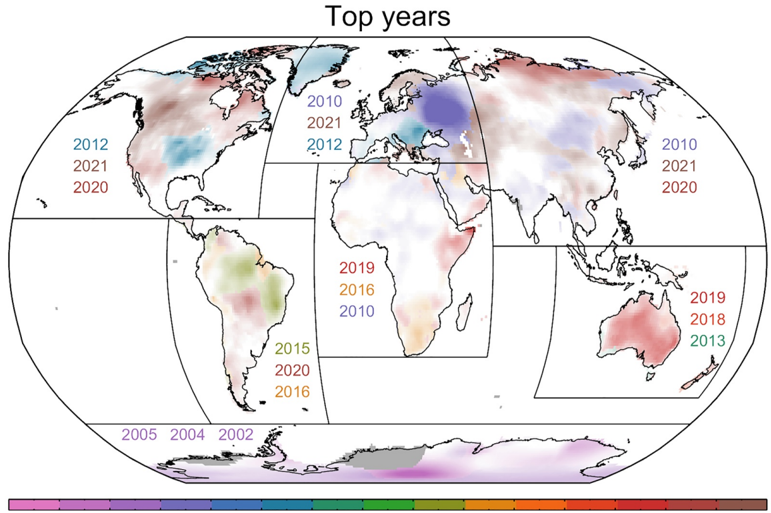
“For all continents, the top years occurred during the 21st century: Africa (2019), Antarctica (2005), Asia (2010), Australasia (2019), Europe (2010), North America (2012), and South America (2015).”
BackgroundInfluentialSummer heat waves over Eastern China: dynamical processes and trend attribution
Freychet, N., Tett, S. F. B., Wang, J., & Hegerl, G. C. (2017) · Environmental Research Letters · doi:10.1088/1748-9326/aa5ba3 · Cited by 92 · cited 1×
“Land-sea temperature contrasts also affect heat and moisture transport, which are important contributors to humid HWs and nighttime temperatures in coastal regions (e.g., northern South America, eastern US and eastern Asia; Freychet et al., 2017; S. Russo et al., 2017).”
BackgroundBoschat, G., Simmonds, I., Purich, A., Cowan, T., & Pezza, A. B. (2016) · Scientific Reports · doi:10.1038/srep29599 · Cited by 91
Haarsma, R. J., Selten, F., Hurk, B. V., Hazeleger, W., & Wang, X. (2009) · Geophysical Research Letters · doi:10.1029/2008gl036617 · Cited by 90 · cited 1×
“Dry soils may modify atmospheric circulation through diabatic effects on column expansion, upper level divergence, or intensification of thermal lows (Haarsma et al., 2009; Koster et al., 2016; Sato & Nakamura, 2019; Teng & Branstator, 2019; Vautard et al., 2007; Zampieri et al., 2009).”
BackgroundImpact of heatwave on a megacity: an observational analysis of New York City during July 2016
Ramamurthy, P., González, J., Ortiz, L., Arend, M., & Moshary, F. (2017) · Environmental Research Letters · doi:10.1088/1748-9326/aa6e59 · Cited by 89 · cited 1×
“High-resolution modeling and observations show that the UHI is often amplified during HWs in the highly urbanized northeastern US, with differences between urban and rural temperatures as high as 8°C at night and in the early morning; during those events dry and deep boundary layers enable rapid soil moisture desiccat…”
BackgroundO’Reilly, C. H., Woollings, T., Zanna, L., & Weisheimer, A. (2018) · Journal of Climate · doi:10.1175/jcli-d-17-0451.1 · Cited by 89 · cited 12×
“Compared to winter, extratropical summer forecasts are considered more sensitive to regional processes such as land-atmosphere coupling (e.g., Ardilouze et al., 2017), although remote drivers such as ENSO (Deng et al., 2018; O’Reilly et al., 2018), extratropical SSTs (Duchez et al., 2016; McKinnon et al., 2016b; Ossó…”
BackgroundInfluentialHsu, P., Qian, Y., Liu, Y., Murakami, H., & Gao, Y. (2020) · Journal of Climate · doi:10.1175/jcli-d-19-0337.1 · Cited by 89 · cited 1×
“However, active MJO phases over specific Indo-Pacific regions can also instigate Rossby wave trains in summer, and have recently been related to outstanding HW events (Hsu et al., 2020; Rodrigues et al., 2019), and enhanced summer HW occurrence in regions of both hemispheres (e.”
BackgroundRegional heatwaves in china: a cluster analysis
Wang, P., Tang, J., Wang, S., Dong, X., & Fang, J. (2017) · Climate Dynamics · doi:10.1007/s00382-017-3728-4 · Cited by 88
Challenges and opportunities for improved understanding of regional climate dynamics
Collins, M. D., Minobe, S., Barreiro, M., Bordoni, S., Kaspi, Y., Kuwano‐Yoshida, A., Keenlyside, N. S., Manzini, E., O’Reilly, C., Sutton, R. T., et al. (2018) · Nature Climate Change · doi:10.1038/s41558-017-0059-8 · Cited by 88 · cited 1×
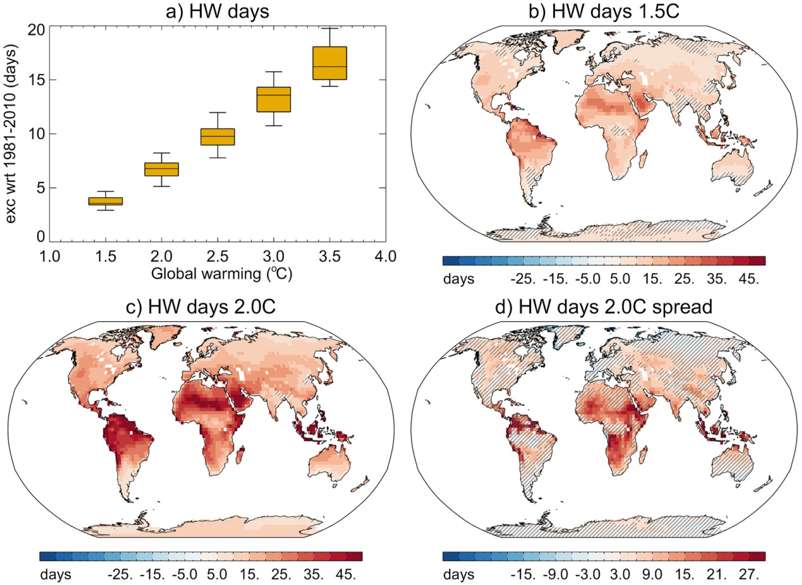
“Even for the same level of global warming, there are significant inter-model differences in HW projections, particularly at low latitudes, indicating that HW changes there are particularly sensitive to global warming (Figure 12d) Despite the increased comprehensiveness and realism of current GCMs, the uncertainty of c…”
BackgroundClimate Impacts from Afforestation and Deforestation in Europe
Strandberg, G., & Kjellström, E. (2018) · Earth Interactions · doi:10.1175/ei-d-17-0033.1 · Cited by 86 · cited 2×
“Recent studies also suggest that deforestation would have exacerbated recent mega-HW events (Strandberg & Kjellström, 2019) and contributed to up to one third of the warming of hot extremes in northern mid-latitudes since pre-industrial times (Lejeune et al., 2018).”
BackgroundEnsemble Methods for Neural Network‐Based Weather Forecasts
Scher, S., & Messori, G. (2021) · Journal of Advances in Modeling Earth Systems · doi:10.1029/2020ms002331 · Cited by 86 · cited 3×
“Interpretability is a common issue in ML, and some methods require a large amount of input data for training and design choices (e.g., Dueben & Bauer, 2018).”
BackgroundQuantifying changes in climate variability and extremes: Pitfalls and their overcoming
Sippel, S., Zscheischler, J., Heimann, M., Otto, F. E. L., Peters, J., & Mahecha, M. D. (2015) · Geophysical Research Letters · doi:10.1002/2015gl066307 · Cited by 85 · cited 1×
“For example, HW indicators based on standardized data relative to the local mean and variability can lead to overestimated exceedance rates outside the reference period (Sippel et al., 2015).”
BackgroundSummertime Planetary Wave Resonance in the Northern and Southern Hemispheres
Kornhuber, K., Petoukhov, V. K., Karoly, D. J., Petri, S., Rahmstorf, S., & Coumou, D. (2017) · Journal of Climate · doi:10.1175/jcli-d-16-0703.1 · Cited by 85 · cited 1×
“In the SH, summer CGTs manifest regionally over the Indian, Australian, Pacific and South American sectors with typical wavenumbers 4–6, and can precede HWs downstream by the convergence of eastward propagating wave activity flux within the waveguide (Kornhuber et al., 2017; O’Kane et al., 2016; Risbey et al., 2018).”
BackgroundA novel bias correction methodology for climate impact simulations
Sippel, S., Otto, F. E. L., Forkel, M., Allen, M. R., Guillod, B. P., Heimann, M., Reichstein, M., Seneviratne, S. I., Thonicke, K., & Mahecha, M. D. (2016) · Earth System Dynamics · doi:10.5194/esd-7-71-2016 · Cited by 84 · cited 1×
“, 2013) or explore novel ways that preserve the physical consistency of the model output (Sippel et al., 2016).”
BackgroundA statistical framework for conditional extreme event attribution
Yiou, P., Jézéquel, A., Naveau, P., Otto, F. E. L., Vautard, R., & Vrac, M. (2017) · Advances in statistical climatology, meteorology and oceanography · doi:10.5194/ascmo-3-17-2017 · Cited by 84 · cited 1×
“This method also provides the basis for quantifying dynamical and thermodynamic contributions to the changing probabilities of events (Vautard et al., 2016; Yiou et al., 2017), although intertwined influences make this separation challenging (Harrington et al.”
MethodZappa, G. (2019) · Current Climate Change Reports · doi:10.1007/s40641-019-00146-7 · Cited by 84 · cited 3×
“Even for the same level of global warming, there are significant inter-model differences in HW projections, particularly at low latitudes, indicating that HW changes there are particularly sensitive to global warming (Figure 12d) Despite the increased comprehensiveness and realism of current GCMs, the uncertainty of c…”
BackgroundThe Global Influence of the Madden–Julian Oscillation on Extreme Temperature Events
Matsueda, S., & Takaya, Y. (2015) · Journal of Climate · doi:10.1175/jcli-d-14-00625.1 · Cited by 83 · cited 1×
“Studies are mainly restricted to the boreal winter (e.g., Matsueda & Takaya, 2015), when the MJO activity is higher.”
BackgroundLyon, B., Barnston, A. G., Coffel, E., & Horton, R. (2019) · Environmental Research Letters · doi:10.1088/1748-9326/ab4b41 · Cited by 82 · cited 1×
“, 2018), as well as the projected changes in their attributes (Lyon et al., 2019; Vogel et al., 2020).”
BackgroundSeong, M., Min, S., Kim, Y., Zhang, X., & Sun, Y. (2020) · Journal of Climate · doi:10.1175/jcli-d-19-1023.1 · Cited by 82 · cited 1×
“For some continents such as Europe, Asia and North America, the GHG-forced trends in warm extremes have been partially offset by detectable cooling signals due to aerosol increases during 1950–1980 (T. Hu et al., 2020; Seong et al., 2021).”
BackgroundZhou, Y., & Wu, Z. (2016) · Quarterly Journal of the Royal Meteorological Society · doi:10.1002/qj.2759 · Cited by 81 · cited 1×
“…warming (e.g., Johnson et al., 2018), have been partially related to low-frequency modes of variability such as the Pacific Decadal Oscillation (PDO) or the Atlantic Multidecadal Oscillation (AMO) (e.g., Kamae et al., 2014; Kenyon & Hegerl, 2008; S. D. Schubert et al., 2014; Zhou & Wu, 2016).”
BackgroundLand-atmosphere coupling amplifies hot extremes over China
Zhang, J., & Wu, L. (2011) · Chinese Science Bulletin · doi:10.1007/s11434-011-4628-3 · Cited by 80 · cited 1×
“…have also been reported for HWs in regions of US (Benson & Dirmeyer, 2021), Australia (Herold et al., 2016), India (Rohini et al., 2016), China (J. Y. Zhang & Wu, 2011), Africa (Careto et al., 2018), Brazil (Geirinhas et al., 2022), and Argentina (Coronato et al., 2020), but with a varying…”
BackgroundAsymmetry of projected increases in extreme temperature distributions
Kodra, E., & Ganguly, A. R. (2014) · Scientific Reports · doi:10.1038/srep05884 · Cited by 80 · cited 1×
“Several studies have emphasized the importance of increasing variability (e.g., Douville et al., 2016; Kodra & Ganguly, 2014), although they are often limited to areas of strong land-atmosphere coupling.”
BackgroundConnecting regional aerosol emissions reductions to local and remote precipitation responses
Westervelt, D. M., Conley, A. J., Fiore, A. M., Lamarque, J.-F., Shindell, D. T., Previdi, M., Mascioli, N. R., Faluvegi, G., Correa, G., & Horowitz, L. W. (2018) · Atmospheric Chemistry and Physics · doi:10.5194/acp-18-12461-2018 · Cited by 80 · cited 2×
“, 2016), the excitation of large-scale modes of variability by regional forcings (e.g., anthropogenic aerosols or widespread land-cover and land-management changes; Mahmood et al., 2014; Westervelt et al., 2018), and other mechanisms without obvious anthropogenic influences (e.”
BackgroundHuman influence on frequency of temperature extremes
Hu, T., Sun, Y., Zhang, X., Min, S., & Kim, Y. (2020) · Environmental Research Letters · doi:10.1088/1748-9326/ab8497 · Cited by 79
Mo, R., Lin, H., & Vitart, F. (2022) · Communications Earth & Environment · doi:10.1038/s43247-022-00459-w · Cited by 77
Seasonal mean temperature changes control future heat waves
Argüeso, D., Di Luca, A., Perkins‐Kirkpatrick, S. E., & Evans, J. P. (2016) · Geophysical Research Letters · doi:10.1002/2016gl069408 · Cited by 75
Atmospheric predictability and Rossby wave packets
Grazzini, F., & Vitart, F. (2015) · Quarterly Journal of the Royal Meteorological Society · doi:10.1002/qj.2564 · Cited by 75 · cited 1×
“When present in the initial conditions, these teleconnections can enhance the predictability of the atmosphere in remote regions up to 3 weeks (Grazzini & Vitart, 2015).”
BackgroundPhysical constraints for temperature biases in climate models
Bellprat, O., Kotlarski, S., Lüthi, D., & Schär, C. (2013) · Geophysical Research Letters · doi:10.1002/grl.50737 · Cited by 74 · cited 1×
“Efforts have been made to address time-dependent biases (Bellprat et al., 2013) or explore novel ways that preserve the physical consistency of the model output (Sippel et al.”
BackgroundQuinting, J. F., & Vitart, F. (2019) · Geophysical Research Letters · doi:10.1029/2018gl081381 · Cited by 72 · cited 2×
“…likely associated with radiative or convective parameterizations, as well as mean biases in the jet latitude, regional blocking and longitudinal extension of Rossby wave packets can also reduce the predictability (e.g., Beverley et al., 2019; Pante & Knippertz, 2019; Quinting & Vitart, 2019).”
BackgroundWehner, M. F. (2020) · Weather and Climate Extremes · doi:10.1016/j.wace.2020.100284 · Cited by 71 · cited 1×
“…intensification of the patterns found in observations (Figure 9) and historical runs, which are consistent across model generations and associated forcing scenarios (RCPs in CMIP5, and Shared Socioeconomic Pathways, SSPs, in CMIP6; Kharin et al., 2013; C. Li et al., 2021; Wehner, 2020; Figure 12).”
BackgroundFuture Changes in Northern Hemisphere Summer Weather Persistence Linked to Projected Arctic Warming
Kornhuber, K., & Tamarin‐Brodsky, T. (2021) · Geophysical Research Letters · doi:10.1029/2020gl091603 · Cited by 71
Influence of the intraseasonal variability on heat waves in subtropical South America
Cerne, S. B., & Vera, C. S. (2010) · Climate Dynamics · doi:10.1007/s00382-010-0812-4 · Cited by 71 · cited 17×
“For all continents, the top years occurred during the 21st century: Africa (2019), Antarctica (2005), Asia (2010), Australasia (2019), Europe (2010), North America (2012), and South America (2015).”
BackgroundInfluentialEconomic Losses, Poverty and Disasters 1998-2017
Wallemacq, P., UNISDR, & CRED (2018) · Unpublished · doi:10.13140/rg.2.2.35610.08643 · Cited by 71
The importance of aerosol scenarios in projections of future heat extremes
Xu, Y., Lamarque, J., & Sanderson, B. M. (2015) · Climatic Change · doi:10.1007/s10584-015-1565-1 · Cited by 70
Lee, M.-H., Lee, S., Song, H., & Ho, C.-H. (2017) · Journal of Climate · doi:10.1175/jcli-d-16-0094.1 · Cited by 70
Rare Event Algorithm Study of Extreme Warm Summers and Heatwaves Over Europe
Ragone, F., & Bouchet, F. (2021) · Geophysical Research Letters · doi:10.1029/2020gl091197 · Cited by 70 · cited 2×
“In this sense, there are promising methodological developments, such as “rare event algorithms” (Ragone & Bouchet, 2021) or ML weather forecasts (e.g., Weyn et al., 2021) that may bring more robust assessments of low-probability events with lower computational costs than model simulations.”
BackgroundDecoupling between ecosystem photosynthesis and transpiration: a last resort against overheating
Krich, C., Mahecha, M. D., Migliavacca, M., Kauwe, M. G. D., Griebel, A., Runge, J., & Miralles, D. G. (2022) · Environmental Research Letters · doi:10.1088/1748-9326/ac583e · Cited by 70 · cited 2×
“For instance, some trees experience higher transpiration rates during HWs when soil moisture is available, which has been reported as an evolutionary strategy against overheating (Drake et al., 2018; Krich et al., 2022).”
BackgroundSelf-citationIntensification of hot Eurasian summers by climate change and land–atmosphere interactions
Sato, T., & Nakamura, T. (2019) · Scientific Reports · doi:10.1038/s41598-019-47291-5 · Cited by 68 · cited 1×
“Dry soils may modify atmospheric circulation through diabatic effects on column expansion, upper level divergence, or intensification of thermal lows (Haarsma et al., 2009; Koster et al., 2016; Sato & Nakamura, 2019; Teng & Branstator, 2019; Vautard et al., 2007; Zampieri et al., 2009).”
BackgroundResolving Sahelian thunderstorms improves mid-latitude weather forecasts
Pante, G., & Knippertz, P. (2019) · Nature Communications · doi:10.1038/s41467-019-11081-4 · Cited by 67 · cited 1×
“…likely associated with radiative or convective parameterizations, as well as mean biases in the jet latitude, regional blocking and longitudinal extension of Rossby wave packets can also reduce the predictability (e.g., Beverley et al., 2019; Pante & Knippertz, 2019; Quinting & Vitart, 2019).”
BackgroundVautard, R., Christidis, N., Ciavarella, A., Álvarez-Castro, M. C., Bellprat, O., Christiansen, B., Colfescu, I., Cowan, T., Doblas-Reyes, F. J., Eden, J., et al. (2018) · Climate Dynamics · doi:10.1007/s00382-018-4183-6 · Cited by 66 · cited 1×
“, 2019) and a reasonable simulation of extreme statistics may be insufficient to ensure that the mechanisms are well simulated (e.g., land-atmosphere coupling; Vautard et al., 2019).”
BackgroundWulff, C. O., & Domeisen, D. I. V. (2019) · Geophysical Research Letters · doi:10.1029/2019gl084314 · Cited by 66 · cited 1×
“This is supported by reforecasts of historical conditions, which indicate that European summer warm extremes could be more predictable than the mean temperature on subseasonal scales (Wulff & Domeisen, 2019).”
BackgroundTracking Iberian heatwaves from a new perspective
Benítez, A. S., Barriopedro, D., & García‐Herrera, R. (2019) · Weather and Climate Extremes · doi:10.1016/j.wace.2019.100238 · Cited by 66
Self-citationAttributing the increase in Northern Hemisphere hot summers since the late 20th century
Kamae, Y., Shiogama, H., Watanabe, M., & Kimoto, M. (2014) · Geophysical Research Letters · doi:10.1002/2014gl061062 · Cited by 65
Contribution of mean climate to hot temperature extremes for present and future climates
Luca, A. D., de Elía, R., Bador, M., & Argüeso, D. (2020) · Weather and Climate Extremes · doi:10.1016/j.wace.2020.100255 · Cited by 65
Ardilouze, C., Batté, L., Bunzel, F., Decremer, D., Déqué, M., Doblas-Reyes, F. J., Douville, H., Fereday, D. R., Guémas, V., MacLachlan, C., et al. (2017) · Climate Dynamics · doi:10.1007/s00382-017-3555-7 · Cited by 62
Evaluation of heat wave forecasts seamlessly across subseasonal timescales
Ford, T. W., Dirmeyer, P. A., & Benson, D. O. (2018) · npj Climate and Atmospheric Science · doi:10.1038/s41612-018-0027-7 · Cited by 62 · cited 1×
“deemed culprit for forecast failures (e.g., Ardilouze et al., 2017; Ford et al., 2018; Seo et al., 2019).”
BackgroundThe influence of internal climate variability on heatwave frequency trends
Perkins-Kirkpatrick, S. E., Fischer, E. M., Angélil, O., & Gibson, P. B. (2017) · Environmental Research Letters · doi:10.1088/1748-9326/aa63fe · Cited by 62 · cited 1×
“3) or internal variability, which can render long-term pauses in regional HW trends (Perkins-Kirkpatrick et al., 2017) or accelerate them, as observed during the recent period of global warming deceleration (Johnson et al.”
BackgroundMechanisms underlying temperature extremes in Iberia: a Lagrangian perspective
Santos, J. A., Pfahl, S., Pinto, J. G., & Wernli, H. (2015) · Tellus A Dynamic Meteorology and Oceanography · doi:10.3402/tellusa.v67.26032 · Cited by 61 · cited 1×
“Other studies have rather emphasized the dominant role of adiabatic warming (e.g., in Iberia or China; Santos et al., 2015; W. Wang et al., 2016).”
BackgroundSchwingshackl, C., Davin, É. L., Hirschi, M., Sørland, S. L., Wartenburger, R., & Seneviratne, S. I. (2019) · Environmental Research Letters · doi:10.1088/1748-9326/ab4949 · Cited by 61 · cited 2×
“structural differences in forcings (e.g., time-invariant aerosol forcing and missing CO2 physiological responses of vegetation in many RCMs; Schwingshackl et al., 2019; Boé et al., 2020).”
BackgroundInfluence of Subfacet Heterogeneity and Material Properties on the Urban Surface Energy Budget
Ramamurthy, P., Bou-Zeid, E., Smith, J. A., Wang, Z., Baeck, M. L., Saliendra, N. Z., Hom, J. L., & Welty, C. (2014) · Journal of Applied Meteorology and Climatology · doi:10.1175/jamc-d-13-0286.1 · Cited by 60
Barlow, J. F., Best, M., Bohnenstengel, S. I., Clark, P. A., Grimmond, S., Lean, H. W., Christen, A., Emeis, S. M., Haeffelin, M. P. A., Harman, I. N., et al. (2017) · Bulletin of the American Meteorological Society · doi:10.1175/bams-d-17-0106.1 · Cited by 60
Evaluation of major heat waves’ mechanisms in EURO-CORDEX RCMs over Central Europe
Lhotka, O., Kyselý, J., & Plavcová, E. (2017) · Climate Dynamics · doi:10.1007/s00382-017-3873-9 · Cited by 59 · cited 1×
“In some cases, RCMs do not yield obvious improvements, and a good representation can be achieved by the wrong reasons (e.g., compensation of favorable circulation biases for HW occurrence with a wet soil bias or vice versa; Lhotka et al., 2018).”
BackgroundSimilar spatial patterns of global climate response to aerosols from different regions
Kasoar, M., Shawki, D., & Voulgarakis, A. (2018) · npj Climate and Atmospheric Science · doi:10.1038/s41612-018-0022-z · Cited by 59
Heat Wave Variations Across China Tied to Global SST Modes
Wei, J., Wang, W., Shao, Q., Yu, Z., Chen, Z., Huang, Y., & Xing, W. (2020) · Journal of Geophysical Research Atmospheres · doi:10.1029/2019jd031612 · Cited by 58 · cited 10×
“For instance, warm phases of ENSO and tropical Indian ocean warming can enhance HW occurrence in India (Rohini et al., 2016), China (Wei et al., 2020) and the entire Eurasian continent, including Europe and northeast Asia (R. Z. Zhang et al., 2022), whereas cold ENSO phases favor summer HWs in southeastern US (e.g., D…”
BackgroundInfluentialExplaining Extreme Events of 2020 from a Climate Perspective
Herring, S. C., Christidis, N., Hoell, A., & Stott, P. A. (2022) · Bulletin of the American Meteorological Society · doi:10.1175/bams-explainingextremeevents2020.1 · Cited by 58
Lemordant, L., Gentine, P., Stéfanon, M., Drobinski, P., & Fatichi, S. (2016) · Geophysical Research Letters · doi:10.1002/2016gl069896 · Cited by 57 · cited 2×
“, 2018), but during the growing season the induced soil water savings could partially mitigate HW severity by increasing water availability for summer (Lemordant et al., 2016).”
BackgroundVegetation Response to Rising CO2 Impacts Extreme Temperatures
Lemordant, L., & Gentine, P. (2019) · Geophysical Research Letters · doi:10.1029/2018gl080238 · Cited by 55 · cited 6×
“For example, irrigation effects in model simulations yielded a mean cooling of ∼0.8°C in annual maximum TXx over irrigated areas of the globe and the 1981–2010 period (Thiery et al., 2017).”
BackgroundInfluentialImportance of Framing for Extreme Event Attribution: The Role of Spatial and Temporal Scales
Kirchmeier‐Young, M. C., Wan, H., Zhang, X., & Seneviratne, S. I. (2019) · Earth s Future · doi:10.1029/2019ef001253 · Cited by 55 · cited 1×
“) lead to subjective choices that influence the conclusions, making statements sensitive to the way questions are posed (e.g., Angélil et al., 2018; Kirchmeier-Young et al., 2019; Otto et al., 2016; Risser et al., 2017).”
BackgroundDrivers and potential predictability of summer time North Atlantic polar front jet variability
Hall, R. J., Jones, J. M., Hanna, E., Scaife, A. A., & Erdélyi, R. (2016) · Climate Dynamics · doi:10.1007/s00382-016-3307-0 · Cited by 54
Attribution analyses of temperature extremes using a set of 16 indices
Christidis, N., & Stott, P. A. (2016) · Weather and Climate Extremes · doi:10.1016/j.wace.2016.10.003 · Cited by 54 · cited 23×
“MON summarizes the effect of some of the major regional summer monsoons (defined for the months of the corresponding summer season), including the Indian, Western North Pacific, West African and Australian monsoons.”
BackgroundInfluentialBeverley, J. D., Woolnough, S. J., Baker, L. H., Johnson, S. J., & Weisheimer, A. (2019) · Climate Dynamics · doi:10.1007/s00382-018-4371-4 · Cited by 54
Schubert, S., & Grossman‐Clarke, S. (2013) · Meteorologische Zeitschrift · doi:10.1127/0941-2948/2013/0393 · Cited by 54 · cited 2×
“Full implementation of some of these strategies could have larger effects during the afternoon than at night (Krayenhoff et al., 2018; S. Schubert & Grossman-Clarke, 2013).”
BackgroundInfluentialClem, K. R., Bozkurt, D., Kennett, D., King, J., & Turner, J. C. (2022) · Nature Communications · doi:10.1038/s41467-022-31119-4 · Cited by 54
Ossó, A., Sutton, R., Shaffrey, L., & Dong, B. (2020) · Journal of Climate · doi:10.1175/jcli-d-19-0613.1 · Cited by 53 · cited 15×
“Differently, the conditional or ingredient-based approach provides partial attribution by constraining the climate system to specific states at the time of the event (i.e., a conditional factor such as SSTs or atmospheric circulation).”
BackgroundInfluentialOkane, T., Risbey, J. S., Monselesan, D. P., Horenko, I., & Franzke, C. L. E. (2015) · Climate Dynamics · doi:10.1007/s00382-015-2786-8 · Cited by 53 · cited 1×
“In the SH, summer CGTs manifest regionally over the Indian, Australian, Pacific and South American sectors with typical wavenumbers 4–6, and can precede HWs downstream by the convergence of eastward propagating wave activity flux within the waveguide (Kornhuber et al., 2017; O’Kane et al., 2016; Risbey et al., 2018).”
BackgroundFischer, E. M. (2014) · Nature Geoscience · doi:10.1038/ngeo2148 · Cited by 53
Ethics of Probabilistic Extreme Event Attribution in Climate Change Science: A Critique
Olsson, L., Thorén, H., Harnesk, D., & Persson, J. (2022) · Earth s Future · doi:10.1029/2021ef002258 · Cited by 52 · cited 1×
“Recent studies advocate for causality rather than statistics-driven approaches (Olsson et al., 2022).”
BackgroundThe Turning Point of the Aerosol Era
Bauer, S. E., Tsigaridis, K., Faluvegi, G., Nazarenko, L., Miller, R. L., Kelley, M., & Schmidt, G. A. (2022) · Journal of Advances in Modeling Earth Systems · doi:10.1029/2022ms003070 · Cited by 52 · cited 1×
“By the end of this century, global aerosol forcing might counterbalance only 0%–20% of GHG forcing, compared to ∼80% during 1980–1990 (Bauer et al., 2022).”
BackgroundMidlatitude daily summer temperatures reshaped by soil moisture under climate change
Douville, H., Colin, J., Krug, E., Cattiaux, J., & Thao, S. (2015) · Geophysical Research Letters · doi:10.1002/2015gl066222 · Cited by 52
Large-Eddy Simulation of Mesoscale Circulations Forced by Inhomogeneous Urban Heat Island
Zhang, N., Wang, X., & Peng, Z. (2013) · Boundary-Layer Meteorology · doi:10.1007/s10546-013-9879-x · Cited by 51
van Straaten, C., Whan, K., Coumou, D., van den Hurk, B., & Schmeits, M. (2022) · Monthly Weather Review · doi:10.1175/mwr-d-21-0201.1 · Cited by 50
Biased Estimates of Changes in Climate Extremes From Prescribed SST Simulations
Fischer, E. M., Beyerle, U., Schleussner, C. F., King, A. D., & Knutti, R. (2018) · Geophysical Research Letters · doi:10.1029/2018gl079176 · Cited by 49 · cited 2×
“, radiation, convection, microphysics, land surface schemes, vegetation) affecting surface fluxes, the hydrological cycle and associated feedbacks (e.g., L. Chen & Dirmeyer, 2019b; Dirmeyer et al., 2018; Fischer et al., 2018; Schwingshackl et al., 2019; Stéfanon et al., 2014; Thiery et al., 2017; Vautard et al., 2013).”
BackgroundA Lagrangian analysis of upper-tropospheric anticyclones associated with heat waves in Europe
Zschenderlein, P., Pfahl, S., Wernli, H., & Fink, A. H. (2020) · Weather and Climate Dynamics · doi:10.5194/wcd-1-191-2020 · Cited by 49
Strong Influence of Aerosol Reductions on Future Heatwaves
Zhao, A., Bollasina, M. A., & Stevenson, D. S. (2019) · Geophysical Research Letters · doi:10.1029/2019gl082269 · Cited by 48 · cited 1×
“Under the Representative Concentration Pathway (RCP) 8.5 scenario, almost every year in 2081–2100 would experience record-breaking HWs, with a global mean exceedance probability of 76% (A. Zhao et al., 2019).”
BackgroundInfluentialLee, Y., & Grotjahn, R. (2019) · Advances in Atmospheric Sciences · doi:10.1007/s00376-019-8167-1 · Cited by 48 · cited 1×
“…wave trains in summer, and have recently been related to outstanding HW events (Hsu et al., 2020; Rodrigues et al., 2019), and enhanced summer HW occurrence in regions of both hemispheres (e.g., southwestern US; Y. Y. Lee & Grotjahn, 2019, and southwestern South America; Demortier et al., 2021).”
BackgroundChan, P., Hassanzadeh, P., & Kuang, Z. (2019) · Geophysical Research Letters · doi:10.1029/2019gl083307 · Cited by 47 · cited 1×
“Indeed, warm summer extremes and HWs have been related to co-located blocking (e.g., the 2021 North American mega-HW, Figure 6b, and the 2010 Russian mega-HW, Brunner et al., 2018; Chan et al., 2019; Neal et al., 2022; Pfahl & Wernli, 2012; Schaller et al., 2018; Schneidereit et al., 2012; Sousa et al., 2018; Stéfanon…”
BackgroundAmplified Upward Trend of the Joint Occurrences of Heat and Ozone Extremes in China over 2013–20
Xiao, X., Xu, Y., Zhang, X., Wang, F., Lu, X. H., Cai, Z., Brasseur, G. P., & Gao, M. C. (2022) · Bulletin of the American Meteorological Society · doi:10.1175/bams-d-21-0222.1 · Cited by 47
Is interactive air sea coupling relevant for simulating the future climate of Europe?
Gröger, M., Dieterich, C., & Meier, H. E. M. (2020) · Climate Dynamics · doi:10.1007/s00382-020-05489-8 · Cited by 46 · cited 1×
“Ocean-atmosphere coupling can also affect the simulation of HWs and their trends, particularly in some tropical regions and coastal areas of open seas (Fischer et al., 2018; Gröger et al., 2021).”
BackgroundDeng, K., Ting, M., Yang, S., & Tan, Y. (2018) · Journal of Climate · doi:10.1175/jcli-d-17-0554.1 · Cited by 45 · cited 13×
“Compared to winter, extratropical summer forecasts are considered more sensitive to regional processes such as land-atmosphere coupling (e.g., Ardilouze et al., 2017), although remote drivers such as ENSO (Deng et al., 2018; O’Reilly et al., 2018), extratropical SSTs (Duchez et al., 2016; McKinnon et al., 2016b; Ossó…”
BackgroundInfluentialLocal and Nonlocal Land Surface Influence in European Heatwave Initial Condition Ensembles
Merrifield, A. L., Simpson, I. R., McKinnon, K. A., Sippel, S., Xie, S., & Deser, C. (2019) · Geophysical Research Letters · doi:10.1029/2019gl083945 · Cited by 45 · cited 1×
“pheric responses to soil moisture deficits (Merrifield et al., 2019).”
Jiménez‐Esteve, B., Kornhuber, K., & Domeisen, D. I. V. (2022) · Geophysical Research Letters · doi:10.1029/2021gl096337 · Cited by 44
On the nonlinearity of spatial scales in extreme weather attribution statements
Angélil, O., Stone, D. A., Perkins-Kirkpatrick, S. E., Alexander, L. V., Wehner, M. F., Shiogama, H., Wolski, P., Ciavarella, A., & Christidis, N. (2017) · Climate Dynamics · doi:10.1007/s00382-017-3768-9 · Cited by 43
The influence of soil dry-out on the record-breaking hot 2013/2014 summer in Southeast Brazil
Geirinhas, J. L., Russo, A., Libonati, R., Miralles, D. G., Sousa, P. M., Wouters, H., & Trigo, R. M. (2022) · Scientific Reports · doi:10.1038/s41598-022-09515-z · Cited by 43 · cited 5×
“, 2018), Brazil (Geirinhas et al., 2022), and Argentina (Coronato et al.”
BackgroundInfluentialSelf-citationXu, M., Yu, L., Liang, K., Vihma, T., Bozkurt, D., Hu, X., & Yang, Q. (2021) · Communications Earth & Environment · doi:10.1038/s43247-021-00203-w · Cited by 43
Global extreme heat forecasting using neural weather models
Lopez-Gomez, I., McGovern, A., Agrawal, S., & Hickey, J. (2023) · Artificial Intelligence for the Earth Systems · doi:10.1175/aies-d-22-0035.1 · Cited by 41 · cited 1×
“Strategies include improvements in the signal-to-noise ratio through temporal and/or spatial data aggregation, or refined techniques to optimize the error losses or the limited sample size associated with extreme events (e.g., by using learning from less extreme events; Jacques-Dumas et al., 2022; López-Gómez et al.,…”
MethodOn the Dynamics of Austral Heat Waves
Risbey, J. S., Okane, T., Monselesan, D. P., Franzke, C. L. E., & Horenko, I. (2018) · Journal of Geophysical Research Atmospheres · doi:10.1002/2017jd027222 · Cited by 40 · cited 21×
“, 2016), Australia (Risbey et al., 2018) or Brazil (Geirinhas et al.”
BackgroundInfluential
Research works printed but not linked: 12
- 10.1175/1520-0442(2002)015<1893:CTTJSW>2.0.CO;2 · doi:10.1175/1520-0442(2002)015
- Collins, M., Sutherland, M., Bouwer, L., Cheong, S.-M., Frölicher, T., Jacot Des Combes, H., et al. (2019). Extremes, abrupt changes and manag- ing risk. In H.-O. Pörtner, D. C. Roberts, V. Masson-Delmotte, P. Zhai, M. Tignor, E. Poloczanska, et al. (Eds.), IPCC special report on the ocean and cryosphere in a changing climate (pp. 589-655). Cambridge University Press. https://doi.org/10.1017/9781009157964. · DOI
- Kushnir, Y., Robinson, W. A., Bladé, I., Hall, N. M. J., Peng, P., & Sutton, R. (2002). Atmospheric GCM response to extratropical SST anoma- lies: Synthesis and evaluation. Journal of Climate, 15(16), 2233-2256. https://doi.org/10.1175/1520-0442(2002)015,2233:AGRTES.2.0.CO;2 · doi:10.1175/1520-0442(2002)015,2233:agrtes.2.0.co;2
- 10.1175/1520-0477(1996)077<1507:TJHWIT>2.0.CO;2 · doi:10.1175/1520-0477(1996)077
- 10.1175/1520-0442(2002)015 · doi:10.1175/1520-0442(2002)015
- Mann, M. E., Rahmstorf, S., Kornhuber, K., Steinman, B. A., Miller, S. K., & Coumou, D. (2017). Influence of anthropogenic climate change on planetary wave resonance and extreme weather events. Scientific Reports, 7(1), 45242. https://doi.org/10.1038/srep4524 · doi:10.1038/srep4524
- Peterson, T. C., Folland, C., Gruza, G., Hogg, W., Mokssit, A., & Plummer, N. (2001). Report on the activities of the working group on climate change detection and related Rapporteurs 1998-2001. WMO, Report WCDMP-47 (p. 143). WMO-TD 1071.
- Rohde, R., Muller, R., Jacobsen, R., Perlmutter, S., Rosenfeld, A., Wurtele, J., et al. (2013). Berkeley earth temperature averaging process. Geoin- formatics & Geostatistics: Overview, 1(2), 20-100. https://doi.org/10.4172/gigs.100010 · doi:10.4172/gigs.100010
- 10.1175/1520-0450(1979)018<0861:TAOSPI>2.0.CO;2 · doi:10.1175/1520-0450(1979)018
- Vijverberg, S., Schmeits, M., van der Wiel, K., & Coumou, D. (2020). Subseasonal statistical forecasts of eastern U.S. hot temperature events. Monthly Weather Review, 148(12), 4799-4822. https://doi.org/10.1175/mwrd-19-0409. · doi:10.1175/mwrd-19-0409
- 10.1175/mwrd-19-0409.1 · doi:10.1175/mwrd-19-0409.1
- WMO. (1992). International meteorological vocabulary. WMO-No. 182 (2nd ed.).
Cited by
Artificial intelligence for modeling and understanding extreme weather and climate events
Camps-Valls, G., Fernández-Torres, M.-Á., Cohrs, K.-H., Höhl, A., Castelletti, A., Pacal, A., Robin, C., Martinuzzi, F., Papoutsis, I., Prapas, I., et al. (2025) · Nature Communications · doi:10.1038/s41467-025-56573-8 · Cited by 288
“Hence, several drivers of heat extremes remain uncertain, speci fi cally long-term changes in atmospheric circulationand land-atmosphereinteractions that mayamplify or enhance speci fi c events 105 .”
Self-citationMateria, S., García, L. P., van Straaten, C., O, S., Mamalakis, A., Cavicchia, L., Coumou, D., de Luca, P., Kretschmer, M., & Donat, M. (2024) · WIREs Climate Change · doi:10.1002/wcc.914 · Cited by 130
“Hot extremes are becoming more frequent, intense, and longer because of anthropogenic climate change (Dunn et al., 2020), with heatwaves being their most common manifestation (Barriopedro et al., 2023; Thompson et al., 2023).”
Mortality impacts of the most extreme heat events
Matthews, T. K. R., Raymond, C., Foster, J., Baldwin, J. W., Ivanovich, C. C., Kong, Q., Kinney, P. L., & Horton, R. (2025) · Nature Reviews Earth & Environment · doi:10.1038/s43017-024-00635-w · Cited by 159
“Such heat extremes are often linked to high-pressure systems (anticyclones), specifically adiabatic warming from descending air, reduced cloud cover and decreased precipitation 21 .”
Flash drought impacts on global ecosystems amplified by extreme heat
Gu, L., Schumacher, D. L., Fischer, E. M., Slater, L. J., Yin, J., Sippel, S., Chen, J., Liu, P., & Knutti, R. (2025) · Nature Geoscience · doi:10.1038/s41561-025-01719-y · Cited by 132
“Heatwaves typically occur in conjunction with pronounced and persistent anticyclones, leading to subsidence, adiabatic warming and high atmospheric stability 27–29 , hence hindering the occurrence of precipitation and promoting soil desiccation during flash droughts.”
Salcedo‐Sanz, S., Pérez‐Aracil, J., Ascenso, G., Ser, J. D., Casillas-Pérez, D., Kadow, C., Fister, D., Barriopedro, D., García‐Herrera, R., Giuliani, M., et al. (2023) · Theoretical and Applied Climatology · doi:10.1007/s00704-023-04571-5 · Cited by 133
Self-citation
Metadata
- Authors
- Barriopedro, D., García‐Herrera, R., Ordóñez, C., Miralles, D. G., & Salcedo‐Sanz, S.
- Affiliations
- Universidad Complutense de Madrid (ES)
- Ghent University (BE)
- Universidad de Alcalá (ES)
- Corresponding author
- Barriopedro, D.
- Venue
- Reviews of Geophysics
- Publisher
- American Geophysical Union (AGU)
- Published
- 2023-05-08
- Volume
- 61
- Issue
- 2
- ISSN
- 0096-1043 (ISSN-L)
- 8755-1209
- 1944-9208
- OpenAlex
- W4367049346
- Semantic Scholar
- 29d2f40706ce3c0ab780f10788e19b4a4286daac
- Cited by
- 404
- References
- 431
- Citations by year
- 2026: 124 · 2025: 176 · 2024: 93 · 2023: 11
- FWCI
- 45.39
- Type
- journal article
- Language
- en
- Open access
- hybrid
- doi.org
- Licence
- Locations
- Reviews of Geophysics (publishedVersion, cc-by)
- Ghent University Academic Bibliography (Ghent University) (submittedVersion, cc-by)
- DIGITAL.CSIC (Spanish National Research Council (CSIC)) (submittedVersion, cc-by)
- Funders
- HORIZON EUROPE European Research Council (101088405)
- Ministerio de Economía y Competitividad (CGL2017‐83198‐R)
- Ministerio de Ciencia, Innovación y Universidades (RTI2018‐096402‐B‐I00)
- Ministerio de Ciencia e Innovación (PID2021‐122252OB‐I00, PID2020‐115454GB‐C21)
- Topics
- Physical Sciences › Environmental Science › Global and Planetary Change › Climate variability and models
- Physical Sciences › Earth and Planetary Sciences › Atmospheric Science › Meteorological Phenomena and Simulations
- Physical Sciences › Environmental Science › Global and Planetary Change › Climate Change and Environmental Impact
- Keywords
- heat waves, heat wave definition, climate change projections, subseasonal forecasting, atmospheric circulation, thermodynamic processes, observational networks, artificial intelligence
About these checks
Registry, retraction, Cites and statistics results are computed, not judged, with one exception: a printed reference that no index lists is read once by a model before it counts as a citation error. Claims are extracted by a model and kept only when their quote appears verbatim in the text; each cited source is then checked, with a model’s help, for whether it says what the claim relies on. Those verdicts can be wrong — read the claim’s quote and the cited source before relying on one.
Statistics and arithmetic are recomputed, not judged.
Confidence bands are shown only for fields calibrated on our annotated test set. None is calibrated yet, so no band is shown.
What counts as a claim ›How we measure confidence ›How we check this ›
Are you an author, or do you see a problem with this page? Request a review
Data sources
Bibliographic data: Semantic Scholar, OpenAlex, Crossref.
Contains information from the Semantic Scholar Academic Graph Datasets, made available under the ODC Attribution License (ODC-BY 1.0).
Semantic Scholar’s data is described in: Kinney, R., et al. (2023). The Semantic Scholar Open Data Platform. arXiv:2301.10140.
