

Heat Waves: Physical Understanding and Scientific Challenges
Open accessThe DOI matches its Crossref record; 440 of the 444 references it cites were found in a registry or an index, and 4 are not checked yet.
Abstract
Heat waves (HWs) can cause large socioeconomic and environmental impacts. The observed increases in their frequency, intensity and duration are projected to continue with global warming. This review synthesizes the state of knowledge and scientific challenges. It discusses different aspects related to the definition, triggering mechanisms, observed changes and future projections of HWs, as well as emerging research lines on subseasonal forecasts and specific types of HWs. We also identify gaps that limit progress and delineate priorities for future research. Overall, the physical drivers of HWs are not well understood, partly due to difficulties in the quantification of their interactions and responses to climate change. Influential factors convey processes at different spatio‐temporal scales, from global warming and the large‐scale atmospheric circulation to regional and local factors in the affected area and upwind regions. Although some thermodynamic processes have been identified, there is a lack of understanding of dynamical aspects, regional forcings and feedbacks, and their future changes. This hampers the attribution of regional trends and individual events, and reduces the ability to provide accurate forecasts and regional projections. Sustained observational networks, models of diverse complexity, narrative‐based methodological approaches and artificial intelligence offer new opportunities toward process‐based understanding and interdisciplinary research.
Overview
The claims and statistics of this paper haven’t been checked yet.
Free: it reads the open-access text and checks the first 5 claims that cite a source we can check. Create a free account to check every claim.
Integrity signals
Registry
Cites
Statistics
Figures











Verification
Claims the paper makes
The claims and statistics of this paper haven’t been checked yet.
Free: it reads the open-access text and checks the first 5 claims that cite a source we can check. Create a free account to check every claim.
Claims other papers make about this one
Each is checked against this paper’s own text: does it say what the citing paper says it does?
The source backs part of the claim, not all of it — or backs it for a different population, condition or comparison.
In the citing paper
“Conventional heatwave analysis has commonly relied on statistical methods, physical modeling, and conventional machine learning approaches [12, 13].”
From GPU-Accelerated Deep Learning for Heatwave Prediction and Urban Heat Risk Assessment (2026) · cites this paper as [12]
Experimental — accuracy not yet measuredThe source backs part of the claim, not all of it — or backs it for a different population, condition or comparison.
In the citing paper
“Accurate HW forecasting at weather lead times (1-15 days) is crucial but remains challenging due to the complex interplay of large-scale atmospheric circulation, regional feedbacks, and local meteorological phenomena [1, 5, 6].”
From Advancing Heatwave Forecasting via Distribution Informed-Graph Neural Networks (DI-GNNs): Integrating Extreme Value Theory with GNNs (2024) · cites this paper as [1]
Experimental — accuracy not yet measuredThe source backs part of the claim, not all of it — or backs it for a different population, condition or comparison.
In the citing paper
“Hot extremes are becoming more frequent, intense, and longer because of anthropogenic climate change (Dunn et al., 2020), with heatwaves being their most common manifestation (Barriopedro et al., 2023;Thompson et al., 2023).”
From Artificial intelligence for climate prediction of extremes: State of the art, challenges, and future perspectives (2024) · cites this paper as Barriopedro et al., 2023
Experimental — accuracy not yet measuredThe cited source says what the claim attributes to it.
In the citing paper
“These events have increased in frequency, intensity, and duration over recent decades due to anthropogenic climate change [1, 2].”
From Advancing Heatwave Forecasting via Distribution Informed-Graph Neural Networks (DI-GNNs): Integrating Extreme Value Theory with GNNs (2024) · cites this paper as [1]
Self-check
Percentages, sums and reported differences re-computed from the paper’s own numbers.
The self-check needs the paper’s full text.
Citations
Cites
Items 401–444 of 444
Chen, L., & Dirmeyer, P. A. (2018) · Climate Dynamics · doi:10.1007/s00382-018-4250-z · Cited by 38 · cited 5×
“…and extensive land management, such as irrigation and cropland intensification, have been linked to long-term regional cooling of hot summer days in some hotspot regions of North America, Europe and Asia (e.g., L. Chen & Dirmeyer, 2019a; N. D. Mueller, Butler, et al., 2016; Thiery et al., 2020).”
BackgroundInfluentialChoices in the Verification of S2S Forecasts and Their Implications for Climate Services
Manrique‐Suñén, A., González-Reviriego, N., Torralba, V., Cortesi, N., & Doblas-Reyes, F. J. (2020) · Monthly Weather Review · doi:10.1175/mwr-d-20-0067.1 · Cited by 38 · cited 1×
“Finally, choices in post-processing methodologies (model verification metrics, bias correction, etc.) affect the skill scores (Manrique-Suñén et al., 2020), with potential implications for impact models employed in sectoral applications (White et al., 2022).”
MethodWu, Y., Wang, X., Wu, J., Wang, R., & Yang, S. (2020) · The Science of The Total Environment · doi:10.1016/j.scitotenv.2020.136883 · Cited by 37 · cited 1×
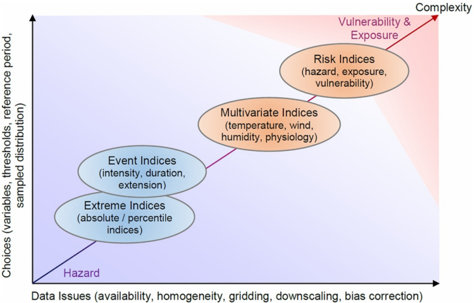
“For specific applications, imposing additional conditions to simple indices may be detrimental to the performance of early warning systems (Y. Wu et al., 2020), although the choice of optimal indicators depends on the purpose of the warning and the characteristics of the sector under…”
BackgroundAbsorbing aerosols and high‐temperature extremes in India: a general circulation modelling study
Mondal, A., Sah, N., Sharma, A., Venkataraman, C., & Patil, N. (2021) · International Journal of Climatology · doi:10.1002/joc.6783 · Cited by 35 · cited 1×
“, 2021), the net effect depends on complex interactions with the longwave radiation in the case of absorbing aerosols, such as black carbon or dust (Mondal et al., 2021; Sicard et al., 2022).”
BackgroundMueller, B., Zhang, X., & Zwiers, F. W. (2016) · Environmental Research Letters · doi:10.1088/1748-9326/11/4/044011 · Cited by 34
Identifying key driving mechanisms of heat waves in central Chile
Demortier, A., Bozkurt, D., & Jacques‐Coper, M. (2021) · Climate Dynamics · doi:10.1007/s00382-021-05810-z · Cited by 34 · cited 1×
“, 2019), and enhanced summer HW occurrence in regions of both hemispheres (e.g., southwestern US; Y. Y. Lee & Grotjahn, 2019, and southwestern South America; Demortier et al., 2021).”
BackgroundEarlier green‐up and spring warming amplification over Europe
Ma, S., Pitman, A. J., Lorenz, R., Kala, J., & Srbinovsky, J. (2016) · Geophysical Research Letters · doi:10.1002/2016gl068062 · Cited by 33 · cited 2×
“, 2020), while too early greening may have limited consequences for summer HWs (Ma et al., 2016).”
BackgroundCoronato, T., Carril, A. F., Zaninelli, P. G., Giles, J. A., Ruscica, R. C., Falco, M., Sörensson, A. A., Fita, L., Li, L., & Menéndez, C. G. (2020) · Climate Dynamics · doi:10.1007/s00382-020-05399-9 · Cited by 33 · cited 2×
“, 2022), and Argentina (Coronato et al., 2020), but with a varying degree of detail of the underlying physical processes.”
BackgroundSeasonal predictability of European summer climate re-assessed
Neddermann, N., Müller, W. A., Dobrynin, M., Düsterhus, A., & Baehr, J. (2019) · Climate Dynamics · doi:10.1007/s00382-019-04678-4 · Cited by 33
Weirich-Benet, E., Pyrina, M., Jiménez-Esteve, B., Fraenkel, E., Cohen, J., & Domeisen, D. I. V. (2023) · Artificial Intelligence for the Earth Systems · doi:10.1175/aies-d-22-0038.1 · Cited by 33
Luo, F., Selten, F., Wehrli, K., Kornhuber, K., Sager, P. L., May, W., Reerink, T., Seneviratne, S. I., Shiogama, H., Tokuda, D., et al. (2022) · Weather and Climate Dynamics · doi:10.5194/wcd-3-905-2022 · Cited by 33
Detection and attribution of changes in extreme temperatures at regional scale
Wang, Z., Jiang, Y., Wan, H., Yan, J., & Zhang, X. (2017) · Journal of Climate · doi:10.1175/jcli-d-15-0835.1 · Cited by 32
Dynamical mechanisms linking Indian monsoon precipitation and the circumglobal teleconnection
Beverley, J. D., Woolnough, S. J., Baker, L. H., Johnson, S. J., Weisheimer, A., & O’Reilly, C. (2021) · Climate Dynamics · doi:10.1007/s00382-021-05825-6 · Cited by 32 · cited 1×
“…the Indian and Western North Pacific summer monsoons, and the associated diabatic heating anomalies can drive a considerable fraction of the intraseasonal atmospheric variability over Eurasia and North America, respectively (e.g., Beverley et al., 2021; Ding & Wang, 2005; Stan et al., 2017).”
BackgroundRisser, M. D., Stone, D. A., Paciorek, C. J., Wehner, M. F., & Angélil, O. (2017) · Climate Dynamics · doi:10.1007/s00382-016-3492-x · Cited by 31 · cited 1×
“) lead to subjective choices that influence the conclusions, making statements sensitive to the way questions are posed (e.g., Angélil et al., 2018; Kirchmeier-Young et al., 2019; Otto et al., 2016; Risser et al., 2017).”
BackgroundAnnex VI: Climatic Impact-driver and Extreme Indices
Change, I. P. O. C. (2023) · Cambridge University Press eBooks · doi:10.1017/9781009157896.020 · Cited by 31
van Straaten, C., Whan, K., Coumou, D., van den Hurk, B., & Schmeits, M. J. (2020) · Quarterly Journal of the Royal Meteorological Society · doi:10.1002/qj.3810 · Cited by 29
Harrington, L. J., Otto, F. E. L., Cowan, T., & Hegerl, G. C. (2019) · Climate Dynamics · doi:10.1007/s00382-019-04820-2 · Cited by 27 · cited 1×
“, 2017), although intertwined influences make this separation challenging (Harrington et al., 2019).”
BackgroundPrecipitation response to extreme soil moisture conditions over the Mediterranean
Ardilouze, C., Materia, S., Batté, L., Benassi, M., & Prodhomme, C. (2020) · Climate Dynamics · doi:10.1007/s00382-020-05519-5 · Cited by 27
Atmospheric and Land Surface Contributions to Heatwaves: An Australian Perspective
Hirsch, A. L., & King, M. J. (2020) · Journal of Geophysical Research Atmospheres · doi:10.1029/2020jd033223 · Cited by 27 · cited 1×
“This suggests that the contribution of processes can substantially vary over small areas and/or across HW events, as found for other regions (e.g., central Africa and Australia; L. Hu et al., 2019; Hirsch & King, 2020).”
BackgroundDittus, A. J., Karoly, D. J., Lewis, S. C., Alexander, L. V., & Donat, M. G. (2016) · Journal of Climate · doi:10.1175/jcli-d-16-0164.1 · Cited by 26 · cited 19×
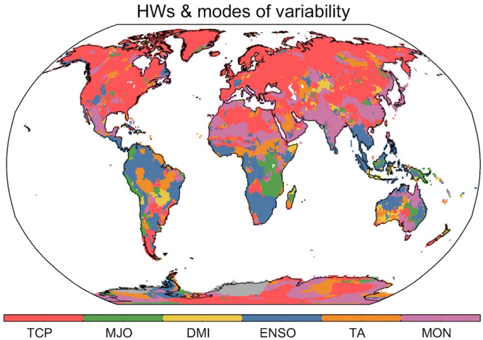
“MON summarizes the effect of some of the major regional summer monsoons (defined for the months of the corresponding summer season), including the Indian, Western North Pacific, West African and Australian monsoons.”
BackgroundInfluentialAerosol-modulated heat stress in the present and future climate of India
Dey, S., Choudhary, R. K., Upadhyay, A., & Dash, S. (2021) · Environmental Research Letters · doi:10.1088/1748-9326/ac3530 · Cited by 26 · cited 1×
“On the other hand, although the dominant aerosol cooling can be an important temperature buffer during HWs (Dey et al., 2021), the net effect depends on complex interactions with the longwave radiation in the case of absorbing aerosols, such as black carbon or dust (Mondal et al.”
BackgroundThomson, S. I., & Vallis, G. K. (2018) · Journal of the Atmospheric Sciences · doi:10.1175/jas-d-17-0298.1 · Cited by 24 · cited 1×
“However, atmospheric responses to SST forcing are often small as compared to internal atmospheric variability (Kushnir et al., 2002), they depend on the background state (e.g., Thomson & Vallis, 2018), and the effects of atmospheric circulation on SSTs may be confounded with SST forcing.”
BackgroundBlocking representation in the ERA-Interim driven EURO-CORDEX RCMs
Jury, M., Herrera, S., Gutiérrez, J. M., & Barriopedro, D. (2018) · Climate Dynamics · doi:10.1007/s00382-018-4335-8 · Cited by 23
Self-citationBank, W. (2020) · World Bank, Washington, DC eBooks · doi:10.1596/34335 · Cited by 23
Hu, L., Luo, J., Huang, G., & Wheeler, M. C. (2019) · Journal of Climate · doi:10.1175/jcli-d-18-0807.1 · Cited by 22
Climate-related hazard indices for Europe
Crespi, A., Terzi, S., Cocuccioni, S., Zebisch, M., Berckmans, J., & Füssel, H.-M. (2020) · Open Research (University of Surrey) · doi:10.25424/cmcc/climate_related_hazard_indices_europe_2020 · Cited by 22
Biomass burning aerosol impact on surface winds during the 2010 Russian heat wave
Baró, R., Lorente‐Plazas, R., Montávez, J. P., & Jiménez‐Guerrero, P. (2016) · Geophysical Research Letters · doi:10.1002/2016gl071484 · Cited by 21 · cited 1×
“A case study of the 2010 Russian mega-HW suggests that feedbacks induced by biomass burning aerosols from wildfires could have contributed to local air stagnation, increased atmospheric stability and changes in atmospheric circulation (Baró et al., 2017).”
BackgroundConnection between Sea Surface Anomalies and Atmospheric Quasi-Stationary Waves
Wolf, G., Czaja, A., Brayshaw, D. J., & Klingaman, N. P. (2019) · Journal of Climate · doi:10.1175/jcli-d-18-0751.1 · Cited by 20 · cited 1×
“, 2020) or sea ice anomalies (Wolf et al., 2020) may also impart some predictive skill.”
BackgroundLand‐Atmosphere Coupling in CORDEX‐Africa: Hindcast Regional Climate Simulations
Careto, J. A. M., Cardoso, R. M., Soares, P. M. M., & Trigo, R. M. (2018) · Journal of Geophysical Research Atmospheres · doi:10.1029/2018jd028378 · Cited by 20 · cited 18×
“MON summarizes the effect of some of the major regional summer monsoons (defined for the months of the corresponding summer season), including the Indian, Western North Pacific, West African and Australian monsoons.”
BackgroundInfluentialSicard, M., Córdoba‐Jabonero, C., López-Cayuela, M.-Á., Ansmann, A., Comerón, A., Zorzano, M., Rodríguez-Gómez, A., & Muñoz-Porcar, C. (2022) · Atmospheric chemistry and physics · doi:10.5194/acp-22-1921-2022 · Cited by 19
Statistical Learning Methods as a Basis for Skillful Seasonal Temperature Forecasts in Europe
Kämäräinen, M., Uotila, P., Karpechko, A. Y., Hyvärinen, O., Lehtonen, I., & Räisänen, J. (2019) · Journal of Climate · doi:10.1175/jcli-d-18-0765.1 · Cited by 17
Alvarez, M. S., Cerne, B., Osman, M., & Vera, C. S. (2019) · Climate Dynamics · doi:10.1007/s00382-019-04838-6 · Cited by 17
Seasonal forecasts of Eurasian summer heat wave frequency
Zhang, R. Z., Jia, X. J., & Qian, Q. (2022) · Environmental Research Communications · doi:10.1088/2515-7620/ac5364 · Cited by 17
Baker, H. S., Woollings, T. J., Mbengue, C., Allen, M. R., O’Reilly, C., Shiogama, H., & Sparrow, S. (2019) · Climate Dynamics · doi:10.1007/s00382-019-04786-1 · Cited by 16
Guigma, K. H., MacLeod, D. A., Todd, M. C., & Wang, Y. (2021) · Climate Dynamics · doi:10.1007/s00382-021-05726-8 · Cited by 15 · cited 1×
“, 2022), and windows of opportunity for enhanced subseasonal forecasts of HWs (Guigma et al., 2021).”
BackgroundAssessing changes in risk of amplified planetary waves in a warming world
Huntingford, C., Mitchell, D., Kornhuber, K., Coumou, D., Osprey, S., & Allen, M. R. (2019) · Atmospheric Science Letters · doi:10.1002/asl.929 · Cited by 14 · cited 2×
“Moreover, the simulated changes in HW-related atmospheric circulation patterns, such as CGTs, are sensitive to the forced patterns of SST responses to anthropogenic forcings (Huntingford et al., 2019), and GCMs tend to underestimate the near-surface impacts of CGTs (e.”
BackgroundInfluence of modes of climate variability on global temperature extremes.
Kenyon, J., & Hegerl, G. C. (2007) · Journal of Climate · doi:10.1175/2008jcli2125 · Cited by 14
Messori, G., Caballero, R., Bouchet, F., Faranda, D., Grotjahn, R., Harnik, N., Jewson, S. P., Pinto, J. G., Rivière, G., Woollings, T. J., et al. (2018) · Bulletin of the American Meteorological Society · doi:10.1175/bams-d-17-0296.1 · Cited by 13 · cited 1×
“theories accounting for dry and moist processes, and the need for understanding the links between dynamical aspects of weather systems and statistical HW definitions (Messori et al., 2018; Steinfeld & Pfahl, 2019).”
BackgroundMiller, D. E., Wang, Z., Li, B., Harnos, D. S., & Ford, T. W. (2021) · Journal of Climate · doi:10.1175/jcli-d-20-0878.1 · Cited by 11 · cited 1×
“In some cases, statistical models compete with (or are superior to) operational dynamical models in predicting warm extremes 3–4 weeks in advance (e.g., López-Gómez et al., 2022; Miller et al., 2021; Weirich Benet et al., 2023).”
BackgroundBaggett, C. F., & Lee, S. (2019) · Quarterly Journal of the Royal Meteorological Society · doi:10.1002/qj.3610 · Cited by 8 · cited 1×
“…(e.g., anthropogenic aerosols or widespread land-cover and land-management changes; Mahmood et al., 2014; Westervelt et al., 2018), and other mechanisms without obvious anthropogenic influences (e.g., Arctic diabatic heating by enhanced convergence of moist intrusions; Baggett & Lee, 2019).”
BackgroundPyrina, M., Nonnenmacher, M., Wagner, S., & Zorita, E. (2021) · Weather and Forecasting · doi:10.1175/waf-d-20-0235.1 · Cited by 7
Prediction of Short‐Term Climate Extremes with a Multimodel Ensemble
Becker, E. J. (2017) · Geophysical monograph · doi:10.1002/9781119068020.ch21 · Cited by 6
Challenges and design choices for global weather and climate models based on machine learning
Dueben, P. D., & Bauer, P. (2018) · doi:10.5194/gmd-2018-148
Global land-based datasets for monitoring climatic extremes
Donat, M. G., Alexander, L. V., Yang, H., Durre, I., Vose, R. S., & Caesar, J. (2013) · Bulletin of the American Meteorological Society · doi:10.1175/bams-d-12-00109
Research works printed but not linked: 12
- 10.1175/1520-0442(2002)015<1893:CTTJSW>2.0.CO;2 · doi:10.1175/1520-0442(2002)015
- Collins, M., Sutherland, M., Bouwer, L., Cheong, S.-M., Frölicher, T., Jacot Des Combes, H., et al. (2019). Extremes, abrupt changes and manag- ing risk. In H.-O. Pörtner, D. C. Roberts, V. Masson-Delmotte, P. Zhai, M. Tignor, E. Poloczanska, et al. (Eds.), IPCC special report on the ocean and cryosphere in a changing climate (pp. 589-655). Cambridge University Press. https://doi.org/10.1017/9781009157964. · DOI
- Kushnir, Y., Robinson, W. A., Bladé, I., Hall, N. M. J., Peng, P., & Sutton, R. (2002). Atmospheric GCM response to extratropical SST anoma- lies: Synthesis and evaluation. Journal of Climate, 15(16), 2233-2256. https://doi.org/10.1175/1520-0442(2002)015,2233:AGRTES.2.0.CO;2 · doi:10.1175/1520-0442(2002)015,2233:agrtes.2.0.co;2
- 10.1175/1520-0477(1996)077<1507:TJHWIT>2.0.CO;2 · doi:10.1175/1520-0477(1996)077
- 10.1175/1520-0442(2002)015 · doi:10.1175/1520-0442(2002)015
- Mann, M. E., Rahmstorf, S., Kornhuber, K., Steinman, B. A., Miller, S. K., & Coumou, D. (2017). Influence of anthropogenic climate change on planetary wave resonance and extreme weather events. Scientific Reports, 7(1), 45242. https://doi.org/10.1038/srep4524 · doi:10.1038/srep4524
- Peterson, T. C., Folland, C., Gruza, G., Hogg, W., Mokssit, A., & Plummer, N. (2001). Report on the activities of the working group on climate change detection and related Rapporteurs 1998-2001. WMO, Report WCDMP-47 (p. 143). WMO-TD 1071.
- Rohde, R., Muller, R., Jacobsen, R., Perlmutter, S., Rosenfeld, A., Wurtele, J., et al. (2013). Berkeley earth temperature averaging process. Geoin- formatics & Geostatistics: Overview, 1(2), 20-100. https://doi.org/10.4172/gigs.100010 · doi:10.4172/gigs.100010
- 10.1175/1520-0450(1979)018<0861:TAOSPI>2.0.CO;2 · doi:10.1175/1520-0450(1979)018
- Vijverberg, S., Schmeits, M., van der Wiel, K., & Coumou, D. (2020). Subseasonal statistical forecasts of eastern U.S. hot temperature events. Monthly Weather Review, 148(12), 4799-4822. https://doi.org/10.1175/mwrd-19-0409. · doi:10.1175/mwrd-19-0409
- 10.1175/mwrd-19-0409.1 · doi:10.1175/mwrd-19-0409.1
- WMO. (1992). International meteorological vocabulary. WMO-No. 182 (2nd ed.).
Cited by
Artificial intelligence for modeling and understanding extreme weather and climate events
Camps-Valls, G., Fernández-Torres, M.-Á., Cohrs, K.-H., Höhl, A., Castelletti, A., Pacal, A., Robin, C., Martinuzzi, F., Papoutsis, I., Prapas, I., et al. (2025) · Nature Communications · doi:10.1038/s41467-025-56573-8 · Cited by 288
“Hence, several drivers of heat extremes remain uncertain, speci fi cally long-term changes in atmospheric circulationand land-atmosphereinteractions that mayamplify or enhance speci fi c events 105 .”
Self-citationMateria, S., García, L. P., van Straaten, C., O, S., Mamalakis, A., Cavicchia, L., Coumou, D., de Luca, P., Kretschmer, M., & Donat, M. (2024) · WIREs Climate Change · doi:10.1002/wcc.914 · Cited by 130
“Hot extremes are becoming more frequent, intense, and longer because of anthropogenic climate change (Dunn et al., 2020), with heatwaves being their most common manifestation (Barriopedro et al., 2023; Thompson et al., 2023).”
Mortality impacts of the most extreme heat events
Matthews, T. K. R., Raymond, C., Foster, J., Baldwin, J. W., Ivanovich, C. C., Kong, Q., Kinney, P. L., & Horton, R. (2025) · Nature Reviews Earth & Environment · doi:10.1038/s43017-024-00635-w · Cited by 159
“Such heat extremes are often linked to high-pressure systems (anticyclones), specifically adiabatic warming from descending air, reduced cloud cover and decreased precipitation 21 .”
Flash drought impacts on global ecosystems amplified by extreme heat
Gu, L., Schumacher, D. L., Fischer, E. M., Slater, L. J., Yin, J., Sippel, S., Chen, J., Liu, P., & Knutti, R. (2025) · Nature Geoscience · doi:10.1038/s41561-025-01719-y · Cited by 132
“Heatwaves typically occur in conjunction with pronounced and persistent anticyclones, leading to subsidence, adiabatic warming and high atmospheric stability 27–29 , hence hindering the occurrence of precipitation and promoting soil desiccation during flash droughts.”
Salcedo‐Sanz, S., Pérez‐Aracil, J., Ascenso, G., Ser, J. D., Casillas-Pérez, D., Kadow, C., Fister, D., Barriopedro, D., García‐Herrera, R., Giuliani, M., et al. (2023) · Theoretical and Applied Climatology · doi:10.1007/s00704-023-04571-5 · Cited by 133
Self-citation
Metadata
- Authors
- Barriopedro, D., García‐Herrera, R., Ordóñez, C., Miralles, D. G., & Salcedo‐Sanz, S.
- Affiliations
- Universidad Complutense de Madrid (ES)
- Ghent University (BE)
- Universidad de Alcalá (ES)
- Corresponding author
- Barriopedro, D.
- Venue
- Reviews of Geophysics
- Publisher
- American Geophysical Union (AGU)
- Published
- 2023-05-08
- Volume
- 61
- Issue
- 2
- ISSN
- 0096-1043 (ISSN-L)
- 8755-1209
- 1944-9208
- OpenAlex
- W4367049346
- Semantic Scholar
- 29d2f40706ce3c0ab780f10788e19b4a4286daac
- Cited by
- 404
- References
- 431
- Citations by year
- 2026: 124 · 2025: 176 · 2024: 93 · 2023: 11
- FWCI
- 45.39
- Type
- journal article
- Language
- en
- Open access
- hybrid
- doi.org
- Licence
- Locations
- Reviews of Geophysics (publishedVersion, cc-by)
- Ghent University Academic Bibliography (Ghent University) (submittedVersion, cc-by)
- DIGITAL.CSIC (Spanish National Research Council (CSIC)) (submittedVersion, cc-by)
- Funders
- HORIZON EUROPE European Research Council (101088405)
- Ministerio de Economía y Competitividad (CGL2017‐83198‐R)
- Ministerio de Ciencia, Innovación y Universidades (RTI2018‐096402‐B‐I00)
- Ministerio de Ciencia e Innovación (PID2021‐122252OB‐I00, PID2020‐115454GB‐C21)
- Topics
- Physical Sciences › Environmental Science › Global and Planetary Change › Climate variability and models
- Physical Sciences › Earth and Planetary Sciences › Atmospheric Science › Meteorological Phenomena and Simulations
- Physical Sciences › Environmental Science › Global and Planetary Change › Climate Change and Environmental Impact
- Keywords
- heat waves, heat wave definition, climate change projections, subseasonal forecasting, atmospheric circulation, thermodynamic processes, observational networks, artificial intelligence
About these checks
Registry, retraction, Cites and statistics results are computed, not judged, with one exception: a printed reference that no index lists is read once by a model before it counts as a citation error. Claims are extracted by a model and kept only when their quote appears verbatim in the text; each cited source is then checked, with a model’s help, for whether it says what the claim relies on. Those verdicts can be wrong — read the claim’s quote and the cited source before relying on one.
Statistics and arithmetic are recomputed, not judged.
Confidence bands are shown only for fields calibrated on our annotated test set. None is calibrated yet, so no band is shown.
What counts as a claim ›How we measure confidence ›How we check this ›
Are you an author, or do you see a problem with this page? Request a review
Data sources
Bibliographic data: Semantic Scholar, OpenAlex, Crossref.
Contains information from the Semantic Scholar Academic Graph Datasets, made available under the ODC Attribution License (ODC-BY 1.0).
Semantic Scholar’s data is described in: Kinney, R., et al. (2023). The Semantic Scholar Open Data Platform. arXiv:2301.10140.
