

Heat Waves: Physical Understanding and Scientific Challenges
Open accessThe DOI matches its Crossref record; 440 of the 444 references it cites were found in a registry or an index, and 4 are not checked yet.
Abstract
Heat waves (HWs) can cause large socioeconomic and environmental impacts. The observed increases in their frequency, intensity and duration are projected to continue with global warming. This review synthesizes the state of knowledge and scientific challenges. It discusses different aspects related to the definition, triggering mechanisms, observed changes and future projections of HWs, as well as emerging research lines on subseasonal forecasts and specific types of HWs. We also identify gaps that limit progress and delineate priorities for future research. Overall, the physical drivers of HWs are not well understood, partly due to difficulties in the quantification of their interactions and responses to climate change. Influential factors convey processes at different spatio‐temporal scales, from global warming and the large‐scale atmospheric circulation to regional and local factors in the affected area and upwind regions. Although some thermodynamic processes have been identified, there is a lack of understanding of dynamical aspects, regional forcings and feedbacks, and their future changes. This hampers the attribution of regional trends and individual events, and reduces the ability to provide accurate forecasts and regional projections. Sustained observational networks, models of diverse complexity, narrative‐based methodological approaches and artificial intelligence offer new opportunities toward process‐based understanding and interdisciplinary research.
Overview
The claims and statistics of this paper haven’t been checked yet.
Free: it reads the open-access text and checks the first 5 claims that cite a source we can check. Create a free account to check every claim.
Integrity signals
Registry
Cites
Statistics
Figures






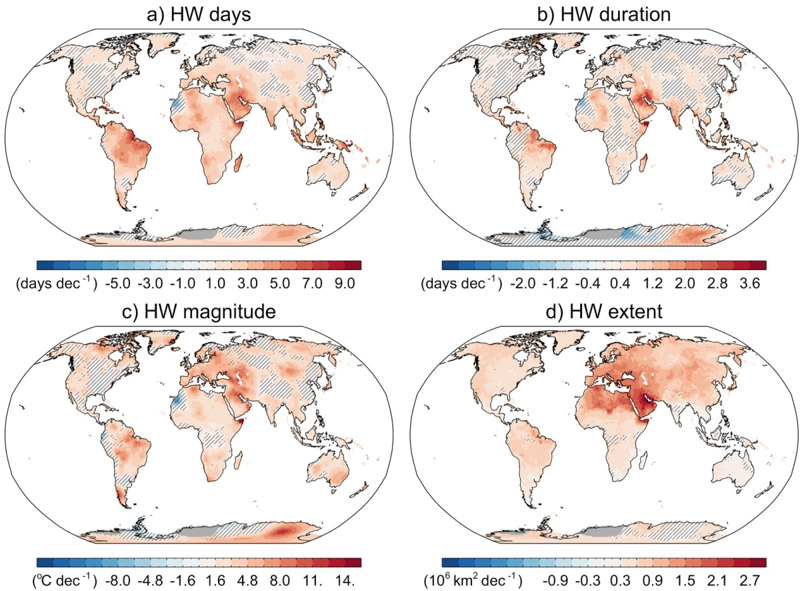
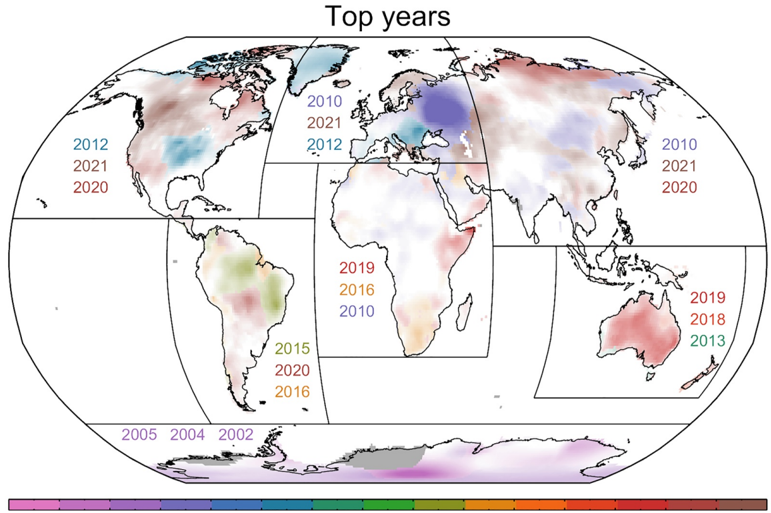

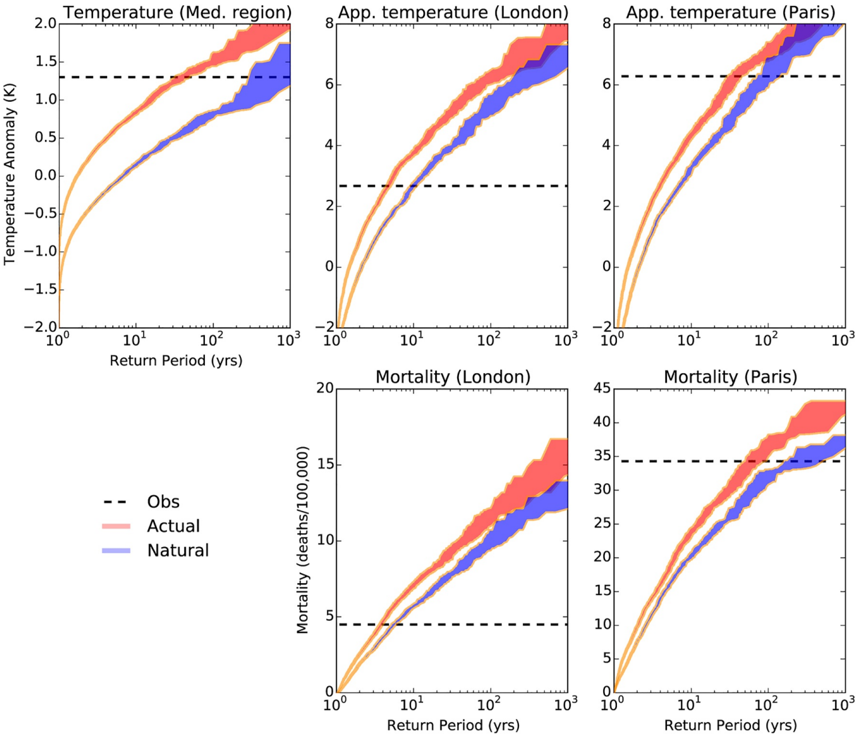

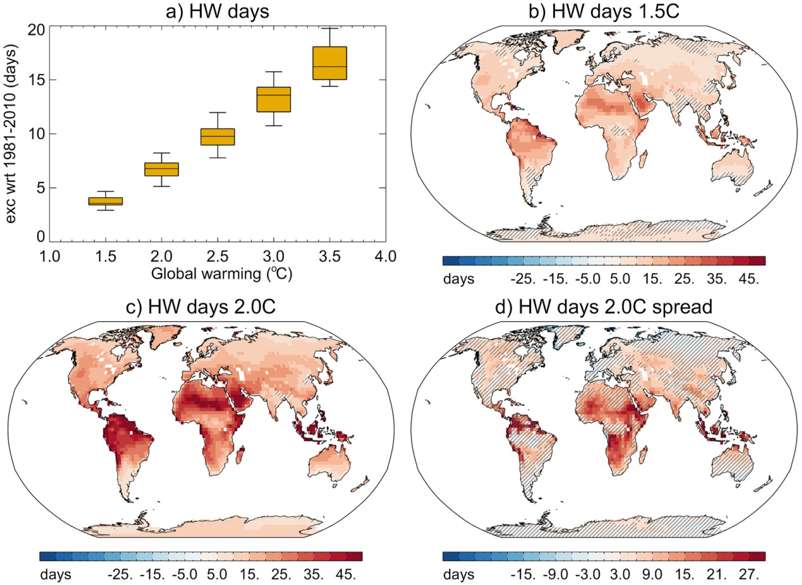



Verification
Claims the paper makes
The claims and statistics of this paper haven’t been checked yet.
Free: it reads the open-access text and checks the first 5 claims that cite a source we can check. Create a free account to check every claim.
Claims other papers make about this one
Each is checked against this paper’s own text: does it say what the citing paper says it does?
The source backs part of the claim, not all of it — or backs it for a different population, condition or comparison.
In the citing paper
“Conventional heatwave analysis has commonly relied on statistical methods, physical modeling, and conventional machine learning approaches [12, 13].”
From GPU-Accelerated Deep Learning for Heatwave Prediction and Urban Heat Risk Assessment (2026) · cites this paper as [12]
Experimental — accuracy not yet measuredThe source backs part of the claim, not all of it — or backs it for a different population, condition or comparison.
In the citing paper
“Accurate HW forecasting at weather lead times (1-15 days) is crucial but remains challenging due to the complex interplay of large-scale atmospheric circulation, regional feedbacks, and local meteorological phenomena [1, 5, 6].”
From Advancing Heatwave Forecasting via Distribution Informed-Graph Neural Networks (DI-GNNs): Integrating Extreme Value Theory with GNNs (2024) · cites this paper as [1]
Experimental — accuracy not yet measuredThe source backs part of the claim, not all of it — or backs it for a different population, condition or comparison.
In the citing paper
“Hot extremes are becoming more frequent, intense, and longer because of anthropogenic climate change (Dunn et al., 2020), with heatwaves being their most common manifestation (Barriopedro et al., 2023;Thompson et al., 2023).”
From Artificial intelligence for climate prediction of extremes: State of the art, challenges, and future perspectives (2024) · cites this paper as Barriopedro et al., 2023
Experimental — accuracy not yet measuredThe cited source says what the claim attributes to it.
In the citing paper
“These events have increased in frequency, intensity, and duration over recent decades due to anthropogenic climate change [1, 2].”
From Advancing Heatwave Forecasting via Distribution Informed-Graph Neural Networks (DI-GNNs): Integrating Extreme Value Theory with GNNs (2024) · cites this paper as [1]
Self-check
Percentages, sums and reported differences re-computed from the paper’s own numbers.
The self-check needs the paper’s full text.
Citations
Cites
Hersbach, H., Bell, B., Berrisford, P., Hirahara, S., Horányi, A., Muñoz‐Sabater, J., Nicolas, J., Peubey, C., Radu, R., Schepers, D., et al. (2020) · Quarterly Journal of the Royal Meteorological Society · doi:10.1002/qj.3803 · Cited by 31,882
The NCEP/NCAR 40-Year Reanalysis Project
Kalnay, E., Kanamitsu, M., Kistler, R., Collins, W., Deaven, D., Gandin, L., Iredell, M., Saha, S., White, G., Woollen, J., et al. (1996) · Bulletin of the American Meteorological Society · doi:10.1175/1520-0477(1996)077<0437:tnyrp>2.0.co;2 · Cited by 28,360
The ERA‐Interim reanalysis: configuration and performance of the data assimilation system
Dee, D. P., Uppala, S. M., Simmons, A. J., Berrisford, P., Poli, P., Kobayashi, S., Andrae, U., Balmaseda, M. A., Balsamo, G., Bauer, P., et al. (2011) · Quarterly Journal of the Royal Meteorological Society · doi:10.1002/qj.828 · Cited by 24,480 · cited 3×
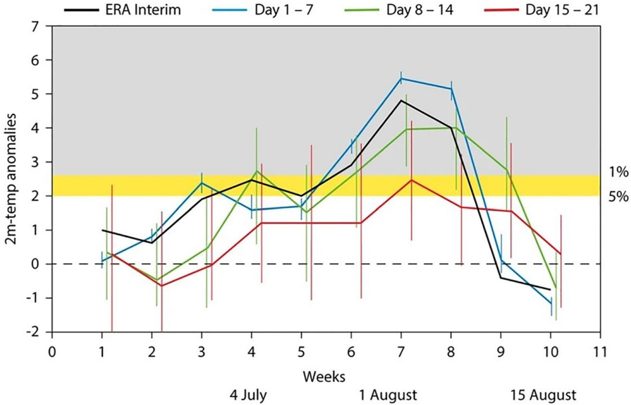
“Vertical lines represent the ensemble spread and the black curve is the verification from ERA-Interim (Dee et al., 2011).”
BackgroundInfluentialEyring, V., Bony, S., Meehl, G. A., Senior, C. A., Stevens, B., Stouffer, R. J., & Taylor, K. E. (2016) · Geoscientific Model Development · doi:10.5194/gmd-9-1937-2016 · Cited by 11,981 · cited 1×
“The model simulations considered for Figure 12 come from 23 Global Climate Models (GCMs) (Table A1) available in the CMIP6 archive (Eyring et al., 2016).”
MethodDeep learning and process understanding for data-driven Earth system science
Reichstein, M., Camps-Valls, G., Stevens, B., Jung, M., Denzler, J., Carvalhais, N., & Prabhat (2019) · Nature · doi:10.1038/s41586-019-0912-1 · Cited by 5,673 · cited 2×
“, 2018), the generation of data-driven weather forecasts (Dueben & Bauer, 2018; Scher & Messori, 2021), and potential applications in climate modeling (Reichstein et al., 2019; Schneider et al., 2017).”
BackgroundMethodThe energetic basis of the urban heat island
Oke, T. R. (1982) · Quarterly Journal of the Royal Meteorological Society · doi:10.1002/qj.49710845502 · Cited by 4,670 · cited 2×
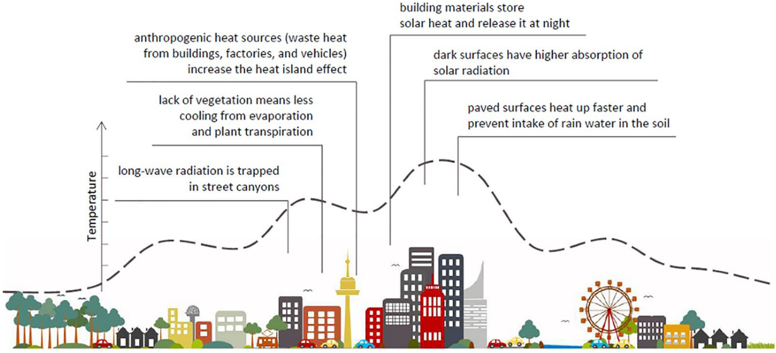
“This is referred to as the urban heat island (UHI) effect (Oke, 1982), which results from several factors (Figure 13).”
BackgroundGlobal observed changes in daily climate extremes of temperature and precipitation
Alexander, L. V., Zhang, X., Peterson, T. C., Caesar, J., Gleason, B., Klein Tank, A. M. G., Haylock, M., Collins, D., Trewin, B., Rahimzadeh, F., et al. (2006) · Journal of Geophysical Research: Atmospheres · doi:10.1029/2005jd006290 · Cited by 4,492
Influence of extreme weather disasters on global crop production
Lesk, C., Rowhani, P., & Ramankutty, N. (2016) · Nature · doi:10.1038/nature16467 · Cited by 3,883 · cited 1×
“These extreme events are of great concern as they can inflict devastating impacts on human health, ecosystems, agriculture and economy (e.g., Hoegh-Guldberg et al., 2018; R. M. Horton et al., 2016; Lesk et al., 2016; Mora et al., 2017).”
Background(2019) · Cited by 3,602
Global warming and recurrent mass bleaching of corals
Hughes, T. P., Kerry, J. T., Álvarez-Noriega, M., Álvarez-Romero, J. G., Anderson, K. D., Baird, A. H., Babcock, R. C., Beger, M., Bellwood, D. R., Berkelmans, R., et al. (2017) · Nature · doi:10.1038/nature21707 · Cited by 3,385
Research works printed but not linked: 12
- 10.1175/1520-0442(2002)015<1893:CTTJSW>2.0.CO;2 · doi:10.1175/1520-0442(2002)015
- Collins, M., Sutherland, M., Bouwer, L., Cheong, S.-M., Frölicher, T., Jacot Des Combes, H., et al. (2019). Extremes, abrupt changes and manag- ing risk. In H.-O. Pörtner, D. C. Roberts, V. Masson-Delmotte, P. Zhai, M. Tignor, E. Poloczanska, et al. (Eds.), IPCC special report on the ocean and cryosphere in a changing climate (pp. 589-655). Cambridge University Press. https://doi.org/10.1017/9781009157964. · DOI
- Kushnir, Y., Robinson, W. A., Bladé, I., Hall, N. M. J., Peng, P., & Sutton, R. (2002). Atmospheric GCM response to extratropical SST anoma- lies: Synthesis and evaluation. Journal of Climate, 15(16), 2233-2256. https://doi.org/10.1175/1520-0442(2002)015,2233:AGRTES.2.0.CO;2 · doi:10.1175/1520-0442(2002)015,2233:agrtes.2.0.co;2
- 10.1175/1520-0477(1996)077<1507:TJHWIT>2.0.CO;2 · doi:10.1175/1520-0477(1996)077
- 10.1175/1520-0442(2002)015 · doi:10.1175/1520-0442(2002)015
- Mann, M. E., Rahmstorf, S., Kornhuber, K., Steinman, B. A., Miller, S. K., & Coumou, D. (2017). Influence of anthropogenic climate change on planetary wave resonance and extreme weather events. Scientific Reports, 7(1), 45242. https://doi.org/10.1038/srep4524 · doi:10.1038/srep4524
- Peterson, T. C., Folland, C., Gruza, G., Hogg, W., Mokssit, A., & Plummer, N. (2001). Report on the activities of the working group on climate change detection and related Rapporteurs 1998-2001. WMO, Report WCDMP-47 (p. 143). WMO-TD 1071.
- Rohde, R., Muller, R., Jacobsen, R., Perlmutter, S., Rosenfeld, A., Wurtele, J., et al. (2013). Berkeley earth temperature averaging process. Geoin- formatics & Geostatistics: Overview, 1(2), 20-100. https://doi.org/10.4172/gigs.100010 · doi:10.4172/gigs.100010
- 10.1175/1520-0450(1979)018<0861:TAOSPI>2.0.CO;2 · doi:10.1175/1520-0450(1979)018
- Vijverberg, S., Schmeits, M., van der Wiel, K., & Coumou, D. (2020). Subseasonal statistical forecasts of eastern U.S. hot temperature events. Monthly Weather Review, 148(12), 4799-4822. https://doi.org/10.1175/mwrd-19-0409. · doi:10.1175/mwrd-19-0409
- 10.1175/mwrd-19-0409.1 · doi:10.1175/mwrd-19-0409.1
- WMO. (1992). International meteorological vocabulary. WMO-No. 182 (2nd ed.).
Cited by
Artificial intelligence for modeling and understanding extreme weather and climate events
Camps-Valls, G., Fernández-Torres, M.-Á., Cohrs, K.-H., Höhl, A., Castelletti, A., Pacal, A., Robin, C., Martinuzzi, F., Papoutsis, I., Prapas, I., et al. (2025) · Nature Communications · doi:10.1038/s41467-025-56573-8 · Cited by 288
“Hence, several drivers of heat extremes remain uncertain, speci fi cally long-term changes in atmospheric circulationand land-atmosphereinteractions that mayamplify or enhance speci fi c events 105 .”
Self-citationMateria, S., García, L. P., van Straaten, C., O, S., Mamalakis, A., Cavicchia, L., Coumou, D., de Luca, P., Kretschmer, M., & Donat, M. (2024) · WIREs Climate Change · doi:10.1002/wcc.914 · Cited by 130
“Hot extremes are becoming more frequent, intense, and longer because of anthropogenic climate change (Dunn et al., 2020), with heatwaves being their most common manifestation (Barriopedro et al., 2023; Thompson et al., 2023).”
Mortality impacts of the most extreme heat events
Matthews, T. K. R., Raymond, C., Foster, J., Baldwin, J. W., Ivanovich, C. C., Kong, Q., Kinney, P. L., & Horton, R. (2025) · Nature Reviews Earth & Environment · doi:10.1038/s43017-024-00635-w · Cited by 159
“Such heat extremes are often linked to high-pressure systems (anticyclones), specifically adiabatic warming from descending air, reduced cloud cover and decreased precipitation 21 .”
Flash drought impacts on global ecosystems amplified by extreme heat
Gu, L., Schumacher, D. L., Fischer, E. M., Slater, L. J., Yin, J., Sippel, S., Chen, J., Liu, P., & Knutti, R. (2025) · Nature Geoscience · doi:10.1038/s41561-025-01719-y · Cited by 132
“Heatwaves typically occur in conjunction with pronounced and persistent anticyclones, leading to subsidence, adiabatic warming and high atmospheric stability 27–29 , hence hindering the occurrence of precipitation and promoting soil desiccation during flash droughts.”
Salcedo‐Sanz, S., Pérez‐Aracil, J., Ascenso, G., Ser, J. D., Casillas-Pérez, D., Kadow, C., Fister, D., Barriopedro, D., García‐Herrera, R., Giuliani, M., et al. (2023) · Theoretical and Applied Climatology · doi:10.1007/s00704-023-04571-5 · Cited by 133
Self-citationGlobal emergence of regional heatwave hotspots outpaces climate model simulations
Kornhuber, K., Bartusek, S., Seager, R., Schellnhuber, H. J., & Ting, M. (2024) · Proceedings of the National Academy of Sciences · doi:10.1073/pnas.2411258121 · Cited by 100
“Dry soils and associated land–atmosphere feedbacks are major heatwave drivers ( 9 , 19 , 36 ).”
Vegetation–climate feedbacks across scales
Miralles, D. G., Arellano, J. V.-G. D., McVicar, T. R., & Mahecha, M. D. (2025) · Annals of the New York Academy of Sciences · doi:10.1111/nyas.15286 · Cited by 102
“As such, urban green spaces, including parks and green roofs, have been shown to reduce the urban heat island, making cities more resilient to heatwaves (Barriopedro et al., 2023).”
BackgroundSelf-citationBiodiversity and Climate Extremes: Known Interactions and Research Gaps
Mahecha, M. D., Bastos, A., Bohn, F. J., Eisenhauer, N., Feilhauer, H., Hickler, T., Kalesse‐Los, H., Migliavacca, M., Otto, F. E. L., Peng, J. X., et al. (2024) · Earth s Future · doi:10.1029/2023ef003963 · Cited by 105
“The variety in plants' physiological responses becomes critical in moderating the severity of this feedback, thereby directly impacting human activities, especially agricultural productivity (Barriopedro et al., 2023; Beugnon et al., 2024; Graf et al., 2020; Miralles et al., 2019).”
BackgroundRecord-shattering 2023 Spring heatwave in western Mediterranean amplified by long-term drought
Lemus‐Canovas, M., Insúa-Costa, D., Trigo, R. M., & Miralles, D. G. (2024) · npj Climate and Atmospheric Science · doi:10.1038/s41612-024-00569-6 · Cited by 79
“On the other hand, due to the climatologically dry soil conditions during summer, Mediterranean regimes tend to be less affected by large negative anomalies in soil moisture, and summer heat waves are rather triggered by heat advection from arid regions 22 .”
BackgroundSelf-citationPreventing heat-related deaths: The urgent need for a global early warning system for heat
Brimicombe, C., Runkle, J. D., Tuholske, C. P., Domeisen, D. I. V., Gao, C., Toftum, J., & Otto, I. M. (2024) · PLOS Climate · doi:10.1371/journal.pclm.0000437 · Cited by 60
“A central limitation for the implementation of a global heat EWS is that currently there is not a globally agreed upon definition of hazardous extreme heat nor heatwaves [33].”
BackgroundCai, F., Liu, C., Gerten, D., Yang, S., Zhang, T., Li, K., & Kurths, J. (2024) · Nature Communications · doi:10.1038/s41467-024-52254-0 · Cited by 59
Yang, X., Yao, L., Li, M., Cao, J., Zhong, Q., Peng, W., Wu, W., & Zhou, J. (2025) · Applied Energy · doi:10.1016/j.apenergy.2025.125424 · Cited by 43
Towards multi-scale and context-specific heat health risk assessment - A systematic review
Ye, J., & Yang, F. (2025) · Sustainable Cities and Society · doi:10.1016/j.scs.2024.106102 · Cited by 47
Elia, M., Lafortezza, R., Cappelluti, O., Costa-Saura, J. M., Bacciu, V., Giannico, V., Shao, C., & Sanesi, G. (2023) · The Science of The Total Environment · doi:10.1016/j.scitotenv.2023.169269 · Cited by 59
Ecophysiological responses to heat waves in the marine intertidal zone
Stillman, J. H., Amri, A. B., Holdreith, J. M., Hooper, A., Leon, R. V., Pruett, L. R., & Bukaty, B. M. (2025) · Journal of Experimental Biology · doi:10.1242/jeb.246503 · Cited by 42
Shi, P., Li, Y., Biswas, A., Wei, K., & Hou, M. (2024) · The Science of The Total Environment · doi:10.1016/j.scitotenv.2024.174834 · Cited by 45
Esposito, A., Pappaccogli, G., Donateo, A., Salizzoni, P., Maffeis, G., Semeraro, T., Santiago, J. L., & Buccolieri, R. (2024) · Remote Sensing · doi:10.3390/rs16234496 · Cited by 41
Marengo, J., Costa, M. C., Cunha, A. P., Espinoza, J. C., Jimenez-Munoz, J. C., Libonati, R., de Miranda, V. F. V. V., Trigo, I. F., Sierra, J. P., Geirinhas, J. L., et al. (2025) · Frontiers in Climate · doi:10.3389/fclim.2025.1529082 · Cited by 52
Wu, H., Su, X., Singh, V. P., & Niu, J. (2024) · Journal of Hydrology · doi:10.1016/j.jhydrol.2024.131901 · Cited by 36
Núñez-Rodríguez, S., Collazo, C., Sedano, J., Sánchez-Iglesias, A. I., & González‐Santos, J. (2025) · Healthcare · doi:10.3390/healthcare13212785 · Cited by 33
“Climate change is driving an increase in the frequency, intensity, and duration of heat waves worldwide [1–3].”
Li, X., MANN, M. E., Wehner, M. F., Rahmstorf, S., Petri, S., Christiansen, S. A., & Carrillo, J. (2024) · Proceedings of the National Academy of Sciences · doi:10.1073/pnas.2315330121 · Cited by 49
“It is clear that such a temperature anomaly is very rare and raises the question of whether there are other processes involved that are not properly resolved by current generation model simulations that form the basis of these attribution exercises (17).”
Hossain, I., Rana, M. S., Haque, A. K. M. M., & Masud, A. A. (2024) · Discover Sustainability · doi:10.1007/s43621-024-00697-2 · Cited by 38
Hao, Z., & Chen, Y. (2024) · Science China Earth Sciences · doi:10.1007/s11430-023-1201-y · Cited by 38
“…the origin of co-located land drought/heatwaves and marine heatwaves from sub-seasonal sea-air interactions (Herrera-Estrada and Diffenbaugh, 2020; Barriopedro et al., 2023); another example is the 2022 summer heat-drought-forest fire-flood compound event in the Sichuan-Chongqing region China,…”
Megacities are causal pacemakers of extreme heatwaves
Yang, X., Wang, Z., Wang, C., & Lai, Y. (2024) · npj Urban Sustainability · doi:10.1038/s42949-024-00148-x · Cited by 33
“As a particular type of climatic extremes, heatwaves incur widespread adverse impacts on human health, infrastructure, and natural ecosystems 7 .”
BackgroundAcceleration of daily land temperature extremes and correlations with surface energy fluxes
Huntingford, C., Cox, P. M., Ritchie, P. D. L., Clarke, J. J., Parry, I., & Williamson, M. S. (2024) · npj Climate and Atmospheric Science · doi:10.1038/s41612-024-00626-0 · Cited by 32
“That review 56 discusses regional-to-local factors and speci fi cally references how drier soils enhance heatwave strength via modulated surface energy partitioning.”
Uneven evolution of regional European summer heatwaves under climate change
Khodayar, S., & Paredes‐Fortuny, L. (2024) · Weather and Climate Extremes · doi:10.1016/j.wace.2024.100648 · Cited by 37
Regionalisation of heat waves in southern South America
Suli, S., Barriopedro, D., García‐Herrera, R., & Rusticucci, M. (2023) · Weather and Climate Extremes · doi:10.1016/j.wace.2023.100569 · Cited by 39
Self-citationBoboc, L., Dima, M., Vaideanu, P. C., & Ionita-Scholz, M. (2025) · Weather and Climate Extremes · doi:10.1016/j.wace.2025.100794 · Cited by 46
Zhang, Z., Xu, W., Zeng, S., Liu, Y., Liu, T., Zhang, Y., Du, A., Li, Y., Zhang, N., Wang, J., et al. (2024) · Environmental Science & Technology Letters · doi:10.1021/acs.estlett.4c00415 · Cited by 35
Climate Change and Human Health in the Arctic: A Review
Grigorieva, E. A. (2024) · Climate · doi:10.3390/cli12070089 · Cited by 38
“Modern climate change represents one of the most pressing challenges of our time, with far-reaching impacts on ecosystems, economies, and societies worldwide [1,2].”
BackgroundMaximal reachable temperatures for Western Europe in current climate
Noyelle, R., Zhang, Y., Yiou, P., & Faranda, D. (2023) · Environmental Research Letters · doi:10.1088/1748-9326/acf679 · Cited by 40
Understanding the vertical temperature structure of recent record-shattering heatwaves
Hotz, B., Papritz, L., & Röthlisberger, M. (2024) · Weather and Climate Dynamics · doi:10.5194/wcd-5-323-2024 · Cited by 39
“In light of these impacts, there are large societal and political demands for accurate projections of heatwave characteristics, particularly concerning such exceptionally intense events (Barriopedro et al., 2023).”
BackgroundFrequent land-ocean transboundary migration of tropical heatwaves under climate change
Gu, X., Jiang, Z., Guan, Y., Luo, M., Li, J., Wang, L., Zhang, X., Kong, D., & Wang, L. (2025) · Nature Communications · doi:10.1038/s41467-025-58586-9 · Cited by 31
“Heatwaves are de fi ned as prolonged periods of extremely high near-surface air temperature exceeding the 90 th percentile of historical climatology for at least three consecutive days 102,103 .”
Collazo, S., Suli, S., Zaninelli, P. G., García‐Herrera, R., Barriopedro, D., & Garrido‐Pérez, J. M. (2024) · Communications Earth & Environment · doi:10.1038/s43247-024-01386-8 · Cited by 33
Self-citationUnderstanding the Magnification of Heatwaves over Spain: Relevant changes in the most extreme events
Paredes‐Fortuny, L., & Khodayar, S. (2023) · Weather and Climate Extremes · doi:10.1016/j.wace.2023.100631 · Cited by 35
Nasong, D., Zhou, S., Kornhuber, K., & Yu, B. (2025) · Earth s Future · doi:10.1029/2024ef005256 · Cited by 24
“…impacts of global warming, abnormally high pressure, and SM‐atmosphere feedbacks, which have been shown to be the main drivers of regional heat extremes in previous studies (Barriopedro et al., 2023; Pezza et al., 2012; Röthlisberger & Papritz, 2023; Sen-eviratne et al., 2013; Zhou et al., 2023).”
Tak, S., Seo, E., Dirmeyer, P. A., & Lee, M. (2024) · Weather and Climate Extremes · doi:10.1016/j.wace.2024.100670 · Cited by 24
Mediterranean marine heatwaves intensify in the presence of concurrent atmospheric heatwaves
Pastor, F., Paredes‐Fortuny, L., & Khodayar, S. (2024) · Communications Earth & Environment · doi:10.1038/s43247-024-01982-8 · Cited by 32
Anser, M. K., Nassani, A. A., Al‐Aiban, K. M., Zaman, K., & Haffar, M. (2025) · Energy Reports · doi:10.1016/j.egyr.2025.03.033 · Cited by 20
Accelerated shifts from heatwaves to heavy rainfall in a changing climate
Li, J., Wang, S., Zhu, J., Wang, D., & Zhao, T. (2025) · npj Climate and Atmospheric Science · doi:10.1038/s41612-025-01113-w · Cited by 29
Nonlinear increase of compound drought-heatwave events since the early 2000s
Kim, Y.-J., Yeh, S., Wang, G., & Ng, B. (2026) · Science Advances · doi:10.1126/sciadv.aea3038 · Cited by 22
The European summer heatwave of 2019 – a regional storyline perspective
Klimiuk, T., Ludwig, P., Benítez, A. S., Goessling, H., Braesicke, P., & Pinto, J. G. (2025) · Earth System Dynamics · doi:10.5194/esd-16-239-2025 · Cited by 26
Emmerichs, T., Lu, Y.-S., & Taraborrelli, D. (2024) · Biogeosciences · doi:10.5194/bg-21-3251-2024 · Cited by 20
Ionita-Scholz, M., Vaideanu, P. C., Antonescu, B., Roibu, C.-C., Ma, Q., & Nagavciuc, V. (2024) · Natural hazards and earth system sciences · doi:10.5194/nhess-24-4683-2024 · Cited by 29
Wang, J., & Zhang, M. (2025) · Sustainable Cities and Society · doi:10.1016/j.scs.2025.106609 · Cited by 23
Anthropogenic warming is accelerating recent heatwaves in Africa
Bobde, V., Ayegbusi, K. I., Akinsanola, A. A., Adeyeri, O. E., Morakinyo, T. E., & Adebiyi, A. A. (2025) · Communications Earth & Environment · doi:10.1038/s43247-025-02578-6 · Cited by 24
“Due to the globalincreaseintemperature 1,4,5 ,HWeventshaveincreasedsigni fi cantlyin recent decades 6 – 8 , leading to increasing research focus onunderstanding the variability and trends of HW characteristics as well as the underlying mechanisms 1,2,8 – 14 .”
InfluentialBharghavi, K., Reddy, T. L., Kapa, H., Rajesh, P., Sushmitha, H., & Reddy, K. K. (2025) · Natural Hazards · doi:10.1007/s11069-025-07681-7 · Cited by 23
“Additionally, there are difficulties in quantifying the interactions between different processes that influence drought occurrence and their responses to climate change (Barriopedro et al. 2023).”
InfluentialThe Summer Heatwave 2022 over Western Europe: An Attribution to Anthropogenic Climate Change
Feser, F., van Garderen, L., & Hansen, F. (2024) · Bulletin of the American Meteorological Society · doi:10.1175/bams-d-24-0017.1 · Cited by 16
Karinou, F., Agathangelidis, I., & Cartalis, C. (2025) · Remote Sensing · doi:10.3390/rs17091655 · Cited by 22
“While large-scale synoptic conditions are the primary drivers of heatwaves, air–surface interactions influence them through diabatic effects, upper level divergence, or the intensification of thermal lows [9].”
AI in humanitarian healthcare: a game changer for crisis response
Haykal, D., Goldust, M., Cartier, H., & Treacy, P. J. (2025) · Frontiers in Artificial Intelligence · doi:10.3389/frai.2025.1627773 · Cited by 24
Grela, P. D. G., González, D. S., & Gallardo-Peralta, L. P. (2024) · Land · doi:10.3390/land13091378 · Cited by 27
“This selection of studies revealed a lack of consensus on the precise definition of the term ‘heat wave’, a finding that is consistent with other reviews [6,81].”
Izagirre, E., Revuelto, J., Vidaller, I., Deschamps‐Berger, C., Rojas‐Heredia, F., Rico, I., Alonso‐González, E., Gascoin, S., Serrano, E., & López‐Moreno, J. I. (2024) · Regional Environmental Change · doi:10.1007/s10113-024-02333-1 · Cited by 25
“For instance, 2022 was characterized by prolonged extreme heat events across most of the Eurasian continent and North America (Barriopedro et al. 2023; C3S 2023; Lu et al. 2023).”
Gurung, T. R., & Chen, L. (2024) · Environmental Research Letters · doi:10.1088/1748-9326/ad4dbb · Cited by 17
“Under certain atmospheric conditions, the reduction in evaporative cooling, which normally dissip-ates heat from the land surface, can worsen the intensity and longevity of heatwaves (Barriopedro et al 2023).”
BackgroundThe outstanding European and Mediterranean heatwave activity during summer 2022
Trigo, R. M., Barriopedro, D., Garrido‐Pérez, J. M., Simon, A., Plecha, S. M., Teles‐Machado, A., Russo, A., & García‐Herrera, R. (2025) · Atmospheric Research · doi:10.1016/j.atmosres.2025.108195 · Cited by 21
Self-citationAI‐Driven Weather Forecasts to Accelerate Climate Change Attribution of Heatwaves
Jiménez‐Esteve, B., Barriopedro, D., Johnson, J. E., & García‐Herrera, R. (2025) · Earth s Future · doi:10.1029/2025ef006453 · Cited by 28
“…of the total ACC signal is already present in the initial atmospheric perturbation—derived from global GCMs (Figure S6 in Supporting Information S1)—is consistent with the overall consensus that ACC‐induced HW effects are primarily thermodynamically driven (Barriopedro et al., 2023; NAS, 2016).”
Self-citationRecent changes in spatiotemporal patterns of heat extremes in South Asia
Banerjee, A., Gupta, S., Priyanshu, P., Kar, A., Saha, R., Chakraborty, T., Ghosh, D., Kurths, J., & Hens, C. (2025) · npj Climate and Atmospheric Science · doi:10.1038/s41612-025-01146-1 · Cited by 20
Deep learning enables city-wide climate projections of street-level heat stress
Briegel, F., Schrodi, S., Sulzer, M., Brox, T., Pinto, J. G., & Christen, A. (2025) · Urban Climate · doi:10.1016/j.uclim.2025.102564 · Cited by 15
“…global urban population is estimated to increase from 55 % to 68 % by 2050 (United Nations et al., 2019), highlighting the need to address the vulnerability of urban areas to extreme heat events by adapting to and mitigating the impacts of urban heat (Wang et al., 2021; Barriopedro et al., 2023).”
Effects of atmospheric aerosols on heat stress over South Asia
Ajay, P., Nair, V. S., Babu, S. S., Das, C., & Usha, K. H. (2023) · Environmental Research Climate · doi:10.1088/2752-5295/acf7e2 · Cited by 19
Assessing the escalating human-perceived heatwaves in a warming world: The case of China
Zhang, J., Ren, G., & You, Q. (2024) · Weather and Climate Extremes · doi:10.1016/j.wace.2024.100643 · Cited by 23
Torralba, V., Materia, S., Cavicchia, L., Álvarez-Castro, M. C., Prodhomme, C., McAdam, R., Scoccimarro, E., & Gualdi, S. (2024) · Environmental Research Letters · doi:10.1088/1748-9326/ad24cf · Cited by 19
“…intelligence and machine learning algorithms can be exploited for the detection of new predictability sources, process-based understanding (Barriopedro et al 2023), and for the combination of statistical and dynamic models to enhance the current seasonal forecast quality of extreme…”
Surfactant-Modified monoethanolamine for better foaming to enhance CO2 removal efficiency
Ge, Y., Zhang, Z., Yang, L., Liu, F., Yang, X., & Liu, K. (2024) · Chemical Engineering Journal · doi:10.1016/j.cej.2024.155440 · Cited by 14
The 2022 record-high heat waves over southwestern Europe and their underlying mechanism
Kim, J., Nam, S.-H., Kim, M., Serrano‐Notivoli, R., & Tejedor, E. (2024) · Weather and Climate Extremes · doi:10.1016/j.wace.2024.100729 · Cited by 17
Brazil climate highlights 2023
Pampuch, L. A., Bueno, P. G., Reboita, M. S., Tomaziello, A. C. N., Nunes, A. M. P., Cardoso, A. A., Coelho, C. A. S., Carpenedo, C. B., Júnior, F. D. C. V., Gomes, H. B., et al. (2025) · Annals of the New York Academy of Sciences · doi:10.1111/nyas.15394 · Cited by 16
“Accordingtoacomprehensivereview, 15 thecomplexityof heatwave formation arises from the interplay between global factors such as greenhouse gas forcing and regional influences like land-use changes,aerosols,andsoilmoisturefeedbacks.”
Okajima, S., Kosaka, Y., Miyasaka, T., & Ito, R. (2025) · AGU Advances · doi:10.1029/2025av001673 · Cited by 18
“These include elevating mortality and morbidity, decreasing labor productivity, reducing crop yields, and increasing energy consumption (e.g., Barriopedro et al., 2023).”
The spatial extent of heat waves has changed over the past four decades
Skinner, C. B., Touma, D., Barlow, M., Singh, D., & King, T. (2025) · Communications Earth & Environment · doi:10.1038/s43247-025-02661-y · Cited by 20
“Previously studied spatially extensive warm season heat waves, such as the 2010 Russian heat wave 12 , the 2017 European heat wave 11 , and the 2021 Western North American heat wave 21 , have occurred in the presence of large and persistent atmospheric ridges and widespread dry soil conditions.”
Assessment of Changes in Heatwave Aspects over Saudi Arabia during the Last Four Decades
Labban, A. H., Morsy, M., Abdeldym, A., Basset, H. A., & Al-Mutairi, M. (2023) · Atmosphere · doi:10.3390/atmos14111667 · Cited by 14
“The magnitude, duration, geographical extent, and severity of the HW are all taken into account [11,29,30].”
BackgroundMethodThree-dimensional analysis reveals diverse heat wave types in Europe
Lhotka, O., & Kyselý, J. (2024) · Communications Earth & Environment · doi:10.1038/s43247-024-01497-2 · Cited by 16
“…temperature records and were related to major societalandenvironmentallosses,therelativecontributionsoftheirphysical drivers (advective, adiabatic, and diabatic)are still not well understood 7 and only limited knowledge is available about their vertical temperature pro fi les and 3D structures.”
Extreme heat and heatwaves: hazard awareness and impact mitigation
Nairn, J. R., & Mason, S. J. (2025) · The Lancet Planetary Health · doi:10.1016/j.lanplh.2025.06.006 · Cited by 13
European Summer Wet-Bulb Temperature: Spatiotemporal Variations and Potential Drivers
Ma, Q., Chen, Y., & Ionita-Scholz, M. (2024) · Journal of Climate · doi:10.1175/jcli-d-23-0420.1 · Cited by 16
Future Projections of Heat Waves and Associated Mortality Risk in a Coastal Mediterranean City
Papadopoulos, G., Keppas, S. C., Parliari, D., Kontos, S., Papadogiannaki, S., & Melas, D. S. (2024) · Sustainability · doi:10.3390/su16031072 · Cited by 17
Chongtaku, T., Taparugssanagorn, A., Miyazaki, H., & Tsusaka, T. W. (2024) · Applied Sciences · doi:10.3390/app14103969 · Cited by 17
Effects of heat shocks, heat waves, and sustained warming on solitary bees
Russell, K. A., & Rafferty, N. E. (2024) · Frontiers in Bee Science · doi:10.3389/frbee.2024.1392848 · Cited by 19
Effects of in situ experimental warming on metabolic expression in a soft sediment bivalve
Lam‐Gordillo, O., Douglas, E. J., Hailes, S. F., Cummings, V. J., & Lohrer, A. M. (2025) · Scientific Reports · doi:10.1038/s41598-025-86310-6 · Cited by 13
Synoptic patterns and heatwaves: Intensifying urban heat islands in the Mexico Basin
Aquino-Martínez, L. P., Ortega‐Guerrero, B., Quintanar, A. I., & Esteban, Y. D. (2025) · Urban Climate · doi:10.1016/j.uclim.2025.102318 · Cited by 19
Unstable permafrost regions experience more severe heatwaves in a warming climate
Li, X., Zhao, L., Wang, S., Cheng, X., & Wang, L. (2025) · npj Climate and Atmospheric Science · doi:10.1038/s41612-025-01037-5 · Cited by 17
Heiranipour, M., Juaristi, M., Avesani, S., & Favoino, F. (2025) · Building and Environment · doi:10.1016/j.buildenv.2025.113459 · Cited by 12
Warm‐Season Drying Across Europe and Its Links to Atmospheric Circulation
Bešťáková, Z., Kyselý, J., Lhotka, O., Heilig, M., & Eitzinger, J. (2024) · Earth and Space Science · doi:10.1029/2023ea003434 · Cited by 14
“Drought is among the most hazardous climatic phenomena threatening the human population in recent decades (Van Loon, 2015), especially in connection with heat waves (Barriopedro et al., 2023; Christian et al., 2023).”
BackgroundUnconventional cold vortex as precursor to historic early summer heatwaves in North China 2023
Liu, B., Duan, Y., Ma, S., Yan, Y., & Zhu, C. (2024) · npj Climate and Atmospheric Science · doi:10.1038/s41612-024-00718-x · Cited by 15
“The occurrence of heatwaves is governed by a multifaceted interaction acrossdiversespatialandtemporal scales 7 .”
Crespo-Miguel, R., Ordóñez, C., García‐Herrera, R., Schnell, J. L., & Turnock, S. T. (2024) · The Science of The Total Environment · doi:10.1016/j.scitotenv.2024.175071 · Cited by 16
Self-citationMechanisms for Marine–Terrestrial Compound Heatwaves in Southern China and Adjacent Oceans
Hu, J., & Chen, Y. (2024) · 气象学报:英文版 · doi:10.1007/s13351-024-3220-0 · Cited by 15
Carbone, J., Sánchez, B., Román‐Cascón, C., Martilli, A., Royé, D., & Yagüe, C. (2024) · Urban Climate · doi:10.1016/j.uclim.2024.102198 · Cited by 11
Chen, X., Wang, J., Pan, F., Huang, B., Bi, P., Huang, N., Gao, R., Men, J., Zhang, F., Huang, Z., et al. (2024) · npj Climate and Atmospheric Science · doi:10.1038/s41612-024-00844-6 · Cited by 19
“Lian et al. 9 explored the role of spring greening based on climate modeling and observational data, and showed fi cit, which could lead to additional high temperature associated with heat waves due to land-atmosphere feedbacks 18 – 21 .”
Unraveling the roles of jet streams on the unprecedented hot July in Western Europe in 2022
Li, X., Zheng, J., Wang, C., Lin, X., & Yao, Z. (2024) · npj Climate and Atmospheric Science · doi:10.1038/s41612-024-00880-2 · Cited by 17
“As Barriopedrio et al. note, “ the effects of atmospheric circulation on SSTs may be confounded with SST forcing 41 .”
Multi-Index Analysis of Spatiotemporal Variations of Dry Heat Waves and Humid Heat Waves in China
Li, L., Wang, L., Feng, T., Tang, J., Huang, J., & Cai, Z. (2023) · Atmosphere · doi:10.3390/atmos14111660 · Cited by 12
Jin, Z., Xu, K., Ge, F., Wang, W., & Lin, Z. (2024) · Atmospheric Research · doi:10.1016/j.atmosres.2024.107449 · Cited by 11
A satellite view of the exceptionally warm summer of 2022 over Europe
Martins, J. P. A., Caetano, S., Pereira, C., Dutra, E., & Cardoso, R. M. (2024) · Natural hazards and earth system sciences · doi:10.5194/nhess-24-1501-2024 · Cited by 13
Changes in the severity of compound hot-dry-windy events over global land areas
Feng, Y., & Sun, F. (2024) · Ecological Indicators · doi:10.1016/j.ecolind.2024.112207 · Cited by 12
Assessing the Increasing Frequency of Heat Waves in Cuba and Contributing Mechanisms
Pérez‐Alarcón, A., Sorí, R., Stojanovic, M., Vázquez, M., Trigo, R. M., Nieto, R., & Gimeno, L. (2024) · Earth Systems and Environment · doi:10.1007/s41748-024-00443-8 · Cited by 10
“In addition, previous works (e.g., Rohini et al. 2016; Luo and Lau 2019; Wei et al. 2020; Zhang et al. 2022; Barriopedro et al. 2023) have noted that El Niño Southern Oscillation (ENSO) has a remarkable impact on temperature extremes in many regions, such as China, Australia and Europe.”
Guzmán-Echavarría, G., Middel, A., Vecellio, D. J., & Vanos, J. (2024) · International Journal of Biometeorology · doi:10.1007/s00484-024-02766-7 · Cited by 15
“Like other hazards, extreme heat events are described by intensity, scale, timing ( i.e., sea-sonally), and duration based on local climatology (e.g., see Table 1 in Barriopedro et al. 2023).”
Compound spatial extremes of heatwaves and downstream air pollution events in East Asia
Tseng, W., Chen, Y., Wang, Y., Tseng, H.-Y., & Hsu, H. (2024) · Atmospheric Research · doi:10.1016/j.atmosres.2024.107772 · Cited by 11
Evidence for preferred propagating terrestrial heatwave pathways due to Rossby wave activity
Wang, M., Huang, Y., Franzke, C. L. E., Yuan, N., Fu, Z., & Boers, N. (2025) · Nature Communications · doi:10.1038/s41467-025-60104-w · Cited by 22
“To de fi ne boreal summertime heatwaves, we adopt a percentile-based threshold method to identify heatwave events at each spatial grid cell 1,2 .”
Liu, C., Ouyang, X., Yang, J., Gunasekera, D., Weng, Q., Zhao, X., & Sun, Z. (2025) · Ecological Indicators · doi:10.1016/j.ecolind.2025.113937 · Cited by 10
Forecasting the Mediterranean Sea marine heatwave of summer 2022
McAdam, R., Bonino, G., Clementi, E., & Masina, S. (2024) · State of the Planet · doi:10.5194/sp-4-osr8-13-2024 · Cited by 10
Lubis, S. W., Chen, Z., Lu, J., Hagos, S., Chang, C., & Leung, L.-Y. R. (2024) · npj Climate and Atmospheric Science · doi:10.1038/s41612-024-00766-3 · Cited by 23
Napitupulu, G. (2025) · Ocean Dynamics · doi:10.1007/s10236-025-01673-8 · Cited by 9
“The rising frequency and intensity of MHW, alongside the declining occurrence of MCS, underscore the profound impact of climate change on ocean temperatures (Barriopedro et al. 2023).”
Rezaee, A., Goodarzi, M. R., Etemadfard, H., & Alavizadeh, S. M. (2025) · Stochastic Environmental Research and Risk Assessment · doi:10.1007/s00477-025-02979-1 · Cited by 9
“Being exposed to such conditions may lead to severe consequences on human health, agricultural produce, livestock, and the environment (Barriopedro et al. 2023; Khan et al. 2021a, b).”
Declining summer circulation over the Eastern Mediterranean and Middle East
Gandham, H., Dasari, H. P., Luong, T. M., Attada, R., Hassan, W. U., Gopinathan, P. A., Saharwardi, M. S., & Hoteit, I. (2025) · npj Climate and Atmospheric Science · doi:10.1038/s41612-025-01072-2 · Cited by 17
Seasonal heatwave forecasting with explainable machine learning and remote sensing data
Kan, J.-C., Passos, M. V., Destouni, G., Barquet, K., Ferreira, C., & Kalantari, Z. (2025) · Stochastic Environmental Research and Risk Assessment · doi:10.1007/s00477-025-03020-1 · Cited by 18
“As the capabilities of current deterministic approaches for heatwave prediction beyond a 2-week lead time may be insufficient for deploying effective protection and mitiga - tion strategies, more studies now explore the potential of machine learning (ML) models (Barriopedro et al. 2023).”
Costa-Saura, J. M., Bacciu, V., Sirca, C., Cappelluti, O., Spano, D., & Elia, M. (2025) · Natural Hazards · doi:10.1007/s11069-025-07488-6 · Cited by 14
“;) and a growing body of studies is addressing its influence on wildfire occurrence (Le Page et al. 2010; Fischer and Schär 2010; Barbero et al. 2019; Fasullo et al. 2018; Vitolo et al. 2019; Hopke et al., 2020 ; Ruffault et al. 2020; AghaKouchak et al. 2020; Barriopedro et al. 2023).”
Can quinoa (Chenopodium quinoa) replace traditional cereals under current climate scenarios?
Sun, H., Khan, W., Tanveer, M., Ijaz, U., Lu, Z., & Shabala, S. N. (2025) · Frontiers in Plant Science · doi:10.3389/fpls.2025.1636565 · Cited by 12
“In addition, both the intensity and frequency of extreme weather events will increase (Ebi et al., 2021; Barriopedro et al., 2023; Gonza ́ lez-Trujillo et al., 2023; Chen et al., 2024).”
Metadata
- Authors
- Barriopedro, D., García‐Herrera, R., Ordóñez, C., Miralles, D. G., & Salcedo‐Sanz, S.
- Affiliations
- Universidad Complutense de Madrid (ES)
- Ghent University (BE)
- Universidad de Alcalá (ES)
- Corresponding author
- Barriopedro, D.
- Venue
- Reviews of Geophysics
- Publisher
- American Geophysical Union (AGU)
- Published
- 2023-05-08
- Volume
- 61
- Issue
- 2
- ISSN
- 0096-1043 (ISSN-L)
- 8755-1209
- 1944-9208
- OpenAlex
- W4367049346
- Semantic Scholar
- 29d2f40706ce3c0ab780f10788e19b4a4286daac
- Cited by
- 404
- References
- 431
- Citations by year
- 2026: 124 · 2025: 176 · 2024: 93 · 2023: 11
- FWCI
- 45.39
- Type
- journal article
- Language
- en
- Open access
- hybrid
- doi.org
- Licence
- Locations
- Reviews of Geophysics (publishedVersion, cc-by)
- Ghent University Academic Bibliography (Ghent University) (submittedVersion, cc-by)
- DIGITAL.CSIC (Spanish National Research Council (CSIC)) (submittedVersion, cc-by)
- Funders
- HORIZON EUROPE European Research Council (101088405)
- Ministerio de Economía y Competitividad (CGL2017‐83198‐R)
- Ministerio de Ciencia, Innovación y Universidades (RTI2018‐096402‐B‐I00)
- Ministerio de Ciencia e Innovación (PID2021‐122252OB‐I00, PID2020‐115454GB‐C21)
- Topics
- Physical Sciences › Environmental Science › Global and Planetary Change › Climate variability and models
- Physical Sciences › Earth and Planetary Sciences › Atmospheric Science › Meteorological Phenomena and Simulations
- Physical Sciences › Environmental Science › Global and Planetary Change › Climate Change and Environmental Impact
- Keywords
- heat waves, heat wave definition, climate change projections, subseasonal forecasting, atmospheric circulation, thermodynamic processes, observational networks, artificial intelligence
About these checks
Registry, retraction, Cites and statistics results are computed, not judged, with one exception: a printed reference that no index lists is read once by a model before it counts as a citation error. Claims are extracted by a model and kept only when their quote appears verbatim in the text; each cited source is then checked, with a model’s help, for whether it says what the claim relies on. Those verdicts can be wrong — read the claim’s quote and the cited source before relying on one.
Statistics and arithmetic are recomputed, not judged.
Confidence bands are shown only for fields calibrated on our annotated test set. None is calibrated yet, so no band is shown.
What counts as a claim ›How we measure confidence ›How we check this ›
Are you an author, or do you see a problem with this page? Request a review
Data sources
Bibliographic data: Semantic Scholar, OpenAlex, Crossref.
Contains information from the Semantic Scholar Academic Graph Datasets, made available under the ODC Attribution License (ODC-BY 1.0).
Semantic Scholar’s data is described in: Kinney, R., et al. (2023). The Semantic Scholar Open Data Platform. arXiv:2301.10140.
