

The DOI matches its Crossref record; 7 of the 7 references it cites were found in a registry or an index.
Identification of cell-type-specific mutations in nodal T-cell lymphomas
Abstract
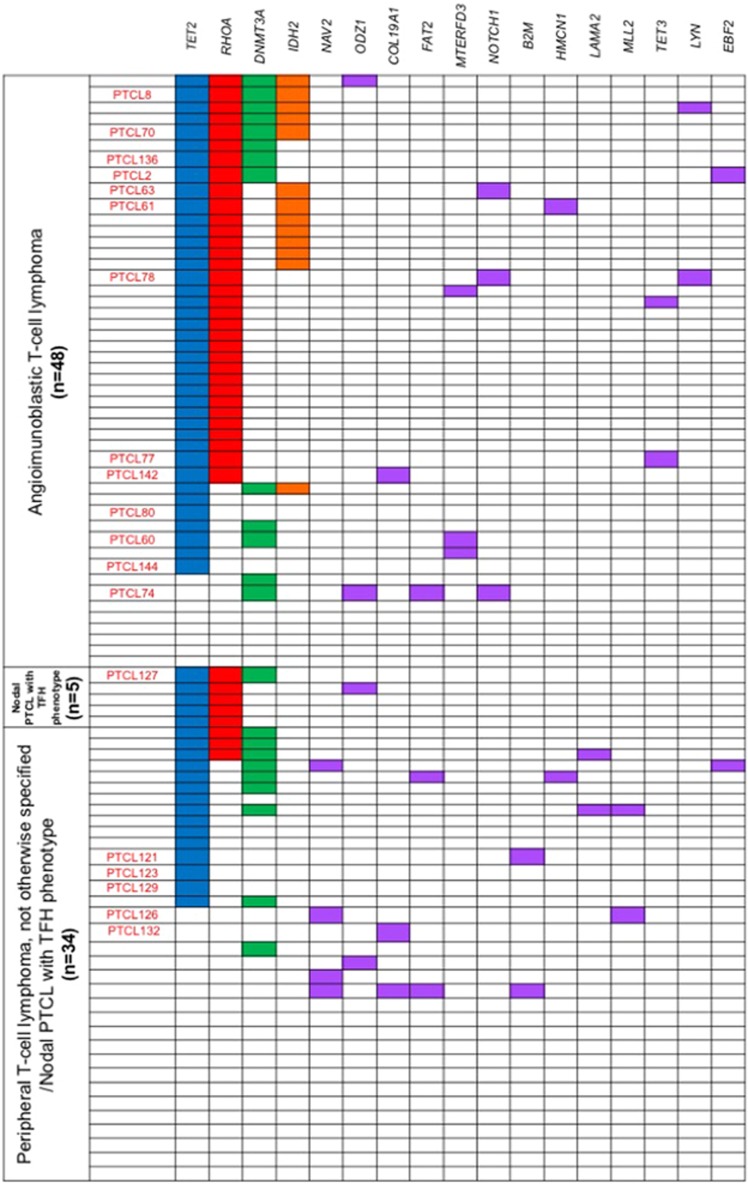
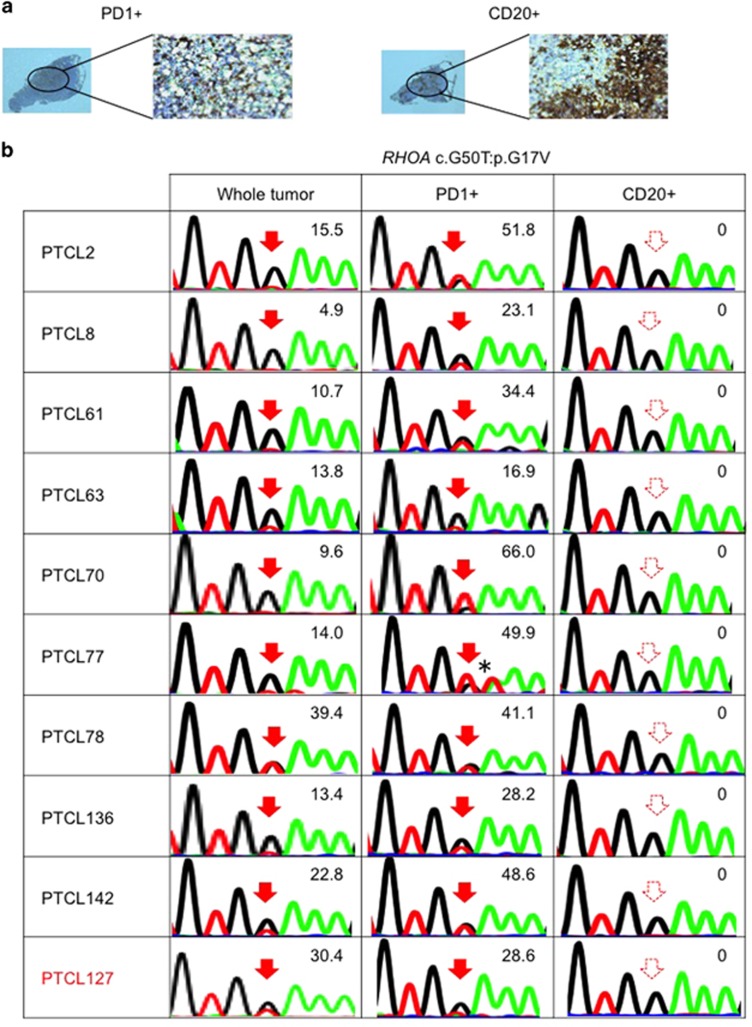
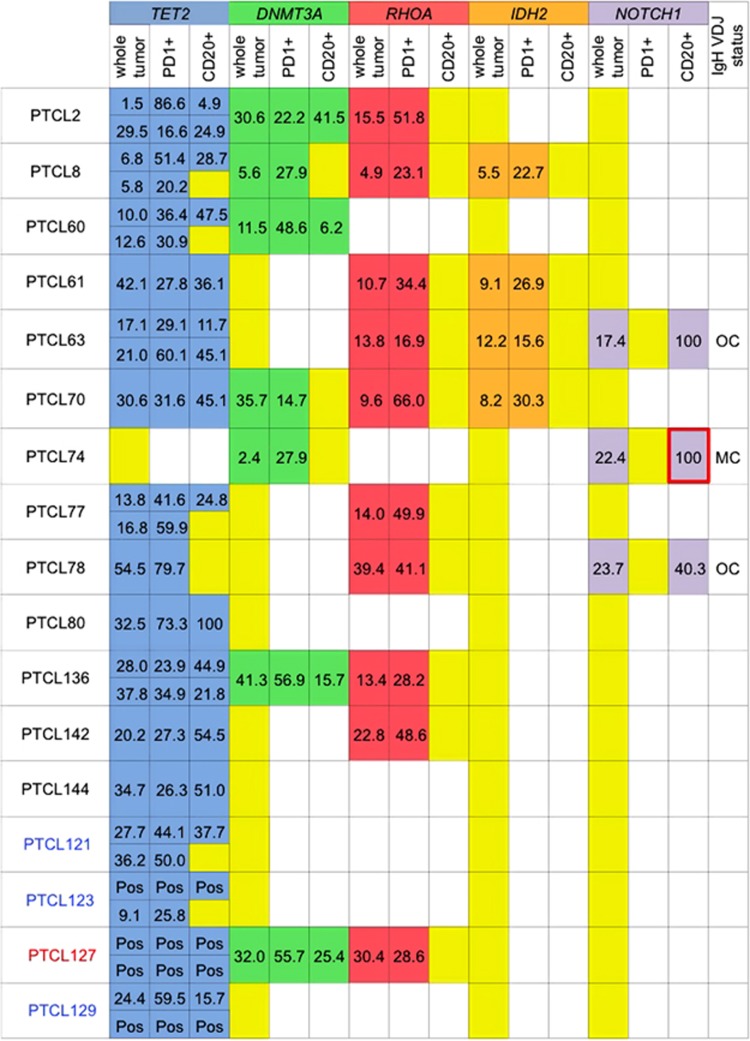
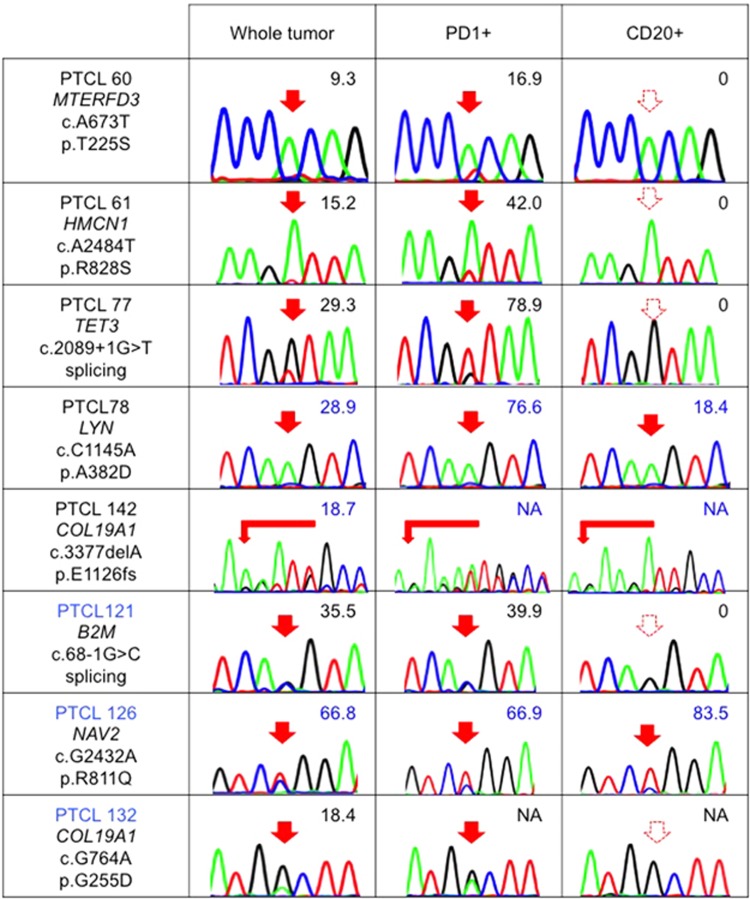
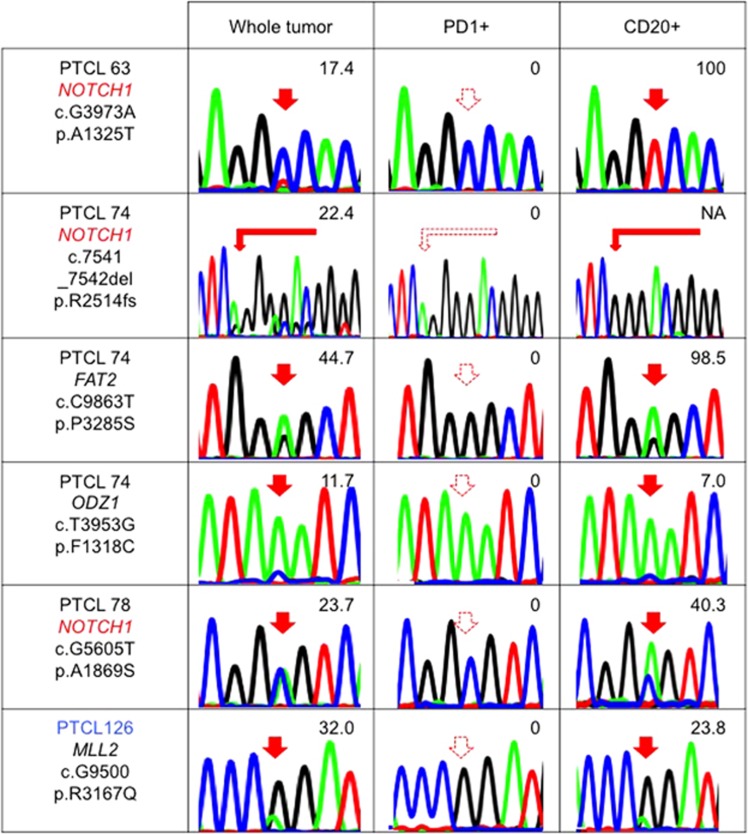
Recent genetic analysis has identified frequent mutations in ten-eleven translocation 2 (TET2), DNA methyltransferase 3A (DNMT3A), isocitrate dehydrogenase 2 (IDH2) and ras homolog family member A (RHOA) in nodal T-cell lymphomas, including angioimmunoblastic T-cell lymphoma and peripheral T-cell lymphoma, not otherwise specified. We examined the distribution of mutations in these subtypes of mature T-/natural killer cell neoplasms to determine their clonal architecture. Targeted sequencing was performed for 71 genes in tumor-derived DNA of 87 cases. The mutations were then analyzed in a programmed death-1 (PD1)-positive population enriched with tumor cells and CD20-positive B cells purified by laser microdissection from 19 cases. TET2 and DNMT3A mutations were identified in both the PD1+ cells and the CD20+ cells in 15/16 and 4/7 cases, respectively. All the RHOA and IDH2 mutations were confined to the PD1+ cells, indicating that some, including RHOA and IDH2 mutations, being specific events in tumor cells. Notably, we found that all NOTCH1 mutations were detected only in the CD20+ cells. In conclusion, we identified both B- as well as T-cell-specific mutations, and mutations common to both T and B cells. These findings indicate the expansion of a clone after multistep and multilineal acquisition of gene mutations.
Overview
The claims and statistics of this paper haven’t been checked yet.
Run the check — free, no account needed. It reads the open-access text and checks the sources it cites.
Integrity signals
Registry
Cites
Statistics
Figures
Verification
Claims the paper makes
The claims and statistics of this paper haven’t been checked yet.
Run the check — free, no account needed. It reads the open-access text and checks the sources it cites.
Claims other papers make about this one
Each is checked against this paper’s own text: does it say what the citing paper says it does?
In the citing paper
“The findings from this investigation confirm and extend the results previously published regarding the cellular origin of AITL (Couronné et al., 2012; Lewis et al., 2020; Nguyen et al., 2017; Quivoron et al., 2011; Sakata-Yanagimoto et al., 2014; Schwartz et al., 2017; Tiacci et al., 2018).”
From Mutation analysis links angioimmunoblastic T-cell lymphoma to clonal hematopoiesis and smoking (2021) · cites this paper as Nguyen et al., 2017
Self-check
Percentages, sums and reported differences re-computed from the paper’s own numbers.
The self-check needs the paper’s full text.
Citations
Cites
Arber, D. A., Orazi, A., Hasserjian, R., Thiele, J., Borowitz, M. J., Le Beau, M. M., Bloomfield, C. D., Cazzola, M., & Vardiman, J. W. (2016) · Blood · doi:10.1182/blood-2016-03-643544 · Cited by 10,119
Age-related clonal hematopoiesis associated with adverse outcomes
Jaiswal, S., Fontanillas, P., Flannick, J., Manning, A., Grauman, P. V., Mar, B. G., Lindsley, R. C., Mermel, C. H., Burtt, N., Chavez, A., et al. (2014) · New England Journal of Medicine · doi:10.1056/nejmoa1408617 · Cited by 4,841
Clonal hematopoiesis and blood-cancer risk inferred from blood DNA sequence
Genovese, G., Kähler, A. K., Handsaker, R. E., Lindberg, J., Rose, S. A., Bakhoum, S. F., Chambert, K., Mick, E., Neale, B. M., Fromer, M., et al. (2014) · New England Journal of Medicine · doi:10.1056/nejmoa1409405 · Cited by 3,531
Figueroa, M. E., Abdel-Wahab, O., Lu, C., Ward, P. S., Patel, J., Shih, A., Li, Y., Bhagwat, N., Vasanthakumar, A., Fernandez, H. F., et al. (2010) · Cancer Cell · doi:10.1016/j.ccr.2010.11.015 · Cited by 2,766
Frequent mutation of histone-modifying genes in non-Hodgkin lymphoma
Morin, R. D., Mendez-Lago, M., Mungall, A. J., Goya, R., Mungall, K. L., Corbett, R. D., Johnson, N. A., Severson, T. M., Chiu, R., Field, M., et al. (2011) · Nature · doi:10.1038/nature10351 · Cited by 1,614
Identification of pre-leukaemic haematopoietic stem cells in acute leukaemia
Shlush, L. I., Zandi, S., Mitchell, A., Chen, W. C., Brandwein, J. M., Gupta, V., Kennedy, J. A., Schimmer, A. D., Schuh, A. C., Yee, K. W., et al. (2014) · Nature · doi:10.1038/nature13038 · Cited by 1,443
Clonal evolution of preleukemic hematopoietic stem cells precedes human acute myeloid leukemia
Jan, M., Snyder, T. M., Corces-Zimmerman, M. R., Vyas, P., Weissman, I. L., Quake, S. R., & Majeti, R. (2012) · Science Translational Medicine · doi:10.1126/scitranslmed.3004315 · Cited by 721
Research works printed but not linked: 45
- Wang SS, Vose MJ . Epidemiology and Prognosis of T-cell Lymphoma. Humana Press, 2013, pp 25–38. · DOI
- Park S, Ko YH . Peripheral T cell lymphoma in Asia. Int J Hematol 2014; 99: 227–239. · DOI
- Wang SS, Flowers CR, Kadin ME, Chang ET, Hughes AM, Ansell SM et al. Medical history, lifestyle, family history, and occupational risk factors for peripheral T-cell lymphomas: the InterLymph Non-Hodgkin Lymphoma Subtypes Project. J Natl Cancer Inst Monogr 2014; 2014: 66–75. · DOI
- de Leval L, Gaulard P . Pathobiology and molecular profiling of peripheral T-cell lymphomas. Hematology Am Soc Hematol Educ Program 2008, 272–279. · DOI
- Rodriguez-Pinilla SM, Atienza L, Murillo C, Perez-Rodriguez A, Montes-Moreno S, Roncador G et al. Peripheral T-cell lymphoma with follicular T-cell markers. Am J Surg Pathol 2008; 32: 1787–1799. · DOI
- Lemonnier F, Couronne L, Parrens M, Jais JP, Travert M, Lamant L et al. Recurrent TET2 mutations in peripheral T-cell lymphomas correlate with TFH-like features and adverse clinical parameters. Blood 2012; 120: 1466–1469. · DOI · Paper page
- Sakata-Yanagimoto M, Enami T, Yoshida K, Shiraishi Y, Ishii R, Miyake Y et al. Somatic RHOA mutation in angioimmunoblastic T cell lymphoma. Nat Genet 2014; 46: 171–175. · DOI
- Palomero T, Couronne L, Khiabanian H, Kim MY, Ambesi-Impiombato A, Perez-Garcia A et al. Recurrent mutations in epigenetic regulators, RHOA and FYN kinase in peripheral T cell lymphomas. Nat Genet 2014; 46: 166–170. · DOI
- Odejide O, Weigert O, Lane AA, Toscano D, Lunning MA, Kopp N et al. A targeted mutational landscape of angioimmunoblastic T-cell lymphoma. Blood 2014; 123: 1293–1296. · DOI · Paper page
- Yang L, Rau R, Goodell MA . DNMT3A in haematological malignancies. Nat Rev Cancer 2015; 15: 152–165. · DOI
- Cairns RA, Iqbal J, Lemonnier F, Kucuk C, de Leval L, Jais JP et al. IDH2 mutations are frequent in angioimmunoblastic T-cell lymphoma. Blood 2012; 119: 1901–1903. · DOI
- Yoo HY, Sung MK, Lee SH, Kim S, Lee H, Park S et al. A recurrent inactivating mutation in RHOA GTPase in angioimmunoblastic T cell lymphoma. Nat Genet 2014; 46: 371–375. · DOI
- Quivoron C, Couronne L, Della Valle V, Lopez CK, Plo I, Wagner-Ballon O et al. TET2 inactivation results in pleiotropic hematopoietic abnormalities in mouse and is a recurrent event during human lymphomagenesis. Cancer Cell 2011; 20: 25–38. · DOI · Paper page
- Nguyen TB, Sakata-Yanagimoto M, Nakamoto-Matsubara R, Enami T, Ito Y, Kobayashi T et al. Double somatic mosaic mutations in TET2 and DNMT3A--origin of peripheral T cell lymphoma in a case. Ann Hematol 2015; 94: 1221–1223. · DOI
- Couronne L, Bastard C, Bernard OA . TET2 and DNMT3A mutations in human T-cell lymphoma. N Engl J Med 2012; 366: 95–96. · DOI · Paper page
- Kopan R, Ilagan MX . The canonical Notch signaling pathway: unfolding the activation mechanism. Cell 2009; 137: 216–233. · DOI
- Weng AP, Ferrando AA, Lee W, Morris JPt, Silverman LB, Sanchez-Irizarry C et al. Activating mutations of NOTCH1 in human T cell acute lymphoblastic leukemia. Science 2004; 306: 269–271. · DOI
- Pancewicz J, Taylor JM, Datta A, Baydoun HH, Waldmann TA, Hermine O et al. Notch signaling contributes to proliferation and tumor formation of human T-cell leukemia virus type 1-associated adult T-cell leukemia. Proc Natl Acad Sci USA 2010; 107: 16619–16624. · DOI
- Puente XS, Pinyol M, Quesada V, Conde L, Ordonez GR, Villamor N et al. Whole-genome sequencing identifies recurrent mutations in chronic lymphocytic leukaemia. Nature 2011; 475: 101–105. · DOI
- Kridel R, Meissner B, Rogic S, Boyle M, Telenius A, Woolcock B et al. Whole transcriptome sequencing reveals recurrent NOTCH1 mutations in mantle cell lymphoma. Blood 2012; 119: 1963–1971. · DOI
- Wang K, Li M, Hakonarson H . ANNOVAR: functional annotation of genetic variants from high-throughput sequencing data. Nucleic Acids Res 2010; 38: e164. · DOI
- Chang X, Wang K . wANNOVAR: annotating genetic variants for personal genomes via the web. J Med Genet 2012; 49: 433–436. · DOI
- van Dongen JJ, Langerak AW, Bruggemann M, Evans PA, Hummel M, Lavender FL et al. Design and standardization of PCR primers and protocols for detection of clonal immunoglobulin and T-cell receptor gene recombinations in suspect lymphoproliferations: report of the BIOMED-2 Concerted Action BMH4-CT98-3936. Leukemia 2003; 17: 2257–2317. · DOI
- Kikushige Y, Ishikawa F, Miyamoto T, Shima T, Urata S, Yoshimoto G et al. Self-renewing hematopoietic stem cell is the primary target in pathogenesis of human chronic lymphocytic leukemia. Cancer Cell 2011; 20: 246–259. · DOI
- McKenney AS, Levine RL . Isocitrate dehydrogenase mutations in leukemia. J Clin Invest 2013; 123: 3672–3677. · DOI
- Wang C, McKeithan TW, Gong Q, Zhang W, Bouska A, Rosenwald A et al. IDH2R172 mutations define a unique subgroup of patients with angioimmunoblastic T-cell lymphoma. Blood 2015; 126: 1741–1752. · DOI
- Chiba S . Guest editorial: preleukemia/prelymphoma-what is old, what is new? Int J Hematol 2015; 102: 511–512. · DOI
- Shlush LI, Zandi S, Itzkovitz S, Schuh AC . Aging, clonal hematopoiesis and preleukemia: not just bad luck? Int J Hematol 2015; 102: 513–522. · DOI
- Damm F, Mylonas E, Cosson A, Yoshida K, Della Valle V, Mouly E et al. Acquired initiating mutations in early hematopoietic cells of CLL patients. Cancer Discov 2014; 4: 1088–1101. · DOI
- Kikushige Y, Miyamoto T . Hematopoietic stem cell aging and chronic lymphocytic leukemia pathogenesis. Int J Hematol 2014; 100: 335–340. · DOI
- Busque L, Patel JP, Figueroa ME, Vasanthakumar A, Provost S, Hamilou Z et al. Recurrent somatic TET2 mutations in normal elderly individuals with clonal hematopoiesis. Nat Genet 2012; 44: 1179–1181. · DOI · Paper page
- Xie M, Lu C, Wang J, McLellan MD . Age-related mutations associated with clonal hematopoietic expansion and malignancies. Nat Med 2014; 20: 1472–1478. · DOI · Paper page
- Bruggemann M, White H, Gaulard P, Garcia-Sanz R, Gameiro P, Oeschger S et al. Powerful strategy for polymerase chain reaction-based clonality assessment in T-cell malignancies. Report of the BIOMED-2 Concerted Action BHM4 CT98-3936. Leukemia 2007; 21: 215–221. · DOI
- Higgins JP, van de Rijn M, Jones CD, Zehnder JL, Warnke RA . Peripheral T-cell lymphoma complicated by a proliferation of large B cells. Am J Clin Pathol 2000; 114: 236–247. · DOI
- Tan BT, Warnke RA, Arber DA . The frequency of B- and T-cell gene rearrangements and epstein-barr virus in T-cell lymphomas: a comparison between angioimmunoblastic T-cell lymphoma and peripheral T-cell lymphoma, unspecified with and without associated B-cell proliferations. J Mol Diagn 2006; 8: 466–475, quiz 527. · DOI
- Zettl A, Lee SS, Rudiger T, Starostik P, Marino M, Kirchner T et al. Epstein-Barr virus-associated B-cell lymphoproliferative disorders in angloimmunoblastic T-cell lymphoma and peripheral T-cell lymphoma, unspecified. Am J Clin Pathol 2002; 117: 368–379. · DOI
- Hawley RC, Cankovic M, Zarbo RJ . Angioimmunoblastic T-cell lymphoma with supervening Epstein-Barr virus-associated large B-cell lymphoma. Arch Pathol Lab Med 2006; 130: 1707–1711. · DOI
- Willenbrock K, Brauninger A, Hansmann ML . Frequent occurrence of B-cell lymphomas in angioimmunoblastic T-cell lymphoma and proliferation of Epstein-Barr virus-infected cells in early cases. Br J Haematol 2007; 138: 733–739. · DOI
- Attygalle AD, Kyriakou C, Dupuis J, Grogg KL, Diss TC, Wotherspoon AC et al. Histologic evolution of angioimmunoblastic T-cell lymphoma in consecutive biopsies: clinical correlation and insights into natural history and disease progression. Am J Surg Pathol 2007; 31: 1077–1088. · DOI
- Suefuji N, Niino D, Arakawa F, Karube K, Kimura Y, Kiyasu J et al. Clinicopathological analysis of a composite lymphoma containing both T- and B-cell lymphomas. Pathol Int 2012; 62: 690–698. · DOI
- Asmar F, Punj V, Christensen J, Pedersen MT, Pedersen A, Nielsen AB et al. Genome-wide profiling identifies a DNA methylation signature that associates with TET2 mutations in diffuse large B-cell lymphoma. Haematologica 2013; 98: 1912–1920. · DOI
- Zhao Z, Chen L, Dawlaty MM, Pan F, Weeks O, Zhou Y et al. Combined loss of Tet1 and Tet2 promotes B cell, but not myeloid malignancies, in mice. Cell Rep 2015; 13: 1692–1704. · DOI
- Arcaini L, Rossi D, Lucioni M, Nicola M, Bruscaggin A, Fiaccadori V et al. The NOTCH pathway is recurrently mutated in diffuse large B-cell lymphoma associated with hepatitis C virus infection. Haematologica 2015; 100: 246–252. · DOI
- Villamor N, Conde L, Martinez-Trillos A, Cazorla M, Navarro A, Bea S et al. NOTCH1 mutations identify a genetic subgroup of chronic lymphocytic leukemia patients with high risk of transformation and poor outcome. Leukemia 2013; 27: 1100–1106. · DOI
- Karube K, Martinez D, Royo C, Navarro A, Pinyol M, Cazorla M et al. Recurrent mutations of NOTCH genes in follicular lymphoma identify a distinctive subset of tumours. J Pathol 2014; 234: 423–430. · DOI
Cited by
Mutation analysis links angioimmunoblastic T-cell lymphoma to clonal hematopoiesis and smoking
Cheng, S., Zhang, W., Inghirami, G., & Tam, W. (2021) · eLife · doi:10.7554/elife.66395 · Cited by 37
Metadata
- Authors
- Nguyen, T. B., Sakata-Yanagimoto, M., Asabe, Y., Matsubara, D., Kano, J., Yoshida, K., Shiraishi, Y., Chiba, K., Tanaka, H., Miyano, S., Izutsu, K., Nakamura, N., Takeuchi, K., Miyoshi, H., Ohshima, K., Minowa, T., Ogawa, S., Noguchi, M., & Chiba, S.
- ORCID
- Takeuchi, K
- Venue
- Blood Cancer Journal
- Published
- 2017-01-06
- Volume
- 7
- Issue
- 1
- Pages
- e516-e516
- ISSN
- 2044-5385
- PMC
- PMC5301031
- Cited by
- 93
- References
- 7
- Language
- en
About these checks
Registry, retraction, Cites and statistics results are computed, not judged, with one exception: a printed reference that no index lists is read once by a model before it counts as a citation error. Claims are extracted by a model and kept only when their quote appears verbatim in the text; each cited source is then checked, with a model’s help, for whether it says what the claim relies on. Those verdicts can be wrong — read the claim’s quote and the cited source before relying on one.
Statistics and arithmetic are recomputed, not judged.
Confidence bands are shown only for fields calibrated on our annotated test set. None is calibrated yet, so no band is shown.
What counts as a claim ›How we measure confidence ›How we check this ›
Are you an author, or do you see a problem with this page? Request a review
