

The DOI matches its Crossref record; 46 of the 46 references it cites were found in a registry or an index.
Intragenic DNA methylation modulates alternative splicing by recruiting MeCP2 to promote exon recognition
Open accessAbstract
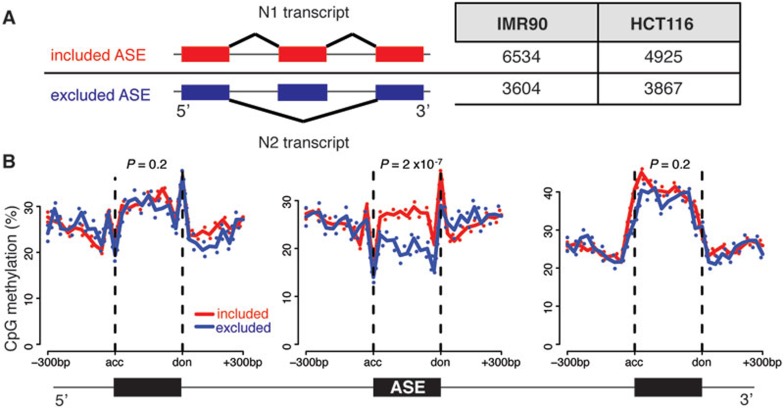
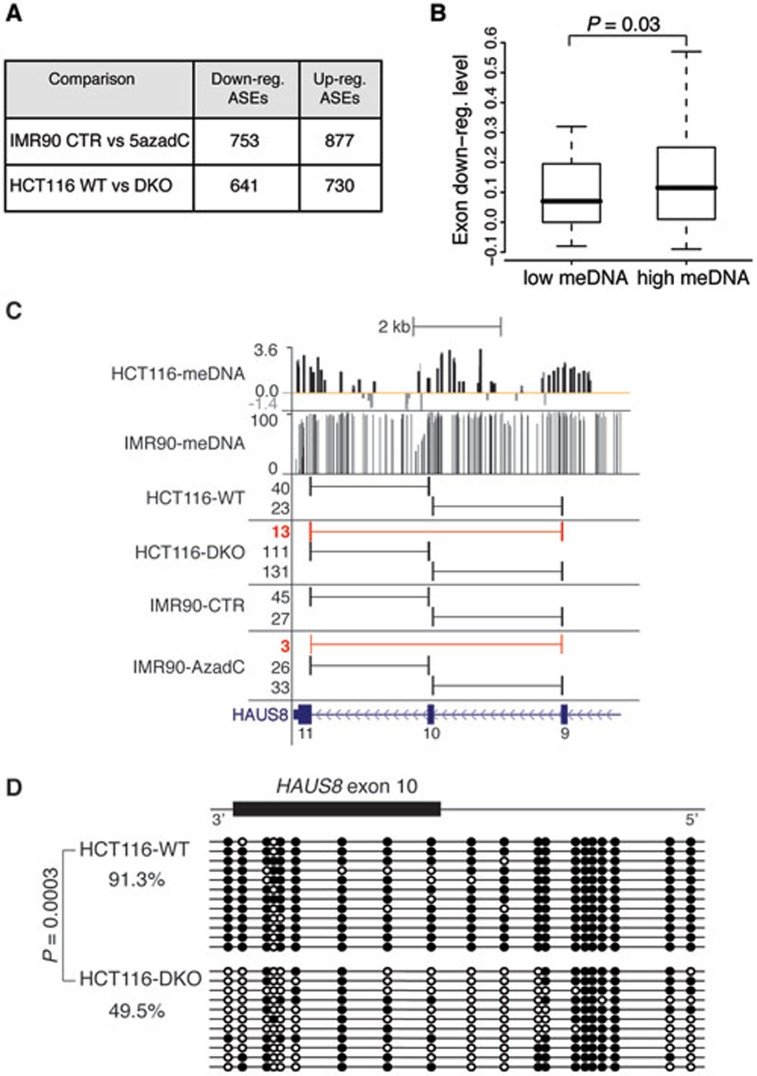
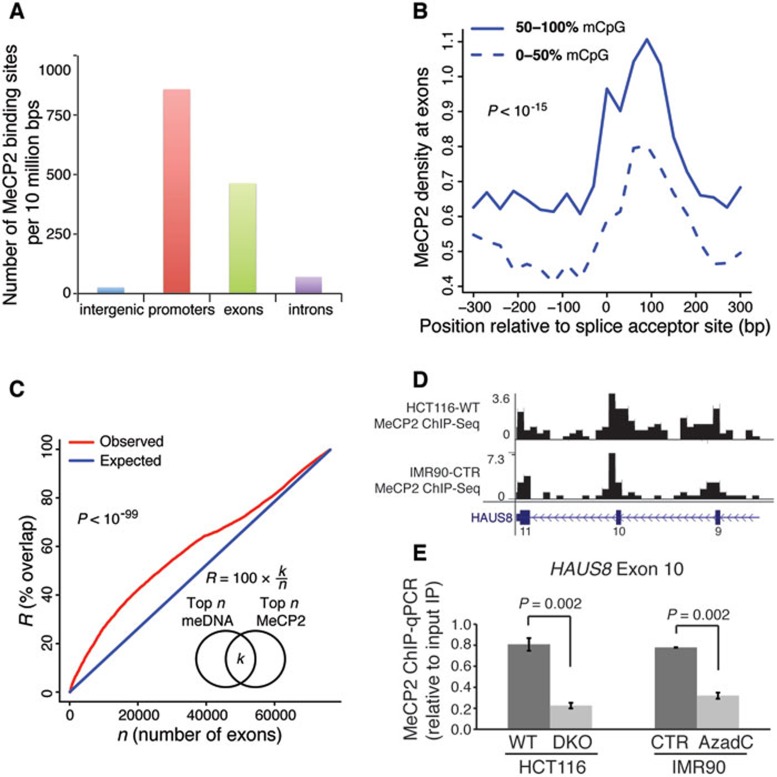
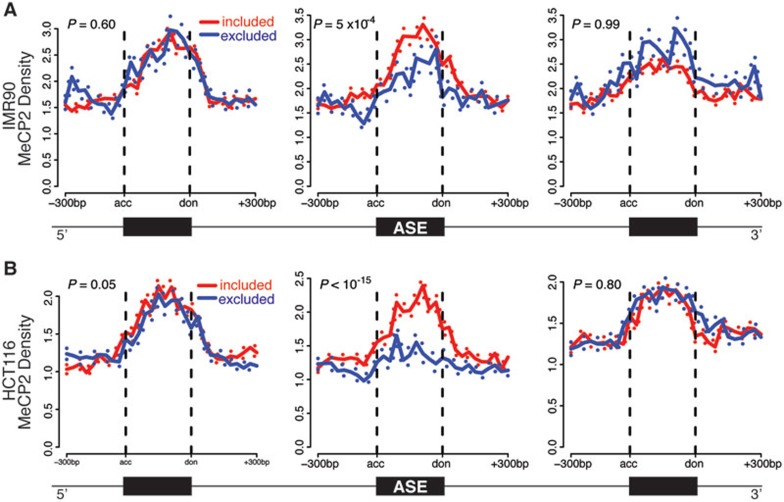
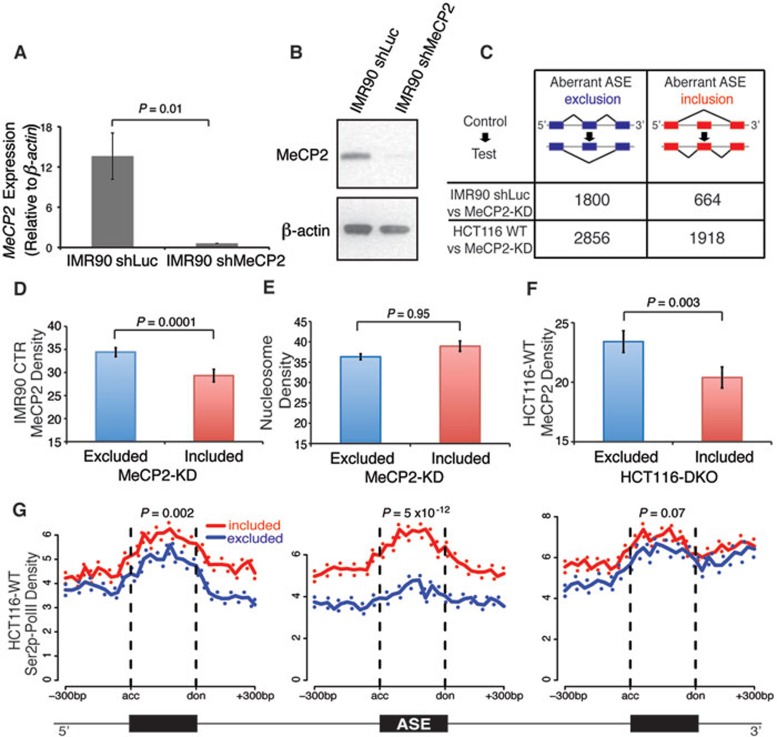
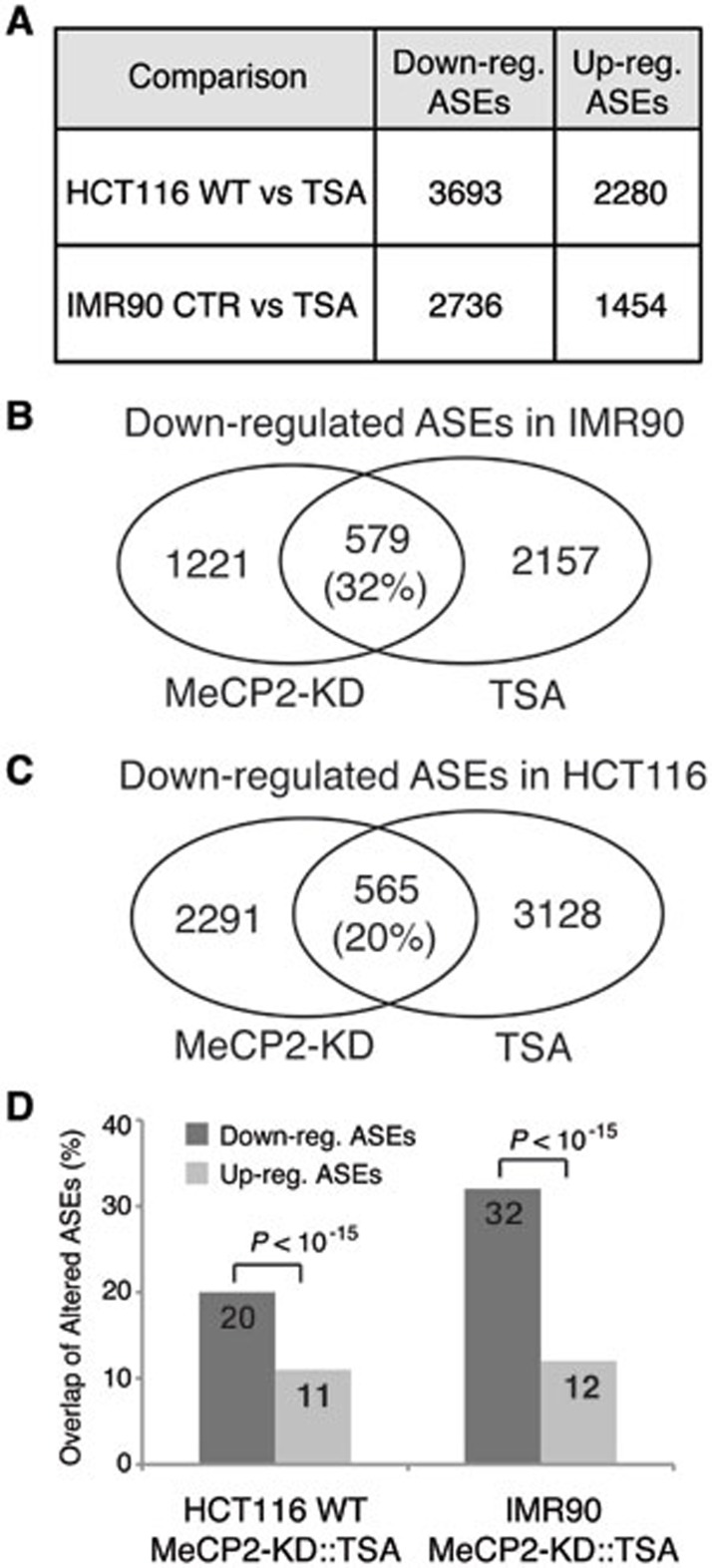
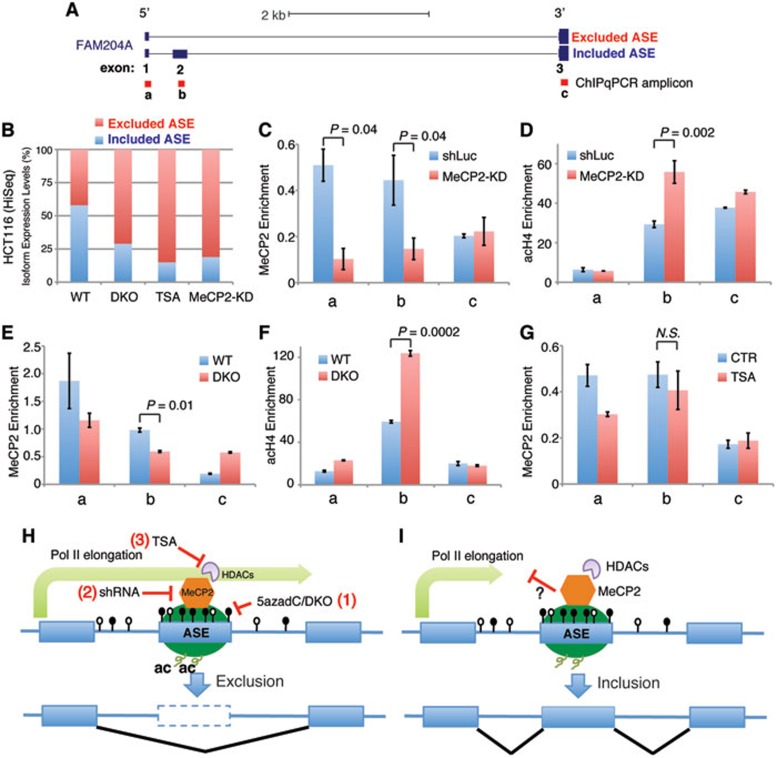
Although the function of DNA methylation in gene promoter regions is well established in transcriptional repression, the function of the evolutionarily conserved widespread distribution of DNA methylation in gene body regions remains incompletely understood. Here, we show that DNA methylation is enriched in included alternatively spliced exons (ASEs), and that inhibition of DNA methylation results in aberrant splicing of ASEs. The methyl-CpG-binding protein MeCP2 is enriched in included ASEs, particularly those that are also highly methylated, and inhibition of DNA methylation disrupts specific targeting of MeCP2 to exons. Interestingly, ablation of MeCP2 results in increased histone acetylation and aberrant ASE-skipping events. We further show that inhibition of histone deacetylase (HDAC) activity leads to exon skipping that shows a highly significant degree of overlap with that caused by MeCP2 knockdown. Together, our data indicate that intragenic DNA methylation operates in exon definition to modulate alternative RNA splicing and can enhance exon recognition via recruitment of the multifunctional protein MeCP2, which thereby maintains local histone hypoacetylation through the subsequent recruitment of HDACs.
Overview
The claims and statistics of this paper haven’t been checked yet.
Run the check — free, no account needed. It reads the open-access text and checks the sources it cites.
Integrity signals
Registry
Cites
Statistics
Figures
Verification
Claims the paper makes
The claims and statistics of this paper haven’t been checked yet.
Run the check — free, no account needed. It reads the open-access text and checks the sources it cites.
Claims other papers make about this one
Each is checked against this paper’s own text: does it say what the citing paper says it does?
In the citing paper
“Nevertheless, hypomethylation of these elements is observed in cancer cells 26,27 and this can lead to activation and transposition of the endogenous retroviral sequences thereby promoting genetic instability and tumour development 1 (Figure 2).”
From The roles of DNA, RNA and histone methylation in ageing and cancer (2019) · cites this paper as [27]
In the citing paper
“Similarly, the mCpG-binding protein MeCP2 was found to play a part in regulating exon splicing113.”
From Transcription factors as readers and effectors of DNA methylation (2016) · cites this paper as [113]
In the citing paper
“In this case, a high methylation level led to MeCP2 binding to alternatively spliced exons, which resulted in exon inclusion (FIG. 4).”
From Transcription factors as readers and effectors of DNA methylation (2016) · cites this paper as [113]
Self-check
Percentages, sums and reported differences re-computed from the paper’s own numbers.
The self-check needs the paper’s full text.
Citations
Cites
Model-based Analysis of ChIP-Seq (MACS)
Zhang, Y., Liu, T., Meyer, C. A., Eeckhoute, J., Johnson, D. S., Bernstein, B. E., Nusbaum, C., Myers, R. M., Brown, M., Li, W., et al. (2008) · Genome Biology · doi:10.1186/gb-2008-9-9-r137 · Cited by 18,386
TopHat: discovering splice junctions with RNA-Seq
Trapnell, C., Pachter, L. S., & Salzberg, S. L. (2009) · Bioinformatics · doi:10.1093/bioinformatics/btp120 · Cited by 11,682
High-Resolution Profiling of Histone Methylations in the Human Genome
Barski, A., Cuddapah, S., Cui, K., Roh, T.-Y., Schones, D. E., Wang, Z., Wei, G., Chepelev, I., & Zhao, K. (2007) · Cell · doi:10.1016/j.cell.2007.05.009 · Cited by 6,845
Self-citationRett syndrome is caused by mutations in X-linked MECP2, encoding methyl-CpG-binding protein 2
Amir, R. E., Van den Veyver, I. B., Wan, M., Tran, C. Q., Francke, U., & Zoghbi, H. Y. (1999) · Nature Genetics · doi:10.1038/13810 · Cited by 4,990
Human DNA methylomes at base resolution show widespread epigenomic differences
Lister, R., Pelizzola, M., Dowen, R. H., Hawkins, R. D., Hon, G., Tonti-Filippini, J., Nery, J. R., Lee, L., Ye, Z., Ngo, Q.-M., et al. (2009) · Nature · doi:10.1038/nature08514 · Cited by 4,673
Nan, X., Ng, H.-H., Johnson, C. A., Laherty, C. D., Turner, B. M., Eisenman, R. N., & Bird, A. (1998) · Nature · doi:10.1038/30764 · Cited by 3,440
Genomic DNA methylation: the mark and its mediators.
Klose, R. J., & Bird, A. P. (2006) · Trends in Biochemical Sciences · doi:10.1016/j.tibs.2005.12.008 · Cited by 2,501
The Role of DNA Methylation in Mammalian Epigenetics
Jones, P. A., & Takai, D. (2001) · Science · doi:10.1126/science.1063852 · Cited by 2,125
Nascent RNA Sequencing Reveals Widespread Pausing and Divergent Initiation at Human Promoters
Core, L. J., Waterfall, J. J., & Lis, J. T. (2008) · Science · doi:10.1126/science.1162228 · Cited by 1,986
Conserved role of intragenic DNA methylation in regulating alternative promoters
Maunakea, A. K., Nagarajan, R. P., Bilenky, M., Ballinger, T. J., D’Souza, C., Fouse, S. D., Johnson, B. E., Hong, C., Nielsen, C., Zhao, Y., et al. (2010) · Nature · doi:10.1038/nature09165 · Cited by 1,743
Self-citation
Cited by
Sorted by citations
The diverse roles of DNA methylation in mammalian development and disease
Greenberg, M., & Bourc’his, D. (2019) · Nature Reviews Molecular Cell Biology · doi:10.1038/s41580-019-0159-6 · Cited by 2,272
Function and information content of DNA methylation
Schübeler, D. (2015) · Nature · doi:10.1038/nature14192 · Cited by 2,060
Intragenic DNA methylation prevents spurious transcription initiation
Neri, F., Rapelli, S., Krepelova, A., Incarnato, D., Parlato, C., Basile, G., Maldotti, M., Anselmi, F., & Oliviero, S. (2017) · Nature · doi:10.1038/nature21373 · Cited by 739
Transcription factors as readers and effectors of DNA methylation
Zhu, H., Wang, G., & Qian, J. (2016) · Nature Reviews Genetics · doi:10.1038/nrg.2016.83 · Cited by 649
Systematic identification of genetic influences on methylation across the human life course
Gaunt, T. R., Shihab, H. A., Hemani, G., Min, J. L., Woodward, G., Lyttleton, O., Zheng, J., Duggirala, A., McArdle, W. L., Ho, K., et al. (2016) · Genome Biology · doi:10.1186/s13059-016-0926-z · Cited by 598
Metadata
- Authors
- Maunakea, A. K., Chepelev, I., Cui, K., & Zhao, K.
- Affiliations
- University of Hawaiʻi at Mānoa (US)
- Cincinnati Children's Hospital Medical Center (US)
- National Institutes of Health (US)
- Corresponding author
- Zhao, Keji
- Venue
- Cell Research
- Published
- 2013-08-13
- Volume
- 23
- Issue
- 11
- Pages
- 1256-1269
- ISSN
- 1001-0602 (ISSN-L)
- 1748-7838
- PMC
- PMC3817542
- OpenAlex
- W2074898309
- Cited by
- 552
- References
- 46
- Citations by year
- 2026: 17 · 2025: 19 · 2024: 26 · 2023: 32 · 2022: 32 · 2021: 55 · 2020: 47 · 2019: 57 · 2018: 42 · 2017: 57 · 2016: 59 · 2015: 53 · 2014: 48 · 2013: 6
- FWCI
- 24.77
- Type
- journal article
- Language
- en
- Open access
- hybrid
- doi.org
- Licence
- Locations
- Cell Research (publishedVersion, cc-by-nc-nd)
- Europe PMC (PubMed Central) (publishedVersion, cc-by-nc-nd)
- PubMed Central (publishedVersion, cc-by-nc-nd)
- PubMed (publishedVersion)
- Funders
- Johns Hopkins University (HCT116)
- National Institutes of Health
- University of California, San Francisco
- National Heart, Lung, and Blood Institute
- Topics
- Life Sciences › Biochemistry, Genetics and Molecular Biology › Molecular Biology › RNA Research and Splicing
- Life Sciences › Biochemistry, Genetics and Molecular Biology › Molecular Biology › Epigenetics and DNA Methylation
- Life Sciences › Biochemistry, Genetics and Molecular Biology › Molecular Biology › Genomics and Chromatin Dynamics
- Keywords
- alternative splicing, MeCP2, exon skipping, exon recognition, histone acetylation, histone deacetylase, gene body methylation, methyl-CpG binding proteins, RNA splicing regulation
- MeSH terms
- Cell Line, Exons, Humans, Alternative Splicing, DNA Methylation, HCT116 Cells, Methyl-CpG-Binding Protein 2
About these checks
Registry, retraction, Cites and statistics results are computed, not judged, with one exception: a printed reference that no index lists is read once by a model before it counts as a citation error. Claims are extracted by a model and kept only when their quote appears verbatim in the text; each cited source is then checked, with a model’s help, for whether it says what the claim relies on. Those verdicts can be wrong — read the claim’s quote and the cited source before relying on one.
Statistics and arithmetic are recomputed, not judged.
Confidence bands are shown only for fields calibrated on our annotated test set. None is calibrated yet, so no band is shown.
What counts as a claim ›How we measure confidence ›How we check this ›
Are you an author, or do you see a problem with this page? Request a review
