

The DOI matches its Crossref record; 52 of the 53 references it cites were found in a registry or an index.
The genomic sequence of the Chinese hamster ovary (CHO)-K1 cell line
Open accessAbstract
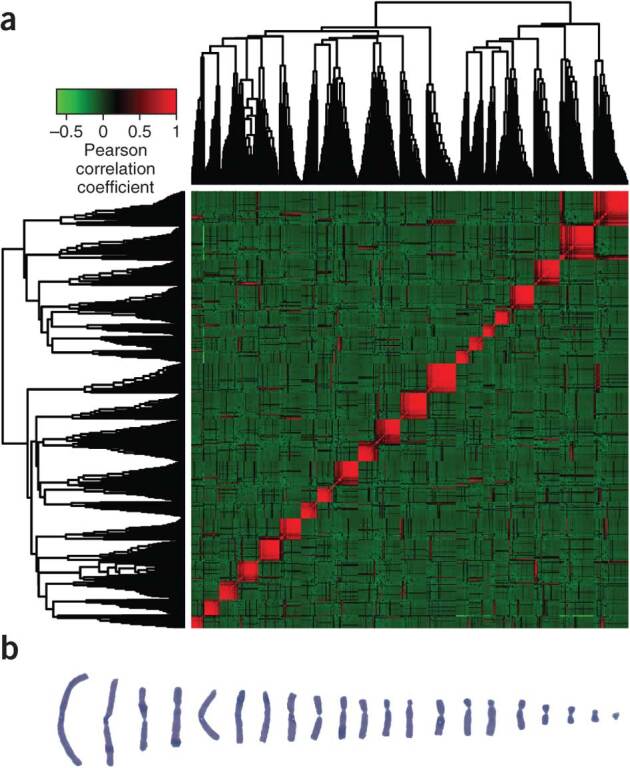
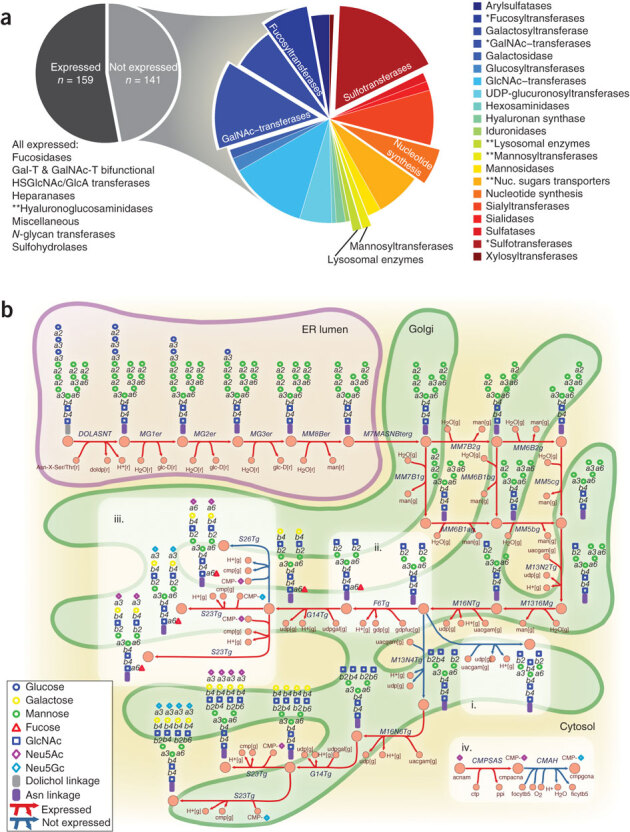
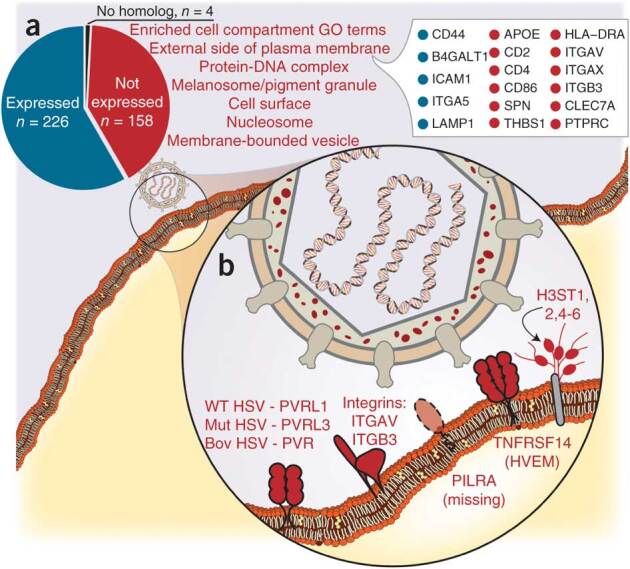
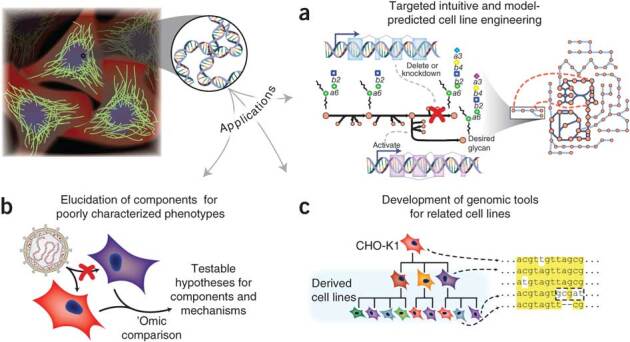
Since 1987, immortalized cells from the ovary of a Chinese hamster have been the workhorse for producing recombinant therapeutics, including monoclonal antibodies, blood factors, hormones, growth factors and enzymes. Xu et al. provide the genome sequence of the ancestral CHO-K1 cell line, which should aid in the optimization of current production cell lines. Chinese hamster ovary (CHO)–derived cell lines are the preferred host cells for the production of therapeutic proteins. Here we present a draft genomic sequence of the CHO-K1 ancestral cell line. The assembly comprises 2.45 Gb of genomic sequence, with 24,383 predicted genes. We associate most of the assembled scaffolds with 21 chromosomes isolated by microfluidics to identify chromosomal locations of genes. Furthermore, we investigate genes involved in glycosylation, which affect therapeutic protein quality, and viral susceptibility genes, which are relevant to cell engineering and regulatory concerns. Homologs of most human glycosylation-associated genes are present in the CHO-K1 genome, although 141 of these homologs are not expressed under exponential growth conditions. Many important viral entry genes are also present in the genome but not expressed, which may explain the unusual viral resistance property of CHO cell lines. We discuss how the availability of this genome sequence may facilitate genome-scale science for the optimization of biopharmaceutical protein production.
Overview
The claims and statistics of this paper haven’t been checked yet.
Run the check — free, no account needed. It reads the open-access text and checks the sources it cites.
Integrity signals
Registry
Cites
Statistics
Figures
Verification
Claims the paper makes
The claims and statistics of this paper haven’t been checked yet.
Run the check — free, no account needed. It reads the open-access text and checks the sources it cites.
Claims other papers make about this one
Each is checked against this paper’s own text: does it say what the citing paper says it does?
The source backs part of the claim, not all of it — or backs it for a different population, condition or comparison.
In the citing paper
“The availability of genomic sequences has enabled CHO cell engineering with unprecedented precision using engineered nucleases, including zinc finger nucleases (ZFNs) and transcription activator like nucleases (TALENs) and the clustered regularly interspaced short palindromic repeats (CRISPR) system [71–73,75,76].”
From Glycoengineering Chinese hamster ovary cells: a short history (2021) · cites this paper as [71]
Experimental — accuracy not yet measuredThe source backs part of the claim, not all of it — or backs it for a different population, condition or comparison.
In the citing paper
“CHO cells do not express alpha-1,3-galactosyltransferases, which produce the immunogenic alpha-galactosyl epitope (although they have the gene), and the expression of CMP-N-acetylneuraminic acid hydroxylase, which produces CMP-NeuGc, is virtually absent [27,71,72].”
From Glycoengineering Chinese hamster ovary cells: a short history (2021) · cites this paper as [71]
Experimental — accuracy not yet measuredThe source backs part of the claim, not all of it — or backs it for a different population, condition or comparison.
In the citing paper
“Advances in various omics technologies have significantly improved our understanding of CHO cells at different levels and enabled the rational targeting of glycosylation effectors for improved biopharmaceutical production [27,71,72,150–152].”
From Glycoengineering Chinese hamster ovary cells: a short history (2021) · cites this paper as [71]
Experimental — accuracy not yet measured
Self-check
Percentages, sums and reported differences re-computed from the paper’s own numbers.
The self-check needs the paper’s full text.
Citations
Cites
Initial sequencing and comparative analysis of the mouse genome
Mouse Genome Sequencing Consortium (2002) · Nature · doi:10.1038/nature01262 · Cited by 7,187
De novo assembly of human genomes with massively parallel short read sequencing
Li, R., Zhu, H., Ruan, J., Qian, W., Fang, X., Shi, Z., Li, Y., Li, S., Shan, G., Kristiansen, K., et al. (2010) · Genome Research · doi:10.1101/gr.097261.109 · Cited by 2,926
Self-citationGenome sequence of the Brown Norway rat yields insights into mammalian evolution
Gibbs, R. A., Weinstock, G. M., Metzker, M. L., Muzny, D. M., Sodergren, E. J., Scherer, S. E., Scott, G., Steffen, D. L., Worley, K. C., Burch, P. E., et al. (2004) · Nature · doi:10.1038/nature02426 · Cited by 2,170
Production of recombinant protein therapeutics in cultivated mammalian cells
Wurm, F. M. (2004) · Nature Biotechnology · doi:10.1038/nbt1026 · Cited by 2,032 · cited 9×
“This is consistent with the observation that CHO cells do not normally show ST6Gal activity19, whereas terminal α(2,3)-linked sialic acid residues are abundant.”
InfluentialAssembly algorithms for next-generation sequencing data
Miller, J. R., Koren, S., & Sutton, G. G. (2010) · Genomics · doi:10.1016/j.ygeno.2010.03.001 · Cited by 1,186
Metabolic engineering of Escherichia coli for direct production of 1,4-butanediol
Yim, H. H., Haselbeck, R. J., Niu, W., Pujol-Baxley, C., Burgard, A. P., Boldt, J., Khandurina, J., Trawick, J. D., Osterhout, R. E., Stephen, R., et al. (2011) · Nature Chemical Biology · doi:10.1038/nchembio.580 · Cited by 1,114
The role of sialic acid in determining the survival of glycoproteins in the circulation
Morell, A. G., Gregoriadis, G., Scheinberg, I. H., Hickman, J., & Ashwell, G. (1971) · Journal of Biological Chemistry · doi:10.1016/s0021-9258(19)76994-4 · Cited by 1,072
A Novel Role for 3-O-Sulfated Heparan Sulfate in Herpes Simplex Virus 1 Entry
Shukla, D., Liu, J., Blaiklock, P., Shworak, N. W., Bai, X., Esko, J. D., Cohen, G. H., Eisenberg, R. J., ROSENBERG, R. D., & Spear, P. G. (1999) · Cell · doi:10.1016/s0092-8674(00)80058-6 · Cited by 1,053
Post-translational modifications in the context of therapeutic proteins
Walsh, G., & Jefferis, R. (2006) · Nature Biotechnology · doi:10.1038/nbt1252 · Cited by 1,007 · cited 1×
“For some of these proteins, differential glycosylation can substantially affect functional activity and/or in vivo circulatory half-lif”
Annotation, submission and screening of repetitive elements in Repbase: RepbaseSubmitter and Censor
Kohany, O., Gentles, A. J., Hankus, L., & Jurka, J. (2006) · BMC Bioinformatics · doi:10.1186/1471-2105-7-474 · Cited by 897
Cited by
Sorted by citations
Items 601–700 of 786
Torres, M., Ortuzar, V., Dickson, A. J., & Hussain, H. (2021) · Cell engineering · doi:10.1007/978-3-030-79871-0_4 · Cited by 4
Rahmani, B., Kheirandish, M. H., Ghanbari, S., Raz, A., Shamsi, F., & Davami, F. (2023) · Scientific Reports · doi:10.1038/s41598-023-29863-8 · Cited by 4
Chida, Y., Takagi, K., & Terada, S. (2013) · Cytotechnology · doi:10.1007/s10616-013-9572-4 · Cited by 4
Modulation of heparan sulfate biosynthesis by sodium butyrate in recombinant CHO cells
Datta, P., Yang, B., Linhardt, R. J., & Sharfstein, S. T. (2014) · Cytotechnology · doi:10.1007/s10616-013-9677-9 · Cited by 4
Vito, D., & Smales, C. M. (2018) · Current Opinion in Chemical Engineering · doi:10.1016/j.coche.2018.11.002 · Cited by 4
La bioproduction des anticorps monoclonaux
Joubert, S., Dodelet, V. C., Béliard, R., & Durocher, Y. (2019) · médecine/sciences · doi:10.1051/medsci/2019219 · Cited by 6
Klaubert, S. R., Chitwood, D. G., Dahodwala, H., Williamson, M., Kasper, R., Lee, K. H., & Harcum, S. W. (2021) · Methods in enzymology on CD-ROM/Methods in enzymology · doi:10.1016/bs.mie.2021.05.005 · Cited by 4
Self-citationWright, C. M., & Estes, S. D. (2014) · Pharmaceutical Bioprocessing · doi:10.4155/pbp.14.41 · Cited by 4
Systematically gap-filling the genome-scale metabolic model of CHO cellsPreprint
Fouladiha, H., Marashi, S.-A., Li, S., Li, Z., Masson, H. O., Vaziri, B., & Lewis, N. E. (2020) · bioRxiv (Cold Spring Harbor Laboratory) · doi:10.1101/2020.01.27.921296 · Cited by 4
Self-citationSabino, C. P. (2022) · doi:10.21248/gups.71583 · Cited by 3
Boulogne, I., Toustou, C., & Bardor, M. (2025) · Scientific Reports · doi:10.1038/s41598-025-87620-5 · Cited by 3
Genetic Divergence and Antibody Expression Influence the N‐Glycomes of CHO‐K1 and CHO‐S Cells
Donini, R., Blundell, P. A., Pleass, R. J., Lu, D., Dell, A., Kontoravdi, C., & Haslam, S. M. (2025) · Biotechnology and Bioengineering · doi:10.1002/bit.70045 · Cited by 3
The Chinese hamster as an excellent experimental animal model
Chang, X., Gao, J., Yang, J., Ma, Y., & Song, G. (2024) · EXPERIMENTAL ANIMALS · doi:10.1538/expanim.24-0029 · Cited by 3
Tuhkanen, H. E., Haasiomäki, I. J., Lackman, J. J., Goth, C. K., Mattila, S., Ye, Z., Vakhrushev, S. Y., Magga, J. M., Kerkelä, R., Clausen, H., et al. (2024) · FEBS Journal · doi:10.1111/febs.17257 · Cited by 3
Napoleone, A., Sebastian, I. R., Marco, F. D., Molin, A., Hussein, M., Kramer, L., Jostock, T., Kelly, T., & Borth, N. (2026) · Molecular Therapy Advances · doi:10.1016/j.omta.2026.201678 · Cited by 3
“42,54 This resistance, while advantageous for ensuring the safety of biotherapeutics, poses unique limitations for effective viral-vector-based transgene delivery.”
Klanert, G., Bydlinski, N., Agu, P., Diendorfer, A. B., Hackl, M., Hanscho, M., Melcher, M., Baumann, M., Grillari, J., & Borth, N. (2019) · Journal of Biotechnology · doi:10.1016/j.jbiotec.2019.02.011 · Cited by 3
Biotherapeutic Products, Cellular Factories, and Multiomics Integration in Metabolic Engineering
Anh, N. H., Min, J. E., Kim, S. J., & Long, N. P. (2020) · OMICS A Journal of Integrative Biology · doi:10.1089/omi.2020.0112 · Cited by 3
Artificial induction of chromosome aneuploidy in CHO cells alters their function as host cells
Yamano, N., Nakanishi, Y., Tanaka, W., Lai, Y., Yamazaki, M., Zenner, L., Hata, H., & Ōmasa, T. (2022) · Biotechnology and Bioengineering · doi:10.1002/bit.28289 · Cited by 3
Ding, X., Chen, Y., Yang, Z., Wu, H., Cai, Y., Wang, E., Jin, J., & Li, H. (2023) · Applied Microbiology and Biotechnology · doi:10.1007/s00253-023-12383-w · Cited by 3
Factors Affecting the Specific Productivity of Pichia pastoris
Aw, R. (2012) · doi:10.25560/11047 · Cited by 3
Mertz, J. L., Sun, S., Yin, B., Hu, Y., Bhattacharya, R., Bettenbaugh, M. J., Yarema, K. J., & Zhang, H. (2020) · Bioengineering · doi:10.3390/bioengineering7040144 · Cited by 3
Integrated Cell-Based Platform to Study EGFR Activation and Transactivation
Caruso, M.-E., Clément, P., Parent, S., Dupriez, V., Bossé, R., & Rouleau, N. (2013) · Assay and Drug Development Technologies · doi:10.1089/adt.2013.518 · Cited by 3
Jelínek, F., Felsberg, J., & Mestan, M. (2013) · Veterinární Medicína · doi:10.17221/6985-vetmed · Cited by 3
Harnessing Chinese hamster ovary cell proteomics for biopharmaceutical processing
Kumar, A., Heffner, K. M., Shiloach, J., Betenbaugh, M. J., & Baycin‐Hizal, D. (2014) · Pharmaceutical Bioprocessing · doi:10.4155/pbp.14.49 · Cited by 3
Self-citationBahadori, M., Amiri, F., Movahed, M., Roushandeh, A. M., & Roudkenar, M. H. (2017) · Gene Cell and Tissue · doi:10.5812/gct.13360 · Cited by 3
Heffner, K. M., Kaas, C. S., Kumar, A., Baycin‐Hizal, D., & Betenbaugh, M. J. (2014) · Cell engineering · doi:10.1007/978-3-319-10320-4_19 · Cited by 3
Self-citationSynthetic biology approaches: the next tools for improved protein production from CHO cells
McGraw, C. E., Peng, D., & Sandoval, N. R. (2020) · Current Opinion in Chemical Engineering · doi:10.1016/j.coche.2020.06.003 · Cited by 3
Development of Soft Sensors for Online Biomass Prediction in Production of Hepatitis B Vaccine
(2022) · Biointerface Research in Applied Chemistry · doi:10.33263/briac132.194 · Cited by 3
Advanced Bioprocess Engineering: Fed‐Batch and Perfusion Processes
Mehra, S., Chandrawanshi, V., & Segar, K. P. (2017) · Wiley eBooks · doi:10.1002/9783527800599.ch14 · Cited by 4
Rahman, M. R., Kawabe, Y., Suzuki, K., Chen, S., Amamoto, Y., & Kamihira, M. (2023) · Biotechnology Journal · doi:10.1002/biot.202300362 · Cited by 2
Cytotoxic Profiling of Korea Chemical Bank Diversity Library
Kim, J.-H., Choi, K.-E., Lee, Y., Jeong, D., Kim, H. Y., Lee, J.-I., Cho, H., & Cho, N. (2025) · SLAS DISCOVERY · doi:10.1016/j.slasd.2025.100267 · Cited by 2
Alhuthali, S., Pauzi, S. M., & Kontoravdi, C. (2026) · Journal of Biological Engineering · doi:10.1186/s13036-026-00685-2 · Cited by 3
“These models are the result of genome sequencing efforts to construct metabolic networks for different eukaryotic and prokaryotic cells for medicine and industry [259, 260].”
Plant Glycobiology – a sweet world of lectins, glycoproteins, glycolipids and glycans
Lannoo, N., Damme, E. J. M. V., Albenne, C., & Jamet, É. (2015) · Frontiers research topics · doi:10.3389/978-2-88919-421-6 · Cited by 2
Hussein, M. K., Papež, M., Dhiman, H., Baumann, M., Galosy, S. S., & Borth, N. (2022) · Journal of Biotechnology · doi:10.1016/j.jbiotec.2022.10.003 · Cited by 2
Ding, X., Chen, Y., Wu, H., Yang, Z., Cai, Y., Dai, Y. E., Xu, Q., Jin, J., & Li, H. (2022) · Systems Microbiology and Biomanufacturing · doi:10.1007/s43393-022-00147-y · Cited by 2
Culture of Continuous Cell Lines
Mukherjee, T. K. (2023) · Springer eBooks · doi:10.1007/978-981-19-1731-8_11-1 · Cited by 2
Chinese Hamster Ovary Cell Line Instability: Causes, Mitigation, and Prediction
Joo, Y., Kim, H., & Baik, J. Y. (2023) · Biotechnology and Bioprocess Engineering · doi:10.1007/s12257-023-0120-6 · Cited by 2
Differential polyamine metabolism in CHO cell lines: Insights into cell growth and antibody quality
Kang, D. E., Senthilkumar, D., Jeon, J. H., Ganapathy, T., You, W., Lakshmanan, M., & Hong, J. K. (2025) · New Biotechnology · doi:10.1016/j.nbt.2025.04.007 · Cited by 2
The application of omics in pharmaceutical bioprocessing
Liu, M., Yang, S., & Zhou, L. (2014) · Pharmaceutical Bioprocessing · doi:10.4155/pbp.13.63 · Cited by 2
Special Focus: An ‘omics approach to Chinese hamster ovary based pharmaceutical bioprocessing
Clarke, C., & Lee, K. H. (2014) · Pharmaceutical Bioprocessing · doi:10.4155/pbp.14.51 · Cited by 2
Self-citationHarcum, S. W. (2014) · Pharmaceutical Bioprocessing · doi:10.4155/pbp.14.43 · Cited by 2
Achievements and perspectives in Chinese hamster ovary host cell engineering
Xu, N., Ma, C., Sun, W., Wu, Y., & Liu, X. M. (2015) · Pharmaceutical Bioprocessing · doi:10.4155/pbp.15.16 · Cited by 2
Self-citationOmics insights into production‐scale bioreactors
Sharfstein, S. T. (2016) · Biotechnology Journal · doi:10.1002/biot.201600338 · Cited by 2
European Society for Animal Cell Technology
Spier, R. E., Griffiths, J. B., & Berthold, W. (1994) · Elsevier eBooks · doi:10.1016/b978-0-7506-1845-8.50003-x · Cited by 2
Controllable Ion Channel Expression through Inducible Transient Transfection
Geron, M., Hazan, A. T., & Priel, A. (2017) · Journal of Visualized Experiments · doi:10.3791/55370 · Cited by 2
A system architecture for parallel analysis of flux-balanced metabolic pathways
Arabzadeh, M., Sedighi, M., Zamani, M. S., & Marashi, S. (2020) · Computational Biology and Chemistry · doi:10.1016/j.compbiolchem.2020.107309 · Cited by 2
Eukaryotic Expression Systems for Upstream Processing of Monoclonal Antibodies
Heistinger, L., Reinhart, D., Mattanovich, D., & Kunert, R. (2020) · Learning materials in biosciences · doi:10.1007/978-3-030-54630-4_13 · Cited by 2
Redesigning Spent Media from Cell Culture Bioprocess to Feed New Bacterial Fermentations
Lynch, C. D., Jordan, L., & O’Connell, D. J. (2021) · Cell engineering · doi:10.1007/978-3-030-79871-0_5 · Cited by 2
Application of PSE Methods on Monoclonal Antibody Productivity Improvement and Quality Control
Yang, O., & Ierapetritou, M. (2022) · Computer-aided chemical engineering/Computer aided chemical engineering · doi:10.1016/b978-0-323-85159-6.50369-9 · Cited by 2
Sauvageau, J., Koyuturk, I., Michael, F. S., Brochu, D., Goneau, M.-F., Schoenhofen, I. C., Perret, S., Star, A. T., Robotham, A. C., Haqqani, A. S., et al. (2023) · Communications Chemistry · doi:10.1038/s42004-023-00988-1 · Cited by 2
Hackl, M., Borth, N., & Grillari, J. (2012) · Springer eBooks · doi:10.1007/978-94-007-5128-6_4 · Cited by 2
Lim, J.-H., Cha, H.-M., Park, H., Kim, H. H., & Kim, D. (2017) · KSBB Journal · doi:10.7841/ksbbj.2017.32.3.193 · Cited by 2
Mammalian Cells in Biotech Production
Jesus, M. J. D., & Wurm, F. M. (2012) · Pharmaceutical biotechnology · doi:10.1002/9783527632909.ch3 · Cited by 2
Multidisciplinary Analysis of the Metabolic Shift to Lactate Consumption in CHO Cell Culture
Zagari, F. (2012) · Infoscience (Ecole Polytechnique Fédérale de Lausanne) · doi:10.5075/epfl-thesis-5420 · Cited by 2
Enhancing CHO by Systems Biotechnology
Borth, N., & Hu, W. (2018) · Biotechnology Journal · doi:10.1002/biot.201800077 · Cited by 2
Scale-down of CHO cell fed-batch cultures
Pan, X. (2018) · doi:10.18174/444363 · Cited by 2
Development of viral & non-viral episomal vectors for gene therapy applications
Kymäläinen, H. (2012) · OpenGrey (Institut de l'Information Scientifique et Technique) · Cited by 2
Tzani, I., Castro‐Rivadeneyra, M., Boi, S., & Clarke, C. (2022) · bioRxiv (Cold Spring Harbor Laboratory) · doi:10.1101/2022.03.31.486542 · Cited by 2
Enhancing CHO by Systems Biotechnology
Borth, N., & Hu, W. (2018) · Biotechnology Journal · doi:10.1002/biot.201800488 · Cited by 2
Yamano, N., Hata, H., Nakanishi, Y., & Ōmasa, T. (2023) · Journal of Bioscience and Bioengineering · doi:10.1016/j.jbiosc.2023.10.001 · Cited by 1
Arylamine N-Acetyltransferases
Boukouvala, S., Fakis, G., Stavrakaki, I., Polycarpou, E., Laurieri, N., & Sim, E. (2024) · Elsevier eBooks · doi:10.1016/b978-0-323-95488-4.00020-6 · Cited by 1
Schloßhauer, J. L., Tholen, L., Körner, A., Kubick, S., Chatzopoulou, S., Hönow, A., & Zemella, A. (2024) · Synthetic and Systems Biotechnology · doi:10.1016/j.synbio.2024.03.011 · Cited by 1
Single-chain human follicle-stimulating hormone with a di-N-glycosylated linker
Nguyen, T. M. D., Nguyen, T. T., & Combarnous, Y. (2024) · Theriogenology · doi:10.1016/j.theriogenology.2024.05.005 · Cited by 1
The ‘Omics Revolution in CHO Biology: Roadmap to Improved CHO Productivity
Dahodwala, H., & Sharfstein, S. T. (2024) · Methods in molecular biology · doi:10.1007/978-1-0716-4104-0_9 · Cited by 1
Ordóñez, A., Ron, D., & Harding, H. P. (2024) · STAR Protocols · doi:10.1016/j.xpro.2024.103493 · Cited by 2
Turan, B., Atıcı, Y., & Billur, D. (2025) · Canadian Journal of Physiology and Pharmacology · doi:10.1139/cjpp-2025-0184 · Cited by 1
The SMARCA4–TMEM47 axis plays an essential role in chikungunya virus RNA replication
Fu, Y.-Z., Luo, F.-F., Yang, L., Li, J.-Y., Zhang, B.-W., Li, Z.-Q., Zhao, L.-X., Wang, S., & Wang, Y. (2026) · Proceedings of the National Academy of Sciences · doi:10.1073/pnas.2529607123 · Cited by 1
“We also used heparan sulfate - deficient CHO cells (50, 51) as a positive control in the CHIKV attachment and internalization assays.”
Strutton, B., Pandhal, J., & Wright, P. C. (2013) · Pharmaceutical Bioprocessing · doi:10.4155/pbp.13.26 · Cited by 1
Kaas, C. S., Kristensen, C., Hansen, J. J., Bolt, G. R., & Andersen, M. R. (2013) · BMC Proceedings · doi:10.1186/1753-6561-7-s6-p56 · Cited by 1
Self-citationTechnology toolbox for cell line development - next generation cell line development technologies
Laux, H., Bodendorf, U., Romand, S., Ritter, A., Jostock, T., & Wilms, B. (2015) · BMC Proceedings · doi:10.1186/1753-6561-9-s9-p17 · Cited by 1
Target Prediction Algorithms and Bioinformatics Resources for miRNA Studies
Clarke, C., Barron, N., Gallagher, M., Henry, M. A., Meleady, P., & CLYNES, M. M. (2012) · Springer eBooks · doi:10.1007/978-94-007-5128-6_3 · Cited by 1
PLS-based process analysis for glycosylation reaction
Liu, L., Nan, Y., Wang, J., Zhang, J., Zhou, J., & Wu, H. (2016) · World Congress on Intelligent Control and Automation · doi:10.1109/wcica.2016.7578264 · Cited by 1
Self-citationMicroRNAs as Engineering Targets: Pathway Manipulation to Impact Bioprocess Phenotypes
Shiloach, J., Druz, A., & Betenbaugh, M. J. (2012) · Springer eBooks · doi:10.1007/978-94-007-5128-6_5 · Cited by 2
Self-citationLindskog, E. K., Fischer, S., Wenger, T., & Schulz, P. (2018) · Elsevier eBooks · doi:10.1016/b978-0-08-100623-8.00006-2 · Cited by 1
Rapid Antibody Glycoengineering in Chinese Hamster Ovary Cells.
Marbiah, M., Kotidis, P., Donini, R., Gómez, I. A., del Val, I. J., Haslam, S., Polizzi, K., & Kontoravdi, C. (2022) · Journal of Visualized Experiments · doi:10.3791/63872 · Cited by 1
Cell line-specific impact of dexamethasone on the bioprocessing of Chinese hamster ovary cells
An, Y. B., Kang, D. E., Yoo, J., You, W., Baik, J. Y., & Hong, J. K. (2024) · Biotechnology and Bioprocess Engineering · doi:10.1007/s12257-024-00100-x · Cited by 1
Wippermann, A., Klausing, S., Rupp, O., Noll, T., & Hoffrogge, R. (2013) · BMC Proceedings · doi:10.1186/1753-6561-7-s6-o5 · Cited by 1
“Based on the genomic and transcriptomic information available for CHO cells [4,5], 21,993 promoter-associated and intragenic CGIs were identified in the CHO genome using an algorithm according to Takai and Jones [6].”
Chin, C. L., Chin, H. K., Chin, C. S. H., Lai, E. T., & KongNg, S. (2015) · BMC Proceedings · doi:10.1186/1753-6561-9-s9-p10 · Cited by 1
Biosimilars stimulate quality and innovation
van Corven, E. (2018) · Pharmaceutical Bioprocessing · Cited by 1
Highlights in Chemical Glycobiology
Wong, C., & Krasnova, L. B. (2018) · Israel Journal of Chemistry · doi:10.1002/ijch.201800139 · Cited by 1
Computational Efforts for the Development and Scale-up of Antibody-Producing Cell Culture Processes
Möller, J., & Pörtner, R. (2021) · Cell engineering · doi:10.1007/978-3-030-79871-0_15 · Cited by 1
Li, M. (2012) · UPT. Syiah Kuala University Library (Syiah Kuala University) · Cited by 1
Emerging Alternative Production Systems
Jostock, T. (2007) · Wiley eBooks · doi:10.1002/9783527619740.ch19 · Cited by 1
A Mechanistic Dissection of Polyethylenimine Mediated Transfection of Chinese Hamster Ovary Cells
Mozley, O. L. (2013) · Cited by 1
Development of a Dynamic Model to Describe CHO cells Metabolic Network and Regulation
Ghorbaniaghdam, A. (2013) · PolyPublie (École Polytechnique de Montréal) · Cited by 1
Host Organisms: Mammalian Cells
Pfizenmaier, J., & Takors, R. (2016) · Industrial Biotechnology · doi:10.1002/9783527807796.ch17 · Cited by 1
Expression Systems for Recombinant Biopharmaceutical Production by Mammalian Cells in Culture
Brown, A. J., Kalsi, D., Fernandez‐Martell, A., Cartwright, J., Barber, N., Patel, Y. D., Turner, R., Bryant, C. L., Johari, Y. B., & James, D. C. (2017) · Methods and principles in medicinal chemistry · doi:10.1002/9783527699124.ch13 · Cited by 1
Enhancing Product and Bioprocess Attributes Using Genome‐Scale Models of CHO Metabolism
Li, S., Richelle, A., & Lewis, N. E. (2019) · Wiley eBooks · doi:10.1002/9783527811410.ch4 · Cited by 1
Self-citationToward Integrated Multi‐omics Analysis for Improving CHO Cell Bioprocessing
Ang, K. S., Hong, J. K., Lakshmanan, M., & Lee, D. (2019) · Wiley eBooks · doi:10.1002/9783527811410.ch7 · Cited by 2
Spahn, P. N., Zhang, X., Hu, Q., Hamaker, N. K., Hefzi, H., Li, S., Kuo, C., Huang, Y., Lee, J., Ly, P., et al. (2021) · bioRxiv (Cold Spring Harbor Laboratory) · doi:10.1101/2021.01.07.425558 · Cited by 1
Self-citationChromosomal Instability Drives Convergent and Divergent Evolution Traits in Mammalian CHO LineagesPreprint
Huhn, S. C., Chang, M., Kumar, A., Liu, R., Jiang, B., Betenbaugh, M. J., Lin, H., Nyberg, G. B., & Du, Z. (2021) · SSRN Electronic Journal · doi:10.2139/ssrn.3940628 · Cited by 1
Self-citationTossolini, I., Gugliotta, A., Díaz, F., Kratje, R., & Prieto, C. (2021) · bioRxiv · doi:10.1101/2021.10.13.464282 · Cited by 14
Emerging Alternative Production Systems
Sommer, B., Laux, H., Frenzel, A., & Jostock, T. (2014) · Wiley eBooks · doi:10.1002/9783527682423.ch21 · Cited by 1
Wang, C., Wang, M., Zhang, M., Wang, Y., Li, X., Liu, C., Fan, R., Zheng, Y., Shen, B., Sun, Z., et al. (2022) · bioRxiv (Cold Spring Harbor Laboratory) · doi:10.1101/2022.12.09.519421 · Cited by 1
Self-citationMoshfeghnia, M. (2023) · bioRxiv (Cold Spring Harbor Laboratory) · doi:10.1101/2023.11.14.567093 · Cited by 1
Comparative genomics on gene and single nucleotide level
Blom, J. (2013) · Publikationen an der Universität Bielefeld (Universität Bielefeld) · Cited by 1
High density CHO cell cultures: Improved productivity and product quality
Byrne, K. M. (2014) · Arrow@dit (Dublin Institute of Technology) · Cited by 1
Investigation of mammalian cell metabolism by quantification of key metabolic enzyme activities
Janke, R. (2012) · MPG.PuRe (Max Planck Society)
Signaling by Non-Canonical Receptor Tyrosine Kinases ERBB3 and RYK
Shi, F. (2012) · ScholarlyCommons (University of Pennsylvania)
Metadata
- Authors
- Xu, X., Nagarajan, H., Lewis, N. E., Pan, S., Cai, Z., Liu, X., Chen, W., Xie, M., Wang, W., Hammond, S., Andersen, M. R., Neff, N., Passarelli, B., Koh, W., Fan, H. C., Wang, J., Gui, Y., Lee, K. H., Betenbaugh, M. J., Quake, S. R., Famili, I., Palsson, B. O., & Wang, J.
- Affiliations
- BGI Group (China) (CN)
- Peking University Shenzhen Hospital (CN)
- Delaware Biotechnology Institute (US)
- Technical University of Denmark (DK)
- Howard Hughes Medical Institute (US)
- Johns Hopkins University (US)
- Corresponding author
- Wang, Jianbin
- Wang, Jun
- ORCID
- Venue
- Nature Biotechnology
- Published
- 2011-08
- Volume
- 29
- Issue
- 8
- Pages
- 735-741
- ISSN
- 0733-222X (ISSN-L)
- 1087-0156
- 1546-1696
- PMC
- PMC3164356
- OpenAlex
- W2093343938
- Cited by
- 785
- References
- 53
- Citations by year
- 2026: 22 · 2025: 25 · 2024: 37 · 2023: 35 · 2022: 39 · 2021: 58 · 2020: 38 · 2019: 45 · 2018: 78 · 2017: 57 · 2016: 59 · 2015: 77 · 2014: 79 · 2013: 64 · 2012: 53
- FWCI
- 27.29
- Type
- journal article
- Language
- en
- Open access
- hybrid
- doi.org
- Licence
- Locations
- Nature Biotechnology (publishedVersion, cc-by-nc-sa)
- PubMed Central (publishedVersion, cc-by-nc-sa)
- PubMed (publishedVersion)
- Research at the University of Copenhagen (University of Copenhagen) (submittedVersion)
- Technical University of Denmark, DTU Orbit (Technical University of Denmark, DTU) (submittedVersion)
- Funders
- Novo Nordisk Fonden (NNF10CC1016517)
- National Cancer Institute (R44CA139977)
- National Center for Research Resources (P20RR016472)
- Topics
- Life Sciences › Biochemistry, Genetics and Molecular Biology › Molecular Biology › Viral Infectious Diseases and Gene Expression in Insects
- Life Sciences › Biochemistry, Genetics and Molecular Biology › Molecular Biology › Fungal and yeast genetics research
- Life Sciences › Immunology and Microbiology › Immunology › Monoclonal and Polyclonal Antibodies Research
- Keywords
- CHO-K1 cells, CHO cells, draft genome sequence, therapeutic protein production, monoclonal antibodies, virus resistance, cell line engineering, genome assembly, gene expression
- MeSH terms
- Animals, Chromosome Mapping, Cricetulus, Glycosylation, Cricetinae, Models, Biological, Molecular Sequence Data, CHO Cells, Genome, Sequence Analysis, DNA, Genomics
About these checks
Registry, retraction, Cites and statistics results are computed, not judged, with one exception: a printed reference that no index lists is read once by a model before it counts as a citation error. Claims are extracted by a model and kept only when their quote appears verbatim in the text; each cited source is then checked, with a model’s help, for whether it says what the claim relies on. Those verdicts can be wrong — read the claim’s quote and the cited source before relying on one.
Statistics and arithmetic are recomputed, not judged.
Confidence bands are shown only for fields calibrated on our annotated test set. None is calibrated yet, so no band is shown.
What counts as a claim ›How we measure confidence ›How we check this ›
Are you an author, or do you see a problem with this page? Request a review
