

The DOI matches its Crossref record; 52 of the 53 references it cites were found in a registry or an index.
The genomic sequence of the Chinese hamster ovary (CHO)-K1 cell line
Open accessAbstract
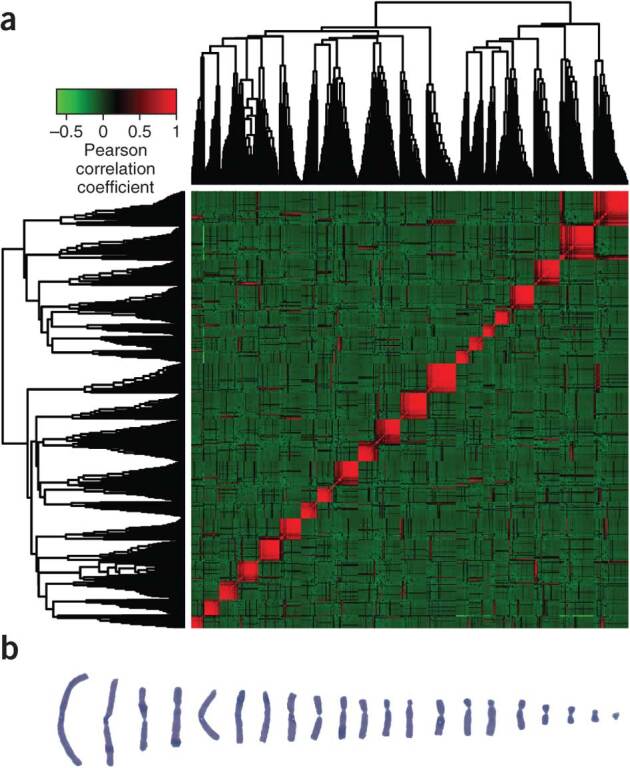
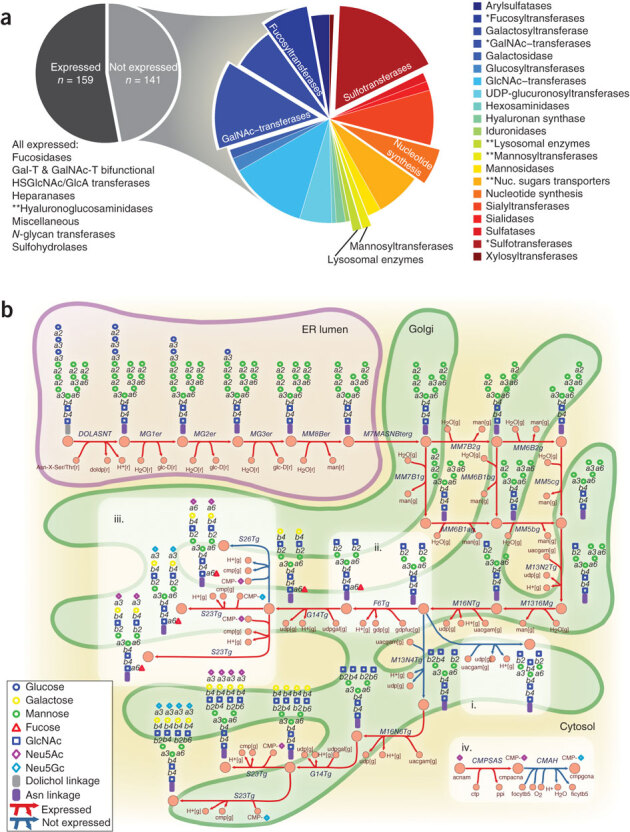
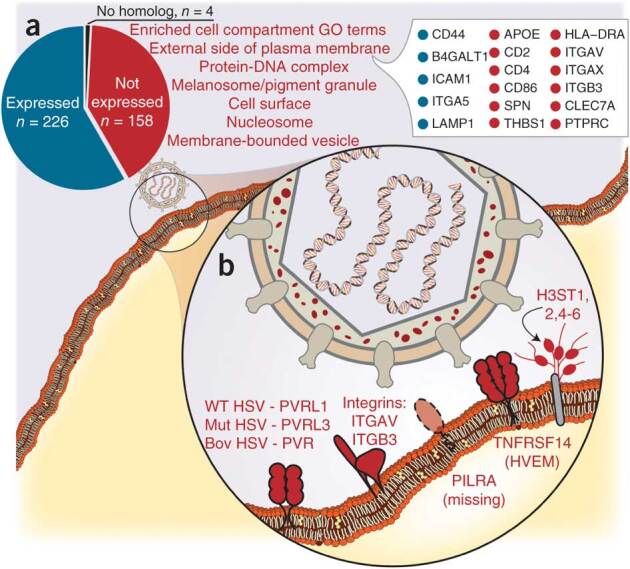
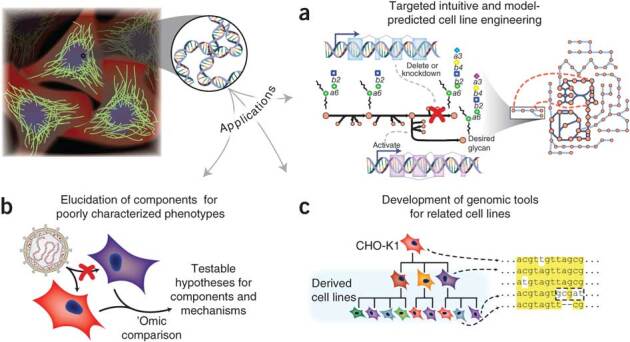
Since 1987, immortalized cells from the ovary of a Chinese hamster have been the workhorse for producing recombinant therapeutics, including monoclonal antibodies, blood factors, hormones, growth factors and enzymes. Xu et al. provide the genome sequence of the ancestral CHO-K1 cell line, which should aid in the optimization of current production cell lines. Chinese hamster ovary (CHO)–derived cell lines are the preferred host cells for the production of therapeutic proteins. Here we present a draft genomic sequence of the CHO-K1 ancestral cell line. The assembly comprises 2.45 Gb of genomic sequence, with 24,383 predicted genes. We associate most of the assembled scaffolds with 21 chromosomes isolated by microfluidics to identify chromosomal locations of genes. Furthermore, we investigate genes involved in glycosylation, which affect therapeutic protein quality, and viral susceptibility genes, which are relevant to cell engineering and regulatory concerns. Homologs of most human glycosylation-associated genes are present in the CHO-K1 genome, although 141 of these homologs are not expressed under exponential growth conditions. Many important viral entry genes are also present in the genome but not expressed, which may explain the unusual viral resistance property of CHO cell lines. We discuss how the availability of this genome sequence may facilitate genome-scale science for the optimization of biopharmaceutical protein production.
Overview
The claims and statistics of this paper haven’t been checked yet.
Run the check — free, no account needed. It reads the open-access text and checks the sources it cites.
Integrity signals
Registry
Cites
Statistics
Figures
Verification
Claims the paper makes
The claims and statistics of this paper haven’t been checked yet.
Run the check — free, no account needed. It reads the open-access text and checks the sources it cites.
Claims other papers make about this one
Each is checked against this paper’s own text: does it say what the citing paper says it does?
The source backs part of the claim, not all of it — or backs it for a different population, condition or comparison.
In the citing paper
“The availability of genomic sequences has enabled CHO cell engineering with unprecedented precision using engineered nucleases, including zinc finger nucleases (ZFNs) and transcription activator like nucleases (TALENs) and the clustered regularly interspaced short palindromic repeats (CRISPR) system [71–73,75,76].”
From Glycoengineering Chinese hamster ovary cells: a short history (2021) · cites this paper as [71]
Experimental — accuracy not yet measuredThe source backs part of the claim, not all of it — or backs it for a different population, condition or comparison.
In the citing paper
“CHO cells do not express alpha-1,3-galactosyltransferases, which produce the immunogenic alpha-galactosyl epitope (although they have the gene), and the expression of CMP-N-acetylneuraminic acid hydroxylase, which produces CMP-NeuGc, is virtually absent [27,71,72].”
From Glycoengineering Chinese hamster ovary cells: a short history (2021) · cites this paper as [71]
Experimental — accuracy not yet measuredThe source backs part of the claim, not all of it — or backs it for a different population, condition or comparison.
In the citing paper
“Advances in various omics technologies have significantly improved our understanding of CHO cells at different levels and enabled the rational targeting of glycosylation effectors for improved biopharmaceutical production [27,71,72,150–152].”
From Glycoengineering Chinese hamster ovary cells: a short history (2021) · cites this paper as [71]
Experimental — accuracy not yet measured
Self-check
Percentages, sums and reported differences re-computed from the paper’s own numbers.
The self-check needs the paper’s full text.
Citations
Cites
Initial sequencing and comparative analysis of the mouse genome
Mouse Genome Sequencing Consortium (2002) · Nature · doi:10.1038/nature01262 · Cited by 7,187
De novo assembly of human genomes with massively parallel short read sequencing
Li, R., Zhu, H., Ruan, J., Qian, W., Fang, X., Shi, Z., Li, Y., Li, S., Shan, G., Kristiansen, K., et al. (2010) · Genome Research · doi:10.1101/gr.097261.109 · Cited by 2,926
Self-citationGenome sequence of the Brown Norway rat yields insights into mammalian evolution
Gibbs, R. A., Weinstock, G. M., Metzker, M. L., Muzny, D. M., Sodergren, E. J., Scherer, S. E., Scott, G., Steffen, D. L., Worley, K. C., Burch, P. E., et al. (2004) · Nature · doi:10.1038/nature02426 · Cited by 2,170
Production of recombinant protein therapeutics in cultivated mammalian cells
Wurm, F. M. (2004) · Nature Biotechnology · doi:10.1038/nbt1026 · Cited by 2,032 · cited 9×
“This is consistent with the observation that CHO cells do not normally show ST6Gal activity19, whereas terminal α(2,3)-linked sialic acid residues are abundant.”
InfluentialAssembly algorithms for next-generation sequencing data
Miller, J. R., Koren, S., & Sutton, G. G. (2010) · Genomics · doi:10.1016/j.ygeno.2010.03.001 · Cited by 1,186
Metabolic engineering of Escherichia coli for direct production of 1,4-butanediol
Yim, H. H., Haselbeck, R. J., Niu, W., Pujol-Baxley, C., Burgard, A. P., Boldt, J., Khandurina, J., Trawick, J. D., Osterhout, R. E., Stephen, R., et al. (2011) · Nature Chemical Biology · doi:10.1038/nchembio.580 · Cited by 1,114
The role of sialic acid in determining the survival of glycoproteins in the circulation
Morell, A. G., Gregoriadis, G., Scheinberg, I. H., Hickman, J., & Ashwell, G. (1971) · Journal of Biological Chemistry · doi:10.1016/s0021-9258(19)76994-4 · Cited by 1,072
A Novel Role for 3-O-Sulfated Heparan Sulfate in Herpes Simplex Virus 1 Entry
Shukla, D., Liu, J., Blaiklock, P., Shworak, N. W., Bai, X., Esko, J. D., Cohen, G. H., Eisenberg, R. J., ROSENBERG, R. D., & Spear, P. G. (1999) · Cell · doi:10.1016/s0092-8674(00)80058-6 · Cited by 1,053
Post-translational modifications in the context of therapeutic proteins
Walsh, G., & Jefferis, R. (2006) · Nature Biotechnology · doi:10.1038/nbt1252 · Cited by 1,007 · cited 1×
“For some of these proteins, differential glycosylation can substantially affect functional activity and/or in vivo circulatory half-lif”
Annotation, submission and screening of repetitive elements in Repbase: RepbaseSubmitter and Censor
Kohany, O., Gentles, A. J., Hankus, L., & Jurka, J. (2006) · BMC Bioinformatics · doi:10.1186/1471-2105-7-474 · Cited by 897
Cited by
Sorted by citations
Items 701–786 of 786
Tools for next-generation transcriptional control in Chinese hamster ovary cell factories
Brown, A. J. (2014) · White Rose eTheses Online (University of Leeds, The University of Sheffield, University of York)
Gutiérrez, A. H., Moise, L., Terry, F. E., DaSilva, K., Bailey‐Kellogg, C., Martin, W. D., & Groot, A. S. D. (2012) · ACM International Conference on Bioinformatics, Computational Biology, and Health Informatics (ACM-BCB) · doi:10.1145/2382936.2383049
Kang, S., Bondarenko, P. V., & Deshpande, R. R. (2015) · Pharmaceutical Bioprocessing · doi:10.4155/pbp.14.56
Robitaille, J. (2015) · PolyPublie (École Polytechnique de Montréal)
Valuing the future: recent advances and future directions in cell line development
Al‐Rubeai, M., & Kuystermans, D. (2013) · Pharmaceutical Bioprocessing · doi:10.4155/pbp.13.27
Stallings, R. L. (2012) · Springer eBooks · doi:10.1007/978-94-007-5128-6_6
Advances in Genetic Engineering & Biotechnology
Kim, Y.-G. (2012)
Lin, N., & Kreader, C. A. (2012) · Springer eBooks · doi:10.1007/978-94-007-5128-6_7
Generation and characterization of a superior host cell line for biomanufacturing
Ritter, A., Wienberg, J., Voedisch, B., Wilms, B., Geisse, S., Jostock, T., & Laux, H. (2015) · BMC Proceedings · doi:10.1186/1753-6561-9-s9-p13
Mass spectrometric analysis of therapeutic proteins and complex biological samples
Liu, S. (2013) · Digital Repository Service (Northeastern University) · doi:10.17760/d20003083
Gao, Y. (2016) · Digital Repository Service (Northeastern University) · doi:10.17760/d20214208
Chiu, J. (2025) · Library, Museums and Press - UDSpace (University of Delaware) · doi:10.58088/94gd-qr50
Protein network reconstruction of CHO cell secretory pathway
Lund, A. M., Kildegaard, H. F., & Andersen, M. R. (2014)
Self-citationKremkow, B. G. (2024) · Library, Museums and Press - UDSpace (University of Delaware) · doi:10.58088/zgdn-fs49
Baser, B. (2015) · Digitale Bibliothek Braunschweig (Verbundzentrale Göttingen (VZG)) · doi:10.24355/dbbs.084-201510211021-0
iTRAQ-based Quantitative Proteomic Analysis of Mammalian Cell Lines
Talebian, V. (2018) · UWSpace (University of Waterloo)
Genome-editing techniques to increase the therapeutic efficacy of monoclonal antibodies
Firstova, V. V., Shemyakin, I. G., & Dyatlov, I. A. (2020) · Annals of the Russian academy of medical sciences · doi:10.15690/vramn1113
Macroscopic models of Chinese hamster ovary cell cultures
Hagrot, E. (2019) · KTH Publication Database DiVA (KTH Royal Institute of Technology)
O’Brien, S. A. (2020) · University of Minnesota Digital Conservancy (University of Minnesota)
Dawn of a new era in sponge biotechnology
Hesp, K. (2021) · doi:10.18174/540280
Castro‐Rivadeneyra, M., Tzani, I., Kelly, P. S., Strasser, L., Guapo, F., Tierney, C., Chain, M., Zhang, L., CLYNES, M. M., Karger, B. L., et al. (2022) · bioRxiv (Cold Spring Harbor Laboratory) · doi:10.1101/2022.01.20.475618
Spearman, M. A., Lattová, E., Perreault, H., & Butler, M. (2018) · Wiley eBooks · doi:10.1002/9781119378341.ch3
Recombinant expression systems
(2015) · CRC Press eBooks · doi:10.1201/b19077-7
Next Generation Cell Engineering Using microRNAs
Klingler, F., Raab, N., Zeh, N., & Otte, K. (2021) · Cell engineering · doi:10.1007/978-3-030-79871-0_3
Clairambault, J. (2020) · Faculty Opinions – Post-Publication Peer Review of the Biomedical Literature · doi:10.3410/f.736040460.793575381
Quantitative proteomic analysis of recombinant protein production
Liu, Z. (2013) · Digital Repository Service (Northeastern University) · doi:10.17760/d20003250
Transcriptomic profiling as a tool to characterize CHO cell processes
Alsayyari, A. A. (2018) · doi:10.18174/460722
Rapid Antibody Glycoengineering in Chinese Hamster Ovary Cells
Marbiah, M. M., Kotidis, P., Donini, R., Gómez, I. A., del Val, I. J., Haslam, S. M., Polizzi, K. M., & Kontoravdi, C. (2022) · Journal of Visualized Experiments · doi:10.3791/63872-v
Systems glycoengineering of therapeutic proteins
Agatemor, C., Ha, L., Muthiah, K., Osman, A., Jukes, M., & Yarema, K. J. (2024) · Elsevier eBooks · doi:10.1016/b978-0-12-819655-7.00008-4
Multimodal Measurement of Apoptosis -- Integration of Biosensing, Imaging, and AnalysisPreprint
Verkade, P., Chen, B., Butt, D., Achim, A., Kiely, J., Luxton, R. W., & Cross, S. (2024) · SSRN Electronic Journal · doi:10.2139/ssrn.4681762
Biologic from mammalian and non-mammalian cell lines
Behera, B. K. (2024) · Elsevier eBooks · doi:10.1016/b978-0-443-15640-3.00005-7
The N-glycosylation defect in Lec5 and Lec9 CHO cells is caused by absence of the DHRSX genePreprint
Kentache, T., Althoff, C. R., Caligiore, F., Souche, E. L., Schulz, C., Graff, J., Pieters, E., Stanley, P., Contessa, J. N., SCHAFTINGEN, E. V., et al. (2024) · bioRxiv (Cold Spring Harbor Laboratory) · doi:10.1101/2024.06.18.599300
Hsu, T. Y., Talley, M. J., Yang, P., Geiselhoeringer, A., Yang, C. L.-H., Gorla, A., Rahman, M. J., Silva, L., Chen, D., & Yang, B. (2024) · Biotechnology Progress · doi:10.1002/btpr.3485
Henry, M. A., Selvaprakash, K., & Meleady, P. (2024) · Methods in molecular biology · doi:10.1007/978-1-0716-4104-0_12
Moon, C., Park, C. S., Jeong, C. M., Lee, H. S., Kim, K., Byeon, H., Eom, D., & Kim, H. H. (2024) · Journal of Chromatography B · doi:10.1016/j.jchromb.2024.124441
Luján-Méndez, F., García‐López, P., Berumen, L. C., García‐Alcocer, G., Ferriz‐Martínez, R. A., Ramírez-Carrera, A., González-Barrón, J., & García-Gasca, T. (2025) · Pharmaceuticals · doi:10.3390/ph18020213
Ramos, A., Simon, S., Siller‐Farfán, J. A., Rajan, A., Revale, S., di Castiglionchio, E. Z., Pelea, O., Fulga, T. A., Riddell, S. R., Dushek, O., et al. (2025) · bioRxiv (Cold Spring Harbor Laboratory) · doi:10.1101/2025.02.10.637482
Database Chemistry for Genomics-Based Safety and Quality Evaluation of BiologicsPreprint
Ogata, N., Matsuda, T., Hosaka, A., Shina, A., Hashiba, N., Uchida, K., Kawabe, Y., Kamihira, M., Yamaoka, T., Kurita, H., et al. (2025) · bioRxiv (Cold Spring Harbor Laboratory) · doi:10.1101/2025.02.14.638017 · Cited by 1
Kulakova, L., Li, K. H., Chiang, A. W. T., Schwoerer, M. P., Schoffelen, S., Elkholy, K. H., Chao, K. L., Shahid, S., Kumar, B., Murray, N. B., et al. (2025) · bioRxiv (Cold Spring Harbor Laboratory) · doi:10.1101/2025.04.02.646860
Self-citationSelecting methods for draft GEM generation in multicellular eukaryotes: a comparative analysis
Jiménez, N. E., Espinoza, M., Mejías, S., Mendoza, S. N., Segovia, I., Salgado, J. C., Conca, C., & Gerdtzen, Z. P. (2026) · BMC Bioinformatics · doi:10.1186/s12859-026-06455-7
“…these challenges and provide a draft GEM that includes prior biological knowledge from the organism of interest, represents multiple compartments whilst preserving association with organelle-specific enzymes, and that is able to synthesize as many metabolites that comprise its biomass as possible.”
Development of cell lines producing recombinant therapeutic proteins, with denosumab as a case study
Сергеевна, Т. С., Kirik, I. A., Filatova, M. A., И., А. А., Shubina, S. S., Polupanova, A. A., Габдрахманова, А. Ф., Ivanov, E. S., Bade, V. N., Piskunov, A. A., et al. (2025) · Biological Products Prevention Diagnosis Treatment · doi:10.30895/2221-996x-2025-553
Chen, X., Zhang, K., Sun, Z., Fang, Y., Chen, J., Jin, C., Shi, L., & Wang, Y. (2025) · Bioprocess and Biosystems Engineering · doi:10.1007/s00449-025-03198-2
Chen, Y., Wang, Z., Lei, X., Liu, Y., Cai, Y., Wang, C., Jin, J., & Ding, X. (2025) · Molecular Biotechnology · doi:10.1007/s12033-025-01506-5
“…human-compatible post-translational modification machinery, particularly N-glycosylation patterns [1, 2], the absence of human pathogenic viruses [3], and their amenability to growth in suspension in a variety of serum-free and chemically defined media [4], have allowed them to produce over 70%…”
Price, E., & Dikicioǧlu, D. (2025) · npj Systems Biology and Applications · doi:10.1038/s41540-025-00630-x
A General Introduction to MicroRNAs, Their Investigation and Exploitation in CHO Cell Lines
Jossé, L., Zhang, L., & Smales, C. M. (2012) · Springer eBooks · doi:10.1007/978-94-007-5128-6_1
Incorporation of bacterial quorum sensing in synthetic biology
Wu, H. (2012) · University Libraries (University of Maryland)
Global metabolic effect of manipulating pyruvate dehydrogenase complex activity in mammalian cells
Buchsteiner, M. (2014) · The University of Queensland · doi:10.14264/uql.2015.198
Bryan, L., Henry, M., Kelly, R. M., Frye, C. C., Osborne, M., Clynes, M., & Meleady, P. (2021) · Figshare · doi:10.6084/m9.figshare.15047487
Bryan, L., Henry, M., Kelly, R. M., Frye, C. C., Osborne, M., Clynes, M., & Meleady, P. (2021) · Figshare · doi:10.6084/m9.figshare.15047478
Bryan, L., Henry, M., Kelly, R. M., Frye, C. C., Osborne, M., CLYNES, M. M., & Meleady, P. (2021) · Figshare · doi:10.6084/m9.figshare.15047484
Bryan, L., Henry, M., Kelly, R. M., Frye, C. C., Osborne, M., Clynes, M., & Meleady, P. (2021) · Figshare · doi:10.6084/m9.figshare.15047481
Bryan, L., Henry, M., Kelly, R. M., Frye, C. C., Osborne, M., Clynes, M., & Meleady, P. (2021) · Figshare · doi:10.6084/m9.figshare.15047469
Mital, S., Christie, G., & Dikicioǧlu, D. (2021) · Figshare · doi:10.6084/m9.figshare.16909675
Jari, M., Abdoli, S., Bazi, Z., Shamsabadi, F. T., Roshanmehr, F., & Shahbazi, M. (2024) · Figshare · doi:10.6084/m9.figshare.26675720
Jari, M., Abdoli, S., Bazi, Z., Shamsabadi, F. T., Roshanmehr, F., & Shahbazi, M. (2024) · Figshare · doi:10.6084/m9.figshare.26675723
A Direction Beyond Next Generation Glycoprotein Drug
Kanie, O. (2025) · KAGAKU TO SEIBUTSU · doi:10.1271/kagakutoseibutsu.63.82
Evaluation of gene editing in CHO cells using the Cas‐ CLOVER system
McLamarrah, T. A., Aral, E., Hoffman, M., Tedstone, J., King, T., Vitko, J., Sebastião, M. J., Escandell, J. M., Dias, M. M., McCall, I., et al. (2026) · Biotechnology Progress · doi:10.1002/btpr.70108
The Role of Glycan Structures in Modulating GM-CSF Bioactivity: Insights from GlycoengineeringPreprint
Çağdaş, E., Skovbakke, S. L., Agullet, J. P., Dworkin, L. A., Scapin, G., Hefzi, H., Fremming, K. S., Schoffhelen, S., Putkaradze, N., Voldborg, B. G. R., et al. (2026) · bioRxiv (Cold Spring Harbor Laboratory) · doi:10.64898/2026.02.17.706267
Self-citationGenome-Scale Big Data boostet die Produktion von Biotherapeutika
Borth, N. (2026) · BIOspektrum · doi:10.1007/s12268-026-2660-8
Ding, X., Liu, Y., Luo, L., Cai, Y., WANG, C., Jin, J., & Chen, Y. (2026) · ACS Synthetic Biology · doi:10.1021/acssynbio.5c00776
Mise en oeuvre de dosages pour le diagnostic précoce de l'hypothyroïdie
Iss, C. (2015) · theses.fr (ABES) · doi:10.70675/f9f2aeebza5a8z4cf3zb9afzd52e7504b286
Glycoprotein G enables HSV-2 neuroinvasion and provides protection as a glycosylated vaccine antigen
Samuelsson, E., Gustafsson, C., Gudmundsdotter, L., Mirgorodskaya, E., Nilsson, J., Ekblad, M., Adamiak, B., Jennische, E., Lange, S., Trybala, E., et al. (2026) · PLoS Pathogens · doi:10.1371/journal.ppat.1014339
“…in expression of glycosyl-transferases, e.g., CHO-cells lack α 2–6 sialyltransferase expression, but more importantly exhibit limited expression of a subset of GalNAc-transferases, that could negatively affect site occupancy in addition to alterations in glycan structure heterogeneity [53, 54].”
Pu, T., Wang, C., Lou, H., Mi, Y., Zhang, S., Liu, S., Xiao, Z., Wang, Q., Liu, Q. F., & Liu, Y. (2026) · Bioresources and Bioprocessing · doi:10.1186/s40643-026-01150-0
“To define the intrinsic transcriptional differences driven by distinct GS-KO patterns, we performed RNA-seq on non-producing cell lines (no exogenous antibody expression), leveraging well-annotated CHO genomic datasets (Kretzmer et al. 2022; Lewis et al. 2013; Schmidt et al. 2024; Xu et al. 2011).”
Advancing recombinant protein production in CHO cells through metabolic engineering
Hou, L., Li, W., Li, Z., Geng, S., Wang, T., & Zhang, J. (2026) · Frontiers in Bioengineering and Biotechnology · doi:10.3389/fbioe.2026.1847073
“Foundational CHO GEMs were built on the first draft CHO-K1 genome sequence and the Chinese hamster reference genome (Xu et al., 2011; Lewis et al., 2013), complemented by the first public CHO cell line transcript database constructed by Rupp et al. (Rupp et al., 2014), which integrated…”
Bräuer, M., Walker, E., Schneider, S., Weiß, L., Geiger, A., Lindner, B., Hädicke, O., Schmidt, M. J., Fischer, S., & Otte, K. (2026) · ACS Synthetic Biology · doi:10.1021/acssynbio.6c00460
Toward a 4D genome annotation of CHO cells for biomanufacturing
Giusto, P. D., Tat, J., & Lewis, N. E. (2026) · Trends in biotechnology · doi:10.1016/j.tibtech.2026.07.011
Self-citationD’Arrigo, E., Gupta, V., Goudeau, B., Dick, J. E., & Šojić, N. (2026) · Angewandte Chemie · doi:10.1002/ange.5240036
D’Arrigo, E., Gupta, V., Goudeau, B., Dick, J. E., & Šojić, N. (2026) · Angewandte Chemie International Edition · doi:10.1002/anie.5240036
“These cells have been widely characterized for their cellular behavior and, thus, were chosen as the ideal candidate for benchmarking our system [75].”
Improving recombinant protein productivity in CHO cells via multi-omics data integration
Shen, Y., Shi, L., Zhang, X., Guo, X., Dong, W.-H., & Wang, T. (2026) · Bioresources and Bioprocessing · doi:10.1186/s40643-026-01123-3
“A landmark advance came in 2011 with the sequencing of the CHO-K1 cell line, which generated a 2.45 Gbp draft genome comprising approximately 24,000 annotated genes across 21 chromosomes (Xu et al. 2011).”
InfluentialSequence optimization targeting mRNA stability enhances monoclonal antibody titers in CHO cells
Schneckener, S., Haag, K., Leweke, S., Wolf, T., & Mayer‐Bartschmid, A. (2026) · New Biotechnology · doi:10.1016/j.nbt.2026.09.004
Glycosylation in Quality and Safety of Therapeutic Proteins
Matsumoto, Y., Kim, J., McKenna, K. R., Biel, T. G., Kirshner, S., Falkowski, V. M., & Ju, T. (2026) · Pharmacological Reviews · doi:10.1016/j.pharmr.2026.100163
A benchmark fed-batch bioprocess for production of cNISTmAb using NISTCHO
Bolla, V., O’Dell, W. B., Kolanupaka, S. H. B., Dahodwala, H., Cavicchi, R. E., Lyon, R. B., Kelman, Z., Marino, J. P., & Karageorgos, I. L. (2026) · Protein Expression and Purification · doi:10.1016/j.pep.2026.107020
Fieder, J., Schneider, S., & Fischer, S. (2026) · Critical Reviews in Biotechnology · doi:10.1080/07388551.2026.2738418
Yu, C., 姚雪静, Tian, Z., Gao, Y., 汪世龙, Jiang, C., & Liu, Q. (2026) · Frontiers in Bioengineering and Biotechnology · doi:10.3389/fbioe.2026.1978281
Metadata
- Authors
- Xu, X., Nagarajan, H., Lewis, N. E., Pan, S., Cai, Z., Liu, X., Chen, W., Xie, M., Wang, W., Hammond, S., Andersen, M. R., Neff, N., Passarelli, B., Koh, W., Fan, H. C., Wang, J., Gui, Y., Lee, K. H., Betenbaugh, M. J., Quake, S. R., Famili, I., Palsson, B. O., & Wang, J.
- Affiliations
- BGI Group (China) (CN)
- Peking University Shenzhen Hospital (CN)
- Delaware Biotechnology Institute (US)
- Technical University of Denmark (DK)
- Howard Hughes Medical Institute (US)
- Johns Hopkins University (US)
- Corresponding author
- Wang, Jianbin
- Wang, Jun
- ORCID
- Venue
- Nature Biotechnology
- Published
- 2011-08
- Volume
- 29
- Issue
- 8
- Pages
- 735-741
- ISSN
- 0733-222X (ISSN-L)
- 1087-0156
- 1546-1696
- PMC
- PMC3164356
- OpenAlex
- W2093343938
- Cited by
- 785
- References
- 53
- Citations by year
- 2026: 22 · 2025: 25 · 2024: 37 · 2023: 35 · 2022: 39 · 2021: 58 · 2020: 38 · 2019: 45 · 2018: 78 · 2017: 57 · 2016: 59 · 2015: 77 · 2014: 79 · 2013: 64 · 2012: 53
- FWCI
- 27.29
- Type
- journal article
- Language
- en
- Open access
- hybrid
- doi.org
- Licence
- Locations
- Nature Biotechnology (publishedVersion, cc-by-nc-sa)
- PubMed Central (publishedVersion, cc-by-nc-sa)
- PubMed (publishedVersion)
- Research at the University of Copenhagen (University of Copenhagen) (submittedVersion)
- Technical University of Denmark, DTU Orbit (Technical University of Denmark, DTU) (submittedVersion)
- Funders
- Novo Nordisk Fonden (NNF10CC1016517)
- National Cancer Institute (R44CA139977)
- National Center for Research Resources (P20RR016472)
- Topics
- Life Sciences › Biochemistry, Genetics and Molecular Biology › Molecular Biology › Viral Infectious Diseases and Gene Expression in Insects
- Life Sciences › Biochemistry, Genetics and Molecular Biology › Molecular Biology › Fungal and yeast genetics research
- Life Sciences › Immunology and Microbiology › Immunology › Monoclonal and Polyclonal Antibodies Research
- Keywords
- CHO-K1 cells, CHO cells, draft genome sequence, therapeutic protein production, monoclonal antibodies, virus resistance, cell line engineering, genome assembly, gene expression
- MeSH terms
- Animals, Chromosome Mapping, Cricetulus, Glycosylation, Cricetinae, Models, Biological, Molecular Sequence Data, CHO Cells, Genome, Sequence Analysis, DNA, Genomics
About these checks
Registry, retraction, Cites and statistics results are computed, not judged, with one exception: a printed reference that no index lists is read once by a model before it counts as a citation error. Claims are extracted by a model and kept only when their quote appears verbatim in the text; each cited source is then checked, with a model’s help, for whether it says what the claim relies on. Those verdicts can be wrong — read the claim’s quote and the cited source before relying on one.
Statistics and arithmetic are recomputed, not judged.
Confidence bands are shown only for fields calibrated on our annotated test set. None is calibrated yet, so no band is shown.
What counts as a claim ›How we measure confidence ›How we check this ›
Are you an author, or do you see a problem with this page? Request a review
