

Survival trade-offs in plant roots during colonization by closely related beneficial and pathogenic fungi
Open accessThe DOI matches its Crossref record; 72 of the 72 references it cites were found in a registry or an index.
Abstract
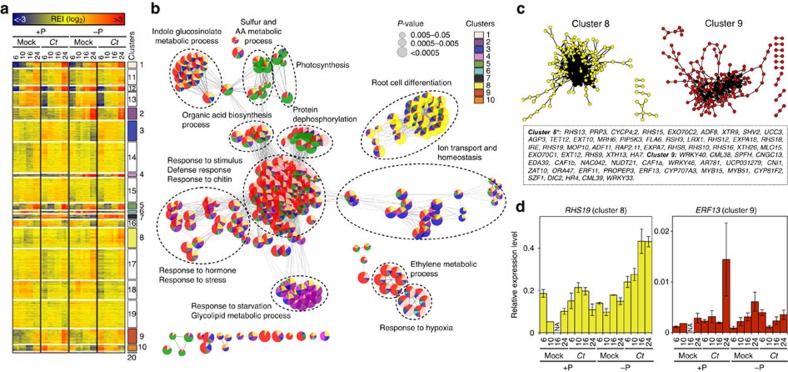
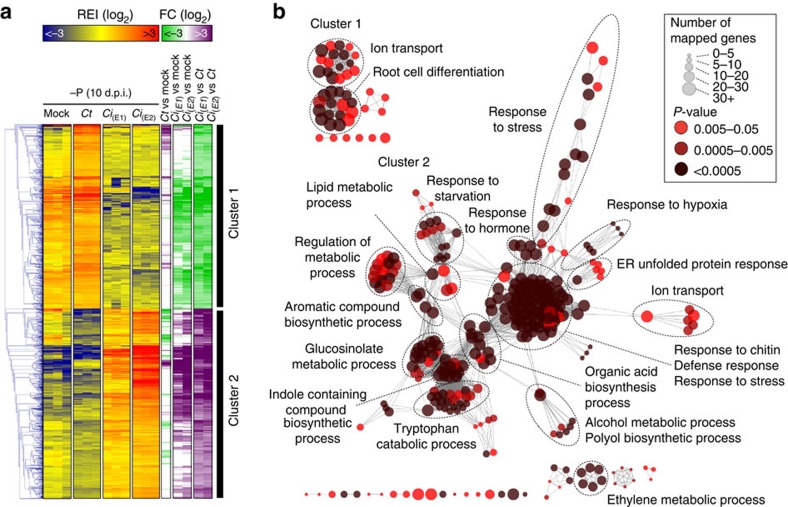
The sessile nature of plants forced them to evolve mechanisms to prioritize their responses to simultaneous stresses, including colonization by microbes or nutrient starvation. Here, we compare the genomes of a beneficial root endophyte, Colletotrichum tofieldiae and its pathogenic relative C. incanum , and examine the transcriptomes of both fungi and their plant host Arabidopsis during phosphate starvation. Although the two species diverged only 8.8 million years ago and have similar gene arsenals, we identify genomic signatures indicative of an evolutionary transition from pathogenic to beneficial lifestyles, including a narrowed repertoire of secreted effector proteins, expanded families of chitin-binding and secondary metabolism-related proteins, and limited activation of pathogenicity-related genes in planta . We show that beneficial responses are prioritized in C. tofieldiae -colonized roots under phosphate-deficient conditions, whereas defense responses are activated under phosphate-sufficient conditions. These immune responses are retained in phosphate-starved roots colonized by pathogenic C. incanum , illustrating the ability of plants to maximize survival in response to conflicting stresses.
Overview
The claims and statistics of this paper haven’t been checked yet.
Free: it reads the open-access text and checks the first 5 claims that cite a source we can check. Create a free account to check every claim.
Integrity signals
Registry
Cites
Statistics
Figures
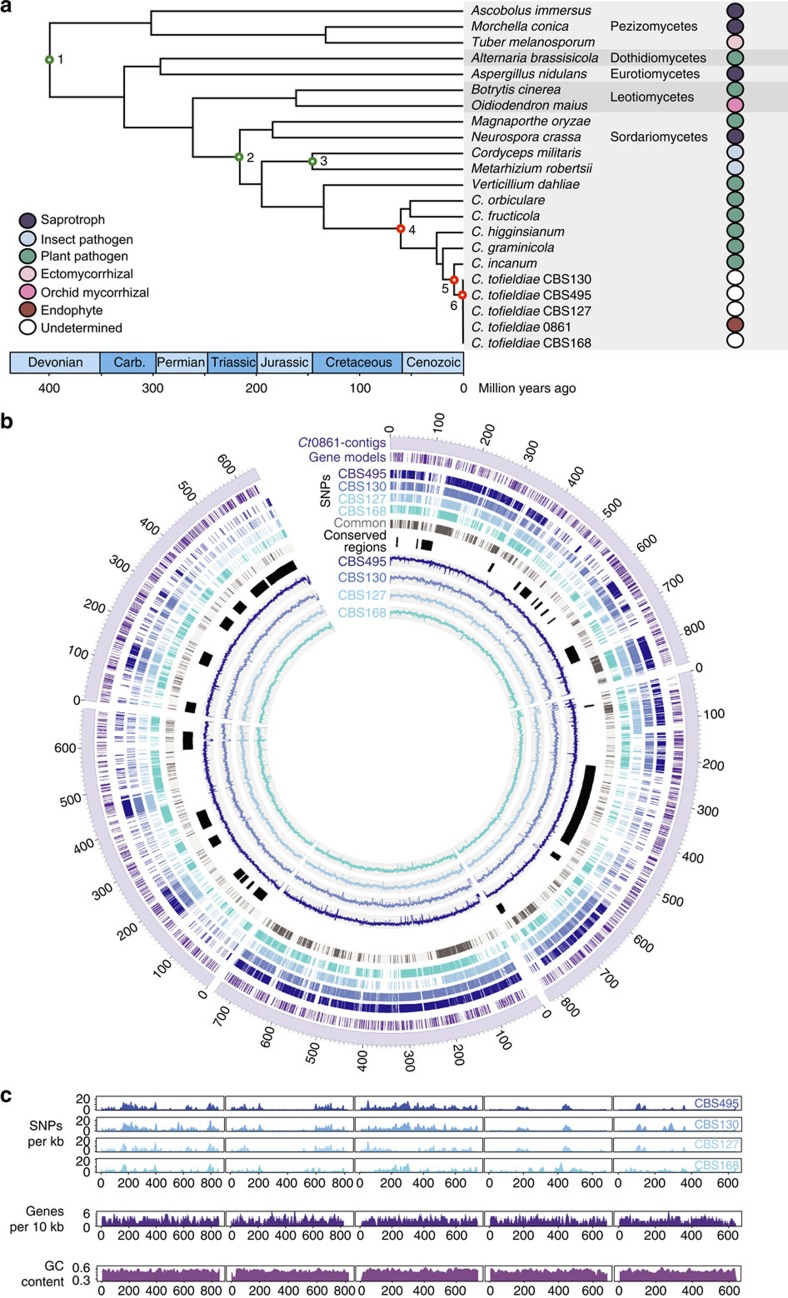
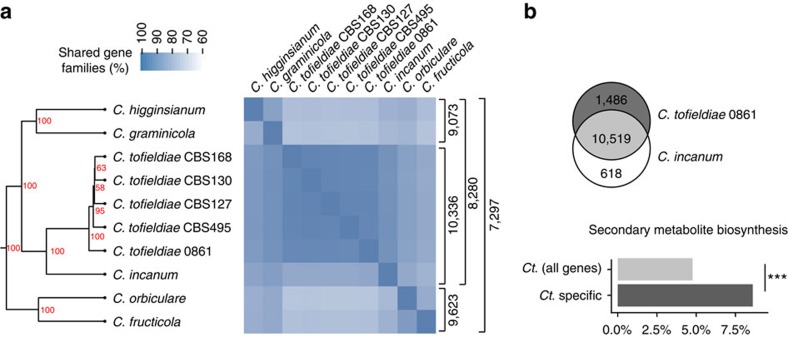
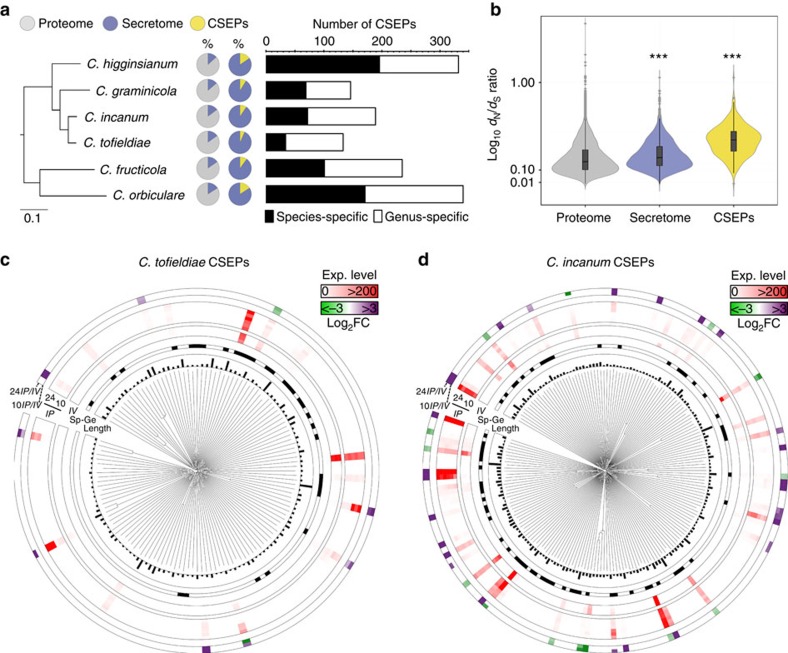
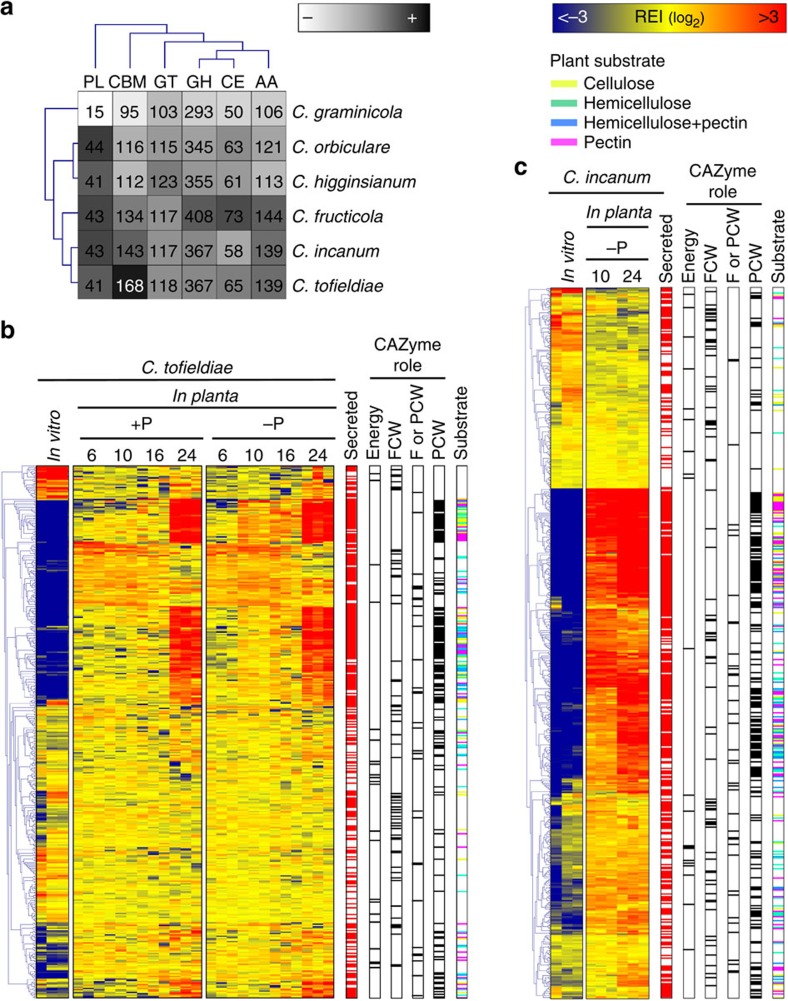
Verification
Claims the paper makes
The claims and statistics of this paper haven’t been checked yet.
Free: it reads the open-access text and checks the first 5 claims that cite a source we can check. Create a free account to check every claim.
Claims other papers make about this one
Each is checked against this paper’s own text: does it say what the citing paper says it does?
The source backs part of the claim, not all of it — or backs it for a different population, condition or comparison.
In the citing paper
“Comparative analyses of these genomes have revealed that Colletotrichum species may tailor their plant cell wall degrading enzymes and proteinases according to their lifestyle (O'Connell et al. 2012, Baroncelli et al. 2016, Hacquard et al. 2016).”
From Colletotrichum: lifestyles, biology, morpho-species, species complexes and accepted species (2021) · cites this paper as Hacquard et al. 2016
Experimental — accuracy not yet measured
Self-check
Percentages, sums and reported differences re-computed from the paper’s own numbers.
The self-check needs the paper’s full text.
Citations
Cites
The Sequence Alignment/Map format and SAMtools
Li, H., Handsaker, B., Wysoker, A., Fennell, T., Ruan, J., Homer, N., Marth, G., Abecasis, G., Durbin, R., & 1000 Genome Project Data Processing Subgroup (2009) · Bioinformatics · doi:10.1093/bioinformatics/btp352 · Cited by 62,041
Fast gapped-read alignment with Bowtie 2
Langmead, B., & Salzberg, S. L. (2012) · Nature Methods · doi:10.1038/nmeth.1923 · Cited by 56,400
Cytoscape: A software Environment for integrated models of biomolecular interaction networks
Shannon, P., Markiel, A., Ozier, O., Baliga, N. S., Wang, J. T., Ramage, D., Amin, N., Schwikowski, B., & Ideker, T. (2003) · Genome Research · doi:10.1101/gr.1239303 · Cited by 51,888
Robinson, M. D., McCarthy, D. J., & Smyth, G. K. (2010) · Bioinformatics · doi:10.1093/bioinformatics/btp616 · Cited by 41,364
A new mathematical model for relative quantification in real-time RT-PCR
Pfaffl, M. W. (2001) · Nucleic Acids Research · doi:10.1093/nar/29.9.e45 · Cited by 34,610
SPAdes: A New Genome Assembly Algorithm and Its Applications to Single-Cell Sequencing
Bankevich, A., Nurk, S., Antipov, D., Gurevich, A. A., Dvorkin, M., Kulikov, A. S., Lesin, V. M., Nikolenko, S. I., Pham, S., Prjibelski, A. D., et al. (2012) · Journal of Computational Biology · doi:10.1089/cmb.2012.0021 · Cited by 25,987
HTSeq—a Python framework to work with high-throughput sequencing data
Anders, S., Pyl, P. T., & Huber, W. (2015) · Bioinformatics · doi:10.1093/bioinformatics/btu638 · Cited by 21,464
Full-length transcriptome assembly from RNA-Seq data without a reference genome
Grabherr, M. G., Haas, B. J., Yassour, M., Levin, J. Z., Thompson, D. A., Amit, I., Adiconis, X., Fan, L., Raychowdhury, R., Zeng, Q., et al. (2011) · Nature Biotechnology · doi:10.1038/nbt.1883 · Cited by 21,039
Fast, scalable generation of high‐quality protein multiple sequence alignments using Clustal Omega
Sievers, F., Wilm, A., Dineen, D., Gibson, T. J., Karplus, K., Li, W., Lopez, R., McWilliam, H., Remmert, M., Söding, J., et al. (2011) · Molecular Systems Biology · doi:10.1038/msb.2011.75 · Cited by 15,355
Kim, D., Pertea, G., Trapnell, C., Pimentel, H., Kelley, R., & Salzberg, S. L. (2013) · Genome Biology · doi:10.1186/gb-2013-14-4-r36 · Cited by 12,668
Cited by
Plant–microbiome interactions: from community assembly to plant health
Trivedi, P., Leach, J. E., Tringe, S. G., Sa, T., & Singh, B. K. (2020) · Nature Reviews Microbiology · doi:10.1038/s41579-020-0412-1 · Cited by 3,904
Microbial Interkingdom Interactions in Roots Promote Arabidopsis Survival
Durán, P., Thiergart, T., Garrido-Oter, R., Agler, M., Kemen, E., Schulze-Lefert, P., & Hacquard, S. (2018) · Cell · doi:10.1016/j.cell.2018.10.020 · Cited by 1,037
Self-citationRoot microbiota drive direct integration of phosphate stress and immunity
Castrillo, G., Teixeira, P. J. P. L., Paredes, S. H., Law, T. F., de Lorenzo, L., Feltcher, M. E., Finkel, O. M., Breakfield, N. W., Mieczkowski, P., Jones, C. D., et al. (2017) · Nature · doi:10.1038/nature21417 · Cited by 956
The Plant Microbiota: Systems-Level Insights and Perspectives
Müller, D. B., Vogel, C., Bai, Y., & Vorholt, J. A. (2016) · Annual Review of Genetics · doi:10.1146/annurev-genet-120215-034952 · Cited by 846
Understanding and exploiting plant beneficial microbes
Finkel, O. M., Castrillo, G., Herrera Paredes, S., Salas González, I., & Dangl, J. L. (2017) · Current Opinion in Plant Biology · doi:10.1016/j.pbi.2017.04.018 · Cited by 721
Metadata
- Authors
- Hacquard, S., Kracher, B., Hiruma, K., Münch, P. C., Garrido-Oter, R., Thon, M. R., Weimann, A., Damm, U., Dallery, J.-F., Hainaut, M., Henrissat, B., Lespinet, O., Sacristán, S., Ver Loren van Themaat, E., Kemen, E., McHardy, A. C., Schulze-Lefert, P., & O’Connell, R. J.
- Affiliations
- Max Planck Institute for Plant Breeding Research (DE)
- German Center for Infection Research (DE)
- Universidad de Salamanca (ES)
- Helmholtz Centre for Infection Research (DE)
- Westerdijk Fungal Biodiversity Institute (NL)
- AgroParisTech (FR)
- Centre National de la Recherche Scientifique (FR)
- Université Paris-Sud (FR)
- Centre for Plant Biotechnology and Genomics (ES)
- Cluster of Excellence on Plant Sciences (DE)
- Corresponding author
- O’Connell, Richard J.
- ORCID
- Venue
- Nature Communications
- Published
- 2016-05-06
- Volume
- 7
- Issue
- 1
- Pages
- 11362-11362
- ISSN
- 2041-1723 (ISSN-L)
- PMC
- PMC4859067
- OpenAlex
- W2345756881
- Cited by
- 278
- References
- 72
- Citations by year
- 2026: 18 · 2025: 33 · 2024: 21 · 2023: 27 · 2022: 26 · 2021: 40 · 2020: 27 · 2019: 22 · 2018: 24 · 2017: 27 · 2016: 13
- FWCI
- 33.57
- Type
- journal article
- Language
- en
- Update notices
- erratum (2016-09-29)
- Open access
- gold
- doi.org
- Licence
- cc-by
- creativecommons.org/licenses/by/4.0 (tdm)
- creativecommons.org/licenses/by/4.0 (vor)
- Locations
- Nature Communications (publishedVersion, cc-by)
- Europe PMC (PubMed Central) (publishedVersion, cc-by)
- PubMed Central (publishedVersion, cc-by)
- KNAW Research Portal (The Royal Netherlands Academy of Arts and Sciences) (publishedVersion, other-oa)
- PubMed (publishedVersion)
- Kölner Universitäts PublikationsServer (Universität zu Köln) (publishedVersion)
- UPM Digital Archive (Technical University of Madrid) (acceptedVersion, cc-by-nc-nd)
- HAL (submittedVersion, cc-by)
- HAL (submittedVersion, other-oa)
- MPG.PuRe (Max Planck Society) (submittedVersion, other-oa)
- Data Archiving and Networked Services (DANS) (submittedVersion, other-oa)
- HAL (submittedVersion)
- RePEc: Research Papers in Economics (submittedVersion)
- DOAJ (DOAJ: Directory of Open Access Journals) (submittedVersion, cc-by-sa)
- Open access LMU (Ludwid Maxmilian's Universitat Munchen) (submittedVersion)
- Max Planck Digital Library (submittedVersion, other-oa)
- Hispana (submittedVersion, cc-by-nc-nd)
- HZI (Helmholtz Centre for Infection Research) (submittedVersion, cc-by-nc-sa)
- Funders
- Aix-Marseille Université
- Deutsches Zentrum für Infektionsforschung
- Deutsche Forschungsgemeinschaft
- Agence Nationale de la Recherche (ANR-12-CHEX-0008, ANR-12)
- Koninklijke Nederlandse Akademie van Wetenschappen
- Max-Planck-Gesellschaft
- Japan Society for the Promotion of Science
- Topics
- Life Sciences › Agricultural and Biological Sciences › Plant Science › Plant-Microbe Interactions and Immunity
- Life Sciences › Agricultural and Biological Sciences › Ecology, Evolution, Behavior and Systematics › Plant and fungal interactions
- Life Sciences › Agricultural and Biological Sciences › Plant Science › Mycorrhizal Fungi and Plant Interactions
- Keywords
- root endophytes, plant-fungal interactions, pathogenicity evolution, phosphate limitation, Arabidopsis thaliana, secreted effector proteins, chitin-binding protein, secondary metabolism, plant immunity, root transcriptome, fungal genome evolution
- MeSH terms
- Chitin, Phosphates, Starvation, Symbiosis, Genome, Fungal, Arabidopsis, Plant Roots, Colletotrichum, Endophytes
About these checks
Registry, retraction, Cites and statistics results are computed, not judged, with one exception: a printed reference that no index lists is read once by a model before it counts as a citation error. Claims are extracted by a model and kept only when their quote appears verbatim in the text; each cited source is then checked, with a model’s help, for whether it says what the claim relies on. Those verdicts can be wrong — read the claim’s quote and the cited source before relying on one.
Statistics and arithmetic are recomputed, not judged.
Confidence bands are shown only for fields calibrated on our annotated test set. None is calibrated yet, so no band is shown.
What counts as a claim ›How we measure confidence ›How we check this ›
Are you an author, or do you see a problem with this page? Request a review
How to cite
Cite CoChat for the checks on this page, and the paper for its own findings.
- This page
- CoChat. (2026). Citation check: Survival trade-offs in plant roots during colonization by closely related beneficial and pathogenic fungi. https://app.cochat.ai/papers/10.1038/ncomms11362
- The paper
- Hacquard, S., Kracher, B., Hiruma, K., Münch, P. C., Garrido-Oter, R., Thon, M. R., Weimann, A., Damm, U., Dallery, J.-F., Hainaut, M., Henrissat, B., Lespinet, O., Sacristán, S., Ver Loren van Themaat, E., Kemen, E., McHardy, A. C., Schulze-Lefert, P., & O’Connell, R. J. (2016). Survival trade-offs in plant roots during colonization by closely related beneficial and pathogenic fungi. Nature Communications. https://doi.org/10.1038/ncomms11362
Data sources
Bibliographic data: Semantic Scholar, OpenAlex, Crossref.
Contains information from the Semantic Scholar Academic Graph Datasets, made available under the ODC Attribution License (ODC-BY 1.0).
Semantic Scholar’s data is described in: Kinney, R., et al. (2023). The Semantic Scholar Open Data Platform. arXiv:2301.10140.
