

Survival trade-offs in plant roots during colonization by closely related beneficial and pathogenic fungi
Open accessThe DOI matches its Crossref record; 72 of the 72 references it cites were found in a registry or an index.
Abstract
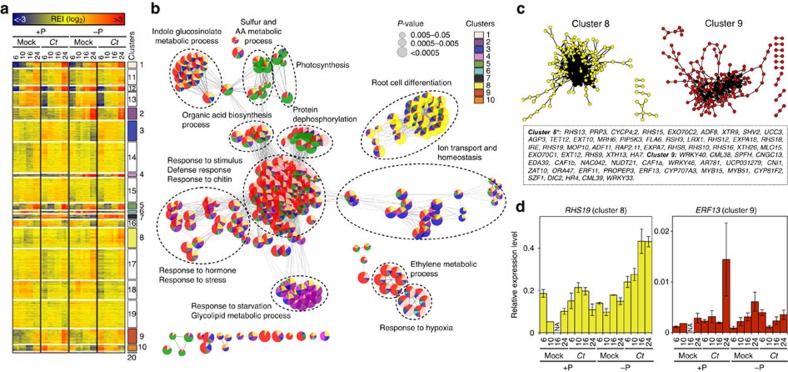
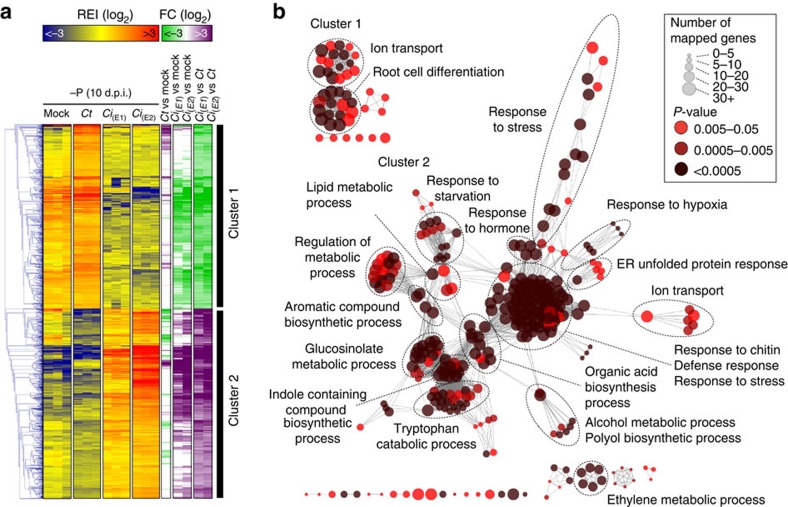
The sessile nature of plants forced them to evolve mechanisms to prioritize their responses to simultaneous stresses, including colonization by microbes or nutrient starvation. Here, we compare the genomes of a beneficial root endophyte, Colletotrichum tofieldiae and its pathogenic relative C. incanum , and examine the transcriptomes of both fungi and their plant host Arabidopsis during phosphate starvation. Although the two species diverged only 8.8 million years ago and have similar gene arsenals, we identify genomic signatures indicative of an evolutionary transition from pathogenic to beneficial lifestyles, including a narrowed repertoire of secreted effector proteins, expanded families of chitin-binding and secondary metabolism-related proteins, and limited activation of pathogenicity-related genes in planta . We show that beneficial responses are prioritized in C. tofieldiae -colonized roots under phosphate-deficient conditions, whereas defense responses are activated under phosphate-sufficient conditions. These immune responses are retained in phosphate-starved roots colonized by pathogenic C. incanum , illustrating the ability of plants to maximize survival in response to conflicting stresses.
Overview
The claims and statistics of this paper haven’t been checked yet.
Free: it reads the open-access text and checks the first 5 claims that cite a source we can check. Create a free account to check every claim.
Integrity signals
Registry
Cites
Statistics
Figures
Verification
Claims the paper makes
The claims and statistics of this paper haven’t been checked yet.
Free: it reads the open-access text and checks the first 5 claims that cite a source we can check. Create a free account to check every claim.
Claims other papers make about this one
Each is checked against this paper’s own text: does it say what the citing paper says it does?
The source backs part of the claim, not all of it — or backs it for a different population, condition or comparison.
In the citing paper
“Comparative analyses of these genomes have revealed that Colletotrichum species may tailor their plant cell wall degrading enzymes and proteinases according to their lifestyle (O'Connell et al. 2012, Baroncelli et al. 2016, Hacquard et al. 2016).”
From Colletotrichum: lifestyles, biology, morpho-species, species complexes and accepted species (2021) · cites this paper as Hacquard et al. 2016
Experimental — accuracy not yet measured
Self-check
Percentages, sums and reported differences re-computed from the paper’s own numbers.
The self-check needs the paper’s full text.
Citations
Cites
The Sequence Alignment/Map format and SAMtools
Li, H., Handsaker, B., Wysoker, A., Fennell, T., Ruan, J., Homer, N., Marth, G., Abecasis, G., Durbin, R., & 1000 Genome Project Data Processing Subgroup (2009) · Bioinformatics · doi:10.1093/bioinformatics/btp352 · Cited by 62,041
Fast gapped-read alignment with Bowtie 2
Langmead, B., & Salzberg, S. L. (2012) · Nature Methods · doi:10.1038/nmeth.1923 · Cited by 56,400
Cytoscape: A software Environment for integrated models of biomolecular interaction networks
Shannon, P., Markiel, A., Ozier, O., Baliga, N. S., Wang, J. T., Ramage, D., Amin, N., Schwikowski, B., & Ideker, T. (2003) · Genome Research · doi:10.1101/gr.1239303 · Cited by 51,888
Robinson, M. D., McCarthy, D. J., & Smyth, G. K. (2010) · Bioinformatics · doi:10.1093/bioinformatics/btp616 · Cited by 41,364
A new mathematical model for relative quantification in real-time RT-PCR
Pfaffl, M. W. (2001) · Nucleic Acids Research · doi:10.1093/nar/29.9.e45 · Cited by 34,610
SPAdes: A New Genome Assembly Algorithm and Its Applications to Single-Cell Sequencing
Bankevich, A., Nurk, S., Antipov, D., Gurevich, A. A., Dvorkin, M., Kulikov, A. S., Lesin, V. M., Nikolenko, S. I., Pham, S., Prjibelski, A. D., et al. (2012) · Journal of Computational Biology · doi:10.1089/cmb.2012.0021 · Cited by 25,987
HTSeq—a Python framework to work with high-throughput sequencing data
Anders, S., Pyl, P. T., & Huber, W. (2015) · Bioinformatics · doi:10.1093/bioinformatics/btu638 · Cited by 21,464
Full-length transcriptome assembly from RNA-Seq data without a reference genome
Grabherr, M. G., Haas, B. J., Yassour, M., Levin, J. Z., Thompson, D. A., Amit, I., Adiconis, X., Fan, L., Raychowdhury, R., Zeng, Q., et al. (2011) · Nature Biotechnology · doi:10.1038/nbt.1883 · Cited by 21,039
Fast, scalable generation of high‐quality protein multiple sequence alignments using Clustal Omega
Sievers, F., Wilm, A., Dineen, D., Gibson, T. J., Karplus, K., Li, W., Lopez, R., McWilliam, H., Remmert, M., Söding, J., et al. (2011) · Molecular Systems Biology · doi:10.1038/msb.2011.75 · Cited by 15,355
Kim, D., Pertea, G., Trapnell, C., Pimentel, H., Kelley, R., & Salzberg, S. L. (2013) · Genome Biology · doi:10.1186/gb-2013-14-4-r36 · Cited by 12,668
Cited by
Plant–microbiome interactions: from community assembly to plant health
Trivedi, P., Leach, J. E., Tringe, S. G., Sa, T., & Singh, B. K. (2020) · Nature Reviews Microbiology · doi:10.1038/s41579-020-0412-1 · Cited by 3,904
Microbial Interkingdom Interactions in Roots Promote Arabidopsis Survival
Durán, P., Thiergart, T., Garrido-Oter, R., Agler, M., Kemen, E., Schulze-Lefert, P., & Hacquard, S. (2018) · Cell · doi:10.1016/j.cell.2018.10.020 · Cited by 1,037
Self-citationRoot microbiota drive direct integration of phosphate stress and immunity
Castrillo, G., Teixeira, P. J. P. L., Paredes, S. H., Law, T. F., de Lorenzo, L., Feltcher, M. E., Finkel, O. M., Breakfield, N. W., Mieczkowski, P., Jones, C. D., et al. (2017) · Nature · doi:10.1038/nature21417 · Cited by 956
The Plant Microbiota: Systems-Level Insights and Perspectives
Müller, D. B., Vogel, C., Bai, Y., & Vorholt, J. A. (2016) · Annual Review of Genetics · doi:10.1146/annurev-genet-120215-034952 · Cited by 846
Understanding and exploiting plant beneficial microbes
Finkel, O. M., Castrillo, G., Herrera Paredes, S., Salas González, I., & Dangl, J. L. (2017) · Current Opinion in Plant Biology · doi:10.1016/j.pbi.2017.04.018 · Cited by 721
Hiruma, K., Gerlach, N., Sacristán, S., Nakano, R. T., Hacquard, S., Kracher, B., Neumann, U., Ramírez, D., Bucher, M., O’Connell, R. J., et al. (2016) · Cell · doi:10.1016/j.cell.2016.02.028 · Cited by 652
Self-citationWahab, A., Muhammad, M., Munir, A., Abdi, G., Zaman, W., Ayaz, A., Khizar, C., & Reddy, S. P. P. (2023) · Plants · doi:10.3390/plants12173102 · Cited by 556
Interplay Between Innate Immunity and the Plant Microbiota
Hacquard, S., Spaepen, S., Garrido-Oter, R., & Schulze-Lefert, P. (2017) · Annual Review of Phytopathology · doi:10.1146/annurev-phyto-080516-035623 · Cited by 513
Self-citationPattern recognition receptors and signaling in plant–microbe interactions
Saijo, Y., Loo, E. P., & Yasuda, S. (2018) · The Plant Journal · doi:10.1111/tpj.13808 · Cited by 501
Systems Biology of Plant-Microbiome Interactions
Rodriguez, P. A., Rothballer, M., Chowdhury, S. P., Nussbaumer, T., Gutjahr, C., & Falter-Braun, P. (2019) · Molecular Plant · doi:10.1016/j.molp.2019.05.006 · Cited by 489
Notes on currently accepted species of Colletotrichum
Jayawardena, R. (2016) · Mycosphere · doi:10.5943/mycosphere/si/2c/9 · Cited by 363
Plant-Microbe Interactions Facing Environmental Challenge
Cheng, Y. T., Zhang, L., & He, S. Y. (2019) · Cell Host & Microbe · doi:10.1016/j.chom.2019.07.009 · Cited by 359
Endophytic fungi as biocontrol agents: elucidating mechanisms in disease suppression
Latz, M. A. C., Jensen, B., Collinge, D. B., & Jørgensen, H. J. L. (2018) · Plant Ecology & Diversity · doi:10.1080/17550874.2018.1534146 · Cited by 302
Almario, J., Jeena, G., Wunder, J., Langen, G., Zuccaro, A., Coupland, G., & Bucher, M. (2017) · Proceedings of the National Academy of Sciences · doi:10.1073/pnas.1710455114 · Cited by 288
Colletotrichum species and complexes: geographic distribution, host range and conservation status
Talhinhas, P., & Baroncelli, R. (2021) · Fungal Diversity · doi:10.1007/s13225-021-00491-9 · Cited by 280
Host–Multi-Pathogen Warfare: Pathogen Interactions in Co-infected Plants
Abdullah, A. S., Moffat, C. S., Lopez-Ruiz, F. J., Gibberd, M. R., Hamblin, J., & Zerihun, A. (2017) · Frontiers in Plant Science · doi:10.3389/fpls.2017.01806 · Cited by 273
Martino, E., Morin, E., Grelet, G., Kuo, A., Kohler, A., Daghino, S., Barry, K. W., Cichocki, N., Clum, A., Dockter, R. B., et al. (2018) · New Phytologist · doi:10.1111/nph.14974 · Cited by 250
“…fungi, fungal endophytes may behave as mutualistic symbionts or as latent pathogens along a mutualism – antagonism continuum which may reflect their polyphyletic origin, but may also depend on host and environmental conditions (Johnson et al. , 1997; Schulz & Boyle, 2005; Hacquard et al. , 2016).”
Self-citationPartner communication and role of nutrients in the arbuscular mycorrhizal symbiosis
Lanfranco, L., Fiorilli, V., & Gutjahr, C. (2018) · New Phytologist · doi:10.1111/nph.15230 · Cited by 249
Insights into plant phosphate sensing and signaling
Ham, B.-K., Chen, J., Yan, Y., & Lucas, W. J. (2018) · Current Opinion in Biotechnology · doi:10.1016/j.copbio.2017.07.005 · Cited by 242
Verbon, E. H., Trapet, P. L., Stringlis, I. A., Kruijs, S., Bakker, P. A. H. M., & Pieterse, C. M. J. (2017) · Annual Review of Phytopathology · doi:10.1146/annurev-phyto-080516-035537 · Cited by 241
Drivers of genetic diversity in secondary metabolic gene clusters within a fungal species
Lind, A. L., Wisecaver, J. H., Lameiras, C., Wiemann, P., Palmer, J. M., Keller, N. P., Rodrigues, F., Goldman, G. H., & Rokas, A. (2017) · PLOS Biology · doi:10.1371/journal.pbio.2003583 · Cited by 218
Gilbert, K. B., Holcomb, E. E., Allscheid, R. L., & Carrington, J. C. (2019) · PLOS ONE · doi:10.1371/journal.pone.0219207 · Cited by 217
Finkel, O. M., Salas-González, I., Castrillo, G., Spaepen, S., Law, T. F., Teixeira, P. J. P. L., Jones, C. D., & Dangl, J. L. (2019) · PLOS Biology · doi:10.1371/journal.pbio.3000534 · Cited by 216
“The interaction of these microbial heterotrophs with plants ranges between the extremes of mutualistic symbiosis [1] and pathogenesis [2,3].”
BackgroundMolecular dialogues between Trichoderma and roots: Role of the fungal secretome
Mendoza-Mendoza, A., Zaid, R., Lawry, R., Hermosa, R., Monte, E., Horwitz, B. A., & Mukherjee, P. K. (2018) · Fungal Biology Reviews · doi:10.1016/j.fbr.2017.12.001 · Cited by 213
Colletotrichum: lifestyles, biology, morpho-species, species complexes and accepted species
Jayawardena, R. (2021) · Mycosphere · doi:10.5943/mycosphere/12/1/7 · Cited by 208
Knapp, D. G., Németh, J. B., Barry, K., Hainaut, M., Henrissat, B., Johnson, J., Kuo, A., Lim, J. H. P., Lipzen, A., Nolan, M., et al. (2018) · Scientific Reports · doi:10.1038/s41598-018-24686-4 · Cited by 202
“Of the species-specific clusters of Cadophora sp. (272) and P. macrospinosa (211) 35 and 26 contained known Pfam domains, respectively (Supplementary Table S2).”
Self-citationA microbiota–root–shoot circuit favours Arabidopsis growth over defence under suboptimal light
Hou, S., Thiergart, T., Vannier, N., Mesny, F., Ziegler, J., Pickel, B., & Hacquard, S. (2021) · Nature Plants · doi:10.1038/s41477-021-00956-4 · Cited by 197
Self-citationChallenges and Approaches in Microbiome Research: From Fundamental to Applied
Sergaki, C., Lagunas, B., Lidbury, I., Gifford, M. L., & Schäfer, P. (2018) · Frontiers in Plant Science · doi:10.3389/fpls.2018.01205 · Cited by 196
Agriculture and the Disruption of Plant–Microbial Symbiosis
Porter, S. S., & Sachs, J. L. (2020) · Trends in Ecology & Evolution · doi:10.1016/j.tree.2020.01.006 · Cited by 186
“Finally,soilfertilizationcanactivatedefense-relatedplantgenesthatinhibit microbial symbiosis [119], as occurs for maize associating with AMF [120] and Arabidopsis associating with endophytes [96].”
BackgroundExploitation of endophytes for sustainable agricultural intensification
Le Cocq, K., Gurr, S. J., Hirsch, P. R., & Mauchline, T. H. (2017) · Molecular Plant Pathology · doi:10.1111/mpp.12483 · Cited by 185
Molecular interaction between plants and Trichoderma species against soil-borne plant pathogens
Dutta, P., Mahanta, M., Singh, S. B., Thakuria, D., Deb, L., Kumari, A., Upamanya, G. K., Boruah, S., Dey, U., Mishra, A. K., et al. (2023) · Frontiers in Plant Science · doi:10.3389/fpls.2023.1145715 · Cited by 183
Co‐evolution within the plant holobiont drives host performance
Mesny, F., Hacquard, S., & Thomma, B. P. H. J. (2023) · EMBO Reports · doi:10.15252/embr.202357455 · Cited by 168
Self-citationTakahara, H., Hacquard, S., Kombrink, A., Hughes, H. B., Halder, V., Robin, G. P., Hiruma, K., Neumann, U., Shinya, T., Kombrink, E., et al. (2016) · New Phytologist · doi:10.1111/nph.13994 · Cited by 168
Self-citationAdvances on plant–pathogen interactions from molecular toward systems biology perspectives
Peyraud, R., Dubiella, U., Barbacci, A., Genin, S., Raffaele, S., & Roby, D. (2017) · The Plant Journal · doi:10.1111/tpj.13429 · Cited by 165
da Silva, L. L., Moreno, H. L. A., Correia, H. L. N., Santana, M. F., & de Queiroz, M. V. (2020) · Applied Microbiology and Biotechnology · doi:10.1007/s00253-020-10363-y · Cited by 162
Deep discovery informs difficult deployment in plant microbiome science
Russ, D., Fitzpatrick, C. R., Teixeira, P. J. P. L., & Dangl, J. L. (2023) · Cell · doi:10.1016/j.cell.2023.08.035 · Cited by 158
Tang, J., Wu, D., Li, X., Wang, L., Xu, L., Zhang, Y., Xu, F., Liu, H., Xie, Q., Dai, S., et al. (2022) · The EMBO Journal · doi:10.15252/embj.2021109102 · Cited by 159
“Under phosphate starvation responses (PSRs), plants shape the root microbiome to alleviate the Pi starvation in Arabidopsis thaliana ( A. thaliana, Isidra-Arellano et al , 2021; Finkel et al , 2019; Castrillo et al , 2017; Hiruma et al , 2016).”
Afridi, M. S., Javed, M. A., Ali, S., De Medeiros, F. H. V., Ali, B., Salam, A., Sumaira, Marc, R. A., Alkhalifah, D. H. M., Selim, S., et al. (2022) · Frontiers in Plant Science · doi:10.3389/fpls.2022.899464 · Cited by 159
Dissecting endophytic lifestyle along the parasitism/mutualism continuum in Arabidopsis
Fesel, P., & Zuccaro, A. (2016) · Current Opinion in Microbiology · doi:10.1016/j.mib.2016.05.008 · Cited by 155
Investigating species boundaries in Colletotrichum
Bhunjun, C. S., Phukhamsakda, C., Jayawardena, R. S., Jeewon, R., Promputtha, I., & Hyde, K. D. (2021) · Fungal Diversity · doi:10.1007/s13225-021-00471-z · Cited by 153
Unraveling plant–microbe interactions: can integrated omics approaches offer concrete answers?
Kimotho, R. N., & Maina, S. (2023) · Journal of Experimental Botany · doi:10.1093/jxb/erad448 · Cited by 150
Microbial small molecules – weapons of plant subversion
Stringlis, I. A., Zhang, H., Pieterse, C. M. J., Bolton, M. D., & de Jonge, R. (2018) · Natural Product Reports · doi:10.1039/c7np00062f · Cited by 150
Liao, C.-F., Doilom, M., Jeewon, R., Hyde, K. D., Manawasinghe, I. S., Chethana, K. W. T., Balasuriya, A., THAKSHILA, S. A. D., Luo, M., Mapook, A., et al. (2025) · Fungal Diversity · doi:10.1007/s13225-025-00550-5 · Cited by 140
Emmenegger, B., Massoni, J., Pestalozzi, C. M., Bortfeld‐Miller, M., Maier, B. A., & Vorholt, J. A. (2023) · Nature Communications · doi:10.1038/s41467-023-43793-z · Cited by 139
Phosphate scouting by root tips
Abel, S. (2017) · Current Opinion in Plant Biology · doi:10.1016/j.pbi.2017.04.016 · Cited by 134
Transcriptomic and Metabolomic Approaches Deepen Our Knowledge of Plant–Endophyte Interactions
Chen, X., Mei-Chen, S., Chong, S., Si, J., & Wu, L. (2022) · Frontiers in Plant Science · doi:10.3389/fpls.2021.700200 · Cited by 132
Baroncelli, R., Talhinhas, P., Pensec, F., Sukno, S. A., Floch, G. L., & Thon, M. R. (2017) · Frontiers in Microbiology · doi:10.3389/fmicb.2017.02001 · Cited by 134
Self-citationIchihashi, Y., Date, Y., Shino, A., Shimizu, T., Shibata, A., Kumaishi, K., Funahashi, F., Wakayama, K., Yamazaki, K., Umezawa, A., et al. (2020) · Proceedings of the National Academy of Sciences · doi:10.1073/pnas.1917259117 · Cited by 131
Genetic determinants of endophytism in the Arabidopsis root mycobiome
Mesny, F., Miyauchi, S., Thiergart, T., Pickel, B., Atanasova, L., Karlsson, M., Hüttel, B., Barry, K. W., Haridas, S., Chen, C., et al. (2021) · Nature Communications · doi:10.1038/s41467-021-27479-y · Cited by 131
Self-citationRevisiting the Concept of Host Range of Plant Pathogens
Morris, C. E., & Moury, B. (2019) · Annual Review of Phytopathology · doi:10.1146/annurev-phyto-082718-100034 · Cited by 130
Dallery, J., Lapalu, N., Zampounis, A., Pigné, S., Luyten, I., Amselem, J., Wittenberg, A. H. J., Zhou, S., de Queiroz, M. V., Robin, G. P., et al. (2017) · BMC Genomics · doi:10.1186/s12864-017-4083-x · Cited by 125
Self-citationTalhinhas, P. (2023) · Mycosphere · doi:10.5943/mycosphere/14/si2/4 · Cited by 124
Rhizobacterium‐derived diacetyl modulates plant immunity in a phosphate‐dependent manner
Morcillo, R. J. L., Singh, S. K., He, D., An, G., Vílchez, J. I., Tang, K., Yuan, F., Sun, Y., Shao, C., Zhang, S., et al. (2019) · The EMBO Journal · doi:10.15252/embj.2019102602 · Cited by 115
Gonçalves, D. D. C., Ribeiro, W. R., Gonçalves, D. C., Menini, L., & Costa, H. (2021) · Food Research International · doi:10.1016/j.foodres.2021.110758 · Cited by 115
Endophytic Fungal Terpenoids: Natural Role and Bioactivities
Galindo-Solís, J. M., & Fernández, F. J. (2022) · Microorganisms · doi:10.3390/microorganisms10020339 · Cited by 104
Zhai, X., Luo, D., Li, X., Han, T., Jia, M., Kong, Z., Ji, J., Rahman, K., Qin, L., & Zheng, C. (2018) · Frontiers in Microbiology · doi:10.3389/fmicb.2017.02694 · Cited by 103
Yu, P., Wang, C., Baldauf, J. A., Tai, H., Gutjahr, C., Hochholdinger, F., & Li, C. (2017) · New Phytologist · doi:10.1111/nph.14893 · Cited by 102
Hiruma, K., Kobae, Y., & Toju, H. (2018) · Current Opinion in Plant Biology · doi:10.1016/j.pbi.2018.04.009 · Cited by 99
Self-citationHong, S., Yuan, X., Yang, J., Yang, Y., Jv, H., Li, R., Jia, Z., & Ruan, Y. (2023) · New Phytologist · doi:10.1111/nph.18816 · Cited by 97
Tryptophan metabolism and bacterial commensals prevent fungal dysbiosis in Arabidopsis roots
Wolinska, K. W., Vannier, N., Thiergart, T., Pickel, B., Gremmen, S., Piasecka, A., Piślewska‐Bednarek, M., Nakano, R. T., Belkhadir, Y., Bednarek, P., et al. (2021) · Proceedings of the National Academy of Sciences · doi:10.1073/pnas.2111521118 · Cited by 95
Self-citationThe Phosphate Starvation Response System: Its Role in the Regulation of Plant–Microbe Interactions
Isidra‐Arellano, M. C., Delaux, P., & Valdés‐López, O. (2021) · Plant and Cell Physiology · doi:10.1093/pcp/pcab016 · Cited by 93
Determinants of endophytic and pathogenic lifestyle in root colonizing fungi
Redkar, A., Sabale, M., Zuccaro, A., & Pietro, A. D. (2022) · Current Opinion in Plant Biology · doi:10.1016/j.pbi.2022.102226 · Cited by 92
Towards Unraveling Macroecological Patterns in Rhizosphere Microbiomes
Brunel, C., Pouteau, R., Dawson, W., Pester, M., Ramirez, K. S., & van Kleunen, M. (2020) · Trends in Plant Science · doi:10.1016/j.tplants.2020.04.015 · Cited by 90
Nizam, S., Qiang, X., Wawra, S., Nostadt, R., Getzke, F., Schwanke, F., Drèyer, I., Langen, G., & Zuccaro, A. (2019) · EMBO Reports · doi:10.15252/embr.201847430 · Cited by 89
Paries, M., & Gutjahr, C. (2023) · New Phytologist · doi:10.1111/nph.18933 · Cited by 88
Ge, A., Liang, Z., Xiao, J., Zhang, Y., Zeng, Q., Xiong, C., Han, L., Wang, J., & Zhang, L. (2021) · Agriculture Ecosystems & Environment · doi:10.1016/j.agee.2021.107336 · Cited by 88
Franco, M. E. E., Wisecaver, J. H., Arnold, A. E., Ju, Y., Slot, J. C., Ahrendt, S. R., Moore, L. P., Eastman, K. E., Scott, K. L., Konkel, Z. M., et al. (2021) · New Phytologist · doi:10.1111/nph.17873 · Cited by 84
Self-citationPlant Genetic Networks Shaping Phyllosphere Microbial Community
Shakir, S., Zaidi, S. S., de Vries, F. T., & Mansoor, S. (2020) · Trends in Genetics · doi:10.1016/j.tig.2020.09.010 · Cited by 84
A general non-self response as part of plant immunity
Maier, B. A., Kiefer, P., Field, C. M., Hemmerle, L., Bortfeld‐Miller, M., Emmenegger, B., Schäfer, M., Pfeilmeier, S., Sunagawa, S., Vogel, C. M., et al. (2021) · Nature Plants · doi:10.1038/s41477-021-00913-1 · Cited by 84
Kabir, A. H., Baki, M. Z. I., Ahmed, B., & Mostofa, M. G. (2024) · New Crops · doi:10.1016/j.ncrops.2024.100013 · Cited by 82
Structural plasticity in root-fungal symbioses: diverse interactions lead to improved plant fitness
Kariman, K., Barker, S. J., & Tibbett, M. (2018) · PeerJ · doi:10.7717/peerj.6030 · Cited by 81
Ampt, E. A., van Ruijven, J., Raaijmakers, J. M., Termorshuizen, A. J., & Mommer, L. (2018) · European Journal of Plant Pathology · doi:10.1007/s10658-018-1573-x · Cited by 82
Hiruma, K. (2019) · Microorganisms · doi:10.3390/microorganisms7090362 · Cited by 79
Self-citationPorquier, A., Morgant, G., Moraga, J., Dalmais, B., Luyten, I., Simon, A., Pradier, J., Amselem, J., Collado, I. G., & Viaud, M. (2016) · Fungal Genetics and Biology · doi:10.1016/j.fgb.2016.10.003 · Cited by 79
Thatcher, L. F., Williams, A., Garg, G., Buck, S., & Singh, K. B. (2016) · BMC Genomics · doi:10.1186/s12864-016-3192-2 · Cited by 79
What are the 100 most cited fungal genera?
Bhunjun, C. S., Chen, Y. J., Phukhamsakda, C., Boekhout, T., Groenewald, J. Z., McKenzi, E. H. C., Francisco, E. C., Frisvad, J. C., Groenewald, M., Hurdeal, V. G., et al. (2024) · Studies in Mycology · doi:10.3114/sim.2024.108.01 · Cited by 88
Self-citationTsushima, A., Gan, P., Kumakura, N., Narusaka, M., Takano, Y., Narusaka, Y., & Shirasu, K. (2019) · Genome Biology and Evolution · doi:10.1093/gbe/evz087 · Cited by 74
Liang, X., Shang, S., Dong, Q., Wang, B., Zhang, R., Gleason, M. L., & Sun, G. (2018) · BMC Genomics · doi:10.1186/s12864-018-4934-0 · Cited by 74
Robin, G. P., Kleemann, J., Neumann, U., Cabre, L., Dallery, J., Lapalu, N., & O’Connell, R. J. (2018) · Frontiers in Plant Science · doi:10.3389/fpls.2018.00562 · Cited by 74
Self-citationCurrent Advances in the Functional Diversity and Mechanisms Underlying Endophyte–Plant Interactions
Zhao, C., Johnmark, O., & Gao, X. (2024) · Microorganisms · doi:10.3390/microorganisms12040779 · Cited by 72
Plant pathogenic fungi hijack phosphate signaling with conserved enzymatic effectors
McCombe, C. L., Wegner, A., Zamora, C. S., Zamora, C. S., Aditya, S., Aditya, S., Wirtz, L., de Paula, S., England, E., Shang, S., et al. (2025) · Science · doi:10.1126/science.adl5764 · Cited by 71
Nelson, J., Hauser, D. A., Hinson, R., & Shaw, A. J. (2018) · New Phytologist · doi:10.1111/nph.15012 · Cited by 71
Zhou, J., Li, X., Huang, P., & Dai, C. (2017) · Microbiological Research · doi:10.1016/j.micres.2017.10.005 · Cited by 70
Liang, X., Wang, B., Dong, Q., Li, L., Rollins, J. A., Zhang, R., & Sun, G. (2018) · PLOS ONE · doi:10.1371/journal.pone.0196303 · Cited by 69
“The Colletotrichum crown, Sordariomycetes crown, and Sordariomycetes-Leotiomycetes crown were chosen as calibration points [17, 38], predictions from a combination of four calibration schemes and three smoothing factors were compared to estimate divergence ranges.”
Unearthing the plant–microbe quid pro quo in root associations with beneficial fungi
Almario, J., Fabiańska, I., Saridis, G. I., & Bucher, M. (2022) · New Phytologist · doi:10.1111/nph.18061 · Cited by 69
Mediation of plant–mycorrhizal interaction by a lectin receptor-like kinase
Labbé, J., Muchero, W., Czarnecki, O., Wang, J., Wang, X., Bryan, A. C., Zheng, K., Yang, Y., Xie, M., Zhang, J., et al. (2019) · Nature Plants · doi:10.1038/s41477-019-0469-x · Cited by 67
Lifestyle Transitions in Fusarioid Fungi are Frequent and Lack Clear Genomic Signatures
Hill, R., Buggs, R. J. A., Vu, D. T., & Gaya, E. (2022) · Molecular Biology and Evolution · doi:10.1093/molbev/msac085 · Cited by 65
Zhang, C., Yu, Z., Zhang, M., Li, X., Wang, M., Li, L., Li, X., Ding, Z., & Tian, H. (2022) · Journal of Experimental Botany · doi:10.1093/jxb/erac074 · Cited by 64
Lebreton, L., Guillerm‐Erckelboudt, A., Gazengel, K., Linglin, J., Ourry, M., Glory, P., Sarniguet, A., Daval, S., Manzanares-Dauleux, M. J., & Mougel, C. (2019) · PLoS ONE · doi:10.1371/journal.pone.0204195 · Cited by 61
Rao, S., & Nandineni, M. R. (2017) · PLoS ONE · doi:10.1371/journal.pone.0183567 · Cited by 60
Direct inhibition of phosphate transport by immune signaling in Arabidopsis
Dindas, J., DeFalco, T. A., Yu, G., Zhang, L., David, P., Bjornson, M., Thibaud, M., Custódio, V., Castrillo, G., Nussaume, L., et al. (2021) · Current Biology · doi:10.1016/j.cub.2021.11.063 · Cited by 60
Strategies for breeding crops for future environments
Salse, J., Barnard, R. L., Veneault‐Fourrey, C., & Rouached, H. (2023) · Trends in Plant Science · doi:10.1016/j.tplants.2023.08.007 · Cited by 55
Rutter, B. D., Chu, T. T. H., Dallery, J., Zajt, K. K., O’Connell, R. J., & Innes, R. W. (2022) · Journal of Extracellular Vesicles · doi:10.1002/jev2.12216 · Cited by 55
Self-citationFaure, D., Simon, J., & Heulin, T. (2018) · New Phytologist · doi:10.1111/nph.15199 · Cited by 56
Villalobos‐Escobedo, J. M., Esparza‐Reynoso, S., Pelagio‐Flores, R., López‐Ramírez, F., Ruíz‐Herrera, L. F., López‐Bucio, J., & Herrera‐Estrella, A. (2020) · The Plant Journal · doi:10.1111/tpj.14891 · Cited by 54
Hiruma, K., Aoki, S., Takino, J., Higa, T., Utami, Y. D., Shiina, A., Okamoto, M., Nakamura, M., Kawamura, N., Ohmori, Y., et al. (2023) · Nature Communications · doi:10.1038/s41467-023-40867-w · Cited by 52
Self-citationAntibacterial Natural Peptide Fractions from Indian Ganoderma lucidum
Mishra, J., Rajput, R., Singh, K., Puri, S., Goyal, M., Bansal, A., & Misra, K. (2017) · International Journal of Peptide Research and Therapeutics · doi:10.1007/s10989-017-9643-z · Cited by 53
Fungal endophytes of Brassicaceae: Molecular interactions and crop benefits
Poveda, J., Díaz-González, S., Díaz-Urbano, M., Velasco, P., & Sacristán, S. (2022) · Frontiers in Plant Science · doi:10.3389/fpls.2022.932288 · Cited by 53
Self-citationWang, Y., Wu, J., Yan, J., Guo, M., Xu, L., Hou, L., & Zou, Q. (2022) · BMC Genomics · doi:10.1186/s12864-021-08165-1 · Cited by 50
Skiada, V., Avramidou, M., Bonfante, P., Genre, A., & Papadopoulou, K. Κ. (2020) · New Phytologist · doi:10.1111/nph.16457 · Cited by 50
Metadata
- Authors
- Hacquard, S., Kracher, B., Hiruma, K., Münch, P. C., Garrido-Oter, R., Thon, M. R., Weimann, A., Damm, U., Dallery, J.-F., Hainaut, M., Henrissat, B., Lespinet, O., Sacristán, S., Ver Loren van Themaat, E., Kemen, E., McHardy, A. C., Schulze-Lefert, P., & O’Connell, R. J.
- Affiliations
- Max Planck Institute for Plant Breeding Research (DE)
- German Center for Infection Research (DE)
- Universidad de Salamanca (ES)
- Helmholtz Centre for Infection Research (DE)
- Westerdijk Fungal Biodiversity Institute (NL)
- AgroParisTech (FR)
- Centre National de la Recherche Scientifique (FR)
- Université Paris-Sud (FR)
- Centre for Plant Biotechnology and Genomics (ES)
- Cluster of Excellence on Plant Sciences (DE)
- Corresponding author
- O’Connell, Richard J.
- ORCID
- Venue
- Nature Communications
- Published
- 2016-05-06
- Volume
- 7
- Issue
- 1
- Pages
- 11362-11362
- ISSN
- 2041-1723 (ISSN-L)
- PMC
- PMC4859067
- OpenAlex
- W2345756881
- Semantic Scholar
- 8564dfb4dfba2b4cb298cd2ff1e9c11171df1652
- Cited by
- 278
- References
- 72
- Citations by year
- 2026: 18 · 2025: 33 · 2024: 21 · 2023: 27 · 2022: 26 · 2021: 40 · 2020: 27 · 2019: 22 · 2018: 24 · 2017: 27 · 2016: 13
- FWCI
- 33.57
- Type
- journal article
- Language
- en
- Update notices
- erratum (2016-09-29)
- Open access
- gold
- doi.org
- Licence
- cc-by
- creativecommons.org/licenses/by/4.0 (tdm)
- creativecommons.org/licenses/by/4.0 (vor)
- Locations
- Nature Communications (publishedVersion, cc-by)
- Europe PMC (PubMed Central) (publishedVersion, cc-by)
- PubMed Central (publishedVersion, cc-by)
- KNAW Research Portal (The Royal Netherlands Academy of Arts and Sciences) (publishedVersion, other-oa)
- PubMed (publishedVersion)
- Kölner Universitäts PublikationsServer (Universität zu Köln) (publishedVersion)
- UPM Digital Archive (Technical University of Madrid) (acceptedVersion, cc-by-nc-nd)
- HAL (submittedVersion, cc-by)
- HAL (submittedVersion, other-oa)
- MPG.PuRe (Max Planck Society) (submittedVersion, other-oa)
- Data Archiving and Networked Services (DANS) (submittedVersion, other-oa)
- HAL (submittedVersion)
- RePEc: Research Papers in Economics (submittedVersion)
- DOAJ (DOAJ: Directory of Open Access Journals) (submittedVersion, cc-by-sa)
- Open access LMU (Ludwid Maxmilian's Universitat Munchen) (submittedVersion)
- Max Planck Digital Library (submittedVersion, other-oa)
- Hispana (submittedVersion, cc-by-nc-nd)
- HZI (Helmholtz Centre for Infection Research) (submittedVersion, cc-by-nc-sa)
- Funders
- Aix-Marseille Université
- Deutsches Zentrum für Infektionsforschung
- Deutsche Forschungsgemeinschaft
- Agence Nationale de la Recherche (ANR-12-CHEX-0008, ANR-12)
- Koninklijke Nederlandse Akademie van Wetenschappen
- Max-Planck-Gesellschaft
- Japan Society for the Promotion of Science
- Topics
- Life Sciences › Agricultural and Biological Sciences › Plant Science › Plant-Microbe Interactions and Immunity
- Life Sciences › Agricultural and Biological Sciences › Ecology, Evolution, Behavior and Systematics › Plant and fungal interactions
- Life Sciences › Agricultural and Biological Sciences › Plant Science › Mycorrhizal Fungi and Plant Interactions
- Keywords
- root endophytes, plant-fungal interactions, pathogenicity evolution, phosphate limitation, Arabidopsis thaliana, secreted effector proteins, chitin-binding protein, secondary metabolism, plant immunity, root transcriptome, fungal genome evolution
- MeSH terms
- Chitin, Phosphates, Starvation, Symbiosis, Genome, Fungal, Arabidopsis, Plant Roots, Colletotrichum, Endophytes
About these checks
Registry, retraction, Cites and statistics results are computed, not judged, with one exception: a printed reference that no index lists is read once by a model before it counts as a citation error. Claims are extracted by a model and kept only when their quote appears verbatim in the text; each cited source is then checked, with a model’s help, for whether it says what the claim relies on. Those verdicts can be wrong — read the claim’s quote and the cited source before relying on one.
Statistics and arithmetic are recomputed, not judged.
Confidence bands are shown only for fields calibrated on our annotated test set. None is calibrated yet, so no band is shown.
What counts as a claim ›How we measure confidence ›How we check this ›
Are you an author, or do you see a problem with this page? Request a review
Data sources
Bibliographic data: Semantic Scholar, OpenAlex, Crossref.
Contains information from the Semantic Scholar Academic Graph Datasets, made available under the ODC Attribution License (ODC-BY 1.0).
Semantic Scholar’s data is described in: Kinney, R., et al. (2023). The Semantic Scholar Open Data Platform. arXiv:2301.10140.
