

Quantification of network structural dissimilarities
Open accessThe DOI matches its Crossref record; 57 of the 57 references it cites were found in a registry or an index.
Abstract
Identifying and quantifying dissimilarities among graphs is a fundamental and challenging problem of practical importance in many fields of science. Current methods of network comparison are limited to extract only partial information or are computationally very demanding. Here we propose an efficient and precise measure for network comparison, which is based on quantifying differences among distance probability distributions extracted from the networks. Extensive experiments on synthetic and real-world networks show that this measure returns non-zero values only when the graphs are non-isomorphic. Most importantly, the measure proposed here can identify and quantify structural topological differences that have a practical impact on the information flow through the network, such as the presence or absence of critical links that connect or disconnect connected components.
Overview
The claims and statistics of this paper haven’t been checked yet.
Free: it reads the open-access text and checks the first 5 claims that cite a source we can check. Create a free account to check every claim.
Integrity signals
Registry
Cites
Statistics
Figures
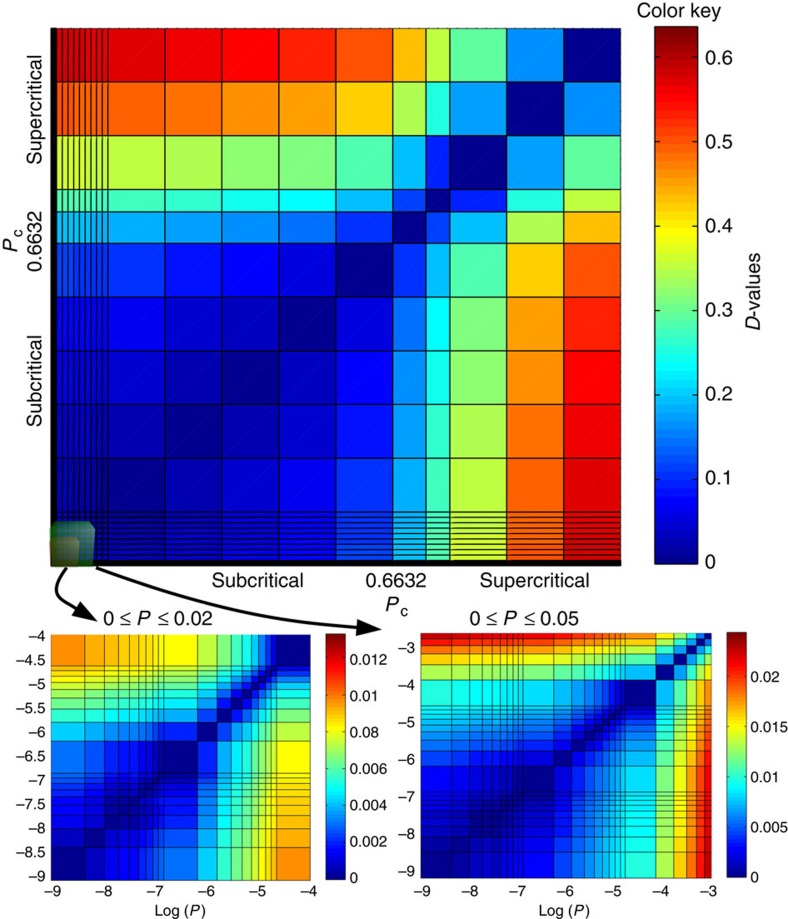
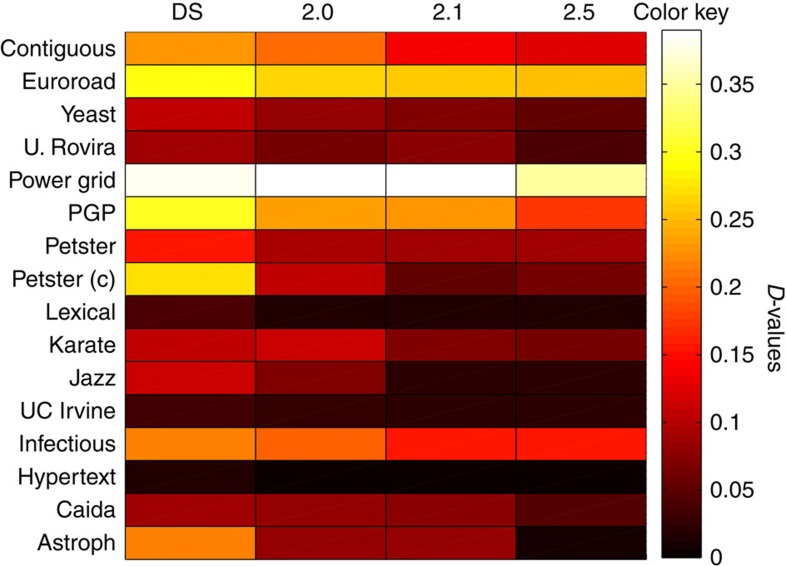
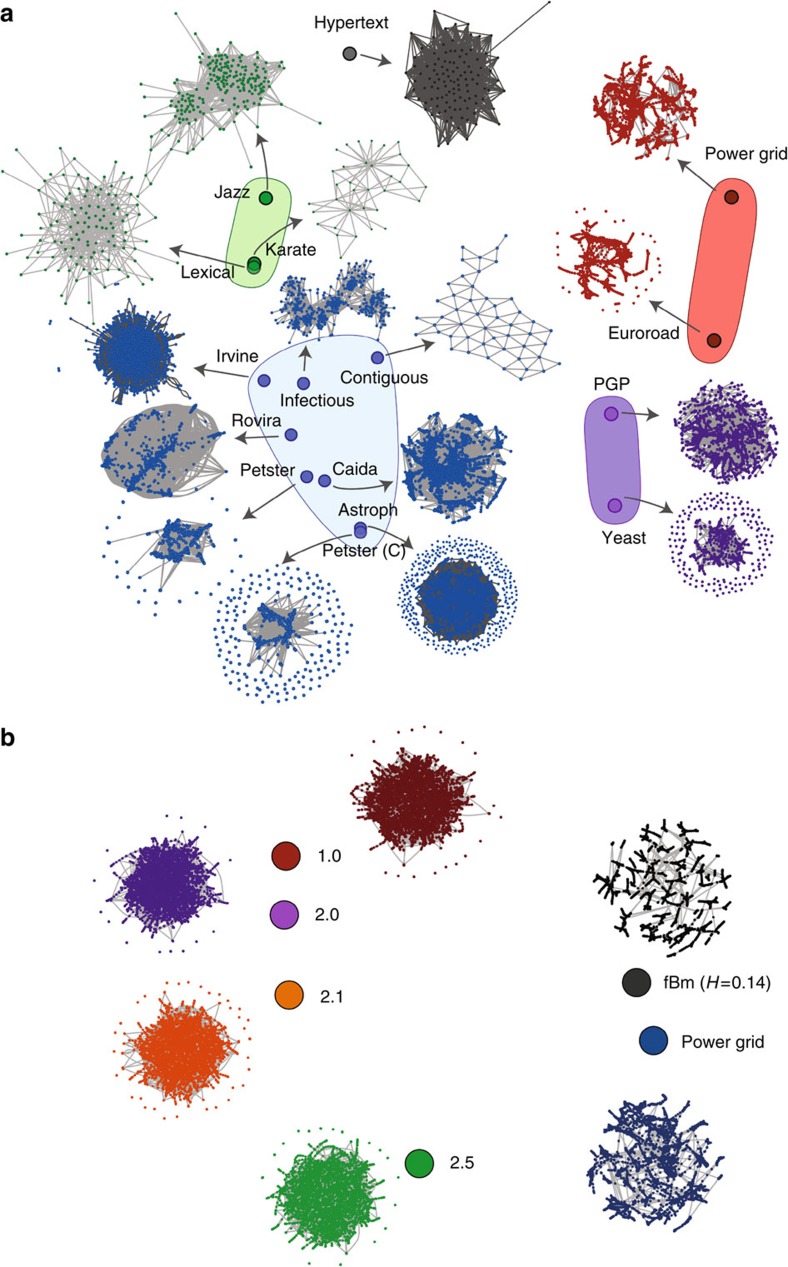
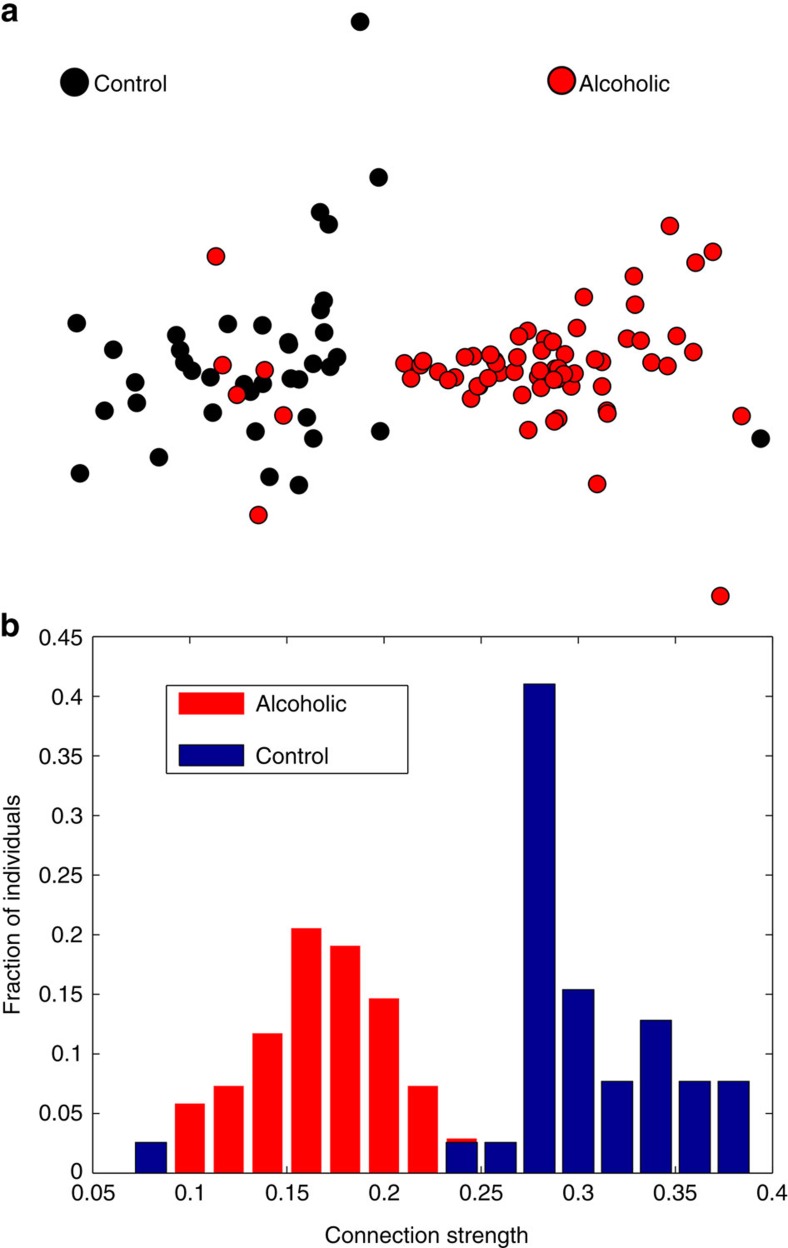
Verification
Claims the paper makes
The claims and statistics of this paper haven’t been checked yet.
Free: it reads the open-access text and checks the first 5 claims that cite a source we can check. Create a free account to check every claim.
Claims other papers make about this one
Each is checked against this paper’s own text: does it say what the citing paper says it does?
The source backs part of the claim, not all of it — or backs it for a different population, condition or comparison.
In the citing paper
“Interestingly, the same tools can then be appropriately modi fi ed to apply to traditional complex networks, suggesting the existence of a framework -network information theory -suitable for application to both classical and quantum networked systems 32,41,42 .”
From Complex networks from classical to quantum (2019) · cites this paper as [42]
Experimental — accuracy not yet measuredThe source backs part of the claim, not all of it — or backs it for a different population, condition or comparison.
In the citing paper
“In fact, a research line is emerging now that seeks to quantify, in terms of implicit information processing capacity, networked systems, with several applications to social, technological, and biological systems 32,41,42,90,91 .”
From Complex networks from classical to quantum (2019) · cites this paper as [42]
Experimental — accuracy not yet measuredThe cited source says what the claim attributes to it.
In the citing paper
“The (dis)similarity between networks has also been quanti fi ed by using a combination of the classical Jensen -Shannon distance and the concept of network node dispersion, measuring the heterogeneity of a graph in terms of connectivity distance among its nodes 42 .”
From Complex networks from classical to quantum (2019) · cites this paper as [42]
Self-check
Percentages, sums and reported differences re-computed from the paper’s own numbers.
The self-check needs the paper’s full text.
Citations
Cites
(1979) · Cited by 43,841
Collective dynamics of ‘small-world’ networks
Watts, D. J., & Strogatz, S. H. (1998) · Nature · doi:10.1038/30918 · Cited by 43,060 · cited 1×
“The second experiment consists of 100 realizations of the WS rewiring model 38 .”
MethodA note on two problems in connexion with graphs
Dijkstra, E. W. (1959) · Numerische Mathematik · doi:10.1007/bf01386390 · Cited by 29,065
Statistical mechanics of complex networks
Albert, R., & Barabási, A.-L. (2002) · Reviews of Modern Physics · doi:10.1103/revmodphys.74.47 · Cited by 20,471
Binary Codes capable of currecting deletions, insertions, and reversals
Levenshtein, V. I. (1965) · Soviet physics. Doklady · Cited by 15,165
Complex networks: structure and dynamics
BOCCALETTI, S., LATORA, V, MORENO, Y., CHAVEZ, M., & HWANG, D. (2006) · Physics Reports · doi:10.1016/j.physrep.2005.10.009 · Cited by 11,010
Power and Centrality: A Family of Measures
Bonacich, P. (1987) · American Journal of Sociology · doi:10.1086/228631 · Cited by 5,165 · cited 1×
“…the difference between the graphs averaged node-distance distributions (network’s distance distribution), m G and m G 0 , and the comparison between the a -centrality values of the graphs and their complements 39 , computed through the Jensen–Shannon divergence ( J ) (see Supplementary Note 2).”
MethodDivergence measures based on the Shannon entropy
Lin, J. (1991) · IEEE Transactions on Information Theory · doi:10.1109/18.61115 · Cited by 5,140 · cited 3×
“It is computed by the Jensen–Shannon divergence, a dissimilarity measure among N PDFs 36 .”
MethodInfluentialNetwork medicine: a network-based approach to human disease
Barabási, A.-L., Gulbahce, N., & Loscalzo, J. (2011) · Nature Reviews Genetics · doi:10.1038/nrg2918 · Cited by 5,034
Synchronization in complex networks
Arenas, A., Díaz-Guilera, A., Kurths, J., Moreno, Y., & Zhou, C. (2008) · Physics Reports · doi:10.1016/j.physrep.2008.09.002 · Cited by 3,713
Self-citationFibonacci heaps and their uses in improved network optimization algorithms
Fredman, M. L., & Tarjan, R. E. (1987) · Journal of the ACM · doi:10.1145/28869.28874 · Cited by 3,132 · cited 1×
“…we observe that, from a computational perspective, the time complexity of the algorithm is polynomial, as it relies on the computation of all shortest paths length, that is known to be a polynomial problem 40 , that by using Fibonacci heaps can be implemented in O ( E þ N log N ) 41 .”
BackgroundSpecificity and Stability in Topology of Protein Networks
Maslov, S., & Sneppen, K. (2002) · Science · doi:10.1126/science.1065103 · Cited by 3,051
Characterization of complex networks: A survey of measurements
Costa, L. D. F., Rodrigues, F. A., Travieso, G., & Villas Boas, P. R. (2007) · Advances in Physics · doi:10.1080/00018730601170527 · Cited by 2,475 · cited 1×
“Important structural differences are missed or underestimated, because the measure employed considers graph properties that only partially describe the graphs 33 .”
BackgroundUncovering disease-disease relationships through the incomplete interactome
Menche, J., Sharma, A., Kitsak, M., Ghiassian, S. D., Vidal, M., Loscalzo, J., & Barabási, A.-L. (2015) · Science · doi:10.1126/science.1257601 · Cited by 1,546
KONECT: the Koblenz network collection
Kunegis, J. (2013) · Proceedings of the 22nd International Conference on World Wide Web · doi:10.1145/2487788.2488173 · Cited by 1,479 · cited 1×
“All networks are freely available at The Koblenz Network Collection 49 (see description in Supplementary Note 8).”
THIRTY YEARS OF GRAPH MATCHING IN PATTERN RECOGNITION
CONTE, D., FOGGIA, P., SANSONE, C., & VENTO, M. (2004) · International Journal of Pattern Recognition and Artificial Intelligence · doi:10.1142/s0218001404003228 · Cited by 1,370 · cited 11×
“7b, in which we compare distances between the Power Grid network with networks generated by dk model and also with an fBm (H ¼ 0.14) network (see Supplementary Note 9).”
BackgroundMethodInfluentialWhy social networks are different from other types of networks
Newman, M. E. J., & Park, J. (2003) · Physical Review E · doi:10.1103/physreve.68.036122 · Cited by 1,354 · cited 1×
“Remarkably, Social Networks appear to be very similar to each other, in good agreement with previous observations 50 .”
ResultA distance measure between attributed relational graphs for pattern recognition
Sanfeliu, A., & Fu, K.-S. (1983) · IEEE Transactions on Systems, Man, and Cybernetics · doi:10.1109/tsmc.1983.6313167 · Cited by 999 · cited 3×
“Table 1 depicts results for two popular distance measures, Hamming (H) 34 and graph edit distance (GED) 35 .”
BackgroundInfluentialBiological network comparison using graphlet degree distribution
Pržulj, N. (2007) · Bioinformatics · doi:10.1093/bioinformatics/btl301 · Cited by 837
The Size of the Giant Component of a Random Graph with a Given Degree Sequence
MOLLOY, M., & REED, B. (1998) · Combinatorics, Probability and Computing · doi:10.1017/s0963548398003526 · Cited by 831 · cited 1×
“In this experiment, we use D to compare real networks with well-known null models including, Molloy–Reed (MR) 46 , Maslov–Sneppen (MS) 47 and dk model 25 .”
MethodHorizontal visibility graphs: Exact results for random time series
Luque, B., Lacasa, L., Ballesteros, F., & Luque, J. (2009) · Physical Review E · doi:10.1103/physreve.80.046103 · Cited by 789 · cited 2×
“We compare these networks (Power Grid and Euroroad) with other well-known tree-like structures, as are the case of networks constructed via the horizontal visibility graph 53 , from fractional Brownian motion (fBm) time series, with different Hurst exponents ( H ) 54 .”
MethodA graph distance metric based on the maximal common subgraph
Bunke, H., & Shearer, K. (1998) · Pattern Recognition Letters · doi:10.1016/s0167-8655(97)00179-7 · Cited by 754
A survey of graph edit distance
Gao, X., Xiao, B., Tao, D., & Li, X. (2010) · Pattern Analysis and Applications · doi:10.1007/s10044-008-0141-y · Cited by 704
Structural reducibility of multilayer networks
De Domenico, M., Nicosia, V., Arenas, A., & Latora, V. (2015) · Nature Communications · doi:10.1038/ncomms7864 · Cited by 661
Efficient Monte Carlo Algorithm and High-Precision Results for Percolation
Newman, M. E. J., & Ziff, R. M. (2000) · Physical Review Letters · doi:10.1103/physrevlett.85.4104 · Cited by 503
Graph isomorphism in quasipolynomial time [extended abstract]
Babai, L. (2016) · Proceedings of the forty-eighth annual ACM symposium on Theory of Computing · doi:10.1145/2897518.2897542 · Cited by 415
Understanding congested travel in urban areas
Çolak, S., Lima, A., & González, M. C. (2016) · Nature Communications · doi:10.1038/ncomms10793 · Cited by 404 · cited 1×
“Similarity measures have many uses due to the current widespread use of networks in social sciences, medicine, biology, physics and so on 19–30 .”
BackgroundStructural graph matching using the EM algorithm and singular value decomposition
Luo, B., & Hancock, E. R. (2001) · IEEE Transactions on Pattern Analysis and Machine Intelligence · doi:10.1109/34.954602 · Cited by 345
Graph Isomorphism in Quasipolynomial Time
Babai, L. (2015) · arXiv (Cornell University) · doi:10.48550/arxiv.1512.03547 · Cited by 264
Graph similarity scoring and matching
Zager, L. A., & Verghese, G. C. (2008) · Applied Mathematics Letters · doi:10.1016/j.aml.2007.01.006 · Cited by 224
A graph distance metric combining maximum common subgraph and minimum common supergraph
Fernández, M.-L., & Valiente, G. (2001) · Pattern Recognition Letters · doi:10.1016/s0167-8655(01)00017-4 · Cited by 206
Robust network community detection using balanced propagation
Šubelj, L., & Bajec, M. (2011) · The European Physical Journal B · doi:10.1140/epjb/e2011-10979-2 · Cited by 202 · cited 1×
“Both networks present particular characteristics, as scarcity due to physical constraints, presenting neither a scale-free nor a classical small-world behaviour 51,52 .”
BackgroundQuantifying randomness in real networks
Orsini, C., Dankulov, M. M., Colomer-de-Simón, P., Jamakovic, A., Mahadevan, P., Vahdat, A., Bassler, K. E., Toroczkai, Z., Boguñá, M., Caldarelli, G., et al. (2015) · Nature Communications · doi:10.1038/ncomms9627 · Cited by 185 · cited 2×
“This poor adjustment of the dk model to the Power Grid network is also discussed in refs 25,48.”
MethodApproximation of graph edit distance based on Hausdorff matching
Fischer, A., Suen, C. Y., Frinken, V., Riesen, K., & Bunke, H. (2014) · Pattern Recognition · doi:10.1016/j.patcog.2014.07.015 · Cited by 153
Raymond, J. W., Gardiner, E. J., & Willett, P. (2002) · Journal of Chemical Information and Computer Sciences · doi:10.1021/ci010381f · Cited by 151 · cited 1×
“To investigate this limitation, we analysed all non-isomorphic graphs of size 6, 7, 8 and 9.”
MethodTopological data analysis of contagion maps for examining spreading processes on networks
Taylor, D., Klimm, F., Harrington, H. A., Kramár, M., Mischaikow, K., Porter, M. A., & Mucha, P. J. (2015) · Nature Communications · doi:10.1038/ncomms8723 · Cited by 148
Predicting percolation thresholds in networks
Radicchi, F. (2015) · Physical Review E · doi:10.1103/physreve.91.010801 · Cited by 132 · cited 1×
“We follow the instructions used by Radicchi 45 , where an extensive empirical experiment was performed using MC.”
MethodRobust network community detection using balanced propagation
Šubelj, L., & Bajec, M. (2015) · Repository of the University of Ljubljana (University of Ljubljana) · Cited by 132
Graph edit distance as a quadratic assignment problem
Bougleux, S., Brun, L., Carletti, V., Foggia, P., Gaüzère, B., & Vento, M. (2016) · Pattern Recognition Letters · doi:10.1016/j.patrec.2016.10.001 · Cited by 126
Emergence of core–peripheries in networks
Verma, T., Russmann, F., Araújo, N. A. M., Nagler, J., & Herrmann, H. J. (2016) · Nature Communications · doi:10.1038/ncomms10441 · Cited by 114
Chang, H.-C., Hsieh, T.-H., Lee, Y.-W., Tsai, C.-F., Tsai, Y.-N., Cheng, C.-C., & Wang, H.-W. (2016) · BMC Systems Biology · doi:10.1186/s12918-015-0242-3 · Cited by 91
A Guide to Selecting a Network Similarity Method
Soundarajan, S., Eliassi‐Rad, T., & Gallagher, B. (2014) · SIAM International Conference on Data Mining · doi:10.1137/1.9781611973440.118 · Cited by 81
EEG-Based Functional Brain Networks: Does the Network Size Matter?
Joudaki, A., Salehi, N., Jalili, M., & Knyazeva, M. G. (2012) · PLoS ONE · doi:10.1371/journal.pone.0035673 · Cited by 70
Time series characterization via horizontal visibility graph and Information Theory
Gonçalves, B. A., Carpi, L. C., Rosso, O. A., & Ravetti, M. G. (2016) · Physica A Statistical Mechanics and its Applications · doi:10.1016/j.physa.2016.07.063 · Cited by 64
Self-citationMolecular Networks in Drug Discovery
Morrow, J. K., Tian, L., & Zhang, S. (2010) · Critical Reviews in Biomedical Engineering · doi:10.1615/critrevbiomedeng.v38.i2.30 · Cited by 59 · cited 1×
“…other examples, to discriminate between neurological disorders by quantifying functional and topological similarities 31 , to find structurally more similar molecules that are more likely to exhibit similar properties, for drug design 32 , and to quantify changes in temporal evolving networks 22 .”
BackgroundComparison of graphs by their number of spanning trees
Kelmans, A. K. (1976) · Discrete Mathematics · doi:10.1016/0012-365x(76)90102-3 · Cited by 53
Comparing Alzheimer’s and Parkinson’s diseases networks using graph communities structure
Calderone, A., Formenti, M., Aprea, F., Papa, M., Alberghina, L., Colangelo, A. M., & Bertolazzi, P. (2016) · BMC Systems Biology · doi:10.1186/s12918-016-0270-7 · Cited by 45
A similarity measure for graphs with low computational complexity
Dehmer, M., Emmert‐Streib, F., & Kilian, J. (2006) · Applied Mathematics and Computation · doi:10.1016/j.amc.2006.04.006 · Cited by 42 · cited 10×
“7b, in which we compare distances between the Power Grid network with networks generated by dk model and also with an fBm (H ¼ 0.14) network (see Supplementary Note 9).”
MethodInfluentialAnalyzing complex networks evolution through Information Theory quantifiers
Carpi, L. C., Rosso, O. A., Saco, P., & Ravetti, M. G. (2010) · Physics Letters A · doi:10.1016/j.physleta.2010.12.038 · Cited by 41
Self-citationAliakbary, S., Motallebi, S., Rashidian, S., Habibi, J., & Movaghar, A. (2015) · Chaos An Interdisciplinary Journal of Nonlinear Science · doi:10.1063/1.4908605 · Cited by 38
Information theory perspective on network robustness
Schieber, T. A., Carpi, L. C., Frery, A. C., Rosso, O. A., Pardalos, P. M., & Ravetti, M. G. (2015) · Physics Letters A · doi:10.1016/j.physleta.2015.10.055 · Cited by 33
Self-citationHow small are building blocks of complex networksPreprint
Jamakovic, A., Mahadevan, P., Vahdat, A., Boguñá, M., & Krioukov, D. (2009) · arXiv (Cornell University) · doi:10.48550/arxiv.0908.1143 · Cited by 19 · cited 1×
“This poor adjustment of the dk model to the Power Grid network is also discussed in refs 25,48.”
MethodStructural evolution of the Tropical Pacific climate network
Carpi, L. C., Saco, P., Rosso, O. A., & Ravetti, M. G. (2012) · The European Physical Journal B · doi:10.1140/epjb/e2012-30413-7 · Cited by 19
Self-citationA Quadratic Assignment Formulation of the Graph Edit DistancePreprint
Bougleux, S., Brun, L., Carletti, V., et al. (2015) · arXiv (Cornell University) · doi:10.48550/arxiv.1512.07494 · Cited by 10
Simulating the Dynamics of Scale-Free Networks via Optimization
Schieber, T. A., & Ravetti, M. G. (2013) · PLoS ONE · doi:10.1371/journal.pone.0080783 · Cited by 5
Self-citationSavage, N. J. (2016) · Communications of the ACM · doi:10.1145/2911979 · Cited by 2
Graph matching in theory and practice
Savage, N. J. (2016) · Communications of the ACM · doi:10.1145/2933412 · Cited by 2 · cited 1×
“However, the problem remains, for highly symmetric structures that are still very expensive to compute 17,18 .”
Background
Research works printed but not linked: 3
- Borgwardt K. M. Graph Kernels (PhD Thesis, Fakultät für Mathematik, Informatik und Statistikder LudwigMaximiliansUniversität (2007).
- Erdös P. & Rényi A. On random graphs. Publ. Math. 6, 290– 297 (1959).
- Watts. D. J. Small Worlds: The Dynamics of Networks between Order and Randomness Princeton Univ. Press (2003).
Cited by
Inference and analysis of cell-cell communication using CellChat
Jin, S., Guerrero-Juarez, C. F., Zhang, L., Chang, I., Ramos, R., Kuan, C.-H., Myung, P., Plikus, M. V., & Nie, Q. (2021) · Nature Communications · doi:10.1038/s41467-021-21246-9 · Cited by 8,409
Scaling‐up biodiversity‐ecosystem functioning research
Gonzalez, A., Germain, R. M., Srivastava, D. S., Filotas, E., Dee, L. E., Gravel, D., Thompson, P. L., Isbell, F., Wang, S., Kéfi, S., et al. (2020) · Ecology Letters · doi:10.1111/ele.13456 · Cited by 475
“…on three fronts: (1) interaction network diversity and dissimilarity in space and time (Brose et al. 2004; Poisot et al. 2013; Barnes et al. 2016; Schieber et al. 2017; Galiana et al. 2018), (2) causal relationships between food web structure, diversity and ecosystem functions (Poisot et al.…”
BackgroundPsychology's Replication Crisis and Clinical Psychological Science
Tackett, J. L., Brandes, C. M., King, K. M., & Markon, K. E. (2019) · Annual Review of Clinical Psychology · doi:10.1146/annurev-clinpsy-050718-095710 · Cited by 198
Complex networks from classical to quantum
Biamonte, J., Faccin, M., & De Domenico, M. (2019) · Communications Physics · doi:10.1038/s42005-019-0152-6 · Cited by 149
Measure the structure similarity of nodes in complex networks based on relative entropy
Zhang, Q., Li, M., & Deng, Y. (2017) · Physica A Statistical Mechanics and its Applications · doi:10.1016/j.physa.2017.09.042 · Cited by 152
Metadata
- Authors
- Schieber, T. A., Carpi, L., Díaz-Guilera, A., Pardalos, P. M., Masoller, C., & Ravetti, M. G.
- Affiliations
- Universidade Federal de Minas Gerais (BR)
- Universitat Politècnica de Catalunya (ES)
- Venue
- Nature Communications
- Published
- 2017-01-09
- Volume
- 8
- Issue
- 1
- Pages
- 13928-13928
- ISSN
- 2041-1723 (ISSN-L)
- PMC
- PMC5227707
- OpenAlex
- W2569951966
- Cited by
- 237
- References
- 55
- Citations by year
- 2026: 16 · 2025: 20 · 2024: 16 · 2023: 32 · 2022: 32 · 2021: 30 · 2020: 23 · 2019: 38 · 2018: 22 · 2017: 8
- FWCI
- 12.91
- Type
- journal article
- Language
- en
- Open access
- gold
- doi.org
- Licence
- cc-by
- creativecommons.org/licenses/by/4.0 (tdm)
- creativecommons.org/licenses/by/4.0 (vor)
- Locations
- Nature Communications (publishedVersion, cc-by)
- PubMed Central (publishedVersion, cc-by)
- PubMed (publishedVersion)
- Dipòsit Digital de la Universitat de Barcelona (Universitat de Barcelona) (publishedVersion, cc-by)
- LA Referencia (Red Federada de Repositorios Institucionales de Publicaciones Científicas) (acceptedVersion, cc-by-nc-nd)
- UPCommons institutional repository (Universitat Politècnica de Catalunya) (acceptedVersion, cc-by-nc-nd)
- LA Referencia (Red Federada de Repositorios Institucionales de Publicaciones Científicas) (submittedVersion, cc-by)
- RePEc: Research Papers in Economics (submittedVersion)
- DOAJ (DOAJ: Directory of Open Access Journals) (submittedVersion, cc-by-sa)
- RECERCAT (Consorci de Serveis Universitaris de Catalunya) (submittedVersion, cc-by)
- RECERCAT (Consorci de Serveis Universitaris de Catalunya) (submittedVersion, cc-by-nc-nd)
- Funders
- Generalitat de Catalunya (2014SGR608, 2014SGR)
- Conselho Nacional de Desenvolvimento Científico e Tecnológico
- Institució Catalana de Recerca i Estudis Avançats
- Fundação de Amparo à Pesquisa do Estado de Minas Gerais
- Russian Science Foundation (14-41-00039)
- Topics
- Physical Sciences › Physics and Astronomy › Statistical and Nonlinear Physics › Complex Network Analysis Techniques
- Physical Sciences › Computer Science › Computational Theory and Mathematics › Graph Theory and Algorithms
- Physical Sciences › Mathematics › Discrete Mathematics and Combinatorics › Graph theory and applications
- Keywords
- network comparison, graph isomorphism, critical links, information flow, network topology
About these checks
Registry, retraction, Cites and statistics results are computed, not judged, with one exception: a printed reference that no index lists is read once by a model before it counts as a citation error. Claims are extracted by a model and kept only when their quote appears verbatim in the text; each cited source is then checked, with a model’s help, for whether it says what the claim relies on. Those verdicts can be wrong — read the claim’s quote and the cited source before relying on one.
Statistics and arithmetic are recomputed, not judged.
Confidence bands are shown only for fields calibrated on our annotated test set. None is calibrated yet, so no band is shown.
What counts as a claim ›How we measure confidence ›How we check this ›
Are you an author, or do you see a problem with this page? Request a review
Data sources
Bibliographic data: Semantic Scholar, OpenAlex, Crossref.
Contains information from the Semantic Scholar Academic Graph Datasets, made available under the ODC Attribution License (ODC-BY 1.0).
Semantic Scholar’s data is described in: Kinney, R., et al. (2023). The Semantic Scholar Open Data Platform. arXiv:2301.10140.
