

On the origin and evolution of SARS-CoV-2
Open accessThe DOI matches its Crossref record; 66 of the 66 references it cites were found in a registry or an index.
Abstract
The severe acute respiratory syndrome coronavirus 2 (SARS-CoV-2) is responsible for the ongoing global outbreak of a coronavirus disease (herein referred to as COVID-19). Other viruses in the same phylogenetic group have been responsible for previous regional outbreaks, including SARS and MERS. SARS-CoV-2 has a zoonotic origin, similar to the causative viruses of these previous outbreaks. The repetitive introduction of animal viruses into human populations resulting in disease outbreaks suggests that similar future epidemics are inevitable. Therefore, understanding the molecular origin and ongoing evolution of SARS-CoV-2 will provide critical insights for preparing for and preventing future outbreaks. A key feature of SARS-CoV-2 is its propensity for genetic recombination across host species boundaries. Consequently, the genome of SARS-CoV-2 harbors signatures of multiple recombination events, likely encompassing multiple species and broad geographic regions. Other regions of the SARS-CoV-2 genome show the impact of purifying selection. The spike (S) protein of SARS-CoV-2, which enables the virus to enter host cells, exhibits signatures of both purifying selection and ancestral recombination events, leading to an effective S protein capable of infecting human and many other mammalian cells. The global spread and explosive growth of the SARS-CoV-2 population (within human hosts) has contributed additional mutational variability into this genome, increasing opportunities for future recombination.
Overview
The claims and statistics of this paper haven’t been checked yet.
Free: it reads the open-access text and checks the first 5 claims that cite a source we can check. Create a free account to check every claim.
Integrity signals
Registry
Cites
Statistics
Figures
Verification
Claims the paper makes
The claims and statistics of this paper haven’t been checked yet.
Free: it reads the open-access text and checks the first 5 claims that cite a source we can check. Create a free account to check every claim.
Claims other papers make about this one
Each is checked against this paper’s own text: does it say what the citing paper says it does?
The source backs part of the claim, not all of it — or backs it for a different population, condition or comparison.
In the citing paper
“The mutations in the spike protein such as deletions, substitutions, and recombinations mainly in RBD can virtually create a highly lethal variant to a highly transmissible one, possibly due to the alteration in ACE-2 binding affinity [34].”
From Waves and variants of SARS-CoV-2: understanding the causes and effect of the COVID-19 catastrophe (2022) · cites this paper as [34]
Experimental — accuracy not yet measured
Self-check
Percentages, sums and reported differences re-computed from the paper’s own numbers.
The self-check needs the paper’s full text.
Citations
Cites
1 retracted
Woo, P. C. Y., Lau, S. K. P., Lam, C. S. F., Tsang, A. K. L., Hui, S., Fan, R. Y. Y., Martelli, P. R., & Yuen, K. (2013) · Journal of Virology · doi:10.1128/jvi.02351-13 · Cited by 177
RetractedA pneumonia outbreak associated with a new coronavirus of probable bat origin
Zhou, P., Yang, X.-L., Wang, X.-G., Hu, B., Zhang, L., Zhang, W., Si, H.-R., Zhu, Y., Li, B., Huang, C.-L., et al. (2020) · Nature · doi:10.1038/s41586-020-2012-7 · Cited by 21,969
Hoffmann, M., Kleine-Weber, H., Schroeder, S., Krüger, N., Herrler, T., Erichsen, S., Schiergens, T. S., Herrler, G., Wu, N.-H., Nitsche, A., et al. (2020) · Cell · doi:10.1016/j.cell.2020.02.052 · Cited by 20,286
Molecular Evolutionary Genetics
Nei, M. (1987) · Columbia University Press eBooks · doi:10.7312/nei-92038 · Cited by 15,271
SWISS-MODEL: homology modelling of protein structures and complexes
Waterhouse, A., Bertoni, M., Bienert, S., Studer, G., Tauriello, G., Gumienny, R., Heer, F. T., de Beer, T. A. P., Rempfer, C., Bordoli, L., et al. (2018) · Nucleic Acids Research · doi:10.1093/nar/gky427 · Cited by 13,067
Lu, R., Zhao, X., Li, J., Niu, P., Yang, B., Wu, H., Wang, W., Song, H., Huang, B., Zhu, N., et al. (2020) · The Lancet · doi:10.1016/s0140-6736(20)30251-8 · Cited by 11,907
Cryo-EM structure of the 2019-nCoV spike in the prefusion conformation
Wrapp, D., Wang, N., Corbett, K. S., Goldsmith, J. A., Hsieh, C.-L., Abiona, O., Graham, B. S., & McLellan, J. S. (2020) · Science · doi:10.1126/science.abb2507 · Cited by 8,897
Angiotensin-converting enzyme 2 is a functional receptor for the SARS coronavirus
Li, W., Moore, M. J., Vasilieva, N., Sui, J., Wong, S. K., Berne, M. A., Somasundaran, M., Sullivan, J. L., Luzuriaga, K., Greenough, T. C., et al. (2003) · Nature · doi:10.1038/nature02145 · Cited by 5,923
Origin and evolution of pathogenic coronaviruses
Cui, J., Li, F., & Shi, Z.-L. (2019) · Nature Reviews Microbiology · doi:10.1038/s41579-018-0118-9 · Cited by 5,515
The proximal origin of SARS-CoV-2
Andersen, K. G., Rambaut, A., Lipkin, W. I., Holmes, E. C., & Garry, R. F. (2020) · Nature Medicine · doi:10.1038/s41591-020-0820-9 · Cited by 5,081
Research works printed but not linked: 2
- Ge X-Y Isolation and characterization of a bat SARS-like coronavirus that uses the ACE2 receptor Nature 2013 503 535 538 24172901 PMC5389864 · DOI · Paper page
- Almeida J Virology: coronaviruses Nature 1968 220 650 650
Cited by
Waves and variants of SARS-CoV-2: understanding the causes and effect of the COVID-19 catastrophe
Thakur, V., Bhola, S., Thakur, P., Patel, S. K. S., Kulshrestha, S., Ratho, R. K., & Kumar, P. (2022) · Infection · doi:10.1007/s15010-021-01734-2 · Cited by 195
“The mutations in the spike protein such as deletions, substitutions, and recombinations mainly in RBD can virtually create a highly lethal variant to a highly transmissible one, possibly due to the alteration in ACE-2 binding affinity [34].”
BackgroundThe impact of pre-existing cross-reactive immunity on SARS-CoV-2 infection and vaccine responses
Murray, S. M., Ansari, A. M., Frater, J., Klenerman, P., Dunachie, S., Barnes, E., & Ogbe, A. (2023) · Nature Reviews Immunology · doi:10.1038/s41577-022-00809-x · Cited by 167
The origins of COVID‐19 pandemic: A brief overview
Hao, Y., Wang, Y., Wang, M.-Y., Zhou, L., Shi, J., Cao, J., & Wang, D. (2022) · Transboundary and Emerging Diseases · doi:10.1111/tbed.14732 · Cited by 168
“When it comes to the origin of this epidemic, Wuhan, China, must be the first place that comes tomind (Lytras, Xia, Hughes, Jiang, & Robertson, 2021; Singh & Yi, 2021).”
BackgroundZabidi, N. Z., Liew, H. L., Farouk, I. A., Puniyamurti, A., Yip, A. J. W., Wijesinghe, V. N., Low, Z. Y., Tang, J. W.-T., Chow, V. T. K., & Lal, S. K. (2023) · Viruses · doi:10.3390/v15040944 · Cited by 146
Sallam, M., Salim, N. A., Al-Tammemi, A. B., Barakat, M., Fayyad, D., Hallit, S., Harapan, H., Hallit, R., & Mahafzah, A. (2023) · Cureus · doi:10.7759/cureus.35029 · Cited by 130
“Specifically, ChatGPT responses referred to the current scientific consensus of emergence of SARS-CoV-2 as a natural phenomenon [66-68].”
BackgroundSARS-CoV-2 spike protein: pathogenesis, vaccines, and potential therapies
Almehdi, A. M., Khoder, G., Alchakee, A., Alsayyid, A. T., Sarg, N. H., & Soliman, S. S. M. (2021) · Infection · doi:10.1007/s15010-021-01677-8 · Cited by 123
“Of note, analysis of its phylogenetic patterns indicates that co-infection and genetic recombination events across multiple host species and geographic regions are possible [39, 62, 91].”
BackgroundKöhler, F., Müller, S., Hendricks, A., Kastner, C., Reese, L., Boerner, K., Flemming, S., Lock, J. F., Germer, C., & Wiegering, A. (2021) · International Journal of Surgery · doi:10.1016/j.ijsu.2021.106148 · Cited by 119
SARS-CoV-2 and the Host Cell: A Tale of Interactions
Pizzato, M., Baraldi, C., Sopetto, G. B., Finozzi, D., Gentile, C., Gentile, M. D., Marconi, R., Paladino, D., Raoss, A., Riedmiller, I., et al. (2022) · Frontiers in Virology · doi:10.3389/fviro.2021.815388 · Cited by 120
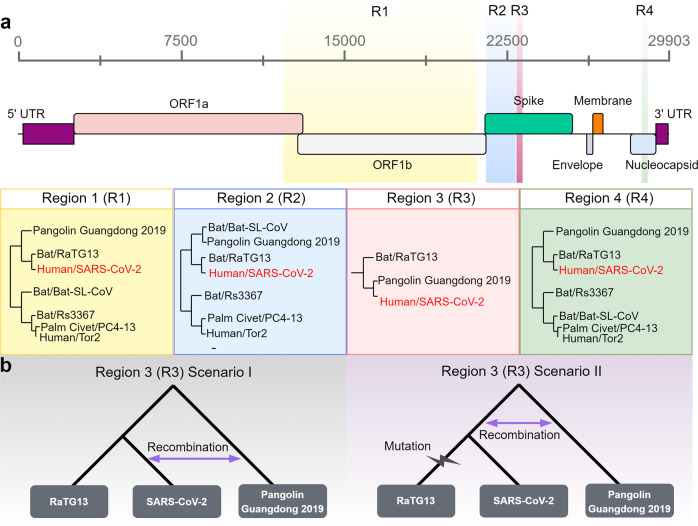
“Although pangolinCoV-2020, RaTG13, and other bat CoVs are phylogenetically close to SARS-CoV-2, the viral genome underwent complex recombination events between divergent strains residing in different host species during its evolution, explaining the evolutionary histories of different genomic segments (8).”
BackgroundMachado, B. A. S., Hodel, K. V. S., Fonseca, L. M. D. S., Pires, V. C., Mascarenhas, L. A. B., Andrade, L. P. C. D. S., Moret, M. A., & Badaró, R. J. D. S. (2022) · Vaccines · doi:10.3390/vaccines10040591 · Cited by 90
“Mutations occur naturally during the replication of any RNA virus due to the instability of the RNA molecules [23].”
BackgroundMutational cascade of SARS-CoV-2 leading to evolution and emergence of omicron variant
Bansal, K., & Kumar, S. (2022) · Virus Research · doi:10.1016/j.virusres.2022.198765 · Cited by 83
Multiple Introductions of SARS-CoV-2 Alpha and Delta Variants into White-Tailed Deer in Pennsylvania
Marques, A. D., Sherrill-Mix, S. A., Everett, J. K., Adhikari, H., Reddy, S. G., Ellis, J. C., Zeliff, H., Greening, S. S., Cannuscio, C. C., Strelau, K. M., et al. (2022) · mBio · doi:10.1128/mbio.02101-22 · Cited by 80
“For SARS-CoV-2, the epidemic likely began with spillover from Rhinolophus bats to humans, possibly via an intermediate host (4, 5).”
BackgroundCOVID-19 Pathogenesis and Clinical Manifestations
Acosta, R. A. H., Garrigos, Z. E., Marcelin, J. R., & Vijayvargiya, P. (2022) · Infectious Disease Clinics of North America · doi:10.1016/j.idc.2022.01.003 · Cited by 81
Kneller, D. W., Li, H., Galanie, S. S., Phillips, G., Labbe, A. D., Weiss, K. L., Zhang, Q., Arnould, M. A., Clyde, A., Ma, H., et al. (2021) · Journal of Medicinal Chemistry · doi:10.1021/acs.jmedchem.1c01475 · Cited by 69
The Future of Epidemic and Pandemic Vaccines to Serve Global Public Health Needs
Farlow, A. W. K., Torreele, E., Gray, G., Ruxrungtham, K., Rees, H., Prasad, S. D., Gómez, C., Sall, A. A., de Magalhães, J. L., Olliaro, P., et al. (2023) · Vaccines · doi:10.3390/vaccines11030690 · Cited by 66
Wang, C., Hesketh, E. L., Shamorkina, T. M., Li, W., Franken, P. J., Drabek, D., van Haperen, R., Townend, S., van Kuppeveld, F. J. M., Grosveld, F. G., et al. (2022) · Nature Communications · doi:10.1038/s41467-022-30658-0 · Cited by 58
Cui, X., Xia, D., Luo, L., & An, T. (2024) · Viruses · doi:10.3390/v16060929 · Cited by 53
Orkin, M. (1993) · PubMed · Cited by 53
Deepthi, V., Sasikumar, A., Mohanakumar, K. P., & Rajamma, U. (2025) · Scientific Reports · doi:10.1038/s41598-025-92956-z · Cited by 52
Molecular Evolution of SARS-CoV-2 during the COVID-19 Pandemic
González-Vázquez, L. D., & Arenas, M. (2023) · Genes · doi:10.3390/genes14020407 · Cited by 51
Protein subunit vaccines: Promising frontiers against COVID-19
Chavda, V. P., Ghali, E. N. H. K., Balar, P. C., Chauhan, S. C., Tiwari, N., Shukla, S., Athalye, M., Patravale, V. B., Apostolopoulos, V., & Yallapu, M. M. (2024) · Journal of Controlled Release · doi:10.1016/j.jconrel.2024.01.017 · Cited by 50
Kane, Y., Wong, G., & Gao, G. F. (2023) · Annual Review of Animal Biosciences · doi:10.1146/annurev-animal-020420-025011 · Cited by 50
Choi, J. H., Jun, M. S., Jeon, J. Y., Kim, H.-S., Kim, Y. K., Jeon, C. H., Choi, S. H., Kim, D. S., Han, M., & Oh, J. W. (2023) · Journal of Translational Internal Medicine · doi:10.2478/jtim-2023-0118 · Cited by 44
“[13] By applying the principles of tumor evolution to the study of viral evolution, we can gain a deeper understanding of how SARS-CoV-2 evolves over time.”
Ma, H., Zhang, X., Zheng, P., Dube, P. H., Zeng, W., Chen, S., Cheng, Q., Yang, Y., Wu, Y., Zhou, J., et al. (2022) · Cell Research · doi:10.1038/s41422-022-00700-3 · Cited by 44
Omicron – The new SARS‐CoV‐2 challenge?
Lino, A., Cardoso, M. A., Martins‐Lopes, P., & Gonçalves, H. M. R. (2022) · Reviews in Medical Virology · doi:10.1002/rmv.2358 · Cited by 44
“consensus among the scientific community regarding whether bats were the direct source or if they were an intermediate host.(4)”
BackgroundHarrison, C. M., Doster, J. M., Landwehr, E. H., Kumar, N. P., White, E. J., Beachboard, D. C., & Stobart, C. C. (2023) · Microorganisms · doi:10.3390/microorganisms11020445 · Cited by 43
SARS-CoV-2: tracing the origin, tracking the evolution
Voskarides, K. (2022) · BMC Medical Genomics · doi:10.1186/s12920-022-01208-w · Cited by 42
“Genome analysis of SARS-CoV-2 revealed multiple recombination events [16, 17].”
Ma, H., Zhang, X., Zeng, W., Zhou, J., Chi, X., Chen, S., Zheng, P., Wang, M., Wu, Y., Zhao, D., et al. (2022) · Cell Discovery · doi:10.1038/s41421-022-00497-w · Cited by 38
The E3 ligase TRIM22 restricts SARS-CoV-2 replication by promoting proteasomal degradation of NSP8
Fan, L., Zhou, Y., Wei, X., Feng, W., Guo, H., Li, Y., Gao, X., Zhou, J., Wen, Y., Wu, Y., et al. (2024) · mBio · doi:10.1128/mbio.02320-23 · Cited by 39
“SARS-CoV and SARS-CoV-2 have been partially transformed from bat or pango lin coronaviruses (36–38).”
BackgroundTian, Y., Parsons, L. M., Jankowska, E. A., & Cipollo, J. F. (2021) · Frontiers in Chemistry · doi:10.3389/fchem.2021.767448 · Cited by 35
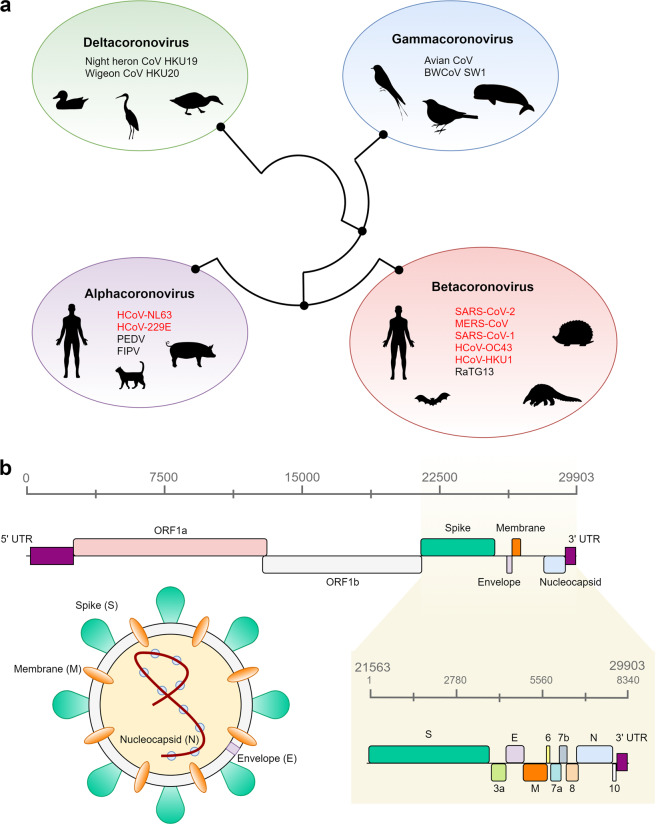
“SARS-CoV-2 is an enveloped, positive single-stranded RNA beta coronavirus expressing four main structural proteins, which include nucleocapsid, spike, membrane, and envelope proteins (Lu et al., 2020; Singh and Yi, 2021).”
BackgroundAndrup, L., Krogfelt, K. A., Stephansen, L., Hansen, K. S., Graversen, B. K., Wolkoff, P., & Madsen, A. M. (2024) · Frontiers in Public Health · doi:10.3389/fpubh.2024.1332078 · Cited by 35
“It appears that such events have created SARS-CoV-2 (97).”
BackgroundDurmaz, V., Köchl, K., Krassnigg, A., Parigger, L., Hetmann, M., Singh, A., Nutz, D., Korsunsky, A., Kahler, U., König, C., et al. (2022) · Scientific Reports · doi:10.1038/s41598-022-18507-y · Cited by 34
Wang, K., Tang, Y. J., Xiu, W., Liang, H., Chen, D., Yu, B., He, J., Mao, X., Huang, Z., Yan, H., et al. (2022) · Antioxidants · doi:10.3390/antiox11091838 · Cited by 33
“The variability of coronaviruses and their cross-species spreading signature are thorny issues [1].”
BackgroundGenetic variety of ORF3a shapes SARS‐CoV‐2 fitness through modulation of lipid droplet
Wang, W., Qu, Y., Wang, X., Xiao, M. Z. X., Fu, J., Chen, L., Zheng, Y., & Liang, Q. (2023) · Journal of Medical Virology · doi:10.1002/jmv.28630 · Cited by 33
The first three waves of the Covid-19 pandemic hint at a limited genetic repertoire for SARS-CoV-2
Wassenaar, T. M., Wanchai, V., Buzard, G. S., & Ussery, D. W. (2022) · FEMS Microbiology Reviews · doi:10.1093/femsre/fuac003 · Cited by 32
Widyasari, K., & Kim, J. N. (2023) · Antibodies · doi:10.3390/antib12010005 · Cited by 33
Nanoparticles of natural product-derived medicines: Beyond the pandemic
Herdiana, Y. (2025) · Heliyon · doi:10.1016/j.heliyon.2025.e42739 · Cited by 31
“Other viruses in the same phylogenetic group have caused previous outbreaks, including Severe Acute Respiratory Syndrome (SARS) and Middle East Respiratory Syndrome (MERS) [79].”
Anti-SARS-CoV-2 Vaccines and Monoclonal Antibodies Facing Viral Variants
Chaqroun, A., Hartard, C., & Schvoerer, É. (2021) · Viruses · doi:10.3390/v13061171 · Cited by 31
Popovic, M. E. (2023) · Microbiological Research · doi:10.1016/j.micres.2023.127337 · Cited by 31
“With appearance of the COVID-19 pandemic, a great effort was made by scientists to follow the time evolution of SARS-CoV-2, as well as to develop antiviral medicines and vaccines (Tang et al., 2020; Phan, 2020; Singh and Yi, 2021).”
BackgroundZain, M. R. A. M., Kari, Z. A., Dawood, M. A. O., Ariff, N. S. N. A., Salmuna, Z. N., Ismail, N., Ibrahim, I. A., Krishnan, K. T., Mat, N. F. C., Edinur, H. A., et al. (2022) · Applied Biochemistry and Biotechnology · doi:10.1007/s12010-022-03952-2 · Cited by 30
Overview of Nucleocapsid-Targeting Vaccines against COVID-19
Rak, A. Y., Isakova–Sivak, I., & Георгиевна, Р. Л. (2023) · Vaccines · doi:10.3390/vaccines11121810 · Cited by 30
“However, the extremely high mutational rate of this antigen renders vaccines ineffective against infections caused by new SARS-CoV-2 variants [9].”
BackgroundAugustynowicz, A., Opolski, J., & Waszkiewicz, M. (2022) · International Journal of Environmental Research and Public Health · doi:10.3390/ijerph19063603 · Cited by 31
“Coronaviruses were neglected for years as human pathogens because they are associated with the relatively mild, self-limiting common cold [1].”
Background3D Printed Cobalt-Chromium-Molybdenum Porous Superalloy with Superior Antiviral Activity
Arjunan, A., Robinson, J., Baroutaji, A., Martí, M., Tuñón‐Molina, A., & Serrano‐Aroca, Á. (2021) · International Journal of Molecular Sciences · doi:10.3390/ijms222312721 · Cited by 28
SARS-CoV-2 infection in animals: Patterns, transmission routes, and drivers
Fang, R., Yang, X. Y., Guo, Y., Peng, B., Dong, R., Li, S., & Xu, S. (2023) · Eco-Environment & Health · doi:10.1016/j.eehl.2023.09.004 · Cited by 28
“The origin of SARS-CoV-2 remains unknown, but current evidence suggests that it may have evolved from animal hosts such as bats [5,6] and pangolins [7], both of which are natural reservoirs for SARS-CoV-2-like coronaviruses.”
BackgroundThe adaptation of SARS-CoV-2 to humans
Tosta, E. (2021) · Memórias do Instituto Oswaldo Cruz · doi:10.1590/0074-02760210127 · Cited by 27
“The search for an intermediate host of SARS-CoV-2 has resulted in frustrating outcomes.(8,10,19,20,21) A possible explanation is that this virus has no intermediate host.”
BackgroundRajpal, V. R., Sharma, S., Kumar, A., Chand, S., Joshi, L., Chandra, A., Babbar, S., Goel, S., Raina, S. N., & Shiran, B. (2022) · Journal of Medical Virology · doi:10.1002/jmv.27749 · Cited by 27
Dynamic Allostery: Evolution's Double-Edged Sword in Protein Function and Disease
Campitelli, P., Kazan, I. C., Hamilton, S., & Ozkan, S. B. (2025) · Journal of Molecular Biology · doi:10.1016/j.jmb.2025.169175 · Cited by 27
Heparan Sulfate and Sialic Acid in Viral Attachment: Two Sides of the Same Coin?
Ramos-Martínez, I. E., Ramos-Martínez, E. G., Segura‐Velázquez, R. A., Saavedra‐Montañez, M., Cervantes‐Torres, J. B., Cerbón, M. A., Papy-García, D., Zenteno, E., & Sánchez‐Betancourt, J. I. (2022) · International Journal of Molecular Sciences · doi:10.3390/ijms23179842 · Cited by 26
“It has a zoonotic origin suspected to have arisen from wild mammals and, so far, continues cross-infection with other mammals, which is a potential source of new outbreaks [80].”
BackgroundYan, S., Zhu, Q., Hohl, J., Dong, A., & Schlick, T. (2023) · Proceedings of the National Academy of Sciences · doi:10.1073/pnas.2221324120 · Cited by 27
Human coronaviruses: The emergence of SARS-CoV-2 and management of COVID-19
Solomon, M., & Liang, C. (2022) · Virus Research · doi:10.1016/j.virusres.2022.198882 · Cited by 25
“9 have a high frequency of RNA recombination (Simon-Loriere and Holmes, 2011; Singh and Yi, 2021), particularly during the template-switching process during discontinuous RNA replication.”
BackgroundManjula, R., Pavithra, C., Kumar, A. R., Devi, K. D., Balraj, B., & Selvaraj, S. (2025) · Spectrochimica Acta Part A Molecular and Biomolecular Spectroscopy · doi:10.1016/j.saa.2025.125807 · Cited by 25
Metal–organic framework (MOF)-based biosensors for monitoring pathogens in public health
Yin, S., Mao, K., Ma, W., Su, J., Yang, G., Ran, J., Yang, C., & Zhang, H. (2025) · Chemical Engineering Journal · doi:10.1016/j.cej.2025.167122 · Cited by 24
Crystal structure of the CoV-Y domain of SARS-CoV-2 nonstructural protein 3
Li, Y., Pustovalova, Y. E., Shi, W., Gorbatyuk, O., Sreeramulu, S., Schwalbe, H., Hoch, J. C., & Hao, B. (2023) · Scientific Reports · doi:10.1038/s41598-023-30045-9 · Cited by 24
Huang, X., Chen, Q., Sun, M., Zhou, H., Ye, Q., Chen, W., Peng, J.-Y., Qi, Y., Zhai, J., Tian, Y., et al. (2023) · Cell Discovery · doi:10.1038/s41421-023-00557-9 · Cited by 24
Evasion of NKG2D-mediated cytotoxic immunity by sarbecoviruses
Hartmann, J. A., Cardoso, M. R., Talarico, M. C. R., Kenney, D., Leone, M. R., Reese, D. C., Turcinovic, J., O’Connell, A. K., Gertje, H. P., Marino, C., et al. (2024) · Cell · doi:10.1016/j.cell.2024.03.026 · Cited by 24
T-Cell Immune Responses to SARS-CoV-2 Infection and Vaccination
Notarbartolo, S. (2024) · Vaccines · doi:10.3390/vaccines12101126 · Cited by 23
Will the next spillover pandemic be deadlier than the COVID-19?: A wake-up call
Choudhary, O. P., Priyanka, Ali, R. K., Maulud, S. Q., Dhawan, M. K., & Mohammed, T. A. (2022) · International Journal of Surgery · doi:10.1016/j.ijsu.2021.106208 · Cited by 21
“When it is under selection, more investigation is necessary to discover the functional mutations that are related to the developing epidemiological and pathogenic traits [8].”
BackgroundStructural evolution of an immune evasion determinant shapes pathogen host tropism
Marcinkiewicz, A. L., Brangulis, K., Dupuis, A. P., Hart, T. M., Zamba‐Campero, M., Nowak, T. A., Stout, J. L., Akopjana, I., Kazāks, A., Bogans, J., et al. (2023) · Proceedings of the National Academy of Sciences · doi:10.1073/pnas.2301549120 · Cited by 21
Yazdani, B., Sirous, H., Brogi, S., & Calderone, V. (2023) · Viruses · doi:10.3390/v15122291 · Cited by 21
Arana, C., Liang, C., Brock, M., Zhang, B., Zhou, J., Chen, L., Cantarel, B. L., SoRelle, J. A., Hooper, L. V., & Raj, P. (2022) · PLoS ONE · doi:10.1371/journal.pone.0261014 · Cited by 21
Awe, O. I., najih, N. E., Nyamari, M. N., & Mukanga, L. B. (2022) · Informatics in Medicine Unlocked · doi:10.1016/j.imu.2022.101143 · Cited by 20
Upadhyay, V., Patrick, C., Lucas, A., & Mallela, K. M. G. (2022) · Biochemistry · doi:10.1021/acs.biochem.2c00132 · Cited by 19
SARS-Cov-2 infection in cancer patients, susceptibility, outcome and care
Alaeddini, M., & Etemad‐Moghadam, S. (2022) · The American Journal of the Medical Sciences · doi:10.1016/j.amjms.2022.05.017 · Cited by 19
Lim, H., Jeon, H.-N., Lim, S., Jang, Y., Kim, T., Cho, H., Pan, J., & No, K. T. (2022) · Computational and Structural Biotechnology Journal · doi:10.1016/j.csbj.2022.01.027 · Cited by 19
“The ongoing evolution of SARS-CoV-2 variants has provided critical insights for preparing for and preventing future outbreaks [23].”
BackgroundTsai, T.-I., Khalili, J. S., Gilchrist, M., Waight, A. B., Cohen, D., Shi, Z., Zhang, Y., Ding, M., Zhu, H., Mak, A. N.-S., et al. (2022) · Antiviral Research · doi:10.1016/j.antiviral.2022.105271 · Cited by 20
‘The end’ – Or is it? Emergence of SARS-CoV-2 EG.5 and BA.2.86 Subvariants
Rahimi, F., Darvishi, M., & Abadi, A. T. B. (2023) · Future Virology · doi:10.2217/fvl-2023-0150 · Cited by 19
“These variants are of considerable concern to public-health experts, clinicians, virologists, epidemiologists and microbiologists because of their potential to be highly transmissible, cause severe disease or render vaccines ineffective against them [3,4].”
BackgroundZayou, L., Prakash, S., Dhanushkodi, N. R., Quadiri, A., Ibraim, I. C., Singer, M., Salem, A., Shaik, A. M., Suzer, B., Chilukuri, A., et al. (2023) · Journal of Virology · doi:10.1128/jvi.01096-23 · Cited by 18
“The SARS-CoV-2 virus belongs to the subgenus sarbecovirus of the genus betacoronavirus, the genus from which two SARS-CoV-2 closely related viruses (SARS-CoV-1 and MERS-CoV) has crossed the species barrier to humans over the past two decades (2, 3).”
BackgroundPatial, S., Nazim, M., Khan, A. A. P., Raizada, P., Singh, P., Hussain, C. M., & Asiri, A. M. (2022) · Journal of Hazardous Materials Advances · doi:10.1016/j.hazadv.2022.100097 · Cited by 18
Esposito, A. M., Esposito, M. M., & Ptashnik, A. (2022) · Microorganisms · doi:10.3390/microorganisms10091815 · Cited by 18
“As coronaviruses (such as SARS-CoV-2) and influenza viruses are heavily prone to recombination events, it is important to pay close attention to such novel viruses identified in animal viromes, as recombination is a significant driver of viruses crossing species boundaries [85].”
BackgroundTowards a Truly General Intermolecular Binding Affinity Calculator for Drug Discovery & DesignPreprint
Li, W., & Vottevor, G. (2023) · Preprints.org · doi:10.20944/preprints202208.0213.v2 · Cited by 19
COVID-19 and the brain: understanding the pathogenesis and consequences of neurological damage
Maliha, S. T., Fatemi, R., & Araf, Y. (2024) · Molecular Biology Reports · doi:10.1007/s11033-024-09279-x · Cited by 16
“The SARS-CoV-2 (Severe Acute Respiratory Syndrome Coronavirus 2) was discovered in Wuhan province, China, in December 2019 [1, 2].”
Nunes, D. R., Braconi, C. T., Ludwig‐Begall, L. F., Arns, C. W., & Durães‐Carvalho, R. (2022) · PLoS ONE · doi:10.1371/journal.pone.0268389 · Cited by 16
Aksenova, A. Y., Likhachev, I. V., Grishin, S. Y., & Galzitskaya, O. V. (2022) · International Journal of Molecular Sciences · doi:10.3390/ijms232113502 · Cited by 16
Popovic, M. E., Pavlović, M. R. P., & Pavlović, M. M. (2023) · Microbial Risk Analysis · doi:10.1016/j.mran.2023.100263 · Cited by 15
Evolutionary Mechanisms of the Emergence of the Variants of Concern of SARS-CoV-2
Rouzine, I. M. (2025) · Viruses · doi:10.3390/v17020197 · Cited by 15
“Millions of genomes have been sequenced to date, producing a vast amount of data on genetic variation, antigenicity, and transmission [4–8].”
Faustino, R., Faria, M. N. P. S., Dias-Teixeira, M., Palavra, F., Sargento, P., & Costa, M. D. C. (2022) · One Health · doi:10.1016/j.onehlt.2022.100383 · Cited by 15
Moreira, G. A. M., Casso-Hartmann, L., Datta, S., Dean, D., McLamore, E. S., & Vanegas, D. C. (2022) · Frontiers in Sensors · doi:10.3389/fsens.2022.917380 · Cited by 15
“Current data on SARS-CoV-2 suggest an evolution rate of 10−3 nucleotides−1 year−1 and a mutation rate of 10−6 nucleotides−1 cycle−1 (Bar-On et al., 2020; Singh and Yi, 2021).”
Zebrafish-based platform for emerging bio-contaminants and virus inactivation research
Patel, P., Nandi, A., Verma, S. K., Kaushik, N., Suar, M., Choi, E. H., & Kaushik, N. K. (2023) · The Science of The Total Environment · doi:10.1016/j.scitotenv.2023.162197 · Cited by 15
Fathollahi, M., Motamedi, H., Hossainpour, H., Abiri, R., Shahlaei, M., Moradi, S., Dashtbin, S., Moradi, J., & Alvandi, A. (2023) · Journal of Biomolecular Structure and Dynamics · doi:10.1080/07391102.2023.2258420 · Cited by 15
“A pan-vaccine against coronaviruses that have the potential to cause pandemics has also been proposed (Koff & Berkley, 2021; Singh & Yi, 2021; Looi, 2022; Ng et al., 2022), that multi-epitope vaccine can be a suitable.”
Omicron: a chimera of two early SARS-CoV-2 lineages
Xiong, C., Liu, X., Xiong, J., Sun, Z., Hu, W., Hu, J., Wang, Y., Li, K., Thilakavathy, K., Chen, M., et al. (2022) · Signal Transduction and Targeted Therapy · doi:10.1038/s41392-022-00949-5 · Cited by 14
The changing health impact of vaccines in the COVID-19 pandemic: A modeling study
Cohen, J. A., Stuart, R. M., Panovska‐Griffiths, J., Mudimu, E., Abeysuriya, R., Kerr, C. C., Famulare, M., & Klein, D. J. (2023) · Cell Reports · doi:10.1016/j.celrep.2023.112308 · Cited by 14
Chen, Z., Zhao, Q., Chen, J., Mei, T., Wang, W., Li, M., & Wang, D. (2023) · Polymers · doi:10.3390/polym15214335 · Cited by 14
“In recent years, the harmful impact of airborne pathogens on human health and development has become increasingly evident [1–6].”
BackgroundGaubert, P., Djagoun, C. A. M. S., Missoup, A. D., Ales, N., Amougou, C. V., Dipita, A. D., Djagoun, J., Gossé, K. J., Koffi, C. E., N’Goran, E. M., et al. (2023) · Environmental Science & Policy · doi:10.1016/j.envsci.2023.103649 · Cited by 14
Evolutionary dynamics of the severe acute respiratory syndrome coronavirus 2 genomes
Qian, Z., Li, P., Tang, X., & Lü, J. (2022) · Medical Review · doi:10.1515/mr-2021-0035 · Cited by 14
“Similar patterns have been observed in other studies [46, 71, 72].”
BackgroundResultBarozi, V., Edkins, A. L., & Bishop, Ö. T. (2022) · Computational and Structural Biotechnology Journal · doi:10.1016/j.csbj.2022.08.015 · Cited by 13
Profiling of the most reliable mutations from sequenced SARS-CoV-2 genomes scattered in Uzbekistan
Sobitjonovich, A. M., Buriev, Z. T., Mirzakhmedov, M. K., Yusupov, A. N., Usmanov, D. E., Shermatov, S. E., Ubaydullaeva, K. A., & Abdurakhmonov, I. Y. (2022) · PLoS ONE · doi:10.1371/journal.pone.0266417 · Cited by 13
“On the other hand, if the mutation occurred early in the growing population, a genetic drift could also help to increase the frequency of a specific variant without selective advantage [20].”
BackgroundBarozi, V., Chakraborty, S., Govender, S., Morgan, E., Ramahala, R., Graham, S. C., Bishop, N. T., & Bishop, Ö. T. (2024) · Computational and Structural Biotechnology Journal · doi:10.1016/j.csbj.2024.10.031 · Cited by 12
Immunology and Technology of Severe Acute Respiratory Syndrome Coronavirus 2 (SARS-CoV-2) Vaccines
Pecetta, S., Kratochvil, S., Kato, Y., Vadivelu, K., & Rappuoli, R. (2022) · Pharmacological Reviews · doi:10.1124/pharmrev.120.000285 · Cited by 12
“Nonetheless, mutations arise at a rate of roughly 2 point mutations per month, and new variants can emerge via recombination between strains from different host species, including humans (Singh and Yi, 2021).”
BackgroundWang, X., Ren, Z., Wang, L., Chen, J., Zhang, P., Chen, J., Chen, X., Li, L., Lin, X., Qi, N., et al. (2022) · Virus Evolution · doi:10.1093/ve/veac049 · Cited by 13
Lu, X., Chen, Y., & Zhang, G. (2023) · Computational and Structural Biotechnology Journal · doi:10.1016/j.csbj.2023.03.010 · Cited by 12
“However, many studies showed that the SARS-CoV-2 is under strong purifying selection [6,7].”
SARS-CoV-2 seroprevalence in pregnant women during the first three COVID-19 waves in The Gambia
Janha, R. E., Bah, A., Jah, H., Touray, F., Idris, Y., Keita, S., Gaye, Y., Jallow, S., Faye‐Joof, T., Njie, B., et al. (2023) · International Journal of Infectious Diseases · doi:10.1016/j.ijid.2023.08.012 · Cited by 12
“59 INTRODUCTION 60 SARS-CoV-2, the causative agent of the coronavirus disease 2019 (COVID-19), was first 61 identified in December 2019 in Wuhan, China [1].”
BackgroundPopovic, M. E., Pavlović, M. R. P., & Popović, M. (2023) · Microbial Risk Analysis · doi:10.1016/j.mran.2023.100280 · Cited by 12
Ose, N. J., Campitelli, P., Modi, T., Kazan, I. C., Kumar, S., & Ozkan, S. B. (2024) · eLife · doi:10.7554/elife.92063 · Cited by 12
Population Genomics Approaches for Genetic Characterization of SARS-CoV-2 Lineages
Mostefai, F., Gamache, I., N’Guessan, A., Pelletier, J., Huang, J., Murall, C. L., Pesaranghader, A., Gaonac’h-Lovejoy, V., Hamelin, D. J., Poujol, R., et al. (2022) · Frontiers in Medicine · doi:10.3389/fmed.2022.826746 · Cited by 12
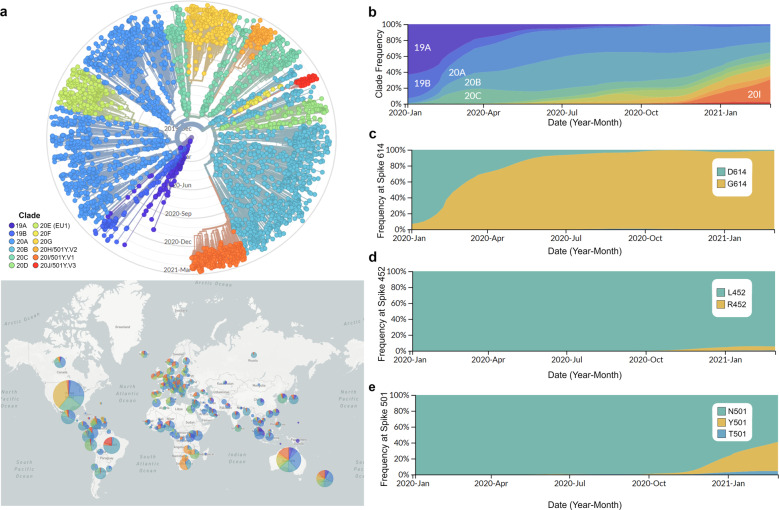
“These events are also consistent with observations from Singh and Yi (41) who tracked the spread of the corresponding Nextstrain clades (XV: Nextstrain 20I; XVII: Nextstrain 20H).”
ResultOn the Evolutionary Trajectory of SARS-CoV-2: Host Immunity as a Driver of Adaptation in RNA Viruses
Warger, J., & Gaudieri, S. (2022) · Viruses · doi:10.3390/v15010070 · Cited by 11
“These variants can be characterised by specific mutations in the viral genome that may bolster evolutionary fitness—termed viral adaptations [1].”
Variation in synonymous evolutionary rates in the SARS-CoV-2 genome
Sun, Q., Zeng, J., Tang, K. L., Long, H., Zhang, C., Zhang, J., Tang, J. Y., Xin, Y., Zheng, J., Sun, L., et al. (2023) · Frontiers in Microbiology · doi:10.3389/fmicb.2023.1136386 · Cited by 11
“Discrepancies in the SERs between ORFs were also consistent with previous findings on dS estimation for other coronaviruses and SARS-CoV-2 (Singh and Yi, 2021; Wang H. et al., 2021).”
BackgroundResultBožič, A., & Podgornik, R. (2023) · Virus Evolution · doi:10.1093/ve/vead040 · Cited by 11
“2020; Pratt, Bull, and Med 2021) with its emerging stream of new variants with varying degrees of disease severity, transmissibility, and other traits (Singh and Yi 2021; Telenti, Hodcroft, and Robertson 2022).”
BackgroundHeydarifard, Z., Shafiei-Jandaghi, N.-Z., Safaei, M., Tavakoli, F., & Malekshahi, S. S. (2023) · Influenza and Other Respiratory Viruses · doi:10.1111/irv.13184 · Cited by 11
“Genetic analyses have revealed that the SARS-CoV-2 genome appears to be evolving relatively more slowly than others such as influenza viruses or HIV.(3) Gradually, several variants of SARS-CoV-2 have been introduced showing genetic differences from the original Wuhan strain, some of which are described as variants of…”
BackgroundInfluentialThe Emergence of the New P.4 Lineage of SARS-CoV-2 With Spike L452R Mutation in Brazil
Bittar, C., Possebon, F. S., Ullmann, L. S., Geraldini, D. B., da Costa, V. G., de Almeida, L. G. P., Sanches, P. R. D. S., Nascimento-Júnior, N. M., Cilli, E. M., Banho, C. Á., et al. (2021) · Frontiers in Public Health · doi:10.3389/fpubh.2021.745310 · Cited by 10
“Despite the low mutation rate, the intense circulation of the virus favors the appearance of mutations in the genomes leading to the development of many different lineages (9, 10).”
BackgroundGenomic evolution of the SARS-CoV-2 Variants of Concern: COVID-19 pandemic waves in India
Bhardwaj, P., Mishra, S. K., Behera, S. P., Zaman, K., Kant, R., & Singh, R. (2023) · EXCLI journal · doi:10.17179/excli2023-6098 · Cited by 10
Hassan, A. R., Sanad, I. M., Allam, A. E., Abouelela, M. E., Sayed, A. M., Emam, S. S., El-Kousy, S. M., & Shimizu, K. (2021) · RSC Advances · doi:10.1039/d1ra05927k · Cited by 10
Metadata
- Authors
- Singh, D., & Yi, S. V.
- Affiliations
- Georgia Institute of Technology (US)
- Corresponding author
- Yi, Soojin V.
- Venue
- Experimental & Molecular Medicine
- Published
- 2021-04
- Volume
- 53
- Issue
- 4
- Pages
- 537-547
- ISSN
- 1226-3613 (ISSN-L)
- 2092-6413
- PMC
- PMC8050477
- OpenAlex
- W3154308199
- Semantic Scholar
- 82d4ec7ef6f25fbc560f6bc99a147bbf46c6b256
- Cited by
- 281
- References
- 64
- Citations by year
- 2026: 4 · 2025: 37 · 2024: 55 · 2023: 71 · 2022: 83 · 2021: 30
- FWCI
- 6.99
- Type
- journal article
- Language
- en
- Open access
- gold
- doi.org
- Licence
- cc-by
- creativecommons.org/licenses/by/4.0 (tdm)
- creativecommons.org/licenses/by/4.0 (vor, 15 d)
- Locations
- Experimental & Molecular Medicine (publishedVersion, cc-by)
- PubMed Central (publishedVersion, cc-by)
- PubMed (publishedVersion)
- Funders
- National Science Foundation (2021635)
- National Institute of Mental Health (R01MH103517)
- Topics
- Health Sciences › Medicine › Infectious Diseases › SARS-CoV-2 and COVID-19 Research
- Life Sciences › Biochemistry, Genetics and Molecular Biology › Genetics › Evolution and Genetic Dynamics
- Life Sciences › Agricultural and Biological Sciences › Animal Science and Zoology › Animal Virus Infections Studies
- Keywords
- SARS-CoV-2, COVID-19 pandemic, viral origin, viral evolution, zoonotic transmission, genetic recombination, purifying selection, spike protein, SARS, MERS, epidemic preparedness
- MeSH terms
- COVID-19, SARS-CoV-2, Animals, Biological Evolution, Humans, Mutation, Phylogeny, Recombination, Genetic, Selection, Genetic, Genome, Viral, Coronavirus, Spike Glycoprotein, Coronavirus
About these checks
Registry, retraction, Cites and statistics results are computed, not judged, with one exception: a printed reference that no index lists is read once by a model before it counts as a citation error. Claims are extracted by a model and kept only when their quote appears verbatim in the text; each cited source is then checked, with a model’s help, for whether it says what the claim relies on. Those verdicts can be wrong — read the claim’s quote and the cited source before relying on one.
Statistics and arithmetic are recomputed, not judged.
Confidence bands are shown only for fields calibrated on our annotated test set. None is calibrated yet, so no band is shown.
What counts as a claim ›How we measure confidence ›How we check this ›
Are you an author, or do you see a problem with this page? Request a review
Data sources
Bibliographic data: Semantic Scholar, OpenAlex, Crossref.
Contains information from the Semantic Scholar Academic Graph Datasets, made available under the ODC Attribution License (ODC-BY 1.0).
Semantic Scholar’s data is described in: Kinney, R., et al. (2023). The Semantic Scholar Open Data Platform. arXiv:2301.10140.
